U.S. and Switzerland Strike a Deal – USTR Greer Announces Free Trade Agreement to Avoid U.S. Tariffs


Posted originally on CTH on November 14, 2025 | Sundance
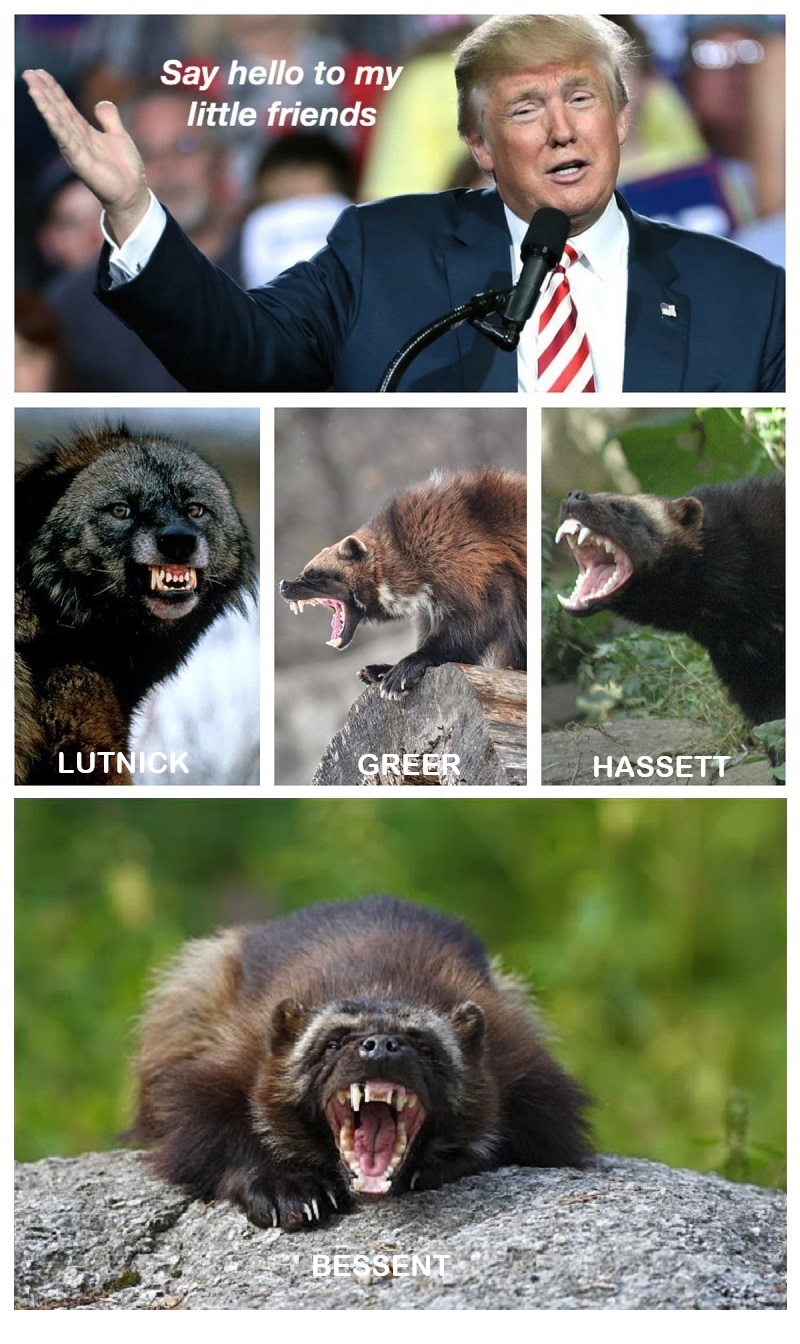
President Donald Trump gave U.S. Trade Representative, Ambassador Jamieson Greer, all the tools and leverage needed to bring the Swiss govt to a substantive trade agreement.  The pressure was too much to bear, so Switzerland quickly negotiated a deal.

In the background President Trump’s global trade reset has been seriously damaging for the Swiss industrial economy.  The EU overall, Germany specifically and China, have stopped purchasing precision Swiss industrial machinery.

It’s not the direct tariffs against Swiss precision machinery itself that created the pressure, but rather the tariffs against nations who purchased the Swiss precision machinery.

China was a big purchaser of the Swiss machinery, until Beijing stole enough intellectual property to develop their own precision machining capacity.  Slowly China didn’t need Switzerland.

Germany and the EU economy then began to contract as the Trump tariffs bit hard against their exports to the USA.

Simultaneously, Chinese EV production started replacing more expensive European EV production, and the tooling purchases within the auto industry began contracting within Switzerland.

As things unfolded, the forecast for the future of the Swiss economy started to become very clear; their precision industrial exports were going to continue contracting.  Something needed to change, and fast.

Ambassador Jamieson Greer announces a major free trade agreement with Switzerland {SEE HERE} and the White House provides a fact sheet {SEE HERE}. A joint statement is then released:

Today, the United States of America (United States), the Swiss Confederation (Switzerland), and the Principality of Liechtenstein (Liechtenstein) (collectively, Participants) express through this Framework their intention to negotiate an Agreement on Fair, Balanced, and Reciprocal Trade (Agreement). Through the Agreement, the Participants intend to create a dynamic and balanced trading relationship on a reciprocal and mutually advantageous basis, with a view toward creating good, high-paying jobs and economic growth in their markets. The Participants share a desire to make trade fairer, easier, and more substantial. The Participants further share a desire to foster secure and resilient supply chains and a conducive business environment to attract high-quality and trusted investment. Switzerland intends to take action to balance its trade with the United States, including by purchasing U.S. goods, facilitating investment in the United States, and removing tariff and non-tariff barriers for U.S. goods. The Participants intend to immediately begin negotiations of the Agreement with the aim to make significant progress, and if possible conclude the Agreement, by the first quarter of 2026, subject to their respective domestic processes.

The Participants intend for the negotiations of the Agreement to focus on the following key areas:

Investment, Commercial Considerations, and Opportunities

Switzerland and Liechtenstein support the increase of foreign direct investment by Swiss and Liechtenstein enterprises into the United States.

Switzerland intends to encourage and facilitate at least $200 billion of investment into the United States, across all 50 states, over the next five years, to create manufacturing and research and development jobs. Liechtenstein intends to encourage and facilitate at least $300 million of investment into the

United States and increase by 50 percent over the next five years the number of jobs created by its private sector in the United States. Switzerland and Liechtenstein intend to encourage and facilitate one third of these investments by the end of 2026. The United States intends to determine, in its application of reciprocal tariffs, if Switzerland and Liechtenstein have taken appropriate steps to encourage and facilitate these investments and associated job creation. If needed, the Participants intend to jointly discuss the steps taken to encourage and facilitate such investment and job creation and determine additional measures for investment promotion and facilitation.

The Participants intend to encourage their enterprises to promote and develop training and apprenticeship programs, including Registered Apprenticeship programs, for U.S. workers in key high-growth sectors in the United States, taking into account their current and future investments.

The Participants intend to cooperate on this issue.

Switzerland and Liechtenstein intend to work together with the United States on addressing potential distortions of bilateral trade and investment arising from industrial subsidies or actions of state-owned enterprises.

The Participants intend to create the best possible environment to encourage and facilitate cross-border investments and job creation.

2. Tariffs

Recognizing the Treaty of 29 March 1923 between Switzerland and Liechtenstein on Accession of the Principality of Liechtenstein to the Swiss Customs Area, the United States intends to apply the same tariff treatment to both Switzerland and Liechtenstein.

Switzerland and Liechtenstein intend to improve market access for U.S. goods, through the application of zero duties on all U.S. industrial goods, U.S. seafood, and certain U.S. agricultural goods, and through the application of tariff rate quotas for a number of other U.S. agricultural goods.

The United States intends to apply the higher of either the U.S. most-favored-nation (MFN) tariff rate or a tariff rate of 15 percent, comprised of the MFN tariff and a reciprocal tariff, on originating goods of Switzerland and Liechtenstein and to apply only the U.S. MFN tariff rate on certain products listed in the “Potential Tariff Adjustments for Aligned Partners” Annex to Executive Order 14346 (Modifying the Scope of Reciprocal Tariffs and Establishing Procedures for Implementing Trade and Security Agreements).

The United States intends to promptly ensure that the MFN tariff and the tariff imposed pursuant to Section 232 of the Trade Expansion Act of 1962 (Section 232) do not exceed 15 percent for originating pharmaceutical goods and semiconductors of Switzerland and Liechtenstein subject to Section 232 tariffs. The United States intends to positively consider the effect of the Agreement on national security, including when taking action under Section 232.

The Participants intend for the benefits of the Agreement to accrue predominantly to the Participants. If the Participants determine that the benefits are not accruing predominantly to the Participants, the Participants may modify the Agreement with rules of origin necessary to achieve that objective.

The Participants intend to cooperate, where relevant, on matters relating to transshipment and circumvention practices, in accordance with their respective domestic laws and regulations.

3. Non-Tariff Barriers and Related Matters

The United States and Switzerland each intend to accord to conformity assessment bodies located in the territory of the other treatment no less favorable than they accord to conformity assessment bodies located in their own respective territories. Treatment under this paragraph includes procedures, criteria, fees, and other conditions relating to accrediting, approving, licensing, or otherwise recognizing conformity assessment bodies.

The Participants intend to apply the World Trade Organization (WTO) Decision of the Technical Barriers to Trade Committee on Principles for the Development of International Standards, Guides and Recommendations (2000) to determine relevant international standards within the meaning of Articles 2 and 5 and Annex 3 of the WTO Agreement on Technical Barriers to Trade, and intend to negotiate provisions clarifying this understanding.

With respect to automobiles, Switzerland intends to work with the United States to facilitate the recognition of Federal Motor Vehicle Safety Standards.

The Participants intend to advance cooperation in mutually agreed strategic sectors, including medical devices. Switzerland intends to facilitate the acceptance of medical devices cleared or approved by the U.S. Food and Drug Administration.

The United States acknowledges the efforts made by Switzerland to facilitate trade in beef and beef products. Switzerland intends to work with the United States to address specific measures that restrict market access for U.S. poultry and poultry products, strengthening opportunities for U.S. agricultural exports in Switzerland. The United States and Switzerland intend to cooperate on streamlining sanitary requirements for labelling and certificates, particularly for beef, bison, and dairy products.

The Participants intend to discuss robust commitments related to intellectual property rights protection and enforcement, including transparent and fair treatment of geographical indications.

The Participants intend to continue to provide an open and competitive environment for service suppliers. Accordingly, Switzerland and Liechtenstein intend to consider opportunities to provide service suppliers additional access to their markets.

The Participants intend to increase their cooperation on labor-related trade issues, and work to address forced labor, including forced child labor, and the worst forms of child labor in supply chains. Switzerland and Liechtenstein intend to continue to protect internationally recognized labor rights.
Switzerland and Liechtenstein intend to continue to adopt and implement high levels of environmental protections, effectively enforce their respective environmental laws, and work together with the United States on trade-related environmental measures, including those that may affect trade between each of them and the United States.

The Participants intend to negotiate commitments on good regulatory practices to ensure greater transparency, predictability, and participation throughout the regulatory lifecycle.

With a view to achieving greater reciprocal benefits from participation in their procurement markets, the Participants reaffirm their commitments under the WTO plurilateral Agreement on Government Procurement and their other binding international procurement obligations, and intend to clarify that states that are not party to these agreements do not benefit from non-discriminatory treatment in procurement at the central governmental level covered by such agreements, including through further implementation measures in their respective national procurement frameworks, if necessary.

The United States and Switzerland intend to foster the use of technology solutions that allow for full pre-arrival processing, paperless trade, and digitalized customs procedures.

4. Digital Trade and Technology

Switzerland and Liechtenstein intend to continue to refrain from imposing digital services taxes.

The Participants intend to facilitate trusted cross-border data flows and address data localization requirements, taking into account legitimate public policy objectives.

The Participants intend to explore mechanisms that promote interoperability between their respective privacy frameworks with a view to facilitating secure cross-border transfers of data.

The Participants intend to refrain from imposing customs duties on electronic transmissions and to support the multilateral adoption of a permanent moratorium on customs duties on electronic transmissions at the WTO.

5. Economic Security

The Participants intend to strengthen their cooperation on economic security, including on addressing non-market policies of third countries.

The Participants recognize that the effective enforcement of economic and trade sanctions serves the Participants’ shared interests. The Participants intend to strengthen existing cooperation with regard to U.S. export controls and sanctions.

Switzerland and Liechtenstein intend to cooperate with the United States on matters related to the review of inbound investment, including on the basis of national security.

Switzerland and Liechtenstein intend to work cooperatively with the United States to secure supply chains and improve supply chain resilience in sectors of shared interest.

The Participants intend to coordinate the timing of their respective domestic processes for the entry into force and implementation of the Agreement.

This document does not constitute a legally binding instrument creating or affecting any rights or obligations under international law. {SOURCE}

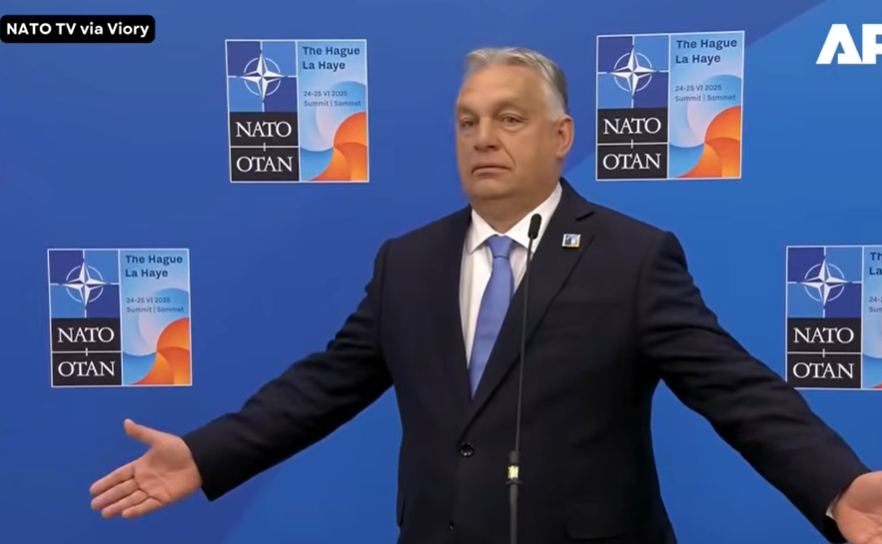
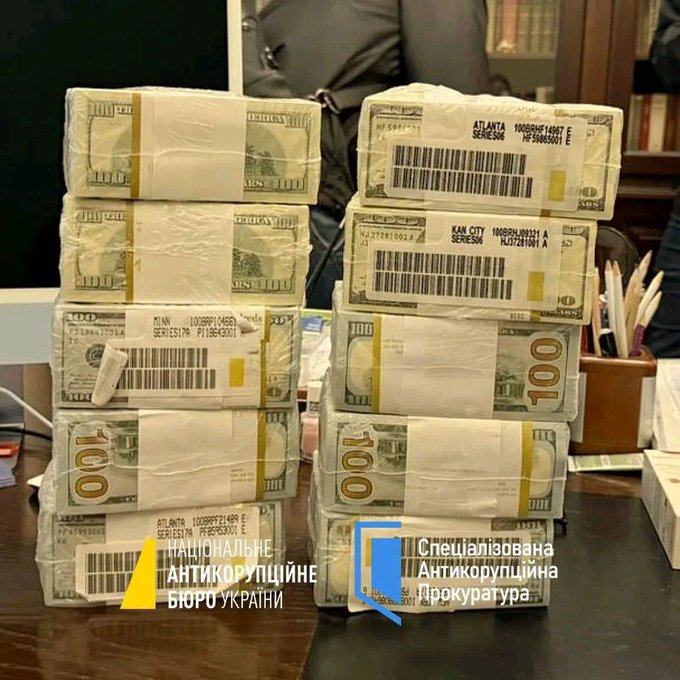
Prime Minister Viktor Orban Publicly Calls Out the Ukraine Corruption and Western Money Laundering Operation


Posted originally on CTH on November 14, 2025 | Sundance

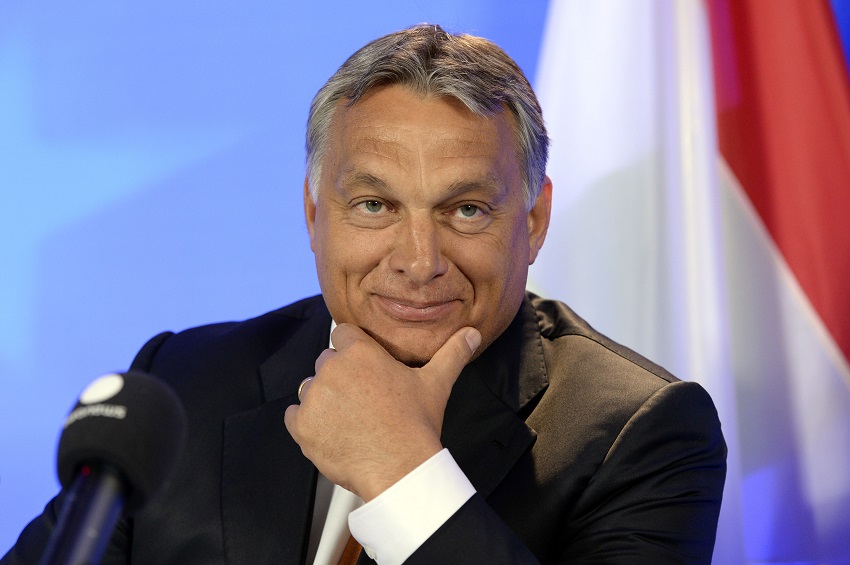
Hungarian Prime Minister Viktor Orban has had enough.  The European Union is consistently targeting him for his position against the Russia-Ukraine conflict, and western elements of the intelligence apparatus have been trying to undermine Orban’s government for years.

Against the most recent revelations of direct corruption connected to the government of Ukraine President Volodymyr Zelenskyy, Orban says, “enough.”

Prime Minister Orban – “The golden illusion of Ukraine is falling apart. A wartime mafia network with countless ties to President [Zelensky has been exposed. The energy minister has already resigned, and the main suspect has fled the country.

This is the chaos into which the Brusselian elite want to pour European taxpayers’ money, where whatever isn’t shot off on the front lines ends up in the pockets of the war mafia. Madness.

Thank you, but we want no part of this. We will not send the Hungarian people’s money to Ukraine. It can be put to far better use at home: this week alone we doubled foster parents’ allowances and approved the 14th month’s pension.

Anyhow, after all this, we certainly won’t give in to the Ukrainian president’s financial demands and blackmail. It’s high time Brussels finally understood where their money is really going.” [SOURCE]

PM Orban and President Donald Trump are allies and personal friends. No doubt they both spoke about this.

Secretary of State Marco Rubio Holds a Press Conference on Ukraine Conflict and Narco Terrorist Strikes


Posted originally on CTH on November 12, 2025 | Sundance 

Secretary of State Marco Rubio holds a press conference with the traveling State Dept press pool following the G7 foreign ministers meeting.

Secretary Rubio was questioned about Russia’s attacks on Ukraine and the EU position against the USA on the narco terrorist strikes toward Central America.  Secretary Rubio sets the record straight.  WATCH:

On Sudan: “The horrifying reports of the massacre of hundreds of Sudanese civilians after the Darfur city of El Fasher was captured by the rebel Rapid Support Forces (RSF) last week were the latest chapter in a brutal conflict that has killed more than 150,000 people over the past two and a half years.” (read more)

USAGM Director Kari Lake Removes Funding for Samantha Power Tentacle, Szabad Europa, Targeting Hungary


Posted originally on CTH on November 7, 2025 | Sundance

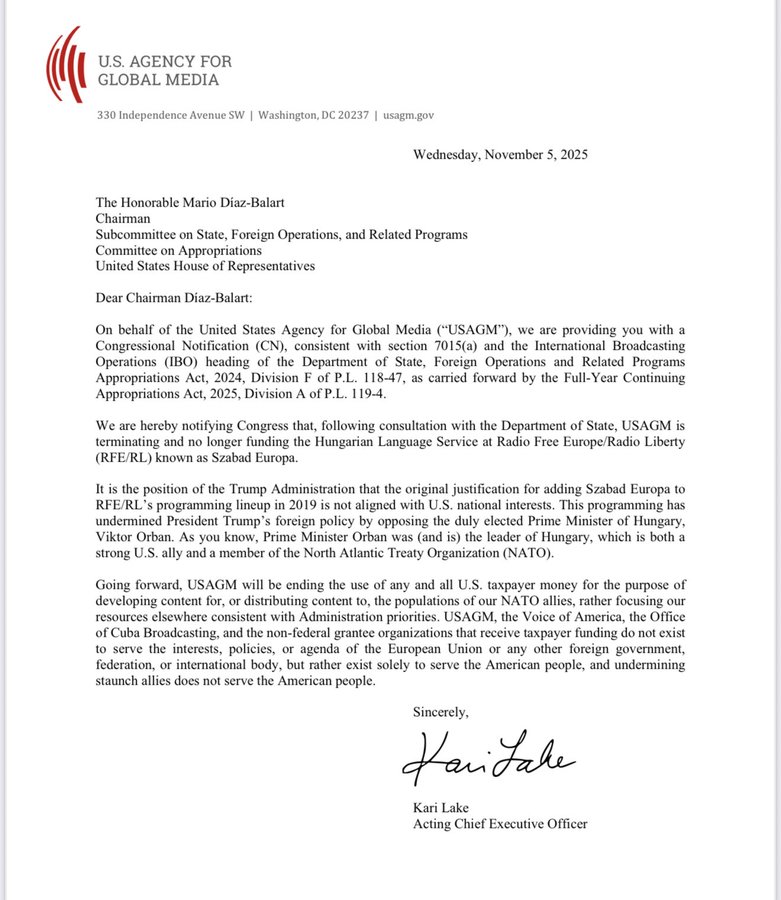
Acting Director of the U.S. Agency for Global Media, Kari Lake, has notified congress that she is ending the taxpayer-funded EU/Globalist operation known as Szabad Europa. This is the Hungarian Language Service at Radio Free Europe/Radio Liberty, funded by the U.S. State Dept and USAID, which has been attacking and trying to destabilize Hungary’s government led by Prime Minister Viktor Orban.

Acting Director Kari Lake sends a Congressional Notification to House and Senate Appropriations Committees, House Foreign Affairs, and Senate Foreign Relations:

[SOURCE]

“It is the position of the Trump Administration that the original justification for adding Szabad Europa to RFE/RL’s programming lineup in 2019 is not aligned with U.S. national interests. This programming has undermined President Trump’s foreign policy by opposing the duly elected Prime Minister of Hungary, Viktor Orban. As you know, Prime Minister Orban was (and is) the leader of Hungary, which is both a strong U.S. ally and a member of the North Atlantic Treaty Organization (NATO).”

Mrs Lake goes on to note the U.S taxpayer-funded operations targeting NATO and EU allies will stop.  This is a positive step toward removing the ability of the USG shadow operators to control EU election outcomes.  Brussels will have to pay for their own EU influence operations.

In early April 2022, Hungarian Prime Minister Viktor Orban was overwhelmingly reelected {LINK}, despite the massive efforts against him by the European Union, western and euro-centric multinational globalists.   As a result of the victory, Brussels was furious at the Hungarian people.  Associated Press – […] “Orban — a fierce critic of immigration, LGBTQ rights and “EU bureaucrats” — has garnered the admiration of right-wing nationalists across Europe and North America.” (link)

Within the statements reported from his 2022 victory speech, Prime Minister Orban warned citizens of the NATO and western allied countries about the manipulation of Ukraine and how he views the Zelenskyy regime:  […] “while speaking to supporters on Sunday, Orban singled out Zelenskyy as part of the “overwhelming force” that he said his party had struggled against in the election — “the left at home, the international left, the Brussels bureaucrats, the Soros empire with all its money, the international mainstream media, and in the end, even the Ukrainian president.” (link)

That speech put Hungarian Prime Minister Viktor Orban in the crosshairs of the western alliance, specifically the EU and U.S. bureaucrats within the USAID who use their power, position and intelligence apparatus to manipulate foreign nations.  A year later USAID Administrator Samantha Power showed up in Hungary openly discussing her seeding of the NGO’s and political activist systems in order to generate yet another color revolution. {Direct Rumble Link} – WATCH:

USAID in Hungary

Samantha Power, the wife of Cass Sunstein, was well known as the Obama/Biden administration’s advance operative who used her position in U.S. government to influence activism in targeted nations. Hungary was then her target.

♦ Hungary warned citizens of the west about the New World Order, created through Ukraine.

♦ Hungary continued to purchase Russian oil and natural gas.  Zelenskyy and the Western alliance were furious.

♦ Hungary said they would continue energy purchases in Rubles if that is what Russia demanded.

The World Economic Forum and NATO/Western Alliance cannot permit a nation to stand on principles of nationalism.  Allowing a point of contrast that would showcase the weakness of globalism and multiculturalism, especially one with an open Christian perspective, was something the western control system just could not permit.

As a result, Samantha Power, the U.S. State Dept (USAID) and the CIA, began running an operation in Hungary, seeding the groundwork for the next color revolution.  Their hubris was so strong, they didn’t even try to hide it.

The EU is going to have to try it alone next time.

President Trump Welcomes Hungarian Prime Minister Viktor Orban to The White House – Both Leaders Answer Media Questions


Posted originally on CTH on November 7, 2025 | Sundance

Hungarian Prime Minister Vikor Orban is one of the few pragmatic EU leaders who understands the dynamics of globalism, nationalism and the conflict therein.  Within the EU collective, Orban is one of the national leaders that are not liked by Brussels.

Additionally, Orban holds a contrary view toward Russia than is held by the majority inside the EU bureaucracy.  Orban has called for a negotiated settlement to end the Ukraine-Russia conflict and restoration of EU relations with the Russian Federation.  Eventually, his anti-globalist worldview is what led former USAID Director Samantha Power to arrive in Hungary and begin the CIA groundwork for Orban’s removal.

Today Prime Minister Viktor Orban and President Trump gave remarks during a White House visit and answered media questions. WATCH:

.

Senate Republicans Furious Over President Trump Acting Like Commander in Chief, Shifting Military Forces Away from Europe


Posted originally on CTH on November 4, 2025 | Sundance 

Senate Republicans are not going to sit on their hands and watch President Trump and Secretary Pete Hegseth think they control the United States military.

Recent troop movements away from Senate approved military bases in Romania, combined with the Trump administration not pushing advanced weapons into the battlefield of Ukraine, have Senate Republicans planning to take immediate action to control military operations.

Somewhere in the evolution of Presidential authority, the Senate now affirms they alone have the authority to control the organization, priorities, spending intentions and troop deployments from their chambers in Washington DC.

War must be had according to the upper branch of the legislature. The Senate is not going to accept any effort to work around their foreign policy objectives, regardless of these insufferable ‘peace’ initiatives of the White House.

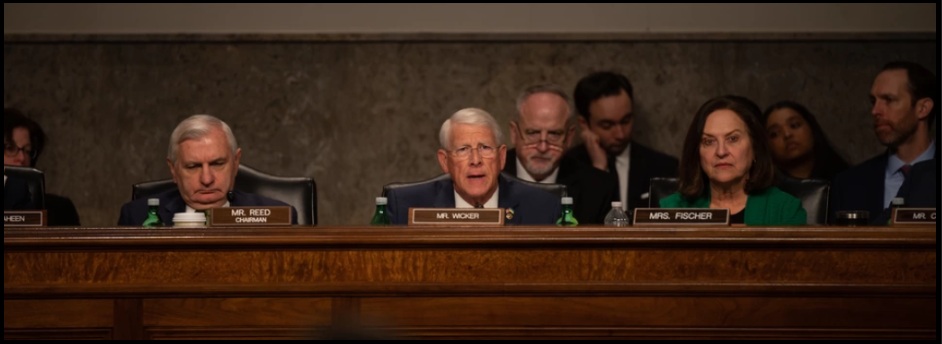
WASHINGTON DC – […] Armed Services Chair Roger Wicker (R-Miss.) said he’s seen an “unsettling trend” of Pentagon moves that he argues undermine Trump’s stated commitments to NATO and other international efforts — and he singled out Colby’s office in particular. It’s a distinction the Mississippi Republican often makes when criticizing administration policies — President Donald Trump has the right idea, but officials lower down in the administration or Pentagon are going about it the wrong way.

For example, he cited a decision last week to remove a rotational Army brigade from Romania, which Wicker criticized at the time.

“Members and staff of this committee have struggled to receive information from the policy office,” Wicker said. “This does not match our experience with the first Trump administration.”

“The situation needs to improve if we are to craft the best defense policy,” he said.

[…] Senators also cited other controversies tied to the Pentagon’s policy office that blindsided Congress as well as other parts of the administration — including confusion over a reported pause on some assistance to Ukraine, a review of the AUKUS submarine partnership with Australia and the United Kingdom and a new reshuffling of portfolios in the policy shop.

“I understand media reports can be wrong,” said Sen. Tom Cotton (R-Ark.) “But it just seems like there’s this pigpen-like mess coming out of the policy shop that you don’t see” from other offices, he said. (read more)

For those who are critical of President Trump endorsing Senators like Lindsey Graham, please put these kinds of reference points into your contemplations of the dynamics.   The Republicans in the Senate are critically unaligned in their support of Trump’s noninterventionist foreign policy.

Posted originally on Rumble on Bannon War Room on: November 4, 2025

U.S. Ambassador to Canada Informs Govt and Business Leaders No Trade Deals Possible


Posted originally on CTH on October 28, 2025 | Sundance 

For those who have followed along with the U.S-Canada trade positioning, the current status of conflict between the Trump administration and the government of Canada is not surprising.  {GO DEEP} Going all the way back to the replacement of NAFTA, with the USMCA, President Trump always said he did not favor multilateral trade deals with multiple countries; instead, he preferred bilateral free trade agreements.

Some people have construed the bilateral preference of President Trump to be the elimination of globalism in favor of nationalism in trade agreements.

While the outcome of the Trump approach indeed aligns with that theme, it is not specifically the objective of President Trump to eliminate global trade, but rather to focus on specific interests in trade that benefit the unique nature of each party involved.

As a result, the USMCA -or CUSMA as said in Canada- is not in alignment with a bilateral free trade agreement, and the conflicted differences between trade with Mexico and trade with Canada are an outcome of this dynamic.  The solution is simply to eliminate the multilateral in favor of the bilateral approach.  This is the objective of President Trump as expressed.

That said, the USMCA covers approximately 60% of U.S-Canada trade, and the remaining 40% is being debated and argued.  President Trump would prefer to just deal with 100% of the trade sectors in one free trade agreement; hence, his ambivalence until the USMCA is dissolved.

Canada, on the other hand, continues to demand that all trade conflicts be resolved without opening up the entire USMCA. Again, another conflict. Canada is like the dependent spouse in a divorce arguing for child support payments when the “children” are in their twenties.

The current status is President Trump pulling back completely from discussions with Canada, while the various provincial Premiers and Prime Minister Mark Carney antagonize over the issue.

At a certain point, when the entire national economic plan of Canada is based on “Donald Trump bad”, and all political messaging internally is to proclaim they have no alternative policy positions, the Canadians might not realize it, but they are confirming complete and total dependency on the nation Donald Trump represents.

As the Canadian government continues demanding President Trump pay attention to their needs, U.S. Ambassador to Canada, Pete Hoekstra, informs the Carney administration, and various stakeholders, any trade agreement is no longer possible.

CANADA – The U.S. ambassador to Canada doesn’t foresee a new security and economic deal between Canada and the United States — which could see the reduction or full removal of tariffs amid an ongoing trade dispute — before the new year.

“We have stopped negotiations with Canada,” Pete Hoekstra said in a keynote address to the Coalition of Concerned Manufacturers and Business Canada on Monday. “I don’t see any way that there will be an agreement before American Thanksgiving.”

“I’m not sure what it’s going to take to get people back to the table in a constructive and positive mode,” he added.

Hoekstra’s comments come just days after U.S. President Donald Trump said he is terminating trade talks with Canada and increasing levies on Canadian goods by 10 per cent in response to an anti-tariff ad by the government of Ontario which featured the voice of former Republican U.S. president Ronald Reagan. Ontario has since pulled the ads, effective Monday.

Government sources had told CTV News that Canadian officials were hopeful there could be movement on a steel and aluminum deal by this week’s APEC Summit in South Korea.

[…] Asked by event attendees whether he sees any way to get negotiations back on track, such as an apology for the ad, Hoekstra said: “No.”

Speaking more broadly about the state of negotiations, Hoekstra laid the blame at Canada’s feet for the soured relationship.

Hoekstra has previous expressed his distaste for what he’s called “anti-American” sentiment in Canada, and on Monday pointed to some provinces removing U.S. liquor from store shelves and Canadians being discouraged from travelling south of the border as examples.

He also said the ad amounts to foreign interference, with the U.S. Supreme Court set to start hearing arguments on the legality of Trump’s tariffs on Nov. 5, as well as some gubernatorial and state legislative elections happening next week.

“Canada burnt the bridges with America,” he said. “Donald Trump did not slam the door.”

“Donald Trump could do the only thing that a leader of a sovereign nation could do when a neighbour, another sovereign nation, decided to interject itself into American politics,” he added. “Canada slammed that door shut all by itself.” (read more)

Canada is trying to force President Trump to give them preference, in a similar way the EU demanded special trade privileges.

President Trump is trying to end the Canadian one-way benefits toward the U.S. market.

President Trump is currently touring Asia, gathering up bilateral trade deals with various countries all across the ASEAN network.

In the bigger context, Trump is cutting all the tentacles and tools of China, and isolating them from Southeast Asia, as it relates to trade with the USA.

The bigger strategy of President Trump is very clear now, reduce dependency on China by retracting all of the manufacturing dependency.

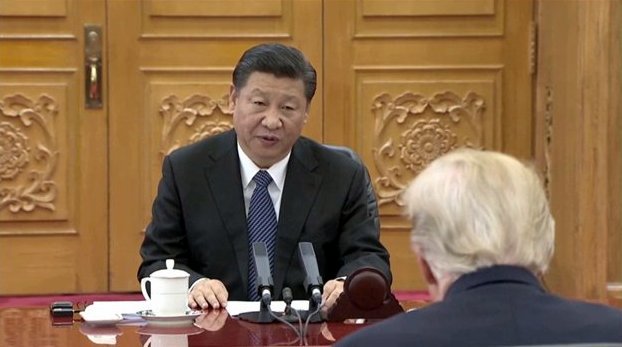
All of the surrounding nations in Asia stand to benefit from this approach through bilateral free trade agreements with the USA.  Beijing’s influence is being seriously diminished as the lead-up to President Trump sitting down with Chinese Chairman Xi Jinping on Thursday.

Inside China, throughout the Chinese Communist Party, there are indications they are recognizing how successful President Trump has been at working around their influence.  Some outside observers have even started to believe the “moderates” within China feel empowered over the “hardliners” represented by Chairman Xi.  There is a lot going on behind the scenes.

This internal pressure inside Beijing’s politics works to President Trump’s favor, because it makes it even harder for Xi Jinping to be aggressive.  Additionally, with the Chinese economy being uncertain, perhaps significantly weak, Chairman Xi might even face a challenge to his power structure.  Meanwhile President Trump hops around shaking hands and making deals.

Canada Likely to Take Chinese EV Production as Offset to Lost U.S. Trade


Posted originally on CTH on October 27, 2025 | Sundance 

As previously outlined, Canada is so entrenched with their ‘orange man bad’ syndrome, they just cannot get out of their own way on stupid trade decisions.  {GO DEEP}

You might remember Mexico retreating from Chinese electric vehicle (EV) development following the November 2024 election of Donald Trump.

China was on the cusp of investing $5 to $7 billion in new EV manufacturing in Mexico, when President Trump announced he would impose massive tariffs to block any import of Chinese EVs made in Mexico. Trump won the election and together China and Mexico scrapped their plan.

Europe then stepped on the Chinese EV rake and began purchasing carbon credits from Chinese EV companies to avoid the “climate change” auto goals and subsequent fines to EU car companies for not hitting EV production targets. In essence, Europe is paying Chinese EV companies for carbon credits, thereby subsidizing lower priced Chinese EVs in Europe. The EU is paying China to destroy their own auto industry.

Now, it’s Canada’s turn.

As a result of President Trump asserting tariffs against imported autos, the large auto companies are abandoning plans to build or expand auto manufacturing in Canada. The Canadians are angry, and the professional political class in Canada is doing everything they can to continue ramping up opposition to Donald Trump.

With increased tariffs against Canada, and with the likely dissolution of the USMCA (CUSMA) coming in the near future, the Canadian govt of Mark Carney has been traveling the world to find alternative markets for their goods and services. The main targets for new Canadian economic and trade relations are the U.K, EU and China.

In a deal to expand the trade relationship with China, the Canadian government of Mark Carney is now proposing to drop tariffs against Chinese EVs in a deal to sell more pork and canola oil. That’s correct, in essence Canada will take the EV auto business abandoned by Mexico.

This was Canadian Prime Minister Mark Carney’s grand plan as he attended the ASEAN summit in Malaysia.

Keep in mind, as we have outlined all along during Trump’s trade reset, the USMCA is going to be abandoned in favor of two bilateral free trade agreements; one with Mexico and one with Canada.

As outlined in the Mexican decision to cancel EV investment, Mexico is aligning for a favorable trade relationship with President Trump and the USA.

The Mexican govt can see the benefits and accepts their regional dependency to the world’s largest consumer market. However, Canada is doing exactly the opposite and increasing the disconnect between Canada and the United States on key sectors of trade and commerce.

Canada may benefit in the short term from sales of pork and canola to Beijing, while simultaneously gaining Chinese investment in cobalt mining and auto development for EVs. But those EVs will never be permitted to cross the border into the USA and any effort to enhance Chinese EV sales in Canada will only disconnect them more from trade with Donald Trump and the USA.

[BACKGROUND HERE] – [Canada/Chinese EV Deal Here]

Mohamed El-Erian Outlines Stunning Success of President Trump’s Tariff, Trade and Economic Policy Agenda


Posted originally on CTH on October 27, 2025 | Sundance

Wharton Professor and noted economist Mohamed El-Erian appeared on Fox News to discuss the jaw-dropping success President Trump is having with his global trade reset.

As noted by El-Erian no one, including El-Erian himself, expected President Trump to be able to navigate a global trade and economic reset with such stunning success.  The entire economic policy is being driven by the personal influence of President Trump as he leverages tariffs and policy incentives to the benefit of the USA economy exclusively.

The scale of Trump’s agenda is difficult to overstate, and China is now positioned to feel incredible pressure to align Beijing policy with the requests of President Trump.  “We thought there would be a massive retaliation against the US, there hasn’t been” El-Erian noted.  “We’re collecting $800 Billion of tariff revenue” and “inflation has waned,” he said.  This is a remarkable situation that few economists could accurately predict.  WATCH:

This is not a surprise to readers here as we have discussed the Trump trade agenda with clear, non-pretending eyes.  The ASEAN trip by President Trump is a masterclass in leveraging trade relationships and creating isolation for China.  The downstream consequences for Canada continue to build as the Carney administration doubles down on their entrenched and futile opposition.

If President Trump can formulate a strong, actionable and enforceable free trade agreement with Chairman Xi, it will undercut the ability of Canada to assemble cheap component goods not available in the U.S. manufacturing equation for total cost of goods.  This puts Trump in an even stronger position heading into the 2026 USMCA (CUSMA) dissolution phase.

Additionally, despite the mainstream thoughts to the contrary, putting distance between Russia and China is not averse to the interests of Russian Federation Vladimir Putin, who would strategically prefer to do business with the ‘West’ over Beijing.  However, China does not want to see their Biden-created tentacle weakened in Russia.

China retains a vision of a global financial market option beyond the dollar, and Xi plays that long-term strategy game with Putin quite effectively.  It is only President Trump who holds the key to weakening that strategy, and Chairman Xi likely reminds everyone -through his emissaries- that they can wait out the Trump administration.

However, during the ASEAN conference, again we see President Trump drawing heavily on the personal factor as a part of his strategic influence operation to push distance between Southeast Asia and Beijing.  Cunning Panda can undoubtedly see that play, however, culturally they may underestimate the strength of the dynamic.  President Trump leverages the world’s biggest market with a smile.  The world’s biggest sellers want and need to keep that smile on the face of their #1 customer.

President Donald Trump is a friendly dealmaker, until he is not. Southeast Asia understands this dynamic very well.