Posted originally on Oct 9, 2025 by Martin Armstrong |
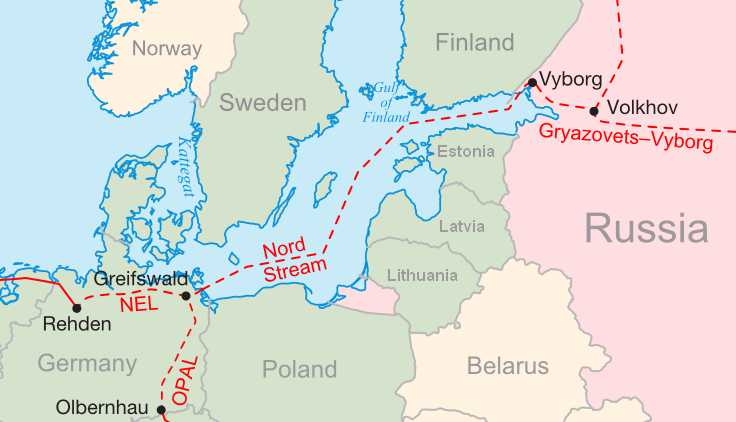
Polish Prime Minister Donald Tusk believes the man who allegedly destroyed the Nord Stream pipeline did his country a great service. Tusk is considering breaking international law by harboring the fugitive who is wanted by the German government. The man, of course, will be the scapegoat for the incident. More telling is Warsaw’s response, rooted in old geopolitical tensions and willful ignorance of how drastically the explosion hurt their own economy.
“The problem of Europe, Ukraine, Lithuania, and Poland is not that Nord Stream 2 was blown up, but that it was built,” Tusk said. “It is certainly not in the interest of Poland to hand over this citizen to a foreign country.” Poland will hold the man in its custody for an additional 40 days, during which it will consider Germany’s demand that he be extradited for prosecution.
“Russia, with money from some European states and German and (Anglo-) Dutch companies, built Nord Stream 2 against the vital interests not only of our states, but of all of Europe, and there can be no ambiguity about that,” Tusk concluded.
Poland has always been caught between Germany and Russia. From the Polish partitions in the 18th century to Soviet domination in the 20th, the Polish political class views any direct German-Russian cooperation as an existential threat. Poland initially protested the pipeline because it felt that Germany was attempting to remove Eastern Europe’s main bargaining chip with Moscow — energy transportation. They invested in LNG terminals, aligned with US energy interests, and positioned themselves as the eastern front against both Russian and EU central control.
The European Union and the euro could never erase generations of geopolitical hatred and scars. Warsaw simply sees Berlin as the lesser of two evils when it comes to Moscow. Tusk’s comments are a deliberate attempt to create friction with Germany and undermine the power they continue to hold over Poland as the economic center of the EU.
One bad apple spoils the bunch, and in the case of Europe, one bad economy will do the trick. Europe was reliant on Russian energy for many years prior to the war. Poland was purchasing 95.5% of its oil from Russia in 2012; the figure declined to 63.1% by 2021 before the war. Yet, Tusk is condemning former German Chancellor Angela Merkel for agreeing to the Nord Stream pipeline. Energy prices spiked by 30% after the pipeline demolition, fueling valid fears of energy shortages across the continent.
The pipeline itself may have been a Russian majority asset, but the infrastructure projects and joint ventures sprouting from the pipeline benefited Europe. European firms, including Wintershall Dea (Germany), E.ON (PEG Infrastruktur, Germany), Gasunie (Netherlands), and ENGIE (France), collectively held 49% of the Nord Stream AG operating company, while Gazprom itself retained 51%.
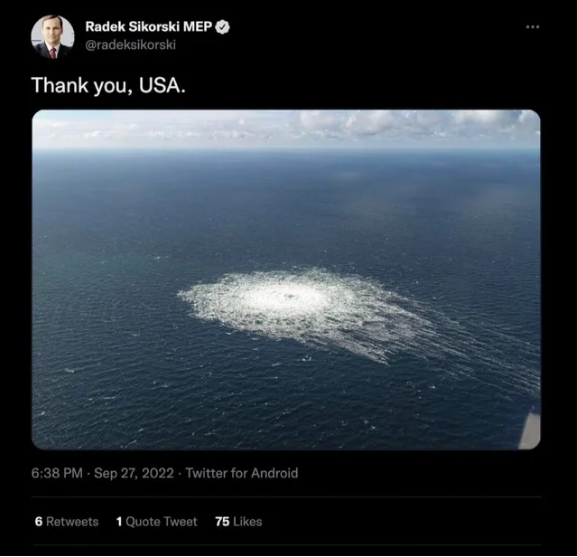
By now, the world knows that Western intelligence agencies deliberately targeted the pipeline in an act of war. The man detained would be considered a terrorist if these charges were factual. Perhaps they do not want to conduct a fake investigation or trial that would raise suspicions. Tusk needs to look down and realize he’s been shot in the foot with the destruction of this pipeline that ALL of Europe, not merely Germany, benefited from.
Posted originally on Oct 4, 2025 by Martin Armstrong |
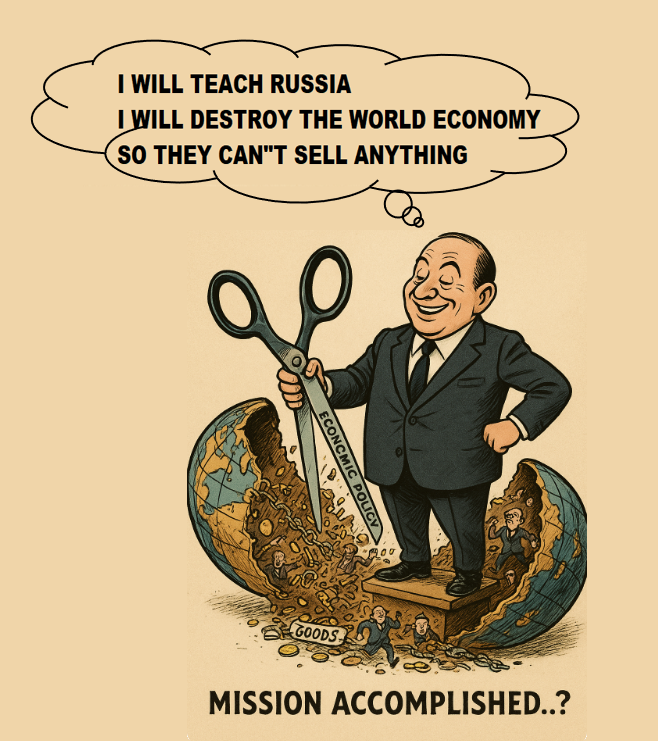
Trump is clearly listening to the NEOCONS, and he may believe their BS that Russia’s economy is collapsing, so Russia can be defeated in three days, as Kinzinger was claiming. Mark Rubio is a Neocon. I believe Trump hired him as a compromise to the Neocons. But he is taking us into World War III in slow motion. Trump is listening to the wrong people, and he had better look unbiased at why Putin is being put into a precarious position. He has insulted the dignity of Russia and reduced it to a meaningless 4th-world country. If Putin is replaced one way or in November, sorry, Europe will not recover. Germany fought against Russia in both World War I and World War II and lost both conflicts. A third time will NOT be the charm.
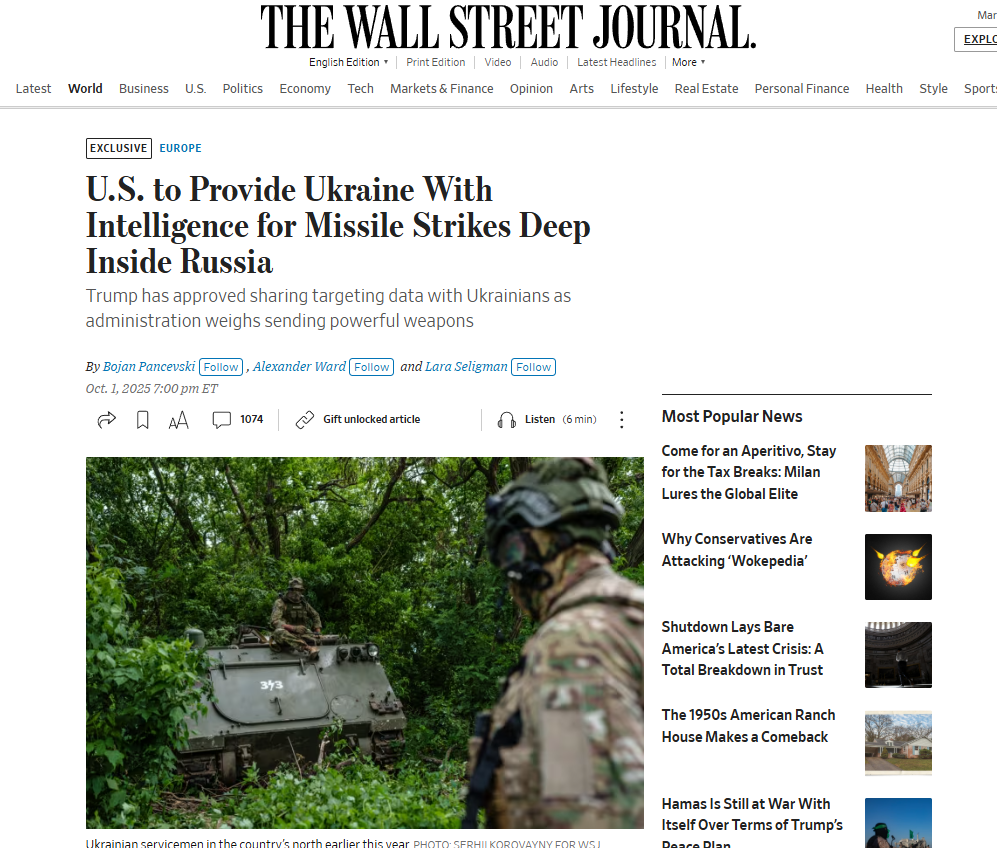
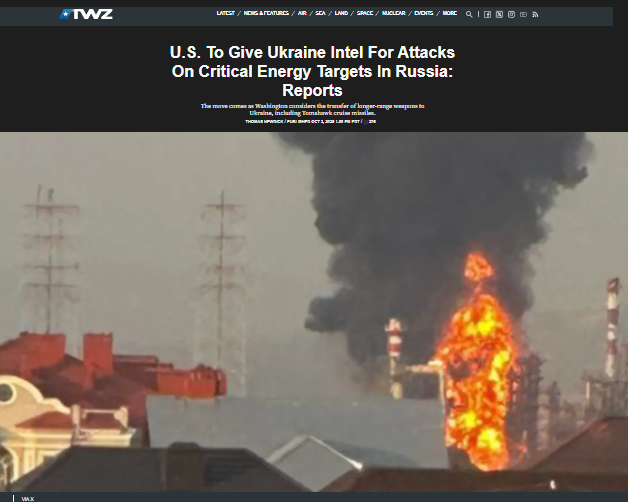
The Wall Street Journal and other outlets reported that President Trump signed off on providing U.S. intelligence agencies to supply targeting data to Ukraine for strikes on Russian energy infrastructure (oil refineries, pipelines, power plants). This suggests that now the US will select the target for Ukraine to attack. That is waging DIRECT WAR against Russia. They certainly can provide missiles to Venezuela and provide them targets for Washington, D.C., and put one right up Trump’s ass. I guess that would not be declaring war either.
However, it is not clear that “providing targeting” means full battlefield coordination, command & control, or direction of operations — most media accounts frame it as sharing intelligence, not taking over targeting decisions.
According to multiple sources, Trump authorized the sharing of targeting intelligence with Zelensky/Ukraine for strikes on specific energy infrastructure. This is the NECON argument: stop the energy sales of Russia, the country will collapse, and they can walk in and carve up Russia like a piece of pie. SO let’s see, Putin could strike and take our Wall Street, the US cannot borrow any more money, the economy would collapse since it is dependent on debt, and he could do the same to the USA.
NOBODY seems ever to consider that whatever they do to Russia, they could do the same to the USA and Europe. I am concerned that Putin has been restrained. He cannot agree to peace KNOWING that these Neocons want the destruction of Russia and will NEVER accept them into the world economy. They have already divided the world economy between SWIFT and BRICS, and this division is expected to remain unchanged until after 2032. NEOCONS are braindead assholes who NEVER think one step ahead and only act emotionally to what is in front of their nose with myopic vision.
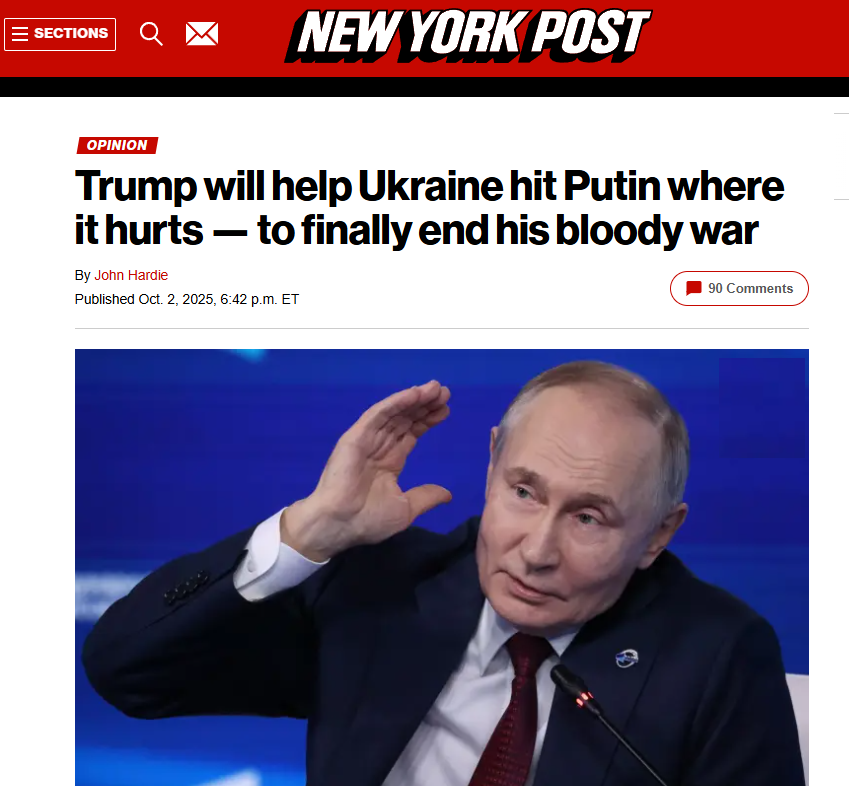
The NY Post pushed an opinion advocating sending Tomahawk missiles to wipe out Russia. They said:
“Trump should now follow through by supplying Ukraine with long-range missiles to do the job — and ratcheting up the economic pressure on Russia.”
Again, this attitude assumes that Russia is incapable of launching any retaliation against the United States. Putin might as well just launch everything because there is NO POINT to any peace agreement, for Trump is a fool if he really believes this is just about Ukraine. This is about the destruction of Russia, and if he does not get rid of these advisers who have him isolated, we are sleepwalking into the end of Western Civilization.
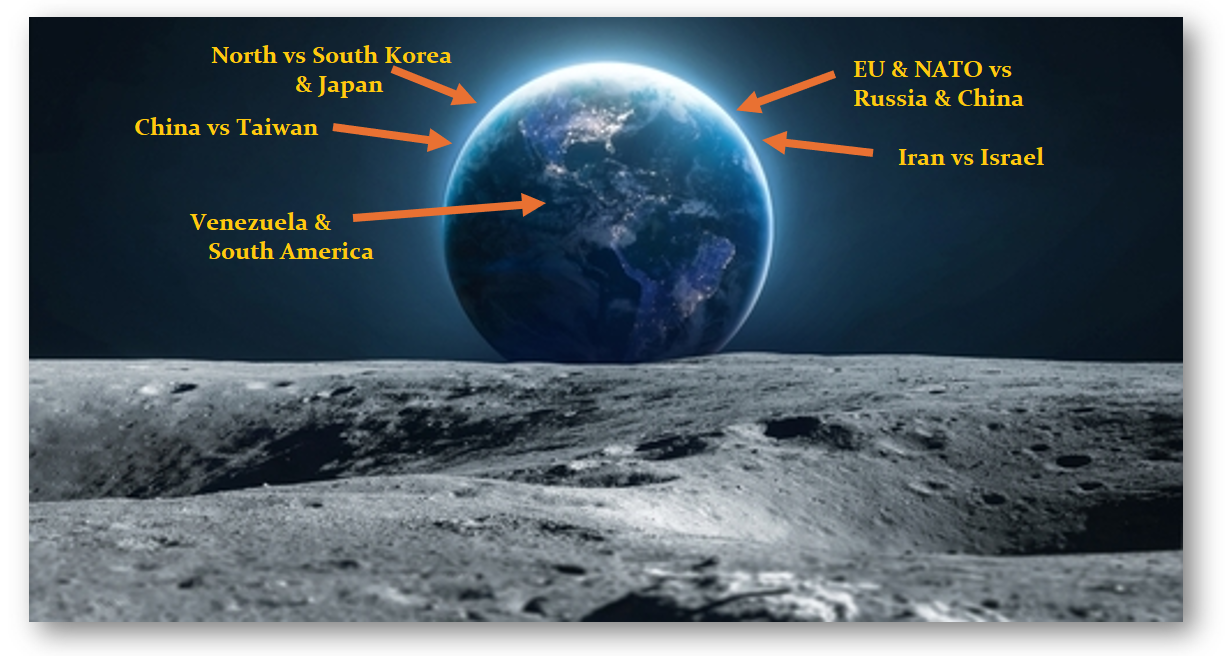
There is NO WAY China will allow Russia to fall. These Neocons pushed Russia and China together. They will stand together with North Korea and Iran. These NEOCONS are really stupid. They will never be able to defend Europe, the Middle East, Taiwan, and Korea/Japan all simultaneously.
Venezuela’s International Support
Cuba has been a longstanding ally of Venezuela. Recently, Cuban diplomats in Angola reaffirmed their support for Venezuela against perceived U.S. aggressions. Russia has continued to support the Maduro government, sending troops to Venezuela in March 2019 and helping the government evade sanctions on the oil industry. China has continued to back the Maduro government, offering to help rebuild the national power grid. Iran has also expressed support for Venezuela, especially in the context of U.S. sanctions and military threats. The two countries have engaged in economic and diplomatic cooperation over the years. Both could also provide long-range missiles to Venezuela, just as Zelensky is demanding, so he can level the Kremlin. Russia could do that with Venezuela and target Washington, DC. Trump obviously never heard = what goes around, comes around.
Turkey has maintained a neutral stance but has occasionally criticized U.S. sanctions and expressed support for Venezuela’s sovereignty. Syria has been a vocal supporter of Venezuela, condemning U.S. actions and emphasizing the importance of respecting Venezuela’s sovereignty. Colombia has shown solidarity with Venezuela, especially in the context of U.S. sanctions and military threats. The country’s foreign minister recently renounced her U.S. visa in protest of U.S. actions against Venezuela.
Brazil has refrained from taking sides in the U.S.–Venezuela conflict. While President Lula has expressed concern over the U.S. naval presence in the Caribbean, describing it as a source of regional tension, he has not indicated any intention to intervene militarily on Venezuela’s behalf. However,
Left-leaning / socialist governments (currently or recently): Venezuela, Bolivia, Ecuador (varies over time), and sometimes Argentina and Chile, depending on elections. This is why Trump is supporting Argentina. If they flipped back to the LEFT mainly because of Trump’s war against Venezuela, then we can see turmoil in South America. Focusing strictly on war between South American states, the last significant one was the Colombia–Peru War of 1932–1933, which involved a territorial dispute over the Amazonian town of Leticia. It was resolved through mediation by the League of Nations.
Since then, South America has experienced chiefly internal conflicts (civil wars, insurgencies, and guerrilla movements) rather than interstate wars. Border disputes existed (like between Ecuador and Peru in 1995), but these were short-lived skirmishes rather than prolonged wars. However, Trump’s war with Venezuela runs the risk that, as the economy turns down, we can see a rise in anti-Americanism, and this will impact not just militarily, but also economically, with outstanding debt issues. Specifically, U.S. dollar-denominated debt accounts for approximately 92.6% of South America’s total public debt.
In August 1982, Mexico announced that it could no longer service its debt. This is often considered the official start of the Latin American debt crisis.
Other major South American countries quickly followed this:
Argentina (1982) Brazil (1983) Chile (1983) Venezuela (1983) Peru (1984) Bolivia (1984) Uruguay (1983)
This is the unspoken risk with a conflict with Venezuela, which does have the #1 largest oil reserve of any country on the planet.
These Neocons are BRAINDEAD, for they never consider not just the next step, like taking out Saddam, with no comprehension of what comes next. Still, they fail to feel that they are pushing Putin like he is meaningless, and what if he steps aside in November and hands it to their Neocons, for Russia is NOT going down without a fight. Putin has warned that they have bombs that will get these Neocons in their bunkers.
Demand Elections in Ukraine
Cut Off All Contact With Ukraine. They are a Patsy for NATO
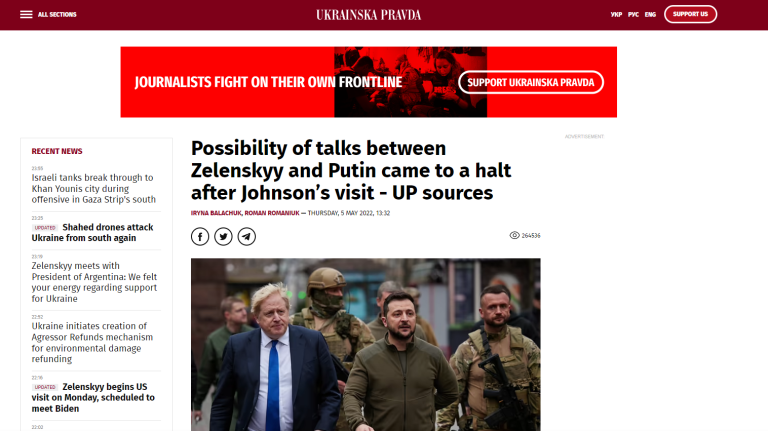
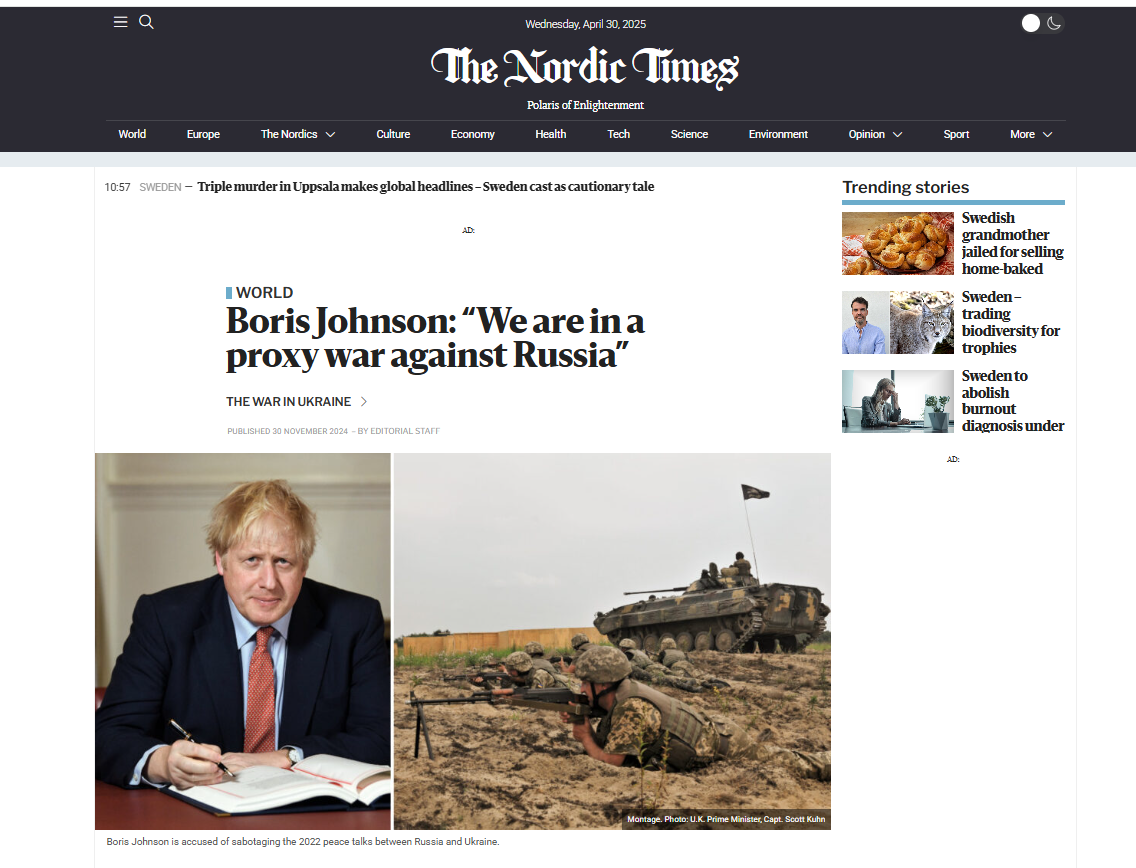
Nobody cares that even one Ukrainian is still alive. Boris Johnson is running the show, instructing Zelensky that he is NOT allowed to have peace. He has already announced that Britain is at war with Russia and Trump expects Putin to surrender? Trump better open his damn eyes, he is being played like a fiddle by the Neocons.
Posted originally on CTH on October 3, 2025 | Sundance
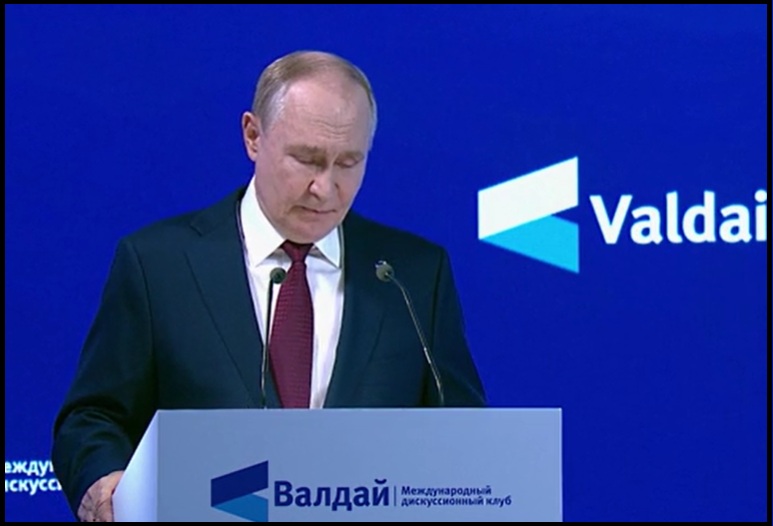
Vladimir Putin delivers a speech during the 22nd annual meeting of the Valdai International Discussion Club. Within his full remarks [Available Here] President Putin notes the ongoing efforts of the EU to provoke expanded conflict.
Russian President Vladimir Putin– […] They’ve made a lot of noise many times, threatening us with a complete blockade. They’ve even said openly, without hesitation, that they want to make the Russian people suffer. That’s the word they chose. They’ve drawn up plans, each more fantastical than the last one. I think the time has come to calm down, to take a look around, to get their bearings, and to start building relations in a completely different way.
We also understand that the polycentric world is highly dynamic. It appears fragile and unstable because it is impossible to permanently fix the state of affairs or determine the balance of power for the long term. After all, there are many participants in these processes, and their forces are asymmetrical and complexly composed. Each has its own advantageous aspects and competitive strengths, which in every case create a unique combination and composition.
Today’s world is an exceptionally complex, multifaceted system. To properly describe and comprehend it, simple laws of logic, cause-and-effect relationships, and the patterns arising from them are insufficient. What is needed here is a philosophy of complexity – something akin to quantum mechanics, which is wiser and, in some ways, more complex than classical physics.
Yet it is precisely due to this complexity of the world that the overall capacity for agreement, in my view, nevertheless tends to increase. After all, linear unilateral solutions are impossible, while nonlinear and multilateral solutions require very serious, professional, impartial, creative, and at times unconventional diplomacy.
Therefore, I am convinced that we will witness a kind of renaissance, a revival of high diplomatic art. Its essence lies in the ability to engage in dialogue and reach agreements – both with neighbours and like-minded partners, and – no less important but more challenging – with opponents.
It is precisely in this spirit – the spirit of 21st century diplomacy – that new institutions are developing. These include the expanding BRICS community, organisations of major regions such as the Shanghai Cooperation Organisation, Eurasian organisations, and more compact yet no less important regional associations. Many such groups are emerging worldwide – I will not list them all, as you are aware of them.
All these new structures are different, but they are united by one crucial quality: they do not operate on the principle of hierarchy or subordination to a single dominant power. They are not against anyone; they are for themselves. Let me reiterate: the modern world needs agreements, not the imposition of anyone’s will. Hegemony – of any kind – simply cannot and will not cope with the scale of the challenges.
Ensuring international security under these circumstances is an extremely urgent issue with many variables. The growing number of players with different goals, political cultures, and distinctive traditions create a complex global environment that makes developing approaches to ensuring security a much more tangled and difficult task to tackle. At the same time, it opens up new opportunities for all of us.
Bloc-based ambitions pre-programmed to exacerbate confrontation have, without a doubt, become a meaningless anachronism. We see, for example, how diligently our European neighbours are trying to patch up and plaster over the cracks running through the building of Europe. Yet, they want to overcome division and shore up the shaky unity they once used to boast of, not by effectively addressing domestic issues, but by inflating the image of an enemy. It is an old trick, but the point is that people in those countries see and understand everything. That is why they take to the streets despite the external escalation and the ongoing search for an enemy, as I mentioned earlier.
They are recreating an image of an old enemy, the one they created centuries ago which is Russia. Most people in Europe find it hard to understand why they should be so afraid of Russia that in order to oppose it they must tighten their belts even more, abandon their own interests, just give them up, and pursue policies that are clearly detrimental to themselves. Yet, the ruling elites of united Europe continue to whip up hysteria. They claim that war with the Russians is almost at the doorstep. They repeat this nonsense, this mantra, over and over again.
Frankly, when I sometimes watch and listen to what they are saying, I think they cannot possibly believe this. They cannot believe when they are saying that Russia is about to attack NATO. It is simply impossible to believe that. And yet they are making their own people believe it. So, what kind of people are they? They are either entirely incompetent, if they genuinely believe it, because believing such nonsense is just inconceivable, or simply dishonest, because they do not believe it themselves but are trying to convince their citizens that this is true. What other options are there?
Frankly, I am tempted to say: calm down, sleep peacefully, and deal with your own problems. Look at what is happening in the streets of European cities, what is going on with the economy, the industry, European culture and identity, massive debts and the growing crisis of social security systems, uncontrolled migration, and rampant violence – including political violence – the radicalisation of leftist, ultra-liberal, racist, and other marginal groups.
Take note of how Europe is sliding to the periphery of global competition. We know perfectly well how groundless are the threats about Russia’s so-called aggressive plans with which Europe frightens itself. I have just mentioned this. But self-suggestion is a dangerous thing. And we simply cannot ignore what is happening; we have no right to do so, for the sake of our own security, to reiterate, for the sake of our defence and safety.
That is why we are closely monitoring the growing militarisation of Europe. Is it just rhetoric, or is it time for us to respond? We hear, and you are aware of this as well, that the Federal Republic of Germany is saying its army must once again become the strongest in Europe. Well, alright, we are listening carefully and following everything to see what exactly is meant by that.
I believe no one has any doubt that Russia’s response will not be long in coming. To put it mildly, the reply to these threats will be highly convincing. And it will indeed be a reply – we ourselves have never initiated military confrontation. It is senseless, unnecessary, and simply absurd; it distracts from real problems and challenges. Sooner or later, societies will inevitably hold their leaders and elites to account for ignoring their hopes, aspirations, and needs.
However, if anyone still feels tempted to challenge us militarily – as we say in Russia, freedom is for the free – let them try. Russia has proven time and again: when threats arise to our security, to the peace and tranquillity of our citizens, to our sovereignty and the very foundations of our statehood, we respond swiftly.
There is no need for provocation. There has not been a single instance where this ultimately ended well for the provocateur. And no exceptions should be expected in the future – there will be none.
Our history has demonstrated that weakness is unacceptable, as it creates temptation – the illusion that force can be used to settle any issue with us. Russia will never show weakness or indecision. Let this be remembered by those who resent the very fact of our existence, those who nurture dreams of inflicting upon us this so-called strategic defeat. By the way, many of those who actively spoke of this, as we say in Russia, “Some are no longer here, and others are far away.” Where are these figures now?
There are so many objective problems in the world – stemming from natural, technological, or social factors – that expending energy and resources on artificial, often fabricated contradictions is impermissible, wasteful, and simply foolish.
International security has now become such a multifaceted and indivisible phenomenon that no geopolitical value-based division can fracture it. Only meticulous, comprehensive work involving diverse partners and grounded in creative approaches can solve the complex equations of 21st-century security. Within this framework, there are no more or less important or crucial elements – everything must be addressed holistically.
Our country has consistently championed – and continues to champion – the principle of indivisible security. I have said it many times: the security of some cannot be ensured at the expense of others. Otherwise, there is no security at all – for anyone. Establishing this principle has proven unsuccessful. The euphoria and unchecked thirst for power among those who saw themselves as victors after the Cold War – as I have repeatedly stated – led to attempts to impose unilateral, subjective notions of security upon everyone.
This, in fact, became the true root cause of not only the Ukrainian conflict but also many other acute crises of the late 20th century and the first decade of the 21st century. As a result – just as we warned – no one today feels truly secure. It is time to return to fundamentals and correct past mistakes.
However, indivisible security today, compared to the late 1980s and early 1990s, is an even more complex phenomenon. It is no longer solely about military and political balance and mutual interest considerations.
The safety of humanity depends on its ability to respond to challenges posed by natural disasters, man-made catastrophes, technological development, and rapid social, demographic, and informational processes.
All this is interconnected and changes occur largely by themselves, frequently, I have already said it, unpredictably, following their own internal logic and rules, and sometimes, I will dare say, even beyond the people’s will and expectations.
[…] Something else is also known well. Those who encouraged, incited, and armed Ukraine, who goaded it into antagonising Russia, who for decades nurtured rampant nationalism and neo-Nazism in that country, frankly – pardon me the bluntness – did not give a hoot about Russia’s or, for that matter, Ukraine’s interests. They do not feel anything for the Ukrainian people. For them – globalists and expansionists in the West and their minions in Kiev – they are expendable material. The results of such reckless adventurism are in plain sight, and there is nothing to discuss.
Another question arises: could it have turned out differently? We also know, and I return to what President Trump once said. He said that if he had been in office back then, this could have been avoided. I agree with that. Indeed, it could have been avoided if our work with the Biden administration had been organised differently; if Ukraine had not been turned into a destructive weapon in someone else’s hands; if NATO had not been used for this purpose as it advanced to our borders; and if Ukraine had ultimately preserved its independence, its genuine sovereignty.
There is one more question. How should bilateral Russian-Ukrainian issues, which were the natural outcome of the breakup of a vast country and of complex geopolitical transformations, have been resolved? By the way, I believe that the dissolution of the Soviet Union was linked to the position of Russia’s then leadership, which sought to rid itself of ideological confrontation in hopes that now, with communism gone, we will be brothers. Nothing of the sort followed. Other factors in the form of geopolitical interests came into play. It turned out that ideological differences were not the real issue.
So, how should such problems be resolved in a polycentric world? How would the situation in Ukraine have been addressed? I think that if there had been multipolarity, different poles would have tried the Ukraine conflict on for size, so to speak. They would measure it against their own potential hotbeds of tension and fractures in their own regions. In that case, a collective solution would have been far more responsible and balanced.
The settlement would have relied on the understanding that all participants in this challenging situation have their own interests grounded in objective and subjective circumstances which simply cannot be ignored. The desire of all countries to ensure security and progress is legitimate. Without a doubt, this applies to Ukraine, Russia, and all our neighbours. The countries of the region should have the leading voice in shaping a regional system. They have the greatest chance of agreeing on a model of interaction that is acceptable to everyone, because the matter concerns them directly. It represents their vital interest.
For other countries, the situation in Ukraine is merely a playing card in a different, much larger, game, a game of their own, which usually has little to do with the actual problems of the countries involved, including this particular one. It is merely an excuse and a means to achieve their own geopolitical goals, to expand their area of control, and to make some money off the war. That is why they brought NATO infrastructure right up to our doorstep, and have for years been looking with a straight face at the tragedy of Donbass, and at what was essentially a genocide and extermination of the Russian people on our own historic land, a process that began in 2014 on the heels of a bloody coup in Ukraine.
In contrast to such conduct demonstrated by Europe and, until recently, by the United States under the previous administration, stand the actions of countries belonging to the global majority. They refuse to take sides and genuinely strive to help establish a just peace. We are grateful to all states that have sincerely exerted efforts in recent years to find a way out of the situation. These include our partners – the BRICS founders: China, India, Brazil and South Africa. This includes Belarus and, incidentally, North Korea. These are our friends in the Arab and Islamic world – above all, Saudi Arabia, the United Arab Emirates, Qatar, Egypt, Turkiye and Iran. In Europe, these include Serbia, Hungary and Slovakia. And there are many such countries across Africa and Latin America.
Regrettably, hostilities have not yet ceased. However, the responsibility for this lies not with the majority for failing to stop them, but with the minority, primarily Europe, which continually escalates the conflict – and in my view, no other objective is even discernible there today. Nevertheless, I believe goodwill will prevail, and in this regard, there is not the slightest doubt: I believe changes are occurring in Ukraine as well, albeit gradually – we see this. However much people’s minds may have been manipulated, shifts are nevertheless taking place in public consciousness, and indeed across the overwhelming majority of nations worldwide. (read more)
Posted originally on CTH on September 28, 2025 | Sundance
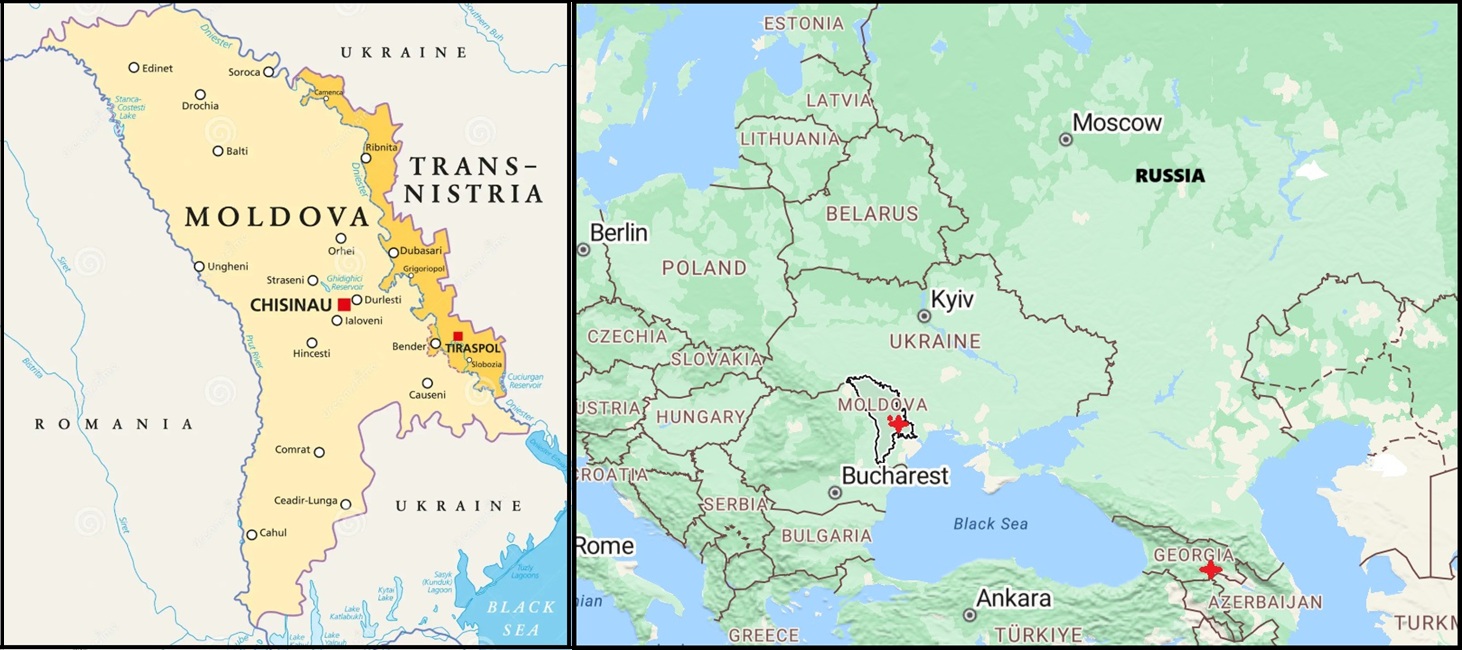
It is not hyperbole to think the Moldovan election today may possibly determine whether a NATO war with Russia takes place, or whether the NATO desire for conflict slowly begins to dissolve. {GO DEEP}
The small country squeezed between Romania (the largest NATO super-base constructed) and Ukraine, is located in a critical area. Whether Moldova joins the EU, or whether Moldova remains independently free from Brussels influence, is part of the outcome. The Moldova Parliamentary Elections are today.
The EU/NATO are at a zero-sum inflection point. THIS is the tinderbox.
There are roughly 2.5 million registered Moldovan voters living in Moldova. However, the govt of President Maia Sandu and her EU control agents expect 500,000+ votes from outside Moldova to determine the election outcome.
Of the 3,000 poll watchers, 900 members of the international coalition to influence critical elections (aka western intelligence operatives) are currently active in Moldova providing real-time voter feedback.
The non-pretenders will note the intelligence these operatives return helps western IC determine how many mail-in ballots are needed for EU/NATO success to support President Sandu.
There are 300 polling stations opened across 41 countries. Britain hosts 24 stations, Germany 36, Italy 75, and Russia has two.
Voting in Moldova ends at 21:00 local (9pm)/15:00 ET, but mail in ballots will continue flowing. The first preliminary results should become known around 23:00 (11pm local). [5pm Eastern US.]
“About a year ago, while I was stuck in Paris, the French intelligence services reached out to me through an intermediary, asking me to help the Moldovan government censor certain Telegram channels ahead of the presidential elections in Moldova.
After reviewing the channels flagged by French (and Moldovan) authorities, we identified a few that clearly violated our rules and removed them. The intermediary then informed me that, in exchange for this cooperation, French intelligence would “say good things” about me to the judge who had ordered my arrest in August last year.
This was unacceptable on several levels. If the agency did in fact approach the judge — it constituted an attempt to interfere in the judicial process. If it did not, and merely claimed to have done so, then it was exploiting my legal situation in France to influence political developments in Eastern Europe — a pattern we have also observed in Romania
Shortly thereafter, the Telegram team received a second list of so-called “problematic” Moldovan channels. Unlike the first, nearly all of these channels were legitimate and fully compliant with our rules. Their only commonality was that they voiced political positions disliked by the French and Moldovan governments.
We refused to act on this request.
Telegram is committed to freedom of speech and will not remove content for political reasons. I will continue to expose every attempt to pressure Telegram into censoring our platform. Stay tuned.” (source)
Most people think of this Moldovan election as something happening “over there.” However, the outcome of this election will have ramifications for U.S. policy, up to and including potential war with Russia.
Posted originally on Sep 16, 2025 by Martin Armstrong |
Keith Kellogg’s stupid statement that Russia’s war in Ukraine would end very quickly if Beijing withdrew its support for Moscow. He made the comments at a security conference in Kiev. He called Russia the “junior partner” to China and said it is losing the war in Ukraine. Such a statement is just insane. Like Iraq, nobody ever asked, if Ukraine defeats Russia, what would happen in Russia? This would be like saying What if Mexico invaded the USA and won?
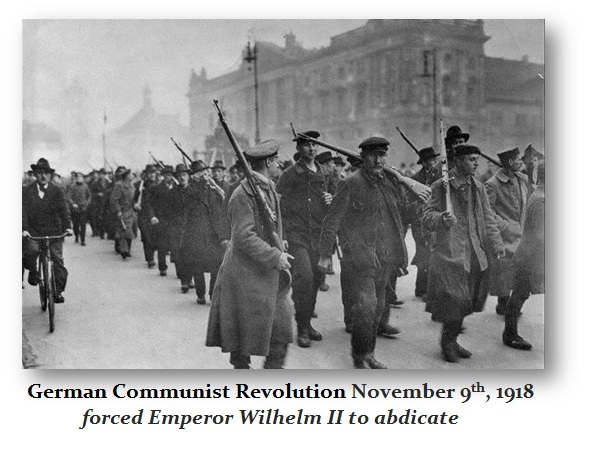
After Germany lost World War I, there was a revolution that overthrew the monarchy, and the Weimar Republic was born, which then ended in hyperinflation. Even the Russian Revolution of 1917 was enabled by Russia’s disastrous performance in WWI, including massive casualties and economic collapse, which sparked widespread strikes and mutinies. The Tsar abdicated in March 1917, ending 300 years of Romanov rule; the Bolsheviks then seized power in November, leading to civil war and the Soviet Union.
Austria collapsed in 1918 after losing World War I. The empire’s multi-ethnic collapse after defeat led to ethnic revolts and declarations of independence in Hungary, Czechoslovakia, and elsewhere. The monarchy ended in November 1918, fragmenting into nation-states amid famine and military desertions.
The collapse of the Ottoman Empire also took place after World War I. The Turkish War of Independence and the abolition of the sultanate (1919–1923) unfolded. Allied occupation post-armistice fueled nationalist resistance led by Mustafa Kemal Atatürk. The sultanate was abolished in 1922, and the caliphate in 1924, birthing the Republic of Turkey after revolutionary reforms.
Xinhai Revolution (1911) followed the defeat in the First Sino-Japanese War of 1895. Humiliating territorial losses to Japan exposed the dynasty’s weakness, sparking anti-Manchu sentiment and Sun Yat-sen’s republican movement. The last emperor abdicated in 1912, ending over 2,000 years of imperial rule and ushering in the Republic of China.
Franco-Prussian War of 1870 saw the Paris Commune and fall of the empire (1870–1871). Napoleon III’s defeat led to the Third Republic’s proclamation. Radical workers then revolted in the Paris Commune, which was brutally suppressed, but the monarchy was permanently ousted.
These modern historical events illustrate a pattern without having to catalogue all the countless such events throughout human history. Wars drain resources, erode legitimacy, and amplify grievances (e.g., food shortages, casualties), creating fertile ground for revolutionaries. Not all post-war unrest leads to full regime change—e.g., Bulgaria’s monarchy survived WWI initially, only falling later in 1944. Nonetheless, these are clear instances of direct causation between revolution and the loss of a previous war.
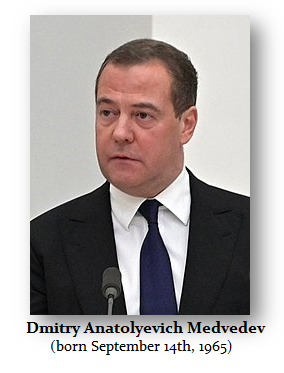
In a post on his Telegram channel, Medvedev made the realistic statement that granting NATO members permission to down Russian drones operating in Ukrainian airspace would mean “war between the Alliance and Russia.” His comments followed growing calls in Europe and NATO to intervene in the war, demanding stronger Western action against Russia for its drone incursions while supporting Ukraine to use Western long-range missiles to attack even Moscow. On Sept. 12, Bundestag Defense Committee Chair Thomas Röwekamp urged NATO to begin intercepting Russian drones over Ukraine.
I have repeatedly stated that the psychological war tactic is that you MUST claim that an adversary has attacked you to get people to sign up. The support hasn’t been this low since 2022. This is why false flags are so important. They are used to claim you have been attacked, and then the common people will sign up to die on the battlefield for a noble cause.
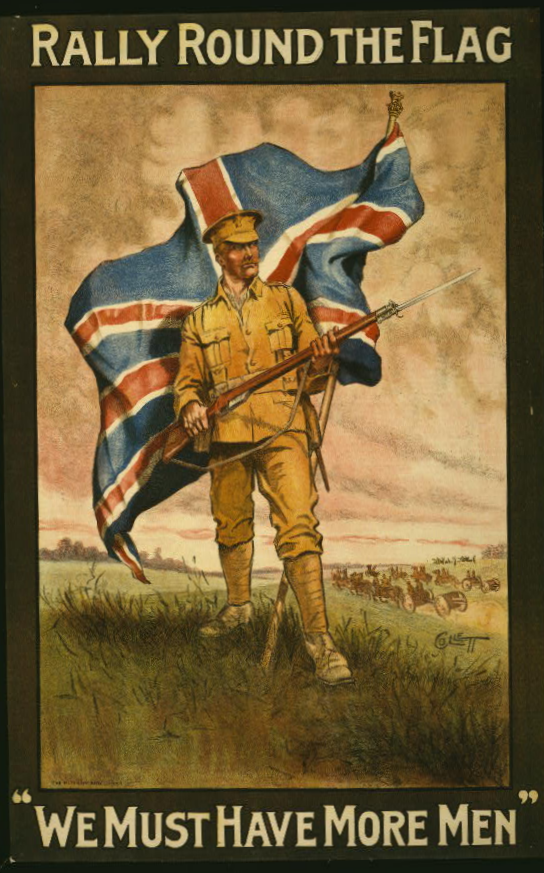
That works on all sides. A new poll made by the independent Russian institute Levada shows that the Russians are growing tired of the war in Ukraine. The poll showed that 66%, or roughly two out of three, of the participants want the Kremlin to engage in peace negotiations with Ukraine. That is the highest number since 2022, when the war began. If NATO attacks Russia using a false flag, this will support the Rally Around the Flag for Russia. Let’s face it. Russians are treated with disdain as were the Jews before World War II. That is not a scenario that implies world peace lies ahead.
Senior military leaders from NATO member states have publicly assessed that the alliance would prevail in a conventional war against Russia relatively quickly due to overwhelming advantages in personnel (over 3.4 million active troops vs. Russia’s 1.3 million), aircraft (22,000+ vs. 4,000), ships (1,100+ vs. 400), defense spending (3.5 times Russia’s), and GDP (20 times larger).
In a February 2024 speech, UK Chief of the Defence Staff Admiral Sir Tony Radakin stated that “NATO would defeat Russia quickly,” citing Russia’s struggles in Ukraine as evidence of its military weaknesses and NATO’s growing strength with the addition of Finland and Sweden. Similarly, analyses from outlets like Al Jazeera and The Week conclude that NATO’s integrated command, superior training, and equipment would lead to a “quick” conventional victory. However, they warn that this could escalate to nuclear risks if Russia faces total defeat. As I have said, if I have a gun and you break into my house and threaten to kill me, I think I may shoot back.
Sensational claims, such as NATO submarines “destroying Russia in 30 seconds,” appear in YouTube videos and informal discussions but stem from hyperbolic speculation about nuclear scenarios, not official statements. Recent X posts echo debates on NATO’s superiority but often tie it to broader geopolitical tensions without referencing its past defeats. Overall, while NATO officials project confidence in deterrence, they prioritize avoiding direct war over public victory projections.
This push for war with Russia leaves out TWO critical factors
(1) China will support Russia because it knows it will be next, as they plainly told Kallas.
(2) This will turn nuclear, and Europe, with all its conventional power, can be turned to dust in minutes, not days.
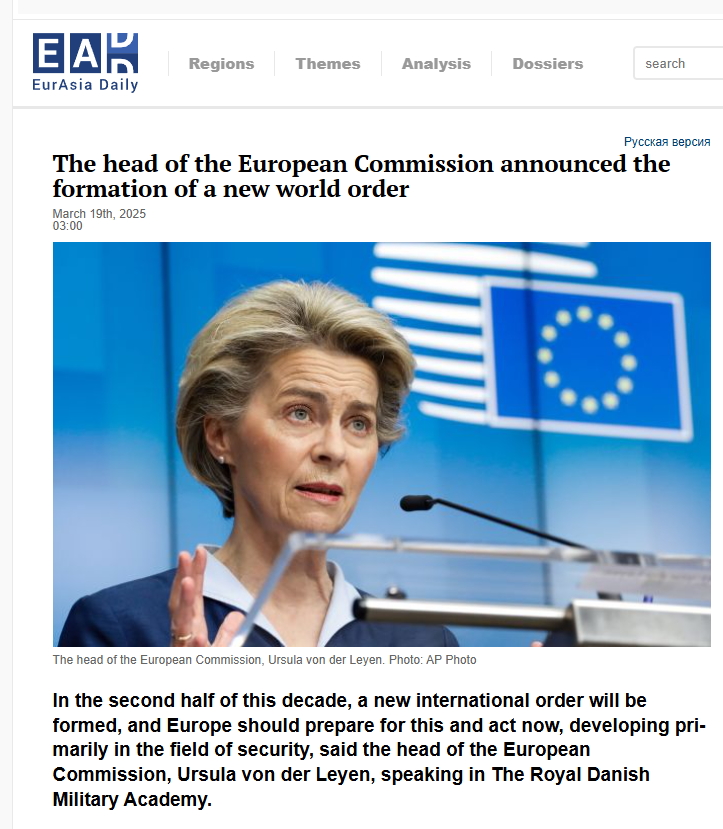
“Europe is ready to take a step forward. We are ready to take control of the changes that are inevitable. Because we can’t let history push us around. This means that it is necessary to act now. Acting on a large scale is an indispensable condition for speed, scale and strength by 2030 … By 2030 Europe should have a strong European defense structure,” Ursula said.
This drone shot down in Poland from EVERY source I have states that this is a FALSE FLAG and there is no evidence that this every invaded Polish airspace. They desperately need to create a False Flag, get gullible people to sign their own death wish, so these failed EU leaders can keep their pensions. Ursula told the EU Parliament with great theatrics:
“Battle lines for a new world order based on power are being drawn right now,” von der Leyen told the European Parliament in her annual State of the EU address.
“So, yes, Europe must fight. For its place in a world in which many major powers are either ambivalent or openly hostile to Europe,” she said.
Putin is the smartest and responsible world leader at the table today. Remove him, and we will get an emotional leader like Medvedev. Speculating on a post-Putin Russia is inherently uncertain, as the regime’s opacity and Putin’s tight control over security services make a smooth transition debatable. An overthrow—whether via coup, elite infighting, or sudden death—would likely trigger a power struggle among siloviki (security elites), oligarchs, and technocrats, potentially leading to instability or even fragmentation. I would emphasize that no apparent clear heir exists, and the outcome depends on the circumstances: a managed handover (unlikely in an overthrow) versus chaotic removal.
I would list the potential replacements, prioritize loyalty to the current system, hawkish stances on Ukraine/NATO, and control over key institutions like the FSB, military, or economy, which will all come into play. Dmitry Medvedev is indeed a contender due to his proximity to Putin, but he’s not the top pick—his role is often seen as that of a “bad cop” provocateur rather than a unifying leader. Perhaps, but we are looking at an outright statement from the EU that Russia must be defeated and obliterated. We are not talking about just pushing Russia out of Ukraine.
Kaja Kallas, a ruthless Neocon, openly calls for the total destruction and breakup of Russia. This is the total destruction of the country. That is not something that should be taken lightly. That is the justification for nuclear war. Kallas is a greater threat to the EU than Putin.
MY LIST OF CONTENDERS:
Mikhail Mishustin, Prime Minister Nikolai Patrushev, Deputy Chair, Security Council (former FSB head) Sergei Sobyanin, Moscow Mayor Dmitry Medvedev, Deputy Chair, Security Council Andrei Belousov, Defense Minister Alexei Dyumin, Tula Governor (ex-bodyguard) Sergei Kiriyenko, First Deputy Chief of Staff
Medvedev’s name surfaces due to his history (tandem with Putin in 2008-2012) and recent high-profile positioning him as a “nuclear-ready” hardliner who could rally nationalists. X discussions often call him the “natural successor” for stability. However, he’s rarely ranked #1 in expert assessments—his provocative style (e.g., 2025 threats sparking U.S. sub deployments) makes him a Kremlin mouthpiece, not a consolidator. Others see him as a fallback, not a frontrunner, due to reputational damage from past “liberal” image and scandals. In an overthrow, elites might prefer Mishustin or Patrushev for their institutional grip.
Keep in mind that Khruschev was overthrown in a coup, and he was usurped by Bresnev because of his reckless handling of the Cuban Missile Crisis.
Post-Stalin USSR saw infighting; a similar “vicious struggle” would be likely if Russia were defeated in Ukraine, with FSB vs. military clashes. No democratic shift should be expected. Any successor would most likely double down on authoritarianism and anti-West policies, and any hope of world peace will be completely obliterated.
Then, for a coup, any replacement inherits a quagmire; hardliners like Patrushev or Medvedev might escalate, while technocrats like Mishustin seek de-escalation for economic relief.
In summary, Mishustin or Patrushev edge out as most probable for their balance of competence and control, but Medvedev remains a wildcard—loyal enough for continuity, radical enough for drama. Russia after Putin looks more like Putinism 2.0 than reform. This is all upset if NATO pushes its agenda to destroy Russia and break it up, strip mining its assets. This goal, as articulated in part by Kallas, warrants a fight to the death with nukes, and in this case, I would put my money on Medvedev, who has the high-profile that would become more valuable when confronted with the destruction of Russia, not with just pushing it out of Ukraine.
Posted originally on Sep 15, 2025 by Martin Armstrong
QUESTION: I believe you have said that the United States practices the law of tyrants, conspiracy, which only proves a thought crime, not that you committed a crime. Is this why you say we are doomed, because nobody will do real legal reform?
Wes
ANSWER: Our legal system adopted the tyranny of the king and replaced him with the Department of JUST US. Its combination of the Pinkerton rule, broad federal statutes like RICO, and the strategic, frequent use by prosecutors makes American conspiracy law one of the most potent and expansive in the world. The United States has the most anti-human rights legal system on the planet. For example, under Canon Law used in France, they cannot compel any family member to testify against you. In the United States, they can imprison your children until they testify against you. The only privilege is granted to a spouse or a priest. Then they will use a divorce to get around the spouse rule. Under the Canon law of the Catholic Church, the sanctity of the family unit comes first. Under English Common Law, precedent takes precedent. We had a revolution against the king’s tyranny, replacing him with local tyranny.
They love to call Russia and China authoritarian and communist. But look at the stats. You have a 340% greater chance of going to jail in the United States compared to China. The United States has the highest percentage of its population in prison of any country in the world, so much for liberty. Suppose you lie to a government official; that is perjury, punishable by up to 5 years. If a government official lies to you, that is legal.
Without the rule of law, civilization crumbles. Courts rule in favor of the government. Rarely will you find a judge who will truly defend the Constitution, and good luck in prosecuting a judge or a prosecutor.
I have created this site to help people have fun in the kitchen. I write about enjoying life both in and out of my kitchen. Life is short! Make the most of it and enjoy!
This is a library of News Events not reported by the Main Stream Media documenting & connecting the dots on How the Obama Marxist Liberal agenda is destroying America




 Centinel2012