Free Home Loans for Illegal Migrants in California


Posted originally on Mar 8, 2024 By Martin Armstrong

Leaving California

Liberal California lawmakers are proposing new legislation that would grant illegal migrants zero-down, zero payment home loans. Assemblyman Joaquin Arambula, D-Fresno, who penned the bill, states, “The social and economic benefits of homeownership should be available to everyone.” This completely insolent maneuver is a slap in the face to all taxpaying citizens who can barely afford homes of their own.

The program would expand the California Dream for All Shared Appreciation Loans that began in 2023 with a $300 million budget intended to house 2,300 applicants. This fund failed in 11 days as the people who pass these laws have absolutely no concept of basic finance. This time around, they’re ensuring that only people who do not work full-time will be qualified as the new qualifications are that someone must earn under 120% of the median county income, and be the first GENERATION in their family to own a home on US soil.

The changes to the failed legislation is as follows:

LEGISLATIVE COUNSEL’S DIGEST

AB 1840, as amended, Arambula. California Dream for All Program: first-time homebuyers. eligibility.

Existing law establishes the California Housing Finance Agency in the Department of Housing and Community Development, and authorizes the agency to, among other things, make loans to finance affordable housing, including residential structures, housing developments, multifamily rental housing, special needs housing, and other forms of housing, as specified. Existing law establishes the California Dream for All Program to provide shared appreciation loans to qualified first-time homebuyers, as specified. Existing law establishes the California Dream for All Fund, which is continuously appropriated for expenditure pursuant to the program and defraying the administrative costs for the agency. Existing law defines “first-time homebuyer” for these purposes. Existing law authorizes moneys deposited into the fund to include, among other moneys, appropriations from the Legislature from the General Fund or other state fund.

This bill would specify that the definition of “first-time homebuyer” includes, but is not limited to, undocumented persons. an applicant under the program shall not be disqualified solely based on the applicant’s immigration status. By expanding the persons eligible to receive moneys from a continuously appropriated fund, this bill would make an appropriation. The bill would recast the fund so that appropriations from the Legislature from the General Fund or other state fund are deposited into the California Dream for All Subaccount, which the bill would create and make available upon appropriation by the Legislature for specified purposes.

In fact, this is not a “loan,” but another taxpayer-subsidized program, as qualified applicants will receive the funds to put 20% down on a home without making a payment on the loan or to the CHFA. The funds will only need to be repaid if the borrower sells or refinances the home, but the property may be held for an indefinite amount of time.

California has the largest homeless population in the nation who are discarded members of society, even the veterans who served our nation. The average price of a home in California is about $750,709 based on Zillow’s estimates, marking a 4.4% YoY increase, which makes a typical 20% downpayment around $150,141.80. Due to high prices, California boasts the second largest renter-occupied market in the nation behind New York, with 49.7% of the population opting to rent largely out of necessity.

This should receive bipartisan backlash and open the eyes of even the most liberal citizens. The government is using the resources it collects from you via taxation to push a political agenda through the use of illegal unvetted migrants who are toppling state budgets and destroying America from within.

Scared of the National Debt? You Should Be.


Posted originally on Mar 7, 2024 By Martin Armstrong 

NationalDebtNYCVBillboard

A new billboard launched in New York City’s Times Square is sounding the alarm on America’s growing national debt crisis. “Scared of the national debt? You should be.” US national debt spiked past $34 trillion at the top of the year and continues to rise due to massive spending packages. Now that America is committed to funding two largescale wars and 7.2+ million new migrants, America will continue sinking deeper in a hole.

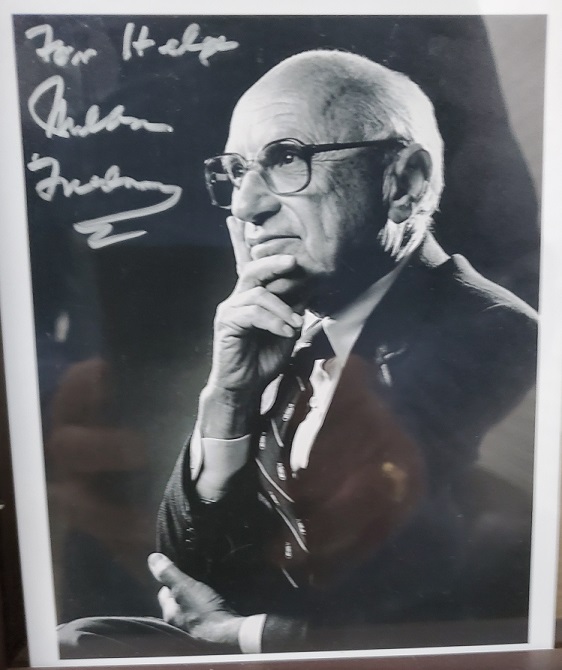
The Committee to Unleash Prosperity (CTUP) funded the billboard and said its aim to inform the voting public on the policies that will destroy this nation. CTUP says that this is a bipartisan problem that must be revealed to average person. Their website quotes Milton Friedman:

“Keep your eye on one thing and one thing only: how much government is spending, because that’s the true tax … If you’re not paying for it in the form of explicit taxes, you’re paying for it indirectly in the form of inflation or in the form of borrowing. The thing you should keep your eye on is what government spends, and the real problem is to hold down government spending as a fraction of our income, and if you do that, you can stop worrying about the debt.”
Friedman Milton Autograph

The average person does not realize that these “free” aid packages to Ukraine, Israel, Taiwan, the migrants, climate change, etc., come at the expense of the US taxpayers. YOU are paying for all of these measures. Government has and will raise taxes in order to fund these fiscal measures but they will NEVER collect enough revenue from the people to cover their spending. Then these measures lead to rising inflation where goods cost significantly more and our dollar is worth significantly less.

The Congressional Budget Office stated that national debt reached 97% of GDP by the end of 2022.  I repeatedly point to Jerome Powell’s 60 Minute interview where he breaks with Washington to point out how utterly unsustainable government policy has become. “How do you asses the national debt?” the interviewer questioned the Fed chairman. “We mostly try very hard not to comment on fiscal policy and instruct Congress on how to do their job,” Powell answered, adding that Congress has oversight on the Fed and not the other way around.

@60minutes

60 Minutes witnessed migrants struggling to get through coils of sharp wire to illegally enter the U.S. #60minutes #eaglepasstx #borderpatrol #usborder #migrants

♬ original sound – 60 Minutes

“In the long run, the US is on an unsustainable fiscal path. The US federal government is on an unsustainable fiscal path and that just means that the debt is growing faster than the economy,” Powell finally warned, later adding, “effectively, we are borrowing from future generations.” He warned that we must begin to prioritize fiscal policy immediately to fix this unending crisis. Again, his comments were unprecedented as his agency is largely unable to criticize Washington. How is the Federal Reserve supposed to regulate price stability when their overlords are doing everything possible to steer the nation’s economy off the deep end?

So what can the public do and what’s the point of this billboard? It begins with your voice and ends with your vote. Stop supporting these endless wars, they are only hurting the nation from within and are NOT meant to attain victory or liberate anyone. We are not helping the people of Ukraine by prolonging their war. We are not saving the world by throwing money at climate change policies. We simply do not have the resources to fund millions of migrants who continue to show up at the border every minute. All of these policies are hurting the economy and, ultimately, the future of America and the American people.

Why Is This Prominent Investor Making This Huge Move? (Ep. 2151) – 12/15/2023


Posted originally on Rumble By Dan Bongino on:Dec 15, 11:00 am EST

Bank Acquisitions Coming 


Posted Originally on Dec 1, 2023 By Martin Armstrong 

Bank Broken

A recent report by KBW Regional Banking Index (KBW) suggests that Comerica, Zions, and First Horizon are at risk of being acquired by greater competitors. Larger banks with strong returns, such as Huntington, Fifth Third, M&T, and Regions Financial, are positioned to grow by acquiring smaller lenders. Additionally, KBW analysts noted that Western Alliance and Webster Financial could also consider selling themselves. The report highlights that regional banks with assets between $80 billion and $120 billion are facing increasing pressure on returns and profitability, making them potential targets for acquisition by larger rivals.

This analysis underscores the challenges faced by banks in this asset range, as they have the lowest structural returns among banks with at least $10 billion in assets, necessitating growth to help pay for upcoming regulations. The report also mentions that banks with higher returns, such as East West Bank, Popular Bank, and New York Community Bank, could end up as acquirers rather than targets. This analysis reflects the evolving landscape of the banking industry and the potential for consolidation among regional banks.

Three banks have already collapsed in the US this year. New proposed regulations would require banks with over $100 billion in assets to hold onto long-term debt equal to 3.5% of total assets or 6% of risk-weighted assets. Now banks just below the $100 billion mark will potentially face the burden of adhering to these new regulations. Regional bank shares have fallen by over 20% this year. Smaller banks are already struggling to remain profitable, while midsized banks will be forced to join a larger banking organization to stay afloat.

Col. MacGregor’s Dire Warning: “I Think The Banks Are Going Down For 2-3 Weeks”


POsted originally on Rumble on: Man in America Nov 6, 9:00 pm EST

US Govt Shutdown Over Ukraine?


Armstrong Economics Blog/Politics Re-Posted Sep 22, 2023 by Martin Armstrong

It happens every year – the US Congress cannot disagree so they may simply shut down. They’re our public servants but we permit them to throw their hands up and shrug that they cannot work together. One of the hot topic items right now is Ukraine, and with good reason as we are $3.3 trillion in debt but those in charge believe we have unlimited funds for Ukraine.

https://x.com/RandPaul/status/1704485590085812595?s=20

Senator Rand Paul refuses to continually aid Ukraine in the proxy war. “Today I’m putting congressional leadership & @POTUS on notice that I will oppose any effort to hold the federal government hostage for Ukraine funding,” Paul said on X, the social media platform formerly known as Twitter. “I will not consent to expedited passage of any spending measure that provides any more US aid to Ukraine.” Rand double-downed on his views in front of his peers, saying, “It’s as if no one has noticed that we have no extra money to send to Ukraine,” he said. “Our deficit this year will exceed $1.5 trillion. Borrowing money from China to send it to Ukraine makes no sense.”

We do not have the money to spend on Ukraine – period. The money funneled to the most corrupt European country comes from US taxpayers. Biden asked for another $24 billion for Ukraine last month. Some Republicans scoffed but there are neocons on both sides who want this war. “When will the aid requests, and when will the war end?” Rand asked the Senate. “Can someone explain what victory in Ukraine looks like? President Biden certainly can’t. His administration has failed to articulate a clear strategy or objective in this war, and Ukraine’s long-awaited counteroffensive has failed to make meaningful gains in the east.” There is no victory for Ukraine. The aftermath will be bloody and expensive, and people on both sides of the fight have declared that this will be a long war.

Republicans are a minority in the Senate. Schumer will do what it takes to push through all of Joe’s reckless spending budgets that he always exceeds. Congress needs to be held accountable. A business couldn’t simply say, “Hey, we do not know what to do. Let’s shutdown operations until we figure it out.” The No Pay for Congress During Default or Shutdown Act introduced by Brian Fitzpatrick (R-PA), and Abigail Spanberger, (D-VA), that would prevent members of Congress from receiving a paycheck in the event of a shutdown. Imagine that – having to work for your pay! James Lankford (R-PA) introduced a stricter bill dubbed the Prevent Government Shutdowns Act of 2023 that would forbid these politicians from returning home until a final decision is made. There are numerous measures on the table that should be signed into law to prevent lazy government workers from holding the United States hostage.

Let us not forget that America’s credit rating was downgraded by Moody’s because our politicians are incapable of running the country. Smart money has fled the public sector. There is absolutely no confidence in government anymore. The hundreds of billions to Ukraine must stop. One must wonder why government would threaten to shutdown over the topic of funding a foreign unaffiliated nation when the war does not benefit Americans in any way.

Interview: Martin Armstrong Predictions / Digital Currency & The End of Your Liberty


Armstrong Economics Blog/Armstrong in the Media Re-Posted Sep 3, 2023 by Martin Armstrong

Moody’s Slashes Bank Ratings


Aemstrong Economics Blog/Banking Crisis Re-Posted Aug 10, 2023 by Martin Armstrong

Moody’s has cut the credit ratings of ten small and mid-sized banks. The agency cited higher funding costs, rising interest rates, and increased risked due to the failing commercial real estate sector. M&T Bank, BOK Financial, Webster Financial, Pinnacle Financial, Old National Bancorp, and Fulton Financial were among the banks that received downgraded ratings.

But it does not stop there. Moody’s is also reviewing six giant banks, including Trist Financial, Bank of New York, Cullen/Frost Bankers, State Street, Northern Trust, and US Bancorp, as they may also be downgraded. Eleven other banks such as Capital One, Citizens Financial, and Fifth Third Bancorp has their ratings changed to negative. Moody’s predicts a “mild recession” on the horizon for 2024. They believe the quality of assets will decline with certain banks facing increased risks due to their commercial real estate (CRE) portfolios.

“U.S. banks continue to contend with interest rate and asset-liability management (ALM) risks with implications for liquidity and capital, as the wind-down of unconventional monetary policy drains systemwide deposits and higher interest rates depress the value of fixed-rate assets,” Moody’s analysts wrote in an accompanying research note explaining the decision. The agency also noted that investors are vulnerable “to a loss of confidence.”

The US banking system is failing. Moody’s noted that rising interest rates would “exacerbate” the ongoing banking crisis, and they foresee the Federal Reserve continuing with hikes for longer than anticipated since inflation was never transitory. The Fed maintained artificially low rates for too long, and their attempts to ease inflation by hiking rates are failing, as is the ECB’s. We will see the behemoths like JPMorgan Chase sypher in failing banks, making it easier for agencies to switch to CBDC. European banks will be the first to fail, so keep an eye on Europe.

New Interview with Laura-Lynn Tyler Thompson


Armstrong Economics Blog/Armstrong in the Media Re-Posted Aug 5, 2023 by Martin Armstrong

Martin Armstrong joins us today. We’ll talk about the real motivations behind the war in the Ukraine and the future of fiat (paper) currency and why tangible assets like gold and silver should be considered as part of your financial planning.

They See It Coming – Fitch Joins S&P to Downgrade USA Credit Rating


Posted originally on the CTH on August 2, 2023 | Sundance 

Collapse is never a sudden occurrence; it is an outcome of gradual erosion over time. A weakening that takes place almost invisible to those who pass through the construct, until eventually, at an uneventful time in the mechanics of history, the process gives way.

Fitch has joined with the prior position of Standard & Poors to downgrade the USA credit rating. The weight of debt, in combination with reverberations from the continued hammering deep inside the political fundamental change operation, has triggered another flare.

In the bigger picture, this is a self-fulfilling prophecy driven by the latest focus on unsustainable economic policy, aka The Green New Deal. The efforts of the fiscal, monetary and economic policy are all aligned to shrink the U.S. economy, thereby creating the era of “sustainable energy” a possibility. Unfortunately, this is akin to a household intentionally shrinking their income while at the same time taking on credit card debt. The process itself is not sustainable.

(Reuters) – Rating agency Fitch on Tuesday downgraded the U.S. government’s top credit rating, a move that drew an angry response from the White House and surprised investors, coming despite the resolution of the debt ceiling crisis two months ago.

Traders’ immediate response was to embark on a safe-haven push out of stocks and into government bonds and the dollar.

Fitch downgraded the United States to AA+ from AAA, citing fiscal deterioration over the next three years and repeated down-the-wire debt ceiling negotiations that threaten the government’s ability to pay its bills.

[…] “In Fitch’s view, there has been a steady deterioration in standards of governance over the last 20 years, including on fiscal and debt matters, notwithstanding the June bipartisan agreement to suspend the debt limit until January 2025,” the rating agency said in a statement.

U.S. Treasury Secretary Janet Yellen disagreed with Fitch’s downgrade, in a statement that called it “arbitrary and based on outdated data.”

[…] In a previous debt ceiling crisis in 2011, Standard & Poor’s cut the top “AAA” rating by one notch a few days after a debt ceiling deal, citing political polarization and insufficient steps to right the nation’s fiscal outlook. Its rating is still “AA-plus” – its second highest.

After that downgrade, U.S. stocks tumbled and the impact of the rating cut was felt across global stock markets, which were in the throes of the euro zone financial meltdown.

In May, Fitch had placed its “AAA” rating of U.S. sovereign debt on watch for a possible downgrade, citing downside risks, including political brinkmanship and a growing debt burden. (read More)

What do Barack Obama and Joe Biden have in common?  They were both in office, executing an identical economic, fiscal and monetary policy, when the USA credit was downgraded.