A Pragmatic Perspective on the Iran Conflict


Posted originally on CTH on April 12, 2026 | Sundance 

Many people have requested that I outline some context on the Iran conflict; so, here it is.

What follows is my own researched perspective on the challenge that President Trump is facing.  I anticipate the non-interventionists will not be happy with it, and also the Israel First crowd will not like the brutal pragmatism of it. Alas, having spent a great deal of time watching things unfold, here’s my take.
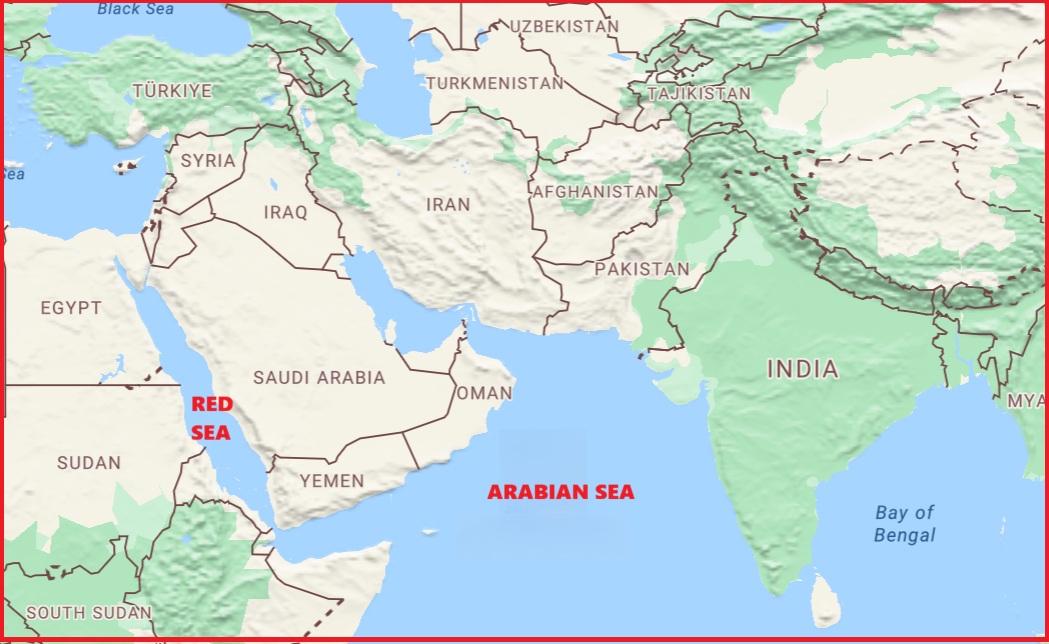
Start with this question: Considering all the years the debate over Iran’s nuclear ambitions has persisted, why haven’t its strongest allies, China and Russia, ever provided Iran with a nuclear weapon?

Now, before anyone jumps into the nuclear non-proliferation perspective, let me remind you we are not going to pretend things here. You can pretend that Beijing didn’t give the DPRK nuclear weapons by pretending that North Korea isn’t a proxy province of China. Or you can stop pretending. The choice is yours!

So, what’s different?  Well, in the DPRK example, Beijing holds the control mechanism.  For Iran, giving religious fanatics a nuclear weapon would be tantamount to giving the Muslim Brotherhood the ability to start World War III.

As recently noted, Saudi Arabia’s Crown Prince Mohammed Bin Salman urged President Trump not to back down from this moment of consequence and to eliminate the Iranian threat once and for all. MbS is about as close to a Middle East pragmatist as you can find.  In response, a desperate British Prime Minister Keir Starmer rushed to Saudi Arabia hoping to change the position of MbS.  Great Britain is almost out of fuel.

That’s a good place to start looking at the regional perspectives.
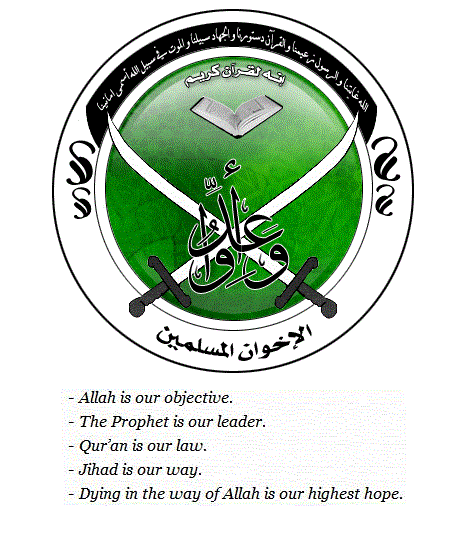
Islamic extremists, religious zealots, fanatics, cannot be trusted with nuclear weapons.  Even those who are sympathetic to the Iranian regime, particularly Turkey and Qatar, are pragmatic about this issue.

Nuclear weapons must never fall into the hands of Hezbollah, Hamas, al-Qaeda, the Islamic State (ISIS), al-Nusra, and all of the extreme -perhaps most authentic- factions of Islam are included in that outlook.

While it is true that Israel has carried out a brutal, over-the-top, offensive against Hamas in Gaza, it is also true that Egypt – via President al-Sisi, spent two years destroying Hamas terror tunnels on the Egyptian-Gaza border and installed a five-layer security perimeter to keep the Islamist “Palestinians” out of the Sinai.

President Sisi (Egypt) and King Abdullah (Jordan) do not want to import Palestinian Hamas promoters, despite their very public opposition to the offensive methods of Israeli Prime Minister Benjamin Netanyahu.

♦ The Muslim Brotherhood represents the political face of extremist (authentic) Islam.  Turkish President Recep Erdogan is one of the zookeepers keeping the big cat cages under control, while simultaneously using the big cats to draw an audience.

Qatar is the banking side of The Muslim Brotherhood, feeding the big cats and providing them indulgences to keep them satiated.  The intelligence services of Israel (Mossad) and the USA (CIA) are involved in this process.

When it comes to authentic Islam, you might say that essentially Mossad and the CIA are the physical cages, while Turkey (Recep Erdogan) and Qatar (Amir Sheikh Hamad bin Khalifa Al Thani) are the zookeepers.

Turkey the gateway to Europe, is a NATO member not a NATO ally. Qatar has a foot in both the lawfully constrained western world and a foot in the religious fanaticism world.  While the tightrope walking might seem difficult both Turkish President Recep Erdogan and Qatari Amir Sheikh Hamad bin Khalifa Al Thani have navigated this dynamic as part of their own influence and affluence operation.

That said, none of the names involved thus far want the rabid faction of the big cats to get a nuclear weapon.  President Donald Trump does not want the rabid cats to get a nuclear weapon.  None of the voices in the Middle East, sans the fanatical Iranian religious faction, want Iran to have a nuclear weapon.

All of these various regional players have their own individual nuance to retain influence and power.  However, on the issue of nuclear weapons they all agree – Iran must never have them, because Iran would represent the biggest threat in the entire world to using them.  [Name a weapon that Iran has never used.]
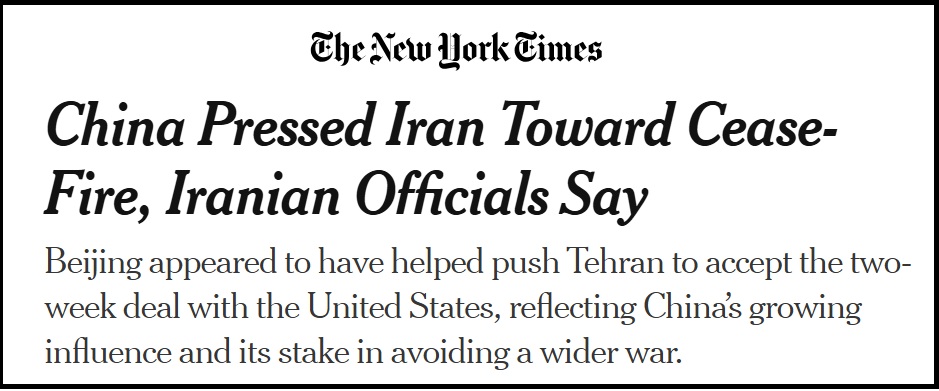
None of Iran’s allies – not Pakistan, not Russia and not China – would ever fathom giving Iran a nuclear weapon, because the leadership of Iran is sketchy, unstable and, well, potentially batsh!t crazy enough to use it.  The Iranian Revolutionary Guard Corps (IRGC) are just as zero-sum minded as the Islamic clerics they protect.

This accurate and factual baseline of common interest is why you do not see any of the regional voices opposing President Trump’s effort to ensure that Iran NEVER HAS a nuclear weapon?

How strong is that sense of common interest?…  Strong enough to accept Israel bombing Iran in support of that common interest.  Turkey, aligned in sympathetic voice with the Muslim Brotherhood, hates Israel; but they hate Israel slightly less than they hate the thought of Iran having a nuclear weapon.

So, against the backdrop of Iran rejecting any deal that precludes them from having a nuclear weapon, where does that leave things?

It leaves the entire Middle East in a position to continue supporting President Trump’s effort to stop Iran from ever having a nuclear weapon.  It really is that simple.

Turkey, Saudi Arabia, Egypt, Syria, The UAE, Bahrain, Kuwait, Jordan and yes, even Qatar, are willing to endure a considerable amount of economic pain and internal friction in order to get to the place where Iran stops their nuclear objective.

It’s the Iranian nuclear threat that’s the problem.  It’s the Iranian nuclear threat that has always been the problem.

This time, President Donald J Trump is trying to deal with that threat once and for all.

Europe is going bananas because they need oil/gas. The U.K is going bananas because they need oil/gas. Asia is really in a bad place because they too need oil/gas.  The energy problem goes all the way to Australia because they too need oil/gas.

The more a nation chased the net-zero carbon, climate change, global warming nonsense, the more they are exposed to the dire Straits of Hormuz.  Japan can hold out a little longer with reserves and China can ultimately make do with Russian provision.

Which brings us to the point where President Trump is saying the U.S. will end up having to control the Strait of Hormuz, and we should look for an extension to the Russian sanction relief as a direct consequence of Iran rejecting the terms of JD Vance and the USA delegation.

Now, there are some who claim that Iran doesn’t want a nuclear weapon, and/or Iran has a fatwa against nuclear weapons.  These voices are ridiculous.  Think about the irrational logic of the claim: Iran is refusing to stop pursuing something they do not want.

♦ It can be argued that Israel is being opportunistic and leveraging the regional support for Trump toward their own interests and objectives.  It is a fair criticism to say the Israeli government of Benjamin Netanyahu is too militaristic and aggressive.  Israel’s continually aggressive posture makes it difficult to navigate the nuances of strong diplomacy.

In fact, both President Trump and Secretary of State Marco Rubio have stated the goals and objectives of the USA and Israel may not be aligned on all matters, and Turkish President Erdogan has been exceptionally critical of Israel’s continued military operation into Lebanon, presumably targeting Hezbollah.

However, there is no indication that Israel is directing President Trump on the issue of a denuclearized Iran.

On the issue of Iran never having nuclear weapons, it has been the stated policy of every U.S. administration for 40+ years, and on that issue the entire Middle East is in agreement.
Joint Statement from U.S Negotiators, Arab Partners, Turkey and Gaza Officials on Next Steps in Peace Plan


Posted originally on CTH on December 21, 2025 | Sundance

President Trump Special Emissary Steve Witkoff relays this official statement following meetings with U.S. Negotiators, Arab state partners, Turkey and Gaza officials about the next phase in the Israel-Gaza peace plan.

STEVE WITKOFF – “We, the representatives of the United States of America, the Arab Republic of Egypt, the State of Qatar, and the Republic of Türkiye, met yesterday in Miami to review the implementation of the first phase of the Gaza ceasefire and to advance preparations for the second phase.

The first phase has yielded progress, including expanded humanitarian assistance, the return of hostage bodies, partial force withdrawals, and a reduction in hostilities.

In our discussions regarding phase two, we emphasized enabling a governing body in Gaza under a unified Gazan authority to protect civilians and maintain public order.

We also discussed regional integration measures, including trade facilitation, infrastructure development, and cooperation on energy, water, and other shared resources, as essential to Gaza’s recovery, regional stability, and long-term prosperity.

In this context, we expressed our support for the near-term establishment and operationalization of the Board of Peace as a transitional administration for the civilian, security, and reconstruction tracks of the reconstruction. We reviewed next steps in the phased implementation of the Comprehensive Peace Plan for Gaza, underscoring the importance of sequencing, coordination, and effective monitoring in partnership with local Gazan institutions and international partners.

We reaffirm our full commitment to the entirety of the President’s 20-point peace plan and call on all parties to uphold their obligations, exercise restraint, and cooperate with monitoring arrangements. Further consultations will continue in the coming weeks to advance the implementation of phase two. (source)

It always seems odd to write Turkey, Egypt and Qatar working collaboratively when you consider the history of their rather oppositional relationship regarding the Muslim Brotherhood.  However, this collaboration highlights the nature of a very historic assembly for peace that President Trump was able to put together.

Secretary Rubio recently spoke about the current Gaza status:

QUESTION: Thank you. Returning to Gaza, what is the U.S. understanding of what Hamas is willing to concede on disarmament? Reports suggest that Hamas might hand over its heavy weapons but retain its smaller arms. Is the U.S. prepared to accept partial disarmament as sufficient in phase two?

SECRETARY RUBIO: Yeah, I’m not going to get into the details of those types of negotiations. Let me just couch it to you this way: Everyone wants peace. No one wants a return to a war. If Hamas is every in a position in the future that they can threaten or attack Israel, you’re not going to have peace, okay? You’re not going to convince anyone to invest money in Gaza if they believe another war is going to happen in two to three years. So, I would just ask everyone to focus on what are the kind of weaponries and capabilities that Hamas would need in order to threaten or attack Israel as a baseline for what disarmament needs to look like. Because you’re not going to have peace. If two years from now Hamas is launching rockets or killing Israelis or carrying out, God forbid, another 7th of October type terrorist attack and so forth, you’re not going to have peace. So, who is going to invest in a peace, who is going to invest in rebuilding a place, that’s going to get destroyed again in a future war? So that’s why disarmament is so critical.

Now, what that entails, we’re going to leave that to the technical teams to work on. It would have to be something obviously that they’re willing to agree to that our partners can push them and pressure them to agree to. It also has to be something that Israel agrees to. In order for that to work, both sides have to agree on it, and we need the space to do it. But that’s the way to think about it, okay? You cannot have a Hamas that can threaten Israel in the future. If they can, you won’t have peace. So that’s the goal.

QUESTION: Thank you, Mr. Secretary. You said a few moments ago that everyone wants peace for Gaza, and yet by any metric the Israelis are flouting the ceasefire that President Trump negotiated by killing an average of two children a day, not allowing the agreed-upon humanitarian aid into Gaza. How long can this continue? How long can the Israelis be allowed to show such disrespect to President Trump?

SECRETARY RUBIO: Well, look, that’s your characterization of it about the term “disrespect.” What I would say is this. This – we – this was – first of all, it was a miracle that it happened in the first place. We all understand how difficult it was for that to come to the conclusion that it did, where the actual – the bombing and everything else, the scale and scope of what we saw ended, all the hostages were released, and we have relative peace right now for the most part, despite the things you’re pointing to. That was very difficult.

But this is not easy. Peace is a verb. It’s not – it’s an action. It’s not a sentiment. Every single day will bring challenges. Every single day. We also have had instances, for example, over the last couple weeks where Hamas elements emerged from a tunnel, attached an explosive device to the side of a vehicle, and injured and almost killed Israeli soldiers. We still have this threat. We still have and see every single day Hamas openly taking steps to strengthen themselves with – inside of those places in Gaza that they still control. We saw early on the atrocities they were committing in the streets against people as they were trying to show people how strong they were.

So, I don’t think I’m standing here to tell you this is going to be easy. This is an hour-by-hour, day-by-day challenge. It’s one of the reasons why we have stood up this center there in – operating in Israel in partnership as well with another cell that exists in a regional country. It’s why every single day there are leading – there are meetings among both intelligence, diplomatic, and military officials of multiple countries that helped bring about this deal to manage this. And that’s why it is so critical, it is so critical and so key, that we move to complete this first phase, that we move to put in place the Board of Peace, get everybody to agree to be a part of it, move to put in place this Palestinian technocratic organization so that they can begin to provide some governance structure, and move to put in place the stabilization force.

That’s the goal here. But it’s not going to be easy. Every day will bring new challenges to that, and we recognize those challenges are coming from all sides.

QUESTION: Very quick follow-up. Who’s going to be – want to be a part of a stabilization force if Israel is effectively using Gaza as a free fire zone?

SECRETARY RUBIO: Well, these are the things we – that’s – these are the things that we’re working through right now. Again, that’s why it didn’t happen yesterday. That’s why we didn’t – I don’t mean yesterday literally. That means why we’re not there yet. This is the hard work of diplomacy and peacemaking. Peacemaking isn’t just signing a piece of paper. It’s actually complying with it. And compliance oftentimes requires – in many cases, in most cases requires – daily, constant follow-up and nurturing.

So that is why we are in such a hurry – and I say as a priority – to get to this point where we have the stabilization force in place overseen by the Board of Peace and ultimately a Palestinian technocratic entity that can increase in its capability to provide governance. The stronger they are, the weaker Hamas will be in terms of threatening Israel, and I think the more security Israel should feel and less need for some of these things to happen.

But no one is claiming this is going to be easy. We have to work on this every single day. We have people in this building and deployed abroad – this is all they do 24 hours a day, day after day, elements of the State Department, the Department of War, and all other agencies, and including Jared and Steve and even myself who talk or do something about – there isn’t a day in the last since we – this was signed two months ago – that haven’t had to do something with regards to making progress on the phases of the ceasefire.

[SOURCE]

The ISIS vers Obama, Round One goes to the ISIS


Mid East is sizzling: Armed US drones over Baghdad, Saudi, Jordanian tanks deploy

DEBKAfile Exclusive Analysis June 28, 2014, 8:23 PM (IDT)

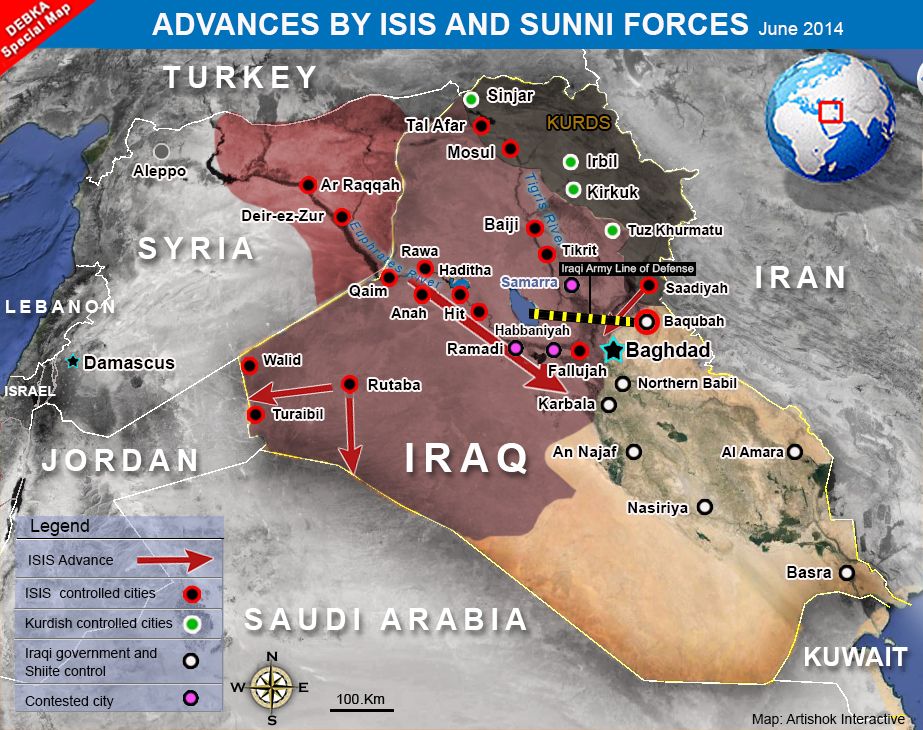
The Obama administration announced Friday, June 27, that unmanned aerial vehicles flying over Baghdad would henceforth be armed in order to defend the US Embassy in the Green Zone. The embassy was originally assigned the tasks of guardian of Iraq’s central government and symbol of post-Saddam national unity. These roles have remained out of reach ever since the Americans invaded Iraq in 2003. Today, the armed drones overhead are reduced to holding back the Islamic State of Iraq and the Levant (ISIS) and its local Sunni allies from overrunning the Green Zone and seizing the embassy, most of whose 5,000 staff were evacuated as a precaution.

iraqsyriaFull

President Barack Obama has again decreed that no US soldiers will take part in combat in Iraq. Therefore, American military personnel on the ground will be there to guide the drones to their targets. Those targets were defined Saturday, June 28, by Gen. Martin Dempsey, Chairman of the US Joint Chiefs of Staff, as striking at ISIS leaders and defending Iraq’s strategic facilities. He did not elaborate.

debkafile reports that he was referring to the Haditha dam on the Euphrates. ISIS fighters have been battered the town of Haditha on and off for some days. Its dam is the key to the water supply of most of Iraq, including Baghdad. With its capture, Al Qaeda’s affiliates will have gained control of northern Iraq’s oil refineries and pipeline networks.

US Secretary of State John Kerry in Jordan Friday laid out another piece of the Iraq-Syria imbroglio. He estimated that the Syrian rebel recruits enlisted from among the nearly one million Syrian refugees sheltering in Jordan could be deployed in Iraq for fighting ISIS. His words were accompanied by the Obama administration’s application to Congress for half a billion dollars to arm and train such a force. President Obama is therefore in the midst of yet another U-turn on the Syrian-Iraqi war scene – this one involving Israel too. Until now, the Syrian rebels undergoing training by US instructors in Jordan wre sent into southern Syria to hold a line up to the outskirts of Damascus and act as a buffer between the Syrian, Iranian, Hizballah and Iraqi Shiite militia units and the Israeli and Jordanian borders.

Their presence in this sector of the Syrian warfront was to have provided Washington with a bargaining chip against the Assad regime. This operation was run from an underground US-Jordanian-Israeli war room situated not far from the Jordanian capital of Amman. Kerry’s latest statement gave this bunker-command a new war focus and diverted Jordan-based Syrian rebel forces from their mission south of Damascus to contesting the rapidly-advancing Sunni Islamists in Iraq. Our military sources note that these forces – albeit with full US-Jordanian-Israeli intelligence and logistical back-up – were not an outstanding success in their Syrian mission and should not be expected to do much better in Iraq.

Elsewhere in the Middle East, the Lebanese army and Hizballah militia are bracing against the latest round of ISIS-engineered suicide bombing attacks, which was in fact launched last week with two explosions in Beirut – one by a female bomber. To the south of Lebanon, Israel’s unusually mild military retaliation against “terrorist targets” in Gaza for the swelling hail of rockets aimed day by day at Ashkelon, Hof Ashkelon and the Eshkol District , points to a decision by Israel’s government military leaders to avoid being dragged into the cauldron boiling up around its borders.

Israel’s armed forces and three intelligence services, the Shin Bet, Mossad and AMAN,  are in fact nursing the blow to their prestige from the failure of their massive, all-out hunt of two weeks discover the three teenagers abducted on June 10. Some serious soul-searching is taking place about the wisdom of throwing all of the IDF’s deterrent strength against the kidnappers, who have since been identified as a pair of Hamas operatives, who outsmarted Israel’s mightiest resources and vanished off the face of the earth with their captives.

Israel’s conduct in this episode appears in retrospect to have been ruled less by sense than by emotions. Prime Minister Binyamin Netanyahu was sidetracked by his fixed desire for a reckoning with Hamas and with the Palestinian Authority Chairman Mahmoud Abbas for dealing with this extremist group – notwithstanding their near-irrelevance to the main stream of events in the region. Three months after Israel’s National Intelligence Estimate judged the prospect of a conventional war close to nil, Al Qaeda’s cohorts are grabbing wide stretches of Iraq and knocking on the doors of Jordan and Saudi Arabia.

Iran, Hizballah – and now ISIS – must be wondering what makes Israel tick in view of this behavior.  Abu Bakr Al-Baghdadi’s jihadis are fighting under the flag of the Islamist State of Iraq and the Levant. For them, the Levant is not just Syria and Lebanon and Jordan, but also “Palestine” i.e. Israel. Jerusalem had better wake up fast. Jordan and Saudi Arabia have deployed tank divisions on their borders against ISIS encroachments. The two kingdoms are Israel’s eastern and southern next door neighbors.