President Trump Announces U.S. Insurance Underwriting for “All Maritime Trade Flowing Through the Gulf” Along with U.S. Military Escorts


Posted originally on CTH on March 3, 2026 | Sundance

♦ First blow, the Trump tariffs hit Beijing hardest. ♦ Second blow, the Beijing tentacle on the Panama Canal is severed.  ♦ Third blow, global tariff threats changed the risk dynamic for southeast Asia countries who acted as transnational shippers for China. ♦ Fourth blow, cheap sanctioned oil from Venezuela was cut-off. ♦ Now, the fifth blow; cheap, sanctioned Iranian oil is disrupted.

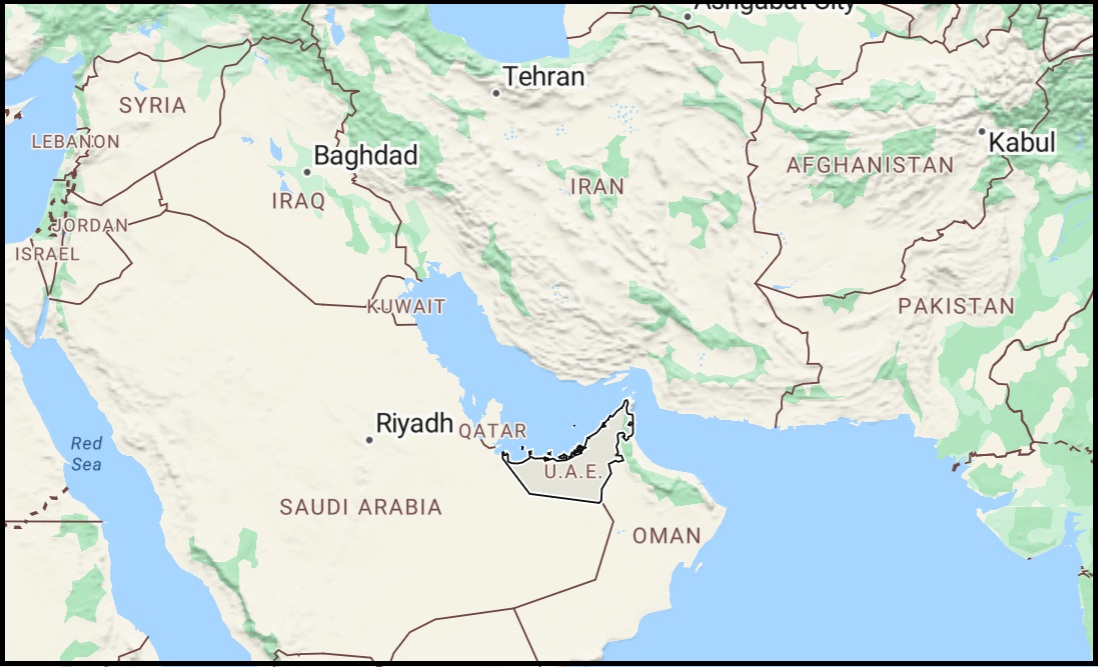
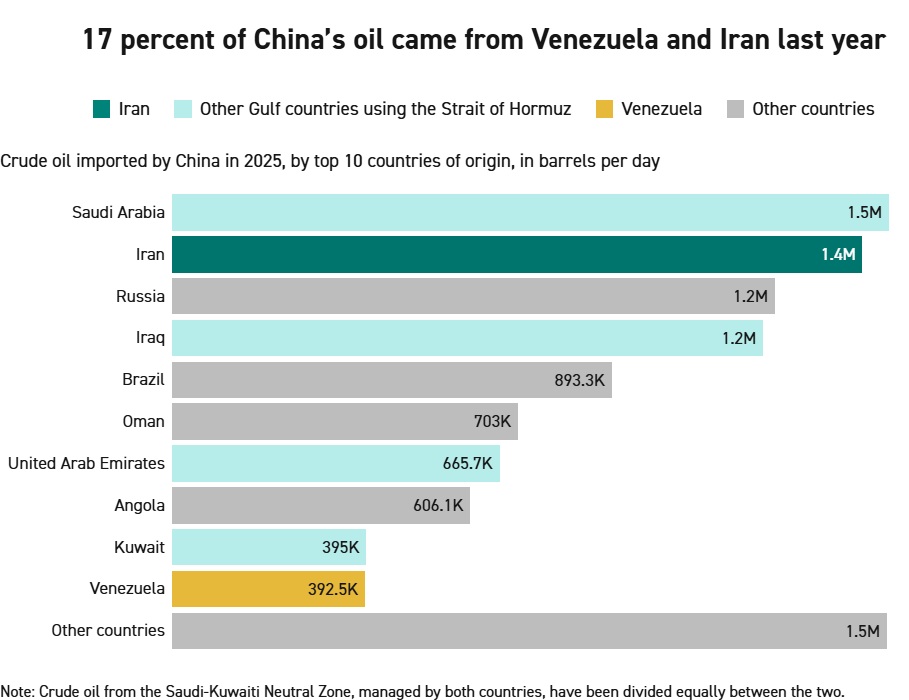
As noted by Politico: Following USA military strikes, “ships have begun to avoid the Strait of Hormuz off the coast of Iran — a critical shipping lane for Gulf nations to export oil to Asia. China in 2025 received about half of its imported oil from the six Gulf countries that rely on the strait. Other large crude oil producers in the region — including Saudi Arabia, Iraq and the United Arab Emirates — transport almost all their crude exports through the geographic bottleneck.

[SOURCE]

It’s not just a factor of oil flow, but also the price that China will ultimately end up having to pay.  Beijing was buying oil from Venezuela, Iran and Russia at steep discounts because their purchases were skirting western sanctions.

With Iranian oil production now no longer a market option, China will seek to replace their needs with more Russian alternative. However, that diversion means the oil India was purchasing from Russia will come at a higher price, and the refined final product that was exported by India will arrive to the European Union carrying an additional cost.

Simultaneously, Vladimir Putin was asked about Russia’s lack of military support to Iran in response to the U.S. military action, to wit the Russian president noted the technical terms of their joint military agreements did not include Russia’s immediate involvement.  In shorthand, Russia is busy and is not getting involved.

Russia was/is partially dependent on receiving military supplies from Iran in exchange for oil transfers.  The military component is reported to include drones from Iran for use in the Ukraine conflict.  Now that exchange profile is shuttered.

Taking Iran’s malign influence off the geopolitical chessboard is beginning to surface in major challenges to the BRICS assembly (Brazil, Russia, India, China, South Africa).  Russia, China and India are impacted directly.

The BRICS nations were skirting western oil sanctions by trading the commodity outside the petrodollar structure.  However, President Trump now controls the flow of oil from Venezuela, and his administration controls the currency in which it is sold.

With Iranian oil removed from the non-petro supply chain, the only remaining non-petro oil producer is Russia – who is simultaneously hit with a loss in military hardware support.  China may end up as a larger oil customer to Russia, but at what price and in what payment structure.

With global oil supplies in a state of flux, and with the USA in control of the oil flow from Venezuela, North America is certainly in the best position for minimal energy disruption.

Asia is heavily dependent on oil flows through the Strait of Hormuz, and the majority of Europe has already shut themselves off from Russian oil production, putting themselves in a position of dependency to the global markets.  The short-term ramifications of this oil disruption hit China, Southeast Asia, Japan and Europe particularly hard.

“OPEC+ countries affirmed on Sunday that they would boost oil production starting in April by 206,000 barrels daily — a modest increase intended to dampen the war’s effect on prices down the road. The majority of the increase would come from Saudi Arabia and Russia.” {SOURCE}

All of a sudden, this happens: Zelenskyy not to be trusted?

“Ukraine is under pressure to let the EU inspect a damaged pipeline carrying Russian oil to Hungary and Slovakia, as the two pro-Kremlin countries accuse Kyiv of overstating the impact of an attack by Moscow — despite what Ukrainian officials say is evidence of extensive destruction,” the report said.

According to five diplomats and EU officials who spoke to the FT, even pro‑Ukrainian governments within the European Union and the European Commission have also asked Ukraine to permit a delegation to inspect the pipeline. Two sources told the newspaper that European Commission President Ursula von der Leyen requested access for EU experts during her visit to Kyiv on Feb. 24, the fourth anniversary of Russia’s full-scale invasion. The request, according to the sources, was refused.

As tensions escalated, the EU’s ambassador to Ukraine, Katarina Mathernova, reportedly asked through the presidential office for permission to inspect the damaged pipeline herself or to allow visits by other EU diplomats. Those requests were denied for security reasons, the sources said.” (link)

T

Iran Conflict – Oil Disruption Hits Key BRICS Members Hard


Posted originally on CTH on March 3, 2026 | Sundance

Consider the severe economic body blows to China in the past 14 months.

♦ First blow, the Trump tariffs hit Beijing hardest. ♦ Second blow, the Beijing tentacle on the Panama Canal is severed.  ♦ Third blow, global tariff threats changed the risk dynamic for southeast Asia countries who acted as transnational shippers for China. ♦ Fourth blow, cheap sanctioned oil from Venezuela was cut-off. ♦ Now, the fifth blow; cheap, sanctioned Iranian oil is disrupted.

As noted by Politico: Following USA military strikes, “ships have begun to avoid the Strait of Hormuz off the coast of Iran — a critical shipping lane for Gulf nations to export oil to Asia. China in 2025 received about half of its imported oil from the six Gulf countries that rely on the strait. Other large crude oil producers in the region — including Saudi Arabia, Iraq and the United Arab Emirates — transport almost all their crude exports through the geographic bottleneck.

[SOURCE]

It’s not just a factor of oil flow, but also the price that China will ultimately end up having to pay.  Beijing was buying oil from Venezuela, Iran and Russia at steep discounts because their purchases were skirting western sanctions.

With Iranian oil production now no longer a market option, China will seek to replace their needs with more Russian alternative. However, that diversion means the oil India was purchasing from Russia will come at a higher price, and the refined final product that was exported by India will arrive to the European Union carrying an additional cost.

Simultaneously, Vladimir Putin was asked about Russia’s lack of military support to Iran in response to the U.S. military action, to wit the Russian president noted the technical terms of their joint military agreements did not include Russia’s immediate involvement.  In shorthand, Russia is busy and is not getting involved.

Russia was/is partially dependent on receiving military supplies from Iran in exchange for oil transfers.  The military component is reported to include drones from Iran for use in the Ukraine conflict.  Now that exchange profile is shuttered.

Taking Iran’s malign influence off the geopolitical chessboard is beginning to surface in major challenges to the BRICS assembly (Brazil, Russia, India, China, South Africa).  Russia, China and India are impacted directly.

The BRICS nations were skirting western oil sanctions by trading the commodity outside the petrodollar structure.  However, President Trump now controls the flow of oil from Venezuela, and his administration controls the currency in which it is sold.

With Iranian oil removed from the non-petro supply chain, the only remaining non-petro oil producer is Russia – who is simultaneously hit with a loss in military hardware support.  China may end up as a larger oil customer to Russia, but at what price and in what payment structure.

With global oil supplies in a state of flux, and with the USA in control of the oil flow from Venezuela, North America is certainly in the best position for minimal energy disruption.

Asia is heavily dependent on oil flows through the Strait of Hormuz, and the majority of Europe has already shut themselves off from Russian oil production, putting themselves in a position of dependency to the global markets.  The short-term ramifications of this oil disruption hit China, Southeast Asia, Japan and Europe particularly hard.

“OPEC+ countries affirmed on Sunday that they would boost oil production starting in April by 206,000 barrels daily — a modest increase intended to dampen the war’s effect on prices down the road. The majority of the increase would come from Saudi Arabia and Russia.” {SOURCE}

All of a sudden, this happens: Zelenskyy not to be trusted?

“Ukraine is under pressure to let the EU inspect a damaged pipeline carrying Russian oil to Hungary and Slovakia, as the two pro-Kremlin countries accuse Kyiv of overstating the impact of an attack by Moscow — despite what Ukrainian officials say is evidence of extensive destruction,” the report said.

According to five diplomats and EU officials who spoke to the FT, even pro‑Ukrainian governments within the European Union and the European Commission have also asked Ukraine to permit a delegation to inspect the pipeline. Two sources told the newspaper that European Commission President Ursula von der Leyen requested access for EU experts during her visit to Kyiv on Feb. 24, the fourth anniversary of Russia’s full-scale invasion. The request, according to the sources, was refused.

As tensions escalated, the EU’s ambassador to Ukraine, Katarina Mathernova, reportedly asked through the presidential office for permission to inspect the damaged pipeline herself or to allow visits by other EU diplomats. Those requests were denied for security reasons, the sources said.” (link)

President Trump Announces U.S. Economic Boycott of Spain During Meeting with German Chancellor Friedrich Merz


Posted originally on CTH on March 3, 2026 | Sundance 

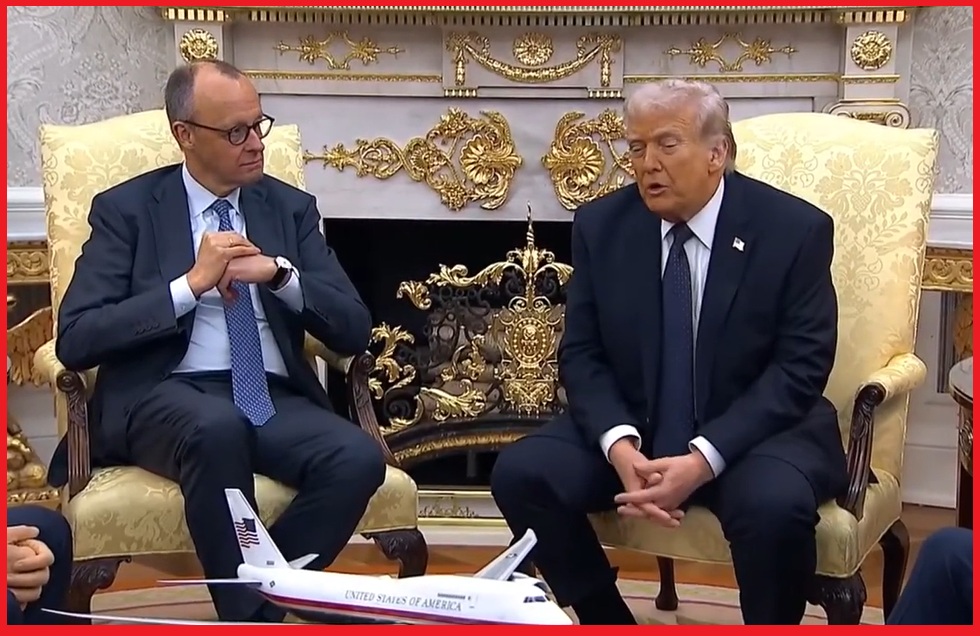
President Trump holds a bilateral meeting with German Chancellor Friedrich Merz in the Oval Office.  After brief remarks of mutual appreciation, President Trump and Chancellor Merz responded to questions from the assembled press pool.

Chancellor Merz expressed support for the objective of eliminating the regime threat from Iran.  President Trump notes at the beginning how Iran is targeting civilian targets in the region and generating even more support from the Gulf states for the USA.

When asked about the British and Spanish refusal to support U.S. military logistics and deployment, President Trump let the media be aware he is not happy with the position of Spain and the U.K.  President Trump also announced [11:00 of video] an economic embargo of trade with Spain as an outcome of their position.

.

Spain and U.K Response to Iran Conflict Highlights NATO Weakness and Duplicity


Posted originally on CTH on March 3, 2026 | Sundance 

When addressing Greenland’s strategic value within U.S. Arctic defense efforts, President Trump argued that although the European Union and NATO insisted there was no need for American control —promising instead to marshal their combined military strength to defend the territory— he remained skeptical of their assurances. Trump’s remarks were met with swift shock and visible dismay. Pearls were clutched and jaws stood agape.

However, it only took a few weeks for a moment of clarity to surface following the Israeli/U.S. decision to strike Iran and eliminate the long-standing nuclear threat. Suddenly Great Britain and Spain tell the U.S. they will not allow American military use of their joint airbases.  Once, again President Trump’s lack of trust in NATO proved correct.

This visible example of unidirectional self-interest is happening at the same time European and British leadership are requesting demanding the United States provide the security guarantees for their Ukraine ambitions.  The contrast is stark.

Concerns about Islamist extremism within the U.K. appear to influence the thinking of British Prime Minister Keir Starmer. With a significant number of immigrants from Muslim-majority countries now living in Great Britain, some argue that actions perceived as antagonizing more radical elements abroad could have domestic repercussions within the U.K.  That said, the contrast in support is so stark that opposition leadership inside the U.K. are now confronting the British Prime Minister.

.

U.S. State Dept Urges All Americans to Depart Immediately From 14 High Risk Countries


Posted originally on CTH on March 2, 2026 | Sundance 

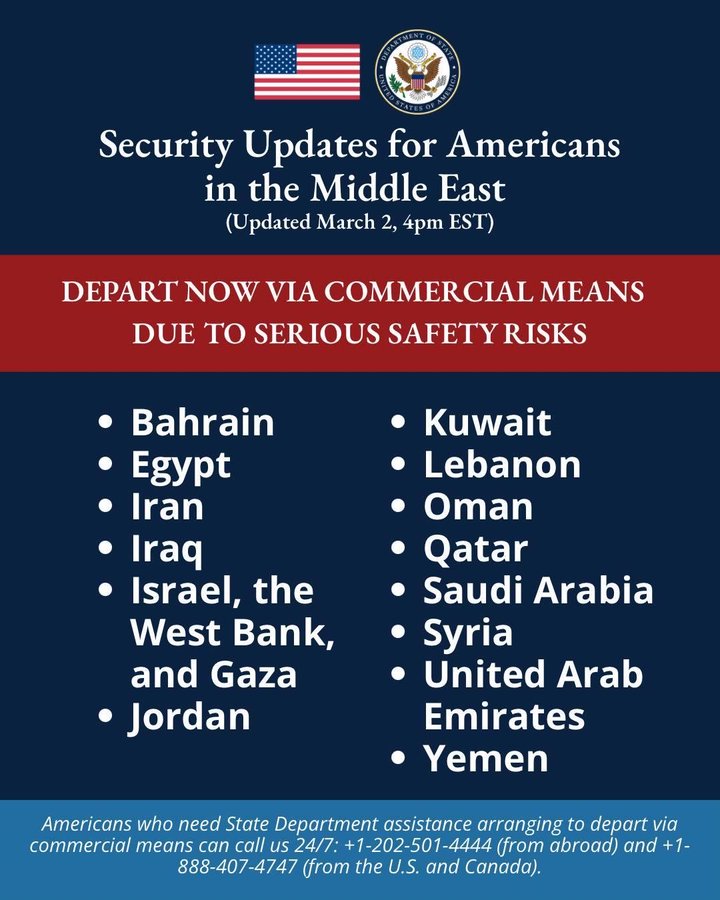
The U.S. State Department is now telling all U.S. Citizens from 14 middle east countries to make immediate plans to exit the region. These are not travel advisories, these are specific instructions to leave the region.

U.S. Assistant Secretary of State for Consular Affairs Mora Namdar posted on the social media site X that Americans in countries, including Iran, Iraq, Jordan, Lebanon and Israel, should “DEPART NOW” using any available commercial transportation.

The guidance comes as many major airlines have canceled flights to and from the region as the war that began when U.S. and Israel attacked Iran on Saturday. It has since grown into a wider regional conflict, touching nearly every country nearby.

A “boxcar effect” is now taking place.  As each day passes without airline flights available, more and more travelers are stuck in the region as their planned departure is cancelled.  What might begin day #1 as several thousand people stranded, can quickly become several tens of thousands in a few days.  The instructions to exit appear timed as an effort to avoid the numbers continuing to climb.  However, without airlines operating departures become problematic.

Friendly Fire – Three U.S. F15 Fighter Jets “Crash” in Kuwait


Posted originally on CTH on March 2, 2026 | Sundance 

Several online videos have surface of U.S. F-15 pilots ejecting out of aircraft that were seemingly hit during combat operations.  According to most accounts the incidents took place over the skies of Kuwait and there are indications these were ‘friendly fire’ mistakes.

With all of the inbound drone, UAV, missile and ballistic missile activity it would not be a surprise to hear of Kuwaiti air defense forces accidentally targeting coalition or U.S. fighter jets that would be traversing the region.

All of the pilots are reported to be safe and with the assistance of the Kuwaiti government returning to their U.S. military bases.  Given the “fog of war” it is best to wait until details are released from the Pentagon.

UPDATE: Immediately after writing, this update appears from CENTCOM:

TAMPA, Fla. – At 11:03 p.m. ET, March 1, three U.S. F-15E Strike Eagles flying in support of Operation Epic Fury went down over Kuwait due to an apparent friendly fire incident.

During active combat—that included attacks from Iranian aircraft, ballistic missiles, and drones — the U.S. Air Force fighter jets were mistakenly shot down by Kuwaiti air defenses.

All six aircrew ejected safely, have been safely recovered, and are in stable condition. Kuwait has acknowledged this incident, and we are grateful for the efforts of the Kuwaiti defense forces and their support in this ongoing operation.

The cause of the incident is under investigation. Additional information will be released as it becomes available. (SOURCE)

Original:

From the AP: “Several U.S. warplanes crashed Monday in Kuwait, the country’s Defense Ministry said, with all the pilots safely bailing out.

The ministry did not elaborate on what caused the crashes but it came during an intense period of Iranian fire targeting the country.

The Kuwaiti Defense Ministry said the pilots had been taken to a hospital for checkups and their condition was stable.  The U.S. military’s Central Command did not immediately respond to a request for comment. (source)

Statement from the Kuwait Ministry of Defense:

“The spokesperson for the Ministry of Defense stated that several U.S. military aircraft crashed this morning, confirming the complete safety of their crews.

He explained that the relevant authorities immediately initiated search and rescue procedures, whereby the crews were evacuated and transferred to the hospital to check on their health status and provide the necessary medical care, noting that their condition is stable.

The official spokesperson added that direct coordination was conducted with the friendly U.S. forces regarding the circumstances of the incident, and joint technical measures were taken.

He affirmed that the concerned authorities are following up on the investigations to determine the causes of the incident, calling for information to be obtained from its official sources.” (more)

Many of us want information so we can evaluate things. However, in the fog of war it is best to be prudent and await official information to understand the full context of what might have happened.

Sunday Talks – Senator Tom Cotton Discusses U.S. Military Operation Against Iran – Video and Transcript


Posted originally on CTH on March 1, 2026 | Sundance 

Senate Intelligence Committee Chairman Tom Cotton appears on CBS Face the Nation to discuss the ongoing U.S. military operation against Iran.  Video and Transcript Below

[TRANSCRIPT] – MARGARET BRENNAN: Imtiaz Tyab reporting from Muscat, Oman. We turn now to the chairman of the Senate Intelligence Committee, Arkansas Republican Tom Cotton, who joins us from Bentonville. Good morning to you, Senator.

SEN. TOM COTTON: Good morning, Margaret.

MARGARET BRENNAN: The President of the United States warned the American public that there could be casualties, American casualties. Does that mean the U.S. is putting boots on the ground?

SEN. COTTON: No, Margaret, the president has been clear that what we should expect to see is an extended air and naval campaign that’s designed not only to continue to set back Iran’s nuclear ambitions, but most importantly, to destroy its vast missile arsenal. Many more missiles than the United States and Israel have air defenses combined, as well as the missile launchers and its missile manufacturing capability. Now obviously one risk of that kind of campaign is that an aircraft could be shot down, and the president would never leave a pilot behind. So no doubt we have combat search and rescue assets in the region that are prepared to go in and extract any downed pilot. But barring that kind of unusual circumstance, Margaret, the president has no plan for any kind of large scale ground force inside of Iran.

MARGARET BRENNAN: The New York Times is reporting that it was the CIA that provided the intelligence in regard to the exact location of the Supreme Leader and then he was subsequently killed. You’re smiling as I say that. Are you confirming that it is true that it is the United States that pinpointed his location leading to his death?

SEN. COTTON: No, Margaret, I can’t confirm anything about the intelligence that the United States intelligence community collects. I can tell you that, of course, we have exquisite intelligence collection methods, that the location and the intentions of the Supreme Leader and the other Ayatollahs in Iran, or for that matter, the leaders of other adversaries around the world, is obviously one of the highest priorities of our intelligence community. But clearly, this operation is driven by intelligence collected by Israel and the United States that has once again proven that our nations have capabilities that no other nation on earth has.

MARGARET BRENNAN: Indeed. There are questions, though, about what happens next. Secretary of State Marco Rubio testified to Congress last month and was asked specifically, what happens if Iran’s regime fails. Take a listen.

[ON TAPE]

DATE: JANUARY 28, 2026 SECRETARY RUBIO: So I don’t think anyone can give you a simple answer as to what happens next in Iran if the Supreme Leader and the regime were to fall, other than the hope that there would be some ability to have somebody within their systems that you could work towards a similar transition.

[END TAPE]

MARGARET BRENNAN: That was a month ago. We’re seeing some succession planning happening inside Iran. Is this a managed regime change here, or is the United States betting on regime collapse?

SEN. COTTON: Well, Margaret, first, I want to stress what happens next in the days ahead and probably the weeks ahead. Iran does have a vast missile arsenal, and that’s going to be the prior- prior- priority objective for this military campaign. It is destroying that arsenal that threatened American troops from bases as far flung as the Indian Ocean to Western Europe, and making sure Iran can’t rebuild it–

[CROSSTALK]

MARGARET BRENNAN: –Many of those are being fired right now–

SEN. COTTON: –As far as the future- well, but we’re stopping a lot of them from being fired before Iran can fire them. It’s much easier to kill the archer on the ground than it is to shoot his arrows out of the sky. As far as the long term future of Iran’s government, Secretary Rubio is right, I don’t think anyone can give you a simple answer. There’s probably a lot of jockeying inside of Iran right now, they have a very consultative, deliberative process to replace the Supreme Leader. There’s a reason why he didn’t want to have a clear succession plan in place. It’s hard to do that when the United States is pummeling their leadership every moment of the day. I’m sure, though, that there are also some supreme- or there are also some leaders inside of Iran who might be jockeying to audition for the role of Iran’s Delcy Rodriguez.

MARGARET BRENNAN: Okay, but what you just described in terms of Delcy Rodriguez sounds like it is a managed transition, not regime change. Is that accurate?

SEN. COTTON: Margaret, again, as Secretary Rubio said, it’s not a simple answer–

MARGARET BRENNAN: –Right, but we’re in the middle of it now. So don’t you need an answer?

SEN. COTTON: –We’re going to continue to hit not just their military capabilities–

MARGARET BRENNAN: –At least an outcome, a goal?–

SEN. COTTON: –But we’re going to continue to hit their military capabilities, and we’re going to continue to hit their senior leadership, the ayatollahs, who have also been complicit in 47 years of heinous crimes, not only against Americans but against their own people. Again, there’s no simple answer for what’s going to come next. But as President Trump promised last month when the Iranian people were rising up against their own regime, help is on the way. Help has arrived.

MARGARET BRENNAN: Well, exactly. You’re talking about what comes next, but then you’re also telling me you don’t know what comes next. So do you believe that regime change is possible from air support alone? Has a leader of the opposition been identified? Is the opposition unified to deliver in a way that President Trump is calling on the people to do? Are we arming anyone to actually challenge the regime?

SEN. COTTON: Margaret, the opposition is 90 million Iranians who have suffered under the brutal Islamic Republic Revolutionary regime for the last 47 years.

MARGARET BRENNAN: Yes, and the president–

SEN. COTTON: –We’ve seen in recent months that there’s–

MARGARET BRENNAN: –called them to take over their government.

SEN. COTTON: And we would all celebrate if the Iranian people were able to rise up and reclaim their freedom and reclaim their destiny. And as the president said when he promised help is on the way, help has arrived. And that’s why you’ve already seen some protests out celebrating the death of the supreme leader, the man who has brutally repressed his own people for almost 40 years. Now, we can’t necessarily dictate what course that is going to take, but the help that the president promised is on the scene, and it’s going to continue to be on the scene for probably a few weeks, as we make sure that Iran’s military is no longer capable of threatening our own troops, our Arab friends in the region and Israel, and also repressing its own people.

MARGARET BRENNAN: This is a big gamble by the president. Before the strikes, according to CBS polling, 74% of Americans said that Trump would need approval from Congress for military action against Iran. He did not seek that. If this operation takes weeks, which is how you described it, do you believe the administration has effectively made its case to the American public to expect casualties to support this action?

SEN. COTTON: Margaret, I thought the president’s eight minute video yesterday was outstanding. It laid out Iran’s 47-year campaign of terror and revolutionary violence against the United States and our people and really, the civilized world. I’m sure the president will speak more in the coming days, will have briefings to Congress–

MARGARET BRENNAN: –47 years, he did not describe imminence or justify that in that video. Do you believe that the American public is owed something more than a Twitter video?

SEN. COTTON: Margaret, I think an eight minute address to the American people, whether the president posted on social media or whether it happens on your network, is in keeping with presidential custom of addressing the American people. Again, I’m sure that he’s going to be speaking more in coming days. The administration will be briefing Congress, and we’re going to have a vote in the Congress. The Democrats are forcing a vote–

MARGARET BRENNAN: –On the War Powers Act.

SEN. COTTON: I expect there’ll be overwhelming Republican support for our troops, for the, for our troops, and for the president’s decision to finally eliminate the threat of Iran. And I would invite Democrats in the Congress to join their Democratic colleagues like John Fetterman and Josh Gottheimer and Greg Landsman in supporting our troops, in finally putting America’s foot down against the Islamic Republic of Iran.

MARGARET BRENNAN: Senator Cotton, we appreciate you in your role in oversight of the Intelligence Committee, making the case for the administration. We have more questions, and we would love to put them to the administration as well. Thank you very much for your time this morning. Face the Nation will be back in one minute. Stay with us.

[End Transcript]

President Trump Confirms Ayatollah Khamenei is Dead


Posted originally on CTH on March 1, 2026 | Sundance

Iran’s state media delivered the message this way“To the noble and proud people of Iran: With the ultimate grief and sorrow this is to inform you that following the barbaric attack by the criminal governments of America and the evil Zionist regime, the true example of faith, jihad and resistance, the Supreme Leader of the Revolution Grand Ayatollah Khamenei achieved the blessing of martyrdom.”

President Trump shares the following message via Truth Social:

“Khamenei, one of the most evil people in History, is dead. This is not only Justice for the people of Iran, but for all Great Americans, and those people from many Countries throughout the World, that have been killed or mutilated by Khamenei and his gang of bloodthirsty THUGS. He was unable to avoid our Intelligence and Highly Sophisticated Tracking Systems and, working closely with Israel, there was not a thing he, or the other leaders that have been killed along with him, could do.

This is the single greatest chance for the Iranian people to take back their Country. We are hearing that many of their IRGC, Military, and other Security and Police Forces, no longer want to fight, and are looking for Immunity from us. As I said last night, “Now they can have Immunity, later they only get Death!”

Hopefully, the IRGC and Police will peacefully merge with the Iranian Patriots, and work together as a unit to bring back the Country to the Greatness it deserves. That process should soon be starting in that, not only the death of Khamenei but the Country has been, in only one day, very much destroyed and, even, obliterated. The heavy and pinpoint bombing, however, will continue, uninterrupted throughout the week or, as long as necessary to achieve our objective of PEACE THROUGHOUT THE MIDDLE EAST AND, INDEED, THE WORLD!

Thank you for your attention to this matter.”

PRESIDENT DONALD J. TRUMP

So many people have criticized President Trump for various granular differences; some even shouting they would withdraw support.  However, with his current approach toward Iran he is ending a 50-year national embarrassment, started when Jimmy Carter let freedom be destroyed, letting the ayatollahs take control and then failing to get our hostages back.

Even President Ronald Reagan, who we appreciate and respect, retreated from confrontation with Iran and pulled the Marines out of Beirut after Iranian backed terrorists bombed their base.

President Trump is spreading our eagles’ wings. Reestablishing what the fight for liberty and freedom is all about, reversing and fixing some demoralizing things past presidents have done.

God has raised this man up, delivered him from death, and I say he is blessed.

President Trump: “To the members of the Islamic Revolutionary Guard, the armed forces and all of the police, I say tonight that you must lay down your weapons, and have complete immunity, or, in the alternative, face certain death. So lay down your arms. You will be treated fairly with total immunity, or you will face certain death.” {SOURCE}

President Trump: “To the great, proud people of Iran, I say tonight that the hour of your freedom is at hand. Stay sheltered. Don’t leave your home. It’s very dangerous outside. Bombs will be dropping everywhere. When we are finished, take over your government. It will be yours to take. This will be, probably, your only chance for generations. For many years, you have asked for America’s help, but you never got it. No president was willing to do what I am willing to do tonight. Now you have a president who is giving you what you want, so let’s see how you respond. America is backing you with overwhelming strength and devastating force. Now is the time to seize control of your destiny and to unleash the prosperous and glorious future that is close within your reach. This is the moment for action. Do not let it pass.” {SOURCE}

Is Iran’s Supreme Leader Ali Khamenei Alive or Dead? UPDATE: He’s DEAD


Posted originally on CTH on February 28, 2026 | Sundance 

According to multiple confirmations following visible evidence of his body, news is now widely spreading throughout the middle east that Iran’s Supreme Leader Ayatollah Ali Khamenei is DEAD.

This could rapidly escalate an end to the U.S. military operation, through regime change.  We await confirmation of this news from President Donald Trump.

The very first strikes in Tehran by Israeli Defense Forces (IDF) were targeted to the power circle in control of government in Iran.

In a nationally televised address, Israeli Prime Minister Benjamin Netanyahu just said the strikes had targeted the compound of Supreme Leader Ayatollah Ali Khamenei.

“There are growing signs that the tyrant is no longer alive,” Netanyahu said. However, earlier today, Iran’s foreign minister told NBC News that the country’s supreme leader and president were alive “as far as I know.”

Several of Iran’s top military leaders and family members of Khamenei are confirmed to have been killed, which seems to explain the unfocused attacks by Iran toward a host of middle east nations including Israel, Bahrain, Dubai, Kuwait, Saudi Arabia and the United Arab Emirates.

Iran’s Supreme Leader Ayatollah Ali Khamenei was killed in an Israeli airstrike this morning on Iran, with his body being found recently among the rubble, Israeli officials tell The Times of Israel. {Source}

Brig. Gen. Effie Defrin, an Israeli military spokesperson, says the strikes also killed other senior Iranian officials. Defrin says they included the commander of the Islamic Revolutionary Guard Corps, the defense minister, the head of Supreme Leader Ayatollah Ali Khamenei’s military bureau and the secretary of Iran’s Supreme National Security Council. {Source}

U.S. President Donald Trump has spoken with the leaders of Saudi Arabia, Qatar, the United Arab Emirates and NATO Secretary-General Mark Rutte, after the strikes on Iran, according to White House press secretary Karoline Leavitt.

Trump Administration Dept of War VERSUS Anthropic, Claude AI


Posted originally on CTH on February 28, 2026 | Sundance

A remarkable conflict has revealed itself amid the use of Artificial Intelligence (AI) software, the United States Government (USG), the Dept of War (DoW) and the AI software company Anthropic.

At the core of the issue is the USG contracting with Anthropic for the use of their Claude AI system for use in military operations.  The Dept of War has a contract with Anthropic to use their software in combination with various military and weapon use systems.  However, Anthropic is putting restrictions on the military application of their AI.

Anthropic says the AI cannot be used for defense dept autonomous weapons that do not utilize human triggering.  Additionally, Anthropic is saying their system cannot be used to surveil U.S. citizens. Anthropic engineers would be the decisionmakers on the government use.

The Trump administration has rejected the demand of Anthropic, saying they will not permit a Silicon Valley group of engineers to determine deployment of U.S. applications, thereby replacing the decision-making of elected officials, military commanders, the Joint Chiefs’ of staff, and ultimately the President of the United States and even military servicemembers who are facing life or death decisions.

It is a key moment for the use of AI as it applies to government application and private sector.

♦ After several weeks of conflict between U.S. government officials and the CEO of Anthropic, Dario Amodei, President Trump finally said enough and told all agencies of government to stop using Anthropic products.

President Trump via Truth Social: “The Leftwing nut jobs at Anthropic have made a DISASTROUS MISTAKE trying to STRONG-ARM the Department of War, and force them to obey their Terms of Service instead of our Constitution. Their selfishness is putting AMERICAN LIVES at risk, our Troops in danger, and our National Security in JEOPARDY.

Therefore, I am directing EVERY Federal Agency in the United States Government to IMMEDIATELY CEASE all use of Anthropic’s technology. We don’t need it, we don’t want it, and will not do business with them again! There will be a Six Month phase out period for Agencies like the Department of War who are using Anthropic’s products, at various levels. Anthropic better get their act together, and be helpful during this phase out period, or I will use the Full Power of the Presidency to make them comply, with major civil and criminal consequences to follow.

WE will decide the fate of our Country — NOT some out-of-control, Radical Left AI company run by people who have no idea what the real World is all about. Thank you for your attention to this matter. MAKE AMERICA GREAT AGAIN!”

♦ Secretary of War Pete Hegseth then responded via X:

“This week, Anthropic delivered a master class in arrogance and betrayal as well as a textbook case of how not to do business with the United States Government or the Pentagon.

Our position has never wavered and will never waver: the Department of War must have full, unrestricted access to Anthropic’s models for every LAWFUL purpose in defense of the Republic.

Instead, AnthropicAI and its CEO Dario Amodei, have chosen duplicity. Cloaked in the sanctimonious rhetoric of “effective altruism,” they have attempted to strong-arm the United States military into submission – a cowardly act of corporate virtue-signaling that places Silicon Valley ideology above American lives.

The Terms of Service of Anthropic’s defective altruism will never outweigh the safety, the readiness, or the lives of American troops on the battlefield.

Their true objective is unmistakable: to seize veto power over the operational decisions of the United States military. That is unacceptable.

As President Trump stated on Truth Social, the Commander-in-Chief and the American people alone will determine the destiny of our armed forces, not unelected tech executives.

Anthropic’s stance is fundamentally incompatible with American principles. Their relationship with the United States Armed Forces and the Federal Government has therefore been permanently altered.

In conjunction with the President’s directive for the Federal Government to cease all use of Anthropic’s technology, I am directing the Department of War to designate Anthropic a Supply-Chain Risk to National Security. Effective immediately, no contractor, supplier, or partner that does business with the United States military may conduct any commercial activity with Anthropic. Anthropic will continue to provide the Department of War its services for a period of no more than six months to allow for a seamless transition to a better and more patriotic service.

America’s warfighters will never be held hostage by the ideological whims of Big Tech. This decision is final.”

♦ Anthropic then responded:

“Earlier today, Secretary of War Pete Hegseth shared on X that he is directing the Department of War to designate Anthropic a supply chain risk. This action follows months of negotiations that reached an impasse over two exceptions we requested to the lawful use of our AI model, Claude: the mass domestic surveillance of Americans and fully autonomous weapons.

We have not yet received direct communication from the Department of War or the White House on the status of our negotiations.

We have tried in good faith to reach an agreement with the Department of War, making clear that we support all lawful uses of AI for national security aside from the two narrow exceptions above. To the best of our knowledge, these exceptions have not affected a single government mission to date.

We held to our exceptions for two reasons. First, we do not believe that today’s frontier AI models are reliable enough to be used in fully autonomous weapons. Allowing current models to be used in this way would endanger America’s warfighters and civilians. Second, we believe that mass domestic surveillance of Americans constitutes a violation of fundamental rights.

Designating Anthropic as a supply chain risk would be an unprecedented action—one historically reserved for US adversaries, never before publicly applied to an American company. We are deeply saddened by these developments. As the first frontier AI company to deploy models in the US government’s classified networks, Anthropic has supported American warfighters since June 2024 and has every intention of continuing to do so.

We believe this designation would both be legally unsound and set a dangerous precedent for any American company that negotiates with the government.

No amount of intimidation or punishment from the Department of War will change our position on mass domestic surveillance or fully autonomous weapons. We will challenge any supply chain risk designation in court.” (source)

There are multiple alternative companies rapidly developing various AI models that could be used to replace the Claude system within the Dept of War.   In fact, the DoW is likely to partner with Open AI as a replacement for the Anthropic contract.

However, this conflict about use is one that has not only erupted within Anthropic but has also surfaced within Palantir AI.  Palantir CEO Alex Karp highlighted the issue in his own discussions about the Pentagon vs. Anthropic standoff.

“The core issue is who decides,” Karp says.  The issue is not whether the use of the government use of AI is right; the issue is not whether you agree with the mission of the Dept of War.  The real issue surrounds who will decide its use.

Karp notes, “It’s commonly known that our software is used in operational context at war.” “Do you really think the warfighter is going to trust a software company that pulls the plug because something becomes controversial?” Let that sit for a second. “Currently, when you’re a warfighter, your life depends on your software.” A group of tech engineers in Silicon Valley does not get to replace the decisions of the elected experts in national security and the commander in chief.