Sunday Talks: NATO General Secretary Mark Rutte Outlines Support for Operation Epic Fury


Posted originally on CTH on March 22, 2026 | Sundance 

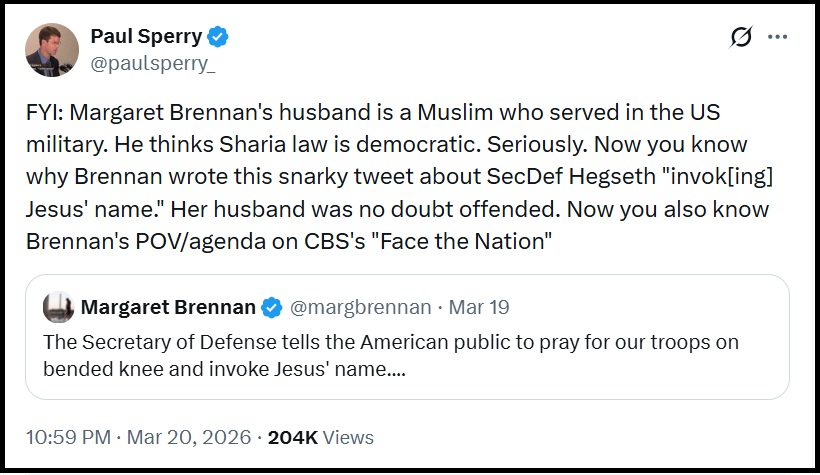
Margaret Brennan’s husband is a Syrian Muslim named Major Ali Iyad Yakub, who goes by the nickname ‘Yado’.  He served in the U.S. military. Mrs. Brennan studied abroad at Yarmouk University in Irbid, Jordan, and Yakub’s sister, Samia Yakub, was her roommate. Mr. Yakub founded Y2 Global Advisory specializing in global intelligence, communications, and government relations. He also worked for Senator Joe Biden on the Senate Foreign Relations Committee.  Margaret Brennan and Ali Iyad Yakub have two children together.

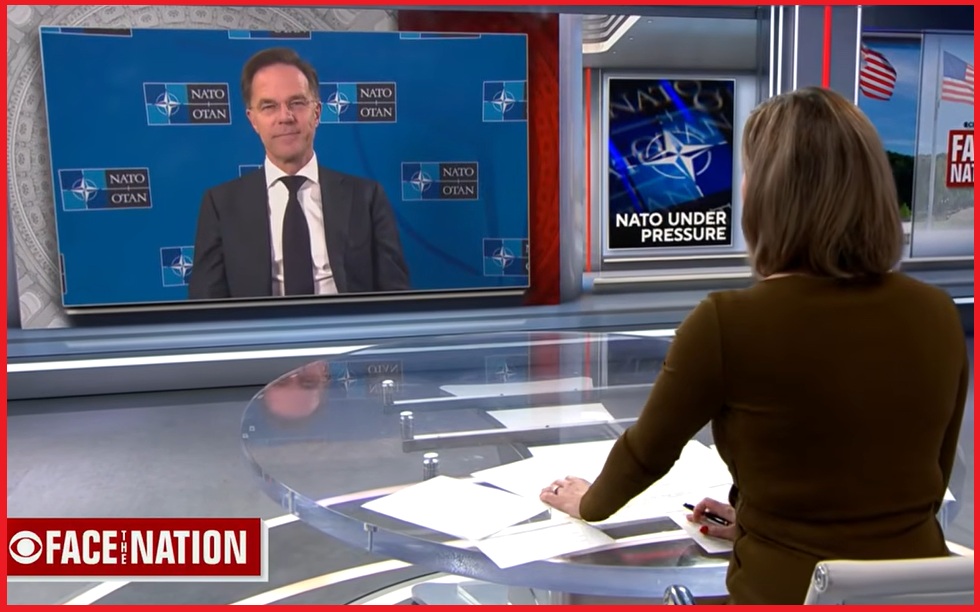
NATO General Secretary Mark Rutte appears on CBS Face the Nation to discuss the European opinion of the U.S. military operation against Iran, and outline how many countries within the NATO alliance are prepared to support the ongoing effort to eliminate the threat Iran represented.  Video and Transcript Below:

[Transcript] – MARGARET BRENNAN: We turn now to NATO Secretary General, Mark Rutte, who joins us this morning from The Hague in the Netherlands. Welcome back to ‘Face The Nation.’

NATO SECRETARY GENERAL MARK RUTTE: Margaret, good to be back on the program. Good morning.

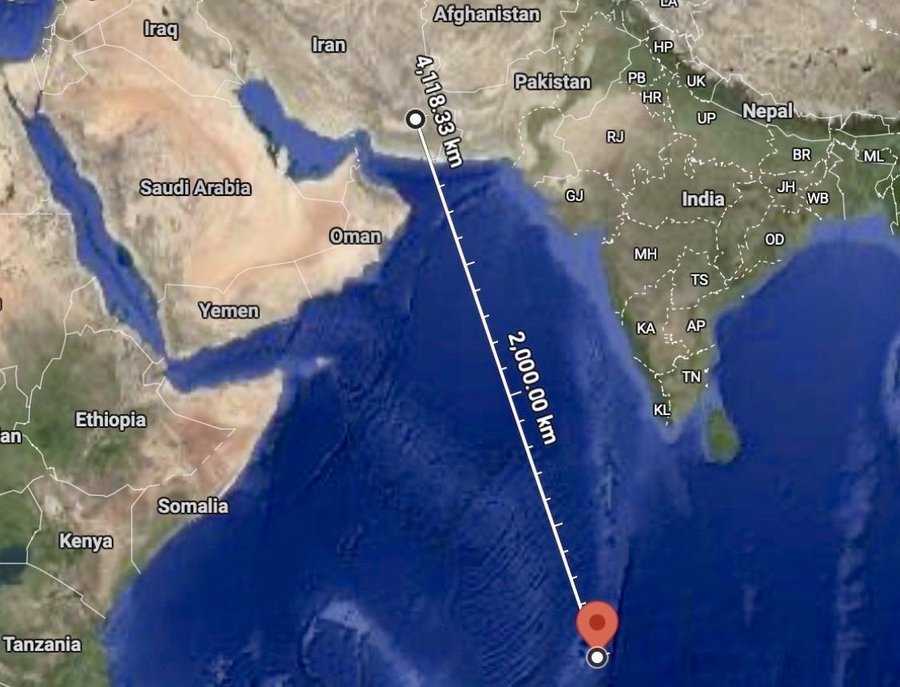
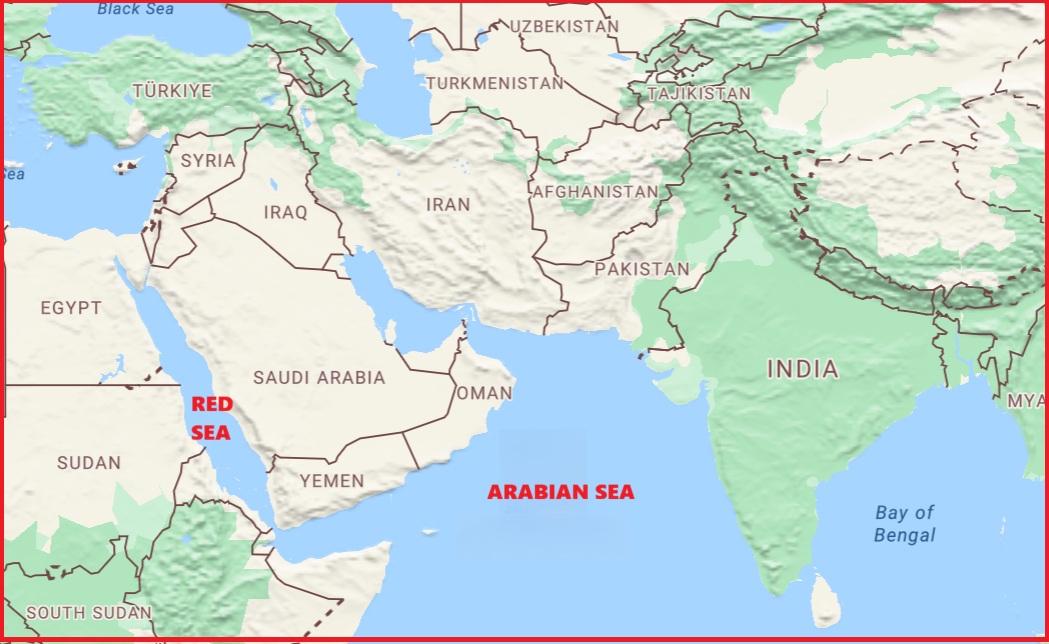
MARGARET BRENNAN: Good morning. We did see that Iran fired two missiles at Diego Garcia. That’s that island in the Indian Ocean, which houses a U.S. UK joint base. That was 4000 kilometers from Iranian territory, furthest Iran has ever gone. You just heard Ambassador Waltz say there might be a difference there in how Israel and the U.S. assess that capability Iran has in terms of what they fired. But Israel says these were intercontinental ballistic missiles that could hit Berlin, Paris and Rome. Does NATO share that Israeli assessment?

SECRETARY GENERAL RUTTE: We cannot confirm that at the moment, so we’re looking into that. But if this would be true, it is the more evidence that what the President is doing here, taking out the ballistic missile capability, taking out the nuclear capability from Iran, is crucial. And exactly as the ambassador just said, Ambassador Waltz, we have seen with North Korea, if we negotiate for too long, you might pass the moment where you can still get this thing done, and North Korea now has the nuclear capability. If Iran would have the nuclear capability, including, together with the missile capability, it will be a direct threat, a existential threat, to Israel, to the region, to Europe, to the stability in the world. So the president doing this is crucial, and I’ve seen the polling, but I really hope the American people will be with him, because he is doing this to make the whole world safer.
MARGARET BRENNAN: So but just to be clear at this hour, do you believe that Iran could bomb Berlin, Paris and Rome? Are they all within direct threat range?

SECRETARY GENERAL RUTTE: What we know for sure is that they are very close to having that capability, whether this case with the UK base, Diego Garcia, we are still assessing. But if it is true, it means they already have that capability. If it is not true, we know they are very close to having that capability. And that is exactly why I feel in Europe, that most politicians, it resonates with them. What the President is doing here, which is taking out- degrading Iran’s capability to be, again, an exporter of chaos, sheer chaos to the region, to the world.

MARGARET BRENNAN: Well, I’m sure the president appreciates your praise, but he has been very frustrated, and made that clear this week with NATO and the European allies. He called NATO quote a paper tiger without the US. He said they complain about high oil prices when they forced to pay but they don’t want to help open the Strait of Hormuz. Easy for them cowards. We will remember.

SECRETARY GENERAL RUTTE: I’ve been in several conversations this week with the president, and the good news is that, look, we had the U.S. for weeks planning for Epic Fury and for reasons of security and safety, they could not share with European allies and allies around the world and partner countries what they were doing, because that would have jeopardized the effect of the first- first attack–

MARGARET BRENNAN: –Or it would have allowed you to plan

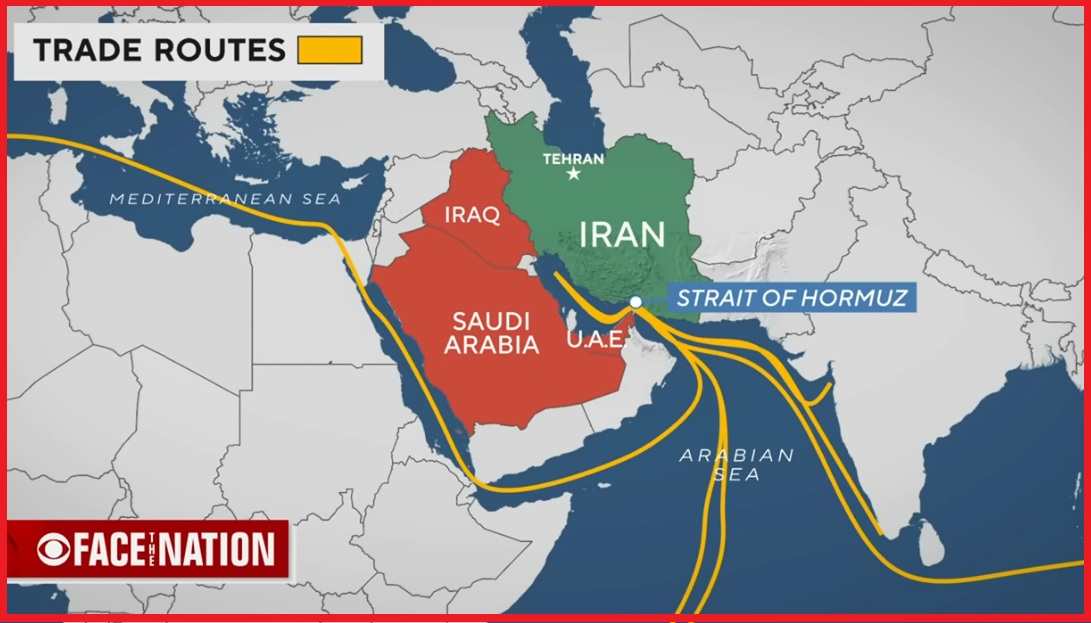
SECRETARY GENERAL RUTTE: So it is only logical that European countries needed a couple of weeks to come together. But at this moment, the good news is this, that since Thursday, 22 countries, most of them NATO, but also Japan, Korea, Australia, New Zealand, Bahrain, the UAE, have come together to basically answer three questions, what do we need? When do we need it? And where do we need it? These three questions are now worked through to answer the president’s call, to make sure that we secure the free sailing through the Strait of Hormuz.

MARGARET BRENNAN: To be clear, the president has said four to six weeks for this war, that would put us in early April for an end to combat operations. But then he’s also sending troops. He’s also possibly asking Congress for more money. What’s the when part? When did he tell you your support from these European countries will be needed because from the sources I speak to, they are not willing to send in the midst of combat.

SECRETARY GENERAL RUTTE: Obviously, I cannot in a program which is aired around the world, and you have a lot of viewers, discuss with you what is discussed in secrecy, but I can assure you that, of course, and the UK is- is at the forefront of leading this effort of the 22 countries on the leadership of Prime Minister Starmer. I’ve been in the phone call this week with Prime Minister Starmer and President Macron, and again, this has led to 22 countries now signing up to this initiative. And indeed, one of the key questions is not only the what question and the where question, but also the when question. And this is why military planners are now working together to make sure that we are ready, to make sure that that street- that Strait of Hormuz, that we secure the free sailing there, which is crucial for the world economy.

MARGARET BRENNAN: The president seemed to say, though, that this will go beyond Iran in terms of the impact on his thinking about NATO and his willingness to help Europe. Take a listen to this.

[DONALD TRUMP SOT]

DONALD TRUMP: I think NATO is making a very foolish mistake. And I’ve long said that, you know, I wonder whether or not NATO would ever be there for us. So this is a this was a great test, because we don’t need them, but they should have been there.

[END SOT]

MARGARET BRENNAN: The president continues to frame this as sort of like a quid pro quo, and he’s also mentioned Ukraine in the same context, saying, I help Europe with Ukraine. Why aren’t they helping me? Are you worried that this is going to hurt NATO’s goals elsewhere?

SECRETARY GENERAL RUTTE: What I know is that we always come together. It was under President Trump’s leadership that we had the extremely successful Summit in the Hague where we agreed to spend 5% of our GDPs on defense, and therefore equalizing for the first time since Eisenhower. So this is quite some time- some time back in history, equalizing what the Europeans are spending and what Americans are spending, not only because it is fair that we all spend the same, and this was a wish from Trump 45 and now is Trump 47 he got this done, but also because we need it, because of the Russian threat and our other adversaries. Then on Ukraine, it is again the U.S. providing critical intelligence support and weapons flow, working together with Europeans to secure Ukraine’s fight against the Russians, making sure they have what they need. And now with Iran, I’m absolutely convinced, and I understand the president’s frustration that it takes some time, but again, I also ask for some understanding, because nations had to prepare for this, not knowing and for good reasons about the initial attack on Iran, but now coming together to make sure that we can be able to secure the Strait of Hormuz.

MARGARET BRENNAN: No but to be clear, I’ve spoken to some NATO members who say this is a defensive alliance, not an offensive one. We didn’t sign up to go do what the president is asking us to do. But on the Russia point you just made, the European Council president said the U.S. decision to lift sanctions on Russian oil exports. Is very concerning as it impacts European security. This is part of what President Trump’s doing to try to stop the spike in oil prices here at home, the Treasury Secretary says this means about $2 billion is going to Russia now, President Zelenskyy says it’s more like 10 billion. Doesn’t this benefit Vladimir Putin?

SECRETARY GENERAL RUTTE: Well, this is the thing the president has to balance all these different interests. I know that he is with his team, with Jared Kushner and Steve Witkoff and Marco Rubio. They are constantly working with the Ukrainians to put maximum pressure on the Russians to come to a deal. I know–

MARGARET BRENNAN: This isn’t maximum pressure.

SECRETARY GENERAL RUTTE: –I spoke an hour and a half with President Zelenskyy in London. He wants to get the deal done, and we have to make sure that we also take this to the Russians, to make sure that they are willing to play ball. It is the president putting that pressure together with the Europeans. But again, he has to balance all these different interests. So I’m not going to comment on each element of what is happening here, but his effort to bring the war in Ukraine to a successful end is crucial. He was the only one who was able to break the death lock with Putin when he made the first phone call in February last year, and he has consistently, with his team, done what is necessary to put that pressure, of course, on the Ukrainians, and they want to play ball. They show this. They want to end the war, and are also with the Russians.

MARGARET BRENNAN: Well, we’ll see if Vladimir Putin wants to play ball. Secretary General, thank you for your time, and we’ll be right back with a lot more ‘Face the Nation.’ Stay with us.

[END TRANSCRIPT]
Posted
Report: Pentagon to Adopt Palantir as Core U.S. Military System


Posted originally on CTH on March 22, 2026 | Sundance

Recently when the Anthropic software and ideology conflict with the Pentagon surfaced as a result of limits placed by the provider, alternative provider Palantir’s CEO remarked that any AI developer who challenges the U.S. military application of the product was foolish because the U.S. government could just take control of the company under the claim of national security.

In essence, Palantir CEO Alex Karp was saying AI developers who contract with the govt ultimately become bound to the limits or lack thereof as determined by the govt.  If software developers want to contract with the military, then fight the Pentagon over use of those software applications, they will lose.

In response to the Anthropic issue, the Pentagon withdrew from their purchase arrangements and blacklisted them from further federal contracts.

Now a report is highlighting that Palantir will take the lead position in providing the software, the Maven Smart System, for the core U.S. military functions.

As described, “Maven is a software platform that uploads information from drones, satellites, sensors, radar, and other battlefield intelligence sources. The system then analyzes battlefield data in real time, identifying and prioritizing potential targets — including buildings, enemy vehicles, and weapons and ammunition stockpiles — for intelligence analysts to review and act on.”

NEW YORK, March 20 (Reuters) – Palantir’s Maven artificial intelligence system will become an official program of record, Deputy Secretary of Defense Steve Feinberg said in a letter to Pentagon leaders, a move that locks in long-term use of Palantir’s weapons-targeting technology across the U.S. military.

In the March 9 letter to senior Pentagon leaders and U.S. military commanders, Feinberg said embedding Palantir’s Maven Smart System would provide warfighters “with the latest tools necessary to detect, deter, and dominate our adversaries in all domains”.

The decision is expected to go into effect by the close of the current fiscal year, which ends in September, according to the letter, which was reviewed by Reuters and has not been previously reported.

Maven is a command-and-control software platform that analyzes battlefield data and identifies targets. It is already the primary AI operating system for the U.S. military, which has carried out thousands of targeted strikes against Iran over the last three weeks. (read more)

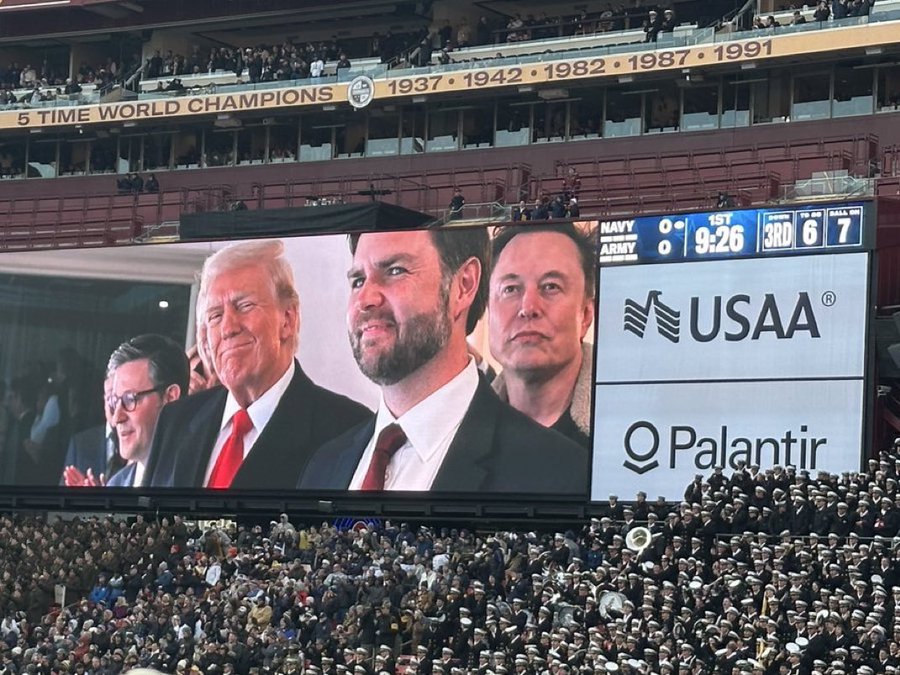
Elon Musk (Tesla, SpaceX) and Alex Karp (Palantir)

Iran Launches Intermediate-range Ballistic Missile Further Than All Prior Capabilities


Posted originally on CTH on March 21, 2026 | Sundance | 192 Comments

According to multiple media and government accounts, Iran targeted the joint U.S-UK base at Diego Garcia in the Indian Ocean with two intermediate-range ballistic missiles (IRBM).

This is significant because Diego Garcia is 4,000 km away from where the missiles were launched and would indicate that all of Europe was within the strike zone as President Donald Trump previously warned.

Europe and the NATO alliance previously said Iran did not possess such capabilities. Apparently, they do.

As noted by Defense Security, “This attempted strike occurred around day 22 of the latest escalation cycle in the U.S.–Israel–Iran confrontation, reinforcing the view among defense planners that Tehran is prepared to expand its missile envelope to threaten strategic rear-area bases supporting Western operations rather than limiting attacks to regional targets within the Persian Gulf.”

“Diego Garcia’s distance of roughly 3,800 – 4,000 km from Iran makes the launch operationally significant because it suggests either the use of a lighter warhead estimated at approximately 300–500 kg or the deployment of a previously undisclosed extended-range variant, both of which indicate a deliberate demonstration of reach rather than a conventional strike attempt.”

According to the reports, one missile failed in flight whilst the other was engaged by a U.S. destroyer utilizing an SM-3 interceptor; however, as of this writing a successful interception was not confirmed.

Regardless, neither of the missiles hit the base.  Iranian long-range precision missiles have not previously been publicly assessed as having this kind of range.

(VIA MSM) – Iran fired two intermediate-range ballistic missiles from roughly 2,400 miles away at the Diego Garcia base in the Chagos Islands, marking its first confirmed strike attempt at such a distance. US officials said one was intercepted by a warship’s SM-3 system and the other failed mid-flight. Iranian media hailed the attack as a “significant step” showing capabilities beyond the previously assumed 2,000 km range limit.

Military analysts, including Gen Sir Richard Barrons, said the strike proves Iran’s missile reach is greater than believed, potentially covering Western Europe. This revelation could force NATO and allied forces to rethink missile defence postures and regional force deployment. The capability leap also signals a shift in Iran’s deterrence strategy, potentially emboldening it in future confrontations. (more)

Secretary Hegseth and General Dan Caine Deliver a Briefing and Update


Posted originally on CTH on March 19, 2026 | Sundance 

Secretary of War Pete Hegseth and Chairman of the Joint Chiefs of Staff, Air Force Gen. Dan Caine, hold a press briefing at the Pentagon.

Secretary Hegseth and General Caine spoke of attending the return ceremony for the refueling crews killed in the recent combat mission, then gave an operations update.   General Caine noted the recent operation to drop 5,000/lb ground penetrating bombs along the coast to destroy underground missile and drone launch facilities.

General Caine also confirmed that A-10 Warthog fighters are deployed to hunt and destroy Iranian fast boat terror missions.  The media Q&A begins at 20:05.  WATCH: 

.

Israel Unilaterally Strikes Iran/Qatar South Pars Gas Field – President Trump Is Not HappyPosted originally on CTH on


Posted originally on CTH on March 19, 2026 | Sundance 

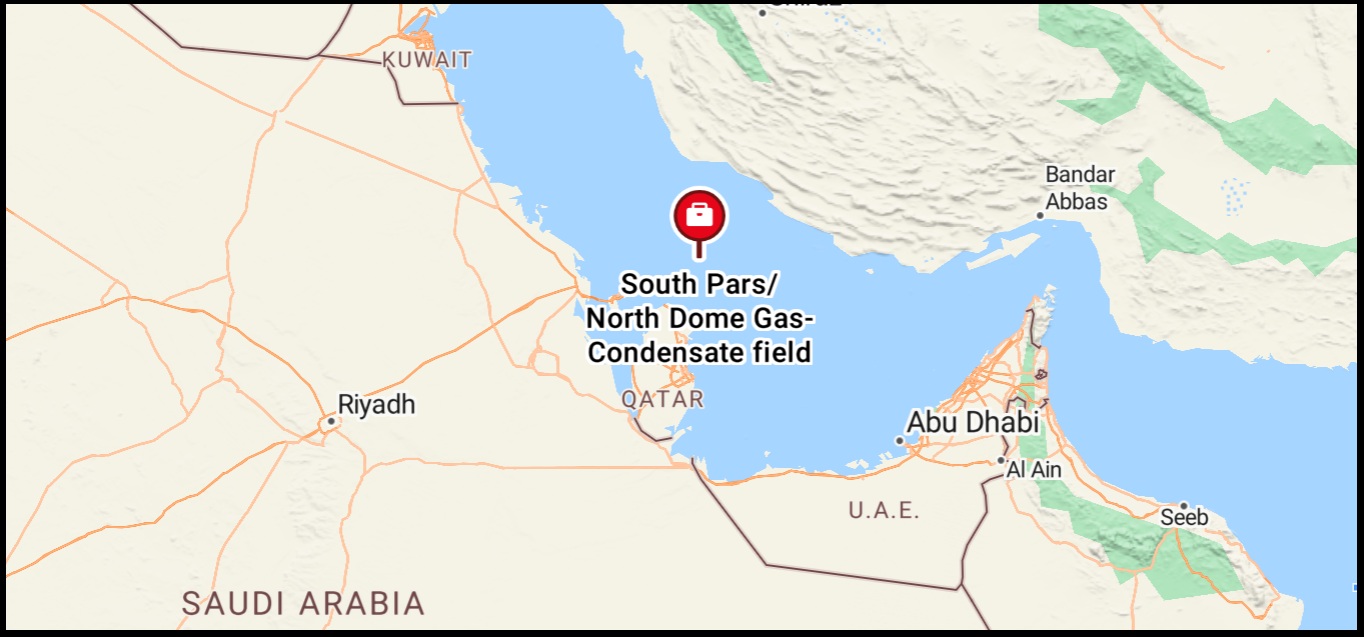
The South Pars/North Dome field is a natural-gas condensate field located in the Persian Gulf. It is by far the world’s largest natural gas field, with ownership of the field shared between Iran and Qatar. According to the International Energy Agency, the field holds an estimated 1,800 trillion cubic feet of in-site natural gas.

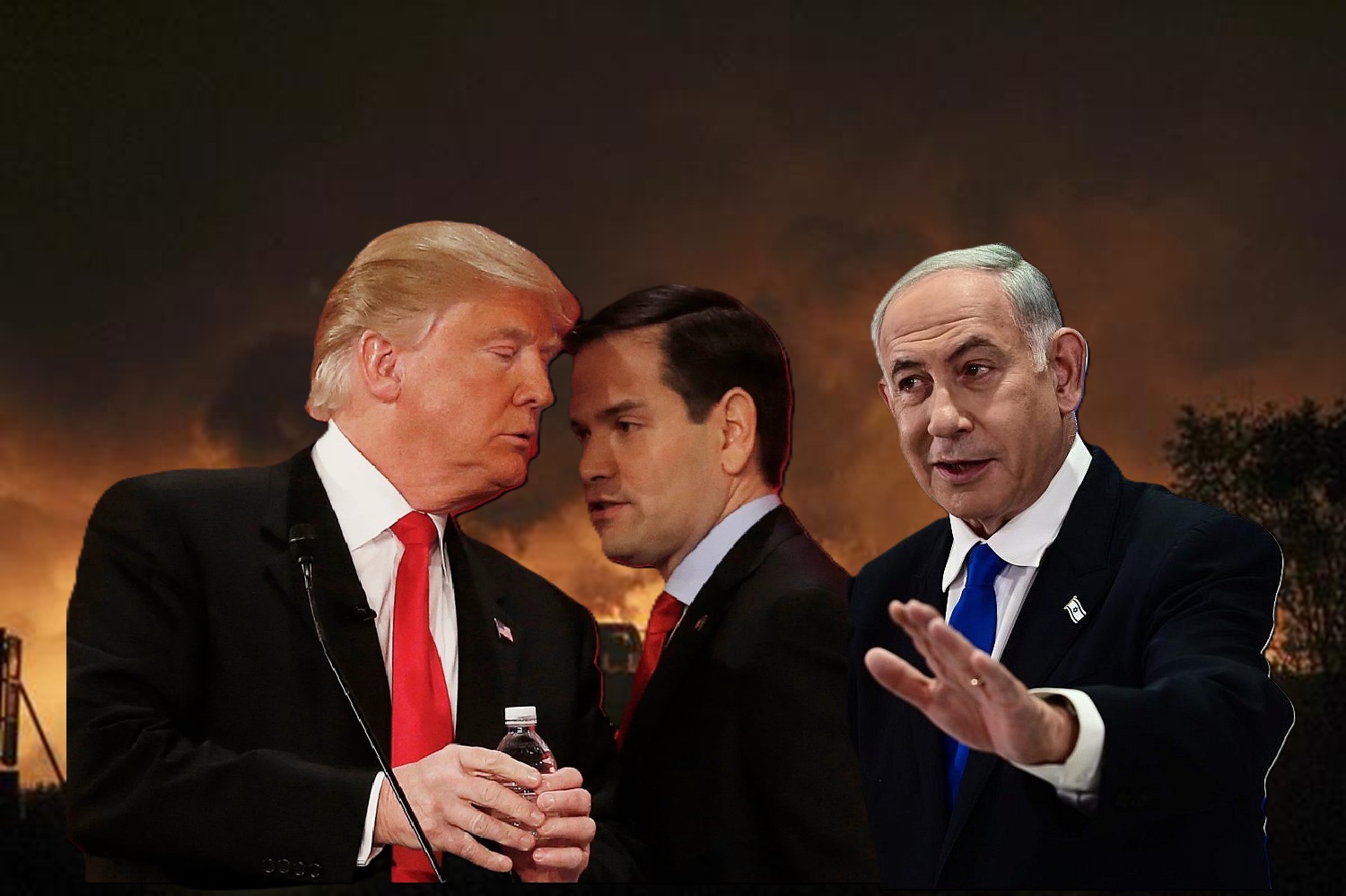
President Trump is not happy about Israel’s unilateral decision to strike at the Pars gas field; however, pay attention to what Trump diplomatically describes as the motive:

[TRUTH SOCIAL] – “Israel, out of anger for what has taken place in the Middle East, has violently lashed out at a major facility known as South Pars Gas Field in Iran. A relatively small section of the whole has been hit. The United States knew nothing about this particular attack, and the country of Qatar was in no way, shape, or form, involved with it, nor did it have any idea that it was going to happen.

Unfortunately, Iran did not know this, or any of the pertinent facts pertaining to the South Pars attack, and unjustifiably and unfairly attacked a portion of Qatar’s LNG Gas facility.”

“NO MORE ATTACKS WILL BE MADE BY ISRAEL pertaining to this extremely important and valuable South Pars Field unless Iran unwisely decides to attack a very innocent, in this case, Qatar – In which instance the United States of America, with or without the help or consent of Israel, will massively blow up the entirety of the South Pars Gas Field at an amount of strength and power that Iran has never seen or witnessed before.

I do not want to authorize this level of violence and destruction because of the long-term implications that it will have on the future of Iran, but if Qatar’s LNG is again attacked, I will not hesitate to do so. Thank you for your attention to this matter.”

President DONALD J. TRUMP

The joint economic relationship over the Pars gas field is part of the connective tissue between Iran and Qatar and underpins why Qatar has always been an intermediary for all issues of deconfliction that surround the U.S and Iran.

Factually Qatar was always the mediator, and within that mediation relationship the USA used Qatar as the bank to receive the confiscated funds Obama delivered when he lifted sanctions.  There are hundreds of examples of the USA using Qatar as the intermediary for Iran policy, just as there are hundreds of citations and examples available for Qatar supporting the Muslim Brotherhood.

It is only recently, very recently, like only in the era of Donald Trump as U.S. President, when Qatar started pulling away from a very friendly relationship with Iran.  So recently, that for the past 15-months, since long before it even made sense, CTH has been calling attention to this weird Qatar -vs- Israel division dynamic within USA domestic politics.

Then this happens….

The United States and Israel are working together on the targeting and military objectives of Operation Epic Fury.  But, for some unknown reason the United States did not know Israel was going to strike the Qatar Pars gas field?  Interesting.

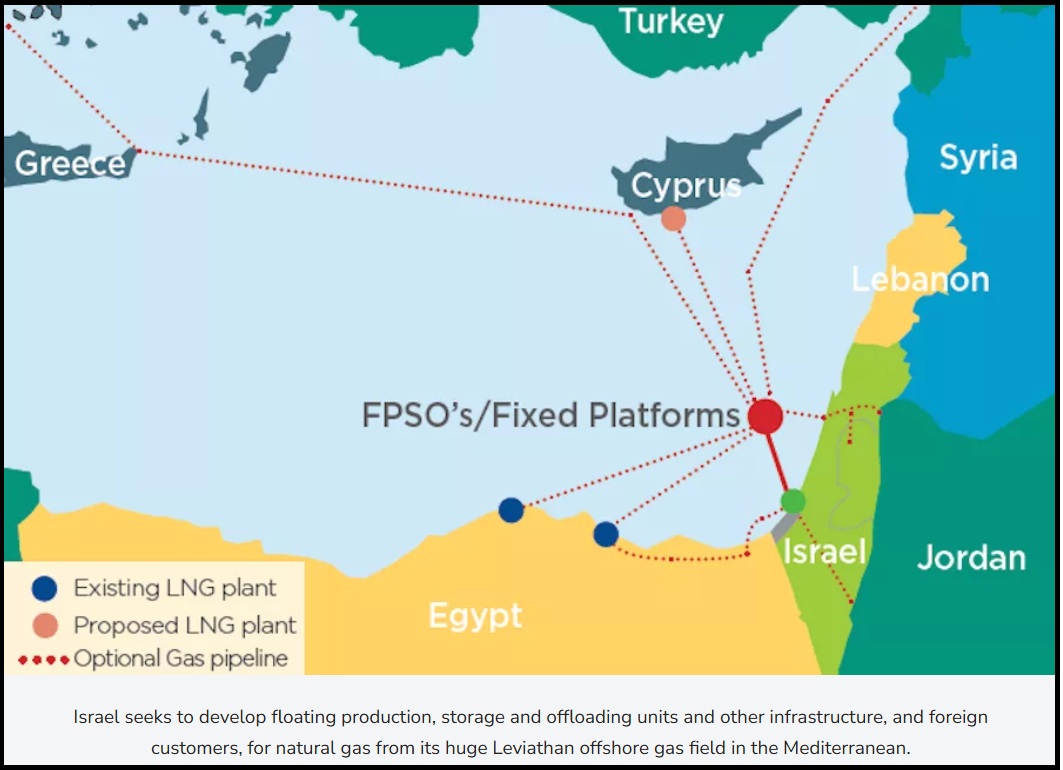
President Trump assigns the motive for the Israeli attack as “out of anger for what has taken place in the Middle East.” However, Israel has another, perhaps opportunistic motive, worth billions.

[SOURCE]

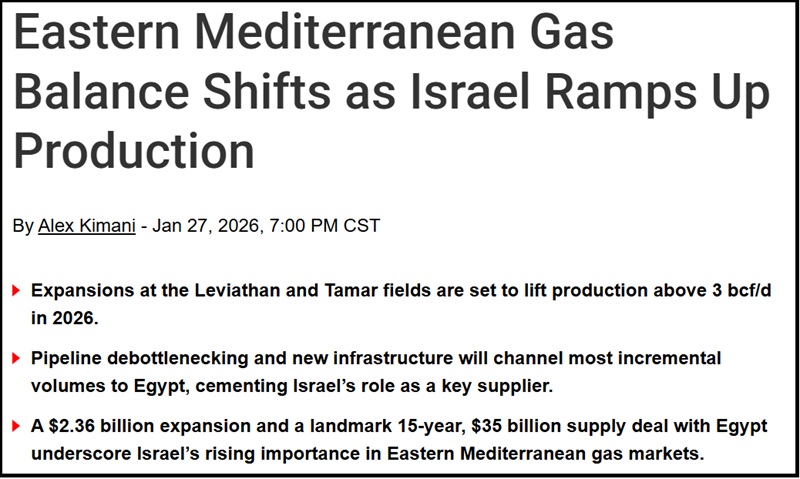
Israel is set to achieve record natural gas production in 2026, with expansion projects in the Leviathan and Tamar fields expected to push total output above 3 billion cubic feet per day (cfd) for the first time ever. According to the experts, the Chevron (NYSE:CVX) operated fields are expected to add a combined 600 million cfd in the coming months, with the bulk of the extra gas piped to Egypt after the removal of bottlenecks in the export pipeline network. Israel’s gas output in 2025 is estimated to have dropped slightly from a record 2.587bn cfd achieved in 2024 as fields were shut-in during Israel’s conflict with Iran in June.

Chevron and its partners NewMed Energy (OTCPK:DKDRF) and Ratio Energies (OTCMKTS:RTEXF) confirmed a $2.36 billion Final Investment Decision (FID) in January 2026 to expand the Leviathan field, increasing production capacity from 12 bcm to roughly 21 bcm annually. The expansion involves drilling three additional offshore wells, installing new subsea infrastructure and enhancing the platform’s processing capabilities. The expansion aims to significantly increase natural gas exports to Egypt and Jordan. The companies managed to boost production at the Tamar field to increase capacity from approximately 1.1 billion cubic feet per day (bcf/d) to 1.6 bcf/d in 2025.

Debottlenecking of the export pipeline network is enabling higher volumes to reach Egypt, helping to fill their domestic supply gapsKey projects, including upgrading the Ashdod-Ashkelon pipeline and constructing the Nitzana pipeline (expected to be operational by 2028). The projects are designed to boost exports to Egypt and Jordan by 1.8 billion cubic feet per day. The 46-km offshore natural gas Ashdod–Ashkelon pipeline is undergoing upgrades scheduled for completion in the current year to handle increased capacity. Approximately 55% of the gas flows through the offshore Eastern Mediterranean Gas (EMG) pipeline, while 45% is transported via the Arab Gas Pipeline through Jordan.

[…] The Leviathan and Tamar gas fields are key Israeli offshore natural gas assets, with current capacities of approximately 12 billion cubic meters (BCM) per year and 11 BCM per year, respectively. Both fields are expanding, with Leviathan projected to increase to 21–23 BCM annually to meet rising regional demand and exports. Still, the Middle East oil giants have potential for higher gas production. (SOURCE)

Did Israel bomb the collaborative Iran-Qatar gas field “out of anger for what has taken place in the Middle East.” Or did Iseael just diminish an LNG competitor?

President Trump is not happy with this one Bibi.

We’ll keep watching…

Japanese Prime Minister Sanae Takaichi Emphasizes Constitutional Inability to Conduct Overseas Military Operations


Posted originally on CTH on March 16, 2026 | Sundance 

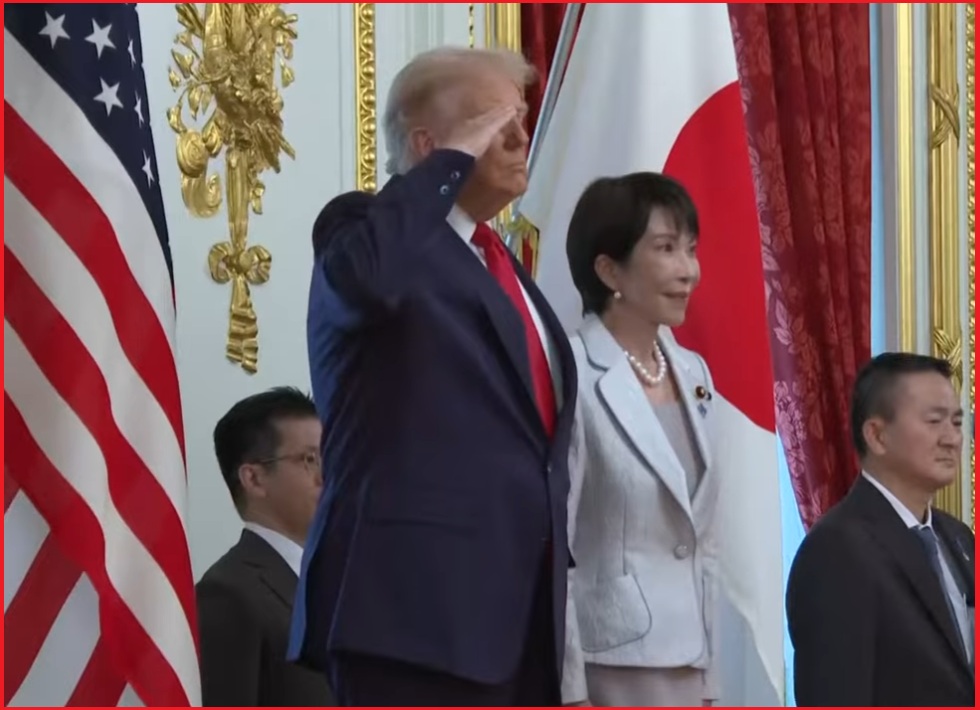
Responding to questions about whether Japan would send military ships to the middle east to participate in escorts through the Strait of Hormuz, Japanese Prime Minister Sanae Takaichi noted the current constitution blocks Japan from conducting overseas military operations.

Exactly as we outlined when President Trump first made the request via Truth Social {SEE HERE} Prime Minister Sanae Takaichi may want to support the request, but Japan’s post WWII constitution about military operations doesn’t permit it.

Japan’s military can be constitutionally defensive only.

While an argument might be made that escorting oil destined for eventual arrival in Japan may technically squeeze within a narrow interpretation of ‘defense’, considering the operation would take place far from Japan a highly conservative Sanae Takaichi is not going to try and thread that precarious needle.

TOKYO, March 16 (Reuters) – Japan has no plan to dispatch naval vessels to escort vessels in the Middle East, Prime Minister Sanae Takaichi said on Monday, after U.S. President Donald Trump called on allies to protect tankers traversing through the Strait of Hormuz.

“We have not made any decisions whatsoever about dispatching escort ships. We are continuing to examine what Japan can do independently and what can be done within the legal framework,” Takaichi told parliament.

Trump’s call in a social media post for U.S. allies, including Japan, to help protect oil and gas shipments through the strategic waterway puts Tokyo in a difficult position because while it relies heavily on Middle East energy its war-renouncing constitution limits the scope of overseas military operations it can conduct.

Japan’s Maritime Self-Defense Force has conducted anti-piracy operations in waters near the Middle East, but those missions were policing operations rather than combat missions against state actors. Japan can deploy its military overseas to respond to what it determines to be an existential threat to the nation, but that would be politically difficult and a high legal threshold for Takaichi’s government to justify.

Takaichi will travel to Washington this week for talks with Trump that she said will cover the conflict with Iran.

“I would like to engage in solid discussions based on Japan’s views and position regarding the need for early de-escalation,” she told lawmakers. (link)

CENTCOM Commander U.S. Navy Adm. Brad Cooper Provides an Update on Operation Epic Fury


Posted originally on CTH on March 16, 2026 | Sundance 

CENTCOM Commander Admiral Brad Cooper provides an update on the latest military engagements during Operation Epic Fury.  Commander Cooper highlights video footage and captured images of Iranian war infrastructure to show the before and after results of U.S. strikes.  WATCH:

.

President Trump Notes How ‘World War Reddit’ Works Both Ways


Posted originally on CTH on March 15, 2026 | Sundance

World War Reddit works both ways. In Ukraine the manipulation was to give the illusion of success for Zelenskyy. In Iran the manipulation is to give the illusion of failure for Trump.

The bottom line in both scenarios is the illusion being disconnected from reality.

[Truth Social] – “Iran has long been known as a Master of Media Manipulation and Public Relations. They are Militarily ineffective and weak, but are really good at “feeding” the very appreciative Fake News Media false information. Now, A.I. has become another Disinformation weapon that Iran uses, quite well, considering they are being annihilated by the day.

They showed phony “Kamikaze Boats,” shooting at various Ships at Sea, which looks wonderful, powerful, and vicious, but these Boats don’t exist — It’s all false information to show how “tough” their already defeated Military is!

The five U.S. Refueling Planes that were supposedly struck down and badly damaged, according to The Wall Street Journal’s false reporting, and others, are all in service, with the exception of one, which will soon be flying the skies. Buildings and Ships that are shown to be on fire are not — It’s FAKE NEWS, generated by A.I.

For instance, Iran, working in close coordination with the Fake News Media, shows our great USS Abraham Lincoln Aircraft Carrier, one of the largest and most prestigious Ships in the World, burning uncontrollably in the Ocean. Not only was it not burning, but it was also not even shot at — Iran knows better than to do that! The story was knowingly FAKE and, in a certain way, you can say that those Media Outlets that generated it should be brought up on Charges for TREASON for the dissemination of false information!”

“The fact is, Iran is being decimated, and the only battles they “win” are those that they create through AI, and are distributed by Corrupt Media Outlets. The Radical Leftwing Press knows this full well, but continues to go forward with false stories and LIES. That’s why their Approval Rating is so low, and I can win a Presidential Election, IN A LANDSLIDE, getting only 5% positive Press — They have no credibility!

I am so thrilled to see Brendan Carr, the Chairman of the Federal Communications Commission (FCC), looking at the licenses of some of these Corrupt and Highly Unpatriotic “News” Organizations. They get Billions of Dollars of FREE American Airwaves, and use it to perpetuate LIES, both in News and almost all of their Shows, including the Late Night Morons, who get gigantic Salaries for horrible Ratings, and never get, as I used to say in The Apprentice, “FIRED.” Thank you for your attention to this matter!” President DONALD J. TRUMP

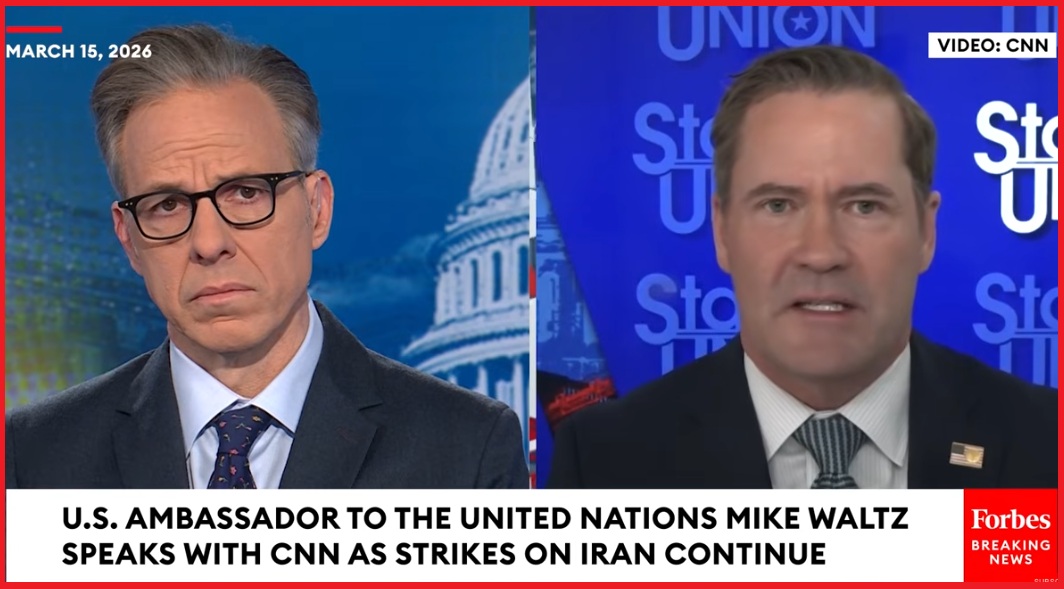
Sunday Talks – U.N. Ambassador Mike Waltz vs Jake Tapper


Posted originally on CTH on March 15, 2026 | Sundance 

Perhaps the Ellison effect is actualizing inside CNN, but the insufferable furrowed brows of Jake Tapper were unusually non-combative today as he interviewed U.N Ambassador Mike Waltz while discussing Iran. [Video and Transcript Below]

[Transcript] – Joining us now to discuss, the U.S. ambassador to the United Nations, Mike Waltz, a former Green Beret who served in Afghanistan and the Middle East.

Ambassador Waltz, thank you so much for joining us.

The president just said that the U.S. has beaten and completely decimated Iran, both militarily, economically, and in every other way. Help us understand what that means, that Iran has been beaten. Does that mean that U.S. service members will soon be coming home?

MIKE WALTZ, U.S. AMBASSADOR TO THE UNITED NATIONS: Well, Jake, let’s just unpack that for a moment.

Militarily, the U.S. military has decimated Iran’s air force, their air defenses, their missile capability, their missile production capability. This has been a dominant victory, the likes of which we haven’t seen in modern American military history, economically, the maximum pressure campaign that President Trump put in place his first term and reinstituted the second — as the second major item, executive order that he signed this term.

Their currency is tanking. Their foreign reserves are completely depleted. And that’s why you saw the most recent uprising. You saw the uprising based on economic terms. And then, diplomatically, we just saw this week at the U.N. Security Council 135 nations — Jake, it was a U.N. record — 135 nations side with the Gulf Arab countries and condemn the GCC — excuse me — with the Gulf Arab countries, the GCC countries, and condemn Iran for its atrocious attacks on civilian infrastructure, ports, airports, hotels, resorts. And, as I pointed out at the Security Council, I don’t see how the regime argues that those are military targets. They are clearly not, and they are clearly deliberately targeting civilian infrastructure.

And I have got to tell you, this shoot-in-all-directions strategy that Iran has taken on is backfiring. They have never been more diplomatically isolated. Just one more point. Russia and Iran had an opportunity to veto that measure, and they stood back and did not. They abstained.

So, with friends like those, I think Iran is going to stay incredibly isolated.

TAPPER: You said Russia and Iran abstained. I assume you meant Russia and China abstained.

WALTZ: Excuse me, Russia and China. That’s right.

TAPPER: Yes. Yes.

So, is he willing, the president, to accept an end to the war that leaves whatever of the regime is left still in place, the new ayatollah as supreme leader? Because it sounds like — the way you describe it, it sounds like President Trump, with the exception of the stranglehold that the Iranians have of the Strait of Hormuz, it sounds like everything has been achieved pretty much, with the possible exception of a new regime, which was not one of the specific goals.

WALTZ: Well, the president has said he’s not happy with this new nominated Mojtaba Khamenei, who, by many accounts, is an incredibly hardline individual, a hardline cleric.

We will see if he’s actually really in charge. As Secretary Hegseth said, he was wounded during the initial strikes. And it’s unclear that he really has control of the country, if he’s even alive at this point.

So, look, I will leave it to the president where he decides and when he decides and on what terms he decides as commander in chief to end hostilities. But I think the important point here is, the United States has never been in such a position of strength and the Iranian regime has never been in such a position of weakness when it comes to its options.

TAPPER: Despite U.S. strikes on military targets on Iran’s key oil hub of a Kharg Island Friday night, Iran says that oil production on the island is proceeding normally.

If Iran does not reopen the Strait of Hormuz, is President Trump prepared to target those oil facilities, which, as you know, handle 90 percent of Iran’s crude oil exports? And, if so, are you worried that that could risk even more of an escalation when it comes to the Strait of Hormuz? WALTZ: Well, President Trump is not going to take any options off the

table, Jake, and he pointed out in his TRUTH where he announced the military infrastructure strikes on Kharg, which, by the way, they use to project their fast boats, drones and other types of attacks on — into the Gulf, that he deliberately hit the military infrastructure only for now.

And I would certainly think he would maintain that optionality if he wants to take down their energy infrastructure. But we have to take a step back, Jake. I mean, look at what they’re doing to global energy supplies. Look at what they’re trying to do in terms of constraining the world’s economy with drones and boats.

One could only imagine if they had a nuclear arsenal or if they had a nuclear weapon. That’s what many of these Gulf Arab countries have woken up to, that they now realize, and why they have been so supportive and are standing with us as we seek to ensure this regime can never have a nuclear weapon, which President Trump has been consistent about for 10 years.

TAPPER: If not longer.

WALTZ: Yes.

TAPPER: President Trump said that the Navy, the U.S. Navy, is going to begin escorting tankers through the Strait of Hormuz and that will begin very soon. And he said — quote — “Many countries will be sending warships to keep the strait open and safe” — unquote.

The administration has been talking about potential Navy escorts for more than a week now. Shipping executives tell CNN that all their requests for escorts have, as of now, been rebuffed. President Trump said — quote — “Hopefully, China, France, Japan, South Korea, the U.K. and others will send ships to the area” — unquote.

Is he hoping that those countries are going to send ships or have they committed to sending ships? And how soon will those naval escorts be ready?

WALTZ: Well, I will leave those conversations to him. The conversations are ongoing.

I think there’s an important point that’s getting kind of missed in the conversation, that 80 percent of the oil coming out of the Gulf heads to Asia. Only about 7, 8 percent heads to the Western Hemisphere. And thank God for President Trump’s energy dominance agenda, everything from opening up ANWR, new pipeline in Alaska, incentivizing fracking, what we’re going to see come out of Venezuela and Guyana in the coming months and years.

This is why we have to be energy-independent. And I have to just say it’s a little rich coming from the progressive left, who has literally been at war against oil, literally were putting policies in place to drive up the price of oil in order to force Americans to buy E.V.s and go to wind and solar, are now suddenly celebrating it or decrying the lack of it.

Like I said, it’s a little bit rich. We have the energy dominance in place. But, to your point on escorts, look, back, in the ’80s, under the tanker wars then, the last time Iran tried to constrain global energy supplies, you had French, United Kingdom, even Soviet Union forces in there escorting their tankers out that were heading to their markets.

And I think that’s what President Trump is calling upon the world, saying the entire world is affected. Iran can’t hold your economies hostage. And we certainly welcome, encourage, and even demand their participation to help their own economies.

And, meanwhile, the U.S. military will continue to pound the Iranian military, their missile, boat and drone forces to keep the straits open.

TAPPER: Sources tell CNN that Russia has been providing Iran with intelligence to help Iran better target U.S. service members. You said in an interview last week that President Trump will — quote — “deal with it accordingly.”

Here’s what President Trump had to say about this on Friday.

(BEGIN AUDIO CLIP)

BRIAN KILMEADE, FOX NEWS ANCHOR: Do you think Putin is helping them?

TRUMP: I think he might be helping him a little bit, yes, I guess. And he probably thinks we’re helping Ukraine, right? China would say the same thing. You know, it’s like, hey, they do it and we do it, in all fairness. They do it and we do it.

(END AUDIO CLIP)

TAPPER: Do you see an equivalence between the U.S. helping Ukraine defend itself and Russia helping Iran target U.S. service members?

WALTZ: Well, Jake, we have known that Russia and Iran have this symbiotic, have this strategic partnership for some time now.

I will tell you what Russia has lost out of this. They have lost their biggest manufacturer of the Shahed drones. Russia’s been licensing those drones for quite some time and hitting Ukraine with it, all the more reason why we need to defang this regime and all the more reason that they cannot have a nuclear weapon.

And I will just point out too, because a lot of critics out there are making hay of this, it was President Trump that put sanctions on Russia’s largest oil producer, Rosneft. He also put sanctions on Lukoil. The Biden administration did not do that for many years.

They only did a kind of a pinprick action at the very end of the administration. He also took tough action on India. And now he’s put a temporary pause on that in order to calm energy markets. I think these are all pragmatic, commonsense approach — approaches,

while we deal with the Iranian regime.

TAPPER: But, surely, surely Russia helping Iran target our service members is upsetting and distressing, and action needs to be taken.

WALTZ: Well, I’m not going to get into leaked assessments of what intelligence is being provided or not. I just can’t and won’t do that.

But I will tell you, if they are doing it, it certainly hasn’t been affected — or effective, excuse me, because the Iranian air force, air defenses, missile forces, and Navy have been completely decimated.

TAPPER: All right, Ambassador Mike Waltz, thank you so much. Appreciate your time today, sir.

WALTZ: All right, thank you.

Sunday Talks – NEC Director Kevin Hassett Outlines Depth of White House Preparatory Plan for Iran Economic Disruption


Posted originally on CTH on March 15, 2026 | Sundance

The Panicans will be greatly disappointed by the foresight and economic planning a proactive White House deployed before the confrontation with Iran began.  [Video and Transcript Below]

White House National Economic Council Director Kevin Hassett, leaves CBS’s Margaret Brennan stuttering to respond to the insight presented.  As noted in the interview, proactively the Trump administration planned to mitigate any oil disruption for the U.S, undertaking a series of moves before Operation Epic Fury began.

Iran thinks “that they’re going to harm the U.S. economy and get President Trump to back down,” Hassett says.  “There couldn’t be anything that was a stupider thing to say because the bottom line is that our economy has got all this momentum in the world and we’ve got lots and lots of oil,” he continued.

Then highlighting how the strength of the U.S. position actually ends up with leverage in trade negotiations, Hassett notes, “we have lots of trading partners that are more on the hook from imported oil from these guys.”  Which draws attention to President Trump’s statement yesterday saying, in essence, ‘come guard your oil shipments while we kill bad guys’. WATCH:

[Transcript] – MARGARET BRENNAN: We go now to President Trump’s top economic adviser, Kevin Hassett. Good morning to you.

KEVIN HASSETT, DIRECTOR NATIONAL ECONOMIC COUNCIL: Good morning.

MARGARET BRENNAN: The IDF spokesperson said this morning that Israel’s combat operations will go through the beginning of April. Is that also the U.S. timeline? And if so, how much will this conflict cost the economy if it goes on another three and a half weeks?

HASSETT: Right. Well, one of the things that we’ve been briefed on almost every day is what’s going on and what the president is being briefed on with regard to the Iran war. And as of yesterday this story was- the message was that people, the defense- Department of War believed that it would take four to six weeks to complete this mission and that we’re ahead of schedule. So we are a couple of weeks in and I think that should give you some clarity about when we expect that the president will decide that we’ve achieved his objectives. The other thing I can say is that you can also look at futures markets, which are interesting because you’ve cited over and over the spot price of gasoline, which, of course, is affected right now by the disruption of the strait, but if you look at the futures prices, they are expecting a rapid, rapid end to the situation and much, much lower prices. In fact, I don’t think I’ve seen a sort of future price path with such a steep decline in all my years watching futures.

MARGARET BRENNAN: We will talk about the oil trade later on in the program, as those markets prepare to open later today, but the International Energy Agency called this the largest supply disruption in the history of the global oil market. So I’m not sure how much past charts are a future indicator here, but the president is calling on other countries now to send ships to help protect the Strait of Hormuz. You just heard Iran’s foreign minister saying Tehran has been approached by other countries about negotiating their way through strait. If that kind of negotiation happens, are Americans just going to get cut out here?

HASSETT: Well, first of all, you have to understand that America is not going to have its economy harmed by what the Iranians are doing. The bottom line is that in the ’70s we didn’t produce much oil, but now we do. So, America is in a very strong position. They think that they’re going to harm the U.S. economy and get President Trump to back down. There couldn’t be anything that was a stupider thing to say because the bottom line is that our economy has got all this momentum in the world and we’ve got lots and lots of oil. We have lots of trading partners that are more on the hook from imported oil from these guys. And as we can see, it’s completely unacceptable that a government that would, you know, murder 40,000 of their people just a few months ago would be blackmailing countries to let stuff through. President Trump thinks that is unacceptable and for the global economy we need to fix it and we are going to fix it fast.

MARGARET BRENNAN: Okay. It is a global market, but I take your point there is supply of course, there’s refining, there’s other interruptions to the ability to access oil and gas. But gas prices themselves are up more than 20% since this conflict has begun. Jet fuel prices are leading airlines to raise ticket prices quickly. That’s not my opinion, that’s the United Airlines CEO who just said that. The American Farm Bureau warned of supply chain shocks when we already have record high input prices. So can you give us some kind of projection here on how this will impact consumer prices and for how long?

HASSETT: For sure. And I want you to know that this is something that the government has been studying for decades. And even myself, when I first came in as Chairman of the Council of Economic Advisers one of the first assignments I got from General Mattis was to study what happens if there are oil disruptions. And so we know how to minimize- minimalize the impact of this disruption. Now, you can’t make it completely go away but you can minimal-ize it. And so we are increasing the amount of permits that we’re giving to Venezuela, we’re getting new sources of fertilizer from Morocco and from Venezuela and other places to make sure that our farmers have the fertilizer they need. And we’re even thinking ahead about the jet fuel problem which is really mostly a problem for jet fuel coming from Asia. And we have been in discussions to make it easier for foreign ships to go from the Gulf of America over to the west coast to make sure that we don’t have a disruption from jet fuel as well. And so, we are looking at every scenario, and we’ve got a plan for each scenario.

MARGARET BRENNAN: Okay. Are you going to trigger those things and make them operational or are you just looking at them? And how do you prevent food prices from also going up?

HASSETT: Right. Well, the big problem right now would be energy prices and we’re watching and monitoring closely. We’re looking at things every day and seeing how quickly we progress. The bottom line is again, that the reason why futures markets for oil are dropping down towards 60 and even below 50 in the long run is that we expect that if Iran stops being this disruptive terrorist force in the Middle East that there will be a boom in oil production and industrial production. But think about the harm- the harm that this evil government has done to their own people. Back in the ’70s before the revolution, Iran was the 17th largest economy in the world, now it’s something like the 50th.

MARGARET BRENNAN: No one’s going to defend the regime’s human rights record on this program.

HASSETT: They’ve run- they’ve run their country into the ground- but the point is that- I wanted to just say that the countries around them, they also suffer from the risk of having them go nuts and attack them. And so we expect that the global economy is going to have a big positive shock as soon as this is over and we’re still being briefed that it would be four to six weeks from the beginning and that we are ahead of schedule.

MARGARET BRENNAN: A big positive shock, four to six weeks. So this a April 9th scenario you’re talking about? You are going to see some kind of boost–

HASSETT: The president will decide.

MARGARET BRENNAN: –even–

HASSETT: The president will decide if they no longer have the capability of blackmailing us and harming our neighbors. And once he decides that, then he will call an end to the war.

MARGARET BRENNAN: That’s a pretty broad definition.

HASSETT: Well, we’ve destroyed their navy, we’ve destroyed their air force and so on and so I think we are well on the way.

MARGARET BRENNAN: Well tell me how much is this war going to cost? Because I know the Pentagon briefed it’s going to be about $11.3 billion. Do you need to ask congress for more money to pay for what you’re doing?

HASSETT: I think right now we’ve got what we need, whether we have to go back to congress for more is something that I think that Russ Vought and OMB will look into, but the latest number, you said 11.3, the latest number I was briefed on was 12, and so it’s consistent. So this is something that we’ve got the weapons that we’ve already got in place to do this and so we are not necessarily going to need any kind of supplemental.

MARGARET BRENNAN: More than that was spent in just the first week of the war, you know that. It was over five billion just in munitions. You’re solid on the 12?

HASSETT: I said $12 billion–

MARGARET BRENNAN: –For six weeks of war?

HASSETT: No, I’m sorry. The 12 billion was what I was briefed has been spent so far.

MARGARET BRENNAN: Gotcha. Kevin Hassett. Thank you very much. We we will be right back with a lot more ‘Face the Nation’