Lots of Words – United States Supports but Does Not Sign “Coalition of Willing” Security Guarantees


Posted originally on CTH on January 7, 2026 | Sundance

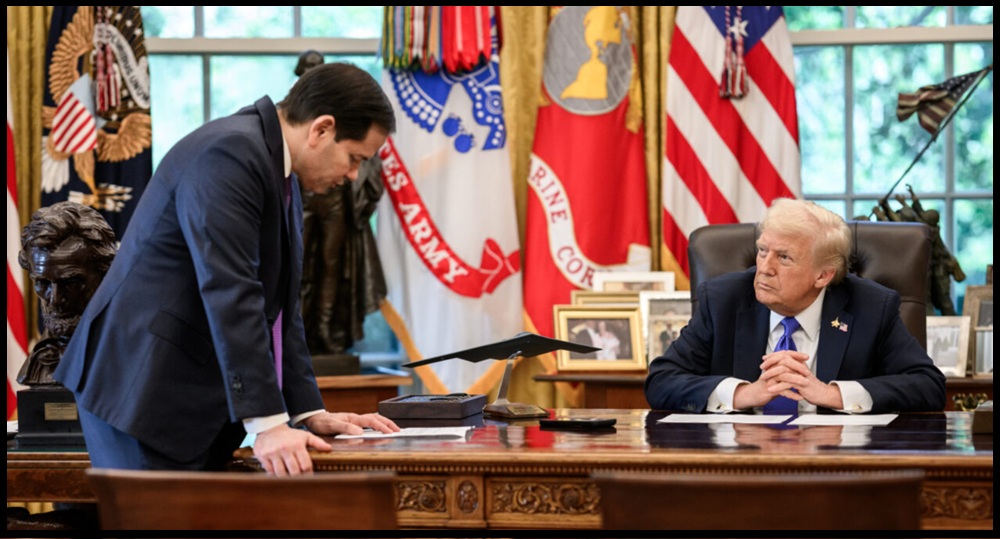
I’ll post the video outcomes of the Paris summit comments below. However, in the interests of time and cutting to the chase, the picture below highlights the reality of things as they present.

The British-based “coalition of the willing” (+1 USA) assembled in Paris as the operation to manipulate the U.S. into forming the cornerstone of the Ukraine “security guarantees” continues. A great deal of this is public relations and psychological operations intended to create something against President Trump’s expressed intention.

However, everything you need to know about the eventual end of this long exposition is evident in the image that everyone pretends not to see.

German Chancellor Merz, Ukraine President Zelenskyy, French President Macron, British Prime Minister Starmer and then you have Mr Witkoff & Mr Kushner. What’s missing? Trump. There’s your answer!

There’s no President Trump because the intent of the principals is against our America-first interest. Hence, the USA did not sign up to the EU created security guarantees, because Trump is demanding they do their own work.

Key word “proposed” [read agreement] …”These elements will be European-led, with the involvement also of non-European members of the Coalition, and the proposed support of the US.”…

President Trump is presenting: The U.S. will provide intelligence *monitoring* assistance, but that’s it.

Not in our strategic interest. Not our war. Not our issue.

The U.S. delegation did not sign up to the statement the EU put forth after the meeting.

Lots of words were said.

Lots of gratitude was expressed.

Lots of support was mentioned. However, ultimately the responsibility for any agreed security guarantees will be carried by Europe, not by the United States.

As noted by Politico-EU[…] The statement from Kyiv’s European allies says they stand ready to commit to “legally binding” security guarantees to support Ukraine in the event of a peace deal with Russia.

Crucially, the monitoring and verification of a future ceasefire would be led by the U.S., with contributions from countries including the U.K. and Germany.

The plan also sets out security guarantees that would include long-term support for the Ukrainian armed forces, the deployment of a European-led multinational force in Ukraine in case of a peace settlement, and “binding” commitments to support Ukraine should there be a future Russian attack.

French President Macron continues misleading the media, changing the intention of President Trump:

“The coalition of the willing declaration for a solid and lasting peace … for the first time recognizes an operational convergence between the 35 countries, Ukraine and the U.S. to build robust security guarantees,” Macron told reporters. Washington will participate in those guarantees, including with the “backstop” that Europeans wanted, he added.

It’s professional parseltongue from Macron, a man well-versed in the art of linguistic manipulation.

British Prime Minister Keir Starmer said that after a ceasefire, the U.K. and France will set up military hubs across Ukraine and “build protected facilities for weapons and military equipment to support Ukraine’s defense needs.”

France, the U.K. and Ukraine signed a separate declaration on Tuesday laying out these commitments.

The European-led multinational force will cover land, air and sea and will be stationed in Western Ukraine, far from the contact line, Macron said. France and the U.K. have previously said they would be willing to put boots on the ground — but most other coalition members, including Germany, have so far shied away from joining that commitment.

Other nations have suggested deploying aircraft based in neighboring NATO countries to monitor Ukrainian skies, and Turkey has agreed to lead the coalition’s maritime segment to secure the Black Sea.

German Chancellor Friedrich Merz said Berlin was open to deploying its troops in a neighboring NATO country that would act in case of Russian aggression, telling reporters “we are not ruling anything out.” But he stressed that the final decision would be up to Germany’s parliament.

“I will only make proposals to the Bundestag once there is a ceasefire and the coalition of the willing has agreed on the procedure to be followed,” he told reporters. “The prerequisite is a ceasefire.”

Some European countries, however, remain reluctant to deploy military assets in a post-war Ukraine. Greek Prime Minister Kyriakos Mitsotakis repeated that Greece will not participate in a European military force in Ukraine. However, Greek government officials said Mitsotakis has not ruled out other forms of assistance, such as in maritime surveillance. (more)

[The EU Readout HERE]

Witkoff and Kushner continued the Trump approach to heap praise upon the coalition, affirm their best intentions and openly, publicly advocate for the support therein. However, this is a European issue, supported by the U.S, but not operationally engaged with U.S. military despite the EU/Ukraine demands and continued requests.

The U.S. will monitor the Ukraine ceasefire situation and act as a diplomatic peacekeeper, establishing deconfliction channels of open communication between the USA and Russia.  However, Europe, this so-called “coalition of the willing,” will be responsible for any military backstop within that approach.

Prime Minister Starmer is all-in to put his British troops on the ground. France less so, with Macron hedging. Germany even less so with Chancellor Merz saying his parliament needs to approve of troop movements.

Everyone is hedging, unsure, seemingly tenuous because they have never operated without the USA acting as the heavy enforcement mechanism.  President Trump is coaching them to take responsibility for their own region.  The ‘coalition of the willing’ is doing their typically European thing, shouting strong words at Vladimir Putin – but checking to make sure the biggest playground enforcer is standing behind them.

♦ My message to those who worry about President Trump committing us to something protracted that will eventually end in our being pulled into a European theater of conflict, quit worrying.  Trump is telling the EU to quit talking and start actively being responsible for their own security.  In the background Trump has bigger plans.

Hans Mahncke has a solid take on the bigger picture:

The notion that America wants Greenland for its raw materials is either insanely ignorant or just engagement bait. Extracting anything in the Arctic is prohibitively expensive, and often physically impossible, with extreme cold, thick ice, equipment that won’t function, and no roads, rail or ports to move anything once you have it.

The real reason America needs Greenland is its immense geostrategic military value, which should be obvious to anyone with a functioning brain, especially anyone who has ever looked at a map from above, with the North Pole at the center.

Sure, some tasks could be outsourced to NATO, but that alliance is on its last legs, burdened by too many countries with conflicting priorities, and has mainly served as a way for Europe to freeload on US security guarantees. Relying on it for American national security is reckless. It’s far smarter to cut out the endless middlemen and take direct control. (source)

Mahncke is correct. On one side of the ice, you have North America. On the other side of the ice you have, well, the reason for President Trump to order dozens of icebreakers.

October, 2025: Finland is slightly smaller than Montana and wedged between Sweden and Russia. Finland, a nation of approximately 5 million people, has a security outlook shaped by its geography, a strategic position within the new NATO/Arctic strategy.

President Trump holds a bilateral discussion with Finnish President Alexander Stubb, as the two leaders’ complete terms for eleven icebreaker ships valued at $6.1 billion. Under terms of the deal, three of the ships will be built by Davie in Galveston, Texas, and four by Bollinger Shipyards in Houma, Louisiana.

Finland is the world leader in icebreaker ship building and will help teach U.S. ship building companies the latest advances in the technology. [SOURCE]

Stay Elevated:

December, 2025: Appearing on Fox News to discuss the Ukraine v Russia conflict, Finland President Alexander Stubb is questioned about the conflicting U.S. intelligence reports pushed by Reuters saying Russia will invade Europe, versus DNI Tulsi Gabbard saying Russia has no capability or intent to invade Europe.

President Stubb notes his agencies work closely with U.S. intelligence and in his view, Tulsi Gabbard is correct regarding President Vladimir Putin’s intention. [SOURCE]

President Trump is dancing through a geopolitical minefield, deconstructing numerous long-standing economic and manipulative institutions along the way, while simultaneously keeping 100 domestic agenda plates spinning on sticks.

It is amazing to watch his navigation skills.

Do not join the opposition effort to divide.  Instead, smile and enjoy this.

Be thankful that God has allowed you to see what is unfolding. Others that remain asleep are not as lucky as you.

Ask yourself in prayer, why you. Why now? Then, think about this daily in your quiet time.

Affirm your spirit and allow this sense of fortunate knowledge to elevate your faith and confidence in a loving and purposeful God. You have the unique gift of discernment. Ultimately, you have been chosen.

Be thankful. Remember, Romans 13:12

Live a positive, affirming, purposeful and incredible life.

Within every battle, challenge and contest we encounter, always remember to be thankful and continue living your best life.

[Support Our Ongoing Mission Here]

Zelenskyy Announces the Appointment of Former Canadian Deputy Prime Minister, Chrystia Freeland as Economic Advisor


Posted originally on CTH on January 6, 2026 | Sundance

There is some good news within this announcement as Justin Trudeau’s former Deputy Prime Minister to Canada is well known to both President Donald Trump and North American political followers for a decade.

Chrystia Freeland was the former lead of the Canadian trade delegation when Trudeau realized he needed to try and offset the economic damage within the renegotiated NAFTA agreement known as the USMCA. Freeland was also the lead attack agent behind the debanking effort against Canadian truckers who opposed the vaccine mandate.

In addition to holding Ukraine roots, the ideology of Chrystia Freeland as a multinational globalist and promoter for the World Economic Forum’s ‘new world order’ is well documented.

VOLODYMYR ZELENSKYY – “Today, I appointed Chrystia Freeland as an Advisor on Economic Development. Chrystia is highly skilled in these matters and has extensive experience in attracting investment and implementing economic transformations. Right now, Ukraine needs to strengthen its internal resilience – both for the sake of Ukraine’s recovery if diplomacy delivers results as swiftly as possible, and to reinforce our defense if, because of delays by our partners, it takes longer to bring this war to an end. I am grateful to everyone who is ready to support our state and our engagement with partners. Glory to Ukraine!” 

Presumably this appointment is intended to assist Zelenskyy in gaining western banking investment in Ukraine, part of the 20-point plan that relates to economic recovery. However, the downside is this announcement undermines any motivation the Trump administration might have toward that same objective.

In reality, given the recent revelations about billions of laundered aid funds being skimmed by corrupt members of the Ukraine government, we can only imagine how much of the recovery funds would be apportioned to maintaining the life of indulgence the political leaders expect.

In response to the lucrative “voluntary” appointment, Chrystia Freeland has announced her resignation from Canadian government in order to avoid any conflict of interest as the skimming is organized.

Approved by British intelligence, MI6, and the greater British Commonwealth in accordance with the needs of the World Economic Forum and banking control managers, it is likely that Freeland will join a growing list of Ukraine Economic “Advisors.”

As Zelenskyy recently said about the opportunity for the EU to confiscate the Russian sovereign wealth fund, “just give me the money.”

Today, around 27 leaders, NATO Secretary-General Mark Rutte as well as the alliance’s top military officer, Gen. Alexus Grynkewich, will gather in Paris amid so-called Coalition of the Willing format.  The objective will be to solidify the U.S. elements to provide the “security guarantees,” while Brussels organizes the financial structures that will be possible only because the USA will stand guard over their investment.

…. And, so it goes.

PARIS — U.S. Special Envoy Steve Witkoff and Jared Kushner — U.S. President Donald Trump’s son-in-law — will travel to Paris and attend a meeting of Ukraine’s allies on Tuesday, an Elysée official told reporters on Monday.

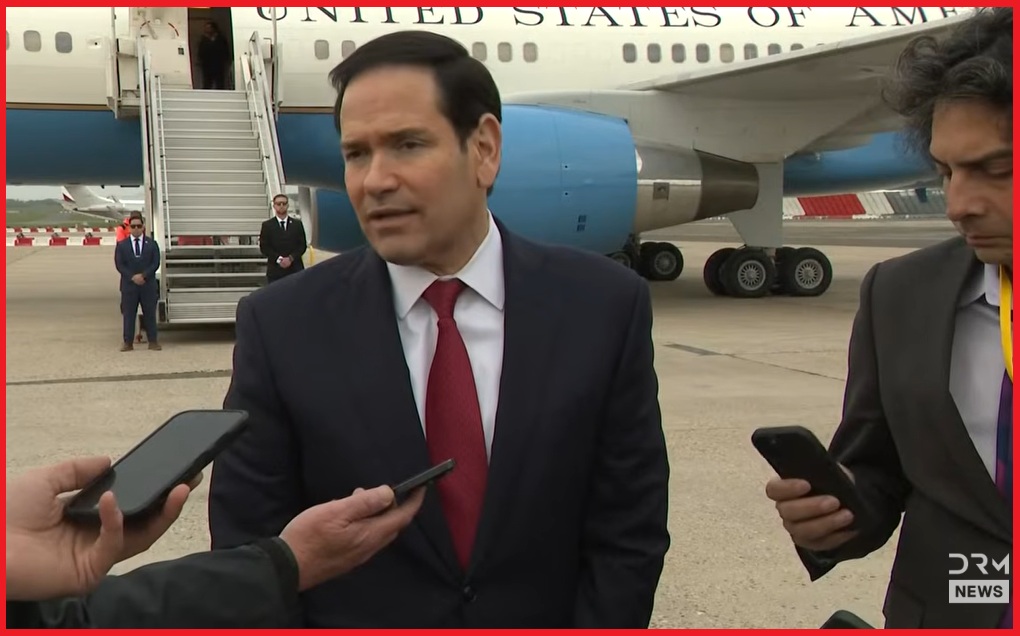
U.S. Secretary of State Marco Rubio will not be there “for obvious reasons,” the official added, referring to the situation in Venezuela.

“We have strived to bring the Americans closer to us, never resigning ourselves to the U.S. abandoning Ukraine. We have succeeded in this exercise of reconvergence between Ukraine, Europe, and America,” the official stressed. (read more)

Who knows, maybe we get Greenland in exchange for providing Ukraine security.

Why Did Trump Really Take Venezuela? It Wasn’t Just Oil!


Posted originally on Jan 4, 2026 by Martin Armstrong |  

COMMENT: You said these podcasts that Venezuela had the oil but the big question is China. Would like to expand on that now? Socrates showed the dollar taking off in October 2024 and the fourth quarter was a turning point. But it now shows volatility rising from February on. It looks like this is not over as you say until the fat lady sings.

FDS

Venezuela Bolivar Y 1 3 26

ANSWER: OK. I suppose I can now give the bigger picture that headlines miss. Trump’s comment throws in energy secondly. He does not mention drugs. Most of the drugs come in through Mexico. As I have said, China is the #1 client of Venezuela. This all depends on the takover of those oil assets by the American oil companies and do they cut off China. That may not be in the cards just yet because Venezuela owes a lot of monet to China. However, overlooked here is the connection to Russia. That is the real issue nobody is taking about and this has been a goal of Rubio for a very long time.

Russian lawmaker Alexei Zhuravlyov told Gazeta.ru on November 1st, 2025 that Russia MAY supply Venezuela with its new Oreshnik and Kalibr missiles, stating “I see no obstacles to providing our friendly nation with new systems such as the Oreshnik or the well-proven Kalibr missiles.” This wasn’t merely hypothetical posturing but a direct response to U.S. military buildup in the Caribbean. This threat was taken seriously. The Oreshnik, with a reported maximum range of about 3,400 miles, could theoretically threaten much of the continental United States as well as Puerto Rico. The Kalibr is thought to have a range of between 930 and 1,550 miles, which could possibly threaten the southern continental U.S., as well as facilities throughout the Caribbean.

From Venezuelan territory, the missile could target most of South America, the Caribbean, Mexico, and large portions of the United States—with Washington likely among its primary targets, given the tense relations between the US and Maduro’s regime. Even parts of Canada could fall within its range.

The relationship between Venezuela and Russia and China represented one of the most significant geopolitical realignments of the 21st century, built on anti-American sentiment, oil-for-loans arrangements, and mutual opposition to U.S. hegemony. This trilateral dynamic evolved from modest beginnings under Hugo Chávez into a comprehensive strategic partnership that has sustained the Maduro regime through economic collapse and international isolation.

The relationship between China and Venezuela took formal shape in 2006, under President Hugo Chávez, with Caracas signing several trade agreements with Beijing and describing China as a “Great Wall” against US influence. Chávez, seeking to diversify Venezuela’s oil exports away from the United States and counter American regional dominance, found in China an eager partner with rapidly growing energy needs and no political conditions attached to its financing.

The financial dimensions proved staggering. China began extending large loans to Venezuela, backed by future oil supplies of oil. In 2006, Beijing provided $2 billion in loans, which rose to $7 billion in 2007. Of the $150 billion the Chinese Development Bank loaned to Latin America in the past 12 years, a third went to Venezuela. These weren’t traditional loans but rather oil-collateralized arrangements where Venezuela repaid through petroleum shipments to Chinese state companies.

In 2007, China and Venezuela set up a joint fund worth $6 billion–$4 billion loan from the China Development Bank (CDB) and $2 billion from El Fondo De Desarrollo Nacional S.A. (FONDEN) set up by Caracas. This fund doubled to $12 billion by 2009. The mechanism was straightforward: China provided upfront capital, and Venezuela committed to shipping specified quantities of oil at predetermined prices. When oil prices collapsed in 2014 and Venezuela’s economy imploded, China extended additional lifelines including a $10 billion loan to support the country’s balance of payments.

The relationship peaked between 2010 and 2013, when Venezuela received approximately 64% of China’s new credit lines to Latin America. However, as Maduro’s mismanagement destroyed the oil industry and production plummeted, Chinese enthusiasm collapsed as a result. By 2016, Venezuela received only 10% of Chinese regional lending, and new financing essentially ceased. China focused instead on restructuring existing debt and protecting already-committed investments.

China is owed by Venezuela at least $20 billion in loans established before 2017. Some estimate that is even higher. The relationship shifted from expansion to damage control. Maduro’s rampant corruption and mismanagement has led to the region’s worst economic depression, creating unfavorable investment conditions, affecting oil production and exports, and limiting return on Chinese investment and Venezuela’s ability to repay Chinese loans.

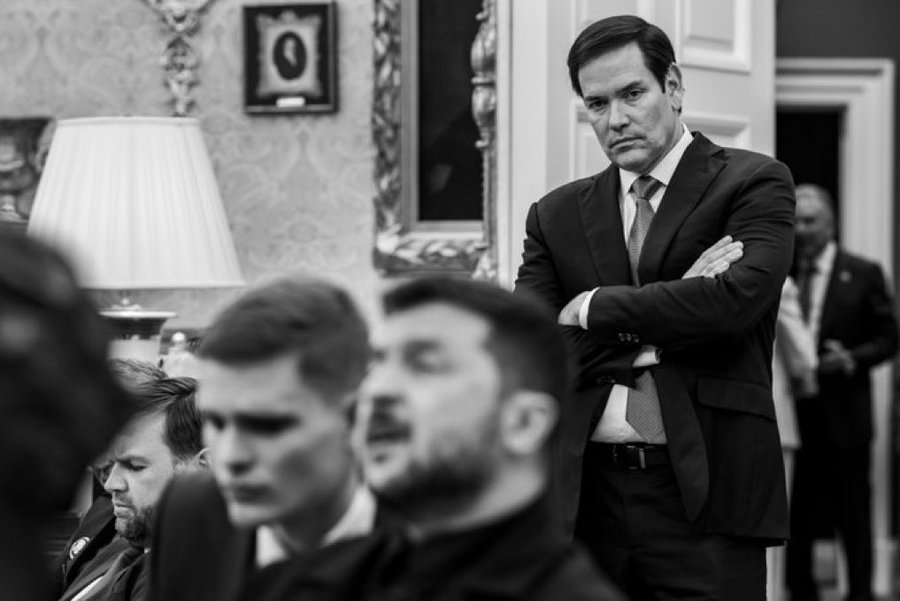
Now, that said, we must look at the Russian comment and look at this video. Who is standing there with Trump? Marco Rubio. If you remember, Rubio was also running for president against Trump in 2016. Who was funding his campaign? Goldman Sachs. Rubio has pushed for regime change in Venezuela because of Russia for years. Marco Rubio has held many titles during Donald Trump’s presidency, and he now adds another: Viceroy of Venezuela.

Russia’s engagement with Venezuela followed different patterns than China’s, emphasizing military cooperation alongside energy sector involvement since Russia did not need their oil. Where China provided infrastructure loans, Russia sold weapons systems. From 2005, Venezuela purchased more than $4 billion worth of arms from Russia. These sales included fighter aircraft, helicopters, armored vehicles, and air defense systems, transforming Venezuela’s military from American-equipped forces to Russian-supplied ones.

Russia and Venezuela forged a comprehensive strategic partnership centered on anti-hegemonic solidarity and pragmatic cooperation. This wasn’t merely commercial but explicitly geopolitical. Chávez and later Maduro positioned Venezuela as Russia’s foothold in the Western Hemisphere, allowing military exercises and bomber flights that signaled Moscow’s reach into America’s traditional sphere of influence.

The energy relationship proved more complex than China’s. Russia’s state oil company Rosneft provided billions in loans and took equity stakes in Venezuelan projects, though on smaller scale than Chinese financing. Russia’s state-backed oil company Rosneft loaned $2.3 billion, excluding interest. Critically, Russia helped Venezuela circumvent U.S. sanctions by facilitating oil exports through complex shipping arrangements and providing technical expertise to maintain declining production.

The trade balance between Moscow and Caracas increased by 64% in 2024, demonstrating sustained engagement despite Venezuela’s economic deterioration. Russia viewed Venezuela through multiple lenses simultaneously both as an economic opportunity, as well as a strategic geopolitical asset.

The Geopolitical Chess Move

Checkmate 2

I hope this explains behind the curtain for this is NOT simply a grab for oil NOR is it simply about drugs. We will see if Trump/Rubio cuts off the energy flow to China. But I believe that is a card to be played later in the game. I believe that #1 reason is to prevent Russia using Venezuela as a foothold like Cuba in 1962. But this is again only one reason in a complex strategic geopolitical move that is beyond the headlines right now.

Monday Should Be Really Interesting – And Other Random Stuff


My grandpa, and later my father, used to say something at particular moments that generally annoyed me but turned out to be entirely accurate, much to my youthful angst… “Well, hang around a one-legged group long enough, and you’re eventually going to end up limping.”

Yup, I learned to hate that lesson because the truth of it was always annoying.

This is perhaps the first time in memory when I look forward to Donald J Trump getting out of the Mar-a-Lago bubble and back to Washington DC.  Good grief, just typing that I can’t believe I’m saying it.  Here’s why:

Having followed and written about the optimal solution approach within the Trump Doctrine, a process that assigns responsibility to regional actors, then exits while providing support but not direct involvement [the delegation metric of high-support/low-direction], perhaps that is unfolding again in the background.  However, it seems like Trump is accepting the annoying Iran monkey problem on our behalf. [REF: How to Make The Monkey Jump]

To be clear in my personal position, charity begins at home.  (1) I don’t want conflict with Iran, nor do I really care about their internal political struggles; most of my day-to-day contacts feel the same. (2) At the same time, yes, I can imagine a scenario where Venezuela represents a threat to our continental objectives and national security, but would prefer to see them isolated from the outside.  Embargo them, stuff them inside an economic confinement zone (if needed), tell them why, then let the internal mess work itself out; most of my day-to-day contacts seem to feel the same.

Granting President Trump the long view of support; I mean, we don’t know what he is aware of; I sure hope all of this Iran stuff has a direct connection to American strategic interests.

Simultaneously, I can certainly see where deconflicting the USA, vis-a-vis Ukraine (literally London and the EU) from friction with Russia, has a strategic interest and factual bearing on the dollar-based trade system.  Attention on the Ukraine vs Russia stuff does have direct, albeit complicated outcomes attached to the economic standing of the average American.  Iran less so.

Pictured Center: a one-legged man.

Pictured Center: a one-legged man.

Looking at it from a geopolitically logical approach…. President Trump and Marco Rubio need Syria to remain stable.

Secretary Rubio has explained this aspect very well when he summarized the reason for President Trump lifting the sanctions against Syria.  I get that part.  But is this “locked and loaded” simply a brush back pitch against Iran to stop them from disrupting Trump’s Gaza objective.  Maybe so, it does make sense; thus, we extend the benefit of doubt.

If Syria destabilizes the tenuous Israel/Gaza stuff gets more complicated.  Iran can destabilize Syria. Therefore, putting pressure on the Iranian regime while simultaneously telling Israel to cool it over their Turkish opposition to the Gaza assist again does make sense.

Benjamin Netanyahu dislikes Recep Erdogan immensely and doesn’t trust him an inch.  I get that part also, but Turkey is a weird place held together by Erdogan’s very specific brand of Muslim Brotherhood patriotism.

In very direct ways keeping Syria stable helps Turkey and by extension the EU.

If Syria erupts, the refugee exodus heads north, and cunning Erdogan – a tenuous NATO member  seemingly never giving up on his Ottoman Empire rebuild – will play his “I can only absorb so much” card, thereby opening the gates for more authentic Islam travel further north into Europe.

[Our solid contacts in Istanbul have confirmed around 5 million Syrians have repatriated since President Ahmed al-Sharaa started his agenda to stabilize the region. The busy former al-Qaeda guy, 43-years-old, is also a bridge between Trump and Putin. So, there’s that.]

Keeping Syria stable also permits Trump’s Arab state coalition to deal with Gaza/Hamas in a constructive way. Trump told Netanyahu this publicly during the recent visit, essentially rebuking Israel’s justification for more IDF military action in Gaza.  Again, President Trump is dancing through the minefield here with the long game to get us the f**k out of it, while Netanyahu is hugging Trump to pull the USA deeper into it.

If you understand the Iranian tentacles that still remain in Syria (see recent ISIS attacks), confronting Iran makes Israel very happy; however, it’s not Netanyahu’s happiness that stands behind Trump’s motive for the confrontation.  Ultimately, the motive is Syria’s stability, Turkish Gaza support and the Arab money/engagement needed for the Mideast mess.

If our suspicions are correct, we should see Team Trump leaning toward Recep Erdogan, toward the Arab coalition and toward Syria at the same time he is managing Iran, managing Israel and managing a U.S. congress.

If the Ayatollahs are busy tamping down street protests, they are less likely to be poking Syria.

All of that is giving President Trump the maximum benefit of the doubt combined with the application of common sense.

♦ Meanwhile inside Russia, you might not hear about it from western media, but Ukraine and NATO are striking non-military targets, civilian areas, throughout Russia currently focusing heavy drone fire at Kazan, Russia’s third largest city.

STATE DEPT: “There have been drone attacks and explosions near the border with Ukraine, and in Moscow, Kazan, St. Petersburg, and other large cities.

Russian citizens are now very familiar with the sound of air raid sirens as increased drone attacks from Ukraine are extending into Russia.  This noticeable increase in activity is happening in combination with U.S/Ukraine strategic discussions on an EU created ceasefire agreement.

The Rubio state department has now updated the Russia advisory summary warning all Americans of the danger in traveling throughout Russia.

The update is also timed with the increased drone attacks into Russia’s main population centers and is likely due to concern that Americans would be street targets for angered Russian nationalists.

If President Trump walks away from the EU/Ukraine peace agreement construct, Russian Federation President Vladimir Putin will likely increase retaliatory attacks against Ukraine by significant levels.   One of my good contacts shared, “if Trump walks away, Kiev will now be leveled.”

Apparently, despite the incoming fire increasing, Putin is holding back his response to give Trump room to operate, while still carefully managing the Kremlin politics and striking into Ukraine to appease those in Russian government who want the full weight of the Russian military to come down hard on Zelenskyy.

…”If Trump walks away, Kiev will now be leveled.” 

Anonymous U.S. Officials Say Ukraine Didn’t Target Putin with Drone Attack – Russian Officials Say They Have Drone Flight Plan From Navigation Unit


Posted originally on CTH on January 1, 2026 | Sundance |

The Wall Street Journal is reporting that Ukraine did not target the personal residence of Russian Federation President Vladimir Putin, “according to U.S. officials.”   However, Russia captured one of the drones intact and have said they were able to “extract a file containing a flight plan from the navigation unit” which they plan to share with the Trump administration through established channels. {LINK}

WSJ – WASHINGTON—U.S. national-security officials said Wednesday that Ukraine didn’t target Russian President Vladimir Putin or one of his residences in an alleged drone operation, challenging Moscow’s assertion that Kyiv sought to kill the Russian leader.

That conclusion is supported by a Central Intelligence Agency assessment that found no attempted attack against Putin had occurred, according to a U.S. official briefed on the intelligence. The CIA declined to comment.

The U.S. found that Ukraine had been seeking to strike a military target located in the same region as Putin’s country residence but not close by, the official said.  (read more)

Who are we going to believe, Russian “special service” operations or anonymous “U.S. Intelligence Officials”?

Unfortunately, this question is no longer easy to answer given the history of the U.S. Intelligence Community, and yes, that includes the current embedded IC officials within the National Security Council, DNI and CIA even with Marco Rubio, Tulsi Gabbard and John Ratcliffe in position.

I would be very surprised if the U.S. Intelligence Community would be honest with President Trump on this issue if, and that is a big “if”, they even factually had any specific intelligence about it. [This WSJ narrative could be fake news]

Again, CTH will also assert the likelihood that Volodymyr Zelenskyy likely didn’t carry out the attack; everything about the timing of it during his meeting with President Trump just doesn’t fit.  Instead, it is more likely British intelligence, specifically MI6 carried out the attack, timed specifically for the Trump/Zelenskyy meeting.

In context, there have been several attacks against Russia timed with negotiations.  CTH has noted that each instance of closer agreement during Russia/Ukraine negotiations (Turkey) or U.S/Ukraine negotiations (Turkey and Paris) there have been attacks into Russia that seemed to carry a motive from an external third party.

U.S. media have said the attack on Putin may be a lie; however, with physical evidence from the defense operation, it is less likely Russia just made up the attack.  At this moment in the conflict, Putin doesn’t need domestic propaganda.

CONTEXT: British intelligence previously confirmed their participation in the successful Ukraine drone attack against long-range Russian bombers.  That operation, highly controversial at the time, was previously confirmed by President Trump saying the U.S. was not informed in advance.

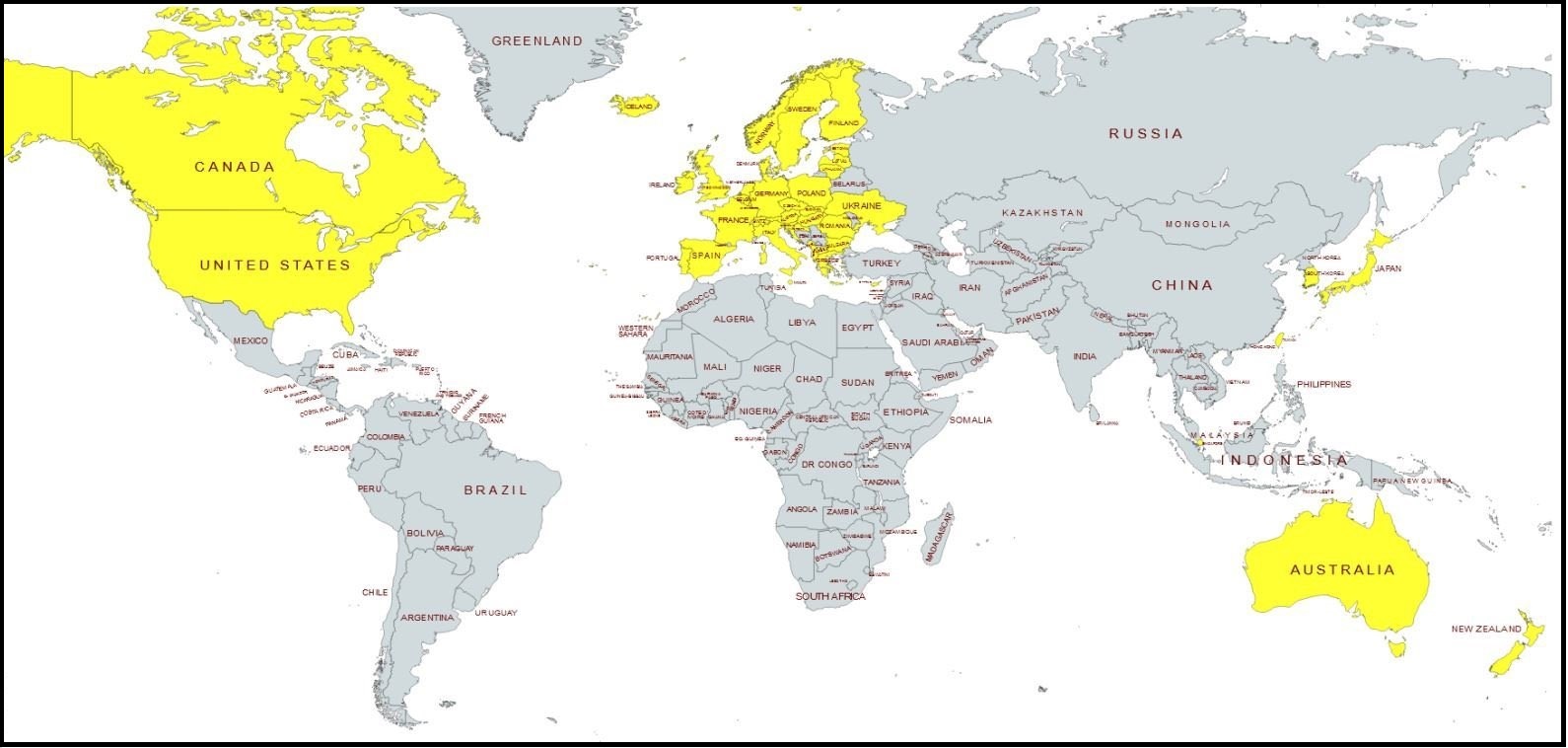
The “coalition of the willing” has also expanded.  Outside the Ukraine regime, the current group making up the “coalition of the willing” includes: the U.K, France, Germany, Canada and Australia.  It is worth noting the additions are part of the British commonwealth (Canada, Australia).

Most observers note that Ukraine President Zelenskyy is not an independent actor in the warfare decisions as carried out from within Ukraine itself. In fact, British intelligence has now replaced U.S. intelligence for providing the majority of the satellite guidance systems, targeted systems and missile operations.  German and French intelligence have been closely coordinating with the U.K. on behalf of European Union stakeholders.

Europe, specifically the British MI6 intelligence service, have recently espoused their #1 priority is to defeat Russia using the proxy that Ukraine provides.

The newly appointed head of MI6, Blaise Metreweli (pictured right), formerly known by her position as “Q”, is literally the granddaughter of factual Ukraine Nazi, Constantine Dobrowolski.

As head of MI6, Metreweli has specifically stated the U.K wants war with Russia. Metreweli’s entire family has Ukraine roots.

So, with full context applied it is entirely likely that both Vladimir Putin and Volodymyr Zelenskyy are not lying.  Putin was attacked, but Ukraine -as defined as Zelenskyy- didn’t do it.

The most likely scenario is that U.K intelligence elements inside Ukraine again used the opportunity of the Trump-Zelenskyy negotiation meeting to carry out the attack against Russian President Putin.  The motive is obvious.

Beyond the ideological component, the economies of the U.K/EU are now increasingly dependent on their defense spending as was recognized with the severe contraction of the German economy in almost all sectors except those supported by defense spending.

An end to the Russia/Ukraine conflict is against the interests of the “coalition of the willing.”   Additionally, an ancillary motive for both the U.K and U.S. group who support the EU effort is to keep President Trump bogged down.

I still strongly suspect the British did it, and the CIA doesn’t factually have any concrete intelligence to prove or dismiss this strongest motivational likelihood.

[MORE CONTEXT IN VIDEO]

Ukraine Assassinated Another Russian General


Posted originally on Dec 31, 2025 by Martin Armstrong |  

From Zelensky with Love Bomb

Sources in Ukraine state that Zelensky is trying to assassinate the top Russian generals in hopes of turning the army against Putin and to bring down Russia. I do not see any possible lasting peace arrangement and the refusal of Zelensky to let the Donbas separate is only supported by the hatred of Russians within the EU further guaranteeing that with the best intentions of Trump, this will never result in a long-standing peace accord. Europe will fall and unless the people purge the Neocons running NATO, their future will never be secure.

Zelenskyy Outlines His 20-Point Terms During Fox News Interview


Posted originally on CTH on December 30, 2025 | Sundance 

Ukraine President Volodymyr Zelenskyy appears on Fox News for an interview with Bret Baier.  Within the interview Zelenskyy gives some context and details to the 20-point plan organized between him and the EU Leaders, currently being reviewed and modified by President Trump, Steve Witkoff, Marco Rubio and Jared Kushner.

The two remaining issues as described by Zelenskyy are the (1) security guarantees and (2) the territorial issue, Donbas control.

(1) Within the security guarantee proposal there are troubling signs.  Zelenskyy describes it as a bilateral agreement between the USA and Ukraine, with similar constructs to the NATO alignment.  A non-NATO pact between the U.S. and Ukraine that commits us to his defense if Russia would advance another attack.  A 15-year guarantee committed in U.S. law through the U.S. House and Senate. This sounds troubling.

(2) On the territorial issue, regional control of the Donbas, Zelenskyy appears to be willing to cede territory but only under very limited circumstances.  Zelenskyy wants a demilitarized zone under the term “a free economic zone” with specific rules.

Zelenskyy admits Ukraine cannot win the conflict against Russia without the United States involvement.  Essentially without America, Russia would own the skies and be able to crush the Ukrainian army. WATCH:

.

President Trump Responds to the 91-Drone Attack on Putin’s Residence in Novgorod region


Posted originally on CTH on December 30, 2025 | Sundance

During an impromptu press availability beside Israeli Prime Minister Benjamin Netanyahu, President Trump responded to a question about a drone attack against the personal residence of Russian President Vladimir Putin.

President Trump noted that he was informed of the attack by President Putin during an early Monday phone call between the two leaders.

According to Russian media, confirmed by Russian foreign Minister Sergey Lavrov, Putin’s presidential residence in the Novgorod region, more than 400 kilometers (249 miles) northwest of Moscow, was targeted by 91 drones. Russia has vowed retaliation saying, “targets had already been selected.” President Trump’s response is prompted below:

Ukraine President Volodymyr Zelenskyy has denied the accusation that Ukraine carried out this particular attack.  The attack took place while Zelenskyy was in Florida meeting with President Trump.

In context, there have been several attacks against Russia timed with negotiations.  CTH has noted that each instance of closer agreement during Russia/Ukraine negotiations (Turkey) or U.S/Ukraine negotiations (Turkey and Paris) there have been attacks into Russia that seemed to carry a motive from an external third party.

U.S. media have said the attack on Putin may be a lie; however, with physical evidence from the defense operation, it is less likely Russia just made up the attack.  At this moment in the conflict, Putin doesn’t need domestic propaganda.

CONTEXT: British intelligence previously confirmed their participation in the successful Ukraine drone attack against long-range Russian bombers.  That operation, highly controversial at the time, was previously confirmed by President Trump saying the U.S. was not informed in advance.

The “coalition of the willing” has also expanded.  Outside the Ukraine regime, the current group making up the “coalition of the willing” includes: the U.K, France, Germany, Canada and Australia.  It is worth noting the additions are all part of the British commonwealth (U.K, Canada, Australia).

Most observers note that Ukraine President Zelenskyy is not an independent actor in the warfare decisions as carried out from within Ukraine itself. In fact, British intelligence has now replaced U.S. intelligence for providing the majority of the satellite guidance systems, targeted systems and missile operations.  German and French intelligence have been closely coordinating with the U.K. on behalf of European Union stakeholders.

Europe, specifically the British MI6 intelligence service, have recently espoused their #1 priority is to defeat Russia using the proxy that Ukraine provides.

So, with full context applied it is entirely likely that both Vladimir Putin and Volodymyr Zelenskyy are not lying.

The most likely scenario is that U.K elements inside Ukraine again used the opportunity of the Trump-Zelenskyy negotiation meeting to carry out the attack against Russian President Putin.  The motive is obvious.

Beyond the ideological component, the economies of the U.K/EU are now increasingly dependent on their defense spending as was recognized yesterday with the severe contraction of the German economy in almost all sectors except those supported by defense spending.

An end to the Russia/Ukraine conflict is against the interests of the “coalition of the willing.”   Additionally, an ancillary motive for the U.S. group who support the EU effort is to keep President Trump bogged down.

(Bloomberg) — President Donald Trump’s campaign to end the war in Ukraine faced new complications on Monday when Vladimir Putin said he would revise his country’s negotiating position after the Russian leader claimed Ukrainian drones targeted his residence.

Putin told Trump of his decision in a call Monday, according to the Kremlin, even as Kyiv cast the Russian allegations as a fabrication aimed at derailing the peace process.

Trump addressed the dispute while speaking to reporters in Florida, saying that Putin had told him about the purported attack during their discussion. The US president, seeming to side with Putin, said he was “very angry.”

“It’s one thing to be offensive, because they’re offensive,” Trump told reporters in Florida. “It’s another thing to attack his house. It’s not the right time to do any of that.”

Ukrainian President Volodymyr Zelenskiy has dismissed the Russian claims as a “new lie” and warned that Moscow could be using it as an excuse to prepare an attack on government buildings in Kyiv.

Putin said Moscow intends to work closely with the US on peace efforts but would reconsider a number of previously reached agreements, Kremlin aide Yuri Ushakov told Russian newswires. Ushakov added that Putin assured Trump that Moscow would look to continue working with American partners to achieve peace and that the two leaders agreed to maintain their dialogue. (more)

I suspect the British did it.

Memos of Conversations Between George W. Bush and President Vladimir Putin Are Released


BUMPED Due to Importance:

Posted originally on CTH on December 29, 2025 | Sundance |

Following a series of FOIA lawsuits, memos from conversations between Russian Federation President Vladimir Putin and former US President George W. Bush have been released online by the National Security Archive. [Original Source Here]

I know it’s Christmas, but bookmark or review as time allows, because the content is very interesting and very important. As early as 2001 and 2008, President Putin clearly told President Bush of his opposition to Ukraine’s accession to NATO, along with other key positions.

Despite what popular media might say, these are NOT full transcripts. Rather, they are memos containing quotes from both leaders as they discuss geopolitical relations between the U.S. and Russia. [SOURCE HERE]

♦ June 16, 2001 – Memorandum of Conversation. Subject: Restricted Meeting with Russian President Vladimir Putin. [LINK HERE] In this first personal meeting at the Brno Castle in Slovenia Vladimir Putin and George W. Bush express respect for each other and desire to establish a close relationship. Putin tells Bush about his religious beliefs and the story of his cross that survived a fire at his dacha. In a short one-on-one meeting they cover all the most important issues of U.S.-Russian relations such as strategic stability, ABM treaty, nonproliferation, Iran, North Korea and NATO expansion. Bush tells his Russian counterpart that he believes Russia is part of the West and not an enemy, but raises a question about Putin’s treatment of a free press and military actions in Chechnya. Putin raises a question of Russian NATO membership and says Russia feels “left out.” [READ MEMO HERE]

♦ September 16, 2005: Document 2 – Memorandum of Conversation. Subject: Vladimir Putin, President of the Russian Federation: [LINK HERE] Putin meets the U.S. President in the Oval Office for a plenary that covers mainly issues of nonproliferation and U.S.-Russian cooperation on Iran and North Korea. The conversation shows impressively close positions on Iran and North Korea, with Putin presenting himself as an eager and supportive partner. Bush tells Putin “we don’t need a lot of religious nuts with nuclear weapons” referring to Iran. Putin said that Ukraine’s accession to NATO would, in the long term, create a field of conflict between Russia and the United States, adding that internal divisions within Ukraine could lead to its fragmentation. [READ MEMO HERE]

♦ April 6, 2008 – Document 3: Memorandum of Conversation. Subject: Meeting with President of Russia [LINK HERE] This is the last meeting between Putin and Bush, taking place at Putin’s residence in Bocharov Ruchei in Sochi on the Black Sea. The tone is strikingly different from the early conversations, where both presidents pledged cooperation on all issues and expressed commitment to strong personal relationship. This meeting takes place right after the NATO summit in Bucharest where tensions flared about the U.S. campaign for an invitation to Georgia and Ukraine to join NATO. Turning to conversations in Bucharest, Putin states his strong opposition to NATO membership for Ukraine and Georgia and says that Russia would be relying on anti-NATO forces in Ukraine and “creating problems” in Ukraine “all the time,” because it is concerned about “threat of military bases and new military systems being deployed in the proximity of Russia.” Surprisingly, in response, Bush expresses his admiration for the Russian president’s ability to present his case: “One of the things I admire about you is you weren’t afraid to say it to NATO. That’s very admirable. People listened carefully and had no doubt about your position. It was a good performance.” [READ MEMO HERE]

2001 –  Putin raises a question of Russian NATO membership and says Russia feels “left out.”

As noted by The Islander (Via Twitter) –  “The 2001 Memo That Should Have Ended the Cold War 2.0 and Instead Helped Write the Preface to Ukraine. There are documents that don’t merely record history, they expose it. This is one of them.

June 2001. A “restricted meeting” between President George W. Bush and President Vladimir Putin. Not a podium performance, not a television soundbite, not a speech crafted for domestic applause. A private conversation, the place where empires are supposed to speak plainly, where leaders test ideas that could reroute decades.

And what does the memo show?

Putin raises the idea that Russia could eventually join NATO. He says Russia feels “left out” by NATO enlargement. He points to an older fact most Western publics were never meant to internalize: the Soviet Union applied to join NATO in 1954. He argues the reasons for rejection no longer apply. He suggests, almost clinically, that perhaps Russia could be an ally — “European and multi-ethnic,” comparable in character to the United States.

Read that again slowly.

Because the propaganda version you’ve been fed for years requires amnesia: it requires you to believe Russia woke up one morning and decided to be “a threat,” as if geopolitics is a mood swing and security architecture is irrelevant.

But here is the declassified record: Russia was probing for an exit ramp. A pathway into a shared system. A new security architecture. A post–Cold War settlement that could have turned the 1990s from a hollow victory lap into a durable peace.

And it didn’t happen.

Not because it was impossible. Not because Russia “never wanted it.” Not because “the West tried everything.”

It didn’t happen because NATO, as an institution, does not know how to live without a frontier. It does not know how to justify itself without an adversary. It does not know how to maintain internal cohesion without a map that points east and says: there.

The 1954 Ghost: the offer the West never wanted to remember

The most important part of this memo is not the 2001 line, but the 1954 reference.

Because it collapses the morality play.

If the Soviet Union, a state the West defined as the existential enemy, floated the notion of joining NATO in 1954, that means something profound: the idea of Russia being inside the European security architecture is not a “Putin-era trick.” It is a recurring historical proposal, returning whenever Moscow believes there may be a rational way to avoid permanent confrontation.

And what happened then? It was refused.

Which is exactly the point: NATO was never simply a “defensive alliance.” Even in 1954, It was a structure. A protection racket. A way to organize Europe under an American strategic roof and to keep it there. If Russia enters that roof as an equal, the architecture changes. Budgets decrease, with less money for the MIC. Threat perceptions change. The entire postwar hierarchy changes.

So the West did what empires do when presented with a peace that would reduce their leverage:

It smiled, took notes, and kept moving.

“Join NATO” was never a plea, it was a test.

Some people still misunderstand the early Putin posture. They interpret it as naivete, or worse, submission.

Wrong.

This was not Russia begging to be absorbed. The consistent theme in contemporaneous accounts is conditionality, that Russia could consider joining if treated as an equal partner, but not as a defeated province invited into the emperor’s club after proving it can submit.

That distinction matters.

Because it reveals the real incompatibility:
•Russia wanted a security system where it is a partner of European security, not an object to be managed.
•The Atlantic system wanted Russia as a managed periphery, permanently “integrating,” permanently reforming, permanently conceding, never truly sovereign in security decisions.

You can’t fuse those visions. One side must yield.

So the Atlantic system chose the only thing it has ever really chosen, expansion.”

A quarter century has passed since that original outreach by Russian Federation President Vladimir Putin in 2001.  It was rejected by President George W Bush and all presidents thereafter.  In 2025, we are in the phase of consequence.

This public release just happened on December 23, 2025.

Perhaps, just perhaps, this release can change the conversation in the United States.  Perhaps, just perhaps, President Trump, Secretary Rubio and Emissary Witkoff can reverse the course, and change the arc of history toward peace and a strategic alliance.

The timing of the release inspires hope, but the opposition to peace is extreme.

Recap Video of Zelenskyy Sunday at Mar-a-Lago


Posted originally on CTH on December 28, 2025 | Sundance 

President Donald Trump is ducking and weaving through the minefield of geopolitical politics, managing a proxy war he did not create that was organized by a corrupt U.S. State Dept./CIA and globalist agenda.

Trump wants the war to end; he wants the U.S. out of it; he wants peace with a fundamental reset of the entire European dynamic, and he wants a strategic relationship with the Russian Federation.  However, every element in the proverbial ‘West’ wants exactly the opposite.

Washington DC – the majorities in both parties, most of the European Union and the ‘Western’ military industrial complex stand in opposition to President Trump’s objective.  The value of the dollar rests on his ability to navigate this complex geopolitical dynamic.  The ‘stakeholders’ are against him.  Trump has few allies. This is the challenge.

Do not diminish the scale of the challenge without consideration for the scale of opposition.  Russian President Vladimir Putin knows exactly what President Trump is up against; we would be wise to watch with similar patience.

Volodymyr Zelenskyy has been convinced by European leaders, NATO and the Intelligence Community that he has the upper hand. President Trump has only his wits, a strategic perspective and us.

Let Trump be Trump. He’ll figure it out.