QUESTION: Marty, why is this coronavirus creating such a panic? It does seem that it is being used to achieve some power expansion for governments. Do you have any updates on this?
EN
ANSWER: Coronaviruses are common in different animals. However, rarely does an animal with coronavirus infect humans. It certainly seems possible by eating animals that might carry such a virus. As of Mar. 10, 2020, 4,087 deaths have been attributed to COVID-19. However, 64,385 people have recovered from the illness. So it is not such a justified health issue to be causing such a panic. That does make it seem that there is something else behind it.
There are many different kinds of coronaviruses. Most seem to cause colds or other mild respiratory (nose, throat, lung) illnesses. There have been far more deadly versions such as the coronaviruses that are known as Severe Acute Respiratory Syndrome (SARS) and the Middle East Respiratory Syndrome (MERS). Cyclically, it is very curious that SARS took place two 8.6-year cyclical intervals previously — 17 years ago. Some people say this version must be serious because China has cracked down really hard. However, at the time of SARS, the Chinese government was highly criticized for not addressing the issue. This time around, it seems the response is in relation to the criticism they got with SARS rather than a reflection of its deadly nature.
Coronaviruses are named because they appear different under the microscope. Coronaviruses look like they are covered with pointed structures that surround them like a corona or crown. Therefore, it appears differently which is why it is called a coronavirus.
If we look at the Severe Acute Respiratory Syndrome (SARS) outbreak, it was first discovered in Asia in February 2003. The outbreak lasted approximately six months as the disease spread to more than two dozen countries in North America, South America, Europe, and Asia before it was stopped in July 2003. Therefore, if the timeline holds for most viruses, it should peak out in April/May. Perhaps the last case may be June/July.
There is NO INDICATION that this will last longer than any other virus issue. For now, it will probably continue to expand into April/May before we see any top in the number of cases.
When we look at MERS-CoV, it was during September 2012, when WHO has been notified of 2494 laboratory-confirmed cases of infection with MERS-CoV in the Middle East. The fatality rate was 34.4%. MERS-CoV appears to have come from an animal source in the Arabian Peninsula. Researchers have found MERS-CoV in camels from several countries. Studies have shown that direct contact with camels is a risk factor for human infection with MERS-CoV. In this incident, MERS was first identified in September 2012 and had subsided by June 2013. There was a second outbreak in 2015 in South Korea. The first patient of the outbreak developed symptoms on May 11, 2015. WHO and the South Korean government estimated that the outbreak ended in July 2015, after about two months. By the end, there were 186 confirmed cases and 38 deaths.
Therefore, despite all the doom and gloom and the level of outright panic, we should see this subside probably no later than July 2020. It clearly spreads easier than SARS or MERS, but it is about on par with the version of influenza that mutates each year.
We may see this reappear again in the next flu season of 2021/2022. If it mutates like influenza for each season, then it can perhaps become more deadly at that period in time. Therefore, SARS came 17.2 years ago and MERS 8.6 years ago. Cyclically, there may be a resurgence in two years which would be in 2022.
As far as governments are concerned, the press seems to have turned this into a real panic
Exhibiting once again why Bernie Sanders is just incapable of taking a populist campaign to the finish line, the Vermont senator cancels a scheduled rally in Cleveland, Ohio, due to the risks of Coronavirus; aka: Sanders acquiesced to the media-driven planetary panic narrative.
Via CNN – A senior aide to Bernie Sanders tells [Ryan Nobles] that Sanders himself made the decision to cancel the rally after given the guidance from Ohio health officials. The campaign says 5k people RSVP’d for the event- so it was a decision they did not take lightly, but felt was necessary.
Earlier today President Trump met with a group of health insurance executives to discuss the ongoing Coronavirus mitigation effort. [Video and Transcript Below]
Participants include: Gail Bourdreaux, President & CEO of Anthem, Inc.; Dave Wichmann, CEO UnitedHealth Group; Bruce Broussard, President and CEO Humana; Michael F. Neidorff, Chairman, President, and CEO Centene Corporation; Matt Eyles, President and CEO Americas Health Insurance Plans (AHIP); Tim Wentworth, CEO of Express Scripts and Cigna Services; Justine Handelman, Senior Vice President, Office of Policy and Representation, Blue Cross Blue Shield Association; Karen Lynch, President of Aetna Business Unit, Executive Vice President, CVS Health; Gregory Adams, Chairman and CEO Kaiser Foundation Health Plan, Inc.
.
[Transcript] – THE PRESIDENT: Well, thank you very much. We’re meeting with the top executives of the health insurance companies, the biggest companies in our country — probably the biggest companies in our country, probably the biggest companies in the world. I can’t imagine being much bigger.
But these are the great — the great health insurance companies. And I think tremendous progress is being made. They’re willing to do things for the people and their customers and probably, in a true sense, beyond their customers that normally I don’t think they’d be doing.
And so I want to thank them, and I’ll ask Vice President Pence to maybe give us a little update as to where we are.
THE VICE PRESIDENT: I’d be very happy to. Thank you, Mr. President. President Trump made it clear from the early days of the coronavirus in the United States that this would be a whole-of-government approach. And we’ve brought the full resources of the federal government to bear. But this President has also called together businesses and industries to make this a whole-of-America approach.
Last week, at this table, the President met with pharmaceutical leaders, we met with nursing home leaders, leaders of commercial labs, airline industries. We’re bringing all of the businesses of the country to bear to protect the health of the American people.
But today, Mr. President, you directed us to bring together insurance companies — health insurance companies — that cover, through private insurance and through their support of Medicare and Medicaid, almost 240 million Americans. And I’m pleased to report, as you requested, Mr. President, that all the insurance companies here — either today or before today — have agreed to waive all copays on coronavirus testing and extend coverage for coronavirus treatment in all of their benefit plans.
And, at your direction, Medicare and Medicaid, last week, already made it clear to Medicare and Medicaid beneficiaries that coronavirus testing and treatment would be covered. These private insurance carriers have extended that as well.
They’ve also agreed to cover telemedicine so that anyone, particularly among the vulnerable senior population, would not feel it necessary to go to a hospital or go to their doctor. They’ll know that telemedicine is covered.
These CEOs have also agreed to no surprise billing. We want people to get tested. Over a million tests are out, thanks to the diligent work of CDC and HHS. More than 4 million will go out this week. You’ve worked with commercial labs to expand testing, and that will continue to increase by the day.
But we want the American people to know that they are covered through private insurance. They are covered through Medicare and Medicaid. And there will be no surprise billing.
And finally, Mr. President, as you directed us yesterday, we — we produced helpful information for every American family: how they can keep their home, their school, their business, their establishment safer from the spread of the coronavirus. All of these — all of these major health insurance companies have agreed to convey all this information, starting today, to all of their customers as well as to send the CDC’s guidance for seniors with underlying health conditions to give them specific recommendations.
And so, as you requested us, they’ve all agreed to work with us to communicate information directly to the American people because, as you’ve said, Mr. President, while the risk to the average American of contracting the coronavirus remains low, we want a full partnership with industry and give the American people all the information they need to avoid contracting or spreading the coronavirus. And, particularly, these companies are going to help us get information to seniors with underlying health conditions who really represent the most vulnerable population to serious outcomes.
And I know I speak on behalf of the President when I say how grateful we are for the collaborative spirit, the generosity, and the partnership represented by the great companies at this table.
THE PRESIDENT: It’s true. Very true. And we are working very closely with the cruise line industry and — very, very closely. They’re taking very strong steps in terms of people going on and going off. But they’re spending a lot of money and they are working very hard. And we’re work — we’re going to be helping that industry. Likewise, with the airline industry, they’re taking very, very strong steps for people coming into our country, even getting off the planes. So we are working very closely with them. We’re helping them. They’re two great industries, and we’ll be helping them through this patch.
And, so far, I think it’s been going very well. You know all about the big ship that came in yesterday. And that’s going along incredibly well.
We’re working with the state of California successfully — very successfully — and also with Canada and with the UK. So, the UK is taking their people, their citizens back, and Canada is about 600 people; they’re coming back. They’re being met and brought to planes and being brought very, very — in a very, very dignified fashion back into Canada. So we appreciate all of the help we’ve had in that. And that’s working out very well.
With that, I might just ask a couple of folks, if you’d like to make a statement on behalf of the industry, perhaps we’ll — would you like to make a statement on behalf of the industry?
MS. BOUDREAUX: Sure. I am — this is Gail Boudreaux. And one of the things that I think is most important is, from day one, as an industry and as a company at Anthem, we have been very focused on ensuring access to care and that cost is not an issue for people to have the testing appropriately done. So we’re pleased that we’re able to continue to expand this access.
And as the President said, I think it’s really important for all of our customers, our members, and the American people to have this. So we are very supportive of the —
THE PRESIDENT: Thank you, Gail.
MS. BOUDREAUX: — efforts underway.
THE PRESIDENT: Great job you’re doing. Thank you very much.
Anybody else? Would anybody else like to make a statement? Even the ones over here. You’re going to turn your head? (Laughter.) Look at those cameras.
MR. EYLES: I’ll say on behalf of the industry —
THE PRESIDENT: Yes.
MR. EYLES: — that we represent the great companies around the table here, but then those that operate at a local level, that we all have the same commitment to making sure that cost is not a barrier to people getting tested and treated. We want to make sure that we’re focused on prevention and testing and treatment —
THE PRESIDENT: Right.
MR. EYLES: — and getting that information out as quickly as we can to make sure that people know how to limit the spread of this disease.
THE PRESIDENT: Very good. Thank you very much.
Please.
MS. HANDELMAN: Mr. President, on behalf of the 36 independent BlueCross BlueShield plans that insure one in three Americans, we’re pleased to make sure that people have access to the test, to the coverage that they need.
I also want you to know that the commitments we’ve made also apply to the federal employees program where we insure over 5 million employees.
THE PRESIDENT: That’s great. Thank you. Thank you all.
THE VICE PRESIDENT: Maybe —
THE PRESIDENT: Please.
MR. BROUSSARD: I would just like to say as, a large servicer of Medicare, that we are very oriented to the aging population, and most importantly, how do we make it as easy as possible for them to receive their tests. And being able to do it in the home is a very important part of that. And so when we think about telemedicine and home, it reduces great barriers to —
THE PRESIDENT: Right.
MR. BROUSSARD: — that will allow them to have the testing.
THE PRESIDENT: And a lot of people now are taking advantage of that — really, strong advantage.
Who else would you suggest?
THE VICE PRESIDENT: Maybe Dave Wichmann, Mr. President.
THE PRESIDENT: Dave? Please.
MR. WICHMANN: Mr. President, thank you for having us, first and foremost. And, I guess, just to extend the conversation, we’re working very hard to protect the health workforce, which we think is essential to ensure that Americans have access to the proper care. Getting the health workforce back to work so quickly tested and back serving patients is a high priority for us as an organization serving some — around 18 million patients across America.
THE PRESIDENT: Right. Okay, thank you.
And, Governor? Pete Ricketts. Nebraska, everybody. Nice to see you, by the way.
GOVERNOR RICKETTS: Mr. President, I just appreciate your leadership —
THE PRESIDENT: Thank you.
GOVERNOR RICKETTS: — and the Vice President’s leadership to work with the governors to be able to make sure we’re keeping people healthy in our states. It’s been a fantastic cooperation at all levels of government, and we really appreciate also all the cooperation of all these executives around the table to make sure that the people in my state and all the states across the country will be able to be able to get the test and not worry about how they’re going to pay for it.
THE PRESIDENT: Right. Great. Thanks. Thank you all very much. Thank you. Thank you very much, everybody.
Q Mr. President, are you still going to Capitol Hill today?
QUESTION: First, Thank You for sharing your knowledge about the way the Planetary Economy really works without all the BS. Please do not get discouraged and keep up the outstanding work.
My question is, since the world economy already had serious problems BEFORE the Corona Virus, are the “Powers That Be” going to use this pandemic as a reason the world economy is tanking and attempt to hide their past economic sins and incompetence under the diseases skirts?
Best Regards,
LAM
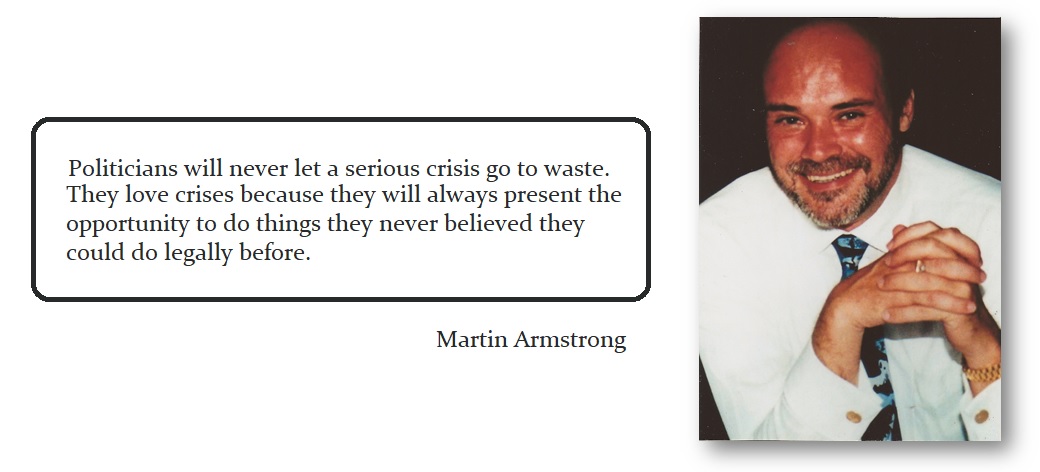
ANSWER: My observations of working with governments since the early 1980s boils down to one simple truth — they love crises. A politician cannot run for office saying vote for me because I prevented you from losing your job. Nobody will believe them. It is far better if you lose your job and then a politician can scream, “Vote for me and I will get the guy that cost you your job!”
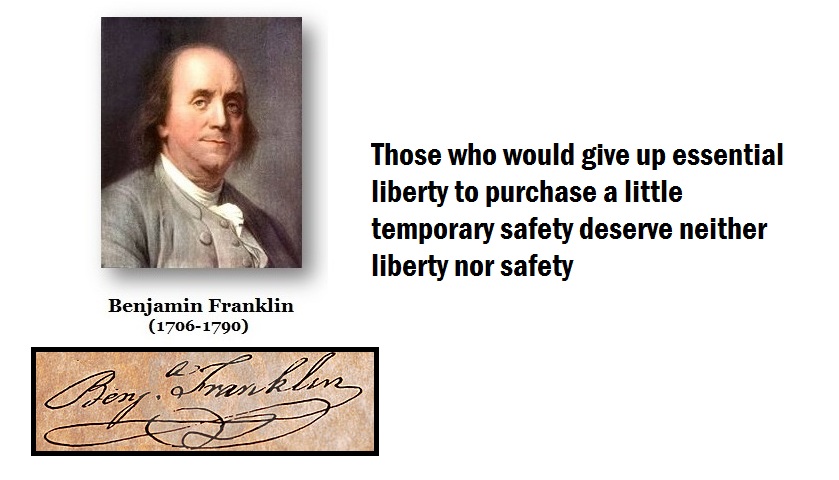
Similarly, Ben Franklin observed a derivative of what I am saying. You cannot secure liberty by surrendering it because of some urgent crisis. We are already hearing rumblings about how paper money is now suddenly dangerous for it can spread the coronavirus. This virus offers an excuse for regulations, changes to the economy, and of course more reasons to raise taxes.
The problems that were already in motion can simply be used by blaming it on the virus
We have been in contact with very high-level people and the expectation is that the coronavirus (COVID-19) will subside in April with the normal flu season. This may be more in line with our model which is pointing to 2022 as the worst in such disease periods. Diseases of this nature love cold weather. They do not thrive in warming periods. This is why the flu season comes at the end of the summer.
However, one of the surprising features of the coronavirus was how few children seemed to have been identified as infected. This is very unusual compared to influenza which children normally contract. While both the flu and COVID-19 may be transmitted in similar ways, there is also a possible difference: COVID-19 might be spread through the airborne route, meaning that tiny droplets remaining in the air could cause disease in others even after the ill person is no longer near.
As it stands now, the COVID-19 has been approximately 107,644 cases worldwide with 437 cases in the U.S. as of Mar. 8, 2020. The flu, on the other hand, is estimated to have reached 1 billion cases worldwide with 9.3 million to 45 million cases in the U.S. per year.
While the market crash has been blamed on the COVID-19, this is really just an excuse for a market that was ripe for a correction anyway.
As noted during the press conference today the Coronavirus (COVID-19) task force is providing some common sense handouts to help people understand what simple precautions we can take to mitigate any exposure:
Never let a crisis go to waste… And right on cue the Democrats in Washington DC see an opportunity to use the Coronavirus as a tool to spend and expand dependency initiatives.
One of President Trump’s biggest and non-discussed success stories has been his economic policy initiatives allowing people to be financially secure, independent and non-reliant on government hand-outs. However, the financial health and success of Americans is adverse to the political interests of Democrats who structure all of their policy objectives upon creating a dependent citizenry.
Weaponizing Coronavirus now becomes a tool for House Democrats to push-back against economic freedom; diminish the last several years of independence; and return to the era where more people become dependent on government.
It is not a question of “if legislation will happen”, it is simply a matter of “what” legislation will look like. What elements will the Democrats attempt to exploit most? The answer is very predictable when looking at their preferred approach.
Looking at the proclaimed and political preference from Adam Schiff things become clear.
It would appear Democrats plan to create a bailout where people are paid not to work. “Paid sick leave” where the federal government takes over the ‘paying’. This will work well for those who consistently manipulate employment systems to avoid work and take advantage of federal payments to continue their avoidance.
“Enhanced unemployment insurance” is another way to pay people not to work. Extending unemployment benefits into infinity was a key part of Obama’s failed trillion dollar stimulus bill. It also allows Democrats to pay their activists to engage in GOTV efforts, instead of employment, while being paid.
“Low interest loans” to cronies and politically connected business interests allows Democrats to funnel taxpayer funds to their political allies.
“Expanded food assistance” keeps the dependency model working under the false premise of ‘helping’ lower income workers. What food assistance payments actually do is transfer taxpayer funds to Big Agriculture, and Wall Street multinationals, that can then raise prices and gain additional profits. Middle-class workers don’t qualify, but end up paying via taxes and higher prices.
“Free accessible testing” – As we have seen from past ‘free’ programs, nothing is actually free. A testing program sets up Big Pharma and Big Insurance to benefit most via expanded reimbursement rates. “Affordable treatment” does exactly the same.
If you want to find out who would benefit most, simply follow the lobbyist spending:
Outside groups, often called “special interest groups”, are entities that represent their interests in legislative constructs. These groups are often representing foreign governments, Wall Street multinational corporations, banks, financial groups or businesses; or smaller groups of people with a similar connection who come together and form a larger group under an umbrella of interest specific to their affiliation.
Sometimes the groups are social interest groups; activists, climate groups, environmental interests etc. The social interest groups are usually non-profit constructs who depend on the expenditures of government to sustain their cause or need.
The for-profit groups (mostly business) have a purpose in Washington DC to shape policy, legislation and laws favorable to their interests. They have fully staffed offices just like any business would – only their ‘business‘ is getting legislation for their unique interests.
These groups are filled with highly-paid lawyers who represent the interests of the entity and actually write laws and legislation briefs.
In the modern era this is actually the origination of the laws that we eventually see passed by congress. Within the walls of these buildings within Washington DC is where the ‘sausage’ is actually made.
Again, no elected official is usually part of this law origination process.
Almost all legislation created is not ‘high profile’, they are obscure changes to current laws, regulations or policies that no-one pays attention to. The passage of the general bills within legislation is not covered in media. Ninety-nine percent of legislative activity happens without anyone outside the system even paying any attention to it.
Once the corporation or representative organizational entity has written the law they want to see passed – they hand it off to the lobbyists.
The lobbyists are people who have deep contacts within the political bodies of the legislative branch, usually former House/Senate staff or former House/Senate politicians themselves.
The lobbyist takes the written brief, the legislative construct, and it’s their job to go to congress and sell it.
“Selling it” means finding politicians who will accept the brief, sponsor their bill and eventually get it to a vote and passage. The lobbyist does this by visiting the politician in their office, or, most currently familiar, by inviting the politician to an event they are hosting. The event is called a junket when it involves travel.
Often the lobbying “event” might be a weekend trip to a ski resort, or a “conference” that takes place at a resort. The actual sales pitch for the bill is usually not too long and the majority of the time is just like a mini vacation etc.
The size of the indulgence within the event, the amount of money the lobbyist is spending, is customarily related to the scale of benefit within the bill the sponsoring business entity is pushing. If the sponsoring business or interest group can gain a lot of financial benefit from the legislation they spend a lot on the indulgences.
Recap: Corporations (special interest group) write the legislation. Lobbyists take the law and go find politician(s) to support it. Politicians get support from their peers using tenure and status etc. Eventually, if things go according to norm, the legislation gets a vote.
Within every step of the process there are expense account lunches, dinners, trips, venue tickets and a host of other customary financial way-points to generate/leverage a successful outcome. The amount of money spent is proportional to the benefit derived from the outcome.
The important part to remember is that the origination of the entire process is EXTERNAL to congress.
Congress does not write laws or legislation, special interest groups do. Lobbyists are paid, some very well paid, to get politicians to go along with the need of the legislative group.
When you are voting for a Congressional Rep or a U.S. Senator you are not voting for a person who will write laws. Your rep only votes on legislation to approve or disapprove of constructs that are written by outside groups and sold to them through lobbyists who work for those outside groups.
While all of this is happening the same outside groups who write the laws are providing money for the campaigns of the politicians they need to pass them. This construct sets up the quid-pro-quo of influence, although much of it is fraught with plausible deniability.
This is the way legislation is created.
If your frame of reference is not established in this basic understanding you can often fall into the trap of viewing a politician, or political vote, through a false prism. The modern origin of all legislative constructs is not within congress.
“we’ll have to pass the bill to, well, find out what is in the bill” etc. ~ Nancy Pelosi 2009
“We rely upon the stupidity of the American voter” ~ Johnathan Gruber 2011, 2012.
Once you understand this process you can understand how politicians get rich.
When a House or Senate member becomes educated on the intent of the legislation, they have attended the sales pitch; and when they find out the likelihood of support for that legislation; they can then position their own (or their families) financial interests to benefit from the consequence of passage. It is a process similar to insider trading on Wall Street, except the trading is based on knowing who will benefit from a legislative passage.
The legislative construct passes from K-Street into the halls of congress through congressional committees. The law originates from the committee to the full House or Senate. Committee seats which vote on these bills are therefore more valuable to the lobbyists. Chairs of these committees are exponentially more valuable.
When we understand the business of DC, we understand the difference between legislation with a traditional purpose and modern legislation with a financial and political agenda.
The media is attempting to initiate panic about the Coronavirus in 2020 the same way the media attempted to manufacture panic about an upcoming U.S. recession in 2019. The level of panic pushing is over-the-top ridiculous. Congress is now considering legislative action to include payments for people to stay home & expanded food stamp distribution.
Vice-President Mike Pence and the COVID-19 task force will be delivering the latest information via a press briefing at 5:30pm UPDATE: Video Added
.
The White House Coronavirus Task Force includes: Vice President Mike Pence; Ambassador Debbie Brix, White House Corona Virus Response Coordinator; Secretary Alex Azar, Department of Health and Human Services; Dr. Robert Redfield, Director, Centers for Disease Control and Prevention; Dr. Anne Schuchat, Principal Deputy Director, Centers for Disease Control and Prevention; Dr. Stephen Hahn, Commissioner of Food and Drugs, Food and Drug Administration; Dr. Anthony Fauci, Director, National Institute of Allergy and Infectious Diseases.
In a devastating development for the tens of supporters who make up the audience for most Joe Biden venues, the leading Democrat presidential candidate says he may have to give up “big indoor rallies” due to the Wuhan virus:
I have created this site to help people have fun in the kitchen. I write about enjoying life both in and out of my kitchen. Life is short! Make the most of it and enjoy!
This is a library of News Events not reported by the Main Stream Media documenting & connecting the dots on How the Obama Marxist Liberal agenda is destroying America






 Centinel2012