Carter Page Interview With Laura Ingraham…


The primary target of the DOJ FISA “Title I” surveillance warrant, Carter Page, appears on Fox News with Laura Ingraham for an exclusive interview discussing Mr. Page’s history and contact with the Trump campaign. There are two interview segments.

Video #1:

.

Video #2 below:

♦Around 01:50 of segment #2 Carter Page says he emailed FBI Director James Comey on Sept. 25th, 2016 offering his help on any questions the FBI might have; and noted prior work with people within the FBI and the intelligence community.  This is approximately a month before the October 21st, 2016, FISA “Title 1” application against him.

♦Around 03:05 Mr. Page mentions the prior DOJ case he was involved in, against Evgeny Buryakov, described by the DOJ as an FBI Under-Cover Employee (UCE-1), in this interview Carter Page describes himself as a “witness“.

.

Chuck Grassley Gives FBI Director Wray Until Tomorrow To Declassify His Memo – (Redacted Memo Included)…


Don’t forget the batting order. Last Friday Senator Chuck Grassley sent a letter to FBI Director Christopher Wray formally demanding a Mandatory Declassification Review of the classified criminal referral Chairman Lindsey Graham and Chairman Grassley sent to the FBI and Justice Department regarding Christopher Steele’s potential violations of 18 U.S.C. § 1001.  The response date is tomorrow, February 6th, 2018.

WASHINGTON – The Federal Bureau of Investigation signed off on an unclassified version of the criminal referral by Senate Judiciary Committee Chairman Chuck Grassley and Crime and Terrorism Subcommittee Chairman Lindsey Graham only after the White House declassified a House Intelligence Committee (HPSCI) Majority memo largely based on the same underlying documents. Grassley is now calling on the FBI to update the classification of the referral to allow complete disclosure of important context from the documents on which it is based.

“Seeking transparency and cooperation should not be this challenging. The government should not be blotting out information that it admits isn’t secret, and it should not take dramatic steps by Congress and the White House to get answers that the American people are demanding. There are still many questions that can only be answered by complete transparency. That means declassifying as much of the underlying documents as possible,” Grassley said.

Here’s the redacted Grassley Memo:

https://www.scribd.com/embeds/370822027/content?start_page=1&view_mode=&access_key=key-GJFUhUQZn9BU7okY6d7o

.

On January 4, Senator Grassley and Senator Graham referred Christopher Steele, the author of an unverified “Trump dossier,” to the FBI for further investigation after reviewing Justice Department documents that conflicted with Steele’s sworn statements in British court about the distribution of his research.

At the time of the referral, the existence of the Foreign Intelligence Surveillance Act (FISA) warrant applications described in the HPSCI memo was still classified. Grassley had sought the FBI’s cooperation to confirm that portions of the referral derived from sources other than the applications were unclassified. Following weeks of consultation, the FBI asked the committee to redact additional material despite confirming that it was, in fact, not classified, and only approved the release of the unclassified, heavily-redacted version of the referral after the White House formally declassified the House memo.

While the HPSCI Majority memo is no longer classified, the underlying text of the FISA applications that it references is still controlled by the Executive Branch. The Grassley-Graham referral contains verbatim quotes from the FISA applications that are not included in the HPSCI memo.

Specifically, the referral quotes the government’s description of Steele’s statements to the FBI about his contacts with the media. Those quotes remain redacted in the version currently approved for public release. Friday evening, Grassley formally requested the FBI to update the classification of the referral and remove the extensive redactions to allow a more complete understanding and better inform the public debate.

That letter follows:

https://www.scribd.com/embeds/370821564/content?start_page=1&view_mode=&access_key=key-6UirLxecYGuC2CUtote7

.

If we consider the ramifications here, we can see how the Nunes memo and the Grassley Memo compliment each other. As Chuck Ross points out: “The FBI reviewed the referral for classified information and approved the release of the document in heavily redacted form.”

It has two bombshell revelations.

“There is substantial evidence suggesting that Mr. Steele materially misled the FBI about a key aspect of his dossier efforts, one which bears on his credibility,” Graham and Grassley wrote to Wray and Rosenstein.

Much of their letter refers to Steele’s contacts with media outlets prior to the 2016 election. Steele has disclosed in court filings in London that he held off-the-record meetings with reporters at several news outlets prior to the election.

[…] Steele’s dossier, which includes 17 memos in all, was published on Jan. 10, 2017 by BuzzFeed.

But according to Grassley and Graham, Steele wrote another memo — one dated Oct. 19, 2016 — that was not part of the BuzzFeed dossier.

In that memo, Steele stated that he received information from someone at the State Department. The identity of the contact is redacted in the Grassley-Graham letter, as are other portions of the document.

The information originated with “a foreign sub-source” who had been in touch with a friend of Bill and Hillary Clinton. That Clinton associate, whose name is redacted, passed it on to another person.

Though the identities of the State Department official and Clinton associate are unclear, there has been some reporting recently that sheds some light on the matter.

The Guardian reported last week that Clinton hatchet man Cody Shearer compiled a dossier of his own prior to the election and that Steele passed some of the information to the FBI. Shearer has long worked on dirty tricks campaigns for Democrats and the Clintons. […] One recently retired State Department official has emerged at the center of the dossier controversy.

Jonathan Winer, the State Department’s special envoy to Libya, recently disclosed that he met Steele in Summer 2016 and was provided information about Trump.

Winer wrote a two-page memo based on Steele’s information and briefed then-Sec. of State John Kerry.

Winer served as counsel to Kerry when he served in the Senate. The Washington Post reported last week that the State Department did not do anything with Steele’s information. Instead, they reached out to the FBI and determined that the bureau had already been in contact with the former spy.

Grassley said Monday that he is calling on the FBI to conduct another review of the referral on Steele and to “allow complete disclosure of important context from the documents on which it is based.” (read more)

Let’s take a look at those redactions: IF we have this right (fitting the names to the redactions) Steele received a report from Jonathan Winer at State, who in turn had received info from Sid Blumenthal (Hillary’s BFF), who in turn received it from Cody Shearer’s sub-source.

(Click Text-Image to Enlarge)

Sidney Blumenthal and Cody Shearer were also in the list of names that Grassley sent to DNC requesting communication.

So Hillary’s henchmen with whom she communicates with regularly, Sidney Blumenthal and Cody Shearer, fed information to Jonathan Winer at the State Department who then briefed Secretary of State John Kerry and fed it to Christopher Steele (under hire from the Clinton campaign) – who then fed the briefing memo to FBI.

Nice laundry system you got there, huh?  Turning unfounded gossip and accusations into officially sounding intelligence information.

This is a similar pattern to how the Clinton campaign fed opposition research to the DOJ:

Fusion GPS (Glenn Simpson) opposition research, to Nellie Ohr (Fusion Employee), to her husband DOJ Deputy Attorney Bruce Ohr, to Christopher Steele, to media leaks and back to the FBI to validate ongoing efforts.

More information laundry.  Opposition research become intelligence information.

In March 2016 Carter Page Was an FBI Employee – In October 2016 FBI Told FISA Court He’s a Spy…


In 2013 Carter Page was working as an under-cover employee (UCE) of the FBI, helping them to build a case against “Evgeny Buryakov”.  In March 2016 Carter Page remained their informant pre-trial. [Note – Pay attention to the names in the following citations]

Sources:  ♦ In 2013 the U.S. Department of Justice, Southern District of New York, announced an indictment against a Russian Operative Evgeny Buryakov.  LINK HERE In March of 2016 Buryakov pleaded GUILTY:

Preet Bharara, the United States Attorney for the Southern District of New York, and John P. Carlin, Assistant Attorney General for National Security, announced that EVGENY BURYAKOV, a/k/a “Zhenya,” pled guilty today to conspiring to act in the United States as an agent of the Russian Federation, without providing prior notice to the Attorney General.

[…]  The FBI obtained the recordings after Sporyshev attempted to recruit an FBI undercover employee (“UCE-1”), who was posing as an analyst from a New York-based energy company. In response to requests from Sporyshev, UCE-1 provided Sporyshev with binders containing purported industry analysis written by UCE-1 and supporting documentation relating to UCE-1’s reports, as well as covertly placed recording devices.(more)

♦ In 2016 Reuters published an article, based on the ongoing court case, going into detail about court records.  LINK HERE

NEW YORK (Reuters) – The FBI eavesdropped on meetings involving Russian intelligence personnel in New York City, including a suspected spy posing as a trade representative, by hiding recorders in binders containing supposedly confidential information about the energy sector, U.S. prosecutors said.

The hours of covert recordings from 2013 were disclosed in papers filed in Manhattan federal court on Tuesday in the case of Evgeny Buryakov, a Russian citizen who U.S. prosecutors say posed as a banker while participating in a Cold War-style spy ring.

[…] According to prosecutors, in April 2012, Sporyshev met an undercover FBI employee posing as an analyst at a New York energy firm at an oil and gas industry conference.

Over the next two years, they met to discuss the industry and other economic and political issues, prosecutors said, with Sporyshev providing gifts and cash for information.

In 2013, the FBI employee began providing Sporyshev with the binders containing purported industry analysis he wrote, supporting documents, and “covertly placed recording devices,” prosecutors wrote.  (more)

♦ In April 2017, writing a story about Carter Page, and trying to enhance/affirm the Russian narrative, they outlined Page’s connections to the Trump campaign, the New York Times referenced Page’s prior connection to the operation. [Notice how the story is shaped] LINK HERE:

Russian intelligence operatives tried in 2013 to recruit an American businessman and eventual foreign policy adviser to the Trump campaign who is now part of the F.B.I. investigation into Russia’s interference into the American election, according to federal court documents and a statement issued by the businessman.

The businessman, Carter Page, met with one of three Russians who were eventually charged with being undeclared officers with Russia’s foreign intelligence service, known as the S.V.R. The F.B.I. interviewed Mr. Page in 2013 as part of an investigation into the spy ring, but decided that he had not known the man was a spy, and the bureau never accused Mr. Page of wrongdoing.

The court documents say that Mr. Page, who founded an investment company in New York called Global Energy Capital, provided documents about the energy business to one of the Russians. […] To record their conversations, the F.B.I. inserted a listening device into binders that were passed to the Russian intelligence operatives during an energy conference, according to a former United States intelligence official.  (more)

It is transparently clear that Carter Page was the Under-Cover Employee (UCE) of the FBI in the 2013 case.  Carter Page was working for the FBI.  However, in 2017 the New York Times, using information from “a former intelligence official“, conflates that fact. Heck, the NY Times tries to entirely change the relationship between Carter Page and the FBI.

Why?

Because on October 21st 2016 the FBI claimed to a FISA Court; to gain a “Title I” surveillance warrant; that Carter Page was working on behalf of a foreign government.

(Full Memo pdf)

Carter Page was an FBI Under-Cover Employee in 2013, and remained the primary FBI witness through May of 2016.

If Carter Page was working as an UCE (FBI undercover employee), responsible for the bust of a high level Russian agent in 2013 -and remained a UCE- throughout the court case UP TO May of 2016, how is it possible that on October 21st 2016 Carter Page is put under a FISA Title 1 surveillance warrant as an alleged Russian agent?

Conclusion:  He wasn’t.  The DOJ National Security Division and the FBI Counterintelligence Division flat-out LIED.

Now, go back to the March 2016 DOJ Press Release of the guilty pleading for Evgeny Buryakov, announced from the New York office:

…”Preet Bharara, the United States Attorney for the Southern District of New York, and John P. Carlin, Assistant Attorney General for National Security, announced”…

Because “FISA Title I” surveillance authority against a U.S. citizen is so serious (the U.S. government is essentially calling the target a spy), only a few people are authorized to even apply for such surveillance warrants.  One of the four people authorized to make such a filing is the Asst. Attorney General who is head of the National Security Division of the DOJ.  That person is John P Carlin.

The same John P Carlin who, together with the FBI counterintelligence unit, hired Carter Page as an FBI Under-Cover Employee, turns around and six months later accuses Page of being a Russian Spy – because the DOJ-NSD and FBI CoIntel needed to find a legal way to spy on the Trump campaign. The 2016 FISA Title 1 surveillance of former FBI employee Carter Page became that legal way. [“The Insurance Policy”]

In October of 2016, immediately after making the FISA Court filing, claiming Page was working for a foreign government and successfully gaining the surveillance warrant,  Asst. Attorney General  John P Carlin resigns as head of the DOJ-NSD.    –SEE HERE

The entire FISA Title I surveillance authority over Carter Page was cover, most likely retroactive cover, for the DOJ and FBI conducting surveillance on the Trump campaign.

Clear enough?

President Trump Praises Devin Nunes as “Great American Hero” – Fox and Friends Interview (Video)…


Earlier today House Intelligence Chairman Devin Nunes appeared on Fox and Friends to discuss the ongoing criticism from Democrats and the media as the HPSCI continues investigating how DOJ and FBI officials corrupted their offices. WATCH:

.

(Link To Tweet)

PETERSON VS NEWMAN


Why chose reason? Why choose emotion? In his latest FIREWALL, host Bill Whittle examines the motives behind progressivism and conservatism.

Exceptional Work by Sharyl Attkisson – Did FBI Violate Woods Procedures?…


The biggest of all BIGGER story aspects to the HPSCI Memo, in all coverage, has been overlooked by all Main Stream Media.  The Department of Justice FBI FISA request was for “Title I” surveillance authority.  This is not some innocuous request for metadata exploration – the FBI said American citizen Carter Page was a “foreign agent of a hostile foreign government”; the FBI was calling Carter Page a spy.

“Title I” FISA surveillance of U.S. citizens is the most intrusive, exhaustive and far reaching type of search, seizure and surveillance authority, permitting the FBI to look at every scintilla of Mr. Page’s life.  All communication, travel and contact can be opened and reviewed.  All aspects of any of Mr. Page’s engagements are subject to being secretly monitored.   This is an entirely different level of surveillance authority, the highest possible, and has nothing to do with FISA-702 search queries (Title VII) of U.S. persons.

To present a methaphor, under Title I FISA authority, Carter Page was essentially ‘patient zero’ in an Ebola pandemic.  Labeling him as a foreign agent allowed the FBI to look at every single person he came in contact with; and every single aspect of their lives and their activities in growing and concentric circles; without limits to current time or historic review.

The “Title I” designation as a foreign agent applied retroactively to any action taken by Mr. Page, and auto-generates an exponential list of other people he came in contact with.  Each of those people, groups or organizations could now have their communication reviewed, unmasked and analyzed by the DOJ/FBI with the same surveillance authority granted upon the target, Mr. Page.

Because the consequences of this type of surveillance are so comprehensive; and because  the severity to the immediate loss of constitutional protection (privacy and liberty) is so stark; the U.S. Government -through the FISA court- intentionally makes it very difficult to gain FISA Title I  surveillance authority over a U.S. citizen.

Sharyl Attkisson picks up from there with her deep dive into exactly what protections are in place, and the extraordinarily high-bar the DOJ needs to pass in order to gain Title I surveillance authority.

The point is: There are strict rules requiring that each and every fact presented in an FBI request to electronically spy on a U.S. citizen be extreme-vetted for accuracy — and presented to the court only if verified.

There’s no dispute that at least some, if not a great deal, of information in the anti-Trump “Steele dossier” was unverified or false. Former FBI director James Comey testified as much himself before a Senate committee in June 2017. Comey repeatedly referred to “salacious” and “unverified” material in the dossier, which turned out to be paid political opposition research against Donald Trump funded first by Republicans, then by the Democratic National Committee and the Hillary Clinton campaign.

Presentation of any such unverified material to the Federal Intelligence Surveillance Act (FISA) court to justify a wiretap would appear to violate crucial procedural rules, called “Woods Procedures,” designed to protect U.S. citizens.

Yet Comey allegedly signed three of the FISA applications on behalf of the FBI. Deputy Director Andrew McCabe reportedly signed one and former Attorney General Sally Yates, then-Acting Deputy Attorney General Dana Boente and Deputy Attorney General Rod Rosenstein each reportedly signed one or more.  (read more)

To think that unverified claims, gossip, media reports and generally salacious political opposition research, could be included in an application to remove an American’s right to privacy and liberty is really the BIGGER story being clouded in this discussion.

….And keep in mind, amid all of this exhaustive FBI surveillance and DOJ national security division digging into every aspect of his life, Mr. Carter Page has never been accused of any crime, wrongdoing, or subsequent criminal conduct.

It appears the entire reason to label Mr. Page as a Title One “foreign agent” was so the DOJ National Security Division and FBI Counterintelligence Division, could use Mr. Page’s short contact with the Trump campaign as an excuse to monitor everyone else within the campaign before, during and after the election.

Can Trump be Indicted or Impeached?


QUESTION: Can Mueller indict Trump? You seem to be astute when it comes to constitutional law.

KE

ANSWER: During the Clinton era, we had independent counsel Kenneth Starr. Because Starr was an independent counsel, the argument was that he could indict Bill Clinton. Because of that legal question, the statue which authorized the creation of independent counsel was allowed to expire. Granted, some argue that there is nothing in the Constitution that would bar a federal grand jury from returning criminal charges against a sitting president for committing a serious felony. I am not entirely convinced that the absence of specific prohibition is an endorsement of the existence of such a power.

“When a statute limits a thing to be done in a particular mode, it includes a negative of any other mode.” Raleigh & Gaston R. Co. v. Reid13 Wall. 269, 270 (1872). In this case, those who support indicting Trump argue that there is no prohibition and therefore that opens the door to indict. The Constitution expressly states that any trial of a President must be in the Senate. That would preclude the normal channels of criminal law including a Grand Jury.

Nevertheless, the criminal prosecution of anyone must be clearly defined and specified in advance by statute to provide notice that if you do this then that will result. “An indefinite criminal statute creates an opportunity for the misuse of government power” US v Handakas, 286 F3d 92, 107-108 (2nd Cir 2002).

In  Clinton v. Jones, 520 U.S. 681 (1997),  the Supreme Court did NOT decide two important questions:

  1. whether a claim comparable to petitioner’s assertion of immunity might succeed in a state tribunal, and
  2. whether a court may compel the President’s attendance at any specific time or place. Pp. 689-692.

In the Clinton v Jones case, the lower court ruled that the District Court’s discretionary decision to stay the trial was the “functional equivalent” of a grant of temporary immunity. 72 F. 3d, at 1361, n. 9. They ruled that there was no constitutionally entitled immunity. The Supreme Court did not decide that question but it commented: “we think the issue is more difficult than the opinion of the Court of Appeals suggests.”

The Supreme Court previously held that a sitting President is subject to judicial process in appropriate circumstances. Thomas Jefferson disagreed with then Chief Justice Marshall, who presided over the treason trial of Aaron Burr and ruled that a subpoena duces tecum could be directed to the President. US v. Burr, 25 F. Cas. 30 (No. 14,692d) (CC Va. 1807). The Supreme Court upheld that precedent ruling that  President Nixon was obligated to comply with a subpoena commanding him to produce certain tape recordings of his conversations with his aides, US v. Nixon, 418 U. S. 683 (1974).

Turning to the question of whether the Constitution bars indictment of a sitting president, there is no previous case that is directly on point. If we look at the debates of the Framers we can see that they did provide for a trial on a felony but only by Congress. They expressly stated: “Senate shall have the sole Power.”  That would preclude any Grand Jury indictment.

The Constitution, Article II, Section 4:
The President, Vice President and all civil Officers of the United States, shall be removed from Office on Impeachment for, and Conviction of, Treason, Bribery, or other high Crimes and Misdemeanors.

The Constitution, Article I, Section 3:
The Senate shall have the sole Power to try all Impeachments. When sitting for that Purpose, they shall be on Oath or Affirmation. When the President of the United States is tried, the Chief Justice shall preside: And no Person shall be convicted without the Concurrence of two-thirds of the Members present.

Judgment in Cases of Impeachments shall not extend further than to removal from Office, and disqualification to hold and enjoy any Office of honor, Trust, or Profit under the United States, but the Party convicted shall nevertheless be liable and subject to Indictment, Trial, Judgment, and Punishment, according to Law.

The Constitution does not provide blanket immunity for a sitting President. Members of Congress enjoy “privilege from arrest” in civil cases when going to and from Congress and may not be criminally prosecuted for “any speech or debate” in Congress. Clearly, the President can be subpoenaed for the production of evidence and he can be deposed in a civil suit. However, there is more than just a subtle difference between Starr investigating Clinton and Mueller going after Trump. When Clinton was nearing vacating office, the Justice Department’s Office of Legal Counsel ruled that the President could NOT be indicted. This actually restrains Mueller right now.

There is a significant difference between the Clinton prosecution and the immediate action to try to bring down Trump for the bureaucrats. Starr served as independent counsel under a statute that expired. Special counsel Robert Mueller serves directly under Justice Department regulations put in place after the independent counsel law expired. The difference is that Clinton could not fire Starr and Starr could indict Clinton, but that was probably unconstitutional. Mueller’s power is under the Department of Justice and that means he is NOT independent and Trump could fire anyone who tried to indict him. The precedent of more than 100 years makes it very clear that that the President retains complete authority to control federal criminal prosecutions. Legally, Trump could fire Mueller but then Congress would probably act to impeach Trump.

Regulations that Mueller must comply with make it clear that he must obey “the rules, regulations, procedures, practices, and policies of the Department of Justice.” He can be removed for “good cause, including violation of Departmental policies.” Therefore, Mueller cannot indict Trump based upon internal rules alone.
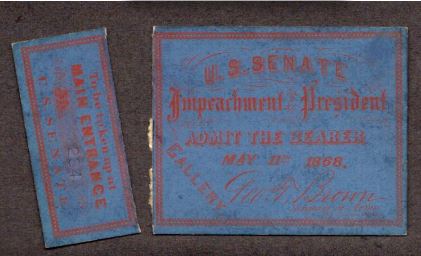
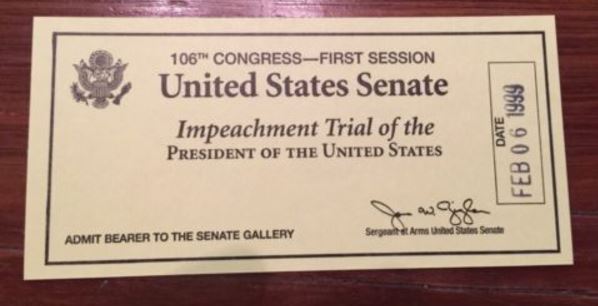
In my “opinion” we have the internal rules that prohibit Mueller from indicting Trump. However, my reading of the Constitution and the debated behind Article II, Section 4 and Article I, Section 3, means that Mueller at best can only recommend impeachment to Congress and it is their EXCLUSIVE domain to impeach and put a President on trial. They cannot imprisonment him and their power is limited to removing him from office.

This would be my legal argument against Mueller if he dared to try to indict Trump. He is a power hungry and vindictive person out to protect the FBI and the rest of the bureaucrats and that makes him very dangerous.
 

Exceptional Work by Sharyl Attkisson – Did FBI Violate Woods Procedures?…


The biggest of all BIGGER story aspects to the HPSCI Memo, in the downstream coverage, has been entirely overlooked by all Main Stream Media.  The Department of Justice FBI FISA request was for “Title I” surveillance authority.  This is not some innocuous request for metadata exploration – the FBI said American citizen Carter Page was a “foreign agent of a hostile foreign government”; the FBI was calling Carter Page a spy.

“Title I” FISA surveillance of U.S. citizens is the most intrusive, exhaustive and far reaching type of search, seizure and surveillance authority, permitting the FBI to look at every scintilla of Mr. Page’s life.  All communication, travel and contact can be opened and reviewed.  All aspects of any of Mr. Page’s engagements are subject to being secretly monitored.   This is an entirely different level of surveillance authority, the highest possible, and has nothing to do with FISA-702 search queries (Title VII) of U.S. persons.

To present a methaphor, under Title I FISA authority, Carter Page was essentially ‘patient zero’ in an Ebola pandemic.  Labeling him as a foreign agent allowed the FBI to look at every single person he came in contact with; and every single aspect of their lives and their activities in growing and concentric circles; without limits to current time or historic review.

The “Title I” designation as a foreign agent applied retroactively to any action taken by Mr. Page, and auto-generates an exponential list of other people he came in contact with.  Each of those people, groups or organizations could now have their communication reviewed, unmasked and analyzed by the DOJ/FBI with the same surveillance authority granted upon the target, Mr. Page.

Because the consequences of this type of surveillance are so comprehensive; and because  the severity to the immediate loss of constitutional protection (privacy and liberty) is so stark; the U.S. Government -through the FISA court- intentionally makes it very difficult to gain such Title I designated authority over a U.S. citizen.

Sharyl Attkisson picks up from there with her deep dive into exactly what protections are in place, and the extraordinarily high-bar the DOJ needs to pass in order to gain Title I surveillance authority.

The point is: There are strict rules requiring that each and every fact presented in an FBI request to electronically spy on a U.S. citizen be extreme-vetted for accuracy — and presented to the court only if verified.

There’s no dispute that at least some, if not a great deal, of information in the anti-Trump “Steele dossier” was unverified or false. Former FBI director James Comey testified as much himself before a Senate committee in June 2017. Comey repeatedly referred to “salacious” and “unverified” material in the dossier, which turned out to be paid political opposition research against Donald Trump funded first by Republicans, then by the Democratic National Committee and the Hillary Clinton campaign.

Presentation of any such unverified material to the Federal Intelligence Surveillance Act (FISA) court to justify a wiretap would appear to violate crucial procedural rules, called “Woods Procedures,” designed to protect U.S. citizens.

Yet Comey allegedly signed three of the FISA applications on behalf of the FBI. Deputy Director Andrew McCabe reportedly signed one and former Attorney General Sally Yates, then-Acting Deputy Attorney General Dana Boente and Deputy Attorney General Rod Rosenstein each reportedly signed one or more.  (read more)

To think that unverified claims, gossip, media reports, and generally salacious political opposition research could be included in an application to remove an Americans’ right to privacy and liberty is really the BIGGER story being clouded in this entire discussion.

….And keep in mind, amid all of this exhaustive FBI surveillance and DOJ national security division digging into every aspect of his life, Mr. Carter Page has never been accused of any crime, wrongdoing, or subsequent criminal conduct.

It appears the entire reason to label Mr. Page as a Title One “foreign agent” was so the DOJ National Security Division and FBI Counterintelligence Division, could use Mr. Page’s short contact with the Trump campaign as an excuse to monitor everyone else within the campaign before, during and after the election.

Sunday Talks: Trey Gowdy Commiserates With Margaret Brennan…


After announcing an intent to retire from congress & find a role for himself within the Justice System, congressman Trey Gowdy waxes philosophically about politics having  infected the highest ranks of that system.  In this role Gowdy is attempting to forward-position himself as the heir apparent to Robert Mueller. The positioning is transparent: The Institutions Must Be saved.

Gowdy has, as a survival instinct, split himself away from accepting what those institutions represent today – and how they have been manipulated. Instead Mr. Gowdy replaces current reality by projecting his vision of the institutional intent as formed by his own moral compass. Unfortunately, corruption is fully metastasized within the upper-ranks.  Curative approaches will not work; culling is needed.

The FBI FISA abuses are symptomatic; they are not the disease itself. Chairman Nunes, Chairman Goodlatte and Chairman Grassley have accepted the pathology reports (Horowitz) and are working on a curative treatment. Gowdy cannot bring himself to believe the scope of the pathology within his beloved institutions.  Mueller is of the same ideological mind as Gowdy from the position of having created the system that must now be deconstructed and rebuilt anew.

.

If we look upon this Gowdy interview, and his framework of Robert Mueller, from the perspective of Alec Guinness in Bridge On The River Kwai things make sense.

As a prisoner of war, Guinness builds a bridge for the Japanese enemy. He doesn’t want to help the enemy, but he’s proud of the purpose the bridge building has given to his men. He is a proud man and if he builds a good bridge his men will be treated better.

WATCH: (In this scene, Guinness splits)

.

While building the bridge, Guinness allows himself to forget the fact it will be used by the enemy to advance against his own interests; the bridge means something to Guinness that causes him to lose sight of its intended purpose. WATCH:

.

Gowdy/Mueller are essentially Major Guinness and the corrupted political Justice system is the bridge.

No amount of moral intention will stop the bridge from being used for Machiavellian purpose so long as the bridge is allowed to remain available and operational for the enemy.

Eventually, at the very last minute, Major Guinness realizes that…

.

.

Hopefully, in time, Gowdy will realize the err in his view.  It’s not his fault, he’s never had a father role and he’s latching on to institutions as stability mechanisms.

A very well-centered kitchen counsel appears to know they need to keep wobbly Gowdy away from the most important discussions and plans.

Sunday Talks: Maria Bartiromo Interviews Peter King…


Following up to earlier interviews with James Kallstrom, former Assistant Director of the FBI, and Representative John Ratcliffe (R-TX) who has reviewed the underlying FISA application documents, Maria Bartiromo interviews Representative Peter King.

Representative Peter King discusses his disgust with former FBI Director James Gowdy.