More Blatant Climate Grubering From The White House


Well now it would seem we have an opportunity here. If these areas are going to be flooded then the owners would be willing to sell those properties at a reduced price.

Tony Heller's avatarReal Climate Science

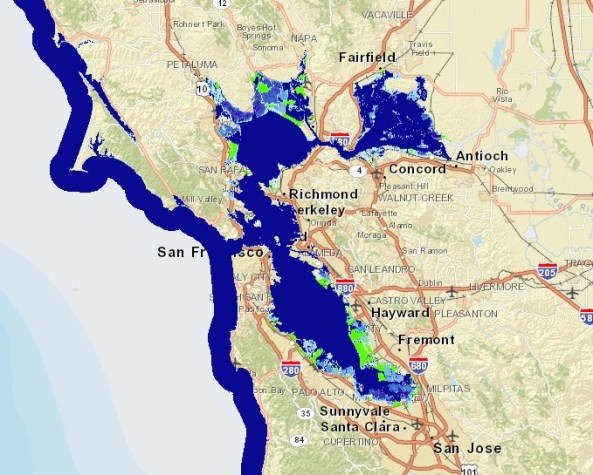
Holdren has released a Climate Explorer tool, saying that sea level will rise one foot in the San Francisco Bay

ScreenHunter_502 Nov. 19 12.59

ScreenHunter_500 Nov. 19 12.52Climate Explorer

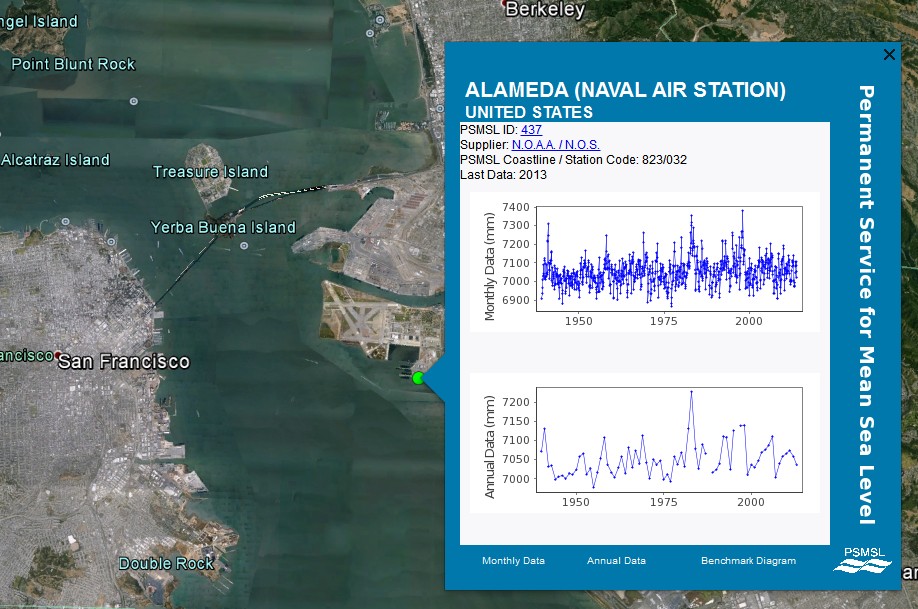
The stable tide gauge in the San Francisco Bay shows that sea level is lower now than it was 70 years ago.

ScreenHunter_501 Nov. 19 12.54

http://www.psmsl.org/data/obtaining/stations/437.php

As always, the White House is trying to Gruber America with their endless stream of lies.

View original post

Germany’s Energy Dilemma


The citizens will just have to do without to make up the difference!

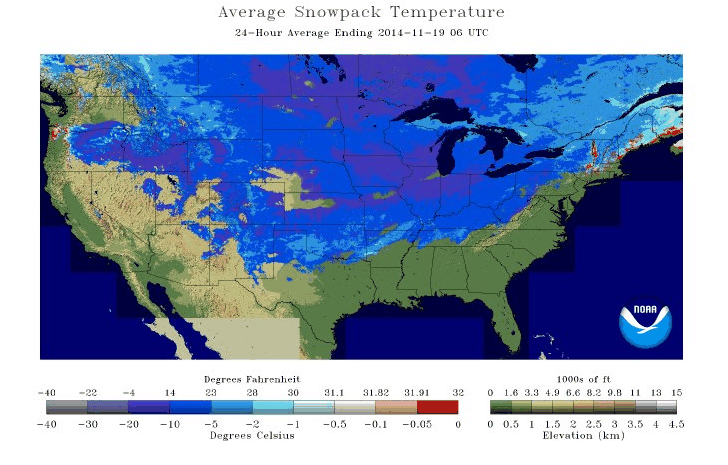
“Children just aren’t going to know what snow is,” he said.


It all depends on what your definition of snow is!

Tony Heller's avatarFlat Earth

Monday 20 March 2000

the warming is so far manifesting itself more in winters which are less cold than in much hotter summers. According to Dr David Viner, a senior research scientist at the climatic research unit (CRU) of the University of East Anglia,within a few years winter snowfall will become “a very rare and exciting event”.

“Children just aren’t going to know what snow is,” he said.

Snowfalls are now just a thing of the past – Environment – The Independent

View original post

Settled Science Update


Well it makes sense if you believe that the oceans ate the heat. That was one of the past excuses I believe!

Tony Heller's avatarReal Climate Science

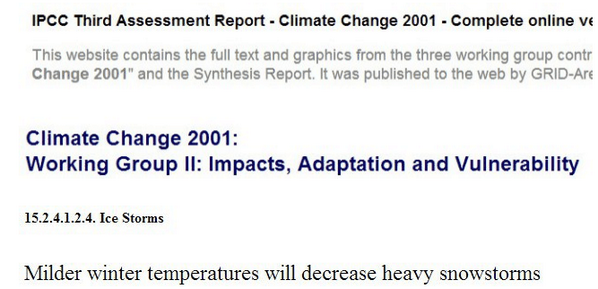
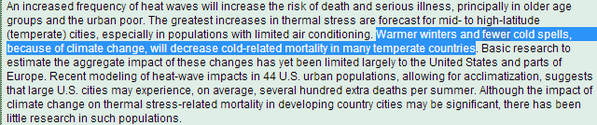
The world’s top climate scientists boldly proclaimed that global warming will bring milder winters and decreased heavy snowstorms

BepTksDCMAEkCHw (1)

IPCC Third Assessment Report – Climate Change 2001 – Complete online versions | GRID-Arendal – Publications – Other

Bdi6xZUCEAAYLXL

IPCC – Intergovernmental Panel on Climate Change

Now they claim they predicted the exact opposite

ScreenHunter_4728 Nov. 19 07.51 B2zpLApCMAANnE9

View original post

A Day At The North Pole


With animation everything is possible … lol

Tony Heller's avatarReal Climate Science

Note how the sun stays at the same elevation above the horizon. About two dozen people told me today that they are Arctic experts and this is not possible.

View original post

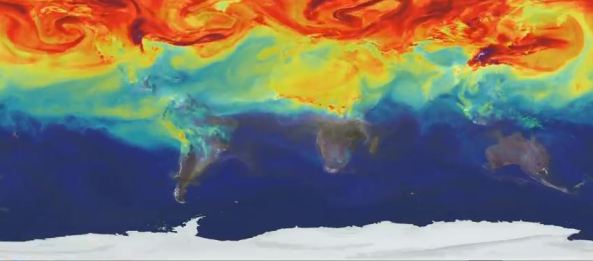
Who needs an Orbiting Carbon Observatory to track it when you can model Carbon Dioxide movement?


I bet DreamWorks could do better then these guys!

What is the real reason why we need to stop using carbon based fules?


Over the past several decades a great deal of international effort has been undertaken to show that anthropogenic (man made) CO2 is causing climate change on the planet by raising the planet’s temperature. The increased temperatures will then change the world’s climate patterns which will then result in the melting of the world’s glaciers, increased storms and probably loss of valuable crop lands by rising sea levels. The implied result on the world’s civilizations will be catastrophic and therefore there will be a significant loss of life from both the climate change and the probable wars that will be fought over dwindling resources. The Intergovernmental Panel on Climate Change (IPCC) has been given the primary task of showing how this will happen by the United Nations (UN) and this research is being done primarily by NASA and NOAA in the United States and the Met Office and Hadley Center in the United Kingdom.

To show what is happening on a planetary scale very complex computer models have been constructed by some of the world’s best scientists and those models have shown that the temperature of the planet will hit unprecedented levels possibly as soon as 2050. To prevent this from happening the “United Nations Conference on the Human Environment, having met at Stockholm from 5 to 16 June 1972, having considered the need for a common outlook and for common principles to inspire and guide the peoples of the world in the preservation and enhancement of the human environment” established a set of principles and an international forum the first of which was held Rio de Janiero in June 1992 and then later Kyoto in 1997 where goals for a reduction in the CO2 emissions from the burning of fossil fuels primarily from petroleum, coal and natural gas were agreed to by the parties. Efforts to date have been totally unsuccessful and CO2 levels have now reached 400 ppm and the level is increasing at an accelerating rate that is currently at ~2 ppm per year.

The first major program to began the task of changing how the entire world would adapt to the required reductions in Carbon Dioxide was made public at the UN Conference on Environment and Development (Earth Summit), held in Rio de Janeiro on June 13, 1992, where 178 governments voted to adopt the program called Agenda 21. The final text was the result of drafting, consultation, and negotiation, beginning in 1989 and culminating at the two-week conference. Agenda 21 is a 300-page document divided into 40 chapters that have been grouped into 4 sections that was published in book form the following year:

Section I: Social and Economic Dimensions is directed toward combating poverty, especially in developing countries, changing consumption patterns, promoting health, achieving a more sustainable population, and sustainable settlement in decision making.

Section II: Conservation and Management of Resources for Development Includes atmospheric protection, combating deforestation, protecting fragile environments, conservation of biological diversity (biodiversity), control of pollution and the management of biotechnology, and radioactive wastes.

Section III: Strengthening the Role of Major Groups includes the roles of children and youth, women, NGOs, local authorities, business and industry, and workers; and strengthening the role of indigenous peoples, their communities, and farmers.

Section IV: Means of Implementation: implementation includes science, technology transfer, education, international institutions and financial mechanisms.

The goal of UN Agenda 21 is to create a world economic system that equalizes world incomes and standards of living and at the same time reduces Carbon Dioxide levels back to the levels that existed prior to the industrial age of ~300 ppm. We are now at 400 ppm and growing at 2 ppm per year and at that rate we will reach 500 ppm in 2050 at which point the UN Climate models say we will have an ecological disaster. There are only two ways to achieve this reduction back to the ideal ~300 ppm and they are not mutual exclusive. One is to reduce the world’s population and the other is to either reduce energy consumption or make a switch to non carbon burning fuels such as solar PV or wind turbines. Agenda 21 is the driver for all the sustainability programs that are being implemented at this time; which means that if the belief that Carbon Dioxide is the ultimate reason for changes in global climate is not true that untold trillions of dollars and massive economic restructuring would be unwarranted.

According to the International Energy Agency (IEA) we are using about 500 quad of energy world wide right now of which maybe 15% is classed as sustainable, and there are estimated to be 7.0 billion people on the planet. That means that 425 quad of energy usage is not sustainable and the world’s population could reach 9.0 billion by 2050. By then we would be using 900 quad of energy of which probably 650 quad will not be sustainable if nothing major changes. The goal of Agenda 21 is therefore to find ways to reduce the number of people or significantly reduce how much energy they use. Carbon taxes and the redistribution of wealth from rich countries to poor countries are the means to achieve this but there are no engineers on the planet that would say it would be possible to produce 650 quad of sustainable generating capacity in 35 years (335% more than now), especially since no real effort has yet been made.

To put this in perspective if we could make 250 quad of sustainable energy annually that would mean that we could only have maybe 1 billion people on the planet and even those would not be able to live as well as we in the US do now. Prior to the 2008 collapse the US used about 100 quad and had 300 million people. If the goal is 250 quad and 1 billion people that means a 25% reduction in the standard of living for the advanced socialites. Since this is what is required to achieve the stated goals of preventing 500 ppm from happening it’s obvious that there is a major problem brewing.

There are a great number of leaders in government and industry had belief that if we don’t do what was described in the previous paragraph e.g. reduce the population of the planet to under one billion that we will all die. Some think we can make more than 250 Quad of sustainably energy and others think we need to drastically reduce the population. Both of these views are will lead to war for obvious reasons hence the need to educate the citizens as to the real reasons that things are on the path they are!

Do your own research and you will find that all that is presented here is 100% true, in fact there is much more that you will find that I have not put here as it is way too much for any one to start with. Good luck and God bless you and lets hope they realize they are wrong before its to late.

40 Published papers continue to lower CO2 sensitivity


Re-Blogged from The Hockey Schtick Posted November 2, 2014

Comment from Centinel2012 —The Global Climate Models (GCM’s) “require” a high CO2 sensitivity to work, if its really as low as these papers suggest and that I believe then the IPCC is 100% wrong.

If you can’t explain the ‘pause’, you can’t explain the cause…

40 published papers find climate sensitivity to CO2 is significantly less than IPCC claims

The number of peer-reviewed, published studies finding low climate sensitivity to doubled CO2 levels continues to accumulate, with at least 40 papers finding sensitivity is significantly less than claimed by the IPCC mean modelled estimate of 3.2C. In contrast, and due to the 18-26 year “pause” of global warming, recent papers finding climate sensitivities higher than the IPCC mean are almost non-existent of late. The IPCC, however, refuses to lower it’s 1.5C lower bound of climate sensitivities, or lower it’s 4.5C upper bound of climate sensitivities, ignoring the 40 inconvenient publications below finding climate sensitivities of 2C or less. The median equilibrium climate sensitivity of the forty papers is 1.1C, almost exactly what the IPCC claims is the CO2 sensitivity before the IPCC adds-in (false) positive water vapor feedback to allegedly amplify global warming by 3-4X.The IPCC bases it’s climate sensitivity estimates primarily upon overheated and falsified climate models rather than observations. Most of the papers below are based upon observations, which demonstrate significantly lower sensitivities than models. A recent paper shows why climate models cannot be relied upon to determine climate sensitivity to CO2. 

In addition, most of these papers do not consider natural changes in ocean oscillations, cloud cover, global “brightening” & “dimming,” [which can alone explain all of the post-1950 warming] or possible solar amplification mechanisms [which can explain 95% of climate change over the past 400 years]. If such factors were considered, the climate sensitivities to CO2 could be lowered significantly further.

Comment from Kenneth Richard elevated to a post:

Below find 40 peer-reviewed papers published in science journals by 120+ scientists that have low (2.0 C or less, 1.1 C median) climate sensitivity estimates (with ECS values highlighted below).

[ECS = equilibrium climate sensitivity, TCR = transient climate sensitivity]

http://www.nature.com/ngeo/journal/v6/n6/full/ngeo1836.html
2.0 (17 scientists, 14 of them IPCC Lead Authors)
http://link.springer.com/article/10.1007%2Fs00382-012-1375-3?LI=true
2.0
http://folk.uio.no/gunnarmy/paper/aldrin_env_2012.pdf
2.0
http://www.klimatupplysningen.se/wp-content/uploads/2014/01/Bengtsson-Tellus.pdf
2.0
http://www.sciencedirect.com/science/article/pii/S0304380014000404
1.99
http://link.springer.com/article/10.1007%2Fs00382-013-1770-4
1.9
http://www.int-res.com/articles/cr2003/23/c023p001.pdf
1.9
http://www.atmos.washington.edu/~mzelinka/Forster_etal13.pdf
1.8
http://www.earth-syst-dynam-discuss.net/4/785/2013/esdd-4-785-2013.html
1.8
http://www.iac.ethz.ch/doc/publications/Chylek-Lohmann-GRL2008-comment.pdf
1.8
http://www.earth-syst-dynam.net/5/139/2014/esd-5-139-2014.html
1.8
http://file.scirp.org/Html/24283.html
1.7
http://link.springer.com/article/10.1007/s00382-014-2342-y
1.64
http://www.princeton.edu/~gkv/papers/Padilla_etal11.pdf
1.6 (TCR) [using Lewis & Curry assumption that ECS = 1.15*TCR = 1.84C]
http://onlinelibrary.wiley.com/doi/10.1029/2011GL050226/abstract
1.55 (TCR) [using Lewis & Curry assumption that ECS = 1.15*TCR = 1.78C]
http://journals.ametsoc.org/doi/abs/10.1175/JCLI-D-12-00473.1
1.6
http://people.duke.edu/~ns2002/pdf/EARTH_1890.pdf
1.5
http://arxiv.org/pdf/1307.3706.pdf
1.35
http://www.earth-syst-dynam-discuss.net/5/529/2014/esdd-5-529-2014.html
1.3
http://link.springer.com/article/10.1007/s13143-014-0011-z
1.3
http://www.clim-past-discuss.net/8/4923/2012/cpd-8-4923-2012.html
1.1
http://www.pas.rochester.edu/~douglass/papers/published_E&E%20douglass_christy.pdf
1.1
http://multi-science.metapress.com/content/k76363u651167q65/
0.96
http://www.earth-syst-dynam-discuss.net/4/25/2013/esdd-4-25-2013.html
0.67
http://www-eaps.mit.edu/faculty/lindzen/236-Lindzen-Choi-2011.pdf
0.67
http://www.drroyspencer.com/Spencer-and-Braswell-08.pdf
0.67
http://www.drroyspencer.com/wp-content/uploads/Spencer_Misdiagnos_11.pdf
0.62
http://www.scipublish.com/journals/ACC/papers/846
0.60
http://www.sciencedirect.com/science/article/pii/S1364682612001617
0.53
http://multi-science.metapress.com/content/3678681q807n8236/fulltext.pdf?page=1
0.51
http://www.iac.ethz.ch/doc/publications/Chylek-et-al-JGR2007-climate-sens.pdf
0.50
http://link.springer.com/article/10.1007%2FBF01592922
0.50
http://www.int-res.com/articles/cr/10//c010p069.pdf
0.40
http://www.ecd.bnl.gov/steve/pubs/HeatCapacity.pdf
0.39
http://journals.ametsoc.org/doi/pdf/10.1175/1520-0450%281979%29018%3C0822%3AQCTPIO%3E2.0.CO%3B2
0.30
http://onlinelibrary.wiley.com/doi/10.1029/2006GL026355/abstract
0.29
http://www.klimatupplysningen.se/wp-content/uploads/2009/03/paltridgearkingpook.pdf
0.26
http://www.pas.rochester.edu/~douglass/papers/DK_reply_PLA_2012.pdf
0.21
http://www.sciencedirect.com/science/article/pii/S0160412008001232
0.02
http://atlatszo.hu/wp-content/uploads/2011/07/article.pdf
0.00

Update: Another paper not on the list above brings the total to 41 papers:

http://www.earth-syst-dynam.net/5/375/2014/esd-5-375-2014.html
1.6 (TCR)  [using Lewis & Curry assumption that ECS = 1.15*TCR = 1.84C]

The Blackbody Temperature of the Planet Earth


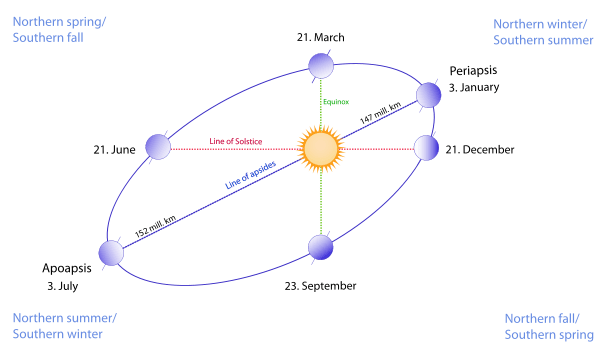
Determining the ‘exact’ blackbody temperature of the planet is the first step in determining what the “greenhouse’ effect is; for without that value all else is either speculation or based on an unreliable value. This leads us to a quandary since the plant is a globe spinning around a titled axis of rotation and with an elliptical orbit around the sun Figure 1 which is the source of virtually all the energy that heats the planet. Clearly with these facts there cannot be one temperature for the planet and so an average can be very misleading and lead to false conclusions; especially as it hides large energy flows on the planet.

Traditional calculations of the planets black body temperature ignore the variables which then lead one to assume a steady state situation verses the real dynamic situation that actually drives climate. To justify this assumption a general statement that the variances are too small to have any meaningful effect are promoted. In some cases with fewer variables this might be true but in this case I think not.

These are the main variables, constants and forces:

  1. The sun has a cycle of about eleven years and that gives a small variation in the suns output of about 1%
  2. The planet has an elliptical Orbit that varies by 3.34% or 4,999,849 miles
  3. The axial tilt of the planet is 23.4 degrees which causes winter and summer to alternate between Aphelion and Perihelion about every 10,000 years
  4. The planet is a sphere so only one side faces the sun at any given moment
  5. The sun’s energy reaches the planet on a line drawn from the center of the sun to the center of the planet which only intersects the equator twice a year
  6. The energy from the sun is concentrated around this line, a hot spot.
  7. The planet is a sphere so the suns radiation drops off in all directions from this line by a Cosine factor to zero at the edge 90 degrees from the center line
  8. The spin and tilt of the planet means that the center line, in effect, moves up 23.4 degrees and down 23.4 degrees during the course of one orbit
  9. That movement means the distribution of the energy in the hot spot also moves
  10. The distribution of land and ocean are not uniform on the planet and therefore the absorption of the solar flux is very different at points the hot spot travels over.
  11. The albedo of the planet is a variable not a constant mainly as a factor of the amount and kind of clouds.
  12. Energy from the core adds a small amount of energy
  13. Tidal forces from the sun and the moon also add some energy
  14. Energy is carried North and South from the hot spot centered on the line by the atmosphere and the ocean
  15. The Coriolis Effect along with tidal forces drive thermal transfer north and south at an angle and these are then main contributors to the climate
BB-01
Figure 1, The Earth’s Orbit

BB-02
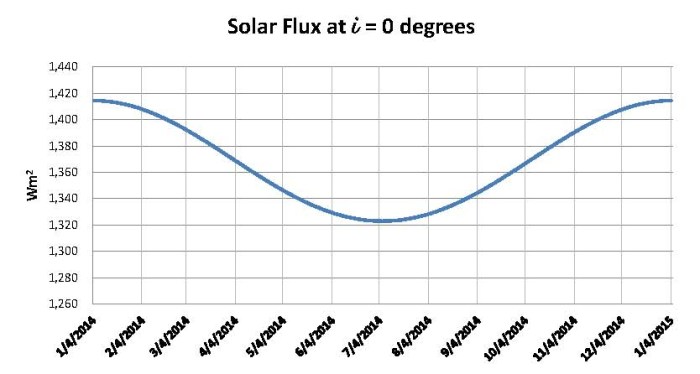
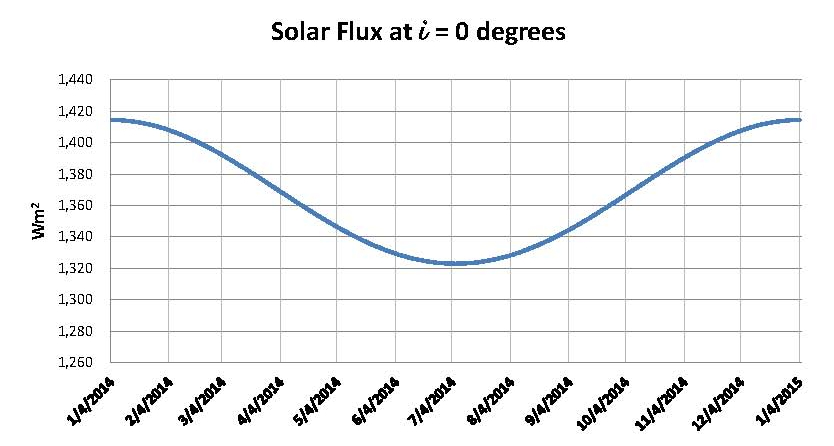
Figure 2, Orbital changes in solar flux

There are three sources of energy that determine the climate on the earth: the radiation from the sun which is said to be 1366 Wm2 The actual value based on the orbital range is from 1414.4 Wm2 in January to 1323.0 Wm2 in July Figure 2 and there is also an eleven year sun spot cycle with a range of 1.37 Wm2. The hot core of the planet adds ~0.087 W/m2 and the gravitational effects of the moon and the sun (tides) adds another ~.00738 Wm2. Of these three the sun’s radiation is by far the most important but considering all three the range during an eleven year solar cycle is from a high of ~1415.3 Wm2 to a low of ~1322.4 Wm2 so a more accurate mean would be 1368.34 Wm2.

The energy emitted by the planet must equal the energy absorbed by the planet and we can calculate this using the Stefan-Boltzmann Law. Which is the energy flux emitted by a blackbody is related to the fourth power of the body’s absolute temperature. In the following example the tidal and core temperatures are added after the albedo adjustment since they are not reduced by the albedo.

E  = σT4
σ  = 5.67×10⁻⁸ Wm2 K sec
A  = 30.6% (the planets albedo, this is not actually a constant)

σTbb4 x (4πRe2) = S πRe2 x (1-A)
σTbb4 = S/4 * (1-A)
σTbb4 = 1368.24/4 Wm2 * .694
σTbb4 = 247.46 Wm2
Tbb = 254.36 K

Earth’s blackbody temperature               Earth’s surface temperature

Tbb = 252.23O K (-20.92O C) low              Ts = ~287.75O K (14.6 O C) today
Tbb = 254.36O K (-18.79O C) mean
Tbb = 256.54O K (-16.51O C) high

The difference between the blackbody and the current temperatures is what we call the ‘greenhouse’ effect that averages 33.36O Celsius (C), today, although the range is from 35.52O C to 31.11O C from variations in the 11 year solar cycle. This documented variation means that the stated Blackbody radiation as shown here will give a 4.41O variation or let’s say 14.0O C plus or minus 2.2O C because of the Stefan-Boltzmann Law which has a 4th power amplification. This will result in a slow 11 year cycling fluctuation of energy in the tropics where the bulk of the energy comes that is not inconsequential.

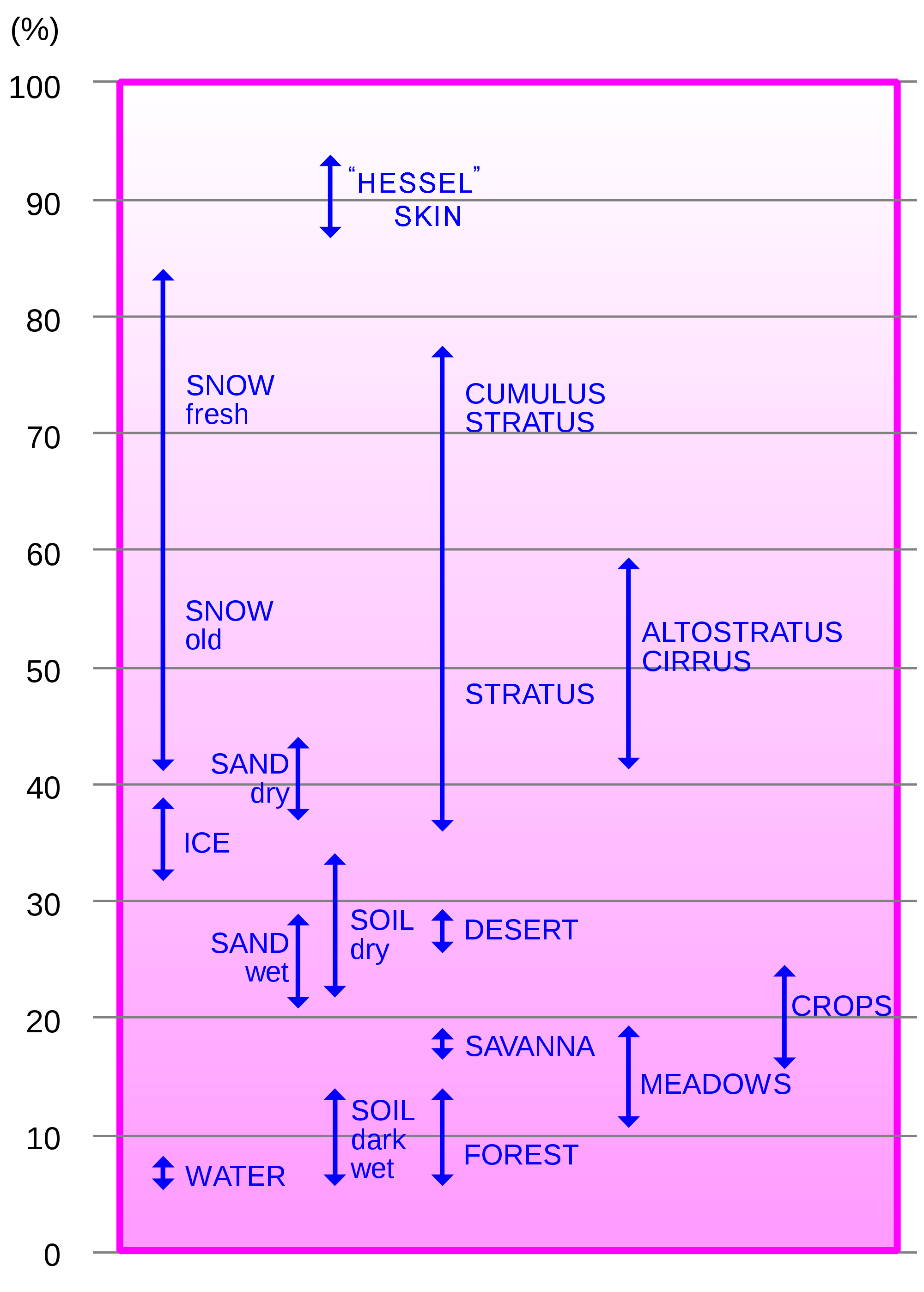
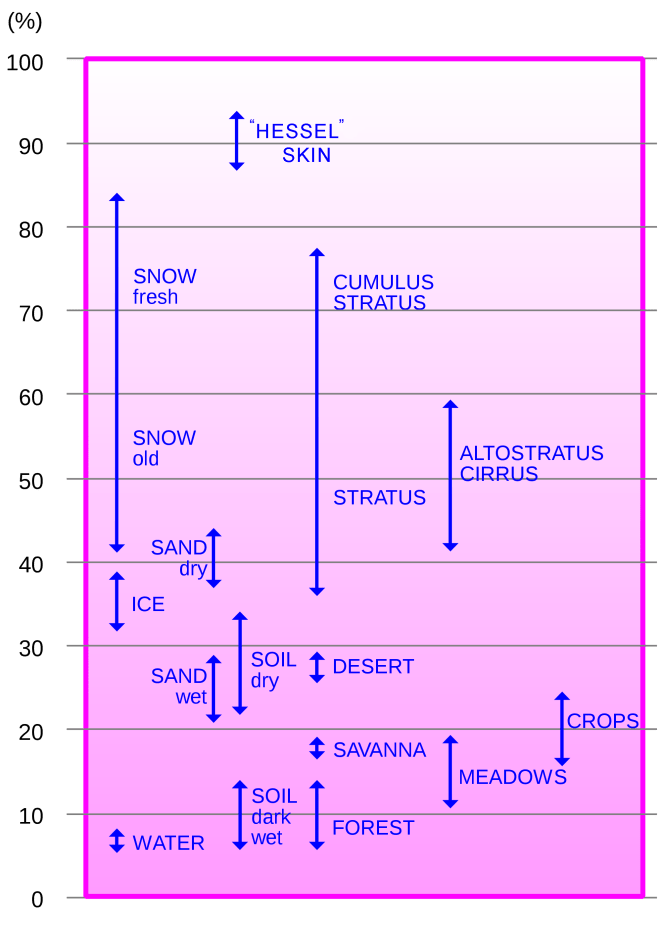
If we add clouds to the picture it get even more complex as they have a significant effect on the planets albedo as we know from two major volcanoes’ both in Indonesia; one in 1815 Tambora and the other in 1883 Krakatoa both of which threw enough particles into the atmosphere to significantly lower the temperature of the planet. Although dust is not a cloud the point is that if the albedo of the planet is changed it does have a major effect on global temperatures. The lack of thermometers in 1815 means we really don’t know what the effect was other then 1816 in known as the year without a summer. The other eruption in 1883 is well documented and is estimated to have dropped world temperatures by 1.20O C which would be equivalent to about a 4.2% reduction in the global albedo. The importance of clouds can be seen in the following Chart Figure 3. A reasonably estimate of the total effect of clouds on the global albedo would be about 50% if nothing else changed or a reduction in Albedo of from 30% to 15%.
BB-03
Figure 3, Albedo of various surfaces

Just for sake of argument if we varied the cloud levels by +/- 10% we find that at low solar flux and high clouds the Blackbody temperature would be 249.46O K and with high solar flux and low clouds the Blackbody temperature would be 259.32O K a range of 9.86O C. The reason this is so important is that properly modeling cloud levels is the area with the most uncertainly in the present models as clouds form at much lower mesh resolutions that the present models can deal with even if the formation could be properly modeled.

Despite this variation in incoming solar flux the planet’s temperatures has been very stable as previously shown in Figure 1 so we know there are no positive feedback process of any consequence on the planet. Other factors are also important in doing climate work such as 52.3% of the solar energy is concentrated within 45.0 degrees of the hot spot and 77.6% within 60 degrees of the hot spot. And the heat from the core and probably the tides is concentrated where the crust is the thinnest under the oceans and this concentration of energy core heat and tides) combined with Coriolis forces is probably what drives the ocean currents. In my opinion these other important factors are not being considered properly in the climate models, and that results in climate models that don’t work properly e.g. the inability to explain why there has been a pause in the warming calculated by NASA and NOAA over that past ten years despite a continuing increase in the level of CO2 in the atmosphere.

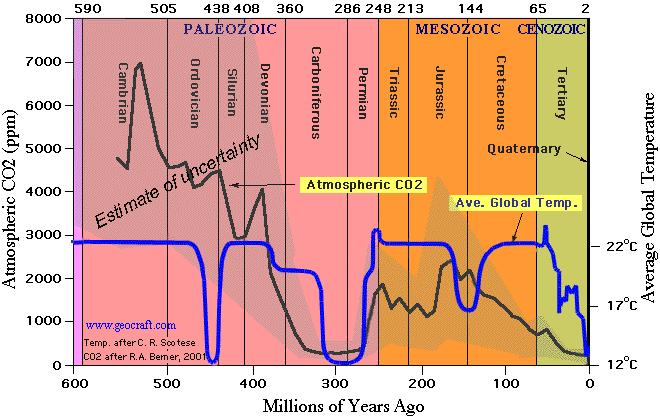
We also know from geological studies Figure 4 that the planets temperature has been relatively stable over the past 600 million years with a mean of about 17O C or 290O Kelvin (K) and with a range of plus or minus 5O K or C based on the information in Figure 4. During the past 250 million years CO2 concentrations have ranged from a low of ~280 ppm (a historic low) in 1800 to the present low of 400 ppm to a high of over 2,000 ppm probably averaging around 1,500 ppm. There was only one other period in the past 600 million years with CO2 this low. Going back further CO2 was estimated to be as high is 7000 ppm, but we will ignore that for now.

This means that whatever the processes are that relate to determining the thermal balance of the planet they must work within this range of ~12O C to be valid. Although Figure 4 shows a range of 10O C it would be prudent to spend resources to determine these values with as great accuracy as possible. We’ll assume a mean of 16O C with a range from 10O to 22O C as being more reasonable in this work. Also we are now in one of only three cold periods which are very rare in the past 600 million years and if we count that partial dip 150 million years ago that means that there is probably a 150 million year cycle there; maybe one of those first determined my Milutin Milankovic.
BB-04
Figure 4, Geological temperatures and Carbon Dioxide

Additional discussion as to the so called “greenhouse” effect must start with the important correction that this process is not a true greenhouse effect, since it is not the same process that occurs in a greenhouse used to grow food. The actual process that occurs is based on the structure of the atoms involved and how they interact with the various frequencies of visible and infrared radiation that are in play on the planet. However at this point in time there is no way to correct for the misuse of the words so we are stuck with it and all the complications that therefore arise in trying to properly discuss the issue with lay people and even some with technical knowledge.

The greenhouse effect occurs within the earth’s atmosphere and the main constitutes of wet air, by volume ppmv (parts per million by volume) are listed in the following table. Water vapor is 0.25% over the full atmosphere but locally it can be 0.001% to 5% depending on local conditions. Water and CO2 are mostly near the surface not in the upper atmosphere so the bulk of the greenhouse effect must be close to the surface. This table is different than most as it shows water.

Gas                                      Volume                 Percentage

Nitrogen (N2)                   780,840 ppmv            78.8842%
Oxygen (O2)                     209,460 ppmv            20.8924%
Argon (Ar)                           9,340 ppmv              0.9316%
Water vapor (H2O)               2,500 ppmv              0.2494%
Carbon dioxide (CO2)              400 ppmv              0.0399%
Neon (Ne)                                18.18 ppmv          0.001813%
Helium (He)                                5.24 ppmv         0.000523%
Methane (CH4)                           1.79 ppmv          0.000179%

There are only two of these gases that are relevant to determining how that 33O C (today) happens. That is not to say the others do not contribute but that at the present concentrations of Water H2O and Carbon Dioxide CO2 they are the main determinants. And since we know the range of temperatures that have existed geologically then we have set the range which these to gases must interact in, meaning that any set of equations or models or theories that predict values outside this range must be suspect based on geological evidence.

Also it must be kept in mind that the solar flux falls on a spot centered on a line drawn from the center of the earth to the center of the sun and because of the 23.4O axial tilt of the planet this “Hot” spot moves up and down as the planet moves though its orbit. Because of the shape of the planet the intensity falls off quickly as we move north and south and east and west according to a cosine factor so the heat energy is mostly over oceans near the equator where the atmosphere is the densest.

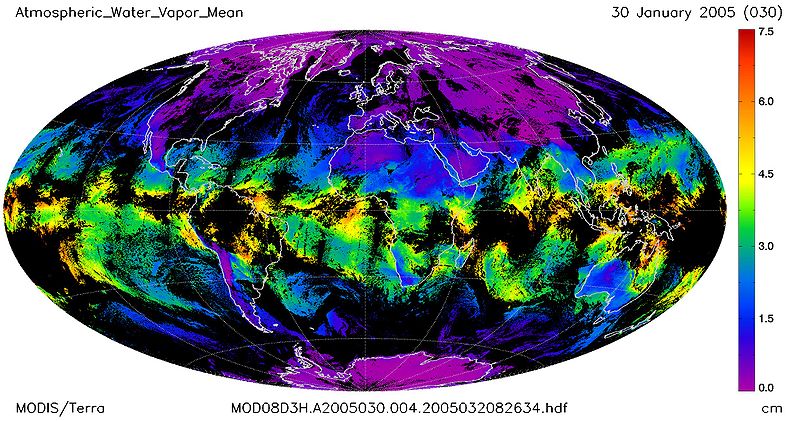
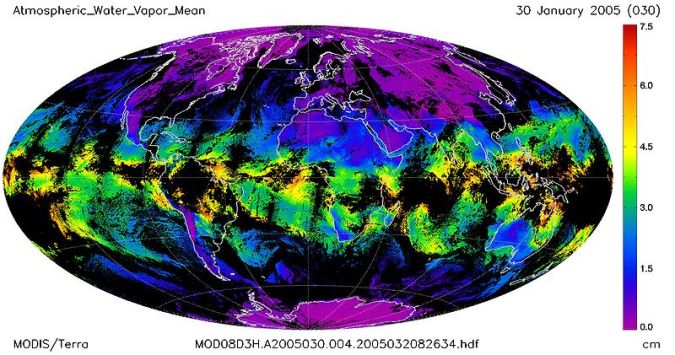
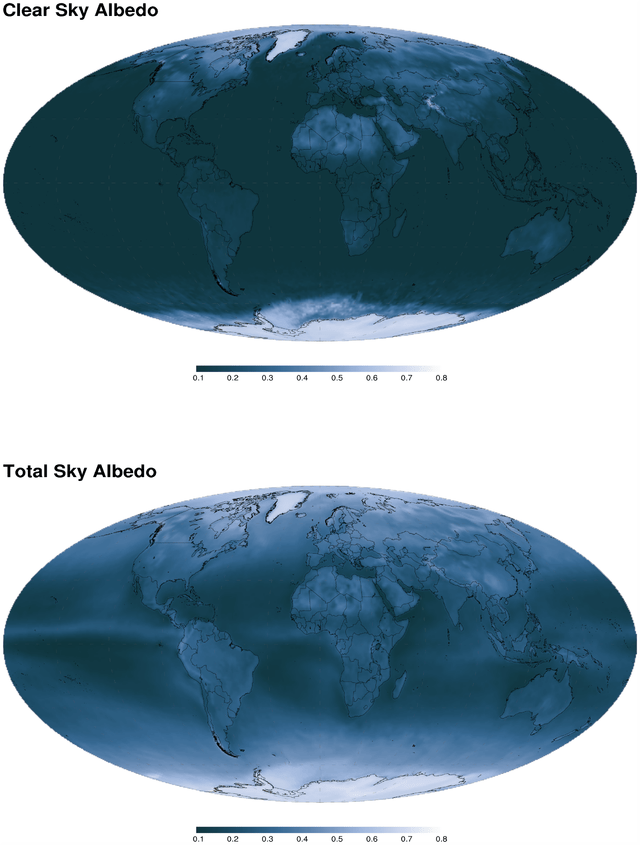
The first image below Figure 5 shows a recent distribution of water across the planet and it is clearly concentrated over the oceans close to the equator and that results in the heat imbalance and therefore movement north and south as shown in the second image Figure 6.
BB-06
Figure 5, water vapor concentrated near the equator
BB-05
Figure 6, change in albedo

In summary we now know that the Blackbody temperature of the planet is a variable.

Tbbl   = 252.23O K (-20.92O C) low at Aphelion
Tbbm  = 254.36O K (-18.79O C) and the yearly mean
Tbbh = 256.54O K (-16.51O C) high at Perihelion

Therefore the ‘greenhouse effect, with clouds as a constant, must be a variable.

Ts = ~287.75O K (14.6O C) today

Ghl     = Tbbl + Ts  = 35.52O C
Ghm = Tbbm + Ts = 32.39O C
Ghh   = Tbbh + Ts = 31.11O C

Considering there would probably be fewer clouds during cool period and more clouds during warm period the following would be more like the true effect considering both.

Tbblc = 252.98O K (-20.17O C) low at Aphelion
Tbbmc = 254.36O K (-18.79O C) and the yearly mean
Tbbhc  = 255.83O K (-17.32O C) high at Perihelion

Therefore the ‘greenhouse effect with clouds included must also be a variable. In this case we assume fewer clouds in cooler periods and more clouds in warmer periods of 2.5% which reduces the range and acts as a negative feedback on the process.

Ts = ~287.75O K (14.6O C) today

Ghlc    = Tbblc + Ts  = 34.77O C
Ghmc = Tbbmc + Ts = 32.39O C
Ghhc  = Tbbhc + Ts = 31.92O C

The range in temperature just from orbital changes is 4.41O C but including clouds that range is reduced to 2.85O C however in either case it is significantly more than the warming that the IPCC claims has happened looking at only Carbon Dioxide as the main factor. These are hard numbers based on the solar flux which is known and the orbital parameters of the Earth that are also known. The large variances come from the Stefan-Boltzmann Law; which is the energy flux emitted by a blackbody is related to the fourth power of the body’s absolute temperature. The fourth power in the equation magnifies the small variation in solar flux significantly.

Germany abandons their climate target, as their Chancellor sings to the crowd


This all sounds very much like Obama as he tells lies all the time but then he got it from Goebbels and Goebbels was a German so I guess the chickens have come home to roost