Section K of the Paris text, ‘facilitating implementation and compliance’, discusses measures to ensure that Parties stick to the commitments they agreed upon in the previous sections.
This section is brief, underdeveloped and appears to be one of the more contentious parts of the text. Some parties even consider section K “premature to discuss”; which is unfortunate as compliance mechanisms are going to be an integral part of achieving the UNFCCC’s goal of stabilizing greenhouse gas emission levels.
The importance of compliance mechanisms in International Environmental Law
Whether the final Paris agreement has any legal force is dependent on effective compliance mechanisms. This is because “legal force” is a variable concept at international law. For example, while a legal norm is considered ‘binding’ when it creates a legal obligation, this is distinct from legal enforcability. A norm is only ‘enforcable’ if it is backed by procedural mechanisms to incentivise parties to act in the prescribed manner. These incentives can be reputational or material, implicit or explicit, and include measures such as transparency, facilitation, compliance and enforcement.
It is currently undecided whether the Paris agreement will be “protocol, another legal instrument, or an agreed outcome with legal force.” While there is an intuitive desire for the agreement to be ‘hard’ (binding legal obligations; tightly worded) rather than ‘soft’ law (merely providing guidance), it is possible to have a hard legal instrument which lacks enforceability – and vice versa. As such, regardless of the format it eventually takes, the Paris agreement’s overall effectiveness (at practically achieving its goal) will rely on procedural mechanisms to incentivise compliance.
Some compliance mechansims are considered more suitable for environmental agreements than others. Enforcement mechanisms such arbitral tribunals, sanctions and other coercive measures are not often used in this context. Since international environmental agreements involve a collaborative approach to a long-term problem, punishing non-compliance can remove incentives for further participation, and thus ultimately prove counterproductive.
Measures to incentivise, assist and restore compliance are considered more effective for environmental agreements. Examples include reporting and monitoring systems to provide transparency and ‘early warnings’ for non-compliance; a regular Conference of Parties (COP) process to provide a forum to discuss evolving norms; capacity-building measures such as financial and technical assistance; diplomatic pressure (‘naming and shaming’); or non-compliance procedures (expert bodies to respond with non-punitive recommendations).
Existing Compliance Mechanisms
A compliance mechanism has already been established under the UNFCCC, in the form of the Kyoto Protocol’s Compliance Committee. The Kyoto Protocol covers emission reductions targets between 2008-2012 and 2012-2020 and is the predecessor to the upcoming Paris agreements. The Kyoto Compliance Committee consists of an independent team of experts who monitor and control the procedure surrounding the Protocol’s Parties emission reduction commitments. Parties can also report each other – and themselves – to the Committee in cases of potential non-compliance. The Committee has a facilitative branch and an enforcement branch to respond appropriately to these situations. The approach is quasi-judicial but its consequences are not punitive. The facilitative branch provides advice, assistance to Parties in order to promote compliance, and further provides an early warning of potential non-compliance. The enforcement branch decides whether developed nations (which are labelled “Annex I” Parties in the Kyoto Protocol) are meeting their reporting and reduction requirements, and determines whether to apply adjustments the assigned targets. The enforcement branch recommends actions against Parties when they fail to make progress towards their commitments.
The UNFCCC website advertises the Compliance Committee as one of “the most comprehensive and rigorous systems of compliance for a multilateral environmental agreement.” Nonetheless, it has not been entirely successful. Canada’s withdrawal from the Kyoto Protocol in 2014 is perhaps the best demonstration of the difficulties of enforcing compliance in an inherently voluntary international law system. Even a combination of hard and soft law, balanced to incentivise long-term collective action, will be rendered ineffective if a Party does not want to participate.
So what are the compliance mechanisms suggested in the Paris Text?
All three options suggested are essentially expansions to the pre-existing Compliance Committee, adapted to the Paris modality of differentiated commitments.
Enforcement and Facilitation
Kyoto’s commitments – and consequently, compliance measures – only extended to Annex I (developed) nations. Paris, in contrast, takes a universal “Nationally Determined Contribution” approach to commitments. Accordingly, Parties have suggested that Section K extends the Compliance Committee’s facilitative branch to developing nations, in order to provide the necessary resources (ie financial, technological, and capacity-building) for poorer nations to meet their requirements. Whether the enforcement branch is extended to all nations or remains for developed parties only is undecided, with both options still on the table.
Various different options suggest extending the Compliance COmmittee, but none of them develop the idea much further. Specifics of representation, committee membership rules, and decision-making processes are undecided. One option suggests leaving any elaboration beyond the suggested structure for future COP decisions; another leaves it to the first session of the governing body (where they will decide on an “indicative” list of consequences for different causes, types, degrees and frequency of non-compliance).
Regarding the substantive scope of the compliance arrangements (i.e. when the enforcement or facilitation measures are triggered), some parties suggest that the committee bear responsibility for enforcing commitments made across all sections of the text while others suggest that their jurisdiction be limited only to specified sections (such as [D] Mitigation and [I] Transparency) while excluding others (such as [E] adaptation).
Section K of the text requires considerable development and clarification ahead of COP21 in Paris. Extending the Kyoto Compliance Committee will not alone be enough to ensure compliance with the Paris agreements. Specific, tailored mechanisms with a clear substantive scope are needed.
A Climate Justice Tribunal?
While the above are options are consistent with the established preventative, non-political, non-judicial modalities, a contrasting option has been inserted at the end of the section K: a ‘Climate Justice Tribunal.’ This body would be independent from the Compliance Committee; and would be established to “oversee, control and sanction the fulfilment of and compliance with the obligations … under this agreement.”
The Climate Justice Tribunal was a suggested by the Bolivian government. The concept was developed at the World People’s Conference on Climate Change and the Rights of Mother Earth (WPCCC) hosted by Bolivia in 2010. The WPCCC was instigated by developing nations, indigenous peoples and civil society groups frustrated with the lack of commitments made at Copenhagen (COP 15) in 2009. As well as the call for a Climate Justice Tribunal, the WPCCC also resulted in a ‘Universal Declaration of the Rights of Mother Earth’ and a call for a ‘World People’s Referendum on Climate Change.’
Clearly, its inclusion in the Paris text represents a broader voice and movement among (but not necessarily limited to) the global south community, for increased climate action and accountability from wealthy industrialised nations. It is also a considerable deviation from the mainstream negotiated decisions under the UNFCCC; as well as traditional approaches to compliance in international environmental law. Whether these outspoken minority groups have the political weight to realistically achieve this outcome remains to be seen.
Conclusion:
Section K is one of the most important sections relative to its inconclusiveness. Finding the correct combination of hard and soft law compliance mechanisms will be crucial to incentivise ongoing commitment cycles without discouraging participation. A Climate Justice Tribunal represents an idealized way to ensure nations honour their commitments; but it is difficult to imagine nations voluntarily signing up to its jurisdiction. A strengthened Compliance Committee seems to be the likely outcome of Section K, but its specific mechanisms (and how it relates to nations at different levels of development) still needs further clarification.
Simon Hillier and Thomas Stuart | Image by Brian Turner


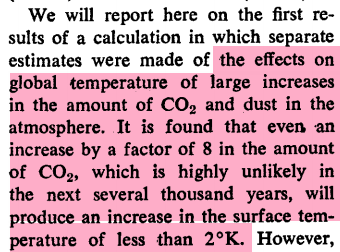



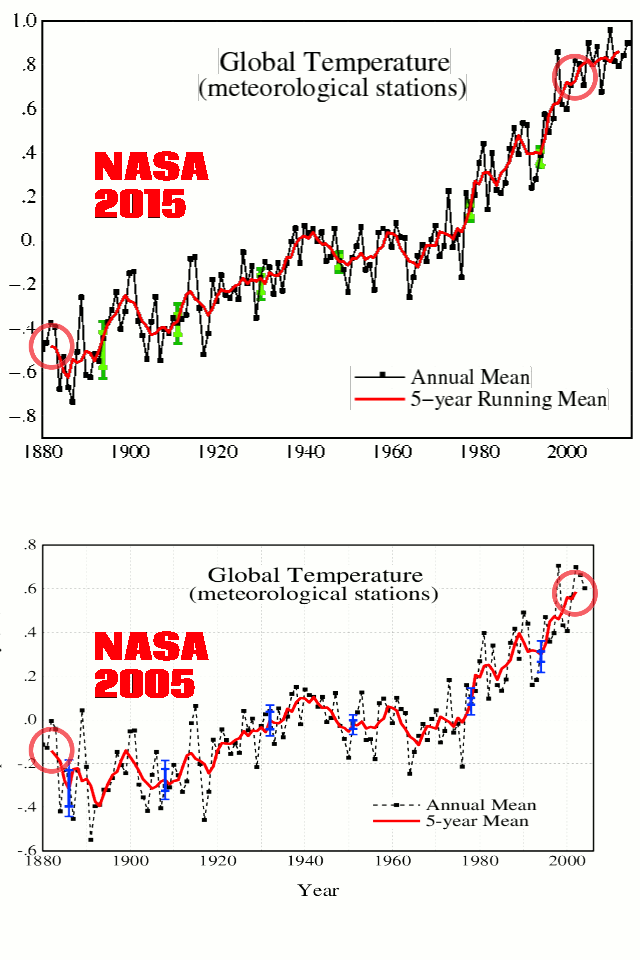
 You may not realize it, but it was the discovery of a frozen rhinoceros in Siberia that introduced cycle theory and altered everything in science igniting the Age of Enlightenment. Cycle theory is responsible for just about everything in physics and illustrates why the global warming/climate change crowd




 Centinel2012
