
Posted originally on CTH on February 15, 2026 | Sundance
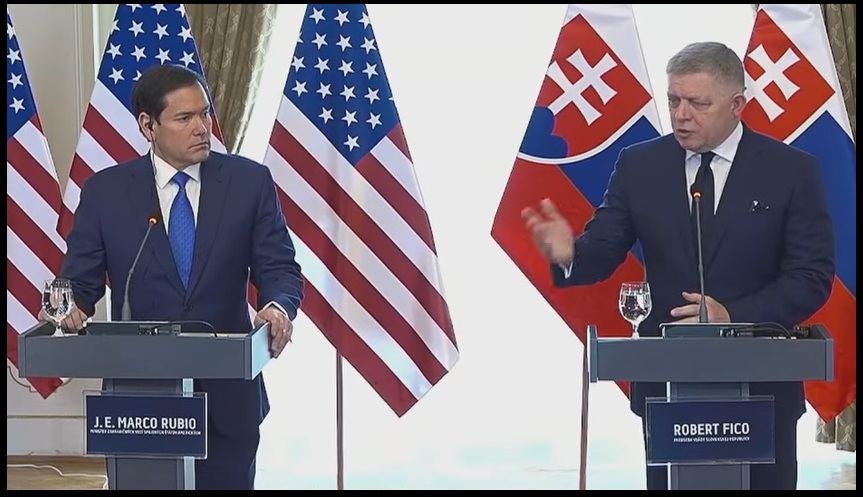
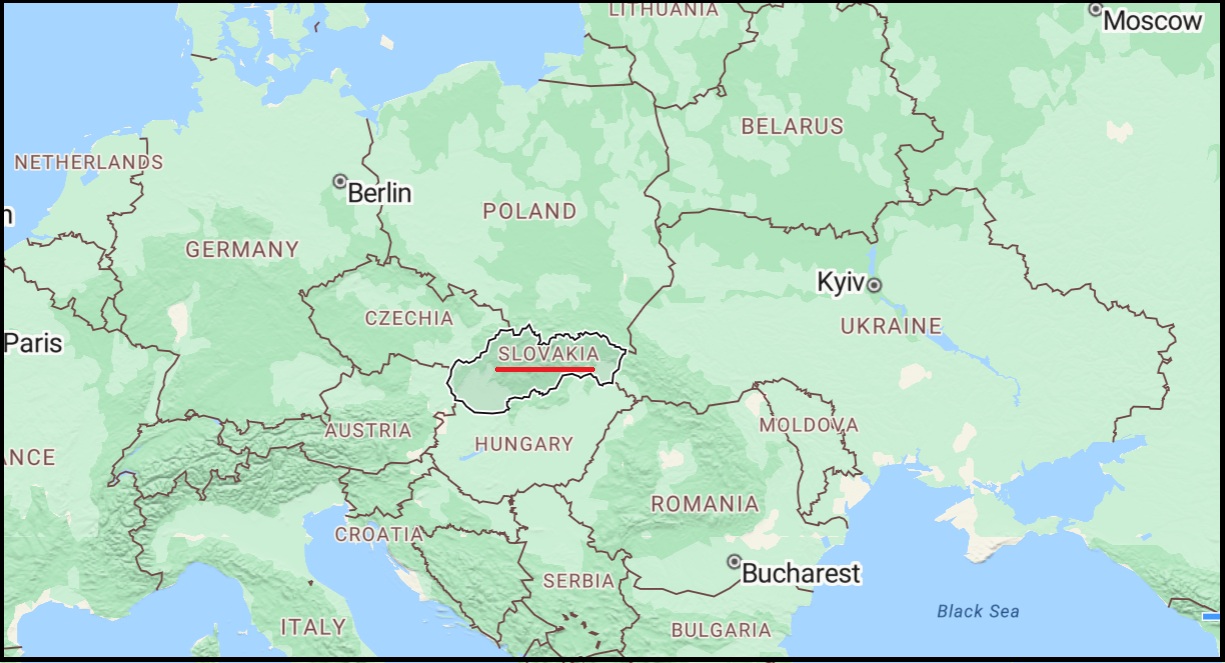
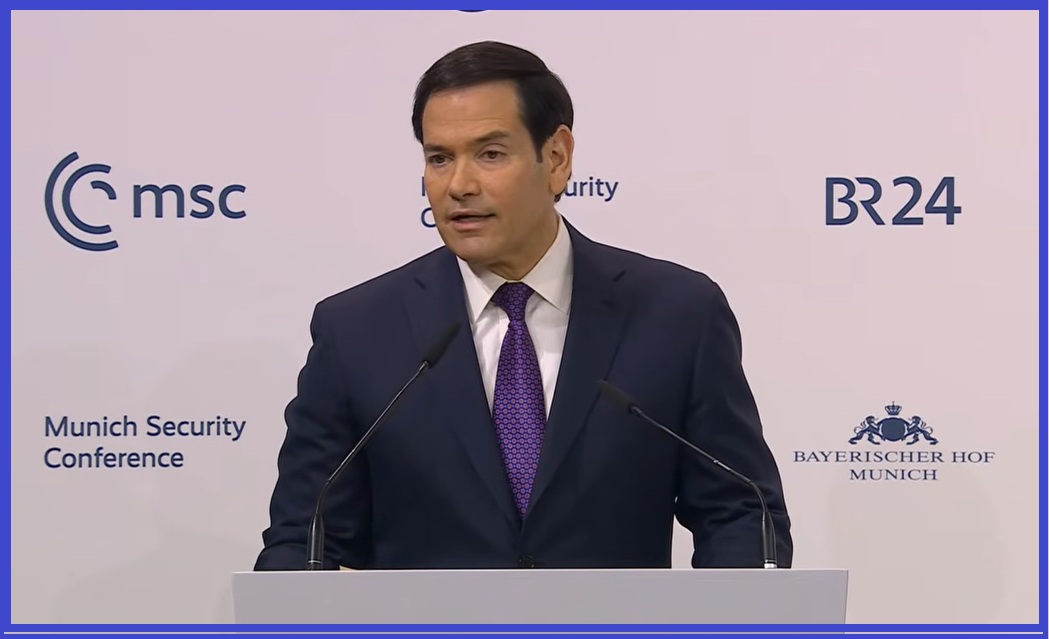
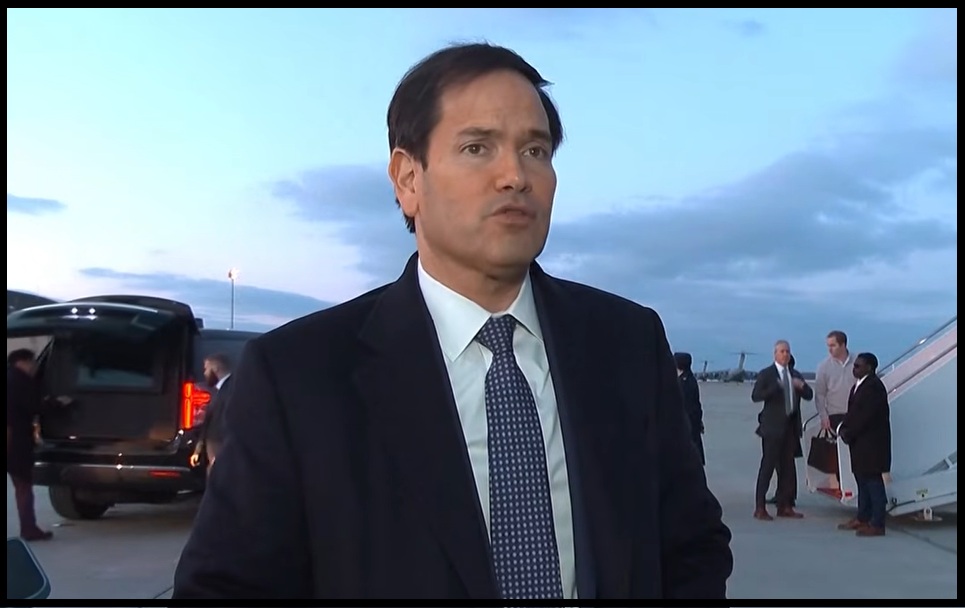
Secretary of State Marco Rubio took a different path on his European visit than Brussels wanted to see. After his time at the Munich Security Conference, Rubio headed to Slovakia and Hungary for conversations with the two nations who are not at all in alignment with Brussels leadership on the issue of Ukraine.
UPDATE: Better video and Transcript Added
Rubio speaks very bluntly on the topics that are of key concern to Prime Minister Robert Fico, including the topic of energy which is a major problem for both Slovakia and Hungary right now. Toward the end of the presser, the very last response by Fico [44:20 of video] is very interesting.
Prime Minister Fico directly claims that Ukraine is purposefully withholding oil and gas from pipelines that travel from Russia through Ukraine, into Slovakia. Fico notes he is not going to blame either Ukraine or Russia for previously detonations at the oil refinery and transport hub, but he is very sure Ukraine is purposefully withholding energy products from Hungary as blackmail until Hungary changes their position on Ukraine achieving status in the European Union.
You can tell from the way Fico presents the subject and from the prior points of Rubio this hot button issue is why Fico flew to Mar-a-Lago a few weeks ago for a talk with President Trump. WATCH:
MODERATOR: (Via interpreter) Hello, ladies and gentlemen. Please, welcome to our press conference after mutual meeting of the Prime Minister of Slovakia Robert Fico and Secretary of State of the U.S. Marco Rubio. So, Prime Minister, please, you have the word.
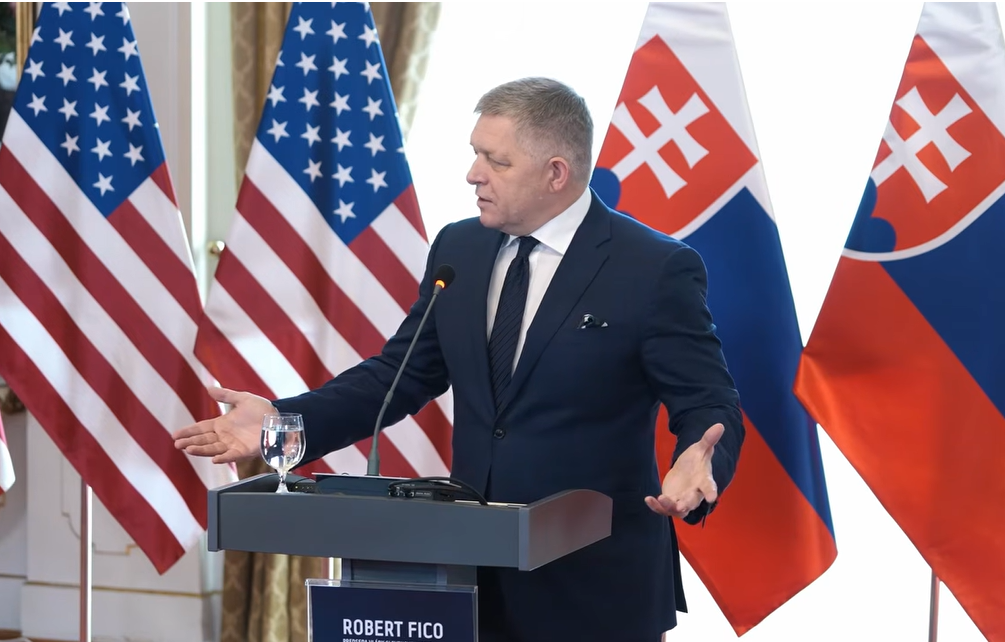
PRIME MINISTER FICO: Thank you. (Via interpreter) Dear Secretary of State, dear Marco Rubio, please allow me to welcome you once again – you and your whole delegation – to Bratislava and our office of the Government of the Slovak Republic. Dear ladies, dear gentlemen, we had a shared, short tete-a-tete meeting with the Secretary of State, and then we had delegations’ discussion when we went into details, where we discussed topics that are the point of our today’s meeting. I’ll try to briefly sum up the conclusions of our discussions, be it in Four Eyes or, let’s say, in our meeting of delegations.
First of all, I deeply appreciate the fact that this visit comes quickly after our meeting in Florida, where I had a chance to speak with the President of the United States Donald Trump with Mr. Rubio being present. So, it’s a great follow-up and great country, nation. And after a short while when we met in Florida, we could discuss how much we achieved during those few weeks about topics we discussed.
And the most important thing about today’s meeting, dear Secretary of State, I consider the following thing, and that is our mutual respect. I mentioned that I am a representative of the government that wants to do sovereign Slovak foreign policy in all four corners of the world, and I also underlined the fact that my crucial priority is not to defend national and state interests of others, but the – my basic obligation is to protect national and state obligations and interests of the Slovak Republic. And I believe it’s correct understanding that anywhere where our interests meet we act as allies, and in areas where we have different opinions we have to negotiate and find a suitable solution.
I think I am one of the politicians who are sincere in our discussions, and I do everything possible to do – to speak what I say in private meetings and also say the same things in public. So let me allow – allow me to say a few conclusions based on our agreement with the Secretary of State.
Slovakia cares about our cooperation with the U.S. in the area of nuclear energy. Thirteenth February, the intergovernmental agreement went into power, agreement between Slovakia and the U.S. regarding cooperation in the area of nuclear energy. I informed the Secretary of State about the current status of things. We are greatly, deeply interested under auspices of the U.S. partner to create a multinational consortium which would guarantee the fact that Slovakia could build another nuclear block until 2040 with the power of 1,200 megawatts. And we’d be happy if it would be possible to sign a specific agreements with Westinghouse in the span of the following year.
And I also asked our American partners regarding cooperation in those different levels of preparation of this project, because it’s a project that goes above Slovakia. It concerns the whole European Union, and because of that we will have to have intensive discussions with our European partners. And because of that, we need cooperation and help of our American partners.
When we were speaking about energy, I also informed the Secretary of State about what is going on in this region regarding gas and oil. I’m not going too deep or I will not get into details, but I can state that Slovakia as a country that has always been at the beginning of any pipeline, be it gas or oil, ended up at their end. We’re truly in a not so good situation because of ideological and bad decisions of European Union. I am mentioning REPowerEU, which stops flow of any sort of gas from East to Europe, and in our case from 1st November 2027.
Together we are looking for potential alternatives and solutions, and I believe that tomorrow’s meeting with the Hungarian Prime Minister Viktor Orban can show us a solution to this crisis situation that is undergoing in relation to supplies of oil and gas to refineries under control of Hungarian company, MOL.
Third company is of course related to the war in Ukraine. There in this regard Slovakia has its unique and unrepeatable positions that do not always reflect the positions of our European partners in the EU, but that’s our openness and directness. And as the implementation of the sovereign foreign policy in all four corners of the world, I clearly and openly told my opinion to the Secretary of State about how we perceive the military conflict, and we think is going to continue for certain period of time. We see no peace solutions in short period of time – short.
And I offered Slovakia as a country which understands the language in Ukraine and the Russian Federation, as a country which has good intelligence services, as a country who – which is a neighbor of Ukraine to exchange opinions about this topic. And dear Secretary, I want to praise the approach of your president because it’s an approach of a person who is pragmatic and rational and wants to end this war as soon as possible. We also consider it as senseless, pointless, and if Slovakia can be of help in any peace initiatives that could bring this war to end, we’re totally ready for it.
Dear ladies, dear gentlemen, I would like to inform you that from 1st July 2026 Slovakia will chair the presidency of its really unique structure of regional cooperation, and that is V4, Visegrad Group. I would like to confirm the words on the Secretary of State that this organization should be used not only for regional cooperation, but we should think of invitation of partners which in regard to our current topics that may be relevant. We spoke about this briefly. If, after the 1st of July 2026, we will have a topic where it would be of use to have the U.S. join the V4 and the partners in V4 would agree on this, we will be ready to organize such event. I say this in name of Slovakia: V4 plus the U.S. and basic questions of the international cooperation, energy cooperation, we are interested in this.
Of course, we also exchange opinions about lots of different topics, and I would like to just add that we are a member-state of NATO. We are partners in the North Atlantic delegation, and we understand the stance of the U.S. that Europe has to take care of its security more. And I think it’s clear that in Europe we speak about increasing expenditures on our defense as a natural development of things, and because of that, we spoke about a topic in regards how to continue with our budgets. Perhaps in the following years we, of course, have to take care and we have to pay attention to our obligations; but if Slovakia wants to be a member of collective security in Europe and NATO, we have to participate also in improving and strengthening our capacities.
I would like to ask for understanding in the area of the fact that we want to do projects of dual use based on military budgets. For example, a good example is a military hospital which is being built in the eastern part of Slovakia near Ukraine border. We’ll continue our military cooperation. You know that we procured fighter jets, F-16, from the U.S. There’s an interest to increase numbers to 18 fighter jets, and now we’re discussing the topic about how to get four more of the planes to our armed forces because there is – it’s not a good sign of sovereignty that our airspace is protected by planes of Czech Republic, Hungary, and Poland. We get into this sad situation because our military equipment was gifted to Ukraine from 2022 to 23. There are lots of different aspects of military cooperation because we are in NATO together. And also vice minister and minister of defense mentioned this, Mr. Kalinak, to the State of Secretary. Also, other members of delegation from Slovak part participated; also minister of environment; the vice prime minister, minister of economy, which is responsible for cooperation area of economy; also partner of the State of Secretary, Minister of Foreign Affairs Mr. Blanar.
So again, State of Secretary, please welcome to Slovakia. I think our discussion was open. Nobody tried to hide anything, and I think you’ve heard opinions that you don’t hear elsewhere, I guess, especially in relation to war in Ukraine. That’s why we’re here. We are not here to lie to our partners or to mislead them about information that are not based on objective facts.
Thank you for coming, and we are looking for further cooperation.
MODERATOR: (Via interpreter) Thank you, Prime Minister. State of Secretary of the U.S., please.
SECRETARY RUBIO: First of all, thank you, Mr. Prime Minister, for welcoming us. This is a follow-up, as you said, to a meeting we had not too long ago in Florida, in my home state, with the President of the United States. And in the aftermath of that meeting we discussed some things during that meeting regarding specific purchase of airplanes or some impediments to it. We were able to resolve those, and we’re happy that that got resolved because it’s an example of how this direct engagement could lead to more things we can achieve together. In fact, that meeting happened the day after a deal was signed with Westinghouse and with our Secretary of Energy Chris Wright to lay the groundwork for this energy opportunity, which is so incredible.
I use these things only to illustrate the importance of this direct engagement. We both have excellent teams, and people have worked very hard and communicate all the time, but there is no replacement for that direct level of engagement. And engagement in Central Europe is what you can expect to see more of from the United States of America.
Mr. Prime Minister, you mentioned that the Visegrad Group, the V4. It is something we are eager to engage with as a forum in which we can find areas where we can work together and achieve cooperation.
You mentioned something else which I don’t know why it ever became controversial but it’s important to remind everybody of. It is the view of the President of the United States, President Trump and of the United States under his presidency, that we expect every country in the world, we expect every country in the world to act in their national interest. That is what countries are supposed to do. That is what the leaders of the countries – I don’t know why that is a – like a strange consideration. The fact of the matter is we view policy the exact same way.
Now, when our national interests are aligned – when the national interest of the United States, for example, and the national interest of Slovakia are aligned – this is an extraordinary opportunity for cooperation and for partnership. Where there might be some misalignment, well, that’s where the relationship comes in. That’s where the partnership comes in. That’s where we try to accommodate one another and find a way forward. There is nothing controversial about that, at least not as long as President Trump is in the White House.
And we believe that within the area of common alignment there are so many things we can work on together that are good for your country, good for our country, but frankly good for Europe and good for the world.
I also appreciate your input with regards to the war in Ukraine. It is important that we take as many viewpoints. Your viewpoint and the viewpoint that you’ve expressed both to me and publicly as well is one that’s informed by both your geography and by your history, and it’s a very important point of view to take into account in the broader context.
As I said yesterday in response to some questions in Munich, we view the United States role as one of trying to facilitate an end to a very deadly, very bloody, very costly war with horrible suffering. What’s happening in Kyiv right now is horrifying – people in the coldest part of the year going without electricity, energy. This is nothing positive about that. The death, regardless of what the number are on both sides, way too high. And the President has spent a year at the highest levels of our government trying to find whether we can be facilitators of a negotiated end to this terrible conflict. And it is something that we care about, but it is something you live next door to. You’re on the border. You’re right there. You face – and not only do you have to face the consequences of the war, but you also have to face the benefits or the consequences of the peace. And so we appreciate your input in that regard.
We talked about a lot of things we have an opportunity to work together on. Energy is one of them. I think you have an opportunity as a nation, not just because you can generate energy, to also be in a very advantageous role when it comes to new technologies like artificial intelligence, as an example. It’s an opportunity there. There’s a very energy-dependent industry, and so it’s something we can work together on.
We’re always talking about military sales, and this is important. We’re very happy that the F-16 program is your program of choice. We hope you’ll consider some others as well that we can work together on because apart from – one of the key components of any country’s national interest is the ability to protect their people. There is no more important – there is no more important obligation of any government than the ability to protect your own people and your own nation.
This is why, by the way, we talk about the importance of our partners having capabilities in NATO. Every time we say this, people, they go crazy. They think oh, that means you’re going to abandon NATO, you’re going to abandon your allies. I think the point we’re making is that the stronger our allies are, the stronger we are collectively. The stronger we are collectively.
And so we want to be – we want to play a positive role in that regard, and you’re doing many good things in that space, and we want to thank you and want to continue to work with you on that.
So there are many thing that we have an opportunity to work together on, but the – first, thank you for receiving me here on a Sunday. And I try never to burden people on Sundays. It’s an important day for me because of my faith, and I know for many of you as well. But it was – but I thank you for opening this space to us on this day because we wanted to show and we are showing and we are going to show in the weeks and months and years to come that under President Trump this administration is going to make not just Slovakia but Central Europe a key component of how we engage the continent and the world, and that we are not just going to engage in meetings and pleasantries but in concrete actions that we will take together in ways that are beneficial to your people and our people, in ways that are beneficial to your country and our country.
I’m very excited about this opportunity. I know the President is as well. That’s why I’m here. When did we meet? It wasn’t too long ago. It was just a few weeks ago.
PRIME MINISTER FICO: Yes, few weeks.
SECRETARY RUBIO: A few weeks, and here we are. So – and we’ll be back and we’ll be sending others back, and I think some members of your team are going to be coming to Washington this week to have a conversation. So, you’re going to get used to seeing us, and you’re going to get used to dealing with us, because we’re very happy to be here and we look forward to working with you very closely.
PRIME MINISTER FICO: Thank you. Thank you very much.
(Via interpreter) Thank you very much. Now there’s some space for questions. Please, first question, Slovak TV.
QUESTION: (Via interpreter) Katarina Chovancakova, the Slovak Television and Radio. Dear Secretary of State, the U.S. last week gave the command of NATO to European countries, and there are some words about American soldiers leaving Europe. Some say that NATO is dead. What is the stance of NATO, of U.S.-NATO and regarding cooperation of the U.S. and Slovakia?
Dear Prime Minister, did you also mention the defense cooperation agreement? Prime Minister, you criticized this. You wanted to cancel it, then you allowed for some changes. Did you mention this topic?
SECRETARY RUBIO: You want me to go first? Okay.
On – yeah, I don’t understand. The United States has thousands and thousands of troops deployed to the NATO mission. And we’ve made very clear – I think it was made very clear at the summit just a few days ago at the meeting at the defense minister level – we’re not leaving NATO. We’re not leaving – I mean, we may move a couple thousand troops from one country to another, but this has always been the case. This has always happened.
By the way, we are not threatened or feel that it’s hostile to see NATO grow in its own capabilities – not independent of the United States, in conjunction with the United States. We don’t think it’s a negative thing that other countries have more influence in NATO, other partner nations have more influence in NATO, or that other countries within NATO have more capability. We view that as a positive.
I see it reported yesterday in some places, oh, the Europeans are very upset, they’re going to be less dependent on America now. We never – we don’t want Europe to be dependent on – we’re not asking Europe to be a vassal of the United States. We want to be your partner. We want to work with Europe. We want to work with our Allies. We want to work in cooperation with you.
And our point has been and continues to be the stronger you are both on an individual basis in terms of countries and collectively as an alliance, the stronger the members of NATO are, the stronger NATO is. That’s not minus the United States. That’s just common sense, okay? If you have an alliance made up of countries, the stronger all those members are, the stronger the alliance is. And we want The Alliance to be so strong that no one will ever, ever dare test it, no one will ever dare challenge it. So, we welcome any measures that are taken to strengthen The Alliance by the individual members, and we see that as a very positive thing.
PRIME MINISTER FICO: (Via interpreter) I would just like to mention the question you’re asking on the agenda was not in our – on our schedule. But nonetheless minister of defense and vice prime minister will tell you more about those discussions, but today it was not a part of our discussion.
MODERATOR: (Via interpreter) Thank you very much. Now the second question, Washington Post.
QUESTION: Thanks very much. Mr. Secretary, will the Trump Administration consult and inform Congress in advance if it decides to attack Iran or remove the Supreme Leader? It’s a question on the minds of many given the major potential consequences of a new war in the Middle East.
And also, five European countries issued a joint statement saying Aleksey Navalny was most likely poisoned by a toxin found in South America, a South American frog. How come the United States didn’t join the statement? Any response to it?
SECRETARY RUBIO: Yeah, a couple –
QUESTION: Then, Mr. Prime Minister –
SECRETARY RUBIO: Oh.
QUESTION: Sorry to interrupt. Thank you for your hospitality. On Venezuela, you strongly opposed America’s removal of Maduro by force, saying it demonstrates a deepening breakdown of the international order. Do you still feel that way given where we’re at now?
And also, you’ve denied saying that you were worried about President Trump’s psychological state following your meeting with him in Mar-a-Lago. Can you explain how this was potentially misinterpreted?
SECRETARY RUBIO: Let me go first on your – I’m not going to talk about attacks on Iran or anything of that nature, because the President’s made clear he prefers diplomacy and an outcome of negotiated settlement.
Now, we’re dealing with radical Shia clerics, okay? We’re dealing with people who make political – geopolitical decisions on the basis of pure theology, and it’s a complicated thing. I mean, no one’s ever been able to do a successful deal with Iran, but we’re going to try. Steve Witkoff and Jared Kushner will be traveling – I think they’re traveling right now – to have important meetings, and we’ll see how that turns out. And we’ll always comply with the applicable laws of the United States in terms of involving Congress in any decisions.
But right now, we’re not talking about any of that. We are postured in the region for one simple reason, and that is we understand that there could be threats to our forces in the region. We’ve seen them be threatened in the past, and we want to make sure that we have sufficient capacity to defend them if, God forbid, that were to happen.
QUESTION: You’ll inform Congress?
SECRETARY RUBIO: We’ll follow whatever the law is on it, and it depends on the circumstance it would lead to. But right now, we’re talking about negotiations. We are focused on negotiations. That’s what we’re – the President’s made that clear. If that changes, it’ll be obvious to everyone. And obviously, whatever the law requires us to do, we’ll do.
With regards to your question about the frog toxin – no, it’s a very serious thing. Look, those countries came to that conclusion. They coordinated that. We chose – it doesn’t mean we disagree with the outcome. We just – it wasn’t our endeavor. Sometimes countries go out and do their thing with – based on the intelligence they have gathered. We obviously are aware of the report. It’s a troubling report. We’re aware of that case of Mr. Navalny, and certainly it’s – we’ll – we don’t have any reason to question it, or we’re not disputing or getting into a fight with these countries over it. But it was their report, and they put that out there.
And let me just make one more point, because I think you asked him a question in order to, like, see if you can get him against us with something about, oh, you criticized – a lot of countries didn’t like what we did in Venezuela. That’s okay. That was in our national interest. I’m sure there’s something he’ll do one day that we don’t like, and we’ll say, hey, we didn’t like you did this. So what? That doesn’t mean we’re not going to be friends, we’re not going to be partners, we’re not going to be able to cooperate with one another. Countries express their opinion all the time. We have very close allies that didn’t like what we did in that regard.
I can tell you what, it was successful. We’re proud of it. It was necessary because the guy was a narcoterrorist, and we made him a bunch of offers, and he chose to throw them under. And look what’s happened in Venezuela in the six weeks since he’s been gone, okay? It is a – now, it’s got a long way to go. There’s still much work that needs to be done. But I can tell you Venezuela is much better off today than it was six weeks ago, so we’re very proud of that project. And I know some will disagree and didn’t like, but irrespective, I think everyone can now agree that Venezuela has an opportunity at a new future that wasn’t there six weeks ago.
PRIME MINISTER FICO: (Via interpreter) Thank you very much for your questions, and I have no reason to avoid answering your questions. When someone doesn’t like the sovereign, independent behavior of Slovakia, they always automatically trying to create obstacles to this sovereign, independent behavior. Don’t be afraid. I will not avoid your question. I’m just going to use as an example.
I decided independently, sovereignly, in the name of our sovereign policy, to participate in celebration of the 80th anniversary of the end of Second World War and win against fascism in Moscow. I have thousands of good reasons for that, because it was the Red Army that liberated Slovakia in 1944 and 1945, believe it or not. But two member-states of the EU – two member-states of NATO, our partners – did not allow me to fly throughout their airspace to Russia. I don’t remember anyone from the U.S. administration to tell me don’t go there when I went to celebration of the end of Second World War in China, to the anniversary. I was shocked how the whole European Union ignored the celebrations solely based on political, ideological reasons. I have thousands of good reasons to go to China, and so I went there.
And it seems strange to me when you meet informally, like when I meet with my colleagues, they ask me, whispering, what did Putin tell you? What did Xi tell you? We have to lead a dialogue. We have to speak with each other. Discussions create space to receive and get valuable information, just like now I am mentioning we have to lead discussion with Russian Federation. We have to lead dialogue. We have to have dialogue with the Russian president, Vladimir Putin. If we will not do that, we cannot say that we are interested in ending this military conflict we see today in Ukraine.
And now I approach your question like in this manner: Simply, not everyone likes that we independently made cooperation regarding nuclear energy. So, then they started making things up, and I will not even focus on that, because it’s always like that when a sovereign Slovak government makes a decision that is in line with our sovereign policy to all four corners of the world. They always do obstacles. They make things up, so they just do damages. That’s the answer to second part of your question.
Regarding the first part, that is a question regarding Venezuela. Slovakia is a country with 5.5 million citizens. We cannot compare it economically with superpowers which we have today, and we base our work on principles. The first principle is that we are interested in peaceful cooperation and peace. Because of that, I have a completely different opinions regarding war in Ukraine, and I do not support it, and I say that there are some member-states of the EU that are interested in continuing the war.
And I would like to say at the same time that we are upkeeping the rule of not interference, not to interfere to other internal matters of other countries. It’s funny, when I go and visit China, we have great strategic partnership. Journalists, they ask me, did you mention or did you complain about how they manage their internal things? Every country has the right to choose their own path. That’s the rule I abide to.
And a third thing, and that’s the question regarding international law. We have different opinions on certain matters. As far as I know, the U.S. is not a signatory of the International Court of Justice. We are members. Perhaps we may have different opinions on other things, but we have defined it at this very beginning. We have same opinions on certain matters that unite us, and when we disagree we should have negotiations and come to a conclusion.
So all our stances we form are based on such principles, and that’s the reason, dear colleague, why you still – why you still did not recognize Kosovo, why we didn’t recognize Kosovo, because we believe that it was created against the international law. But we didn’t have a problem, just like we stated our opinion on Venezuela. We did the same thing with Ukraine. Using military force in Ukraine is also a breaking of international law, and I have no other opinion but to comment the same things in same manner.
But I totally recognize, because we see this after long period of time, the common-sense pragmatism in foreign policy. That’s what has been missing. And I think that is the most valuable thing that the American president brought to the foreign and world policy: common-sense pragmatism and not looking at interests of others. Everyone has to consider their own interests, national interests, but of course, considering that it will lead to peaceful cooperation for countries and nations.
MODERATOR: (Via interpreter) Thank you very much. Now, following questions TA3 TV – Robert Zalak, TA3.
QUESTION: (Inaudible.) Mr. Secretary, yesterday in Munich you said and you repeated basically today here that –
SECRETARY RUBIO: Can you hold the mike up just a little it? There you go.
QUESTION: I’m sorry. You said yesterday in Munich and as well as today that it’s very important for every alliance to have all of the members very strong, and you are – you support it. At the same time, before your visit to Bratislava and Budapest, you said that this is kind of strengthening the ties with so-called cooperative allies. Who are the non-cooperative allies from your point of view? And isn’t this kind of creation of a two-tier EU or the policy of carrot and stick?
(Via interpreter) And another question to our prime minister. Secretary of State mentioned that according to Washington, Russia is not interested in ending the war. You yourself like to repeat that you have a different opinion regarding the war in Ukraine compared to the common opinion in Europe. How did you resolve this question in your discussion with the Secretary of State?
SECRETARY RUBIO: I think I followed your question. Let me just briefly say I don’t know about the – look, I’m not going to use this press conference to attack this member of NATO or that member of NATO in terms of what they’re doing or not doing with regards to The Alliance. I was giving a speech about our relationship – the transatlantic alliance, as they call it – which on the military front is largely built on NATO and on the commercial and economic front is built through the European Union and, obviously, to non-members of the European Union then through bilateral agreements with them.
And the core point of my speech yesterday remains that our relationship to Europe as a continent – the transatlantic relationship – is not just a military alliance. It is not just a commercial alliance or a trade alliance. If it was just built on commerce and military, then this is very transactional, and it’s only going to be an alliance as long as it’s mutually beneficial in that regard. The point of my argument yesterday was that our transatlantic alliance, as it’s been called, is built on something even more important and more enduring, and that is the ties we have as people: cultural ties, historical ties, religious ties, direct descendants in many cases, our language, et cetera, shared experience. And that’s the – that’s the point of it.
And as far as – if you want to talk about NATO-specific, yeah, I mean, I don’t think this is a mystery. This has been something the President has talked about since his first administration as 45th president of the United States, and that is that he wants NATO to be stronger. And in order for NATO to be stronger, the member-states have to be stronger. That’s the point. I think we’re headed in a good path in that regard. I think we’ve seen a tremendous amount of progress. And we’ll continue to see progress in that direction, I hope, because it makes The Alliance stronger.
And asking member-states of NATO to be stronger is not a threat to say, well, if you’re not stronger, then we’re going to – it’s to point out to everybody that it is a stronger alliance, we are collectively stronger, when we are individually stronger – whatever capabilities we bring. And every nation has a unique situation. Every nation that’s a member of the coalition of NATO has in some cases some strategic advantages, special things that they can bring to the table that perhaps another member state cannot. That has to be taken into account as well.
PRIME MINISTER FICO: (Via interpreter) Thank you for your answer. Dear colleague, we have this huge benefit – as for myself, I don’t have to think about the answer because I’ll just read the same thing I said from the very beginning, and I believe the Secretary of State will confirm what I said today.
The European Union – or some member states of the union – are trapped, and the trap consists from the fact that we are facing unprecedential crisis of the EU regarding their competitiveness. We face a huge problem. The EU is economically in a deep crisis; and if we will not admit that we passed senseless ideological climatic goals, we will not get out of this crisis.
And in this situation, dear colleague, it’s quite difficult to tell something to member states regarding our strategy in Ukraine. The strategy was clear: In April, three months after the beginning of the conflict, the war, agreement was ready on the table in Istanbul, and the war could be ended. And some Western politicians went there and they say – said you cannot do this, because they thought that this strategy of war, support of Ukraine, sanctions, loans, that Russia will get weakened by this economically and strategically. And now everyone – we know that it’s not working out. But the countries which have been supporting this strategy from the very beginning are not brave enough to admit this and say enough is enough.
Dear colleague, we discussed numbers of victims of this war. Of course, there are different numbers. They differ. But the fact is – let’s take a pen and paper and write it down, and when we meet at the end of this year, I will confront you with that number. So, the EU grants a loan of 90 billion euros for Ukraine, and correct me if I’m wrong, 60 billion is spent on weapons and 30 billion is so that Ukraine can operate on its own. And I am proud that at the European Council I didn’t want to participate in this military council – military loan. You know what will happen in December. We’ll count more victims dead, hundreds of thousands of dead both on Russian and Ukraine side, and the only result would be the fact that Russia will be even deeper into Ukraine territory.
So, what’s this whole strategy about? I’m not changing my opinion. I am convinced that this war is pointless. The conflict in Ukraine has no military solution. It has no military solution. And if this conflict will continue without the interest in speaking with each other, the only result will be hundreds of thousands of dead and a stronger position of Russian Federation.
Dear colleague, 20th – 20th – sanction package is getting ready. How many of them do we need so that we could stop the progress of Russian army? Perhaps 100, 150?
I believe – we came up with 20 sanction packages. We should have came up with 20 peace initiatives. The EU should spent all of our efforts – there’s 500 million of us. We are quite economically strong despite being in crisis. We should have tried convincing both parties of the conflict to stop it, and let’s find a solution that is suitable for both parties.
So, I did not say anything new and we repeat the same thing from the very beginning: My opinion is different from (inaudible). Not all partners in the EU agree with me, but I think it’s a task of position. We consider ourselves to be independent, to say those opinions when they believe in that truly.
MODERATOR: Thank you very much. and the last question, Bloomberg.
QUESTION: Thank you.
SECRETARY RUBIO: I just did an interview with you guys. This guy keeps following me. (Laughter.) All right, go ahead.
QUESTION: Thank you for more of your time, Secretary Rubio.
SECRETARY RUBIO: No, no, thank you. That’s why I’m here.
QUESTION: I wanted to ask you – you met in the last several days with the leaders of Greenland and Denmark in Munich. Is there agreement or acceptance from the U.S. side at the issue of ceding sovereignty of Greenland to the U.S. is no longer on the table or that Greenland will not ultimately become part of the U.S.?
And on Syria, you also met with the foreign minister in Munich. Several Republican congressional leaders have talked about serious concerns over al-Sharaa’s ability to fulfill the conditions that you had laid out in May of 2025 and saying he’s moving backwards on some of those regarding treatment of minorities, the role of foreign fighters. Do you share that assessment? And was that something you conveyed to the foreign minister?
And then, Prime Minister Fico, can you clarify the situation regarding oil supplies via the Druzhba pipeline? And do you have any information on why the flows have not resumed, or can you confirm Hungary’s claim that Ukraine has indeed repaired the damaged section of the pipeline but that there is no political will from the Ukrainian side to restart that flow?
And then lastly, on energy, Prime Minister –
SECRETARY RUBIO: That’s like four questions. How does the guy get four questions?
QUESTION: Just in terms – (laughter) – in terms of the –
SECRETARY RUBIO: You guys did a pool or something? Go ahead?
QUESTION: The energy reduction, the energy reliance, dependence of Slovakia on Russia, is that something that you’re willing – that Slovakia is willing to reduce or end the oil and gas imports or to increase imports of fuels like LNG from the U.S.?
Thank you both, so much.
SECRETARY RUBIO: All right, I don’t even remember your first question. I think it was about Greenland and Denmark, right? Okay.
Yeah, we met with them. We’re meeting with them. I’m not going to talk about it. I told you guys we’re not going to have this thing in back and forth in media and press conferences. We have a good process in place. We’re engaging with them. I feel very positive and optimistic that we’re on a good trajectory.
In the case of Syria, actually, let me point something out. Number one – and we met with the foreign minister of Syria. You know who else was there? General Mazloum. They came together. The Kurdish leader was there. We put that out. I don’t know why that wasn’t reported.
Interestingly, by the way, I read – and I knew this was going to happen. I told my people to tell you this because I knew this was going to happen. The – we had the – we couldn’t go to a Ukraine meeting that they were having, one of the multiple Ukraine meetings that we attend, we couldn’t go to one of them. And the reason why we couldn’t go to that one with four other European countries was because we were meeting with Syria and the Kurds. But I just – I couldn’t figure out a way how to be in two places at the same time. It’s a problem many people face. You can’t be in two places at the same time.
So, we met with the Syrian foreign minister and with General Mazloum on behalf of the Kurds, a historic meeting, okay? Together in the same meeting. Now, let me say that no one here has ever disputed that the challenge of Syria was going to be a very significant one. A very significant one, okay? We are dealing with elements that, as we’ve said in the past, we have concerns about things that they have done in the past.
But the bottom line was we had two choices in Syria. Choice number one was to let the place fall apart into 18 different pieces, long-term civil war, instability, mass migration, a playground for terrorists, ISIS running all over the place, Iran getting back in. That was choice number one.
Choice number two is to try to see if it was possible to work with these interim authorities and president – with al-Sharaa and with his team. Guess what? We chose number two because it’s what made sense. Now, is it going to be easy? No. It is going to be difficult? Absolutely. Is it going to have ups and downs and good days and bad days? No doubt about it.
Here’s the fact, okay? And I’m not saying that this tells you that we should claim victory and start a parade, but here’s the fact. The fact is that when this situation erupted in the northeast of Syria, we went – the President engaged personally not once but twice with al-Sharaa, and he said stop the fighting so that we can move the ISIS prisoners that are there – thousands of ISIS prisoners who, by the way, could have broken out and created havoc and chaos – stop the fighting so that we can move these ISIS prisoners and so that you can – we have more time to work on this reintegration, the integration of the Kurds into the national Syrian forces.
And you know what? Al-Sharaa did it. Now, he’s kept his word up to this point. Obviously, he has to keep doing that. But that’s what we’ve been able to achieve. We’ve been able to at least get him to agree to do that. And that’s been important because we’ve been able to move those prisoners into Iraq and out of harm’s way so that we don’t have a massive jailbreak and four or five thousand ISIS killers running crazy all over the place and threatening us in the future. And it’s given us time to work on this integration agreement, which they have agreed to, between the Kurds and the Syrian authorities in Damascus.
Now you have to implement that agreement. That’s not going to be easy. And there are other such agreements that they need to reach with the Druze, with the Bedouins, with the Allawis, with all the elements of a very diverse society in Syria. But we think the alternative – we think that outcome, as difficult as it’s been, is far better than a Syria that would have been broken up into eight pieces with all kinds of fighting going on, all kinds of mass migration. So, we feel very positive about that.
And as far as members of Congress are concerned, we’ve worked with them on this. We’ve kept them informed. We’ve invited them to many of the meetings. In fact, Ambassador Barrack was in Washington last week briefing the congressional committees – always very blunt and very honest about the challenges involved in executing on this very difficult situation. But we think it’s headed in a positive direction even though it’s been tested. There’s been some difficult days. Frankly, there’s been some days that have been very concerning. But we like the trajectory. We have to keep it on that trajectory. We’ve got good agreements in place. The key now is implementation, and we’ll be very involved in that regard.
Those were my two questions, right? Okay.
PRIME MINISTER FICO: (Via interpreter) Look, I’d like to join your two questions together and I am going to answer with one answer. When countries fight, just like in the case of Ukraine, no one considers anything. All matters are going to be used – the propaganda is used from both sides. And just like Ukraine accuses Russian Federation that they are using energies as gas and oil to their political goals, and also the other side also blames Ukraine for the very same thing. We as Slovakia used to transport gas that went through Ukraine – from Ukraine through Slovakia to Western Europe. We made around 500 million euros per year just on transit fees. And Ukraine by transiting – by transit fees from Russian gas they made around from 800 to 900 millions of euros per year.
And then ideological decision was made: no Russian gas will go through Ukraine, so it will not also go through Slovakia. So, I guess Ukraine is not missing that one billion, but they are getting huge loans, hundreds of millions, billions, crazy amount of money. We cannot even imagine it. And in those circumstances, I would like to say that Slovakia is behaving seriously. We could get mad and get and accept some measures against Ukraine, but we don’t see Zelenskyy in Ukraine, we do not see politicians. We see children, families that have to survive a harsh winter. And because of that we decided that despite in fact what Zelenskyy did to us, he took 500 million euros per year from us, we provide Ukraine with electricity. Those are so-called special provisions of electricity when their electricity system fails. And believe it or not, we also provide them with gas, despite the fact that there is no flow from east to west.
At the same time, you’re asking about oil, so I would just like to say there was a decision, so-called REPowerEU, and 1st November 2027, from that date any – any – transit of Russian gas will be stopped from Russia to Europe. This will cause great trouble. I will not – I don’t want to get into the detail here, but as a country that has always been at the beginning of the pipeline we will be at its end. We don’t have LNG terminals. This greatly complicates our matter. We spoke about this with the Secretary of State, and I think that after – when – after war decisions on Ukraine, I think we will have to discuss in all seriousness the ownership of this pipeline so it will not be a blackmail instrument regarding all countries.
And now regarding oil and the current situation, Ukraine wants to be a member state of the EU. There are countries who are not speaking the truth about Ukraine, and then there are countries which speak the truth about Ukraine. Hungary for long time has been fair towards Ukraine when saying they will not agree with Ukraine membership to the EU, and Slovakia would say that Ukraine can join the EU under the assumption they will meet all the necessary criteria. We cannot lie now to Serbia or Montenegro or Albania. Those countries are 100 times better prepared for accession than Ukraine, and I don’t know their colleague who bombed the oil infrastructure in Ukraine. I do not believe any of those parties. I will believe only what I see with my own eyes. There has been so many lies from both parties, and now I am not brave enough to tell who bombed this oil infrastructure. According to our information, apparently it should be fixed.
But I think that supplies of gas – of oil from Ukrainian side towards Hungary and Slovakia have become an instrument of political blackmail and pressure on Slovakia and Hungary. And regarding – and they said that perhaps if Hungary will agree with Ukraine membership to the EU, there may be some supplies of gas. And hopefully Slovnaft refinery in Bratislava, everything works out.
We’re discussing things with the management of this refinery. We will accept all necessary measures. I think Slovnaft refinery is also behaving properly, and all those things regarding oil, I think they are just a part of political blackmail regarding Ukraine membership to the EU in relation to Hungary. I’m direct and I’m – in the question of national interests I’m speaking what I believe. I’m speaking my mind. And when Hungary is threatened in relation to oil, Slovakia is also threatened because all oil the Slovak refinery gets is bought by Hungary because the Slovak refinery is owned by Hungarian company called MOL.
Thank you very much.
MODERATOR: (Via interpreter) Thank you very much. This was the last question. Thank you. Bye-bye.
 Centinel2012