Supreme Court Rule 6-3 Against President Trump’s IEEPA Tariff Authority – The “Regulate” Opinion


Posted originally on CTH on February 20, 2026 | Sundance

The frustrating issue with the Supreme Court ruling [SEE HERE] is not simply the legal logic applied, which essentially boils down to actionable definitions surrounding the word “regulate,” but also the high court’s seeming blindness to the “emergency” part of the reason IEEPA was used.
Economic security is national security, and the hollowing out of our ability to independently sustain our national economic system posed a real and substantive threat to our nation.  The court never evaluated the ‘urgency’ behind the International Emergency Economic Powers Act (IEEPA) as used by President Donald Trump.

Instead, the court began their legal analysis by seeking to define the word “regulate” as it applies to IEEPA.  Part II–B, concluding: (a) IEEPA authorizes the President to “investigate, block during the pendency of an investigation, regulate, direct and compel, nullify, void, prevent or prohibit . . . importation or exportation.” §1702(a)(1)(B) under the Act.

The majority of the court decided presidential ability to levy countervailing duties is not part of the ability to “regulate” importation.

In the opinion of the court, the President can block importsnullify imports and prohibit imports, but the president cannot “regulate” imports through the use of tariffs.  This is the representative logic of a John Roberts court, the voice of Bush Inc.

It is what it is – and many of us saw this nonsense as a likely outcome, but it is still frustrating to see such a detached parseltongue approach to legal opinions when the national security of our nation is at stake.  These are the judicial minds who will watch the nation burn to the ground, just so they can remain in power ruling over the ashes.

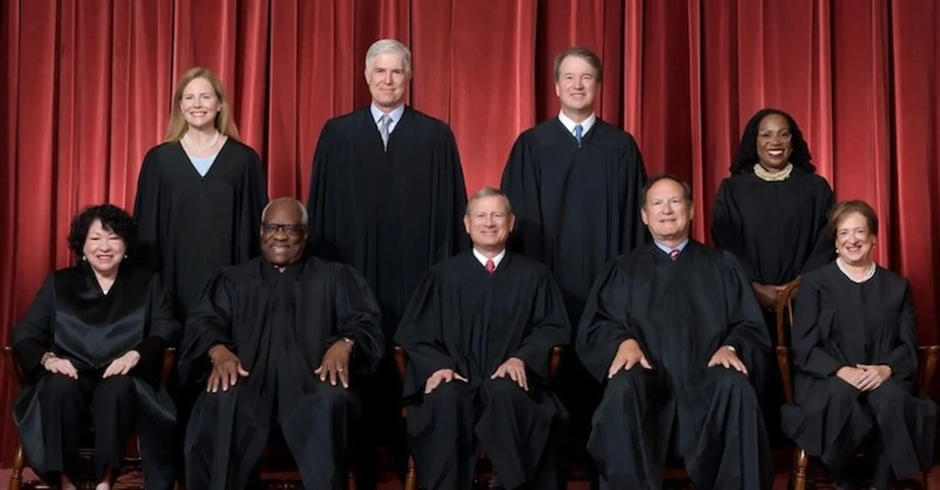
Chief Justice John Roberts and Justices Amy Coney Barrett and Neil Gorsuch joined the court’s three liberals in the majority.  Justices Brett Kavanaugh, Samuel Alito and Clarence Thomas dissented.

(Via Politico) – […] “The President asserts the extraordinary power to unilaterally impose tariffs of unlimited amount, duration, and scope. In light of the breadth, history, and constitutional context of that asserted authority, he must identify clear congressional authorization to exercise it,” Roberts wrote, declaring that the 1977 law Trump cited to justify the import duties “falls short” of the Congressional approval that would be needed.

The ruling wipes out the 10 percent tariff Trump imposed on nearly every country in the world, as well as specific, higher tariffs on some of the top U.S. trading partners, including Canada, Mexico, China, the European Union, Japan and South Korea.

Several of those countries have entered trade agreements with the U.S. — and before the ruling indicated that they would continue to honor those agreements.

That is because the victory for the 12 Democratic-run states and small businesses that challenged Trump’s tariffs is expected to be short lived. The White House has signaled it will attempt to use other authorities to keep similar duties in place.

“We’ve been thinking about this plan for five years or longer,” U.S. Trade Representative Jamieson Greer told POLITICO in December. “You can be sure that when we came to the president the beginning of the term, we had a lot of different options”

“My message is tariffs are going to be a part of the policy landscape going forward,” Greer said. (read more)

Justice Thomas agrees with CTH prior position on the issue.  IEEPA grants the president the authority to regulate imports, and tariffs are a tool for regulation.

Despite this decision the tariffs will remain in place, perhaps using various authorities which have not been challenged as noted in the Kavanaugh dissent:

That said, with respect to tariffs in particular, the Court’s decision might not prevent Presidents from imposing most if not all of these same sorts of tariffs under other statutory authorities. For example, Section 122 of the Trade Act of 1974 permits the President to impose a “temporary import surcharge” to “deal with large and serious United States balance-of-payments deficits.” 19 U. S. C. §2132(a). Section 201 of the Trade Act of 1974 provides that, if the International Trade Commission determines an article is being imported in such quantities that it is “a substantial cause of serious injury, or the threat thereof, to the domestic industry producing an article like or directly competitive with the imported article,” the President may take “appropriate and feasible action,” including imposing a “duty.” §§2251(a), 2253(a)(3)(A). Section 301 of the Trade Act of 1974 authorizes the President through a subordinate officer to “impose duties” if he determines that “an act, policy, or practice of a foreign country” is “unjustifiable and burdens or restricts United States commerce.” §§2411(a)(c). Section 338 of the Tariff Act of 1930 permits the President to impose tariffs when he finds that “any foreign country places any burden or disadvantage upon the commerce of the United States.” §1338(d). And Section 232 of the Trade Expansion Act of 1962 authorizes the President to, after receiving a report from the Secretary of Commerce, “adjust the imports of [an] article and its derivatives so that such imports will not threaten to impair the national security.” §1862(c)(1)(a).

So the Court’s decision is not likely to greatly restrict Presidential tariff authority going forward. (pg, 63 dissent)

President Trump Gives Speech on the Economy from Rome, Georgia – 4:00pm Livestream


Posted originally on CTH on February 19, 2026 | Sundance 

President Trump travels to Rome Georgia today to deliver remarks on the economy from Coosa Steel Corporation. The anticipated start time is 4:00pm ETLivestream Links Below.

.

.

JD Vance, Marco Rubio and Steve Witkoff Deliver Remarks During Board of Peace Inaugural Meeting


Posted originally on CTH on February 19, 2026 | Sundance

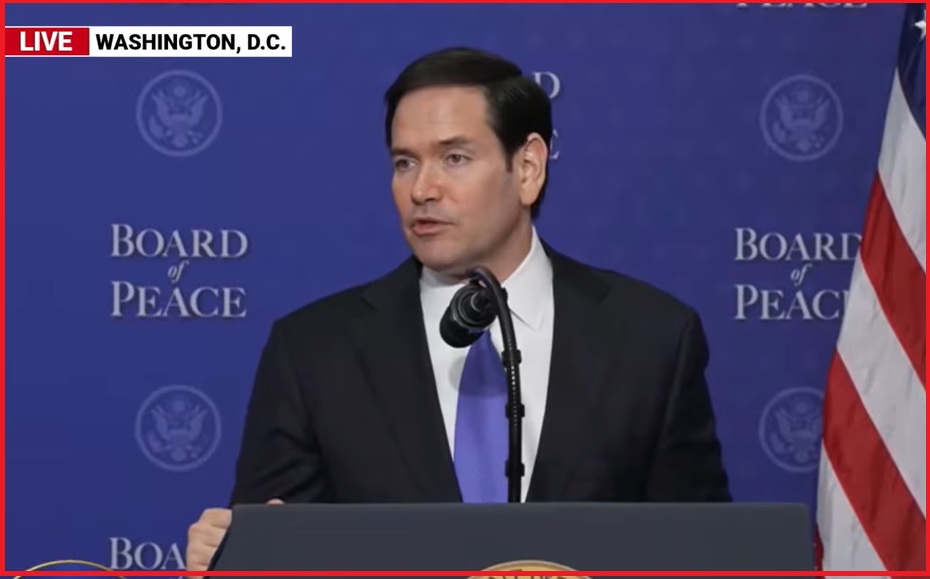
As the inaugural meeting of the Global Board of Peace gets underway, Vice President JD Vance, Secretary of State Marco Rubio and Special Envoy Steve Witkoff delivered speeches at the beginning of the Board of Peace session in Washington DC. WATCH:

.

President Trump Participates in a Washington DC Assembly of the Board of Peace


Posted originally on CTH on February 19, 2026 | Sundance 

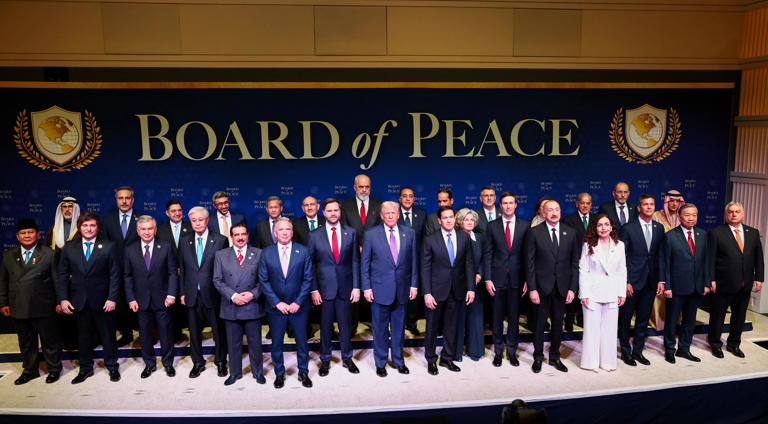
President Trump invited global leaders to Washington DC to participate in the inaugural meeting of the Board of Peace. U.S President Donald Trump, U.S. Vice President JD Vance, U.S. Secretary of State Marco Rubio, Special Envoy Steve Witkoff and Jared Kushner all delivered remarks during the event.

Participating countries include Albania, Argentina, Armenia, Azerbaijan, Belarus, Bulgaria, Cambodia, El Salvador, Hungary, Indonesia, Kazakhstan, Kosovo, Mongolia, Pakistan, Paraguay, Uzbekistan, Vietnam, Israel, Saudi Arabia, Egypt, Qatar, Bahrain, Jordan, Kuwait, Morocco, Turkey and the United Arab Emirates.

The Vatican and Pope Leo rejected an invitation to participate, concerned the Global Board of Peace may overshadow the United Nations, and that would not be acceptable to the Catholic Church or the European Union. Full video of the event below:

.

Forlesia Cook Gives Passionate Defense of President Trump: “Get off his back, let the man do his job”…


Posted originally on CTH on February 19, 2026 | Sundance 

Forlesia Cook, a grandmother who lost her grandson to violence, delivered a brief and powerful testimonial supporting President Trump. Many naysayers, beyond just the DHS security issues, would be well-served to listen to her advice.

Mrs Cook spoke during a Black History Month reception at the White House, pushing back on claims that President Trump is racist. As noted by this passionate grandma, President Trump gave her a voice when others ignored her.

Cook’s 22-year-old grandson, Marty William McMillan Jr., was brutally murdered in cold blood in 2017 after meeting someone online. He left home to meet a woman he connected with on the Plenty of Fish dating app. He never came back. His remains were discovered months later on the side of a highway in Maryland, shot seven times {SOURCE}.

.

The full event video is included below.

Two-Hour Meeting in Geneva Between U.S., Ukraine and Russia Negotiators Ends with Not much Progress


Posted originally on CTH on February 18, 2026 | Sundance

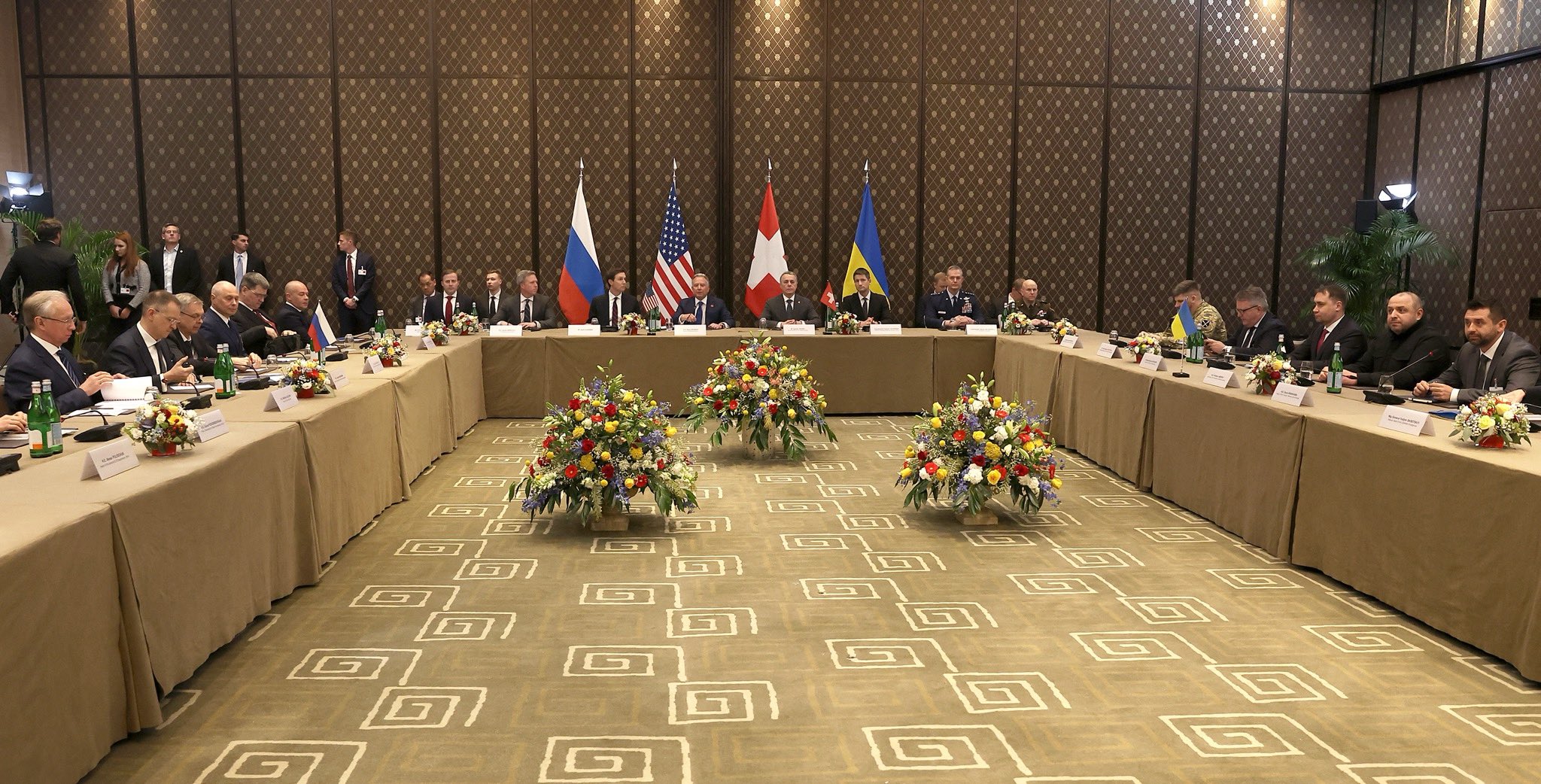
The U.S. mediating team met with Ukraine and Russia negotiators for the second day in Geneva, Switzerland.  Unfortunately, despite the high praise and customary diplomatic niceties spoken, there was not much progress.

There was, however, a rather remarkable accusation hurled by Russian media about uninvited British officials going to Geneva in order to conduct surveillance of the negotiations. Apparently, this is part of UK Prime Minister Keir Starmer’s efforts to retain maximum involvement and influence.

STEVE WITKOFF – “Today, at President Trump’s direction, the United States moderated a third set of trilateral discussions with Ukraine and Russia. Thank you to the Swiss Confederation for being gracious hosts for today’s meetings.

President Trump’s success in bringing both sides of this war together has brought about meaningful progress, and we are proud to work under his leadership to stop the killing in this terrible conflict. Both parties agreed to update their respective leaders and continue working towards a deal.” (source)

RUSTEM UMEROV (UKRAINE) – “In Geneva, the second day of trilateral negotiations has begun.

Consultations are taking place in working groups by areas within the political and military tracks. We are working on clarifying the parameters and mechanisms of the decisions discussed yesterday.

We are focused on substantive work. We will provide additional information on the results.” (source)

VIDEO BELOW Between Piers Morgan and Volodymyr Zelenskyy:

CHAPTERS:

00:00 Introduction and monologue
02:14 President Zelensky on the latest developments in Ukraine
08:13 Zelensky on breaking news over the trilateral meeting in Geneva
10:30 Zelensky: ‘We need European representatives’
14:50 Would Ukraine ever concede any territory for the Russians?
20:40 Zelensky’s view over Russia’s red lines involving NATO
25:55 Bill Clinton on dealing with Putin
35:19 Zelensky: “I don’t need all this historical shit!”
37:12 Would Zelensky authorise forces to kill Putin?
41:40 Zelensky on his relationship with America
46:57 Piers asks Zelensky is he trusts President Trump
50:04 Zelensky on the possibility of having free and fair elections following a 2-month ceasefire
53:54 Zelensky being voted the world’s favourite leader
01:03:00 Zelensky on Russia in the Winter Paralympics: “I don’t want to say it’s about money but it’s a dirty decision”
01:07:05 Zelensky on his relationship with his family
01:11:00 Piers’ monologue following his interview with President Zelensky

Strong Possibility of SCOTUS Ruling on President Trump IEEPA Tariffs – Friday, Tuesday or Wednesday


Posted originally on CTH on February 18, 2026 | Sundance 

The high court has indicated it will be releasing opinions on one or more of the previously argued cases on Friday February 20, Tuesday Feb 24, or Wednesday Feb 25.  The decision over tariffs triggered by President Trump using the International Emergency Economic Powers Act (IEEPA) is one of the decisions now considered highly likely to surface.

If the decision doesn’t come this Friday, a rather interesting situation unfolds.  The following week falls into the Tuesday Feb 24 State of the Union address.

Typically, several Supreme Court justices sit in front row of the House floor during the speech.  The decision could be released on the morning of the speech, or justices could actually sit in the audience – knowing the outcome and the morning after the State of the Union address, the ruling could be released.

Now, there is a possibility the ruling will not come out in this cycle, but that is diminishing possibility considering the length of time the Supreme Court has sat on this opinion.

The court knows the importance of this decision, and they obviously know the State of the Union speech is scheduled to be delivered on Tuesday the 24th.  This will be an interesting dynamic to watch unfold.

Dan Bongino Interviews FBI Director Kash Patel


Posted originally on CTH on February 18, 2026 | Sundance

Former FBI Deputy Director Dan Bongino is helping to spearhead a coordinated message campaign for President Trump as he returns to podcasting.  Bongino is hoping to fill the void for voices who speak positively about ongoing DOJ and FBI efforts and share information about ongoing Justice Department efforts.

Today, Dan Bongino interviews FBI Director Kash Patel.  At 01:08:36 of the video below, Kash Patel outlines some pending information that is likely to reach the headlines about the funding mechanisms behind Antifa.  I have prompted the video to the entire interview between Bongino and Patel. {Direct Rumble Link} – WATCH:

Interview with Kash Patel (Ep. 2455) – 02/18/2026

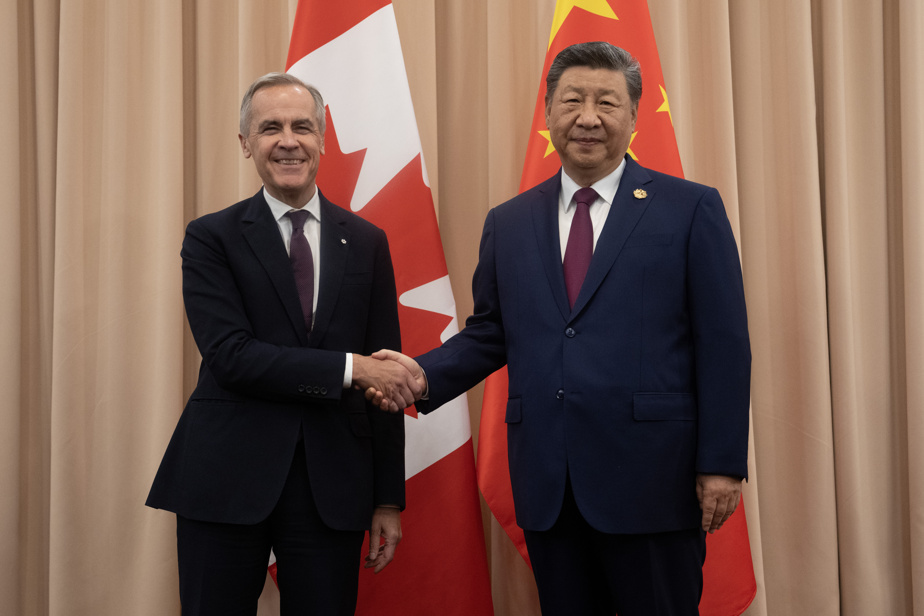
Canadian Prime Minister Pitching Global Trade Rules Agreement to Combat Trump – Connecting Trans-Atlantic to Trans-Pacific


Posted originally on CTH on February 17, 2026 | Sundance 

There is an awful lot to unpack in this seemingly obscure article talking about Canadian Prime Minister Mark Carney and a new trade approach he is pitching to Pacific/Asia and Atlantic/European nations. [Story Here]

Before getting to the substance of the outline, something important needs to be shared for context.

Do you remember the 2014, 2015 and 2016 top story conversations and debates over the Transpacific Partnership trade deal known as TPP?

You might also remember the Transatlantic Trade and Investment Partnership trade deal known as TTIP.

The TPP (Pacific) and TTIP (Atlantic) were two major multinational trade deals negotiated between 2013 and 2016. While both sparked plenty of debate, most of the spotlight was on the TPP, the Trans-Pacific Partnership.

Hillary Clinton was in favor of TPP as were most of the traditional republican field of candidates in ’15/’16.  However, Donald Trump was strongly against TPP and pledged to exit out of any negotiations and scrap the U.S. participation if he was to win the 2016 election.  Some of you may begin to remember this.

Donald Trump agreed with our position, that TPP was being falsely sold as a beneficial 12-nation massive trade agreement between the USA and pacific rim countries including Australia and Southeast Asia nations.

With the history of NAFTA behind us, we could see two major issues with TPP:  #1: It was structured with a back door to let China into the deal. And #2) it was created to ensure the USA remained a “service driven economy.”

Supporters of TPP and TTIP claimed this multinational trade deals would create smooth supply chains and align on ‘rules of origin.’ They believed TPP would benefit companies and lead to cheaper products. Critics, however, argued that the agreements were designed to exploit the U.S. consumer market and prevent the country from ever regaining a strong manufacturing base.

I share those reminders to set up the big 800-lb gorilla question.

If the TPP was such a great trade deal for all parties involved, why didn’t the group finalize it after the USA withdrew? It’s been a decade, so why haven’t the TPP nations completed their trade agreement?

The honest answer reveals the undiscussed lie.

Both TPP and TTIP were constructed and designed to keep exploiting the U.S. consumer market. That’s it. That was the entire purpose of TPP (Asia) and TTIP (Europe). Corporations and lobbyists like the U.S. Chamber of Commerce wrote the TPP language to maximize corporate profits. That was the purpose of it.

Take the U.S.A. out of the TPP trade agreement and the purpose/benefit no longer exists.  Without the host, there is no need for a feeding agreement between parasites.  That’s why a decade has passed and TPP/TTIP went nowhere.

All of that said, suddenly with President Trump positioning to eliminate the USMCA trade agreement, Canadian Prime Minister Mark Carney wants to go back to the TPP/TTIP “Rules of Origin” trade framework in order to create an insurance policy against the end of the trilateral USMCA trade agreement.

Now, here is where it gets really interesting.  There is no way for Canada to remain in the USMCA and simultaneously commit to a trade agreement with different rules of origin.   This means that for Carney to accomplish what he’s reportedly aiming for, the dissolution of the UMCA would already need to be in the works.

USMCA Article 32.10 – Non-Market Country FTA (key provisions):

“A Party intending to negotiate a free trade agreement with a non-market country shall inform the other Parties at least three months prior to commencing negotiations and, upon request, provide information regarding the objectives of those negotiations.

A Party that enters into a free trade agreement with a non-market country shall provide the other Parties with the full text of the agreement prior to signing.

If a Party enters into a free trade agreement with a non-market country, the other Parties may terminate this Agreement on six months’ notice and replace it with a bilateral agreement.” [SOURCE]

The Canadian proposal violates the central tenet of the USMCA. Carney’s proposal can only move forward if the Canadian government has already accepted that the USMCA trade agreement will come to an end.

WASHINGTON – The European Union and a 12-nation Indo-Pacific bloc are opening talks to explore proposals to form one of the largest global economic alliances, multiple people with knowledge of the talks told POLITICO.

Canada is spearheading the discussions after Prime Minister Mark Carney called on middle powers to buck trade war coercion last month, days after Trump threatened to raise tariffs on Denmark’s European allies if it didn’t cede Greenland.

Ottawa is “championing efforts to build a bridge between the Trans-Pacific Partnership [CPTPP] and the European Union, which would create a new trading bloc of 1.5 billion people,” Carney told world leaders and the global business elite in Davos.

The middle powers are taking action. The EU and CPTPP are starting talks this year to strike an agreement to intertwine the supply chains of members like Canada, Singapore, Mexico, Japan, Vietnam, Malaysia and Australia with Europe.

It would bring nearly 40 nations on opposite sides of the globe closer together with the aim of reaching a deal on so-called rules of origin.

These rules determine the economic nationality of a product. A deal would allow manufacturers throughout the two blocs to trade goods and their parts more seamlessly in a low-tariff process known as cumulation. (read more)

In practice, a multilateral trade agreement with “Rules of Origin” involving many countries doesn’t really matter to the USA since our trade deals are bilateral. Other parties can set whatever terms they like, but if they want access to the U.S. market, that’s where we lay out our own specific terms on a one-to-one basis.

The same thing cannot be said for Canada, who is intentionally planning to remain a deindustrialized economy.  Canada will import component goods for assembly in Canada, but they will not fabricate much.

Prime Minister Mark Carney is strategically planning to keep Canada dependent on cheap foreign imports.

President Trump Announces Board of Peace Meeting February 19th at the Donald J Trump Institute of Peace


Posted originally on CTH on February 16, 2026 | Sundance


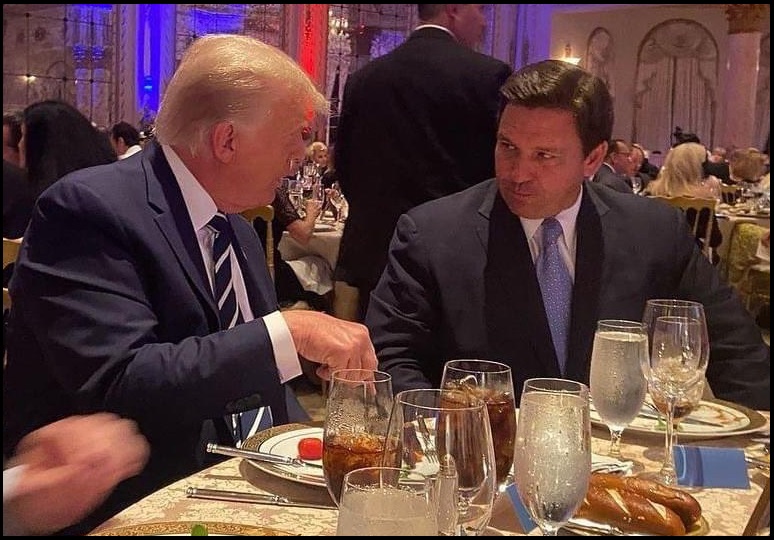
An interesting thing happened last weekend, President Trump went golfing with Florida Governor Ron DeSantis. {SOURCE} Simultaneously, President Trump released the following statement from his Truth Social account.

(Via Truth Social) – “The Board of Peace has unlimited potential. Last October, I released a Plan for the permanent end to the Conflict in Gaza, and our Vision was unanimously adopted by the United Nations Security Council. Shortly thereafter, we facilitated Humanitarian Aid at record speed and secured the release of every living and deceased Hostage.

Just last month, two dozen distinguished Founding Members joined me in Davos, Switzerland, to celebrate its official formation, and present a bold Vision for the Civilians in Gaza, and then, ultimately, far beyond Gaza — WORLD PEACE!

On February 19th, 2026, I will again be joined by Board of Peace Members at the Donald J. Trump Institute of Peace in Washington, D.C., where we will announce that Member States have pledged more than $5 BILLION DOLLARS toward the Gaza Humanitarian and Reconstruction efforts and have committed thousands of personnel to the International Stabilization Force and Local Police to maintain Security and Peace for Gazans.

Very importantly, Hamas must uphold its commitment to Full and Immediate Demilitarization. The Board of Peace will prove to be the most consequential International Body in History, and it is my honor to serve as its Chairman.” PRESIDENT DONALD J. TRUMP

I said a few weeks ago that I would not be surprised to see President Trump announce the appointment of Ron DeSantis to be the Chief Executive Officer of the Board of Peace.  DeSantis’ executive experience in combination with his relationship with Israel functionally makes him a good fit.  Just a guess.

DeSantis is a political animal without much of a career path that does not lean heavily on his governorship. Ron and Casey DeSantis are the republican equivalent of Bill and Hillary.

DeSantis will need a job after his term expires this year.  The traditional path would be to take a job as the CEO within a major company, make money then launch for the 2028 campaign later in 2027.

Keep watching this…