Posted originally on CTH on March 20, 2026 | Sundance | 7 Comments
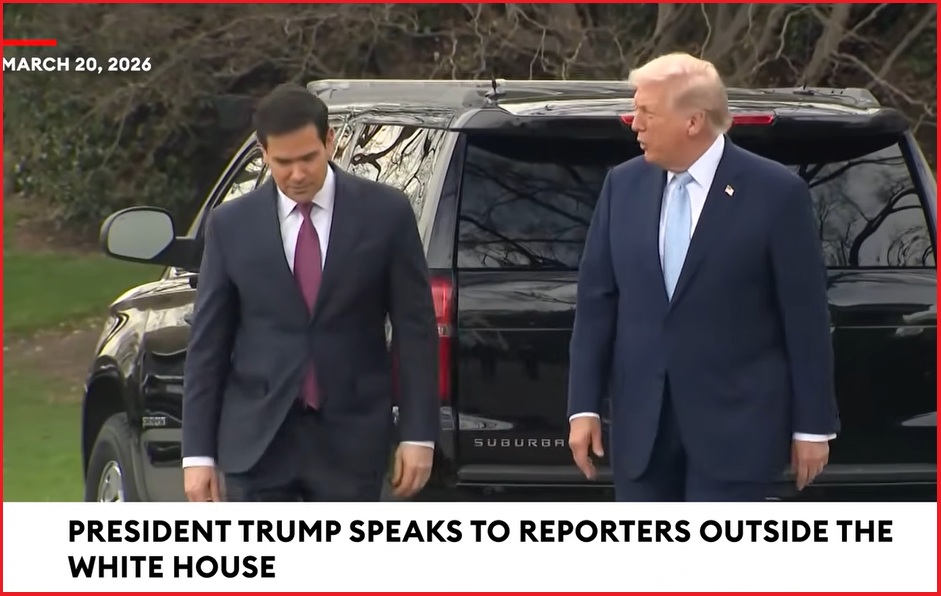
President Donald Trump and Secretary of State Marco Rubio take questions from the media in front of the White House.
.
.

Posted originally on CTH on March 20, 2026 | Sundance | 7 Comments
President Donald Trump and Secretary of State Marco Rubio take questions from the media in front of the White House.
.
.
Posted originally on CTH on March 20, 2026 | Sundance
In the next few days, much more about the overall investigative review underway in Florida will begin to surface. The review has been led by USAO Jason A. Reding Quiñones, a federal prosecutor for the Southern District of Florida.
As with all investigations containing multiple players and actors, the first investigative information is extracted from testimony by those furthest away from the principals, yet closest to the granular details of the events being reviewed. The questioning then goes upstream, using information collected to assembly more specific questions as the principal players are approached.

The widest concentric circles are questioned first. Then, using the responses and investigative information from that circle, the questioning and inquiry goes to the next inner circle of participants. The information is assembled, and more pointed questions are then targeted to the next inner circle; the process continues until the core is questioned.
Beginning with the end in mind, the biggest challenge is knowing what the correct questions are to ask of those who were closest to the corrupt activity (the outer circle). Background research is critical – CTH of value. From those pointed questions you get answers. Then, next level of more specific questions get focus, and so on, and so on.
FLORIDA – Former FBI Director James Comey has been subpoenaed in connection with a wide-ranging investigation being run by a Trump-appointed federal prosecutor in Florida, two sources familiar with the matter told NBC News on Thursday.
The probe, which focuses on an earlier investigation into Russian interference in the 2016 presidential election and other prosecutions related to President Donald Trump, is being led by Jason A. Reding Quiñones, the U.S. attorney for the Southern District of Florida. The sprawling probe has been dubbed a “grand conspiracy” investigation by Trump allies.
An attorney for Comey did not have an immediate comment, while Quiñones’ office did not immediately respond to a request for comment. (read more)
Please remember, there are two distinct and different aspects to the overall conspiracy and timeline.
There was surveillance of the 2016 Republican candidates by contractors working on behalf of the FBI who was institutionally collaborating with the Clinton campaign; that is known as “Spygate.” There was then an FBI operation to target and eliminate the threat represented by the 2016 GOP primary winner, Donald Trump; that is known as “Russiagate.”
‘Spygate’ and ‘Russiagate’ are two distinctly different corrupt pathways that eventually merged due to common interests.
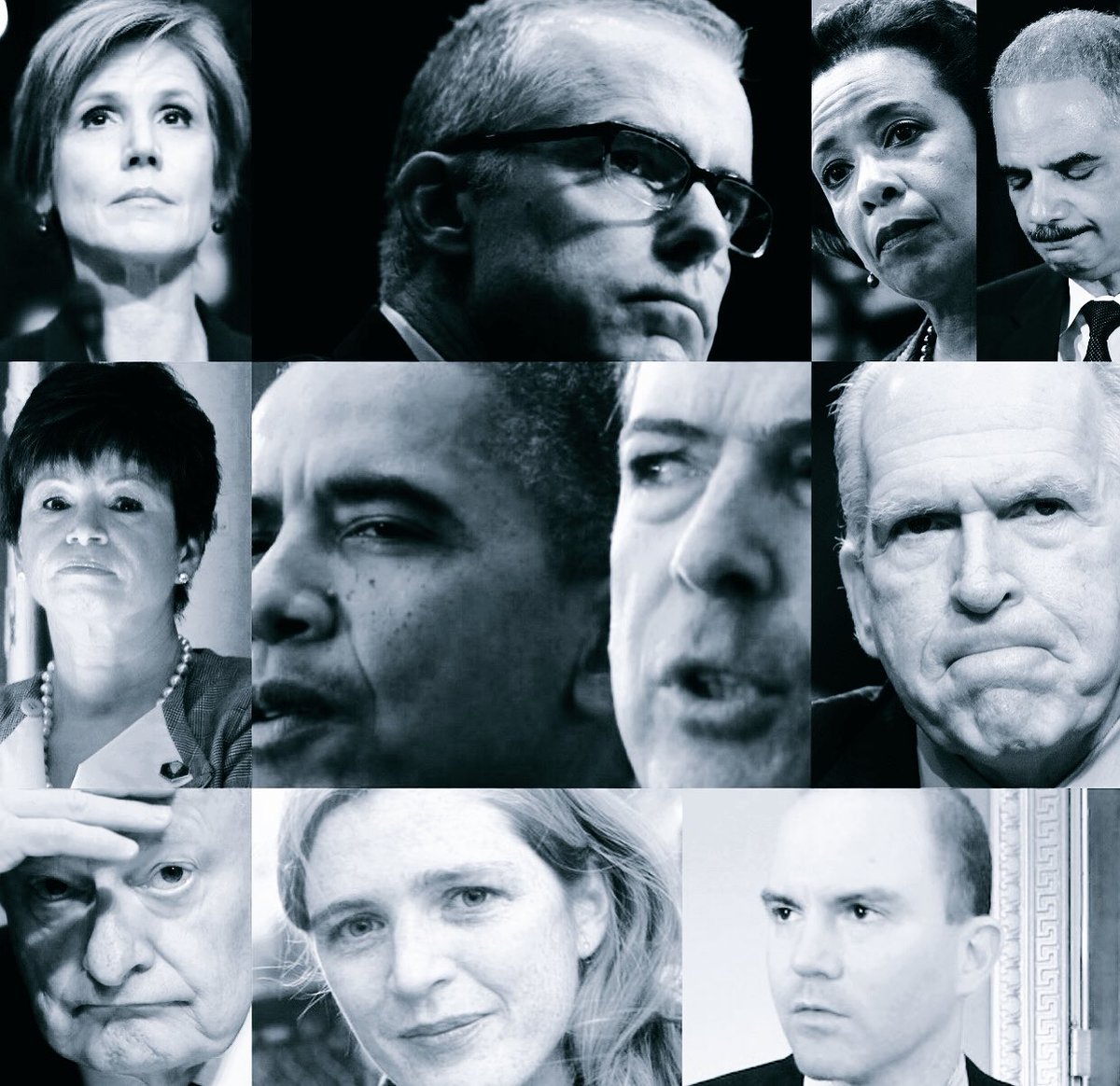
The Mueller investigation, an extension of Crossfire Hurricane (Russiagate) was used by Obama-era politicians and internal government officials as a mechanism to block President Trump from executing a divergent foreign policy. The primary policy of focus was to protect the Iran deal.
Based on mounting evidence, a pattern in other international activities and U.S. participants, the Obama-Clinton-Kerry Iranian deal likely included a mechanism for return payments to U.S. officials following the release of billions in frozen Iranian asset funds and the loosening of sanctions – (ie. pallets of cash). Qatar was the mediator/broker.
However, it is speculated, perhaps being currently evidenced, that return payments to the Obama team contained a timing mechanism and the quid-pro-quo payments were stopped after President Trump withdrew from the Iran deal and re-instituted sanctions.
Thus, a much larger background context exists for why the totality of the U.S. government and Intelligence Community opposed President Donald Trump. Is it all about the money? Time will tell. Current events may not be coincidental.
♦ September 2015 – Billionaire Paul Singer contracts with Glenn Simpson and Fusion GPS for opposition research on candidate Donald Trump during 2016 GOP presidential primary. Simpson prior work during time at Wall Street journal serves as reference.
♦ November 2015 – Simpson hires Nellie Ohr to assist on Trump project. Ohr was CIA open-source analyst. Revelations by NSA compliance officer in April 2016 point to November 2015 as origin of multiple unauthorized searches of NSA database.
♦ December 2015 – Mrs. Ohr contacts Christopher Steele, submitting data for cross-reference with sources and seeking collaboration on Trump project. Ohr using ham radio license as independent operator.
♦ January – March 2016 – GOP Presidential primary ongoing. Candidate Donald Trump wins majority of primary delegates from all early state contests. Momentum for Donald Trump becomes significant. Cruz, Kasich, Rubio final group along with Trump. Late March, Paul Singer contacts Glenn Simpson to cancel opposition research. NSA compliance officer notifies NSA Director Mike Rogers about unauthorized use of database by “contractors.” Rogers asks for full review.
♦ April 2016 – April 16, 2016, NSA compliance officer reports to Director Rogers of approximately 10,000 database searches, using “same identifiers” over “multiple dates.” Rogers responds by shutting down contractor access and blocking all FISA-702(17) “about” queries. April 17, 2016, Glenn Simpson wife, Mary Jacoby, visits White House. Glenn Simpson pitches preassembled oppo-research file on Trump to Clinton Team. Clinton lawyer Michael Sussmann takes over payments and signs contract with Fusion for continued work.
♦ May/June 2016 – Chris Steele constructing dossier on Donald Trump, submissions returned to Fusion GPS, Nellie Ohr and husband Bruce Ohr, #4 in DOJ-NSD. External contacts made to Trump orbit by foreign officials from Australia (Downer), U.K (Mifsud) and Cyprus. Trump campaign continues presidential primary victories. Trump enlists Paul Manafort as delegate manager for upcoming RNC convention.
♦ July 2016 – FBI opens official investigation of Trump for Russia collusion, predicated on contact from Australian Ambassador about non-existent claim Trump group receiving Clinton/DNC emails from Russian hackers. Attempted FISA application rejected.
♦ August 2016 – CIA Director John Brennan informs Harry Reid of Clinton oppo-research effort known colloquially as Trump-Russia. Former Acting CIA Director Mike Morrell, long time Clinton ally, publishes article in New York Times claiming Russians want Trump victory. Hillary proclaims vast Russian conspiracy theory.
♦ September 2016 – Director Brennan directly informs White House, President Obama, Susan Rice, Lisa Monaco of Clinton oppo-research effort known colloquially as Trump-Russia. Fusion GPS, Glenn Simpson and Michael Sussmann identified as sources for organizing oppo-research Steele Dossier.
♦ October 2016 – Steele Dossier assembly used by DOJ-NSD in FISA application against Trump campaign official Carter Page. Through April 2016, FBI used Carter Page as undercover employee in case against Russian Evgeny Buryakov; now October 2016, FBI claims Carter Page is official “agent of a foreign government” to gain FISA warrant. Steele Dossier serves as replacement for Woods File supporting Title-1 search warrant.
♦ November 2016 – Donald Trump wins 2016 presidential election defeating Hillary Clinton and stunning world. Clinton campaign blames Russians for her loss. Accuses Trump of colluding with Russia. Trump campaign and transition team now under Title-1 full counterintelligence surveillance by FBI via Page FISA warrant.
♦ December 2016 – Joint Analysis Report released by intelligence community, claiming Russians were involved in attempting to influence 2016 election. All Trump campaign and transition members under full physical and electronic surveillance. All communication intercepted. Officially FBI Director James Comey denies President-elect Trump under investigation.
♦ January 2017 – Intelligence Community Assessment (ICA) released by Obama administration claiming confidence Russia had attempted to interfere in the 2016 election. Sanctions imposed by Obama; Russian diplomatic corps expelled. FISA surveillance warrant resubmitted with no new context and renewed by FISC without question.
♦ February 2017 – National Security Advisor Michael Flynn under fire for talking to Russian ambassador in December during Christmas holiday. Flynn wrongly accused of discussing possible policy changes and not to worry about Obama sanctions. Full court press by FBI and DOJ to leak information to media about Trump under FBI counterintelligence investigation. James Comey leaks information to friend, Columbia University Professor Daniel Richman as intermediary to media. Washington Post publish article citing FBI intercept of Flynn-Kislyak phone call.
♦ March 2017 – • On 16th HPSCI Chairman Devin Nunes releases information to public about Obama presidential daily briefing containing information about Trump-Russia collusion investigation and surveillance of Trump campaign by FBI. First public indications that “wires were actually tapped.” • On 17th copy of FISA application delivered from FISA Court to Senate Select Committee on Intelligence Vice-Chairman Mark Warner. Shortly after 4pm, Warner instructs SSCI Security Director James Wolfe to leak the FISA application to media. Wolfe transmits 82 pictures to Politico journalist Ali Watkins via encrypted phone images [FISA application 83 pages with one blank page]. FISA application returned to courier FBI Agent Brian Dugan. • March 20th, James Comey testifies to HPSCI during open hearing admitting for first time publicly that President Trump, and his entire administration, is under official FBI counterintelligence investigation. Comey claims no information previously given to congressional oversight due to “sensitivity of the matter.” Attorney General Jeff Sessions forced to recuse.
♦ April 2017 – Absent AG, and without confirmed DAG, interim and acting DAG Dana Boente receives request for FISA renewal from FBI Director James Comey. On same day FISA application is renewed for second time, journalist Ali Watkins -having ownership of illegal and leaked unredacted FISA application- writes first details of FISA application, then transfers employment to New York Times for senior role in Trump-Russia reporting. FBI continues leaking details of investigation to media. Mid April Deputy Attorney General Rod Rosenstein arrives to take all responsibilities related to AG Sessions recusal.
♦ May 2017 – Early May, Deputy AG Rosenstein has phone call with FBI Director James Comey, “What do you want me to do – wear a wire?” Mid-May, Rosenstein takes former FBI Director Robert Mueller to White House for oval office meeting with President Trump. Next morning Mueller returns to White House to pick up cell phone he accidentally left in Oval Office. Later in afternoon, President Trump fires FBI Director James Comey. Following day Rosenstein talks to Mueller (3X) and coordinates meeting. Robert Mueller appointed Special Counsel; Mueller chief deputy Andrew Weissmann assumes organization of investigation.
♦ June 2017 – Weissmann assembles Crossfire Hurricane team into Special Counsel. WFO FBI Agent Brian Dugan begins to suspect SSCI leak of FISA application based on media reporting. Agent Dugan requests and receives first warrant for cell phone records of SSCI Security Director Wolfe and NYT journalist Ali Watkins. June 29th Andrew Weissmann requests renewal of Carter Page FISA warrant to continue surveillance of administration. Application renewed.
♦ July 2017 – While conducting investigation of internal FBI conduct during Clinton email investigation, Office of Inspector General Michael Horowitz discovers inappropriate activity within FBI investigative team. Horowitz informs DAG Rosenstein and SC Robert Mueller about Lisa Page and Peter Strzok compromise. Weissmann removes Page and Strzok to avoid scrutiny by OIG of special counsel team. President Trump White House Counsel Don McGahn discovers all 2016/2017 transition team emails, phone records, electronic communications and devices have been given to Andrew Weissmann by General Services Administration as requested by the FISA authority carried by special counsel.
♦ August 2017 – DAG Rod Rosenstein officially expands Special Counsel investigative scope as requested by Andrew Weissmann to include five specific targets: Paul Manafort, Michael Flynn, Carter Page, George Papadopoulos and Walid Phares [targeting angle = FARA violations, per DOJ-NSD authority] Mr. Phares organized interview between Donald Trump and Egyptian President Abel Fattah al-Sisi during 2016 campaign. FISA surveillance authority used to collect evidence of financial transactions, banking records, travel, communication and full Title-1 counterintelligence operations deployed against targets.
♦ September 2017 – FBI Agent Brian Dugan conducting surveillance of Senate Select Committee on Intelligence (SSCI) and communication between SSCI Vice-Chair Mark Warner and Chris Steele representative Adam Waldman. Dugan intercepts Waldman side of conversation for investigative file. Weissmann and 18 lawyers, 50 FBI agents and 200 staff continue Trump targeting operations, continue full Title-1 authorized FISA surveillance, and outline cases against Manafort (financial crimes/FARA), Flynn (FARA), and Papadopoulos (lying to investigators).
♦ October 2017 – FISA search warrant used by Mueller/Weissmann special counsel expires. Weissmann requests expanded scope memo from Rosenstein to target Michael Flynn Jr for use against his father, Michael Flynn. Cases against Manafort and Papadopoulos ongoing. Media 24/7 with Trump-Russia collusion. Meanwhile, FBI Agent Brian Dugan first approaches SSCI Security Director James Wolfe about FISA leak and media contacts. Agent Dugan forced by USAO Jessie Liu to inform SSCI Chair Burr and SSCI Vice-Chair Warner about ongoing leak investigation.
♦ November 2017 – All prior surveillance and assembled evidence used via Title-1 search warrant authority, in combination with FARA and threats against Mike Flynn Jr, used to coerce a guilty plea by Michael Flynn (Nov 31). House Intelligence Committee now seeking to review FISA warrant, DOJ and FBI denying access. Political debate between Chairman Devin Nunes and ranking member Adam Schiff ongoing.
♦ December 2017 – AFTER securing Flynn guilty plea, immediately first reports of Lisa Page and Peter Strzok text messages released. Within days, Bruce Ohr identified, demoted twice, former Crossfire Hurricane investigation now being scrutinized. Nellie Ohr’s name surfaces. Chris Steele and Fusion GPS now being reviewed with increased suspicion. Testimony to Senate by Fusion GPS founder Glenn Simpson “accidentally” leaked by SSCI member Dianne Feinstein (keep stories straight, motive). Nunes memo -vs- Schiff memo battle for media narrative. Internal details of prior FBI targeting operation begin to surface with evidence showing sketchy behavior. FBI Agent Brian Dugan confronts SSCI Security Director James Wolfe with evidence against him, Wolfe admits to leaks. SSCI fire Wolfe.
♦ January 2018 – Apex for Special Counsel. Brian Dugan assembles file against Wolfe submits for grand jury indictment. Due to file touching on Trump-Russia issues, Wolfe criminal activity file submitted to Special Counsel Weissmann for review. Nunes memo released and discussed.
♦ February 2018 – Text messages between SSCI Vice-Chair Warner and Chris Steele layer Adam Waldman surface. Andrew Weissmann organizes a press conference for Deputy AG Rod Rosenstein to conduct, announcing indictments of 17 Russians and entities for 2016 election interference; this is timed as Trump departs for summit with Russian President Vladimir Putin.
♦ March 2018 – Public begins to absorb totality of FBI (mis)conduct in the Trump targeting operation. The information war is in full swing. Narrative battles are throughout media.
♦ April 2018 – Leaks of the FISA application against Carter Page now under scrutiny. A criminal referral from OIG toward FBI Deputy Director Andrew McCabe for lying to INSD investigators about his media leaks.
♦ June 2018 – The criminal indictment of SSCI Security Director James Wolfe unsealed and made public.
♦ July 2018 – The DOJ informs the FISC that despite issues surfacing about the predicate of the FISA warrant they authorized against Carter Page for being an agent of a foreign power, everything was ok. A week later, the DOJ then releases to the public the first FISA Title-1 search warrant ever seen, …
♦ December 2018 – Despite the DOJ refusing to indict James Wolfe for leaking the Top-Secret Compartmented Intelligence Carter Page FISA application, and after the guilty plea was entered for lying to investigators, and while the Judge was considering Wolfe’s sentencing, in December of 2018, after the midterm election and under penalty of perjury, the USAO in Washington DC swears to the Judge in the case that James Wolfe leaked the FISA application.
Cover up much?

During congressional testimony today, Texas Representative Dan Crenshaw, a man who is leaving congress at the end of this term having lost his primary race, took the opportunity to question FBI Director Kash Patel about FISA-702.
As most are aware the reauthorization of FISA-702 has a deadline if mid-April this year, and there is a great deal of background debate surrounding it. Apparently, Dan Crenshaw wants to ensure the renewal is successful.
Crenshaw begins his defense by asking a very specific question to FBI Director Kash Patel about President Trump’s Crossfire Hurricane targeted and whether FISA-702 was related to that investigation. Here it is important to remember that the NSA database was exploited in 2016 (Spygate) that ended with the Title-1 FISA warrant (Russiagate).
Both are correct in that FISA-702 was not the legal underpinning for the Carter Page FISA warrant, ultimately targeting Donald Trump. However, conveniently omitted in the questioning is the original surveillance of the 2016 GOP candidates from November 2015 through April 2016 that did involve exploitation of the database under the justification that FISA-702 creates. WATCH:
These are not “myths” Mr Crenshaw. You are both correct that there is no “authority granted under 702” to conduct surveillance. However, in 2016 conducting surveillance using 702 as a justification is what took place.
The collection of American citizen metadata does factually take place. At this point no-one denies it.
That data is then stored in a searchable database, a library of U.S. citizen data colloquially known as the “NSA database”.
Within the NSA database that metadata collection creates, there is a process to search it based on “identifiers.”
The collection of data, the database itself, as well as the search functioning therein, is part of the toolbox for FISA-702 surveillance.
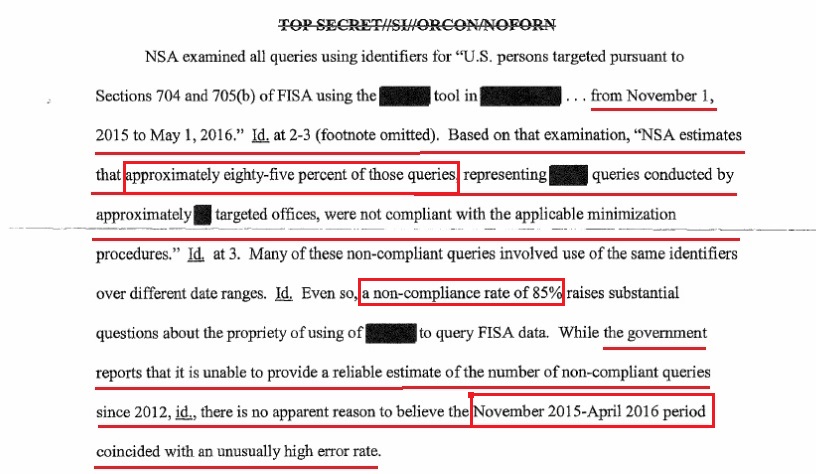
The historic problem is not that “authorities granted under FISA-702” were/are used to conduct surveillance; but rather the search of the NSA collection database was done, illegally and frequently, for non-authorized reasons. The capability to conduct those search queries is maintained by justifying the need for FISA-702.
The historic searches and domestic surveillance were done by exploiting the NSA database, for a reason and purpose that is not authorized and has nothing to do with FISA-702. THAT’S THE PROBLEM.
The existence of the U.S. citizen data itself creates the opportunity to search it. The legal justification to search that database is done under the auspices of FISA-702; however, that’s not the issue. The issue is that searches of the NSA database are done by government officials and government contractors for reasons that have absolutely nothing to do with FISA-702.
As a consequence, it’s the collection that creates the problem. Not the legal process for searching it. As long as the database exists there will be unlawful intrusions into it for domestic and/or political surveillance.
If FISA-702 did not exist, the quasi-constitutional justification for the wholesale collection of U.S. citizen metadata no longer exists. It really is that simple.
There is ZERO justification for the capture of U.S. citizen data by the government. The capture itself violates the Fourth Amendment. The only way the government can justify the capture of U.S. Citizen data is if there is some quasi-constitutional or national security reason for it.
Take away “702”, and the data collection collapses; ANY “incidental” search of the database then loses any plausible legal justification. 702 is the camel’s nose under the tent.
Only one case has ever pushed into the sphere of challenging this unconstitutional exploitation. A 2025 decision in the U.S. v. Hasbajrami case in Brooklyn, New York, where Eastern District Judge LaShann DeArcy Hall identified the misuse of FISA-702 “backdoor searches” regarding defendant, Agron Hasbajrami.
Hasbajrami plead guilty to charges of attempting to provide material support to a terrorist organization, alleging that he intended to travel to the Federally Administered Tribal Area of Pakistan, where he expected to join a terrorist organization, receive training, and ultimately fight against U.S. forces and others in Afghanistan and Pakistan. However, after his guilty plea, while he is serving time in prison, prosecutors admitted some of the evidence against him came as a result of privacy violations, unlawful FISA-702 searches.
Hasbajrami sought to have the evidence against him thrown out on 4th amendment grounds (fruit of the poisoned tree) and withdraw his guilty plea. The Second Circuit Court of Appeals denied Hasbarjami’s blanket evidence suppression motion for the exclusion of all FISA Section 702 collection in his case but did not weigh in on whether the warrantless Section 702 database queries were constitutional, instead remanding the case back to Judge Hall for a review of that question.
Judge DeArchy Hall received the case again and reviewed all of the government motions against the request to suppress the evidence. What results is a very well-constructed explanation and opinion of how FISA-702 was misused in the case [SEE 60-pg Opinion HERE].
The judge determined that U.S. government officials did factually violate the technical rules and procedures for the use of FISA-702 searches, and the DOJ should have gone to court to obtain a warrant to look at Hasbajrami’s private communication.
In essence, yes, the 4th amendment protections of Hasbajrami were violated. However, the issue of overturning the resulting evidence becomes a matter of legal distinction.
The defendant, who admitted guilt (twice) did not claim the evidence was a result of misuse or a wrongful approach in searching the NSA’s library, from which FISA-702 search results are determined (a structural flaw in the defense motion). Instead, the defendant filed a suppression motion on the issue of his 4th amendment rights being violated.
The judge opinion holds that the FBI’s Section 702 queries violated the Fourth Amendment; however, the court ultimately denied the defendant’s motion to suppress the resulting evidence on separate grounds.
The value in the ruling by Judge Hall, is a few fold:
First, it is an excellent review of the FISA-702 origin and all of the constitutional arguments that surround the controversial law.
Second, the ruling clearly shows that FISA-702 searches are currently being used unlawfully and continually by government officials.
Third, the ruling clearly shows how “backdoor” 702 searches are violations of the Fourth Amendment. [Albeit in this case, of no value to the argument put forth by Hasbajrami.]


The ruling essentially underpins the reality that government officials are using their access to the complete library within the NSA collection and storage database to conduct searches of U.S. communication that removes the constitutional protections of the 4th amendment.
Mr Agron Hasbajrami was ensnared by this surveillance process and admitted his guilt thereafter.
However, the issue is not Hasbajrami’s intent, or even his guilt. The issue that surrounds us is this constant surveillance state and the tens-of-millions of searches that are done on the private papers of American citizens.
In essence we have a domestic surveillance state looking for suspect people who are operating against the interests of government.
Mr. Hasbajrami was caught wanting to join a terrorist organization. However, as we have witnessed in the cold and brutal reality of the J6 roundup, a “terrorist organization” may well be defined as your local “patriot group” or “parent’s advisory committee.”
Back to Patel’s testimony. By obfuscating the use of FISA-702 in Crossfire Hurricane, Patel is focusing on the Title-1 surveillance warrant that created “Russiagate” and entirely ignoring the targeting of Donald Trump that took place in 2015 and 2016 through the contractor exploitation of the NSA database; that’s “Spygate.”
Patel and Crenshaw, much like the entire DC apparatus, need to ignore the Obama-era surveillance system, the political exploitation of the NSA database, in order to ensure they can hang onto the FISA-702 tool.
If the general public realized all of their data was stored on searchable government databases, they would likely reject it. However, the rejection of the data storage would eliminate the ability to search it under the sketchy justification of 702.
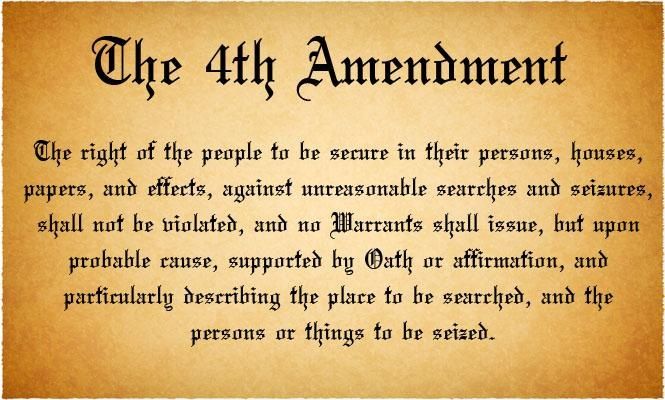
Representative Elise Stefanik is a strong supporter of Israel and has concerns about current narratives swirling around the politicization of Intelligence Community information to shape anti-Israel sentiments. Part of that collective effort is a not-so-subtle effort to remove DNI Gabbard from her position by questioning her loyalties. A considerable segment of Washington DC wants to return to a more Dan Coats style DNI.
As a tenured member of the House Permanent Select Committee on Intelligence (HPSCI), Mrs. Stefanik used her time during the congressional testimony of Gabbard, Ratcliffe and Patel to confirm the Trump administration policy toward the IC to remove all political interests. WATCH:
.
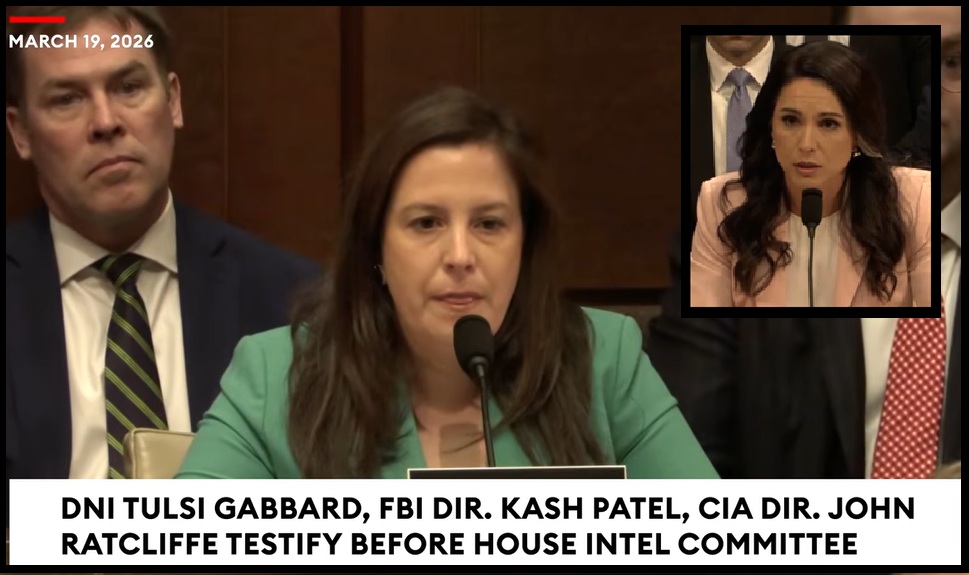
In the political horse racing analogy, the stable of Peter Thiel has taken major hits recently as the stable of Larry Ellison is gaining considerable influence. However, it’s a steeplechase and anything can happen.
Peter Thiel <-> Elon Musk <-> Larry Ellison
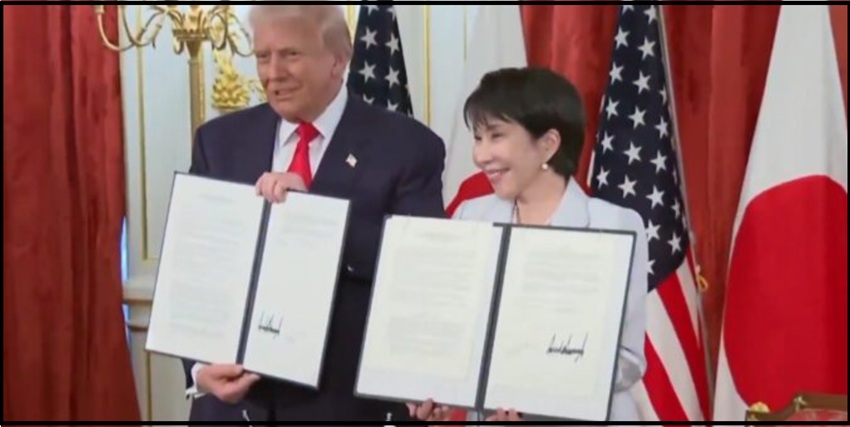
Today, President Donald Trump holds a bilateral meeting with Japanese Prime Minister Sanae Takaichi at the White House. The anticipated start time is 12:00pm ET with Livestream Links Below:
UPDATE: VIDEO ADDED
.
.
.
.
Director of National Intelligence Tulsi Gabbard, FBI Director Kash Patel, CIA Director John Ratcliffe and other national security officials testify on threats to the U.S. amid the Iran war before the House Permanent Select Committee on Intelligence (HPSCI).
The testimony begins at 10:00am ET, with livestream links below:
.
.
The South Pars/North Dome field is a natural-gas condensate field located in the Persian Gulf. It is by far the world’s largest natural gas field, with ownership of the field shared between Iran and Qatar. According to the International Energy Agency, the field holds an estimated 1,800 trillion cubic feet of in-site natural gas.
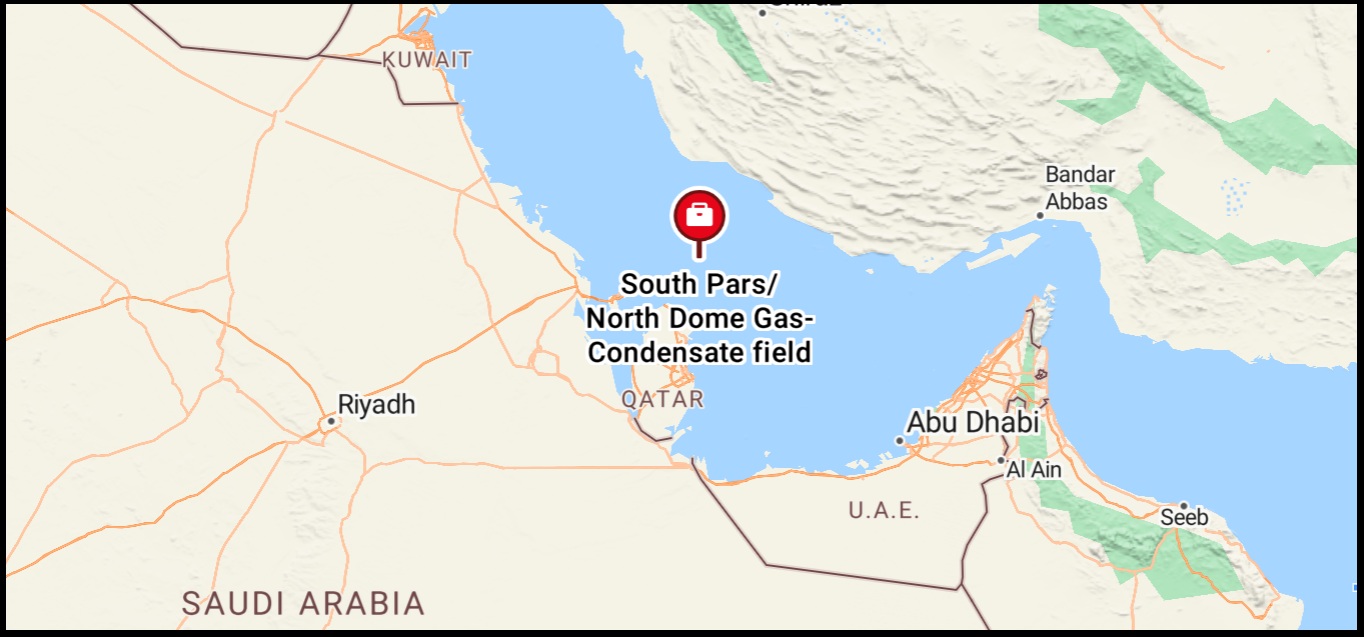
President Trump is not happy about Israel’s unilateral decision to strike at the Pars gas field; however, pay attention to what Trump diplomatically describes as the motive:
[TRUTH SOCIAL] – “Israel, out of anger for what has taken place in the Middle East, has violently lashed out at a major facility known as South Pars Gas Field in Iran. A relatively small section of the whole has been hit. The United States knew nothing about this particular attack, and the country of Qatar was in no way, shape, or form, involved with it, nor did it have any idea that it was going to happen.
Unfortunately, Iran did not know this, or any of the pertinent facts pertaining to the South Pars attack, and unjustifiably and unfairly attacked a portion of Qatar’s LNG Gas facility.”
“NO MORE ATTACKS WILL BE MADE BY ISRAEL pertaining to this extremely important and valuable South Pars Field unless Iran unwisely decides to attack a very innocent, in this case, Qatar – In which instance the United States of America, with or without the help or consent of Israel, will massively blow up the entirety of the South Pars Gas Field at an amount of strength and power that Iran has never seen or witnessed before.
I do not want to authorize this level of violence and destruction because of the long-term implications that it will have on the future of Iran, but if Qatar’s LNG is again attacked, I will not hesitate to do so. Thank you for your attention to this matter.”
The joint economic relationship over the Pars gas field is part of the connective tissue between Iran and Qatar and underpins why Qatar has always been an intermediary for all issues of deconfliction that surround the U.S and Iran.
Factually Qatar was always the mediator, and within that mediation relationship the USA used Qatar as the bank to receive the confiscated funds Obama delivered when he lifted sanctions. There are hundreds of examples of the USA using Qatar as the intermediary for Iran policy, just as there are hundreds of citations and examples available for Qatar supporting the Muslim Brotherhood.
It is only recently, very recently, like only in the era of Donald Trump as U.S. President, when Qatar started pulling away from a very friendly relationship with Iran. So recently, that for the past 15-months, since long before it even made sense, CTH has been calling attention to this weird Qatar -vs- Israel division dynamic within USA domestic politics.
Then this happens….
The United States and Israel are working together on the targeting and military objectives of Operation Epic Fury. But, for some unknown reason the United States did not know Israel was going to strike the Qatar Pars gas field? Interesting.
President Trump assigns the motive for the Israeli attack as “out of anger for what has taken place in the Middle East.” However, Israel has another, perhaps opportunistic motive, worth billions.
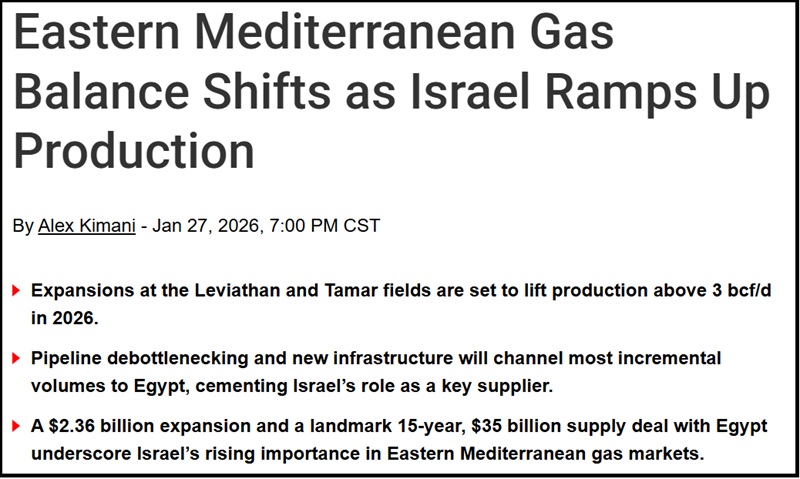
[SOURCE]
Israel is set to achieve record natural gas production in 2026, with expansion projects in the Leviathan and Tamar fields expected to push total output above 3 billion cubic feet per day (cfd) for the first time ever. According to the experts, the Chevron (NYSE:CVX) operated fields are expected to add a combined 600 million cfd in the coming months, with the bulk of the extra gas piped to Egypt after the removal of bottlenecks in the export pipeline network. Israel’s gas output in 2025 is estimated to have dropped slightly from a record 2.587bn cfd achieved in 2024 as fields were shut-in during Israel’s conflict with Iran in June.
Chevron and its partners NewMed Energy (OTCPK:DKDRF) and Ratio Energies (OTCMKTS:RTEXF) confirmed a $2.36 billion Final Investment Decision (FID) in January 2026 to expand the Leviathan field, increasing production capacity from 12 bcm to roughly 21 bcm annually. The expansion involves drilling three additional offshore wells, installing new subsea infrastructure and enhancing the platform’s processing capabilities. The expansion aims to significantly increase natural gas exports to Egypt and Jordan. The companies managed to boost production at the Tamar field to increase capacity from approximately 1.1 billion cubic feet per day (bcf/d) to 1.6 bcf/d in 2025.
Debottlenecking of the export pipeline network is enabling higher volumes to reach Egypt, helping to fill their domestic supply gapsKey projects, including upgrading the Ashdod-Ashkelon pipeline and constructing the Nitzana pipeline (expected to be operational by 2028). The projects are designed to boost exports to Egypt and Jordan by 1.8 billion cubic feet per day. The 46-km offshore natural gas Ashdod–Ashkelon pipeline is undergoing upgrades scheduled for completion in the current year to handle increased capacity. Approximately 55% of the gas flows through the offshore Eastern Mediterranean Gas (EMG) pipeline, while 45% is transported via the Arab Gas Pipeline through Jordan.
[…] The Leviathan and Tamar gas fields are key Israeli offshore natural gas assets, with current capacities of approximately 12 billion cubic meters (BCM) per year and 11 BCM per year, respectively. Both fields are expanding, with Leviathan projected to increase to 21–23 BCM annually to meet rising regional demand and exports. Still, the Middle East oil giants have potential for higher gas production. (SOURCE)
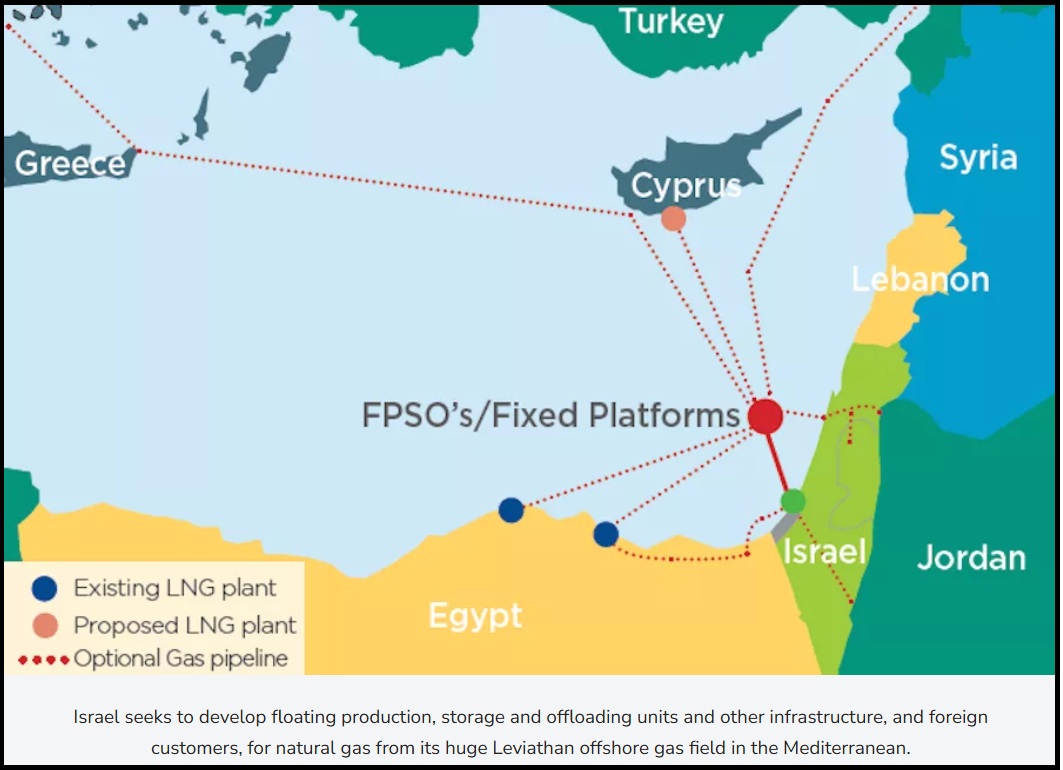
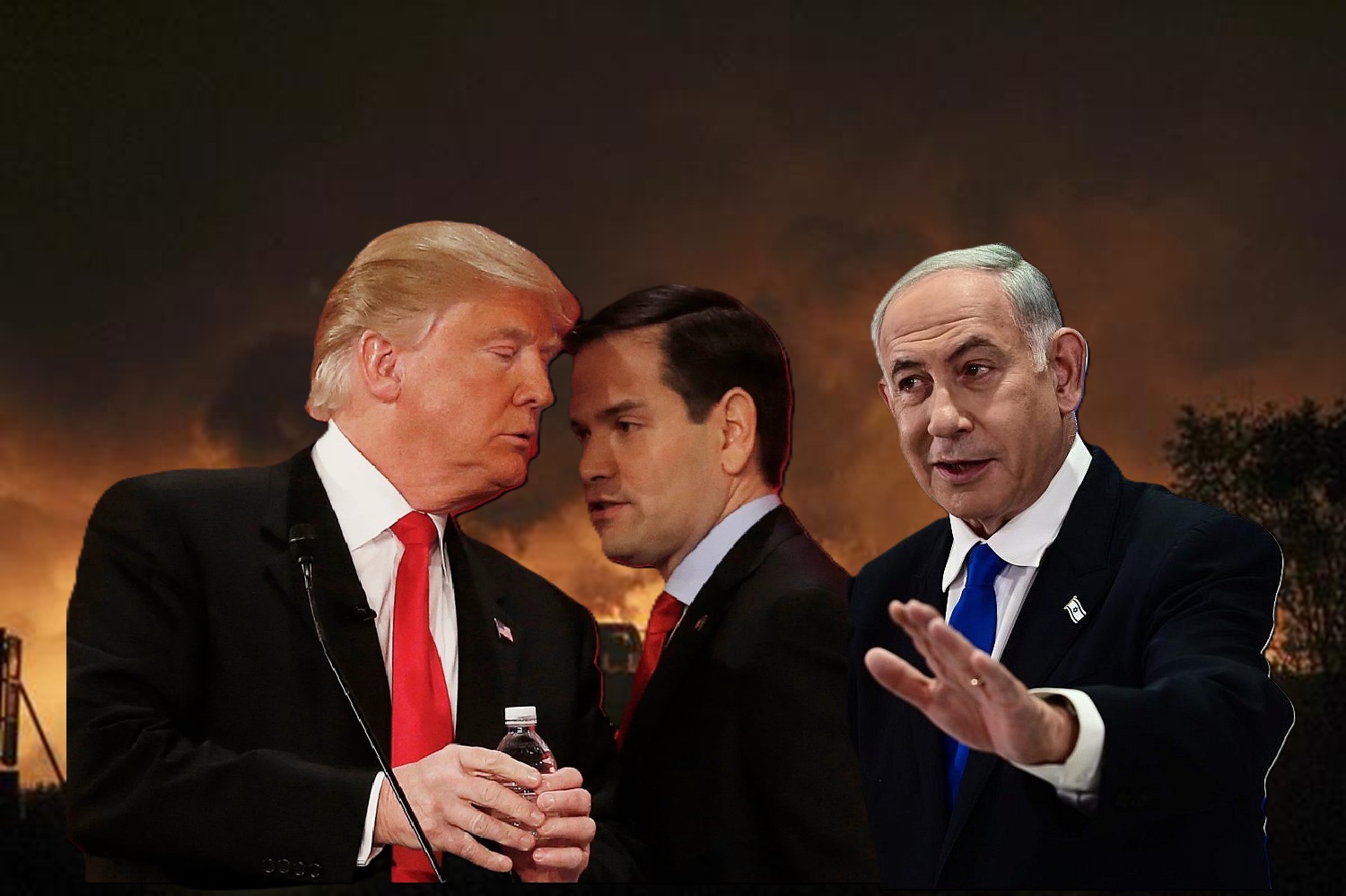
President Trump is not happy with this one Bibi.
We’ll keep watching…
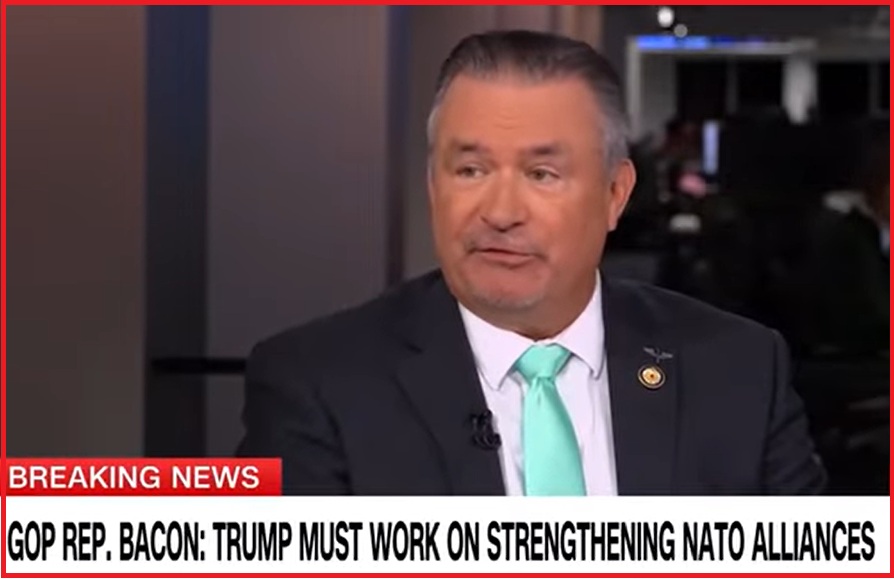
Representative Don Bacon is openly and publicly in opposition to every President Trump policy. Bacon is a ‘professional republican’, a traditional DeSantis republican.
Appearing on CNN the Nebraska Republican says if President Trump were to leave NATO, “there would be a civil war in the republican caucus.” WATCH (prompted):
.
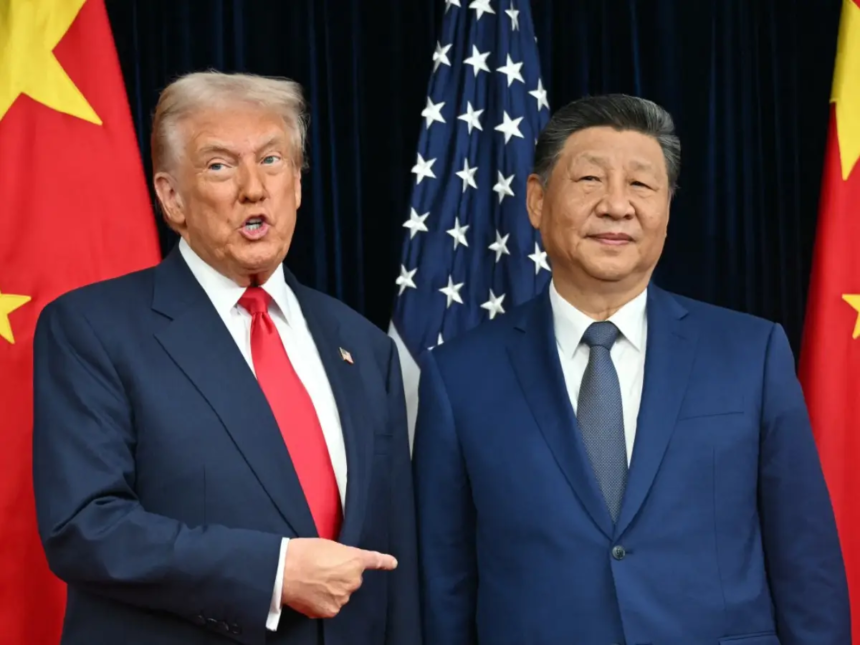
This is very interesting because Treasury Secretary Scott Bessent and U.S. Trade Representative Jamieson Greer went to Paris last weekend to meet with their Chinese counterparts and organize the deliverables for the upcoming summit between Chairman Xi Jinping and President Trump.
At roughly the same moment that Bessent and Greer were meeting with China, President Trump sent out the Truth Social message requesting Chinese ships to come to the Strait of Hormuz and escort their oil. I said at the time of Trump’s message that Chairman Xi was going to have to negotiate through this issue carefully because it was very obvious that President Trump was not going to maintain any diplomatic pretenses when he met with Chairman Xi.
Yesterday, during the St Patrick’s Day celebration President Trump said the summit was cancelled. “We’re resetting the meeting and it looks like it’ll take place in about five weeks,” President Trump told reporters in the Oval Office in an event with Micheál Martin, the Irish prime minister.
Today, Press Secretary Karoline Leavitt confirmed there is no scheduled replacement date for the cancelled summit.
.
Keep watching. Bessent and Greer didn’t go to Paris for nothing.
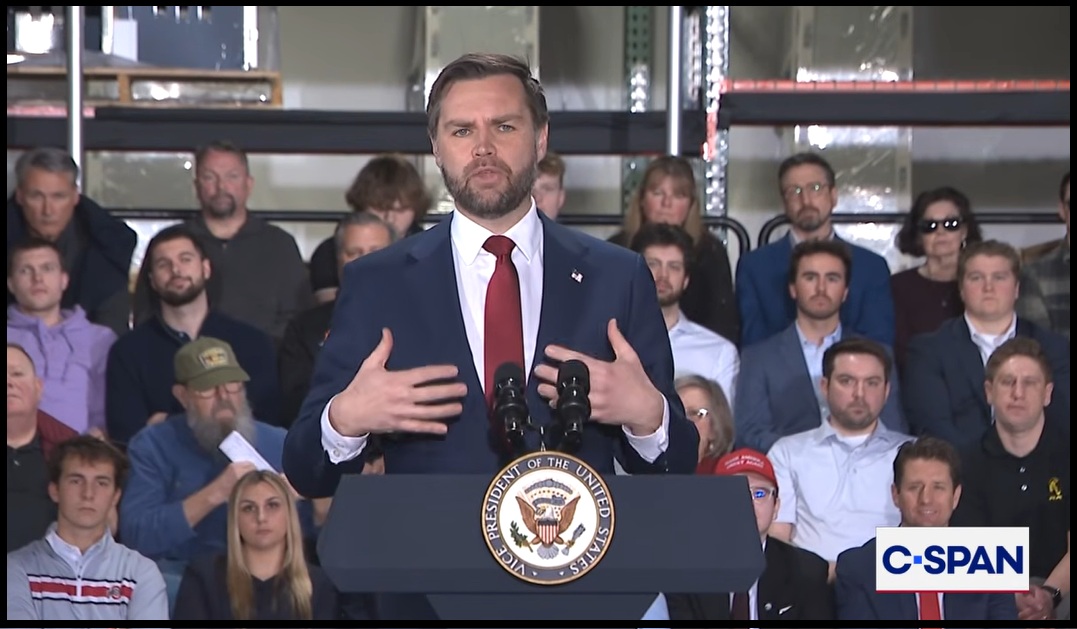
This could have been a challenging question for Vance to answer because both Vance and Kent are funded and supported by the same ideological donor, Billionaire Peter Thiel. [FYI Tucker is also in this stable] Thiel is a libertarian minded billionaire within Big Tech and not necessarily an ideological fan of Donald Trump or MAGA. Palantir is one of Thiels companies with CEO Alex Karp running it. Palantir is a major contractor within the national security apparatus.
JD Vance adroitly navigates the answer by saying once the President makes a decision, the role of all subordinates is to get behind that decision, and never openly compromise your leadership.
“It’s one thing to have a disagreement of opinion…That said, whatever your view is, when president of the United States makes a decision, it’s your job to help make that decision as effective and successful as possible…If you are on the team and you can’t help implement the decisions of his administration, he has the right to make those decisions, then it’s a good thing for you to resign. And I think that’s exactly right. It’s fine to disagree, but once the president makes a decision, it’s up to everybody who serves in his administration to make it as successful as possible.” WATCH:
.
It’s obvious Team Thiel didn’t agree with the policy decision to attack Iran, that’s more of a neocon Team Ellison/Adelson policy move. However, JD Vance is very correct in how the Team Thiel horses within the administration should respond to the decision in trying to make it as successful as possible.
Thiel <-> Musk <-> Ellison
I have created this site to help people have fun in the kitchen. I write about enjoying life both in and out of my kitchen. Life is short! Make the most of it and enjoy!
De Oppresso Liber
A group of Americans united by our commitment to Freedom, Constitutional Governance, and Civic Duty.
Share the truth at whatever cost.
De Oppresso Liber
Uncensored updates on world events, economics, the environment and medicine
De Oppresso Liber
This is a library of News Events not reported by the Main Stream Media documenting & connecting the dots on How the Obama Marxist Liberal agenda is destroying America
Australia's Front Line | Since 2011
See what War is like and how it affects our Warriors
Nwo News, End Time, Deep State, World News, No Fake News
De Oppresso Liber
Politics | Talk | Opinion - Contact Info: stellasplace@wowway.com
Exposition and Encouragement
The Physician Wellness Movement and Illegitimate Authority: The Need for Revolt and Reconstruction
Real Estate Lending
 Centinel2012