Posted originally on CTH on March 5, 2026 | Sundance
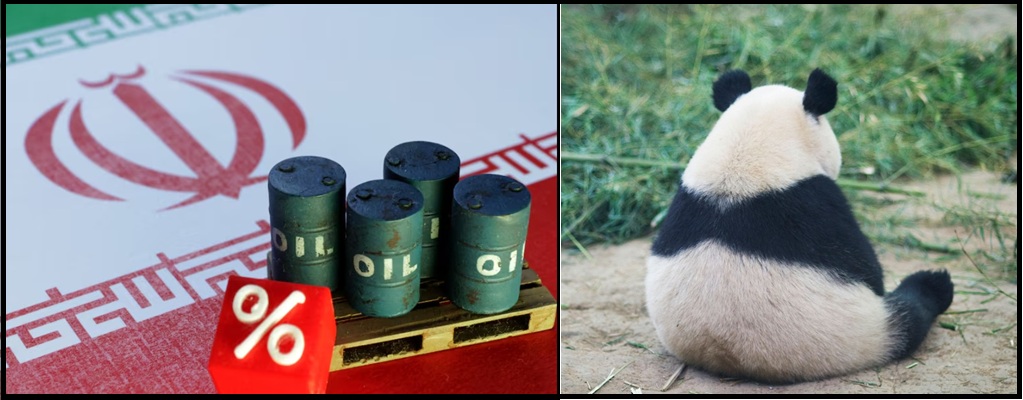
I’m working on a deep explainer for the behavior of China as it relates to ongoing U.S. strategic military operations. More to come soon. In the interim, Carl Higbie from Newsmax outlines how China is spending domestically inside the USA in order to try and stimulate opposition to the Iran confrontation. WATCH:
Posted originally on CTH on March 5, 2026 | Sundance
Sometimes you have to sip coffee slowly, while taking in the landscape.
About a month ago President Donald J Trump bombed Caracas, engaged the U.S. military with a direct firefight against Venezuela military & security forces, then snatched regime dictator Nicholas Maduro out of the country to face criminal charges in the United States.
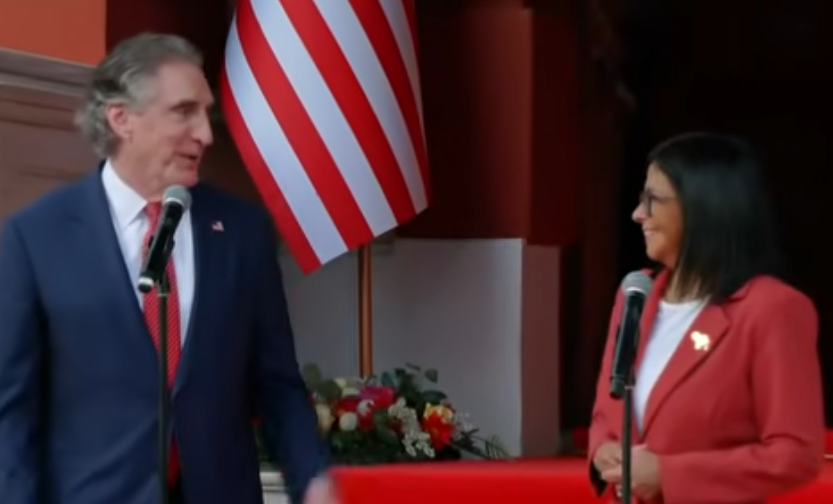
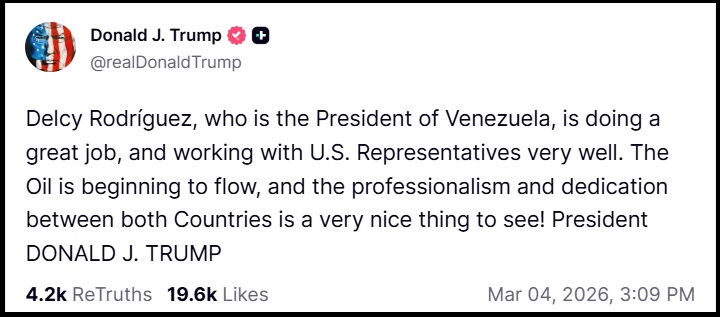
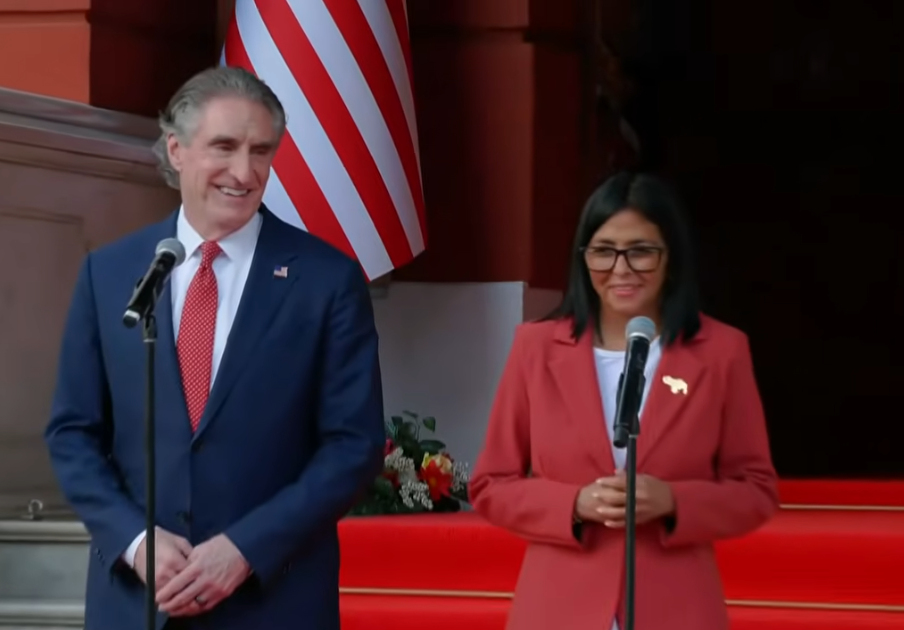
Yesterday, Maduro’s replacement, President Delcy Rodriquez, stood on the steps to the Venezuela presidential office and publicly thanked Interior Secretary Doug Bergum for the kindness and support of President Donald Trump.
That reality represents a level of hemispheric ‘ultimate boss’ that boggles the mind. But wait, it gets better. There’s video (prompted):
Before going further to current events, let us remind ourselves of a few details.
Sandwiched between the Venezuela Maduro operation and the recent Operation Epic Fury in Iran, approximately three weeks ago, Gen. Dan Caine, chairman of the Joint Chiefs of Staff, and Defense Secretary Pete Hegseth convened a gathering in Washington of all the defense chiefs and senior military officials from 34 Western Hemisphere countries.
As most of you will remember, securing the national security of the entire Western Hemisphere, was outlined in the national defense strategy document [SEE HERE] released by President Trump. In addition to setting the priorities for the United States focus, the report details the Trump administration perspective on the world as broken down into specific regions. The report is a brutally honest review of the current state of geopolitical benefits, risks and threats as they pertain to vital U.S. interests. The report outlines a critically renewed focus on the Western Hemisphere.
Now, back to Secretary Bergum’s visit.
At the same time as Interior Secretary Bergum is meeting with key government and private sector partners to discuss strategic mineral development (ie. deconflict dependency on China via independent development), oil production for U.S. hemispheric security (Iran output offsets), Venezuela announced the transfer of 1,000 kilos (more than a ton) of gold reserves for sale on the U.S. market {SOURCE}.
Venezuela needs stability. Hemispheric Boss President Trump wants Venezuela to have stability. Venezuela needs dollars and both the coordinated sale of Venezuela oil and Venezuela gold (47 tonnes in strategic reserve) will provide those dollars to retain stability and seed economic growth projects.
This coordinated approach secures the economic future of Venezuela and simultaneously secures the energy security of the Western Hemisphere while geopolitical operations continue in other regions, like the confrontation with Iran.
In essence, President Trump is isolating the Western Hemisphere from collateral economic damage that is likely to happen as the U.S. begins to take down the leading sponsors of global conflict. As things are in flux, the close and controlled partnership with Venezuela can offset/mitigate a lot of chaos.
While the ongoing Iran confrontation happens in the middle east, and in combination with the priority of the National Security Strategy, President Trump then convenes a meeting of hemispheric leaders in Florida this weekend.
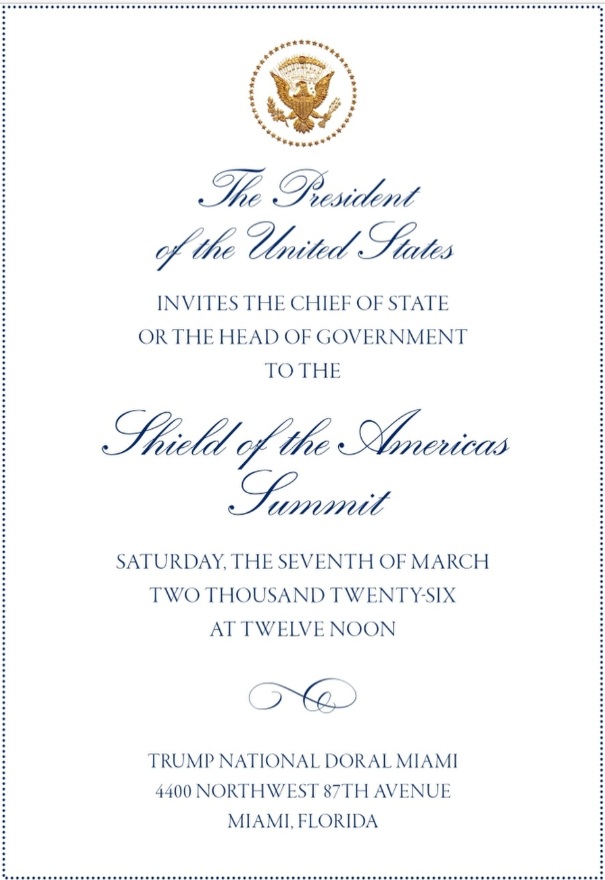
The Latin-America meeting in Doral is being called the “Shield of the Americas Summit.” The Trump administration has made it a priority to assert dominance over the Western Hemisphere, where China previously built influence through massive loans and expansive trade.
Yesterday, White House Press Secretary Karoline Leavitt announced President Trump will host heads of state from “Argentina, Bolivia, Chile, Costa Rica, the Dominican Republic, Ecuador, El Salvador, Honduras, Panama, Paraguay, Trinidad and Tobago, and maybe some others as well.”
So, let’s put it all together.
President Trump proactively secured the border, targeted narcotraffickers, confronted narcoterrorists, targeted Mexican drug cartel leadership, leveraged the DOJ to indict regional actors, pushed China out of control in the Panama Canal, took out Nicholas Maduro, took control of Venezuela oil production – both for the security of the U.S. and benefit of the Venezuelan people, removed the discounted oil benefit for China and reasserted stability in the Western hemisphere.
Then, with all that in place, he turned toward Iran…. but, proactively planned for a ‘Shield of the Americas Summit’ before the Iran operation began and scheduled it while Operation Epic Fury continues.
Jumpin’ ju-ju bones. That outline and timeline is not supposition; it is what took place.
And, yeah, we just watched “interim” Venezuela President Delcy Rodriquez react to what she is witnessing happening all around her.
Accepting all of this, I would not be in the least surprised to see President Rodriquez in Doral this weekend.
This my friends, is a level of strategic boss maneuvering beyond anything we have ever witnessed before.
[…] – “Interior Secretary Doug Burgum landed in Venezuela on Wednesday to begin talks about a potential rare earth minerals partnership, just weeks after the U.S. arrested former Venezuelan President Nicolás Maduro.
FOX Business exclusively joined Burgum on the trip. President Donald Trump‘s administration views Venezuela’s untapped resources as a potential alternative to relying on China for critical minerals, FOX Business has learned.
While in Venezuela, Burgum will also help expand the relationship between U.S. oil companies and the Venezuelan government. The secretary will meet with the current Venezuelan President Delcy Rodríguez to continue the growing relationship between the two countries.
Burgum is the first member of Trump’s Cabinet to leave the country since the U.S. launched Operation Epic Fury against Iran on Saturday.” (read more)
Posted originally on CTH on March 4, 2026 | Sundance
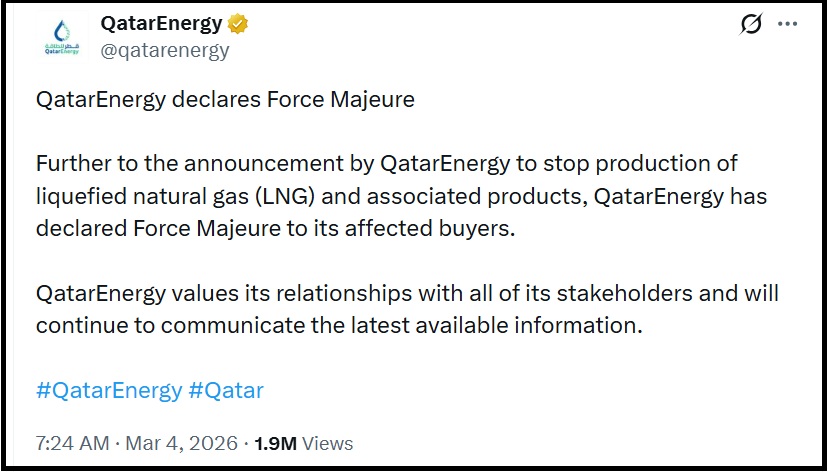
Force Majeure is a common clause in contracts which essentially frees both parties from liability or obligation when an extraordinary event or circumstance beyond the control of the parties, such as a war, strike, riot, crime, epidemic, or sudden legal change prevents one or both parties from fulfilling their obligations under the contract.
People would be well advised to wait a few days when announcements are made before jumping to immediate conclusions. The announcement by Qatar Energy of a force majeure notification did not originate from Qatar’s inability to produce contractual LNG supplies…..
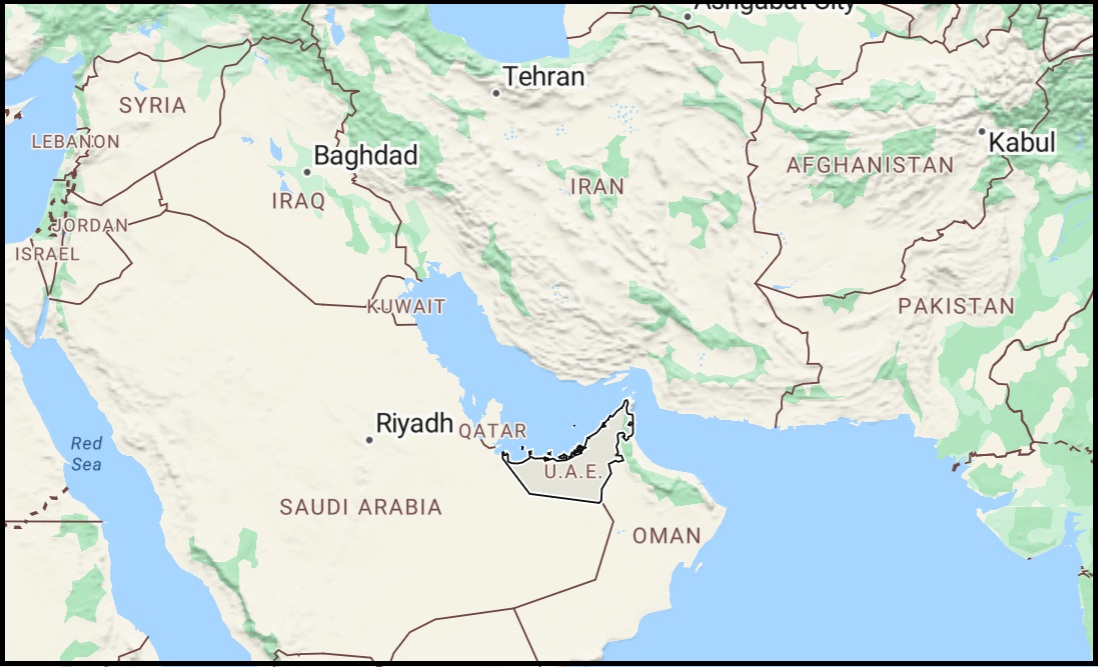
…. two days prior to this announcement, India’s top gas importer Petronet LNG Ltd issued a force majeure notice to Qatar Energy and local buyers because its LNG tanker ships were unable to reach the Ras Laffan load port due to the crisis in the Middle East. Without ships arriving to take the LNG Qatar Energy cannot keep producing.
Qatar Energy operates 14 liquefied natural gas (LNG) trains with a total annual production capacity of 77 million tonnes {SOURCE}. If ships don’t reach the terminals, there’s no need for Qatar Energy to keep pumping and liquifying from well heads. It’s a downstream issue.
Bahrain made the same announcement for their refined aluminum exports {SOURCE}. Indonesian company Chandra Asri made the same announcement for petrochemicals {SOURCE}. Chevron made the same announcement two days ago after Israel shut down the Leviathan natural gas field {SOURCE}. Thus, we see the ramifications for the entire region around the Iran conflict zone and the downstream destinations (Asia and Europe) for energy products therein.
Dutch shipping company Maersk has also suspended operation for cargo container ships cancelling all bookings between the Indian subcontinent—India, Pakistan, Bangladesh and Sri Lanka—and the Upper Gulf. {SOURCE} German shipping group Hapag-Lloyd made the same decision.
These are not decisions being made due to maritime insurance or reinsurance rates or availability. These are decisions being made by private corporations that go beyond their actuarial risk. They simply don’t want to operate in a region where there is the potential for loss of life or cargo.
This is not solely an insurance issue and people should pause before offering analysis that only considers the financial aspect.
MAERSK -Maersk announced on Wednesday that it is temporarily suspending most cargo reservations in and out of Iraq as security worries mount throughout the Gulf.
The business said that the ban applies to shipments involving many regional nations, including the UAE, Oman, Kuwait, Qatar, Bahrain, and Saudi Arabia.
Maersk said that the measure would stay in effect until further notice. The firm did not disclose any more information on how long the disruption will endure or the scope of the operating effect.
The decision comes as increased tensions and military action in the Gulf area have prompted worries about the safety of maritime routes and logistical operations, hurting commerce flows via many Gulf nations. (LINK)
Susan Kokinda and the Lyndon LaRouche network give their perspective on the British reaction to the U.S. strikes against Iran. The analysis has some value from a review of the historic relationship of the British imperialist policy toward matters of foreign entanglement and the control mechanisms that have historically flowed from the U.K
As a consequence of British government policy much of the Kokinda analysis accurately touches on the root cause of U.K response. However, the emphasis on the modern UK government as the lead of a global control network is not always as severe or complicated as the Lyndon LaRouche network would espouse.
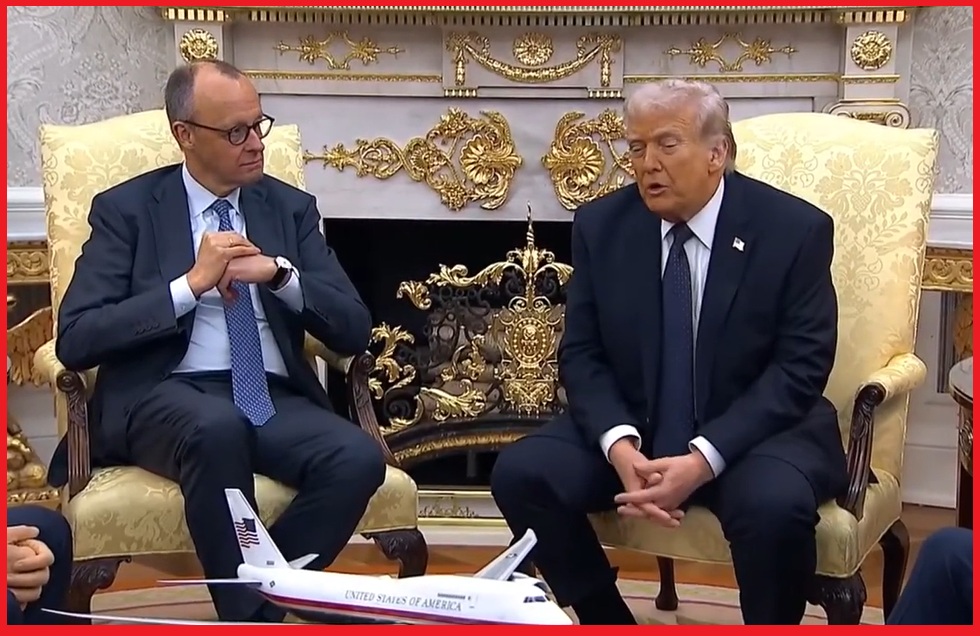
Prior to visiting the White House, German Chancellor Fredrich Merz had just returned from China and gave a press conference in Germany saying Germans need to “work harder” and “ditch the four-day week” to compete.
Merz visit to Shenzhen shocked him, and he is right to be rattled by the cold indifference of Chairman Xi Jinping. This was Merz first visit to meet Chairman Xi in person. A cold and productivity focused Merz just met an even colder and more productivity focused industrial giant.
Merz met the industrial dragon and returned home visibly shook. The Chancellor thought he represented an apex industrial nation. However, he experienced something far more industrial than he ever imagined.
As noted by Nina Schick:“Take Germany’s famous auto industry, 5% of GDP, 800,000 jobs, but losing ground fast. VW’s market share in China has plunged from 24% to 15% in four years. Chinese brands doubled their European market share in 2025 and now outsell Mercedes on the continent. Germany lost 120,000 industrial jobs last year. And cars are just the most visible example.
But it’s not just competition. Germany has some of the highest industrial energy prices in the world, nearly triple what the US pays. After shutting down nuclear and losing cheap Russian gas via Nord Stream, Berlin built its first LNG terminal in 194 days. Now 96% of the LNG arriving at those terminals comes from the US. (That LNG is even more important in light of events in the Gulf….)
The US is Germany’s second-largest trading partner (€240 billion in two-way trade last year.) German auto exports to the US fell 18% in 2025 under tariffs. Merz cannot afford a trade war with Washington. Today, he watched Trump threaten to cut off all trade with Spain, while sitting next to him in the Oval Office. He backed him up.
Now look at how Merz is positioning on Iran. Spain blocked the US from using its bases. Sánchez called the strikes “unjustified.” Starmer hesitated before eventually allowing UK bases for “defensive” strikes. Merz is the first EU leader invited to the White House for a tête-à-tête with Trump.
Days before, he said legal assessments under international law “achieve relatively little” and that now is “not the time to lecture allies.” Compare that to Sánchez insisting Spain’s agreement with the US “must operate within the framework of international law.” From a German chancellor, Merz’s position is seismic.
And none of this is separable from home. Germany’s economy is in its fourth year of industrial contraction. An aging population, a shrinking workforce, sky-high welfare costs, and an immigration debate that’s handing the AfD seats on a plate. Merz needs the US relationship, because it’s one of the levers he has left to keep the economy blowing in the right direction.
All of this points to a Germany that’s understood its critical vulnerabilities and is pursuing a hard-nosed realpolitik in response. To stay industrially competitive, they need American LNG. They need access to US compute and critical hardware. They need EU member states to spend on defense: something Trump has been remarkably effective at unleashing.
The result is an astonishingly pro-Trump German chancellor. In a country where only about 15% of the population views Trump favorably. The question isn’t whether Merz has realistically assessed Germany’s vulnerabilities (he’s starting to see the bigger picture). It’s whether this wins or loses him votes at home. And on that, my guess is it won’t. {LINK}
Fredrich Merz thought he was an apex predator, until he met Xi Jinping.
Suddenly, Merz looks at the unpredictable Trump, an apex predator who swims around Chairman Xi as if it’s just another boring Tuesday, with an entirely new perspective.
Chancellor Merz realizes that this rather unorthodox American President likely possesses the only qualified skillset that can deal with a REAL apex predator like Xi.
Fredrich Merz dismounts his EU high horse and uppishness turns into respect.
Posted originally on CTH on March 3, 2026 | Sundance
♦ First blow, the Trump tariffs hit Beijing hardest. ♦ Second blow, the Beijing tentacle on the Panama Canal is severed. ♦ Third blow, global tariff threats changed the risk dynamic for southeast Asia countries who acted as transnational shippers for China. ♦ Fourth blow, cheap sanctioned oil from Venezuela was cut-off. ♦ Now, the fifth blow; cheap, sanctioned Iranian oil is disrupted.
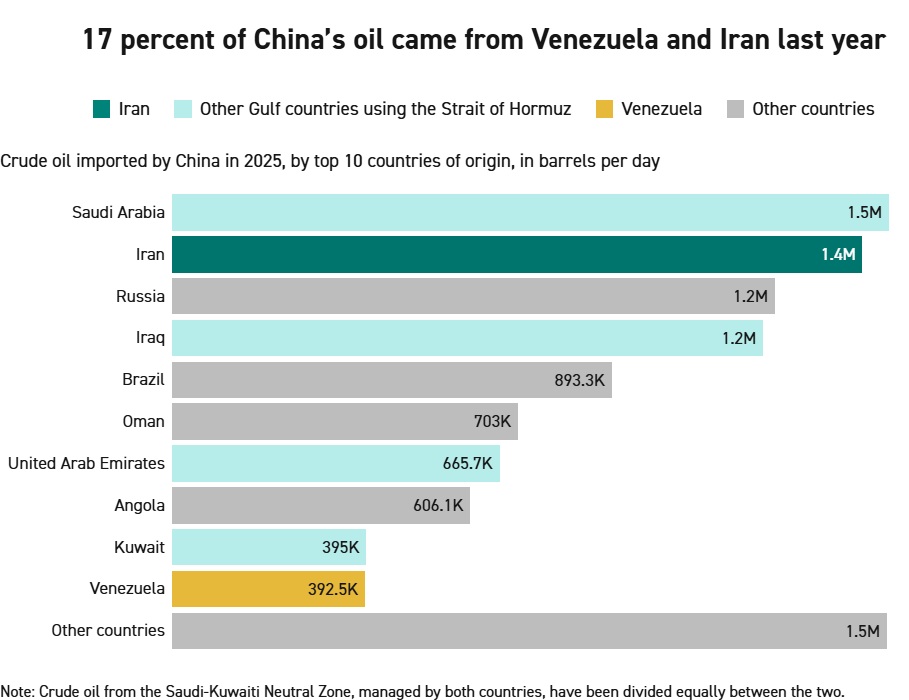
As noted by Politico: Following USA military strikes, “ships have begun to avoid the Strait of Hormuz off the coast of Iran — a critical shipping lane for Gulf nations to export oil to Asia. China in 2025 received about half of its imported oil from the six Gulf countries that rely on the strait. Other large crude oil producers in the region — including Saudi Arabia, Iraq and the United Arab Emirates — transport almost all their crude exports through the geographic bottleneck.”
It’s not just a factor of oil flow, but also the price that China will ultimately end up having to pay. Beijing was buying oil from Venezuela, Iran and Russia at steep discounts because their purchases were skirting western sanctions.
With Iranian oil production now no longer a market option, China will seek to replace their needs with more Russian alternative. However, that diversion means the oil India was purchasing from Russia will come at a higher price, and the refined final product that was exported by India will arrive to the European Union carrying an additional cost.
Simultaneously, Vladimir Putin was asked about Russia’s lack of military support to Iran in response to the U.S. military action, to wit the Russian president noted the technical terms of their joint military agreements did not include Russia’s immediate involvement. In shorthand, Russia is busy and is not getting involved.
Russia was/is partially dependent on receiving military supplies from Iran in exchange for oil transfers. The military component is reported to include drones from Iran for use in the Ukraine conflict. Now that exchange profile is shuttered.
Taking Iran’s malign influence off the geopolitical chessboard is beginning to surface in major challenges to the BRICS assembly (Brazil, Russia, India, China, South Africa). Russia, China and India are impacted directly.
The BRICS nations were skirting western oil sanctions by trading the commodity outside the petrodollar structure. However, President Trump now controls the flow of oil from Venezuela, and his administration controls the currency in which it is sold.
With Iranian oil removed from the non-petro supply chain, the only remaining non-petro oil producer is Russia – who is simultaneously hit with a loss in military hardware support. China may end up as a larger oil customer to Russia, but at what price and in what payment structure.
With global oil supplies in a state of flux, and with the USA in control of the oil flow from Venezuela, North America is certainly in the best position for minimal energy disruption.
Asia is heavily dependent on oil flows through the Strait of Hormuz, and the majority of Europe has already shut themselves off from Russian oil production, putting themselves in a position of dependency to the global markets. The short-term ramifications of this oil disruption hit China, Southeast Asia, Japan and Europe particularly hard.
“OPEC+ countries affirmed on Sunday that they would boost oil production starting in April by 206,000 barrels daily — a modest increase intended to dampen the war’s effect on prices down the road. The majority of the increase would come from Saudi Arabia and Russia.” {SOURCE}
All of a sudden, this happens: Zelenskyy not to be trusted?
“Ukraine is under pressure to let the EU inspect a damaged pipeline carrying Russian oil to Hungary and Slovakia, as the two pro-Kremlin countries accuse Kyiv of overstating the impact of an attack by Moscow — despite what Ukrainian officials say is evidence of extensive destruction,” the report said.
According to five diplomats and EU officials who spoke to the FT, even pro‑Ukrainian governments within the European Union and the European Commission have also asked Ukraine to permit a delegation to inspect the pipeline. Two sources told the newspaper that European Commission President Ursula von der Leyen requested access for EU experts during her visit to Kyiv on Feb. 24, the fourth anniversary of Russia’s full-scale invasion. The request, according to the sources, was refused.
As tensions escalated, the EU’s ambassador to Ukraine, Katarina Mathernova, reportedly asked through the presidential office for permission to inspect the damaged pipeline herself or to allow visits by other EU diplomats. Those requests were denied for security reasons, the sources said.” (link)
Posted originally on CTH on March 3, 2026 | Sundance
Consider the severe economic body blows to China in the past 14 months.
♦ First blow, the Trump tariffs hit Beijing hardest. ♦ Second blow, the Beijing tentacle on the Panama Canal is severed. ♦ Third blow, global tariff threats changed the risk dynamic for southeast Asia countries who acted as transnational shippers for China. ♦ Fourth blow, cheap sanctioned oil from Venezuela was cut-off. ♦ Now, the fifth blow; cheap, sanctioned Iranian oil is disrupted.
As noted by Politico: Following USA military strikes, “ships have begun to avoid the Strait of Hormuz off the coast of Iran — a critical shipping lane for Gulf nations to export oil to Asia. China in 2025 received about half of its imported oil from the six Gulf countries that rely on the strait. Other large crude oil producers in the region — including Saudi Arabia, Iraq and the United Arab Emirates — transport almost all their crude exports through the geographic bottleneck.”
It’s not just a factor of oil flow, but also the price that China will ultimately end up having to pay. Beijing was buying oil from Venezuela, Iran and Russia at steep discounts because their purchases were skirting western sanctions.
With Iranian oil production now no longer a market option, China will seek to replace their needs with more Russian alternative. However, that diversion means the oil India was purchasing from Russia will come at a higher price, and the refined final product that was exported by India will arrive to the European Union carrying an additional cost.
Simultaneously, Vladimir Putin was asked about Russia’s lack of military support to Iran in response to the U.S. military action, to wit the Russian president noted the technical terms of their joint military agreements did not include Russia’s immediate involvement. In shorthand, Russia is busy and is not getting involved.
Russia was/is partially dependent on receiving military supplies from Iran in exchange for oil transfers. The military component is reported to include drones from Iran for use in the Ukraine conflict. Now that exchange profile is shuttered.
Taking Iran’s malign influence off the geopolitical chessboard is beginning to surface in major challenges to the BRICS assembly (Brazil, Russia, India, China, South Africa). Russia, China and India are impacted directly.
The BRICS nations were skirting western oil sanctions by trading the commodity outside the petrodollar structure. However, President Trump now controls the flow of oil from Venezuela, and his administration controls the currency in which it is sold.
With Iranian oil removed from the non-petro supply chain, the only remaining non-petro oil producer is Russia – who is simultaneously hit with a loss in military hardware support. China may end up as a larger oil customer to Russia, but at what price and in what payment structure.
With global oil supplies in a state of flux, and with the USA in control of the oil flow from Venezuela, North America is certainly in the best position for minimal energy disruption.
Asia is heavily dependent on oil flows through the Strait of Hormuz, and the majority of Europe has already shut themselves off from Russian oil production, putting themselves in a position of dependency to the global markets. The short-term ramifications of this oil disruption hit China, Southeast Asia, Japan and Europe particularly hard.
“OPEC+ countries affirmed on Sunday that they would boost oil production starting in April by 206,000 barrels daily — a modest increase intended to dampen the war’s effect on prices down the road. The majority of the increase would come from Saudi Arabia and Russia.” {SOURCE}
All of a sudden, this happens: Zelenskyy not to be trusted?
“Ukraine is under pressure to let the EU inspect a damaged pipeline carrying Russian oil to Hungary and Slovakia, as the two pro-Kremlin countries accuse Kyiv of overstating the impact of an attack by Moscow — despite what Ukrainian officials say is evidence of extensive destruction,” the report said.
According to five diplomats and EU officials who spoke to the FT, even pro‑Ukrainian governments within the European Union and the European Commission have also asked Ukraine to permit a delegation to inspect the pipeline. Two sources told the newspaper that European Commission President Ursula von der Leyen requested access for EU experts during her visit to Kyiv on Feb. 24, the fourth anniversary of Russia’s full-scale invasion. The request, according to the sources, was refused.
As tensions escalated, the EU’s ambassador to Ukraine, Katarina Mathernova, reportedly asked through the presidential office for permission to inspect the damaged pipeline herself or to allow visits by other EU diplomats. Those requests were denied for security reasons, the sources said.” (link)
Posted originally on CTH on February 27, 2026 | Sundance
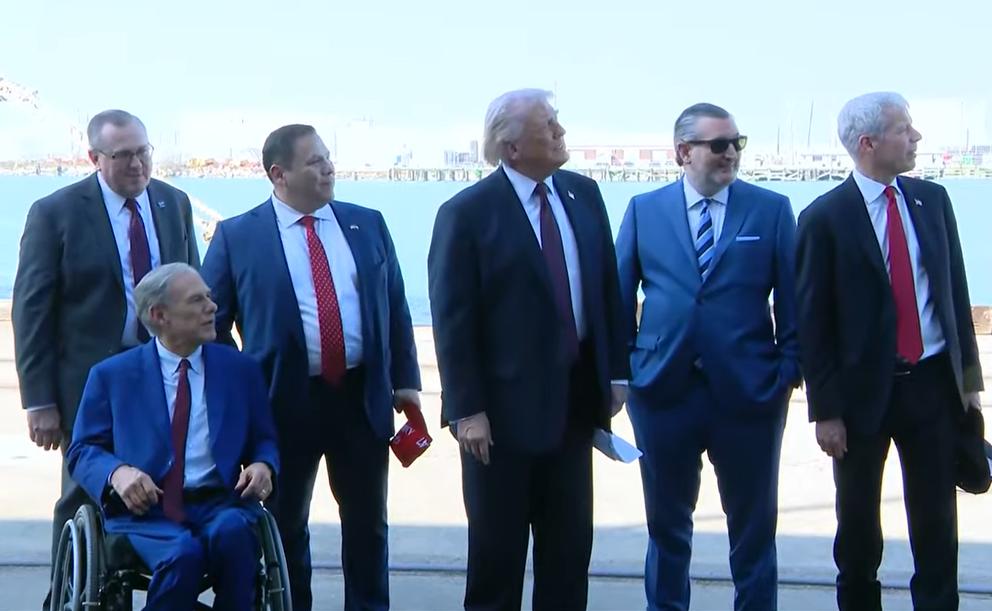
President Donald Trump travels to Corpus Christi, Texas, for an energy briefing and delivers remarks on U.S. energy independence. President Trump is scheduled to deliver remarks at approximately 4:30pm ET.Livestream Links Below.
Posted originally on CTH on February 25, 2026 | Sundance
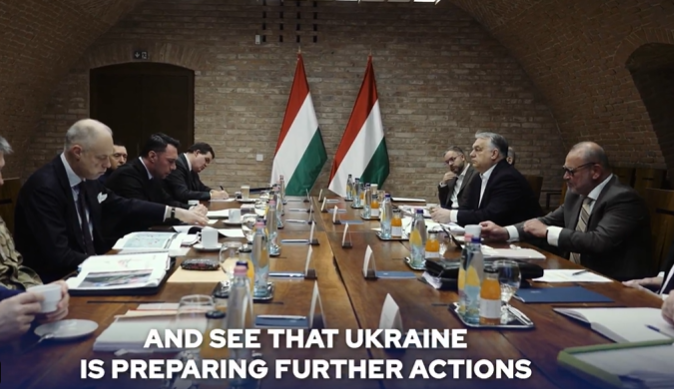
The collective war being carried out by Ukraine and Brussels against Hungarian energy systems is escalating. Hungarian Prime Minister Viktor Orban is now putting military defenses and security forces around critical infrastructure.
ORBAN: We will not give in to blackmail! I have ordered increased security for critical energy infrastructure.
The Ukrainian government is exerting pressure on the Hungarian and Slovak governments through an oil blockade. They will not stop there, as they are preparing further actions to disrupt Hungary’s energy system. Hungary cannot be blackmailed!
We will not give in to blackmail ❗️
I have ordered increased security for critical energy infrastructure.
The Ukrainian government is exerting pressure on the Hungarian and Slovak governments through an oil blockade. They will not stop there, as they are preparing further… pic.twitter.com/bulICvhy1m
Posted originally on CTH on February 24, 2026 | Sundance
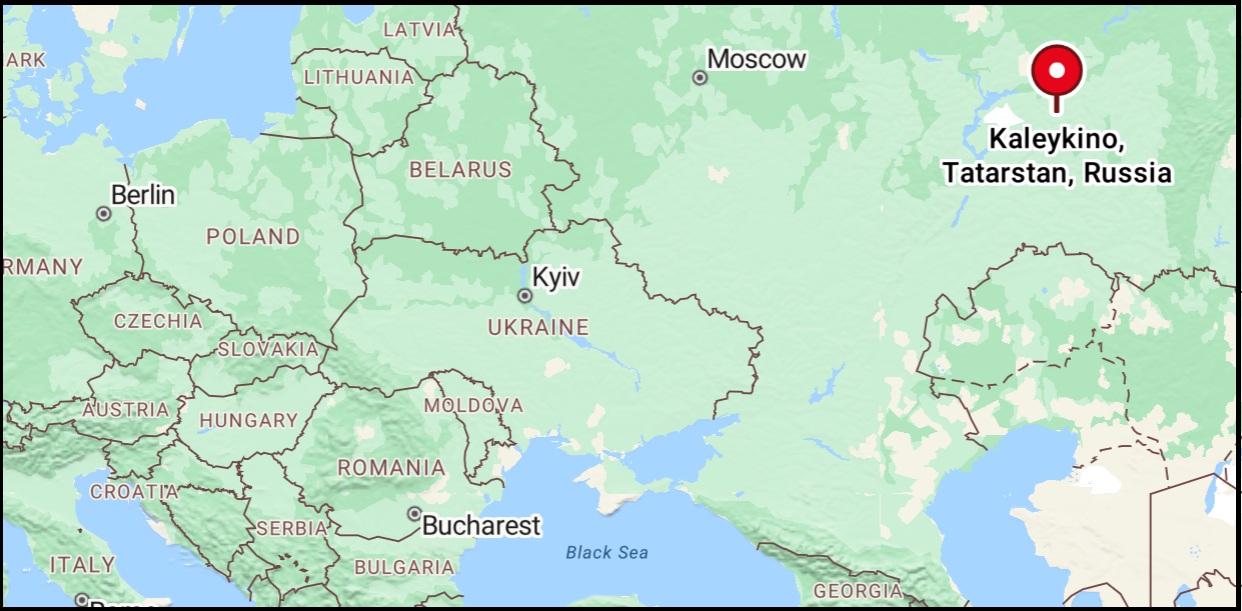
The Ukraine military, technically and non-pretendingly accepted as the EU military, has targeted a key oil pumping station in Russia that feeds into the westerly directed oil supply. However, if you stand back from the western media, what you will notice from this attack is not the target in Russia, but the customers at the end of the pipeline in Europe, mainly Hungary and Slovakia.
[…] Through local stations, including infrastructure around Kaleykino, oil from Tatarstan and neighboring regions feeds into the main pipeline, which runs through the Samara region and continues westward toward Belarus and further to countries in Eastern and Central Europe. […] There were also earlier reports that Ukrainian forces carried out several attacks on Druzhba pipeline infrastructure inside Russia, which at times disrupted Russian oil supplies to Hungary and Slovakia. {source}
So, what’s going on here?
Well, with the anniversary of the Russian Federation beginning the war into Ukraine, the Europeans who now control the military operations inside Ukraine are targeting European countries who do not align with their bloodlust, specifically Hungary and Slovakia.
Both Hungary and Slovakia are land locked countries without easy access seaports. Because of their geographic locations, they rely on Russian oil and gas for their energy needs. Hungary and Slovakia have not wanted to expand the war against Russia. The EU is demanding Hungary and Slovakia agree to expanded war.
The European ‘coalition of the willing’ is now targeting key Russian infrastructure that supplies energy products to European countries who are not in compliance with the EU dictates of war.
Putin says threats to energy pipelines sabotage peace process with Ukraine.
In his televised speech, the Russian president also accused Ukraine of threatening Russian energy pipelines with the help of Western intelligence agencies. He claimed these attacks were aimed to sabotage the peace process.
Putin also stressed it was vital for Russia to strengthen the defence of energy infrastructure and other strategic sectors. {source}
This is why Secretary of State Marco Rubio travelled to Hungary and Slovakia last week.
Essentially, now we see European leaders attacking their own European “allies” through the use of Ukraine. If you do not support the continued bloodlust, you are an enemy of the EU collective hive mind.
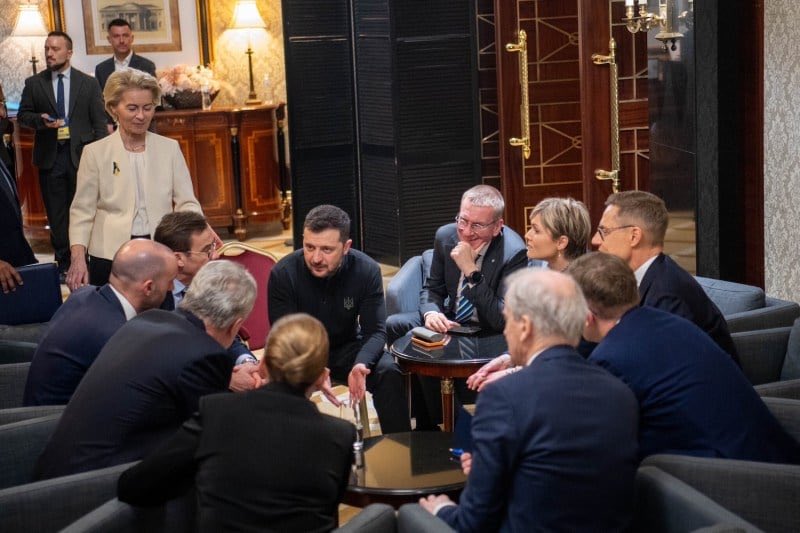
A picture is worth a thousand words….
On this grim anniversary, the Coalition of the Willing stands with Ukraine.
We will step up military support and deliveries, with a focus on air defence systems, drones and long-range ammunition.
We are working on robust security and prosperity guarantees
The Druzhba-1 station at Kaleikino, a rather important part of the Druzhba oil pipeline through which Hungary and Slovakia hope to get their Russian oil, has just been blown to smithereens and most likely won't be supplying Hungary and Slovakia with oil again anytime soon. pic.twitter.com/7M3aezultz
STATEMENT OF THE PRIME MINISTER OF THE SLOVAK REPUBLIC 🇸🇰
I have fulfilled what I declared on Saturday: “If oil supplies to Slovakia are not restored by Monday, I will ask SEPS, the state-owned joint-stock company, to halt emergency electricity supplies to Ukraine. In January… pic.twitter.com/EyjfEgmple
Posted originally on CTH on February 21, 2026 | Sundance
According to the Washington DC spin, the various EU energy ministers changed clean energy justification of ‘climate change’ during the International Energy Agency (IEA) summit because they were concerned the U.S. would pull out of the IEA group. The IEA shifted to green energy as a security priority, no longer concerned with climate change.
However, given the situation with European energy costs and the severe problems they are having within their collective and individual economies, what they consider “national security” appears to be their need to control public outrage at the green energy consequences.
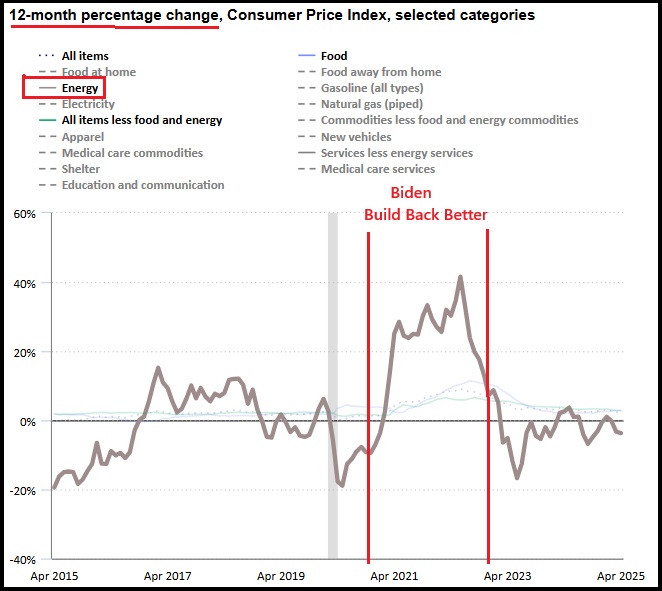
Affordable or ‘cheap’ energy production is directly linked to the underlying economy. If energy production costs more, heating, electricity, fuel, transportation, just about everything costs more. Energy prices drive consumer prices and that has become a serious problem for the U.K and EU who have chased the “Build Back Better” global energy reset.
With President Trump targeting reciprocity in a global trade balance, suddenly the economies of Europe, Canada and parts of Asia are feeling the impact. Industrial manufacturing in Europe continues dropping and various sectors like the automotive manufacturing showcase the contraction. The Gross Domestic Product (GDP) or economic output within each of the contracting nations is putting hard data behind the problem.
Suddenly, with their economies now quivering, the IEA meeting in Europe drops the climate change objective as justification for their ‘renewable’ energy programs. They blame the USA, but in reality, they appear to be trying to save themselves from feeling the full consequences of their action.
(POLITICO) – […] Ministers, senior officials and ministerial advisers told POLITICO that the event had cemented a long-running rebranding of the green transition that emphasizes the security benefits of renewables rather than their climate-saving potential. It’s a change that has been slowly building since U.S. President Donald Trump returned to office 13 months ago, and that was turbocharged by Wright’s threats on Tuesday to quit the IEA and fears Washington might stop funding the body. The U.S. provides around 14 percent of the IEA’s funding.
“With diplomacy it’s about looking for those places where you can work together,” said one European energy ministry official present at the closed-door discussions. “If the word ‘climate change’ is a red drape for a bull then don’t use it.”
The emphasis on security — not climate change — was everywhere.
“Renewable energy is not about tackling climate change, it’s about economic growth and affordable and low energy prices,” Austrian State Secretary of Energy Elizabeth Zehetner told POLITICO on the sidelines of the event. Zehetner stressed however that Europeans wouldn’t be “blackmailed” by the U.S.
Her comments reflect that independently of the U.S., Europe has itself moved away from the climate fervor that dominated Brussels policymaking in the first part of this decade. Still, despite some backsliding on green rules, the EU remains fundamentally in favor of strong policies to tackle climate change. (read more)
People tend to forget, coming out of the COVID-19 pandemic era, the Build Back Better agenda to radically change energy policy throughout the west was the primary cause of massive jumps in consumer prices.
Posted originally on CTH on February 19, 2026 | Sundance
President Trump travels to Rome Georgia today to deliver remarks on the economy from Coosa Steel Corporation. The anticipated start time is 4:00pm ET. Livestream Links Below.
I have created this site to help people have fun in the kitchen. I write about enjoying life both in and out of my kitchen. Life is short! Make the most of it and enjoy!
This is a library of News Events not reported by the Main Stream Media documenting & connecting the dots on How the Obama Marxist Liberal agenda is destroying America