Posted originally on Oct 7, 2025 by Martin Armstrong |
American news outlets are not reporting that Italy has come to a complete standstill over the Gaza protests. Millions of Italians took to the streets after Israel seized the Sumud flotilla. The Italian military was initially guiding the flotilla until it was forced to standby.
Four Italian opposition politicians from the Five Star Movement, Greens, and Left Alliance (AVS) were among those detained, and around 20 of the activists detained by Israel were of Italian origin. Dock workers in Genoa, Naples, Livorno, Ancona, and other ports will not touch any shops bound for Israel. CGIL and USB, the largest unions in Italy, called for a general strike on October 3. The protest spread like a contagion across the nation to over 100 cities.
Public transportation is not available. Flights are grounded. Schools and universities temporarily shut their doors. Hospitals are operating at minimal capacity as workers simply walk out. In Rome alone, over 300,000 people marched from Piazza Vittorio to Porta Maggiore demanding freedom in Gaza, but it is believed at least one million people descended on the nation’s capital overall. Over 100,000 protestors in Bologna blocked the A14 motorway. Another 80,000 men and women marched through the streets of Milan. Organizers stated 50,000 people took to the streets in Turin and another 40,000 in Genoa. This movement spread extremely rapidly with little notice. There were existing grievances against the Italian government, clearly, and Italian authorities are simply outnumbered.
Transport Minister Matteo Salvini responded by warning the organizers will “pay personally” for beginning the massive unrest, adding “if violence prevails, the state will react.” Georgia Meloni mocked the protests, brushing them off as “a long weekend disguised as revolution.” Strikes blocking transportation in Italy are commonplace, but not of this magnitude. “Today, 1 million Italians will be left stranded on trains alone,” Deputy Prime Minister Matteo Salvini told the Mattino Cinque television show.
That’s one expense “long weekend” with early estimates believing the nation lost €143–178 million due to the strike, at the low end. Other estimates, factoring in the 2 million striking workers, blocked transport, lost labor hours, and delayed commerce, put the cost at €600–900 million.
The protests are about more than simply the flotilla or Gaza aid. The working class and youth are leading these protests, disgruntled at the cost-of-living crisis, while the European Union sends endless aid to fund foreign wars. Discontent is growing on a global scale. There is a reason that the American media refuses to air what is happening in Italy—and across the continent of Europe, as similar protests are on the rise.
Posted originally on CTH on October 5, 2025 | Sundance
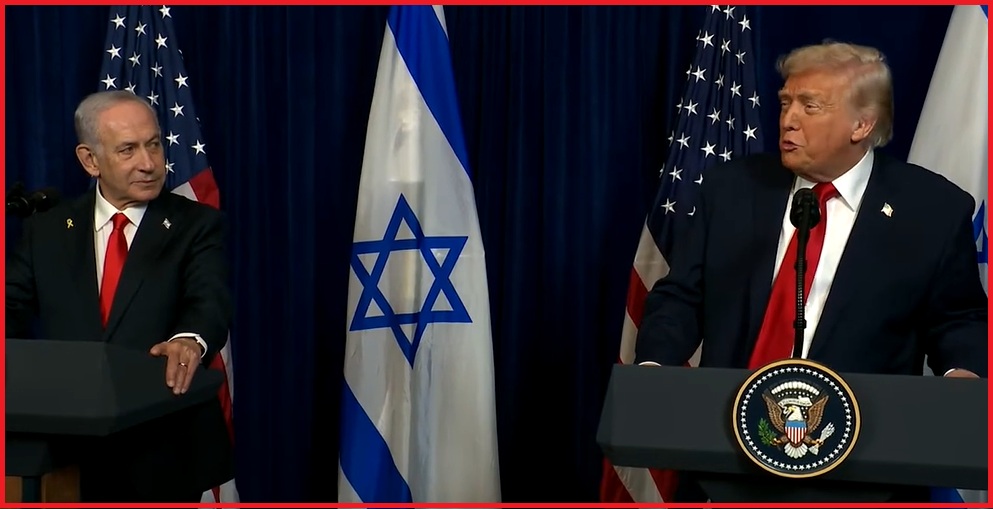
As a U.S. delegation arrives in Israel to coordinate the ongoing effort to end the Israeli-Hamas war in Gaza, Secretary of State and National Security Advisor, Marco Rubio, appears on Face the Nation to outline the current status of the hostage release efforts.
[Transcript] – MARGARET BRENNAN: We turn now to Secretary of State and National Security Adviser, Marco Rubio. Good morning to you, Mr. Secretary.
SECRETARY OF STATE MARCO RUBIO: Good morning.
MARGARET BRENNAN: It would be extraordinary to end what has been one of Israel’s longest and bloodiest wars. The prime minister said he’s only allowing these talks that will be underway in Egypt to go for a few days. What exactly is the deadline for Hamas and the terror groups who are holding hostages? When do they need to release them?
SEC. RUBIO: Well, yeah, so a couple points. Hamas has- obviously, look, we’re dealing with Hamas. Okay. So let’s take that with- for what it is. But they have said that they agree with the President’s framework for the release of the hostages. So what those talks should be about, and some of that conversation is already happening now, it’s not waiting until Monday in Cairo, is the logistics behind the release of these hostages. How do you stop the fighting? Who’s going to go in and get them? You know, when are they going to be released? Where are they picked up? What are the processes for this? That’s what should be- that’s what this conversation should be about at this point, because they’ve agreed to the framework of it. Then there’s second- beyond that is what happens after that. And that is, how do we ensure that we can create and help build a Gaza free of terrorism, free of Hamas, free of anything like Hamas and that’s going to take work and some time, not just to agree on but to implement. But that’s important, because that’s what’s going to bring a permanent end to these hostilities in the long term. And so those are the two phases here. But right now, the most emergent and immediate phase is the one that Hamas claims to have agreed to already, and that is they are prepared to release the hostages. Let’s discuss, through the mediators, the logistics and the mechanics behind how that happens. And that has to happen very quickly. That cannot drag on.
MARGARET BRENNAN: So my sources have indicated to me that because the upper echelon of Hamas fighters has been so decimated, communication is difficult. The other terror groups who also hold hostages in Gaza aren’t necessarily easily controlled by them. How do you manage around this reality and is full release by October 7 the demand?
SEC. RUBIO: Well, I don’t know about the date. I’d be great if it was before October 7. We wish it would happen yesterday. But there are realities here, and then there are things people do to impede progress. Reality is, this is a war zone. I mean, this is a place that suffered a tremendous amount of destruction that fighting needs to stop. You can’t release hostages while there’s still bombardments going on, but at the same time that can’t, you know- so that has to end, but that has to stop, but you also have to work through the other logistics. Who’s going to go pick them up? We saw how this happened in the past. You know, the Red Cross would go in, they would be handed over through this process, et cetera. And so all of that’s what has to be worked on, and is being worked on as we speak. So I’m not telling you there aren’t some logistical hurdles here, but I am saying that the expectation is that this happens quickly. And I would also say that while we want all the hostages to be released, if there are five that are ready to go right now, they should be released right now. If another 10 are ready to go in 12 hours after that, the next group should come out, but ultimately they should all come out. And I think what you’re hearing from people is, yes, there has to be some logistics that have to be worked through. But what you can’t have, and what we can’t see, and what we hope we will not see, is that we get into these talks, and these talks are then delayed, and it looks like they’re unnecessarily delaying it. That would be a very bad sign. Let’s hope that’s not what happens. And it’s going to be very important for our partners in the region who signed on to this deal, the UAE, Qatar, Turkey, Jordan, Egypt, etc, for them to be putting a lot of pressure on Hamas to make sure this happens as quickly as possible.
MARGARET BRENNAN: But you pointed out that releases can’t happen when bombardments are underway. Our CBS team in Gaza tells us that there are Israeli bombardments underway. There were strikes Saturday. Tens killed, more injured, bombings continuing. One incident included 10 people killed when they tried to check in on their homes in areas where there are also military sites. Is that acceptable?
SEC. RUBIO: Well, I think, ultimately, what you’re going to see here is that when an agreement is reached on these logistics behind when the release is going to happen, then I think you’ll see those bombardments stop, and I think some of that activity has already decreased somewhat. So, there’s a framework here, and the framework is simple. Once you agree on the logistics of how this is going to happen, I think the Israelis and everyone acknowledge you can’t release hostages in the middle of strikes, so the strikes will have to stop. And, as you saw, the president state that very clearly on Friday, where he asked the Israelis to begin to pull back to create the conditions for these releases–
MARGARET BRENNAN: So this is not a violation of that?
SEC. RUBIO: Well, we’re trying to get the hostages out. That’s the bottom line. We want to get the hostages out as soon as possible. For that to happen, there can’t be a war going on in the middle of it, and Hamas has to agree to turn them over. We have to have the right people go in and get them. That’s what we’re going to focus on right now, and that’s what we’re going to- that’s what we’ve been focused on, and that’s what the talks are going to be about today, on Monday, on Tuesday, to get this done as soon as possible.
MARGARET BRENNAN: I hear you, there are two phases here. The Hamas releasing the hostages is the one you’re most focused on. But, big picture, does the United States assess that Israel has so reduced the threat posed by Hamas that it can end combat and transition to the kind of lower-tempo counter-terrorism campaign that, say, the United States carries out against terrorist threats to this country?
SEC. RUBIO: Well, look, I mean, the ideal outcome here is you don’t have to carry out any counter-terror missions because there are no terrorists in Gaza–
MARGARET BRENNAN: But can they take the win? Can Netanyahu say he won this war?
SEC. RUBIO: Well, first of all, creating a Gaza, or setting up a Gaza that is governed by Palestinian technocrats that are not terrorists and are not sponsoring terrorism, that’s not going to happen in 72 hours. That’s going to take some time to build up, and it’s going to require a lot of work and a lot of international support, and that’s the end goal here of this entire endeavor, after you get the hostages out. By the way, if you can’t get the hostages out, you have no hope of getting that done. So that’s why I say, you know that these two steps need to happen. But it’s going to take a lot of hard work and time. You know, you’re trying to build something that doesn’t exist right now, which is a sort of civilian, Palestinian leadership that’s not tied to terrorism. That doesn’t exist right now. It’s going to take a lot of help from international partners. That’s why having the countries in the region and the Europeans and all others involved in this in both money and resources, that’s why building that coalition is so critical, and then implementing it is not going to be easy. It’s going to take some time here, but I think, certainly, for the first time in a long time, you see the framework and the outlines of something that could work.
MARGARET BRENNAN: But combat operations can end?
SEC. RUBIO: Well, that’s the goal here. Well, you wouldn’t need combat operations if there weren’t terrorists there. But, by the same token, I would remind everybody, if, in fact, at the end of all this terrorism and a terrorist group remains active inside of Gaza, you’re not going to have peace. That’s the fundamental truth here that everyone needs to accept. You’re never going to have peace in Gaza as long as there are terrorists operating from that territory, threatening the security of Israel.
MARGARET BRENNAN: But in terms of occupation and combat operations, that’s different than a counterterrorism campaign. But, let me ask you specifically what President Trump said. He told Barak Ravid of Axios that Prime Minister Netanyahu, quote, “took it very far and Israel lost a lot of support in the world. Now I’m going to get all that support back.” At what point did President Trump decide that Netanyahu took this fight in Gaza, or his operations throughout the Middle East- When did he take it too far?
SEC. RUBIO: I think the President’s- the president’s observation, basically, is that because of the length of this war and how it’s gone- we’ve all seen the international narrative. We’ve all seen it, whether we agree with it or not. We have seen countries like the U.K., Australia, Canada and others come out and sort of signal support, or announce support for a Palestinian state. We have seen, even in our own domestic politics, some of the attacks on Israel. We don’t forget what happened on October 7. That’s the other thing the President repeatedly points to is, remember October 7. But the impli- whether we agree with it or not, we have seen the impact that this has had on Israel’s global standing. And I think that’s the point the President is making here, is that whether you believe it was justified or not, right or not, that we- you cannot ignore the impact that this has had on Israel’s global standing. That said, if we never want to see this happen again, meaning a war like this, you can never have another October 7 or anything like it ever happen again. And that’s the thing the President has reiterated and repeatedly made clear to our partners in the region, and that is, if you truly want peace and stability and a better future for the Palestinian people, then there has to be a Gaza that is not governed or controlled in any way, shape or form by Hamas, or anything that looks like Hamas.
MARGARET BRENNAN: Okay. Does the United States support a Palestinian state? Because point 19 in your White House plan talks about “a credible pathway to Palestinian self determination and statehood.”
SEC. RUBIO: Well, again, we’ve always said, I mean, this has been a consistent position throughout, that the only way you’re ever going to have anything that looks like statehood is in a negotiated deal with the Israelis. We are so far from that right now–
MARGARET BRENNAN: Right, but Prime Minister Netanyahu opposes a Palestinian state and thanked President Trump for speaking against recognition of one. That’s why I’m asking you to clarify.
SEC. RUBIO: Well, we haven’t recognized the Palestinian state–
[CROSSTALK]
MARGARET BRENNAN: I understand.
SEC. RUBIO: –the United States has not. And right now, there’s no point in doing that–
MARGARET BRENNAN: Does the US want to see one?
[CROSSTALK ENDS]
SEC. RUBIO: –because it’s not even possible. That’s not even a realistic thing right now. Because who, who would govern that Palestinian state, Hamas?
MARGARET BRENNAN: Well, it’s point 19 in your plan–
SEC. RUBIO: –Who would govern it?
MARGARET BRENNAN: –I thought.
SEC. RUBIO: Well, but that’s talking about a pathway long term and in the future.
MARGARET BRENNAN: Right.
SEC. RUBIO: But one of the- before you can even get there, okay, that’s, you know, before you can even get there, you have to have someone to turn that land- Israel’s made clear they have no interest in governing Gaza. They have no interest in occupying Gaza long term and being the government of Gaza. I think Israel, I can’t speak for Israel, but I think Israel would tell you they would love to turn over Gaza to a Palestinian organization that isn’t terrorists. They would love to do that. But that doesn’t exist right now. That has to be built, and that’s going to take time. You’re not going to build that in 72 hours. You’re not going to build that in 72 weeks. I mean, it’s going to take some time to get to that point. So that’s the pathway this discusses. And I think if you look forward into the future where there is suddenly a Palestinian government-like organization, that can govern territory, then there’s a lot of possibilities. But that has to be negotiated and agreed to by Israel. In the end, it’s very simple. There can be peace in Gaza, there can be Palestinian governance in Gaza, whether you call it statehood or something else, as long as it is not terrorists that are in charge of that territory. That’s what Israel agreed to when they turned over Gaza in the first place, and then Hamas took over Gaza and turned it into a terrorist camp, and that’s what’s led us to the point that we are at today. So we can get off that road and onto a different road. There are a lot of possibilities long term and in the future, but right now–
MARGARET BRENNAN: So maybe?
SEC. RUBIO: –we are far from that. Right now, we need to get these hostages out, and we just need technocrats that are not terrorists to be able to begin the basic reconstruction of Gaza.
MARGARET BRENNAN: That interview was taped earlier today, with the camera off, Secretary Rubio clarified that President Trump still opposes Israeli annexation of the West Bank though there is no mention of the Occupied Territory in the 20 point White House peace plan.
[END TRANSCRIPT]
Secretary Rubio also appeared on NBC Meet the Press. Below:
Oct 3 (Reuters) – Hamas said on Friday it had agreed to release all Israeli hostages, alive or dead, under the terms of U.S. President Donald Trump’s Gaza proposal, and signaled readiness to immediately enter mediated negotiations to discuss the details.
Hamas says it is open to handing power over to a politically independent Palestinian body. However, it also says the proposal touching on the future of the Gaza Strip and Palestinian rights should be decided on the basis of a “unanimous Palestinian stance” reached with other factions and based on international law. The statement makes no mention of Hamas disarming, a key Israeli demand included in Trump’s proposal.
1. Gaza will be a deradicalized terror-free zone that does not pose a threat to its neighbors.
2. Gaza will be redeveloped for the benefit of the people of Gaza, who have suffered more than enough.
3. If both sides agree to this proposal, the war will immediately end. Israeli forces will withdraw to the agreed upon line to prepare for a hostage release. During this time, all military operations, including aerial and artillery bombardment, will be suspended, and battle lines will remain frozen until conditions are met for the complete staged withdrawal.
4. Within 72 hours of Israel publicly accepting this agreement, all hostages, alive and deceased, will be returned.
5. Once all hostages are released, Israel will release 250 life sentence prisoners plus 1700 Gazans who were detained after October 7th, 2023, including all women and children detained in that context. For every Israeli hostage whose remains are released, Israel will release the remains of 15 deceased Gazans.
6. Once all hostages are returned, Hamas members who commit to peaceful co-existence and to decommission their weapons will be given amnesty. Members of Hamas who wish to leave Gaza will be provided safe passage to receiving countries.
7. Upon acceptance of this agreement, full aid will be immediately sent into the Gaza Strip. At a minimum, aid quantities will be consistent with what was included in the January 19, 2025, agreement regarding humanitarian aid, including rehabilitation of infrastructure (water, electricity, sewage), rehabilitation of hospitals and bakeries, and entry of necessary equipment to remove rubble and open roads.
8. Entry of distribution and aid in the Gaza Strip will proceed without interference from the two parties through the United Nations and its agencies, and the Red Crescent, in addition to other international institutions not associated in any manner with either party. Opening the Rafah crossing in both directions will be subject to the same mechanism implemented under the January 19, 2025, agreement.
9. Gaza will be governed under the temporary transitional governance of a technocratic, apolitical Palestinian committee, responsible for delivering the day-to-day running of public services and municipalities for the people in Gaza. This committee will be made up of qualified Palestinians and international experts, with oversight and supervision by a new international transitional body, the “Board of Peace,” which will be headed and chaired by President Donald J. Trump, with other members and heads of State to be announced, including Former Prime Minister Tony Blair. This body will set the framework and handle the funding for the redevelopment of Gaza until such time as the Palestinian Authority has completed its reform program, as outlined in various proposals, including President Trump’s peace plan in 2020 and the Saudi-French proposal, and can securely and effectively take back control of Gaza. This body will call on best international standards to create modern and efficient governance that serves the people of Gaza and is conducive to attracting investment.
10. A Trump economic development plan to rebuild and energize Gaza will be created by convening a panel of experts who have helped birth some of the thriving modern miracle cities in the Middle East. Many thoughtful investment proposals and exciting development ideas have been crafted by well-meaning international groups and will be considered to synthesize the security and governance frameworks to attract and facilitate these investments that will create jobs, opportunity, and hope for future Gaza.
11. A special economic zone will be established with preferred tariff and access rates to be negotiated with participating countries.
12. No one will be forced to leave Gaza, and those who wish to leave will be free to do so and free to return. We will encourage people to stay and offer them the opportunity to build a better Gaza.
13. Hamas and other factions agree to not have any role in the governance of Gaza, directly, indirectly, or in any form. All military, terror, and offensive infrastructure, including tunnels and weapon production facilities, will be destroyed and not rebuilt. There will be a process of demilitarization of Gaza under the supervision of independent monitors, which will include placing weapons permanently beyond use through an agreed process of decommissioning, and supported by an internationally funded buy back and reintegration program all verified by the independent monitors. New Gaza will be fully committed to building a prosperous economy and to peaceful coexistence with their neighbors.
14. A guarantee will be provided by regional partners to ensure that Hamas, and the factions, comply with their obligations and that New Gaza poses no threat to its neighbors or its people.
15. The United States will work with Arab and international partners to develop a temporary International Stabilization Force (ISF) to immediately deploy in Gaza. The ISF will train and provide support to vetted Palestinian police forces in Gaza and will consult with Jordan and Egypt who have extensive experience in this field. This force will be the long-term internal security solution. The ISF will work with Israel and Egypt to help secure border areas, along with newly trained Palestinian police forces. It is critical to prevent munitions from entering Gaza and to facilitate the rapid and secure flow of goods to rebuild and revitalize Gaza. A deconfliction mechanism will be agreed upon by the parties.
16. Israel will not occupy or annex Gaza. As the ISF establishes control and stability, the Israel Defense Forces (IDF) will withdraw based on standards, milestones, and timeframes linked to demilitarization that will be agreed upon between the IDF, ISF, the guarantors, and the Unites States, with the objective of a secure Gaza that no longer poses a threat to Israel, Egypt, or its citizens. Practically, the IDF will progressively hand over the Gaza territory it occupies to the ISF according to an agreement they will make with the transitional authority until they are withdrawn completely from Gaza, save for a security perimeter presence that will remain until Gaza is properly secure from any resurgent terror threat.
17. In the event Hamas delays or rejects this proposal, the above, including the scaled-up aid operation, will proceed in the terror-free areas handed over from the IDF to the ISF.
18. An interfaith dialogue process will be established based on the values of tolerance and peaceful co-existence to try and change mindsets and narratives of Palestinians and Israelis by emphasizing the benefits that can be derived from peace.
19. While Gaza re-development advances and when the PA reform program is faithfully carried out, the conditions may finally be in place for a credible pathway to Palestinian self-determination and statehood, which we recognize as the aspiration of the Palestinian people.
20. The United States will establish a dialogue between Israel and the Palestinians to agree on a political horizon for peaceful and prosperous co-existence. [SOURCE]
I have created this site to help people have fun in the kitchen. I write about enjoying life both in and out of my kitchen. Life is short! Make the most of it and enjoy!
This is a library of News Events not reported by the Main Stream Media documenting & connecting the dots on How the Obama Marxist Liberal agenda is destroying America