Bad Temperature Data Wrecks Science


NASA is not capable of publishing Good Data since it is now a political organization and has nothing to do with real science.

Tony Heller's avatarReal Climate Science

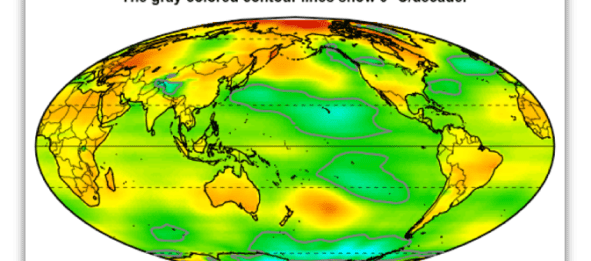
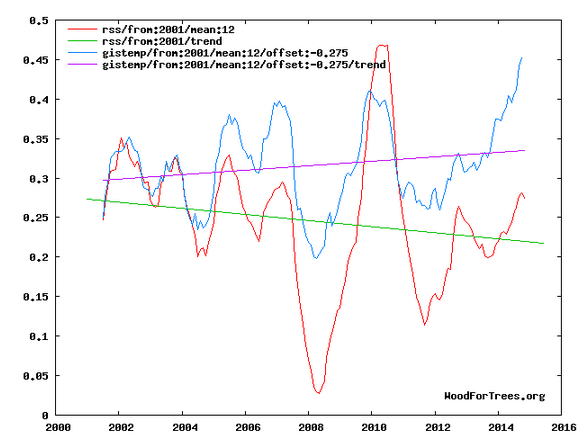
NASA and NOAA are publishing fraudulent temperature data, which shows the exact opposite of what is actually happening and what they used to report.

GISSUS1999vs2015

This completely perverts the science, and causes scientists to look for imaginary explanations of imaginary phenomena.

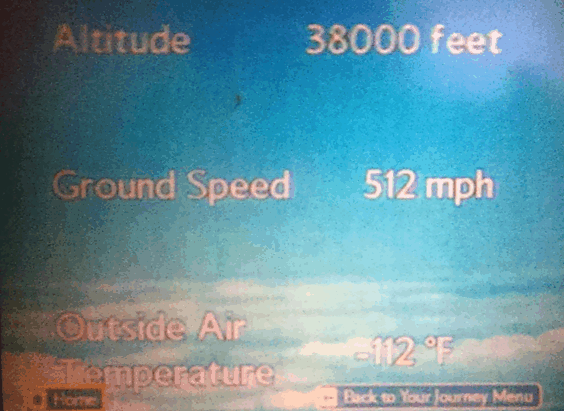
On my flight back from the UK, the British Airways system was reporting incredibly cold -112F outside the aircraft. This caused me to waste about an hour trying to think up an explanation for what could be causing that.
ScreenHunter_9600-Jun.-21-07.13

When the plane landed in Denver, it still reported temperatures well below freezing. The instrumentation was broken.

The entire field of climate science depends on fraudulent data from NASA. This bad data has rendered and entire field of science both useless and misleading.
ScreenHunter_2258 Jun. 05 09.17

View original post

HADCRUT Trends And Error Bars


NOAA and NASA will not want anyone to see that … lol

Slowest Arctic Melt Season Since 2006


They can’t hide everything but they will try!

Tony Heller's avatarReal Climate Science

The area of sea ice lost from March 17 to June 17 is the smallest since 2006

ScreenHunter_9630 Jun. 22 05.48arctic.atmos.uiuc.edu/cryosphere/timeseries.anom.1979-2008

Arctic sea ice has been tracking 2006 for the past three years

ScreenHunter_9628 Jun. 22 05.31Ocean and Ice Services | Danmarks Meteorologiske Institut

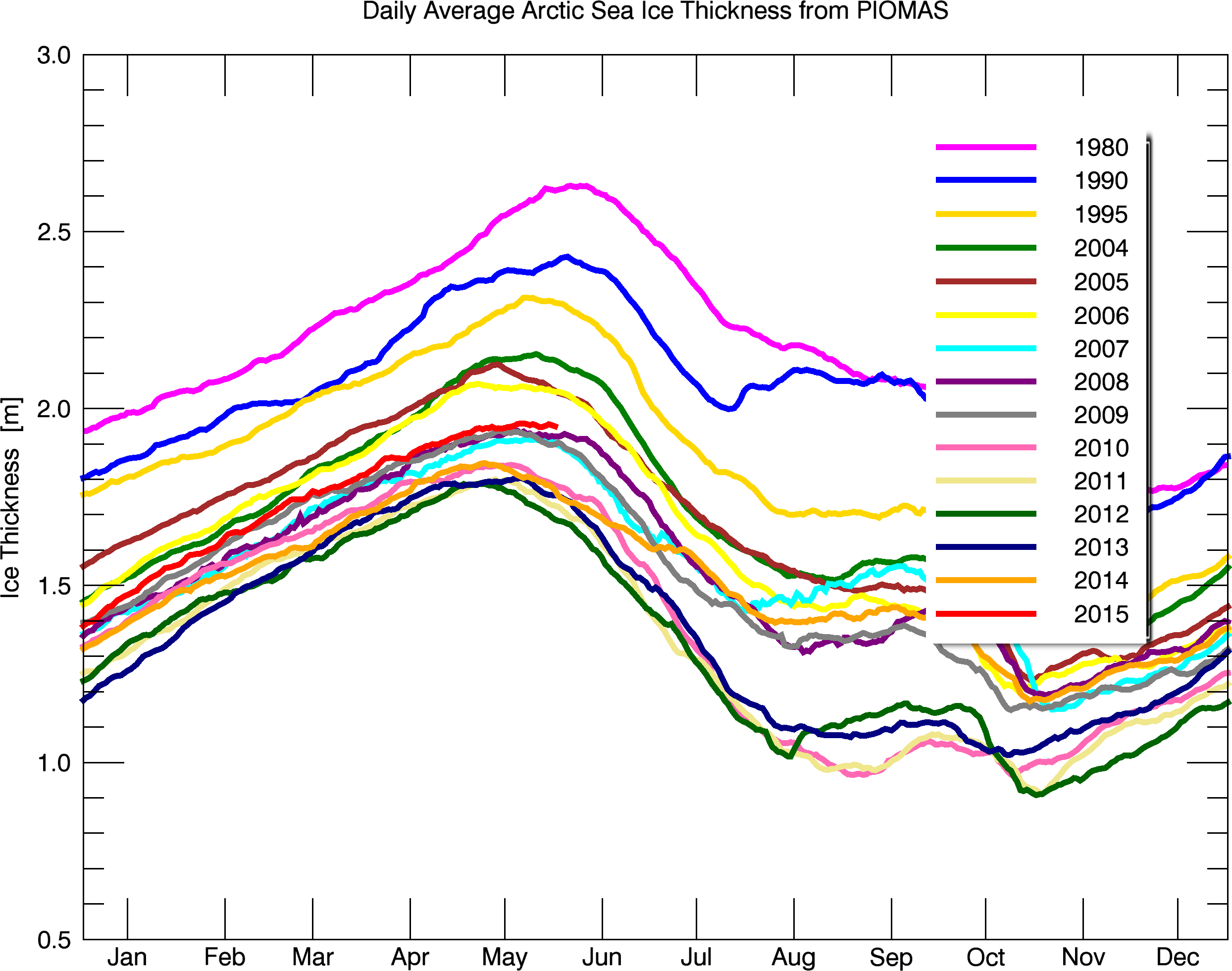
Arctic sea ice is the thickest it has been since 2006.

Bpiomas_plot_daily_heff.2sst (6)Bpiomas_plot_daily_heff.2sst.png (2488×1960)

The melt season in Greenland is just getting started, over a month late. Greenland’s surface has gained 550 billion tons of ice since September, and there is only six weeks left to the melt season.

ScreenHunter_9631 Jun. 22 05.57Greenland Ice Sheet Surface Mass Budget: DMI

You won’t hear about any of this from climate experts or the press, because they are paid to produce propaganda – not do science.

ScreenHunter_9634 Jun. 22 06.04BBC NEWS | Science/Nature | Arctic summers ice-free ‘by 2013’B4BW0yICIAAPJQBGore: Polar ice cap may disappear by summer 2014

View original post

Do models accurately predict climate change?


The current models assume a stay state prior to man and his carbon based fuels. This assumption that current global temperature are going up “only” because of CO2 are false. Going back almost 3000 years there is a clear cycle of war and cold period of around 1,000 year and since the last cold period ended between 1600 and 1650 we are in a long cycle of increasing temperatures for at least another 100 years. The current pause is caused by a shorter cycle related to El Nino La Nina and the Atlantic Multidecadal Oscillation (AMO) which is in a 30 year cold cycle right now. When that ends temperatures will go back up.

Larry Kummer, Editor's avatarFabius Maximus website

Summary: Climate models are important for several reasons. Large flows of tax dollars go to their construction and operation. Their predictions dominate the public policy debate about climate change (to the exclusion of other tools, such as predictability studies). In this post eminent climate scientist Roger Pielke Sr. explains that long-term model forecasts have shown little skill at forecasting. Post your questions in the comments; he’ll answer as time permits.  {1st of 2 posts today).

“I offer a toast to the future, the undiscovered country.”
— Klingon Chancellor Gorkon in Star Trek IV.

The undiscovered country from whose bourn no traveler returns, puzzles the will and makes us rather bear those ills we have than fly to others that we know not of? …And thus the native hue of resolution is sicklied o’er with the pale cast of thought, and enterprises of great pith and moment with this…

View original post 1,261 more words

The Current Global Warming from a Historical Respective


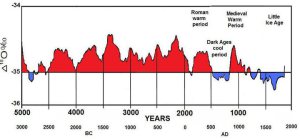
A quick review of 13 dates from previously identified  Global warm and cold periods going back almost 3,000 years gives these average dates for either the bottom or the peak temperature in that period.

The Sub Atlantic Cold Period 363 BC

The Roman Warm Period 365 AD

The Dark Age Cold Period 700 AD

The Medieval Warm Period 1192 AD

The Little Ice Age 1602 AD

The average peak to bottom for these observed Cycles is 491 years or 982 years for a complete cycle. So if we add 491 years to the last bottom which was in 1602 AD that would make the peak of the “current” warming trend 2149 AD This has nothing to do with CO2 although CO2 will add some to the coming peak maybe even 1 degree Celsius.

Basically what this quick 30 minutes study showed is there is nothing to worry about except corrupt politicians.


The Roman Warm Period and Dark Ages Cold Period


Looking at this data it could be inferred that there is a long cycle of cold to warm and back to cold of around 1,000 years — and the extension of that is we are in a long term tern up to the next peak of somewhere around 2150. Then it will turn down again.

simonjmeath's avatarmeathpress

Click to enlarge

UPDATE: In a recent paper, the climate scientist authors refer not to the onset of the Dark Ages Cold Period (c. A.D. 450-950), but to a period of “increased climate variability”. (This variability refers to variations in the hydroclimatic cycle.) The BBC uses the term “climate instability”, which is an amusing term because, of course, the climate is inherently unstable and largely unpredictable. There have been warm periods and cold periods, as well as prolonged droughts and flooding rains, throughout history, and they have been outside of our control or influence.

The paper’s abstract insists that the recent global warming (assuming they mean since the industrial era c. A.D. 1760) is unprecedented, despite acknowledging that past extremes of drought and flood have exceeded anything in the present. So, this begs the question, how can a modern warm period be so unprecedented when it is supposed to increase…

View original post 393 more words

How NSIDC Defrauds The Public With Cherry Picked Graphs


When looking at charts and graphs its always good to make sure the starting point is valid (has been cherry picked) for the purpose of the chart.

Tony Heller's avatarReal Climate Science

NSIDC begins their Arctic sea ice graphs in 1978-1979 – which creates the impression that Arctic sea ice is steadily declining.

ScreenHunter_9611 Jun. 21 08.12Arctic Sea Ice News and Analysis | Sea ice data updated daily with one-day lag

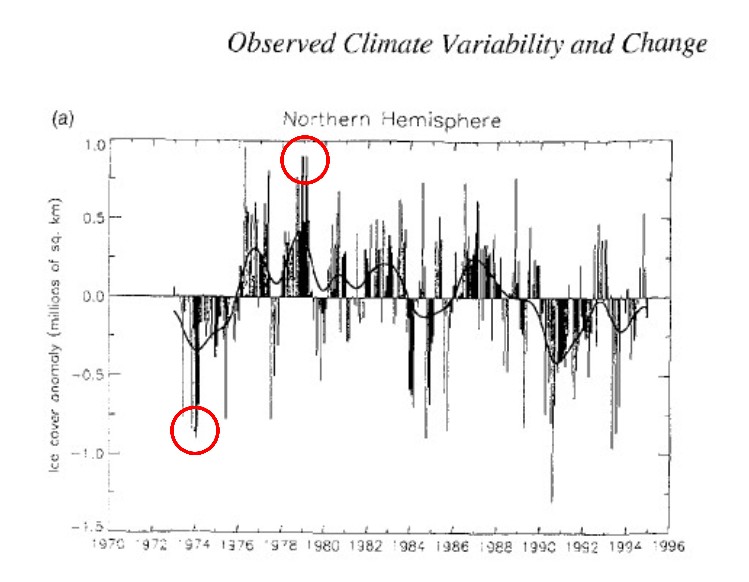
They ignore satellite data prior to 1978, which shows that Arctic sea ice extent was two million km² lower in 1974. The graph below was in the 1995 IPCC report.

ScreenHunter_9610 Jun. 21 08.11

The Arctic is not melting down. It is currently the thickest since 2006, and thickness is about the same (2 meters) as it was 75 years ago.

Bpiomas_plot_daily_heff.2sst (6)Bpiomas_plot_daily_heff.2sst.png (2488×1960)ScreenHunter_7895 Mar. 13 12.22ScreenHunter_7896 Mar. 13 12.26

Papers Past — Auckland Star — 14 December 1940 — WARMER ARCTIC

View original post

UAH, MSU, TLT, and other Acronyms


Good Work and it all makes sense

Stanford research finds climate change regulation burden heaviest on poor


Now if the need to reduce carbon was real we could have a real discussion but since there is no need to reduce carbon and, in fact, more carbon is better this discussion become meanness .

Double the coal power closings?


I would plan for more and more brownouts as sections of the grid drop in and out more frequently

Bob Greene's avatarJunkScience.com

An EIA report says that the Clean Power Plan will result closing 90GW of coal power instead of 40 GW estimated by EPA. 

View original post 114 more words