NATO, EU & Zelensky Reject Any Peace with Russia


Posted originally on Nov 24, 2025 by Martin Armstrong |  

Zelensky 7

I warned those who called me in to draft a peace plan that Kalls (The EU’s female version of Lindsey Olin Graham) and Zelensky are not interested in peace and will sabotage any effort whatsoever to create peace. Zelensky on Monday insisted that any peace plan to end the war must include a recognition of the “aggressor” paying the price, in light of Russia triggering the conflict by invading Ukraine in 2022. Of course, he wants all the Russian frozen money for himself and his corrupt supporter in the EU and his cronies who suspended all elections for him and themselves. He said:

“The aggressor must pay fully for the war he started, and this is why decisions on Russian assets are essential.”

Zelensky in a video address to the Swedish parliament on Monday, arguing that an agreement on the use of frozen Russian assets is a crucial element to any proposal. He does not care about the Ukrainian people. He does NOT want the end of the war for then he no longer has the excuse to remain as an unelected president.

I reiterate my recommendation that the USA EXIT NATO and get the hell out of Europe for there is absolutely no way they will ever accept peace with Russia. I have stressed this in my meetings and we must be concerned about Americans FIRST, not this vendetta Ukraine has against the Russian people. That will never be resolved any more than the hatred between Iran and Israel.

Monopoly R
Monopoly Board

Ukraine will self-destruct. They will never accept peace no matter what. This is not some dispassionate swap of I will you Boardwalk for Park Place. The Donbas has a right to separate. They are ethnically Russian and they will NEVER be free of the hatred of the Ukrainian Nazis.

Ukraine_Hryvnia Y Array 6 16 24 Flatlining
Nuclear Deterence

Our computer has provided a long-term forecast that is unprecedented. I have never seen the computer go FLAT LINE on a country as it has on Ukraine. This is one of the most significant and worrying geopolitical questions of our time. The risk of a nuclear conflict arising from the war in Ukraine cannot be dismissed out of hand. This risk is higher than it has been in decades, and the potential consequences are catastrophic.

It’s crucial to understand that this is not a single risk, but a cascade of potential scenarios. Russia’s stated doctrine allows for the use of nuclear weapons in response to:

  • A nuclear attack on Russia or its allies.
  • An attack with conventional weapons when “the very existence of the state is threatened.”
Kallas _Chinese_Foreign_Minister_Wang_Yi

This is precisely the objective of NATO and the EU – the conquest of Russia. The critical point lies in the phrase “existence of the state.” Russia is well aware that this is NOT a war for Ukraine, this is a war against NATO. This idea that Russia must surrender everything would only invite a third coup in Russia and we would surely end up with a hardliner. A conventional defeat in Ukraine  would be be interpreted by the Kremlin as such an existential threat. China told to Kallas’ face that they were NOT prepared to see Russia lose because they know that they would be next.

The Kallas/EU/NATO counter proposal to me warrants a complete abandonment of NATO by the USA. We MUST get out ASAP!!!! Their plan states:

  • All references to NATO non-expansionone of the US plan’s requirements, have been completely removed.
  • Ukraine’s Armed Forces will be capped at 800,000 personnel. The US plan proposed a limit of 600,000.
  • Ukraine may join NATO if all members reach a consensus. The requirement to enshrine NATO rejection in Ukraine’s Constitution is removed, as is the demand that NATO amend its statutes to bar Ukraine.

This Demonstrated that there is NO interest whatsoever in a lasting peace.

The risk is not of a sudden, unprovoked nuclear strike, but of a conflict escalating through a series of steps cannot be dismissed at this point. Tactical vs. Strategic Use:

  • A “limited” tactical nuclear weapon (or demonstration strike) might be used on a military target in Ukraine to:
  • Shock Ukraine and its allies into submission.
  • Break a Ukrainian battlefield breakthrough that threatens a catastrophic Russian defeat (e.g., the collapse of frontline forces).
  • Signal Russia’s absolute commitment and shatter Western resolve.

Accident or Miscalculation:

  • The intense conventional warfare, with strikes deep inside Russian-occupied territory and attacks on Russian military assets (like the Black Sea Fleet), increases the chance of an incident that could spiral out of control. Kallas has been advocating the total destruction of the Russian shadow fleet under the theory that would collapse the Russian economy. Of course, she directs Ukraine to do it pretending this is not NATO or the EU. They just provide the gun and tell Zelensky to pull the trigger.
  • With Zelensky deliberately attaching Russian energy assets with the intent of destroying their econom is a direct threat against Russia itself and that certainly falls within their definition to use nuclear weapons. Such a strike that intentionally or accidentally kills high-level Russian officials or causes mass casualties on Russian soil would trigger a disproportionate response.

Involving NATO Directly:

If a Russian strike (conventional or nuclear) were to spill over onto NATO territory (e.g., in Poland or Romania), even by accident, it would invoke Article 5 and would answer the prayers of Kallas and and launch a direct NATO-Russia conflict, which would carry an immense nuclear risk.

Russia’s Warning are Twisted by the Press as threats

Russian officials have repeatedly warned the West that they are courting nuclear war. They know the truth that this has been orchestrated by the NATO and the Neocons who has usurped American Foreign Policy and the dishonesty pf German Chancellor Merkle negotiating the Minsk Agreement with no intent of allowing the Donbas to separate as she admitted it was to buy time for NATO to train a Ukrainian army to wage war on Russia.  threats since the invasion began. Russia’s warning are taken by the press as threats rather than warnings that the European leaders are courting the destruction of Europe. The Neocons and NATO present this to the press as a form of coercion designed to deter deeper Western involvement. The Western Press is not concerned with war, but is cheering it on.

Factors That Mitigate the Risk

Massive Retaliation and Deterrence:

  • The United States and NATO have made it explicitly clear that any use of nuclear weapons by Russia would have “catastrophic consequences.” While they have not detailed the response, the implied threat is a conventional or even nuclear counter-strike. This creates a powerful deterrent.
  • The laughable claim that any tactical nuclear weapon would achieve militarily in Ukraine would contaminate territory Russia hopes to control, alienate key partners like China and India, and likely unite the West rather than break it. This is absurd since China already is preparing for World War III and has 50%+ of the total wheat reserves that the West does not, and contaminating the territory of Ukraine, which is the breadbasket for the EU, would undering NATO and Russia has no such interest in occupying Ukraine. Their goal has been to protect the Russians in the Donbas.

International Condemnation:

  • The other laughable claim that a nuclear strike would turn Russia into a global pariah overnight. China, which has a “no first use” policy, would likely be forced to distance itself significantly. China knows that World War III is coming and said to Kallas’ face that they were NOT prepared to allow Russia to lose because they would be next.

Risk of a Russia Coup:

  • The decision to use a nuclear weapon rests solely with Putin. The Russian military chain of command is tightly controlled, reducing the risk of an unauthorized launch, but raising the risk of a single decision-maker’s miscalculation. Any attempt to embarrass Putin risks a coup and his replacement with a real harliner who is fully aware that NATO and the EU are behind this war and they do not want any lasting peace.
  • Putin is a calculated actor, not a suicidal one like the Neocons or NATO, and understands the existential risks for Russia and the world. But he must defend Russia for this is an existential threat for the total destruction of Russia.
  • However, nearly all agree intelligence agencies acknowledge that the risk of nuclear war is at its highest point since the Cuban Missile Crisis. It is no longer a theoretical academic discussion but a active part of military and political planning in Western capitals.
  • The risk is not static. It fluctuates with the fortunes of war. A major Ukrainian success or a perceived desperation in the Kremlin would cause the risk to spike.

Conclusion

The risk of nuclear war over Ukraine is a real and present danger, and given the actors like Kallas, Zelensky, and the Neocon running NATO, this has become an imminent likelihood rather than just a theatrical discussion. What is clear is that nuclear weapons are no longer a deterrent. NATO keeps telling leaders Russia will never push the button so they can invade and take Russia in days if not weeks.

Boris_Johnson_We_are_in_a_proxy_war_against_Russia_

The primary risk is one of escalation through miscalculation. by NATO, Kallas (the EU Lindsey Graham) that they can utterly destroy Russia with no nuclear weapons. The West is walking a fine line waging war against Russia while pretending they are not directly involved,

DO NOT TRAVEL TO EUROPE POST-APRIL 2026

Sunday Talks: Secretary Scott Bessent -vs- Kirsten Welker


Posted originally on CTH on November 23, 2025 | Sundance 

Treasury Secretary Scott Bessent appears on Meet the Press to debate Kirsten Welker’s formatted corporate media talking points.  The source of most American division is found in the behavior of the media.

Video and Transcript Below:

[TRANSCRIPT] – KRISTEN WELKER: And joining me now is Treasury Secretary Scott Bessent. Secretary Bessent, welcome back to Meet the Press.

Good to see you this morning, Senator.

SEN. MARK WARNER (D-VA), INTELLIGENCE COMMITTEE VICE CHAIR: Good morning, Martha.

RADDATZ: What is your reaction to this peace proposal that is on the table?

WARNER: My reaction is it’s awful. It would make Neville Chamberlain’s giving in to Hitler outside of World War II looks strong in comparison. The fact that this was almost a series of Russian talking points, would require Ukraine to give the — totality of the Donbas, parts they still control, cut back their military forces going forward, never be able to join NATO.

This would be a complete capitulation. And it’s why I think you’re hearing from Congress, both sides, people pushing back. And, obviously, the Europeans feel like they’ve been totally left high and dry.

MARTHA RADDATZ, ABC “THIS WEEK” CO-ANCHOR: You’ve heard the deadline from President Trump, but then him saying that’s not — there’s room for negotiation here, it seems like. So, what do you think happens after today (ph)?

WARNER: I think what happens — it feels like this was a plan that they took almost entirely from the Russians, did no consultation with Congress, no consultation with the Europeans, obviously didn’t read in Zelenskyy and the Ukrainians, and now they’re getting ferocious pushback. So, one more time, Trump is changing his deadline.

Of course, how he picked Thanksgiving to start with, I have no idea. But now it — even with this — some of this back and forth that it’s not really an American plan, or isn’t an American plan, this is the kind of chaos that, unfortunately, represents so much of the Trump foreign policy.

RADDATZ: So, what do you think President Zelenskyy should do? He’s been through this before. It’s kind of back and forth with this White House. They support you. They pull it back. Do you think all of this, this proposal, which seems to heavily favor Russia, is that just a starting point again?

WARNER: Well, I would hope — I would hope so. Again, the Ukrainians have performed magnificently in the field. And they are reinventing the nature of warfare in terms of use — use of drones. To have this proposal forced upon them, I think as Zelenskyy said, Ukrainian dignity versus giving up a partner, I would hope the president would not be so weak as to try to force this plan on the Ukrainian and our other allies. It would, I think, send not only a horrible signal for Europe, but the person who’s watching this probably the most closely is President Xi in China. And if the Americans are willing to throw in their towel so much like this on Ukraine, you can bet that Xi is thinking, this gives him a clearer path in terms of taking Taiwan.

RADDATZ: But what does Zelenskyy do here? If on Thursday the president says, I’m telling you right now, take what we’ve got on the table and — and there will probably be some changes, or we’re done. What — what does Zelenskyy do, just hope that Europe rises and helps him out?

WARNER: Well, let’s — let’s, again, you have overwhelming support still for Ukraine. The last Ukraine aid package had 80 percent of the Congress. I think the president is seeing this one-sided plan kind of blow up in his face with pushback from the Ukrainians, from the Europeans, from members of Congress of his own party. And my hope is, he’ll come back and be a bit more reasonable.

RADDATZ: I want to turn to Venezuela. We’re all watching that this week. What can you tell us about what you think happens now. We’ve got this massive buildup. We’ve got this massive show of force. We have airline who aren’t — that aren’t flying there because of all the activity and the military activity right now.

Do you expect something more to happen?

WARNER: Well, historically, the United States’ intervention in Central America or South America has not always rolled out the way we’d hope. Maduro was a bad guy, frankly, under Biden. When the Venezuelan people voted in overwhelming numbers, Biden should have put more pressure on getting Maduro out then. It was a mistake.

But now, to have this much armed forces, we have not been briefed on any military action that would have been authorized. He keeps putting the word out that maybe he has authorized, maybe he’s not. We are trying to get the answer on that. But there is a real question. You know, to take this big a fleet, bring our largest aircraft carrier, put them there to further blow up boats that they claim have drugs on them, frankly they could have interdicted some of those boats and shown the world that there were drugs.

In terms of Venezuela, the legal opinion about the drug run — drug running doesn’t touch Venezuela at all. So, the president would have to come back and brief us.

RADDATZ: Trump says he’ll be speaking with Venezuelan President Nicolas Maduro. Do you think that is a good idea? And what can you say to him?

WARNER: Because I think the notion that Trump says he’ll talk to anyone, I think that is — I’m not going to critique him on that, if there’s a way to push Maduro out. Remember, our government and fifty other governments, almost all of Western Europe, don’t recognize the Maduro government as legitimate. But it does not feel like there is an organized plan. And coming down again, America only, without any of our other allies in South America or Central America again seems not the right approach to me.

RADDATZ: What could happen short of a show of force? When you have that massive a show of force, it’s almost like, you’re in a position where you have to do something or you might look weak. Short of Maduro saying, OK, I’ll leave, then what does he do?

WARNER: Well, again, that’s the million-dollar question. And as you know, when you’ve got this many forces down there, and you can’t keep the carrier positioned there forever, you also have the chance of an accident happening or a conflict between the Venezuelan air force or some of our planes that might —

RADDATZ: Do you think he wants to go to war with Venezuela? Do you think he wants (INAUDIBLE) —

WARNER: I don’t know. I don’t know. I think he is trying to put outside pressure on Maduro. But by doing it in this kind of America only approach, again without giving any sign to, I think, even his — the Republicans on The Hill what his plans are, I’m not sure is the right way to do foreign policy. You couple this Venezuela misadventure with this desertion of Ukraine and this is not making America safer, and it’s sure not putting America first.

RADDATZ: Thanks very much for joining us, Senator. Always appreciate it.

[End Transcript]

Sunday Talks – Senator Mark Warner Not Happy with Ukraine Peace Proposal – Video and Transcript


Posted originally on CTH on November 23, 2025 | Sundance 

Sometimes it pays to remind what Marco Rubio said back in February, “Ukraine is a proxy war between the U.S. and Russia.”  From that context the remarks from SSCI Vice-Chair, Senator Mark Warner, make sense.

Warner appears on ABC News ‘This Week’ to denounce the peace proposal now being negotiated in Geneva, Switzerland between Secretary Rubio and the Ukrainian delegation.  Senator Warner makes it clear he will not accept the end to conflict in Ukraine.  Video and Transcript Below:

[TRANSCRIPT] – Senate Intelligence Committee Vice Chair Mark Warner joins me now.

Good to see you this morning, Senator.

SEN. MARK WARNER (D-VA), INTELLIGENCE COMMITTEE VICE CHAIR: Good morning, Martha.

RADDATZ: What is your reaction to this peace proposal that is on the table?

WARNER: My reaction is it’s awful. It would make Neville Chamberlain’s giving in to Hitler outside of World War II looks strong in comparison. The fact that this was almost a series of Russian talking points, would require Ukraine to give the — totality of the Donbas, parts they still control, cut back their military forces going forward, never be able to join NATO.

This would be a complete capitulation. And it’s why I think you’re hearing from Congress, both sides, people pushing back. And, obviously, the Europeans feel like they’ve been totally left high and dry.

MARTHA RADDATZ, ABC “THIS WEEK” CO-ANCHOR: You’ve heard the deadline from President Trump, but then him saying that’s not — there’s room for negotiation here, it seems like. So, what do you think happens after today (ph)?

WARNER: I think what happens — it feels like this was a plan that they took almost entirely from the Russians, did no consultation with Congress, no consultation with the Europeans, obviously didn’t read in Zelenskyy and the Ukrainians, and now they’re getting ferocious pushback. So, one more time, Trump is changing his deadline.

Of course, how he picked Thanksgiving to start with, I have no idea. But now it — even with this — some of this back and forth that it’s not really an American plan, or isn’t an American plan, this is the kind of chaos that, unfortunately, represents so much of the Trump foreign policy.

RADDATZ: So, what do you think President Zelenskyy should do? He’s been through this before. It’s kind of back and forth with this White House. They support you. They pull it back. Do you think all of this, this proposal, which seems to heavily favor Russia, is that just a starting point again?

WARNER: Well, I would hope — I would hope so. Again, the Ukrainians have performed magnificently in the field. And they are reinventing the nature of warfare in terms of use — use of drones. To have this proposal forced upon them, I think as Zelenskyy said, Ukrainian dignity versus giving up a partner, I would hope the president would not be so weak as to try to force this plan on the Ukrainian and our other allies. It would, I think, send not only a horrible signal for Europe, but the person who’s watching this probably the most closely is President Xi in China. And if the Americans are willing to throw in their towel so much like this on Ukraine, you can bet that Xi is thinking, this gives him a clearer path in terms of taking Taiwan.

RADDATZ: But what does Zelenskyy do here? If on Thursday the president says, I’m telling you right now, take what we’ve got on the table and — and there will probably be some changes, or we’re done. What — what does Zelenskyy do, just hope that Europe rises and helps him out?

WARNER: Well, let’s — let’s, again, you have overwhelming support still for Ukraine. The last Ukraine aid package had 80 percent of the Congress. I think the president is seeing this one-sided plan kind of blow up in his face with pushback from the Ukrainians, from the Europeans, from members of Congress of his own party. And my hope is, he’ll come back and be a bit more reasonable.

RADDATZ: I want to turn to Venezuela. We’re all watching that this week. What can you tell us about what you think happens now. We’ve got this massive buildup. We’ve got this massive show of force. We have airline who aren’t — that aren’t flying there because of all the activity and the military activity right now.

Do you expect something more to happen?

WARNER: Well, historically, the United States’ intervention in Central America or South America has not always rolled out the way we’d hope. Maduro was a bad guy, frankly, under Biden. When the Venezuelan people voted in overwhelming numbers, Biden should have put more pressure on getting Maduro out then. It was a mistake.

But now, to have this much armed forces, we have not been briefed on any military action that would have been authorized. He keeps putting the word out that maybe he has authorized, maybe he’s not. We are trying to get the answer on that. But there is a real question. You know, to take this big a fleet, bring our largest aircraft carrier, put them there to further blow up boats that they claim have drugs on them, frankly they could have interdicted some of those boats and shown the world that there were drugs.

In terms of Venezuela, the legal opinion about the drug run — drug running doesn’t touch Venezuela at all. So, the president would have to come back and brief us.

RADDATZ: Trump says he’ll be speaking with Venezuelan President Nicolas Maduro. Do you think that is a good idea? And what can you say to him?

WARNER: Because I think the notion that Trump says he’ll talk to anyone, I think that is — I’m not going to critique him on that, if there’s a way to push Maduro out. Remember, our government and fifty other governments, almost all of Western Europe, don’t recognize the Maduro government as legitimate. But it does not feel like there is an organized plan. And coming down again, America only, without any of our other allies in South America or Central America again seems not the right approach to me.

RADDATZ: What could happen short of a show of force? When you have that massive a show of force, it’s almost like, you’re in a position where you have to do something or you might look weak. Short of Maduro saying, OK, I’ll leave, then what does he do?

WARNER: Well, again, that’s the million-dollar question. And as you know, when you’ve got this many forces down there, and you can’t keep the carrier positioned there forever, you also have the chance of an accident happening or a conflict between the Venezuelan air force or some of our planes that might —

RADDATZ: Do you think he wants to go to war with Venezuela? Do you think he wants (INAUDIBLE) —

WARNER: I don’t know. I don’t know. I think he is trying to put outside pressure on Maduro. But by doing it in this kind of America only approach, again without giving any sign to, I think, even his — the Republicans on The Hill what his plans are, I’m not sure is the right way to do foreign policy. You couple this Venezuela misadventure with this desertion of Ukraine and this is not making America safer, and it’s sure not putting America first.

RADDATZ: Thanks very much for joining us, Senator. Always appreciate it.

[End Transcript]


Secretary of State Marco Rubio Holds a Press Conference from Geneva Switzerland During Discussions with Ukraine Officials


Posted originally on CTH on November 23, 2025 | Sundance

Delegations from Ukraine and the USA have been holding talks in Geneva on a draft peace plan. No statement has been officially released, but Ukraine and Russia had received the draft 28-point plan aimed at ending the war. President Trump put the general deadline date of Thursday for review.

Russian Federation President Vladimir Putin has said the plan could form the basis of an agreement, but Ukraine and its European money laundering stakeholders have expressed concern. Giving a brief update during discussions, Secretary of State Marco Rubio said the US and Ukrainian teams had held “probably the best meeting” since Trump returned to office.

Negotiations continued all day with Secretary Rubio noting significant progress has been made and talks will continue into tomorrow. Rubio noted, “we just need more time.” WATCH:

Ukraine President Volodymyr Zelenskyy has been using his X Account all day to message with allies and “stakeholders” about the negotiations.  Zelenskyy is the performative face of opposition to the peace agreement and leveraging external pressure to maintain a fight that domestically has lost significant support.

President Trump has expressed frustration with Zelenskyy’s intransigence; however, if the reporting is accurate Zelenskyy has been informed this 26 or 28 point proposal is his last opportunity to negotiate in good faith before President Trump cuts off all assistance to Ukraine.   Secretary Rubio seems very optimistic.

President Trump Gives Zelenskyy a Week to Discuss Latest Ceasefire and Peace Proposal


Posted originally on CTH on November 21, 2025 | Sundance 

President Trump confirmed on Fox News (during an interview with Brian Kilmeade) he gave Ukraine President Volodymyr Zelenskyy a week to review the 28-point peace proposal organized by Secretary of State Marco Rubio and Special Envoy Steve Witkoff.

Ukraine will likely never agree to the proposal, because too many European and American interests are grounded in maintaining conflict between Russia and Ukraine.  However, the shift this time is that if Ukraine/EU/NATO and Congress do not agree to the ceasefire and peace proposal, President Trump has indicated he will withdraw all support.

Axios originally obtained the 28-page proposal, and Politico has confirmed it.

.

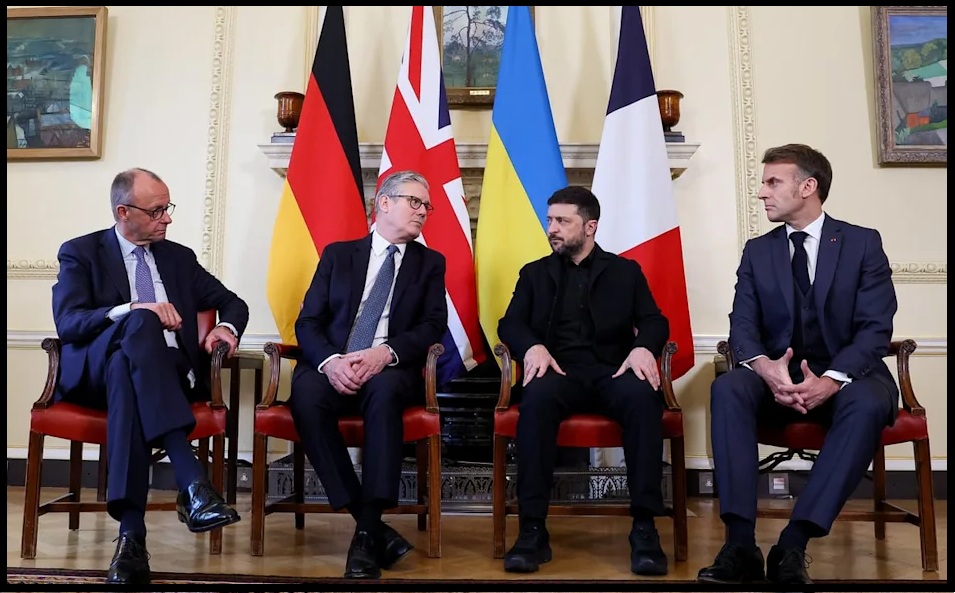
Zelenskyy – “President of Ukraine Volodymyr Zelenskyy held a joint phone call with President of France Emmanuel Macron, Prime Minister of the United Kingdom Keir Starmer, and Federal Chancellor of Germany Friedrich Merz.

The Head of State thanked them for their principled support for Ukraine and for all our people.

The parties discussed the plan for peace for Ukraine and all of Europe. The leaders value the efforts of the United States, President Trump, and his team aimed at ending this war, and are working on the document prepared by the American side. This must be a plan that ensures a real and dignified peace.

The leaders are coordinating closely to make sure that the principled stances are taken into account. Volodymyr Zelenskyy, Emmanuel Macron, Keir Starmer, and Friedrich Merz coordinated the next steps and agreed that the teams will work together at the corresponding levels.” (link)

1. Ukraine’s sovereignty will be confirmed.

2. A comprehensive non-aggression agreement will be concluded between Russia, Ukraine and Europe. All ambiguities of the last 30 years will be considered settled.

3. It is expected that Russia will not invade neighboring countries, and NATO will not expand further.

4. A dialogue will be held between Russia and NATO, mediated by the United States, to resolve all security issues and create conditions for de-escalation in order to ensure global security and increase opportunities for cooperation and future economic development.

5. Ukraine will receive reliable security guarantees.

6. The size of the Ukrainian Armed Forces will be limited to 600,000 personnel.

7. Ukraine agrees to enshrine in its constitution that it will not join NATO, and NATO agrees to include in its statutes a provision that Ukraine will not be admitted in the future.

8. NATO agrees not to station troops in Ukraine.

9. European fighter jets will be stationed in Poland.

10. The U.S. guarantee:

•The U.S. will receive compensation for the guarantee;
•If Ukraine invades Russia, it will lose the guarantee;
•If Russia invades Ukraine, in addition to a decisive coordinated military response, all global sanctions will be reinstated, recognition of the new territory and all other benefits of this deal will be revoked;
•If Ukraine launches a missile at Moscow or St. Petersburg without cause, the security guarantee will be deemed invalid.

11. Ukraine is eligible for EU membership and will receive short-term preferential access to the European market while this issue is being considered.

12. A powerful global package of measures to rebuild Ukraine, including but not limited to:

•The creation of a Ukraine Development Fund to invest in fast-growing industries, including technology, data centers, and artificial intelligence.
•The United States will cooperate with Ukraine to jointly rebuild, develop, modernize, and operate Ukraine’s gas infrastructure, including pipelines and storage facilities.
•Joint efforts to rehabilitate war-affected areas for the restoration, reconstruction and modernization of cities and residential areas.
•Infrastructure development.
•Extraction of minerals and natural resources.
•The World Bank will develop a special financing package to accelerate these efforts.

13. Russia will be reintegrated into the global economy:

•The lifting of sanctions will be discussed and agreed upon in stages and on a case-by-case basis.
•The United States will enter into a long-term economic cooperation agreement for mutual development in the areas of energy, natural resources, infrastructure, artificial intelligence, data centers, rare earth metal extraction projects in the Arctic, and other mutually beneficial corporate opportunities.
•Russia will be invited to rejoin the G8.

14. Frozen funds will be used as follows:

•$100 billion in frozen Russian assets will be invested in US-led efforts to rebuild and invest in Ukraine;
•The US will receive 50% of the profits from this venture. Europe will add $100 billion to increase the amount of investment available for Ukraine’s reconstruction. Frozen European funds will be unfrozen. The remainder of the frozen Russian funds will be invested in a separate US-Russian investment vehicle that will implement joint projects in specific areas. This fund will be aimed at strengthening relations and increasing common interests to create a strong incentive not to return to conflict.

15. A joint American-Russian working group on security issues will be established to promote and ensure compliance with all provisions of this agreement.

16. Russia will enshrine in law its policy of non-aggression towards Europe and Ukraine.

18. Ukraine agrees to be a non-nuclear state in accordance with the Treaty on the Non-Proliferation of Nuclear Weapons.

19. The Zaporizhzhia Nuclear Power Plant will be launched under the supervision of the IAEA, and the electricity produced will be distributed equally between Russia and Ukraine — 50:50.

20. Both countries undertake to implement educational programs in schools and society aimed at promoting understanding and tolerance of different cultures and eliminating racism and prejudice:

•Ukraine will adopt EU rules on religious tolerance and the protection of linguistic minorities.
•Both countries will agree to abolish all discriminatory measures and guarantee the rights of Ukrainian and Russian media and education. (Note: Similar ideas were incorporated into Trump’s 2020 Israel-Palestine peace plan).
•All Nazi ideology and activities must be rejected and prohibited.

21. Territories:

•Crimea, Luhansk and Donetsk will be recognized as de facto Russian, including by the United States.
•Kherson and Zaporizhzhia will be frozen along the line of contact, which will mean de facto recognition along the line of contact.
•Russia will relinquish other agreed territories it controls outside the five regions.
•Ukrainian forces will withdraw from the part of Donetsk Oblast that they currently control, and this withdrawal zone will be considered a neutral demilitarized buffer zone, internationally recognized as territory belonging to the Russian Federation. Russian forces will not enter this demilitarized zone

22. After agreeing on future territorial arrangements, both the Russian Federation and Ukraine undertake not to change these arrangements by force. Any security guarantees will not apply in the event of a breach of this commitment.

23. Russia will not prevent Ukraine from using the Dnieper River for commercial activities, and agreements will be reached on the free transport of grain across the Black Sea.

24. A humanitarian committee will be established to resolve outstanding issues:

•All remaining prisoners and bodies will be exchanged on an ‘all for all’ basis.
•All civilian detainees and hostages will be returned, including children.
•A family reunification program will be implemented.
•Measures will be taken to alleviate the suffering of the victims of the conflict.

25. Ukraine will hold elections in 100 days.

26. All parties involved in this conflict will receive full amnesty for their actions during the war and agree not to make any claims or consider any complaints in the future.

27. This agreement will be legally binding. Its implementation will be monitored and guaranteed by the Peace Council, headed by President Donald J. Trump. Sanctions will be imposed for violations

28. Once all parties agree to this memorandum, the ceasefire will take effect immediately after both sides retreat to agreed points to begin implementation of the agreement.

VIA POLITICO – ““Now the pressure on Ukraine is one of the most difficult. Now Ukraine may find itself facing a very difficult choice. Either loss of dignity, or the risk of losing a key partner,” Zelenskyy said, in reference to the U.S., where Trump has long been skeptical of fully backing Kyiv’s war effort.

“They will expect an answer from us,” Zelenskyy said about the peace proposal. “Although in fact I have already given it,” he added, citing the oath he took when he entered office in 2019 to defend Ukraine’s sovereignty.” (LINK)

Prime Minister Viktor Orban Publicly Calls Out the Ukraine Corruption and Western Money Laundering Operation


Posted originally on CTH on November 14, 2025 | Sundance

Hungarian Prime Minister Viktor Orban has had enough.  The European Union is consistently targeting him for his position against the Russia-Ukraine conflict, and western elements of the intelligence apparatus have been trying to undermine Orban’s government for years.

Against the most recent revelations of direct corruption connected to the government of Ukraine President Volodymyr Zelenskyy, Orban says, “enough.”

Prime Minister Orban – “The golden illusion of Ukraine is falling apart. A wartime mafia network with countless ties to President [Zelensky has been exposed. The energy minister has already resigned, and the main suspect has fled the country.

This is the chaos into which the Brusselian elite want to pour European taxpayers’ money, where whatever isn’t shot off on the front lines ends up in the pockets of the war mafia. Madness.

Thank you, but we want no part of this. We will not send the Hungarian people’s money to Ukraine. It can be put to far better use at home: this week alone we doubled foster parents’ allowances and approved the 14th month’s pension.

Anyhow, after all this, we certainly won’t give in to the Ukrainian president’s financial demands and blackmail. It’s high time Brussels finally understood where their money is really going.” [SOURCE]

PM Orban and President Donald Trump are allies and personal friends. No doubt they both spoke about this.

Secretary of State Marco Rubio Holds a Press Conference on Ukraine Conflict and Narco Terrorist Strikes


Posted originally on CTH on November 12, 2025 | Sundance 

Secretary of State Marco Rubio holds a press conference with the traveling State Dept press pool following the G7 foreign ministers meeting.

Secretary Rubio was questioned about Russia’s attacks on Ukraine and the EU position against the USA on the narco terrorist strikes toward Central America.  Secretary Rubio sets the record straight.  WATCH:

On Sudan: “The horrifying reports of the massacre of hundreds of Sudanese civilians after the Darfur city of El Fasher was captured by the rebel Rapid Support Forces (RSF) last week were the latest chapter in a brutal conflict that has killed more than 150,000 people over the past two and a half years.” (read more)

National Anti-Corruption Bureau of Ukraine (NABU) Nabs More Corrupt Ukraine Officials Connected to Zelenskyy


Posted originally on CTH on November 10, 2025 | Sundance

The NABU (National Anti-Corruption Bureau of Ukraine) names another batch of corrupt Ukraine officials connected to Volodymyr Zelenskyy.  Quickly jumping into action, Zelenskyy shouts ‘prosecute them’.

Having previously said the NABU needs to be shutdown, “President Volodymyr Zelenskyy has [now] said he supports the ongoing investigation by the National Anti-Corruption Bureau of Ukraine (NABU) and the Specialised Anti-Corruption Prosecutor’s Office (SAPO) into corruption in the energy sector. Although Zelenskyy did not name names, reports suggest that an associate of his may be involved in the case.” {source}

I have personally seen these corrupt Ukraine characters (politicians and private sector oligarchs) in action, literally spending tens-of-thousands of U.S. taxpayer funds (in cash) at the Port of Montenegro while I was tracking them in 2023 and 2024.  They were staying in massive suites at the Regent Hotel; so please, don’t try to sell me on the honorable Ukraine politician schtick.

The U.S CIA and NATO members in the EU, together with Interpol, intentionally turn a blind eye to it.  The FBI has a current active investigation into it, only intended to control the USA public’s knowledge of it because Ukraine corruption surfaces as a threat to the DC laundry operation that funds it.

Don’t forget to check the federal bank straps on the cash.

In the most recent development: Ukrainska Pravda sources reported that on the morning of 10 November, NABU detectives conducted searches at the home of Tymur Mindich, a businessman and co-owner of Kvartal 95, the Ukrainian TV production company Volodymyr Zelenskyy founded before he became president.

According to the same sources, Mindich left Ukraine hours before the search began.

NABU confirmed that, together with SAPO, it is conducting a large-scale operation to expose corruption in the energy sector.

The investigators have uncovered an extensive corruption network influencing strategic state companies, including the state-owned nuclear energy company Energoatom.

NABU and SAPO have released part of the audio recordings from Operation Midas, their investigation into the large-scale corruption scheme in the energy sector.

Energoatom confirmed that on 10 November, investigative actions were being conducted at its headquarters by representatives of NABU and SAPO. (read more)

Secretary Marco Rubio Delivers Remarks with Leaders from Kazakhstan, Uzbekistan, Tajikistan, Turkmenistan, and the Kyrgyz Republic


Posted originally on CTH on November 8, 2025 | Sundance 

Secretary of State Marco Rubio delivers remarks from the State Department during an assembly of leaders from Kazakhstan, Uzbekistan, Tajikistan, Turkmenistan, and the Kyrgyz Republic (C5+1) alongside senior U.S. Senate leaders and ambassadors.

As noted by Secretary Rubio, a partnership with the Central Asia region provides an alternative to the influence of Russia and China, and permits the nations within the region to expand their independent economic development.   Kazakhstan Foreign Minister Yermek Kosherbayev, Kyrgyz Republic Foreign Minister Jeenbek Kulubaev, Tajikistan Foreign Minister Sirojiddin Muhriddin, Turkmenistan Foreign Minister Rashid Meredov, and Uzbekistan Foreign Minister Bakhtiyor Saidov all participated.  {Direct Rumble LinkWATCH:

WATCH: Secretary Rubio delivers remarks at the C5+1 welcome reception

Interview: Ukraine-Russia Peace, Gold Silver Tariffs, Canada 51st State


Posted originally on Nov 8, 2025 by Martin Armstrong |