Posted originally on CTH on December 13, 2025 | Sundance |
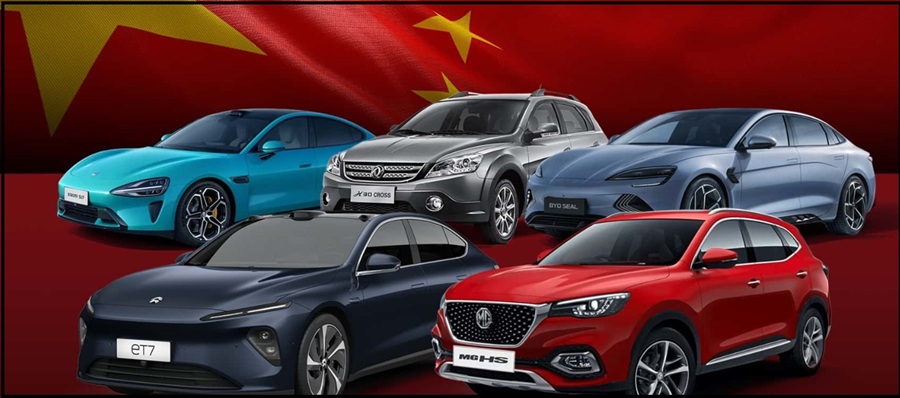
The geopolitical baseline for Europe is often determined by the economics of their situation. In 2024 approximately 408,000 cars from China were sold in Europe. For 2025 that number is now expected to exceed 700,000 units despite tariffs.
Previously we highlighted the short-term ramifications of the European Union push to force the sale of electric vehicle (EVs) upon the consumer base. {SEE HERE} EU automakers unable to meet the compliance goal began purchasing carbon credits to avoid stiff EU fines. Many of those carbon credits were purchased from Chinese automakers, who then turned around and started using the extra EU revenue to discount Chinese cars sold in Europe.
In essence, EU car companies started subsiding China to undercut their own market. An outcome of the EU chasing the ridiculous green energy project throughout the European free trade zone.
Now reports are beginning to surface of how the non-EV segment of the industry is being lost to less expensive Chinese hybrid autos that: (1) are much cheaper, (2) not bad in quality, and (3) are not subject to the 35% EV tariff rate.
The EU tariff applied to gasoline powered cars or hybrids from China is 10%. That tariff is not enough to stop the imports. The Chinese hybrid autos are substantially less than European car brands, and there’s no financial incentive for China to build auto plants in the EU zone especially when you consider the EU is subsidizing those cars by purchasing carbon credits.
When analyzed from a cost and consequence, the entire EU dynamic toward car companies is a little funny. However, for Germany this is a serious issue, and with the German industrial economy already stagnant – every impact to their auto industry only makes the situation worse.
When you overlay the big picture of their expensive “green energy” costs, the EU find themselves in an unescapable downward spiral. Quite literally, all commonsense seems to have been lost in their green energy chase.
By focusing on energy targets, specifically by trying to force production of European electric vehicles that are not favored by European car purchasers, the EU is shrinking their economy to the benefit of Beijing exploitation.
EUROPE – This year, sales of Chinese-made cars across the EU, UK, and EFTA are expected to exceed 700,000. This is up significantly from the 408,000 that were sold in 2024.
The surge comes despite the fact that additional tariffs of up to 35 percent, on top of the existing 10 percent import duty, were instated in November of last year.
Rather than dampen demand, the tariffs have simply redirected it. While the added fees specifically target EVs and extended-range electric vehicles, hybrid and internal combustion engine (ICE) models remain subject only to the base 10 percent tariff.
Predictably, Chinese brands have leaned into that category, shifting their European strategy toward models that sidestep the higher costs.
Thanks to significantly lower production costs, up to 30 percent cheaper than in Europe, it doesn’t make financial sense for these brands to relocate production just to serve a tariff-guarded market. Instead, they’re exploiting the gap. (read more)
The only Chinese auto plant current in the works for construction is in Hungary, not coincidentally the country with the most common sense as it applies to energy costs. BYD (Build Your Dream) is building a plant in Hungary expected to manufacture 150,000 units/yr.
While most EVs are generally best for short duration use, the Chinese hybrid vehicles are not a terrible build quality if you are an auto purchaser that changes vehicles frequently. We dodged a bullet by electing President Trump in 2024, because Joe Biden (Blackrock) had positioned the North American auto industry toward a similar fate as currently happening in Europe.
The Europeans and leftists in the U.S. scoffed at President Trump for rejecting the premise behind the Green New Deal, which included electric car mandates. Those same Europeans are now watching as their industrial economy collapses segment by segment; taken over by far cheaper Chinese industrial outputs.
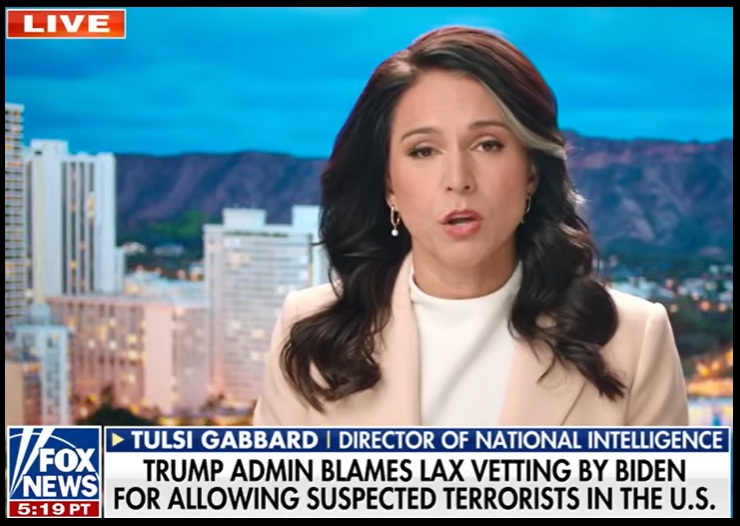
Director of National Intelligence Tulsi Gabbard appears on Fox News to discuss the Trump administrations’ effort to track down, capture and remove a reported 18,000 known and documented terrorists who crossed the southern border and entered the U.S. during the Biden administration.
There are several elements to this issue, and unfortunately the aspect that pertains to identifying them and locating them works to enhance the argument of those who support govt surveillance. In fact, both the use of Palantir track and trace technology in combination with the FISA-702 reauthorization come into play here.
I would argue, as I have since 2022, that one of the reasons the DC administrative state allowed the Biden regime to create this national security threat, was specifically so they could justify the creation and use of a national identity surveillance net.
Washington DC supported the creation of the borderless crisis, in part to ensure the need for their surveillance solution. This puts the efforts of DNI Gabbard into a catch-22 scenario as witnessed in the questioning before congress of DHS Secretary Kristi Noem. WATCH:
.
DNI Tulsi Gabbard and DHS Secretary Kristi Noem are trying to remove thousands of national security threats and deport millions of illegal aliens. The tools they need to track and identify those threats are the tools DC wants to retain against everyone, not just the threats.
In order to keep the pitchforks away, Washington DC has filled the haystack with needles. Gabbard (DNI), Noem (DHS) and Homan (ICE) are using metal detectors while the DC UniParty keeps operating the needle-making machinery.
Posted originally on CTH on December 11, 2025 | Sundance
Tina Peters is a gold star mom who was a former Mesa County, Colorado, clerk during the 2020 election.
Mrs Peters, age 70, is serving a nine-year prison sentence in Colorado state prison after her politically motivated conviction for attempting to influence a public servant and criminal impersonation for aiding an unauthorized person in copying voting-machine hard-drive data during a 2021 software update.
Mrs. Peters and her lawyers have repeatedly stated she was attempting to preserve evidence of false voter data in the Colorado 2020 election. The judge who sentenced Peters stated she had white “privilege” in delivering the exceptionally harsh sentence.
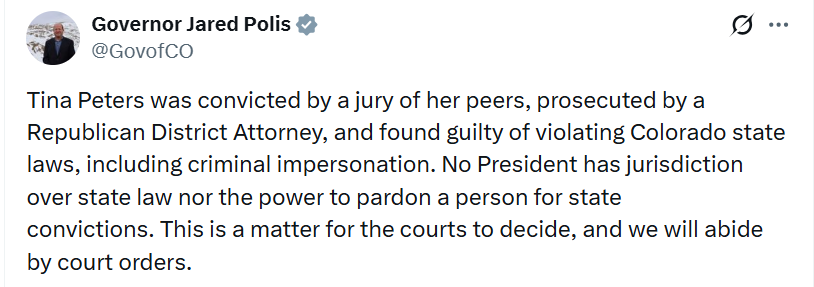
Today President Trump pardoned Tina Peters, but state officials and Colorado Governor Jared Polis say the pardon is invalid because Mrs. Peters was convicted of a state crime, out of the reach of a presidential pardon.
PRESIDENT TRUMP – “For years, Democrats ignored Violent and Vicious Crime of all shapes, sizes, colors, and types. Violent Criminals who should have been locked up were allowed to attack again. Democrats were also far too happy to let in the worst from the worst countries so they could rip off American Taxpayers. Democrats only think there is one crime – Not voting for them!
Instead of protecting Americans and their Tax Dollars, Democrats chose instead to prosecute anyone they can find that wanted Safe and Secure Elections. Democrats have been relentless in their targeting of TINA PETERS, a Patriot who simply wanted to make sure that our Elections were Fair and Honest. Tina is sitting in a Colorado prison for the “crime” of demanding Honest Elections. Today I am granting Tina a full Pardon for her attempts to expose Voter Fraud in the Rigged 2020 Presidential Election!” (read more)
Unfortunately, Colorado Governor Jared Polis is extremely opposed to President Trump and anything he represents, immediately rejecting the pardon [SOURCE] and confirming that Mrs Peters will remain in state prison.
Posted originally on CTH on December 10, 2025 | Sundance |
The entire premise of this interlocutory exchange is bizarre, actually, beyond bizarre when you think about it.
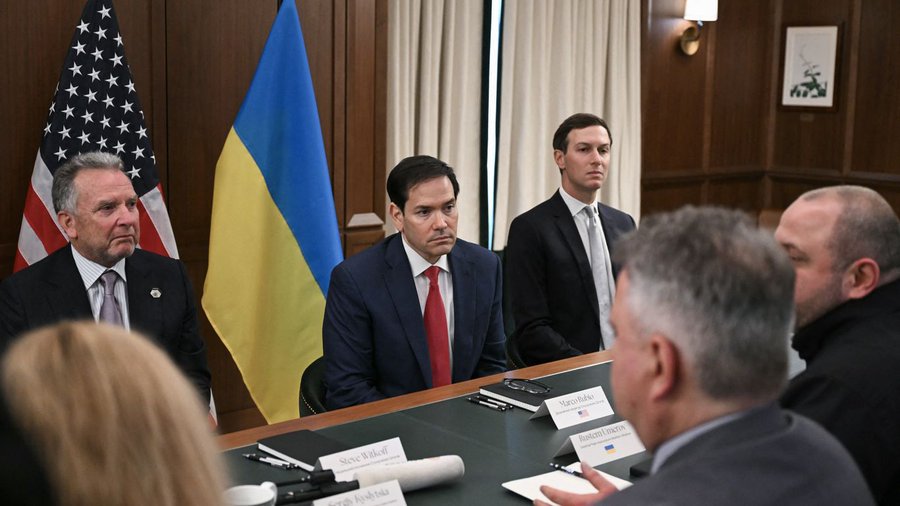
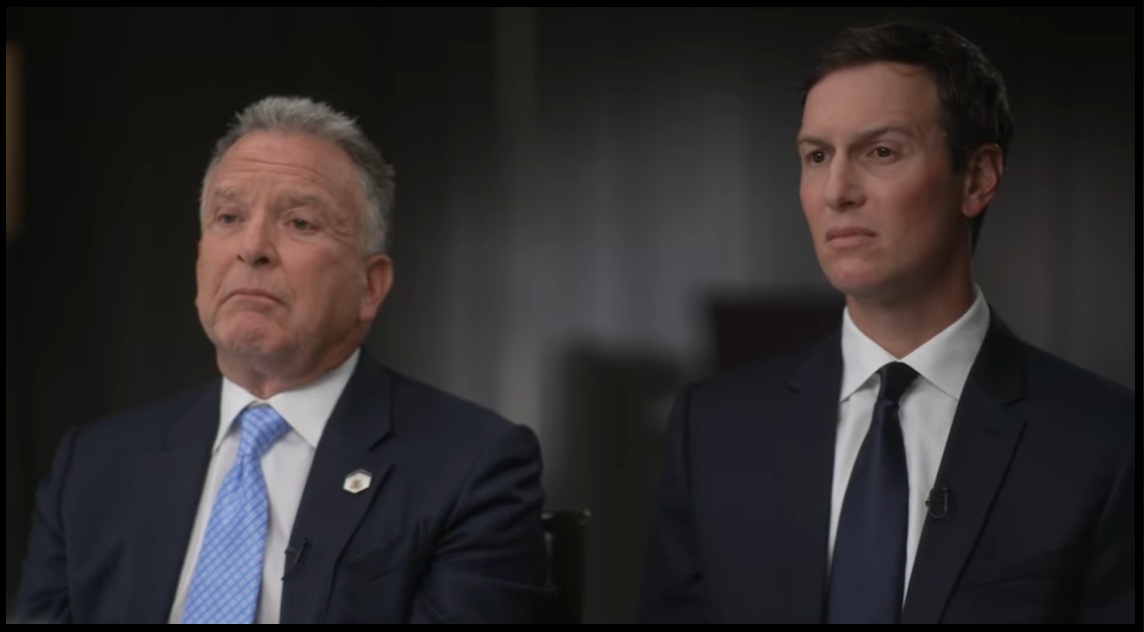
President Trump’s negotiation team worked with Ukraine officials and Russian officials to establish the parameters for a ceasefire proposal. Representatives from the U.S, including Secretary of State Marco Rubio, Steve Witkoff and Jared Kushner working as moderators for a cessation of hostilities held multiple meetings with high level Ukraine and Russian officials, including Russian Federation President Vladimir Putin, and Ukraine President Volodymyr Zelenskyy.
As a consequence, President Trump’s team (Rubio, Witkoff and Kushner) have spent hundreds of hours, including nine entire days, over the last two weeks in detailed face-to-face discussions with Ukraine officials.
Zelenskyy then goes to Paris, London, Brussels and Rome, to consult with European leaders, and then has the audacity to say he will present a counterproposal from the Europeans to President Trump.
PRESIDENT ZELENSKYY – “Today, we already discussed with our negotiating team the results of yesterday’s work in London, which was conducted at the level of the National Security Advisors of our European partners. This was agreed upon yesterday at the leadersʼ level.
We are working very actively on all components of potential steps toward ending the war. The Ukrainian and European components are now more developed, and we are ready to present them to our partners in the U.S. Together with the American side, we expect to swiftly make the potential steps as doable as possible.
We are committed to a real peace and remain in constant contact with the United States. And, as our partners in the negotiating teams rightly note, everything depends on whether Russia is ready to take effective steps to stop the bloodshed and prevent the war from reigniting. In the near future, we will be ready to send the refined documents to the United States. Glory to Ukraine!” (SOURCE)
If Zelenskyy is representing Ukraine, then why didn’t Zelenskyy put his proposals into the agreement during two weeks of discussions with the U.S. delegation.
Is Zelenskyy representing Ukraine, or is Zelenskyy representing European stakeholders?
I know, rhetorical I guess…..
In the interim and throughout this process, more young Ukrainian men are dead.
Posted originally on CTH on December 8, 2025 | Sundance
President Trump holds a roundtable discussion with Agriculture Secretary Brooke Rollins and various farm state senators as he outlines $12 billion in support and subsidy for American farmers.
With energy prices lowered, the costs for natural gas, fertilizer, diesel and gasoline prices have fallen; however, food costs have remained high. President Trump announced with Brooke Rollins an initiative to help support American farmers with the intended objective to lower production costs from the field that will hopefully transfer to the fork.
Secretary Rollins and President Trump announce a $12 billion bridge subsidy to assist farmers with proactive planning for the 2026 planting season. The money is coming from revenue generated by tariffs, and row crop farming will be the first subsidies delivered. WATCH (media questions begin at 31:40):
Posted originally on CTH on December 7, 2025 | Sundance
Secretary of Treasury Scott Bessent appears on CBS’s Face the Nation for an inflation and affordability debate with narrative engineer Margaret Brennan.
The primary narrative can be seen in Brennan’s emphasis of the new democrat catch phrase “affordability.” Having gaslit the American electorate over the issues of Joe Biden’s economic/energy policy which created record inflation, the same media who ran cover for Joe Biden have switched during the Trump administration to calling the subsequent high costs an “affordability” crisis.
In essence, Biden’s economic, energy and monetary policies drove 2021/2022 inflation to record levels, this made all prices rise massively. Those high prices are now the “affordability problem.” WATCH:
[Transcript] – MARGARET BRENNAN: Good morning and welcome to ‘Face The Nation.’ We have a lot of news to get to, and we begin with the Secretary of the Treasury, Scott Bessent. Good to have you here.
TREASURY SECRETARY SCOTT BESSENT: Morning, Margaret.
SEC. BESSENT: Mr. Secretary, a lot of people are out there holiday shopping. Here is how the President described back in April, what to expect from this season.
[SOT]
PRESIDENT DONALD TRUMP: Maybe the children will have two dolls instead of 30 dolls, you know. And maybe the two dolls will cost a couple of bucks more than they would normally.
[END SOT]
MARGARET BRENNAN: Was the President’s prediction then, correct?
SEC. BESSENT: Margaret, it’s actually been a very strong holiday season, and the- you know, we’ve seen across all the income cohorts thus far. And so there’s nothing to say that there are two dolls instead of 30 dolls.
MARGARET BRENNAN: The President was wrong to predict lower numbers of purchases and higher prices?
SEC. BESSENT: The economy has been better than we thought. We’ve had the 4- 4% GDP growth in a couple of quarters. We’re going to finish the year, despite the Schumer shutdown, with 3% real GDP growth.
MARGARET BRENNAN: Well, the maker of Tonka Trucks, their CEO, said it’s going to cost 40 bucks for their toys right now because of tariffs and inflation, it was 30 bucks the year before that, 25. Prices in the toy space are accelerating, and people are feeling that.
SEC. BESSENT: Well, Margaret inflation is a composite number, and it’s roughly the same year over year. And if we were to look at all imported goods, imported goods inflation is below the inflation number.
MARGARET BRENNAN: The inflation number, you mean the–
SEC. BESSENT: The PC- the PCE number which is about 2.9%. Imported goods inflation is about 1.8. It’s the service economy that’s generating inflation, which actually has nothing to do with tariffs.
MARGARET BRENNAN: But when we hear from for example, the President, when he says that affordability is a con job by Democrats, that seems to just not be resonating with consumers that have been polled by CBS. 60% of Americans polled by this network told us President Trump makes prices and inflation sound better than they really are, and his approval rating in the economy is now down to 36% in our latest poll. On inflation, approval is even lower, 32%. Don’t you need to show that you feel the pain?
SEC. BESSENT: Well, Margaret, I think the President’s frustrated by the media coverage of what’s going on–
MARGARET BRENNAN: This is the polling of average Americans.
SEC. BESSENT: –No, no- yeah, but I think the average Americans, they are hearing a lot from media coverage. And I will tell you that affordability has two components, there is inflation, and then there is real incomes. Real incomes are up about 1% and what we’re not going to do is say that Americans don’t know what they’re feeling. We’ve been working on it every day. I was on your show on March talking about affordability. The- we’ve made a lot of gains, but remember, we’ve got this embedded inflation from the Biden years, where mainstream media, whether it’s Greg Ip at the Wall Street Journal, toxic Paul Krugman at New York Times or former Vice Chair, Alan Blinder, all said it was a vibecession. The American people don’t know how good they have it. Now, Democrats created scarcity, whether it was in energy or over regulation, that we are now seeing the- this. affordability problem, and I think next year we’re going to move on to prosperity.
MARGARET BRENNAN: You do think there is an affordability problem?
SEC. BESSENT: Sorry?
MARGARET BRENNAN: You do believe there’s an affordability problem?
SEC. BESSENT: Oh, I think the Biden administration created a terr–
MARGARET BRENNAN: No, but now we’re nearly 12 months in, you said the President would own the economy at this point.
SEC. BESSENT: I said that the Biden administration created the worst inflation in 50 years, and maybe for working Americans, the worst inflation of all time. And we have pulled that number down- that Strategas research does something called the common man index. Under Biden, the accumulated inflation number, as measured by CPI, was about 20%. Their index showed 35. This year for the first time, the common man index is below the inflation index because the basket of goods for working Americans, food, gasoline, rent is coming down. So I wrote an essay March 12, 2024, and it talked about the three I’s, immigration, interest rates and inflation. Immigrant- mass, unfettered immigration, depressed wages caused housing prices to go up. President has closed the border that is fixed. Interest rates have come down. The bond market just had the best year since 2020 and now we are working on inflation, and I expect inflation to roll down strongly next year.
MARGARET BRENNAN: Well, I mean, grocery prices are up nearly 3% compared to last September. The President seems to be acknowledging that grocery prices, or at least beef prices, are a challenge, because he put out this order just yesterday saying they’re going to investigate corporate price gouging for high beef prices. Isn’t suing the food companies the same thing the Biden administration did, and it didn’t really work? How is this any different?
SEC. BESSENT: Well, nothing- nothing the Biden administration did worked–
MARGARET BRENNAN: So why are you doing it?
SEC. BESSENT: Because this isn’t the same thing. If they- if they had done this, if they’d done it properly, we’d be in a different spot. And like, beef is one component. Thanksgiving Turkey was down 16%.
MARGARET BRENNAN: Well, I know you are working on the trade front, and for American farmers and the prices that they are experiencing, that they’re feeling a pinch about not having a market to sell into, necessarily.
SEC. BESSENT: Not- not anymore.
MARGARET BRENNAN: Well, the agricultural Secretary just said that the President is going to announce a bridge payment for farmers this week to give them short term relief while you’re working on these- finalizing these trade packages. There are these low crop prices, and the soybeans in particular, I know you spoke with China’s Vice Premier Friday. Are they going to speed purchasing up?
SEC. BESSENT: Well, they’re not going to speed purchasing up. They’re in the cadence that we agreed to. Soybean prices are up about 12 or 15% since the agreement with the Chinese. They are going to buy 12.5 million metric tons. But Margaret, I’m involved in the agricultural industry. I run a soybean farm, and I can tell you–
MARGARET BRENNAN: You own one, you invest in it.
SE. BESSENT: Sorry?
MARGARET BRENNAN: You own or invest in–
SEC. BESSENT: –People in my family go out and work on it. I actually just divested it this week as part of the- my ethics agreement, so I’m out of that business. But I probably know more about any Treasury Secretary than- about agriculture since the 1800s and I can tell you that what farmers need is certainty, and we have put that in place with this trade deal. 12 and a half million metric tons this year, 25 million metric tons for the next three years, for soybeans, also sorghum, the- and lumber.
MARGARET BRENNAN: So those purchases, just to clarify, those will be this year, because I heard you say this past week that some of the purchases wouldn’t take place until February.
SEC. BESSENT: Well, for the- for the season, so the crop year.
MARGARET BRENNAN: The season year?
SEC. BESSENT: Yep.
MARGARET BRENNAN: Okay. But why- if everything’s fine, then why do farmers need a bridge payment from the Agricultural Department?
SEC. BESSENT: Sorry?
MARGARET BRENNAN: Why would farmers need a bridge payment from the Agriculture Department, then?
SEC. BESSENT: Because these prices haven’t come in, because the Chinese actually used our soybean farmers as pawns in the trade negotiations. And we are going to create this bridge because, again, agriculture is all about the future. You’ve got to start financing for planning next year when things will be very good.
MARGARET BRENNAN: I want to ask you about something that was announced this past week, the Trump accounts, and building on this concept so parents, as I understand, are going to be able to open these accounts via the Treasury for their kids, their tax deferred investment vehicles to U.S. citizen children under 18, get $1,000 from the government for babies born between 2025 and 2028. So there are going to be restrictions on what the money can be used for college tuition or their first house, is that right?
SEC. BESSENT: No, it is- the federal government for children born in the period you just described, is going to put $1,000 into these Trump accounts, it will be invested in a widely diversified, low cost index, and then it will be available–
MARGARET BRENNAN: In the stock market, in an exchange traded fund or mutual fund.
SEC. SCOTT BESSENT: So in essence, it is a trust fund. It is a piece of the American economy for every child, and they will be able to take it out when they’re 18, or they can convert it to a more IRA-type program and keep it for their retirement.
MARGARET BRENNAN: So there won’t be the restrictions I mentioned there about how they use the money?
SEC. BESSENT: No.
MARGARET BRENNAN: Okay, so there was also a broadening of this- this past week, with the Dell Foundation making a significant investment in the American children. So how is this going to work? Why structure it this way, instead of a savings account, for example?
SEC. SCOTT BESSENT: Well, a savings account just gets interest. This is the compounding power of the stock market. As Warren Buffett says, don’t- don’t bet against the American stock market, don’t bet against the economy. And this is going to bring a whole group of new investors into the market. We’re going to couple it with a big amount of financial literacy, so that children understand what they own. The incredible gift by Michael and Susan Dell will be the- is a program that philanthropists’ foundations can do to top up these accounts. And we are expecting, we’re already at- Treasury is already in discussions with foundations, with major philanthropists to top up these accounts. It could either be for all children, or you can specify it by zip code, a school district, or you can do what the Dells did, and say that it will be- won’t apply to the zip codes of the top 20% of earners.
MARGARET BRENNAN: And more information is going to be coming out on how to use this and access it?
SEC. SCOTT BESSENT: Yes, in the coming weeks, we’ll do that, and then the official kickoff will be July 5.
MARGARET BRENNAN: Before I let you go, I want to ask you about this massive fraud out in Minnesota, and the state welfare program has been under federal investigation since all the way back in 2022. The President told you, though, this week, to look into Somalis who, quote, ripped off that state for billions of dollars. He said they contribute nothing. What exactly are you investigating?
SEC. SCOTT BESSENT: Well, Margaret, to be clear, the initial fraud that was discovered by the IRS for which I’m the Acting Commissioner- is discovered by IRS Criminal Investigations Unit. This was not an endogenous thing that the state of Minnesota decided. We had to go in and clean up the mess for them, and this is part of the continued cleanup. A lot of money has been transferred the- from the individuals who committed this fraud, including those who donated to the government- Governor, donated to Representative Omar and donated to AG Ellison, but they’ve been transferred to something called MBs–
MARGARET BRENNAN: Mortgage backed securities, what–?
SEC. BESSENT: Sorry?
MARGARET BRENNAN: Transferred to what?
SEC. BESSENT: These are money- the- bureau services, and they are wire transfer organizations that are outside the regulated banking system, and that money has gone overseas, and we are tracking that- the- both to the Middle East and Somalia to see what the uses of that have been.
MARGARET BRENNAN: Okay, but you have no evidence of that money being used to fuel terrorism, which is what some conservative writers are alleging?
SEC. SCOTT BESSENT: That’s why it’s an investigation. We started it last week. We’ll see where it goes. But I can tell you that, you know, it’s terrible. You know, Representative Omar tried to downplay it. Said, oh, it was very- the- it was very tough to know how this money should- should be used. She was gaslighting the American people.
MARGARET BRENNAN: Well, we’ll talk to her.
SEC. BESSENT: Yeah. But, you know, when you come to this country, you got to learn which side of the road to drive on. You got to learn to stop at stop signs, and you got to learn the- not to defraud the American people.
MARGARET BRENNAN: Well, there are plenty of- plenty of criminal behavior from communities well beyond the immigrant community, but we’ll talk about this with Representative Omar shortly. Thank you, Mr. Secretary.
Posted originally on CTH on December 7, 2025 | Sundance
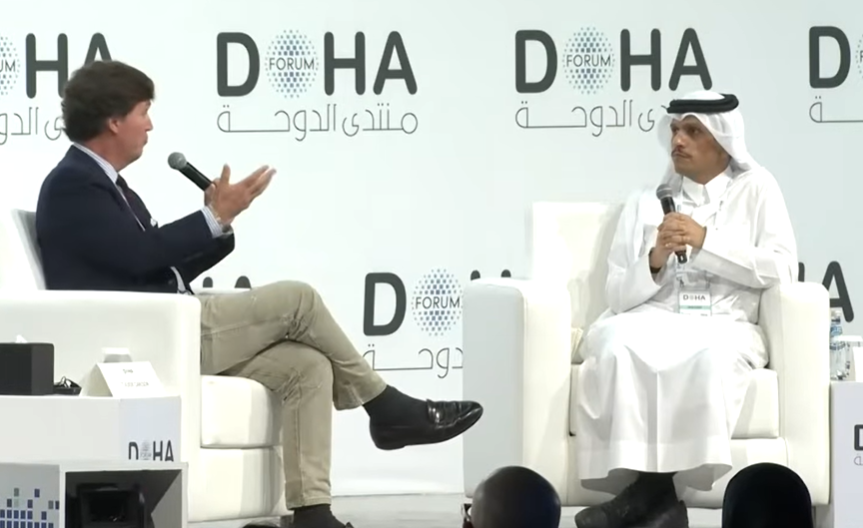
Tucker Carlson is attending a conference in Doha along with a series of U.S. and EU political pundits and people within the geopolitical world including Donald Trump Jr. This conference has people like Mark Levin and Laura Loomer going bananas as the Qatar vs Israel influence operation reaches new political levels of antagonism.
In the interview below Tucker Carlson is interviewing Qatar’s Prime Minister and Foreign Minister Sheikh Mohammed bin Abdulrahman Al Thani on the Israel–Gaza war, U.S. foreign policy toward Israel, Qatar’s long and ongoing role in mediation with Hamas, and the surge of propaganda targeting Doha.
The discussion includes how various administrations have asked Qatar for assistance, and the issue of Israel attacking Qatar amid the active peace talks. Tucker Carlson also tackles the issue of U.S. voices calling him a propagandist for Qatar head on. WATCH:
.
As previously noted, Donald Trump Jr also attended the Doha, Qatar, conference. His remarks are below.
The Qatar vs Israel influence battle, seems to be -essentially- the JD Vance vs Ron DeSantis pre-battle and influence operation. I’ll keep watching it unfold, because the transparency of the objectives is interesting.
In addition to setting the priorities for the United States focus, the report details the Trump administration perspective on the world as broken down into specific regions. The report is a brutally honest review of the current state of geopolitical benefits, risks and threats as they pertain to vital U.S. interests.
In addition to outlining a critically renewed focus on the Western Hemisphere, the Trump administration also notes the practical position of Europe, as it pertains to NATO and dependency on the U.S.A.
In a brutally honest review of the situation, the Trump administration notes Europe is increasingly losing their own identity. The fear the Europeans express about being vulnerable to Russian strength is hypocritical, in the sense that in practical outcomes the EU is purposefully weakening itself and simultaneously demanding assistance against their own weakness.
[PAGE 25] – American officials have become used to thinking about European problems in terms of insufficient military spending and economic stagnation. There is truth to this, but Europe’s real problems are even deeper.
Continental Europe has been losing share of global GDP—down from 25 percent in 1990 to 14 percent today—partly owing to national and transnational regulations that undermine creativity and industriousness. But this economic decline is eclipsed by the real and more stark prospect of civilizational erasure.
The larger issues facing Europe include activities of the European Union and other transnational bodies that undermine political liberty and sovereignty, migration policies that are transforming the continent and creating strife, censorship of free speech and suppression of political opposition, cratering birthrates, and loss of national identities and self-confidence.
Should present trends continue, the continent will be unrecognizable in 20 years or less. As such, it is far from obvious whether certain European countries will have economies and militaries strong enough to remain reliable allies. Many of these nations are currently doubling down on their present path. We want Europe to remain European, to regain its civilizational self-confidence, and to abandon its failed focus on regulatory suffocation.
This lack of self-confidence is most evident in Europe’s relationship with Russia.
European allies enjoy a significant hard power advantage over Russia by almost every measure, save nuclear weapons. As a result of Russia’s war in Ukraine, European relations with Russia are now deeply attenuated, and many Europeans regard Russia as an existential threat.
Managing European relations with Russia will require significant U.S. diplomatic engagement, both to reestablish conditions of strategic stability across the Eurasian landmass, and to mitigate the risk of conflict between Russia and European states.
It is a core interest of the United States to negotiate an expeditious cessation of hostilities in Ukraine, in order to stabilize European economies, prevent unintended escalation or expansion of the war, and reestablish strategic stability with Russia, as well as to enable the post-hostilities reconstruction of Ukraine to enable its survival as a viable state.
The Ukraine War has had the perverse effect of increasing Europe’s, especially Germany’s, external dependencies. Today, German chemical companies are building some of the world’s largest processing plants in China, using Russian gas that they cannot obtain at home.
The Trump Administration finds itself at odds with European officials who hold unrealistic expectations for the war perched in unstable minority governments, many of which trample on basic principles of democracy to suppress opposition. A large European majority wants peace, yet that desire is not translated into policy, in large measure because of those governments’ subversion of democratic processes. This is strategically important to the United States precisely because European states cannot reform themselves if they are trapped in political crisis.
Yet Europe remains strategically and culturally vital to the United States. Transatlantic trade remains one of the pillars of the global economy and of American prosperity. European sectors from manufacturing to technology to energy remain among the world’s most robust. Europe is home to cutting-edge scientific research and world-leading cultural institutions. Not only can we not afford to write Europe off—doing so would be self-defeating for what this strategy aims to achieve.
American diplomacy should continue to stand up for genuine democracy, freedom of expression, and unapologetic celebrations of European nations’ individual character and history. America encourages its political allies in Europe to promote this revival of spirit, and the growing influence of patriotic European parties indeed gives cause for great optimism.
Our goal should be to help Europe correct its current trajectory. We will need a strong Europe to help us successfully compete, and to work in concert with us to prevent any adversary from dominating Europe.
America is, understandably, sentimentally attached to the European continent — and, of course, to Britain and Ireland. The character of these countries is also strategically important because we count upon creative, capable, confident, democratic allies to establish conditions of stability and security. We want to work with aligned countries that want to restore their former greatness. (continue reading)
Russian Federation President Vladimir Putin does not see a strong Europe; instead, he sees a continent destroying itself and creating vulnerabilities that can easily be exploited.
President Trump is attempting to stop the inevitable conclusion, the outcome created throughout history, when a strong nation state is positioned right next to a vulnerable, fat, lazy and weak-minded coalition of states.
Europe would be wise to listen to President Trump now, because the American people are not willing to put our blood on the line again to protect the EU – ultimately from itself.
Posted originally on CTH on December 6, 2025 | Sundance
If we read between the lines in the latest update from President Trump emissary Steve Witkoff, we can clearly see the negotiations have entered into that critical phase where payments to all of the stakeholders will determine a successful outcome.
Pragmatic people have long predicted the ultimate solution to the bloodshed will only be determined once western interests get to the point where negotiators propose a long-term plan for continued financial benefit. Too many people, “stakeholders” are making money from the conflict.
From a western perspective, support for the Ukraine conflict is based on money. Therefore, the solution to the conflict requires a system where the western opportunity for financial benefit continues.
Written in polite diplomatic terms, the continued payments are identified as “the prosperity agenda which aims to support Ukraine’s post-war reconstruction, joint U.S.–Ukraine economic initiatives, and long-term recovery projects.” This is codespeak for the U.S. Senate and EU will retain a financial mechanism to exploit for personal benefit.
From the language it appears that Witkoff and Kusher are confident they can construct a financial reward system for western banks, investors, politicians and Ukraine officials that will retain the benefits of war without the ancillary ingredient of bloodshed.
If the U.S. delegation can pull this off, then Russia can gain the territory they want, corrupt Ukraine officials can keep skimming investment money, the EU can retain the power it wants to extract financial payments, American politicians can use the “long-term recovery projects” for money laundering and quasi-public/private investment banks can benefit from the exploitation of Ukraine resources.
Again, from a ‘western geopolitical perspective’, the territorial issues, security guarantees, EU membership status and the position of NATO are downstream details once the larger payment system is organized. Put another way, they are down to the stuff that really matters, the money.
STEVE WITKOFF – Readout of Meeting Between Special Envoy for Peace Steven Witkoff, Jared Kushner, Ukrainian Secretary of National Security and Defense Council Rustem Umerov, and Chief of General Staff General Andriy Hnatov
Over two days, Special Envoy for Peace Steven Witkoff and Jared Kushner met with Ukrainian Secretary of National Security and Defense Council Rustem Umerov and Chief of General Staff General Andriy Hnatov for constructive discussions on advancing a credible pathway toward a durable and just peace in Ukraine.
Today, the group had their sixth meeting over the past two weeks. Secretary Umerov reaffirmed that Ukraine’s priority is securing a settlement that protects its independence and sovereignty, ensures the safety of Ukrainians, and provides a stable foundation for a prosperous democratic future.
The participants discussed the results of recent meeting of the American side with the Russians and steps that could lead to ending this war. The American and Ukrainians also agreed on the framework of security arrangements and discussed necessary deterrence capabilities to sustain a lasting peace.
Both parties agreed that real progress toward any agreement depends on Russia’s readiness to show serious commitment to long-term peace, including steps toward de-escalation and cessation of killings.
Parties also separately reviewed the future prosperity agenda which aims to support Ukraine’s post-war reconstruction, joint U.S.–Ukraine economic initiatives, and long-term recovery projects.
American and Ukrainian parties underscored that an end to the war and credible steps toward ceasefire and de-escalation are necessary to prevent renewed aggression and to enable Ukraine’s comprehensive redevelopment plan, designed to make the nation stronger and more prosperous than before the war.
Parties will reconvene tomorrow to continue advancing the discussions.” (source)
From the Russian side of the equation the war is about ideology, national security and proactive defeat of western, mostly American, encroachment and influence. From the western side, the EU support for Ukraine was less ideological and more financially motivated.
Russia and Ukraine have paid a high price in the larger proxy war. Russia has won the physical fight. Hopefully soon the financial terms will be accepted by the western stakeholders and combat operations can cease.
Ukraine President Zelenskyy will get a nice villa in Europe and a reasonable mansion in the USA. The cocktail parties will continue with crustless cucumber sandwiches and white wine spritzers, while the ladies go shopping and the men get manicures while talking about which of their favorites will replace Zelenskyy.
Posted originally on CTH on December 5, 2025 | Sundance
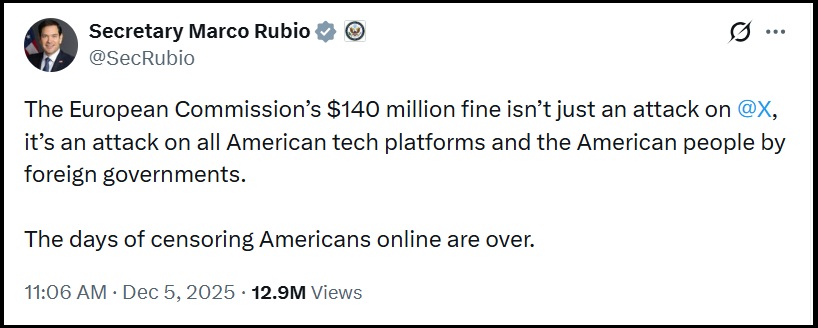
The European Union has fined the X social media platform (formerly Twitter), owned by Elon Musk and his investment group, $140 million (usd) for violations of the EU Digital Services Act. The decision by the EU is likely to create even more friction between President Trump and the European Union. However, this problem is not difficult to solve.
The collective government within the EU accuse Elon Musk and X of permitting misinformation, disinformation and malinformation to appear on the platform.
The European DSA is ultimately designed to control information, that reality should not be debated. All efforts to control traditional and social media are efforts to control information.
The specifics of the reasoning for the fine are typically European. (1) Twitter allows ordinary people to deliver information at the same level as people who should be defined as more important. (2) Advertisers of those who pay for promotion of information on X are not easily identifiable – people need to figure it out on their own. (3) It is too difficult to figure out who is providing the information.
Basically, all of the EU concerns center around information control. It’s really an ideology issue. In the outlook of the EU, bureaucrats and elites feel they are superior and must rule/protect the people under them. Ordinary people having access to information that may or may not be approved by the EU is the underlying issue.
EUROPE – […] Before Musk acquired X, when it was previously known as Twitter, the checkmarks mirrored verification badges common on social media and were largely reserved for celebrities, politicians and other influential accounts, such as Beyonce, Pope Francis, writer Neil Gaiman and rapper Lil Nas X.
After he bought it in 2022, the site started issuing the badges to anyone who wanted to pay $8 per month.
That means X does not meaningfully verify who’s behind the account, “making it difficult for users to judge the authenticity of accounts and content they engage with,” the Commission said in its announcement.
X also fell short of the transparency requirements for its ad database, regulators said.
Platforms in the EU are required to provide a database of all the digital advertisements they have carried, with details such as who paid for them and the intended audience, to help researches detect scams, fake ads and coordinated influence campaigns. But X’s database, the Commission said, is undermined by design features and access barriers such as “excessive delays in processing.”
Regulators also said X also puts up “unnecessary barriers” for researchers trying to access public data, which stymies research into systemic risks that European users face.
“Deceiving users with blue checkmarks, obscuring information on ads and shutting out researchers have no place online in the EU. The DSA protects users,” Henna Virkkunen, the EU’s executive vice-president for tech sovereignty, security and democracy, said in a prepared statement. (more)
Stopping this nonsense is not complicated.
Attach a $1,000 free speech support fee to every European automobile sold in the USA.
Their pontificating ideology is less important than their need for money.
I have created this site to help people have fun in the kitchen. I write about enjoying life both in and out of my kitchen. Life is short! Make the most of it and enjoy!
This is a library of News Events not reported by the Main Stream Media documenting & connecting the dots on How the Obama Marxist Liberal agenda is destroying America













 Centinel2012