Posted originally on Jan 21, 2026 by Martin Armstrong |
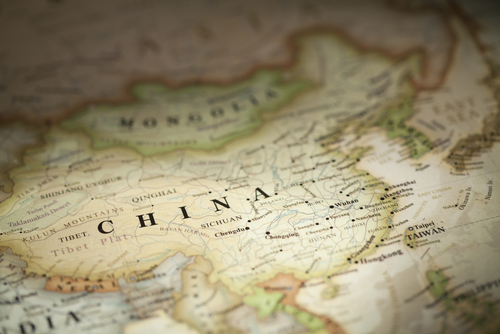
China’s GDP advanced by 4.5% in Q4 2025, slightly down from the 4.8% in Q3. Economic output for the year was 5%, in line with the target and aided by a strong industrial output of 5.2% in December. Notably, retail sales grew at a slow pace of 0.9% for the month, and growth slowed 4.5% YoY, highlighting the decline in domestic demand.
When an economy is truly healthy, domestic demand leads. The consumer spends, business expands, imports rise, and you see balanced growth. Instead, what we are seeing is the opposite. External trade is carrying the headline numbers while the internal economy becomes more fragile.
Beijing is leaning on industrial activity and exports, and this is where the imbalance becomes glaring. China posted a nearly $1.2 trillion trade surplus in 2025, with exports rising about 5.5% even as imports showed little growth. China is selling to the world because it cannot fully absorb production domestically.
You also see this in the real estate collapse and the investment drag. Property has been the primary store of wealth and confidence for the Chinese. Reuters noted property investment fell 17.2% in 2025 and that consumption and investment are dragging while exports remain robust.
This is precisely why I have warned for years that you cannot look at “trade surplus” as some trophy without understanding the internal dynamics. The surplus is exploding because domestic demand is not keeping pace. Imports are not surging because the internal consumer and internal business confidence are not driving the same kind of pull. This is the classic imbalance of an economy becoming dependent on external demand. China is still on the rise long-term, but they’re looking at an economy that has become one-sided, which can be dangerous in today’s landscape of trade wars, regulations, supply chain constraints, and war itself.
Posted originally on CTH on January 18, 2026 | Sundance
Last week President Donald Trump officially announced the members of the Gaza Board of Peace; an organization headed by President Trump and tasked to oversee the second phase of his plan to end the Israeli conflict in Gaza, specifically the reconstruction and disarmament of Gaza and Hamas respectively. [SEE HERE]
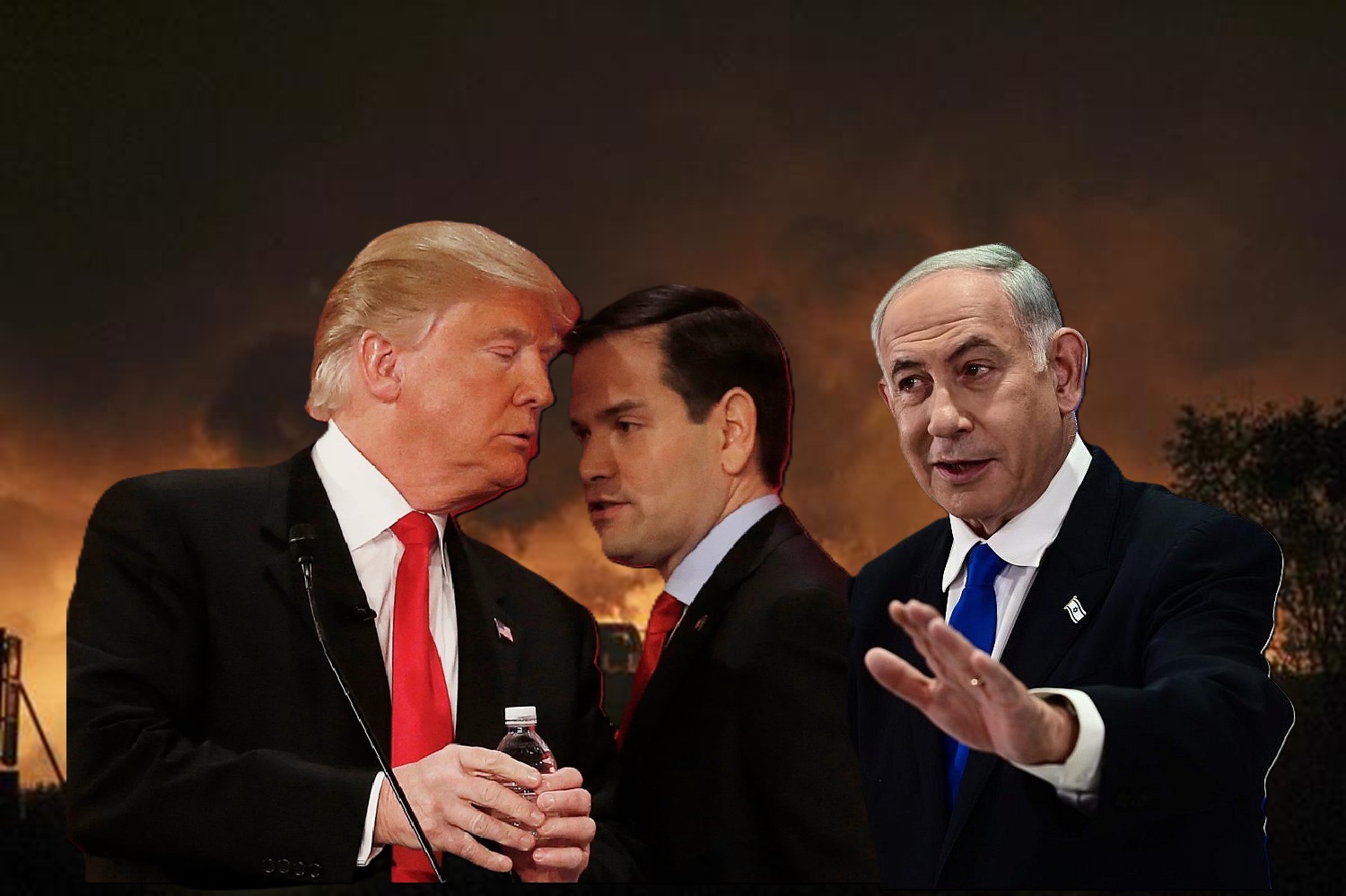
The members of the “Board of Peace,” chaired by Trump himself, includes Secretary of State Marco Rubio; Emissary Steve Witkoff; Jared Kushner; former British Prime Minister Tony Blair; an American-Jewish billionaire named Mark Rowan; World Bank President Ajay Banga; and Deputy National Security Advisor of the United States, Robert Gabriel. President/Chairman Donald Trump has also appointed Aryeh Lightstone and Josh Gruenbaum as senior advisors to the Board of Peace.
At the same time, President Trump announced another executive body that would operate under the Peace Council to assist with the facilitation of a new Palestinian government, the “Gaza Executive Board.” This structure is intended to manage day to day events on the ground instead of a Hamas loyalist govt. The appointees to the executive board have upset the Netanyahu government of Israel.
According to the White House announcement, the Gaza Executive Board will include: Witkoff; Kushner; Turkish Foreign Minister Hakan Fidan; senior Qatari official Ali al-Thawadi; Egyptian intelligence chief Hassan Rashad; Tony Blair; billionaire Mark Rowan; UAE Minister Reem Al Hashimi; former Bulgarian Foreign and Defense Minister Nickolay Mladenov, who also served as the UN envoy for the Middle East peace process; U.N Representative Sigrid Kagg, and Israeli-Cypriot businessman Yakir Gabbay, who specializes in real estate, technology and international investments.
Additionally, to establish security, preserve peace, and establish a durable terror-free environment, Major General Jasper Jeffers has been appointed Commander of the International Stabilization Force (ISF), where he will lead security operations, support comprehensive demilitarization, and enable the safe delivery of humanitarian aid and reconstruction materials. [link]
According to Israeli media Netanyahu is not happy, and planning to protest the Turkish, Qatari and UAE appointments to Marco Rubio (not Trump):
“A very unusual statement by the prime minister against the US president, following the publication of the members of the “Executive Committee for Gaza” – which includes, among other things, the Turkish foreign minister and a senior Qatari official. “The announcement of the panel was not coordinated with Israel and is contrary to its policy,” the Prime Minister’s Office said.
“The announcement of the composition of Gaza’s Executive Committee, which is subordinate to the peace conference, was not coordinated with Israel and is contrary to its policy,” the Prime Minister’s Office said, adding that “the prime minister has instructed Foreign Minister Gideon Sa’ar to contact US Secretary of State Marco Rubio on this matter.” (more)
Within the appointments for the executive board, the use of Turkey, Qatar and UAE officials for the governance and reconstruction of Gaza explains the recent parsing of the Muslim Brotherhood chapters as terrorist enablers. When Secretary Rubio made the terrorist designation announcement, the Turkish and Qatari Muslim Brotherhood chapters were notably absent. With the Gaza initiative ongoing, now we see coordinated pragmatism at work.
Rubio chose to focus on Egypt, Jordan and Lebanon to target the Muslim Brotherhood. As we noted, “The Egyptian Muslim Brotherhood were chased out of the country by President Abdel Fattah al-Sisi over a decade ago. The Jordanian chapter is similarly aligned and was previously targeted by King Abdullah. The Lebanese faction is not as well known, but their support for Hamas is well understood.” {Go Deep}
A few things are obvious.
First, President Trump and Secretary Rubio knew in advance they were going to need the strong influences of Qatar and Turkey if they were going to stabilize the interim Gaza reconstruction governing system. Secondly, both Trump and Rubio knew Israeli Prime Minister Benjamin Netanyahu wouldn’t like that; however, pragmatically Trump and Rubio are doing what is in the best interest of the region as a whole, not being narrowly focused on Israel. Additionally, these appointments have upset the Israel-first influencer group in the U.S.
President Trump is restructuring mid-east stability without the need for direct U.S. intervention. Instead, under President Trump’s approach conflict resolution is the responsibility of the regional stakeholders with strong support from President Trump. It is a similar outlook conveyed to Europe about needing to be responsible for their own defense and security solutions while the USA role is supportive in nature.
In this approach the sharp tendrils of U.S. influence start to be untangled, and the national security focus returns to the USA domestically. Mutually beneficial national sovereignty replaces toxic and unending globalist intervention. This is a similar worldview that President Trump also takes toward trade agreements.
Multilateral trade agreements like the Transpacific Trade Partnership (TPP) or the Transatlantic Trade and Investment Partnership (TTIP), or even the NAFTA/USMCA trade agreement are rejected in favor of direct bilateral free trade agreements with individual nations.
In Trump’s trade policy the multilateral deals are dissolved, while the bilateral deals are affirmed. The same outlook holds true for massive institutional agreements that end up with large entanglements often carrying disproportionate costs and disparate benefits. Like NATO, the USA usually ends up with the largest price tag and least benefit from the agreement.
Is NATO/Europe going to fight China over Taiwan? Of course not. If they were, Canada wouldn’t be making deals with Beijing, and Europe would not be allowing China to purchase stakeholder interests in the European car market. The same pragmatic and reasonable outlook applies right now toward how the EU has responded to the Russia/Ukraine conflict; only “willing” if the USA puts our blood and treasure on the line.
This nationalistic outlook is honestly encapsulated in this recent soundbite from President Trump when asked about Canadian Prime Minister Mark Carney making a trade agreement with China. President Trump genuinely doesn’t care. WATCH:
Canada can make whatever deal they want with China; however, that doesn’t mean it will work out well for Canada when the USMCA is dissolved and a new bilateral trade deal between the USA and Canada is renegotiated. Factually, it means Canada will end up in a worse economic place, just look at the history of countries that hugged Big Panda. It is their own independent right to be blind to the risk.
Despite all the warnings from President Trump, Europe became dependent on Russia for low-cost energy; how’d that work out for them? Germany now seriously regrets their green energy approach, but there’s nothing President Trump can do to stop multinational assemblies from being collectively stupid; the only thing he can do is mitigate any collateral damage to the USA.
Instead of European leaders calling President Trump every time Turkish President Recep Erdogan does something against their interests, eventually the group will learn how to engage him individually. In a world of bilateral respect, the lessons from Trump could even have the downstream effect of training the EU to drop their obsession with Russia-bad everything.
The Ukraine conflict could end when Europe finally realizes it’s much easier to turn on a Nordstream gas valve than it is to rebuild 30 German nuclear power plants. President Trump’s refusal to commit U.S. troops to Zelenskyy’s security guarantee will hopefully hasten that conversation.
The same pragmatic realism applies to Greenland. Europe will never respond to any increase in strategic threat presented by China or Russia in the Arctic, and the U.S. will shoulder all the costs if that risk were to materialize. Strategic pragmatism combined with economic realism is why President Trump is focused on the security of the North American continent.
Lastly, there is a segment of MAGA that is angered by President Trump’s interim and necessary approach to removing our foreign policy entanglements in both the European and Mideast continents. Those who are short-sighted don’t see how President Trump is strategically and factually withdrawing U.S. policy from a world of enmeshed dependencies, because in reality charity –along with security– begins at home.
Thankfully, the former Lyndon LaRouche assembly from Promethean Action have begun to recalibrate their British-centric focus, and they’ve started to look at Trump policy beyond the ramifications to London and through the more accurate prism of Trump’s global pragmatism. President Donald Trump isn’t trying to unilaterally destroy British imperialism, not directly. Instead, that old, stuffy and elitist collapse is a consequence of reestablishing independent sovereignty.
Smile, live your very best life and watch it all unfold. After all, Davos is going to be a must-watch event next week.
Posted originally on CTH on January 16, 2026 | Sundance |
My dear Canadian conservative friends, things look very troubling. You have my deepest sympathies for the events of the next few years that are about to unfold.
We have researched, tracked, measured and followed each detail.
Having travelled to regions of the world in discussions with people who factually determine economic outcomes, it is clear that every single policy shift undertaken by the Canadian government of Mark Carney is exactly the opposite of what is needed. In the next 24 months, the lifestyle of every Canadian will forever change.
Prime Minister Mark Carney bows to Big Panda. The most alarming words spoken during the formal welcome ceremony are prompted below. WATCH: “The New World Order”
Too many words; too small a man.
President Trump is reestablishing an entirely new economic, trade and finance system. The era of the Marshal Plan is over; it has been factually deconstructed in the past 12 months.
Canadians and Europeans are desperately trying to offset the ramifications, hold on to their economic benefits and find a new mechanism to afford the domestic indulgences now eliminated by President Trump and the absence of money.
Both the EU and Canada are looking to China and ASEAN partnerships as a financial offset. However, the ASEAN group has no domestic wealth and can only provide one-way benefits.
Despite the reality of things, denial is rampant. Here are three facts that will not change.
Fact #1: Asia is not a purchaser; they are producers. There are no customers in Southeast Asia, only workers. ASEAN nations are not customers. Any ASEAN trade agreement does not materially gain the EU or Canada any exports.
Fact #2: China is a closed economic system. China does what is in China’s best interests. When negotiating with China, Chairman Xi wears a panda mask to cover the dragon face. China now sees the EU/Canada refusal to adapt as an opportunity to exploit.
Fact #3: The EU and Canada have chased ‘climate change’ and ‘green energy’ schemes into a dead end of economic crisis. The direct and collateral damage is generational, and only just now beginning to surface. When combined with their intransigent resistance to adapt to President Trump’s global economic and trade reset, core issue “reciprocity”, this reality takes both economies down a path that becomes a self-fulfilling prophecy.
Choosing to embrace China in lieu of modifying bilateral trade agreements with the USA is a short-sighted fool’s errand. Unfortunately, with political calculations each entity, Canada and/or the EU collective, are pandering to their base out of an unwillingness to change trade behavior as demanded by Trump.
Yes, Canada may end up exporting more very specific goods to China; an offset for some of the USA losses, but at what cost long-term.
Think about the EU auto-sector as an example.
To avoid paying their own climate change fines, the EU automakers are purchasing carbon credits from Chinese EV automakers. In the short term, that trick may diminish the auto company fines to Brussels but think about the longer-term problem.
China takes the revenue from the EU companies and uses it to subsidize their EV exports making their EVs cost substantially less than EU electric vehicles in the EU.
Geely, BYD, etc. can lower the price of an EV in Europe because EU car companies are giving them money. The EU is paying China to destroy the EU auto industry. You cannot make this stuff up.
As a consequence, BYD is now building a factory in Hungary. Additionally, Geely owns 10% of Mercedes. You might have noticed that Mercedes recently announced they are shifting production of their Model-A to Hungary. 20,000 jobs shifted from Germany to Hungary. Victor Orban is good friends with Donald Trump. These are not coincidences.
In the Canadian model, Mark Carney may end up selling slightly more stuff to China but he’s going to end up selling less to the USA because Chinese components are subject to ever-enlarging USA trade tariffs. The USMCA is on the cusp of being cancelled, it will happen this year.
Canada is betting they can export more $$ to Beijing than they will lose in diminished export $$ to the USA. Fine, that’s the bet (a political calculation). However, the reality of the end result is increased dependency on China. That never ends well.
Beijing keeps the panda mask on while the dependency is created, see belt and road; however, as soon as it is in Beijing’s interest to drop the panda mask, Canada will see the dragon face behind it.
From Ottawa to London, to Paris, Berlin and Brussels the geopolitical landscape is changing permanently as President Donald Trump resets their global trade relationship to the United States.
NOTE: despite the claims of the Lyndon LaRouche group (Promethean Action), President Trump doesn’t sit around thinking about how to destroy British imperialism or the multinational financial system. That result comes as an outcome of his reset, a consequence; it is not however, the intent of it.
Instead, President Trump is leveraging the largest consumer market in the world to the benefit of the customer; that’s America. Trump’s direct and specific intent is transactional, to rebuild an industrial and self-sufficient nation that is the envy of the world.
For several generations, Canada and the EU have exploited their biggest customer and taken the U.S. for granted.
In the end, the customer always controls the success of the business.
Posted originally on Jan 8, 2026 by Martin Armstrong |
China became Venezuela’s largest oil purchaser through oil-for-debt deals. Socialism failed, and the nation was desperate for funds, especially after being ostracized from Western trade. Beijing supplied Venezuela with credit in exchange for heavily discounted crude. China’s access to cheap oil from Venezuela came to a sudden halt after the US takeover.
China was purchasing around 778,000 barrels a day before Maduro’s capture. Venezuela had borrowed up to $100 billion from China in loans since 2007, using PDVSA crude sales to ChinaOil as collateral. Venezuela agreed to ship fixed volumes of crude to Chinese buyers through small “teapot” refineries. While the average output was 778,000 bpd DAILY, exports reached 952,000 bpd at the end of 2025. These flows accounted for 4% of China’s total oil imports.
China is now looking to Iran and Russia for crude, furthering the disconnect between the East and West. Cargoes secured in Asian waters can cover two and a half months of China’s demand, easing any immediate shocks. Yet, Venezuela still owes China around $19 billion in outstanding debt that was largely secured by long-term crude imports.
China is enraged. Foreign Ministry spokespeople Mao Ning and Lin Jian demanded Venezuela retain “full and permanent sovereignty” over its natural resources and accused the US of “seriously breaching” international law. China’s “legitimate rights and interests in Venezuela must be protected,” according to state media. China’s United Nations representative reiterated this statement, demanding that the US “cease its bullying and coercive practices.”
🚨🇺🇸🇻🇪🇷🇺 U.S. TRIES TO SEIZE VENEZUELAN OIL TANKER, SO RUSSIA RESPONDS WITH A SUBMARINE
You thought this was just about oil? It’s now a full-on naval showdown.
The U.S. is actively trying to seize the Marinera, a Russian-flagged tanker (formerly Bella 1) carrying sanctioned… pic.twitter.com/5BNUO9qtmx
Russia stepped in to protect China’s short-term investments using a military submarine to protect an oil carrier from US forces. However, US forces successfully boarded and seized the cargo ship. There was no direct conflict between Russia and the US, but “direct” is key as Russia is showing its willingness to oppose Western influence.
PURE INSANITY
Mark Carney claims Venezuelan Oil is Welcome ZERO risk to Canada 🇨🇦
WHY?
Canada offers DECARBONIZED oil. That makes our Product 10X more competitive.
Canada’s Carney chimed in to offer clean Canadian oil as an alternative. No one cares if the oil is clean; everyone wants the best deal.
Rest assured China will ensure it is repaid. Yet, the Trump Administration may not permit repayment in crude. The situation is unfolding and tensions are rapidly rising. The international community is split on America’s actions, with even America’s European allies condemning the move. Europe is now painting Trump with the same brush as Putin by insisting he will continue nation-building and expanding the great American Empire. The models pointed to geopolitical upheaval during the first week of January as we move toward the pinnacle of the panic cycle set to explode in 2026.
Posted originally on Jan 4, 2026 by Martin Armstrong |
COMMENT: You said these podcasts that Venezuela had the oil but the big question is China. Would like to expand on that now? Socrates showed the dollar taking off in October 2024 and the fourth quarter was a turning point. But it now shows volatility rising from February on. It looks like this is not over as you say until the fat lady sings.
FDS
ANSWER: OK. I suppose I can now give the bigger picture that headlines miss. Trump’s comment throws in energy secondly. He does not mention drugs. Most of the drugs come in through Mexico. As I have said, China is the #1 client of Venezuela. This all depends on the takover of those oil assets by the American oil companies and do they cut off China. That may not be in the cards just yet because Venezuela owes a lot of monet to China. However, overlooked here is the connection to Russia. That is the real issue nobody is taking about and this has been a goal of Rubio for a very long time.
Russian lawmaker Alexei Zhuravlyov told Gazeta.ru on November 1st, 2025 that Russia MAY supply Venezuela with its new Oreshnik and Kalibr missiles, stating “I see no obstacles to providing our friendly nation with new systems such as the Oreshnik or the well-proven Kalibr missiles.” This wasn’t merely hypothetical posturing but a direct response to U.S. military buildup in the Caribbean. This threat was taken seriously. The Oreshnik, with a reported maximum range of about 3,400 miles, could theoretically threaten much of the continental United States as well as Puerto Rico. The Kalibr is thought to have a range of between 930 and 1,550 miles, which could possibly threaten the southern continental U.S., as well as facilities throughout the Caribbean.
From Venezuelan territory, the missile could target most of South America, the Caribbean, Mexico, and large portions of the United States—with Washington likely among its primary targets, given the tense relations between the US and Maduro’s regime. Even parts of Canada could fall within its range.
The relationship between Venezuela and Russia and China represented one of the most significant geopolitical realignments of the 21st century, built on anti-American sentiment, oil-for-loans arrangements, and mutual opposition to U.S. hegemony. This trilateral dynamic evolved from modest beginnings under Hugo Chávez into a comprehensive strategic partnership that has sustained the Maduro regime through economic collapse and international isolation.
The relationship between China and Venezuela took formal shape in 2006, under President Hugo Chávez, with Caracas signing several trade agreements with Beijing and describing China as a “Great Wall” against US influence. Chávez, seeking to diversify Venezuela’s oil exports away from the United States and counter American regional dominance, found in China an eager partner with rapidly growing energy needs and no political conditions attached to its financing.
The financial dimensions proved staggering. China began extending large loans to Venezuela, backed by future oil supplies of oil. In 2006, Beijing provided $2 billion in loans, which rose to $7 billion in 2007. Of the $150 billion the Chinese Development Bank loaned to Latin America in the past 12 years, a third went to Venezuela. These weren’t traditional loans but rather oil-collateralized arrangements where Venezuela repaid through petroleum shipments to Chinese state companies.
In 2007, China and Venezuela set up a joint fund worth $6 billion–$4 billion loan from the China Development Bank (CDB) and $2 billion from El Fondo De Desarrollo Nacional S.A. (FONDEN) set up by Caracas. This fund doubled to $12 billion by 2009. The mechanism was straightforward: China provided upfront capital, and Venezuela committed to shipping specified quantities of oil at predetermined prices. When oil prices collapsed in 2014 and Venezuela’s economy imploded, China extended additional lifelines including a $10 billion loan to support the country’s balance of payments.
The relationship peaked between 2010 and 2013, when Venezuela received approximately 64% of China’s new credit lines to Latin America. However, as Maduro’s mismanagement destroyed the oil industry and production plummeted, Chinese enthusiasm collapsed as a result. By 2016, Venezuela received only 10% of Chinese regional lending, and new financing essentially ceased. China focused instead on restructuring existing debt and protecting already-committed investments.
China is owed by Venezuela at least $20 billion in loans established before 2017. Some estimate that is even higher. The relationship shifted from expansion to damage control. Maduro’s rampant corruption and mismanagement has led to the region’s worst economic depression, creating unfavorable investment conditions, affecting oil production and exports, and limiting return on Chinese investment and Venezuela’s ability to repay Chinese loans.
Now, that said, we must look at the Russian comment and look at this video. Who is standing there with Trump? Marco Rubio. If you remember, Rubio was also running for president against Trump in 2016. Who was funding his campaign? Goldman Sachs. Rubio has pushed for regime change in Venezuela because of Russia for years. Marco Rubio has held many titles during Donald Trump’s presidency, and he now adds another: Viceroy of Venezuela.
Russia’s engagement with Venezuela followed different patterns than China’s, emphasizing military cooperation alongside energy sector involvement since Russia did not need their oil. Where China provided infrastructure loans, Russia sold weapons systems. From 2005, Venezuela purchased more than $4 billion worth of arms from Russia. These sales included fighter aircraft, helicopters, armored vehicles, and air defense systems, transforming Venezuela’s military from American-equipped forces to Russian-supplied ones.
Russia and Venezuela forged a comprehensive strategic partnership centered on anti-hegemonic solidarity and pragmatic cooperation. This wasn’t merely commercial but explicitly geopolitical. Chávez and later Maduro positioned Venezuela as Russia’s foothold in the Western Hemisphere, allowing military exercises and bomber flights that signaled Moscow’s reach into America’s traditional sphere of influence.
The energy relationship proved more complex than China’s. Russia’s state oil company Rosneft provided billions in loans and took equity stakes in Venezuelan projects, though on smaller scale than Chinese financing. Russia’s state-backed oil company Rosneft loaned $2.3 billion, excluding interest. Critically, Russia helped Venezuela circumvent U.S. sanctions by facilitating oil exports through complex shipping arrangements and providing technical expertise to maintain declining production.
The trade balance between Moscow and Caracas increased by 64% in 2024, demonstrating sustained engagement despite Venezuela’s economic deterioration. Russia viewed Venezuela through multiple lenses simultaneously both as an economic opportunity, as well as a strategic geopolitical asset.
The Geopolitical Chess Move
I hope this explains behind the curtain for this is NOT simply a grab for oil NOR is it simply about drugs. We will see if Trump/Rubio cuts off the energy flow to China. But I believe that is a card to be played later in the game. I believe that #1 reason is to prevent Russia using Venezuela as a foothold like Cuba in 1962. But this is again only one reason in a complex strategic geopolitical move that is beyond the headlines right now.
Posted originally on CTH on January 4, 2026 | Sundance
Many on the political left, and even a few on the political right, are having fits about President Trump authorizing the operation to capture Venezuela president and narcotrafficker Nicolas Maduro without any congressional notification.
Several House members attempted to frame the issue as Trump acting as a dictator. A few called attention to the lack of the Gang of Eight being notified, and even some Republican senators on the Senate Armed Services Committee were concerned with the military deployment without advance notice.
If a covert intelligence operation was deployed, the President would sign a “finding memo” generally notifying the Gang of Eight, but that doesn’t apply in this instance.
President Trump remarked a concern with leaks was an element, saying that Congress has “a tendency to leak,” which he said could have produced “a very different result.” However, Secretary Marco Rubio was purposefully clear in his statement about the operation.
“This is not the kind of mission that you can do congressional notification on. It was a trigger-based mission in which conditions had to be met night after night,” Rubio said later at a Mar-a-Lago news conference. “Remember, at the end of day, at its core, this was an arrest of two indicted fugitives of American justice, and the Department of War supported the Department of Justice in that job. Now there are broader policy implications here, but it’s just not the kind of mission that you can pre-notify because it endangers the mission,” he said.
Senate Intelligence Committee Chairman Tom Cotton affirmed after discussion with Rubio, “congress doesn’t need to be notified ever time the executive branch is making an arrest. And that’s exactly what happened this morning in Venezuela, and now Maduro is going to come to the United States, and he’s going to face justice.”
This is an important distinction. The DEA and DOJ carried out an arrest of an indicted drug trafficker.
This was, as Rubio noted, a law enforcement operation to capture fugitives. The military component was in support of that operation, nothing more. The DOJ had the lead; the DEA was the enforcement mechanism, and the military were in tactical support.
Pertaining to the “broader policy implications” noted by Rubio, there are many facets. As accurately noted by Cynical Publius:
“Under Maduro, Venezuela had become the Latin American crossroads for all of the USA’s principal enemies. Maduro was nurturing relationships with Russia, Hezbollah and Iran. Worst of all, Venezuela was eagerly becoming a part of Red China’s Belt & Road initiative.
As America’s enemies were lining up Venezuela as their base of operations in the Western Hemisphere to cause mischief and destruction for the USA, Maduro was at the same time making Venezuela a crossroads, safe haven and enabler for all manner of narcoterrorist operations, ranging from Colombia’s FARC to Mexico’s Sinaloa cartel.
On top of all that, Venezuela had become a key player in the illegal alien invasion of the USA, shipping its very worst to the USA in a deliberate and comprehensive destabilizing operation that might have worked had Donald Trump not won in 2024.
[…] So was Maduro seized because of some five-year-old drug charges? Yes. Legally–yes. However, like so many strategic issues in the world today, an action needed to be backed by the fine points of law, and it was. But the reality is that the Maduro takedown was a Monroe Doctrine-driven necessity that has greatly enhanced the power and national security of the USA. (read more)
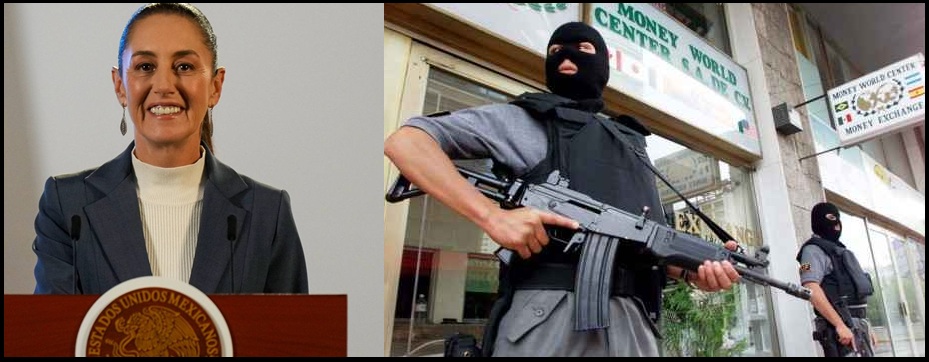
However, beyond the geopolitical issue that relates to all the above, there is another consideration that might help explain the immediate and alarmed reaction of Mexico.
With President Trump now forcefully executing exfiltration of narcotic drug traffickers, the ramifications for Mexico and the Cartels who own/operate the Mexican government take on a new context.
If the U.S. will raid Venezuela, will the U.S. now conduct a similar approach closer to home?
OFFICIAL STATEMENT: Mexico condemns military intervention in Venezuela – The Government of Mexico strongly condemns and rejects the military actions carried out unilaterally in recent hours by armed forces of the United States of America against targets in the territory of the Bolivarian Republic of Venezuela, in clear violation of Article 2 of the Charter of the United Nations (UN).
Based on its foreign policy principles and its pacifist vocation, Mexico makes an urgent call to respect international law, as well as the principles and purposes of the UN Charter, and to cease any act of aggression against the Venezuelan government and people.
Latin America and the Caribbean is a zone of peace, built on the basis of mutual respect, the peaceful settlement of disputes and the prohibition of the use and threat of force, so that any military action puts regional stability at serious risk.
Mexico emphatically reiterates that dialogue and negotiation are the only legitimate and effective ways to resolve existing differences and therefore reaffirms its readiness to support any effort to facilitate dialogue, mediation or accompaniment that would help to preserve regional peace and avoid confrontation.
It also urges the United Nations to act immediately to contribute to the de-escalation of tensions, facilitate dialogue and create conditions that allow for a peaceful, sustainable solution in accordance with international law. (link)
Reconsider these words from Rubio, against the backdrop of what Mexico is known for. WATCH:
Posted originally on CTH on December 13, 2025 | Sundance |
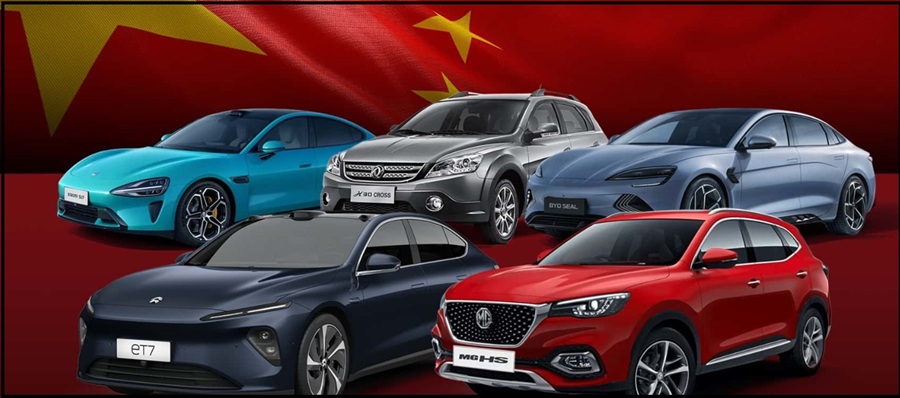
The geopolitical baseline for Europe is often determined by the economics of their situation. In 2024 approximately 408,000 cars from China were sold in Europe. For 2025 that number is now expected to exceed 700,000 units despite tariffs.
Previously we highlighted the short-term ramifications of the European Union push to force the sale of electric vehicle (EVs) upon the consumer base. {SEE HERE} EU automakers unable to meet the compliance goal began purchasing carbon credits to avoid stiff EU fines. Many of those carbon credits were purchased from Chinese automakers, who then turned around and started using the extra EU revenue to discount Chinese cars sold in Europe.
In essence, EU car companies started subsiding China to undercut their own market. An outcome of the EU chasing the ridiculous green energy project throughout the European free trade zone.
Now reports are beginning to surface of how the non-EV segment of the industry is being lost to less expensive Chinese hybrid autos that: (1) are much cheaper, (2) not bad in quality, and (3) are not subject to the 35% EV tariff rate.
The EU tariff applied to gasoline powered cars or hybrids from China is 10%. That tariff is not enough to stop the imports. The Chinese hybrid autos are substantially less than European car brands, and there’s no financial incentive for China to build auto plants in the EU zone especially when you consider the EU is subsidizing those cars by purchasing carbon credits.
When analyzed from a cost and consequence, the entire EU dynamic toward car companies is a little funny. However, for Germany this is a serious issue, and with the German industrial economy already stagnant – every impact to their auto industry only makes the situation worse.
When you overlay the big picture of their expensive “green energy” costs, the EU find themselves in an unescapable downward spiral. Quite literally, all commonsense seems to have been lost in their green energy chase.
By focusing on energy targets, specifically by trying to force production of European electric vehicles that are not favored by European car purchasers, the EU is shrinking their economy to the benefit of Beijing exploitation.
EUROPE – This year, sales of Chinese-made cars across the EU, UK, and EFTA are expected to exceed 700,000. This is up significantly from the 408,000 that were sold in 2024.
The surge comes despite the fact that additional tariffs of up to 35 percent, on top of the existing 10 percent import duty, were instated in November of last year.
Rather than dampen demand, the tariffs have simply redirected it. While the added fees specifically target EVs and extended-range electric vehicles, hybrid and internal combustion engine (ICE) models remain subject only to the base 10 percent tariff.
Predictably, Chinese brands have leaned into that category, shifting their European strategy toward models that sidestep the higher costs.
Thanks to significantly lower production costs, up to 30 percent cheaper than in Europe, it doesn’t make financial sense for these brands to relocate production just to serve a tariff-guarded market. Instead, they’re exploiting the gap. (read more)
The only Chinese auto plant current in the works for construction is in Hungary, not coincidentally the country with the most common sense as it applies to energy costs. BYD (Build Your Dream) is building a plant in Hungary expected to manufacture 150,000 units/yr.
While most EVs are generally best for short duration use, the Chinese hybrid vehicles are not a terrible build quality if you are an auto purchaser that changes vehicles frequently. We dodged a bullet by electing President Trump in 2024, because Joe Biden (Blackrock) had positioned the North American auto industry toward a similar fate as currently happening in Europe.
The Europeans and leftists in the U.S. scoffed at President Trump for rejecting the premise behind the Green New Deal, which included electric car mandates. Those same Europeans are now watching as their industrial economy collapses segment by segment; taken over by far cheaper Chinese industrial outputs.
Posted originally on Dec 1, 2025 by Martin Armstrong |
The Chinese Communist Party is not “communist.” China permits private ownership and corporations. Consumerism and capitalism are alive and well. Forbes reported in April 2021 that a new billionaire was created worldwide every 17 hours, with the majority of newfound wealth coming from China.
The USA may be the billionaire capital of the world, with between 813 and 902 billionaires recorded, but China has seen a significant rise in the top wealth bracket in recent years. Mainland China currently has around 450 billionaires with a combined wealth of $1.7 trillion. China also hosts over 1,400 people with fortunes above $700 million. Billionaires do not exist in communist nations.
Karl Marx’s communism involved seizing the means of production. The government owns land, infrastructure, factories, and corporations under the premise that the ruling class could be eliminated by surrendering ownership to the state. Citizens may not accumulate wealth, as no one may have more than another, and certainly not more than the state. Everyone must be equal in poverty.
Under communism, the incentive for innovation is null and void. China has become a pioneer in innovative technologies and discoveries in every sector. Entrepreneurs are abundant in China, and investment and international trade are encouraged. The China of today is one of the leading players in the global economy, driven by modernization and competitiveness. The China of the past may have been communist, but the government is not going to take down statues of Mao or announce past wrongdoings.
China quietly moved away from communism decades ago. They saw it wasn’t working and made a change without a public declaration. Yes, the CCP is certainly authoritarian to some degree, but it is a fallacy to call China a communist nation.
I have created this site to help people have fun in the kitchen. I write about enjoying life both in and out of my kitchen. Life is short! Make the most of it and enjoy!
This is a library of News Events not reported by the Main Stream Media documenting & connecting the dots on How the Obama Marxist Liberal agenda is destroying America