President Trump Visits Missouri for Business Roundtable – 4:00pm Livestream…


President Donald Trump is traveling to Missouri today to promote recent tax cuts and campaign for Republican U.S. Senate candidate Josh Hawley.  The president is scheduled to visit the Boeing plant in St. Louis where he will hold a round table with business leaders and workers, then plans to attend a fundraiser for the senate candidate.

The roundtable discussion with Boeing business leaders will be livestreamed at 4:00pm

WH Livestream LinkABC News Livestream Link

President Trump Visits San Diego To Review Border Wall Prototypes (Video)…


President Donald Trump traveled to San Diego today for a tour of eight border wall prototypes today along with a speech to members of the military at Marine Corps Air Station Miramar.

This is President Trumps first trip to California as president. The peoples’ president spent about an hour reviewing the 30-foot wall segments near the U.S.-Mexico border. Trump’s promise of building a border wall was the primary visible promise made during the 2016 presidential campaign trail. As president, he has been steadfast in his push for the completed project.

“If you don’t have a wall system, we’re not going to have a country,” Trump said at the site of the prototypes. “There’s a lot of problems in Mexico. They have a lot of problems over there. And they have the cartels. And we’re fighting the cartels, and we’re fighting them hard. … But the fact is, if you don’t have a wall system, it would be bedlam, I imagine.”

Rex Tillerson Removed as Secretary of State…


Secretary of State Rex Tillerson did an excellent job representing the professional and deliberate diplomatic approach of the U.S. and President Trump administration.  His personal view toward foreign service on behalf of the U.S. was exemplary, and deserves high praise.

Having said that, as President Trump stated earlier today, there was also more than a tinge of disunity between the advocated views of Tillerson and the views of the Commander in Chief toward economic national security.   At times the fractures between policy perspectives were visible.  Over time those differences became more obvious.

As Secretary of the DoS Rex Tillerson supported the Paris Climate Treaty; the President did not; Secretary Tillerson supported the Obama administration’s Iran deal; the President did not; Tillerson was more apologetic toward lax immigration policy; the President is not; and there were other visible departures visible surrounding the use of economic leverage to achieve national security advancements, specifically on the issue of China and North Korea policy.

The primary perspective, drawing the greatest contrast, surrounded President Trump’s view and expressed policy of emphasizing strength; particularly economic strength – to gain national security objectives.

After many years of projected weakness by the former administration one of the key tenets of the Trump presidency has been reestablishing national security by focusing on unapologetic U.S. economic power regardless of global opinion therein.

Unapologetic economic power is where the views of President Trump and Secretary Tillerson parted.  T-Rex projected more of a humble and altruistic approach; almost seeming embarrassed at times to participate in discussions of economic conflict and confrontation.  Indeed it often seemed awkward for Mr. Tillerson as he carries a less confrontational and more servant-minded constitution.

While he is not a pure ‘globalist’ per se’, Secretary Tillerson was less deliberate toward achieving territorial economic goals as a method to achieve geopolitical national security.  On matters surrounding these issues, T-Rex was more Wall Street than Main Street; more traditionally republican than change-agent populist.

Despite the media’s inability to see the severity of perspective, President Trump is not going to be swayed on matters of national economics.  POTUS Trump will listen to alternate opinions based on current events, but his forward advancement toward U.S. economic security will not be slowed by high-minded analysis leading to paralysis.   Within his outlook, always in the back of his mind, the clock is ticking… there’s an inherent sense of urgency.

Forcing economic change to enhance the territorial economic security of middle-America requires the ability of the change-agent to ignore the feelings and sensibilities of outside nations who will be confronted in the process.  Diplomacy must be set aside when entering the predatory world of massive trillion dollar economic deals.  There is no room for friends and comfort here, after thirty years of inept acquiescence, from President Trump’s perspective, winning is the only acceptable outcome.

Stopping the exfiltration of American wealth demands severity: “we either have a country or we don’t.”  Within that dynamic the value of diplomacy is necessarily lessened in favor of more deliberate and unapologetic policy advancement.  Inside that dynamic President Trump and Secretary Tillerson did not agree – and that is a major point of disunity.

As Commerce Secretary Wilbur Ross has stated several times: “economic security is national security.”   President Trump fundamentally believes that our national security requires independent U.S. economic security.  Everything is downstream from the economics of the issue, any issue, regardless of the issue – foreign or domestic.

Carrying a sense of urgency toward these national security issues, delicate sensibilities -and the opinion of the media who protect them- are necessarily dispatched like a feather in a hurricane.  Again, “we have no choice”, as often heard from President Trump.

Going into year #2 of the administration the current emphasis is a structural reset in the U.S. approach toward global trade.  “Killers” are of value now; thirty years of talking and losing is over.  As such inside this seismic trade-policy-shift, a parallel geopolitical strategy is being played out from the Middle-East through allies in Europe and into Asia around the rarely moved cornerstones of economics and trade.

National liberty, that is actual liberty – not the perception of liberty, is directly tied to economic victory.  During this reset there are only two groups: predators and prey.

Confronting China (Xi Jinping) economically was/is what brought North Korea (Kim Jong-Un) to the table of discussion to give up their nuclear ambitions; it was not diplomacy that created the breakthrough conditions for a national security win.  What brought China/DPRK to this position was the very real possibility of looming economic defeat.  President Trump’s approach won, Secretary Tillerson was surprised.

President Trump has aligned his economic opponents into his preferred geography. Everyone within sight is either an adversary or an ally.  However, allies are now reduced to being benefactors who will smartly get out of the way while the apex predators destroy their opposition.  Year two is about resolving to achieve economic victory regardless of international collateral damage. There is no longer any room for negotiating terms.  Diplomats retreat to the hilltops.  The era of economic Titans has come again.

Final point – When approaching specific goals and objectives President Trump works through a strategy based on phases.  President Trump doesn’t retain people past their expended usefulness.  Rex Tillerson did an outstanding job as Secretary of State introducing the Trump administration to nations’ of the world.

The diplomatic introductions and niceties are now complete; it’s time to get down to business.

Former Secretary of State Rex Tillerson Press Conference – 2:00pm Livestream…


Former Secretary of State Rex Tillerson is scheduled to hold a press conference moments from now to discuss current events including his exit from the Dept. of State and his replacement by CIA Director Mike Pompeo.

UPDATE: Video Added

PBS News LivestreamNBC News LivestreamCBS News Livestream

Will US Companies Repatriating Cash Home Create Banking Crisis Outside USA?


QUESTION: Mr. Armstrong; Do you believe that if American companies do repatriate dollars to get the low tax rate in the USA, will this impact foreign banks as capital withdraws? I figured you are the best qualified to answer that question nobody seems to be discussing.

Thank you for sharing your expertise.

SY

ANSWER: That is a very interesting question and it is indeed unique. I cannot think of anyone who has asked that one yet.  Let us assume that U.S. corporations will repatriate at least 25% of their estimated US$2.6 trillion of offshore funds to take advantage of a one-off 14% tax holiday. It will not matter if they are selling euros, yen, pounds, or yuan. Switching their fund from the offshore dollar funding markets to domestic dollars will have a similar impact to the same trend that took place between 1980 and 1985 that drove the dollar to all-time record highs.

American corporations moving capital sends a powerful impulse through global finance system. Despite the rise of China and the creation of the euro, the world has never been so “dollarized” as it is today. The euro is a complete failure for there is no single market with a centralize debt to compete with the dollar as an alternative. China is rising, but it is not ready for prime time. There is no alternative to the dollar. That is the real crisis in the world economy.

U.S. lending rates are critical to the world economy. The Bank for International Settlements (BIS) says offshore dollar funding has risen fivefold to US$10.7 trillion since the early 2000s, with a further US$14 trillion of global dollar debt hidden in derivatives. BIS research also confirms that the rise and fall of the dollar is the major cycle of dollar liquidity which is driving the world’s investment appetite and global asset prices. This liquidity spigot is clearly being turned off. The Fed is not only raising rates, it is also reversing bond purchases exactly OPPOSITE of the ECB which openly admits it will repurchase government debt as it expires. The Fed is shrinking its balance sheet while the ECB is trapped and cannot dare take the same steps.

The BIS is warning that China, Canada, and Hong Kong all have the risk of banking failures that are greater than that of Europe. Apple Inc. said it will bring hundreds of billions of overseas dollars back to the U.S., pay about $38 billion in taxes on the money and spend tens of billions on domestic jobs, manufacturing and data centers in the coming years. That is more than a quarter-trillion. The answer is YES – ABSOLUTELY. US companies will bring back a substantial amount of that money and this will reduce deposits overseas and that will increase the risks of bank failures outside the USA, but probably more so in Asia than Europe. The ECB will most likely prop-up banks no matter what it says.

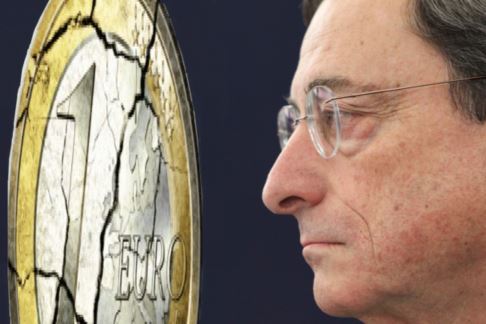
Mario Draghi will NOT stop Quantitative Easing and he WILL NOT raise rates until he can get out the door. His term at the ECB is for 8 years and sources say he cannot wait to leave. Draghi will extend his signature landmark bond-buying stimulus programme that is just life-support for the member governments at least September 2018 officially but indefinitely until he leaves. He does not want to be blamed for the economic disaster he has created for the world and as such he is trapped in the ECB until October 2019. The question will be can he really keep up this insane losing position that much longer or will the entire house of cards come crashing down.

So look first to bank failure on the rise in Asia, and they will spread to Europe. Nonetheless, there is deep concern about Italian banks and that may be the spark which ignites the next catastrophe.

Lou Dobbs Trade and Tariff Discussion With Commerce Secretary Wilbur Ross…


U.S. Department of Commerce Secretary Wilbur Ross discusses the recently imposed steel and aluminum tariffs and America’s future trade relationships with all nations including the very protectionist European Union.

“Economic security is national security” ~ Secretary Wilbur Ross

Reminder: Regarding ‘European Union (EU) retaliation’, forget it; they won’t.

The protectionist EU hypocrites simply cannot afford to go toe-to-toe with the U.S. on trade. The UK is in the process of formalizing their Brexit terms; the EU (essentially ‘Germany’) needs to find a way to make up for the lost revenue (billions in taxes) from the UK economy. Currently the UK pays Brussels approximately a billion per month on a $2.5 trillion economy; that will stop.

Brexit reduces the overall EU GDP by $2.5 trillion. German Chancellor Angela Merkel cannot -and will not- challenge President Trump. In addition to being politically weak, Merkel has attached her economy to expansive environmental regulations (Paris treaty), though she is now attempting to pale down those regulations. Chancellor Merkel cannot afford to run the risk of losing any access to the U.S. market.

Fifty Former Failed Obama Administration Foreign Policy “Experts” Form Think-Tank To Unite Against President Trump…


This is just too rich. Seriously.

From the insufferable Iran deal… to the appeasement “Russian Reset”… to the Libya fiasco… to the rise of ISIS… to installing the Muslim Brotherhood in Egypt… to the explosion of terrorism in Yemen… to civil war in Syria… to the crisis in Ukraine… to the 2010 State Department apology tour (WikiLeaks cables scandal)… to their inability to stop North Korean nuclear ambitions and the rise of China as an influential power… there were/are zero foreign policy successes in eight years of the Obama administration.

There was not a single Obama foreign policy initiative that had any success. Every single place where the prior administration put their attention, the results were complete failure, crisis, chaos and worse conditions in the aftermath. That’s the 2009-2017 reality.

Today it is discovered that fifty of the most well known Obama foreign policy officials  have come together to form a think-tank group called “National Security Now“. Their singular mission is to be the “resistance” to the Trump administration’s foreign policy. You have to see the names to recognize how bad these people were at policy:

♦Ben Rhodes ♦Susan Rice ♦Samantha Power ♦Denis McDonough ♦Tom Donilon ♦Tony Blinken ♦Jen Psaki and more. The list is a veritable ‘who’s-who’ of short-sighted foreign policy, ineptitude and diplomatic failure. There’s literally not a success between them, and they are uniting together to advocate against President Trump.

These Obama Officials are opposing the same President Trump who:

•put the plan in place to destroy ISIS and carried it out in the first year; •initiated massive change in the mid-east which saw Arab countries confronting extremism (including Qatari funding of the Muslim Brotherhood); •expanded international energy partnerships to remove the influence of Russia; •confronted China’s expansive economic agenda and halted it; •smartly used economic influence to bring North Korea to the point of accepting ‘denuclearization’; and •leveraged Pakistan to influence the Taliban to the negotiation table in Afghanistan…

…All of this in the first 14 months of his administration; while simultaneously dealing with three U.S. land-falling hurricanes and numerous national disasters and downsizing the U.S. State Department by 30%.

Go figure.

President Trump Tweets Secretary Ross Reevaluating EU Trade Deals….


Just a short post to reflect upon.  We have consistently stated the #1 reason for opposition to President Trump is financial (ie. economic); “There are Trillions at stake“.

Everyone admits the past 40+ years of U.S. trade deals have resulted in the massive export of U.S. wealth via jobs and manufacturing gains within other nations.  The financial beneficiaries of those prior trade positions were: Wall Street, multinational corporations and multinational banks. The losers of prior trade priorities was the U.S. middle-class.

So ask yourself, friends and family this very important question:

If prior U.S. trade policies resulted in the export and redistribution of U.S. wealth… What happens when you reverse the process?

In the answer to that question we discover the opposition to U.S. President Trump.

Example Here

President Trump’s Economic Approach Toward National Security Wins – U.S. Media Ignore…


It must be pointed out; it is up to us to do so. The corporate media are hopelessly deficient in their coverage and explanations of how strategic objectives for national security are being delivered through a geopolitical Trump Doctrine via economic leverage. The results are stunningly effective, yet few have noticed and even fewer seem willing to articulate; perhaps their inability is because they simply just don’t get it.

It must be said, the U.S. is a long way from success in the goal of a denuclearized Korean peninsular; however, where we are today is closer to achieving that goal than ever before. And ultimately where we are is entirely because of President Trump’s strategic economic approach toward national security.  The U.S., heck the entire world, is positioned for a BIGLY security victory; and the anti-Trump media apparatchik continues to ignore how we got here.

What President Trump was able to do with the approach he took with North Korea is jaw-droppingly smart. Stunningly so.  Economic leverage works.  We have been led by “stupid people” who never applied economic leverage in a way that would ultimately matter to secure the best interests of the United States.

President Trump and his team did.  And they are winning… and as a consequence, we are winning…. and the ‘Deep State’ institutions along with their media cohorts are desperate to stop the American electorate from seeing and understanding the path to victory.

The professional global policy think-tanks will never give President Trump credit for securing a national security victory, via strategic policy initiatives that are fundamentally against the 50+ year worldview of U.S. foreign policy “experts”, ie. elites.

President Trump, his strategic economic policy and national security team has done something every think tank said was impossible.  Look at the narrative from the pundits and policy officials in the past year.  At the beginning of 2017 the ‘experts‘ all said China and Russia would be thorns in the Trump approach toward North Korea and they could not be moved.  In essence, they said President Trump would  never succeed.

But Trump did succeed.

Bigly.

“The impossible is just the starting point”.

What CTH wants to emphasize here is how the ‘Deep State’, and their media co-horts, are positioned against the Trump administration, and by extension against the America people, regardless of the scale of accomplishment – no matter what.  Bastards.

Again, for emphasis, here’s how President Trump did it. Here’s how Trump pulled it off:

♦ First, any review of the enhanced sanctions against N-Korea should be incorporated with the larger issue of policy toward the DPRK’s enabler, China.  From the outset President Trump, Treasury Secretary Mnuchin and Commerce Secretary Ross positioned a severely consequential trade reset between the U.S. and China.

♦Second: The enhanced U.S. energy export initiatives, in conjunction with lower oil prices, an outcome of U.S. energy policy and a mutually beneficial relationship between President Trump and Arab states in the GCC, severely weakened the economic position of Russia.

Russia’s energy export economy is dependent on energy prices remaining high. President Trump brilliantly worked the geopolitical economic relationships to leverage influence over a large portion of the Russian economy.

♦Third: By focusing on the utilization of economic influence over Russia and China, President Trump set the stage for U.S. led United Nations sanctions that would isolate Kim Jong-Un and cut off his previously utilized financial escape routes.

♦Fourth: While no-one was paying attention to the real end-goal; President Trump instructed Defense Secretary James Mattis to send the largest ever U.S. naval fleet into Southeast Asia in preparation for a naval blockade around North Korea.  The U.S. military is not the leverage, the military helps create leverage. The leverage itself is economic. Financial interests are always the best leverage to use because inherent within the fundamental principles of economics is “self-interest”.

Each of these four elements was independent; each of these moves was a long-term strategy; each of these four elements built upon the step that preceded it.  When we combine these four strategic points we discover the leverage President Trump created (economic), and the enforcement mechanism he deployed to ensure success (sanctions).

President Trump began by creating a situation where China and Russia’s best economic interests were enmeshed with supporting U.S. sanctions against the DPRK.  The Bear (Russia) and Red Dragon (China) were drawn into an economic battle space controlled by entirely the Eagle (Trump-USA).

We have often noted that President Trump is seemingly one man, yet he finds a way to surround multiple enemies simultaneously.  China, Russia and North Korea is one such visible example.

Ultimately President Trump offered a ‘better’ trade outcome (definitions variable, yet all defined by him) for China if they complied with Nikki Haley’s sanctions. Similarly President Trump positioned negotiations with Russia on ‘better’ or “more favorable’ terms (again, definitions variable) for U.S. energy shipments to Eastern Europe, if Russia complied with Nikki Haley’s sanctions.

You might remember President Trump visited Poland and the Three Seas Summit (Baltic, Black and Adriatic Sea States), on the sideline of his engagements with France (Emmanuel Macron) and the G20 members.  President Trump and Wilbur Ross established economic relationships and agreements for energy export between the U.S. and Eastern Europe.  In essence, Russia’s exploitative energy influence over the EU was diminished.

Immediately after taking office President Trump began establishing a positive relationship between his administration and the Mid-East Gulf Cooperation Council.  This set the cornerstone for the larger geo-strategic economics.  Add the EU positioning to the relationship with Trump and the GCC and you see the leverage needed over Russia on issues unrelated to the EU, vis-a-vis North Korea.  Trump’s foresight on this was incredible.

The Outcome – China and Russia holstered their U.N. Security Council veto power, and actually supported sanctions against N-Korea because it was in their economic interests not to oppose the U.S. led sanctions. Brilliant strategy.


To complement the August 2017 U.N. sanctions, in September President Trump and Treasury Secretary Mnuchin structured an executive order in such a way that the downstream consequences from any economic engagement with the DPRK effectively cuts off that entity or nation from engaging in ANY commerce or economic activity with the United States.  The result was immediate:  Beijing took action with their central bank instructions and told all institutions to stop engaging in any financial transactions with North Korea.

Five days later President Trump and U.S. Secretary of Treasury Steven Mnuchin used the newly constructed sanctions authority to punish eight North Korean banks and 26 bank workers living abroad.

The Office of Foreign Asset Control (OFAC) sanctions {deep dive} relied on the executive order President Trump signed to target North Korea’s access to the international banking system. The Trump/Mnuchin action came as as a separate outcome from the United Nations sanctions package targeting North Korea.

When it comes to the use of economic leverage to create U.S. national security outcomes, well, we are learning at the knee of an economic master player. The media will now do everything they can to stop people from realizing how effective President Trump is…

…”complicated business folks,…. complicated business”…

Sunday Talks – CIA Director Mike Pompeo -vs- Margaret Brennan…


CIA Director Mike Pompeo appears on CBS Face the Nation to discuss the possibility of negotiations with North Korea and other issues around the globe.