Posted originally on CTH on February 25, 2026 | Sundance
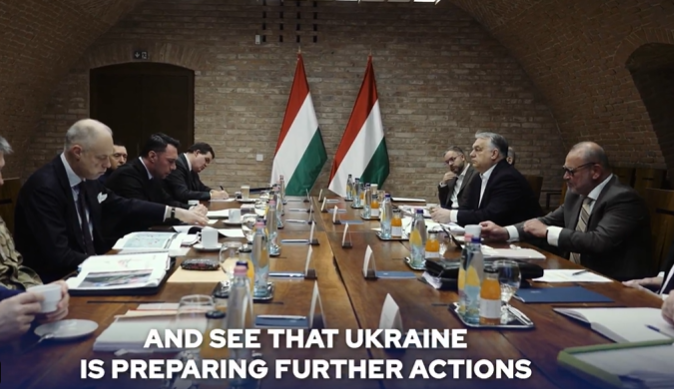
The collective war being carried out by Ukraine and Brussels against Hungarian energy systems is escalating. Hungarian Prime Minister Viktor Orban is now putting military defenses and security forces around critical infrastructure.
ORBAN: We will not give in to blackmail! I have ordered increased security for critical energy infrastructure.
The Ukrainian government is exerting pressure on the Hungarian and Slovak governments through an oil blockade. They will not stop there, as they are preparing further actions to disrupt Hungary’s energy system. Hungary cannot be blackmailed!
We will not give in to blackmail ❗️
I have ordered increased security for critical energy infrastructure.
The Ukrainian government is exerting pressure on the Hungarian and Slovak governments through an oil blockade. They will not stop there, as they are preparing further… pic.twitter.com/bulICvhy1m
Posted originally on CTH on February 25, 2026 | Sundance
The Supreme Court tariff ruling has created the need for U.S. Trade Representative Jamieson Greer and U.S. Commerce Secretary Howard Lutnick to modify the baseline tariff approach with the approvals of President Trump.
The baseline tariffs are being reset to 10% with upward adjustment to 15% as planned. The reciprocal tariffs will not require any substantive modifications as most of the Free Trade Agreements have been cemented with reciprocity tariffs as part of the negotiated deals.
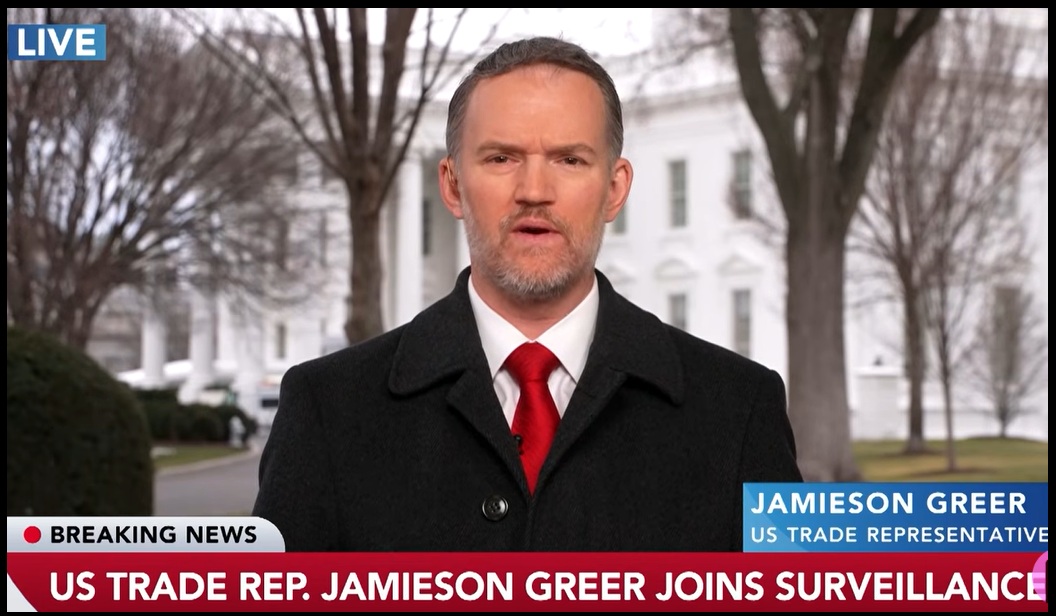
USTR Greer appears on Bloomberg to clarify the current situation and provide some information as to the transitional baseline tariffs as now modified. Additionally, and importantly, Greer begins discussing the USMCA review and his acceptance that President Trump is openly questioning the value for us. Greer notes Mexico and Canada being used as import hubs to avoid tariffs is a big issue. WATCH:
Section 232 [Steel and Aluminum examples] of the Trade Expansion Act of 1962 (19 U.S.C. §1862, as amended) authorizes the President to impose trade restrictions—such as a tariff or quota—if the Secretary of Commerce determines, following an investigation, that imports of a good “threaten to impair” U.S. national security. {SOURCE}
Section 301 tariffs are a trade enforcement mechanism established under the Trade Act of 1974. They allow the U.S. government to impose tariffs on imports from countries that are found to be engaging in unfair trade practices. The Office of the United States Trade Representative (USTR) conducts investigations to determine if a country is violating trade agreements, and if so, it can impose tariffs as a corrective measure {SOURCE}
Section 122 of the Trade Act of 1974 allows the U.S. president to impose tariffs of up to 15% to address “large and serious” balance-of-payments deficits. This authority can be exercised without prior congressional approval for a limited duration of 150 days. After this period, any tariffs must be extended by Congress. {SOURCE}
*FYI, there is a lot of distracting noise in the various social media platforms about internecine MAGA battles and ego-driven points of specific interest. CTH chooses to focus energy and attention on the substantive policy issues that will generate substantive policy outcomes for America.
Posted originally on CTH on February 24, 2026 | Sundance
I guess we can put this in the open admission file surrounding the all-out effort by the European Union to defeat Hungarian Prime Minister Viktor Orban.
According to a leaked document received by Reuters, the European Union is scheduled to permanently ban all EU nations from importing Russian oil. They have scheduled the ban to trigger on April 15th, three days after the Hungarian election.
BRUSSELS, Feb 24 (Reuters) – The European Commission will submit a legal proposal to permanently ban Russian oil imports on April 15, three days after Hungary’s parliamentary election, according to EU officials and a document seen by Reuters.
Two EU officials told Reuters the timing was designed to prevent the oil ban becoming a major factor in Hungary’s election campaign. Hungary and Slovakia, still reliant on Russian oil imports, are strongly opposed to any ban.
In the April 12 election, Hungarian Prime Minister Viktor Orban and his nationalist Fidesz party are facing the biggest challenge to their hold on power in 16 years.
The EU has already imposed sanctions on imports of seaborne Russian oil. But it wants to enshrine a full phase-out of Russian oil in legislation that would remain in place, even if a peace deal in the Ukraine war led to the EU lifting sanctions.
The Commission plans to propose the Russian oil ban on April 15, according to a draft agenda seen by Reuters.
Asked about the matter, a Commission spokesperson told Reuters the EU executive’s agendas were provisional and that it did not have a confirmed timeline for submitting the proposal. (read more)
Posted originally on CTH on February 24, 2026 | Sundance
The Ukraine military, technically and non-pretendingly accepted as the EU military, has targeted a key oil pumping station in Russia that feeds into the westerly directed oil supply. However, if you stand back from the western media, what you will notice from this attack is not the target in Russia, but the customers at the end of the pipeline in Europe, mainly Hungary and Slovakia.
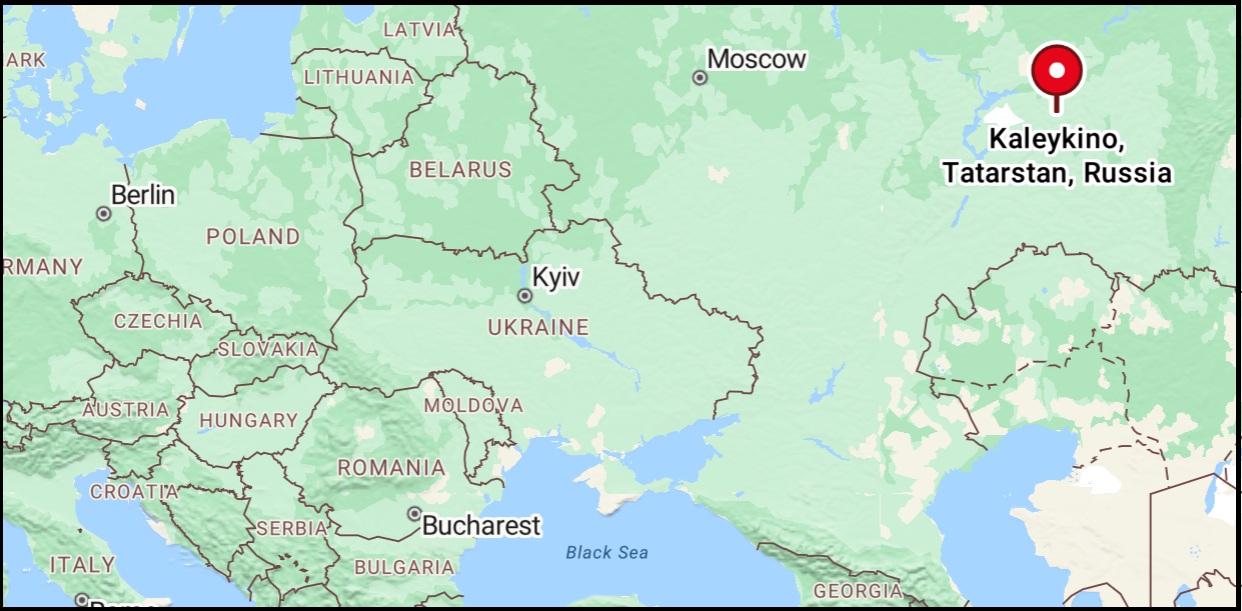
[…] Through local stations, including infrastructure around Kaleykino, oil from Tatarstan and neighboring regions feeds into the main pipeline, which runs through the Samara region and continues westward toward Belarus and further to countries in Eastern and Central Europe. […] There were also earlier reports that Ukrainian forces carried out several attacks on Druzhba pipeline infrastructure inside Russia, which at times disrupted Russian oil supplies to Hungary and Slovakia. {source}
So, what’s going on here?
Well, with the anniversary of the Russian Federation beginning the war into Ukraine, the Europeans who now control the military operations inside Ukraine are targeting European countries who do not align with their bloodlust, specifically Hungary and Slovakia.
Both Hungary and Slovakia are land locked countries without easy access seaports. Because of their geographic locations, they rely on Russian oil and gas for their energy needs. Hungary and Slovakia have not wanted to expand the war against Russia. The EU is demanding Hungary and Slovakia agree to expanded war.
The European ‘coalition of the willing’ is now targeting key Russian infrastructure that supplies energy products to European countries who are not in compliance with the EU dictates of war.
Putin says threats to energy pipelines sabotage peace process with Ukraine.
In his televised speech, the Russian president also accused Ukraine of threatening Russian energy pipelines with the help of Western intelligence agencies. He claimed these attacks were aimed to sabotage the peace process.
Putin also stressed it was vital for Russia to strengthen the defence of energy infrastructure and other strategic sectors. {source}
This is why Secretary of State Marco Rubio travelled to Hungary and Slovakia last week.
Essentially, now we see European leaders attacking their own European “allies” through the use of Ukraine. If you do not support the continued bloodlust, you are an enemy of the EU collective hive mind.
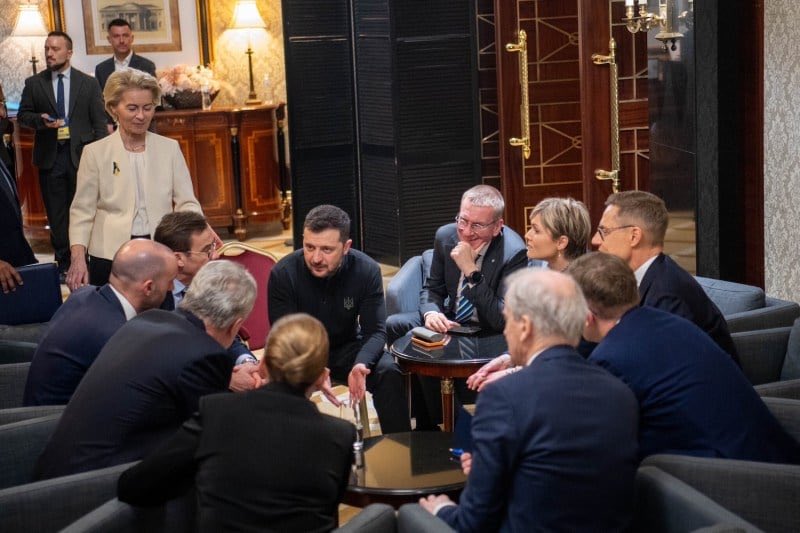
A picture is worth a thousand words….
On this grim anniversary, the Coalition of the Willing stands with Ukraine.
We will step up military support and deliveries, with a focus on air defence systems, drones and long-range ammunition.
We are working on robust security and prosperity guarantees
The Druzhba-1 station at Kaleikino, a rather important part of the Druzhba oil pipeline through which Hungary and Slovakia hope to get their Russian oil, has just been blown to smithereens and most likely won't be supplying Hungary and Slovakia with oil again anytime soon. pic.twitter.com/7M3aezultz
STATEMENT OF THE PRIME MINISTER OF THE SLOVAK REPUBLIC 🇸🇰
I have fulfilled what I declared on Saturday: “If oil supplies to Slovakia are not restored by Monday, I will ask SEPS, the state-owned joint-stock company, to halt emergency electricity supplies to Ukraine. In January… pic.twitter.com/EyjfEgmple
Posted originally on CTH on February 21, 2026 | Sundance
According to the Washington DC spin, the various EU energy ministers changed clean energy justification of ‘climate change’ during the International Energy Agency (IEA) summit because they were concerned the U.S. would pull out of the IEA group. The IEA shifted to green energy as a security priority, no longer concerned with climate change.
However, given the situation with European energy costs and the severe problems they are having within their collective and individual economies, what they consider “national security” appears to be their need to control public outrage at the green energy consequences.
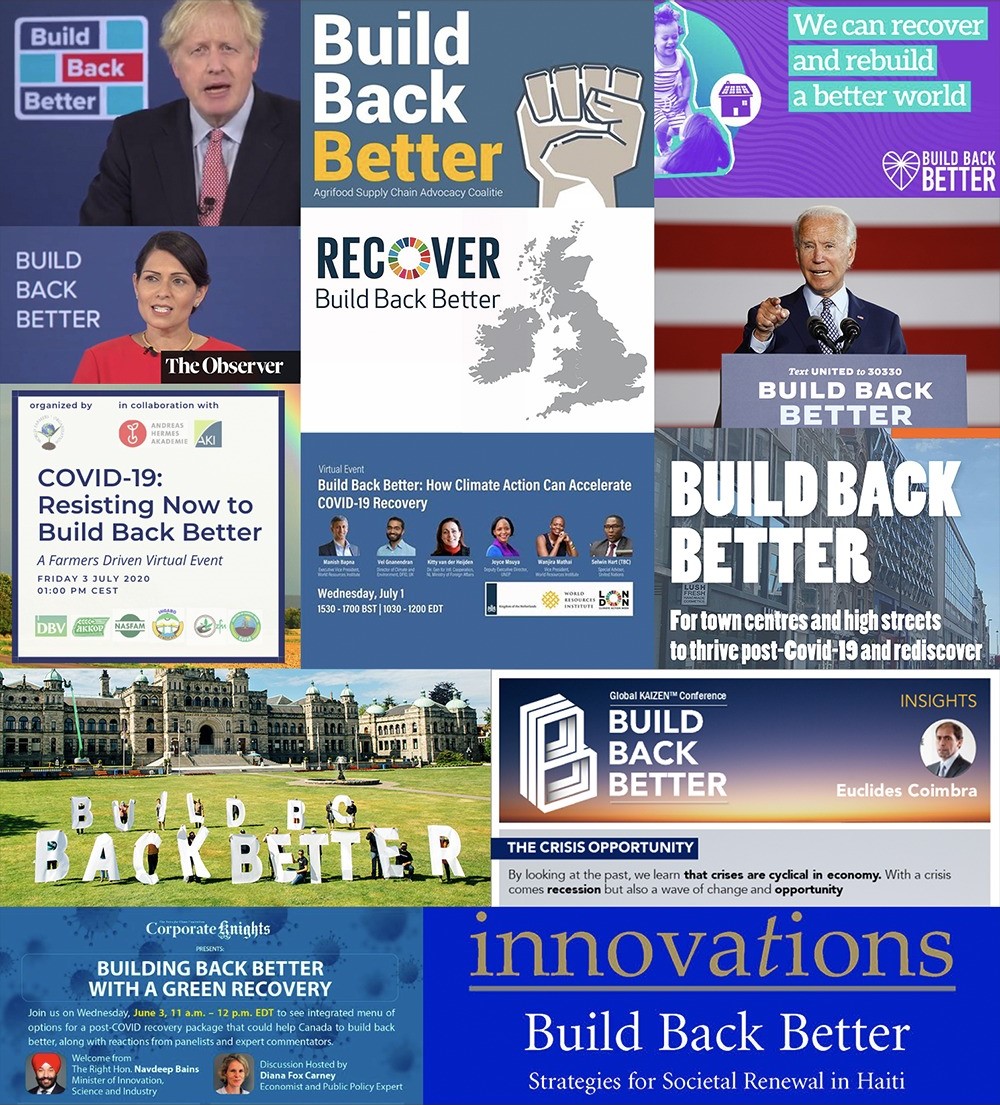
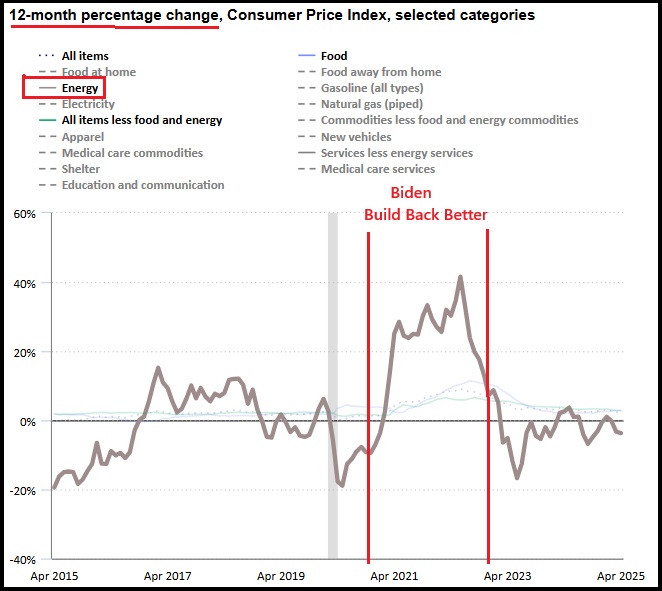
Affordable or ‘cheap’ energy production is directly linked to the underlying economy. If energy production costs more, heating, electricity, fuel, transportation, just about everything costs more. Energy prices drive consumer prices and that has become a serious problem for the U.K and EU who have chased the “Build Back Better” global energy reset.
With President Trump targeting reciprocity in a global trade balance, suddenly the economies of Europe, Canada and parts of Asia are feeling the impact. Industrial manufacturing in Europe continues dropping and various sectors like the automotive manufacturing showcase the contraction. The Gross Domestic Product (GDP) or economic output within each of the contracting nations is putting hard data behind the problem.
Suddenly, with their economies now quivering, the IEA meeting in Europe drops the climate change objective as justification for their ‘renewable’ energy programs. They blame the USA, but in reality, they appear to be trying to save themselves from feeling the full consequences of their action.
(POLITICO) – […] Ministers, senior officials and ministerial advisers told POLITICO that the event had cemented a long-running rebranding of the green transition that emphasizes the security benefits of renewables rather than their climate-saving potential. It’s a change that has been slowly building since U.S. President Donald Trump returned to office 13 months ago, and that was turbocharged by Wright’s threats on Tuesday to quit the IEA and fears Washington might stop funding the body. The U.S. provides around 14 percent of the IEA’s funding.
“With diplomacy it’s about looking for those places where you can work together,” said one European energy ministry official present at the closed-door discussions. “If the word ‘climate change’ is a red drape for a bull then don’t use it.”
The emphasis on security — not climate change — was everywhere.
“Renewable energy is not about tackling climate change, it’s about economic growth and affordable and low energy prices,” Austrian State Secretary of Energy Elizabeth Zehetner told POLITICO on the sidelines of the event. Zehetner stressed however that Europeans wouldn’t be “blackmailed” by the U.S.
Her comments reflect that independently of the U.S., Europe has itself moved away from the climate fervor that dominated Brussels policymaking in the first part of this decade. Still, despite some backsliding on green rules, the EU remains fundamentally in favor of strong policies to tackle climate change. (read more)
People tend to forget, coming out of the COVID-19 pandemic era, the Build Back Better agenda to radically change energy policy throughout the west was the primary cause of massive jumps in consumer prices.
Posted originally on CTH on February 20, 2026 | Sundance
President Trump reacts to the Supreme Court ruling with much the same perspective of many MAGA supporters.
For most of us the core of MAGA policy surrounds economics; specifically, GDP growth, jobs and wages. Economic security is national security. Immigration enforcement, border security and other priorities come after MAGAnomics.
PRESIDENT TRUMP – “The Supreme Court’s Ruling on TARIFFS is deeply disappointing! I am ashamed of certain Members of the Court for not having the Courage to do what is right for our Country. I would like to thank and congratulate Justices Thomas, Alito, and Kavanaugh for your Strength, Wisdom, and Love of our Country, which is right now very proud of you.
When you read the dissenting opinions, there is no way that anyone can argue against them. Foreign Countries that have been ripping us off for years are ecstatic, and dancing in the streets — But they won’t be dancing for long! The Democrats on the Court are thrilled, but they will automatically vote “NO” against ANYTHING that makes America Strong and Healthy Again. They, also, are a Disgrace to our Nation.
Others think they’re being “politically correct,” which has happened before, far too often, with certain Members of this Court when, in fact, they’re just FOOLS and “LAPDOGS” for the RINOS and Radical Left Democrats and, not that this should have anything to do with it, very unpatriotic, and disloyal to the Constitution. It is my opinion that the Court has been swayed by Foreign Interests, and a Political Movement that is far smaller than people would think — But obnoxious, ignorant, and loud!
This was an important case to me, more as a symbol of Economic and National Security, than anything else. The Good News is that there are methods, practices, Statutes, and other Authorities, as recognized by the entire Court and Congress, that are even stronger than the IEEPA TARIFFS, available to me as President of the United States of America and, in actuality, I was very modest in my “ask” of other Countries and Businesses because I wanted to do nothing that could sway the decision that has been rendered by the Court.
I have very effectively utilized TARIFFS over the past year to MAKE AMERICA GREAT AGAIN. Our Stock Market has just recently broken the 50,000 mark on the DOW and, simultaneously, 7,000 on the S&P, two numbers that everybody thought, upon our Landslide Election Victory, could not be attained until the very end of my Administration — Four years! TARIFFS have, likewise, been used to end five of the eight Wars that I settled, have given us Great National Security and, together with our Strong Border, reduced Fentanyl coming into our Country by 30%, when I use them as a penalty against Countries illegally sending this poison to us. All of those TARIFFS remain, but other alternatives will now be used to replace the ones that the Court incorrectly rejected.”
“To show you how ridiculous the opinion is, the Court said that I’m not allowed to charge even $1 DOLLAR to any Country under IEEPA, I assume to protect other Countries, not the United States which they should be interested in protecting — But I am allowed to cut off any and all Trade or Business with that same Country, even imposing a Foreign Country destroying embargo, and do anything else I want to do to them — How nonsensical is that? They are saying that I have the absolute right to license, but not the right to charge a license fee. What license has ever been issued without the right to charge a fee? But now the Court has given me the unquestioned right to ban all sorts of things from coming into our Country, a much more powerful Right than many people thought we had. Our Country is the “HOTTEST” anywhere in the World, but now, I am going in a different direction, which is even stronger than our original choice. As Justice Kavanaugh wrote in his Dissent: “Although I firmly disagree with the Court’s holding today, the decision might not substantially constrain a President’s ability to order tariffs going forward. That is because numerous other federal statutes authorize the President to impose tariffs and might justify most (if not all) of the tariffs issued in this case…Those statutes include, for example, the Trade Expansion Act of 1962 (Section 232); the Trade Act of 1974 (Sections 122, 201, and 301); and the Tariff Act of 1930 (Section 338).” Thank you Justice Kavanaugh! In actuality, while I am sure they did not mean to do so, the Supreme Court’s decision today made a President’s ability to both regulate Trade, and impose TARIFFS, more powerful and crystal clear, rather than less. There will no longer be any doubt, and the Income coming in, and the protection of our Companies and Country, will actually increase because of this decision. Based on longstanding Law and Hundreds of Victories to the contrary, the Supreme Court did not overrule TARIFFS, they merely overruled a particular use of IEEPA TARIFFS. The ability to block, embargo, restrict, license, or impose any other condition on a Foreign Country’s ability to conduct Trade with the United States under IEEPA, has been fully confirmed by this decision. In order to protect our Country, a President can actually charge more TARIFFS than I was charging in the past under the various other TARIFF authorities, which have also been confirmed, and fully allowed. Therefore, effective immediately, all National Security TARIFFS, Section 232 and existing Section 301 TARIFFS, remain in place, and in full force and effect. Today I will sign an Order to impose a 10% GLOBAL TARIFF, under Section 122, over and above our normal TARIFFS already being charged, and we are also initiating several Section 301 and other Investigations to protect our Country from unfair Trading practices. Thank you for your attention to this matter. MAKE AMERICA GREAT AGAIN!” PRESIDENT DONALD J. TRUMP
President Donald Trump delivers remarks and holds a media availability following the Supreme Court 6-3 decision on the meaning of the word “regulate.” WATCH:
Posted originally on CTH on February 20, 2026 | Sundance
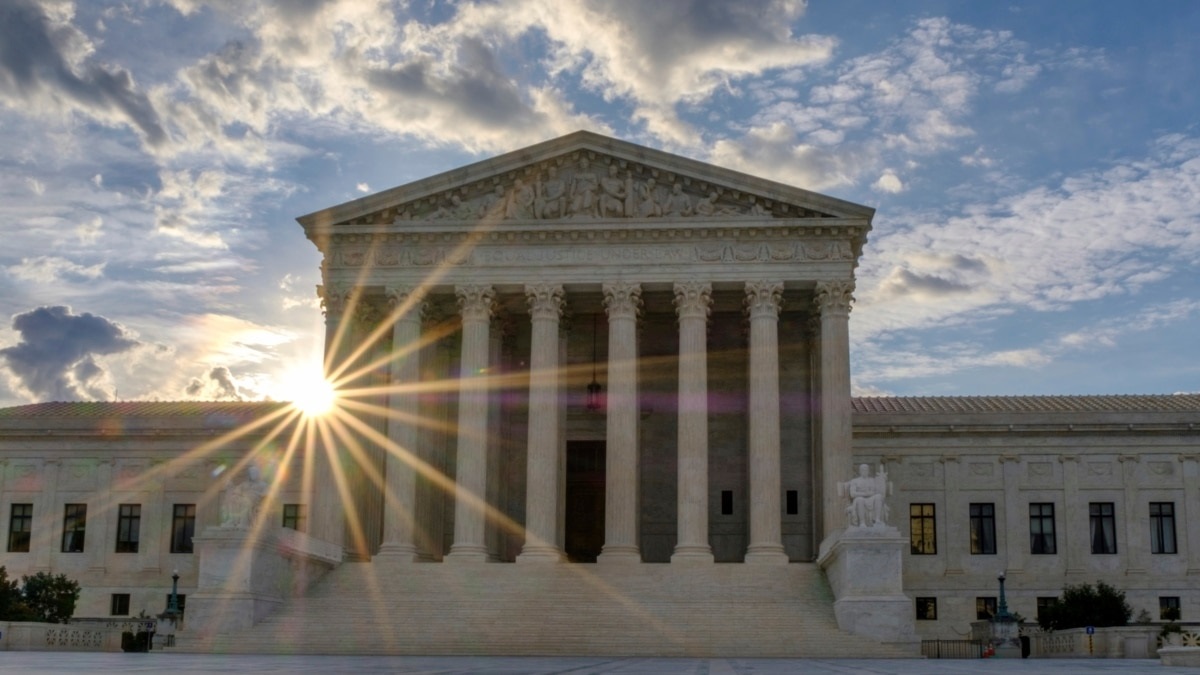
The frustrating issue with the Supreme Court ruling [SEE HERE] is not simply the legal logic applied, which essentially boils down to actionable definitions surrounding the word “regulate,” but also the high court’s seeming blindness to the “emergency” part of the reason IEEPA was used.
Economic security is national security, and the hollowing out of our ability to independently sustain our national economic system posed a real and substantive threat to our nation. The court never evaluated the ‘urgency’ behind the International Emergency Economic Powers Act (IEEPA) as used by President Donald Trump.
Instead, the court began their legal analysis by seeking to define the word “regulate” as it applies to IEEPA. Part II–B, concluding: (a) IEEPA authorizes the President to “investigate, block during the pendency of an investigation, regulate, direct and compel, nullify, void, prevent or prohibit . . . importation or exportation.” §1702(a)(1)(B) under the Act.
The majority of the court decided presidential ability to levy countervailing duties is not part of the ability to “regulate” importation.
In the opinion of the court, the President canblock imports, nullify imports and prohibit imports, but the president cannot “regulate” imports through the use of tariffs. This is the representative logic of a John Roberts court, the voice of Bush Inc.
It is what it is – and many of us saw this nonsense as a likely outcome, but it is still frustrating to see such a detached parseltongue approach to legal opinions when the national security of our nation is at stake. These are the judicial minds who will watch the nation burn to the ground, just so they can remain in power ruling over the ashes.
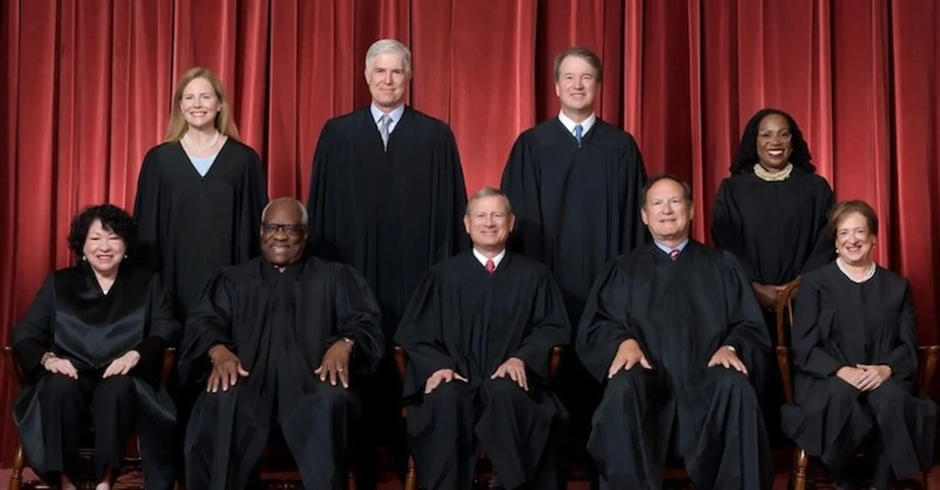
Chief Justice John Roberts and Justices Amy Coney Barrett and Neil Gorsuch joined the court’s three liberals in the majority. Justices Brett Kavanaugh, Samuel Alito and Clarence Thomas dissented.
(Via Politico) – […] “The President asserts the extraordinary power to unilaterally impose tariffs of unlimited amount, duration, and scope. In light of the breadth, history, and constitutional context of that asserted authority, he must identify clear congressional authorization to exercise it,” Roberts wrote, declaring that the 1977 law Trump cited to justify the import duties “falls short” of the Congressional approval that would be needed.
The ruling wipes out the 10 percent tariff Trump imposed on nearly every country in the world, as well as specific, higher tariffs on some of the top U.S. trading partners, including Canada, Mexico, China, the European Union, Japan and South Korea.
Several of those countries have entered trade agreements with the U.S. — and before the ruling indicated that they would continue to honor those agreements.
That is because the victory for the 12 Democratic-run states and small businesses that challenged Trump’s tariffs is expected to be short lived. The White House has signaled it will attempt to use other authorities to keep similar duties in place.
“We’ve been thinking about this plan for five years or longer,” U.S. Trade Representative Jamieson Greer told POLITICO in December. “You can be sure that when we came to the president the beginning of the term, we had a lot of different options”
“My message is tariffs are going to be a part of the policy landscape going forward,” Greer said. (read more)
Justice Thomas agrees with CTH prior position on the issue. IEEPA grants the president the authority to regulate imports, and tariffs are a tool for regulation.
Despite this decision the tariffs will remain in place, perhaps using various authorities which have not been challenged as noted in the Kavanaugh dissent:
That said, with respect to tariffs in particular, the Court’s decision might not prevent Presidents from imposing most if not all of these same sorts of tariffs under other statutory authorities. For example, Section 122 of the Trade Act of 1974 permits the President to impose a “temporary import surcharge” to “deal with large and serious United States balance-of-payments deficits.” 19 U. S. C. §2132(a). Section 201 of the Trade Act of 1974 provides that, if the International Trade Commission determines an article is being imported in such quantities that it is “a substantial cause of serious injury, or the threat thereof, to the domestic industry producing an article like or directly competitive with the imported article,” the President may take “appropriate and feasible action,” including imposing a “duty.” §§2251(a), 2253(a)(3)(A). Section 301 of the Trade Act of 1974 authorizes the President through a subordinate officer to “impose duties” if he determines that “an act, policy, or practice of a foreign country” is “unjustifiable and burdens or restricts United States commerce.” §§2411(a)(c). Section 338 of the Tariff Act of 1930 permits the President to impose tariffs when he finds that “any foreign country places any burden or disadvantage upon the commerce of the United States.” §1338(d). And Section 232 of the Trade Expansion Act of 1962 authorizes the President to, after receiving a report from the Secretary of Commerce, “adjust the imports of [an] article and its derivatives so that such imports will not threaten to impair the national security.” §1862(c)(1)(a).
So the Court’s decision is not likely to greatly restrict Presidential tariff authority going forward. (pg, 63 dissent)
Posted originally on CTH on February 19, 2026 | Sundance
President Trump travels to Rome Georgia today to deliver remarks on the economy from Coosa Steel Corporation. The anticipated start time is 4:00pm ET. Livestream Links Below.
Posted originally on CTH on February 18, 2026 | Sundance
The high court has indicated it will be releasing opinions on one or more of the previously argued cases on Friday February 20, Tuesday Feb 24, or Wednesday Feb 25. The decision over tariffs triggered by President Trump using the International Emergency Economic Powers Act (IEEPA) is one of the decisions now considered highly likely to surface.
If the decision doesn’t come this Friday, a rather interesting situation unfolds. The following week falls into the Tuesday Feb 24 State of the Union address.
Typically, several Supreme Court justices sit in front row of the House floor during the speech. The decision could be released on the morning of the speech, or justices could actually sit in the audience – knowing the outcome and the morning after the State of the Union address, the ruling could be released.
Now, there is a possibility the ruling will not come out in this cycle, but that is diminishing possibility considering the length of time the Supreme Court has sat on this opinion.
The court knows the importance of this decision, and they obviously know the State of the Union speech is scheduled to be delivered on Tuesday the 24th. This will be an interesting dynamic to watch unfold.
I have created this site to help people have fun in the kitchen. I write about enjoying life both in and out of my kitchen. Life is short! Make the most of it and enjoy!
This is a library of News Events not reported by the Main Stream Media documenting & connecting the dots on How the Obama Marxist Liberal agenda is destroying America