Posted originally on CTH on March 23, 2026 | Sundance
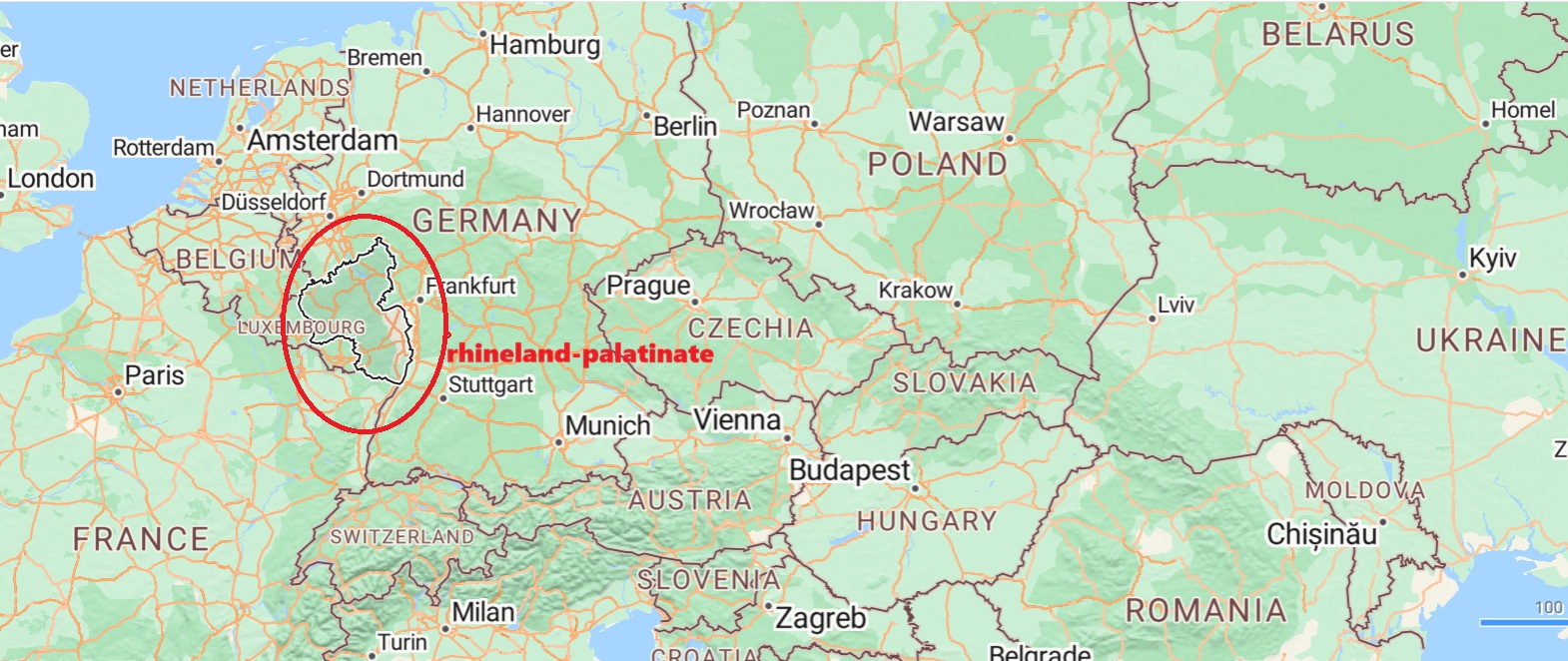
Within Germany the Rhineland-Palatinate regional parliament electionwas held yesterday. The region is the heart of the German industrial sector and home to the massively important auto-manufacturing sector.
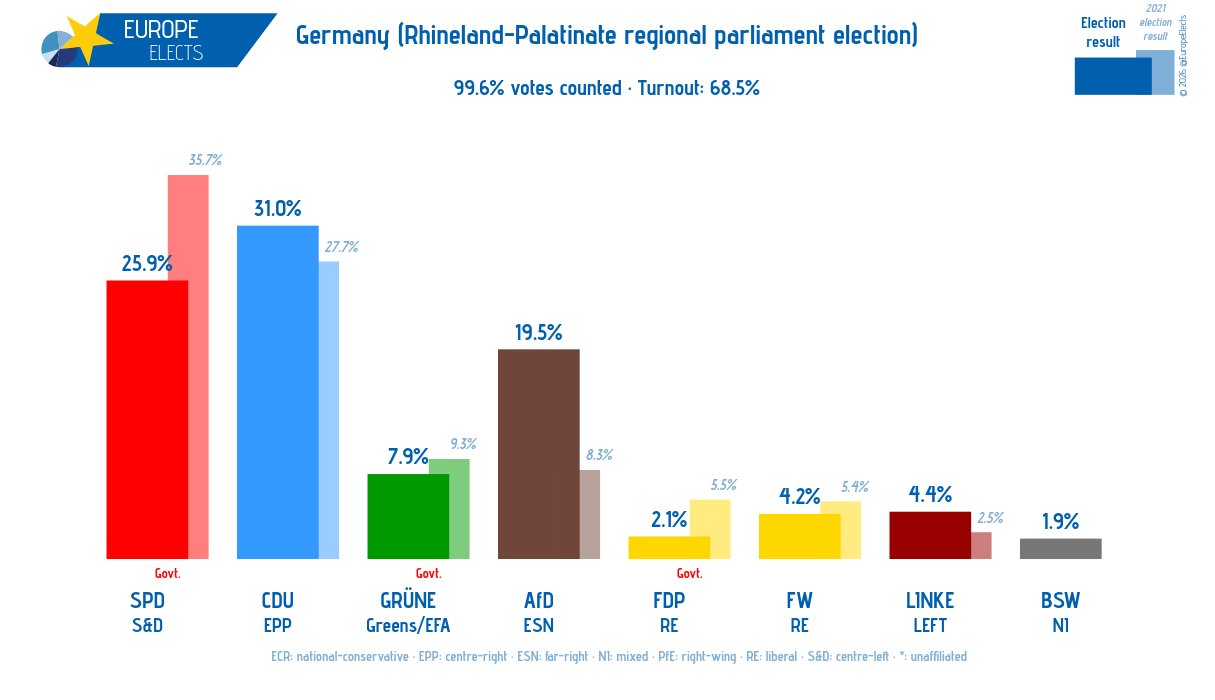
Chancellor Friedrich Merz’s conservative party the Christian Democratic Union (CDU) won the biggest portion of the election, defeating the Social Democratic Party (SPD) who lost ground in the western area bordering France. However, the biggest electoral gains were for the Alternative for Germany (AfD) party, with gains that more than doubled its previous vote share.
There is intense interest throughout Europe on the ideological shift in political sentiment mostly driven by economic concerns as well as rising nationalistic sentiment against the elitist minds in Brussels. Essentially those being ‘ruled’ are increasingly fed-up by those doing the ‘ruling.’ The AfD party is akin to the pragmatic MAGA base more focused on economic nationalism than all the nonsense associated with multiculturalism, green energy programs and terrible immigration policy.
The ideological battle within Europe is ongoing, with some gains by nationalist parties over the collective mindset of the European elites. However, the European Commission doesn’t just have a finger on the scales, they have full control over the mechanics of the elections themselves. Yes, AfD more than doubled their share of votes to 20%, but CDU at 31% and the socialists at 26% is akin to mainstream corporate republicans and progressives respectively controlling 57% of the support base.
The biggest election to be held in Europe in the last decade or more, is going to be the election in Hungary which takes place April 12, next month.
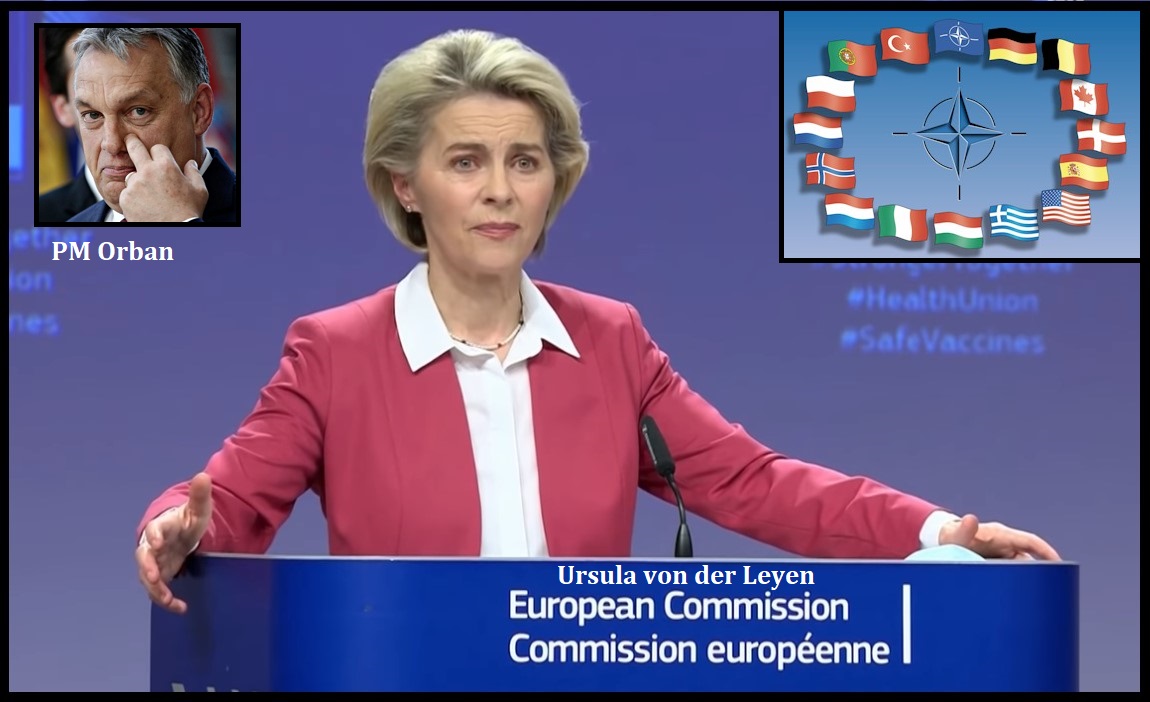
The European Commission is going all-in to try and manipulate the Hungarian voting base against Prime Minister Viktor Orban and the Fidesz party who is/are viewed by Brussels as standing in the way of their scheme to fund the ongoing war in Ukraine.
Orban’s reelection campaign has been under relentless assaults from restrictions on EU social media, to outright propaganda and financing for his opposition Péter Magyar and the Tisza party.
Prime Minister Orban is strongly supported by President Donald Trump and the Trump administration; however, the scale of opposition to both of them is intense.
Former leftist USAID Administrator Samantha Power spent time inside Hungary organizing the Tisza party to oppose Viktor Orban, and the totality of the European opposition to Orban cannot be underestimated.
Every element of every political construct within the Europe Union is aligned to try and defeat Orban and the Fidesz party. Additionally, the government of Ukraine is actively working all intelligence angles to defeat Orban due to the $90 billion EU loan scheme that Hungary is blocking.
Prime Minister Viktor Orban winning reelection this time in 2026 would be akin to Trump’s victory in 2016.
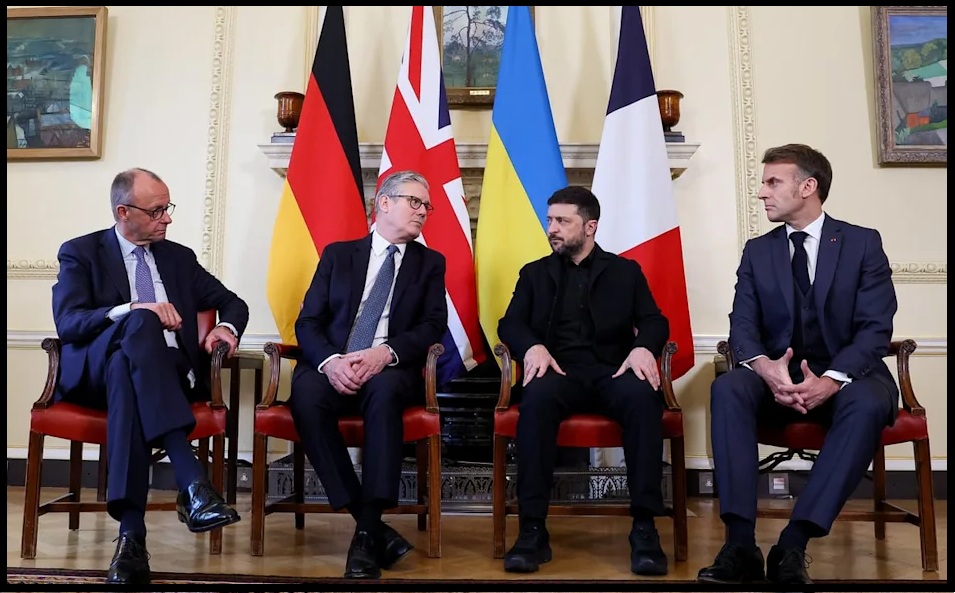
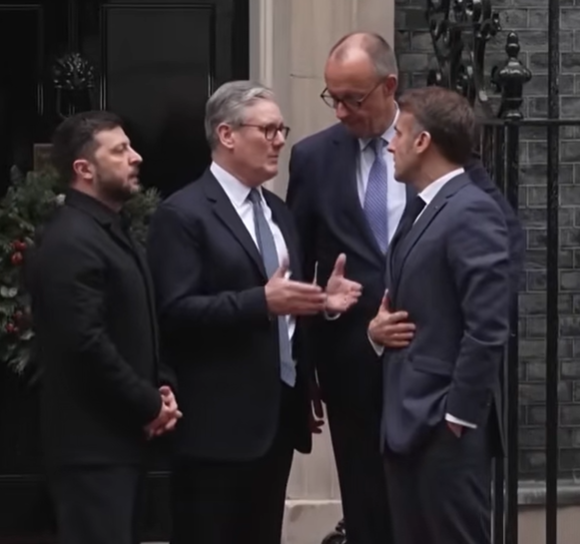
Do not underestimate the power of the U.K/European control system and the alignment of all their collective interests. Chancellor Friedrich Merz (Germany), President Emmanuel Macron (France), Prime Minister Keir Starmer (UK) along with the governing elites of Denmark, Finland, Sweden, Norway, Austria, Netherlands and many more, have all publicly taken positions against Hungary.
As we saw in Romania, Moldova and Georgia, it is not simply a matter of what the Hungarian voters want that will determine the outcome of the Hungarian election, the European Commission has many tools and techniques to shift the outcome.
This single small Hungarian election is the most critical election for the EU since Brexit.
Posted originally on CTH on March 17, 2026 | Sundance
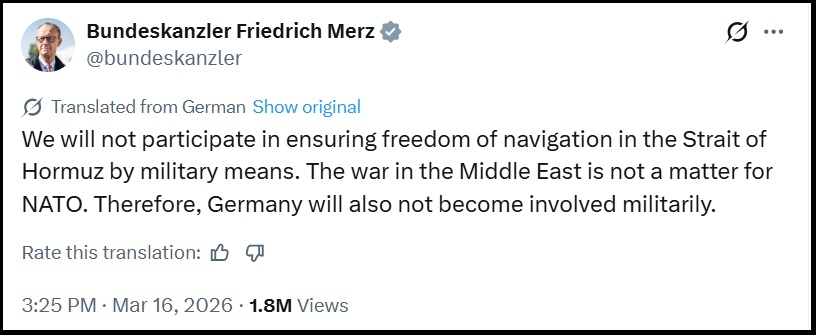
The EU has balked at the request of President Trump to support military escorts for EU oil shipments through the Strait of Hormuz destined for European Ports. However, it is the position of German Chancellor Fredrich Merz which really highlights the arrogance of the issue.
Germany has deactivated its nuclear reactors and decided not to purchase Russian oil/gas. As a consequence, the German industrial economy is contracting; the German auto industry is collapsing; German manufacturing plants are closing – and mass layoffs have been announced.
Into this self-created dynamic, Germany has become dependent on (1) Oil and Gas from the middle east, and (2) LNG from the USA. Germany is a completely dependent nation on the issue of energy production. Yet, this is Germanys position:
Setting aside for a moment that “the middle east is not a matter for NATO,” while reminding ourselves Ukraine is also not a NATO member state – yet Germany is supporting the pro-war ‘coalition of the willing,’ President Trump previously pointed out that NATO would never come to the aid of the USA when the Greenland Arctic Security debate was going on.
The EU in general, and Germany specifically, is essentially proving President Trump’s point. However, as a result of intentional migration, Germany has over five million Muslim residents now residing inside the country. We should consider that this overlay is also part of their internal political consideration.
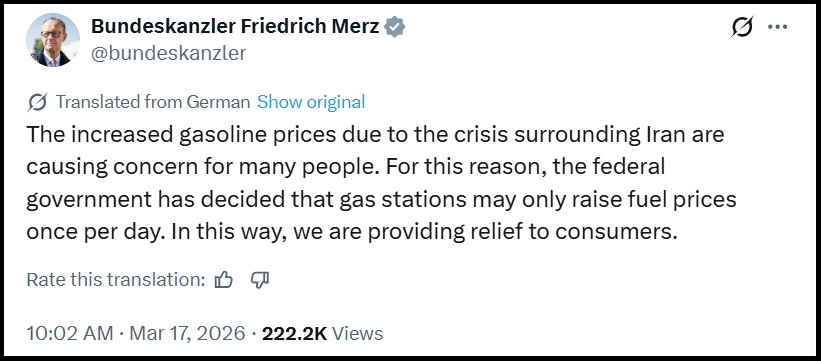
What Chancellor Merz said next is almost too European to be real, but it is:
The German government destroyed affordable energy for Germans. The German government refuses to escort their own equity stakes to mitigate energy costs for Germans. Now the German government will limit the price increases to once per day to provide relief to Germans.
Seriously folks, you cannot make this stuff up.
The tectonic plates are shifting, and we are bearing witness to old geopolitical structures collapsing as the ground beneath them moves.
When history is written it will reflect that President Trump didn’t destroy NATO – he simply removed the mask.
PRESIDENT TRUMP – “The United States has been informed by most of our NATO “Allies” that they don’t want to get involved with our Military Operation against the Terrorist Regime of Iran, in the Middle East, this, despite the fact that almost every Country strongly agreed with what we are doing, and that Iran cannot, in any way, shape, or form, be allowed to have a Nuclear Weapon.
I am not surprised by their action, however, because I always considered NATO, where we spend Hundreds of Billions of Dollars per year protecting these same Countries, to be a one-way street — We will protect them, but they will do nothing for us, in particular, in a time of need.
Fortunately, we have decimated Iran’s Military — Their Navy is gone, their Air Force is gone, their Anti-Aircraft and Radar is gone and perhaps, most importantly, their Leaders, at virtually every level, are gone, never to threaten us, our Middle Eastern Allies, or the World, again! Because of the fact that we have had such Military Success, we no longer “need,” or desire, the NATO Countries’ assistance — WE NEVER DID! Likewise, Japan, Australia, or South Korea.
In fact, speaking as President of the United States of America, by far the Most Powerful Country Anywhere in the World, WE DO NOT NEED THE HELP OF ANYONE! Thank you for your attention to this matter.”
Posted originally on CTH on March 10, 2026 | Sundance
The origin of this issue goes back to 2021 and the relaunch of the Build Back Better European green energy program to fight the non-existent climate change problem. We have been highlighting the consequences within the EU auto sector.
We noted in October of last year, the EU’s mandated fines against auto manufacturers who do not hit their production goals for electric vehicle sales began in 2025. EU automakers unable to meet the regulatory compliance goal began purchasing carbon credits to avoid stiff EU fines. Many of those carbon credits were purchased from Chinese EV automakers, who then turned around and started using the extra EU revenue to discount Chinese cars sold in Europe.
At the same time as Chinese autos hit record highs in Europe, EU car sales are flat or declining. Now, Volkswagen is announcing they lost half their profits in one year and will be cutting 50,000 jobs in the next four years.
(MSM – Europe) – Volkswagen just revealed its operating profit sank like a stone last year, dropping by more than half as tariffs, Chinese competition, and shifting strategies took a serious bite out of the bottom line. And that performance now has the VW Group’s execs reaching for the cost-cutting scissors, including plans to shed 50,000 jobs by the end of the decade.
The German automaker reported an operating profit of €8.9 billion ($10.3 bn at current rates) for 2025. That’s down a hefty 53 percent from the year before and well below what analysts were expecting. Revenue, meanwhile, barely moved, slipping only slightly to around €322 billion ($374 bn). (read more)
This was very predictable. In essence, EU car companies buy Chinese car company carbon credits, to avoid the EU fines. The Chinese car companies then use the carbon credit revenue to subsidize lower priced Chinese EVs to the European car market, thereby undercutting the European EV car companies.
The EU tariff applied to gasoline powered cars or hybrids from China is 10%. That tariff is not enough to stop the imports. The Chinese hybrid autos are substantially less than European car brands, and there’s no financial incentive for China to build auto plants in the EU zone especially when you consider the EU is subsidizing those cars by purchasing carbon credits.
When analyzed from a cost and consequence, the entire EU dynamic toward car companies is a little funny. However, for Germany this is a serious issue, and with the German industrial economy already stagnant – every impact to their auto industry only makes the situation worse.
When you overlay the big picture of their expensive “green energy” costs, the EU find themselves in an unescapable downward spiral. Quite literally, all commonsense seems to have been lost in their green energy chase.
By focusing on energy targets, specifically by trying to force production of European electric vehicles that are not favored by European car purchasers, the EU is shrinking their economy to the benefit of Beijing exploitation.
German Chancellor Friedrich Merz recently travelled to China for a discussion with Chairman Xi Jinping. Chancellor Merz returned to German with a stark message about how the nation needed to quickly get productive in order to meet the far superior work ethic he saw in China.
At the same time, the EU has destroyed its energy sector by chasing windmills and solar farms instead of maintaining the much cheaper coal and gas alternatives. Overall, Europe has made a series of really bad decisions, but those consequences will surface the hardest within the largest industrial economy, Germany.
Posted originally on CTH on March 4, 2026 | Sundance
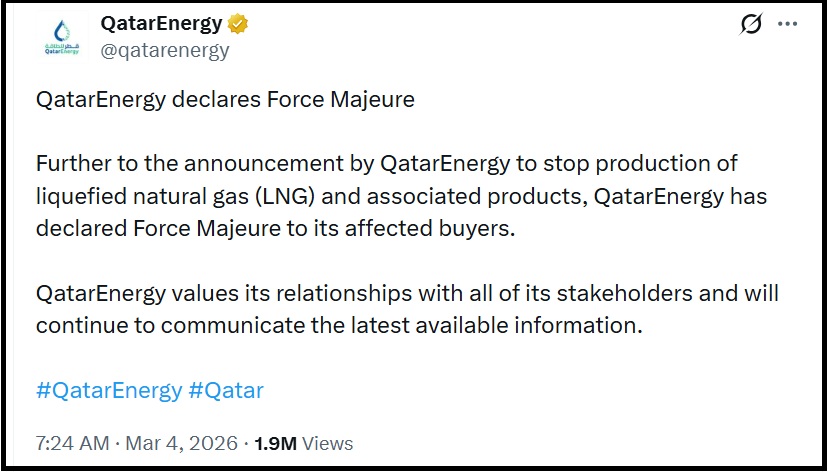
Force Majeure is a common clause in contracts which essentially frees both parties from liability or obligation when an extraordinary event or circumstance beyond the control of the parties, such as a war, strike, riot, crime, epidemic, or sudden legal change prevents one or both parties from fulfilling their obligations under the contract.
People would be well advised to wait a few days when announcements are made before jumping to immediate conclusions. The announcement by Qatar Energy of a force majeure notification did not originate from Qatar’s inability to produce contractual LNG supplies…..
…. two days prior to this announcement, India’s top gas importer Petronet LNG Ltd issued a force majeure notice to Qatar Energy and local buyers because its LNG tanker ships were unable to reach the Ras Laffan load port due to the crisis in the Middle East. Without ships arriving to take the LNG Qatar Energy cannot keep producing.
Qatar Energy operates 14 liquefied natural gas (LNG) trains with a total annual production capacity of 77 million tonnes {SOURCE}. If ships don’t reach the terminals, there’s no need for Qatar Energy to keep pumping and liquifying from well heads. It’s a downstream issue.
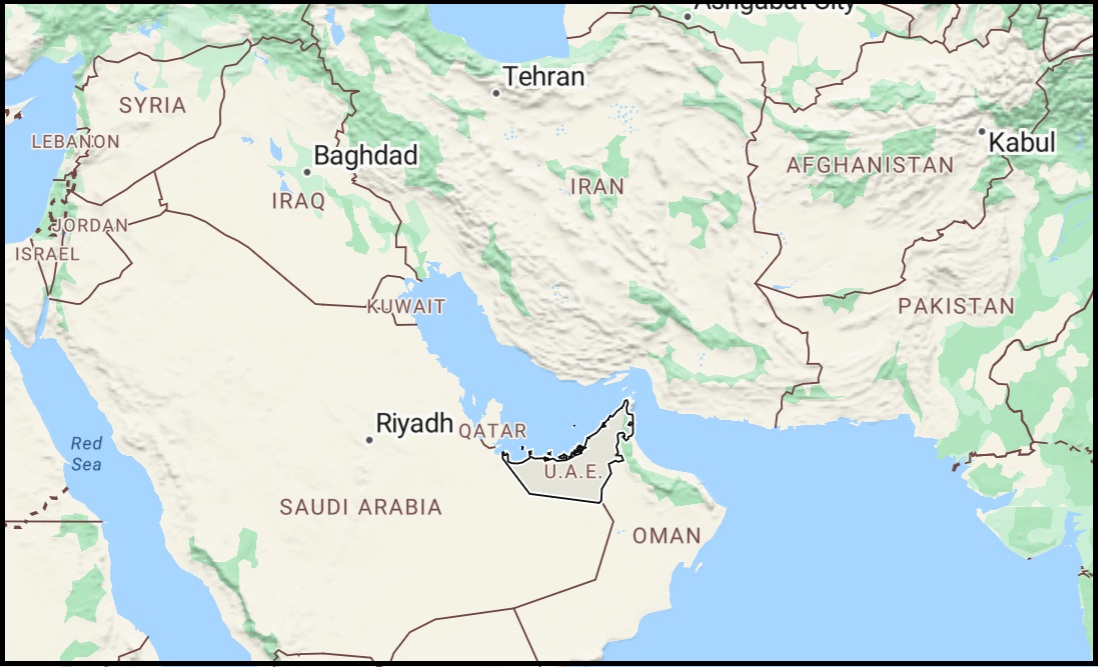
Bahrain made the same announcement for their refined aluminum exports {SOURCE}. Indonesian company Chandra Asri made the same announcement for petrochemicals {SOURCE}. Chevron made the same announcement two days ago after Israel shut down the Leviathan natural gas field {SOURCE}. Thus, we see the ramifications for the entire region around the Iran conflict zone and the downstream destinations (Asia and Europe) for energy products therein.
Dutch shipping company Maersk has also suspended operation for cargo container ships cancelling all bookings between the Indian subcontinent—India, Pakistan, Bangladesh and Sri Lanka—and the Upper Gulf. {SOURCE} German shipping group Hapag-Lloyd made the same decision.
These are not decisions being made due to maritime insurance or reinsurance rates or availability. These are decisions being made by private corporations that go beyond their actuarial risk. They simply don’t want to operate in a region where there is the potential for loss of life or cargo.
This is not solely an insurance issue and people should pause before offering analysis that only considers the financial aspect.
MAERSK -Maersk announced on Wednesday that it is temporarily suspending most cargo reservations in and out of Iraq as security worries mount throughout the Gulf.
The business said that the ban applies to shipments involving many regional nations, including the UAE, Oman, Kuwait, Qatar, Bahrain, and Saudi Arabia.
Maersk said that the measure would stay in effect until further notice. The firm did not disclose any more information on how long the disruption will endure or the scope of the operating effect.
The decision comes as increased tensions and military action in the Gulf area have prompted worries about the safety of maritime routes and logistical operations, hurting commerce flows via many Gulf nations. (LINK)
Susan Kokinda and the Lyndon LaRouche network give their perspective on the British reaction to the U.S. strikes against Iran. The analysis has some value from a review of the historic relationship of the British imperialist policy toward matters of foreign entanglement and the control mechanisms that have historically flowed from the U.K
As a consequence of British government policy much of the Kokinda analysis accurately touches on the root cause of U.K response. However, the emphasis on the modern UK government as the lead of a global control network is not always as severe or complicated as the Lyndon LaRouche network would espouse.
Prior to visiting the White House, German Chancellor Fredrich Merz had just returned from China and gave a press conference in Germany saying Germans need to “work harder” and “ditch the four-day week” to compete.
Merz visit to Shenzhen shocked him, and he is right to be rattled by the cold indifference of Chairman Xi Jinping. This was Merz first visit to meet Chairman Xi in person. A cold and productivity focused Merz just met an even colder and more productivity focused industrial giant.
Merz met the industrial dragon and returned home visibly shook. The Chancellor thought he represented an apex industrial nation. However, he experienced something far more industrial than he ever imagined.
As noted by Nina Schick:“Take Germany’s famous auto industry, 5% of GDP, 800,000 jobs, but losing ground fast. VW’s market share in China has plunged from 24% to 15% in four years. Chinese brands doubled their European market share in 2025 and now outsell Mercedes on the continent. Germany lost 120,000 industrial jobs last year. And cars are just the most visible example.
But it’s not just competition. Germany has some of the highest industrial energy prices in the world, nearly triple what the US pays. After shutting down nuclear and losing cheap Russian gas via Nord Stream, Berlin built its first LNG terminal in 194 days. Now 96% of the LNG arriving at those terminals comes from the US. (That LNG is even more important in light of events in the Gulf….)
The US is Germany’s second-largest trading partner (€240 billion in two-way trade last year.) German auto exports to the US fell 18% in 2025 under tariffs. Merz cannot afford a trade war with Washington. Today, he watched Trump threaten to cut off all trade with Spain, while sitting next to him in the Oval Office. He backed him up.
Now look at how Merz is positioning on Iran. Spain blocked the US from using its bases. Sánchez called the strikes “unjustified.” Starmer hesitated before eventually allowing UK bases for “defensive” strikes. Merz is the first EU leader invited to the White House for a tête-à-tête with Trump.
Days before, he said legal assessments under international law “achieve relatively little” and that now is “not the time to lecture allies.” Compare that to Sánchez insisting Spain’s agreement with the US “must operate within the framework of international law.” From a German chancellor, Merz’s position is seismic.
And none of this is separable from home. Germany’s economy is in its fourth year of industrial contraction. An aging population, a shrinking workforce, sky-high welfare costs, and an immigration debate that’s handing the AfD seats on a plate. Merz needs the US relationship, because it’s one of the levers he has left to keep the economy blowing in the right direction.
All of this points to a Germany that’s understood its critical vulnerabilities and is pursuing a hard-nosed realpolitik in response. To stay industrially competitive, they need American LNG. They need access to US compute and critical hardware. They need EU member states to spend on defense: something Trump has been remarkably effective at unleashing.
The result is an astonishingly pro-Trump German chancellor. In a country where only about 15% of the population views Trump favorably. The question isn’t whether Merz has realistically assessed Germany’s vulnerabilities (he’s starting to see the bigger picture). It’s whether this wins or loses him votes at home. And on that, my guess is it won’t. {LINK}
Fredrich Merz thought he was an apex predator, until he met Xi Jinping.
Suddenly, Merz looks at the unpredictable Trump, an apex predator who swims around Chairman Xi as if it’s just another boring Tuesday, with an entirely new perspective.
Chancellor Merz realizes that this rather unorthodox American President likely possesses the only qualified skillset that can deal with a REAL apex predator like Xi.
Fredrich Merz dismounts his EU high horse and uppishness turns into respect.
Posted originally on CTH on March 3, 2026 | Sundance
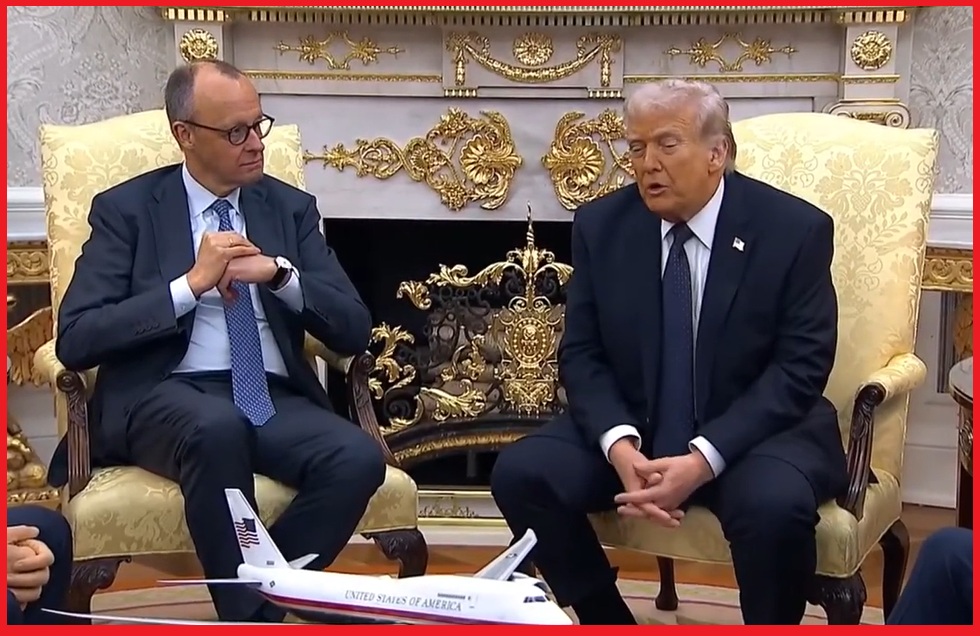
President Trump holds a bilateral meeting with German Chancellor Friedrich Merz in the Oval Office. After brief remarks of mutual appreciation, President Trump and Chancellor Merz responded to questions from the assembled press pool.
Chancellor Merz expressed support for the objective of eliminating the regime threat from Iran. President Trump notes at the beginning how Iran is targeting civilian targets in the region and generating even more support from the Gulf states for the USA.
When asked about the British and Spanish refusal to support U.S. military logistics and deployment, President Trump let the media be aware he is not happy with the position of Spain and the U.K. President Trump also announced [11:00 of video] an economic embargo of trade with Spain as an outcome of their position.
Phasing out nuclear energy was a “serious strategic mistake,” admits German Chancellor Friedrich Merz. “It was a serious strategic mistake to exit nuclear energy,” Merz said. “If you were going to do it, you should have at least kept the last remaining nuclear power plants in Germany on the grid three years ago, so that we would have had the same electricity generation capacity.”
Repeatedly, I warned that Germany was committing economic suicide by adhering to the climate change anti-fossil fuel agenda and blindly agreeing to cut off Russian imports. “We’re now making the most expensive energy transition in the entire world. I don’t know of a second country that makes it as difficult and as expensive for itself as Germany does. We set ourselves a goal that we now have to correct, but we simply don’t have enough energy generation capacity,” Merz continued.
Granted, most of the Christian Democratic Union was in favor of nuclear power. Merkel, Merz’s political rival, set Germany’s energy crisis in motion through abhorrent policies. Between the COVID lockdowns, then the Climate Change and NET ZERO regulations, on top of that, the Russian sanctions to cut off energy purchases, the most crucial economy within Europe has been sabotaged by the politicians who are mindless and lack any understanding of how the world economy functions, not to mention their own.
On March 11, 2011, when an earthquake-triggered tsunami damaged the nuclear power plant in Fukushima, Japan, Chancellor Merkel and her cabinet held that nuclear power in Germany had to come to an end. It was a historic event and a historic decision (see Der Spiegel). The new green deal of Merkel quickly became bogged down in the details of German reality and the impracticability of the whole idea. The so-called Energiewende, the shift away from nuclear in favor of renewables, was a major project that was up there with Germany’s reunification.
Germany was then heavily relying on coal, but government is aiming to phase it out by 2038, with some politicians believing it can be done by 2030. Germany officially closed its last nuclear power plant in April 2023, naturally, reliance on fossil fuels increased.
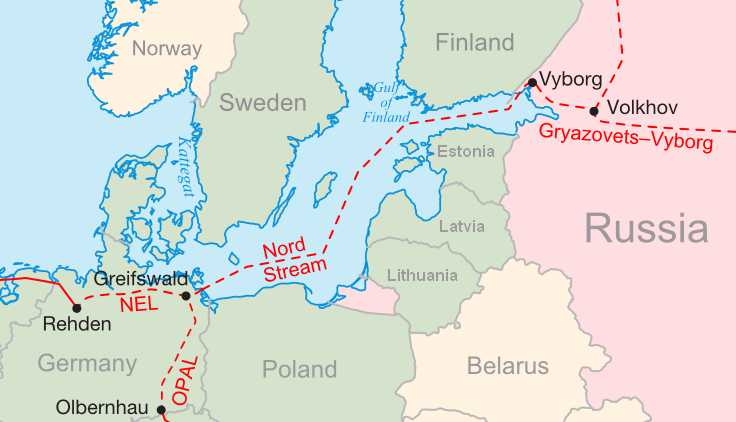
Recall that in February 2022, former US President Joe Biden and then German Chancellor Olaf Scholz held a joint press conference where they subtly threatened Nord Stream 2, the continent’s main supplier of Russian oil. “If Russia invades, that means tanks and troops crossing the border of Ukraine again, then there will be, there will be no longer a Nord Stream 2,” Biden stated during the joint press conference with Scholz. “I promise you, we will be able to do it.” The neocons hailed the destruction a victory but the true victim was Germany. Biden admitted that there would be a “temporary” energy price increase due to Russian sanctions at the time. “Defending freedom will have costs for us as well, and here at home. We need to be honest about that,” Biden stated to deflect the blame. CNN even reported the decision as an economically masochistic act, “The West showed Tuesday it was ready to target Russia’s huge energy industry — even at the risk of hurting itself — after Moscow ordered troops into parts of eastern Ukraine.”
Trump called Ukraine the wall between Russia and Europe and stated that America had become the “sucker country” by shelling out millions to Ukraine when they received far less in return. He warned Europe that their reliance on Russian imported energy would spell disaster and went as far as declaring that Germany was “totally controlled by Russia.” Instead of looking for energy alternatives, Germany went through with the Nord Stream 2 Pipeline and wasted billions as sanctions were implemented before the pipeline was fully functional.
Germany now relies on expensive renewables through wind and solar for over 60% of energy demand. Oil drives 36% of demand currently, and while renewables are rapidly expanding, it remains to be seen whether Germany can run on 80% renewables by 2030. Merz is not advocating reopening the plants as “nuclear” fears have a chokehold on voters, but he is considering small modular reactors, which simply are not sufficient to meet demand. Bad policies can quickly cripple an economy.
Posted originally on CTH on January 15, 2026 | Sundance
In an interview with Reuters, President Trump was asked why the Russia/Ukraine negotiations appear to have stalled. President Trump responded with one word, “Zelenskyy.”
WASHINGTON, Jan 14 (Reuters) – U.S. President Donald Trump told Reuters that Ukraine – not Russia – is holding up a potential peace deal, rhetoric that stands in marked contrast to that of European allies, who have consistently argued Moscow has little interest in ending its war in Ukraine.
In an exclusive interview in the Oval Office on Wednesday, Trump said Russian President Vladimir Putin is ready to wrap up his nearly four-year-old invasion of Ukraine. Zelenskiy, the U.S. president said, was more reticent.
“I think he’s ready to make a deal,” Trump said of the Russian president. “I think Ukraine is less ready to make a deal.”
Asked why U.S.-led negotiations had not yet resolved Europe’s largest land conflict since World War Two, Trump responded: “Zelenskiy.”
[…] Trump told Reuters he was not aware of a potential upcoming trip to Moscow by Witkoff and Kushner, which Bloomberg reported earlier on Wednesday.
Asked if he would meet Zelenskiy at the World Economic Forum in Davos, Switzerland, next week, Trump said he would but implied no plans were set. “I would – if he’s there,” Trump said. “I’m going to be there.”
Asked why he believed Zelenskiy was holding back on negotiations, Trump did not elaborate, saying only: “I just think he’s, you know, having a hard time getting there.” (read more)
The U.K, Germany, France and European Union have established their zero-sum position against Russia using the proxy that Zelenskyy represents. At the same time these same EU leaders are demanding that President Trump guarantee the security structures the EU is putting together. It is a ridiculous situation. {GO DEEP}
The economic development recovery and reinvestment plan for Ukraine was in the portfolio of Jared Kushner. Kushner was also a big part of the USMCA negotiations with Mexico. Chrystia Freeland was a major antagonist in the USMCA trade deal. Both Donald Trump and Jared Kushner know the globalist and corrupt Freeland very well.
The U.K, France and Germany support Zelenskyy’s position that he is not going to concede any territory to the Russian Federation, specifically the 30% of the Donbas area in Eastern Ukraine currently at the heart of the physical conflict.
The 30% issue surrounds the Donetsk region in Ukraine, which includes the cities of Kramatorsk and Sloviansk. Russia is currently pushing deep into fortified Ukraine resistance in this region with a population of around 100,000. Zelenskyy claims losing this area would allow Putin to invade the Dnipropetrovsk, Zaporizhzhia and Kharkiv regions.
Historically, this Donbas area was part of a brutal long-term Ukraine civil war between the pro-Russia eastern Ukrainian citizens and the pro-EU western aligned Ukrainian army. Russia’s current position is for Ukraine to cede the entire Donbas to Russia as part of the ceasefire agreement, or Russia will continue forward conflict military operations until successful.
Seeing things through the pragmatic prism of inevitability, President Trump’s view appears to be that this Donbas area will be lost to Russia one way or the other. So, the best scenario to stop the killing is for Ukraine to give up this territory as part of the ceasefire terms. Zelenskyy, with support of the EU, France, Germany and U.K says a firm “no.”
Posted originally on CTH on January 11, 2026 | Sundance
Seriously folks, you would think that after all this time the Europeans would finally understand how President Trump manipulates the media cycle and gets them to do exactly what he wants – while they and the majority of their constituents think it’s exactly the opposite. This stuff is just too funny now.
According to European media outlets, British Prime Minister Keir Starmer is in discussions with Germany and France to send a NATO alliance to Greenland to establish a stronger NATO military footprint. {LINK}
The media present this, hilariously, as if European NATO is going to defend Greenland against President Trump and the USA military. {{INSERT SEVERAL LAUGHING EMOJIS HERE}} I mean, think about it rationally.
The U.K, France and Germany are unwilling to send troops into Ukraine without the protection of the U.S. military. But somehow, for some reason, the U.K, France and Germany are going to send troops to Greenland to defend against the U.S. military.
The narrative sounds silly when put into context, right?
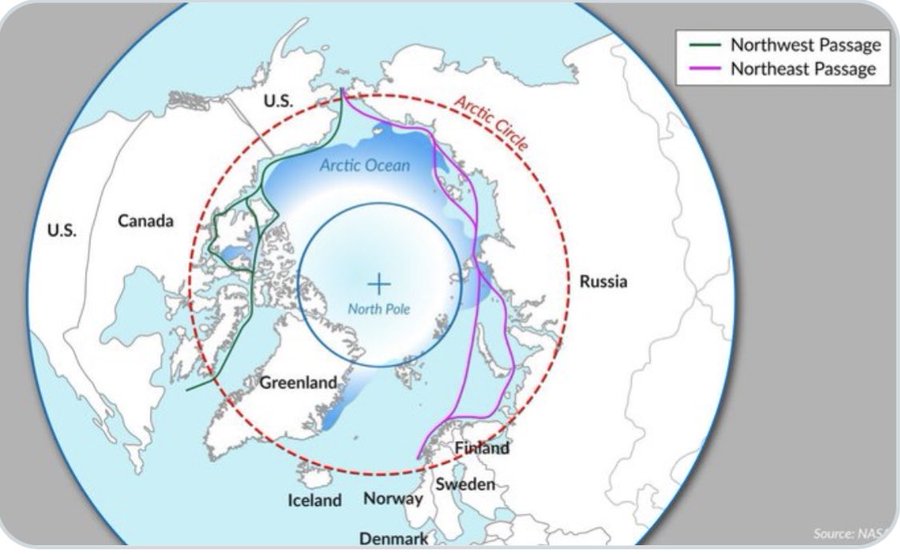
The reality is, for several years President Trump has been telling NATO they need to take the Arctic (Greenland) seriously and position more strongly against encroachment by China and Russia. European NATO has not responded with urgency to the requests of President Trump… because orange man bad.
So, President Trump starts talking about the U.S. taking aggressive unilateral action to secure Greenland as a strategic national security matter. Suddenly, ‘Voila!’ European NATO, under the auspices of defending their Denmark democracy, wakes up and says, ‘No, wait, you can’t just take Greenland, that’s bad.’ Then they assemble urgent talks to send EU NATO military resources to Greenland. Exactly what President Trump has been requesting to formerly deaf ears.
See how that works?
The entire dynamic is so funny, it is difficult not to laugh. It’s like being the only observer in a Candid Camera scenario when you know the entire group is being spoofed.
The former Dutch Chief of Defense, General Berlijn, even warns annexation of Greenland will cost the US its military bases in Europe. “Forget about Ramstein, Lakenheath, Mildenhall, Aviano, Alconbury, Lajes, Móron and Zaragoza,” he said.
As if forcing U.S. troops out of Germany is a threat.
Oh dear, you mean U.S. military can pull back from German bases? Cool. And the EU will step up their own military to defend their own continent? Again, super cool. Punish us with a good time, General Berlijn; please!
President Trump has pulled off the impossible
The current EU plan, and keep in mind – this is NOW the EU plan, is to increase NATO defense forces in/around Greenland and then expand their own military in Europe so they can kick out the USA.
Perfect.
Now, we all know that Europe will never do the last part of that; especially when these same voices are demanding that President Trump protect and defend their troops in Ukraine. However, just reading about how they are talking about it is beyond funny.
Only President Donald J. Trump could achieve this masterstroke of geopolitical maneuvering, ending with him getting exactly what he wants and exactly what the EU previously didn’t want, while the EU proclaim it is their intention to give Trump what he wants by fighting against him.
You couldn’t make this stuff up if you tried.
EUROPE – […] In a joint statement, the leaders of the European nations stressed that it was for Denmark and Greenland to decide on the future of the vast, frozen territory. and that they would defend its borders.
They spoke out after Trump said he wants to gain control of the autonomous Danish territory now.
[…] They emphasised that security in the Arctic must be achieved “collectively”, in conjunction with Nato allies including the US, by upholding the principles of the UN Charter, “including sovereignty, territorial integrity and the inviolability of borders”.
They added: “These are universal principles, and we will not stop defending them.
“The United States is an essential partner in this endeavor, as a Nato ally and through the defense agreement between the Kingdom of Denmark and the United States of 1951.”
The statement was signed by Sir Keir Starmer, French president Emmanuel Macron, German Chancellor Friedrich Merz, Prime Minister Giorgia Meloni of Italy, Prime Minister Donald Tusk of Poland, Prime Minister Pedro Sánchez of Spain, and Prime Minister Frederiksen of Denmark. (Source)
Posted originally on CTH on December 29, 2025 | Sundance
In addition to being the main economic engine in Europe, Germany is the epicenter of the European Union’s overall goal to chase the green energy agenda.
For the past several years Germany has been deconstructing their fossil fuel energy production and replacing it with far more expensive alternatives. This has led to large increases in overall energy prices, and downstream increases in manufacturing costs.
The consequences have been snowballing throughout 2025, while cheap competitive alternatives coming into the EU from China have compounded their problem. Recently a survey of major industries was conducted in Germany to determine the forecast for 2026, the results are not good.
Approximately half of the industrial sectors in Germany are anticipating job losses, cuts or layoffs this year.
22 out of 46 business associations are preparing to downsize their labor force. Only 9 of the 46 are expected to increase hiring.
At a top-line this looks bad. However, when you look at the sectors contracting versus the sectors stable or expanding, you suddenly realize there is a bigger geopolitical problem within the forecast.
Job losses are expected in auto manufacturing, the textile sector, wood and paper fabrication. Job gains are expected in aerospace, shipbuilding and defense production – i.e. the war machinery.
When the largest and most developed industrial economy in Europe is pinning its economic survival on war machinery, a particular momentum is created. It is never a good outcome for Europe when Germany becomes reliant on war to maintain employment.
Unfortunately, that economic forecast does provide context to the German position for continued Ukraine/Russia conflict. You might say that without a war, Germany could slip into a severe economic contraction; not good.
BERLIN, Dec 29 (Reuters) – A majority of German business associations expect job cuts in 2026 as the country’s economic crisis persists, with industry hit hardest by global protectionism and weak exports, a survey by the German Economic Institute IW showed on Monday.
Of 46 business associations surveyed, 22 anticipate workforce reductions next year. Only nine expect to increase hiring and 15 foresee stable employment levels.
[…] Some bright spots emerged in sectors benefiting from increased defense spending, including aerospace and shipbuilding. (read more)
We will keep watching with additional background context for the Ukraine/Russia negotiations.
Posted originally on CTH on December 20, 2025 | Sundance
Do you remember when President Trump’s emissary Steve Witkoff recently revealed how the CIA was deliberately misinforming him and the U.S negotiating group about the status of Hamas? {GO DEEP} Essentially Witkoff shared that in mid-east negotiations, in real time as the events unfolded, the CIA was generating false intelligence reports that were complete fabrications disconnected from the reality of the events unfolding on the ground.
Well, if you remember that recent example, then this report leaked to Reuters starts to make sense.
According to “six sources familiar with U.S. intelligence” the CIA is generating reports that Russian Federation President Vladimir Putin intends to march all the way through Ukraine to the Polish border: thereby taking control of the entire country.
According to the “six sources familiar with U.S. intelligence,” President Trump is ignoring their intelligence reports. This would be a little funny, if the consequences of this rogue Global Intelligence Apparatus were not worrisome. However, given the fact that no head of state in any western country can be sure the Intelligence Community is not operating independently, the Reuters report takes on context.
As the story is told, four months ago U.S. intelligence told President Trump that Putin was going to invade Europe. For some reason President Trump, Marco Rubio and Steve Witkoff ignored them. Perhaps now we discover the benefit of having the former chair of the senate intelligence committee as National Security Advisor and Secretary of State.
WASHINGTON/PARIS, Dec 19 (Reuters)– U.S. intelligence reports continue to warn that Russian President Vladimir Putin intends to capture all of Ukraine and reclaim parts of Europe that belonged to the former Soviet empire, six sources familiar with U.S. intelligence said, even as negotiators seek an end to the war that would leave Russia with far less territory.
The reports present a starkly different picture from that painted by U.S. President Donald Trump and his Ukraine peace negotiators, who have said Putin wants to end the conflict. The most recent of the report’s dates from late September, according to one of the sources.
The intelligence also contradicts the Russian leader’s denials that he is a threat to Europe.
The U.S. findings have been consistent since Putin launched his full-scale invasion in 2022. They largely align with the views of European leaders and spy agencies that he covets all of Ukraine and territories of former Soviet bloc states, including members of the NATO alliance, according to the sources.
“The intelligence has always been that Putin wants more,” Mike Quigley, a Democratic member of the House Intelligence Committee, said in a Reuters interview. “The Europeans are convinced of it. The Poles are absolutely convinced of it. The Baltics think they’re first.”
Russia controls about 20% of Ukraine’s territory, including the bulk of Luhansk and Donetsk, the provinces that comprise the industrial heartland of the Donbas, parts of Zaporizhzhia and Kherson provinces and Crimea, the strategic Black Sea peninsula.
Putin claims Crimea and all four provinces as belonging to Russia. Trump is pressuring Kyiv to withdraw its forces from the small part of Donetsk they control as part of a proposed peace deal, according to two sources familiar with the matter, a demand that Ukrainian President Volodymyr Zelenskiy and most Ukrainians reject.
“The president’s team has made tremendous progress with respect to ending the war” and Trump has stated that a peace deal “is closer than ever before,” said a White House official without addressing the intelligence reports. (read more)
Actually, according to the “six intelligence sources” these Russia invading Europe reports have been generated all year, with the most recent of them in September.
It’s almost as if the U.S. intelligence bureaucrats within both the State Dept and the Intelligence Community are angered that President Trump is not constructing foreign policy according to their worldview.
We can laugh now. Make sure you watch the video from Viktor Orban below.
Politico has exported its Russia collusion lies across the Atlantic, and Belgium’s Prime Minister Bart De Wever is not happy about it. But credit to him for channeling his anger into sheer ridicule. pic.twitter.com/fANW3ivxSE
Putin to Rutte: "What are you talking about when you talk about preparing for war with Russia. Can you read? Have you read the US National Security Strategy? It doesn't mention Russia as an adversary. US is the main backer of NATO. And yet the General Secretary of NATO is… https://t.co/qFCjiTsJsqpic.twitter.com/S5hpVzVLSJ
I have created this site to help people have fun in the kitchen. I write about enjoying life both in and out of my kitchen. Life is short! Make the most of it and enjoy!
This is a library of News Events not reported by the Main Stream Media documenting & connecting the dots on How the Obama Marxist Liberal agenda is destroying America






 Centinel2012