Posted originally on CTH on March 5, 2026 | Sundance
An interesting reaction from Beijing highlights an evaluation of risk from the lack of oil flowing from Iran.
According to most evaluated data, China was buying more than 80% of Iran’s shipped oil. That’s according to data from 2025 as analyzed by Kpler and published in January by Reuters.
Iranian oil always had limited buyers due to U.S. sanctions. However, China purchased on average 1.38 million barrels per day of Iranian oil last year, according to Kpler. That represented about 13.4% of the total 10.27 million bpd of oil it imported by sea.
With President Trump previously cutting of discounted oil from Venezuela, two things unfolded. First, the Venezuela oil was no longer sold with non-petrodollar currencies; Venezuela oil is now being sold on the standard oil market. Secondly, with the Venezuela oil disrupted China would become even more dependent on Iranian oil shipments if they wanted to retain the discounted rate.
How big is the financial difference?According to Reuters, “Iranian Light crude has traded at around $8 to $10 a barrel below ICE Brent on a delivered basis to China since December.” … “That means Chinese refiners save about $8 to $10 a barrel if they buy Iranian Light rather than non-sanctioned oil.”
Additionally, as noted before Operation Epic Fury began, “Iran has a record amount of oil on the water, equivalent to around 50 days of output, as China has bought less because of sanctions and Tehran seeks to protect its supplies from the risk of U.S. strikes, Kpler said.”
Buying discounted oil from Venezuela, Iran and Russia resulted in billions of dollars saved by China. The only production venue not currently disrupted would be purchases from Moscow. This increases the dependency, but the purchase price may no longer carry any discounted value, at least not at the previous rate.
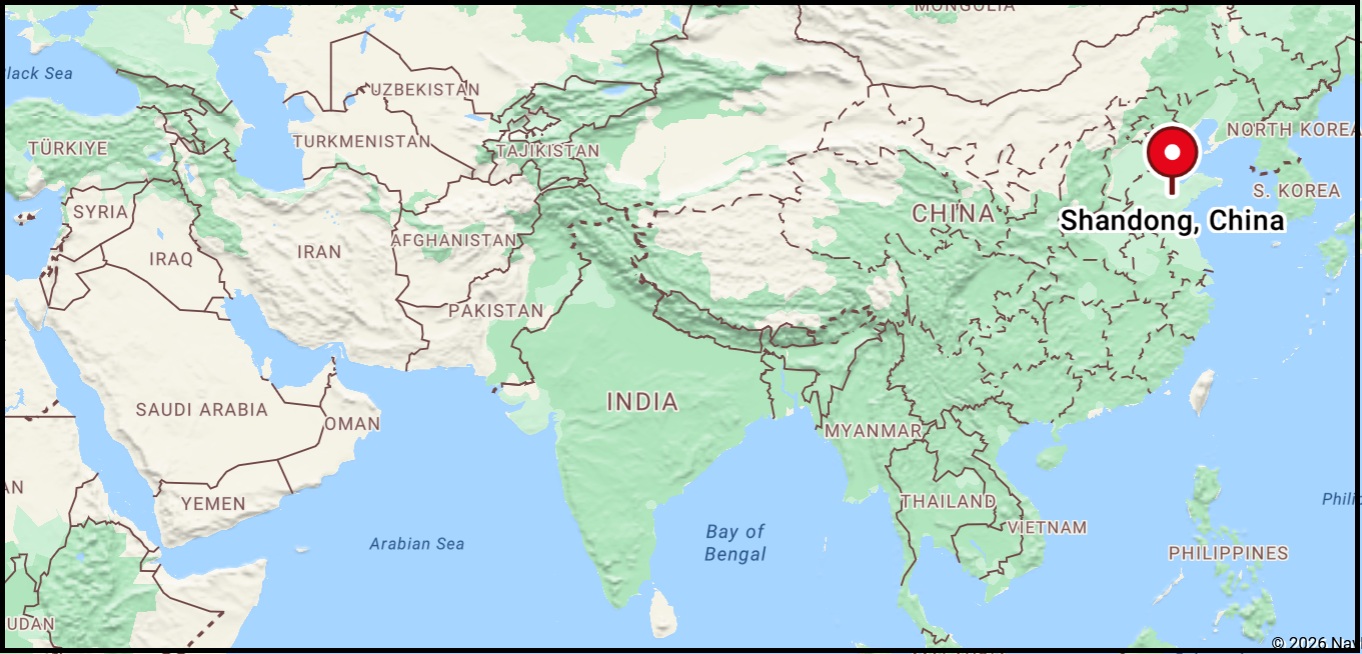
India was purchasing a significant amount of Russian oil for its own refinery use and sale back into the global market. China and India would now be bidding for what is likely a more valuable Russian export. No more discounts put the “teapot” refining operations in Shandong, China, into a squeeze. This also highlights the decision by China to limit refined exports.
[VIA NBC] – China’s government has told the country’s largest oil refiners to suspend exports of diesel and gasoline as an escalating conflict in the Persian Gulf disrupts the arrival of crude from one of the world’s largest producing regions.
Officials from the National Development and Reform Commission, the country’s top economic planner, met refinery executives and verbally called for a temporary suspension of refined product shipments that would begin immediately, according to people familiar with the matter. They asked not to be named, as the discussions are not public.
The refiners were asked to stop signing new contracts and to negotiate the cancellation of already-agreed shipments. The people said. An exception was made for jet and bunker fuel held in bonded storage and supplies to Hong Kong and Macau, they added.
[…] China has a vast refining sector, but much of its production is funnelled to serve domestic demand, meaning it is not a critical supplier. Across Asia, it ranks third for seaborne exports, behind South Korea and Singapore. However, Beijing’s precautionary curbs reflect efforts across the import-dependent region to prioritise domestic needs as the crisis in the Middle East deepens. (read more)
Posted originally on CTH on January 18, 2026 | Sundance
Last week President Donald Trump officially announced the members of the Gaza Board of Peace; an organization headed by President Trump and tasked to oversee the second phase of his plan to end the Israeli conflict in Gaza, specifically the reconstruction and disarmament of Gaza and Hamas respectively. [SEE HERE]
The members of the “Board of Peace,” chaired by Trump himself, includes Secretary of State Marco Rubio; Emissary Steve Witkoff; Jared Kushner; former British Prime Minister Tony Blair; an American-Jewish billionaire named Mark Rowan; World Bank President Ajay Banga; and Deputy National Security Advisor of the United States, Robert Gabriel. President/Chairman Donald Trump has also appointed Aryeh Lightstone and Josh Gruenbaum as senior advisors to the Board of Peace.
At the same time, President Trump announced another executive body that would operate under the Peace Council to assist with the facilitation of a new Palestinian government, the “Gaza Executive Board.” This structure is intended to manage day to day events on the ground instead of a Hamas loyalist govt. The appointees to the executive board have upset the Netanyahu government of Israel.
According to the White House announcement, the Gaza Executive Board will include: Witkoff; Kushner; Turkish Foreign Minister Hakan Fidan; senior Qatari official Ali al-Thawadi; Egyptian intelligence chief Hassan Rashad; Tony Blair; billionaire Mark Rowan; UAE Minister Reem Al Hashimi; former Bulgarian Foreign and Defense Minister Nickolay Mladenov, who also served as the UN envoy for the Middle East peace process; U.N Representative Sigrid Kagg, and Israeli-Cypriot businessman Yakir Gabbay, who specializes in real estate, technology and international investments.
Additionally, to establish security, preserve peace, and establish a durable terror-free environment, Major General Jasper Jeffers has been appointed Commander of the International Stabilization Force (ISF), where he will lead security operations, support comprehensive demilitarization, and enable the safe delivery of humanitarian aid and reconstruction materials. [link]
According to Israeli media Netanyahu is not happy, and planning to protest the Turkish, Qatari and UAE appointments to Marco Rubio (not Trump):
“A very unusual statement by the prime minister against the US president, following the publication of the members of the “Executive Committee for Gaza” – which includes, among other things, the Turkish foreign minister and a senior Qatari official. “The announcement of the panel was not coordinated with Israel and is contrary to its policy,” the Prime Minister’s Office said.
“The announcement of the composition of Gaza’s Executive Committee, which is subordinate to the peace conference, was not coordinated with Israel and is contrary to its policy,” the Prime Minister’s Office said, adding that “the prime minister has instructed Foreign Minister Gideon Sa’ar to contact US Secretary of State Marco Rubio on this matter.” (more)
Within the appointments for the executive board, the use of Turkey, Qatar and UAE officials for the governance and reconstruction of Gaza explains the recent parsing of the Muslim Brotherhood chapters as terrorist enablers. When Secretary Rubio made the terrorist designation announcement, the Turkish and Qatari Muslim Brotherhood chapters were notably absent. With the Gaza initiative ongoing, now we see coordinated pragmatism at work.
Rubio chose to focus on Egypt, Jordan and Lebanon to target the Muslim Brotherhood. As we noted, “The Egyptian Muslim Brotherhood were chased out of the country by President Abdel Fattah al-Sisi over a decade ago. The Jordanian chapter is similarly aligned and was previously targeted by King Abdullah. The Lebanese faction is not as well known, but their support for Hamas is well understood.” {Go Deep}
A few things are obvious.
First, President Trump and Secretary Rubio knew in advance they were going to need the strong influences of Qatar and Turkey if they were going to stabilize the interim Gaza reconstruction governing system. Secondly, both Trump and Rubio knew Israeli Prime Minister Benjamin Netanyahu wouldn’t like that; however, pragmatically Trump and Rubio are doing what is in the best interest of the region as a whole, not being narrowly focused on Israel. Additionally, these appointments have upset the Israel-first influencer group in the U.S.
President Trump is restructuring mid-east stability without the need for direct U.S. intervention. Instead, under President Trump’s approach conflict resolution is the responsibility of the regional stakeholders with strong support from President Trump. It is a similar outlook conveyed to Europe about needing to be responsible for their own defense and security solutions while the USA role is supportive in nature.
In this approach the sharp tendrils of U.S. influence start to be untangled, and the national security focus returns to the USA domestically. Mutually beneficial national sovereignty replaces toxic and unending globalist intervention. This is a similar worldview that President Trump also takes toward trade agreements.
Multilateral trade agreements like the Transpacific Trade Partnership (TPP) or the Transatlantic Trade and Investment Partnership (TTIP), or even the NAFTA/USMCA trade agreement are rejected in favor of direct bilateral free trade agreements with individual nations.
In Trump’s trade policy the multilateral deals are dissolved, while the bilateral deals are affirmed. The same outlook holds true for massive institutional agreements that end up with large entanglements often carrying disproportionate costs and disparate benefits. Like NATO, the USA usually ends up with the largest price tag and least benefit from the agreement.
Is NATO/Europe going to fight China over Taiwan? Of course not. If they were, Canada wouldn’t be making deals with Beijing, and Europe would not be allowing China to purchase stakeholder interests in the European car market. The same pragmatic and reasonable outlook applies right now toward how the EU has responded to the Russia/Ukraine conflict; only “willing” if the USA puts our blood and treasure on the line.
This nationalistic outlook is honestly encapsulated in this recent soundbite from President Trump when asked about Canadian Prime Minister Mark Carney making a trade agreement with China. President Trump genuinely doesn’t care. WATCH:
Canada can make whatever deal they want with China; however, that doesn’t mean it will work out well for Canada when the USMCA is dissolved and a new bilateral trade deal between the USA and Canada is renegotiated. Factually, it means Canada will end up in a worse economic place, just look at the history of countries that hugged Big Panda. It is their own independent right to be blind to the risk.
Despite all the warnings from President Trump, Europe became dependent on Russia for low-cost energy; how’d that work out for them? Germany now seriously regrets their green energy approach, but there’s nothing President Trump can do to stop multinational assemblies from being collectively stupid; the only thing he can do is mitigate any collateral damage to the USA.
Instead of European leaders calling President Trump every time Turkish President Recep Erdogan does something against their interests, eventually the group will learn how to engage him individually. In a world of bilateral respect, the lessons from Trump could even have the downstream effect of training the EU to drop their obsession with Russia-bad everything.
The Ukraine conflict could end when Europe finally realizes it’s much easier to turn on a Nordstream gas valve than it is to rebuild 30 German nuclear power plants. President Trump’s refusal to commit U.S. troops to Zelenskyy’s security guarantee will hopefully hasten that conversation.
The same pragmatic realism applies to Greenland. Europe will never respond to any increase in strategic threat presented by China or Russia in the Arctic, and the U.S. will shoulder all the costs if that risk were to materialize. Strategic pragmatism combined with economic realism is why President Trump is focused on the security of the North American continent.
Lastly, there is a segment of MAGA that is angered by President Trump’s interim and necessary approach to removing our foreign policy entanglements in both the European and Mideast continents. Those who are short-sighted don’t see how President Trump is strategically and factually withdrawing U.S. policy from a world of enmeshed dependencies, because in reality charity –along with security– begins at home.
Thankfully, the former Lyndon LaRouche assembly from Promethean Action have begun to recalibrate their British-centric focus, and they’ve started to look at Trump policy beyond the ramifications to London and through the more accurate prism of Trump’s global pragmatism. President Donald Trump isn’t trying to unilaterally destroy British imperialism, not directly. Instead, that old, stuffy and elitist collapse is a consequence of reestablishing independent sovereignty.
Smile, live your very best life and watch it all unfold. After all, Davos is going to be a must-watch event next week.
Posted originally on CTH on October 5, 2025 | Sundance
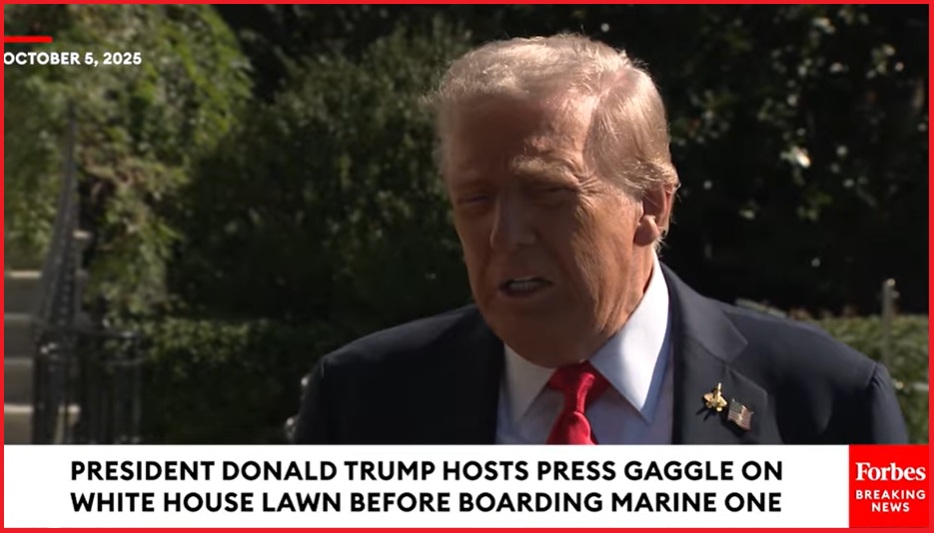
President Trump pauses to answer press pool questions as he departs the White House to attend a Navy celebration event in Virginia.
President Trump took questions on Ukraine, Russia, Gaza, Chicago ICE efforts, Portland Antifa activity, Venezuela drug combat efforts and Israeli hostages getting released. WATCH:
Posted originally on Oct 2, 2025 by Martin Armstrong |
Taiwan will lose protection if it fails to move semiconductor chip manufacturing to the United States. The nation must determine which is more valuable—US protection against Chinese threats or maintaining 95% of the world’s chip production.
The Taiwan Semiconductor Manufacturing Company (TSMC) agreed to invest $100 billion in manufacturing plants in the US earlier in the year, but that has not been a sufficient deal for the current administration. Cornering 95% of the market, the US cannot risk losing its main semiconductor manufacturer in the event that China fulfills its promise to absorb Taiwan as a Chinese province.
US Commerce Secretary Howard Lutnick admitted it is a “herculean task” to move 95% of the world’s chip production 9,000 miles away. “The model is: if you can’t make your own chips, how can you defend yourself, right?” Lutnick argued. Only 2% of Taiwan’s chip manufacturing occurs on US soil.
Nvidia CEO Jensen Huang said it could take up to two decades for supply chain independence, adding, “It’s not a really practical thing for a decade or two.” TSMC has emphasized that its most advanced processes will remain in Taiwan to preserve the “silicon shield”—its economic leverage against Chinese aggression. America will need to guarantee securities to Taiwan, otherwise, what good is it to move production? US facilities will begin to focus on mid-to-high-end nodes that should meet 30% to 50% of US consumer demand by 2030. However, Taiwain demands that the overall global supply remain on the island.
President Tsai Ing-wen is wanted by the Chinese government for defying the One China policy. He has been eager to form a strong alliance with the US as he knows China can only be kept at bay for so long. “In the face of authoritarian expansionism and the challenges of the post-pandemic era, Taiwan seeks to bolster cooperation with the United States in the semiconductor and other high-tech industries. This will help build more secure and more resilient supply chains. We look forward to jointly producing democracy chips to safeguard the interests of our democratic partners and create greater prosperity,” Taiwan’s president stated in 2024.
Trump told Taiwan that it must raise its own defense budget from 2.45% of GDP to around 10%. He has likened America to “an insurance company” for Taiwan and believes the nation should pay for protection.
A large semiconductor chip manufacturing just so happened to host a conference at the same venue in Orlando, Florida, where we held the World Economic Conference in 2024. An employee of mine spoke with one attendee who said shareholders were concerned that their manufacturing headquarters were located in Taiwan. I’m told the general consensus was that even in the event of China following through with its One China policy, the company believed that China would not want to lose such a lucrative business deal with the United States. Yet, what would happen if two nations were at war? Cutting off America’s supply of semiconductors would cripple the tech industry.
Nvidia, Advanced Micro Devices (AMD), Broadcom, Intel, MediaTek, Qualcomm, and others, with North America purchase over 65% of Taiwanese chips. The US-China tensions and Taiwan’s fragile geopolitical position make “Made in Taiwan” a risky bet for Western countries despite the critical importance of its semiconductor manufacturing. Taiwan must decide if the risk of foreign invasion is surrendering half of its share of production.
Posted originally on CTH on September 25, 2025 | Sundance
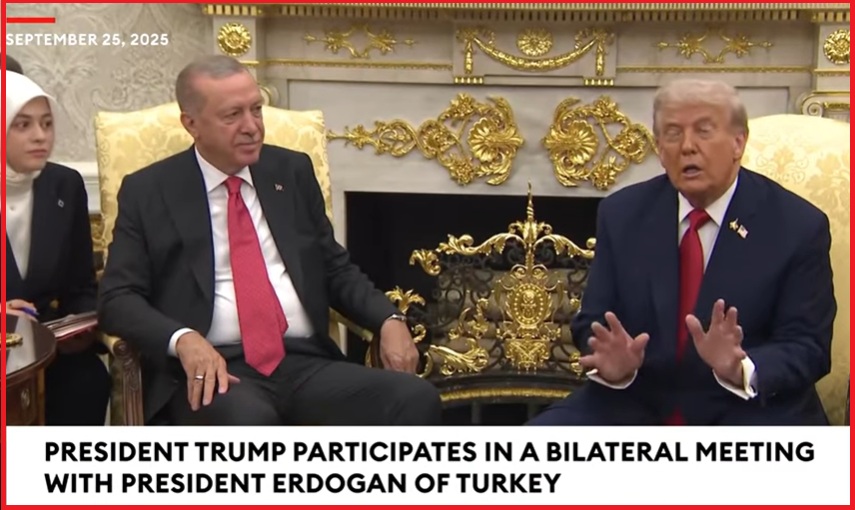
Turkish President Recep Erdogan is the figurative head of the Muslim Brotherhood. As the gatekeeper between the Middle East and Europe, Turkey sits at the center of multiple issues, and Recep Erdogan uses his position as gate guard to his favor. If Europe tries to pressure him, he opens the gates. Europe has stopped trying to pressure Erdogan.
A rather curious NATO membership underpins the strategic influence of Erdogan and Turkey. While simultaneously Turkey maintains positive relationships with Russia and is not a member of the sanction regime against Vladimir Putin. The careful strategy has resulted in massive economic gains for Turkey, and Istanbul now stands as the gateway hub between East and West.
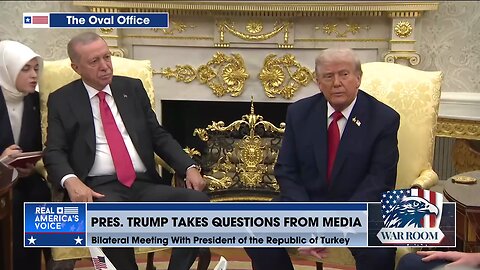
President Erdogan is a strong and ruthless leader openly supporting the political arm of Islam known as the Muslim Brotherhood. Erdogan also maintains close ties with Qatar. Turkey knows how to play all sides to their best interest. Erdogan also reads and speaks fluent English, though you’d never know it when the cameras turn on. WATCH:
Posted originally on CTH on September 23, 2025 | Sundance
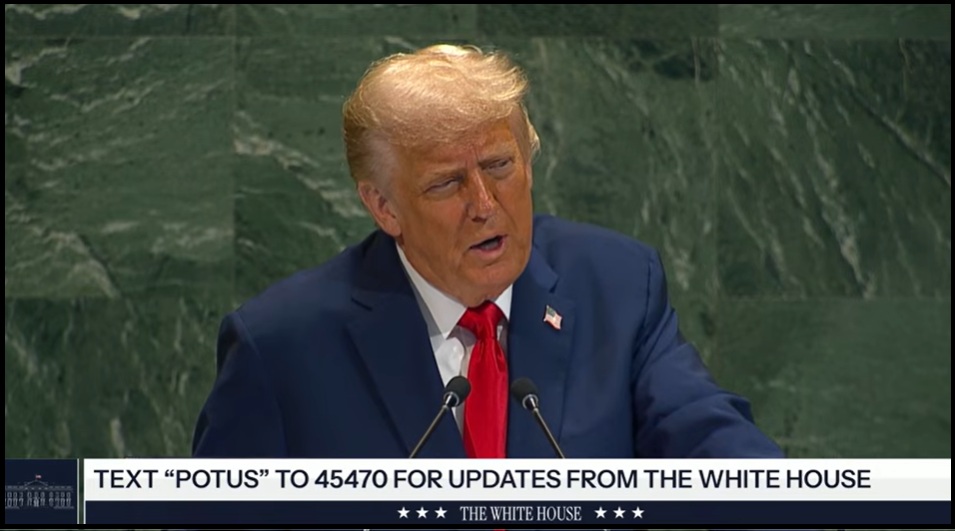
President Trump delivers remarks today to the United Nations General Assembly (UNGA).
President Donald Trump steps back onto the U.N.’s marbled green podium Tuesday morning as a different leader in his second term than he was during his first. Remaining skeptical of multilateral organizations and values-based alliances but much more sure of himself on the world stage, interested in peacemaking as well as power. WATCH:
Posted originally on CTH on September 22, 2025 | Sundance
When it comes to presidential candidates, it’s worth remembering: The Kentucky Derby is won by horses, but it’s the owners who get the prize money.
In my opinion, Larry Ellison (Oracle) is the most strategic billionaire influencer, a long-term thinker, in the modern era. Larry Ellison is about to take control of TikTok, while his son David Ellison gains CBS and will likely move Bari Weiss into content control. Next up, CNN. Funnily enough, while Elon was the shiny thing, Larry smiled. Keep watching.
The framework of the U.S. TikTok deal is becoming clear. The New York Times has the best write up.
(NEW YORK TIMES) – The software giant Oracle will oversee the security of Americans’ data and monitor changes and updates to TikTok’s powerful recommendation technology under a new deal to avert a ban of the service, according to a senior White House official.
A copy of the algorithm, the recommendation engine that powers the app’s addictive feed of short videos, will be licensed from China to an American investor group that will oversee the app in the United States, the official said.
Oracle will also invest in the new American TikTok, as will the private equity firm Silver Lake, another senior official said.
It will be “secured” in the United States outside the control of TikTok’s Chinese owner, ByteDance, one of the officials said. The U.S.-run TikTok will work to retrain the copy on users’ data in the United States, and China will not have access to the data, the officials added.
The deal is an effort to meet the requirements of a law that would have banned TikTok in the United States unless ByteDance relinquished control of the app. It was intended to address national security concerns that the app’s ownership could give Beijing a channel to spread propaganda or to collect sensitive data about Americans.
[…] Under the terms of the deal, American companies will own around 80 percent of the American version of the app. ByteDance and other Chinese investors will own less than 20 percent.
In the United States, TikTok will be operated by a board of directors with national security and cybersecurity credentials, one of the senior officials said. ByteDance will choose one director on the seven-member board, and that person will be excluded from TikTok’s security committee.
The exact mix of investors has been in flux. Mr. Trump hinted this weekend that the media mogul Rupert Murdoch and his son Lachlan were considering an investment, which could come through the media giant Fox Corporation, a person familiar with the talks said.
The president is expected to issue an executive order later this week that declares that the terms of the deal meet national security concerns. (read more)
As a social media system, TikTok is generally a U.S, North American and Asian platform. Europe is not a big factor and it’s nonexistent in Russia. If you map the nations with the highest density of narcissistic personality disorder (NPD) the outcome will overlay with a heat map of TikTok’s strongest audience.
In an interview on Fox News Sunday morning, President Trump said that Michael Dell was “involved” in the deal, and that billionaires Lachlan Murdoch and Rupert Murdoch would also “probably be in the group.”
The new investment entity created through the Technocratic deal would have a seven-member board of directors, with ByteDance allowed to choose one. The ByteDance-appointed board member would be excluded from the company’s security committee.
The Five-Eyes will have control over the user data, and the agenda of the sixth eye will be retained in the western algorithm.
I have created this site to help people have fun in the kitchen. I write about enjoying life both in and out of my kitchen. Life is short! Make the most of it and enjoy!
This is a library of News Events not reported by the Main Stream Media documenting & connecting the dots on How the Obama Marxist Liberal agenda is destroying America






 Centinel2012