Sunday Talks – Maria Bartiromo Interviews Press Secretary Karoline Leavitt


Posted originally on CTH on March 8, 2026 | Sundance

Mrs Bartiromo begins her broadcast talking about the impacts to the price of oil and gas from the U.S. military conflict with Iran.  White House Press Secretary Karoline Leavitt then appears on the broadcast to answer questions about what President Trump is doing to offset the energy price increase.

Leavitt notes the Iranian military is no longer combat effective and further degradation efforts are ongoing.  Both Mrs. Leavitt and Energy Secretary Chris Wright believe the movement of ships through the strait of Hormuz is likely to restart very soon.  WATCH:

.

Sunday Talks – Energy Secretary Chris Wright Discusses Anticipated Timeline for Price Stability


Posted originally on CTH on March 8, 2026 | Sundance 

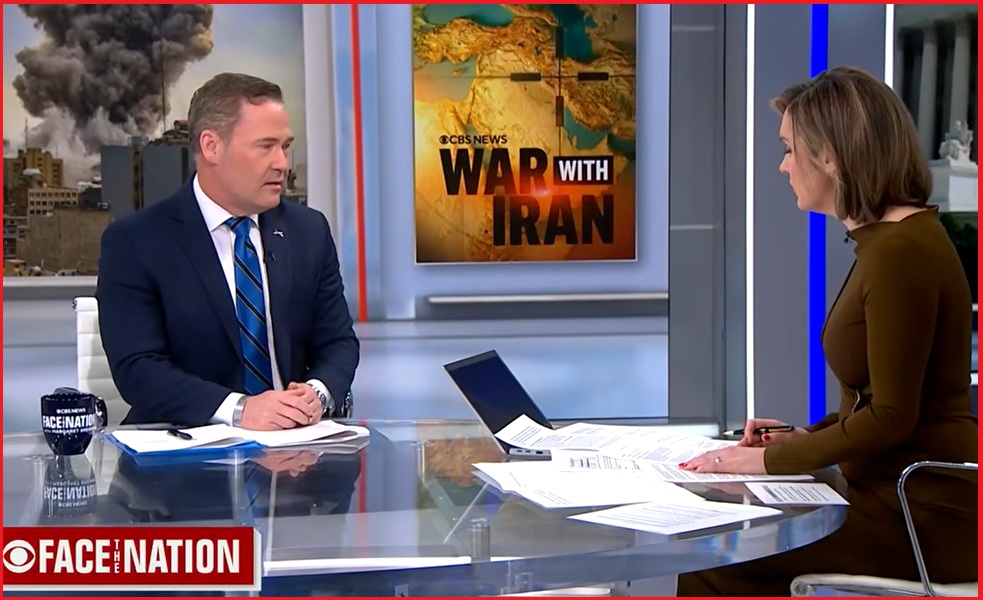
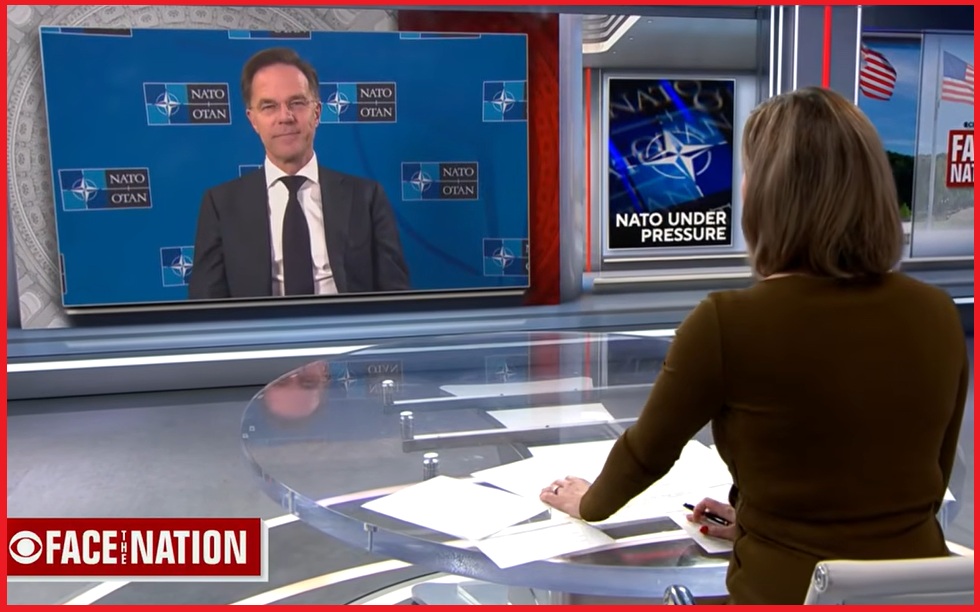
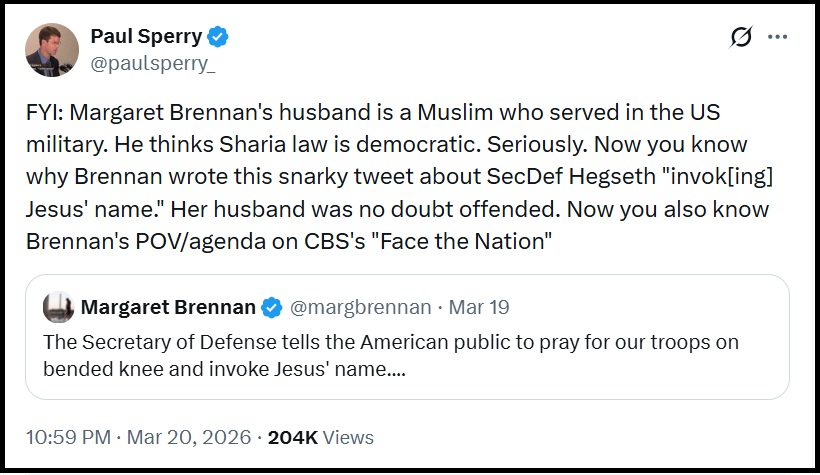
Energy Secretary Chris Wright appears on Face the Nation to push back against the narrative engineering of CBS’s Margaret Brennan.  The video and transcript are below.

[Transcript] – MARGARET BRENNAN: We turn now to Energy Secretary Chris Wright, who joins us this morning from Denver. Good morning to you.

SECRETARY OF ENERGY CHRIS WRIGHT: Thanks for having me Margaret.

MARGARET BRENNAN: So 50,000 U.S. troops deployed, six Americans that we know of so far killed in action, civilians stranded. We look at our polling, Mr. Secretary, and we see that this is an unpopular war among the majority of Americans. More than half of them, 56% disapprove. When you speak to energy executives about the scope and duration of American involvement, what do you tell them? How long?

SEC. WRIGHT: I tell them that for 47 years, Iran is warg- waged war against the United States, and they’ve- throughout that 47 years, they’ve tried to undermine the energy development and energy infrastructure of all their neighbors, as they’re doing right now, and it’s time to put it to an end. So yes, we have a, we have a temporary period of elevated energy prices, but it will not be long. In the worst case, this is weeks, this is not months, and it leads to a much better place. It leads to an Iran that’s defanged, that can’t threaten its neighbors, can’t threaten American soldiers and can’t continue to drive up energy prices by making a mess of the Middle East. They can move to commerce, not conflict.

MARGARET BRENNAN: Well, but you have the moment we are in right now, and as you know, gasoline prices up 14% in the past week. According to AAA, reports the national average is $3.45. We’ve seen oil prices spike. How high do you think oil and gas are going to go?

SEC. WRIGHT: They shouldn’t go much higher than they are here because the world is very well supplied with oil. There’s no energy shortage at all in the Western Hemisphere.

MARGARET BRENNAN: Right.

SEC. WRIGHT: The United States is a net exporter of oil, a large net exporter of natural gas. But refineries in Asia and Europe are seeing an interruption from the normal crude flows. But there is massive energy stores around the world. What you’re seeing is emotional reactions and fear that this is a long term war. This is not a long term war–

MARGARET BRENNAN: –But–

SEC. WRIGHT: –It’s a temporary movement.

MARGARET BRENNAN: Sorry, go ahead, temporary movement.

SEC. WRIGHT: No, I’m saying look, we’ve seen previous administration have done everything they could. They begged, bartered and bribed the Iranian government to stop its nefarious activity, stop its murderous behavior, and it simply hasn’t worked, and now, they’re, they’re expanding missile and drone program that are rapidly growing to protect their desire to build a nuclear weapon. We’re going to cross the threshold where we can’t put them back in the box. Now is the time to end their risk to America and the world.

MARGARET BRENNAN: But as you know, when I ask you about energy prices, this is not a supply problem. You said there’s plenty of supply. The head of the International Energy Agency said, lot of oil, logistics are the problem. It’s dislocation. It’s a serious problem. So what he’s referring to there is being able to actually move it around. I know you said there’s, there’s one vessel that’s gone through the Strait of Hormuz. 20 million barrels per day typically go through it. When do you get back to that level?

SEC. WRIGHT: Oh, I think it will be relatively soon. Of course, I don’t know exactly. All of our military assets right now are focused on ending Iran’s ability to kill their neighbors, threaten American soldiers and threaten ship traffic in the Strait of Hormuz, but that’s going swimmingly well. Their missile launches are down 90%, the drone launches are down over 80% I think in the relatively near term, you’re going to see their capacity so low that we’ll see more normal ship traffic return to the Strait of Hormuz.

MARGARET BRENNAN: So you don’t think Navy escorts of vessels are necessary?

SEC WRIGHT: They might be. They might be. The U.S. is here to do everything we can to keep world oil markets supplied. Yes, if they have some residual–

MARGARET BRENNAN: –When will you make that decision?

SEC. WRIGHT: We’re, we’re in engagement right now with people that want to get tankers moving out of the Gulf. And so, yes, there could be there- early tankers probably will involve some direct protection by the U.S. military, but most important is to defang their ability to threaten these ships.

MARGARET BRENNAN: So the president had said he was open to tapping the American stockpile of oil, the Strategic Petroleum Reserve, but I saw you on other networks this morning, kind of throwing cold water on the idea. You referred to it as depleted. Are you saying America doesn’t have adequate stockpiles?

SEC. WRIGHT: No. America still has over 400 million barrels of oil in our strategic petroleum reserve, and, of course, robust production. We’re, we’re, more than happy to use that if it’s needed. But as you said earlier, it’s a logistics issue. Where do they need oil? They need oil at refineries in Europe and in Asia. And that’s why we took a very pragmatic step. There’s over 100 million barrels of floating Russian crude waiting in line to deliver to China. That’s going to be sold, it’s going to be refined, but that could be one or two months from now. So in a pragmatic way, with no change in U.S. policy towards Russia, we told the Indians, bring that into your refineries. You know, if you, if you’re feeling a shortage of crude, prices are being bid up, draw down that Russian crude stocks that are sitting right offshore.

MARGARET BRENNAN: Yeah. So on that point, the U.S. has temporarily suspended some sanctions to make that Russian oil, you say was already going to be sold anyway, make it available. But doesn’t Russia still financially benefit from that? Why isn’t the U.S. seizing those Russian tankers if they are our adversary?

SEC. WRIGHT: Because right now, because right now, we’re worried about Iran and fixing a 47-year problem there, and we’re worried about American consumers. We want to stop the rise in–

MARGARET BRENNAN: –Russia was helping Iran–

SEC. WRIGHT: –gasoline and diesel prices. Well, there’s been rumors of that. We don’t know if that’s true or not. Certainly, they’ve gotten a strong message from us. But this is oil already on the ocean–

MARGARET BRENNAN: –These Iranian drones have Russian parts in them. The Russians have been buying Iranian drones. That is very well documented, and CBS has confirmed and reported that there was sharing of intelligence. Russia providing intel to target Americans. So how is Russia not part of this?

SEC. WRIGHT: Look, Russia, Russia is expert at causing trouble around the world, so I’m not saying they’re not. I’m saying I don’t- if they’re helping Iran, it’s not working very well, but we’re not helping Russia by just accelerating the sale of their oil to stop the rise of energy prices and keep European and Asian refineries in oil. We’re just doing pragmatic things to get through a short period that will bring in an era of even lower energy prices because a major energy producing region of the world, the Middle East, will no longer have a strong, powerful Iran that can threaten their neighbors, that can threaten the United States of America and was not far away from a nuclear bomb. That’s an–

MARGARET BRENNAN: –How much–

SEC. WRIGHT: –unacceptable scenario. That’s the risk to energy prices was not doing anything.

MARGARET BRENNAN: So when the Qataris say you could see $150 barrel in oil, that’s something America could stomach? President Trump wouldn’t say, I’m done with this war because I can’t stand the political pressure and the American people saying I don’t like what I’m paying at the pump?

SEC. WRIGHT: No, the president’s going to continue to stay focused on ending a 47-year conflict, stay focused on growing the global energy supply. This is actually part of that effort. It does involve a temporary impediment to energy production, but on the other side, it will allow much more energy production and much lower energy prices. But this is not a long term conflict. Most presidents have just thought, they’ll kick the can down the road. The risk is simply too great to kick that increasingly dangerous can down the road.

MARGARET BRENNAN: Yeah.

SEC. WRIGHT: President Trump’s bold leadership is enough’s enough. We’re going to put it to an end.

MARGARET BRENNAN: I want to ask you about Venezuela. The U.S. deposed Maduro. He’s sitting in a prison. Just this past week, though, we had the interior secretary visiting Venezuela and sitting across from Maduro’s Chief thug, Diosdado Cabello. This is someone who has a $25 million bounty on his head. He ran the prisons, he ran the militias. He was treated as a counterpart to an American official. Is this the same playbook the Trump administration is going to run in Iran, that you will deal with the same regime you’ve been telling me is terrible to deal with for 47 years?

SEC. WRIGHT: We don’t know what the regime will be in place at the, at the end of this conflict, but we do know that regime will not have a massive weapons arsenal, that that regime will no longer be a massive threat to Americans and to the Middle East and to global oil supplies. President Trump is using bold leadership. We can’t change the world at a blink of an eye, but we can steer it in massively positive directions, and yes, Venezuela is a great example of that. Crime in the nearby Trinidad and Tobago has plummeted already from our actions in Venezuela, and President Trump’s insistence that he’s going to work with that our neighbors to reduce drug trafficking in the Western Hemisphere. Leadership takes- involves risks, but if you want to drive improvement, you’ve got to be confident, you’ve got to have the right agenda, and you’ve got to have the courage to do it. This president does.

MARGARET BRENNAN: Energy Secretary Wright, thank you for your time this morning. Face the Nation will be back in a minute. Stay with us.

[END TRANSCRIPT]

Part II – Europe and China Have an Energy Problem


Posted originally on CTH on March 7, 2026 | Sundance 

When President Donald Trump and President Vladimir Putin met in Alaska on August 15, 2025, the focus of the geopolitical world was on discussions surrounding Ukraine.  Unfortunately, it didn’t take long, merely a few hours, for both the U.S. and Russia to say that no progress was made.  However, also noted at the time was both the USA and Russia saying sideline discussions took place surrounding the possibility for a strategic relationship surrounding energy development.

What follows below is a review of the current energy dynamic, specifically surrounding LNG, against the backdrop of the Iran war with a hindsight review of that previous discussion between Putin and Trump.

What most people are missing in their current analysis was something that took place immediately following that Alaska summit six months ago.  Something that did not make any sense until now. {GO DEEP PART I HERE}

Three days after that summit meeting, on August 18, 2025, Russia announced they were restarting Russia’s Arctic-2 LNG production facility.  Russia would be more than doubling their capacity to generate and store liquified natural gas (LNG).

It absolutely did not make sense that Russia would start producing even more LNG considering the previously imposed western sanctions against them, and the fact that Russia was already overproducing LNG. As noted by analysts at the time:

AUGUST 18, 2025 – Russia’s Arctic LNG 2 export facility, which is sanctioned by the United States, is coming back to life after a year of no activity and is looking for buyers in Asia.

[…] The U.S. and EU sanctions on Russia’s Arctic LNG 2, which was billed as Russia’s flagship LNG project, have effectively frozen the start-up of the export facility in the Gydan Peninsula.

[…] Last year, Russia started shipping LNG from its flagship Arctic LNG 2 project—but not to customers. The shipments were made from the Arctic project to floating storage units either in Russia or in European waters, as potential customers were unwilling to buy the sanctioned LNG. {SOURCE}

In August of 2025, Russia was essentially producing more LNG than they could sell into the available market.  Russia was storing the overproduction from Arctic-1 on floating storage units and slowly selling to countries that did not align with the sanctions, specifically China and some Asian buyers.  Then suddenly, after the Trump summit, Russia decides to bring Arctic-2 online and produce even more LNG.  You can see how this did not make sense.

If they could not even sell all the Arctic-1 LNG output, then why would Russia bring Arctic-2 LNG production online?

That was six months ago.

Suddenly, with the war in Iran being triggered, and with Qatar almost immediately announcing they were shutting down all LNG production, there are dozens of new markets for liquified natural gas. And that current LNG is now worth 50% more than it was when Russia inextricably decided to start producing and storing it.

Apply some hindsight to this timeline.  Did Russia know or discover something in August of 2025 that the world would not discover until six months later?

Russia’s behavior in increasing LNG production, then storing that LNG in strategic venues, during a time when there was no reasonable incentive to trigger an LNG output increase, would seem to answer that question in the affirmative.

One thing is certain, all of that previously produced LNG is now worth double what it was when Russia created it, and now the global market is scrambling to get it.

Here is where it gets really interesting….

In October 2025, do you remember me asking why President Trump decided to fly East, to go West to the ASEAN summit in Asia?  It just didn’t make sense.

Previously in 2017 when President Trump went to the ASEAN summit, he flew West; Airforce One refueled in Guam.  This time in 2025, a few weeks after the meeting with President Putin in Alaska, President Trump flew East, to go West.

Where did he refuel?

That’s correct.  President Trump refueled in Qatar, and during the ‘unexpected’ stop he met, yet again, with Qatari leadership.

♦ In May 2025 President Trump traveled to Qatar and had numerous and lengthy conversations, signing multiple strategic defense and trade deals.  ♦ In August 2025, President Trump meets with Vladimir Putin, who then begins ramping up production of LNG.  ♦ In October 2025, President Trump travels back to Qatar for a curious and unexpected visit.

Less than 36 hours after President Trump began “Operation Epic Fury” Qatar announces they are halting the production of LNG, and as a consequence the price of LNG jumped and a massive supply shift in global trade was created.

The Financial Times – […] The global battle for gas is underway, with Europe on the front lines. Since Wednesday, March 4, at least four liquefied natural gas (LNG) tankers – factory ships with large, refrigerated tanks used to transport LNG over long distances – suddenly changed course. Initially headed for France, Belgium or Spain from Africa and the United States, they rerouted for Asia, according to data from the maritime analytics company Kpler. (read more)

MOSCOW, March 4 (Reuters) – Russia could halt gas supplies to Europe right now amid a spike in energy prices triggered by the Iran crisis, President Vladimir Putin warned on Wednesday, linking the possible decision to the European Union wanting to ban purchases of Russian gas and liquefied natural gas. (read more)

MOSCOW, March 6 (Reuters) – “Our companies are considering opportunities, ​without waiting for ​further restrictions from Europe, to conclude ‌new long-term contracts with ​our partners ​and redirect some of the gas from Europe to other countries, including India, Thailand, ​the Philippines and ‌the People’s Republic of China,” Russian Deputy Prime Minister Alexander Novak ​said.

Next announcement:

[SOURCE]

Six months ago, following a summit in Alaska with President Trump, President Vladimir Putin began producing and storing LNG at a scale and capacity that did not make sense.   Six months later, the now massive Russian inventory is worth twice as much as it was, AND the number of global buyers for the Russian LNG has exploded.

Meanwhile, “while China would suffer from oil outages, a Middle East crisis with disproportionate LNG outages might benefit the PRC. Natural gas accounts for a relatively small share of China’s primary energy consumption, the country enjoys substantial domestic production, and it can tap pipeline imports from Russia, Central Asia, and Myanmar. Significantly, many of the PRC’s competitors or rivals—the European Union, Japan, South Korea, and Taiwan—are substantially or even wholly reliant on LNG imports for their natural gas consumption. Dutch TTF natural gas prices are up more than 50 percent against last Friday’s close, fueling concerns of an energy-induced inflationary spike.”

Where is President Trump scheduled to go next?

WASHINGTON/BEIJING, March 3 (Reuters) – The U.S. military campaign against Iran has put Chinese leader Xi Jinping on the back foot ahead of an expected summit with U.S. President Donald Trump, who for the second time in as many months has turned America’s military against one of Beijing’s close partners.

Trump is set to arrive in Beijing at the end of March following the ​U.S. capture of Venezuelan President Nicolas Maduro in a risky Caracas raid in January and the U.S.-Israeli air war that on Saturday killed Iran’s Supreme Leader Ayatollah Ali Khamenei, the former ‌leaders of two countries that have been major oil suppliers for China.

[…] Xi now faces the awkward prospect of feting Trump on the world stage or backing out of the proposed March 31 to April 2 ​meeting. Beijing has yet to confirm the summit dates. (read more)

.

Huh, imagine that….

President Trump Delivers Remarks at Shield of The Americas Summit


Posted originally on CTH on March 7, 2026 | Sundance 

[Full Backstory Here] – President Trump secured the border, began repatriation efforts, targeted narcotraffickers, confronted narco-terrorists, targeted Mexican drug cartel leadership, leveraged the DOJ to indict regional actors, pushed China out of control in the Panama Canal, took out Nicholas Maduro, took control of Venezuela oil production – both for the security of the U.S. and benefit of the Venezuelan people, removed the discounted oil benefit for China and reasserted stability in the Western hemisphere.

Then, with all that in place, he turned toward Iran…. but, proactively planned for a ‘Shield of the Americas Summit’ before the Iran operation began and scheduled it for today while Operation Epic Fury continues.  WATCH:

.

Additional video of the arrival ceremony below.

.

Right Now, Russia is Like Amazon During COVID


Posted originally on CTH on March 7, 2026 | Sundance

We like the deep weeds, most do not.  The geopolitical ramifications of the U.S. confrontation with Iran are vast and complicated; however, to encapsulate one of the most interesting dynamics consider this ‘tldr’ statement to open the discussion with your friends: Right now, Russia is like Amazon during COVID-19.

What follows is not me saying President Trump and President Putin are holding nightly conversations, discussing steps or details, or even obliquely coordinating measures as Trump eliminates the generational threat posed by Iran.

However, I am saying that given the nature of all contact and communication between Trump and Putin, including extensive contacts by their representative emissaries, both Putin and Trump are well aware of each downstream effect from the Iranian confrontation.

Two days after the U.S./Israel began Operation Epic Fury, President Vladimir Putin said Russia should consider shutting down oil and liquified natural gas (LNG) shipments to the EU in advance of the previously scheduled April deadline date when the EU would stop purchases.

♦ First, remember ‘force majeure’ contract nullification is in place for every producer, supplier and transporter in the middle east. Second, with shipments from the Gulf of Oman greatly reduced, LNG prices along with oil prices are increasing rapidly.  The result – ships filled with oil and LNG currently on the water are diverting in real time as international bidding for the content of the ships take place.

If Putin stops selling LNG to Europe, and Europe cannot get LNG from the Gulf of Oman, and China/Asia are LNG dependent (not exporting), then where is Europe going to get the LNG to replace what Russia will no longer provide?

Answer: The United States, and to a lesser extent, Norway.

[SIDENOTE: now does President Trump continuously smacking Great Britain about shutting down their North Sea oil and gas operations take on context?  Geopolitical foresight? I digress. END SIDENOTE]

The European Commission’s decision to phase out and ultimately stop purchasing Russian oil/gas was made in 2025 prior to the Iran conflict triggering.  Europe’s replacement plan included increased LNG purchases from the U.S., Norway and middle east; the latter supply option is now void.

Europe’s decision to stop buying oil/gas from Russia puts them in a very precarious position.  The supply option for Europe is suddenly very limited, and Putin’s statement about stopping the flow early was obviously made with this understanding in mind.

Answer: The United States, and to a lesser extent, Norway.

[SIDENOTE: now does President Trump continuously smacking Great Britain about shutting down their North Sea oil and gas operations take on context?  Geopolitical foresight? I digress. END SIDENOTE]

The European Commission’s decision to phase out and ultimately stop purchasing Russian oil/gas was made in 2025 prior to the Iran conflict triggering.  Europe’s replacement plan included increased LNG purchases from the U.S., Norway and middle east; the latter supply option is now void.

Europe’s decision to stop buying oil/gas from Russia puts them in a very precarious position.  The supply option for Europe is suddenly very limited, and Putin’s statement about stopping the flow early was obviously made with this understanding in mind.

[Go back to the sidenote above.  Without question President Trump already knew that an LNG supply restriction from the middle east would disproportionately hurt Europe.  Both President Trump and President Putin would understand this geopolitically obvious fact/reality.]

If Europe now has to purchase more LNG from America (at higher prices) President Trump’s leverage over Europe increases.  If both oil and LNG prices increase substantially, the price of oil/LNG currently on the water increases.

[SIDENOTE #2 – Previously the EU confiscated their holdings of the Russian Sovereign Wealth Fund, value €210 billion held in Euroclear and another €50 billion from other G-7 countries; total €260 billion.  From those seized assets the EU created a €90 billion loan scheme to Ukraine with no repayment mechanism, because the EU predicts Russia will be forced to pay reparations for war and the negotiated settlement will deduct the €90 billion loan scheme from the balance.

Hungary, a Trump ally, is currently blocking the transfer of funds; but this payment scheme -created by the EU holding the assets- underpins why the EU will not permit the conflict to end without their approval. END SIDENOTE]

♦ To increase distribution of oil/gas “currently on the water” President Trump and Secretary Bessent have dropped the sanctions against Russian oil and LNG.  India and Southeast Asia, not coincidentally both with new U.S. free trade agreements, are suddenly bidding customers for previously sanctioned oil/gas.

Here it is important to note that ‘sanctioned’ oil and gas sales were done in the transactional currencies of the selling and buying country (see BRICS).  However non-sanctioned oil/gas, traditional OPEC market oil/gas products, are bought and sold using petrodollars.  If Russia is suddenly allowed to sell to OPEC market customers, then petrodollars will likely back the transaction.  Who wins, Putin (higher prices) & Trump (leverage and petrodollar).  Who loses, the EU.

Now, you know how much I love timelines to explain things…. So consider:

On August 15, 2025, Vladimir Putin and President Trump met in Alaska. One of the key points that followed the meeting was both Trump and Putin discussing a realignment of strategic interests surrounding energy development.

On August 18, 2025, three days after the Alaska meeting:

[SOURCE]

We do not believe in coincidences at this level.

We have been waiting.

Two days ago, Treasury Secretary Scott Bessent announced the easing of sanctions against Russian oil/LNG exports, specifically toward Asia in order to relieve some of the global supply constraints. {SOURCE} Yesterday, Moscow announced the redirection of Russian oil/LNG exports to Asia {SOURCE}.

“Our companies are considering opportunities, ​without waiting for ​further restrictions from Europe, to conclude ‌new long-term contracts with ​our partners ​and redirect some of the gas from Europe to other countries, including India, Thailand, ​the Philippines and ‌the People’s Republic of China,” Russian Deputy Prime Minister Alexander Novak ​said.

♦ Before February 28, European Title Transfer Facility (TTF) liquified natural gas traded around 35 euros per megawatt hour. As of March 6, TTF settled at 52.81 euros, a 50 percent monthly surge in the value of LNG to Europe.

Asian Japan Korea Marker (JKM) spot cargoes, the benchmark LNG price assessment, are trading above $20 per million BTU, with Bangladesh paying $28.28 for emergency deliveries.

The difference between Russia selling LNG to hostile Europe or selling Russian LNG to friendly Asia at post gulf crisis premiums is the widest it has been since the post pandemic (2022) ‘Build Back Better” energy crisis.

Russia supplied 13.8 million tonnes of LNG to Europe in 2025. The EU is phasing Russian gas out: short-term contracts banned beginning in April, full LNG ban by year end 2025, pipeline gas fully banned by 2027.

Russia is not fighting the EU bans; Russia is finding new customers at higher prices. Every tonne Russia redirects to Asia before the EU ban was scheduled to begin creates a potential long-term contract at a premium price with a buyer who will not legislate Russia out of the relationship.

Qatar and all shippers and suppliers declared force majeure after Iranian drones struck Ras Laffan facility on March 2, 2026.  Approximately 20% of global LNG went offline. Asian buyers are now bidding against Europe for every tanker “on the water.”  Russia has a lot of supply on the water and the ability to put a lot more into the market quickly.

Hormuz is closed, at least temporarily, through forced reinsurance withdrawal triggered by the U.K (Lloyds insurance market). And Russia, the one major energy exporter whose supply chains run through neither the Gulf nor the Strait, is the only non-western producer that can deliver to Asia without navigating a war zone.

Right now, Russia is to energy supplies for Asian customers as Amazon was to U.S. consumers during COVID.  Both selling to an isolated and captive customer base, who were regulated out of options.

SUMMARY: 

(1) Upon reelection President Trump told all U.S. energy providers to “drill baby drill” and maximize energy production. Trump then deregulated the industry for maximum efficiency: Secretaries Burgum (Interior), Wright (Energy) and Zeldin (EPA).

(2) Trump then meets with Putin in Alaska Aug 15, 2025.  Three days later, Aug 18, 2025, Putin restarts Russia’s flagship Arctic project, the LNG export facility via the Northern Route to Asia.

(3) President Trump then signs contracts with Finland for the urgent start of Arctic icebreaking ship manufacturing in the USA and emphasizes the prior conversation about taking over Greenland which infuriates the Danes and EU.

(4) President Trump then triggers the Venezuela operation, captures Nicholas Maduro and -in addition to other benefits- forms a new strategic oil development relationship with the interim Venezuela government.  Russia stays silent.

(5) President Trump then triggers Operation Epic Fury against Iran; completely changing the geopolitical landscape that surrounds energy partnerships.  Energy flows through the Gulf of Oman are impacted.

(6) President Trump then removes specific sanctions against Russia permitting Russian oil and LNG to be sold (in petrodollars) into the Asian market.  Meanwhile, the European Union is forced to increase LNG purchases from the United States.

Sure, it could all be just coincidence… or not.  One thing is certain, the FIVE-EYES opposition do not think all of this downstream benefit that flows to Russia and the USA is coincidental.  The FIVE-EYES opposition see all of this as a strategic realignment between the USA and Russia, and they are going to do everything in their power to stop it.

Now does this sudden news story make sense?

(Reuters) – “Russia is ready to divert oil to ​India to offset Middle East supply disruptions, with about 9.5 million barrels of Russian crude in vessels near Indian waters and able ‌to arrive within weeks, an industry source with direct knowledge told Reuters.  The source declined to say where the non‑Russian fleet cargoes were originally headed but said they could deliver to India within weeks, giving refiners rapid relief.”

There are trillions at stake!

Division, Derision and the Economics of the Thing


Posted originally on CTH on March 6, 2026 | Sundance

Do you remember this moment during the 2015 republican presidential debates when all of the candidates were on stage and leading control outlet Fox News (Bret Baier) purposefully asked the candidates:

…”is there anyone on stage, unwilling tonight, to pledge your support to the eventual nominee of the republican party, and pledge to not run an independent campaign against that person.  Again, we are looking for you to raise your hand now if you won’t make that pledge tonight.”

[The moment in video is here] The need for control is a reaction to fear.  The question was intentionally constructed to create both an optic and a narrative Fox News, Rupert Murdoch and the republican party were purposefully shaping.  Collectively the professional republicans were desperately afraid Donald Trump would run as an independent candidate.

I bring us back to that moment because it is the key to understand where we are even today.  This was the core of the matter. This is the “trillions at stake” aspect.  This is the economics of the thing as it first manifest.

Why did Donald J Trump stand against them all?

For many years before that moment, a small group of us had been outlining why it was urgent for MAGAnomics to take charge of the U.S. economy; because underneath both wings of the UniParty in Washington DC was a system that few understood.

♦ Prior to 2016, the United States Chamber of Commerce (U.S CoC), a private K-Street lobbying consortium, were the negotiators for every single trade deal done from the office of the United States Trade Representative (USTR).

The U.S. government (USTR, POTUS and Congress) was the trade stakeholder who signed the agreements; however, the actual nuts and bolts of what the trade deal included, the terms and conditions, were negotiated by the US CoC.

The U.S. Chamber of Commerce represented the corporate interests of their Wall Street clients. After all, the corporations paid the CoC and the business model of the CoC is dependent on the corporations.

This is the larger background for how decades of trade agreements ended up with offshoring, the Rust Belt, diminished domestic manufacturing, and increased corporate profits. This is the core mechanics of how a U.S. manufacturing economy was shifted to a “service driven economy.”

The U.S. Chamber of Commerce was writing the trade deals. The CoC would then fund the politicians who would approve the trade deals. The CoC would also finance the presidential candidates.

When President Trump ran for office in 2016, his trade, manufacturing and economic policies were against the interests of the entire business network that controlled trade. The U.S. CoC poured money into Hillary Clinton’s campaign and their main GOP partner in the enterprise, Mitch McConnell.

When Trump won the election, he completely shut out the CoC from any involvement in U.S. trade negotiations. Trump literally put himself, Wilbur Ross, and Robert Lighthizer in control.

The CoC was apoplectic but powerless to stop this action. CoC President Tom Donohue could not even get an appointment to see President Trump in the White House.

The only thing the CoC and Tom Donohue could do was to fund anyone who would assist them in removing the existential threat that Trump represented. That’s what they did.

With the CoC removed from influence, President Trump, Wilbur Ross and Robert Lighthizer began the painstaking process of taking the Wall Street profit tentacles off U.S. trade policy.

In essence, President Trump put the interests of the American citizens back into the top priority of the U.S. govt, as it pertained to the biggest of all big picture items, the U.S. economy. That’s why in 2018 and 2019 the U.S. economy was on fire with growth.

All of that MAGAnomic background remained in place when President Trump retook control in 2025, and now we are starting to see the positive economic effects again resurface.  However, that collective UniParty opposition still remains, albeit significantly diminished by the refusal of President Trump to move away from America-first policy.

The core of the opposition to all of President Trump’s actions, remains almost exclusively an outcome of the economics of policy the DC system no longer controls.  It’s about the money.  It will always be about the money.  The division we are encountering in the MAGA ranks, is specifically driven by those same financial interests who opposed candidate Donald Trump a decade ago.

When it came to trade policy, economic policy, tariff policy and the confrontation with China, there was not one iota of difference between any of the 17 republican candidates in that 2016 election.

There was not one degree of divergence from the traditional corporate economic policy of the 30 years that preceded that moment on stage.  Every one of the republican candidates aligned with the CoC message.

♦ CTH had previously identified our assembly as “The Last Refuge” specifically because there was no information space, no website, no organized group, no podcast, no functional assembly who understood the basic problem and simultaneously rejected the noisy pontificating baseline notion that our status was doomed to remain as a “service driven economy.”

We rejected that notion here.  So too did Donald J Trump, and subsequently we championed him.

His intention in this MAGAnomic regard has never wavered, flinched or diminished.  President Trump has focused on delivering real, actionable economic benefits due to a radically shifted policy approach toward jobs, trade and the underlying blue-collar economy.

As President, Donald Trump has never stopped being Main Street First in all policy outcomes.

What we are witnessing now with the division, derision and conflict goes right back to that original set of policy distinctions.

In 2016 we did not use the term “influencers,” but they existed inside every team for every republican candidate.  Dick Cheney’s daughter worked for Ben Carson. Mark Levin’s son worked for Ted Cruz. The daughter of Fox News Executive Producer for Political Content, Bill Sammon, worked for Marco Rubio.

All of those campaigns and every person in the professional republican apparatus that worked inside those campaigns had one very unique thing in common, they all adhered to the U.S. Chamber of Commerce constructs of economic policy.

Not a single candidate ever mentioned China as a strategic economic threat until Donald Trump kept hammering it.  Not a single Republican ever said economic security was national security, until Donald Trump made it core policy.

Remember this core difference when you see all of these voices who backbite, bitch, complain and protest that Donald Trump is not focused enough on American interests; it’s bullshit. It is all bullshit.

Not a single republican candidate ever cared about any of this stuff until Donald J Trump made it his mission in life to fundamentally restructure the economics of everything.  This is still his primary focus, and if you watch him work you will see it unfold in the outcomes of every single policy, even the foreign policy engagements.

President Trump is delivering a global shift, a multigenerational shift, in the return of U.S. power and financial WEALTH to our nation.  And, he’s unbelievably good at it.

MAGAnomics! The rest is just noise.

Strange – CNN Found a War to Cover Again


Posted originally on CTH on March 6, 2026 | Sundance

CNN is bragging about the teams they have on the ground in Iran and around the war zone to provide coverage for Operation Epic Fury. [SOURCE]  Which again, brings up an interesting contrast that seemingly flew under the radar from past events.

[Citation – link]

As we noted in the beginning of the Russian war in Ukraine, where was the media for that one?  Where was this CNN coverage for the war in Ukraine?  The Ukraine war was the only war in modern history with ZERO mainstream media reports complete with helmets, flak jackets and play-by-play reporting of every moment within the conflict.  Why?

The answer is not necessarily complicated.  The Ukraine war was a war of narratives.  Yes, there was actual fighting, but the physical conflict itself was not in alignment with the narrative the media intended to create from it.  The reality within Ukraine did not fit in the pert chart and the visuals would not ever have supported the claims.

Ukraine was/is the COVID-19 of wars.  A western intelligence operation using the geography of Ukraine to push an agenda in alignment with western interests. It would not and does not serve the interests of truth and transparency for media to report from inside a battlespace that might contradict their claims.  Hence, we labeled it “World War Reddit,” and it remains that way through today.

Volodymyr Zelenskyy was installed by the same interests who triggered the conflict.  As an outcome, the media participation was limited to column inches, punditry reports, claims and scripted presentations that worked alongside Zelenskyy, the actor, traveling all around the world promoting the conflict and raising money.

The physical battlespace was far less valuable than the EU/NATO and Intelligence Community narratives needed to maintain it.  As soon as everyone started making money from the screenplay, maintaining ticket sales was prioritized over the performance itself.  Criticism and critiques can be completely avoided by keeping the curtain down and just narrating what’s going on behind it.

That system of deception continues through today. Strange that everyone just accepted it.

Newsmax Carl Higbie Outlines the Stakes for China from Operation Epic Fury


Posted originally on CTH on March 5, 2026 | Sundance

I’m working on a deep explainer for the behavior of China as it relates to ongoing U.S. strategic military operations.  More to come soon.  In the interim, Carl Higbie from Newsmax outlines how China is spending domestically inside the USA in order to try and stimulate opposition to the Iran confrontation.  WATCH:

.

Hemispheric Boss Level: Epic – Venezuela Edition


Posted originally on CTH on March 5, 2026 | Sundance

Sometimes you have to sip coffee slowly, while taking in the landscape.

About a month ago President Donald J Trump bombed Caracas, engaged the U.S. military with a direct firefight against Venezuela military & security forces, then snatched regime dictator Nicholas Maduro out of the country to face criminal charges in the United States.

Yesterday, Maduro’s replacement, President Delcy Rodriquez, stood on the steps to the Venezuela presidential office and publicly thanked Interior Secretary Doug Bergum for the kindness and support of President Donald Trump.

That reality represents a level of hemispheric ‘ultimate boss’ that boggles the mind.  But wait, it gets better. There’s video (prompted):

Before going further to current events, let us remind ourselves of a few details.

Sandwiched between the Venezuela Maduro operation and the recent Operation Epic Fury in Iran, approximately three weeks ago, Gen. Dan Caine, chairman of the Joint Chiefs of Staff, and Defense Secretary Pete Hegseth convened a gathering in Washington of all the defense chiefs and senior military officials from 34 Western Hemisphere countries.

As most of you will remember, securing the national security of the entire Western Hemisphere, was outlined in the national defense strategy document [SEE HERE] released by President Trump. In addition to setting the priorities for the United States focus, the report details the Trump administration perspective on the world as broken down into specific regions.  The report is a brutally honest review of the current state of geopolitical benefits, risks and threats as they pertain to vital U.S. interests. The report outlines a critically renewed focus on the Western Hemisphere.

Now, back to Secretary Bergum’s visit.

At the same time as Interior Secretary Bergum is meeting with key government and private sector partners to discuss strategic mineral development (ie. deconflict dependency on China via independent development), oil production for U.S. hemispheric security (Iran output offsets), Venezuela announced the transfer of 1,000 kilos (more than a ton) of gold reserves for sale on the U.S. market {SOURCE}.

Venezuela needs stability.  Hemispheric Boss President Trump wants Venezuela to have stability.  Venezuela needs dollars and both the coordinated sale of Venezuela oil and Venezuela gold (47 tonnes in strategic reserve) will provide those dollars to retain stability and seed economic growth projects.

This coordinated approach secures the economic future of Venezuela and simultaneously secures the energy security of the Western Hemisphere while geopolitical operations continue in other regions, like the confrontation with Iran.

In essence, President Trump is isolating the Western Hemisphere from collateral economic damage that is likely to happen as the U.S. begins to take down the leading sponsors of global conflict.  As things are in flux, the close and controlled partnership with Venezuela can offset/mitigate a lot of chaos.

While the ongoing Iran confrontation happens in the middle east, and in combination with the priority of the National Security Strategy, President Trump then convenes a meeting of hemispheric leaders in Florida this weekend.

The Latin-America meeting in Doral is being called the “Shield of the Americas Summit.”  The Trump administration has made it a priority to assert dominance over the Western Hemisphere, where China previously built influence through massive loans and expansive trade.

Yesterday, White House Press Secretary Karoline Leavitt announced President Trump will host heads of state from “Argentina, Bolivia, Chile, Costa Rica, the Dominican Republic, Ecuador, El Salvador, Honduras, Panama, Paraguay, Trinidad and Tobago, and maybe some others as well.”

So, let’s put it all together.

President Trump proactively secured the border, targeted narcotraffickers, confronted narcoterrorists, targeted Mexican drug cartel leadership, leveraged the DOJ to indict regional actors, pushed China out of control in the Panama Canal, took out Nicholas Maduro, took control of Venezuela oil production – both for the security of the U.S. and benefit of the Venezuelan people, removed the discounted oil benefit for China and reasserted stability in the Western hemisphere.

Then, with all that in place, he turned toward Iran…. but, proactively planned for a ‘Shield of the Americas Summit’ before the Iran operation began and scheduled it while Operation Epic Fury continues.

Jumpin’ ju-ju bones.  That outline and timeline is not supposition; it is what took place.

And, yeah, we just watched “interim” Venezuela President Delcy Rodriquez react to what she is witnessing happening all around her.

Accepting all of this, I would not be in the least surprised to see President Rodriquez in Doral this weekend.

[SOURCE]

This my friends, is a level of strategic boss maneuvering beyond anything we have ever witnessed before.

[…] – “Interior Secretary Doug Burgum landed in Venezuela on Wednesday to begin talks about a potential rare earth minerals partnership, just weeks after the U.S. arrested former Venezuelan President Nicolás Maduro.

FOX Business exclusively joined Burgum on the trip. President Donald Trump‘s administration views Venezuela’s untapped resources as a potential alternative to relying on China for critical minerals, FOX Business has learned.

While in Venezuela, Burgum will also help expand the relationship between U.S. oil companies and the Venezuelan government. The secretary will meet with the current Venezuelan President Delcy Rodríguez to continue the growing relationship between the two countries.

Burgum is the first member of Trump’s Cabinet to leave the country since the U.S. launched Operation Epic Fury against Iran on Saturday.” (read more)

China Halts Refiners from Exporting Diesel and Gasoline


Posted originally on CTH on March 5, 2026 | Sundance 

An interesting reaction from Beijing highlights an evaluation of risk from the lack of oil flowing from Iran.

According to most evaluated data, China was buying more than 80% of Iran’s shipped oil. That’s according to data from 2025 as analyzed by Kpler and published in January by Reuters.

Iranian oil always had limited buyers due to U.S. sanctions. However, China purchased on average 1.38 million barrels per day of Iranian oil last year, according to Kpler. That represented about 13.4% of the total 10.27 million bpd of oil it imported by sea.

With President Trump previously cutting of discounted oil from Venezuela, two things unfolded.  First, the Venezuela oil was no longer sold with non-petrodollar currencies; Venezuela oil is now being sold on the standard oil market.  Secondly, with the Venezuela oil disrupted China would become even more dependent on Iranian oil shipments if they wanted to retain the discounted rate.

How big is the financial difference?  According to Reuters, “Iranian Light crude has traded at around $8 to $10 a barrel below ICE Brent on a delivered basis to China since December.” … “That means Chinese refiners save about $8 to $10 a barrel if they buy Iranian Light rather than non-sanctioned oil.”

Additionally, as noted before Operation Epic Fury began, “Iran has a record amount of oil on the water, equivalent to around 50 days of output, as China has bought less because of sanctions and Tehran seeks to protect its supplies from the risk of U.S. strikes, Kpler said.”

Buying discounted oil from Venezuela, Iran and Russia resulted in billions of dollars saved by China.  The only production venue not currently disrupted would be purchases from Moscow.  This increases the dependency, but the purchase price may no longer carry any discounted value, at least not at the previous rate.

India was purchasing a significant amount of Russian oil for its own refinery use and sale back into the global market. China and India would now be bidding for what is likely a more valuable Russian export.  No more discounts put the “teapot” refining operations in Shandong, China, into a squeeze. This also highlights the decision by China to limit refined exports.

[VIA NBC] – China’s government has told the country’s largest oil refiners to suspend exports of diesel and gasoline as an escalating conflict in the Persian Gulf disrupts the arrival of crude from one of the world’s largest producing regions.

Officials from the National Development and Reform Commission, the country’s top economic planner, met refinery executives and verbally called for a temporary suspension of refined product shipments that would begin immediately, according to people familiar with the matter. They asked not to be named, as the discussions are not public.

The refiners were asked to stop signing new contracts and to negotiate the cancellation of already-agreed shipments. The people said. An exception was made for jet and bunker fuel held in bonded storage and supplies to Hong Kong and Macau, they added.

[…] China has a vast refining sector, but much of its production is funnelled to serve domestic demand, meaning it is not a critical supplier. Across Asia, it ranks third for seaborne exports, behind South Korea and Singapore. However, Beijing’s precautionary curbs reflect efforts across the import-dependent region to prioritise domestic needs as the crisis in the Middle East deepens. (read more)