Posted originally on CTH on March 26, 2026 | Sundance
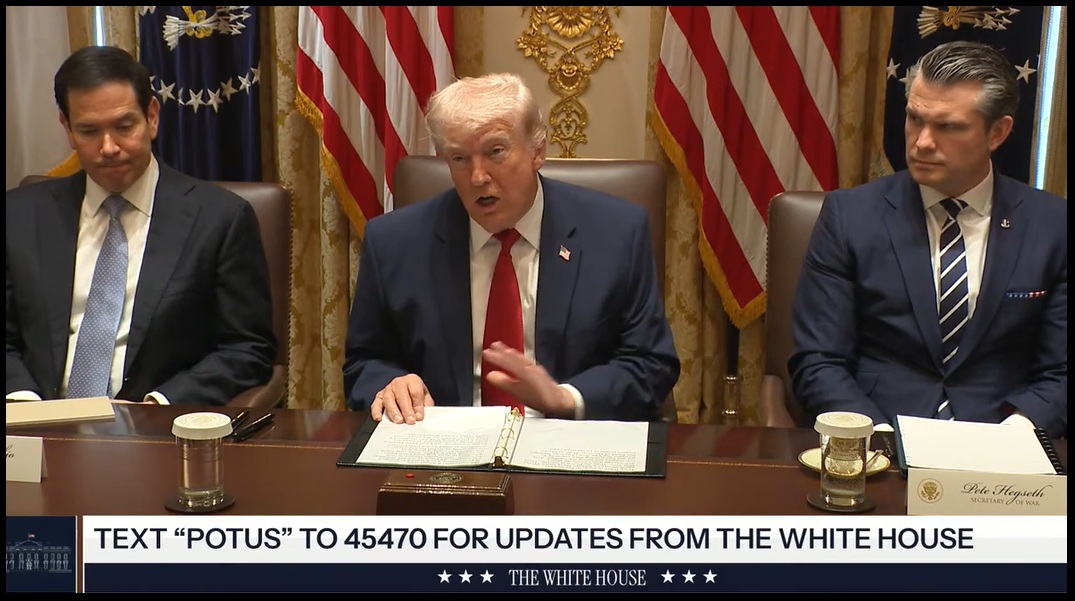
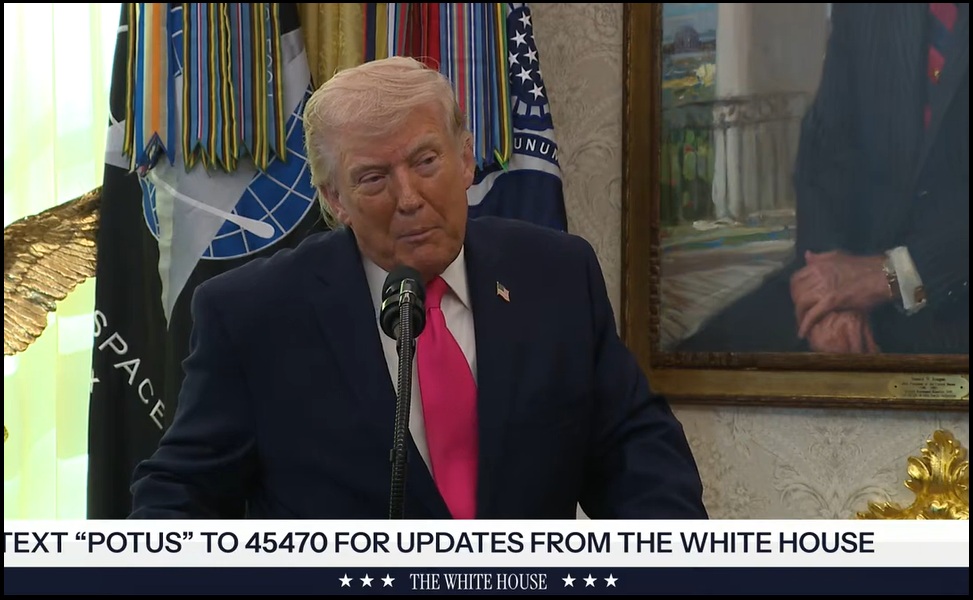
Earlier today, President Trump continued the process of allowing media to participate in the first segment of the cabinet meetings. President Trump begins with remarks on current events and then goes around the table for a discussion of action taking place in all executive cabinet agencies.
At 21:55JD Vance delivers his statement. At 23:57 Secretary of State Marco Rubio delivers his statement. At 27:05 Emissary and Negotiator Steve Witkoff delivers his statement. At 32:10 Secretary Pete Hegseth delivers his statement. At 57:14 Secretary Scott Bessent delivers a statement. At 1:02:23the media questions begin.
Posted originally on CTH on March 26, 2026 | Sundance
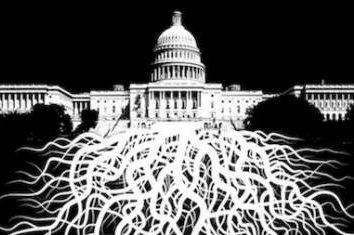
Washington DC uses a system of decades-long constructed silos to control and ultimately hide information adverse to the interests of the DC system itself. Put another way, people within our government have constructed layers of systems to hide the corruption that takes place.
This silo system is challenging to understand; but thankfully many more people have started to comprehend how it works. The constitutional separation of power mechanisms has been weaponized by the corrupt actors, as we outlined in the example yesterday of Adam Schiff hiding the transcript of ICIG Michael Atkinson.
All of us have been frustrated to hear politicians in the legislative branch talk about “sending criminal referrals” to the Dept of Justice, and yet nothing happens. Part of this is created by ‘stakeholder equities’, specific ownership of the underlying documents that do not accompany the referral (locked in a non-compliant silo). The intelligence community is notorious for classifying and hiding the evidence of wrongdoing.
Without the direct and specific evidence, and without an aligned intent from the receiver, the referral itself is more of a legislative fundraising narrative than an actionable event. A pitch without a catcher, and sometimes even without a ball.
You are not alone in your frustration. However, you might remember CTH providing a very specific outline of how a key position within government could be used to change things. {GO DEEP} The Office of the Director of National Intelligence, shutting down the IC from hiding evidence is key. An honest and truthful arbiter of intelligence is a paradigm shift in the DC system; it is also a threat.
With Executive Branch DNI Tulsi Gabbard declassifying purposefully hidden intelligence equities, in combination with the Legislative Branch providing source material from their own silo equities, what you get is an unimpeded flow of information to the Dept of Justice.
Two pipes of information, legislatively authorized and intelligence declassified, joining together in a single stream of actionable evidence flowing unimpeded to the DOJ. This is the worst-case scenario for corrupt DC entities who hide within the silo system. From my perspective, this information flow is now in place.
A review of historic ‘Spygate and Russiagate’ activity is taking place in Florida with a grand jury led by U.S. Attorney Jason A. Reding Quiñones. We are now seeing reports of information flows in both directions from DC to Florida, and from Florida to DC.
Requests from Quinones, intermediate transfers at DOJ, prompt responses from legislative silos and returns after review -if needed- from DNI.
This is a very positive indication toward some form of accountability. However, there is also an institutional muscle memory that is annoying. It would be better if politicians dropped their historic fundraising approach when discussing evidence of corrupt activity. It would be better overall if they just kept their mouth shut.
On the topic of prior targeting of Donald Trump, when you hear the term “sent to the DOJ” you can reasonably be certain that means sent to Florida and USAO Jason Quinones.
Old habits are hard to break, cue the video:
.
.
There is a very small reliable group of lawyers within the Dept of Justice, when considering the scale and scope of the challenges and cases they are assigned.
Obama and Biden had 12 years of importing ideological lawyers into Main Justice and the various U.S. Attorney Offices. None of their lawyers are reliable.
The blue state fraud investigations were obviously starting to bog down the limited resources of the DOJ. Division of labor introduces Vice-President JD Vance to act as a subject-matter-specific Attorney General and USAO Colin Macdonald on fraud enforcement/prosecution.
Treasury Dept financial crimes lawyers are tracing money, domestic and foreign, while supporting both Main Justice and the Fraud Task Force.
This keeps AG Pam Bondi and DAG Todd Blanche focused on defending Trump policy, deportation and immigration removal efforts, election integrity issues and matters of national security (criminal gang elements).
Meanwhile, U.S. Attorney Jason A. Reding Quiñones remains unaffected and on task in Florida.
The silo system is made up, in part, of: The National Security Council (10+ desks, 15 staff/analysts per), the National Security Advisor to the Office of the President, the Dept of Justice National Security Division [DOJ-NSD (foreign review section, counterintelligence export control section, cyber section, counterterrorism section)], Central Intelligence Agency [(CIA), National Intelligence Council, Directorate of Analysis], Federal Bureau of Investigation [FBI (Counterintelligence, Counterterrorism, WMD Directorate, Directorate of Intelligence, Cyber)], the Office of the Director of National Intelligence [ODNI (Requirements, Analysis, Collection, National Counterterrorism Center, Mission Managers)], the House Permanent Select Committee on Intelligence (HPSCI), the Senate Select Committee on Intelligence (SSCI), the Defense Intelligence Agency (DIA), the Dept of Defense [DoD, (Nuclear, Chemical, Biological, Industrial, International)], the National Security Agency [NSA (Operations, Technology, Cyber], and many more.
Each agency/office a silo, with distinct sub-silos; each with equity stakes in the information they gather, review and analyze; ultimately attributing classification level and intersecting analysis with each other agency as mission aligned.
Sound ridiculous? It probably is, yet we’ve merely scratched the surface of the IC networks and information flows that swirl around the Office of the President.
Now do you see why DNI Tulsi Gabbard is important?
Literally hundreds of embeds -across multiple silos- have been removed from the aggregate apparatus. The National Security Council has been taken apart, staff removed, desks shuttered. The National Intelligence Council was removed from the CIA with personnel fired. The Directorate of Analysis is now openly confronted. The ICIG is once again a watchdog.
These actions create optimism that substantive change is possible. Simultaneously, with the corrupt behavior removed from the system, these actions lay the groundwork for honest and deliberate cross-silo information sharing. However, much more work lies ahead.
Posted originally on CTH on March 25, 2026 | Sundance
The rebranded Lyndon LaRouche PAC has another good outline on the new strategic alliances assembled by President Trump as the ongoing conflict with Iran continues.
Susan Kokinda reviews how the United Kingdom and Europe have been sidelined as President Trump directly negotiates with key stakeholders in the middle east and Asia. Kokinda correctly notes the messaging from Russia indicates a strategic awareness that old systems are fracturing and the potential for new strategic alliances is rising.
“Susan Kokinda argues President Trump has opened a new diplomatic space to de-escalate the Iran conflict by working through a regional roster—Saudi Arabia, Egypt, Turkey, Pakistan, Gulf States, and back channels into Iran—while the U.K., EU, and NATO are absent and increasingly irrelevant. Citing reporting that ministers met in Riyadh and that Egypt, Turkey, and Oman carried messages, she says this “Board of Peace” architecture is isolating Iran and weakening its proxies, pointing to Lebanon’s move against Hezbollah, the Palestinian Authority’s condemnation of Iran, and Hamas considering disarmament. Kokinda links Europe’s exclusion to self-inflicted energy weakness from Green and anti-Russia policies, noting rushed LNG moves and a delayed Russian oil ban vote. She concludes Ukraine’s outlook darkens as Europe and Britain lack leverage, highlighting Zelenskyy’s scramble for support in London and Washington.” WATCH:
Posted originally on CTH on March 25, 2026 | Sundance
This is good news from the standpoint of us wanting to see President Trump continue to make MAGAnomic progress on trade as well as geopolitical alliances.
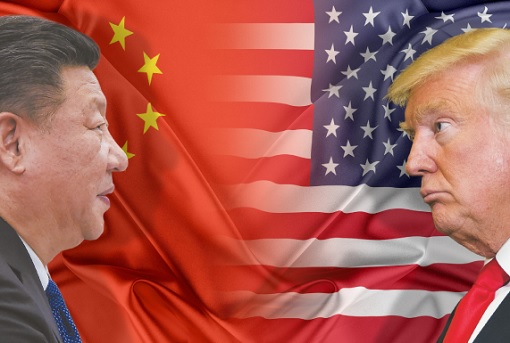
It will be a very interesting summit against the backdrop of Venezuela, Iran, oil/gas energy shifts, the previous Alaska summit with Russian Federation President Vladimir Putin, the renegotiation of the USMCA and the Chinese auto deal in Canada…
There are a lot of important topics within a Trump-Xi summit.
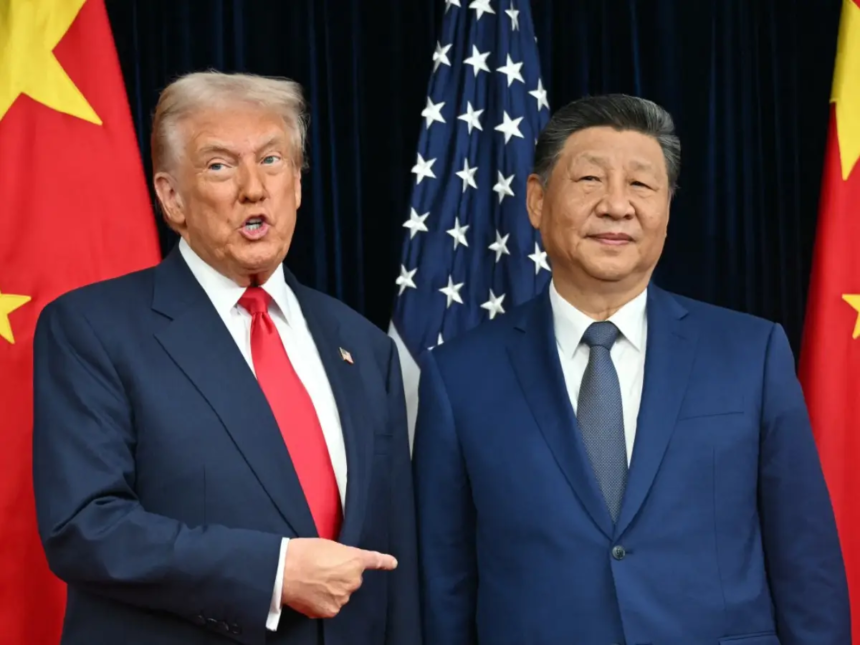
PRESIDENT TRUMP – “My meeting with the Highly Respected President of China, President Xi Jinping, which was originally postponed due to our Military operation in Iran, has been rescheduled, and will take place in Beijing on May 14th and 15th.”
“First Lady Melania and I will also host President Xi and Madame Peng for a reciprocal visit in Washington, D.C., at a later date, this year. Our Representatives are finalizing preparations for these Historic Visits. I look very much forward to spending time with President Xi in what will be, I am sure, a Monumental Event. Thank you for your attention to this matter!” ~ President DONALD J. TRUMP
Posted originally on CTH on March 25, 2026 | Sundance
For the past several years I have been advocating for ‘sunlight as the best disinfectant.’ Since September of 2025 I have been working through a painfully slow and convoluted process to share research, assist truth tellers and guide those who have the authority to deliver the sunlight. Today, I can happily report on progress.
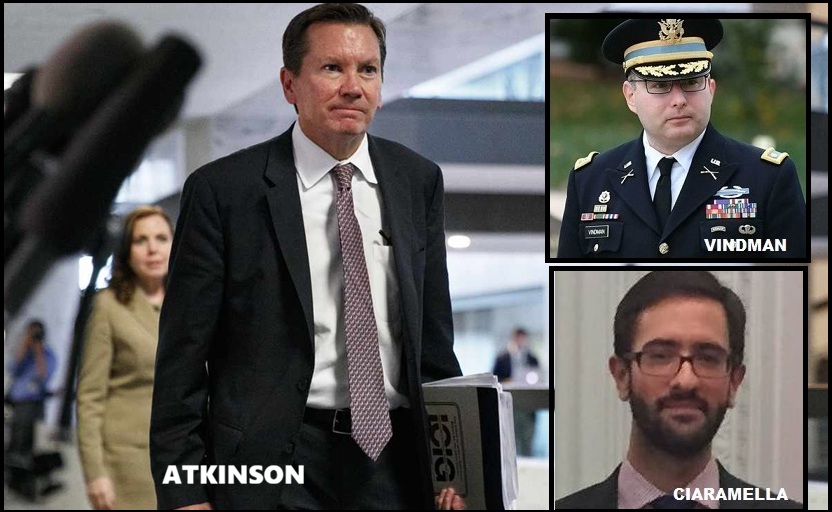
In 2019 an impeachment effort against President Trump was triggered when a member of the National Security Council named Alexander Vindman coordinated with a member of the National Intelligence Council named Eric Ciaramella to fabricate a false claim that President Trump leveraged his power and authority to demand Ukraine President Volodymyr Zelenskyy release information on Joe and Hunter Biden’s corrupt financial dealings in Ukraine.
At the time of the 2019 impeachment construct Eric Ciaramella was working for the CIA as an analyst within the National Intelligence Council (NIC).
Two years prior to the 2019 impeachment construct, in January 2017, the same CIA analyst, Eric Ciaramella, had worked on the fraudulent Intelligence Community Assessment (ICA) at the behest of CIA Director John Brennan.
[SIDEBAR: In 2025 Director of National Intelligence Tulsi Gabbard, working with CIA Director John Ratcliffe, removed the NIC from inside the CIA. To provide greater overall transparency within the intelligence community, the National Intelligence Council was moved into the purview of the Office of the Director of National Intelligence (ODNI)].
Key point: Eric Ciaramella was one of the key analysts who constructed the fraudulent ‘Russian interference ICA’ (2017) and later the fraudulent impeachment effort (2019). Eric Ciaramella became the “anonymous CIA whistleblower” in the 2019 impeachment effort.
Before 2019, CIA analysts weren’t allowed to anonymously make claims against political officials. Because of the sensitive information they handled, any allegation of wrongdoing based on intelligence had to be made with their name attached.
Intelligence Community Inspector General Michael Atkinson changed or modified the ICIG rules permitting Ciaramella to remain anonymous and make a claim that ultimately led to an impeachment effort.
Eric Ciaramella allegedly fabricated intelligence information, shared it with Congress and the House Permanent Select Committee on Intelligence (HPSCI), and then remained anonymous. HPSCI Chairman Adam Schiff was said to have assisted him.
On October 4, 2019, as part of the House impeachment inquiry, Intelligence Community Inspector General Michael Atkinson gave closed-door testimony to the House Permanent Select Committee on Intelligence (HPSCI) as part of their impeachment investigation. One of the key questions to ICIG Atkinson surrounded the authority of his office changing the CIA whistleblower rules that permitted Eric Ciaramella to remain anonymous.
During later questioning by then-Congressman John Ratcliffe, as part of the House impeachment effort, it came to light that Inspector General Michael Atkinson testified CIA analyst Eric Ciaramella, the anonymous ‘whistleblower’, had lied about key details when questioned by Atkinson. WATCH VIDEO:
[The look on Dan Goldman’s face during that questioning was both priceless and insufferable. John Ratcliffe is now CIA Director]
Because the anonymous whistleblower complaint by Ciaramella was the cornerstone of the impeachment effort, Chairman Adam Schiff sealed the transcript of ICIG Atkinson testimony, classifying it under the guise of national security interests and burying it in the HPSCI control system.
It’s worth reemphasizing that Eric Ciaramella was both the analyst behind the disputed 2017 Intelligence Community Assessment for Director Brennan and, later in 2019, involved in the contested impeachment effort. Both operations involved impeding and targeting President Donald Trump.
If congress, or more importantly the American public, had known CIA Analyst Eric Ciaramella was both the key author of the fraudulent 2016 ICA and the later 2019 CIA complaint, it’s doubtful any impeachment effort would have moved forward.
Inside the Intelligence Community oversight system, the Ciaramella connection to both IC operations could have been made. His anonymity as a whistleblower served a purpose. [DNI Tulsi Gabbard’s 2025 decision to remove the National Intelligence Council from behind the curtain of the CIA is additionally supported with this hindsight.]
The transcript of Inspector General Michael Atkinson’s testimony becomes a key document to release because at its core we know that Atkinson testified that Ciaramella lied. The Ciaramella lie is at the heart of the impeachment attempt.
Don’t get lost in the details or the politics of this. When you peel back all the layers of DC, at its epicenter this was an operation to impeach a sitting President that came from within the CIA, and it almost succeeded. {GO DEEP}
When a top administration intelligence official, holding what I believe to be the best possibility of making a difference, reached out, I began the assist by citing specific documents that would reveal a much bigger story. The Atkinson transcript was one of those documents.
I have outlined how the silo system is constructed to intentionally impede or stop review. Adam Schiff isn’t stupid. He knew what he was doing and how to use the separation of powers for his purposes. The executive branch would not easily be able to reach into the legislative branch and extract information. That’s why then HPSCI Chairman, Impeachment Chairman and now Senator Adam Schiff buried the Atkinson transcript in the vault of the House Intelligence Committee.
The process.
♦ First, you need a republican President in the White House √. Second, you need an aligned Intelligence Community DNI √, and third you need a Republican controlled HPSCI √:
[¹] • To extract the transcript the Executive would first need to understand its value. • Then the Executive would need to know where it was. • Then the Executive would need a qualified stakeholder, with appropriate clearances, to request to review the transcript in the HPSCI secure compartmented intelligence facility (scif). • If the HPSCI approved, the Executive would be given an appointment date to read it (no notes, no copying, just reading). • Then, after reading, the Executive stakeholder would then need to request the HPSCI Chair and Ranking Member for a classified copy. • The Chair and Ranking Member would need to agree to the value of the sunlight on the Legislative Branch controlled information. • To get a copy the entire House Intelligence Committee would need to vote on the release to the Executive. • The vote would need to be scheduled on the committee calendar. • A HPSCI vote would then take place:
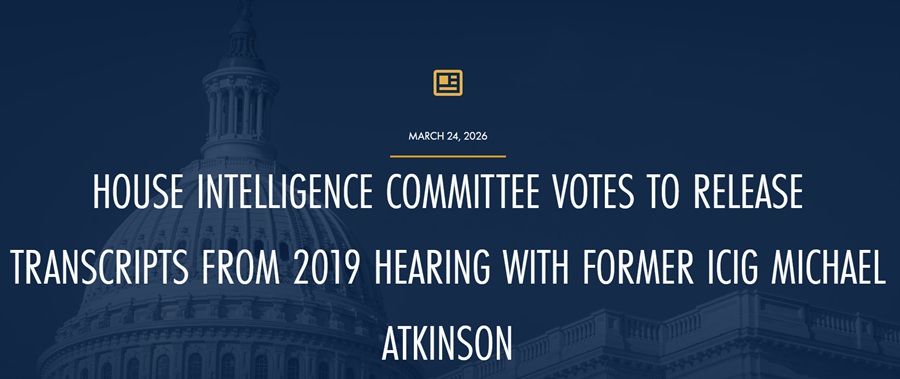
WASHINGTON, D.C.— Today, the House Permanent Select Committee on Intelligence held a business meeting to consider multiple Committee actions. During the business meeting, the Committee voted in favor of releasing two transcripts from 2019 hearings with the former Intelligence Community Inspector General, Michael Atkinson. The hearings were held to examine Atkinson’s role in an alleged whistleblower complaint, which ultimately led to Democrats’ first impeachment efforts against President Trump in December 2019. One transcript would be released to the ODNI for classification review, and then subsequently released to the public by the Committee with the second unclassified transcript.
“The great deal of widespread speculation about the Atkinson classified hearing transcript is indicative of the American people’s complete and warranted mistrust of the Intelligence Community,” said Chairman Crawford. “In far too many instances, the IC hides behind the veil of overclassification. Sometimes sunlight is the best disinfectant. As part of the Committee’s continued effort to balance the transparency the American people deserve and the need to protect sensitive national security information, we hope that the release of these transcripts allows the American people to make their own determinations. As Chairman, I remain committed to ensuring this Committee, where possible, is transparent as the IC works to rebuild trust with the American people.”
The transcripts will be posted on the Committee website once they undergo the standard classification review with the Office of the Director of National Intelligence. (source)
The HPSCI has voted to release the Atkinson Transcript.
Director of National Intelligence Tulsi Gabbard will now walk the unhidden transcript through the declassification process. The fastest way is through President Trump’s office. Hopefully the redactions will be minimal. Then we will all get to see it.
This has been a long, frustrating and complicated process – but we have succeeded.
[¹] FINAL POINT: You can tell this is a long arduous process. However, once the process begins, you’ll note that certain tripwires are crossed, and people in/around DC find out what you are doing. Yes, DC ‘interests’ realized months ago that Tulsi Gabbard was on the trail of this transcript.
Now do the recent attacks against DNI Tulsi Gabbard gain context?
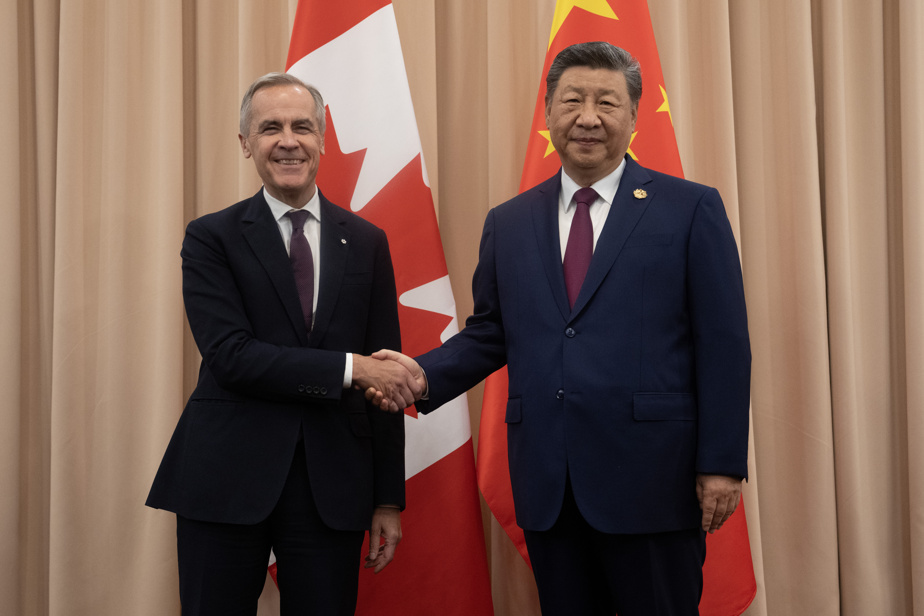
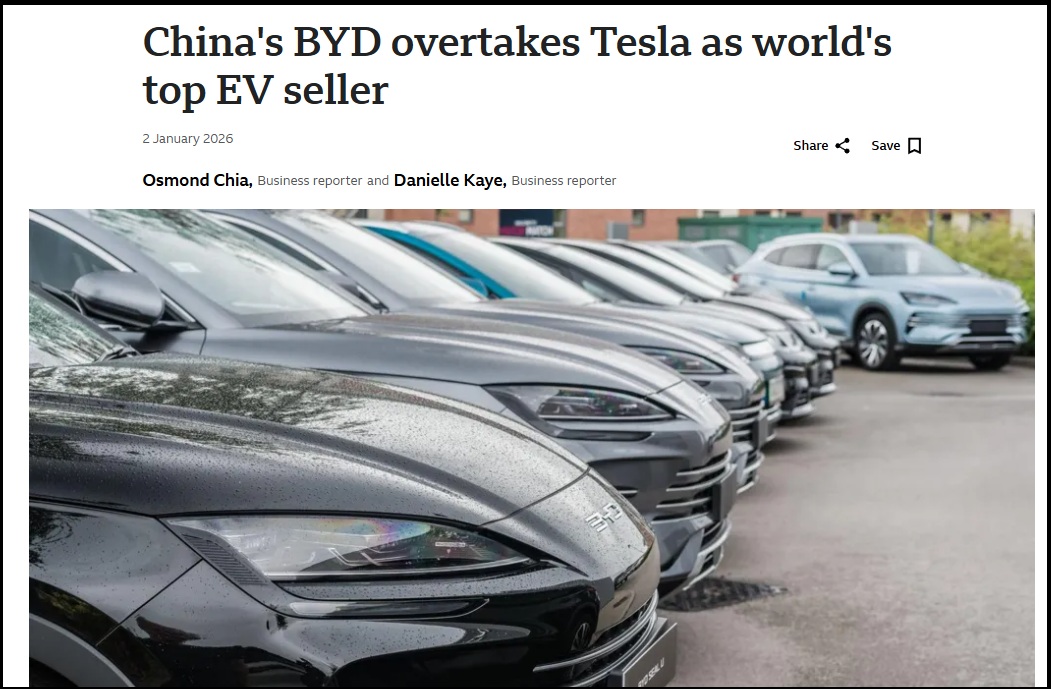
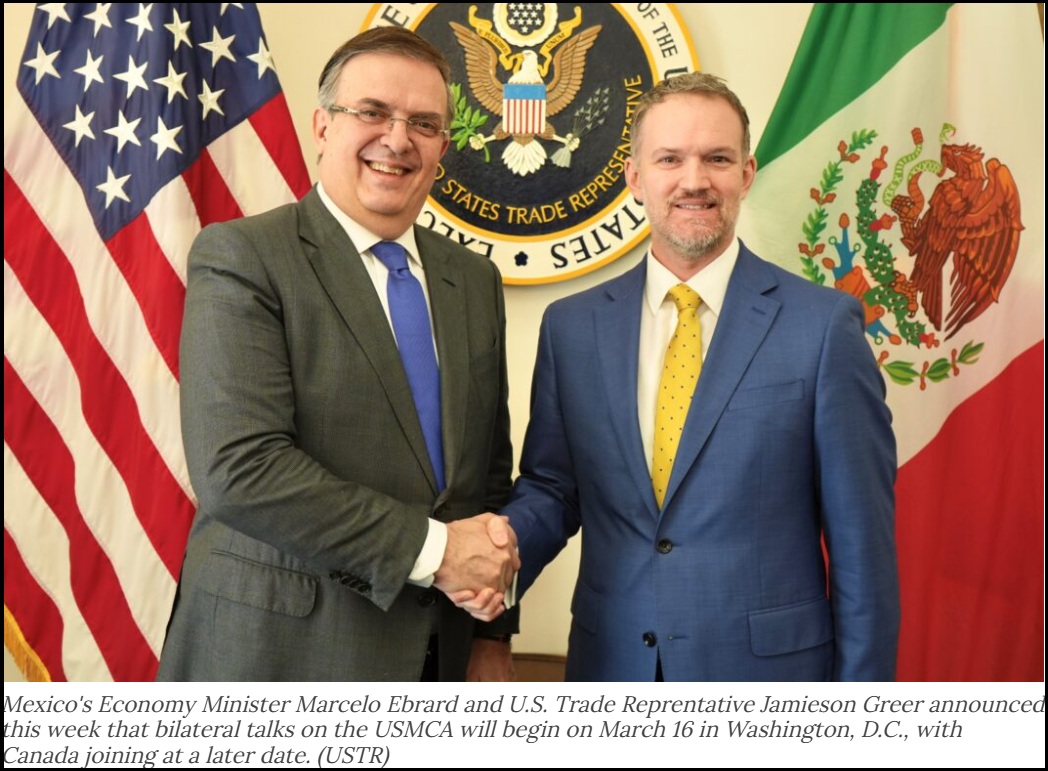
With the recent agreement by Canadian Prime Minister Mark Carney, Chinese auto manufacturers are now rushing to establish the dealerships, before the Beijing-Canada deal becomes an issue in the USMCA negotiation.
China is NOT going into Canada because they foresee a great market of Snow Mexicans purchasing their low price EVs. They are going into Canada as a proactive measure to establish a North American footprint with an eye toward the USA.
(VIA MSM) – BYD and Chery are accelerating plans to establish a dealership network in Canada after the country introduced a quota allowing tens of thousands of Chinese-made EVs to enter at reduced tariffs. The rollout will begin in Toronto before expanding to other major cities, with BYD targeting about 20 dealerships in its first year. This marks a significant new front in North American EV competition, as Chinese automakers seek growth outside the U.S., where prohibitive tariffs keep them out.
Canada’s updated trade policy allows 24,500 Chinese-made EVs annually at a reduced 6.1% duty, giving BYD and Chery a rare North American entry point. This follows China’s surge to become the world’s top vehicle exporter, with similar pushes into Mexico, Europe, and Latin America. The quota’s scale is modest but strategically valuable for testing market response and building brand awareness.
The companies will launch in Toronto before moving into Vancouver, Montreal, and Calgary. BYD aims for around 20 dealerships in its first year, using consultants and internal teams to secure prime sites. While the network could strengthen visibility in key urban markets, experts warn the quota’s limited volume may test the viability of multiple outlets.
With U.S. tariffs exceeding 100% effectively barring entry, Canada offers Chinese automakers a platform to establish presence, gauge consumer interest, and potentially influence future trade talks. Similar strategies have been used in Europe, where Chinese EV makers have gained ground despite strong local competition. Success in Canada could pave the way for local assembly or increased quotas. (read more)
Posted originally on CTH on March 24, 2026 | Sundance
Obviously, one of the challenges faced by President Trump following the elimination of all senior Iran political leadership, is to know who is left in power that has the ability to negotiate terms between Iran and the U.S.
During the Q&A media segment of Mark Wayne Mullin’s swearing in ceremony, President Trump was asked how he can trust the Iranian leadership he is currently communicating with. President Trump responded that he doesn’t trust anyone; however, the voices in Iran currently negotiating with the U.S. team sent something of great value to the White House to verify their Bonafide’s. It is an interesting segment. WATCH (prompted):
Posted originally on CTH on March 24, 2026 | Sundance
Senators Chuck Grassley and Ron Johnson released 30 pages of documents today outlining how the Jack Smith investigation “Arctic Frost” was used to capture records of former Trump administration officials [SEE HERE].
In addition to information showing how Jack Smith was collaborating and strategizing with DC Judge James Boasberg in advance of the subpoena submissions, literally strategizing how best to target Donald Trump, there is something even more interesting in the release.
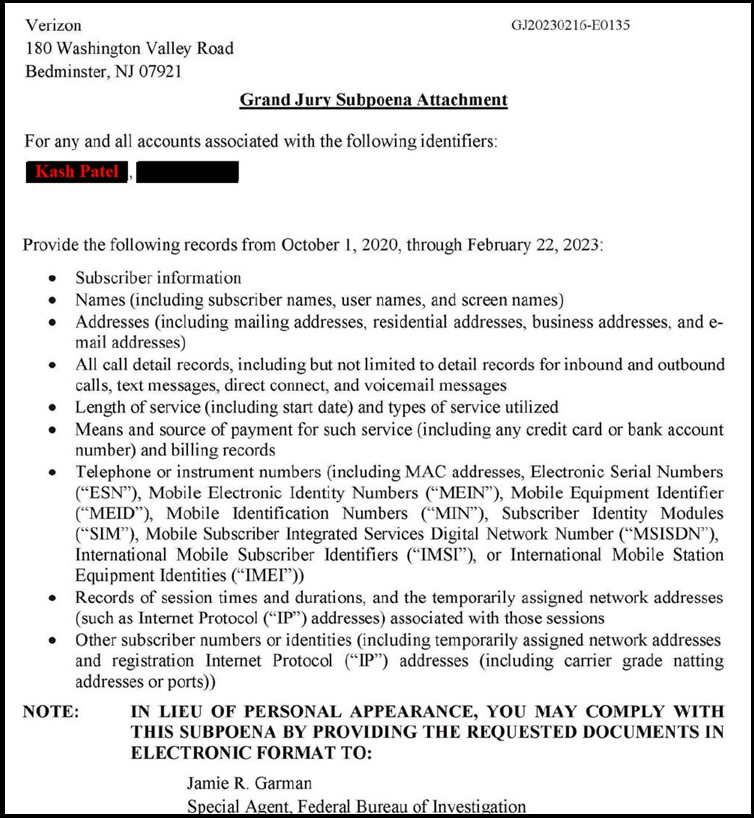
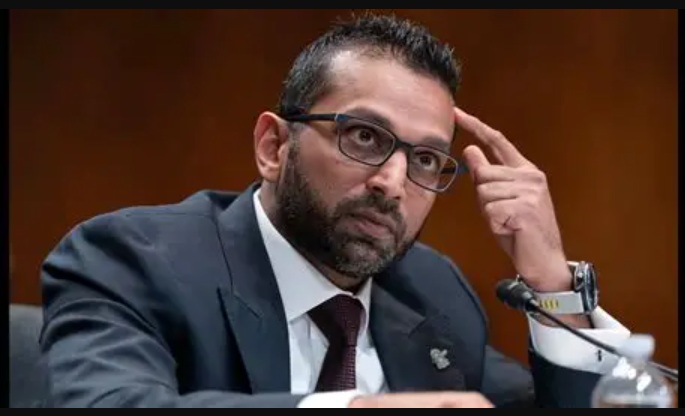
Many people have wondered why FBI Director Kash Patel seems compromised since he took office. Well, the FBI subpoena into then civilian Kash Patel, highlights the extent of the FBI operation as they gathered background intelligence that could be used for blackmail and leverage over the eventual FBI Director.
As noted by Hans Manche: “It didn’t just ask for Kash Patel’s phone records, it asked for everything he did from 2020 to 2023. Just to name a few, they requested all usernames and screen names, every address and email, complete billing and payment details including credit card and bank account numbers, every device ID, and a full log of every call, text, and voicemail showing who was contacted, when, and for how long. They also obtained all internet session data, including the exact IP addresses. So, this wasn’t just about who Kash called. It was basically a complete view of his entire life, mapping his daily routines, travel, relationships, finances, and even tracking the specific hardware he used. In short, they got a full digital shadow of his life.”
Yep, that’s how the FBI operates.
That’s how the FBI establishes leverage against anyone they view against their interests.
Now does the activity of FBI Director Kash Patel look a little differently with hindsight?
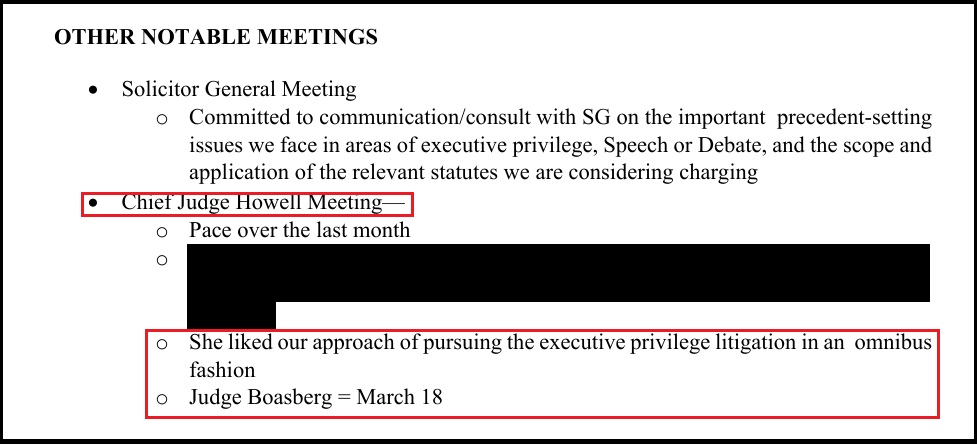
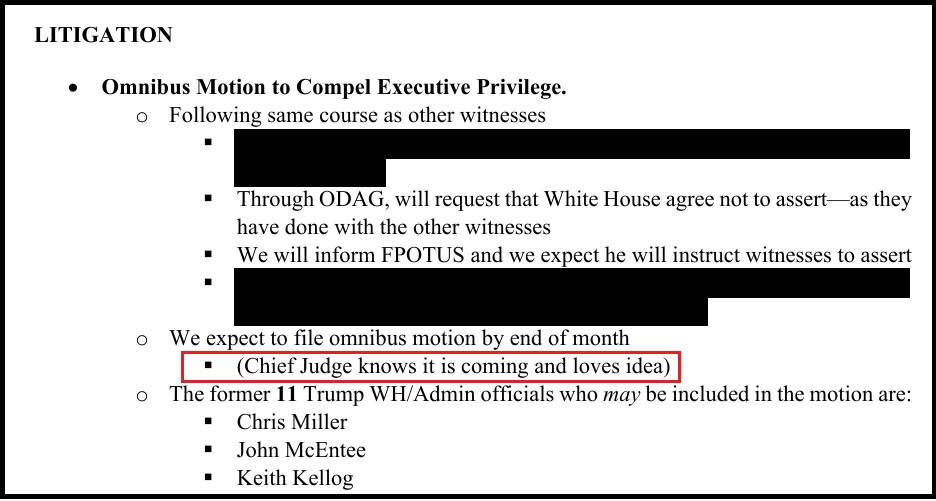
Here’s the part where the internal DOJ discussions reveal the Jack Smith prosecution team coordinating and strategizing with DC Circuit Court Judge James Boasberg and Judge Beryl Howell:
In March 2023, when I wrote the outline about Judge Boasberg being the corrupt DC judge who broke the constitutional restrictions on executive privilege, which technically forced Mike Pence to turn over his notes and testify to James Smith and the DC grand jury, I said at the time, “The entire judicial system is corrupt, soup to nuts, all of it.” I was not using hyperbole.
This is the same Judge Boasberg who sat as presiding judge on the FISA court. The same Judge Boasberg who gave FBI lawyer Kevin Clinesmith a slap on the wrist for manufacturing evidence used in the Carter Page FISA application that defrauded the court. The same Judge Boasberg who appointed former DOJ-NSD head Mary McCord as amicus curiae advisor to the court, after she knowingly and fraudulently submitted the FISA application to the court.
Four years ago, while Judge Boasberg was on the FISA Court, I warned about the implications of all these interconnected judicial dots. The entire DC federal bench is compromised. The entire judiciary of the FISA Court process is compromised. The entire federal judicial system is compromised. Then we witnessed the stunning scale and scope of that same DC judicial corruption in the fraudulent case against President Donald Trump.
Former FISA Court Presiding Judge James Boasberg is no longer on the FISC. However, he continues to advance the interests of the DC Deep State with rulings specifically tailored to protect the national security state. [Boasberg Background Here]
Boasberg, an ally of SSCI Chairman Mark Warner, has intercepted several cases that brought sunlight upon the corrupt DC system. In each case Boasberg ruled in favor of maintaining the corruption, including his willfully blind support of the FBI searching NSA databases to conduct illegal surveillance of Americans, and including Boasberg’s personal appointment of Mary McCord to run defense on behalf of the corrupt DOJ main office. Keep in mind, Mary McCord’s husband Sheldon Snook was working for Supreme Court justice John Roberts.
Posted originally on CTH on March 23, 2026 | Sundance
This is one of those small stories that carries the potential for significant domestic economic gains.
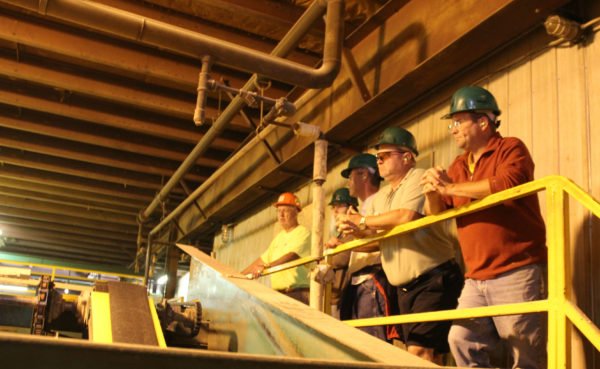
As many are aware, the U.S. imports a lot of softwood lumber from Canada. Combined with the energy products the lumber sector represents the top two U.S. imports from Canada. With Venezuela now potentially positioned to replace the former, USDA Rural Development now stimulates domestic lumber development potentially positioned to replace the latter.
Taken as a whole, these two approaches significantly weaken the Canadian leverage that could be deployed in a Free Trade Agreement negotiation. Assuming, of course, the USMCA is dissolved in favor of two bilateral FTAs.
USDA Press Release – At the Advanced Bioeconomy Leadership Conference today, U.S. Department of Agriculture Administrator for the Rural Business and Cooperative Service J.R. Claeys announced the U.S. Department of Agriculture is guaranteeing $115.2 million across eight states through the Timber Production Expansion Guaranteed Loan Program (TPEP) to ensure sawmills and other wood processing facilities have the necessary funding to establish, reopen, expand, or improve their operations.
Today’s announcement includes recipients in the states of California, Idaho, Kansas, Louisiana, Maine, Oklahoma, Virginia, and Wisconsin.
These investments represent a commitment by the Trump Administration to expand American timber production by 25%, reduce wildfire risk, and save American lives and communities by strengthening domestic wood processing capacity.
“We cannot allow wildfires to devastate and destroy our rural communities,” said Administrator Claeys. “That’s why the USDA is taking bold action to stop the destruction of our forestlands by investing in sawmills and wood processing facilities that support sustainable timber harvesting. These actions strengthen local businesses, support rural prosperity, and create jobs for hardworking Americans.” (source)
This is not to say that expanded U.S. sawmill production would completely eliminate Canadian softwood lumber imports. However, it does create inventory and a stronger domestic supply chain that would diminish any applied leverage that Canadian trade negotiators would seek to deploy.
Without pipelines flowing East or West, Canada is stuck pumping their heavy oil south for processing. Nothing about that is likely to change in the next few years, even if Canada abandoned their climate change policy (highly unlikely).
Then comes the cross-border auto manufacturing industry, and the realization that -sans USMCA- both U.S. and Japanese automakers are likely to stick with the manufacturing center where their greatest customer base exists, the USA.
Now overlay softwood lumber, and you can see the top three economic dependencies of the U.S and Canada are slowly being uncoupled, simultaneous with the trilateral USMCA provisions being reviewed starting with the U.S. and Mexico having direct conversations.
Posted originally on CTH on March 23, 2026 | Sundance
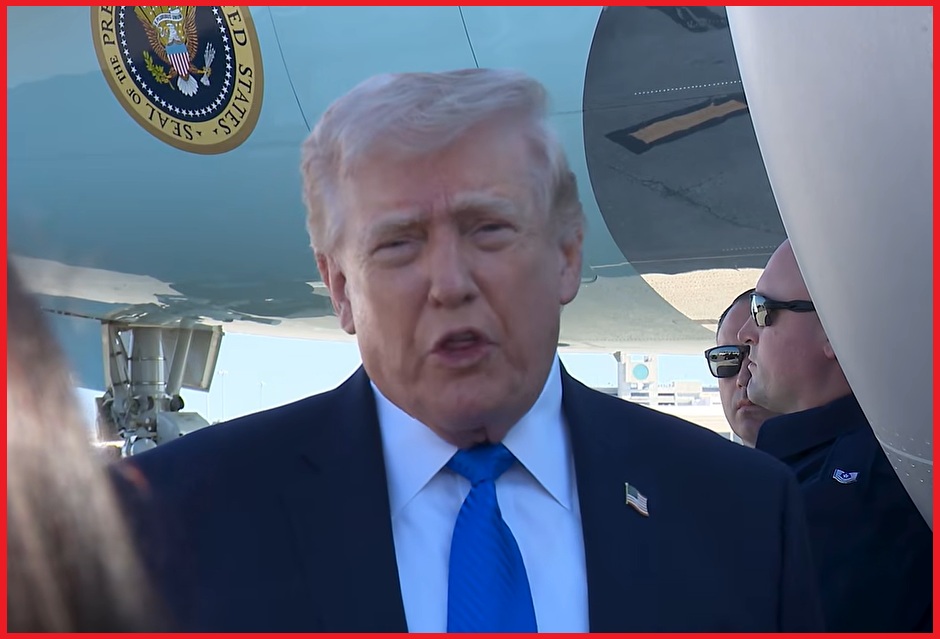
President Trump delivers remarks and takes questions from reporters in Palm Beach, Florida, before boarding Air Force One en route to Memphis, Tennessee. President Trump emphatically stated that continued negotiations with ‘leadership’ within Iran continues and reaffirms the conditions for a cessation of hostilities.
The military leadership within the Islamic Revolutionary Guard Corps. (IRGC), do not recognize any political representation over their military control of Iran. This fracture within the political structure of Iran is what seems to create the conflict with U.S. negotiations with political entities the IRGC refuses to recognize.
President Trump is confident the presentation of terms now being discussed with Iranian political leadership will be agreeable to both Israel and U.S. interests. Additionally, President Trump discusses the issue and circumstances around former NTSC Director Joe Kent and his view on the controversy that have flowed since Kent’s resignation. WATCH:
I have created this site to help people have fun in the kitchen. I write about enjoying life both in and out of my kitchen. Life is short! Make the most of it and enjoy!
This is a library of News Events not reported by the Main Stream Media documenting & connecting the dots on How the Obama Marxist Liberal agenda is destroying America