Posted originally on CTH on March 27, 2026 | Sundance
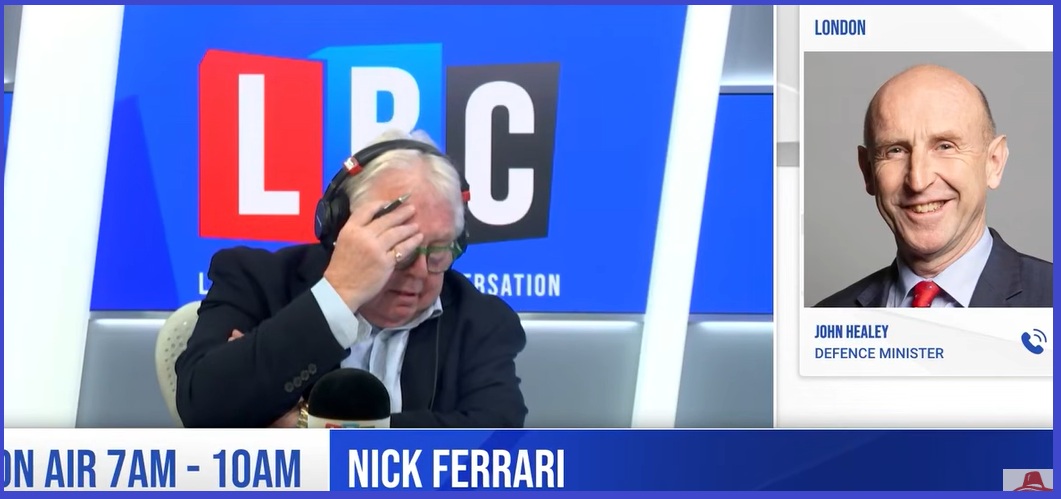
This is a rather remarkable and insightful short segment interview with the British Defense Secretary, who outlines how the great British Navy will defend their interests.
Once you realize what is said in this segment, you start to realize just how dependent NATO is on the protection provided by the United States. WATCH:
…”Britain was forced to ‘borrow’ a German vessel for a NATO operation next month, led by the United Kingdom, after HMS Dragon was deployed to Middle East.”…
Posted originally on CTH on March 26, 2026 | Sundance | 218
The more NATO/EU hypocrisy creates friction with President Trump; the less U.S. support exists for Ukraine. That’s the dynamic Zelenskyy is trying desperately to navigate with his EU allies.
During a lengthy interview with Reuters, Zelenskyy says he has been directly told the only way for Ukraine to get security guarantees from USA participation is if he concedes the contested Donbas region to Russia and ends the conflict.
Assuming what Zelenskyy says is accurate, at this point in the ongoing stalemate, this seems like the pragmatic optimal solution. Concede Donbas to Russia, and the U.S. will mediate terms that emphasize an American willingness to protect Ukraine from further encroachment.
That said, when Zelenskyy once again starts asking who is going to pay for the needs of his country, the U.S. taxpayer eyeroll commences.
KYIV, March 25 (Reuters) – The U.S. is making its offer of security guarantees for a peace deal in Ukraine conditional on Kyiv ceding all of the country’s eastern region of Donbas to Russia, President Volodymyr Zelenskiy told Reuters in an interview.
[…] Two vital questions remained unresolved regarding security guarantees, Zelenskiy said: Who would help to fund Ukraine’s weapons purchases to sustain its military deterrent, and how exactly would its allies respond in the face of any future Russian aggression?
“The Americans are prepared to finalise these guarantees at a high level once Ukraine is ready to withdraw from Donbas,” said the 48-year-old leader, who added that he understood the “subtleties” of the American position although he had not participated directly himself in the trilateral talks.
Russian President Vladimir Putin insists that control of the whole of Donbas is an essential element of his war aims, which Moscow would achieve on the battlefield if it could not do so at the negotiating table.
But the pace of Russia’s advance has been slow over the past two years. Military analysts say it could take a long time and a significant amount of manpower to conquer all of Donbas, which includes a so-called Fortress Belt of cities heavily fortified by the Ukrainian military.
[…] Speaking in a gilded meeting room at the presidential offices in central Kyiv, Zelenskiy said Russia was betting Washington would lose interest if the peace talks stalled and would walk away. He acknowledged that there was some risk of this.
A fourth round of trilateral talks due this month was postponed due to the Iran conflict.
The Ukrainian leader shrugged off past tensions between himself and Trump. “I am not a box of chocolates or a car, to be liked or disliked by one person or another,” he said. “In my opinion, the President of the United States looks at this more pragmatically, and he probably wants the war to end quickly. We also want to do so quickly.”
[…] Following heavy Russian bombardment of Ukrainian cities on Wednesday, Zelenskiy thanked the Trump administration for maintaining the supplies of Patriot missile defence systems, despite increased demand for these weapons because of the conflict in the Gulf.
[…] “Deliveries to us were not stopped. I’m very grateful to President Trump, and to his team,” Zelenskiy said. “But this supply of Patriot missiles is not as large as we need.” (read more)
It’s never enough for this guy. Ukraine is a bottomless pit of money and corruption.
As the EU proclaims that Iran is not a NATO member and the middle east conflict is not their issue, President Trump rightly points out that Ukraine is not a NATO member, and the Ukraine conflict is not our issue.
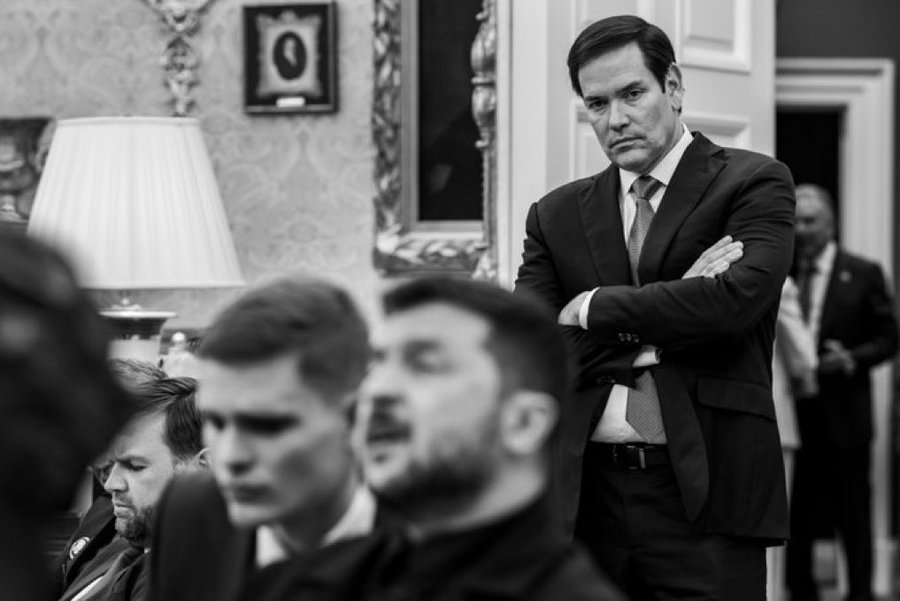
Secretary of State Marco Rubio is heading to a G7 foreign minister summit in France, and paused to answer questions on both Iran and Ukraine from the traveling press pool.
Posted originally on CTH on March 25, 2026 | Sundance
The rebranded Lyndon LaRouche PAC has another good outline on the new strategic alliances assembled by President Trump as the ongoing conflict with Iran continues.
Susan Kokinda reviews how the United Kingdom and Europe have been sidelined as President Trump directly negotiates with key stakeholders in the middle east and Asia. Kokinda correctly notes the messaging from Russia indicates a strategic awareness that old systems are fracturing and the potential for new strategic alliances is rising.
“Susan Kokinda argues President Trump has opened a new diplomatic space to de-escalate the Iran conflict by working through a regional roster—Saudi Arabia, Egypt, Turkey, Pakistan, Gulf States, and back channels into Iran—while the U.K., EU, and NATO are absent and increasingly irrelevant. Citing reporting that ministers met in Riyadh and that Egypt, Turkey, and Oman carried messages, she says this “Board of Peace” architecture is isolating Iran and weakening its proxies, pointing to Lebanon’s move against Hezbollah, the Palestinian Authority’s condemnation of Iran, and Hamas considering disarmament. Kokinda links Europe’s exclusion to self-inflicted energy weakness from Green and anti-Russia policies, noting rushed LNG moves and a delayed Russian oil ban vote. She concludes Ukraine’s outlook darkens as Europe and Britain lack leverage, highlighting Zelenskyy’s scramble for support in London and Washington.” WATCH:
Posted originally on CTH on March 22, 2026 | Sundance
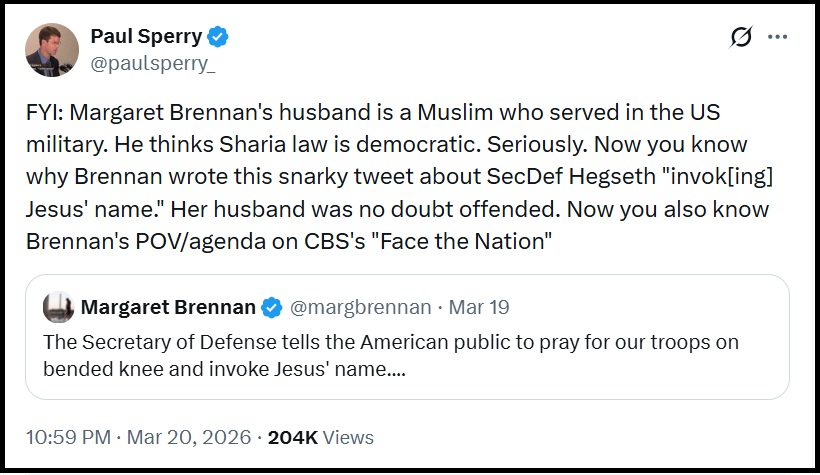
Margaret Brennan’s husband is a Syrian Muslim named Major Ali Iyad Yakub, who goes by the nickname ‘Yado’. He served in the U.S. military. Mrs. Brennan studied abroad at Yarmouk University in Irbid, Jordan, and Yakub’s sister, Samia Yakub, was her roommate. Mr. Yakub founded Y2 Global Advisory specializing in global intelligence, communications, and government relations. He also worked for Senator Joe Biden on the Senate Foreign Relations Committee. Margaret Brennan and Ali Iyad Yakub have two children together.
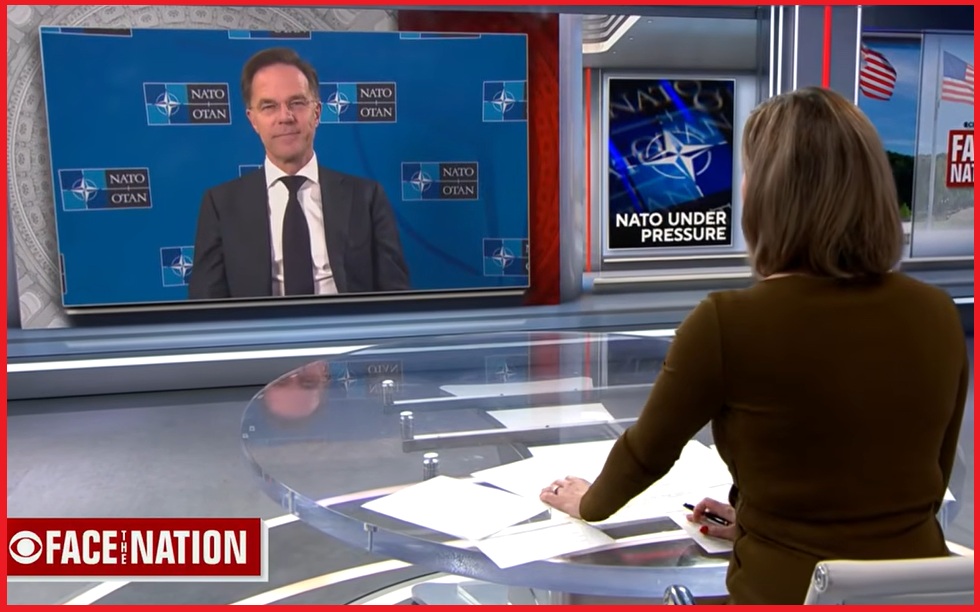
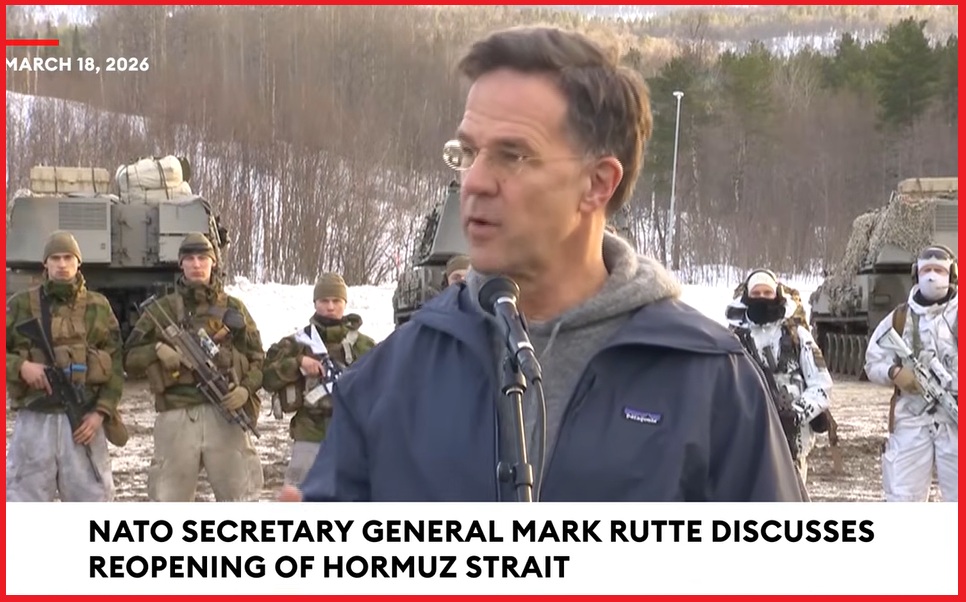
NATO General Secretary Mark Rutte appears on CBS Face the Nation to discuss the European opinion of the U.S. military operation against Iran, and outline how many countries within the NATO alliance are prepared to support the ongoing effort to eliminate the threat Iran represented. Video and Transcript Below:
[Transcript] – MARGARET BRENNAN: We turn now to NATO Secretary General, Mark Rutte, who joins us this morning from The Hague in the Netherlands. Welcome back to ‘Face The Nation.’
NATO SECRETARY GENERAL MARK RUTTE: Margaret, good to be back on the program. Good morning.
MARGARET BRENNAN: Good morning. We did see that Iran fired two missiles at Diego Garcia. That’s that island in the Indian Ocean, which houses a U.S. UK joint base. That was 4000 kilometers from Iranian territory, furthest Iran has ever gone. You just heard Ambassador Waltz say there might be a difference there in how Israel and the U.S. assess that capability Iran has in terms of what they fired. But Israel says these were intercontinental ballistic missiles that could hit Berlin, Paris and Rome. Does NATO share that Israeli assessment?
SECRETARY GENERAL RUTTE: We cannot confirm that at the moment, so we’re looking into that. But if this would be true, it is the more evidence that what the President is doing here, taking out the ballistic missile capability, taking out the nuclear capability from Iran, is crucial. And exactly as the ambassador just said, Ambassador Waltz, we have seen with North Korea, if we negotiate for too long, you might pass the moment where you can still get this thing done, and North Korea now has the nuclear capability. If Iran would have the nuclear capability, including, together with the missile capability, it will be a direct threat, a existential threat, to Israel, to the region, to Europe, to the stability in the world. So the president doing this is crucial, and I’ve seen the polling, but I really hope the American people will be with him, because he is doing this to make the whole world safer.
MARGARET BRENNAN: So but just to be clear at this hour, do you believe that Iran could bomb Berlin, Paris and Rome? Are they all within direct threat range?
SECRETARY GENERAL RUTTE: What we know for sure is that they are very close to having that capability, whether this case with the UK base, Diego Garcia, we are still assessing. But if it is true, it means they already have that capability. If it is not true, we know they are very close to having that capability. And that is exactly why I feel in Europe, that most politicians, it resonates with them. What the President is doing here, which is taking out- degrading Iran’s capability to be, again, an exporter of chaos, sheer chaos to the region, to the world.
MARGARET BRENNAN: Well, I’m sure the president appreciates your praise, but he has been very frustrated, and made that clear this week with NATO and the European allies. He called NATO quote a paper tiger without the US. He said they complain about high oil prices when they forced to pay but they don’t want to help open the Strait of Hormuz. Easy for them cowards. We will remember.
SECRETARY GENERAL RUTTE: I’ve been in several conversations this week with the president, and the good news is that, look, we had the U.S. for weeks planning for Epic Fury and for reasons of security and safety, they could not share with European allies and allies around the world and partner countries what they were doing, because that would have jeopardized the effect of the first- first attack–
MARGARET BRENNAN: –Or it would have allowed you to plan
SECRETARY GENERAL RUTTE: So it is only logical that European countries needed a couple of weeks to come together. But at this moment, the good news is this, that since Thursday, 22 countries, most of them NATO, but also Japan, Korea, Australia, New Zealand, Bahrain, the UAE, have come together to basically answer three questions, what do we need? When do we need it? And where do we need it? These three questions are now worked through to answer the president’s call, to make sure that we secure the free sailing through the Strait of Hormuz.
MARGARET BRENNAN: To be clear, the president has said four to six weeks for this war, that would put us in early April for an end to combat operations. But then he’s also sending troops. He’s also possibly asking Congress for more money. What’s the when part? When did he tell you your support from these European countries will be needed because from the sources I speak to, they are not willing to send in the midst of combat.
SECRETARY GENERAL RUTTE: Obviously, I cannot in a program which is aired around the world, and you have a lot of viewers, discuss with you what is discussed in secrecy, but I can assure you that, of course, and the UK is- is at the forefront of leading this effort of the 22 countries on the leadership of Prime Minister Starmer. I’ve been in the phone call this week with Prime Minister Starmer and President Macron, and again, this has led to 22 countries now signing up to this initiative. And indeed, one of the key questions is not only the what question and the where question, but also the when question. And this is why military planners are now working together to make sure that we are ready, to make sure that that street- that Strait of Hormuz, that we secure the free sailing there, which is crucial for the world economy.
MARGARET BRENNAN: The president seemed to say, though, that this will go beyond Iran in terms of the impact on his thinking about NATO and his willingness to help Europe. Take a listen to this.
[DONALD TRUMP SOT]
DONALD TRUMP: I think NATO is making a very foolish mistake. And I’ve long said that, you know, I wonder whether or not NATO would ever be there for us. So this is a this was a great test, because we don’t need them, but they should have been there.
[END SOT]
MARGARET BRENNAN: The president continues to frame this as sort of like a quid pro quo, and he’s also mentioned Ukraine in the same context, saying, I help Europe with Ukraine. Why aren’t they helping me? Are you worried that this is going to hurt NATO’s goals elsewhere?
SECRETARY GENERAL RUTTE: What I know is that we always come together. It was under President Trump’s leadership that we had the extremely successful Summit in the Hague where we agreed to spend 5% of our GDPs on defense, and therefore equalizing for the first time since Eisenhower. So this is quite some time- some time back in history, equalizing what the Europeans are spending and what Americans are spending, not only because it is fair that we all spend the same, and this was a wish from Trump 45 and now is Trump 47 he got this done, but also because we need it, because of the Russian threat and our other adversaries. Then on Ukraine, it is again the U.S. providing critical intelligence support and weapons flow, working together with Europeans to secure Ukraine’s fight against the Russians, making sure they have what they need. And now with Iran, I’m absolutely convinced, and I understand the president’s frustration that it takes some time, but again, I also ask for some understanding, because nations had to prepare for this, not knowing and for good reasons about the initial attack on Iran, but now coming together to make sure that we can be able to secure the Strait of Hormuz.
MARGARET BRENNAN: No but to be clear, I’ve spoken to some NATO members who say this is a defensive alliance, not an offensive one. We didn’t sign up to go do what the president is asking us to do. But on the Russia point you just made, the European Council president said the U.S. decision to lift sanctions on Russian oil exports. Is very concerning as it impacts European security. This is part of what President Trump’s doing to try to stop the spike in oil prices here at home, the Treasury Secretary says this means about $2 billion is going to Russia now, President Zelenskyy says it’s more like 10 billion. Doesn’t this benefit Vladimir Putin?
SECRETARY GENERAL RUTTE: Well, this is the thing the president has to balance all these different interests. I know that he is with his team, with Jared Kushner and Steve Witkoff and Marco Rubio. They are constantly working with the Ukrainians to put maximum pressure on the Russians to come to a deal. I know–
MARGARET BRENNAN: This isn’t maximum pressure.
SECRETARY GENERAL RUTTE: –I spoke an hour and a half with President Zelenskyy in London. He wants to get the deal done, and we have to make sure that we also take this to the Russians, to make sure that they are willing to play ball. It is the president putting that pressure together with the Europeans. But again, he has to balance all these different interests. So I’m not going to comment on each element of what is happening here, but his effort to bring the war in Ukraine to a successful end is crucial. He was the only one who was able to break the death lock with Putin when he made the first phone call in February last year, and he has consistently, with his team, done what is necessary to put that pressure, of course, on the Ukrainians, and they want to play ball. They show this. They want to end the war, and are also with the Russians.
MARGARET BRENNAN: Well, we’ll see if Vladimir Putin wants to play ball. Secretary General, thank you for your time, and we’ll be right back with a lot more ‘Face the Nation.’ Stay with us.
Posted originally on CTH on March 18, 2026 | Sundance
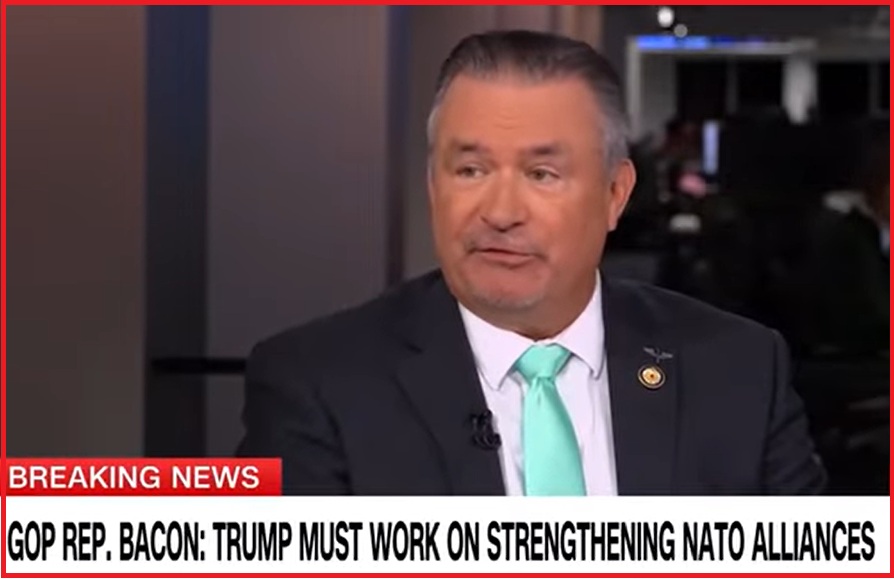
Representative Don Bacon is openly and publicly in opposition to every President Trump policy. Bacon is a ‘professional republican’, a traditional DeSantis republican.
Appearing on CNN the Nebraska Republican says if President Trump were to leave NATO, “there would be a civil war in the republican caucus.” WATCH (prompted):
Posted originally on CTH on March 18, 2026 | Sundance
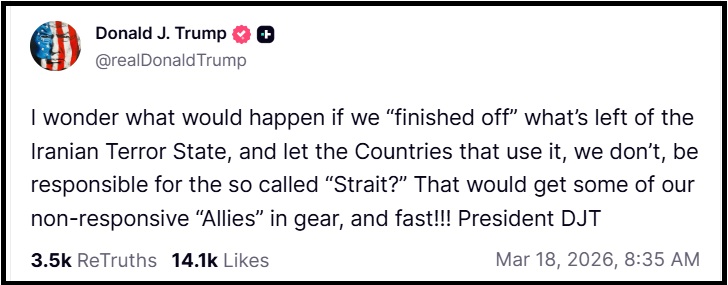
Sometimes things are just too funny. Less than 24 hours after President Trump said Europe’s refusal to escort their own oil shipments through the Strait of Hormuz might lead him to reconsider staying in NATO, suddenly ships are en route.
Posted originally on CTH on March 17, 2026 | Sundance
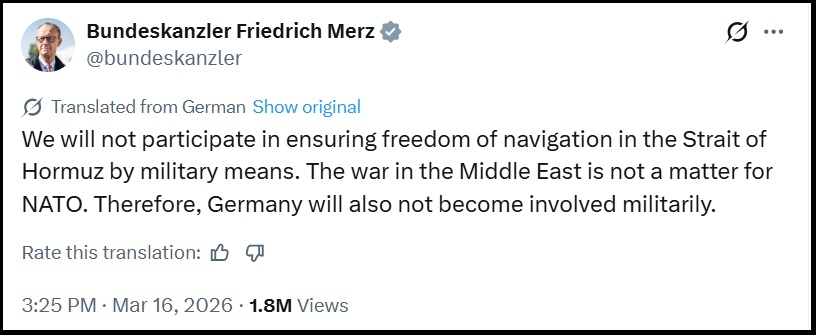
The EU has balked at the request of President Trump to support military escorts for EU oil shipments through the Strait of Hormuz destined for European Ports. However, it is the position of German Chancellor Fredrich Merz which really highlights the arrogance of the issue.
Germany has deactivated its nuclear reactors and decided not to purchase Russian oil/gas. As a consequence, the German industrial economy is contracting; the German auto industry is collapsing; German manufacturing plants are closing – and mass layoffs have been announced.
Into this self-created dynamic, Germany has become dependent on (1) Oil and Gas from the middle east, and (2) LNG from the USA. Germany is a completely dependent nation on the issue of energy production. Yet, this is Germanys position:
Setting aside for a moment that “the middle east is not a matter for NATO,” while reminding ourselves Ukraine is also not a NATO member state – yet Germany is supporting the pro-war ‘coalition of the willing,’ President Trump previously pointed out that NATO would never come to the aid of the USA when the Greenland Arctic Security debate was going on.
The EU in general, and Germany specifically, is essentially proving President Trump’s point. However, as a result of intentional migration, Germany has over five million Muslim residents now residing inside the country. We should consider that this overlay is also part of their internal political consideration.
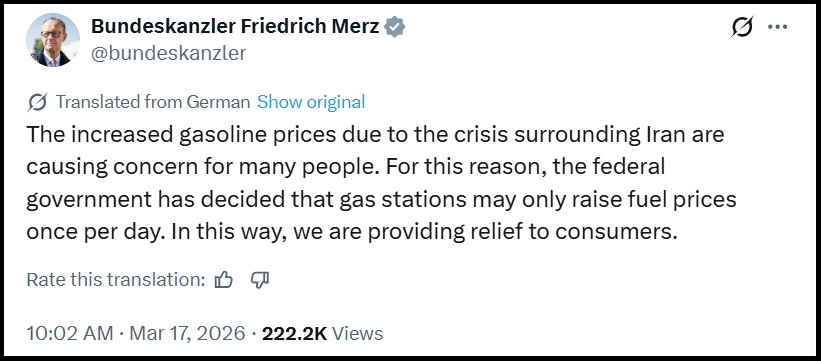
What Chancellor Merz said next is almost too European to be real, but it is:
The German government destroyed affordable energy for Germans. The German government refuses to escort their own equity stakes to mitigate energy costs for Germans. Now the German government will limit the price increases to once per day to provide relief to Germans.
Seriously folks, you cannot make this stuff up.
The tectonic plates are shifting, and we are bearing witness to old geopolitical structures collapsing as the ground beneath them moves.
When history is written it will reflect that President Trump didn’t destroy NATO – he simply removed the mask.
PRESIDENT TRUMP – “The United States has been informed by most of our NATO “Allies” that they don’t want to get involved with our Military Operation against the Terrorist Regime of Iran, in the Middle East, this, despite the fact that almost every Country strongly agreed with what we are doing, and that Iran cannot, in any way, shape, or form, be allowed to have a Nuclear Weapon.
I am not surprised by their action, however, because I always considered NATO, where we spend Hundreds of Billions of Dollars per year protecting these same Countries, to be a one-way street — We will protect them, but they will do nothing for us, in particular, in a time of need.
Fortunately, we have decimated Iran’s Military — Their Navy is gone, their Air Force is gone, their Anti-Aircraft and Radar is gone and perhaps, most importantly, their Leaders, at virtually every level, are gone, never to threaten us, our Middle Eastern Allies, or the World, again! Because of the fact that we have had such Military Success, we no longer “need,” or desire, the NATO Countries’ assistance — WE NEVER DID! Likewise, Japan, Australia, or South Korea.
In fact, speaking as President of the United States of America, by far the Most Powerful Country Anywhere in the World, WE DO NOT NEED THE HELP OF ANYONE! Thank you for your attention to this matter.”
Posted originally on CTH on March 3, 2026 | Sundance
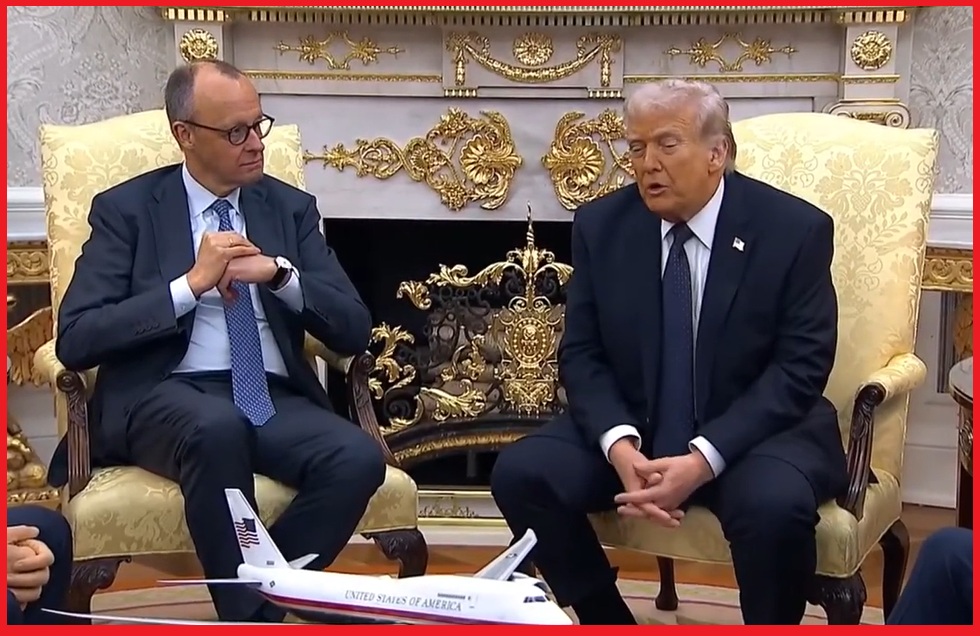
President Trump holds a bilateral meeting with German Chancellor Friedrich Merz in the Oval Office. After brief remarks of mutual appreciation, President Trump and Chancellor Merz responded to questions from the assembled press pool.
Chancellor Merz expressed support for the objective of eliminating the regime threat from Iran. President Trump notes at the beginning how Iran is targeting civilian targets in the region and generating even more support from the Gulf states for the USA.
When asked about the British and Spanish refusal to support U.S. military logistics and deployment, President Trump let the media be aware he is not happy with the position of Spain and the U.K. President Trump also announced [11:00 of video] an economic embargo of trade with Spain as an outcome of their position.
Posted originally on CTH on February 24, 2026 | Sundance
The Ukraine military, technically and non-pretendingly accepted as the EU military, has targeted a key oil pumping station in Russia that feeds into the westerly directed oil supply. However, if you stand back from the western media, what you will notice from this attack is not the target in Russia, but the customers at the end of the pipeline in Europe, mainly Hungary and Slovakia.
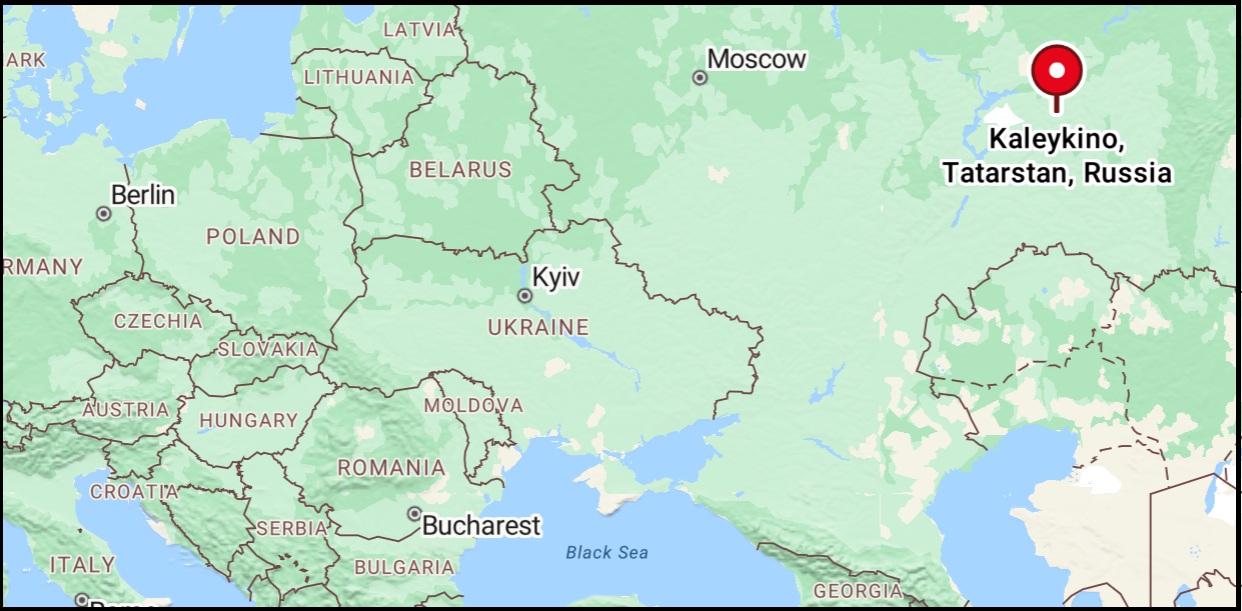
[…] Through local stations, including infrastructure around Kaleykino, oil from Tatarstan and neighboring regions feeds into the main pipeline, which runs through the Samara region and continues westward toward Belarus and further to countries in Eastern and Central Europe. […] There were also earlier reports that Ukrainian forces carried out several attacks on Druzhba pipeline infrastructure inside Russia, which at times disrupted Russian oil supplies to Hungary and Slovakia. {source}
So, what’s going on here?
Well, with the anniversary of the Russian Federation beginning the war into Ukraine, the Europeans who now control the military operations inside Ukraine are targeting European countries who do not align with their bloodlust, specifically Hungary and Slovakia.
Both Hungary and Slovakia are land locked countries without easy access seaports. Because of their geographic locations, they rely on Russian oil and gas for their energy needs. Hungary and Slovakia have not wanted to expand the war against Russia. The EU is demanding Hungary and Slovakia agree to expanded war.
The European ‘coalition of the willing’ is now targeting key Russian infrastructure that supplies energy products to European countries who are not in compliance with the EU dictates of war.
Putin says threats to energy pipelines sabotage peace process with Ukraine.
In his televised speech, the Russian president also accused Ukraine of threatening Russian energy pipelines with the help of Western intelligence agencies. He claimed these attacks were aimed to sabotage the peace process.
Putin also stressed it was vital for Russia to strengthen the defence of energy infrastructure and other strategic sectors. {source}
This is why Secretary of State Marco Rubio travelled to Hungary and Slovakia last week.
Essentially, now we see European leaders attacking their own European “allies” through the use of Ukraine. If you do not support the continued bloodlust, you are an enemy of the EU collective hive mind.
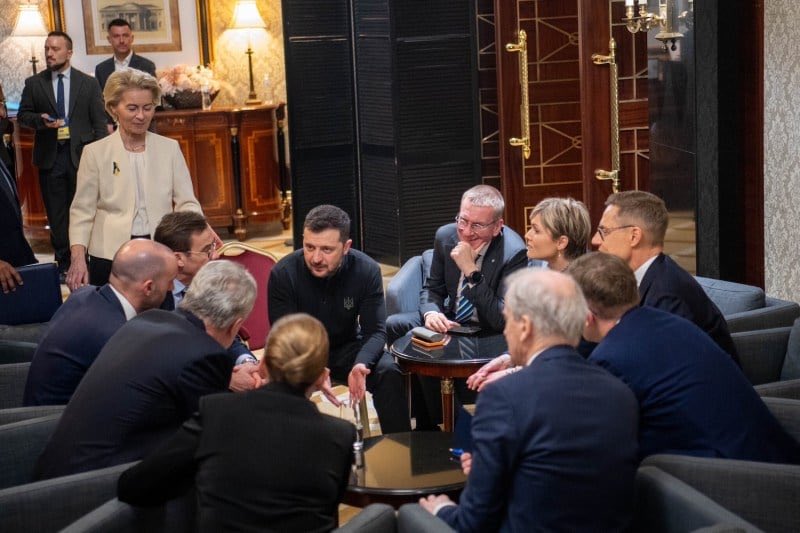
A picture is worth a thousand words….
On this grim anniversary, the Coalition of the Willing stands with Ukraine.
We will step up military support and deliveries, with a focus on air defence systems, drones and long-range ammunition.
We are working on robust security and prosperity guarantees
The Druzhba-1 station at Kaleikino, a rather important part of the Druzhba oil pipeline through which Hungary and Slovakia hope to get their Russian oil, has just been blown to smithereens and most likely won't be supplying Hungary and Slovakia with oil again anytime soon. pic.twitter.com/7M3aezultz
STATEMENT OF THE PRIME MINISTER OF THE SLOVAK REPUBLIC 🇸🇰
I have fulfilled what I declared on Saturday: “If oil supplies to Slovakia are not restored by Monday, I will ask SEPS, the state-owned joint-stock company, to halt emergency electricity supplies to Ukraine. In January… pic.twitter.com/EyjfEgmple
Posted originally on CTH on February 21, 2026 | Sundance
The European Union has a major targeting effort against Hungarian Prime Minister Viktor Orban, an ally of President Trump who does not support giving additional funding to the Ukraine war effort. Hungary is having national elections in April.
Previously, USAID Administrator Samantha Power spent considerable time in Hungary organizing activist groups to conduct operations against the government {2023 – Go Deep}. Last week a German based NGO called Democracy Reporting International, won a ruling from a Berlin judge to force the X platform to turn over data related to support for Viktor Orban and the government of Hungary.
All of this opposition to Prime Minister Orban seems to be coordinated by quasi government agencies on behalf of Brussels and their interventionist intentions. We may remember it was also information from German intelligence, that was behind the nullification of the Romanian first-round election {GO DEEP}.
However, Viktor Orban is fighting back and refusing to approve the funding of the Ukraine war despite the massive pressure campaign from inside the European Union.
💶 If the war ends, funding ends. Ukraine’s plan: make sure the war doesn’t stop.
🇭🇺🇨🇿🇸🇰 Thankfully, common sense still prevails in Hungary, the Czech Republic, and Slovakia. We will not risk our families’ future by sending € billions to fund someone else’s war.
As noted by Hungarian Minister Zoltan Kovacs, “Many have asked how Hungary can block the €90 billion Ukrainian war loan if we are not participating in it. clarified that the loan does not affect Hungary and does not entail any financial commitment for us. As Hungary is not part of the cooperation, in most of the decision-making procedures we do not even vote. However, he pointed out that for the scheme to function, the EU’s seven-year budget guarantee rules must be amended – and this requires the approval of all 27 member states, not only the financing member states. We are now blocking this decision, without which the war loan cannot be disbursed.”
(Via Politico) – A court in Germany on Tuesday ordered Elon Musk’s social media site X to hand over data related to the upcoming election in Hungary to researchers for scrutiny.
The court in Berlin ruled in favor of rights group Democracy Reporting International in its bid to access data to research influence campaigns and disinformation in the election. The group took its case to court after X in November refused its data access requests.
The European Union’s rules for social media platforms, the Digital Services Act, obliges big online platforms like X to grant external researchers access to data to scrutinize how platforms handle risks, including election interference. The European Commission in December fined X €40 million for breaching that obligation, as part of a €120 million levy. (read more)
This effort against PM Orban by the European Union is part of the reason why Secretary of State Marco Rubio was so strong in his words of appreciation and support for Orban during his recent visit to Budapest.
RUBIO:“The President has an extraordinarily close relationship to the prime minister. He does. And it has had tangible benefits in our relationship. I’m not going to speculate about the future. What happens in this country is up to the voters of this country to determine and decide, and we love the people of Hungary. But I’m not – but there’s no reason to sugarcoat it. I’m going to be very blunt with you. The prime minister and the President have a very, very close personal relationship and working relationship, and I think it has been incredibly beneficial to the relationship between our two countries.” {Source – Transcript}
I have created this site to help people have fun in the kitchen. I write about enjoying life both in and out of my kitchen. Life is short! Make the most of it and enjoy!
This is a library of News Events not reported by the Main Stream Media documenting & connecting the dots on How the Obama Marxist Liberal agenda is destroying America





 Centinel2012