UniParty At Work – Paul Ryan SuperPac Campaigned to Elect Democrat Conor Lamb…


It’s well known that Republican Speaker of the House Paul Ryan doesn’t want to be in an actual leadership position; and it’s also well known -enhanced by the campaign, and victory, of Donald Trump- that Republicans did not want to win the majority position and face having to reveal their true UniParty agenda.

The evidence of this UniParty positioning has been staring the electorate in the face, repeatedly and brutally, since candidate Donald Trump actually campaigned on key tenets of the Republican party and found himself being openly opposed by GOP leadership.

Now, a stunning discovery surfaces of Paul Ryan’s Congressional Leadership SuperPAC, congressionalleadershipfund.org, actually campaigning for the Democrat, Conor Lamb, in the recent PA18 congressional race.

As evidenced by Big League Politics the Paul Ryan SuperPAC sent a mailer to Pennsylvania CD-18 voters touting Lamb’s favorable position on gun ownership rights:

(link to source)

Now, there will be some who think this is just a bone-headed move by Paul Ryan because the Democrats already held a +50,000 registration advantage in the district and the SuperPAC didn’t know this mailer would actually end up supporting Lamb.  However, as mentioned, there’s a history here that tells us “a mistake” is likely not the case.

The real motive, based on an honest review of history, is the professional UniParty apparatus knew that Democrat Conor Lamb needed a lift to offset the cross party voting that was reflected in the district voting (by over 20 points) for Donald Trump in 2016.

The DC Republican apparatus is quite comfortable losing their majority position so long as they are not forced to support Trump policies which are entirely against their financial interests.  [How Mitch McConnell Crushed The Tea-Party]

Even before candidate Trump entered the 2016 presidential race, the agenda was visible for anyone who was willing to admit it.  In 2014 the same Republican leadership paid Democrats to vote against the Republican primary winner of the Mississippi Senate race (Cochran -vs- McDaniel) simply because Mitch McConnell didn’t like the idea of having an actual Republican in the seat.

Remember, this is the GOP wing of the UniParty who operate on behalf of the U.S. Chamber of Commerce {DEEP DIVE} and support: comprehensive immigration reform to include amnesty; lax border security to allow cheap labor; Omnibus spending as reflected in their Obama budget-fulfillment votes; the retention of ObamaCare as mandated by the U.S. CoC; the expansion of federal common core education standards; the Wall Street trade agenda to include TPP.  All of these “DC-Republican” positions are opposed by the current Republican President and the majority of Republican voters.

Enhancing and emphasizing my argument that this mailer as a deliberate effort to elect a Democrat, I would remind everyone of a few brutally obvious points: ♦the Republican controlled senate voted unanimously to block any Trump recess appointments (summer 2017); ♦and also the reality that both the House and Senate had no legislative constructs prepared for a Trump victory in January/February 2017; ♦and top off the cake of duplicity with the fact it was Republican controlled House and Senate committees who willingly opened ridiculous investigations against their own elected president claiming a ‘Vast Planetary Russian Collusion Conspiracy’.

In short, both Republicans and Democrats want the threat of Donald Trump removed.

There is no desire on the part of Paul Ryan/Kevin McCarthy or Mitch McConnell/John Cornyn to actually win seats in 2018.  These GOP “leaders” would just as soon lose their majority position so they can go back to the comfortable indulgences of remaining in leadership in the minority status.

In the minority the leadership of the GOP are no longer threatened by President Trump and can hide behind the smokescreen of loyal opposition.

Substantively nothing changes, and the GOP leaders are just as well compensated in the minority by the lobbyist industry within DC.

The only threat to the financial interests of the GOP is President Donald Trump remaining in office and having to actually face carrying out a conservative Trump agenda in 2019 and 2020.  That Trump agenda is entirely against their “establishment republican” interests.

The Paul Ryan mailer to elect a Democrat is just another example of how corrupt the entire UniParty political apparatus is within Washington DC.

That truism is entirely why this MAGA graphic, from 2015, remains accurate:

.

Koch, Ryan, Koch, McConnell, Murdoch

{{snicker}} President Trump Hires Larry Kudlow To Head White House National Economic Council…


An accurate headline could also be: President Trump puts a beautiful potted plant into the unused meeting room of the National Economic Council, and Wall Street cheers.

According to media and White House confirmation President Trump has selected Larry Kudlow to chair the National Economic Council:

[…] “Larry Kudlow was offered, and accepted, the position of assistant to the President for Economic Policy and Director of the National Economic Council,” Sanders said. “We will work to have an orderly transition and will keep everyone posted on the timing of him officially assuming the role.”  (link)

Kudlow is essentially adored by Wall Street (writ large), and as such all the nervous nellies will be back-slapping and high-fiving. As the stock market crowd cheers, what the insufferable dolts miss, thankfully miss and don’t appreciate, is the strategy of a master economic predator, Donald Trump. This Trumpian move is brilliant.

First, President Trump is immovable on his trade and economic agenda. Period; end of story. Ask Gary Cohn or any other member of the disassembled manufacturing council advisory board who quit last year because POTUS Trump just wouldn’t heed their duplicitous and high-minded advice. Do you remember candidate Trump mentioning the endless talking to nowhere that he has not time for? Yeah, that.

President Trump has a 30-year-developed plan and strategy for the U.S. to recapture economic power. Commerce Secretary Wilbur Ross, Treasury Secretary Steven Mnuchin, U.S. Trade Representative Robert Lighthizer, and key trade strategist Peter Navarro are carrying out that plan.

Cohn or Kudlow thinking they would somehow disrupt three decades of trade planning by POTUS Trump is too funny to give typeset space.

Secondly, Larry Kudlow has a well known history of drug addition and drug abuse. He will likely never pass the background security clearances. Even Maggie Haberman at the New York Times recognizes this issue.

So what gives? Why would Trump select him?

Again, don’t think about this appointment as an actual intent to ingest a trade policy perspective. That’s nonsense. Oh, he’ll listen; Trump’s a good listener.  But what POTUS is doing is giving the Wall Street crowd the appearance of influence; key word “appearance”. It’s a stock market appointment, nothing more. Nothing will change the intent of Trump to deliver on his already-in-the-works economic plan.

POTUS would cut off his own hand before he would change direction on his economic strategy.  Remember: “America First”.   Titan-minded Trump is the most committed economic influence agent in the history of American politics.

The National Economic Council (NEC) is an entity demanded by the traditions of the Office of the President. They assemble, meet, discuss, hold conferences, invite guests etc. However, for POTUS Trump it’s an exercise in formality run by professionals who benefit from the indulgences of membership.

The NEC has no more influence on Trump’s economic plan than any chosen Country Club has influence over his skills on the golf course.

But it looks good.

And that’s it.

Enjoy the stemware and cocktail party invites Larry.

Moving on…

Senate Votes To End Debate on Dodd Frank Reform Bill…


The Senate voted 67-31 to end debate on a reform bill to modify the Dodd Frank banking bill.  While overall the approach is needed and will likely find White House support, the Senate Bill -as constructed- doesn’t do enough to modify the control held by massive multinational financial institutions, who hold lobbying power over congress.  Unfortunately, the corruptocrat leadership in the Senate will not allow the house to modify the bill as needed.

The current reform bill sets the tiered definition for lowered regulation at $250 billion in assets and there are some domestic banking beneficiaries.  However, it doesn’t break up the investment division from influence over the commercial banking.  The argument against breaking up the system is that if divisional separation is required – the banks best interests would naturally put the investment division ahead of commercial lending and the liquid capital within the overall economy would shrink.

The Trump/Mnuchin approach toward a secondary deregulated but financially sound banking system focused on commercial lending and was constructed around Community Banks and Credit Unions with far less regulatory and compliance hurdles.

WASHINGTON – All Republicans and more than a dozen Democrats voted to move the bill toward a vote on final passage, which is scheduled for Wednesday evening.

The bill, long expected to pass the Senate, faces an uncertain future in the House, where conservatives are demanding stronger curbs to Dodd-Frank before pledging their support.

[…]  Banks with less than $250 billion in global assets would no longer be subject to yearly Fed stress tests or higher capital requirements meant to ensure risky firms could weather a lending crisis. Those banks would also be exempt from submitting for Fed approval a “living will” that outlines how the company could be liquidated upon failure without causing a widespread meltdown.

The threshold for tighter Fed regulation is currently set at $50 billion, and the increase would free several major regional banks, including SunTrust, BB&T, Citizens, Fifth Third, M&T and BMO Financial Corp., from those standards. Those banks all have at least $100 billion in assets, and among the bill’s biggest beneficiaries.

The bill also exempts banks that extend 500 or fewer mortgages a year from reporting some home loan data to federal regulators and broadens the definition of qualified mortgages. (read more)

President Trump meets with leadership of small banks and credit unions.

Back in July 2010 when Dodd-Frank banking regulation was passed into law, there were approximately 12 to 17 banks who fell under the definition of “too big to fail”.

Meaning 12 to 17 financial institutions could individually negatively impact the economy, and were going to force another TARP-type bailout if they failed in the future.  Dodd-Frank regulations were supposed to ensure financial security, and the elimination of risk via taxpayer bailouts, by placing mandatory minimums on how much secure capital was required to be held in order to operate “a bank”.

One large downside to Dodd-Frank was that in order to hold the required capital, all banks decreased lending to shore-up their liquid holdings and meet the regulatory minimums.

Without the ability to borrow funds, small businesses have a hard time raising money to create business.  Growth in the larger economy is hampered by the absence of capital.

Another downstream effect of banks needing to increase their liquid holdings was exponentially worse.  Less liquid large banks needed to purchase and absorb the financial assets of more liquid large banks in order to meet the regulatory requirements.

The four to six big banks (JP Morgan-Chase, Bank of America, Citigroup, Wells Fargo, US BanCorp and Mellon) now control $9+ trillion (that’s “TRILLION).  Their size is so enormous this small group now controls most of the U.S. financial market.

Because they control so much of the financial market, instituting a Glass-Steagal firewall between commercial and investment divisions (in addition to the Dodd-Frank liquid holding requirements), would mean the capability of small and mid-size businesses to get the loans needed to expand or even keep their operations running would stop.

2010’s “Too few, too big to fail” became 2016’s “EVEN FEWER, EVEN BIGGER to fail”.

That’s the underlying problem for a Glass-Steagall type of regulation now.  The Democrats created Dodd-Frank which: #1 generated constraints on the economy (less lending), #2 made fewer banking options available (banks merged), #3 made top banks even bigger.

This problem is why President Trump and Secretary Mnuchin were working on a proposal to create a parallel banking system of community and credit union banks that are entirely external to Dodd Frank regulations and could act as the primary commercial banks for small to mid-sized businesses.

The goal of “Glass Steagal”, ie. Commercial division -vs- Investment division, would be created by generating an entirely new system of banks under different regulation.  The currently remaining ten U.S. “big banks” operate as “investment division banks” per se’, and the lesser regulated community banks/credit unions operate as would be the “Commercial Side”.

Instead of fire-walling an individual bank internally within its organization, the Trump/Mnuchin plan was presented to fire-wall the banking ‘system’ within the U.S. internally.  Hope that makes sense.

The Senate Dodd Frank reform bill does little to change this structural issue.

Justin from Canada Talks About His Confidence Defeating President Trump Over NAFTA…


Justin from Canada discusses his confidence at defeating U.S. President Donald Trump over concessions in NAFTA.  Essentially Sparkle Socks argument comes down to his view that women’s rights, climate change and globally progressive policies are more than enough to swat away the territorial annoyances of President Trump.

President Trump Visits Missouri for Business Roundtable – 4:00pm Livestream…


President Donald Trump is traveling to Missouri today to promote recent tax cuts and campaign for Republican U.S. Senate candidate Josh Hawley.  The president is scheduled to visit the Boeing plant in St. Louis where he will hold a round table with business leaders and workers, then plans to attend a fundraiser for the senate candidate.

The roundtable discussion with Boeing business leaders will be livestreamed at 4:00pm

WH Livestream LinkABC News Livestream Link

President Trump Visits San Diego To Review Border Wall Prototypes (Video)…


President Donald Trump traveled to San Diego today for a tour of eight border wall prototypes today along with a speech to members of the military at Marine Corps Air Station Miramar.

This is President Trumps first trip to California as president. The peoples’ president spent about an hour reviewing the 30-foot wall segments near the U.S.-Mexico border. Trump’s promise of building a border wall was the primary visible promise made during the 2016 presidential campaign trail. As president, he has been steadfast in his push for the completed project.

“If you don’t have a wall system, we’re not going to have a country,” Trump said at the site of the prototypes. “There’s a lot of problems in Mexico. They have a lot of problems over there. And they have the cartels. And we’re fighting the cartels, and we’re fighting them hard. … But the fact is, if you don’t have a wall system, it would be bedlam, I imagine.”

Rex Tillerson Removed as Secretary of State…


Secretary of State Rex Tillerson did an excellent job representing the professional and deliberate diplomatic approach of the U.S. and President Trump administration.  His personal view toward foreign service on behalf of the U.S. was exemplary, and deserves high praise.

Having said that, as President Trump stated earlier today, there was also more than a tinge of disunity between the advocated views of Tillerson and the views of the Commander in Chief toward economic national security.   At times the fractures between policy perspectives were visible.  Over time those differences became more obvious.

As Secretary of the DoS Rex Tillerson supported the Paris Climate Treaty; the President did not; Secretary Tillerson supported the Obama administration’s Iran deal; the President did not; Tillerson was more apologetic toward lax immigration policy; the President is not; and there were other visible departures visible surrounding the use of economic leverage to achieve national security advancements, specifically on the issue of China and North Korea policy.

The primary perspective, drawing the greatest contrast, surrounded President Trump’s view and expressed policy of emphasizing strength; particularly economic strength – to gain national security objectives.

After many years of projected weakness by the former administration one of the key tenets of the Trump presidency has been reestablishing national security by focusing on unapologetic U.S. economic power regardless of global opinion therein.

Unapologetic economic power is where the views of President Trump and Secretary Tillerson parted.  T-Rex projected more of a humble and altruistic approach; almost seeming embarrassed at times to participate in discussions of economic conflict and confrontation.  Indeed it often seemed awkward for Mr. Tillerson as he carries a less confrontational and more servant-minded constitution.

While he is not a pure ‘globalist’ per se’, Secretary Tillerson was less deliberate toward achieving territorial economic goals as a method to achieve geopolitical national security.  On matters surrounding these issues, T-Rex was more Wall Street than Main Street; more traditionally republican than change-agent populist.

Despite the media’s inability to see the severity of perspective, President Trump is not going to be swayed on matters of national economics.  POTUS Trump will listen to alternate opinions based on current events, but his forward advancement toward U.S. economic security will not be slowed by high-minded analysis leading to paralysis.   Within his outlook, always in the back of his mind, the clock is ticking… there’s an inherent sense of urgency.

Forcing economic change to enhance the territorial economic security of middle-America requires the ability of the change-agent to ignore the feelings and sensibilities of outside nations who will be confronted in the process.  Diplomacy must be set aside when entering the predatory world of massive trillion dollar economic deals.  There is no room for friends and comfort here, after thirty years of inept acquiescence, from President Trump’s perspective, winning is the only acceptable outcome.

Stopping the exfiltration of American wealth demands severity: “we either have a country or we don’t.”  Within that dynamic the value of diplomacy is necessarily lessened in favor of more deliberate and unapologetic policy advancement.  Inside that dynamic President Trump and Secretary Tillerson did not agree – and that is a major point of disunity.

As Commerce Secretary Wilbur Ross has stated several times: “economic security is national security.”   President Trump fundamentally believes that our national security requires independent U.S. economic security.  Everything is downstream from the economics of the issue, any issue, regardless of the issue – foreign or domestic.

Carrying a sense of urgency toward these national security issues, delicate sensibilities -and the opinion of the media who protect them- are necessarily dispatched like a feather in a hurricane.  Again, “we have no choice”, as often heard from President Trump.

Going into year #2 of the administration the current emphasis is a structural reset in the U.S. approach toward global trade.  “Killers” are of value now; thirty years of talking and losing is over.  As such inside this seismic trade-policy-shift, a parallel geopolitical strategy is being played out from the Middle-East through allies in Europe and into Asia around the rarely moved cornerstones of economics and trade.

National liberty, that is actual liberty – not the perception of liberty, is directly tied to economic victory.  During this reset there are only two groups: predators and prey.

Confronting China (Xi Jinping) economically was/is what brought North Korea (Kim Jong-Un) to the table of discussion to give up their nuclear ambitions; it was not diplomacy that created the breakthrough conditions for a national security win.  What brought China/DPRK to this position was the very real possibility of looming economic defeat.  President Trump’s approach won, Secretary Tillerson was surprised.

President Trump has aligned his economic opponents into his preferred geography. Everyone within sight is either an adversary or an ally.  However, allies are now reduced to being benefactors who will smartly get out of the way while the apex predators destroy their opposition.  Year two is about resolving to achieve economic victory regardless of international collateral damage. There is no longer any room for negotiating terms.  Diplomats retreat to the hilltops.  The era of economic Titans has come again.

Final point – When approaching specific goals and objectives President Trump works through a strategy based on phases.  President Trump doesn’t retain people past their expended usefulness.  Rex Tillerson did an outstanding job as Secretary of State introducing the Trump administration to nations’ of the world.

The diplomatic introductions and niceties are now complete; it’s time to get down to business.

Former Secretary of State Rex Tillerson Press Conference – 2:00pm Livestream…


Former Secretary of State Rex Tillerson is scheduled to hold a press conference moments from now to discuss current events including his exit from the Dept. of State and his replacement by CIA Director Mike Pompeo.

UPDATE: Video Added

PBS News LivestreamNBC News LivestreamCBS News Livestream

Will US Companies Repatriating Cash Home Create Banking Crisis Outside USA?


QUESTION: Mr. Armstrong; Do you believe that if American companies do repatriate dollars to get the low tax rate in the USA, will this impact foreign banks as capital withdraws? I figured you are the best qualified to answer that question nobody seems to be discussing.

Thank you for sharing your expertise.

SY

ANSWER: That is a very interesting question and it is indeed unique. I cannot think of anyone who has asked that one yet.  Let us assume that U.S. corporations will repatriate at least 25% of their estimated US$2.6 trillion of offshore funds to take advantage of a one-off 14% tax holiday. It will not matter if they are selling euros, yen, pounds, or yuan. Switching their fund from the offshore dollar funding markets to domestic dollars will have a similar impact to the same trend that took place between 1980 and 1985 that drove the dollar to all-time record highs.

American corporations moving capital sends a powerful impulse through global finance system. Despite the rise of China and the creation of the euro, the world has never been so “dollarized” as it is today. The euro is a complete failure for there is no single market with a centralize debt to compete with the dollar as an alternative. China is rising, but it is not ready for prime time. There is no alternative to the dollar. That is the real crisis in the world economy.

U.S. lending rates are critical to the world economy. The Bank for International Settlements (BIS) says offshore dollar funding has risen fivefold to US$10.7 trillion since the early 2000s, with a further US$14 trillion of global dollar debt hidden in derivatives. BIS research also confirms that the rise and fall of the dollar is the major cycle of dollar liquidity which is driving the world’s investment appetite and global asset prices. This liquidity spigot is clearly being turned off. The Fed is not only raising rates, it is also reversing bond purchases exactly OPPOSITE of the ECB which openly admits it will repurchase government debt as it expires. The Fed is shrinking its balance sheet while the ECB is trapped and cannot dare take the same steps.

The BIS is warning that China, Canada, and Hong Kong all have the risk of banking failures that are greater than that of Europe. Apple Inc. said it will bring hundreds of billions of overseas dollars back to the U.S., pay about $38 billion in taxes on the money and spend tens of billions on domestic jobs, manufacturing and data centers in the coming years. That is more than a quarter-trillion. The answer is YES – ABSOLUTELY. US companies will bring back a substantial amount of that money and this will reduce deposits overseas and that will increase the risks of bank failures outside the USA, but probably more so in Asia than Europe. The ECB will most likely prop-up banks no matter what it says.

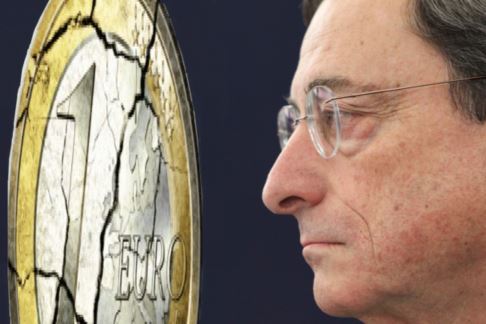
Mario Draghi will NOT stop Quantitative Easing and he WILL NOT raise rates until he can get out the door. His term at the ECB is for 8 years and sources say he cannot wait to leave. Draghi will extend his signature landmark bond-buying stimulus programme that is just life-support for the member governments at least September 2018 officially but indefinitely until he leaves. He does not want to be blamed for the economic disaster he has created for the world and as such he is trapped in the ECB until October 2019. The question will be can he really keep up this insane losing position that much longer or will the entire house of cards come crashing down.

So look first to bank failure on the rise in Asia, and they will spread to Europe. Nonetheless, there is deep concern about Italian banks and that may be the spark which ignites the next catastrophe.

Lou Dobbs Trade and Tariff Discussion With Commerce Secretary Wilbur Ross…


U.S. Department of Commerce Secretary Wilbur Ross discusses the recently imposed steel and aluminum tariffs and America’s future trade relationships with all nations including the very protectionist European Union.

“Economic security is national security” ~ Secretary Wilbur Ross

Reminder: Regarding ‘European Union (EU) retaliation’, forget it; they won’t.

The protectionist EU hypocrites simply cannot afford to go toe-to-toe with the U.S. on trade. The UK is in the process of formalizing their Brexit terms; the EU (essentially ‘Germany’) needs to find a way to make up for the lost revenue (billions in taxes) from the UK economy. Currently the UK pays Brussels approximately a billion per month on a $2.5 trillion economy; that will stop.

Brexit reduces the overall EU GDP by $2.5 trillion. German Chancellor Angela Merkel cannot -and will not- challenge President Trump. In addition to being politically weak, Merkel has attached her economy to expansive environmental regulations (Paris treaty), though she is now attempting to pale down those regulations. Chancellor Merkel cannot afford to run the risk of losing any access to the U.S. market.