The National Security “Nuclear” Documents Outlined by Jack Smith Are Pure Lawfare Manipulation – “Defense Centered” Records Not What Media Claims


Posted originally on the CTH on June 12, 2023 | Sundance 

Devin Nunes was previously the Chairman of the House Intelligence Committee.  In that very specific role, Nunes was a member of the Gang of Eight who are briefed on all intelligence issues at the same level as the President, the chief executive.  The House Permanent Select Committee on Intelligence Chairman, is the #2 ranking intelligence oversight member within the national security oversight apparatus, exceeded in rank amid the Gang of Eight group only by the House Speaker.

As the HPSCI chairman, Nunes has a very granular understanding of intelligence language and the way the intelligence apparatus uses words within national security documents.  When Nunes talks about national security documents, he is a subject matter expert on the administration side of the process.  Why is that important right now? Because Nunes knows how to contrast the wording in the Jack Smith indictment against wording used to describe national security documents.

Pay very close attention to this interview, prompted to 05:06, for the Nunes part.  You have to get past the paid to obfuscate Mrs. Hannity interruptus, as she tries to shut down Nunes from bringing sunlight on the indictment.  However, what Nunes introduces in his comments is the origin of what I am going to explain after the interview.

This is a game-changing context for the Jack Smith indictment.  Again, pay close attention. WATCH:

.

What almost everyone in professional narrative engineering/punditry is missing, many of them because they are paid to pretend not to know, is that the national archivists gave sworn testimony to Congress about the Trump documents on May 17, 2023 {citation}.  What I am going to outline below will explain the fraud that Jack Smith and his Lawfare crew are purposefully generating.

Some baselines are needed for you to understand what is happening.

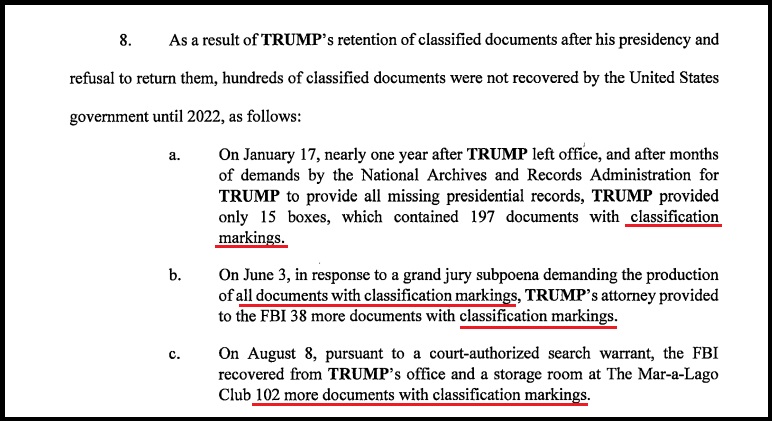
First, the National Archives and the DOJ did not demand a return of Classified Documents.  They requested a return of documents containing classification markings.  These are two entirely different things.

Most documents containing classification markings are not classified documents; yet, most classified documents contain classification markings.  Additionally, one of the documents used by Jack Smith in his indictment [COUNT #11] contained no markings at all.

Second, it is critically important to remember that throughout the legal issues in the aftermath of the Mar-a-Lago raid, the DOJ has viciously denied any responsibility to describe the classified documents they claim to have retrieved.  In fact, the DOJ has fought against any entity, including the court appointed “special master”, from being able to look at the documents the DOJ *previously* claimed were either classified, or, vital to national security.

Because there is a very specific type of Lawfare game playing with words taking place, it is critical to see the value in what Devin Nunes understands about the way the language is being deployed.   Now we return to the testimony of the national archivist office, and here is where it gets really interesting.

During testimony to the House Permanent Select Committee on Intelligence, the National Archives and Records Administration (NARA) officials were asked specifically about Trump documents and how they could *KNOW* fulsome return of documents had not taken place.  The response from the NARA officials is enlightening:
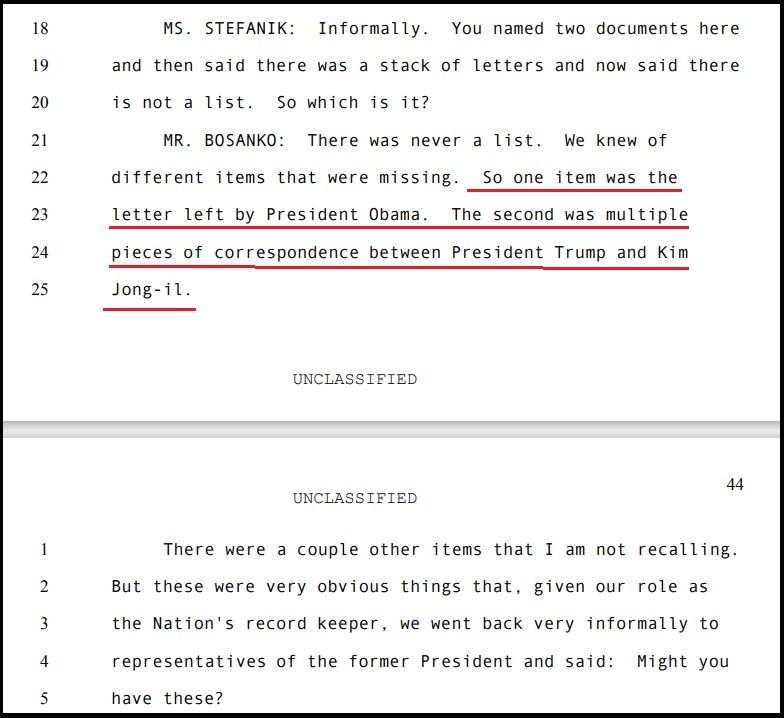
[Source pdf, testimony transcript – page 43 and 44]

Notice that NARA had knowledge these documents were in the possession of Trump and were pertinent to their archive retrieval.  It was interesting at the time that NARA would know the content of the President Obama letter, and further interesting they would know there was more than one piece of correspondence between President Trump and Chairman Kim [Jong-un].  CNN even wrote about it HERE.

[Irrelevant note: Mr Bonsanko got the name wrong, Jong-il is dead]

Reminder, keep in mind the DOJ ferocity in not wanting anyone to know what documents they retrieved and/or defined.
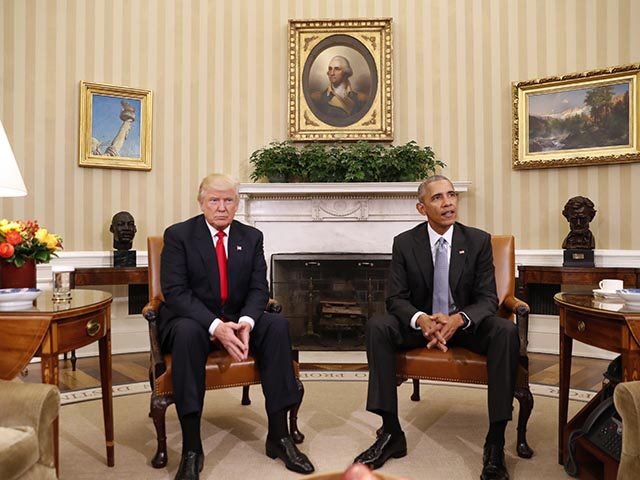
We know, from President Trump describing the letter left to him by the former president, that Obama told Trump in the letter that the number one foreign policy and intelligence threat perceived by Obama (at the time of his exit) was a nuclear armed North Korea.  This is where you overlay the Jack Smith writing in the indictment of national defense secrets and nuclear security issues.

We know, from President Trump speaking publicly about his communication and diplomacy with Chairman Kim Jong-un, that the two leaders exchanged letters relating to aligned national security interests that centered around DPRK nuclear ambitions and status.

Trump and Kim formed a geopolitical truce, a friendship of sorts, based on respect and trust around the nuclear issue.  Chairman Kim decreased hostilities; President Trump no longer used inflammatory language about “Little Rocket Man.”  A diplomatic détente was created.

NARA was looking for the letter written by Obama that described DPRK nukes, and NARA was looking for letters between Trump and Kim that touched on DPRK nukes.

Now, does the wording in the Jack Smith indictment that pertains to “nuclear concerns” and “national security matters” make more sense?

Would all of this hullaballoo really stem from President Trump not giving up personal letters written to him by President Obama and Chairman Kim?  YES!  Would President Trump even characterize those as government property?  NO!

Can you see the way it unfolds?   Of course, when you apply the Lawfare lingo, an approach entirely based on maintaining the targeting of Trump, then suddenly the seemingly innocuous becomes horribly nefarious.

In order to pull this off two things would be needed: (1) the DOJ would need to write about it in a certain way in the indictment√; and (2) simultaneously, the DOJ would need to stop anyone from viewing the actual documents, as they misleadingly described them√.  Hey, wait… that’s exactly what they did.

But wait, it gets better….

First, why would President Obama write about the DPRK nuclear threat in his letter welcoming President-elect Trump to the White House?  It always struck me as odd, even years ago, when Trump would talk about this issue.  It never made sense why President Obama would memorialize that type of an issue in writing, until today.

Normally that type of policy and leadership issue would be part of a conversation.  “Mr. Trump, as I depart office the number one issue you might first want to deal with on a national security basis is the nuclear ambitions of North Korea, here’s my opinion”… and so it would go.  Why write it down?   If the intention was to create a record that would always mean the letter was going to remain hidden from public review, then writing about DPRK nukes would be a solid tool for that motive.

Lastly, who would know about the content of the letter that President Obama wrote to President-elect Trump, specifically as it centers around a national security issue?  Who would know what Obama wrote to Trump?
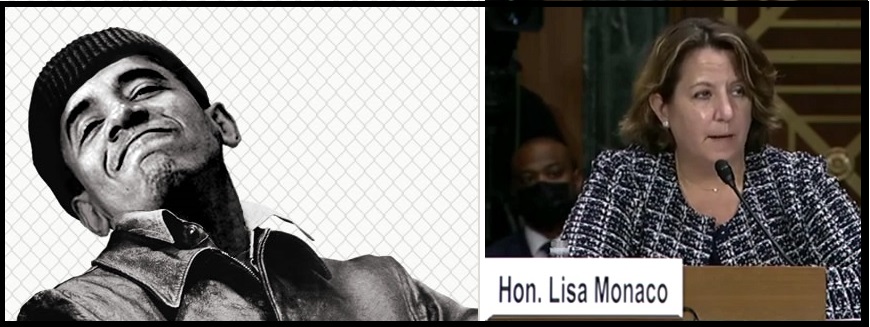
Lisa Monaco would certainly know the content of the letter written by Barack Obama to Donald Trump; she, Susan Rice and Kathryn Ruemmler might have even assisted in the writing of it.  Remember, it was Susan Rice who wrote the January 20th “by the book” memo memorializing the FBI targeting of Trump, and Kathryn Ruemmler represented Susan Rice as her lawyer when investigators made inquiry.

Lisa Monaco was previously President OBama’s senior advisor for national security.

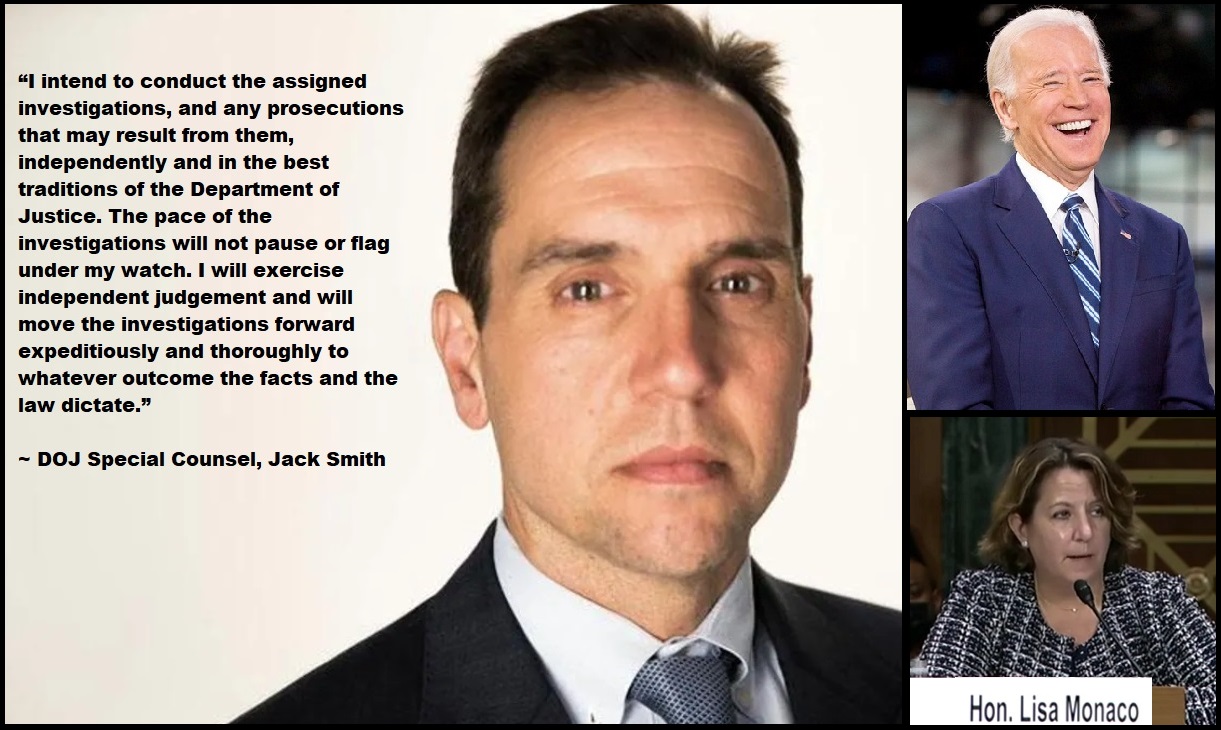
Currently Deputy Attorney General, Lisa Monaco is the head of the DOJ operation that was targeting the Trump Mar-a-Lago documents and framing the legal issues for the DOJ to use in court.  Special Counsel Jack Smith also reports to Lisa Monaco.

Things making sense now?
Sunday Talks – The Encapsulation


Posted originally on the CTH on June 11, 2023 | Sundance 

I have been reviewing interviews, looking at discussion, and some of them I will share in the next few articles.  However, for a solid representation of the state of our current dynamic, as it relates to the targeting of President Donald J. Trump, this interview below is a solid outlook from the detractors.

CBS News legal analyst Rikki Klieman and CBS News investigative correspondent Catherine Herridge join “Face the Nation” to discuss what’s in the indictment — and what it means for Trump. [Transcript Here]

Before getting to the video, it’s valuable to see Rikki Klieman representing the interpretation of the media outlook toward the indictment handed down by Special Counsel Jack Smith.  It is also valuable to see CBS’s Catherine Herridge represent the defenders of the institutions, from the outside vulgarian personage of Trump.

Klieman buys the Lawfare narrative completely, including the framework of classified documents as opposed to documents containing classified markings.  She sells the Lawfare outline as gospel and makes all assertions from that position.  Herridge looks at how the bureaucracy responds to Trump, including how the institutions hold power of determination higher than a President of the United States.

As Bill Barr said emphatically earlier today, “The documents do not belong to Trump,” continuing with “The documents belong to the government who created them, not the man for whom they were created.”  So sayeth the defender of the omnipotent Dept of Justice.  This is where a sharp intellectual knife to cut through the chaff and countermeasures is needed, and notice no one brings up the visible and practical deconstruction point.

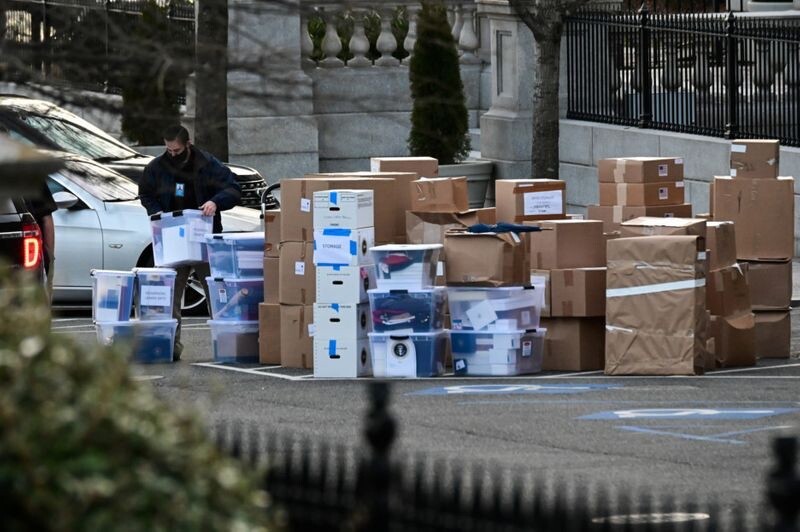
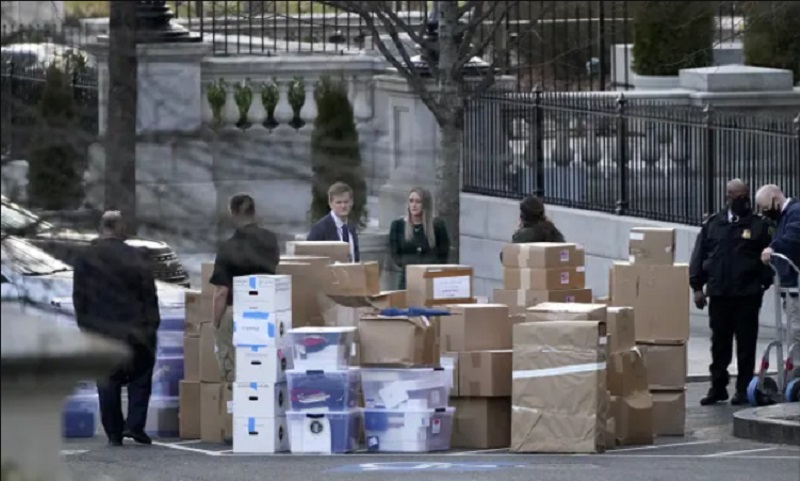
If the documents did not belong to President Donald J. Trump, then why did the government dump them in the parking lot of the White House and tell him to deal with them?

If the documents belonged to the government, and not to the man for whom they were created, then why did that same government give them to him and force him to take them to a location of his choosing?   Can you see the obtuse argument fall apart when simple pragmatic questions are raised?

The institutions are presented, by the sellers of the Lawfare narrative, as higher than the authority of the President of the United States.  This is how ridiculous our government has become.

Institutions are not omnipotent entities; they are buildings and networks full of people who facilitate processes that are an outcome of policy.  Those buildings and offices are not the government. The elected politicians who we send to Washington DC are not subservient to the processes, norms and morays they determine within the bureaucracy that the politicians are in charge of.

The argument(s) against Donald Trump are akin to a business saying that all work product created during the tenure of employment belongs to the enterprise of the business and not to the employee.  If you want to hold that line of thought, fine.  However, you then need to reconcile that the business enterprise intentionally gave all the work product to the employee, dumped it in their lap, told them to take it and leave, and then comes back at a later date and says – we now need to review the stuff we forced you to take because some of it might not actually belong to you.

Does this happen anywhere else?  Of course not.

The fact that the National Archives and Record Administration refused to take custody of the documents upon the end of the White House tenure, combined with the fact the NARA dumped those documents in the parking lot of the White House for Trump to deal with, is a direct statement the bureaucracy was telling President Trump these are your records.  His records – not their records on loan to him.

The Presidential Records Act is the overriding legislative guidance for the flow of work product post term in office.  These are essentially document arguments.  The fact that NARA together with the Biden administration would weaponize the disposition of documents, they intentionally forced Trump to take ownership of, speaks to an intent within the bureaucracy that is transparently obvious.

Bill Barr’s entire mindset is based on a belief the institutions are of a higher power than the individuals we elect to control them.  In essence, the President of the United States is subservient to the bureaucracy.  This is nonsense.  This is also why former AG Bill Barr was more concerned about preserving the institutions than stopping the weaponizing activity that flows from them.

President Trump could store his “presidential records” anywhere he wants to; they are his records.

Now, watch Klieman obscure the difference between classified documents and documents containing classified markings.  Despite her pontifications to the contrary, the indictment is not based around any classified documents.  The classification of the documents is technically and factually moot to the ridiculous point the special counsel is making.

.

[Transcript] -JOHN DICKERSON: For more on the legal implications, we’re joined by senior investigative correspondent Catherine Herridge and CBS News legal analyst Rikki Klieman.

Rikki, I want to start with you.

You have been a prosecutor and a defense lawyer. So what stands out to you, now that you have read this indictment?

RIKKI KLIEMAN: I think what stands out, obviously, is the magnitude of detail in this indictment.

It’s not only that you’re dealing with 31 counts under the Espionage Act, which simply means the unlawful, willing retention of classified information, or even unclassified information that would hurt the defense of the United States and aid our enemies. It’s the detail of a speaking indictment.

We have to remember that much of this indictment, John, is to educate not only ultimately a court and jury, but it’s really to educate the public. Much of this indictment, in terms of the detail, may not even come into evidence, in terms of what’s admissible or not in the course of a trial.

What also strikes me, John, is, the overwhelming detail leaves the Trump legal team with real need to have powerful motions to dismiss, because, if this goes to trial, the way it reads, it’s rather overwhelming for anyone to be able to fight it on the facts themselves.

JOHN DICKERSON: And I want to get to that motion-to-dismiss question in a moment.

But, Catherine, you have been doing reporting about the risk assessment about just what was in these documents. Educate us on that.

CATHERINE HERRIDGE: Well, what jumps out to me, John, is when you go to the section the willful retention of national defense information, by my count, there are 21 top secret documents, and the disclosure of top secret information has the expectation of exceptionally grave damage to national security.

But what out — stands out to me is some of the classified codings, like TK, or Talent Keyhole. You don’t see that very often. That’s about intelligence from overhead imagery. For example, if we’re looking at a terrorist target, do we have such good visibility that we can count the hairs on their head? Can we see what they’re eating for breakfast on their terrorist patio?

Those are capabilities that we don’t want our adversaries to know that we have. And then also Special Access Programs, or SAP, these are highly restricted programs because of the sensitivity of the intelligence and the technology, such as stealth technology, for example.

Think of classified information like the Pentagon. Special Access Programs are these handful of rooms where there are just a limited number of keys to control and restrict access to that information.

JOHN DICKERSON: So it’s not just secret; it’s the top of the — top of the top?

CATHERINE HERRIDGE: Some of these are way beyond top secret, like, I said, Talent Keyhole, when you’re talking about Special Access Programs or SCI, sensitive, compartmentalized information.

These really are the crown jewels of the U.S. intelligence community.

JOHN DICKERSON: Rikki, let me ask you about a part of this indictment which seems to come — which comes from one of the former president’s lawyers.

Educate us on the crime-fraud exception, how it’s possible for a prosecutor to have this information. And is that a weakness? Because we know, from our reporting, that this is something that the Trump defense team is going to talk about, is the behavior of the prosecutors.

RIKKI KLIEMAN: We all believe that, when you go to a doctor, that there’s a privilege, that what you say and what your ailments are will remain confidential.

Same thing if you go to a clergyperson. And it’s exactly the same thing. When you go to a lawyer. You believe that, if you are a client, that what you say will never be disclosed to anyone, let alone in the grand jury or court of law. It’s called the attorney-client privilege. It protects all conversations relating to legal advice.

So, how did it get broken? That is, how did a court in Washington, D.C., a judge, and then an appellate court affirm the idea that you could hear, listen, read the notes and the voice memos of a lawyer to testify against his own client?

It’s called the crime-fraud exception. So what the court believed was, the conversations between Evan Corcoran, the lawyer, and Donald Trump were really in furtherance of a crime or a fraud, and he was ordered and forced to testify.

Now, one could say, well, that’s one and done. So now Mr. Corcoran is going to be a witness in this case, should it go to trial. But we have to remember that that took place, that decision, in the District of Columbia. Now we are in Florida. So can it come up to a new judge? Might a new judge decide that it is not admissible at trial? Yes.

Will that hurt the case? Not necessarily. There’s plenty of other evidence.

JOHN DICKERSON: Catherine, I have got two questions for you.

The first is, what happens if you’re just a regular old Joe and you have this kind of information? Legally, what happens to you? What’s happened?

CATHERINE HERRIDGE: Well, as one example, I have contacts who work in the nuclear weapons capability arena.

Let’s say you have a nuclear document, it’s on top of the photocopier, and you walk away, you leave it there. Your clearance is gone. You are out the door. There are immediate consequences.

JOHN DICKERSON: Let me ask you about a number of the president’s defenders.

Well, first of all, we should note, the current president is under investigation by a special counsel.

CATHERINE HERRIDGE: Correct.

JOHN DICKERSON: We don’t know much about that. But Republicans have brought that up in defending the president. They have also brought the case of Hillary Clinton.

You have been looking at that. Give us a sense of the apples and oranges or apples and apples in comparison with what’s on the table here.

CATHERINE HERRIDGE: Well, what strikes me, John, in this indictment is I think the special counsel, Jack Smith, specifically charged willful retention of national defense information in an effort to sort of blunt criticism that these cases may be the same.

If you go back to the summer of 2016, then-FBI Director James Comey said that they found multiple e-mail chains on Hillary Clinton’s private server that she used for government business that contained highly classified information, including these Special Access Programs that we just discussed, but, in his view, it should not be charged because he didn’t feel there was sufficient evidence of intent or willfulness.

Critics would say that even just purchasing the server was an example of intent. And then, finally, you have to look at just the scope of the information and also the timeline. But I think this charging of willful retention really is by design.

JOHN DICKERSON: Right, the facts of the case quite different. But thank you so much for that and for all your other answers.

And, Rikki Klieman, thank you.

And Face the Nation will be back in one minute. Stay with us. (link)

.

[Support CTH HERE]

Sunday Talks, Bill Barr Goes All-in to Support Anti Trump Campaign


Published originally on the CTH on June 11, 2023 | Sundance 

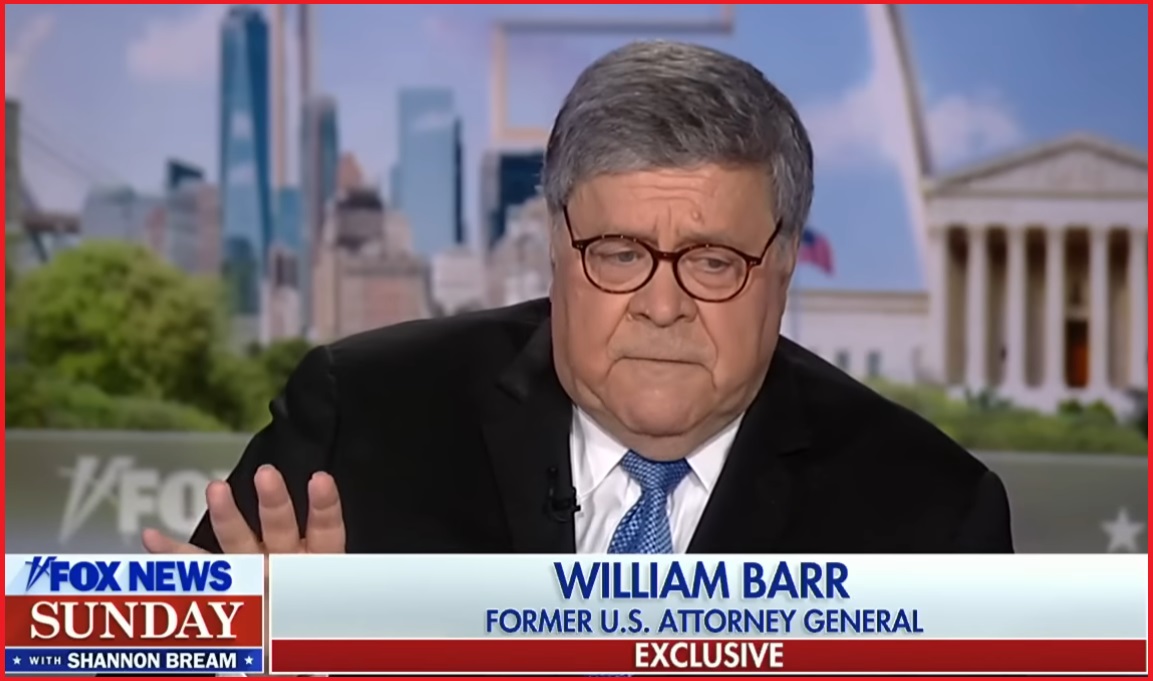
Appearing on Rupert Murdoch’s network Fox News, former Attorney General Bill Barr frame his false construct in the documents case against President Trump.

First, the obvious.  Barr is motivated in his position because this is the constructed inflection point against Donald Trump.  The severity of his position, the pretending not to know things, the defensive position about the power of government institutions, all of it is expressed in sum and total for one primary purpose; this is the moment they have manufactured to take Trump down.  This is the DC Republican moment all preceding moments were designed to support.

Second, on the details.  Barr states with emphasis, the “presidential daily brief (PDB) is not the president’s personal document,” it is a document provided for him by the U.S. intelligence community (IC).  Worth noting here is a little factoid that runs in opposition to Barr:

WASHINGTON – […] “while through most of its history the document has been marked “For the President’s Eyes Only,” the PDB has never gone to the president alone. The most restricted dissemination was in the early 1970s, when the book went only to President Richard Nixon and Henry Kissinger, who was dual-hatted as national security adviser and secretary of state.

In other administrations, the circle of readers has also included the vice president, the secretary of defense and the chairman of the Joint Chiefs of Staff, along with additional White House staffers.  By 2013, Obama’s PDB was making its way to more than 30 recipients, including the president’s top strategic communications aide and speechwriter, and deputy secretaries of national security departments.” [Source

No one is saying the Trump PDB is Trump’s “personal document“, the point is the PDB’s in question -those noted in the indictment- were part of President Trump’s papers, his administration records; able to be reviewed and critiqued by anyone the president would assign, including speechwriters.  Barr us making a non-sequitur.

Third, Barr notes the documents created by government officials are different from personal papers of the President.  Perhaps technically true, an argument and debate that takes place after all administrations.  However, if government owned, why did government officials (NARA) then stack the documents in the White House parking lot for President Trump to take.

Lastly, like all pundits and commentators all weekend, everyone is intentionally pretending not to know the difference between ‘classified documents’ and ‘documents containing classification markings’.   The former is not part of the argument, the latter wording is artful Lawfare language.

Strategic Lawfare at Work, They Didn’t Resign – Jack Smith Takes Down Two Trump Lawyers Using Compelled Testimony, Creating Witnesses Within Indictment


Posted originally on the CTH on June 9, 2023 | Sundance 

Good news, bad news and granular news..

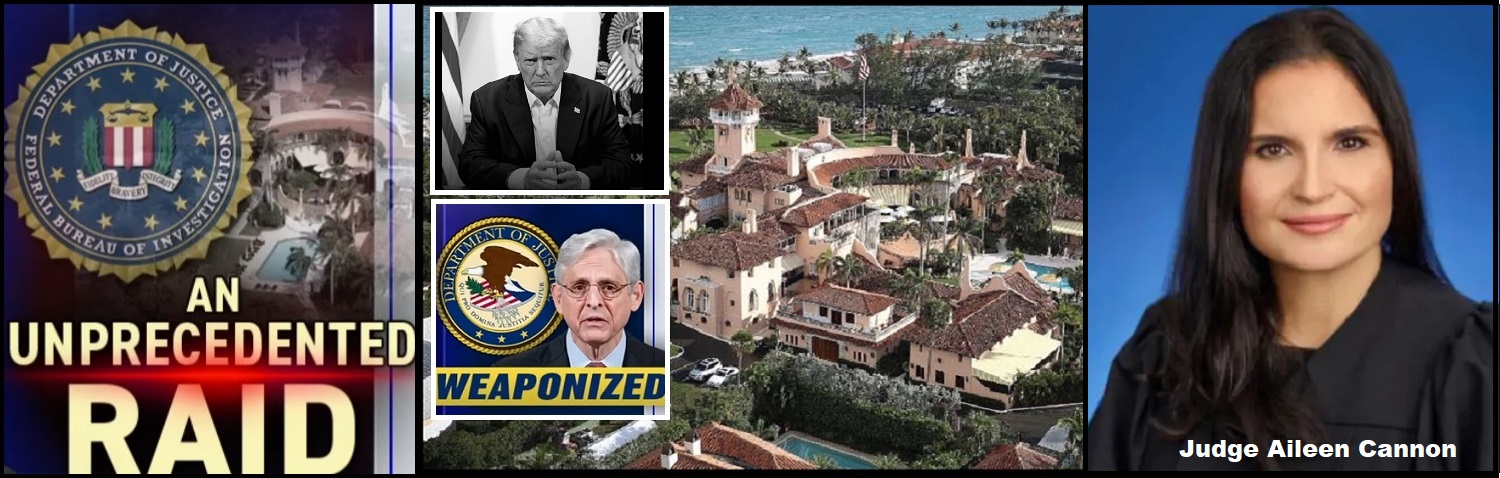
First, the good news. The judge assigned to the Trump documents case is U.S. District Court Judge Aileen Cannon.  She is the same judge who handled the lawsuit last year after the FBI raided Trump’s Mar-a-Lago estate.   Judge Cannon was the judge who appointed the “special master” to review the documents the DOJ was claiming were classified, but Team Trump was contending that definition.

Now the bad news. The DOJ is no longer legally arguing that Donald Trump held any classified documents at Mar-a-Lago.  The DOJ is arguing that President Trump held documents vital to U.S. defense security.  It’s a farce but that’s their position.  The classification status of documents is moot, nonexistent, except to create the predicate for the proverbial FBI nose under the tent.

The DOJ-NSD (that’s Lisa Monaco) got a warrant to look for classified documents, but never intended to use classified documents as a case cornerstone because President Trump had full declassification authority.  The DOJ got a search warrant by convincing a judge they were looking for something that wasn’t even a violation of law. That’s why the DOJ would not reveal the probable cause affidavit.  The search was built upon a fraudulent pretense.  “Classified” is a snipe hunt.

You will notice Jack Smith never discussed “classified documents” in his remarks, and the issue of classified documents appears nowhere except in the indictment as a purposeful lawfare description of documents.  The DOJ is not legally charging anything relating to the classification status of the documents.  That’s the Lawfare and media banter to create a talking point.  The term “classified” is all over the indictment, but as a lawfare adjective only; it’s like using the word “stash”.

The special counsel legal framework is centered around documents the DOJ define as vital to “the defense security” of the United States.  EVERYTHING is predicated on 31 counts of an 18 U.S. Code § 793(e) violation.  The DOJ defines what is considered a defense document, and that intentionally has nothing to do with classification.

The granular news.  You might have heard that two of Trump’s lawyers, Jim Trusty and John Rowley, quit today.  The media wants to use their exit as a point to indicate Trump is in legal jeopardy; however, that’s not the case.

As soon as Trusty and Rowley saw their forced testimony was used in the indictment, they had no option except to exit the case.  Despite the lawyers providing no damaging information against Trump, the DOJ used language in the indictment to turn Trump’s lawyers into material witnesses. Weissmann’s Lawfare tactic create a conflict, forcing the two Trump lawyers to depart.

WASHINGTON DC – Two of Donald Trump’s top lawyers abruptly resigned from his defense team on Friday, just hours after news broke that he and a close aide were indicted on charges related to their handling of classified documents.

Jim Trusty and John Rowley, who helmed Trump’s Washington, D.C.-based legal team for months and were seen frequently at the federal courthouse, indicated they would no longer represent Trump in matters being investigated and prosecuted by special counsel Jack Smith, who is probing both the documents matter and efforts by Trump to subvert the 2020 election.

The resignations were shortly followed by an announcement from Trump himself confirming that a close aide, Walt Nauta, had also been indicted by federal prosecutors. Nauta, a Navy veteran, had served as the former president’s personal aide and was a ubiquitous presence during his post White House days.

In their place, Trump indicated that Todd Blanche — an attorney he recently retained to help fight unrelated felony charges brought by Manhattan district attorney Alvin Bragg in April — would lead his legal team, along with a firm to be named later. Trump and his team have liked Blanche, who is expected to play a more elevated, central role. (more)

Weissmann, Eisen and Smith are using lawfare in the indictment to put the interests of Trump and his aide Walt Nauta against each other.   Obviously, Nauta would not turn on Trump, so the prosecution made Nauta a target for a federal 1001 charge of lying to investigators and will pressure him throughout the case to take a plea in exchange for testimony against Trump.   Nauta is the baseline of the “Conspiracy Elements” which require two or more people.  Again, pure Lawfare.

Obviously, Jim Trusty was unaware last night that his forced testimony would be used in the indictment. WATCH:

A Visual Example of Joe Biden Caught in the Act of a 18 U.S. Code § 793 Violation According to Special Counsel Jack Smith


Posted originally on the CTH on June 9, 2023 | Sundance 

In the Trump indictment the DOJ is not, repeat NOT, arguing a classified documents case.  The entire legal framework is centered around documents they define as vital to the defense security of the United States.  EVERYTHING is predicated on this 18 U.S. Code § 793(e) violation:

18 U.S. Code § 793 (e) Whoever having unauthorized possession of, access to, or control over any document, writing, code book, signal book, sketch, photograph, photographic negative, blueprint, plan, map, model, instrument, appliance, or note relating to the national defense, or information relating to the national defense which information the possessor has reason to believe could be used to the injury of the United States or to the advantage of any foreign nation, willfully communicates, delivers, transmits or causes to be communicated, delivered, or transmitted, or attempts to communicate, deliver, transmit or cause to be communicated, delivered, or transmitted the same to any person not entitled to receive it, or willfully retains the same and fails to deliver it to the officer or employee of the United States entitled to receive it. 

According to the Trump indictment, COUNT #7 – page 29, a document “concerning communication with the leader of a foreign country” is considered a classified document in violation of US Code 793, vital to national defense interests.

Do you want a historic example of this exact U.S. Code § 793 violation taking place?

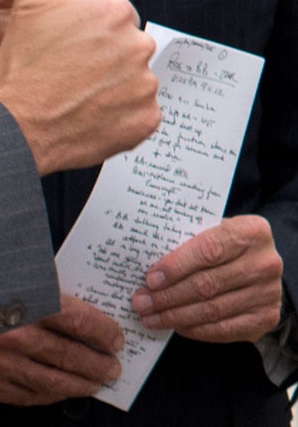
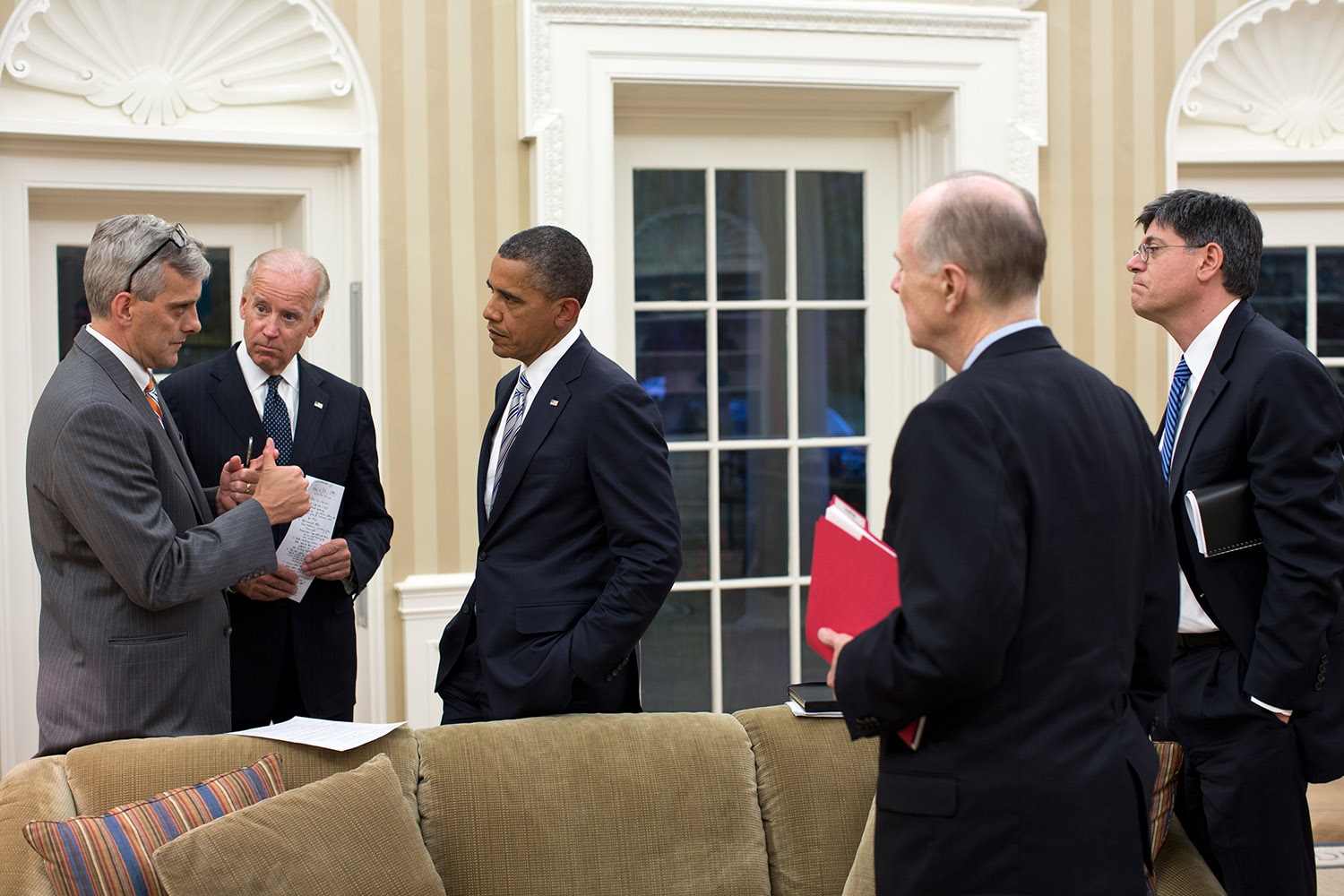
Whose hands are those? [SOURCE

(Sept. 11, 2012)  – ”Denis McDonough, Deputy National Security Advisor, left, updates the President and Vice President on the situation in the Middle East and North Africa. National Security Advisor Tom Donilon and Chief of Staff Jack Lew are at right.” (Official White House Photo by Pete Souza) [SOURCE]

In Joe Biden’s hands are the notes of a phone call, taken by then Vice-President Biden, recording the conversation between Barack Obama and Israeli Prime Minister Benjamin Netanyahu as recorded on September 11, 2012.  [The night of the Benghazi, Libya, attack on the U.S. Consulate]

How is this a violation of 18 U.S. Code § 793 (e)?

You are reading them!

See how that works?

Mark Levin Reacts to Trump Indictment – Frivolous Documents Charges


Posted originally on the CTH on June 9, 2023 | Sundance 

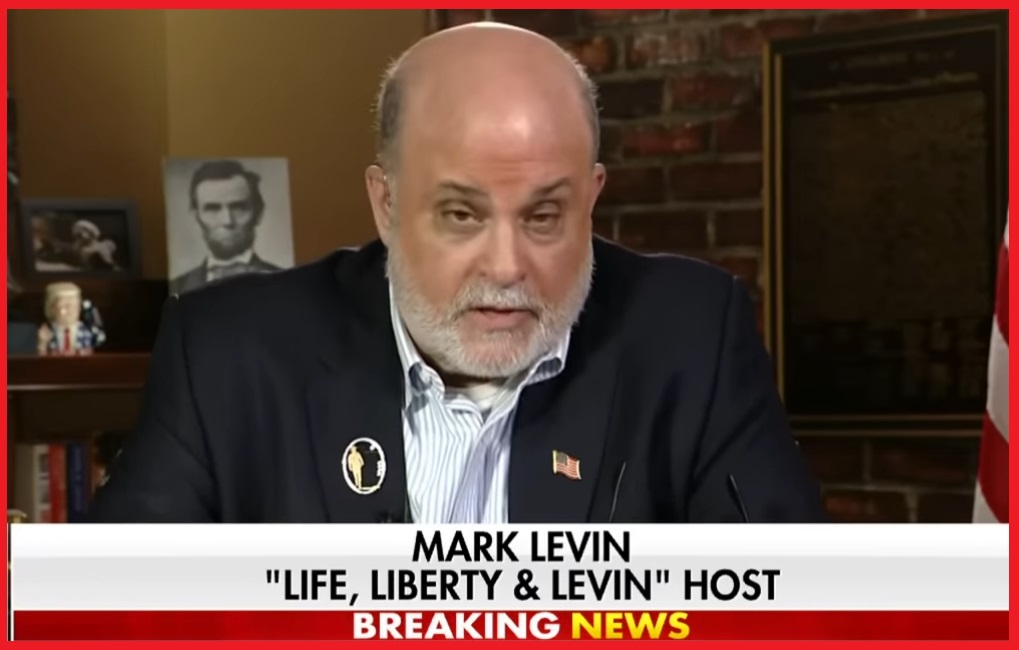
I am deep in the weeds and assembling notes for outlines to be delivered in the next several articles.  However, that said, perhaps the only time Mark Levin’s shouting was tolerable was last night as he responded to the indictment of President Trump.  WATCH:

.

NOTE:  Sixty nine documents in a Deep State rabbit hole!  ~Sundance

Reminder, What Was in The Mar-a-Lago Documents


Posted originally on the CTH on June 7, 2023 | Sundance 

Last year, CTH outlined a four-part series of articles going deep into the background of the DOJ-FBI raid of President Trump’s Mar-a-Lago estate, along with the outline into why it was important to them.  It doesn’t matter how many different legal angles and Deep State justifications the DOJ attempts to deploy in order to divert away from what took place; the background of who, what, when and why they raided Mar-a-Lago will not change.

In Part One, we outlined the background of the modern Deep State {Go Deep}. In Part Two we outlined the specifics of how President Trump was targeted by political operatives using tools created by the DC system {Go Deep}.  In Part Three we outlined how and why President Trump was blocked from releasing documents {Go Deep}.  And then finally, as below in Part 4, we assembled the specifics of what documents likely existed in Mar-a-Lago.

It is important to remember, the Presidential Records Act –the presented pretext for the document conflict– is not a criminal statute.  An FBI raid cannot be predicated on a document conflict between the National Archives and a former president.

The DOJ-NSD warrant, and the subsequent raid on Mar-a-Lago can only be related to records the U.S. government deems “classified” and material vital to national security interests.  Hence, DOJ National Security Division involvement.

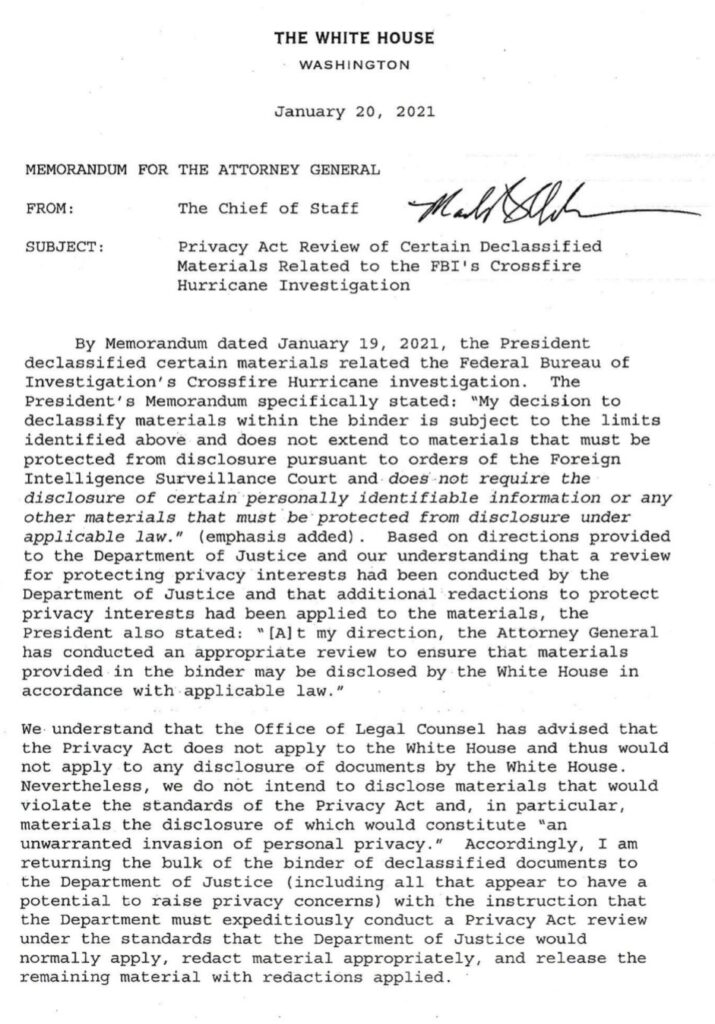
In prior outlines, we have exhaustively covered the details of President Trump’s desire to publicly release information about DOJ and FBI conduct in their targeting of him during the fabricated Trump-Russia claims.  However, to understand the nature of the documents he may hold, we first review the declassification memo provided by President Trump to the DOJ upon his departure from office.

In broad terms, there are two sets of documents that intermingle and are directly related. First, documents that highlight the activity of Hillary Clinton’s team in creating the false Trump-Russia conspiracy theory (2015/2016).  Second, documents that highlight the activity of government officials targeting Donald Trump within the same timeframe (Crossfire Hurricane), that continued into 2017, 2018 and 2019 (Robert Mueller).

Think of the two sets of documents as evidence against two teams working in synergy.  Team one (Clinton) was outside government. Team two (DOJ/FBI) was inside government.  The documents pertain to both groups but are also divided.  That helps to explain the wording of the memo above.

The documentary evidence against the outside group (Clinton et al) would also involve government documented evidence as the DOJ/FBI inside group interacted with them.  Notes from interviews, materials provided, FBI 302 summaries of interviews, etc.

We can extract a lot of information on the first sets of evidence from the lawsuit filed by President Trump in March of 2022 – mostly against the outside actors. [LINK HERE]

The lawsuit was filed against specific persons, and most of those persons were interviewed by the FBI as part of the originating investigation.  Within the subjects of the lawsuit, we find names and groups including:

Hillary Clinton, Hillary for America Campaign Committee, DNC, DNC Services Corp, Perkins Coie, Michael Sussmann, Marc Elias, Debbie Wasserman Schultz, Charles Dolan, Jake Sullivan, John Podesta, Robby Mook, Phillipe Reines as well as Fusion GPS, Glenn Simpson, Peter Fritsch, Nellie Ohr, Bruce Ohr, Orbis Business Intelligence, Christopher Steele, Igor Danchenko, Neustar Inc., Rodney Joffe, James Comey Peter Strzok, Lisa Page, Kevin Clinesmith and Andrew McCabe.

In addition to being named in the lawsuit, many of those names were interviewed by the FBI as part of the origination of the Trump-Russia investigation, and/or part of the ongoing investigation of the Trump-Russia fabrication. Each of those interviews would carry an FD-302 report summarizing the content of the interview, the questions and answers given.

The totality of those 302 documents is a lot of evidence likely consisting of hundreds of pages.

For the government officials on the inside, in addition to 302’s (ex Bruce Ohr), there would be documents of communication between them.

Think about the full unredacted text messages between Lisa Page and Peter Strzok as an example.  The DOJ publicly released over 600 pages of those text messages, and that wasn’t all of them.  The text messages were also redacted under claims of privacy and national security.  We can assume any version of these text messages declassified by President Trump would not be redacted.  Hence, you go back to the January 20th memo and see the notes about “privacy.”

We also know there are many pages of communication between DOJ lawyer Lisa Page and her boss in the FBI, Andrew McCabe.  Almost none of them were ever made public; but they exist.  This internal communication is likely the type of material contained in both the “binder,” left for the DOJ to release, and the boxes at Mar-a-Lago to be used as evidence against the named defendants in the Clinton lawsuit.

Bruce Ohr has 302’s and emails relating to his involvement as a conduit between Fusion GPS and the FBI.  Some of those were released in redacted form, and some of them were never released.  Additionally, Nellie Ohr, Bruce’s wife, who worked at Fusion GPS invoked spousal privilege when called to testify before the House committee investigating the issues.  However, it is almost certain the FBI interviewed her, so there are likely 302’s on Nellie Ohr.

Chris Steele, Igor Danchenko and Rodney Joffe were also interviewed by the FBI.  Those 302’s were never released.  Presumably John Durham held stakeholder equity in that part of the Trump-Russia hoax, but the documentary evidence prior to January 20, 2021, that exists outside the special counsel, could also be records at Mar-a-Lago.

Then we get to the big stuff…. The records and evidence, in unredacted and declassified state, that would drive the DOJ-NSD to claim vital national security interests.

The NSA compliance officer notified NSA Director Admiral Mike Rogers of unauthorized use of the NSA database by FBI contractors searching U.S. citizens during the 2015/2016 presidential primary.  That 2016 notification is a classified record.

The response from Mike Rogers, and the subsequent documentary evidence of what names were being searched, is again a classified record.  The audit logs showing who was doing the searches (which contractors, which agencies and from what offices), as noted by Director Rogers, were preserved.  That is another big-time classified record.

In addition, we would have Admiral Rogers writing a mandatory oversight notification to the FISA court detailing what happened.  That’s a big and comprehensive classified record, likely contained in the documents in Mar-a-Lago… and then the goldmine, the fully unredacted 99-page FISA court opinion detailing the substance of the NSA compromise by FBI officials and contractors, including the names, frequency and dates of the illegal surveillance.  That is a major classified document the Deepest Deep State would want to keep hidden.

These are the types of documents within what former ODNI John Ratcliffe called, “thousands of pages that were declassified by President Trump,” and given to both John Durham and Main Justice with an expectation of public release when the Durham special counsel probe concluded.  That is why the DOJ has to make their moves now.  The Durham probe has concluded.

In short, President Trump declassified documents that show how the institutions within the U.S. government targeted him.  However, the institutions that illegally targeted President Trump are the same institutions who control the specific evidence of their unlawful targeting.

These examples of evidence held by President Donald Trump reveal the background of how the DC surveillance state exists.  THAT was/is the national security threat behind the DOJ-NSD search warrant and affidavit.

The risk to the fabric of the U.S. government is why we see lawyers and pundits so confused as they try to figure out the disproportionate response from the DOJ and FBI, toward “simple records”, held by President Trump in Mar-a-Lago.   Very few people can comprehend what has been done since January 2009, and the current state of corruption as it now exists amid all of the agencies and institutions of government.

Barack Obama spent 8 years building out and refining the political surveillance state.  The operators of the institutions have spent the last six years hiding the construct.

President Donald Trump declassified the material then took the evidence to Mar-a-Lago.  The people currently in charge of managing the corrupt system, like Merrick Garland, Lisa Monaco, Chris Wray and the Senate allies, are going bananas.  From their DC perspective, Donald Trump is an existential threat.

Given the nature of their opposition, and the underlying motives for their conduct, there is almost nothing they will not do to protect themselves.  However, if you peel away all the layers of lies, manipulations and corruption, what you find at the heart of their conduct is fear.  The need for control is a reaction to fear.

What do they fear most?…

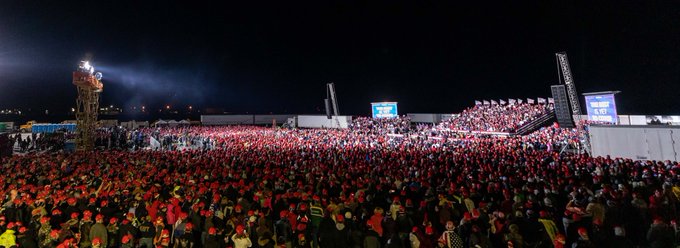
…..THIS!

People forget, and that’s ok, but prior to the 2015 MAGA movement driven by President Donald J Trump, political rallies filled with tens-of-thousands of people were extremely rare – almost nonexistent.  However, in the era of Donald J. Trump the scale of the people paying attention has grown exponentially.  Every speech, every event, every rally is now filled with thousands and thousands of people.

The frequency of it has made us numb to realizing just how extraordinary this is.  But the people in Washington DC are well aware, and that makes President Trump even more dangerous.  Combine that level of support with what they attempted in order to destroy him, and, well, now you start to put context on their effort.

The existence of Trump is a threat, but the existence of a Trump that could expose their corruption…. well, that makes him a level of threat that leads to a raid on his home in Mar-a-Lago.

New York Times Gains Insider Information on Twitter Revenue, Expanded Financials Look Worse Than Former Estimates


Posted originally on the CTH on June 5, 2023 | Sundance 

The New York Times has gained insider information on the current advertising revenue for the social media platform Twitter. [Article Here]  Ignoring the nonsense narrative engineering and just focusing on the data itself, the revenue side for Twitter is half what we previously estimated.  This makes the overlay for decisions on platform content even more stark.

According to the data, ad revenue for the month of April was a lackluster $88 million.  That’s a pace of just over $1 billion a year.  With a pre-Musk operating expense of $4.5 billion, and pre-Musk revenue at $4 billion cited by the Twitter owner as the backdrop, here’s the outlook.

Assuming post Musk labor cost reductions saved $500 million, a decline in revenue to $1 billion/yr would be a $3.0 billion deficit, to wit you would need to add the $1.5 billion in debt service as part of the investor buyout structure.

That puts Twitter into a $4.5 billion loss ballpark per year.

This is the high end of what Musk previously estimated in public statements.  Now we see why.

(New York Times) – Twitter’s U.S. advertising revenue for the five weeks from April 1 to the first week of May was $88 million, down 59 percent from a year earlier, according to an internal presentation obtained by The New York Times.  (read more)

$1 billion per year in advertising revenue is a whopping 75% loss from the claimed $4 billion in revenue before the Musk purchase.  Perhaps the Fidelity estimate of company value at $15 billion is closer to reality.

If the value of Twitter has dropped to the $15 billion level, that means almost all of the $30 billion in personal equity Musk put into the company has been lost.

Current investor debt is $12.5 billion, with $1.5 billion in debt service/yr. A valuation of $15 billion would only leave Musk with around $2.5 billion in equity position.  If the valuation is accurate, Musk personally would have lost around $27.5 billion in this Twitter platform purchase.

The last time I outlined the Twitter financial position, several people took exception to the data as shared.  However, the data is from Elon Musk himself, and I will again post the video at the bottom of the article.

Revenue is now Elon Musk’s #1 priority.  All other platform decisions are going through the prism of financial viability.

Twitter CEO Elon Musk has provided some convincing commentary about his willingness to forgo revenue in order to retain “free speech.” However, more recently he has qualified that outlook by saying, “Freedom of speech is not the same as freedom of reach.”  Musk noting Twitter will block, remove, censor, shadow ban, deboost, downrank and stop content from amplifying based on the determination of those in charge of Twitter content.

This controlled “freedom of reach” perspective, which is really shadow-banning in practice, is generally accepted and now admitted.  Against this backdrop, it becomes important to understand the priorities of the platform to understand the guidelines of the platform.  Within this context the financials are key to understanding what elements are included within “approved content.” {GO DEEP}

Twitter is now a private company, therefore understanding the financials of Twitter is a little more challenging than when they were required to post their financial statements publicly.  However, Elon Musk gave an interview with the Babylon Bee yesterday and revealed some of the internal financial challenges. [VIDEO HERE]  I am going to summarize the status of the Twitter financial position according to what Musk himself revealed.

♦ Twitter was initially purchased by Musk and his investors for around $44 billion.  The company now estimates its value around $20 billion. Last week, the mutual funds giant Fidelity, which owns shares in Twitter, valued the company at $15 billion. Bottom line, Musk grossly overpaid.

♦ Musk put roughly $30 billions of his own net worth into the purchase and financed the rest.

♦ Current outstanding debt on the financing for the purchase is around $12.5 billion. Per Musk statement.

♦ Current debt service, interest on the loans (from investors), is roughly $1.5 billion/yr.  $120.5 million per month for debt service.  Per Musk statement.

♦ Previous revenue (when public) was roughly $4 billion/yr.  Twitter was generally breaking even.

♦ Advertising revenue, as a result of changes in industry in combination with concerns about Twitter, are “half” what they were during the acquisition phase, per Musk statement.  That puts current advertising revenue around $2 billion/yr. Per NYT report that’s now $1 billion/yr.

♦ Per conversation, current status of Twitter is -$3 billion/yr and could be as high as -$4 to 5 billion/yr.

The NYT revenue leak now makes the top side of this scale make sense.  If $4 billion in revenue was generally the breakeven point (before acquisition), and now they have $2 billion $1 billion in revenue and $1.5 billion in additional debt service [as they trim operational costs (including labor) to offset].

♦♦ For the bottom line to be an operational loss of $3 to $5 billion (est) per year, Twitter is generally losing around $300 million per month.

♦ There is only so much Tesla stock Musk can sell to support Twitter.  He has limits. Per conversation.

♦ Twitter has around $1 billion in liquid cash available. Per conversation.  With a burn rate of $300+ million a month.

Twitter is in locked contracts with AWS and Google cloud services through 2025 at roughly $300 million per year for both [AWS $100 million, Goog $200 million].

Twitter Blue subscriptions are around 180,000 users, paying $11/mo.  That’s around $2 million a month; pittance in comparison to what he needs.

There’s your prism for platform content!

Elon Musk needs revenue desperately.

Twitter urgently needs advertising revenue.

Without revenue or acquisition of another platform (with assets) to offset the current status of Twitter, it is only a matter of time before some form of bankruptcy.   [Note, Twitter investors are backstopped with Tesla/SpaceX as collateral against default.]

The tightrope… Elon Musk must appease the Google advertising control agents and adhere to content rules and regulation (DEI etc.) in order to maximize his revenue.  That’s where Linda Yaccarino comes in as a critical player.

Bottom line, Musk has to make decisions through one prism, THE ECONOMICS.  Musk’s decision-making, pro freedom or not, is constrained by this financial dependency. Hence, a lot of the platform censorship elements remain (including some personnel) and now the outreach to appoint Google/WEF approved Linda Yaccarino in an effort to enhance the revenue.

When you are perplexed about Musk decision making….  THERE’S YOUR ANSWER.

The recent relationship between Elon Musk and the Rupert Murdoch media enterprise, now makes even more sense.

Musk discusses the financials:

Musk Outlines the Financials of Twitter – Platform Content Is Determined Through the Prism of Revenue


Posted originally on the CTH on June 1, 2023 | Sundance 

Twitter CEO Elon Musk has provided some convincing commentary about his willingness to forgo revenue in order to retain “free speech.” However, more recently he has qualified that outlook by saying, “Freedom of speech is not the same as freedom of reach.”  Musk noting Twitter will block, remove, censor, shadow ban, deboost, downrank and stop content from amplifying based on the determination of those in charge of Twitter content.

This controlled “freedom of reach” perspective, which is really shadow-banning in practice, is generally accepted and now admitted.  Against this backdrop, it becomes important to understand the priorities of the platform to understand the guidelines of the platform.  Within this context the financials are key to understanding what elements are included within “approved content.” {GO DEEP}

Twitter is now a private company, therefore understanding the financials of Twitter is a little more challenging than when they were required to post their financial statements publicly.  However, Elon Musk gave an interview with the Babylon Bee yesterday and revealed some of the internal financial challenges. [VIDEO HERE]  I am going to summarize the status of the Twitter financial position according to what Musk himself revealed.

♦ Twitter was initially purchased by Musk and his investors for around $44 billion.  The company now estimates its value around $20 billion.  Musk overpaid.

♦ Musk put roughly $30 billions of his own net worth into the purchase and financed the rest.

♦ Current outstanding debt on the financing for the purchase is around $12.5 billion. Per Musk statement.

♦ Current debt service, interest on the loans (from investors), is roughly $1.5 billion/yr.  $120.5 million per month for debt service.  Per Musk statement.

♦ Previous revenue (when public) was roughly $4 billion/yr.  Twitter was generally breaking even.

♦ Advertising revenue, as a result of changes in industry in combination with concerns about Twitter, are “half” what they were during the acquisition phase, per Musk statement.  That puts current advertising revenue around $2 billion/yr.

♦ Per conversation, current status of Twitter is -$3 billion/yr and could be as high as -$4 to 5 billion/yr.  This makes complete sense if $4 billion in revenue was generally the breakeven point (before acquisition), and now they have $2 billion in revenue and $1.5 billion in additional debt service [as they trim operational costs (including labor) to offset].

♦♦ For the bottom line to be an operational loss of $3 to $5 billion (est) per year, Twitter is generally losing around $300 million per month.

♦ There is only so much Tesla stock Musk can sell to support Twitter.  He has limits. Per conversation.

♦ Twitter has around $100 million/mo in liquid cash available. Per conversation.

Twitter is in locked contracts with AWS and Google cloud services through 2025 at roughly $300 million per year for both [AWS $100 million, Goog $200 million].

There’s your prism for platform content!

Elon Musk needs revenue desperately.

Twitter urgently needs advertising revenue.

Without revenue or acquisition of another platform (with assets) to offset the current status of Twitter, it is only a matter of time before bankruptcy.   [Note, Twitter investors are backstopped with Tesla/SpaceX as collateral against default.]

The tightrope… Elon Musk must appease the Google advertising control agents and adhere to content rules and regulation (DEI etc.) in order to maximize his revenue.  That’s where Linda Yaccarino comes in as a critical player.

Bottom line, Musk has to make decisions through one prism, THE ECONOMICS.  Musk’s decision-making, pro freedom or not, is constrained by this financial dependency. Hence, a lot of the platform censorship elements remain (including some personnel) and now the outreach to appoint Google/WEF approved Linda Yaccarino in an effort to enhance the revenue.

When you are perplexed about Musk decision making….  THERE’S YOUR ANSWER.

[Support CTH Research Here]

After Contempt Threat, FBI Director Wray Admits Oversight Whistleblower Report on Shady Biden $5 million Payment Does Exist


Posted originally on the CTH on May 31, 2023 | Sundance 

An interesting series of updates to the FBI whistleblower case of Joe Biden taking a $5 million bribe payment which now looks to have originated in Ukraine.

The background claim is pretty basic. A whistleblower approached congress stating the FBI had a report, an unclassified FD-1023, detailing a conversation with a ‘confidential human source’ (CHS) that outlined Vice President Joe Biden taking a $5 million payment from a foreign national to affect a U.S. policy decision.  The FBI agent responsible for investigating the CHS claim was FBI Supervisory Intelligence Analyst Brian Auten, a sketchy character from the Trump-Russia probe.

The investigative events took place in June and July 2020 during the presidential election year.  The claim is that FBI Supervisory Intelligence Analyst Auten reportedly buried the CHS allegation saying it could not be corroborated, and then wrote an assessment that it was Russian disinformation.  However, the FBI investigative team didn’t see any effort by any FBI member to substantiate it.  Hence a whistleblower, with specific knowledge of the details in the allegation, surfaces and tells congress the FBI is hiding the FD-1023 that outlines the confidential human source allegation of bribery.

Congress requested the FD-1023, the FBI refused to provide it.  House Oversight Committee Chair James Comer then set a compliance deadline while he coordinated with Senator Chuck Grassley.  The FBI still refused to turn it over, saying they would neither confirm nor deny the FD-1023 existence, and said releasing any information like that would potentially compromise Confidential Human Sources (CHS’s).  The proverbial sources and methods excuse.

Yesterday, James Comer told FBI Director Chris Wray he would be held in contempt of congress for refusing the provide the letter to oversight.

Today, Christopher Wray admitted the existence of the FD-1023 and told Rep Comer and Senator Grassley he would let them come to FBI headquarters to look at it.

The FBI is still claiming the allegations have no way to be substantiated or corroborated.  However, there is a very strong possibility, based on records that Comer and Grassley have received from subpoenas for Biden banking information, the substantiation documents are already in the hands of congress.

WASHINGTON—House Committee on Oversight and Accountability Chairman James Comer (R-Ky.) and Senator Chuck Grassley (R-Iowa) today issued the following statements after their discussion with FBI Director Christopher Wray about producing to Congress the unclassified, FBI-generated record alleging a criminal scheme involving then-Vice President Joe Biden and a foreign national.

“Today, FBI Director Wray confirmed the existence of the FD-1023 form alleging then-Vice President Biden engaged in a criminal bribery scheme with a foreign national. However, Director Wray did not commit to producing the documents subpoenaed by the House Oversight Committee. While Director Wray – after a month of refusing to even acknowledge that the form existed – has offered to allow us to see the documents in person at FBI headquarters, we have been clear that anything short of producing these documents to the House Oversight Committee is not in compliance with the subpoena. If the FBI fails to hand over the FD-1023 form as required by the subpoena, the House Oversight Committee will begin contempt of Congress proceedings,” said Chairman Comer.

“While the FBI has apparently leaked classified information to the news media in recent weeks, jeopardizing its own human sources, it continues to treat Congress like second class citizens by refusing to provide a specific unclassified record. Director Wray confirmed what my whistleblowers have told me pursuant to legally protected disclosures: the FBI-generated document is real, but the bureau has yet to provide it to Congress in defiance of a legitimate congressional subpoena. This failure comes with consequences,” Senator Grassley said. (read more)