June Jobs Report is WEAK


Posted Jul 9, 2024 By Martin Armstrong 

Jobs

The June jobs report revealed better than anticipated results with 206,000 new jobs now added to the US economy. Is Bidenomics working? Absolutely not. The jobs reports are inflated because the Biden Administration has been multiplying the public sector.

Of the 206,000 new jobs, 70,000 were created within government, surpassing the 49,000 government jobs created last June. Local government accounted for the bulk of new positions within the private sector last month. One-third of all new positions created in June are within the government, funded by taxpayers, and add nothing to the overall GDP. The public sector is growing at the highest annual pace since the 1990s.
manufacturing man 1

America needs manufacturing positions. Our industries are fleeing the nation entirely and our ability to produce has been drastically undercut. At least 10% of overall GDP is at risk. The Biden Administration aimed to increase manufacturing hires by 1 million in 2024. The sector lost 9,000 positions in February and then failed to gain a single hire in March. The data for April and May is still preliminary and can be revised, but they believe there was a net gain of 5,000 manufacturing jobs from December 2023 to May 2024 based on the Bureau of Labor and Statistics.  Now, initial results show that the US shed even more manufacturing jobs in June.

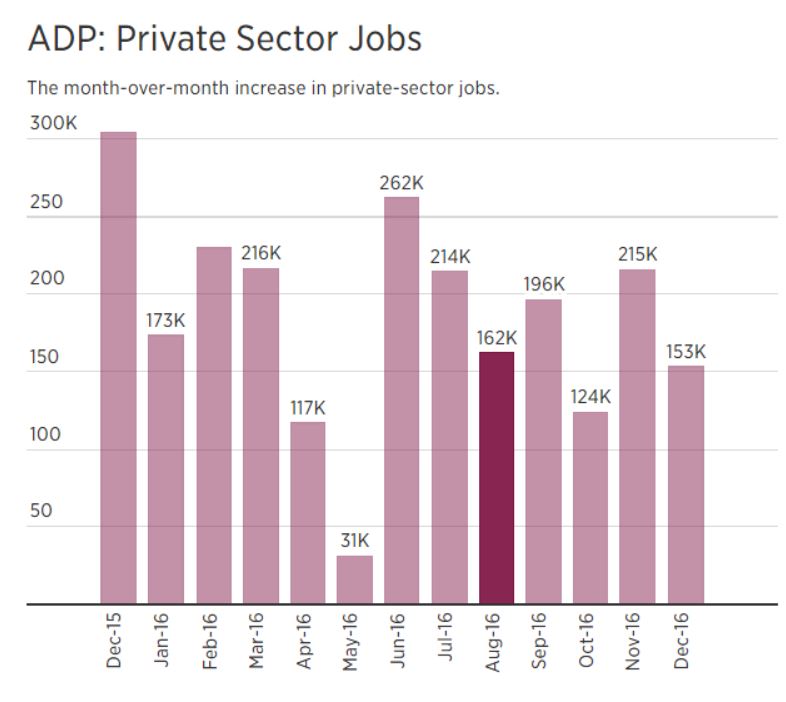
April’s job report was revised down to 108,000 compared to the initially reported 165,000 positions. May’s report was also revised to show 218,000 new jobs vs the initially reported 272,000 positions. The revised figures never make the headlines as they want those initial reports to paint the US economy in the best light.
ADP Private Sector Jobs

In April, Federal Reserve Chairman Jerome Powell said he was unimpressed by the “strong” jobs report, and it certainly was not enough for the central bank even to consider dropping rates. There is a reason that the central bank does not believe the “strong jobs reports” are an indication of a strengthening economy. Unemployment, at best, is at 4.1% right now – the highest since November 2021.

Expanding the public sector is a detriment to the US economy. These jobs produce nothing and cost the taxpayers a hefty sum. Trouble consistently brews when governments grow disproportionately. The Roman Empire, the longest-standing empire in history, vanished as a direct result of an oversized public sector that bankrupted Rome. The private sector produces economic growth, while government is a public servant consuming the wealth generated by others.
US Failing to Add 1 Million Manufacturing Jobs


Posted originally on Apr 10, 2024 By Martin Armstrong 

manufacturing man 1

I have already criticized the March jobs report released by the Bureau of Labor and Statistics. The mainstream media is cheering the 303,000 position boost as proof that the American economy is on the right path. I noted in an earlier blog post that the number of part-time workers rose by 691,000 while the number of full-time workers decreased by 6,000. The Bureau of Labor and Statistics admitted that the number of Americans holding multiple jobs increased by 217,000 or 5.2%, as Americans cannot afford the current cost of living even with wages rising 4.1% YoY.

One additional aspect—not a single manufacturing job was added to the US economy in March. The BLS claims that manufacturing jobs held steady at 12,956,000 from February, although 10,000 manufacturing positions were cut in January.

InflationReductionAct.meme_

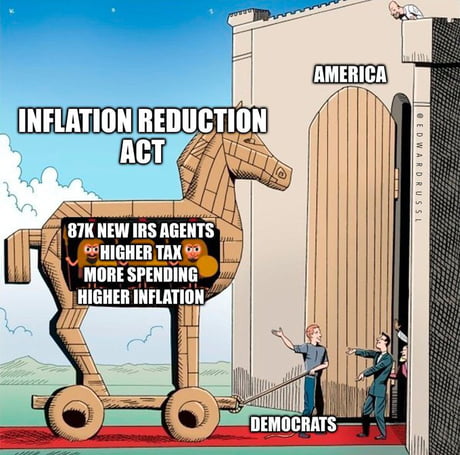
The Inflation Reduction Act promised to fund the Infrastructure Investment and Jobs Act that was intended to expand American manufacturing. As Yellen and others have openly stated, the Inflation Reduction Act, America’s most expensive spending package, was intended to promote the climate change agenda.

Clean energy manufacturing is not profitable and, therefore, not expanding. “According to third-party estimates, the Inflation Reduction Act’s climate and clean energy tax incentives have the potential to drive investment that will support more than 1 million jobs in energy and related manufacturing sectors over the coming decade,” the US Department of Treasury stated in October 2023.

“To receive increased credit and deduction amounts under the Inflation Reduction Act, taxpayers must:

  • Pay workers the local prevailing wage, defined in accordance with Department of Labor standards, for work on facility construction, as well as for alterations and repairs in a five-to-twelve-year period, depending on the credit, after a facility is placed in service.
  • Hire a sufficient proportion of workers from registered apprenticeship programs, including hiring these qualified apprentices for at least 10% of the labor hours spent on facility construction, alteration, or repair work (rising to 12.5% for facilities where construction begins in 2023 and 15% in 2024 and later years)

The prevailing wage and apprenticeship provisions apply to:

  • the Alternative Fuel Refueling Property Credit (30C)
  • the Production Tax Credit (45, 45Y)
  • the Credit for Carbon Oxide Sequestration (45Q)
  • the Credit for Production of Clean Hydrogen (45V)
  • the Clean Fuel Production Credit (45Z)
  • the Investment Tax Credit (48, 48E)
  • the Advanced Energy Project Credit (48C)
  • the Energy Efficient Commercial Buildings Deduction (179D)

In addition, the prevailing wage provision will apply to:

  • the New Energy Efficient Home Credit (45L)
  • the Zero-Emission Nuclear Power Production Credit (45U)”

The private sector does not wish to invest in alternative or renewable energy projects. The tax credits are not enough of an incentive. The US Department of the Treasury mistakenly believed that the act would provide “taxpayers with a strong incentive to meet high labor standards as they build projects” and “expand well-paying union jobs and support proven pathways into the industry that allow workers to earn while they learn.”

Manufacturing is in fact not expanding. The regulations in place have made it difficult for existing factories to expand or bring on more workers.