President Trump FEMA Press Briefing in Oval Office – Hurricane Florence Preparations (video and transcript)…


Earlier this afternoon President Trump and Vice-President Mike Pence held a press briefing in the oval office along with FEMA Administrator Brock Long and DHS Secretary Kirstjen Nielsen to discuss concerns and preparation in advance of hurricane Florence.

Those in the forecast areas are strongly advised to pay close attention to local officials and heed all evacuation orders. Florence is projected to be a long-duration event for the eastern seaboard and mid-Atlantic region.  Severe, possibly catastrophic, flooding is likely.

.

[Transcript] – Oval Office – 3:13 P.M. EDT – THE PRESIDENT: Okay, thank you very much. I’ve received a briefing from Secretary Nielsen, Administrator Long, and my senior staff regarding Hurricane Florence and other tropical systems that will soon impact the United States and its territories. The safety of American people is my absolute highest priority. We are sparing no expense. We are totally prepared. We’re ready. We’re as ready as anybody has ever been.

And it looks to me, and it looks to all of — a lot of very talented people that do this for a living, like this is going to be a storm that’s going to be a very large one — far larger than we’ve seen in perhaps decades. Things can change, but we doubt they will at this stage. It’s a pretty late stage. We doubt they’re going to be veering very far off course.

The places that are in the way and in the most jeopardy would be Virginia, North Carolina, South Carolina — that area. And again, they haven’t seen anything like what’s coming at us in 25, 30 years — maybe ever. It’s tremendously big and tremendously wet. Tremendous amounts of water.

So I’ve spoken with the governors of South Carolina, North Carolina, and Virginia. They’re prepared. We’re prepared. We’re working very well in conjunction with the governors.

I’d like to ask Brock Long, our Administrator, who’s done so well for us in Texas and Florida — we have something that could very well be very similar to Texas, in the sense that it’s tremendous amounts of water. Texas was the one that had, I would say, to this point, Brock, probably more water than we’ve ever seen in a storm or a hurricane. And it went out for seconds and thirds. We’ve never seen anything like it.

But FEMA, as you know, did a fantastic job, and a fantastic job also in Florida. And I’d like to ask Brock, if you would, to just say a few words to the media as to where it is now, what’s going to be happening, and how well prepared we are.

ADMINISTRATOR LONG: Thank you, Mr. President. Unfortunately, Hurricane Florence is setting out to be a devastating event to the Carolinas, and potentially Virginia as well.

So as you can see, they’re forecasting a major landfalling storm — Category 3 or 4 storm at landfall. The biggest hazard that we’re worried about is storm surge. That’s the primary driver of the evacuations that are underway by the states of North Carolina, South Carolina, and Virginia right now. But as this system comes in and makes landfall, during the weekend it’s forecast to stall out, lose its strength and its steering currents, and drop copious amounts of rainfall.

Unfortunately, the remnants of Gordon passed through the Mid-Atlantic over the weekend and dropped a lot of rain, saturating rivers. So, Hurricane Florence, as it comes in and puts anywhere between 20 and 30 inches more in isolated areas, could create a lot of inland flooding.

So, right now, sir, we’re supporting the governors with achieving their life safety evacuation and movements. We’re focused on mass care and sheltering. And then we’ll be focused on helping them to execute their response and recovery goals.

THE PRESIDENT: What are the chances that it veers off course and the hit won’t be so direct? What are the chances of that?

ADMINISTRATOR LONG: Unfortunately, I believe there’s quite a bit of certainty in the track forecast because the forward speed is picking up. It’s getting faster. And when systems do that, the track forecast becomes a lot more accurate. And I think the expectation needs to be set with the citizens in this area that, if you’ve been asked to leave, get out of the areas that are going to flood, and get into a facility that can withstand the winds.

Let’s set the expectations as well: This has an opportunity of being a very devastating storm. The power is going to be off for weeks. You’re going to be displaced from your home in the coastal areas. And there will be flooding in the inland areas as well.

So these are going to be statewide events. The hazards will be statewide.

THE PRESIDENT: Thanks. You wanted to show us this one then?

ADMINISTRATOR LONG: Yeah. This is a seven-day rainfall graphic. As you can see, the pink areas and the purple areas indicate 20 inches. That’s mean area rainfall; that’s an average rainfall amount. But you may see isolated amounts greater — into the 30-inch range — over Virginia, the central portions of Virginia and West Virginia. And these impacts are — they’re going to be through the Mid-Atlantic. So we’re coordinating not only with South Carolina, North Carolina, and Virginia, but other Mid-Atlantic states, all the way to Delaware.

THE PRESIDENT: Good. And it has been great coordination. I have to tell you, the states have been terrific. Everybody is working together. The governors and all of their representatives have been absolutely fantastic. And FEMA — there’s nobody like you people. I mean, what they’re doing is incredible.

Do you have any questions for Secretary Nielsen or for Brock Long, please? Anybody?

Q What lesson do we take from what happened in Puerto Rico? How do we apply the lessons we took from Puerto Rico?

THE PRESIDENT: Well, I think Puerto Rico was incredibly successful. Puerto Rico was, actually, our toughest one of all because it’s an island, so you just — you can’t truck things onto it. Everything is by boat. We moved a hospital into Puerto Rico — a tremendous military hospital in the form of a ship. You know that.

And I actually think — and the Governor has been very nice. And if you ask the Governor, he’ll tell you what a great job. I think probably the hardest one we had, by far, was Puerto Rico because of the island nature. And I actually think it was one of the best jobs that’s ever been done with respect to what this is all about.

Puerto Rico got hit not with one hurricane but with two. And the problem with Puerto Rico is their electric grid and their electric generating plant was dead before the storms ever hit. It was in very bad shape. It was in bankruptcy. It had no money. It was largely — you know, it was largely closed.

And when the storm hit, they had no electricity — essentially before the storm. And when the storm hit, that took it out entirely.

The job that FEMA and law enforcement and everybody did, working along with the Governor in Puerto Rico, I think was tremendous. I think that Puerto Rico was an incredible, unsung success.

Texas, we had been given A-plusses for. Florida, we’ve been given A-plusses for. I think, in a certain way, the best job we did was Puerto Rico, but nobody would understand that. I mean, it’s harder to understand. It was very hard — a very hard thing to do because of the fact they had no electric. Before the storms hit, it was dead, as you probably know.

So we’ve gotten a lot of receptivity, a lot of thanks for the job we’ve done in Puerto Rico. Puerto Rico was very important.

And, by the way, speaking of Puerto Rico, they’re going to be affected, pretty much, pretty soon by something else that’s on its way. Is that right?

ADMINISTRATOR LONG: Potentially, Hurricane Isaac right now is tracking south of the island, but we are — we have several thousand people inside Puerto Rico right now working on long-term recovery that have shifted to the response mode to monitor as Isaac passes to the south.

THE PRESIDENT: We do not want to see Hurricane Isaac hit Puerto Rico. That’s all we need. But we have a big hurricane out there, and it’s sort of skirting along Puerto Rico and the edge of Puerto Rico. That would not be good.

Q Mr. President, how much money do you think you’ll need for recovery efforts to this next hurricane? And do you have that already, or do you need to get it?

THE PRESIDENT: Well, we have it currently. Obviously, these are all unanticipated, so we’ll go to Congress. Congress will be very generous, because we have no choice. This is the United States. And whether it’s Texas or Florida or, frankly, if it’s Virginia — because Virginia, it’s looks like it’s very much in the path. Maryland, by the way, could be affected — very seriously affected — just to add. It’s a little bit outside of the path. And then, of course, South Carolina and North Carolina. I think that any amounts of money, whatever it takes, we’re going to do.

But we’re already set up. We have tremendous trucking systems, we have food systems. We have a lot of — a lot of contractors waiting. But for the most part, its been handled by FEMA, and also weve coordinated locally. We have food for days. We have emergency equipment and generators for many days. We should be in great shape.

Now, Ive also heard it could be 21 and 22 inches. If you can imagine what that is — 22 inches of rain. It is not something that weve had. Certainly, weve never had this on the East Coast. So — but I think were very well prepared and very well set up. Wouldnt you say?

ADMINISTRATOR LONG: Yeah. I think this storm right here is very similar to Hurricane Hugo and almost like a combination of Hurricane Hugo in 89 and Hurricane Floyd in 1999.

But look, successful disaster response and recovery is one that’s locally executed, state managed, and federally supported. So what FEMA is doing is pre-positioning the federal government’s assets to support each one of those governors that are about to be impacted with achieving their response and recovery goals. And thats the way emergency management and disaster response works best.

I also think — Id like to point out that what we learned last year is we have got to build a true culture of preparedness within our citizens here in America. This is a partnership, and it takes anything from neighbor helping neighbor all the way to the federal government when it comes to correctly responding and recovering.

Q Can we ask you about the (inaudible) and power outages? What things are right now to —

ADMINISTRATOR LONG: Thats a great question. So FEMA doesnt own the power grids in any one of these states. A lot of them are owned by the private industry. So what we have are business emergency operation center calls. Were concentrating with the private vendors to make sure that they have strong mutual aid programs in place. And we set up incident support bases to help stage power crews coming in from other states. And largely, its FEMAs job to get out of the way to make sure that the private power companies can get into these areas to set up their grid. We dont own it. We dont own it.

THE PRESIDENT: But unlike Puerto Rico, you have very strong power companies. Theyre very powerful, very well managed in the sense that they have — they have tremendous overcapacity. They are going to do a great job. They also have made contracts with other power companies that wont be affected, and theyre going to be coming in — just to answer your question, theyll be coming in to the various states that will be affected.

Theyre going to be coming in very strongly, and theyre already lining up. Theyll be here probably, for the most part, tomorrow, or shortly before the storm hits. So theyre going to be in great shape. These are, really, states that have very, very strong power authorities.

Q Whats your message, Mr. President, to people who might not have evacuated yet?

THE PRESIDENT: Well, thats very risky. I mean, again, weve never seen anything quite like this on the East Coast, at least. And if it turns out to be as bad — you know, we go out there; you have people that actually go fly through these storms. These are very brave people. But they fly through.

And from what Im hearing, the sites that they’re seeing have not been seen on the East Coast before. So I would say everybody should get out. I mean, you have to listen to your local authorities and — whether youre upland or downland. But depending on where you are, you have to listen and you have to get out. If they want you to get out — because its going to be impossible to have people get in there, whether its law enforcement or FEMA or anybody else. Once this thing hits, its going to be really, really bad along the coast. Okay?

Anything else?

Q Do you believe Rob Porter and Gary Cohns denials today?

THE PRESDIENT: Ah, well, you shouldnt be talking about that right now because it doesnt matter. But I really appreciate their statement. Their statement was excellent. And they both said that beautiful, which shows that the book is just a piece of fiction.

Thank you very much. I think were very well prepared. And thank you all very much. Appreciate it.

Q Do you mind giving us an update on the trade talks?

THE PRESIDENT: Trade talks are coming along very well. Were dealing with China, as you know. Weve taken a very tough stand on China, I would say, to put it mildly. And with Canada, they want to make a deal very much. Me? If we make it, thats good. And if we dont make it, thats okay too. Canada wants to make a deal. Well see if we can get them into the deal we already have with Mexico. I think the deal with Canada is coming along very well, and weve all been dealing in good faith. Okay?

Thank you everybody.

END 3:26 P.M. EDT

[National Hurricane Center] At 500 PM AST (2100 UTC), the center of the eye of Hurricane Florence was located by satellite near latitude 27.5 North,
longitude 67.1 West. Florence is moving toward the west-northwest near 17 mph (28 km/h). A motion toward the west-northwest and northwest is expected through early Thursday. Florence is expected to slow down considerably by late Thursday into Friday.

On the forecast track, the center of Florence will move over the southwestern Atlantic Ocean between Bermuda and the Bahamas through Wednesday, and approach the coast of North Carolina or South Carolina in the hurricane warning area on Thursday and Friday.

Maximum sustained winds have increased to near 140 mph (220 km/h) with higher gusts. Florence is a category 4 hurricane on the Saffir-Simpson Hurricane Wind Scale. Further strengthening is forecast tonight and Wednesday. While some weakening is expected on Thursday, Florence is forecast to be an extremely dangerous major hurricane through landfall. (link)

The Fascinating Story of the Largest Geological Structure on Earth


COMMENT: Just to let you know, already we have a record-breaking cold here in Minnesota. It did not even wait for Labor Day.

DT

REPLY: Yes I know. Things are changing and we really should stop this global warming nonsense and begin to actually investigate what is unfolding. Granted, this may not produce more taxes from the government. But the purpose of governments is not to tax the people, but to protect them. A reader sent in this video link on explaining the dynamics of the earth. It is just 20 minutes, but it is fascinating to watch. You may begin to comprehend that the planet just may be more powerful than we think we are

Typhoon Jebi Hit Japan with Amazing Force


UPDATE: TS Gordon Approaches Mississippi Coastline – Anticipated Landfall at Hurricane Strength….


Gordon is anticipated to strike the Mississippi coast as a category one hurricane. Current wind-speeds are 65mph, with strengthening anticipated.

[National Hurricane Center] At 100 PM CDT (1800 UTC), the center of Tropical Storm Gordon was located near latitude 28.9 North, longitude 87.3 West. Gordon is moving toward the northwest near 15 mph (24 km/h), and this general motion is expected to continue until landfall occurs tonight along the north-central Gulf coast. A northwestward motion with some decrease in forward speed is expected after landfall, with a gradual turn toward the north-northwest and north forecast to occur on Friday.

On the forecast track, the center of Gordon will move across the northern Gulf of Mexico today, and will approach the north-central Gulf Coast within the hurricane warning area late this afternoon or evening, and move inland over the lower Mississippi Valley tonight and early Wednesday.

Reports from an Air Force Reserve Unit reconnaissance aircraft indicate that maximum sustained winds remain near 65 mph (100 km/h) with higher gusts. Some strengthening is expected later today, and Gordon is forecast to be a hurricane when it makes landfall along the north-central Gulf Coast. Rapid weakening is forecast after Gordon moves inland. (link)

11:00pm Gordon Advisory – Fast Moving Storm Expected To Reach Hurricane Strength…


Louisiana Governor declares state of emergency. Coastal Mississippi and Alabama should be on alert and prepared to finalize storm preparations by noon Tuesday.

[National Hurricane Center] At 1100 PM EDT (0300 UTC), the center of Tropical Storm Gordon was located near latitude 26.9 North, longitude 84.3 West. Gordon is moving toward the west-northwest near 17 mph (28 km/h). A west-northwestward to northwestward motion with some decrease in forward speed is expected over the next few days.

On the forecast track, the center of Gordon will move across the eastern Gulf of Mexico tonight and Tuesday, and will approach the north-central Gulf Coast within the warning area late Tuesday afternoon or evening, and move inland over the lower Mississippi Valley on Wednesday.

Maximum sustained winds are near 60 mph (95 km/h) with higher gusts. Gradual strengthening is expected during the next 24 hours, and Gordon is forecast to be a hurricane when it makes landfall along the north-central Gulf Coast. Rapid weakening is expected after Gordon moves inland.  [more from Hurricane Center]

Head’s Up: TS Gordon – Coastal FL Panhandle, Alabama, Mississippi, Louisiana…


Tropical Storm Gordon is anticipated to move into the warm Gulf of Mexico this afternoon and then strengthen while taking a West-northwest path toward the Alabama, Mississippi and Louisiana coast.  High probability will make landfall as a hurricane.

This storm will move fast while simultaneously strengthening. Residents in coastal west-FL Panhandle, Alabama, Mississippi and Louisiana would be well advised to be proactive, watch closely and begin initial hurricane preparation.

[Hurricane Advisory] At 200 PM EDT (1800 UTC), the center of Tropical Storm Gordon was located near latitude 25.8 North, longitude 81.9 West. Gordon is moving toward the west-northwest near 16 mph (26 km/h) and a west-northwestward to northwestward motion is expected over the next 72 hours. On the forecast track, the center of Gordon will move farther away from the southwestern coast of Florida this afternoon and move across the eastern Gulf of Mexico tonight and Tuesday.

The center of Gordon will approach the coast within the warning area along the central Gulf Coast by late Tuesday or Tuesday night, and move inland over the lower Mississippi Valley on Wednesday.

Maximum sustained winds have increased to near 50 mph (85 km/h) with higher gusts. Additional strengthening is forecast during the next 36 hours, and Gordon is expected to be near hurricane strength when it makes landfall along the central Gulf Coast.

Tropical-storm-force winds extend outward up to 45 miles (75 km) from the center. [Link to NOAA Hurricane Center]

Short-term v Long-term Forecasting Earthquakes


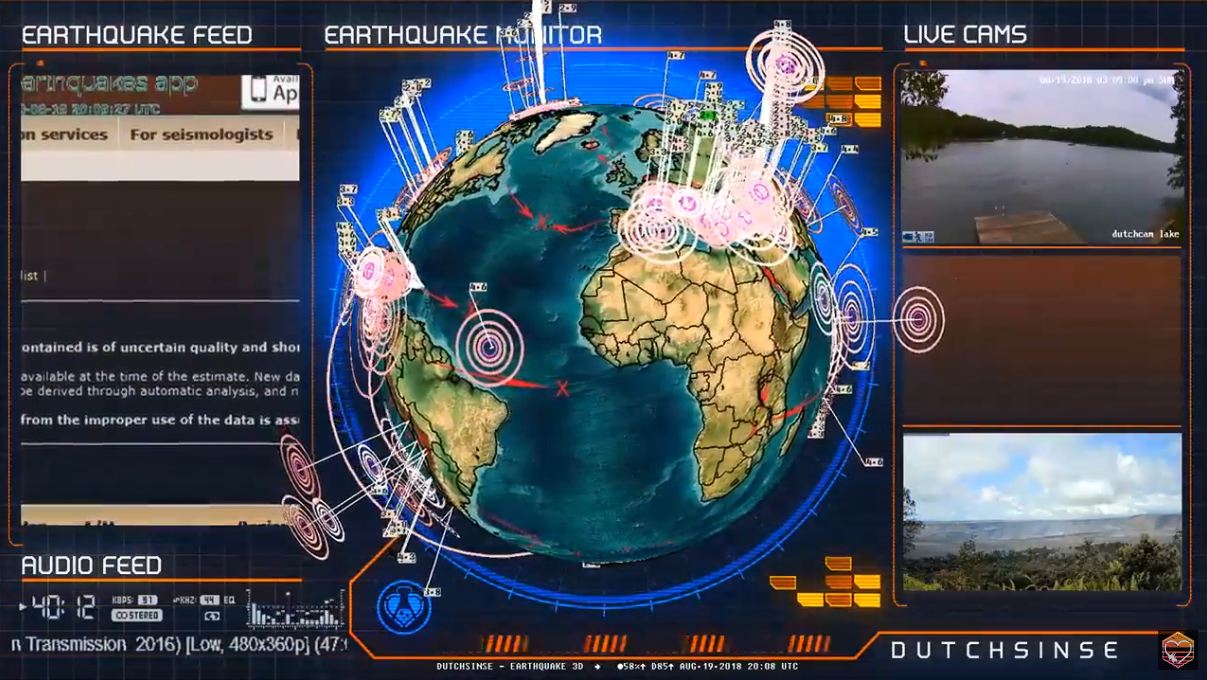
There is a site that is doing short-term Earthquake forecasts who has a very good track record known as Dutchsinse. He has a very good track record for forecasting events near-term. Of course, this is still not mainstream. It is very strange when people can improve on forecasting they are just ignored. Our models are not designed to give a specific target for an earthquake on a daily basis. We have plotted the long-term historical records and correlate that with the global economy.

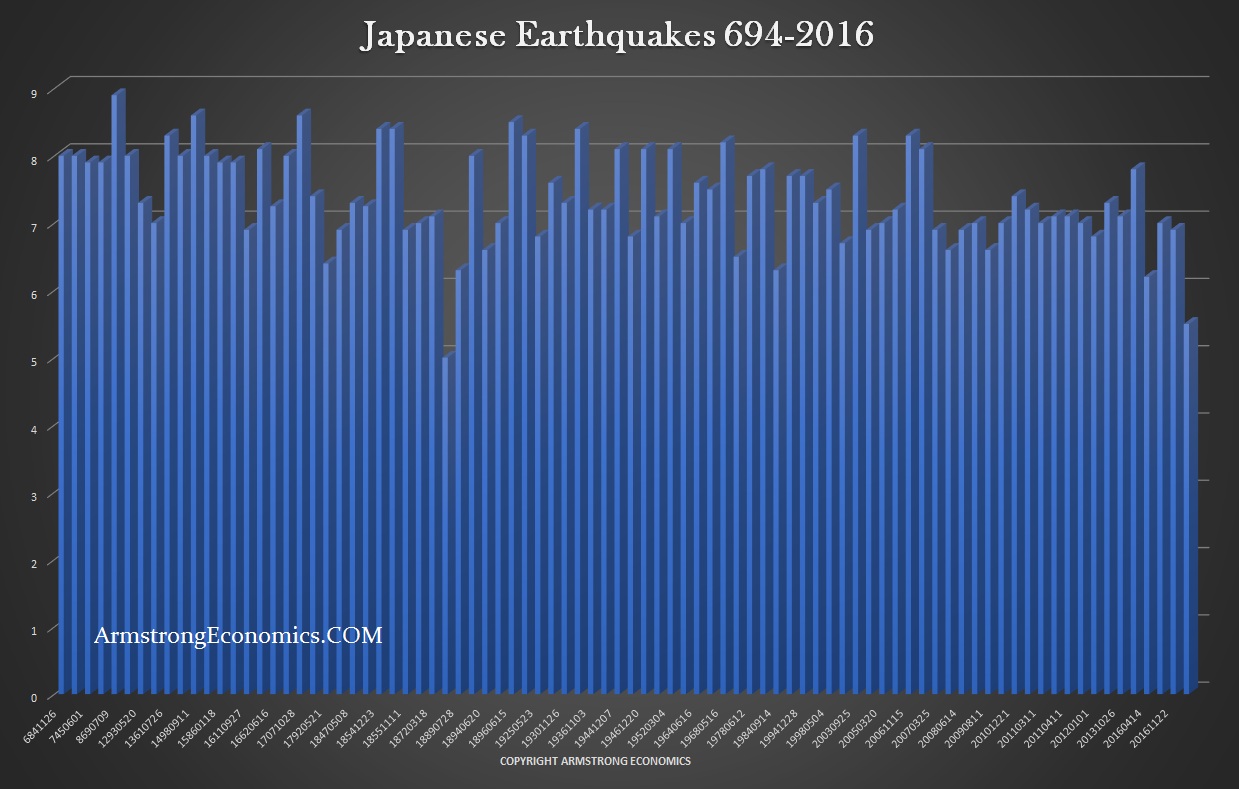
There are countless earthquakes every day.  We do not seek to duplicate what Dutchsinse provides. We are more concerned with targeting important events that will alter the economic trends either short or long-term. Here is our database on Japan. These are the earthquakes back to 694AD. In this case, there have been 86 important quakes for Japan. This is the entire country and not just Tokyo which has been destroyed three times – the last being 1923.

We identify periods where activity should appear even years in advance. This is completely different from short-term forecasting specific targets as has been the case with Dutchsinse. There are numerous quakes around the world every day. Most people will never feel them. Some will run deep and others shallow. Some will produce tsunami events that can be catastrophic as was the case in the 1923 Tokyo event.

Our models are more focused on the correlation with other events. Obviously, a 1923 style earthquake and tsunami in Tokyo today would impact the global economy as Japan is the third largest economy and debt market. The ripple effect in global markets, both currency, and equity would be very significant as well as the debt markets. Here we strive for long-term forecasts to provide institutions time to shift portfolios that could never be accomplished in 24 hours or less.

Amazing videos of tornadoes and the Destruction that they do


This is a series of videos clips pieced into one short movie that is the best I have ever seen showing the destruction that tornadoes can cause.


US East Coast Risk of Tsunami & Earthquakes that Threaten NYC


QUESTION:  Hey Marty,
Thanks for all your insight the last few years on what the models are projecting for volcanic & seismic activity. As usual, you’re on the money. The forecast of events laying out to 2032 is really starting to add up in their interconnectivity. God help us all.
My question is regarding the mid-Atlantic ridge and the US East Coast continental shelf faults. We all know you chose Tampa over the Florida Atlantic Coast; should we be concerned about tsunamis & seismic activity along the eastern seaboard?

As always, thanks for everything you do. You’re my hero.
Cheers,

DP
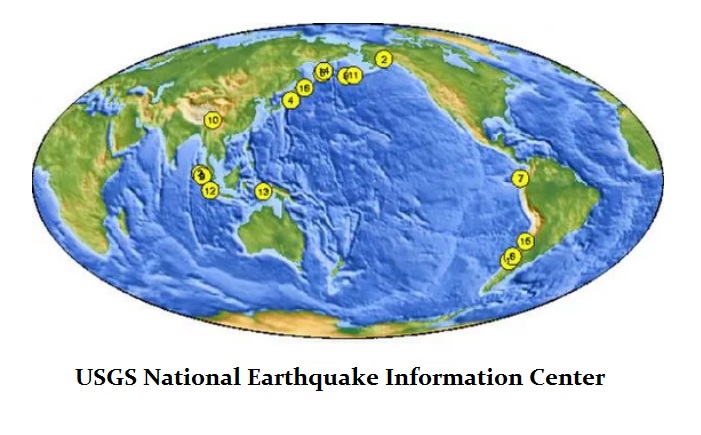
ANSWER: That is actually a very good question. The 10 Biggest Earthquakes in History have ALL taken place around the Pacific Rim of Fire – not in the Atlantic. Ideally, the next big one is interestingly due in 2021. The modern big quakes around the Pacific Rim have been:

  • 1906 — San Francisco, California, Magnitude: 8. About 3,000 people died from the earthquake, on the San Andreas Fault, and resulting fire.
  • 1923 — Tokyo, Japan, Magnitude: 7.9. One of the world’s most destructive earthquakes, more than 142,000 people died from collapsing buildings and the resulting firestorm. The quake also resulted in enormous tsunami waves.
  • 1960 — Chile, Magnitude: 9.5. The largest earthquake ever recorded, the 1960 quake in Chile killed more than 1,600 people, with many of the deaths resulting from tsunamis. Waves reached 38 feet (11.5 meters) and carried debris as far as 2 miles (3.2 kilometers) inland.
  • 1970 — Peru, Magnitude: 7.9. Approximately 66,000 people died, many from collapsed buildings and a post-earthquake avalanche.
  • 2004 — Indonesia, Magnitude: 9.1. The third largest earthquake in the world in this century, the quake killed more than 227,000 people. Powerful tsunami waves crisscrossed the Indian Ocean and ravaged 12 Asian countries.
  • 2011 — Japan, Magnitude: 9.0

When we turn to the Atlantic, there is a different problem altogether. I remember experiencing my first earthquake when I was probably the 4.5 quake of May 12, 1964, that hit Lancaster, Pa. I woke up and first though boy that was a loud train. Then I realized I did not live near a train track. When I came down in the morning the press was all talking about the earthquake that hit the area outside of Philadelphia. That was not in the ocean.

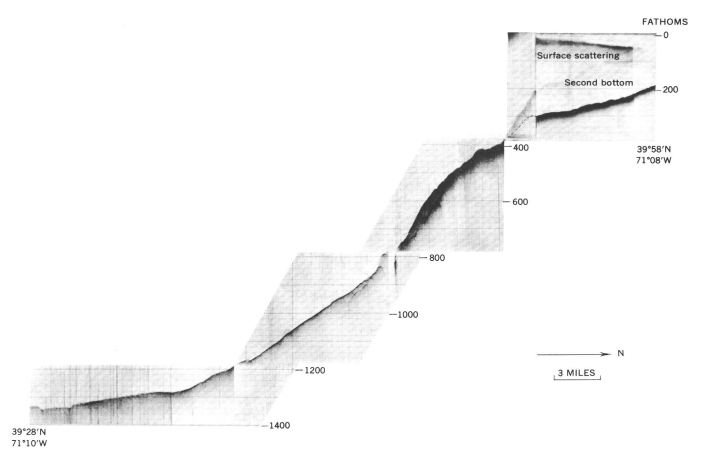
What we must understand about the Mid-Atlantic Ridge is that there may be a greater risk of tsunami events than major earthquakes. The continental slope is the topographic boundary between the continent and the ocean basin. It is a complex feature. What people do not generally understand is that relatively minor earthquakes can set off a tsunami. The greater risks are in the north from Newfound down to just below New Jersey. A relatively minor offshore earthquake of magnitude 4.5 or above could cause submarine avalanches that then generate tsunami events with waves higher than 26 feet (8 meters). The underwater canyons and bays could focus these waves and make them even much larger all from minor events.

Back in 1929, there was a 7.2-magnitude earthquake off the southern coast of Newfoundland that caused a large underwater landslide. It was that landslide that created a large wave that rushed ashore and killed some 28 people on the island. However, the waves were at first about 26 feet high until they reached the narrow inlets. This compressed all the energy causing the tsunami to grow to 43 feet (13 m). That was absolutely devastating.

There is evidence that at least a 12-foot tsunami wave hit Manhattan around 300BC. Geological experts reported that this ancient tsunami dumped sediment, shells and marine fossils across the region inland that date back to 300BC. Tsunami waves are rare events in the Atlantic. One theory is that a New York tsunami may have been triggered by an asteroid. However, no crater has ever been discovered. It is far more likely that an earthquake simply triggered an avalanche.


Historically, New York City has been hit by large earthquakes over the 5 scale about once a century. There was a 5.2-magnitude quake that shook New York City back in 1737 and another of the same severity hit on August 10th, 1884 with tremors being felt from Maine to Virginia. I have been in New York City for at least two earthquakes that I remember. They were minor but enough that you felt them. One I recall was in 1981 and one around 2002. The biggest hit on an 18-year cycle in 2010, but that was only a 3.2 measurement. There is a small fault that runs down 125th Street. That is the one that produced the tremors of 1981. It is also believed that this is the source of the big one that hit in 1737. Curiously, the next big one is due in 2031. That could reach a 7.2 level or so.

If you look at NYC closing, you will notice that the skyscrapers are clustered. This seems to be the most overlooked aspect of New York City with people assuming that it’s just all about Wall Street. Not True! Skyscrapers clearly dominate the Manhattan skyline, but they are actually clustered in two distinct areas. Downtown is home to the Financial District. Midtown includes the Empire State Building, Chrysler Building, Park Avenue and Times Square. The reason is the surface bedrock over much of New York City provides solid anchorage to support the high buildings. Although there are two areas of this strong bedrock at or close to the surface, there is a valley in between where the building heights are noticeably lower.

In fact, the entire region south of 30th Street is where the bedrock begins to drop down and by the time your reach Washington Square, it is well below the surface. In reality, Manhattan has a valley in the center between midtown and Wall Street that would be underwater if it were not filled in with debris from various periods which may include the ancient tsunami. That is why there are no skyscrapers between the two regions.

Manhattan has NUMEROUS faults running through it and there as frequent earthquake activity on them. However, this activity is very small so people do not notice. However, there may be a risk of a larger scale earthquake that we are unable to define lacking the data before 1700. Still, New York City metropolitan is ranked as moderate on the risk scale. However, because of the density and the age of many buildings constructed of brick, a moderate earthquake would have considerable consequences in terms of public safety and economic impact more so than many other places. A 5.0-magnitude earthquake today like that of 1884 or 1737, would be far more significant given the density and construction concerns.

Therefore, the risk of an offshore earthquake that causes an avalanche on the ridge would produce a tsunami. On the other hand, there are earthquake faults in Manhattan that are numerous and the density combined with poor construction from brick increase the risk to Manhattan with just a 5+ earthquake.

Are We Getting Sea Life High on Opioids?


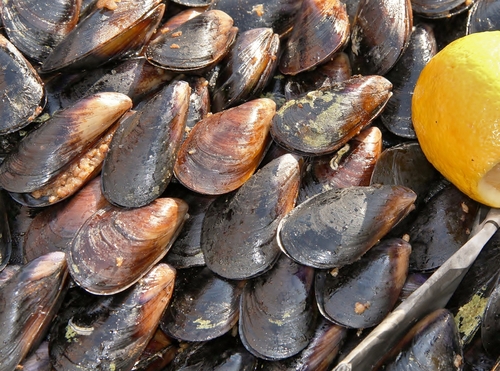
Believe it or not, mussels in Seattle are testing positive for opioids. Mussels are what are known as “filter feeders” since they absorb food from their surrounding environment. The problem that is surfacing is demonstrating the difference between “pollution” and “climate change,” which so many people assume are the same thing. Mussels absorb also all contaminants from their environment into their tissues. Scientists in Seattle used cages to transplant clean mussels from an aquaculture source to 18 urbanized locations around Puget Sound. After a few months, they recovered the mussels from the urban waters and tested them.

In three of the 18 locations they selected, the mussels shockingly tested positive for trace amounts of oxycodone. It seems the mussels are getting high. What is happening is that humans are ingesting opioids and excreting traces of the drugs into the toilet. Those chemicals in turn then end up in wastewater because not all contaminants can be filtered out of wastewater. Then the city ejects the wastewater into Puget Sound and we end up getting the sea life high.

You might want to avoid “fresh” catches around major cities.