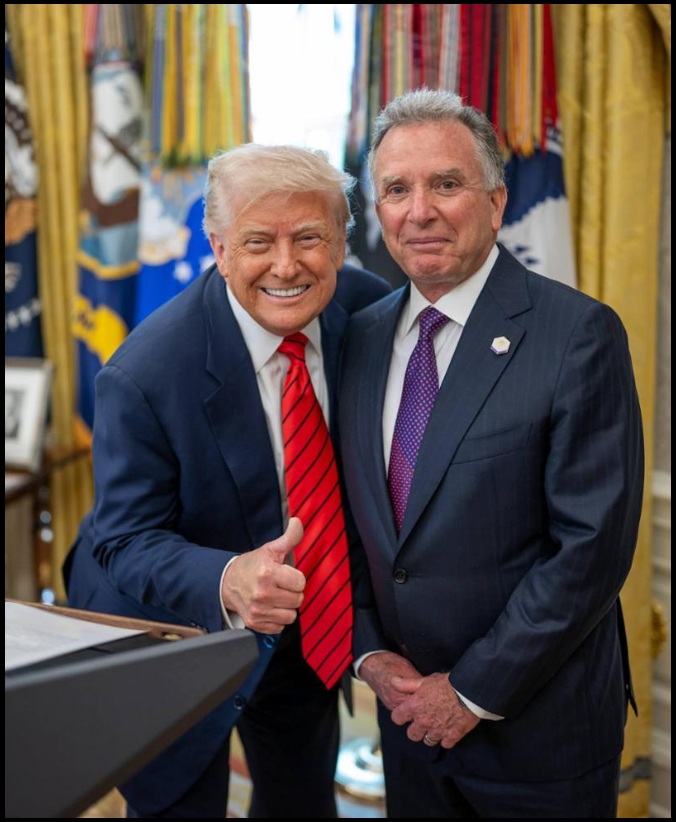
Seth Keshsel: America’s War on Election Corruption


Posted originally on Rumble on Bannon War Room on: March 12, 2026

AI, the Pentagon, and the Surveillance State


Posted originally on Mar 13, 2026 by Martin Armstrong |  

OpenAIResignation

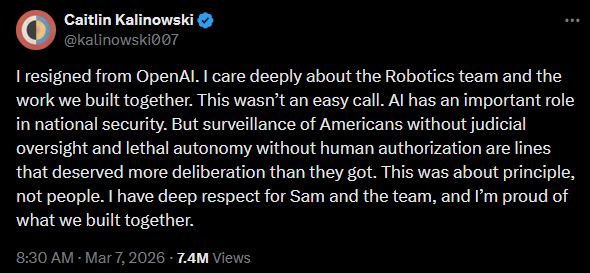
The resignation of Caitlin Kalinowski from OpenAI has triggered a debate that goes far beyond Silicon Valley. Kalinowski stepped down shortly after the company entered into an agreement with the United States Department of Defense to deploy its artificial intelligence models on government systems. The issue was not simply the partnership itself, but the speed at which the decision was made and the implications for how such powerful technology could be used as a weapon against American citizens.

“I resigned from OpenAI. I care deeply about the Robotics team and the work we built together. This wasn’t an easy call.” She was not rejecting national defense outright. She even acknowledged that “AI has an important role in national security.” Yet she warned that certain lines had been crossed. In her own words, “surveillance of Americans without judicial oversight and lethal autonomy without human authorization are lines that deserved more deliberation than they got.”

Image

When someone inside the system walks away and raises that type of alarm, you should pay attention. For years, I have warned that governments are steadily constructing the infrastructure necessary to monitor populations in ways previous generations could not even imagine. After the September 11 attacks, intelligence agencies dramatically expanded their surveillance powers under the banner of protecting national security through the Patriot Act. Phone data, internet activity, and financial transactions became data points feeding enormous intelligence databases. The public was told these programs were narrowly targeted at foreign threats. Behind the curtain, the databases were growing larger every year. Governments now have access to EVERYTHING we do.

What most people do not realize is that the financial system was also pulled into this surveillance web. I have written before that governments began monitoring bank accounts and financial transfers on a scale that few citizens fully appreciate. Under the administration of Obama, programs quietly expanded to allow intelligence agencies to track international banking activity, financial flows, and transaction patterns in the name of national security. Those systems became permanent fixtures inside the intelligence community.

The trend accelerated under Joe Biden, when federal agencies aggressively pushed for greater reporting requirements from banks and financial institutions. Governments argued this was necessary to combat tax evasion, money laundering, and illicit activity. The financial behavior of ordinary citizens came under scrutiny, and Biden’s team was caught red-handed spying on anyone who supported his adversary. Donated to Trump? You’re on a list to be monitored. Hold religious beliefs that do not coincide with current political leanings? Anyone who purchased a Bible was placed on a list. Your bank account, your transactions, and even your spending patterns increasingly became part of enormous government databases.

What Kalinowski exposed is that the next phase is already underway. Once AI becomes embedded in national security systems, the surveillance state moves to an entirely new level. Governments will have the ability to monitor populations in real-time. Populations—not merely persons of interest—but the entire population. The people operating these systems are rarely elected officials. They are bureaucrats, intelligence officers, and agencies operating behind the curtain where the public has almost no visibility. Then the power is placed into the hands of a computer system that can instantly flag and target people or groups without moral discernment.

This is why the Kalinowski resignation matters. She warned openly about AI being used for domestic surveillance without oversight. Once these systems are integrated into government networks, the temptation to expand them becomes irresistible. Governments always claim these tools are necessary for security. But history shows that the definition of “security” tends to expand until it includes monitoring the population itself.

What is even more revealing is that officials within the Pentagon have already begun describing certain advanced AI systems as potential national security risks if they cannot be controlled by the government. In other words, artificial intelligence itself is now viewed as a threat unless it is firmly under the state’s control. That should tell you everything you need to know about where this is heading.

Do not assume these systems will remain limited to foreign adversaries. Surveillance infrastructure rarely stays confined to its original mission. Once built, it inevitably expands. The technology now exists to construct the most comprehensive monitoring system ever devised in human history. And if you think governments will not use it, you have not been paying attention.

AI’s Power Hunger


Posted Mar 13, 2026 by Martin Armstrong |  
AI.DataCenter

The biggest constraint on artificial intelligence is not chips, software, or capital. It is electricity. Now the tech giants are finally admitting it. Seven major companies, including Amazon, Google, Microsoft, Meta, OpenAI, Oracle, and xAI, have signed a pledge committing to supply or finance their own power generation for the massive AI data centers they are building. The agreement essentially states that these firms will build or purchase new electricity sources and pay for the infrastructure needed so that the exploding demand for AI computing does not drive up electricity costs for ordinary consumers.

Data centers were once a background piece of infrastructure. AI has changed that completely. The energy requirements of AI computing are on an entirely different scale. Analysts now say AI data centers consume an order of magnitude more power than traditional server warehouses because of the massive computing loads required to run advanced models.

The numbers are staggering. U.S. data center electricity demand is expected to surge dramatically, reaching roughly 75.8 gigawatts in 2026 and potentially more than 134 gigawatts by 2030. Meanwhile, the Department of Energy estimates data centers could consume between 6.7% and 12% of all U.S. electricity by 2028. Global projections are even more dramatic, with data center electricity consumption potentially reaching hundreds of terawatt-hours annually as AI infrastructure expands worldwide.

Anyone who has followed my work already knows this problem was inevitable. I wrote previously that an electricity crisis was on the horizon precisely because governments were pursuing contradictory policies. They pushed electrification of everything from cars, heating systems, and industry while simultaneously shutting down reliable power generation and blocking new nuclear development. Then, suddenly, the world discovers AI requires an entirely new layer of energy infrastructure.

Even utilities are now warning that electricity demand is entering a new phase of rapid growth. After years of relatively flat consumption, U.S. power usage is expected to hit record levels in both 2026 and 2027, driven largely by AI data centers and the electrification of industry and transportation.

This is why the tech companies are suddenly pledging to build their own power sources. Local communities and utilities have begun pushing back against massive data center projects that could strain power grids and raise electricity costs for consumers. The pledge is essentially an attempt to reassure regulators and voters that the AI boom will not destabilize the energy system.

But this only highlights the deeper structural issue. Electricity infrastructure takes years or decades to build. AI demand is exploding now. The result is a growing gap between technological expansion and energy capacity. The irony is remarkable. Governments around the world spent years lecturing the public about reducing electricity consumption while simultaneously promoting industries that require exponentially more power. Artificial intelligence is not just a technological revolution, it is also an energy revolution.

If electricity supply does not expand dramatically, AI growth itself could hit a hard physical limit. The warning signs are already appearing. Tech companies are reopening nuclear plants, building dedicated power facilities, and now pledging to generate their own electricity simply to keep AI infrastructure running. When private companies begin building power plants to support their software, you know the system has reached a turning point.

When the Government Demands to Inspect Your Home


Posted originally on Mar 13, 2026 by Martin Armstrong |  

Government Oppression

The push to ban firearms in the United States never really stops. It simply advances in stages. Minnesota has now produced one of the more revealing examples of how far some politicians are willing to go. Democratic lawmakers are proposing legislation that would ban many semiautomatic rifles and magazines while forcing citizens who already own them to register their firearms and submit to government inspections inside their own homes. The proposal effectively says that if you wish to keep a legally purchased firearm, the government must first be allowed to verify how you store it.

According to the legislation, gun owners would need to obtain a certificate to keep firearms that the state plans to prohibit going forward. Even more troubling is the requirement that law enforcement be permitted to inspect the owner’s residence to verify compliance with storage rules. In other words, the state is asserting the authority to enter private homes to ensure obedience to government mandates.

The constitutional problems are obvious. The Second Amendment to the United States Constitution explicitly states that the right of the people to keep and bear arms shall not be infringed. The rifles being targeted are not rare or exotic weapons; they are among the most commonly owned firearms in the country. The courts have repeatedly acknowledged that arms in common use fall within the protection of the Constitution. Attempting to ban them outright invites a direct constitutional conflict.

At the same time, the proposal collides head-on with the Fourth Amendment to the United States Constitution. That amendment was written precisely to prevent the government from entering a citizen’s home without proper cause and a warrant. Yet Minnesota’s proposal essentially conditions the ownership of private property on allowing police access to your residence. If you refuse, you lose the right to keep the firearm. This is a remarkable inversion of the principle that government power must be limited by the Constitution rather than the other way around.

Throughout history, governments have always preferred populations that are dependent and compliant. An armed citizenry is far more difficult to control. That is why the debate is rarely just about crime. Just look at Minnesota, a state riddled with fraud against taxpayers. The attention instead falls on the law-abiding citizens who legally purchased firearms and followed every rule imposed by the government. Politicians refuse to acknowledge the problems plaguing society unless those problems personally affect their campaigns.

Laws that directly challenge the Second and Fourth Amendments will almost certainly end up in the courts. The real question is whether the Constitution still serves as a meaningful restraint on government power or whether legislators now believe they can simply rewrite those limits whenever political convenience demands it.

Wars Change Politics Not Just Destroy Targets


Posted originally on Mar 13, 2026 by Martin Armstrong |  

shutterstock_2753474293

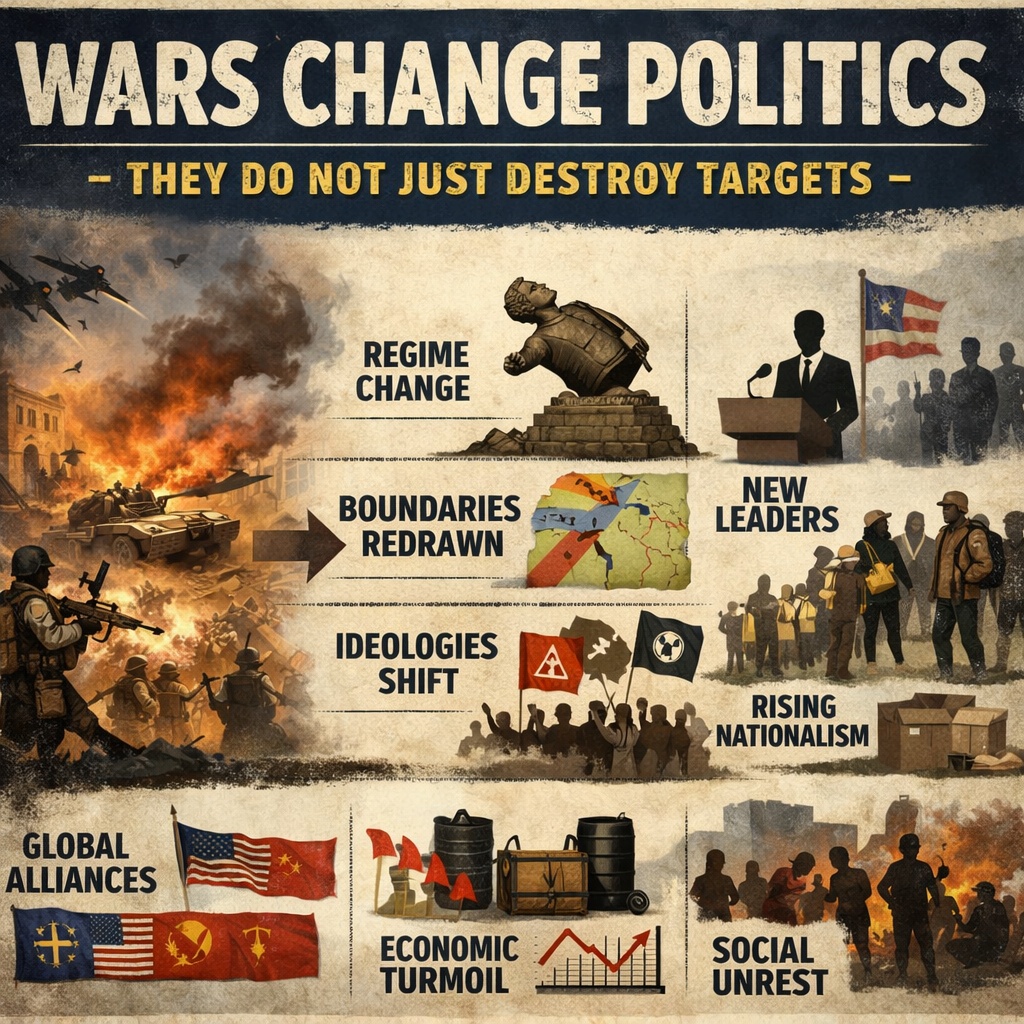
Perhaps the greatest misunderstood reality of war is that people may focus on the tactical victory of eliminating a target, but there is far more to war than merely blowing up buildings or defeating an army on the battlefield. War always results in political change in both the victor and the vanquished. What is taking place right now in the Middle East will reshape the entire region and will forever cement the image of the United States as the imperial empire. President Donald Trump stated that the next supreme leader of Iran “is not going to last long” without his approval. He emphasized that the new leader must gain approval from the United States to ensure stability and prevent future threats. That is an image of an arrogant imperialist invader from colonial days.

Wars definitively reshape politics on both sides. It may embolden the victor to believe they are invincible, but it forever instills hatred and resentment in the minds and souls of the vanquished. Netanyahu’s wish list to destroy Iran will NOT secure some sort of magical long-term victory. It will only secured a deeper and more formidable enemy for centuries. The computer is warning of a serious Directional Change in 2027 and this may all explode in 2028.

Iran’s newly appointed supreme leader, Ayatollah Mojtaba Khamenei, said on March 12 that closing the Strait of Hormuz must remain an option and vowed retaliation for Iranians killed in the conflict, according to Iran’s state news agency Islamic Republic News Agency (IRNA). Mojtaba Khamenei did not appear on camera during the broadcast. Israeli claim he may have suffered a leg injury during attacks targeting his father’s bunker. He is said to be more hardline than his father, who was against nuclear weapons. These attacks have flipped the table and increased the chance for nuclear war. The new supreme leader signaled that Iran would pursue a prolonged campaign of retaliation. He wrote:

I assure everyone that we will not refrain from avenging the blood of your martyrs,” he added that each civilian killed by Iran’s enemies constituted a separate case for revenge.

The killing of a family member in a war is one of the most powerful and personal forces that can instill a deep, lasting hatred for the perceived enemy.
The warmongers never look at the human cost of war. The death of every civilian creates a personalization of the conflict. For most people, war is an abstract concept discussed in the news or history books. But when a family member is killed, the war becomes brutally personal. The abstract “enemy” is no longer a faceless soldier or a foreign government; they become the specific people who murdered my son/daughter/father/mother.

Grief is an overwhelming emotion that needs an outlet. Anger is often the most accessible and powerful form that grief takes, especially in the context of a violent death. Hatred for the enemy provides a clear, focused target for that rage and pain. It can feel better to hate someone than to be consumed by bottomless sorrow.

When a loved one dies in a seemingly senseless act of violence, the human mind struggles to find meaning. Believing that they died fighting a monstrous, hateful enemy can be a way to make sense of the senseless. It elevates their death from a random tragedy to a sacrifice in a just cause against evil – a martyr.

Perikles_Funeral_Oration_Speech

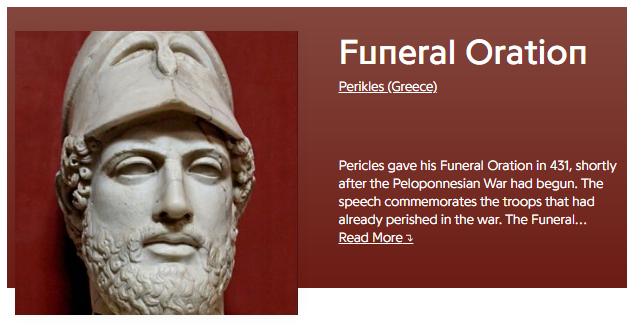
Perikles began the funeral oration for the first fallen in the Peloponnesian War.

“I shall begin with our ancestors: it is both just and proper that they should have the honour of the first mention on an occasion like the present. They dwelt in the country without break in the succession from generation to generation, and handed it down free to the present time by their valour. And if our more remote ancestors deserve praise, much more do our own fathers, who added to their inheritance the empire which we now possess, and spared no pains to be able to leave their acquisitions to us of the present generation. Lastly, there are few parts of our dominions that have not been augmented by those of us here, who are still more or less in the vigour of life; while the mother country has been furnished by us with everything that can enable her to depend on her own resources whether for war or for peace.”

Perikles invoked the ancestors and we are witnessing the same in Iran, which they prefer to call Persia. This individual hatred is often reinforced by the broader society at war. Propaganda, national narratives, and community mourning all work to channel personal grief into collective anger against the enemy. Funerals for soldiers become patriotic events, explicitly linking personal loss to national duty and framing the enemy as deserving of that hatred.

This is perhaps the most tragic aspect. A death in the family creates a powerful desire for vengeance—an eye for an eye. This desire can be passed down through generations, fueling conflicts that last for decades or even centuries. The loss becomes a family story, a sacred wound that justifies continued animosity.

Just as in the West Bank or Gaza, when a Palestinian child whose home is destroyed and whose parent is killed by Israeli forces, undoubtedly grows up with a profound hatred for Israelis. This is taking place in Iran right now. War is far more profound than merely bombing buildings and destroying targets.

Alexander the Great Battle Issus Darius III

In the case of Iran, Persia was conquered three times in history. First by Alexander the Great 334–330 BC The Macedonian king defeated the Achaemenid Empire, ending Persian rule for a time. Secondly, by Arab Muslims 636–651 AD Islamic armies conquered the Sassanian Empire, incorporating Persia into the Caliphate. The third times was by the Mongol Empire 13th Century Genghis Khan and later Hulagu Khan’s invasions devastated Persia. These are events that were not forgotton.

War Emotional Scars s

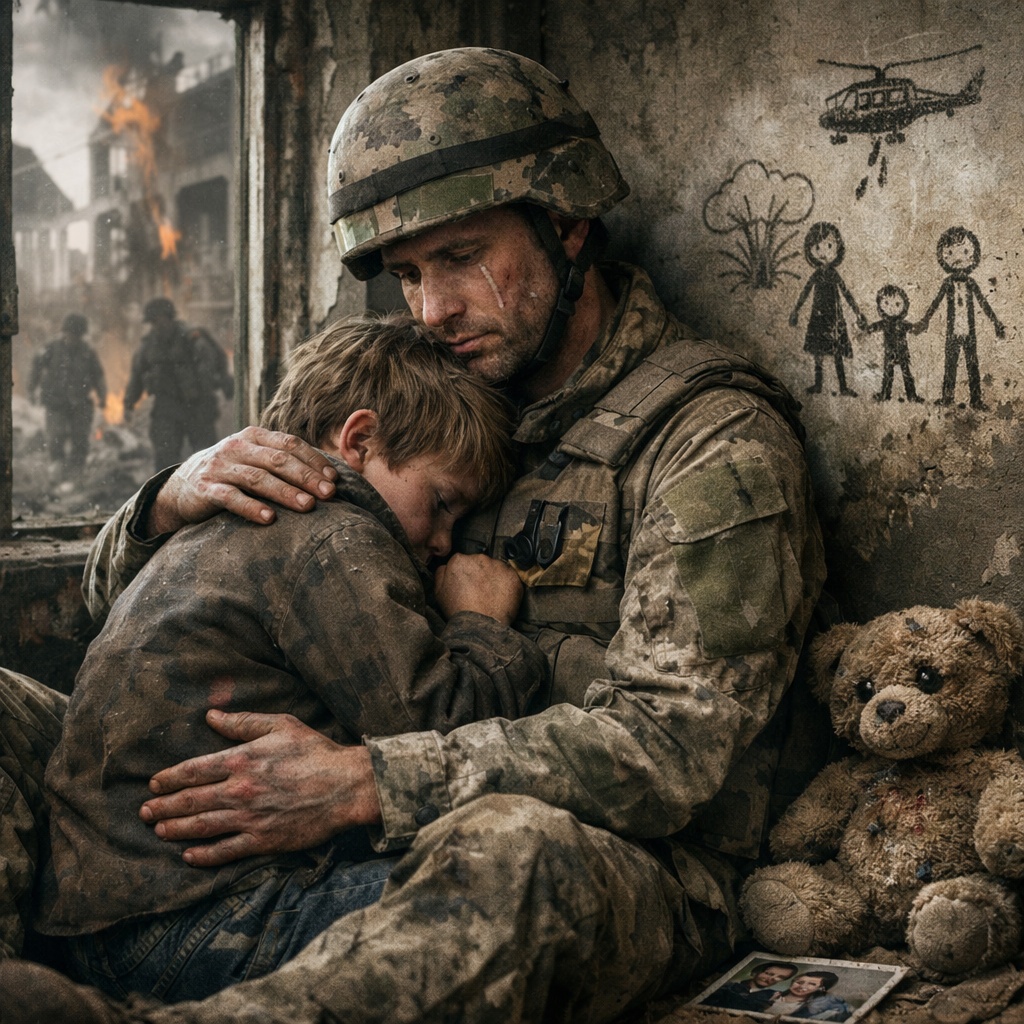
Wars don’t just leave behind physical destruction and political changes; they leave behind deep, lasting, and often invisible emotional and psychological scars on individuals, families, and entire societies for generations. These emotional wounds are often categorized under the umbrella of trauma. The most well-known diagnosis is PTSD (Post-Traumatic Stress Disorder) , but the scars are broader and more complex.

There are deep emotional and psychological distress that results from committing, witnessing, or failing to prevent acts that violate a person’s core moral or ethical beliefs. A soldier may feel profound shame and guilt for actions they were ordered to take in war.

I know people who have worked with veterans. What they have witnessed is that those who returned from Vietnam are angry compared to those from World War II. They are angry for what they now see was an unjust war.
This is one of the most profound and heartbreaking aspects. The emotional scars of war are not confined to those who experienced it directly. They can be transmitted to children and even grandchildren. The children and grandchildren of Holocaust survivors have been extensively studied for the effects of intergenerational trauma.

In the United States, we see the legacy of trauma in the families of veterans from the Vietnam, Iraq, and Afghanistan wars.

In countless communities around the world—from Rwanda to the Balkans to the Middle East—the trauma of past conflicts continues to shape politics and personal identities decades later.

In short, the emotional scars of war are a hidden but remain as a powerful legacy. They can turn personal grief into generational hatred. They are a reminder that the cost of war is counted not only in lives lost but in lives forever changed. This profoundly changes the politics on both sides.

Based on current statements and analyses from Israeli Prime Minister Benjamin Netanyahu and other officials, Israel’s goal is not to “destroy Iran” in the sense of annihilating its land or people. Instead, their stated objective is far more specific: to bring about the downfall of the current Islamic Republic regime in Tehran – Regime Change.

Both the Italian and Russian Mafia are afraid of the Albanian Mafia. Why? It comes back to culture. Albanian criminal groups, their primary goal is not always to kill family members to prevent future retaliation. However, they absolutely target family members as a key tactic in their conflicts. This often has the effect of creating cycles of vengeance that can span generations. They are famous for Albania’s ancient tradition of the blood feud, known as the Kanun, for their own purposes.

This has been a cultural system to deter violence through fear of reciprocal revenge; an “early version of a mutually assured destruction pact.” Family members are seen as legitimate targets, especially when the primary target cannot be found. Strict rules, e.g., you cannot take revenge for a family member killed while committing an immoral act (like a crime). The Kanun is “misused” to justify any killing, including murdering a rival’s family to force them into hiding or to retaliate.

The Russian and Italian Mafia often comment on the Albanians and they will kill you, the wife, children, and the dog to prevent a blood feud. This does address the similar results from war, which the Neocons and warmongers never consider.


EXAMPLES:

The story of Wasil Ahmad during the War in Afghanistan (Taliban insurgency) is a classic example of intergenerational rage. At age 8, his father and uncles were killed by the Taliban. He trained to fight and, as a young teen, fought against the Taliban, becoming a legendary commander in his valley before being killed. There are many other examples that the warmongers pay no attention to the human cost of war.

Napoleon’s defeat at Waterloo didn’t just score a victory for the English; it created a whole new political paradigm in France. It temporarily restored the Bourbon monarchy under Louis XVIII, who had been waiting in exile with British support. This wasn’t a revolutionary transformation—it was a counter-revolution.

Nevertheless, even after the monarchy was restored, there was deep-seated resentment of the English. That came rushing to the forefront with Charles De Gaulle. The language became a symbol of that defeat, as the view became that Napoleon had won, the world would be speaking French instead of English. De Gaulle even attempted to borrow English words from the French language.

Language was incorporated into de Gaulle’s nationalism. He assumed that, had Napoleon won at Waterloo, the world would have been speaking French instead of English. As the Associated Press reported back in April 1967, when de Gaulle ordered all 440 NATO installations and troops to be removed from France, he was very much against any American words entering the French language.

De Gaulle established institutions like the *Délégation générale à la langue française (General Delegation for the French Language) to combat the spread of English terms. While many ‘Americanisms’ remained in everyday French vernacular, his efforts reflected a broader resistance to U.S. cultural hegemony. De Gaulle and his government promoted policies to preserve the purity of French, leading to measures such as the Loi Bas-Lauriol (1975), which later evolved into the Toubon Law (1994), mandating the use of French in official contexts. Some of the main American-adopted words he most opposed included:

De Gaulle’s nationalism and hatred of Americans and British led to his first assault on the United States, which took place on February 4th, 1965, where he expressed doubts about the dollar’s impartiality and suitability as an international trade medium. It was De Gaulle who attacked the dollar, demanding gold to drain the reserves and eventually forcing the collapse of Bretton Woods in 1971. He also disliked the British and supposedly said, “Belgium is a country invented by the British to annoy the French.”

The loss of Germany in World War I and the harsh reparation payments were the primary reasons for the rise of Hitler in 1933. All of that was set in motion when the French surrendered to the Germans

The first Treaty of Versailles was signed on February 26, 1871, ending the Franco-Prussian War and directly linked to the formation of the German Empire.

To be precise, the German Empire was proclaimed on January 18, 1871, at the first Treaty of Versailles, which was signed shortly after to formally end the war that made its unification possible. This was why the French insisted on a second Treaty of Versailles at the end of World War II.

Kristol Irving Neocon

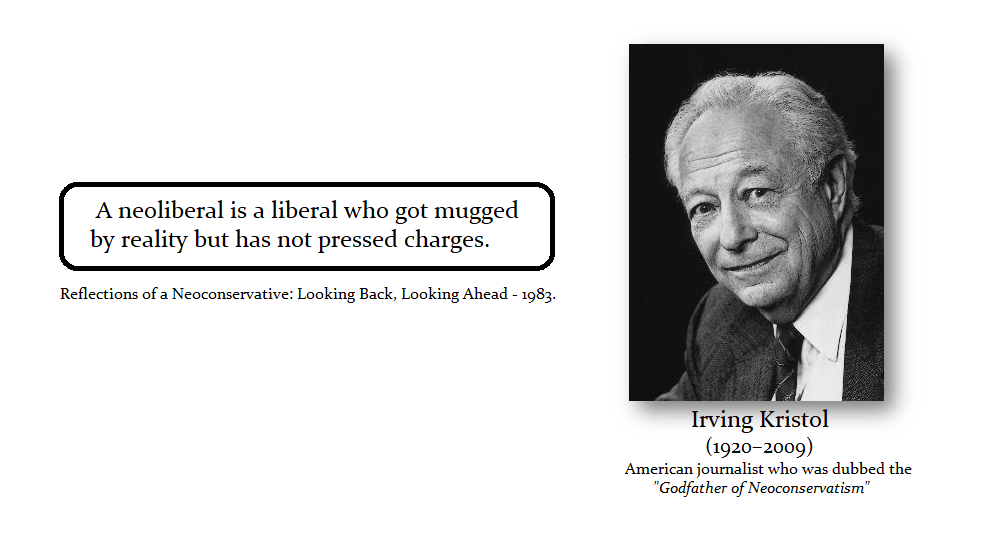
During the 1940-1950s, this was the beginning of the rise of the Neocons. The future founders of neoconservatism were still left-wing anti-communist liberals. Thinkers like Irving Kristol and Daniel Bell were intellectuals in New York, but they were part of the liberal anti-communist tradition rather than a separate conservative movement. The Red Scare faded after McCarthy’s censure in 1954.

This is the formative period for neoconservatism. Disturbed by the New Left, the counterculture, and what they saw as the Democratic Party’s move away from a robust anti-communist foreign policy, these intellectuals began to define their own path. They coalesced around magazines like Commentary and The Public Interest.

During the 1970s into the early 1980s, the Neoconservatives gained political power. Disillusioned with the Carter administration’s foreign policy, many neoconservatives, such as Jeane Kirkpatrick and Elliott Abrams, moved to the Republican Party and became influential in the Reagan administration, shaping its Cold War strategy.

End Times & Sharing Power


Posted originally on Mar 12, 2026 by Martin Armstrong |  

2026_03_12_22_52_24_Netanyahu_equates_Iranian_regime_to_ancient_biblical_foe_Middle_East_Monitor

QUESTION: Do you think that Netanyahu has deliberately dragged Trump into his war? It has been his life’s mission to destroy Iran, whom he sees as the Amalek of 1 Samuel 15:2-3!

RB

ANSWER: I believe that the Neocons have cleverly created the FIRST war where we are NOT in charge. Netanyahu is a diehard Neocon, who hung out with Irving Kristol in Philadelphia, who was the godfather of the Neocon movement. To me, this is a serious RED FLAG!!!!!

In 2024, in his Knesset speech, Netanyahu said: “I’ve been warning about Iran for 30 years.”  It was reported on March 3rd, during a visit to a site struck by an Iranian missile, Netanyahu stated: “We read in this week’s Torah portion, ‘Remember what Amalek did to you.’ We remember—and we act.”

In 1 Samuel 15:2-3, God gives King Saul a specific, direct order to carry out this command. The prophet Samuel relays the message: “This is what the LORD Almighty says: ‘I will punish the Amalekites for what they did to Israel when they waylaid them as they came up from Egypt. Now go, attack the Amalekites and totally destroy all that belongs to them. Do not spare them; put to death men and women, children and infants, cattle and sheep, camels and donkeys. ‘”

The harshness of the command in 1 Samuel has disturbed Jewish scholars for centuries, leading to various interpretations that move beyond a literal call for genocide. If Netanyahu believes that genocide is the command of God, that is NOT in the self-interest of the United States. He knows you cannot accomplish regime change from the air. This is the very first time when we are in a partnership with another country who is really calling the shots here where the interests of Netanyahu are by no means the same national interest of the United States.

Merkel_Minsk_Buy_Time_to Prepare for wart

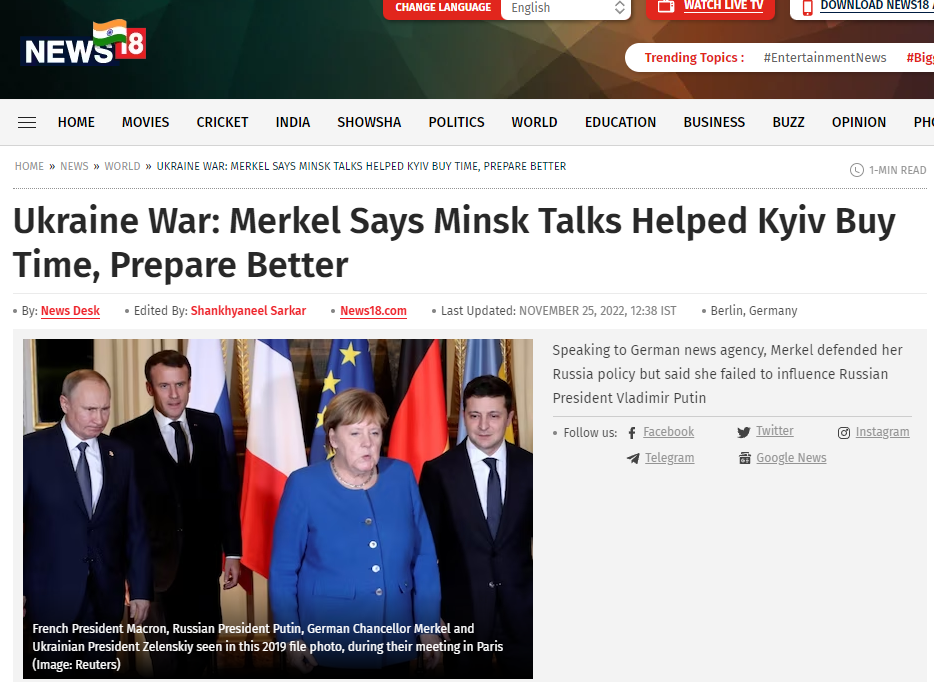
Killing the Ayatollah while in the midst of negotiation was revolting and it raises the clear precedent that you cannot now trust the United States to engage in negotiations in good faith. Like Merkel refusing to honor the Minsk Agreement, Europe has demonstrated they cannot be trusted to negotiation in good faith. Killing the Ayatollah on day one was a clear message that there is to be no peace with Iran. This is all about the total destruction of the Islamic Republic.

Trump has been implying the use of nuclear weapons. On FEBRUARY 28, 2026 POST-STRIKE, Trump said:

“We have capabilities Iran cannot imagine. If they retaliate, there will be nothing left.”

Here is my concern. Israel has nukes and already believes that they must utterly destroy the Islamic Republic. Looking at Netanyahu’s reference to Amalekites being the Persians, this passage calling for genocide right down to the elimination of even their cattle and sheep, camels and donkeys, I cannot feel comfortable that Netanyahu will not order a nuclear strike if the destruction of Israel is now a possibility.

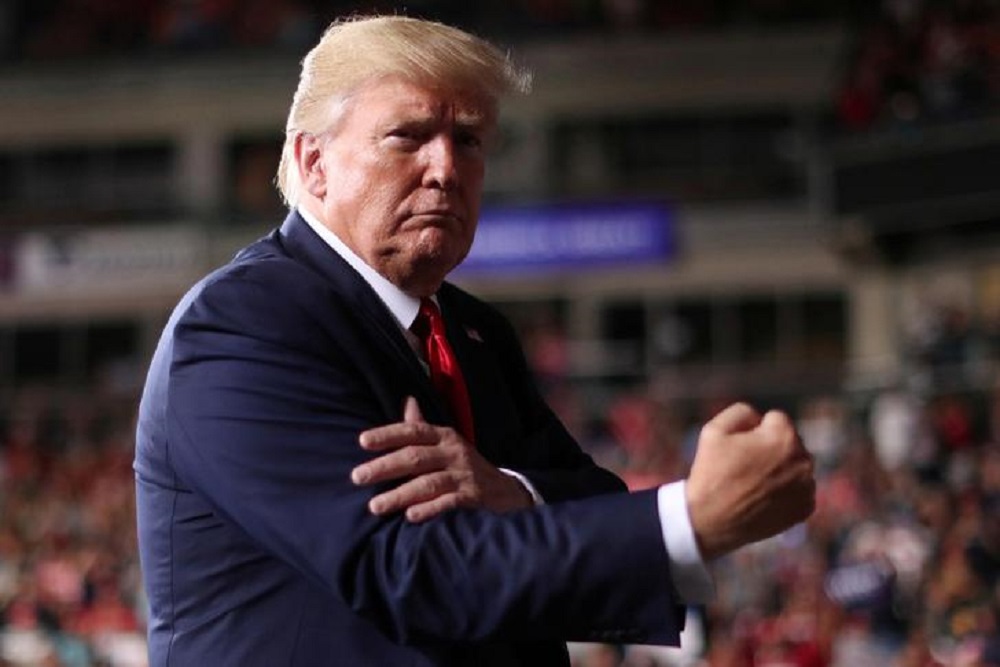
We are by no means in charge of this war. Netanyahu would love nothing more than to see Trump commit American ground troops. White House Press Secretary Karoline Leavitt on March 8th refused to rule out ground troops or a military draft. The Neocons know Trump well. They know he does not like to lose so dragging him into this war was their brilliant strategy to ensure that he will see this until the end.

End Times Armageddon

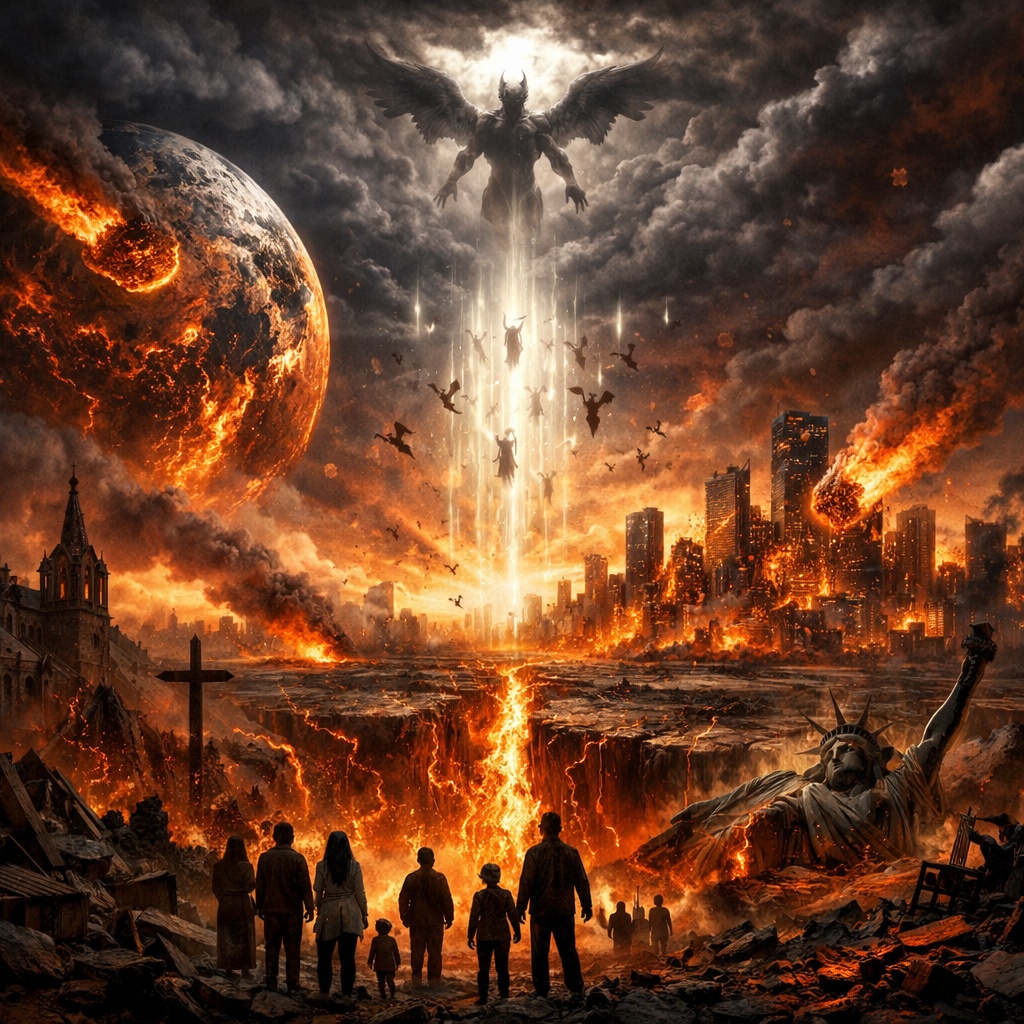
To the Shia Muslims, this is a battle against the devil. Netanyahu has ensured killing the Ayatollah has invoked their end times views just as he has done the same. This appears to be a religious war that does not look good. It does not appear to be over quickly either.

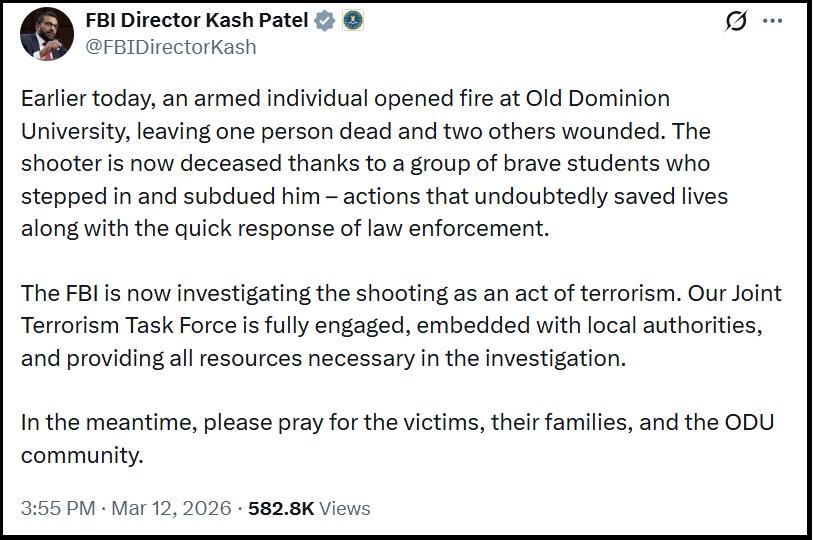
Known Wolf – Former Convicted ISIS Sympathizer Opens Fire at Old Dominion University, Killing Professor Wounding Two


Posted originally on CTH on March 12, 2026 | Sundance 

How was this previously convicted ISIS supporter allowed out of prison and not deported?  A ridiculously avoidable terrorist incident has unfolded at Old Dominion University in Virginia.

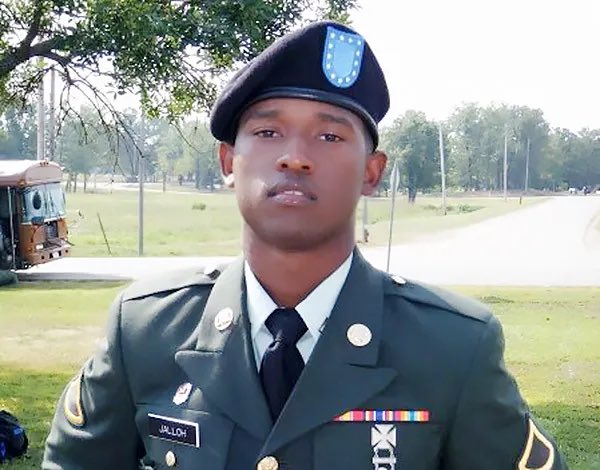
Mohamed Jalloh was born in Sierra Leone, became a naturalized US citizen, was radicalized by al-Qaeda, was then convicted for providing material support to ISIS in 2017 and sentenced to 11 years in prison; then released from prison early in 2024 under Biden.

NEW YORK POST – The madman who opened fire at Old Dominion University on Thursday, killing a retired military officer instructing an ROTC class, has been identified as an ex-National Guard soldier convicted of trying to support ISIS, The Post has learned.

Mohamed Bailor Jalloh, 36, stormed into a classroom inside ODU’s Constant Hall and asked if it was an ROTC class. When someone confirmed that it was, he launched the suspected terror attack, shooting the professor several times, law enforcement sources said.

A heroic ROTC cadet at the Virginia school jumped to action to prevent more carnage, stabbing Jalloh to death after the crazed suspect gunned down the class instructor, the sources said. (read more)

[SOURCE]

USTR Greer Announces Launch of Sec 301 Trade Investigations into 16 Economies Including the EU


Posted originally on CTH on March 12, 2026 | Sundance 

When the Supreme Court made their ridiculous decision to nullify the import tariffs under the International Emergency Economic Powers Act (IEEPA) use, the high court noted several alternate approaches would not be legally problematic.  One of those approaches would be the use of Section 301 trade tariffs.

Yesterday USTR Jamieson Greer quietly announced that a Section 301 review would be taking place for the following countries: China, the European Union, Singapore, Switzerland, Norway, Indonesia, Malaysia, Cambodia, Thailand, Korea, Vietnam, Taiwan, Bangladesh, Mexico, Japan, and India.”

♦ Section 301 tariffs are a trade enforcement mechanism established under the Trade Act of 1974. They allow the U.S. government to impose tariffs on imports from countries that are found to be engaging in unfair trade practices. The Office of the United States Trade Representative (USTR) conducts investigations to determine if a country is violating trade agreements, and if so, it can impose tariffs as a corrective measure {SOURCE}

USTR PRESS RELEASE – WASHINGTON — Today, United States Trade Representative Jamieson Greer announced the initiation of investigations regarding the acts, policies, and practices of various economies under Section 301(b) of the Trade Act of 1974 relating to structural excess capacity and production in manufacturing sectors.

The investigations will determine whether those acts, policies, and practices are unreasonable or discriminatory and burden or restrict U.S. commerce. The economies subject to these investigations are: China, the European Union, Singapore, Switzerland, Norway, Indonesia, Malaysia, Cambodia, Thailand, Korea, Vietnam, Taiwan, Bangladesh, Mexico, Japan, and India.

“The United States will no longer sacrifice its industrial base to other countries that may be exporting their problems with excess capacity and production to us. Today’s investigations underscore President Trump’s commitment to reshore critical supply chains and create good-paying jobs for American workers across our manufacturing sectors,” said Ambassador Greer.

“The Trump Administration’s reindustrialization efforts continue to face significant challenges due to foreign economies’ structural excess capacity and production in manufacturing sectors. Across numerous sectors, many U.S. trading partners are producing more goods than they can consume domestically. This overproduction displaces existing U.S. domestic production or prevents investment and expansion in U.S. manufacturing production that otherwise would have been brought online. In many sectors, the United States has lost substantial domestic production capacity or has fallen worryingly behind foreign competitors.” (read more)

Additionally, Section 232 [Steel and Aluminum examples] of the Trade Expansion Act of 1962 (19 U.S.C. §1862, as amended) authorizes the President to impose trade restrictions—such as a tariff or quota—if the Secretary of Commerce determines, following an investigation, that imports of a good “threaten to impair” U.S. national security. {SOURCE}

Section 232 is currently covering all the steel and aluminum import tariffs.

Section 122 of the Trade Act of 1974 allows the U.S. president to impose tariffs of up to 15% to address “large and serious” balance-of-payments deficits. This authority can be exercised without prior congressional approval for a limited duration of 150 days. After this period, any tariffs must be extended by Congress. {SOURCE}

Section 122 has already been deployed to retain the “baseline reciprocity tariffs.”

USTR Greer is now walking through the process of deploying Section 301 and will eventually become the legal underpinning to replace Section 122 and retain all tariff status without congressional extension needed.   Most of this is technical and legal compliance as several of the aforementioned nations have already finalized free trade agreements.

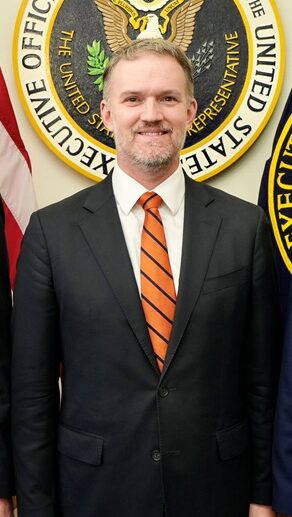
Democrat Senator Ruben Gallego Urges President Trump to Renegotiate USMCA


Posted originally on CTH on March 12, 2026 | Sundance

It is transparently obvious now that Canada is going to rely on UniParty (Corporate) opposition to President Trump in the dissolution of the USMCA (CUSMA) in favor of two distinctly different bilateral trade agreements; one with Canada and one with Mexico.

A bilateral trade negotiation between the United States and Canada would be devastating to the interests of the Canadian government.  Particularly after the Venezuela operation and new strategic relationship with the United States, Canada has almost zero points of leverage to negotiate anything similar to their current exploitative trade position.

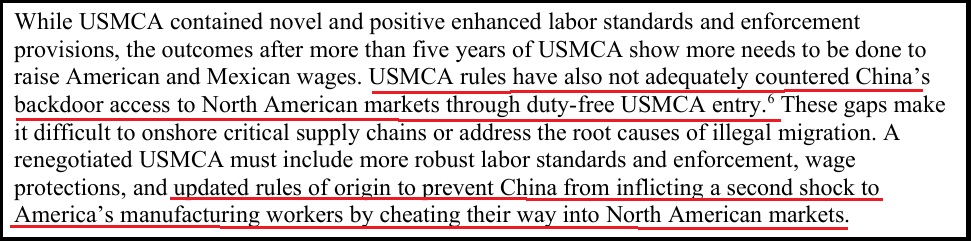
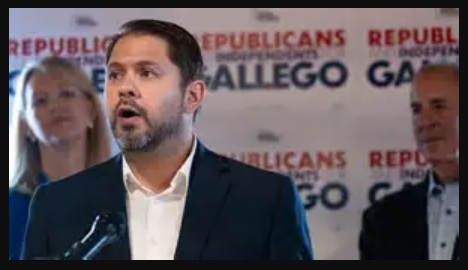
Canada is going to rely on congress to stop Trump from forcing reciprocity in the bilateral discussions. However, as a positive indicator that President Trump will factually have congressional support for the elimination of the USMCA, Democrat Senator Ruben Gallego has written a letter to President Trump requesting a comprehensive review. [LETTER HERE]

[SOURCE]

This is a key Senate democrat who notes the problem.  One of Gallego’s top points of concern is the loophole that Canada uses to assemble Chinese component parts into finished goods for tariff free distribution into the United States.

Ever since President Trump won the 2024 election, Mexico has been taking proactive independent action to block Chinese component goods. But Canada has done the opposite and begun to enhance their trade relationship with China to take even more Chinese component and finished goods.

Gallego writes to U.S. Trade Representative Jamieson Greer from the position of wanting to increase wages and enhance jobs in both Mexico and the USA, growing both economies. However, Gallego’s advocacy simultaneously bolsters why the USMCA should be dissolved and also puts Canada at a distinct disadvantage.

MEXICO – Mexico’s President Claudia Sheinbaum told reporters during her morning news briefing on Wednesday that her U.S. counterpart, Donald Trump, is open to doing away with the U.S.-Mexico-Canada trade agreement (USMCA) and replace it with individual trade deals with each country.

[…] “There might be revisions that create bilateral deals instead of involving the three countries because some things are more important between Mexico and the United Sates or between Canada and the United States,” said Sheinbaum. “Not everything has to be trilateral.”

Mexico’s president said the subject was brought up by Trump during a Tuesday phone conversation. […] According to Sheinbaum, her country is ready to consider possible changes. (read more)

Just like the original NAFTA dissolution, if Senate democrats agree the USMCA is structurally flawed then Canada will lose its only hope to retain the trilateral agreement.

It appears that some Senate democrats like Gallego recognize this issue and support the need for exceptional change.

There is a significant difference between Mexico and Canada as it pertains to trade.  Two distinctly different bilateral trade agreements would be the best outcome for the USA.

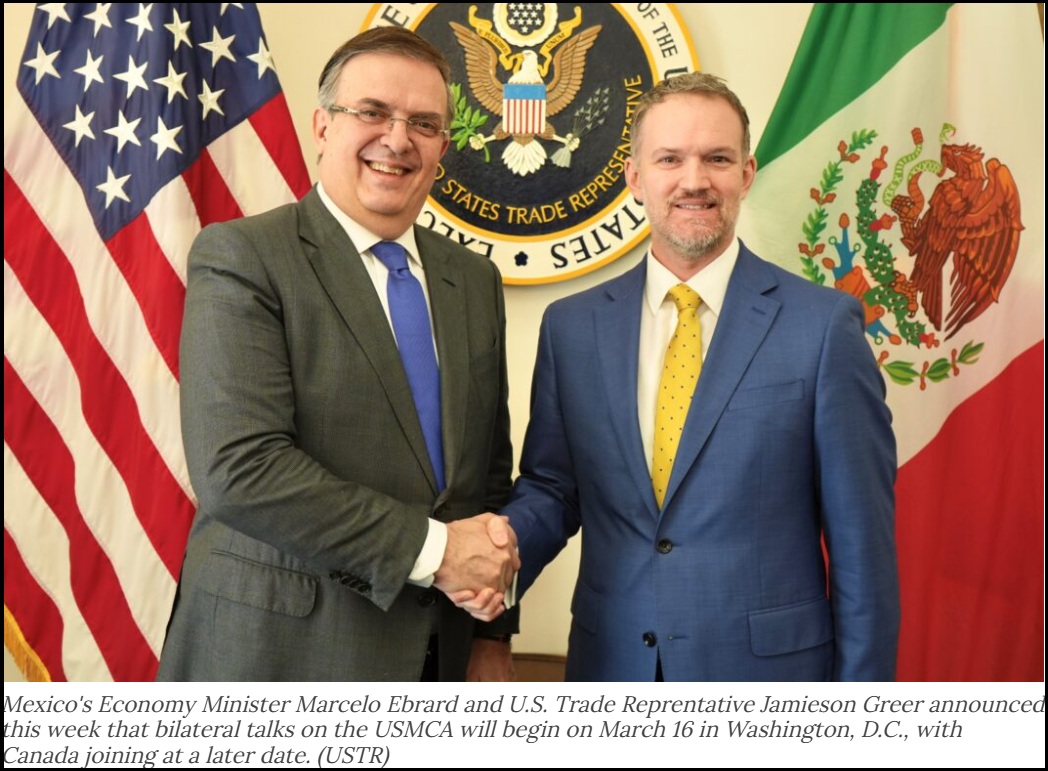
Team Mexico have already been holding bilateral discussions with USTR Jamieson Greer, and I suspect the broad outlines of a free trade agreement between the U.S and Mexico have already been agreed.

While Mexico has been working diligently for 16 months to get into alignment with the USA on a new free trade agreement, Canada has been doing everything possible to retain their “elbows up” position in opposition to the USA.  This will not work out well for Canada.

“The key thing that has struck me, and I think it has struck all Canadians, is so many of these guys in the Trump administration, frankly, they just hate Canada,” said Brian Clow, former Prime Minister Justin Trudeau’s deputy chief of staff who led Canada-U.S. affairs. {source}

“Canada joining at a later date”? 😂🤣😂

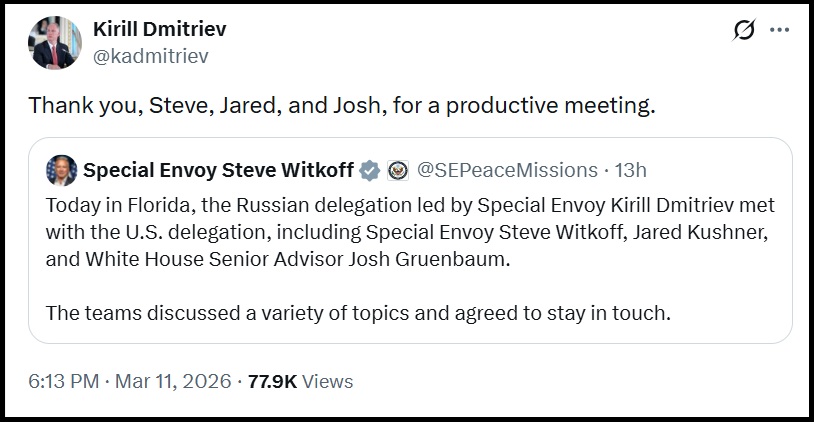
Witkoff and Kushner Meet Russian Delegation in Florida – Reports Indicate Discussions of Strategic Economic Cooperation on Oil


Posted originally on CTH on March 12, 2026 | Sundance 

The fact that Team Russia and Team USA would be discussing a strategic economic alliance on the issue of energy is not a surprise to those who watched both President Putin and President Trump outline that same content discussion in Alaska last August.  However, given the current conflict with Iran and the escalating oil price issue, Russia and the USA discussing Russian oil capacity and U.S. sanctions therein takes on a new angle.

It has been obvious that domestic U.S. politics, in combination with the Russia-Ukraine war, has impeded President Trump from organizing a strategic reset with Russia pulling away from historic conflicts.  However, CTH is also clear-eyed on the longer-term ramifications for Eastern Europe when contrast with Putin’s ambitions to fix what he perceives as prior Russian Federation mistakes regarding the West (more on that at the end).

As noted in social media exchanges from Witkoff and Dmitriev, the discussion was productive.

[SOURCE]

All indications of this meeting give the appearance of less focus on progress in the Ukraine-Russia conflict, and a higher focus on current economic conditions -created by the Iran conflict- that could be enhanced with cooperation between the U.S. and Russia. {GO DEEP BACKGROUND}

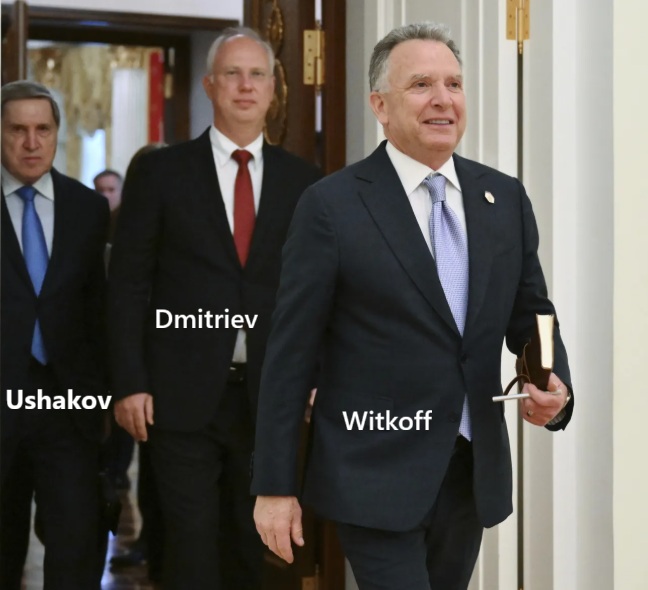
According to Kirill Dmitriev, Russian special presidential envoy for investment and economic cooperation with foreign countries and director general of the Russian Direct Investment Fund (RDIF), relayed through the Russian News Agency (TASS), “he visited the US upon orders from Russian President Vladimir Putin, taking part in a meeting of the heads of a working group on economic cooperation between the two countries.”

According to the envoy, the meeting addressed both promising projects that can help restore Russia-US relations and the current crisis on global energy markets.

The US is becoming increasingly aware of the role of Russian oil and gas in ensuing the stability of the world economy, as well as of the [in]effectiveness of sanctions against Russia, Dmitriev said after the meeting. (source)

“We discussed promising projects that could contribute to the restoration of Russian-American relations and the current crisis on global energy markets,” Dmitriev also wrote in a Telegram post.

“Today, many countries, primarily the United States, are beginning to better understand the key, systemic role of Russian oil and gas in ensuring the stability of the global economy, as well as the ineffectiveness and destructive nature of sanctions against Russia.”

With the strong likelihood that Russia’s restart of their flagship LNG terminal Arctic-2 was directly related to the August summit in Alaska {SEE HERE}, there is already a baseline established for strategic cooperation.

President Trump would have no problem with Russia introducing millions of barrels of oil into the global market given the issues created by conflict in/around the Strait of Hormuz.  However, obviously the issues for streamlined Russia oil exports surround (1) preexisting sanctions, (2) domestic U.S. anti-Russia politics and (3) the political and economic position of the anti-Russia European Commission leadership.

As we previously outlined with the Liquified Natural Gas (LNG) benefit, Russia previously extracted, liquified and pumped massive amounts of LNG into floating storage platforms from Arctic-2.  Those LNG supplies doubled and tripled in value in a few days once Qatar shut down their production facilities and are now being sold to various Asian countries.

Europe has a massive energy problem with severely low LNG storage rates and now a shortage of oil, with EU gasoline prices rising much higher & faster than the rest of the world.  Europe is facing a severe energy crisis overall and now their preexisting economic troubles are being amplified.

More than ever Europe needs the Russian oil/gas, but ridged ideologues will never compromise on their anti-Russia position.  They have even steeper sanctions against Russian oil/gas scheduled to trigger at the end of this month.

It will be interesting to see how President Trump navigates the potential benefit from Russian energy products into the global market against the backdrop of all the geopolitical angst and political opposition against Russia.

…. AND that brings me to a point of discussion that I’ve had with a few dialed-in people.

When you look at the long term, and when you overlay the mindset of Russian President Vladimir Putin, almost everyone in Russia/Eastern Europe who evaluates the future can see the potential for Putin to exploit the EU’s self-created economic vulnerabilities for his own expansionist objectives.

Yes, some elements of the U.S. banter about further Russian expansion are not propaganda.  Most of it is, but there is an element to the future forecast -beyond the Ukraine conflict- that could see Russia in a much stronger position, and the EU in a position of significant weakness.

The MAGA-minded European and Russian people, the ones who have strong wisdom on the issues, can all see a specific set of dominos falling that could place Putin in a position to recapture the remaining pro-Russian geographies in Europe back into an expanded Russian Federation.

Given the highly unstable mindset and friction points within European leadership, that would be a very bad combination to contemplate.

A strategic USA reset with the Russian Federation is a reasonable and pragmatic goal.  There is no reason for America and Russia to be in conflict or opposition and pulling Russia away from a relationship with China has massive benefits for both countries.

The Russian people are not affectionate toward China at all, not even a little bit.  In reality, China is a necessary ally for Russia but not a choice they would select if other options were available and variables were changed.  The Russian people are exceptionally independent, incredibly strong and brutally proud; however, they are also more Western-minded (European, without self-flagellation) than Eastern-minded (Asian).

Here’s where/why Trump is being careful and pragmatic.  President Trump doesn’t want to see an outcome where Russia is eventually stronger than Europe.  There’s not enough frictionless history between the USA and Russia to trust Putin when he says the Federation has no plan to expand into Europe.

The USA can/should be strategic allies with Russia. However, it would be much better if a strong Europe existed at the same time.  Hence, Vice President Vance and Secretary of State Rubio continuing to emphasize that Europe needs to stop cowering in politically correct wokeness.  The EU is destroying itself at the same time Russia is getting stronger.

.

Last point, the Lyndon LaRouche team, Promethean Action PAC, are very happy with the ongoing fracture of the USA away from the UK/EU group.  However, be cautious around Political Action Committees who say, “President Trump needs people to understand what he is doing” and we are here as his official policy interpreters.

Remember, President Trump doesn’t need policy interpreters.