Posted originally on Sep 26, 2025 by Martin Armstrong |
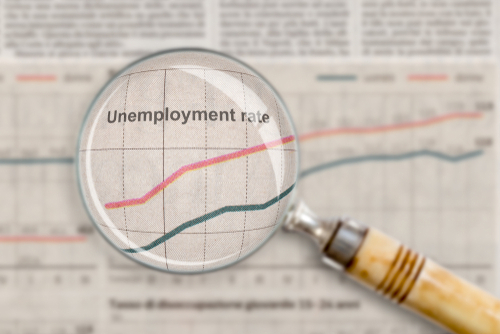
College graduates throughout the world are facing record unemployment. The unemployment rate for recent graduates in the United States is nearly double that of the general population. College grads in the United Kingdom face a similar level of unemployment. The youth in Europe are in a far worse situation, and it is not uncommon for areas to see unemployment levels around 20% to 40%. Chinese and Indian cultures value higher education, but the youth in both nations are facing unemployment levels of up to 20%. College degrees no longer guarantee financial success.
One of Britain’s largest recruitment agencies is encouraging young adults to explore blue-collar positions. James Reed, chief executive of Reed, told Times Radio that he averaged 180,000 graduate job position openings three or four years ago, but that figure has declined to 55,000. “The direction of travel is what worries me. Some people might say, well, that’s your business. But every other business is saying the same thing, that far fewer graduate opportunities are available to young people,” he said. Job recruitment agency Indeed found a 33% annual reduction in available graduate jobs over the summer and that trend is expected to continue thanks to automation and increased business costs. “It’s like a white-collar recession, rather like the blue-collar recession of the 1980s. I recognise the same pattern in a way, when a lot of jobs are being hollowed out by automation. I’m thinking about factories [before] and offices now,” Reed also commented.
Gen Z comprises 30% of the global population. They were told that good grades and an advanced degree would provide them a head start in life. Instead, especially in the United States, these young adults are saddled with debt that they cannot pay off. Less than half of graduates can find jobs within their field of study.
Youth unemployment can become the catalyst for political unrest and even revolution, which is precisely what recently happened in Nepal. The youth are the future taxpayers, yet governments are destroying them before they even begin. Youth unemployment is a direct result of bad economic policies, taxation, and regulation that drive jobs offshore. Universities have turned into political indoctrination factories producing debt slaves rather than skilled workers. This generation has been robbed of opportunity, and history warns us that when the youth see no future, they rise up against the system.
Youth unemployment ties into the birth rate crisis as the number of deaths far outnumber births in nearly every developed nation, and therefore, there are not enough taxpayers to offset the decline. If they cannot find work, they certainly cannot afford a home. Only 9% of Gen Z adults in America owned homes as of 2024. Less than 15% of Gen Z can afford homes in the UK, compared to 63% of Millennials, Gen X, and Baby Boomers. In Canada, youth are experiencing a similar level of home ownership, with rates above 15%. Europe varies widely but the market is largely inaccessible to Gen Z. The youth in South Korea are experiencing the lowest documented rate of home ownership among young adults at 2.5%.
The younger generation is questioning the entire system. They played into the system their entire lives and lost. Civil unrest always begins with the younger generation, who demand to be heard. When the youth see no path forward, they burn down the status quo. The younger generation in Nepal burned down Parliament and forced leaders to flee due to building resentment that grew into hatred for government overlords. Unemployment is expected to steepen as we enter the end of the next ECM cycle, and the youth will feel the brunt of the burden. History shows that the younger generations will not quietly accept defeat.
Posted originally on Sep 24, 2025 by Martin Armstrong |
China declined to make an official statement regarding Donald Trump’s change to the H-1B visa. Around 12% of such holders in the US are Chinese nationals. Instead, China announced that it will launch a new K-visa, expanding its 12 existing visas, to attract global talent.
“In a globalised world, cross-border flow of talents is instrumental in global technological and economic advancement,” Foreign Ministry spokesperson Guo Jiakun stated. “China welcomes talents from various sectors and fields across the world to come and find their footing in China for the progress of humanity and career success.”
The visa will take effect on October 1, 2025, and is designed to attract skilled professionals in engineering, technology, mathematics (STEM), and science. Applicants must have a bachelor’s degree in STEM from a recognized university or research institution, and employer sponsorship is not required.
Sorry, but top talent is not eager to work in China. China is already experiencing record levels of youth unemployment at 18.9% as of August 2025. Around 12.22 million university graduates in China entered the workforce this year, up from 430,000 in 2024, and the competition is intensifying as the number of available jobs declines.
China also produces over 77,000 STEM PhD graduates each year, nearly double that of the US. Naturally China would like to attract Indian graduates as they are receiving the bulk of the burden of the H-1B visa change and 34% of all graduates in India have a background in STEM. India excels in IT services, electronics, biotech, and software. China has more opportunities in AI, semiconductors, manufacturing, and robotics.
However, China does offer a much higher salary for these workers than India. In fact, salaries in STEM in India are 2-3X lower compared to China despite working longer hours. China also offers more protections, such as medical benefits, paid leave, and retirement benefits.
The current flow of Indian graduates relocating to China is relatively low compared to those relocating to the US. Those who think US companies are xenophobic have not worked with China. The environment is not exactly welcoming to foreigners. China may take on additional workers who are denied access to the US workforce, but it will not be significant. Specific niches and fields may spark interest as China is becoming a superpower for clean energy and robotics. Yet, global talent will not flock to China for employment, and the K-visa in no way compares to the visa that provides a work opportunity in America–at this stage in time. The matter may be different as we approach the end of the Sixth Wave–2032–when China dethrones the US to become the financial capital of the world.
Posted originally on Sep 23, 2025 by Martin Armstrong |
Hiring new talent from abroad will cost employers hefty fines under new provisions to the H-1B visa. Amid the push for American companies to hire American workers, Donald Trump has raised the application fee for the H-1B visa from $1,700-$4,500 to $100,000.
Over 70% of H-1B visa holders are Indian citizens, as reported by Fortune. “This measure is likely to have humanitarian consequences by way of the disruption caused for families,” India’s Ministry of External Affairs said in its official statement. “Government hopes that these disruptions can be addressed suitably by the US authorities.” Chinese nationals hold the second-largest number of H-1B visas at 12%.
Hundreds of visa holders have returned to the United States from overseas as they fear they may be unable to re-enter. The White House issued follow-up statements to clarify that the new one-time fee does not apply to those who already hold H-1B visas.
Companies wishing to import talent to the US must be willing to invest in the best and brightest. There is concern that the measure could stifle innovation by preventing potential talent from entering the US workforce. However, the Trump Administration is validly concerned about rising unemployment.
The number of unemployed Americans exceeds the available jobs. US employers have reduced their workforce more in the first seven months of 2025 than in all of 2024. AI is replacing around 491 tech jobs per day. We’ve seen a 36% decline in tech jobs this year compared to last as technology advances. The US outsourced 300,000 tech-based jobs overall to India as offshoring trends continue. Not only is labor cheaper, but India produces over 1.5 million engineering graduates annually. The tech sector is especially vulnerable to this increased visa fee as 80% of computer-related H-1B workers are from India. Additionally, the big tech companies have the most H-1B visa holders on their payroll. Apple, Google, Meta, and Microsoft each employ over 4,000 H-1B workers.
American companies remain the most desirable workplaces in the world, as the payout far surpasses European salaries. The UK noted on Monday that it is considering eliminating some visa fees to attract top talent that is blocked from entering the US. The UK and Europe are indeed more desirable than China or India, but workers still want to come to America for the most lucrative opportunities.
If companies are willing to invest $100,000 in an employee, then that person is top-tier talent. The question remains whether American companies can hire domestically and maintain the same level of innovation aptitude.
I have created this site to help people have fun in the kitchen. I write about enjoying life both in and out of my kitchen. Life is short! Make the most of it and enjoy!
This is a library of News Events not reported by the Main Stream Media documenting & connecting the dots on How the Obama Marxist Liberal agenda is destroying America











 Centinel2012