Posted originally on Aug 19, 2025 by Martin Armstrong |
Ousted World Economic Forum founder Klaus Schwab has been cleared on any criminal wrongdoing following an ongoing investigation into fraud. “Following a thorough review of all facts, the Board has concluded that … there is no evidence of material wrongdoing by Klaus Schwab,” the board announced.
As mentioned in earlier posts, the WEF after an anonymous whistleblower claimed Schwab conspired with USAID to steal tens of millions in funding. Back in April, the WEF said its board unanimously supported the decision to initiate an independent investigation “following a whistleblower letter containing allegations against former Chairman Klaus Schwab. This decision was made after consultation with external legal counsel.” The board then sought to repair its relationship with Schwab and restore his dignity, along with the pious name of Davos.
Peter Brabeck-Letmathe acted as an interim chairman, and now that Schwab’s name has been cleared, the WEF has appointed its new leaders– Larry Fink, CEO of BlackRock, and Andre Hoffmann, vice-chair of Roche Holding. In a joint statement, the men blatantly stated their plan to combine government and business:
“ The world is more fragmented and complex than ever, but the need for a platform that brings together business, government, and civil society has never been greater. We believe the Forum can serve as a unique catalyst for cooperation, one that fosters trust, identifies shared goals, and turns dialogue into action.”
Stakeholder economics is at the forefront. It is of no coincidence that the corporation that purchased a large share of residential real estate during the pandemic is now at the helm of the same company wishing to usher in 15-minute cities—you will own nothing “turns dialogue into action.”
Anyone reading this blog is well-informed on Larry Fink and BlackRock. Billionaire André Hoffmann of Switzerland is an interesting selection as Roche Holding, founded by his grandfather, is one of the largest pharmaceutical companies in the world. He is a major proponent for climate change efforts, yet his company has been accused of environmental breaches in the past.
Hoffman has been extremely critical of Trump and even denied the results of the 2024 US Presidential election. “I define myself as an idealist, and I would say that the couple of days after [Trump’s victory, it] was really quite difficult to pick [myself] up. This is a knockout,” says Hoffmann, speaking a few weeks after November’s US election. “Fifty-one per cent of Americans feel that a corrupt old man is going to make their life better? I’m sure it’s not true.” He criticizes RFK Jr. for investigating mRNA vaccinations and believes the people should blindly trust “the science.”
Larry Fink will work to force the corporate world to abide by ESG policies that he himself once decried. He will work on normalizing digitization of assets. Hoffman will focus on the health component of globalist dominance and control through weather manipulation theory. These men wield tremendous power individually but now plan to collaborate with the backing of the WEF to continue Schwab’s mission of the Great Reset.
Our computer had forecast that the WEF would enter a declining trend with the 2024 ECM turning point. This staged coup happened about 37 years after the first Davos meeting (8.6 x 4.3). From our model’s perspective, this was right on time. Now, Schwab and the WEF are working to repair ties.
Posted originally on Aug 14, 2025 by Martin Armstrong |
The Federal Reserve Bank of New York released a troubling quarterly statement as the total household debt in the US increased by $185 billion in the past three months, up 1% from last quarter, when total household debt reached $18.9 trillion. Total household debt in the US now sits at $18.39 trillion.
Housing debt increased 1.1% from April to June, now standing at $149 billion. Mortgage balances increased by $131 billion, notably the largest cause of household debt. Mortgage originations increased at a modest pace with $458 billion of debt added, while HELOC balances grew by $9 billion to $411 billion.
Non-housing debt rose by $45 billion, with credit card debt rising $27 billion to $1.21 trillion, up 5.87% YoY. Auto loans rose by $13 billion to $1.66 trillion. Student loans are now due for repayment, with total outstanding payments rising by $7 billion to an unsustainable $1.64 trillion.
Adults aged 40 to 49 hold $4.81 trillion of the total outstanding debt and experienced a $50 billion debt increase in the last quarter. Younger Americans between 18 and 29, naturally, have yet to accumulate much interest on their debt and owe $1.1 trillion as a collective.
Delinquency rates rose during Q2 as 4.4% of all outstanding debt is in some stage of delinquency. Compared to pre-pandemic levels, household debt is up by 30%. American households are experiencing a pattern of financial stress that has not meaningfully waned since the pandemic. The government has destroyed the purchasing power of the USD through endless deficits and inflationary policies. The US is not heading toward a recession; rather, we are in a period of stagflation with inflation outpacing GDP growth primarily due to rising costs and wars globally.
I said it once, and I will say it again: Our computer is demonstrating that volatility in unemployment will rise from 2026, peaking first in 2028 with a Panic Cycle in 2029. This also confirms our War Cycles for 2026. What we MUST come to grips with is that there is far more to understanding the economy from a single statistic perspective.
Posted originally on Aug 7, 2025 by Martin Armstrong |
Rumors are circulating that the United States may begin to print $500 bills. The US Bureau of Engraving and Printing began printing $500 bills in 1861 until 1945, formally discontinuing them in 1969 when Nixon moved to close the gold window. The US Treasury has since required banks to send all $500 bills back to them to be destroyed, as the government claimed higher-denominated notes paved the way for criminal activity.
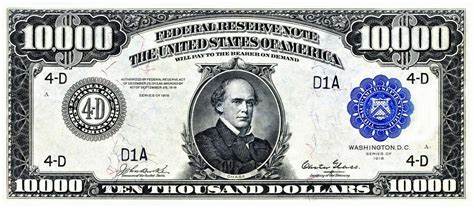
Collectors know that the US Treasury issued $1,000, $5,000, $10,000, and even $100,000 notes once upon a time. The $100,000 bill featured President Woodrow Wilson and was issued as a gold certificate from 1934 to 1935. That particular bill was not publicly circulated. No citizen needed to use such currency in day-to-day transactions. The $10,000 note was primarily used for transactions between domestic Federal Reserve Banks, as digitalization had not yet occurred, and they needed an efficient way to move capital.
The rumors about the $500 bill’s revival are not wholly unfounded. Rep. Paul Gosar (R-Ariz.) introduced a bill in 2024 to reintroduce the $500 bill, replacing William McKinley’s image with Donald Trump’s. This was more than political pandering; besides, Congress would certainly never approve of a note featuring Donald Trump’s image. However, the government could be enticed to reintroduce higher-denominated notes due to INFLATION. This is precisely why the pennywill be discontinued, as it represents absolutely nothing and is a reminder that our currency is becoming increasingly devalued.
A new $500 bill would mirror historical currency debasement as we saw in Rome under Diocletian, for example, which comes before a collapse. Printing higher-denomination notes is not just a reflection of price increases, but a sign that the people are losing trust in the value of the USD. Now, even the highest-denominated cash note will not get one far, paving the way for digitization as cash becomes an inconvenient burden. If the US were not eager to digitize banking, we would undoubtedly see higher-denominated notes in circulation once again to mask the effects that inflation has had on the value of the dollar.
America has never canceled its currency, and all of these notes are still deemed legal tender, although they are far more valuable to collectors than their face value. The Federal Reserve does not currently have plans to print the $500 bill despite rumors. The goal is to move the nation to digital currency, and cash is becoming increasingly worthless in transactions. Still, providing a limited-edition $500 note would not be unheard of in today’s economic landscape.
Posted originally on Aug 7, 2025 by Martin Armstrong |
The European Union pivoted its stance on US defense as soon as the funds began to flow to Ukraine again. Although leaders like Macron and Merz previously warned against relying on the US for aerospace and defense, four EU nations have announced a $1 billion arms deal with the US through a new initiative devised by the US and NATO.
“It’s either that or leave Ukraine without weapons,” one NATO official, speaking on condition of anonymity as they aren’t authorized to speak on the record, told RFE/RL in regard to purchasing from the US. “I think on the European side there is a hard realization that this has to happen in some fashion or another.” This comes after the Ukraine Defense Contact Group, an alliance of 50 nations, held a virtual meeting at the end of July to decide how they would continue funding the proxy war.
The Dutch government agreed to spend around $576 million on US Patriot missile defense systems for Ukraine. Sweden, Denmark, and Norway plan to spend another $500 million on American defense collectively. “By supporting Ukraine with determination, we are increasing the pressure on Russia to negotiate,” Dutch Defence Minister Ruben Brekelmans posted on X. “The more Russia dominates Ukraine, the greater the danger to the Netherlands and our NATO allies,” he said. Continually arming the opponent is not going to open the door to peace negotiations. It only alerts Russia that it must continue fighting for the foreseeable future, as this war is NOT against Ukraine but against the entire NATO alliance.
Swedish Defence Minister Pal Jonson said his nation plans to offer $275 million toward the deal. “Ukraine is not only fighting for its own security, but also for our security,” Jonson declared. Of course, all of this spending of public funds is being done under the premise of national security. European governments are lying to their people. They know Russia has no plans or desire to invade Europe, as there is nothing to gain by doing so.
NATO Secretary General Mark Rutte, the former Dutch prime minister, praised the northern European nations for their willingness to invest. “Since the earliest days of Russia’s full-scale invasion, Denmark, Norway and Sweden have been steadfast in their support for Ukraine. I commend these allies for their quick efforts to get this initiative off the ground,” Rutte said in a statement. As a reminder, all NATO members must up their spending to 5% of GDP, although they previously could not even meet the 2% target.
These deals will now go through the Priority Ukraine Requirements List (PURL), created by NATO and the US. Basically, Ukraine writes a list for Santa, or in this case, the US, listing its most requested weapons of choice. NATO’s Supreme Allied Commander Europe (SACEUR) then approves of the wish list and tells US manufacturers to deliver Ukraine anything it desires. The Netherlands’ half-billion-dollar purchase was the first gift basket to go through this program.
PURL plans to send $10 billion worth of American-manufactured arms to Ukraine. But the US is not Santa, and there are no elves creating weapons. Lockheed Martin and Raytheon are increasing their production of Patriot missiles, following Rutte’s suggestion that NATO nations will supply Ukraine with at least 17. NATO nations are required to pay upfront for their gifts to Ukraine to bypass the typical US arms sales process. The taxpayers did not vote to send $10 billion to Ukraine, but NATO and EU nations are beholden to unelected bureaucrats who dictate the rules.
Posted originally on Aug 4, 2025 by Martin Armstrong
Consumer sentiment remained elevated for the second consecutive month but remains worse than in December 2024, according to the University of Michigan’s Surveys of Consumers. Sentiment rose 1.6% in July from June, reaching a reading of 61.7 from 60.7. However, overall sentiment has been 17% beneath December’s reading, although it rebounded from April’s low when the market experienced a sharp downturn due to tariff fears.
“Although recent trends show sentiment moving in a favorable direction, sentiment remains broadly negative,” Surveys of Consumers Director Joanne Hsu said in the report. “Consumers are hardly optimistic about the trajectory of the economy, even as their worries have softened since April 2025.”
Inflationary fears declined for the second consecutive month as well, dropping from 5% in June to 4.5% in July after peaking at 6.6% in May, again, as a result of tariff uncertainty. Consumers believe inflation will wane in the long run for the third consecutive month, with the figure declining from 4% in June to 3.4% in July, which marks the lowest reading in 2025.
The Consumer Confidence Index, as reported by the Conference Board, rose 2 points to 97.2 in July, and June’s figure was revised to 95.2. The short-term outlook on the Expectations Index rose 4.5 points to 74.4, yet has been below the recession threshold of 80 since February. Business and labor market conditions, as measured by the Present Situation Index, fell 1.5 points to 131.5.
Yet, the Kansas City Fed noted that consumer sentiment is no longer an accurate reading for consumer spending. “Recent data suggest consumer sentiment has been declining for the past several months, signaling a potential slowdown in spending. However, most measures of actual spending, such as core retail sales and PCE, have remained relatively stable. This discrepancy raises the question of how useful consumer attitudes are in predicting actual spending,” the Fed questioned, later concluding, “Consistent with evidence from the prior 30 years, the near-term outlook for spending growth looks similar regardless of whether we account for the recent weakening in consumer sentiment.”
Federal Reserve Chair Jerome Powell also stated “the link between sentiment data and consumer spending has been weak. It’s not been a strong link at all…it wouldn’t be the case that we’re looking at [consumer sentiment] and just completely dismissing it. But it’s another reason to wait and see.”
Consumers are continually pessimistic, albeit less so, as prices remain elevated. We saw a sharp downturn in consumer sentiment with the peak in inflation during 2022. However, regardless of how one feels about the economy, consumers are forced to spend more on less. The FOMC will no longer use consumer sentiment as a strong gauge for future spending or GDP calculations since the correlation remains weak.
Posted originally on Aug 4, 2025 by Martin Armstrong
US employers have reduced their workforce more in the first seven months of 2025 than in all of 2024. The DOGE cuts to the public sector were the primary driver of layoffs; however, there has been a notable drop in retail and technology positions in the private sector.
July alone saw 62,000 jobs reduced from the workforce, a 30% increase from June and 140% from July 2024. Over 806,000 positions were removed from January to July, surpassing the 761,358 job cuts in all of 2024.
Public sector positions in government saw the largest reduction at 292,294 positions. The current administration implemented the largest public sector reduction in modern US history by offering over 2 million government employees a buyout. Around 65,000 people accepted the buyout offer within the first two weeks alone. Additionally, DOGE halted grant funding to various NGOs and non-profits, leading to 17,826 fires, which amounts to a 413% annual reduction. None of these positions contributed to the US GDP.
The private sector shed 33,000 positions in June 2025, marking the first contraction in the private sector in nearly two years. For 2025 overall, the sectors facing the steepest layoffs are technology (-89,251) and retail (-80,487).
A few major tech companies implemented large layoffs this year such as Intel (-21,000), Microsoft (-15,000), PayPal (-2,500), and HP (-2,000). The advancement of Artificial Intelligence has led to a drastic reduction in workers in the technology sector, with some reports believing that AI is replacing around 491 tech jobs per day. We’ve seen a 36% decline in tech jobs this year compared to last as technology advances. Another issue has been outsourcing positions to places like India. The US outsourced 300,000 tech-based jobs overall to India as offshoring trends continue. Not only is labor cheaper, but India produces over 1.5 million engineering graduates annually. Visa restrictions have less of an impact as remote work is commonplace.
Retail experienced the second-largest decline in private sector roles with a 249% annual decline. Brick and mortar stores are deteriorating as another casualty of creative destruction as consumers prefer to spend online. Various articles are blaming tariffs and price increases for the drop in retail positions, but consumers are simply spending less. Around 20,000 retail positions were lost to AI automation, especially for basic roles and inventory management. American consumers have never rebounded from the increased cost of living. Credit card delinquencies and bankruptcies continue to reach new highs, and every survey indicates that households are spending more on less and focusing their resources on the basics.
Technology and retail are sensitive to advancements in AI. Offshoring has drastically cut competitiveness for American workers in tech. There is an offshoring corporate tax penalty of 28% but it is safe to assume that this figure will rise. As for AI, the government hasn’t found a way to tax robotic systems, but rest assured they will find a way.
I have created this site to help people have fun in the kitchen. I write about enjoying life both in and out of my kitchen. Life is short! Make the most of it and enjoy!
This is a library of News Events not reported by the Main Stream Media documenting & connecting the dots on How the Obama Marxist Liberal agenda is destroying America












 Centinel2012