Having taken an oath to defend the Constitution and who refuse to protect it from all attempts to destroy its meaning, are not declared to be working toward overthrowing the country, and placed under arrest
There are laws for everything, enough to fill volumes. Yet, lawless politicians ignore the laws that do not suit their plans of the moment and mentally create new temporary laws to support their needs. Laws like those are applied in rogue states, controlled by members of their progressive, socialist party. The new laws consider the existing legal laws irrelevant.
There are laws covering speed limits, there are others against “J walking,” climbing up the outside of public buildings, and I’m sure hundreds that I’ve never heard of, and all of those mentioned and many not mentioned, were put in place as public safety policies, so that no harm might come to the public.
There are Federal obligations that mandate the safety of all citizens so that they may prosper and enjoy freedom and the pursuit of happiness. The new progressive Socialist party develops their imaginary laws in order to control the citizenry. Laws that supposedly protect minority groups from “white supremacy” which they dub racist, homophobic, bigoted; basically everyone who is not in a minority category. In order to supposedly protect minorities, these politicians, both federal and local, allow hordes of “peaceful” protesters to march into cities at night in areas of minority housing and businesses, while they keep the police at bay, and the “protesters” burn and loot those businesses, destroying decades of hard work. Minority-owned businesses changed the lives of the owners and brought work to the area and an improvement in the lives of residents and families, creating an upward trending lifestyle.
Pushed into poverty again, the elite progressives maintain control.
In spite of all the laws for the protection of the citizenry, rogue states declare themselves sanctuaries that harbor gangs of murderers, and anarchists who burn and loot cities, occupy public places as their own regardless of the citizens within those places put in jeopardy of the loss of life, goods, personal property and certainly the pursuit of happiness, as well as freedom to come and go as they please. Since the right to these things are all tenets of the Constitution of the United States of America, how is it that these states are not charged with rejection of the union, not only for putting U. S. citizen in danger but also thwarting the laws of the nation, preventing the sworn protection of all those invited or born to it to live under its protection.
How are these states and cities that do these things at the peril of Americans not guilty of attempting to overthrow our country from within? How is it that anyone employed by the government, having taken an oath to defend the Constitution and who refuse to pass laws that protect it from all attempts to destroy its meaning, are not declared to be working toward overthrowing the country, and placed under arrest without the benefits and rights of the position they held, while they languish in jail?
Legitimate peaceful protesters need to gather in front of the capitol with letters of request that the Attorney General of the United states convene a Grand Jury to look into these matters and begin the process of taking the rogue politicians, both federal and local into custody to determine how failure of keeping their oaths, laws, and their deceitful actions constitute crimes against the country and its citizens. They literally are aiding and abetting the criminal elements that are laying the anarchist groundwork on behalf of those who pay them those who determine which lives matter as opposed to our country’s belief that all lives matter solidified by the wars we have gotten involved in on behalf of the citizens of foreign countries who were becoming victims of governments with the same beliefs as the American socialist progressives.
‘President Pelosi’s’ stiletto looks ready to come flying at American heads. The only way to dodge it is for people to put aside their fear of the pandemic and to get out to vote IN PERSON
In the Democrat-led shark-feeding frenzy of the 2020 Election Campaign, lock down masses worriedly wait for the next shocking shoe to drop.
Outrageous, over-the-top smears against President Donald Trump did not peak with The Atlantic’s anonymous-sourced story that the president called dead soldiers “losers” and “suckers”. With the Democrat and media gang-up in desperado mode, there will be much, much more to come.
‘President Pelosi’s’ loathsome stiletto
The shoe that so many are waiting to be dropped will be a stiletto—‘President Pelosi’s’ loathsome stiletto.
While cognitive-challenged Democrat presidential frontrunner Joe Biden’s gaffes get worse by day—even when he’s reading answers from his Teleprompter, the Democrats remain impervious to his gaffes and goofs.
Why?
Devious Democrat Elites went into the 2020 presidential race knowing they could easily replace Biden—if he wins.
Not with vice president candidate Kamala Harris but with House Speaker Pelosi by default.
Here’s the step-by-step strategy the Democrats will spin into a workable reality:
President Trump WILL win on Election Night—but Democrats, using the Mail-In Vote and other measures will claim a recount is necessary.
They will make the recount last until Inauguration Day when they will take full advantage of a law that allows House Speakers to serve as temporary presidents until vote recounts can be released.
January 20, 2021 will be the day when Pelosi’s stiletto will come flying, full speed, at America’s head.
Standing in line to vote
When President Trump raised the possibility of House Speaker Nancy Pelosi succeeding him as the next president of the United States, during a speech to the 2020 Council for National Policy, the media said he was only kidding.
Said Trump: “I really don’t think that you are going to know anything on the evening — anything meaningful or anything real — on the evening of Nov. 3rd. You are not going to know what happened. I don’t think you’ll know two weeks later. I don’t think you’ll know four weeks later. And I don’t know what is going to happen. You know, there is a theory that if you don’t have it by the end of the year, crazy Nancy Pelosi would become president. You know that, right?” (The Hill, Sept 12,2020)
“To be sure, Trump likely was having a bit of fun while trying to fire up conservative attendees at the event. That said, he also raised the “theory” because of the perfect storm brewing for a delay in voting results and potential voter fraud. The two main reasons are that some people may not feel comfortable voting in person because of concern about COVID-19 and the more than 51 million mail-in ballots being sent out in nine states and Washington, D.C.
“Of course, in the middle of the pandemic, we can stand in line at the Department of Motor Vehicles, the post office, the supermarket, restaurants, big-box stores such as Lowe’s and Home Depot, and other retailers and locations, but some Americans apparently believe the virus might be more contagious in the line leading to voting booths. Maybe those who believe this don’t know we had in-person voting during other crises, including flu pandemics and the years encompassing World War I and World War II.
Have democratic American elections come down to Democrats like Pelosi knowing “every rule and TRICK in the book in order to steal the vote?!
“Those realities aside, should problematic voting scenarios take hold in any large measure, it could be days or even weeks indeed before we know who won this presidential election. And if those weeks were to stretch to noon on Jan. 20, 2021, without the Electoral College declaring a winner, some constitutional scholars believe the presidency would default to the Speaker of the House. Assuming the Democrats retain control of the House, that new president most likely would be Pelosi.
“Were that to come to pass, most Democrats and liberals would scream with joy at the opportunity given to them, while Republicans and conservatives would be shocked into depression and dread.”
But what about the millions who voted to re-elect President Donald Trump?
Where will that cruelly leave them?
…”Academic exercise or not, Republicans, conservatives and the Trump White House underestimate Pelosi at their own risk. She has proved to be an effective and popular leader for her Democratic colleagues. More than that, she knows every rule and trick in the book. (The Hill)
Have democratic American elections come down to Democrats like Pelosi knowing “every rule and TRICK in the book in order to steal the vote?!
God spare America from Pelosi’s stiletto and God Bless America!
“That means President Pelosi would know that she’d need to act fast to get anything done in the White House. Prior to ascending to the presidency, Pelosi would have kept a close eye on the confusion and delayed vote certification. The more confusion and delay, the better her chances to be named president. She would have convened her senior leadership and most trusted advisers to come up with a one-day plan, a one-week plan and a one-month plan for her “presidency.” (The Hill)
“Any president can do a great deal of good, or initiate a great deal of partisan mischief, in a short time — especially if a game plan is mapped out weeks before the inauguration.
“In the increasingly surreal year that has been 2020, will the theory of a President Pelosi translate into a history-making first?
“Prior to the economic devastation from extended pandemic-related lockdowns and the anarchy, violence and looting happening in many cities, there may have been a slight chance for the House Speaker to take over in the Oval Office because of a close vote and difficult count.”
If Democrat mayors and governors already succeeded at cowing millions by making them wear face masks and shutting down healthy businesses, why wouldn’t they plan on installing Pelosi as America’s next president?
Meanwhile, ‘President Pelosi’s’ stiletto looks ready to come flying at American heads.
The only way to dodge it is for people to put aside their fear of the pandemic and to get out to vote IN PERSON.
God spare America from Pelosi’s stiletto and God Bless America!
Nancy Pelosi previously labeled all Trump supporters as “enemies of the state.” Similarly we note the apparatus of the administrative state labels Julian Assange the same. There’s a good argument that the reason why Assange is considered such a threat to the U.S. is specifically because he could expose the lies of the administrative state.
As a consequence the U.S. intelligence apparatus has targeted the WikiLeaks founder and the Bill Barr DOJ is being extremely aggressive in their effort to get control of him. Tucker Carlson discussed this dynamic last night; albeit stopping short of the brutally honest part.
.
To understand the risk Julian Assange represents to the administrative state, it is important to understand the extent of CIA, FBI and DOJ operations in 2016. It is within this network of foreign and domestic operations where FBI Agent Peter Strzok was clearly working as a bridge between the CIA origination and FBI investigation.
By now people are familiar with the construct of CIA operations involving Joseph Mifsud, the Maltese professor now generally admitted/identified as a western intelligence operative who was tasked against Trump campaign official George Papadopoulos in both Italy (Rome) and London. {Go Deep}
In a similar fashion the CIA tasked U.S. intelligence asset Stefan Halper to target another Trump campaign official, Carter Page. Under the auspices of being a Cambridge Professor Stefan Halper also targeted General Michael Flynn. Additionally, using assistance from a female FBI agent under the false name Azra Turk, Halper also targeted Papadopoulos.
The initial operations to target Flynn, Papadopoulos and Page were all based overseas. This seemingly makes the CIA exploitation of the assets and the targets much easier.
One of the more interesting aspects to the Durham probe is a possibility of a paper-trail created as a result of the tasking operations. We should watch closely for more evidence of a paper trail as some congressional reps have hinted toward documented evidence (transcripts, recordings, reports) that are exculpatory to the targets (Page & Papadop). HPSCI Ranking Member Devin Nunes has strongly hinted that very specific exculpatory evidence was known to the FBI and yet withheld from the FISA application used against Carter Page that also mentions George Papadopoulos. I digress…
However, there is an aspect to the domestic U.S. operation that also bears the fingerprints of the CIA; only this time due to the restrictive laws on targets inside the U.S. the CIA aspect is less prominent. This is where FBI Agent Peter Strzok working for both agencies starts to become important.
Remember, it’s clear in the text messages Strzok has a working relationship with what he called their “sister agency”, the CIA. Additionally, Brennan has admitted Strzok helped write the January 2017 Intelligence Community Assessment (ICA) which outlines the Russia narrative; and it is almost guaranteed the July 31st, 2016, “Electronic Communication” from the CIA to the FBI that originated FBI operation “Crossfire Hurricane” was co-authored from the CIA by Strzok…. and Strzok immediately used that EC to travel to London to debrief intelligence officials around Australian Ambassador to the U.K. Alexander Downer.
In short, Peter Strzok appears to be the very eager, profoundly overzealous James Bond wannabe, who acted as a bridge between the CIA and the FBI. The perfect type of FBI career agent for CIA Director John Brennan to utilize.
Fusion-GPS founder Glenn Simpson hired CIA Open Source analyst Nellie Ohr toward the end of 2015; at appropriately the same time as “FBI Contractors” were identified exploiting the NSA database and extracting information on a specific set of U.S. persons.
It was also Fusion-GPS founder Glenn Simpson who was domestically tasked with a Russian lobbyist named Natalia Veselnitskya. A little reported Russian Deputy Attorney General named Saak Albertovich Karapetyan was working double-agents for the CIA and Kremlin. Karapetyan was directing the foreign operations of Natalia Veselnitskaya, and Glenn Simpson was organizing her inside the U.S.
Glenn Simpson managed Veselnitskaya through the 2016 Trump Tower meeting with Donald Trump Jr. However, once the CIA/Fusion-GPS operation using Veselnitskaya started to unravel with public reporting… back in Russia Deputy AG Karapetyan fell out of a helicopter to his death (just before it crashed).
Simultaneously timed in late 2015 through mid 2016, there was a domestic FBI operation using a young Russian named Maria Butina tasked to run up against republican presidential candidates. According to Patrick Byrne, Butina’s handler, it was FBI agent Peter Strzok who was giving Byrne the instructions on where to send her. {Go Deep}
All of this context outlines the extent to which the CIA was openly involved in constructing a political operation that settled upon anyone in candidate Donald Trump’s orbit.
International operations directed by the CIA, and domestic operations seemingly directed by Peter Strzok operating with a foot in both agencies. [Strzok gets CIA service coin]
Recap: ♦Mifsud tasked against Papadopoulos (CIA). ♦Halper tasked against Flynn (CIA), Page (CIA), and Papadopoulos (CIA). ♦Azra Turk, pretending to be Halper asst, tasked against Papadopoulos (FBI). ♦Veselnitskaya tasked against Donald Trump Jr (CIA, Fusion-GPS). ♦Butina tasked against Trump, and Donald Trump Jr (FBI).
Additionally, Christopher Steele was a British intelligence officer, hired by Fusion-GPS to assemble and launder fraudulent intelligence information within his dossier. And we cannot forget Oleg Deripaska, a Russian oligarch, who was recruited by Asst. FBI Director Andrew McCabe to participate in running an operation against the Trump campaign and create the impression of Russian involvement. Deripaska refused to participate.
All of this engagement directly controlled by U.S. intelligence; and all of this intended to give a specific Russia impression. This predicate is presumably what John Durham is currently reviewing.
The key point of all that background is to see how committed the CIA and FBI were to the constructed narrative of Russia interfering with the 2016 election. The CIA, FBI, and by extension the DOJ, put a hell of a lot of work into it. Intelligence community work that Durham is now unraveling.
We also know specifically that John Durham is looking at the construct of the Intelligence Community Assessment (ICA); and talking to CIA analysts who participated in the construct of the January 2017 report that bolstered the false appearance of Russian interference in the 2016 election. This is important because it ties in to the next part that involves Julian Assange and Wikileaks.
On April 11th, 2019, the Julian Assange indictment was unsealed in the EDVA. From the indictment we discover it was under seal since March 6th, 2018:
The FBI investigation took place prior to December 2017, it was coordinated through the Eastern District of Virginia (EDVA) where Dana Boente was U.S. Attorney at the time. The grand jury indictment was sealed from March of 2018 until after Mueller completed his investigation, April 2019.
Why the delay?
What was the DOJ waiting for?
Here’s where it gets interesting….
The FBI submission to the Grand Jury in December of 2017 was four months after congressman Dana Rohrabacher talked to Julian Assange in August of 2017: “Assange told a U.S. congressman … he can prove the leaked Democratic Party documents … did not come from Russia.”
(August 2017, The Hill Via John Solomon) Julian Assange told a U.S. congressman on Tuesday he can prove the leaked Democratic Party documents he published during last year’s election did not come from Russia and promised additional helpful information about the leaks in the near future.
Rep. Dana Rohrabacher, a California Republican who is friendly to Russia and chairs an important House subcommittee on Eurasia policy, became the first American congressman to meet with Assange during a three-hour private gathering at the Ecuadorian Embassy in London, where the WikiLeaks founder has been holed up for years.
Rohrabacher recounted his conversation with Assange to The Hill.
“Our three-hour meeting covered a wide array of issues, including the WikiLeaks exposure of the DNC [Democratic National Committee] emails during last year’s presidential election,” Rohrabacher said, “Julian emphatically stated that the Russians were not involved in the hacking or disclosure of those emails.”
Pressed for more detail on the source of the documents, Rohrabacher said he had information to share privately with President Trump. (read more)
Knowing how much effort the CIA and FBI put into the Russia collusion-conspiracy narrative, it would make sense for the FBI to take keen interest after this August 2017 meeting between Rohrabacher and Assange; and why the FBI would quickly gather specific evidence (related to Wikileaks and Bradley Manning) for a grand jury by December 2017.
Within three months of the grand jury the DOJ generated an indictment and sealed it in March 2018. The EDVA sat on the indictment while the Mueller probe was ongoing.
As soon as the Mueller probe ended, on April 11th, 2019, a planned and coordinated effort between the U.K. and U.S. was executed; Julian Assange was forcibly arrested and removed from the Ecuadorian embassy in London, and the EDVA indictment was unsealed (link).
As a person who has researched this three year fiasco; including the ridiculously false 2016 Russian hacking/interference narrative: “17 intelligence agencies”, Joint Analysis Report (JAR) needed for Obama’s anti-Russia narrative in December ’16; and then a month later the ridiculously political Intelligence Community Assessment (ICA) in January ’17; this timing against Assange is just too coincidental.
It doesn’t take a deep researcher to see the aligned Deep State motive to control Julian Assange because the Mueller report was dependent on Russia cybercrimes, and that narrative is contingent on the Russia DNC hack story which Julian Assange disputes.
This is critical. The Weissmann/Mueller report contains claims that Russia hacked the DNC servers as the central element to the Russia interference narrative in the U.S. election. This claim is directly disputed by WikiLeaks and Julian Assange, as outlined during the Dana Rohrabacher interview, and by Julian Assange on-the-record statements.
The predicate for Robert Mueller’s investigation was specifically due to Russian interference in the 2016 election. The fulcrum for this Russia interference claim is the intelligence community assessment; and the only factual evidence claimed within the ICA is that Russia hacked the DNC servers; a claim only made possible by relying on forensic computer analysis from Crowdstrike, a DNC contractor.
The CIA holds a massive conflict of self-interest in upholding the Russian hacking claim. The FBI holds a massive interest in maintaining that claim. All of those foreign countries whose intelligence apparatus participated with Brennan and Strzok also have a vested self-interest in maintaining that Russia hacking and interference narrative.
Julian Assange is the only person with direct knowledge of how Wikileaks gained custody of the DNC emails; and Assange has claimed he has evidence it was not from a hack.
This Russian “hacking” claim is ultimately so important to the CIA, FBI, DOJ, ODNI and U.K intelligence apparatus…. Well, right there is the obvious motive to shut Assange down as soon intelligence officials knew the Mueller report was going to be public.
Now, if we know this, and you know this; and everything is cited and factual… well, then certainly AG Bill Barr knows this.
“MAGA vs. The Deep State Swamp” Number 5 in the Drain the Swamp Series.
For the last four years President Trump has tirelessly exposed the Deep State Swamp. Trump has shown the American people the ruthless corruption in our government and called out the endless propaganda of the controlled mainstream media complex.
President Trump’s first term went by quickly and although much was accomplished, there was still a lot left to do.
The swamp runs deeper than anyone ever imagined.
Now the Democrat nominee, Joe Biden, claims he represents ‘decency.’ He’s a career politician known for gr op ing and sniffing females—adults and children alike.
He made it possible for his son Hunter to receive graft from Communist China. He believes taxpayers should fund abortion on demand. He believes in more taxes, a bigger and more bloated government, political correctness, BLM and ANTIFA, endless lockdowns, and a mask mandate. Joe is pro-war, a globalist, and he supported tossing low-level drug offenders into prison. Does this sound decent to you? Trump is not perfect, but he stands in sharp contrast to Biden. While Joe is pro-China, Trump is pro-jobs for Americans. He wants to preserve our free speech and our right to own firearms. He is a nationalist, not a globalist. He wants to put an end to the rioting and looting. He wants elections to be held in a fair and traditional manner, while Democrats want mail-in ballots, which will open the door to fraud. Trump is anti-war. That alone is a good reason to reelect him. The contrast between the two presidential candidates is obvious and definite. President Trump remains the only decent choice.
“Lex Est Quod Dico” or the law is what I say it is… Again, highlighting the arbitrary fiats of power hungry government officials, a recent discovery in San Francisco that private health gyms are forcibly closed – yet government gyms are allowed to be open.
CALIFORNIA – Gyms within government buildings in San Francisco have been open for months, despite privately owned establishments being ordered to close due to the coronavirus.
“It’s shocking, it’s infuriating,” Daniele Rabkin, of Crossfit Golden Gate, told a local NBC station. “Even though they’re getting exposed, there are no repercussions, no ramifications? It’s shocking.”
The gyms that have been open for government employees include those for police officers, judges, lawyers, bailiffs, and paralegals, according to the report. One such gym, the Hall of Justice gym, has been open since July 1.
“It just demonstrates that there seems to be some kind of a double standard between what city employees are allowed to do and what the residents of San Francisco are allowed to do,” Dave Karraker, owner of MX3 Fitness in the Castro, said. (read more)
On the fifth anniversary of the notorious spill of 3 million gallons of heavily contaminated acid mine water from the Gold King Mine in southwestern Colorado, the U.S. Environmental Protection Agency and State of Utah announced an agreement that ends the state’s lawsuit.
Neither the EPA nor the contractors involved at the Gold King spill site are entirely off the hook for their alleged missteps that resulted in downstream damages. Lawsuits filed by the Navajo Nation, the State of New Mexico, and a group of Navajo farmers and ranchers have been consolidated, and discovery is proceeding, with a projected trial date sometime in late 2021.
Pursuant to the agreement, Utah will dismiss its legal actions against the EPA and the United States; mining companies Kinross Gold Corporation, Kinross Gold U.S.A., Inc., Sunnyside Gold Corporation, and Gold King Mines Corporation; and EPA’s contractors: Environmental Restoration, LLC, Weston Solutions, Inc. and Harrison Western Corporation. EPA also agreed to strengthen Utah’s involvement in the EPA’s work to address contamination at the Bonita Peak Mining District Superfund Site, which includes the Gold King Mine and other abandoned mines.
The agency further agreed to act on the Utah Department of Environmental Quality’s application for $3 million in Clean Water Act funds for various projects, including the development of water quality criteria for Utah Lake, septic density studies, nonpoint source pollution reduction projects, and nutrient management plans for agricultural sources.
The agency also agreed to initiate Superfund assessments by the end of 2021 at the Rico Argentine Mine Site, the Camp Bird Mining Site, the Carribeau (or Caribou) Mine Area, all located in Colorado, and possibly other sites that have the potential to impact downstream waters in Utah. Coupled with its work at the recently established Bonita Peak Mining District Superfund Site (which includes Gold King), the EPA expects to conduct and oversee more than $220 million in abandoned mining site work that will potentially improve Utah’s water quality by reducing the flow of heavy metals and other pollutants from old mines in the state’s waterways.
EPA Administrator Andrew Wheeler called the agreement “a win-win for EPA and Utah” that “will bring environmental benefits to Utah, avoid protracted litigation, and hopefully serve as a lesson for the future to avoid repeating the mistakes of the past.” EPA General Counsel Matthew Leopold promised that the agency’s “partnership with Utah will be stronger as we continue to support the State in addressing its water quality needs.”
Utah Attorney General Sean Reyes said the state is “very pleased that millions of dollars can now be spent towards mitigation, remediation and assuring water quality in Utah, rather than years of more litigation, trials and appeals.” This, he added, “is what cooperative federalism looks like – a true federal and state partnership” that protects the people, public health and the environment.
The relationship between the EPA and Utah was not always so amicable. Within days after Cement Creek and the Animas River were turned yellow all the way from Colorado through New Mexico and Utah all the way to Lake Powell, Utah Governor Gary R. Herbert declared a state of emergency and added that he was “deeply disappointed by the actions of the Environmental Protection Agency. It was a preventable mistake, and they must be held accountable.”
CFACT Senior Policy Analyst Paul Driessen described the incident this way: A contractor under EPA supervision used a backhoe to dig away tons of rock and debris that were blocking the entrance portal of the Gold King Mine, which had been mostly abandoned since 1923. Because of steady seepage, the EPA should have known that the water was highly acidic (pH 4.0-4.5) and laced with heavy metals. It could and should certainly have checked.
Eventually, the greatly weakened portal burst open, unleashing at least 3 million gallons of toxic water that contaminated the Animas and San Juan Rivers all the way to Lake Powell, which straddles the Utah-Arizona border on the Colorado River. The EPA waited an entire day before notifying downstream mayors, health officials, families, farmers, ranchers, fishermen and kayakers of the toxic spill.
Driessen lambasted the Obama Administration, other Democratic Party officials, and eco-activists for their initial response to the incident, which also caused major damage to Navajo Indian lands. But while EPA’s own internal report called the incident “likely inevitable,” an Interior Department review released in October 2015 found it was both “preventable: and also “emblematic” of the federal government’s “inconsistent and deeply flawed approaches to reopening shuttered mines.” Driessen and others agreed.
Specifically, the Interior Department said that contractors at the Gold King site chose not to bore a hole to physically check water levels and contamination inside the mine before digging – a protocol established in 2011 during a successful mine reopening. “Had it been done, the plan to open the mine would have been revised, and the blowout would not have occurred.” Before undertaking its incompetent cleanup, EPA had threatened Gold King property owner Todd Hennis with a $35,000 per day fine unless he granted them access to the property (which the agency and its contractors then turned into a disaster zone).
In a follow-up article, Driessen found the testimony of Interior Secretary Sally Jewell shocking, as she stated she was unaware of anyone being fired, fined or even demoted – and that federal investigations and reports refused to hold anyone responsible for the ensuing disaster. Even worse, while then-EPA Administrator Gina McCarthy said she EPA “absolutely, deeply sorry,” she disavowed any personal or agency responsibility and sent the Navajo emergency water tanks contaminated with oil. Then FEMA denied the Navajo any disaster relief, which prompted nearly 300 affected farmers and ranchers to file a separate (now consolidated) lawsuit.
(Driessen’s in-depth September 2015 MasterResource.org articles (here, here and here) provide extensive details – and damning conclusions – about the scope of EPA and contractor incompetence, negligence, double standards, whitewashing … and refusal to accept responsibility, compensate victims, or even observe the very rules that EPA typically imposes with an iron fist on corporations, municipalities and citizens. (Most of the damning photographs of activities leading up to and after the blowout appear to have been scrubbed from the internet. However, quite a few can still be found here and elsewhere.)
In the early days of the Trump Administration (while Obama holdovers were still running the show), the EPA finally released an Inspector General’s report on the Gold King incident. Rob Gordon, longtime head of the National Wilderness Institute and currently an advisor to the director of the U.S. Geological Survey, said the IG’s report was yet another whitewash, more for its omissions than its inclusions.
Gordon noted, for example, that the IG’s report had omitted EPA’s critical, erroneous and indefensible assumption that the mine was only partially full of water, and failed to mention that the EPA crew reburied the natural plug after unearthing it. His final assessment was that there are “gaping holes in the EPA’s fiction” which, if allowed to stand, will send a message that “misleading, deceiving and lying works, and that bureaucrats need not follow the laws they enforce on others.”
Navajo and New Mexico officials were equally dissatisfied with the EPA’s initial response to their cries for just compensation for immediate and future losses of both revenue and their traditional use of land and water impacted by the spill. New Mexico Attorney General Hector Balderas lambasted the EPA for seeking to “impose weak testing standards in New Mexico.” That litigation is still ongoing.
(Part 2 of this article will report on the issues and progress of their now-combined lawsuit.)
Duggan Flanakin is director of policy research for the Committee For A Constructive Tomorrow (www.CFACT.org)
A rather odd situation all things considered. A FISA Court opinion, based on 702 modifications and submissions to the court from the DOJ, dated December 6, 2019, has been released to the public (release date Sept. 4, 2020) [pdf link].
The opinion date is December 6, 2019, which was three days before the IG report was released on December 9, 2019…. which sets up an interesting situation. This report is based on the DOJ and intelligence equity holders (DOJ, FBI, NSA and NCTC) telling the FISA court what compliance modifications they had made to the FISA 702 process.
The “702” topic relates to the electronic communication of American citizens. “702” is literally the designation for a process that intersects with an American, at home or abroad, who is protected from warrantless searches and seizures by the fourth amendment. By now everyone is a little more familiar with the FISA-702 importance.
The primary issues involve intelligence gathering by DOJ, FBI and the National Counter-terrorism Center (NCTC), and exploitation of electronic metadata searches that capture the communication and private information of American citizens without a search warrant. This 702 issue has been the subject of multiple efforts (albeit some rather obtuse refinements) by the U.S. intelligence apparatus to be in compliance with the legal restrictions and protections afforded by the fourth amendment. So far, no process put into place has been effective at stopping the abuse.
In my opinion there is a way to stop the abuse through punishment for unlawful exploitation of the system by intelligence users; literally put legal consequences as the teeth within the compliance system and jail users who violate collection and minimization rules. However, congress and the intelligence community, writ large, have refused to put legal accountability into the process.
While the 702 database search query issue is not directly attached to the fraudulent FISA application used against Carter Page, this December 6, 2019, FISC opinion is literally three days before IG Michael Horowitz told the FISA court about the wrongdoing and misconduct in the four Carter Page FISA application submissions. Anyone who is concerned about the abuse of the fourth amendment should review these reports to gain a better understanding of the scale and scope of a Pandora’s box process.
I’m slowly going through the 2019 report/opinion because often prior reports (the redacted stuff) are reconciled in new releases. Example: One previously held back component is this new admission about NCTC exploits:
One of the key elements and purposes of the FISA opinion can be captured on page #17 of the report:
Here’s the full report…. still making notes for a more comprehensive review:
Red State has a good article expanding consideration of the Sara Carter exclusive this week surrounding a recent DOJ and FBI admission to the Senate Select Committee on Intelligence about the special counsel, Andrew Weissmann, “recreating” the original Woods File to support the June 29, 2017, Carter Page FISA application.
In essence the questions are: why would the special counsel need to re-create a file? And if so what would be the purpose behind “losing” their original?
However, CTH would add an overlaying question: What investigative event would precipitate the DOJ approaching the FBI to inquire about investigative “files” secured and handled by the special counsel?….. Such that the SSCI would need to be brought into the information pipeline recently.
The 2018 timeline here is very specific. Both the Wood’s File (for Horowitz review) and the investigative file of SSA Brian Dugan (for Jessie Liu review) would have to be handled within a very similar special counsel time-frame. Questioning one could certainly lead to more sunlight upon the other. Perhaps time will tell.
Earlier today White House Press Secretary Kayleigh McEnany, National Security Advisor Robert O’Brien, Ambassador and Advisor on Serbia/Kosovo to President Trump Richard Grenell, and Senior Advisor Jared Kushner held a press briefing on the historic agreement between Serbia and Kosovo. [Video and Transcript Below]
.
[Transcript] – MS. MCENANY: Hello, everyone. It’s another historic day here at the White House. And I have with me Ambassador Ric Grenell, National Security Advisor Robert O’Brien, and Senior Advisor Jared Kushner to talk to you about the history that was made here at the White House today, and then they’ll take a few of your questions.
AMBASSADOR O’BRIEN: Thank you, Kayleigh. Again, it was a great morning in the Oval Office with President Trump, President Vučić, and Prime Minister Hoti. We brought together — through the hard work of great diplomats, primarily led by Ric Grenell, acting at the President’s direction — Serbia and Kosovo. And they’ve normalized their economic relations. This is a — the Serbia-Kosovo conflict has gone on for decades. They’ve been stuck, unable to move forward, for many, many years.
And the President, sometime ago, decided that we try — we needed to try something creative and try something new, break the deadlock and bring — try to move forward with the peace process with Serbia and Kosovo.
To have the Prime Minister of Kosovo and the President of Serbia together in the Oval Office was something — given the history of those two countries, and given the history of the United States with respect to Serbia and the conflict in the Balkans, is something that is quite remarkable.
And to have this happen just in the shadow — a few days after Jared and I were on the flight from Ben Gurion Airport to Abu Dhabi International Airport — the first commercial flight between Israel and a Gulf Arab state — it shows the sort of momentum that’s coming.
One of the side benefits of the normalization of economic ties between Serbia and Kosovo, was a — the establishment of diplomatic relations between Kosovo, a majority-Muslim state, and the State of Israel. This is now the second time in less than a month that Israel has made peace with and has normalized its ties with a majority-Muslim country. It’s — again, it’s another really signal accomplishment of President Trump.
The fact that this has happened on the heels of a peace agreement with the Taliban in Afghanistan, that it’s happened in response — on the heels of last year, negotiating a peace — a ceasefire between the Kurds and the Turks, you’re seeing a pattern here of the President being a true peacemaker.
And there’s been plenty of criticism of the administration, but what’s been interesting to me is: As the President has undertaken these historic initiatives and brought together a team to perform and deliver these accomplishments, others have even tried to take credit. I was just watching the Vice President — without making a political comment — the Vice President was welcoming these moves today.
But these things could only happen under a Trump administration and under the President’s leadership — a “peace through strength” foreign policy and national security policy.
He put the pieces in place. And now we’re reaping the peace dividend, and it’s happened in the Balkans, it’s happened in the Middle East, and we have more to come. I’ll leave some of that to Senior Advisor Kushner to address in a moment.
So, with those opening comments, I want to turn the time over to the Special Envoy for Serbia and Kosovo — the Presidential Envoy for Serbia and Kosovo, Ambassador Ric Grenell. He’ll have a few comments, and then we’ll make ourselves available for some questions after Ric and Jared address you.
Thank you very much.
AMBASSADOR GRENELL: Thanks, Robert. I know there’s a lot of reporters who have worked a long time in your industry, and for any reporter that has been working for more than 10 years, you will know this story. There was a terrible war. And this story has been lingering for decades. And so I really want to appeal to you all as journalists to dig deep on this story. This is one of those good-news stories that I’m not asking you to do anything but look at the facts and look at really what’s been happening here. We’ve been working very hard on this agreement for a long time.
We had three agreements last year that went largely unnoticed by Washington reporters. And I just really have to say I think it’s a shame when we — when we talk a lot about symbolism and we don’t dig deep on these stories that last 21 years.
What we’ve been able to accomplish here by pushing the two parties together is truly historic. The way that this came about is that the politics were stuck. Everybody knows that. We’ve been fighting and talking about the same thing for decades. They have been fighting about the same symbolism, words, verbs, adjectives. It’s been a nightmare.
And what President Trump said to me was, “They’re fighting politically about everything. Why don’t we give it a try to do something different and creative? Why not try to do economics first and let the politics fall — follow the economics?” That proved to actually be a formula that they were eager for. No one had been talking to them about this.
We have an establishment foreign policy team in Washington, D.C., that literally keeps pounding the same meetings and issues over and over.
I’m telling you that the only way that this agreement could have happened is from an outsider. All of the insiders in Washington said, “You’re not talking about recognition, you’re not talking about this symbolic word.” And what we tried to do is ignore that, and, from an outsider perspective, go in and dig deep.
I ask you to look at this agreement and see all of the details that have been hard-fought negotiated that will move both economies and the entire region forward.
This is economic normalization. It’s a first step. I think the Europeans are going to be very happy. We’ve been on the phone a couple of times with the national security advisor in Germany, the national security advisor in France to be — to brief them. We briefed them on the strategy. And we are briefing them again today on the details of this agreement.
This is something that I feel very strongly about. It will make Americans safer. It’ll make American companies more prosperous. This is a region that’s been largely shut out because of a perceived conflict. Whether or not there’s been a conflict, there has been a perceived conflict. European businesses and American businesses largely have refused to go in and grow in these areas.
Now we will be able to open this up, whether it’s in energy; water; construction of roads, railways, mines. These are all industries that are going to be opened up to European and, hopefully, American businesses to go in and help the people create an industry, which means creating jobs in the region, but also U.S. jobs — jobs for Americans and American companies.
The last thing I’ll say before we turn it over to Jared: The people of Serbia and the people of Kosovo are ecstatic about this agreement and are very thankful that there was an outside administration to look at this situation and not do the typical political thing. If we would have done the typical political thing and listened to all of the really smart people at NGOs and think tanks here in Washington, D.C., we would not have this agreement.
Take just a quick look at the criticism in the lead-up to this of what we should have been talking about and what we weren’t talking about. It’s all been squarely in the same, old political dialogue that was stuck, and I’m really thankful that President Trump challenged us to say, “Think differently. Think from an outsider’s perspective.” And that was the key to the whole thing.
So I really urge you to look at the details and see and talk to the leaders in Kosovo and Serbia. Ask them how this came about. Ask them how the process went. And I think you’ll see that this outsider perspective of doing things differently is what worked.
MR. KUSHNER: Thank you, Ambassador Grenell, and incredible job working through this historic agreement, and Ambassador O’Brien.
This is just another chapter that this administration has been able to write towards making the world a safer and more peaceful place. President Trump, when he ran for politics, was not a politician. He sees things in a — through a prism that not a lot of politicians look through, which is: “How can I truly do things that will make people’s lives better, make people find common interests and opportunities, and figure out ways to resolve conflicts that, quite frankly, politicians have allowed to go on for far too long?”
Today’s breakthrough really is historic. And we have had so many historic things this week that we shouldn’t be minimizing the significance of all the different things that happened.
I started the week with Ambassador O’Brien in Jerusalem where we met with the Prime Minister and then took the first-ever flight — commercial flight from Israel to United Arab Emirates. We broke that barrier, which brought a lot of hope to the Middle East.
And for the last years, I’ve been listening to a lot of people tell us and the administration all of the things we were doing wrong; why we were looking at this the wrong way. And what the President has done is he’s reversed now 20 years of bad foreign policy in the Middle East where we’ve allowed our country to get trapped in a lot of these wars that, quite frankly, you know, don’t do much for our country.
We have to make sure that we’re keeping our country safe, and we need to figure out how we can get people in the Middle East and Europe to get along so that we can spend our resources and our treasure on building up our countries and building up our cities and helping our citizens.
And what you’ve seen through President Trump’s first three and a half years is he’s ended — he’s trying to end a lot of these endless wars, he’s making peace agreements, he’s bringing people together, and he’s bringing our troops back home to America, while figuring out how to get along with different countries and reducing the foreign threats that we have.
Second, this week, obviously, we were in Saudi Arabia, and then Saudi Arabia announced the historic opening of their air space, which again brings people in the Middle East closer together. And then, yesterday, Bahrain announced the same thing: that they’ll be opening up their air space, which again will allow flights and better commerce and interaction between peoples to happen in the Middle East in a much quicker way.
Today, we announced another normalization with Israel, which, quite frankly, a lot of the divide between the anti-Semitism that we have in the world, the terrorism we have in the world comes from the notion that people are divided. And leaders will exploit divisions and religious differences to try and keep people divided, to cause conflict, often to maintain power for themselves that they mask in an ideological way.
This breakthrough, again, brings people closer and shows people in the world that anything is possible if we push for it.
And again, fundamentally, President Trump believes that no matter who you are, no matter where you’re from, no matter what country you’re in, all people want the same thing, which is they want the opportunity to live freely, live better lives, have economic opportunity, and live in peace.
And today, again, is another historic step forward that politicians have spoken about for decades but haven’t been able to deliver on. And it’s another victory for this administration and, really, for the world.
And so I want to give my congratulations to the people of Serbia and the people of Kosovo and to the people of Europe and also to the people of Israel who will, you know, reap tremendous benefits from this agreement.
So, thank you.
Q Ambassador O’Brien, the U.S. government determined the Russians are seeking to, quote, “undermine faith in the electoral process by spreading disinformation about the accuracy of voter data for expanded vote by mail.” And President Trump has also said that states’ voter data is not accurate, and he’s telling people to not trust that their mail-in ballots are counted. So is the President helping Russia spread disinformation?
AMBASSADOR O’BRIEN: Well, I think what we have with — when it comes to elections and what the intelligence community has made very clear is that, first, you have China, which has the most massive program to influence the United States politically; you have Iran, and you have Russia. These are all three adversary countries that are seeking to disrupt our elections. Some of them prefer Biden. Some people say some of them prefer the President. My position is: It doesn’t matter what these countries want; that any country that attempts to interfere with free and fair elections in the United States has to be stopped.
We’ve taken unprecedented action. The President has taken unprecedented action in funding the hardening of our election infrastructure, whether it’s cyber or otherwise. Obviously, there are tremendous concerns about mail-in ballots. In the news every night, there seems to be another picture of some apartment building in some city with thousands of ballots stacked up in the foyer of the apartment building and that sort of thing.
So I think there are concerns about mail-in ballots. I think those concerns are very different than being concerned about foreign adversaries trying to influence our elections. And we’ve made a red line — we’ve made it very clear to the Chinese, to the Russians, to the Iranians, and others that haven’t been publicly disclosed, that anyone who tries to attempt to — or anyone that attempts to interfere with the American elections will face extraordinary consequences.
Q But Russia said that —
AMBASSADOR O’BRIEN: I’m sorry, go ahead.
Q Ambassador O’Brien, a question on Serbia and Kosovo, and then I just have a follow-up on that. In terms of the two parties agreeing to freeze the recognition and de-recognition campaigns, how long will that last? And how important is it to the administration that Serbia recognize Kosovo’s independence?
AMBASSADOR O’BRIEN: So I think it’s a year freeze, so that — and that the idea of that freeze is to give the parties time to negotiate some of the political issues that are between them. And our European partners — there’s a European special envoy Mr. Lajčák, who is involved in those talks. We’re going to be supporting the Europeans in those political talks.
There are a lot of issues involved there, whether it’s EU membership or mutual recognition. So there are a number of issues that the Serbs and Kosovars will address. We’ll support the Europeans as they address those issues.
What we wanted to do in this agreement was create some breathing space for the parties to engage in those without the back-and-forth campaign of recognition and de-recognition.
What’s striking though is that as part of that deal, Kosovo was allowed — and I shouldn’t say “allowed” — that Kosovo did make the decision as a Muslim-majority country to normalize its relations with Israel, to recognize Israel, and to establish an embassy in Jerusalem, in the capital of Israel. And we appreciate the fact that the Serbs have not taken a position on that.
So although we have — we’re going to have a suspension on the de-recognition campaign and the recognition campaigns — two sides of the same coin — for the next year, we were able to achieve, with the courage and bravery of the leaders — of President Vučić and Prime Minister Hoti and Prime Minister Netanyahu — we were able to achieve this, you know, very remarkable breakthrough. Again, the second time in now a month. It took, I think, 40 years to have two Muslim-majority countries recognize Israel. Now we’ve had two Muslim-majority countries recognize Israel in less than a month.
So it’s a remarkable achievement in the context of this this overall freeze that will give the parties space to negotiate a deal.
Q Just to follow up on what Ben was asking you: Attorney General Barr said earlier this week that he feels China is being more aggressive in meddling in the election than Russia is. Do you agree with that assessment?
AMBASSADOR O’BRIEN: Yeah. I agree with him 100 percent.
Q And then I just want to follow up on that, and then I’ve also got a question about Israel. Can you just characterize, at this point, the extent and the level to which both China, Russia, and other foreign countries are, right now, trying to spread disinformation about the 2020 campaign?
AMBASSADOR O’BRIEN: Look, it’s hard to know, you know, what impact they can have or how they’re spreading things. I think some of our tech companies are doing a good job in trying to police — whether it’s Facebook or Twitter or others — they’re trying to police things in a way that they didn’t before.
Our intelligence community is doing a good job in trying to track these things. DHS, Department of Homeland Security, with increased funding from this administration, is doing a good job in hardening our infrastructure to make sure that — whether it’s cyber infrastructure or physical infrastructure, to make sure that we’re not susceptible to having the choice that the American people make on Election Day changed by some foreign party.
There’s always going to be propaganda; there’s always going to be efforts to influence us. And again, we know that the Chinese have taken the most active role, but the Russians and the Iranians and other countries are involved as well.
So we’re going to keep monitoring it, and we’re going to do everything we can to protect the sanctity of our election. That’s the foundation of our democracy; that’s what makes us America. And we’re just not going to tolerate, you know, these other countries trying to get involved in our elections.
Q In the Oval Office today — an Israel question.
AMBASSADOR O’BRIEN: Sure. Quick follow-up on Israel. I want to make sure everyone gets a chance.
Q Yeah. The President had said in the Oval Office earlier that there are other Arab countries that are also interested in following in the UAE’s footsteps. Can you talk about where we’re at in that process, what countries are interested in —
AMBASSADOR O’BRIEN: You know, I better send that over to Senior Advisor Kushner — to Jared, who just returned from the region, and maybe he’ll give you some background there.
MR. KUSHNER: Thank you. I’m not going to give as much background. But bottom line is this: When we did the Israel-United Arab Emirates deal, that caught a lot of people by surprise because of the diplomacy that we were able to do was to keep things private. Obviously, we had some great discussions in the region. And we are hopeful that more people will want to move forward.
I think a lot of the countries are quite envious of the opportunities that will now be available to the United Arab Emirates in terms of mutual investments, mutual tourism, investing in technology, security partnerships.
So we’re seeing that peace agreement actually starting to really pick up a lot of momentum. And the delegations that traveled with Ambassador O’Brien and myself had very, very fruitful discussions. I think both sides were surprised to see the eagerness of the other side to move forward, and the level of getting agreements adjudicated and completed is happening much quicker than people thought.
Other countries, again, see the benefits of having a Middle East and — that’s united. And if you look at what President Trump did on his first foreign trip, he went to Saudi Arabia and he outlined, very clearly, what his strategy was going to be, what he saw as the challenges.
And, again, if you just go from that snapshot to now three and a half years later, you have a Middle East where ISIS is defeated, Iran has been significantly rolled back. The proxies that they’ve been funding, that have been spreading terror and instability throughout the region, are much shorter on cash than they were before. He’s brought the different sides together.
And, you know, one story that I think doesn’t get enough attention is the fact that, in the last election, a lot of what we were talking about was the spread of extremism through the Internet and then also the funding of terror groups.
And President Trump, on that first trip, set up two different organizations in Saudi Arabia: one was the counterterror finance organization that unified a lot of the Middle Eastern systems with our Treasury Department, and we got more transparency than we’ve ever had. That significantly reduced the amount of funding that’s gone to terror groups over the last three and a half years.
The next thing we set up was the counter-extremism center, which has been fighting the ideological battle online and has been making really a tremendous amount of progress towards reducing the misinformation that’s been used to pervert a lot of the youth.
So we’re seeing a lot of progress in the Middle East, and I think a lot of countries at this point see it as an inevitability that they’re going to have normal relations with Israel and that — in order for people to live better lives.
It’s not dissimilar to Serbia and Kosovo where, you know, their leaders are coming together to realize that while there are differences, you know, human beings want to get together, they want to have better lives and opportunity; and the more that the leaders in the Middle East, you know, put old differences behind, they’re creating a new opportunity for a new Middle East and a bright future where people can live securely, practice whatever religion they choose, respect each other, and have economic opportunity, which is critical towards people, you know, seeing a pathway to a better life.
Q Thank you. This is actually for Jared. Two questions. I’ll just combine them to make this easier. With the election coming up in two months, I’m curious as to how you feel about what you’ve accomplished so far, but whether or not you feel pressured to get more done before November.
And secondly, because I know you would have been part of these conversations in time, I do want to ask them about that Atlantic report that we saw today and how, in a 2018 planning meeting for a military parade, the President reportedly said he didn’t want amputees there; he said, “Nobody wants to see that.” Have any of you, but particularly you, ever heard the President talk like that?
MR. KUSHNER: The answer is no. Look, what I find in Washington is strange, is sometimes you’ll have a couple unnamed sources and the media treats that as a panacea. And then you’ll have, you know, 10 people on the record saying it didn’t happen and you give no credence to that.
That does not represent the way that I’ve seen the President conduct himself. He has tremendous respect for the military, for our veterans. He’s — you know, again, the media tries to ascribe a different way, but you have to look at his actions, and I think his actions have been incredible towards supporting the military, strengthening the military, and strengthening our veterans.
But with regards to your question on timing: Look, deals — deals happen when deals are ready. And I do think that, you know, you can’t just come in, wave a magic wand, and make impossible deals happen, right?
People, you know, describe peace in the Middle East as something that’s so — it’s less a deal and more of a saying for what is impossible. And it’s taken a lot of building blocks that had to be moved, a lot of untraditional moves. When the President moved the embassy to Jerusalem, when he recognized the Golan Heights, when he got out of the Iran deal, when we did our economic conference in Bahrain — it’s probably 50 decisions that the President has made that allowed him to create a different course.
And each one along the way, you’ve had people, like the magazine you mentioned before, criticizing his foreign policy, saying it wasn’t strategic, it didn’t have a plan.
But again, you know, he’s not a traditional Washington person. And the traditional Washington people have a track record of creating those wars that we have sent our soldiers to that have, you know, led to a lot of them getting, you know, killed or hurt. And President Trump has been ending those wars and bringing his soldiers back home.
And so I would say deals happen when deals are ready. And the deal that you saw last week had nothing to do with the election. It had everything to do with the fact that, you know, it’s time for the President to start harvesting some of the accomplishments that he spent years building the foundation in order to achieve.
And what I would say, too, is that if you look at, you know, the world, foreign policy is a big chess game, and you have a lot of pieces all over the board in different places. And the President has been masterful with the way that he’s built different relationships, taken some pieces off the board, created different issues in other places. And I think that he’s set the board up very, very well now to have continued successes in the years ahead.
So, obviously, the voters will decide whether they give President Trump four more years. But if they do give him four more years, I think you’ll see that Iran is in a much weaker position than they were four years ago; North Korea, we’ve had obviously a much better situation than they had four years ago; Venezuela is in a different situation.
The Middle East went from a place that — you know, again, when President Trump got in, Libya was a mess, Syria was a mess, Yemen was a mess. All of our allies felt alienated. Iraq was a mess. And you see a much different Middle East today than we had three and a half years ago. And that’s not an accident; that’s because President Trump has had a good strategy and he’s worked very hard to manifest that.
So now we’re starting to see some of the fruits from his labor. But I do believe that we’ll see even more and more of that as time goes on.
So we’re set up for more successes hopefully in the weeks ahead, the months ahead, but definitely in the years ahead, to take President Trump’s America First foreign policy, where he’s making trade deals for the first time that are endorsed by our workers and our labor unions, that are bringing jobs back home. He’s representing our farmers, he’s representing our ranchers, he’s representing our manufacturers.
And he’s also ending these endless wars and figuring out how to bring our soldiers home and fighting the threats from overseas so that Americans can prosper here at home.
AMBASSADOR O’BRIEN: And let me just weigh in for one second on your last question about the Atlantic article, which I thought was really a sad article for any magazine to have published.
And while I wasn’t in the meeting that’s described there, I’ve worked for this President for two and a half years, first as a hostage envoy and for the last year as his national security advisor. In both those jobs, I’ve had to meet extensively with the President on military issues, whether it’s a hostage rescue mission or how we’re going to deploy our troops around the world.
And, look, in my current job, I have the sad duty of having to call him, sometimes in the middle of the night, if we lose a soldier, sailor, airman, or Marine in combat, which hasn’t — fortunately hasn’t happened since February, or on a training accident; we’ve had some of those recently. And I can tell you how hard those calls are for me to make but also for the President to receive.
I’ve spent a bunch of time with the President on numerous trips to Dover and seeing how he’s been with the families of our fallen heroes for those dignified transfers. And I can tell you that’s the toughest job any President has is to go up to Dover and bring our fallen heroes home, and mourn with their families and grieve with their families and comfort their families.
And I think if you talk to any of them who had been there for the transfers when the President has been there, I’ve seen him send me to Dover. I’ve — you know, when he couldn’t go because of scheduling issues or him being overseas, asking me to represent him there.
I’ve been with him at Walter Reed, where we’ve seen our wounded heroes. And the interaction between the President and our wounded heroes at Walter Reed is something that’s pretty incredible to see.
I can tell you, when we discuss options — and sometimes we have to discuss military options for some of the foreign policy and national security issues that we face — the President will ask me, you know, “Is there a way that we can do this without sending U.S. soldiers or sailors or Marines or airmen into harm’s way?” “If we have to send them into harm’s way, and it’s going to be a tough situation, like the Baghdadi raid, for example, how do we make sure we protect them to the maximum extent available?” And if that means putting three or four levels of air power over them, it means doing that.
And the President is unstinting in what he’s willing to provide to our troops. He’s funded the military so that we can give them every tool necessary to accomplish our missions and come home safely.
You know, so I think if you talk to any of us who work at the NSC, any of us who have worn the uniform before — whether it’s Keith Kellogg or Matt Pottinger or myself, or Mark Milley over at the Pentagon, or those that spend a lot of time with the President, especially when military matters are discussed; when our current military personnel, our troops are discussed; our veterans are discussed — you’re not going to find, you know, anybody who’s more sympathetic to their situation than the President of the United States.
So I don’t believe a word of what was in The Atlantic article because I’ve had two and a half years of working side by side with the President, and I’ve never seen anything like that. And I thought it was — it was pretty disappointing that some magazine would write that.
Q Ambassador O’Brien, on the topic of service members — first, thanks to all three of you for hosting this — is the U.S. going to respond to Russia’s recent aggression toward U.S. forces in Syria?
AMBASSADOR O’BRIEN: Yeah, so one of the things that we do constantly is we respond to forces. You know, operational security, op-sec, is critical to us anywhere our soldiers, sailors, airmen, or Marines operate — whether it’s in a maritime environment, on land, in the air.
And we do see aggressive behavior from the Russians. We’ve seen that with some of the intercepts that we’ve seen. We’ve seen it over the past couple years in how they’ve interacted with our naval vessels. We’ve seen it in this current — you know, in the current situation with the patrols coming across each other.
But I can tell you that, you know, American forces have rules of engagement designed to protect them, to allow them to defend themselves. You know, there was an unfortunate incident when Russians — purportedly Russian mercenaries — attempted to overrun one of our forward operating bases in Syria a couple years ago. That didn’t end too well for them. And — because, again, President Trump gave our soldiers, in that instance, the ability to defend themselves, you know, with airpower, with long-range fires, with their own resources.
So, you know, we’re going to make sure that everywhere we operate, whether it’s operating in a place that’s in close proximity to the Russians, to any other adversary, that the men and women in uniform will be able to defend themselves and protect themselves.
Q Has that warning been communicated to the Russian government?
AMBASSADOR O’BRIEN: It’s been communicated to them very clearly.
Q By you or by the President?
AMBASSADOR O’BRIEN: It’s been communicated at the appropriate level.
Q And to whom was it in Russia specifically?
AMBASSADOR O’BRIEN: I’m not going to get into those details because we want to have those channels open, but they received a very strong message.
Q Thank you.
Q Thanks, Ambassador O’Brien. I wanted to follow with a couple on China. I’m wondering what specifically you’re seeing from China that makes you believe that they have a bigger or harder-working electoral interference operation than Russia or other countries.
And then based on that, or, you know, the litany of other concerns that you’ve described about China, if you could kind of tell us the status of efforts by the administration to either go after Chinese firms or imports or diplomatic issues with China.
AMBASSADOR O’BRIEN: Yeah, so let me talk about the China situation overall. So probably the biggest failure of American foreign policy over the past 40 years is how we’ve dealt with China.
There was this mantra that somehow, as China became richer, as we turned a blind eye to Chinese malign activity — whether it’s stealing our IP or engaging in unfair trade practices or bullying its neighbors — if we just turned — bullying its own people at Tiananmen Square — if we would turn the other cheek, turn a blind eye, that China would become richer as it became more — as it became richer and the middle class in China grew, they’d become more like us. And we always want to — you know, we want to believe that everyone wants to become like us, that they’ll become more Western, more democratic.
In fact, all the opposite occurred: China’s human rights violations have gotten worse and worse over the years, whether it’s the Uighurs or religious minorities, or their neighbors; the people who enjoyed democracy in Hong Kong until just recently; the bullying of Taiwan.
So we’ve seen very malign Chinese activity. The theft of intellectual property has gotten so bad that Christopher Wray, the director of the FBI, recently called it the “greatest wealth transfer in human history” — was a theft by the Chinese of our intellectual property.
Now, that’s not just an abstract concept. Okay? That’s sweat equity; that’s American innovators. That’s people that are putting their — put their whole life into dreams; people who have invented things in their garages; people who built companies, who’ve done everything they can to create an idea and turn an idea into reality.
And then what happens? That idea gets stolen by China. And it’s not just that they’ve lost the economic value of their innovation or of their — of their method of doing business. The Chinese have taken it, sometimes using slave labor but using cheaper labor; often manufacture products that compete at a lower price, and then put the original person who invented the technology out of business. And then kill the industry for the United States, and whole industries go to China; whole manufacturing plants go to China.
I mean, it’s been really astounding. Chris Wray said that — also said that the FBI is opening a new espionage case against the Chinese every 10 hours. The scope of Chinese activity against the United States is relentless. It’s — we’ve never seen anything like it. There was nothing like this in the Cold War with the Soviets.
So this president, President Trump, stood up to the Chinese for the first time in 40 years. He put tariffs on the Chinese. We had a trade — a phase one trade deal that partially addressed some of the unfair trade practices and was a huge step in the right direction. But as soon as that was signed, we ended up with the — the President calls it the “China plague” or the COVID outbreak here, which made that, you know, somewhat irrelevant because of the tremendous losses we suffered, again, because the Chinese wouldn’t share the virus samples with us early, wouldn’t let CDC doctors come into China early to investigate, wouldn’t let WHO doctors come into China to investigate, wouldn’t restrict travel from China to overseas, especially to Europe, when they were restricting travel within China.
So — so again, you know, it, you know —
Q But specifically on the election.
AMBASSADOR O’BRIEN: You know — well, look, when it comes to the election, everything that they’re doing across the board, whether it’s political influence through the Confucius Institutes; whether it’s them trying to influence business leaders by saying, “If you don’t support us in the U.S., your companies won’t have opportunities in China, and convey that to your governors and convey that to your political leaders”; that the massive — and I’m not going to go into all the intelligence, but the massive activities of the Chinese in the cyber realm, it’s really an extraordinary thing that we’re facing.
And again, this is the first President that stood up to the Chinese. I hope he’s not going to be the last President who stands up to the Chinese.
And as difficult as the problem is, let me tell you, I’m confident in the United States of America. I believe, at the end of the day, we’re going to prevail. We’ve got a “peace through strength” foreign policy, finally, that we’ve been missing for some time now. We’re investing in our defense. We’re taking strong action on the diplomatic front against the Chinese. We’re taking strong action on the trade front. We’re protecting our intellectual property.
We’re not going to — we’ve called out the Communist Chinese Party. We’re taking strong action and have massive sanctions on the Chinese for the first time because of their treatment of the Uighurs or their treatment of democrats in Hong Kong.
I think, at the end of the day, our allies are going to follow us, which you’ve seen happening with 5G and Huawei; and we’re seeing many, many countries, including our closest allies, turning away from the Chinese, turning away from Huawei and going with trusted providers on 5G. So I think, at the end of the day, America is going to prevail. I think President Trump’s vision of free markets and free women and free men is an attractive message, not just to our allies, but to even people within China.
So, you know, I’m confident in the future, but I’ll tell you, this is a challenge. It’s a heck of a challenge. But I’m convinced that, under President Trump’s leadership, the American people are up to the challenge.
(Cross-talk.)
I think we’ll turn things over to — if there’s a Kosovo-Servia question, raise your hand. And otherwise, I’m going to turn things over to Kayleigh.
Q I do. Right here, Mr. Ambassador.
AMBASSADOR O’BRIEN: Back there.
Q Thank you. Actually, I appreciate you calling on me, but this question may be more appropriate for Ric or Jared, in the sense that they deal with both policy and politics.
And if I may: As you know, in 1992, President George H.W. Bush ran for reelection largely on his foreign policy successes, and Americans largely rejected him for a second term. What makes you think, based upon the announcement that you made today, regarding Kosovo and Serbia, the announcement that came out just a few weeks ago regarding Israel and the UAE, that Americans are more focused on foreign policy; that they care about foreign policy; and that these announcements mean something to them?
MR. KUSHNER: Look, I think that these announcements are about President Trump keeping his promise to take on the hard fights, to end the endless wars, and to bring these troops home, and keep Americans safe. And I think that that’s what it shows.
It also shows that President Trump has a track record of continuing to get things done. You know, he really has a great track record for success. Our economy was going great until the — until, obviously, the virus hit; we did a dip. People predicted we’d be down to 25 percent unemployment and that we wouldn’t get to single digits unemployment until early next year. And, obviously, we had a great jobs report that came out today and we have more coming.
So the answer is, is people will vote for whoever they think will make their lives better. President Trump just happens to be doing a great job at foreign policy, delivering a lot of wins that had previously plagued the last administrations. And, quite frankly, the last administrations have had a lot of mistakes and a lot of adventurism that, you know, got us into these tough situations in these regions.
And today’s agreement and all the success this week just shows again that President Trump is getting things done and keeping Americans safe and keeping his promise to the American people.
So — but he’s not running on his foreign policy. He’s running on his track record as the President who built the greatest economy in our country and somebody who’s going to keep Americans safe and continue to get things done for them.
Q Another follow-up on Kosovo, please?
Q A question for Ambassador Grenell, please.
Q Ambassador Grenell, clearly you were effective here as the special envoy to these talks between Serbia and Kosovo. But I wanted to ask you about another initiative you led. Last year, you kicked off the Trump administration’s push to decriminalize homosexuality —
AMBASSADOR GRENELL: Yeah, let me just talk about Kosovo and Serbia. I don’t know if you can find it on a map. But this is atrocious. I have to tell you guys, you might be too young to understand what this issue is about. Maybe the older journalists should step up and say, “This is a big deal.” This is a big issue. I’m astounded what happens in Washington, D.C., and especially in this room. I got to tell you, it’s substantive. Maybe it’s too complicated of an issue for you all.
Q Ric, respectfully, this is the first time we’ve had the opportunity to speak with these individuals. There are a lot of questions to address.
AMBASSADOR GRENELL: Okay, but today is about Kosovo and Serbia. Let’s take a little time and talk about this 21-year issue, Peter. I mean, 21 years. We’re getting the same questions that are all politics. I don’t — you guys don’t understand what’s happening outside of Washington, D.C. People aren’t listening to you anymore. It’s really a crisis in journalism. And I think it’s because people are too young to understand the issues like Kosovo and Serbia.
Q All right, can I ask you a question —
AMBASSADOR GRENELL: How about a substantive question?
Q — about the deal, please? I don’t think any of us came here for a lecture about our questioning. But the —
AMBASSADOR GRENELL: Well, I didn’t come here to not talk about anything about Kosovo and Serbia.
Q But the question I would like to ask you — the question I would like to ask you is: Is it accurate to say that it’s “full economic normalization”? There was some ambiguity as to whether that is what the deal is about.
AMBASSADOR GRENELL: What — what do you mean by “full”?
Q Well, that’s the question for you.
AMBASSADOR GRENELL: No, no, it’s a question for you. What’s your definition of “full”? This is economic normalization for whatever the two parties could bring together: a whole bunch on rail, a whole bunch on water, a whole bunch on a whole — different industries. So —
Q So is it more accurate to say, “Working towards economic normalization.” Is that fair?
AMBASSADOR GRENELL: No, I think it’s “incredible economic normalization” — air, rail, motor, opening borders, a whole bunch of industries. So, again, I don’t know what’s missing. And I defer to you to say what’s — what’s —
Q No, no. I wasn’t the one who negotiated that.
AMBASSADOR GRENELL: — what’s outside of “economic normalization” that’s not included here. You tell me.
Q I’m genuinely asking so that we can write our stories accurately.
AMBASSADOR GRENELL: Yeah.
Q Do we say that they —
AMBASSADOR GRENELL: I am saying “economic normalization.”
Q — have achieved an “economic normalization deal”? And then —
Q What changed from, you know, a few months ago when they pulled down the tariffs to today? What is the substantive difference?
AMBASSADOR GRENELL: Have you read the agreement?
Q You haven’t put the agreement out.
AMBASSADOR GRENELL: It’s out.
A whole bunch — a whole bunch has changed since the dropping of the tariffs. The tariffs were the political sticking point of why we couldn’t have the parties come together. The Serb side was not going to even start negotiations when there’s a 100 percent tariff from the Kosovars.
Q Sure. So what’s the substantive thing that changed today? Like the actual —
AMBASSADOR GRENELL: There’s —
Q — like what is —
AMBASSADOR GRENELL: There’s a whole bunch of stuff that changed today in terms of economic development, in terms of identification for even some political problems that are going to be resolved.
AMBASSADOR O’BRIEN: Licenses and diplomas.
AMBASSADOR GRENELL: Yeah. I would really refer you to look at the entire agreement.
One sticking point that has been, for a long time, something that the two sides couldn’t agree on was the recognition of diplomas. If you were trained as a nurse in Serbia and your degree was from a Serbian University, you couldn’t get a job in Kosovo because you weren’t qualified; you didn’t have the proper certificate. That now, with this agreement, goes away. I think that’s economic normalization for people who have certificates in dental hygiene, in pharmacies — pharmaceutical experts.
There are a whole bunch of people who could not work simply because they didn’t have the proper career credentials, and this agreement completely will recognize all diplomas from universities, from either side.
I’ll give you one more example: American companies were telling us they were pulling out, like rental car companies — because if you rented a car in Kosovo, you couldn’t drive over the border. You couldn’t leave. So people who were wanting to go for tourist purposes or to visit the region, or to try to do business deals, they couldn’t actually leave with that rental car. And so we had American businesses beginning to pull back to say, “It just doesn’t make sense.” The Europeans were complaining just as much. There was a perceived conflict.
And I think what we have now, with this historic air agreement, rail agreement, motor agreement — all of the things that they’ve committed to implement will create normalized commerce. And that is something that has never been tried.
We have been stuck on literally verbs and symbolism in terms of negotiations on the politics. And we’re going to try something new.
Q The president of Serbia said today to local reporters that — I can read the quote: “We have made a bilateral agreement with the U.S., not Kosovo.” Can you clarify what that means?
AMBASSADOR GRENELL: Yeah, well, first of all, I don’t — I would never try to clarify what President Vučić means when he’s talking to the Serbian press. I can tell you what he said inside the Oval Office, which was that this was a historic agreement to normalize the region. He talked about the Mini Schengen Zone, which is now going to be an economic region.
So I think it might have been lost in translation a little bit, but make no mistake that the agreement that they signed is definitely an agreement to expand commerce in the region. And there’s no question that when you look at diplomas, for instance, or the one-year freeze on the recognition and de-recognition, on even the rail agreement — there’s a U.S. Department of Energy study that will take place on a lake that is largely in Kosovo; a portion is in Serbia. We’re going to do a feasibility study to figure out what kind of jobs can be created in — around the water. There’s no question that that’s a shared agreement.
Q But did they sign an agreement with each other, or did they sign an agreement with the United States?
AMBASSADOR GRENELL: They signed an agreement to work with each other.
Q They didn’t —
AMBASSADOR GRENELL: They did not sign with the United States. We’re not a signature.
Q Well, President Trump signed something; we watched him.
AMBASSADOR GRENELL: Yeah. Correct.
Q What did he sign?
AMBASSADOR GRENELL: He signed a — how would you describe it? A — basically, a letter acknowledging that they are going to work together and do this agreement.
Q Okay, maybe it’s easiest to ask this way: Can you just lay out very specifically what each gentleman signed today? What was that?
AMBASSADOR GRENELL: They both signed agreements to work together to normalize their economic and commerce relationship.
Q But the agreements are not the same, right? For both sides.
AMBASSADOR GRENELL: They are 99.9 percent the same, but of course, there’s —
Q Then what is — what was different?
AMBASSADOR GRENELL: There’s one — there’s one point that’s different at the very bottom, which is that Serbia is going to move its embassy by July of next year. That’s on the Serbian agreement. And for the Kosovo, their last point — everything is identical until the last point. The last point for Kosovo is that they have a mutual recognition with Israel.
Q And the infamous “item 10” they were mentioning yesterday, that’s taken out, right? I mean, that’s what President Vučić was saying today.
AMBASSADOR GRENELL: Yeah. First of all, it’s wrong to say that that was “item 10.” None of these were numbered. So I don’t know where that came from.
Q I don’t know why — they just called it that.
AMBASSADOR GRENELL: When we were negotiating, there were a whole bunch of issues on the table. A whole — a lot of things were changed and edited, as you can imagine, in negotiations that this does.
For someone to leak a partial sentence and pretend like this was the entire agreement, I think is typical politics. But nothing was numbered, certainly wasn’t number 10. And nothing is agreed to until everything is agreed to. So something leaked out in terms of negotiation, but it was partial, and I think it was highlighted in a way that gave a false impression.
Q Can I just ask one more thing? Maybe it’s semantics, but we have been having this dilemma for quite a while now. When you say “Schengen,” do you think “Shenzhen,” as in China’s province, or “Schengen,” like in Europe? Because we —
AMBASSADOR GRENELL: Europe.
Q — couldn’t figure it out.
AMBASSADOR GRENELL: Europe.
Q So this — just to clarify: What did President Trump sign?
AMBASSADOR GRENELL: So we’re not a party to the agreement. And I guess this is super important to remember, is that we didn’t come — and there’s a whole bunch of conspiracy theories out there about what we were coming to the table with. We were not forcing the two parties to do anything. This was a real chance for the two parties to talk. We didn’t have any grand scheme. We didn’t have any absolute demands. We certainly didn’t have — I don’t even want to say the word of what some conspiracy theorists say about past agreements, with land. It was never discussed in my presence.
What the two parties did was agree to move forward economically. What President Trump signed is as a witness to say: This is a great agreement, and the United States is happy for it. Right? He’s —
AMBASSADOR O’BRIEN: He supports it.
AMBASSADOR GRENELL: Yeah.
Q Is that normal?
Q Ambassador Grenell, the EU has tried and failed for the past 10 years to accomplish what your team is celebrating today. How confident, candidly, all of you — how confident are you that leadership in the EU, leadership around the world is looking at this as a template for success? Or are is it going to take a whole generation of new leadership in order to kind of study what you have accomplished here and in the Middle East?
AMBASSADOR GRENELL: So, I really have to own this to say I think “we” all failed for the last 10 years. I wouldn’t just put this on the Europeans. I would say that it’s the establishment foreign policy thinking that has failed, both in Europe and here: Berlin, Paris, London, Washington, D.C.
We had great support from the French and from the Germans to try this new way of economic development. And let’s also be very clear: The Europeans have a lot of economic development that they can do and they will do. The team is meeting on Monday in Brussels. And so there’s a whole new aspect to this.
And let me also just say, on the question on this “item 10,” one of the reasons why we were willing to not talk about it here was because it’s on the agenda Monday in Europe. And we’re trying to team this with the Europeans to say, “What can you do and what can we do to kind of move this forward?”
So, on Monday, that issue will be dealt with very much in detail in Brussels. And so I felt confident that we could kind of let — and work with the Europeans on this issue. And so that’s why it was taken out.
But, at the end of the day, we need the Europeans. We need them to help on this issue. We will help them, but their calculus on the political side is a little bit different because both Kosovo and Serbia want EU membership. And so they’re looking at this very long path of how to get into the EU. We’re supportive of our European partners on their process, but we are not making any demands. We’re not a member of the EU, so we don’t have a seat at that table, but we certainly will help in any way possible. But that is a separate political process, I think, that also complicates it because of the EU membership rules and regulations and processes.
Q Can you talk about the economic pattern of this?
AMBASSADOR O’BRIEN: Thank you all very much. Have a great day, everyone. Thank you.
MS. MCENANY: Thank you, guys, very much.
So the President is bringing back the hottest economy in modern history. Today’s job numbers are proof: There were 1.4 million jobs added in August, beating expectations; unemployment fell by 1.8 percent, also beating expectations. Now, nearly 50 percent of job losses since March have been reversed — a clear “V-shaped” recovery.
Also, I want to address what is quite clearly fake news: The story in The Atlantic has been categorically debunked by eyewitnesses and contemporaneous documents. The Atlantic claims, quote, “When President Donald Trump canceled a visit to the Aisne-Marne American Cemetery near Paris in 2018, he blamed rain for the last-minute decision,” according to The Atlantic, “saying…‘the helicopter couldn’t fly’ and that Secret Service wouldn’t drive him there. Neither claim was true,” says The Atlantic. That has been debunked.
Behind me, you will see a e-mail from one of the President’s military aides that clearly reads, “We are a BAD [weather] call for today’s lift.”
The Atlantic reporting is based on four cowardly anonymous sources who probably do not even exist. Meanwhile, within hours, 10 sources — 10 — went on the record debunking these lies. Eight with firsthand knowledge, stating on the record one common truth: that this story is false; it never happened.
Adding to the eight that were previously counted, I’m bringing you two new ones. One is from Derek Lyons, Staff Secretary and Counselor to the President, who says this: “I was with the President the morning after the scheduled visit. He was extremely disappointed that arrangements could not be made to get him to the site and that the trip had been canceled. I have worked for the President for his entire administration. One of my responsibilities is working with him on the many letters he signs to the families of our nation’s fallen heroes. In all my time at the White House,” Derek writes, “I have never heard him utter a disparaging remark, of any kind, about our troops. In my view, he holds the brave men and women of our armed forces in the highest regard.”
I also bring to you today another quote from a former member of this administration, Dan Walsh, Deputy Chief of Staff — former Deputy Chief of Staff, who is also a retired military officer. I got off the phone with Dan just before coming out here, and he wanted me to share with you all: “I can attest to the fact that there was a bad weather call in France and that the helicopters were unable to safely make the flight. Overall, the President’s support and respect for our American troops, past and present, is unquestionable.”
And Dan recounted to me several events he went on with the President, like a World War II veteran who flew with the President on the helicopter in Normandy; visits the President had with our wounded warriors; special ops teams who came to the Oval Office, including the team that got al Baghdadi and they brought along Conan, the dog, as well. He met with families at the Army-Navy game; he does this routinely. And at the World Series, when he got an opportunity to go watch the Nationals, he brought veterans with him.
And I can tell you from what I’ve seen from this President, I have heard him describe his visits to Walter Reed in detail, and the angst he has had, and the compassion he has had, and the hurt he has had viewing these warriors who have been absolutely injured in the line of duty and are courageous heroes. And I’ve heard him recount how meaningful those visits are.
I’ve also seen him, just today, before this article came up, talk about — there was rain and lightning popping around — and he said, “I want to go out there and I want to talk to our World War Two veterans.” This is America’s greatest generation, and the President holds them in the highest of regards.
So why would a publication abandon all journalistic integrity and publish this story? It’s because the liberal activists at The Atlantic are uninterested in the truth, and they are only interested in peddling conspiracy-laden propaganda. Because here is the one truth: No one — and I mean no one — loves and cares for our servicemen and women as much as President Donald J. Trump.
I have created this site to help people have fun in the kitchen. I write about enjoying life both in and out of my kitchen. Life is short! Make the most of it and enjoy!
This is a library of News Events not reported by the Main Stream Media documenting & connecting the dots on How the Obama Marxist Liberal agenda is destroying America


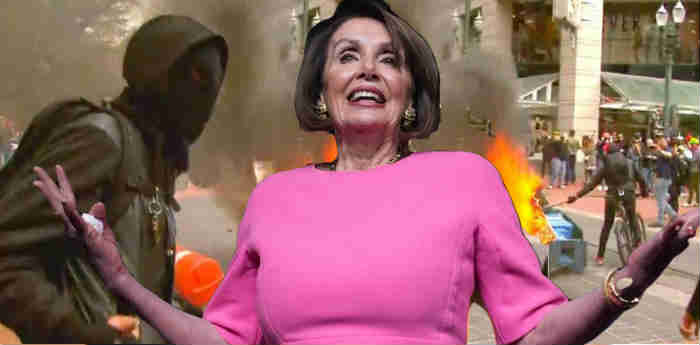

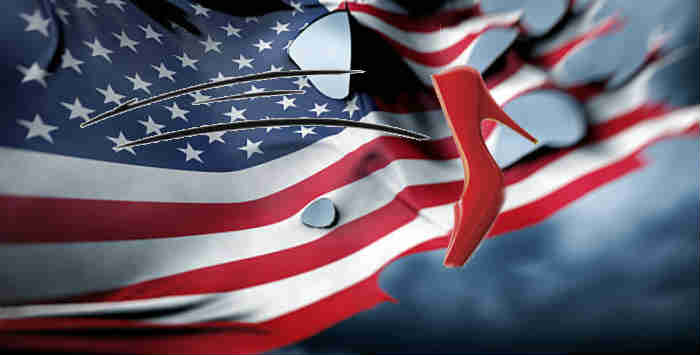



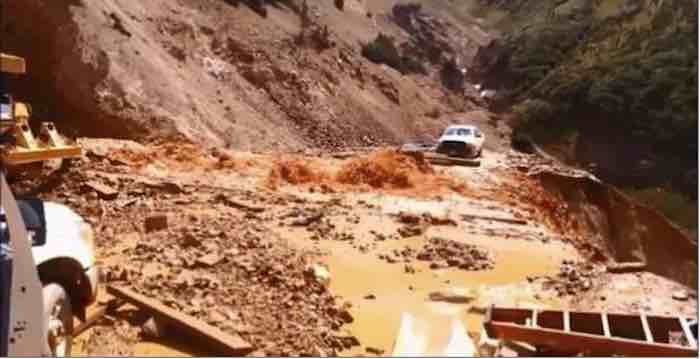


 Centinel2012
