“It Will Shatter The Modern Democrat Party.” Alex DeGrasse On Russiagate Investigations


Posted originally on Rumble By Bannon’s War Room on: August 5, 2025

Consumer Sentiment Not Indicative of Consumer Spending


Posted originally on Aug 4, 2025 by Martin Armstrong 

American Consumer

Consumer sentiment remained elevated for the second consecutive month but remains worse than in December 2024, according to the University of Michigan’s Surveys of Consumers. Sentiment rose 1.6% in July from June, reaching a reading of 61.7 from 60.7. However, overall sentiment has been 17% beneath December’s reading, although it rebounded from April’s low when the market experienced a sharp downturn due to tariff fears.

“Although recent trends show sentiment moving in a favorable direction, sentiment remains broadly negative,” Surveys of Consumers Director Joanne Hsu said in the report. “Consumers are hardly optimistic about the trajectory of the economy, even as their worries have softened since April 2025.”

Inflationary fears declined for the second consecutive month as well, dropping from 5% in June to 4.5% in July after peaking at 6.6% in May, again, as a result of tariff uncertainty. Consumers believe inflation will wane in the long run for the third consecutive month, with the figure declining from 4% in June to 3.4% in July, which marks the lowest reading in 2025.

The Consumer Confidence Index, as reported by the Conference Board, rose 2 points to 97.2 in July, and June’s figure was revised to 95.2. The short-term outlook on the Expectations Index rose 4.5 points to 74.4, yet has been below the recession threshold of 80 since February. Business and labor market conditions, as measured by the Present Situation Index, fell 1.5 points to 131.5.

Yet, the Kansas City Fed noted that consumer sentiment is no longer an accurate reading for consumer spending. “Recent data suggest consumer sentiment has been declining for the past several months, signaling a potential slowdown in spending. However, most measures of actual spending, such as core retail sales and PCE, have remained relatively stable. This discrepancy raises the question of how useful consumer attitudes are in predicting actual spending,” the Fed questioned, later concluding, “Consistent with evidence from the prior 30 years, the near-term outlook for spending growth looks similar regardless of whether we account for the recent weakening in consumer sentiment.”

Federal Reserve Chair Jerome Powell also stated “the link between sentiment data and consumer spending has been weak. It’s not been a strong link at all…it wouldn’t be the case that we’re looking at [consumer sentiment] and just completely dismissing it. But it’s another reason to wait and see.”

Consumers are continually pessimistic, albeit less so, as prices remain elevated. We saw a sharp downturn in consumer sentiment with the peak in inflation during 2022. However, regardless of how one feels about the economy, consumers are forced to spend more on less. The FOMC will no longer use consumer sentiment as a strong gauge for future spending or GDP calculations since the correlation remains weak.

Retail and Tech Jobs At-Risk in the US


Posted originally on Aug 4, 2025 by Martin Armstrong 

Technology

US employers have reduced their workforce more in the first seven months of 2025 than in all of 2024. The DOGE cuts to the public sector were the primary driver of layoffs; however, there has been a notable drop in retail and technology positions in the private sector.

July alone saw 62,000 jobs reduced from the workforce, a 30% increase from June and 140% from July 2024. Over 806,000 positions were removed from January to July, surpassing the 761,358 job cuts in all of 2024.

Public sector positions in government saw the largest reduction at 292,294 positions. The current administration implemented the largest public sector reduction in modern US history by offering over 2 million government employees a buyout. Around 65,000 people accepted the buyout offer within the first two weeks alone. Additionally, DOGE halted grant funding to various NGOs and non-profits, leading to 17,826 fires, which amounts to a 413% annual reduction. None of these positions contributed to the US GDP.

The private sector shed 33,000 positions in June 2025, marking the first contraction in the private sector in nearly two years. For 2025 overall, the sectors facing the steepest layoffs are technology (-89,251) and retail (-80,487).

A few major tech companies implemented large layoffs this year such as Intel (-21,000), Microsoft (-15,000), PayPal (-2,500), and HP (-2,000). The advancement of Artificial Intelligence has led to a drastic reduction in workers in the technology sector, with some reports believing that AI is replacing around 491 tech jobs per day. We’ve seen a 36% decline in tech jobs this year compared to last as technology advances. Another issue has been outsourcing positions to places like India. The US outsourced 300,000 tech-based jobs overall to India as offshoring trends continue. Not only is labor cheaper, but India produces over 1.5 million engineering graduates annually. Visa restrictions have less of an impact as remote work is commonplace.

Retail experienced the second-largest decline in private sector roles with a 249% annual decline. Brick and mortar stores are deteriorating as another casualty of creative destruction as consumers prefer to spend online. Various articles are blaming tariffs and price increases for the drop in retail positions, but consumers are simply spending less. Around 20,000 retail positions were lost to AI automation, especially for basic roles and inventory management. American consumers have never rebounded from the increased cost of living. Credit card delinquencies and bankruptcies continue to reach new highs, and every survey indicates that households are spending more on less and focusing their resources on the basics.

Technology and retail are sensitive to advancements in AI. Offshoring has drastically cut competitiveness for American workers in tech. There is an offshoring corporate tax penalty of 28% but it is safe to assume that this figure will rise. As for AI, the government hasn’t found a way to tax robotic systems, but rest assured they will find a way.

PRINCE: “This Is The Kind Of Stuff That Kicks Off A Revolution”


Posted originally on Rumble By Bannon’s War Room on: July 28, 2025

Spain Creates Taskforce to Monitor Far-Right Groups Online Amid Migrant Clashes


Posted originally on Jul 25, 2025 by Martin Armstrong 

Surveilence

The clash between migrants and Spaniards has reached the brink. Vigilante groups form when the people lose all trust in their government’s ability to protect them. Spain has launched a probe into far-right groups through the terrorism and organized crime intelligence units, with a particular emphasis on monitoring social media networks.

The government’s emphasis on “far-right activity” comes after yet another instance of violent clashes between native residents and migrants. One particular incident that made headlines occurred in the southeastern town of Torre Pacheo, where one-third of the population is comprised of migrants.

“We cannot allow hatred to take root in our society,” said Interior Minister Fernando Grande-Marlaska, during a law enforcement summit. “Crime is not on the rise, nor is it linked to migration,” he added, pushing back against far-right narratives.

The Vox Party, the third-largest party in Spain, is also under investigation for inciting violence for blaming the current government for the growing migrant issue. As I mentioned in an earlier post, since 2020, Spain has experienced an astounding 650% increase in family reunification visas through government programs. Prime Minister Pedro Sánchez’s liberal government plans to permit an additional 900,000 migrants to flow into Spain’s borders over the next three years.

Rocío de Meer, Vox’s spokesperson, stated that “millions of people who have recently arrived and have not adapted to our customs… will have to return to their countries,” urging the government to expel those who “decide not to integrate.” The party has spoken out against NGOs that are assisting migrants to cross into Spain. “Of our country’s 47 million inhabitants, roughly seven million – or more than seven million, because we have to take into account the second generation – eight million are people who have come from different origins in a very short period of time,” Meer said. “It is therefore extraordinarily difficult for them to adapt to our ways and customs.”

Meer also said that his party wants to deport those who want to “live off the work of others.” His party believes that men “who mistreat or demean women” and “unaccompanied minors” must be deported as it is an abuse of human rights. The people of Spain overwhelmingly agree that the borders must close.

There is not a single Western nation that has adopted a successful open border policy. Instead of addressing the problem, the government is employing new AI and data collection methods to detect any form of perceived hate or anti-migrant sentiment online. The Ministry of the Interior plans to subsidize NGOs, political weapons masked as non-profits, to ensure Spain’s destabilization through invasion.

Spain joined the European Union in 1986 after finally becoming a democracy. General Francisco Franco ruled Spain with a closed fist from 1939 to 1975. King Juan Carlos I assumed the throne in 1975 upon Cortes’ death and he helped to usher in a new government for the people of Spain with the passing of the Political Reform Act of 1976 that enabled a democratic system. By 1977, the people of Spain were granted the freedom to vote for the first time since 1936. Every safeguard of democracy shattered with Spain decided to join the European Union. The nation is now beholden to the will of Brussels, and its leaders blindly follow the orders of unelected bureaucrats. War, in addition to the domestic invasion, will cause rising civil unrest in which the people demand a new government system that REPRESENTS THE PEOPLE.

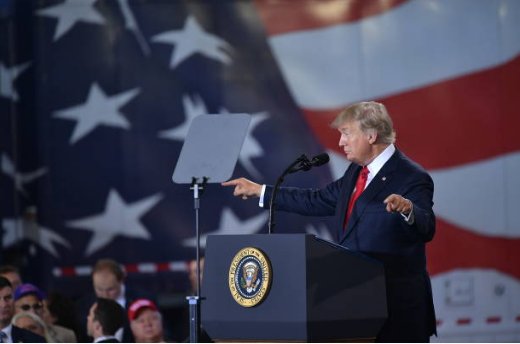
President Trump Gives Remarks and Signs XO at Winning AI Summit – 5:00pm ET Livestream


Posted originally on CTH on July 23, 2025 | Sundance

President Trump travels to Andrew W. Mellon Auditorium today to deliver remarks to an Artificial Intelligence summit and sign an executive order.  The anticipated start time is 5:00pm with Livestream Links Below:

UPDATE: VIDEO ADDED

.

.

.

“The Most Important Is Going To Be Data Centers” Joe Allen Reacts To New Trump Admin A.I. Agenda


Posted originally on Rumble By Bannon’s War Room on: July 22, 2025

While the World Was Distracted by Epstein


Posted originally on Jul 17, 2025 by Martin Armstrong 

Power Grab 2

While the world was distracted by the Epstein debacle, legislators introduced the GENUIS Act that would permit the US government to regulate stablecoins. The GENUIS (Guiding and Establishing National Innovation for U.S. Stablecoins Act), primarily sponsored by Senator Bill Hagerty (R-Tennessee), permits the government to oversee, regulate, and define the $250 billion stablecoin market.

Now, stablecoins differ from cryptocurrencies as they are pegged to a stable asset such as a fiat currency or commodity. Cryptocurrencies are allegedly allowed to freely operate on the market based on supply and demand. The GENIUS Act will peg stablecoins to the US dollar and require issuers to maintain a 1:1 reserve ratio in short-term treasuries or cash.

Issuers holding over $10 billion in outstanding stablecoins will be subject to federal regulation under a newly created oversight agency. These issuers will now be deemed financial institutions and required to meet the traditional banking regulations as well. Stablecoins can no longer pay interest or act as an alternative to bonds. Perhaps most notably, issuers must not meet anti-money-laundering (AML) regulations, which are set to provide the government with unlimited access to payments.

So essentially, the government is turning the stablecoin into a digital dollar of sorts. The concern here is that this could delve into digitizing all currency and creating a CBDC. The act specifically provides the government with the authority to “block, freeze, and reject specific or impermissible transactions.”

A permitted payment stablecoin issuer shall be treated as a financial institution [and]…shall be subject to all Federal laws applicable to a financial institution located in the United States including…policies and procedures to block, freeze, and reject specific or impermissible transactions that violate Federal or State
laws, rules, or regulations…”

CBDC Cover

This provision is not intended to protect the world against drug smugglers and thieves. This provision is intended to grant government unlimited control over how people spend stablecoins. The government could have easily frozen the accounts of those who refused the COVID-19 vaccination, for example, and the Biden Administration admittedly weaponized existing financial institutions to spy on Conservative Americans through their payment histories.

“Stablecoins are the bait and switch for direct-issued government CBDCs,” Bitcoin Magazine editor Mark Goodwin said, “Stablecoins can be programmed. Exactly like how we fear CBDCs will be programmed. They’re exactly the same tokenized mechanism… They can be taken out of your wallet. Your wallet can be blacklisted. A lot of the things that we fear about CBDCs are totally available within the tool set of Stablecoins.”

The GENIUS Act has received bipartisan support. Although Republican Hagerty championed the bill, he had bipartisan co-sponsors, including Senators Kirsten Gillibrand (D-NY), Angela Alsobrooks (D-MD), Tim Scott (R-SC), and Cynthia Lummis (R-WY).

I warned that governments would NEVER allow any cryptocurrency or stablecoin to compete with their own currency. I long warned that government was merely tolerating these alternative currencies in the past as they posed no real threat. But now the government needs the ability to tax everything to support its perpetual spending. Every digital transaction is traceable. Every digital currency is controllable—the ultimate power grab.

One of Donald Trump’s main campaign promises was the prevention of CBDC. The headlines are enraged over his failure to release the Epstein files, but the GENUIS Act is a far deeper betrayal of the American people that has the ability to usher in a new monetary system.


POISON PILLS: Rep. MTG Exposes Senate For Stripping Key MAGA Components Of Big Beautiful Bill


Posted originally on Rumble By Bannon’s War Room on: June 26, 2025, at 3:00 pm EST

“He Was Picked So He Could Be A Money Printer For SpaceX” Caroline Wren On How Pulled NASA Nomination Broke Elon Musk


Posted originally on Rumble By Bannon’s War Room on: June 6, 2025, at 7:00 pm EST