White House NEC Director Kevin Hassett Discusses Government Shutdown – Democrats Baiting Trump to Violate the Law – Video and Transcript


Posted originally on CTH on November 9, 2025 | Sundance

White House Economic Council Director, Kevin Hassett, is a straight shooter; he calls things as they are, not as many would pretend them to be.

On the issue of court orders demanding various cabinet secretaries spend money to fund the government, Director Hassett correctly reframes the issue around the law of federal spending that says money not appropriated for that expenditure cannot be spent. The Supreme Court will strike down, as they already have, any order not grounded in the law around government spending.

Hassett correctly warns that any cabinet agency who attempts to comply with a district or circuit court order, is running the risk of having a lawsuit filed against them for spending non-appropriated funds. This could be part of the reason why Democrats are purposefully not reopening government, to force the Trump administration into a catch-22 legally where they are going to violate the law either way.

Margaret Brennan stands jaw agape at the Machiavellian approach that Director Hassett outlines, “surely they would never do that” she proclaims. In response Hassett reminds Brennan that such Lawfare strategies are indeed part of the larger stop Trump movement. Video and Transcript Below.

[Transcript] – MARGARET BRENNAN: We begin this morning with the Director of the White House National Economic Council, Kevin Hassett. This is now the longest shutdown in American history. The treasury secretary told us two weeks ago November 15 was the hard stop for any paychecks going to US troops. Does that remain the point of exhaustion?

KEVIN HASSETT, DIRECTOR, NATIONAL ECONOMIC COUNCIL: Right, I think that- that’s about the right number. And the problem is that under the law, we’re not allowed to spend money that hasn’t been appropriated. And there is a law, the Antideficiency Act, that says that if a government official spends money that isn’t appropriated by Congress, which will only happen if the Democrats vote to open up the government, then you could even have criminal penalties. And so people are very carefully studying the law and trying to get as much money out the door as is legal. And we’re very glad that we found a way to get a lot of the SNAP money out, but it’s really pushing the boundaries of the law, which is why the Supreme Court had to take that ruling from Rhode Island and put it on hold.

MARGARET BRENNAN: Until the lower court rules–

HASSETT: Until the lower court goes back and comes up with a legal justification for what they said, because there probably isn’t one, sadly, which is why we have to get this government open. I mean, the fact is Goldman Sachs, they have a top economic team, and they’re estimating that we’ve already knocked about 1.5% off of GDP. I think that number is probably low if we keep going even a couple more weeks, because there’s going to be a massive amount of air disruption, especially around the holidays. And one of these things every now and then when we’re talking economics, you and I, we talk about seasonal adjustments and things like that. But the fact is that Thanksgiving, that Thanksgiving time, is one of the hottest times of the year for the economy. It’s Black Friday, you know, and all that kind of stuff. And if people aren’t traveling at that moment, then we really could be looking at a negative quarter for the fourth quarter.

MARGARET BRENNAN: Which is significantly disruptive to the president’s agenda. But to the point you were just making about food stamps, and we saw this Friday, a temporary stay by the Supreme Court that would block full food stamp benefits pending the lower court decision. The administration’s argument, as you just referenced there, was that it would be illegal to move around funding and to tap the Section 32 account at the USDA. But why not do this as a short term patchwork solution? Because you have found ways with the military pay to stretch things out. Why prioritize in that case and not do so with food?

HASSETT: Well, the president’s job, and all of our jobs, is to uphold the law. And when- I’m not a lawyer, but when the lawyers tell us–

[CROSSTALK STARTS]

MARGARET BRENNAN: But are–

HASSETT: what we can do–

MARGARET BRENNAN: — that wasn’t done with the military.

HASSETT: But, but, but yeah, I think that the military is different because of the commander-in-chief stuff. But the legal analysis suggests that we’re doing everything by the book, and then stretching things as much as we can, and basically trying to keep people from committing crimes. Which you know, you know about- in the season of lawfare, if you are a cabinet secretary and you spend money that’s not appropriated for that purpose in your cabinet, then they can come back and they can take you to court.

MARGARET BRENNAN: But you’re also making a political bet that Democrats aren’t going to challenge paying the military. Do you really think Democrats would challenge and take to court paying people for their food stamp benefits?

HASSETT: Let’s just say that we’ve seen Democrats–

MARGARET BRENNAN: –if, if Congress is going to fund it, when the shut- shutdown ends?

HASSETT: We- we’ve seen Democrats take to court people that- on really, really poor charges, and so I think they’re likely to do anything.

MARGARET BRENNAN: Well, it seems a political calculation is the point.

HASSETT: Well, we, we don’t have a political calculation. Our calculation is to get the government open, to get the food stamps to people, and to get people to be paid, 750,000 government workers aren’t getting paid right now. I know you’re talking to the Governor of Maryland in a minute. I’m sure his people are really hurting. Let’s just get the government open, and then let’s talk about things like the healthcare premiums, but do that through regular order.

MARGARET BRENNAN: So, it sounds like you are saying the position is the same, open the government, then we’ll talk about healthcare. But the president, just in the past 36 hours, has put out a number of social media posts. It sounds sort of like he’s proposing something in regard to health insurance payments. He said, I’m recommended- to Senate Republicans that hundreds of billions of dollars currently being sent to money-sucking insurance companies to save bad healthcare provided by Obamacare now be sent to the people so they can purchase their own much better healthcare. He also said they should terminate Obamacare. What does this alternative system look like? Because the entire standoff is about healthcare right now.

HASSETT: Right. Well, the president is, you know, a beautiful tactician, a beautiful negotiator–

MARGARET BRENNAN: This is an off–

HASSETT: –And this is- you know, what he said, he’s brainstorming and trying to help the Senate come up with a deal that can get the government open. And one of the things you could do is conservatives believe that they don’t want the government to micromanage people’s lives. And you know, everybody believes that people should have healthcare, and so why not take the people who have higher healthcare premiums and just mail them a check and let them decide? The reason why it could have an effect is that there are multiple tiers under the Affordable Care Act of different types of insurance, and it could be that people would rather have the money and go from like, you know, this kind of plan to that kind of plan and save themselves a little bit. And so that’s, that’s, you know, basically giving the people an opportunity to make more choices than the government usually lets them.

MARGARET BRENNAN: Is this the Senator Cassidy proposal?

HASSETT: I’m sure that Senator Cassidy and President Trump talked about it, but whether he agrees with everything that Cassidy- I haven’t talked to him about it yet.

MARGARET BRENNAN: Well, does the Republican leader in the Senate accept–

HASSETT: –The president–

MARGARET BRENNAN: –this proposal?–

HASSETT: — the president started this idea yesterday, I don’t think that it’s been discussed widely in the Senate yet.

MARGARET BRENNAN: So the president–

HASSETT: It’s the weekend.

MARGARET BRENNAN: –The Senate’s in session this weekend–

HASSETT: –Yes, the Senate is in session this weekend and we are–

MARGARET BRENNAN: because they’re trying to end the shutdown–

HASSETT: –And here I am.

MARGARET BRENNAN: But this is not the Republican Party’s position.

HASSETT: As of right now, it’s not the Senate position, but the president thought it was something they should think about.

MARGARET BRENNAN: Well, he seems to be negotiating before the government’s open.

HASSETT: He’s talking to his colleagues in the Senate on the Republican side.

MARGARET BRENNAN: But you would agree that there does need to be a deal on healthcare, that healthcare costs are too high.

HASSETT: Well, I think that if you look at the Affordable Care Act, these premiums weren’t made permanent by the Democrats during the COVID emergency because they’re worried about the budgetary costs. And so if you look at the premium increases, they don’t affect most people below two times the poverty line, three times the poverty line. But there are a lot of senior citizens that are above, like, around four times the poverty level, which with a husband and wife team would be about 120,000, that are seeing really big premium increases. And I think that everybody’s going to want to think about what the next step for that would be, because are seeing- again most people aren’t seeing much of an increase at all, but the maximum increases you’re seeing could be up to about $500 a month for seniors who have really costly plans.

MARGARET BRENNAN: The president has also been talking about affordability, and our CBS polling shows the president’s approval rating on the economy has dipped to 38%, the lowest of this term. 75% of those polled say he’s not focusing enough on lowering prices, but the president said this week Democrats are making it up and quote, “every price is down.” I’m sure you know the Consumer Price Index showed grocery prices are up nearly 3%, in September from a year ago.

HASSETT: –well–

MARGARET BRENNAN: –Do you dispute that?

HASSETT: Well, actually, let’s go through the facts, right? Inflation went up about 5% under President Biden. In President Trump’s first eight or nine months, depending where we get the last number, it’s up 2.7%. One of the big things that’s hurting affordability is mortgages. The interest rate went up by about 4%.

MARGARET BRENNAN: This is grocery prices–

HASSETT: –No, grocery prices are actually down significantly under Trump. But here’s the thing–

MARGARET BRENNAN: –but depends on which–

HASSETT: Let me– I’ll just make a point.

MARGARET BRENNAN: Okay.

HASSETT: That if you look at the real reduction in spending power for Americans under Joe Biden, then it went down about $3,000 because we had up to 9% inflation, and then they went to the grocery store, they couldn’t buy the things they’re used to buying. The real spending power, adjusted for inflation, under President Trump has gone up about $1,200 so far this year. $1,200 is not $3,000, and so people are right to feel stretched, but we’re making progress. And if you look at all the positive things about the economy, industrial production just about at an all time high, capital spending about at an all time high, GDP growth right now about 4%, then that shows that the income growth that we need to get more affordability is on the path to happening. And the bottom line is that the last Consumer Price Index surprised down. It was lower than expected, and it would have been even lower because there was a refinery shutdown that caused it to go slightly higher. So we see inflation under control and the economy booming, but we understand 100% why people are still hurting, because we haven’t made up all the room that was lost under Joe Biden.

MARGARET BRENNAN: So are you comfortable with 3% inflation?

HASSETT: I’m comfortable with 2% inflation.

MARGARET BRENNAN: So no, you’re not happy where things are now.

HASSETT: Well, they got to go down a little bit more, but there- but the point is that inflation is like the Queen Mary, my friend Alan Greenspan used to say, so when you go from almost 4% that we had in January down to the mid twos, then that’s a trajectory that usually has momentum.

MARGARET BRENNAN: So the St. Louis Fed found tariffs account for half a percentage point of the annual inflation rate. How much do you think the tariffs are hiking prices?

HASSETT: You know, there’s a couple of papers out there that say that prices went up by between two tenths and five tenths. And the thing to remember, if those papers are true, is that that’s a level adjust, because the tariff goes in, and then the tariff is just there, so it doesn’t affect inflation in the future. It would be a one time level adjust. Our estimates at CEA are much closer to zero, and it’s all based on modeling and assumptions about elasticities and things. But for the most part, the one way you can see it is you could look at the price of imported goods, and the price of imported goods, CEA put a report out, has actually been declining under tariffs. Because what happens is that the Chinese want to sell us lots of stuff, and there’s a tariff, so they cut their prices so that they can still have a larger market share in the US.

MARGARET BRENNAN: Kevin Hassett, always good to have you here. Of course, we have to leave it there for now. We’ll be right back in a minute. Stay with us.

[END TRANSCRIPT]

Sunday Talks: Treasury Secretary Scott Bessent vs George Stephanopoulos – Video and Transcript


Posted originally on CTH on November 9, 2025 | Sundance 

Treasury Secretary Scott Bessent appears on ABC This Week to combat the narrative engineering of DNC transcriptionist George Stephanopoulos.

Sometimes it’s worth watching Stephanopoulos, Bill Clinton’s former Chief of Staff, because he frames the political position, current and future, for the Democrat party. Video and Transcript Below:

[Transcript] STEPHANOPOULOS: And we’re joined now by the Treasury secretary, Scott Bessent.

Mr. Bessent, thank you for joining us this morning.

We’ve just heard about all these impacts from the shutdown — government shutdown right now. Are we starting to see — see a permanent impact on the economy?

TREASURY SECRETARY SCOTT BESSENT: Sure, George.

And good to be with you.

And we’ve seen an impact on the economy from day one, but it’s getting worse and worse. We had a fantastic economy under President Trump the past two quarters. And now there are estimates that the economy, economic growth for this quarter, could be cut by as much as half if the shutdown continues.

And what your correspondent didn’t talk about there, George, was there’s, of course, the human cost, and we’re going to have the busiest travel day of the year, the day after Thanksgiving. And, you know, Americans should look to five Democratic senators to come across the aisle to open that. But on the other side, there’s also, cargo is being slowed down. So, you know, we could end up with shortages, whether it’s in our supply chains, whether it’s for the holidays.

So, you know, cargo and people are both being slowed down here. And that’s for safety’s sake, George.

STEPHANOPOULOS: The president continues to post about ending the filibuster. Is that — is that the best way to end the shutdown right now? Is that what the administration’s position is?

BESSENT: No, George, the best — the best way to do it — and look, you were involved in a lot of these in the ’90s. And, you know, you basically called the Republicans terrorists and, you know, you said that it is not the responsible party that keeps the government closed.

And so, what we need is five brave, moderate Democratic senators to cross the aisle because right now it is 52 to three, 52 to three, five Democrats can cross the aisle and reopen the government. That’s the best way to do it, George.

STEPHANOPOULOS: I can disagree with you about the history there, but we don’t do history lesson right now.

BESSENT: No, George —

(CROSSTALK)

STEPHANOPOULOS: Let’s talk — let’s talk about — let’s talk about —

BESSENT: No, no, no. George, George, George —

(CROSSTALK)

STEPHANOPOULOS: Let’s talk — sir, let’s talk about what’s happening right now. I asked you a question —

BESSENT: If you want, I’ve got all your quotes here. I got all your quotes here, George.

STEPHANOPOULOS: I am sure — I am — I’m sure you do. But let’s talk about the situation right now —

(CROSSTALK)

BESSENT: And I went back and read your book. So, you got one — one purchase on Amazon this week. And that’s very much what you said.

STEPHANOPOULOS: That’s — it’s a mis — mischaracterization of history. But I do want to talk about right now, is the best way to end the — to end the shutdown right now to end the filibuster?

BESSENT: The best way is for five Democratic senators to come across the aisle. The — what are we on? Vote 13, 14, 15. Mike Johnson got the reopening out of the House very quickly.

And you know what — what’s changed since the spring, George, is — you know, is Chuck Schumer’s poll numbers. He had a clean continuing resolution in the spring.

And why are Democrats doing this now, George? Again, you’ve been involved with this. The — you know, explain what’s changed.

You know, Senator Chris Murphy gave the game away this week when he said, “Well, you know, now it’s to our advantage to keep the government closed.” They have turned the American people into pawns.

STEPHANOPOULOS: The president has also come forward with a new proposal overnight saying it’s time instead to do away with Obamacare, instead to have the money go directly to the people.

Do you have a formal proposal to do that?

BESSENT: We don’t have a formal proposal, but you know, what I have noticed over time is that the Democrats give all these bills the Orwellian names, the Affordable Care Act, the Inflation Reduction Act, and we end up with just the opposite. You know, the Affordable Care Act has become unaffordable, and the Inflation Reduction Act set off the greatest inflation in 50 years.

STEPHANOPOULOS: Well, I’m a little confused because the president been posting about that overnight and into this morning, but you’re not proposing that to the Senate right now?

BESSENT: We’re not proposing it to the Senate right now. No.

STEPHANOPOULOS: Then why is the president posting about it?

BESSENT: George, you know, the president’s posting about it, but again, we have got to get the government reopen before, you know, we do this. We are not going to negotiate with the Democrats until they reopen the government.

It’s very simple. Reopen the government, then we can have a discussion.

STEPHANOPOULOS: Let’s talk about affordability and inflation. That was one of the key concerns that voters said was on their minds as they were voting this Tuesday. It appeared to be the driving force in the elections. But President Trump is still insisting that prices are way down even though last month’s report showed inflation stuck at about 3 percent.

Are Americans worried about inflation just wrong?

BESSENT: Well, George, I can tell you, the — what we’re not going to do is what happened the — under the Biden administration where, you know, the administration and the media gaslit everyone and said, “Oh, you know, there’s a vibe session. You don’t understand how good you had — had it.”

And what happened then was we had the worst inflation, 40 or 50 years — you know, 22, 23 percent, but the basket of goods and services for working Americans was up more than 30 percent.

And what we’re seeing is we had to stop the increase first. Now we are starting to see prices level off, come down. You know, gasoline is down, interest rates are down, so mortgages are down. And I think we are making substantial progress on that.

And I think over the coming months and the next year, prices are going to come down.

STEPHANOPOULOS: The president says though, he just had posted this morning that there’s almost no inflation. The consumer price index is higher than it was in the beginning of the year. Electricity rates are rising, so are prices for coffee, beef, vegetables, televisions.

And it’s not just me. It’s not just economists are saying that. Your own Republican members of Congress are saying that, including Marjorie Taylor Greene. Let’s look.

(BEGIN VIDEO CLIP)

REP. MARJORIE TAYLOR GREENE (R-GA): I go to the grocery store myself. Grocery prices remain high. Energy prices are high. My electricity bills are higher here in Washington, D.C., at my apartment, and they’re also higher at my house in Rome, Georgia. Higher than they were a year ago. So — so, affordability is a problem.

(END VIDEO CLIP)

STEPHANOPOULOS: How do you respond to Congresswoman Greene?

BESSENT: Well, George, what I — what I would respond to is electricity prices are a state problem. And you know, I was very interested to see in the earlier clip where the governor — the governor-elect of New Jersey said, “Well, I’m going to bring down energy prices.” Well, it was her predecessor, Phil Murphy, who took them up.

So, you know, look, there are things that the federal government can control. Local electricity prices are not one of them. But, you know, energy prices, gasoline prices, are way down. And, you know, we — we are doing what we can every day. I think we’re on a very good path to bringing prices down.

STEPHANOPOULOS: Let’s talk about tariffs and the Supreme Court. The president is also posting about tariffs this morning. He’s saying, “people that are against tariffs are fools. We’re taking in trillions of dollars.” Is that true?

BESSENT: We have taken — over the course of the next few years, we could take in trillions of dollars, George. But the real — the real goal of the tariffs is to re-balance trade and make it more fair.

You know, over time, the president’s goal is to bring back manufacturing to the U.S. You know, for the past two, three, four decades we have seen our manufacturing sector gutted. So, what would happen over time is we would take insubstantial money, as factories come back to the U.S., as we’re seeing now. I was just down in South Carolina at a rare earth magnet plant and a Boeing plant on Friday. And, you know, that’s the, I believe, 1,500 total new jobs. Tariff income will be substantial, but then that will rebalance.

The goal here, George, is to re-balance trade. So, tariff income will be substantial at the beginning. It will come down. And then domestic tax revenues will climb as corporate taxes go up and all of these high-paying jobs are created.

STEPHANOPOULOS: The president’s main argument, though, seems to be that we’re — it’s about taking in the revenue. And he also promised this morning a dividend —

BESSENT: No, no, no, George. Stop right — no.

STEPHANOPOULOS: A dividend of at least $2,000 a person, not including high-income people. How is he going to pay that dividend of $2,000 a person?

BESSENT: Yes, George, it’s not about taking in the revenue, it’s about re-balancing. And the revenue occurs early on. And then as we rebalance and the jobs come home, then it becomes domestic tax revenue.

STEPHANOPOULOS: Are you worried that the president’s focus on revenue, though, which is what he’s been focusing on in his public statements, is going to hurt your argument in the Supreme Court?

BESSENT: Not at all. It’s completely consistent that the revenues come in at the beginning, then, as we rebalance, which is the goal of this, bring back high-paid manufacturing jobs to the U.S., then it will then morph into domestic tax revenues.

You know, President Trump has consistently fought for the American worker, and we are seeing trillions of investments in the U.S. that would not have occurred without the tariffs.

The other thing, too, is, you know, the authority that he uses is called IEEPA. It is an emergency authority. And he used that emergency authority. He got the Chinese to the table to negotiate on stopping the precursors for fentanyl drugs. You know, fentanyl, hundreds of thousands of Americans dying every year is not an emergency, what is? On October 8th, Chinese threatened to put export controls on rare earth materials. He was able to threaten 100 percent tariffs, and we were able to negotiate that away.

And then, finally, in terms of the general tariffs, we are doing these trial deals that would not be possible. We were at a tipping point in terms of the economy, in terms of our trade balance, and we are re-balancing successfully.

STEPHANOPOULOS: Do you have a proposal, a formal proposal, to give a $2,000 dividend to every American?

BESSENT: I haven’t spoken to the president about this yet, but, you know, it could — the $2,000 dividend could come in lots of forms, in lots of ways, George. You know, it could be just the tax decreases that we are seeing on the president’s agenda. You know, no tax on tips, no tax on overtime, no tax on Social Security. Deductibility of auto loans. So, you know, those are substantial deductions that, you know, are being financed in the tax bill.

STEPHANOPOULOS: Secretary, thanks for your time this morning.

President Trump Announces Significant Pharmaceutical Deal to Lower Drug Prices, and Answer Media Questions


Posted originally on CTH on November 6, 2025 | Sundance

President Trump made an announcement today in the oval office highlighting two Rx companies, Eli Lilly and Company and Novo Nordisk, to dramatically reduce the prices Americans pay for some of the world’s most popular drugs. [Fact Sheet Here]

Following the drug company announcement President Trump took questions from the media.  The press Q&A is below and the full video including the announcement is below the fold. WATCH:

.

.

Commerce Secretary Howard Lutnick Discusses Supreme Court Arguments on Tariffs


Posted originally on CTH on November 5, 2025 | Sundance 

Commerce Secretary Howard Lutnick appears on NewsMax to discuss his perspective on the Supreme Court oral arguments surrounding the legal challenges to President Trump’s tariff authority.

Secretary Lutnick attended the court arguments today and is very optimistic about the outcome of the arguments.  WATCH:

.

Full Audio: Supreme Court Hears Oral Arguments Surrounding Presidential Tariff Authority


Posted originally on CTH on November 5, 2025 | Sundance

Today, the Dept of Justice Solicitor General Dean John Sauer provided oral arguments to the Supreme Court in support of President Donald Trump’s tariff authority. The issue at the heart of the matter is the International Emergency Economic Powers Act (IEEPA), which grants the president the power to levy tariffs.

Chief Justice John Roberts and Justice Sonia Sotomayor, leaned heavily on the argument that tariffs are taxes against the American people, and all taxes must come from Congress.  The ‘tariffs are taxes’ argument seems to be the linchpin for the leftists on the court and the Gorsuch ‘conservatives’.

Solicitor Sauer countered the IEEPA tariffs are “regulations” against foreign imported goods. “The power to impose tariffs is a core application of the power to regulate foreign commerce, which is what the phrase ‘regular importation of commerce’ in IEEPA naturally evokes,” Sauer said.

The full audio of the arguments is provided below. (I’m working on the transcript). WATCH (prompted):

.

It’s not as easy, Chief Justice Roberts said, to simply frame a tariff as a tax – a power reserved to Congress.  “It implicates, very directly, the president’s foreign affairs power,” said Roberts, who is a key vote to watch in the case.

Trump’s tariffs, Roberts said, were “quite effective” in achieving the president’s particular objective.  That position is closely aligned with the administration’s position that a president has broad power in the context of foreign affairs.

The court is expected to hand down a decision by the end of June – or potentially sooner.

Senate Leader John Thune Tells President Trump, “There aren’t enough Republican votes to end CR filibuster”


Posted originally on CTH on November 3, 2025 | Sundance |

Senate Majority Leader John Thune told reporters he informed President Trump, “The votes aren’t there” to kill the filibuster.  Ergo, the govt shutdown will continue.

The issue is somewhat frustrating for those who have followed DC events closely.  The Democrats hated the Big Beautiful Bill budget and spending legislation, so the Republicans had to suspend the filibuster to pass it.  However, the Democrats are blocking the BBB budget and spending legislation by shutting down government, and the Republicans will not suspend the filibuster to open it.

WASHINGTON DC – Senate Majority Leader John Thune said Monday there’s not enough support among Republican senators to eliminate the filibuster as President Donald Trump ramps up pressure to change the chamber’s rules to allow the simple-majority passage of legislation. “The votes aren’t there,” Thune told reporters.

Thune said he had spoken to Trump about the issue — he didn’t specify when — and questioned whether his campaign against the filibuster should come as a surprise. (more)

The Moonbat leftists are not the biggest problem; they never have been. They are ideologues, mostly. Insufferable, stupid, violent at times, but easy to spot.  Remember, Democrats quest for power; Republicans quest for money. Always underline this, because it’s really important.

The Moonbat leftists seek power, seek control of your life, and they are open in their insufferably stupid arguments to get there. When they start to lose, they turn violent. This is their history.

That said, they are not the most dangerous.

The professional Republicans are more dangerous, because their priority is money. As a result, their approaches, goals, objectives and arguments can be purchased.

Republicans have no interests, goals or objectives, nor allegiances, that supersede their primary objective – getting money, and growing their wealth.

Democrats will come at you with a knife, a gun or a baseball bat. You can see them. The professional Republican guy standing beside you, however, is willing to take a payment to shoot you in the ear when you don’t see it coming.

This is also why it seems like Democrats stick together, and Republicans split. Democrats are chasing a common goal, a collective goal – power. Republicans are chasing a commonality, yes, but an individual goal – money, their wealth.

Donors contribute to the Democrat agenda because their interest is to benefit from power. Republicans modify their agenda to benefit donors, because their goal is money.

Democrats stay on task, power. Republicans are flexible, money.

You enter a war against Leftists with extreme danger. However, the danger is not the war in front of you, it’s the army beside you waiting to get a payment from the enemy in front of you.

Out of a group of 1,000 Democrats, 900+ will join in to defend a weakened Moonbat leftist (see Kimmel).

Out of a group of 1,000 Republicans, you will find, maybe, 5 willing to cover your back regardless of how much bribery is put in front of them.

Remember this, understand this, and the reality of who presents the most danger to us is accurately framed.

Republicans do not simply snatch defeat from the jaws of victory; they sell defeat to the highest bidder!

It is interesting to watch Senate Republicans proclaim how agencies like the DOJ and FBI have lost the institutional trust of the American people due to corruption, while simultaneously the same Senate Republicans never note the trust loss within their party as a result of their willful blindness to it.

Wax on….  Wax off.   Today is another Monday.

USDA Will Exhaust All Emergency Funds to Pay Food Stamp Benefits at 50 Percent for November, After That No Money


Posted originally on CTH on November 3, 2025 | Sundance |

No amount of judicial activism can get blood from a stone.  After the Rhode Island judge demanded the USDA pay food stamp benefits from an emergency/disaster fund, Deputy Under Secretary of the Food, Nutrition, and Consumer Services (FNCS) at the United States Department of Agriculture (USDA), Patrick Penn, files a court response saying all funds distributed.

Approximately 50% of the normal distribution for 42 million recipients has been transmitted.

[SOURCE DOCUMENT]

Block grants for Puerto Rico and Samoa?

Sunday Talks – Transportation Secretary Sean Duffy Discusses Disruptions from Govt Shutdown


Posted originally on CTH on November 2, 2025 | Sundance 

With increased holiday travel season soon to take place, Transportation Secretary Sean Duffy discusses some of the issues to federal transportation, specifically air travel, with CBS Margaret Brennan. Transcript and Video below:

[Transcript] – MARGARET BRENNAN: We go now to the Secretary of Transportation, Sean Duffy, who joins us this morning from Far Hills, New Jersey. Welcome to Face The Nation.

TRANSPORTATION SECRETARY SEAN DUFFY: Hey, thanks, Margaret, good to be with you.

MARGARET BRENNAN: So our CBS polling shows that there is real concern among Americans regarding the effect of the shutdown on all transportation. Should Americans also have safety concerns at this point?

SEC. DUFFY: I think that’s a great question. We work overtime to make sure the system is safe. And we will slow traffic down, you’ll see delays, we’ll have flights canceled to make sure the system is safe. But we have to be honest, when we have controllers, where we have shortages and towers and TRACONs doing two jobs, does it add more risk into the system? Sure, it does. But again, we’re always managing that. Again, we don’t- we don’t want crashes, we want people to go safely, and so we will slow and stop traffic if we don’t think we can manage it in a way that keeps people safe as they go from point A to point B.

MARGARET BRENNAN: Well, I did see that the FAA said, up in New York, 80% of air traffic controllers were absent from New York area airports, and that same day, there was a near miss at LaGuardia Airport. One United plane clipped another one. Was that pilot error? Or was that linked to some kind of shortage?

SEC. DUFFY: Well, you mentioned the shortages of air traffic controllers in the New York airspace. We had a couple days ago, three hour delays throughout New York. And again, I haven’t got the readout yet on whether that was pilot error. And usually, when these planes are- are traveling very close to each other, it’s their job to stay away from one another. That’s not controllers, it’s usually pilot error. But again, I’ll have to look and see what directive was given by the air traffic controllers. But it’s normally the pilot’s responsibility to stay away from aircraft on the tarmac.

MARGARET BRENNAN: So if this shutdown continues, how- when does it become an emergency in terms of passenger safety and the safety of those who are trying to, for example, get home for Thanksgiving in a few weeks.

SEC. DUFFY: Well, does it become a flight emergency, a safety issue? No, we will stop traffic. So we’re not going to let that happen. I think the real consequence is, what kind of rolling delays do you have throughout the system, right? We’ve seen problems at LA, in Dallas, in DC, Boston, Atlanta. And so I think it’s only going to get worse. We have controllers who, some of them are new controllers. We have trainee controllers who are very helpful in the tower. They don’t make a lot of money, and they’re now confronted, they haven’t had a paycheck for over a month. They’re confronted with a decision: do I put food on my kids’ table, do I put gas in the car, do I pay my rent or do I go to work and not get paid? They’re making decisions. I’ve encouraged them all to come to work. I want them to come to work, but they’re making life decisions that they shouldn’t have to make. Let’s open the government up. Let’s pay these people, these young controllers. Margaret, it’s really important, I think you’ve covered this, we don’t have the best equipment in our towers and centers for air traffic control. But we have the safest airspace, we have the most efficient airspace because we have the best controllers in the world that work our skies and keep our people safe. They deserve a paycheck.

MARGARET BRENNAN: Well, given that they are so essential, is there any way the administration can find a pot of money like seems to be getting found for others, like the military, to pay controllers so they can show up to work? Why isn’t the administration able to do that?

SEC. DUFFY: Yeah, well, I think that’s a great question. So we have done all we can. President Trump has done all he can to minimize the pain of the shutdown on the American people. Again, you remember under Barack Obama’s shutdown, he was trying to gate off open air monuments in Washington, DC, and were shutting down parks just walking paths. President Trump has tried to make it less painful on the American people. So we’re looking for pots of money to pay essential workers, but there’s really strict rules around what money we can use and how we can use it, and we have to follow the law. And so we were able to fund a central air service, service to more rural communities. We’ve kept our academy up and running thus far. We don’t have a ton of time, a couple more weeks of that funding. But I don’t have the resources to do that, and the simple answer is, vote to open the government, negotiate your differences. That’s fine, that’s fair. But again, these people should be paid. And to say that it’s Donald Trump’s fault, to say he has to find money, when Democrats have said there’s no money for you because we’ve shut the government down, I mean, that’s a contorted analysis. And Democrats are trying to do that, and I don’t think it really works. Give the money and we’ll pay the controllers.

MARGARET BRENNAN: Yeah, well, I saw reports that air traffic controllers only received partial pay mid-October, and this past week they missed a paycheck altogether. So practically speaking, for those who are in these jobs, would you advise them to pick up part time work elsewhere?

SEC. DUFFY: No, I’m clearly asking them, come to work. It is your job to come to work, and eventually you will be paid. But as I’ve traveled around the country and talked to air traffic controllers, they’ve told me that a lot of them can navigate missing one paycheck. None of them can manage missing two paychecks. And they’re like every American family, everyone watching your show today as they think about their own finances, how many paychecks can they miss before it becomes real stress, real strife in their life? And so they’re- at the- next week, they’re going to get a notice of what their next paycheck is going to be. And if the government doesn’t open, the notice will be another big fat zero, and you’re going to see more of them probably make the decisions of funding their families, putting food on their table, gas in their cars, versus coming into work. That’s not what I want, but I’m a realist as well, Margaret, these are the decisions of life and survival that these controllers have to make. By the way, it’s the technicians, also. We have old equipment. We have technicians that work in the towers that keep the equipment operational. They’re not getting paid. I have train inspectors who are working to keep our trains running and running safely. They’re working without pay. I have pipeline inspectors, same thing. Across the system. We have a number of people who are working without pay. We talk about the air traffic controllers, but I have thousands of employees who are showing up, doing the work and trying to keep this system safe for the American people all the while they don’t get paid to do it.

MARGARET BRENNAN: Understood. So you said back on Fox Business on October 9 that “I can’t have people not showing up for work and that they may be let go.” There’s a shortage of 4,000 controllers already. You’re not firing people, are you? You can’t afford to.

SEC. DUFFY: No, so when- we’re 2-3,000 controllers short, but that’s a huge number. And you make an interesting point, because I’ve tried to surge air traffic controllers into the system through our academy. Margaret, we’re up 20% of controllers through the academy this year alone. It takes them about a year to two to get certified in a tower, but this shutdown is impacting my pipeline of controllers. And so as- when everyone forgets about air traffic control and the shutdown, I’m going to deal with the consequences of, again, delivering for the American people and getting more controllers in the towers, not less. And you bring up a good point. We’re already stressed in that we don’t have enough controllers in our system, and this shutdown, when we have staffing triggers where they’re not coming in because they’re funding their families and food on their tables, that makes it more difficult because we’re already short long. Long term consequences–

MARGARET BRENNAN: So you’re not going to fire them?

SEC. DUFFY: I don’t plan on firing control. No, listen, I have, no, I- again when they’re making decisions to feed their families, I’m not going to fire air traffic controllers. I have, I have loved them and supported them as they’re trying to go through this process and it’s challenging for them. They need support, they need money, they need a paycheck. They don’t need to be fired.

MARGARET BRENNAN: All right. Secretary Duffy, thank you for your time this morning. We’ll be right back.

[Transcript End]

President Trump Asks Senate Republicans to End Filibuster and Extend CR to Reopen Government


Posted originally on CTH on November 1, 2025 | Sundance

I see President Trump’s point on this quite clearly.

The Big Beautiful Bill (BBB), essentially the 2026 budget and spending package, was passed along party lines because Democrats would not support the cuts to their spending programs which purchased votes.  The Democrat opposition to the fiscal spending Continuing Resolution (CR) is essentially just another way to filibuster the BBB that preceded it.

If the Republican Senate would end the filibuster to pass the BBB, then why would the Republican Senate permit the spending filibuster to block the CR which is the spending vehicle to deploy the BBB?

DONALD J TRUMP – “Remember, Republicans, regardless of the Schumer Shutdown, the Democrats will terminate the Filibuster the first chance they get. They will Pack the Supreme Court, pick up two States, and add at least 8 Electoral Votes. Their two objectors are gone!!! Don’t be WEAK AND STUPID. FIGHT, FIGHT, FIGHT! WIN, WIN, WIN! We will immediately END the Extortionist Shutdown, get ALL of our agenda passed, and make life so good for Americans that these DERANGED DEMOCRAT politicians will never again have the chance to DESTROY AMERICA! Republicans, you will rue the day that you didn’t TERMINATE THE FILIBUSTER!!! BE TOUGH, BE SMART, AND WIN!!! This is much bigger than the Shutdown, this is the survival of our Country!”

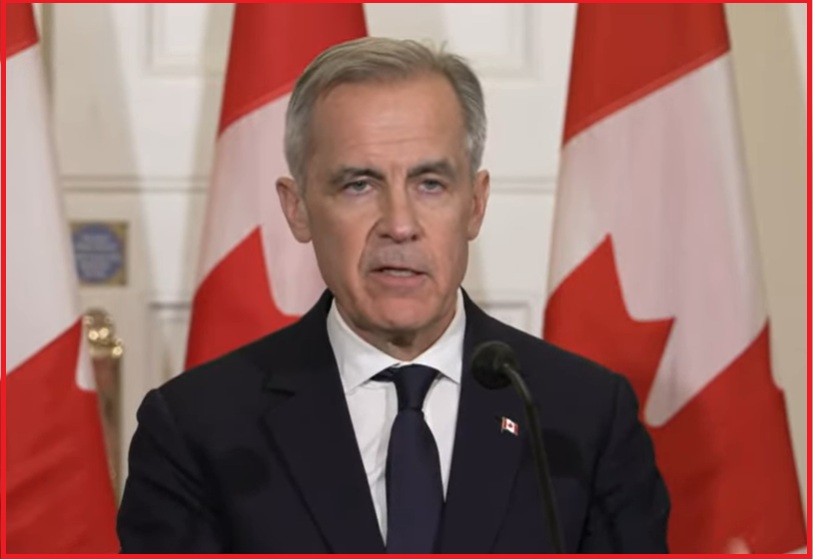
Canadian Prime Minister Mark Carney Confirms He Apologized to President Trump for Reagan Ad Effort


Posted originally on CTH on November 1, 2025 | Sundance 

On Friday President Trump noted (off-the-cuff) he was ambivalent to the trade interests of Canada and had no intention to restart discussions. However, Trump also said he holds no personal animosity toward Canadian Prime Minister Mark Carney for the stupid and antagonistic move they made in purchasing a manipulative television ad intended to undermine the Trump trade position.

On Saturday, Prime Minister Mark Carney confirmed he did apologize to President Trump for the Canadian effort.

GYEONGJU, South Korea, Nov 1 (Reuters) – Canadian Prime Minister Mark Carney said on Saturday he had apologised to U.S. President Donald Trump over an anti-tariff political advertisement and had told Ontario Premier Doug Ford not to run it.

Carney, speaking to reporters after attending an Asia-Pacific summit in South Korea, said he had made the apology privately to Trump when they both attended a dinner hosted by South Korea’s president on Wednesday.

“I did apologise to the president,” Carney said, confirming comments by Trump made on Friday.

Carney also confirmed that he had reviewed the ad with Ford before it aired but said he had opposed using it.

“I told Ford I did not want to go forward with the ad,” he said.

The ad, commissioned by Ford, an outspoken Conservative politician who is sometimes compared to Trump, uses a snippet of Republican icon and former President Ronald Reagan saying that tariffs cause trade wars and economic disaster.

In response, Trump announced that he was increasing tariffs on goods from Canada, and Washington has also halted trade talks with Canada.

When departing South Korea earlier this week, Trump remarked he had a “very nice” conversation with Carney at that dinner but did not elaborate. On Friday Trump still said the United States and Canada will not restart trade talks. (read more)

Carney also noted he had great discussions with Chinese Chairman Xi Jinping but did not negotiate any trade deals.

Instead, the Canadian Prime Minister emphasized the release of Canadian citizens detained in China and requested that Beijing not interfere in Canadian domestic politics.

The irony is strong.

The current USMCA (CUSMA) trade pact covers approximately 60% of U.S-Canada trade; it is the remaining 40% is being debated and argued.

President Trump’s position is pragmatic. He would prefer to just deal with 100% of the trade sectors in one bilateral free trade agreement; hence, his ambivalence until the USMCA is dissolved.

Canada, on the other hand, is entirely dependent.  They demand all trade conflicts be resolved without opening up the USMCA. Again, another conflict. Canada is like the dependent spouse in a divorce arguing for child support payments when the “children” are in their twenties.

The current status is President Trump pulling back completely from discussions with Canada, while the various provincial Premiers and Prime Minister Mark Carney agonize over the issue.

At a certain point, when the entire national economic plan of Canada is based on “Donald Trump bad”, and all political messaging internally is to proclaim they have no alternative policy positions, the Canadians might not realize it, but they are confirming complete and total dependency on the nation Donald Trump represents.

What took place in last week’s tour of Asia, makes Canadian Prime Minister Mark Carney look very small.