Ice Age Geology: A Common Thread for Pacific Northwest Agriculture


Published on Jun 12, 2015

SUBSCRIBE 2.1K
Nick Zentner, geologist at Central Washington University, describes the connection between the Ice Age Floods and agriculture (e.g. soil types and structure) as we know it today in eastern Washington and the Pacific Northwest.

The Secrets Of Quantum Physics (Full Astrophysics Documentary) | Spark


Published on Mar 20, 2018

SUBSCRIBE 170K
Professor Jim Al-Khalili traces the story of arguably the most important, accurate and yet perplexing scientific theory ever: quantum physics. The story of quantum physics starts at the beginning of the 20th century with scientists trying to better understand how light bulbs work. This simple question soon led scientists deep into the hidden workings of matter, into the sub-atomic building blocks of the world around us. Here they discovered phenomena unlike any encountered before – a realm where things can be in many places at once, where chance and probability call the shots and where reality appears to only truly exist when we observe it. Albert Einstein hated the idea that nature, at its most fundamental level, is governed by chance. Jim reveals how in the 1930’s, Einstein thought he’d found a fatal flaw in quantum physics. This was not taken seriously until it was tested in the 1960s. Professor Al-Khalili repeats this critical experiment, posing the question does reality really exist, or do we conjure it into existence by the act of observation? Elsewhere, we explore how the most famous law of quantum physics – The Uncertainty Principle – is obeyed by plants and trees as they capture sunlight during the vital process of photosynthesis. Could quantum mechanics explain the greatest mystery in biology – evolution? Content Provided By TVF International. Any Queries Please Contact Us at hello@littledotstudios.com Subscribe to Spark for more amazing science, tech and engineering videos – https://goo.gl/LIrlur Follow us on Facebook: https://www.facebook.com/SparkDocs/ Follow us on Instagram: https://www.instagram.com/spark_chann… #JimAl-Khalili #quantumphysics #Astrophysics #science #technology #engineering #matter #mysteriesoflife #quantummechanics #universe


Creativity is the Key to Everything


A professor at Princeton University once told me I reminded him of Einstein. I was shocked. I said I was nothing like Einstein, and I certainly did not advance society as he did. He then said to me that it was not the subject matter that he was referring to. He said it was my curiosity and that I liked to explore and uncover what made things really tick in my own field. He explained that the key to everything was simply being curious. Without that aspect, we would discover nothing.

There are many studies of geniuses or gifted children. But what many do not realize is that children have also invented things from trampolines to ice pops (see: 10 Great Inventions Dreamt Up By Children).

People often write in to ask what I would recommend for children to study. I believe science is the far better field because you have to actually prove something works. The social sciences are not science at all. They are just like reading fiction. Whatever the subject matter a child may be interested in, supplement them with programming. That is how you understand to read and write. Once you understand a subject matter, then you may be able to code something that changes the world. Encourage their curiosity. As long as they have that trait, then they will be the explorer of worlds for the future.

The First Black Holes has Been Photographed


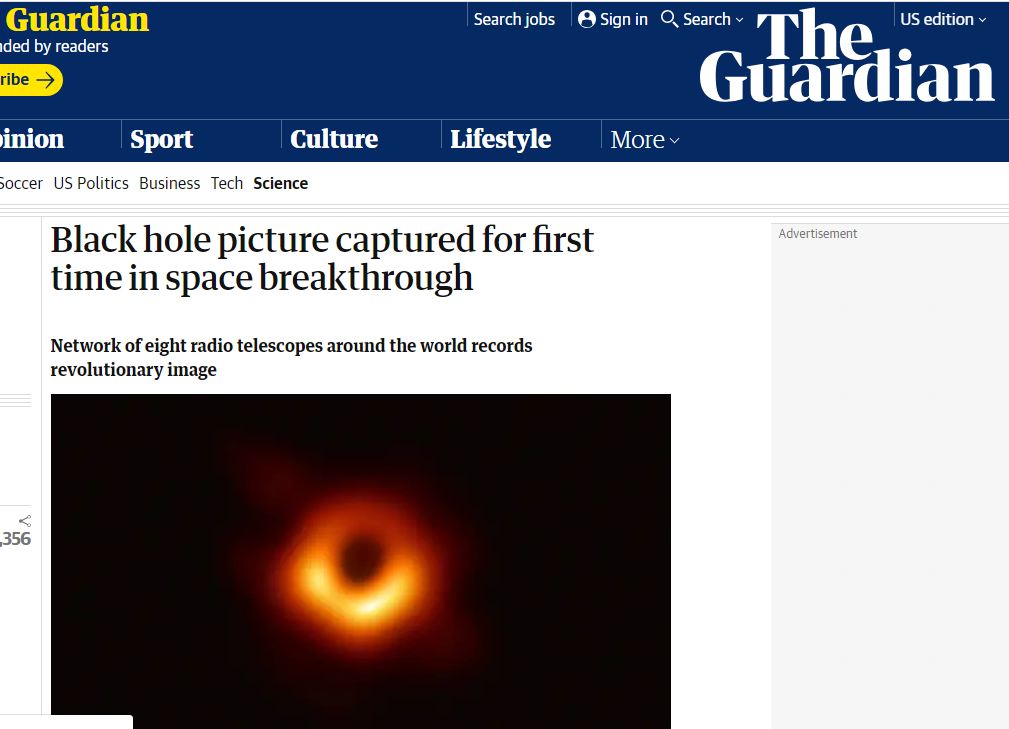
For many years, there were arguments that Black Holes were nonsense and did not exist. Astronomers have captured the first image of a black hole which has at last settled the debate. The picture taken illustrates a halo of dust and gas, which forms the outline of a huge black hole 55million light years from Earth (see Guardian). This raises hope that one day the Global Warming crowd will be proven wrong that CO2 levels do not create a greenhouse from which the planet will continue in a warming directions until we all drown or are fried to death. They have never heard of cycles and ignore the fact that the Earth has gone through cycles of warming and cooling long before mom drove their kids to soccer matches.

Making Stuff Smaller: A look at high-powered nano-circuits and micro-robots


Published on Aug 22, 2013

SUBSCRIBE 2.4K
Making Stuff Smaller: A look at high-powered nano-circuits and micro-robots

CAN NANOBOTS ACTUALLY EXIST?


Published on Mar 7, 2019

SUBSCRIBE 13K

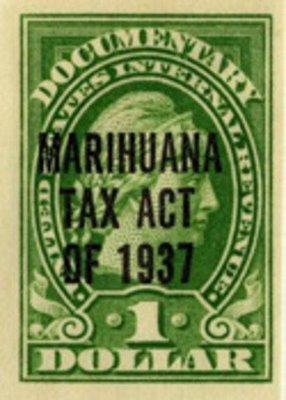
The Marijuana Tax – How Did it Become Illegal & Why?


Marijuana has been prejudiced over the years by people who have never understood the risks and because there was concern that marijuana might compete with the paper industry. There was a campaign waged against marijuana that was born out of an anti-immigration movement against Mexicans. The Mexican Revolution began in 1910 and ran into about 1920. Consequently, many Mexicans immigrated to the U.S. to escape the conflict. This Mexican population had its own uses for cannabis, and they referred to it as “marihuana.” Not only did they use it for medicinal purposes, but they smoked it recreationally -– a new concept for white Americans. U.S. politicians quickly jumped on the opportunity to label cannabis “marihuana” in order to give it a bad rep by making it sound more authentically Mexican at a time of extreme prejudice. Many Americans became worried that there was some danger this drug would bring, thanks to newspapers calling Mexican cannabis use a “marijuana menace.” 

During the 1920s, many anti-marijuana campaigns were conducted to raise awareness about the many harmful effects the drug caused. These campaigns included radical claims stating that marijuana turned users into killers and drug addicts. They were all obviously fake, and made up in an attempt to get rid of Mexican immigrants. We begin to see newspaper articles appearing during the 1920s that were demonizing marijuana. In February 1925, as states were beginning to ban marijuana, the Times reported that a 27-year-old Mexican named Escrado Valle, “crazed from smoking marihuana…ran amuck today in a local hospital and killed six persons before he could be subdued.” Later that year it announced that the Mexican government had banned marijuana “To Stamp Out Drug Plant Which Crazes Its Addicts.” In 1927, the Times picked up on the theme of marijuana-crazed Mexicans again, reporting that “a widow and her four children have been driven insane by eating the Marihuana plant.” The paper cited “doctors” who “say that there is no hope of saving the children’s lives and that the mother will be insane for the rest of her life.” Yet according to the story, the family accidentally ate fresh cannabis plants, which are not psychoactive.

“A widow and her four children have been driven insane by eating the Marihuana plant, according to doctors, who say that there is no hope of saving the children’s lives and that the mother will be insane for the rest of her life,” read a New York Times story from 1927.

There has been much speculation that the reason for the campaign against cannabis began as an effort to demonize the hemp industry because it was feared to be a low-cost substitute for paper pulp. The paper industry, and more specifically the newspaper industry, led the charge against cannabis with Anslinger. William Randolph Hearst was a major player in demonizing marijuana. The lawyers involved in crafting the marijuana tax commended Hearst for his relentless published articles and “for pioneering the national fight against dope.” Hearst was a major newspaper publisher but also had significant investments in the paper industry. It was Hearst who pushed hard for the regulation and tax on Marijuana beginning in 1932.

Andrew Mellon and the DuPont family also had major investments in the timber and newspaper industries and a rise of hemp would have seemingly undercut their profits. Curiously, years later, manufacturing paper with hemp as the raw material proved that hemp lacks the qualities needed to become a major competitor of the traditional paper industry, as it does not contain a high enough concentration of cellulose to be an effective substitute.

Interplanetary Nuclear Fusion Rockets, A Mini-Documentary


Published on Jun 3, 2018

SUBSCRIBE 28K
Interplanetary Nuclear Fusion Rockets, A Mini-Documentary | AsteronX In the 40’s it was thought that humankind would move out into and conquer space, commercializing it—eventually leading to routine flights around the solar system and even beyond. The science fiction of the day portrayed such a grand and awe-inspiring future, from Buck Rodgers, to Isaac Asimov’s Galactic Empire and Foundation novels, to the German science-fiction series Perry Rhodan—stories that the creators of Star Trek and Star Wars grew up with and were inspired by. As the Star Trek and Star Wars, that we all know and love, were inspired by these stories of atomic-rocketships, if we want a future anything like these loved works of fiction—excluding the faster-than-light drives for moment—we will need atomic propulsion. Part I. The First Fusion Rocket: The Orion Part II. Robert Zubrin’s Nuclear Saltwater Rocket Part III. An Orion Improvement: Mini-Mag Orion Part IV. A Pure-Fusion Design: Project Daedalus Part V. PennState’s ICAN-II: Antimatter-Catalysed Microfission/fusion Part VI. Aneutronic Fusion: Proton-Boron Fusion Part VII. Fusion Around the Corner: Ultra-Dense Deuterium Part VIII. Return to Antimatter-Catalysed Fusion As a final note, let’s supose that a new fusion engine was developed that is capable of taking off from the ground without spraying out deadly neutron radiation. If SpaceX’s BFR were re-designed to utilize such engines, perhaps a manned Mars mission could be achieved sooner… We want to thank & give credit to the following: Our Patrons SpaceX for the use of their image Winchell Chung of Atomic Rockets (projectrho.com) for the use of his information & images Wikipedia for the use of their articles & images NASA for the use of their images & videos Audiojungle.net for the use of their music: Song – Epic Hero Song – Epic Hero version 2 Song – The Grand Fairytale Adventure Song – Michael Jorns Epic Theme 3 Aleksander Ryszka via Sounds4media.com for the use of his music: Song – Introduction-full length track Kevin MacLeod of Incompetech for the use of his music: Song – Peaceful Desolation Song – Send for the Horses


SpaceX vs. NASA: Who Will Get to Mars First? | Elon Musk | America Uncovered


Published on Apr 1, 2019

SUBSCRIBE 102K
The Space Race is on! And it’s not just between the US and Russia. Could private tech companies like Elon Musk’s SpaceX be the future of space travel? Can SpaceX rockets, like the SpaceX Dragon or Falcon make a moon landing? Or a Mars landing? Buy the MOVA flat earth “globe” before they’re confiscated by NASA: Link: http://bit.ly/amuFlatEarthMOVAGlobe (April Fool’s!) But seriously, buy the real MOVA globe here: http://bit.ly/MOVAGlobesUncovered Support America Uncovered on https://www.patreon.com/americauncovered and visit us on Facebook! https://www.facebook.com/America-Unco… or Twitter! https://twitter.com/USUncovered #nasa #spacex #elonmusk us news moon landing china space


SpaceX Starhopper Test-Fires Have Begun


Published on Apr 6, 2019

SUBSCRIBE 658K
SpaceX began test-firing their Starship prototype ‘Starhopper’ in April 2019. It is tethered to the ground for these initial hops. — SpaceX’s ‘Starhopper’ Starship Prototype Aced Its 1st Hop, Elon Musk Sayshttps://www.space.com/spacex-starhopp… Credit: Space.com / footage courtesy: SpaceX & SPadre.com / produced and edited by Steve Spaleta