Posted originally on Feb 17, 2025 by Martin Armstrong
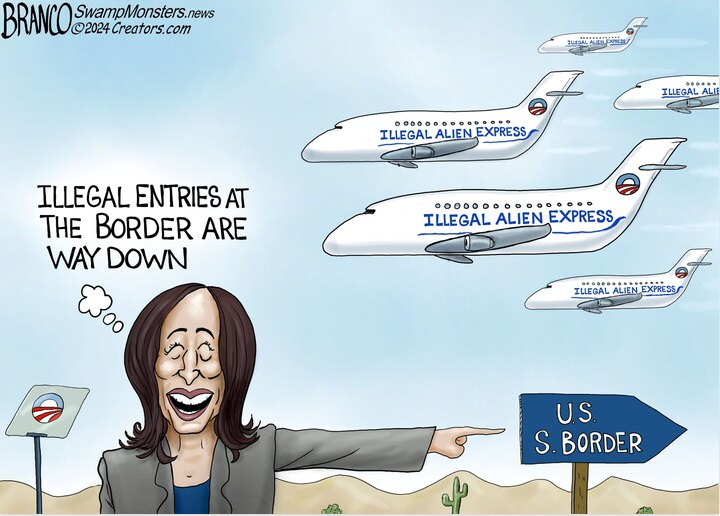
Migrants brushed off former Border Czar Kamala Harris when she said, “Don’t come.” The true message under the Biden-Harris Administration: “Come to America where you will receive free debit cards, housing, health care, and education!” The message changed on the very day that Trump was re-elected and the proof is in the numbers – illegal crossings are down 90%.
Post, Customs and Border Protection had 3,953 encounters with illegal migrants through February 11. Estimates state that total crossings should be near or below 10,000 for the month. In comparison, border officials were processing 4,800 PER DAY at this time last year.
Immigration and Customs Enforcement arrested 11,000 migrants in 18 days, averaging around 600 daily arrests. The Department of Homeland Security removed an additional 5,700 illegal immigrants who were living a US taxpayer subsidized life. The new Border Czar Tom Homan is incredibly effective and a total 180 from what we saw under Kamala. He may seem cold but the message is clear – entering the US illegally is once again a CRIME.
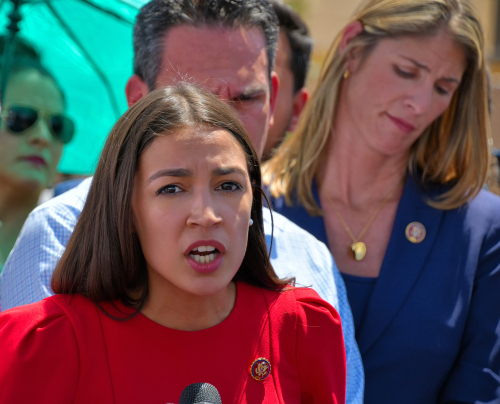
The ”progressive” Democrats are in a tailspin and hosting events to inform migrants how to bypass ICE. AOC promoted an event on her social media channels called “Know Your Rights With ICE” that provided detailed information on how to handle an ICE encounter.
“Just because someone ends up on ICE radar and ICE believes that they can deport someone, it doesn’t mean that under the law the person can be deported or that they don’t have the option to fight their case to remain in the U.S.,” said Genia Blaser, of the Immigrant Defense Project a Manhattan-based non-profit. The organization is urging migrants not to open the door to ICE officials. AOC’s office has immigration lawyers on standby to offer pro bono services for migrants seeking to evade US law. Imagine if our elected officials hosted webinars to tell tax evaders how to bypass the IRS, for example. Unbelievable.
These people fail to realize that they are the precise reason families will be separated or “deported together,” as Homan suggested. For years the Democrats spread the message worldwide that America was a safe haven for anyone who wanted to enter with sanctuary cities and a separate tiered rule of law. Evade border patrol and you and everyone you know can live an easy life in America. The US taxpayers will simply cover the estimated $150.7 BILLION in annual expenses since you cannot legally work. No one actually knows how much US taxpayers shelled out for migrants and some estimates have toppled $400 billion.
The treasonous actions of the last administration led to the crackdown we see today. The left fails to understand the extreme difference between legal and illegal immigration. The migration of the 19th century from Europe to America did not take place because of welfare programs. People came to America for the land of opportunity to work and to buy property. They did not come looking for free money and then wage war and violence out of frustration, demanding more from law-abiding citizens.
Posted originally on Feb 17, 2025 by Martin Armstrong
COMMENT: Mr. Armstrong, You are the only source willing to tell the truth about our country. You are correct. I do not know anyone who would vote for Zelenskyy. He does not represent the people of Ukraine.
anonymous
REPLY: Russia has absolutely no interest in invading Europe. The Russian people just want to get along with life and take care of their families like Americans and Europeans. It is always these people in positions of power who want war. Zelensky has also been told by Trump that there should be elections in Ukraine. He knows he has betrayed his own country. This latest statement was probably written for him by the Neocons and their retirement home, NATO. CNBC is just a mouthpiece for the Neocons. They have become just a propaganda machine, and they are a disgusting organization that borders on treason.
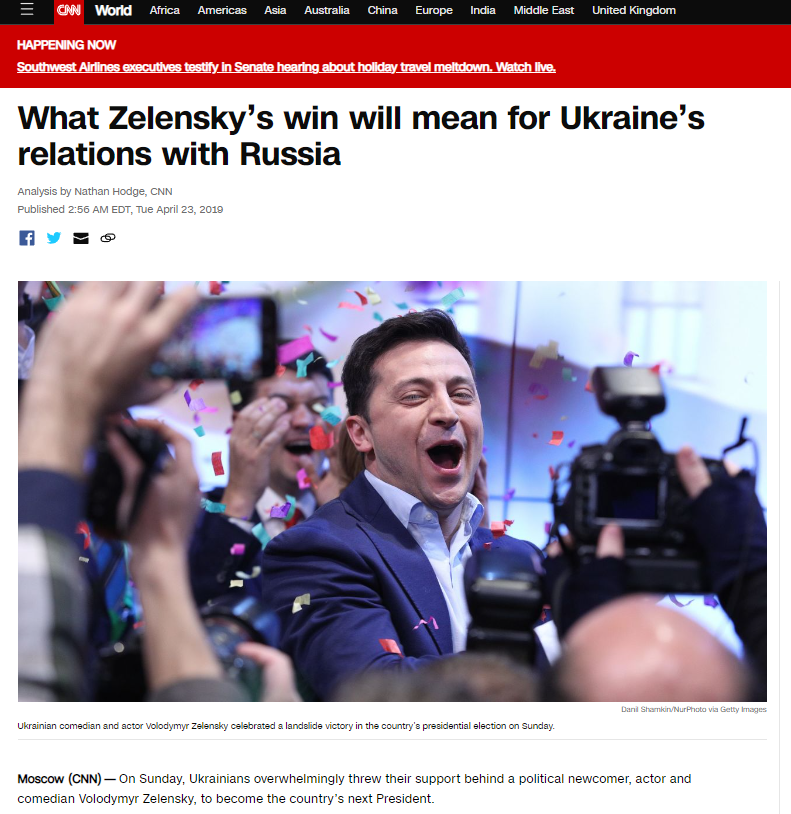
Trump is well aware that Zelensky does not represent the people of Ukraine. Every Ukrainian I have spoken to wants peace, which Zelensky ran on – promising peace. He they sold his country to the Neocons for a handful of silver. CNN wrote when he took office:
Ukraine has been locked in a proxy war with Russia for five years, and the conflict has claimed around 13,000 lives in the country’s east.
…
Zelensky’s landslide victory does give him the mandate. But beyond offering Ukrainians an outlet for a protest vote, it’s not yet clear what policies he will pursue.
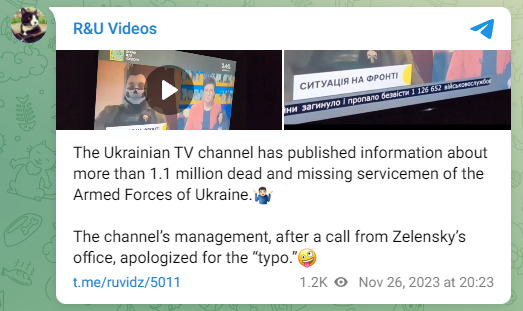
Zelensky has taken that 13,000 dead and improved with the real number of deaths from UKRAINIAN sources is 1.1 million, I am told, and AGAIN, this comes from Ukraine – not Russia! In fact, a local TV news operation reported the real number, and Zelensky again made them take it down as he did with the head of the EU. They suddenly reported it was a typo. The Neocons are completely destroying Ukraine, and they have ZERO regard for Ukrainian lives as they will with Americans or Europeans.
Within just three months of the beginning of this civil war under Zelensky, I said that 100,000 Ukrainians had died once Zelensky took office. I got the hate mail claiming that it was Russian propaganda from the typical brainwashed people who believe what the press tells them. Then Ursula, putting out the BS over Bucha, stated that the same number was 100,000, and Zelensky sought to cover up what was taking place and told her she had to remove that for that number was “classified,” so it was changed. Here are both versions of her speech.
Even the massacre of civilians in Ukraine that Zelensky tried to stage to blame Russia was propaganda. Russia has come out and said that the slaughter of civilians in Bucha was fake and propaganda. On March 31, 2022, the mayor of Bucha was joyful in announcing that the settlement had been liberated. He does not talk about any corpses on the roads and the terrible destruction of mass graves.
It was two days later when suddenly photos and videos of people lying along the road appeared and horrendous stories about hundreds of dead being thrown in mass graves. These reports did not surface until two days after the Russians left. The Ukrainians were staging another false flag. Why did the mayor appear joyous and make no mention at first of these atrocities?
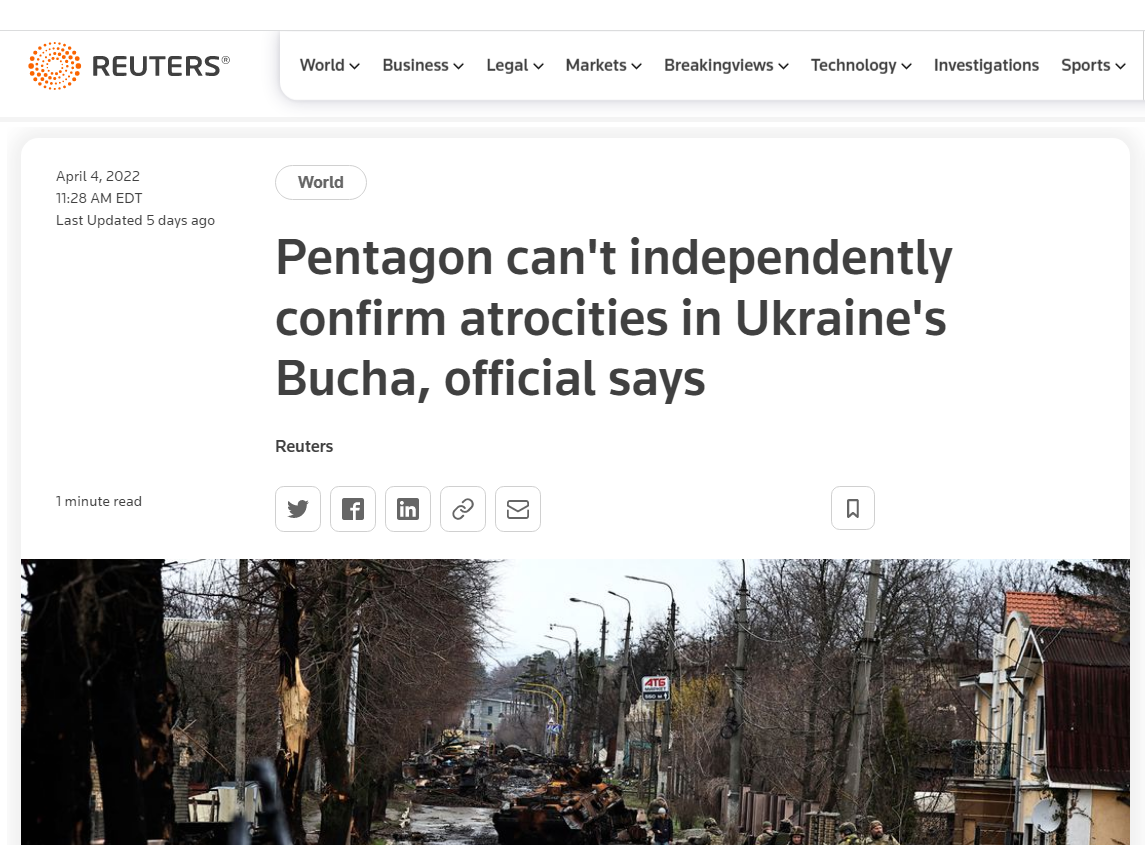
It is to the advantage of Zelensky, who appears before every parliament he can, asking for money with nothing but more lies, making fools out of politicians who believe his propaganda. In Italy, he claimed Russians were capturing children and torturing them. That allegation vanished. He says whatever he can to get money. He could have just complied with the Belgrad and Minsk Agreements, but he is determined to lead the world into war. The US Pentagon has come out and even said that they CAN NOT independently verify what took place in Bucha. There is no way to verify anything in Bucha, and there are videos that show people laying in the street pretending to be dead with no blood, and then there are videos showing they get up when the camera passes.
NOTHING ZELENSKY SAYS IS EVER TRUE
Zelensky was a NEO-Natzi who, when on stage, joked about confiscating assets of Jews and Russians. He married a Christian girl and had his children baptized, all to hide his Jewish background. Then to hide that he was a NeoNazi, he suddenly claimed to be Jewish after he won the election and then declared martial law so he did not have to stand for election ever again. He fired a Ukrainian old Russian missile into Poland to try to claim Russia attacked a NATO country, so this is World War III.
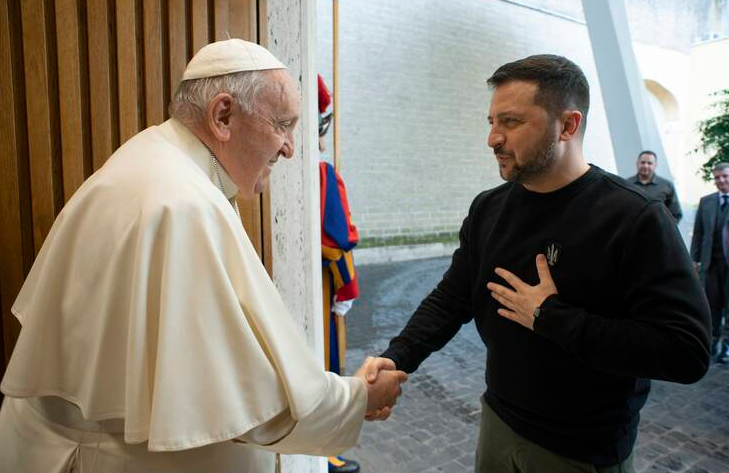
Zelensky is the WAR CRIMINAL, for the real war criminals are the people who order others to die for their personal goals. His meeting with the Pope was all for a theatrical display. Zelensky stated that he saw no sense in trying to involve Russia in a dialogue at this stage. He rejected the Pope’s offer to mediate. Zelensky cares nothing about the Ukrainian who have died for his personal NeoNazi vendettas. He said:
“One cannot make a mediation with Putin. He just knows how to kill. It is not a question of the Vatican, Latin America or China.”
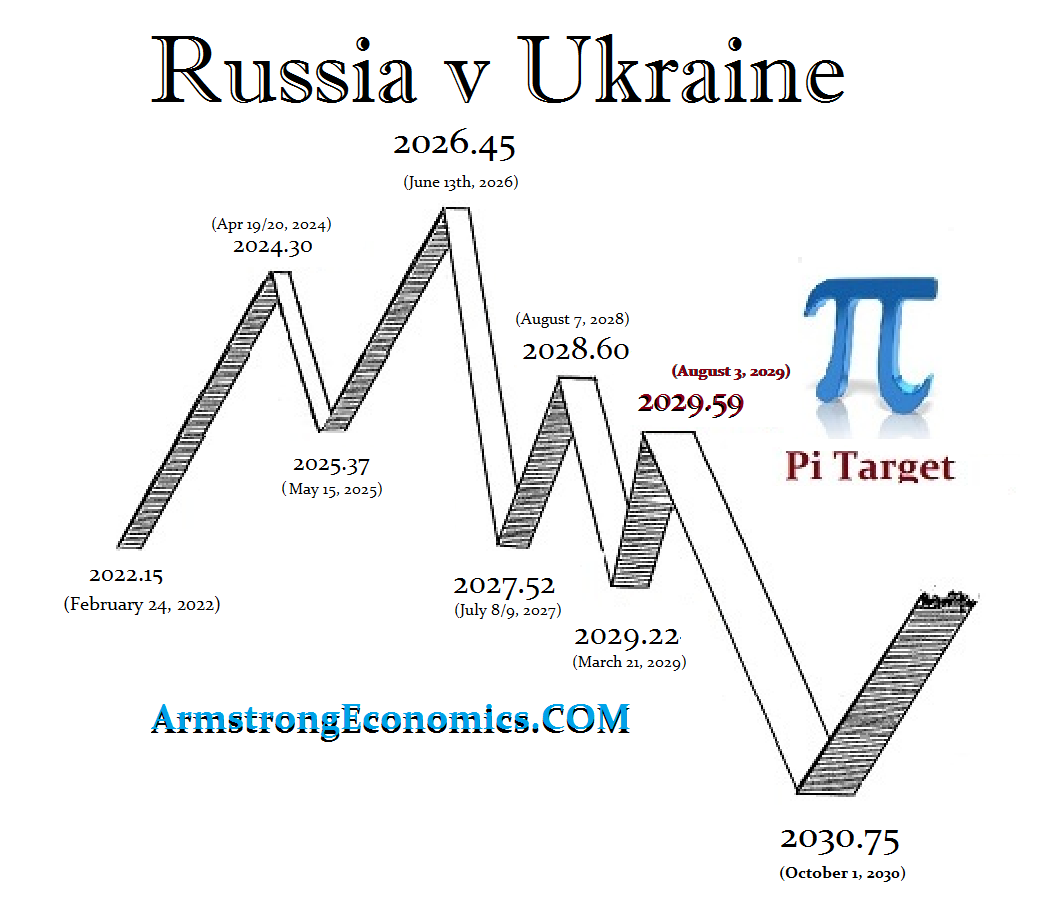
Something is brewing. Our next turning point in this war will be May 15th. Zelensky is trying to get the EU to wage war and screw Trump. Europe wants war for the economy of the EU and is in serious trouble because of the climate change nonsense and the sanctions imposed on Russia. The German economy has shrunk by 3% and we have a German election which is rapidly coming forward for February 23rd, 2025.
In France, President Emmanuel Macron called a snap parliamentary election to “clarify” the political situation. But after the shock of the second-round results, the waters are more muddied than they have been in decades. The LEFT-WING NFP coalition foiled Marine Le Pen’s far-right RN party, casting French politics into a more disordered position than before the vote. Macron is pushing for World War III because he, too, needs a distraction or surrender his power.
My concern remains that the Neocons have Europe eating out of the palm of their hand, if not kissing their feet. Europe needs war desperately and we must be concern that Zelensky and the EU will do their best to thwart Trump and peace and may take steps for that as soon as May 2025.
Posted originally on the CTH on February 16, 2025 | Sundance
Earlier today, President Donald Trump held an impromptu press conference after departing Air Force 1 returning from Daytona International Speedway. President Trump took several questions about ongoing discussions with Ukraine, Europe, Saudi Arabia and Russia.
President Trump repeats what he asked both Vladimir Putin and Volodymyr Zelenskyy, “do you want peace.” It is the core question that determines the direction for optimal solutions. WATCH:
Posted originally on the CTH on February 16, 2025 | Sundance
Ukraine President Volodymyr Zelenskyy appears on Meet the Press to discuss his position toward ending the conflict with Russia. Within the conversation [04:11], Zelenskyy said, “I will never accept any decisions between the United States and Russia about Ukraine.”
President Zelenskyy represents the interests of the European Union, multinational corporations, various elements of NATO memberships, the World Economic Forum, the CIA division within the U.S. State Dept., western banks and a confab of various western intelligence operations. After that, he represents the interests of Ukrainians. This is why he will not permit elections.
.
The looming confrontation between President Trump and Volodymyr Zelenskyy, along with all the aforementioned interests Zelenskyy supports, is going to be something very interesting.
The interview is almost an hour. I am embedding the transcript below; if you are short of time, you can read and review at your leisure.
      KRISTEN WELKER:
President Zelenskyy, welcome back to Meet the Press.
PRES. VOLODYMYR ZELENSKYY:
Thank you so much.
KRISTEN WELKER:
Thank you for being here. It is an honor to have you. Ukraine is approaching the third
anniversary of Russia's invasion into your country. My condolences to you for all of the lives that
have been lost. You are here --
PRES. VOLODYMYR ZELENSKYY:
Thank you.
KRISTEN WELKER:
– at the Munich Security Conference, and just a short time ago you spoke with the secretary of
state and the vice president about the state of the war. Was that a productive meeting? What
came of it?
PRES. VOLODYMYR ZELENSKYY:
I think it was good. Good conversation, good meeting. The first one, it's really, to be honest, I
don't believe that a lot of leaders during the first meeting have very constructive and very
decisive meeting. Now it's about, you know, about relations, how to feel each other and to begin
to make some really productive, you know, steps – steps to do something very important, in this
case, for Ukraine, for our security, for our people. And for both nations, I'm sure maybe not
everybody in the United States or in Europe are sure that a lot of things depends on security in
Ukraine in the world. I'm sure that Putin doesn't want to stop and he wants to go further and
further. So, I'm sorry that I'm jumping. Yeah, but I wanted to say that I think that the meeting was
good. We have to understand each other. That also the Secretary Rubio was and the special
envoy Kellogg, General Kellogg, he will come on 20th to Ukraine, and we make this decision. I
want – I think he was surprised, but I said to him that, "If you will come, we will go to the front." I
said to him that, yes, maybe it's too dangerous. I don't know. But if you really have to
understand – the new administration – they really have to understand what's going on on the
battlefield not from, you know, only from information from media, to see what's going on.
KRISTEN WELKER:
We are going to delve into your views on President Putin. But to follow up on what you said,
from this meeting, did you gain any clarity? What is the Trump administration's peace plan? Do
they have one?
PRES. VOLODYMYR ZELENSKYY:
First of all, I think, no, they don't have a real plan because they can't have it without us. I think
so. Maybe there are some ideas. And I heard some ideas about the economy, how to secure
economy, how to invest. We spoke mostly about it with the vice president. I think security
      guarantee is totally the question of the president. With all respect to vice president, but it's about
more to president because he is the president of the United States, and he is the leader of
NATO, and it's been the leader of security alliances. So – but economy, I mean, it's a big part of
security. We need it very much. We need a real contract if both sides are happy because our
people have to be happy. Yes, otherwise we can't just pressure on society. So I hope that we will
prepare the economy, and we'll prepare the contract, the document where business of the
United States will invest, where we can be partners, but we have to make some steps further,
and we have to – the lawyers have to work more for this document.
KRISTEN WELKER:
Let me ask you about something that President Trump said this week. He did not say yes when
he was asked if he sees Ukraine as an equal member in the peace process. He did say later
that Ukraine would have a seat at the table. Have you been given any assurances that Ukraine
will have an equal seat at the negotiating table?
PRES. VOLODYMYR ZELENSKYY:
So I will never accept any decisions between the United States and Russia about Ukraine.
Never. And our people, never. And our adults, and children, and everybody, it can't be so. The
war in Ukraine is against us, and it is our human losses. And we are thankful for all the support,
unity between USA – in USA around Ukraine support, bipartisan unity, bipartisan support, we're
thankful for all of this. But there is no any leader in the world who can really make a deal with
Putin without us about us. Of course, the United States can have a lot of decisions, economical
partnership, and et cetera. We're not happy with it, but they can have with Russians. But not
about this war without us. And that's why I think that what we need, very closely to work and
quicker. I think we lose time now quicker to work on the plan, common plan. So we’re ready
because United States is our – the biggest strategic partner. We are ready not only to share our
plan. We're ready to put common plan with President Trump. And of course we need support
from EU. It's important. They are also big donators during this war. And we will be the members
of future European Union. That's why we need the support of Europe. And this common plan,
we have to discuss with Russians, and we will. And at the table, it's very important to hear
America, Europe, Ukraine and Russia. Yes.
KRISTEN WELKER:
Has the president, has the vice president, given you an assurance that Ukraine will have an
equal seat at the negotiating table, which, as you just said, is critical to any peace plan?
PRES. VOLODYMYR ZELENSKYY:
Yeah, I understood, to be honest, that we have common view on it. But there are messages, as
you said, right, in media some messages which are, you know, make disappointment, yes? Is it
right word in English? Sorry. Yeah, disappointment for a lot of leaders of Europe, because they
also feel sometimes that they are out of decisions. And I said to them that they have to be in
unity with the United States. Otherwise, not only United States can lose Europe as a strategic
partner, Europe also can lose the United States. And I'm in this interesting -- both, you know, of
continents that’s not to lose, because this is really, really the biggest and the strongest allies in
      the world. I think so. That's why we have this place at the table at the very beginning. And we
are the first who are at this table because the war is in Ukraine.
KRISTEN WELKER:
Can you accept any peace deal that is cut without Ukraine?
PRES. VOLODYMYR ZELENSKYY:
No.
KRISTEN WELKER:
And do you feel like you have a seat at the table right now?
PRES. VOLODYMYR ZELENSKYY:
I not only count on it, I'm sure that we have to be there. Otherwise, it's not acceptable. But if
there is a decision without us and Putin will go out from all our land, we will be in NATO, and
Putin will be in the prison, so President Trump can do it without us.
KRISTEN WELKER:
Let me ask you about your phone call with President Trump earlier this week. It came on the
heels of his call with President Putin. Does Mr. Trump's direct communication with Vladimir Putin
before speaking to you unnerve you?
PRES. VOLODYMYR ZELENSKYY:
No, no. We spoke about it, by the way, with President Trump. And I said that I know that we had
already phone calls, yes, both of us, and it's okay that he phoned him. Of course I wanted very
much that Ukraine is in priority for Trump, not Russia. And I hope that we are more important,
more important. Yes, we are not so big as Russia. But I think strategically Ukraine is more
important for the United States because we are really partners, allies, and we share common
values, and we are really from democratic worlds. Yes, and that's why I think that for us it's
necessary to feel it. And that's why of course it's better when president of the United States first
speak with president of Ukraine and then with Russians. For me it’s – you know, it's not for me –
it's not only for me. It's for our people. This is their signal. This is the attitude from the United
States to Ukraine. But, I mean, there's no doubt. I mean, there's no questions about this phone
call because we have dialogue the same day. And I count on President Trump, and I hope that
he will really support us. But if we speak about meetings, so this is not the same with phone
calls. Yes. So of course we need to speak and meet with the president of the United States, and
only after that with Russians.
KRISTEN WELKER:
Did he invite you to the White House? Did he invite you – he says he's planning to meet
President Putin in Saudi Arabia. Did he invite you there?
PRES. VOLODYMYR ZELENSKYY:
No, he didn't invite me to Saudi Arabia. I --
      KRISTEN WELKER:
Did he invite you to the White House?
PRES. VOLODYMYR ZELENSKYY:
You know, he always says that, "I'm ready to see you." But, you know, our teams have to work
on the date. We also spoke about it. He gave me his phone number. He said, "This is my direct
number. You have to call me any day you want." And, yes, thank you so much.
KRISTEN WELKER:
Do you feel like you have President Trump's full support? Do you feel like he's valuing Ukraine
as much as you say he may be Russia?
PRES. VOLODYMYR ZELENSKYY:
Well, I became more, more, more pragmatic from the very beginning of this war and less
sensitive to such things. And I believe and trust only in real steps. And I trust President Trump
because he's the president of the United States, because your people, your people voted for
him, and I respect their choice, and I will work the President Trump with trust, which I have to
the United States. But of course I want to have real meeting, productive, without just words, with
concrete steps, and to hear us, to hear President Trump, to make common plan, and to share it
with allies, then with Russians, and stop this war. I think we need it urgently. We have to do it
without basic things, where there are concrete steps.
KRISTEN WELKER:
So no plans right now to go to the White House?
PRES. VOLODYMYR ZELENSKYY:
I don’t know. I don't know. Maybe they have. As I said – about journey to?
KRISTEN WELKER:
No plans for you to go to the White House right now that you're aware of?
PRES. VOLODYMYR ZELENSKYY:
I don't have the date. I don't have the date, but we spoke about it, that we will have meeting and
our teams will work on it. So I think that now after vice president and after General Kellogg will
come to Ukraine, I think he will get some more information for President Trump. I think they
need this time to have this information, then to work with this information, and then to think, be
ready, and then we will meet. Something like this.
KRISTEN WELKER:
Is it true that you told President Trump during that phone call that Putin is only pretending to
want peace because he is afraid of Mr. Trump?
PRES. VOLODYMYR ZELENSKYY:
      Yes. Yes, I said that he is a liar. And he said, "I think my feeling is that he's ready for these
negotiations." And I said to him, "No, he's a liar. He doesn't want any peace." But I think he's
really a little bit scared about the President Trump. And I think the president has this chance,
and he's strong. And I think that really he can push Putin to peace negotiations. Yes, I think so. I
think he can, but don't trust him. Don't trust Putin. Don't trust just words about ceasefire. I said
because I have very practical things, practical meeting with Putin in 2019, and we made a
decision with all our signatures. Then we made a decision about ceasefire and exchange of
prisoners. Yes. And he – I don't know how to [SPEAKS UKRAINIAN]. He destroyed all these
decisions and et cetera. So we don't trust him.
KRISTEN WELKER:
If you don't think President Putin really wants peace, are you concerned he's going to drag out
this process?
PRES. VOLODYMYR ZELENSKYY:
And he also – he needs pause. This is good and very bad at the same time. He needs pause
because he really now mobilized 35,000 people each month. But we wants to prepare very
trained, well-trained people. But he has so many losses, and they are not well-trained. They
don't have enough time. They are pushing them on the battlefield, and they are dying. Wounded
or dying. That's why he need pause. He needs time. Ceasefire without anything, without, you
know, actions on the battlefield and et cetera, to have a pause and prepare. Prepare for
invasion, I'm sure. The new ones. That's why when we speak with the President Trump and with
his team, vice president, I said that I don't trust. So that's great. God bless. If President Trump
will push him, he can. God bless, he will do it. But I need security guarantees. Words are not
enough. Words cost nothing with Putin, yes? That's why for me it's very important, strong
security guarantees. Otherwise, when he will come back so he can occupy us.
KRISTEN WELKER:
And we're going to talk about the security guarantees --
PRES. VOLODYMYR ZELENSKYY:
Okay.
KRISTEN WELKER:
Let me ask you big picture, though. Do you think President Trump is negotiating in good faith?
PRES. VOLODYMYR ZELENSKYY:
I hope so. I hope so. Yes, I count on it. I count on it very much.
KRISTEN WELKER:
Based on what you're saying about President Putin, do you think he's negotiating in good faith
once talks begin?
PRES. VOLODYMYR ZELENSKYY:
      Who?
KRISTEN WELKER:
Putin.
PRES. VOLODYMYR ZELENSKYY:
Putin? That he really –
KRISTEN WELKER:
Is he capable of negotiating in good faith? Is Putin capable of negotiating in good faith?
PRES. VOLODYMYR ZELENSKYY:
No. No, and it's not about good faith. No, no, no, no. No. No. No, no. Yes, you just can't block
his motivation to put him in such strong circumstances when he can't begin the new invasion,
re-invasion. But he wants. You'll see. Everybody will see. He will try to begin something new. By
the way, I said it today. I'm not sure that only about Ukraine we are speaking. He is thinking not
only about Ukraine. For example, now we have – and we shared it with intelligence of our
partners – now we see how he's preparing to train 150,000 people mostly on the territory of
Belarus, to show it for the world that it is just training, that usually he is doing the same. Usually.
But it's not truth. From such point, he begin the occupation three years ago. Full-scale war he
began from some symbolic trainings and et cetera. But really, really --
PRES. VOLODYMYR ZELENSKYY [TRANSLATED]:
He conducted military training exercises, he said that these are exercises that are always
ongoing on Belarus territories, that they are a allied state with Belarus and that they do regular
business. But he started the invasion, and the missiles, and the first night flew from the Belarus,
and the invasion came from Belarus. We know for sure that he is preparing that from the
territory of Belarus this year. It can happen in summer, maybe in the beginning, maybe in the
end of summer. I do not know when he prepares it. But it will happen. And at that moment,
knowing that he did not succeed in occupying us, we do not know where he will go. There are
risks that this can be Poland and Lithuania because we believe – we believe that Putin will wage
war against NATO. That is why I told you that, "What is he waiting for?" For a weakening of
NATO by, for instance, policy of the United States of America, for example, that the United
States of America will think to take its military from Europe. Yes, Putin thinks of that. But I will
believe that the United States will not take its forces, its contingents from Europe because that
will severely weaken NATO and the European continent. Putin definitely counts on that. And the
fact that we receive information that he will think of the invasion against former Soviet republics.
And forgive me, but today these are NATO countries.
KRISTEN WELKER:
Just to be very clear, you are saying you have actual intelligence that President Putin is
planning to attack NATO countries?
PRES. VOLODYMYR ZELENSKYY:
      No. We have intelligence, we have documents that they are preparing trained mission of a big
number of soldiers on the, on the territory of Belarus. And we just sharing that there is a high
risk that he can do the same. Maybe not. God bless not. And maybe before it, President Trump
and the allies will stop him. Yes, but anyway, I think that we have to prepare, yes, to prevent it,
not to be, not to have such surprises that he will come back like it was three years ago with
invasion to Ukraine. That is my point. And that's not my point of view. That is our intelligence
understanding.
KRISTEN WELKER:
And there are obviously these reports that a drone attacked Chernobyl overnight, the nuclear
plant in Kyiv. What does that mean? What does that tell you about how complicated any peace
process may be?
PRES. VOLODYMYR ZELENSKYY:
Oh it’s, for him, he is always increasing, increasing, you know? Before – he is doing some
symbolic-for-him things. So you have the Munich Security Conference, especially this day,
beginning of the conference. He's trying to show that for him it doesn't matter. “Doesn't matter
what you will decide about security, I can do this,” what he showed. He put the drone, yes, to the
sarcophagus of the fourth block of Chernobyl station. Yes, sarcophagus which was built by 40
countries. Forty countries, mostly American money, and then all of countries of Europe. Forty
countries built it during the years, and he just pushed the drone there especially to this
sarcophagus.
KRISTEN WELKER:
Are you --
PRES. VOLODYMYR ZELENSKYY:
You're think that such person wants peace?
KRISTEN WELKER:
Given what you're saying, are you willing to negotiate with Vladimir Putin face to face?
PRES. VOLODYMYR ZELENSKYY:
Together, United States, Europe, Ukraine and Russia, yes, because without Russians, we can't
stop for today, we can't stop this war. We can't stop Putin without, without his decision, because
he is on our territory.
KRISTEN WELKER:
If you were –
PRES. VOLODYMYR ZELENSKYY:
It's a bit –
KRISTEN WELKER:
      If you were sitting across from Vladimir Putin right now instead of me, what would you say to
him?
PRES. VOLODYMYR ZELENSKYY:
I will speak -- no, it's not about emotions. It's about how to stop him. So for me, he is a killer, and
he will never change. And that's why this is the dialogue with a terrorist. This is dialogue with a
killer. I don't have such power, enough power to push him out. That's why I have to speak about
it. So our allies can give me such power to push him out, but our allies decided to make a deal
with Putin. But I – what can I say? I'm ready. Of course we don't want, you know, to lose our
people. And if it can be so in diplomacy to stop this war, so, of course, we are ready. Of course
we will be happy with a peace.
KRISTEN WELKER:
President Trump this week wouldn't commit to U.S. troops providing security to Ukraine, one of
your key requests, wouldn't commit to NATO membership and wouldn't commit to Ukraine
reclaiming the territory that Russia illegally took. Do you think that the Trump administration is
giving away bargaining chips before the peace process, the negotiations, have begun?
PRES. VOLODYMYR ZELENSKYY:
You know, I don't know. Maybe it's a part of tactics of the administration. I don't know. It’s really,
you know, I'm looking at it. For me, I don't know what about they speak, but as I said, it doesn't
matter what they will decide about Ukraine. If it's without – without us, it's their dialogue. So how
can I influence on this dialogue? I can only accept any negotiation or not accept, because we
are --
PRES. VOLODYMYR ZELENSKYY [TRANSLATED]:
Yeah, we are the actor. We are the participant of this war, unfortunately. We, we would gladly be
the country who helps the other country that is at war. And the best way would be to not have
the war at all. We would want to be the country to prevent others even from starting the war. But
we are an actor in this war. We are a victim. Putin attacked us. So without us, the war cannot
end. And it is not possible to simply give Ukraine to Putin. That would mean simply to
acknowledge what he did, to give the signal to others, to other regions where Americans can
also feel that. Heaven forbid. I do not wish war to anybody. But that is a fact. Putin must not only
be stopped, but he must feel that this is a huge mistake, if we can use such word, "mistake," in
terms of the numbers of deaths. Sure.
KRISTEN WELKER:
What does a good deal look like for you for Ukraine?
PRES. VOLODYMYR ZELENSKYY:
No, we will not have very good deal in such circumstances, and Putin will not have a very good
deal for him in such circumstances. Because he can't for today win us, and we can't win him.
And that's why it will not be a very good deal for both of us. But it can be more important thing:
Peace. Maybe not the best but peaceful people. That's what we really want. It's much more,
      much more than any good deals. I think so. But we can't give all this, you know, good deals just
to Putin and play for, you know, just play with how he wants, yes. And that's why for me it's very
important that Trump, that President Trump will be on our side. And I think what is very
important when Putin knows it, this is important, not just play. This is very important to say to
him, "Yes, we have to speak with you. Yes, we have to make deal with you because you're an
enemy. You're strong. That's why we have to speak with you to stop the war. But you have to
know that you're an enemy of just human beings, just of people. And you have to know that
we're against your steps, against your occupation, against your view of life.” And I think it's very
important. It can't be the secret from the people and et cetera. People have to understand. Their
leaders have to understand that nobody can kill, nobody can occupy, nobody can begin any
format of wars, of conflicts and et cetera.
KRISTEN WELKER:
Let me ask you. President Trump said, he does not think Ukrainian membership in NATO is,
quote, "practical." In your view, is NATO membership something that should be determined as a
part of this deal?
PRES. VOLODYMYR ZELENSKYY:
Well, I want to be very clear with NATO for us and for everybody. It's the cheapest security
guarantees, the cheapest for us, the cheapest for Europe, the cheapest for United States and
the cheapest really for Russia. And if we are not in NATO, it means that we will build NATO in
Ukraine. Otherwise, we will not recognize the security guarantees. If opposite you 100.3 or
100.5 million army of Russians, what number of soldiers you have to have? What number of
troops you have to have just to survive and to defend the same? Now we have 110 strong
brigades. Russia has twice more, 220 strong brigades. Europe has 82. So if Putin will break us,
he will occupy Europe. He can destroy all the army of Europe if they are without United States.
That's why I said this is the cheapest for United States and for Europe. Why? Because if we
don’t, if I'm not in NATO and if everybody will recognize that we need more than 1 million people
of army, so we will need money for all these people. We – if we can't use, for example, fleet of
NATO or jets from NATO, we will need hundreds of jets. So it's very, very expensive, even
without the war just to have it, not to spend, just to have it. That's it. Then NATO is very cheap I
said for Russia. Otherwise, if we are not in NATO, NATO stopping also us, because I mean, just
people who lost their children. And this is painful, and they want accountability. And it’s really –
and if they will not get it, they will find it, they will search it. And I can't recognize it and can't like
a father understand. If Putin took your child and killed by missile your child, and if those people
who killed, and Putin, that if they're not in the prisons and if they even don't say sorry to all the
world, it's not enough. But if they're just feeling that they are winners, what will father will do?
They can take the weapon and continue his – not normal way. But he will continue his life
because he hate Russians. NATO also stopping everybody because this is security, you know,
allies. And this is also important and for Europe that they are secure. Because there is a big
army in NATO. Ukrainian army together with Europe is comparable with Russia. That's what I
said. This is the cheapest way.
Posted originally on the CTH on February 16, 2025 | Sundance
Earlier today, President Donald Trump attended the Daytona International Speedway for the start of the NASCAR year, the Daytona 500 race.
The crowd was roaring approval as President Trump’s Air Force-1 did a flyby, and then President Trump joined the drivers in the pit area. Following pictures and handshakes President Trump took a lap around the track as the crowd cheered. Awesome stuff.
FLORIDA – […] This weekend, the President’s motorcade drove straight onto the track in Florida and traveled a short distance in front of the NASCAR fans packed into the stands before it entered a secure area. He later returned onto the track, with his motorcade doing two laps before the race started, where he spoke to the drivers over the radio.
As Trump stood for the national anthem, he made a brief appearance on the jumbotron that was met with a massive cheer by the thousands of fans in the stadium, ready for The Great American Race. And as liberal NASCAR fans complained on social media that Trump was getting too much camera time, he told Fox that the first few weeks of his second term is a sign of things to come.
‘I think it’s fantastic, it’s great for the country,’ Trump said about the race. ‘Our country is doing well again, we have spirit all over the world. We brought it back and it’s been less than four weeks, so you’ll see what we do in a little period of time. It’s only going to get better. This is very exciting.‘ (more)
Posted originally on the CTH on February 16, 2025 | Sundance
I enjoy Kevin ‘Sid‘ Hassett very much. He was awesome in Trump’s first term as an economic advisor, and he’s even better in term two as the Director of the National Economic Council (NEC).
When the people who controlled Joe Biden lost the 2024 election, they were angry. They wanted to leave President Trump with as big a mess as possible and all actions were taken to create chaos that Trump would have to deal with. Intellectually honest people noticed.
Part of their chaos operation was to drive up the cost of food, intentionally create inflation that Trump would have to handle. The “bird flu” issue was part of the plan. After the 2020 election the U.S. Dept of Agriculture ordered millions of chickens to be killed. Simple quarantine process was dismissed in favor of a ridiculous slaughter.
During a CBS interview today, Margaret Brennan asked Kevin Hassett what the Trump administration was going to do about food inflation, and specifically the astronomical cost of eggs. Hassett outlined the plan by first reminding Brennan that regarding spread, chickens don’t fly; ducks and geese do. I almost spit out my coffee. I enjoy Kevin Hassett. Video and Transcript Below:
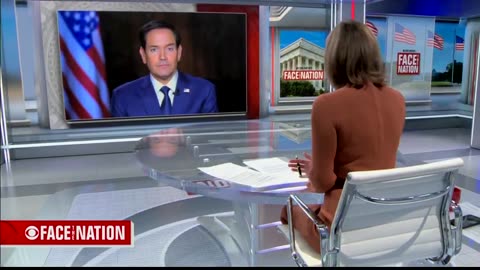
[Transcript] – MARGARET BRENNAN: We want to turn now to the economy and inflation, which, compared to last January, ticked up about 3% last week. Kevin Hassett is the director of the National Economic Council, and he joins us now. Good morning to you, Director.
KEVIN HASSETT, DIRECTOR, NATIONAL ECONOMIC COUNCIL: Good morning, Margaret, good morning.
MARGARET BRENNAN: So, I don’t have to tell you, but the rest of the country saw their egg prices at the grocery store go up. We’re now at a record high due to that bird flu outbreak, but also labor costs, and that’s contributing to food costs overall. When will the administration get that outbreak under control?
HASSETT: Right, well, what’s going on, right, as you know, is that there is an inflation problem that’s very large. We saw the consumer price index come out, and we found out that the stagflation that was created by the policies of President Biden was way worse than we thought. Over the last three months, across all goods, including eggs, the average inflation rate was 4.6%, way above target, and an acceleration at the end of the Biden term. And, you know, this is really not just us. You could go look at Jason Furman, Larry Summers, economic advisers of President Biden kept saying, don’t do this. You’re going to cause massive inflation. In fact, Jason Furman has a very thought provoking peace in “Foreign Affairs” right now, calling the Biden economic record a tragedy. And this is them, not us, right? It’s- so, now we’ve got a lot of things that we’re doing to get ahold of it–
MARGARET BRENNAN: You’re talking about fiscal spending there.
HASSETT: Excuse me? Yeah, that’s right.
MARGARET BRENNAN: You were talking about fiscal spending there. But–
HASSETT: Well, where does inflation come from, right? And so what we’re doing now is, we’ve- we’ve got, really, a multi- multi-faceted plan to end inflation, and I’ll go quickly, because I want to end with what we’re doing with egg prices, but we’re going to have a macroeconomic change that has supply side tax cuts so we have more supply, and we’re going to reduce government spending, both through what DOGE is doing, and through congressional action. And so therefore, the macroeconomic forces that Jason Furman said were a tragedy are going to be reversed. That’s a good thing. Then we’re also going to have a lot of energy production, a lot of deregulation. And then finally, when needed, we’re going to focus on the individual thing-by-thing pieces. And so, for example, you mentioned avian flu. President Biden didn’t really have a plan for avian flu. Well, Brooke Rollins and I have been working with all the best people in government, including academics around the country and around the world, to have a plan ready for the president next week on what we’re going to do with avian flu. In fact, I was editing the thing with them tomorrow, but- but the final thing- and then I’ll give it back to you, I promise not to filibuster- that, the question is like, why did we do this? Why did we do this? That’s what everybody’s talking about. But the thing that I always start with when I’m looking at what we’re doing, what the President wants us to do, is, why did they do that? Why did they do that? And- and there are too many times where it feels like nobody thought about that in the press, or maybe–
MARGARET BRENNAN: Oh, gosh–
HASSET: –the left wing “Economist,” why did they do that? Why did Biden print so much money and cause so much inflation? Why did he do it?
MARGARET BRENNAN: Oh, Kevin–
HASSETT: That’s- that’s what I’m thinking about.
MARGARET BRENNAN: Kevin, you know, we talked about that on “Face the Nation” quite a lot. Quite a lot.
HASSETT: I don’t mean to criticize you. Okay, good for you.
MARGARET BRENNAN: No, no, no. So next week, we’ll see the plan on how to get avian flu- how to get bird flu, under–
HASSETT: I could talk about it right now if you’d like to, yes.
MARGARET BRENNAN: –well, sure, what- what is the plan you’re going to- what are you going to do?
HASSETT: Yeah, so- so again, the- the Biden plan was to just, you know, kill chickens, and they spent billions of dollars just randomly killing chickens within a perimeter where they found a sick chicken. And so you go- I just went to the grocery store. I shop for our family, in part because I love to look at prices. And there were no eggs at the store yesterday, just a few. And- and so that happened because they killed all the chickens. And so what we need to do is have better ways, with biosecurity and medication and so on, to make sure that the perimeter doesn’t have to kill the chickens. Have a better, smarter perimeter. And so having a smart perimeter is what we’re working on, and we’re finalizing the ideas about how to do that with the best scientists in government. And that’s the kind of thing that should have happened a year ago, and if it had, then egg prices would be, you know, a lot better than they are now. But the avian flu is a real thing–
MARGARET BRENNAN: Yes.
HASSETT: –and by the way, it’s spread mostly by ducks and geese. And so- think about it, they’re killing chickens to stop the spread, but chickens don’t really fly. The- the spread is happening from the geese and the ducks. And so, why does it make any sense to have a big perimeter of dead chickens, when it’s the- the ducks and the geese that are spreading it?
MARGARET BRENNAN: Well, the Department of Agriculture policy has been to kill those chickens, as you know, but we’ll watch the details of that.😂 But let’s get back to something the president said. Higher interest rates, as you know, are part of that battle against inflation that the Federal Reserve has been waging, but this past week, the President called for interest rates to be lowered. Why does he think that’s going to lower your grocery prices?
KEVIN HASSETT: Well, first of all, I- I want to say that- I, just this weekend, have arranged to begin, once again, regular lunches with Jay Powell at the Federal Reserve. And Jay and I have a long and collegial relationship, and I’m going to go over there with him and the other governors. So we’re going to talk about our views about what’s going on, and listen to his and that collegiality has been going on for four years when I was here before, and the President very much values that. I think that the- the thing about–
MARGARET BRENNAN: But that’s not to influence–
HASSETT: –lower interest rates, no, I’m going to talk about- well, Jay is going to- Jay is an independent person. The Fed- independence is respected. And- and the point is, the President’s opinion is also- can be heard. He’s the president of the United States. But here’s the thing that I think is interesting, that if we get inflation under control, then that takes the pressure off the Fed. And one way to tell whether markets think, are we getting inflation under control, is to look at longer term interest rates that the Fed doesn’t affect directly. And if you look at it, the 10 year treasury rate has dropped about 40 basis points over the last couple of weeks while we announced our plan to control inflation. That saved the American people about $40 billion, about $40 billion, just from talking about the stuff that we’re about to do.
MARGARET BRENNAN: Okay.
HASSETT: It’s pretty good.
MARGARET BRENNAN: Right. But the President’s statement contradicts economic policy, as you know–
KEVIN HASSETT: No, inflation- no, inflation rates are already- I’m saying the interest rates are already lower by 40 basis points. So, in- interest rates are lower. The one that matters–
MARGARET BRENNAN: You’re briefing the president on it. Okay–
HASSETT: –the most for the economy is maybe the 5 or 10, year rate. Those the ones that matter the most. So those are down already. So the President’s right about that.
MARGARET BRENNAN: Before we run out of time, I really want to make sure I get to you on tariffs–
HASSETT: Okay, sure.
MARGARET BRENNAN: –because there’s concern that that will add to prices, because they’ll be added on to consumers and what they pay. How are these reciprocal tariffs going to work? The President was tweeting he wants to put them on, like 175 different countries that have a VAT tax, a value added tax.
KEVIN HASSETT: You know, we’re talking to leaders of other countries all the time. Last night into the wee hours of their morning and kind of a late night for me, I was talking to Minister Reynolds from the UK about this very matter. But here’s the way I’d like to think about it, that right now, U.S. companies are spending, are paying, foreign governments about $370 billion a year in tax, and foreign comp- companies are paying the U.S. government about $57 billion in tax, and a lot of it is because of the VAT. But if we didn’t have to pay the foreign government’s tax, over 10 years, it’d be about $5 trillion of tax that U.S. citizens don’t have to pay. That would more than pay for the tax cuts that we’re debating right now. And so if we get some of that money back, either through tariffs, or for, obviously, if they reduce the tariffs of that, that that’s good for Americans, it’s going to put more money in their pockets, and- and that’s what President Trump is trying to do.
MARGARET BRENNAN: Kevin Hassett, I’d like to have you come back, sit at the table and talk through this in- in more detail at another time. We have to leave it there for today.
Posted originally on the CTH on February 16, 2025 | Sundance
For the past two weeks, the Snow Mexicans have been booing the USA national anthem when played in Canada during sporting events. While we hold no animosity toward Canadians, last night the Team USA hockey team beat them 3-1 on the Snow Mexicans home turf.
After Canada again booed the USA national anthem again last night, the game began with three fights in the first nine seconds: Matthew Tkachuk and Brandon Hagel, then Brady Tkachuk and Sam Bennett and finally J.T. Miller and Colton Parayko.
USA Today – […] The negative reactions to “The Star-Spangled Banner” came even after the Bell Centre public address announcer asked fans to show respect for the anthems.
Canadian sports fans have been booing the U.S. national anthem since U.S. President Donald Trump made threats regarding import tariffs earlier in February. The Trump administration paused the threat for 30 days for Canada, as well as Mexico, to be hit with 25% tariffs, but the concern over the economic impact remains. (link)
With the win last night, team USA clinched a spot in the 4 Nations Face-Off championship game on Thursday in Boston. Canada could fill the other spot if it beats Finland in regulation on Monday or with an overtime win if Sweden doesn’t beat the U.S. in regulation.
I have created this site to help people have fun in the kitchen. I write about enjoying life both in and out of my kitchen. Life is short! Make the most of it and enjoy!
This is a library of News Events not reported by the Main Stream Media documenting & connecting the dots on How the Obama Marxist Liberal agenda is destroying America





 Centinel2012