Posted originally on Apr 10, 2025 by Martin Armstrong
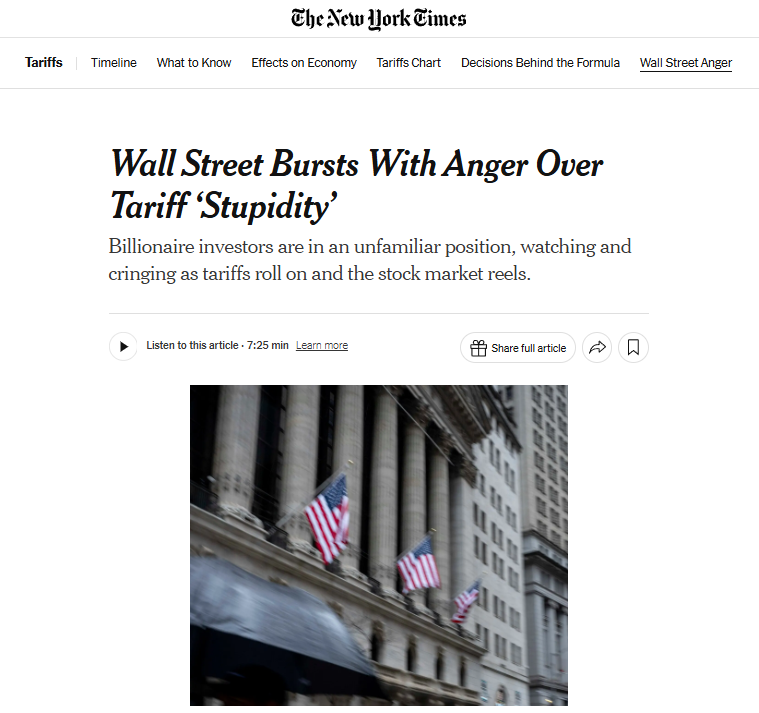
Bloomberg has actually come out as proclaimed: “With the Nasdaq 100 already in a bear market, soon it may be the S&P 500’s turn.” All we hear are hysterical forecasts, all emotionally charged because the number one thing they taught in economics class was the Democratic propaganda from the 1932 election – Tariffs & Protectionism caused the Great Depression, and Free Trade is prosperity. Bill Clinton tried that with China, and the Democrats cheered him. It expanded GDP, but it wiped out jobs and even whole towns in China.
Here is a meme on TikTok about making America Great Again. Is this our Competitive Advantage?
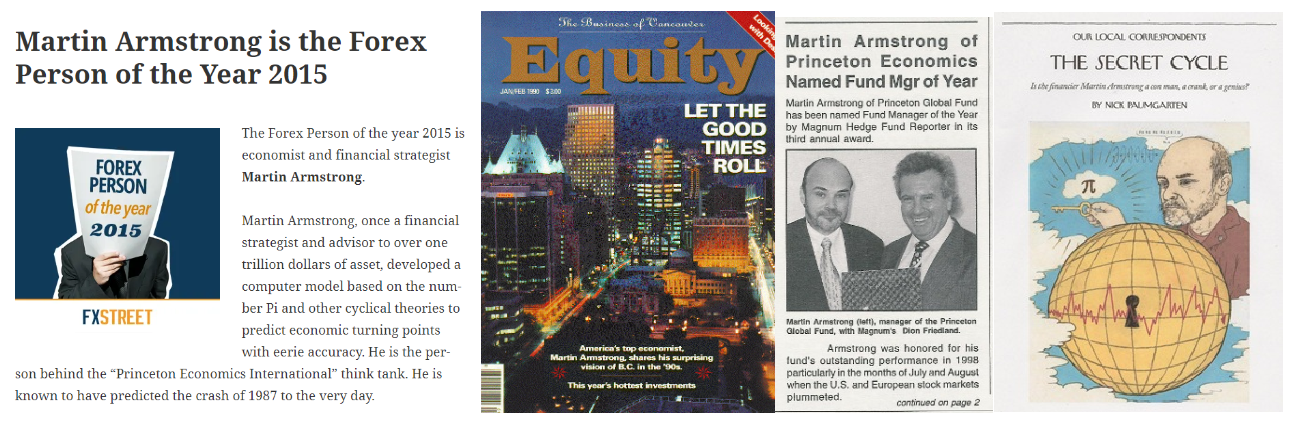
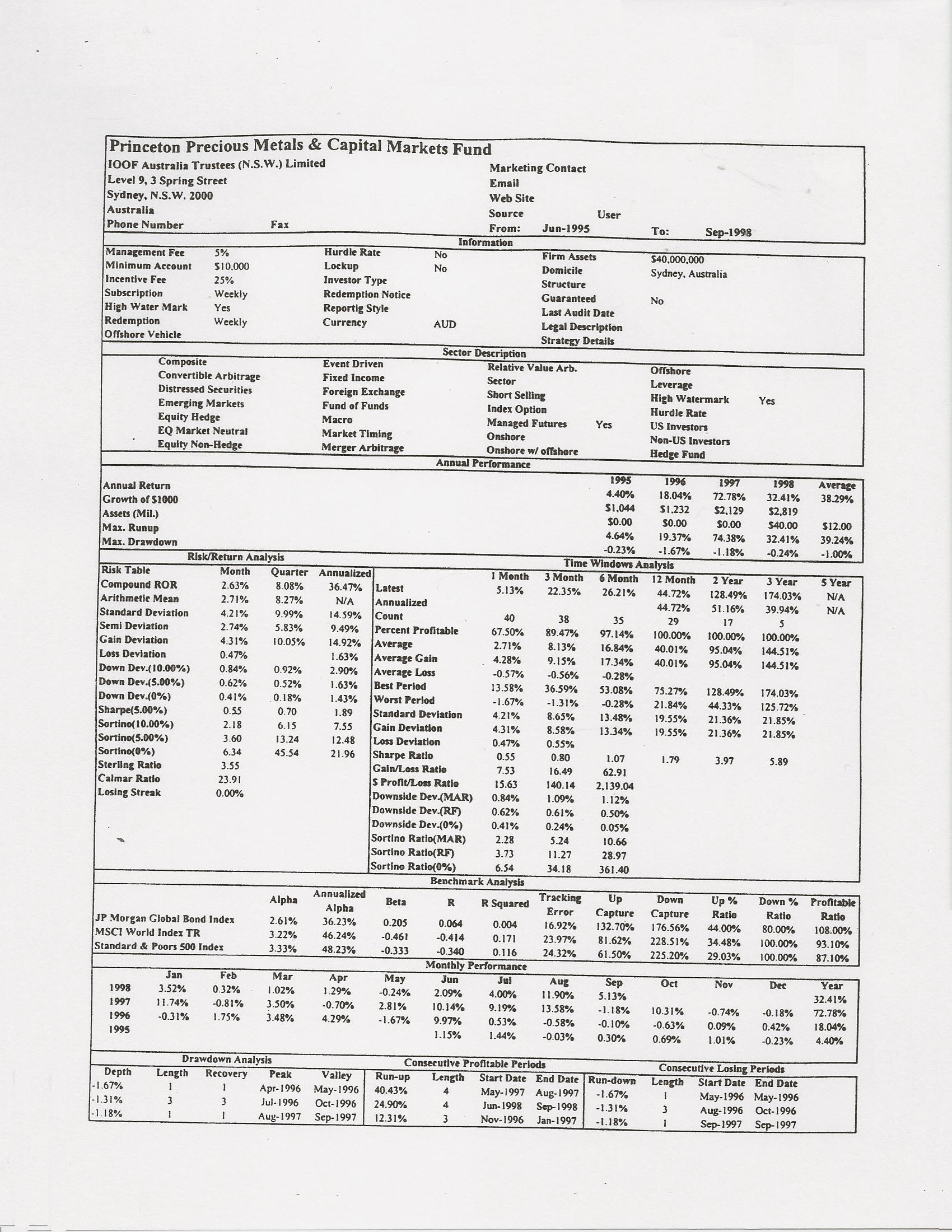
I have traded billions and advised on trillions. I managed the only onshore hedge fund for Deutsche Bank – here is the track record. My worst drawdown in a month was 0.41% – unmatched by anyone. I have been in the trenches and traded head-to-head with Soros, Bacon, Goldman Sachs, Phibro et al. I know why capital moves and have testified before the House Ways and Means Committee even on that subject. I do not speak from “theory” or “I think” bullshit from pretend analysts who are spouting out emotional forecasts which confirms that they are NOT an analyst. I have been named hedge fund manager of the year, FOREX Person of the Year, the discoverer of the Secret Cycle, and economist of the decade, among many other things – including the SOB by bankers, or alternatively that MFer.
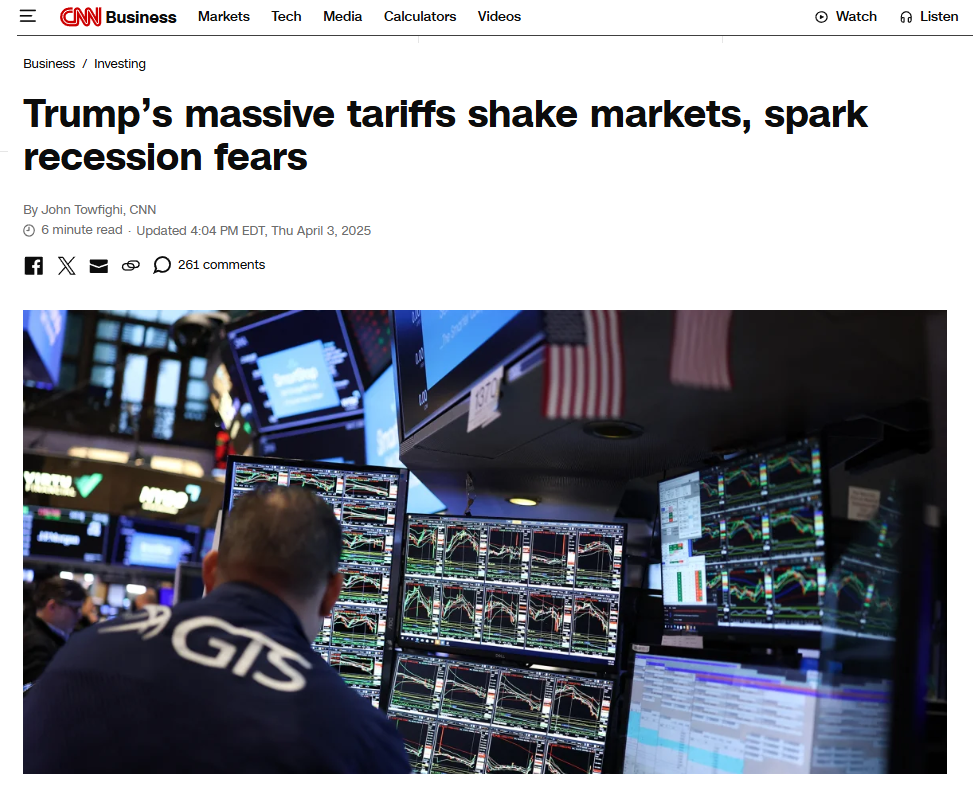
I am appalled by these people, who the media are parading on TV all hysterical, claiming tariffs will end the bull market if not civilization, and the media loves it because they get to hate Trump for something new, other than Putin’s Puppet or SIGNALgate that they can’t seem to get people interested in. Telling them they will lose everything in a 401K, there goes Social Security, and your house will fall to zero because you did not vote for Hillary or Kamala. While opinions make markets, as I have said countless times, the MAJORITY must always be wrong, for they provide the energy for the reversal of trend.
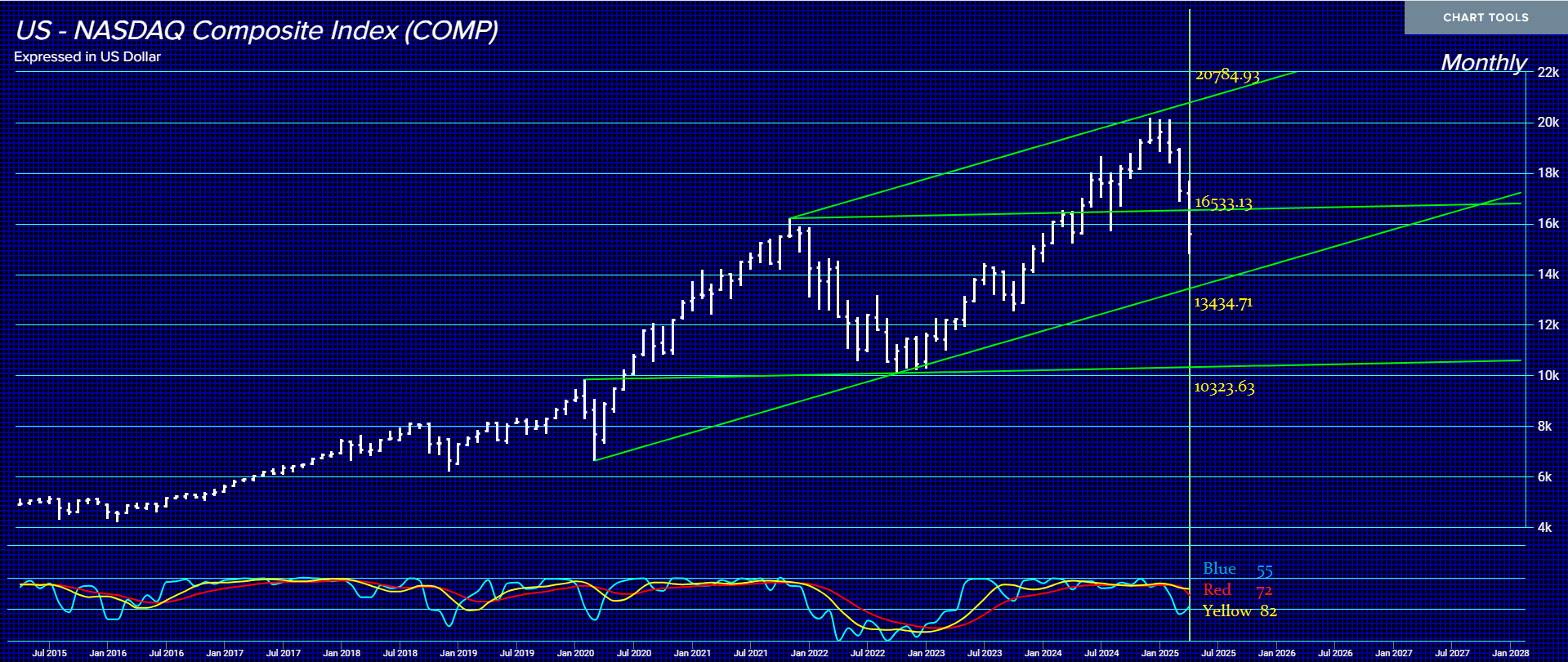
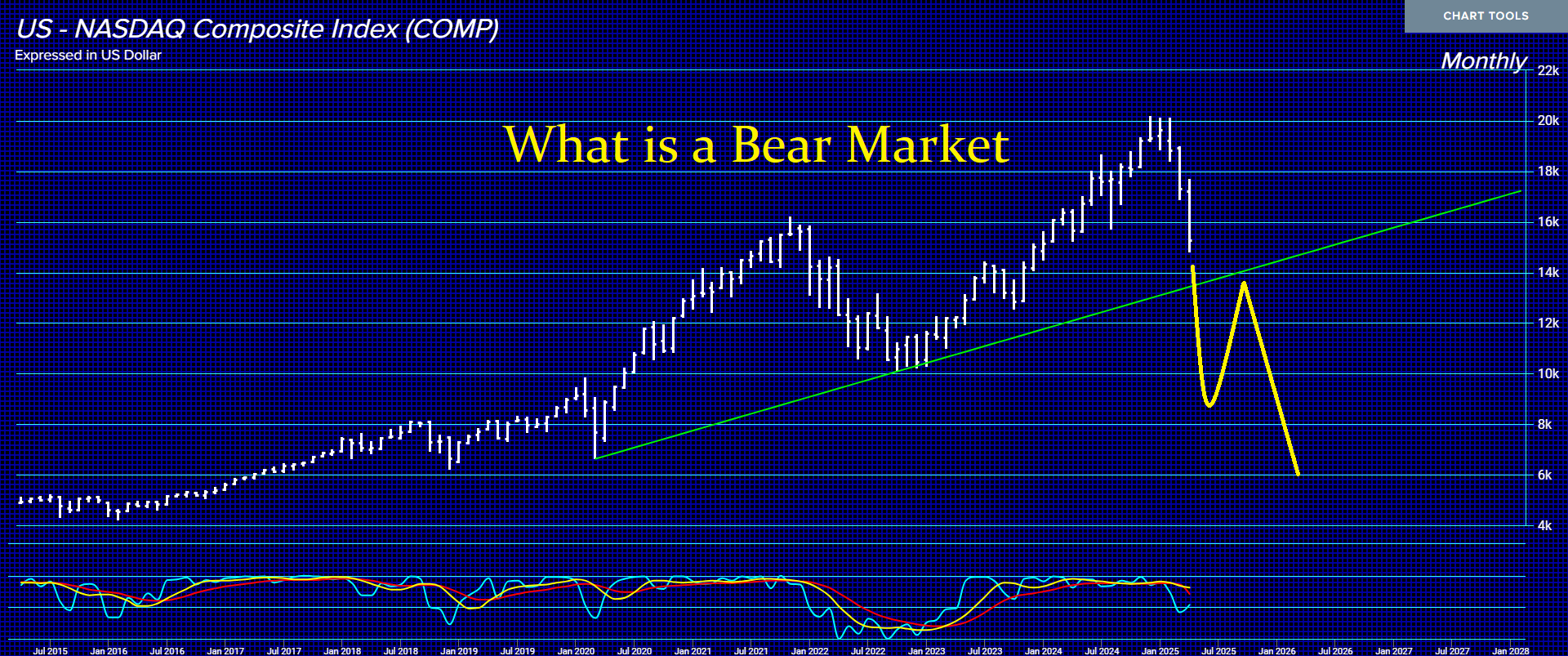
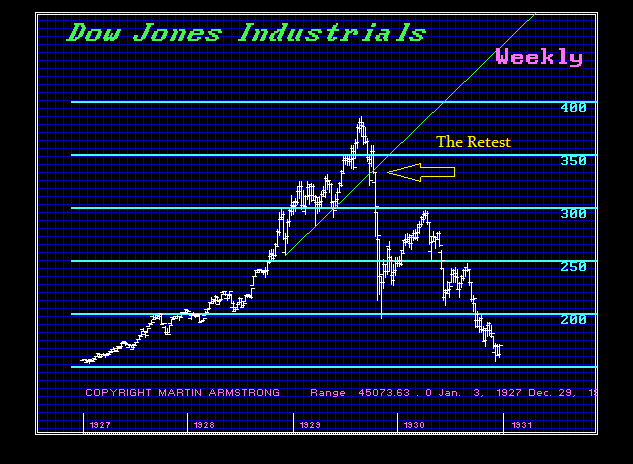
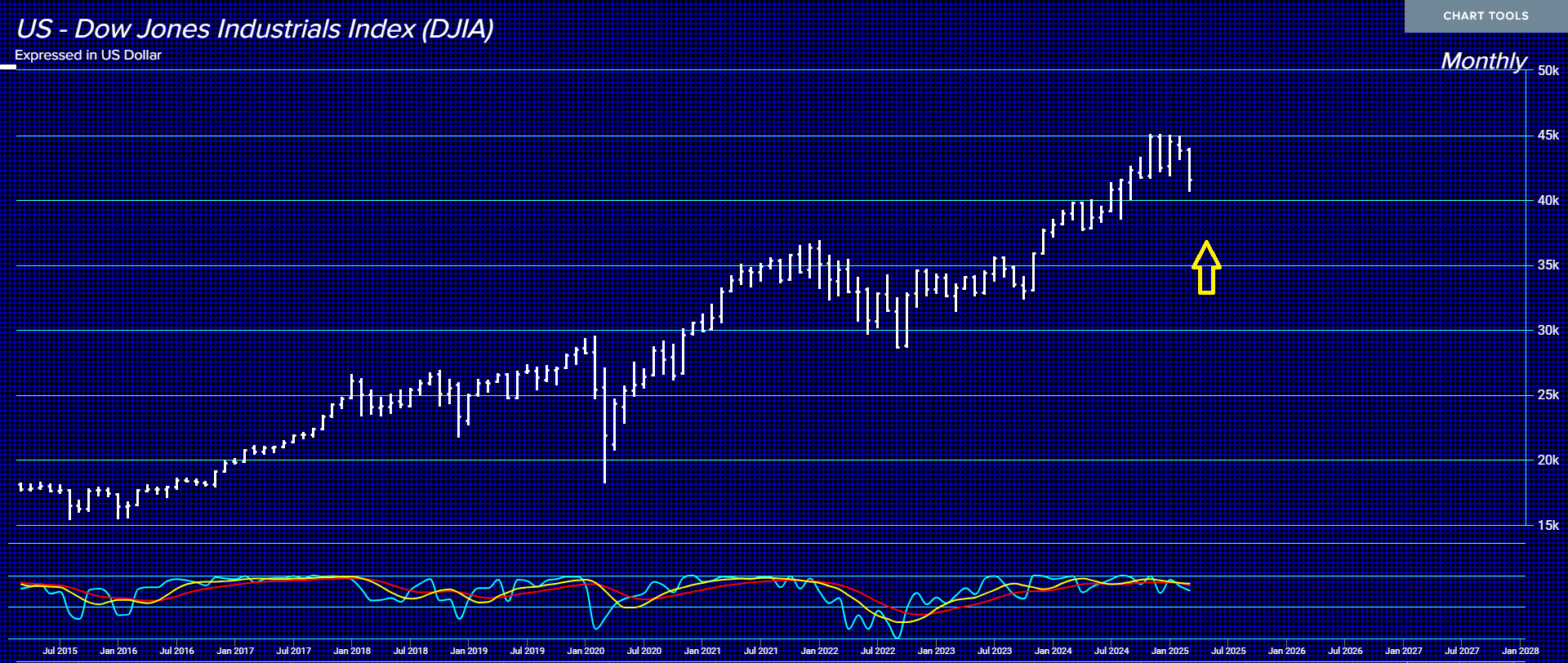
What Bloomberg reported was entirely LEFTIST propaganda. At the time, the NASDAQ had not even tested the basic uptrend line. Technically, you must break that line, stage a false move that retests that from beneath, and then it turns south again. To imply that the NASDAQ will continue to decline, it must close below 15200 on a monthly basis, raising the possibility of continuing down into May/June.
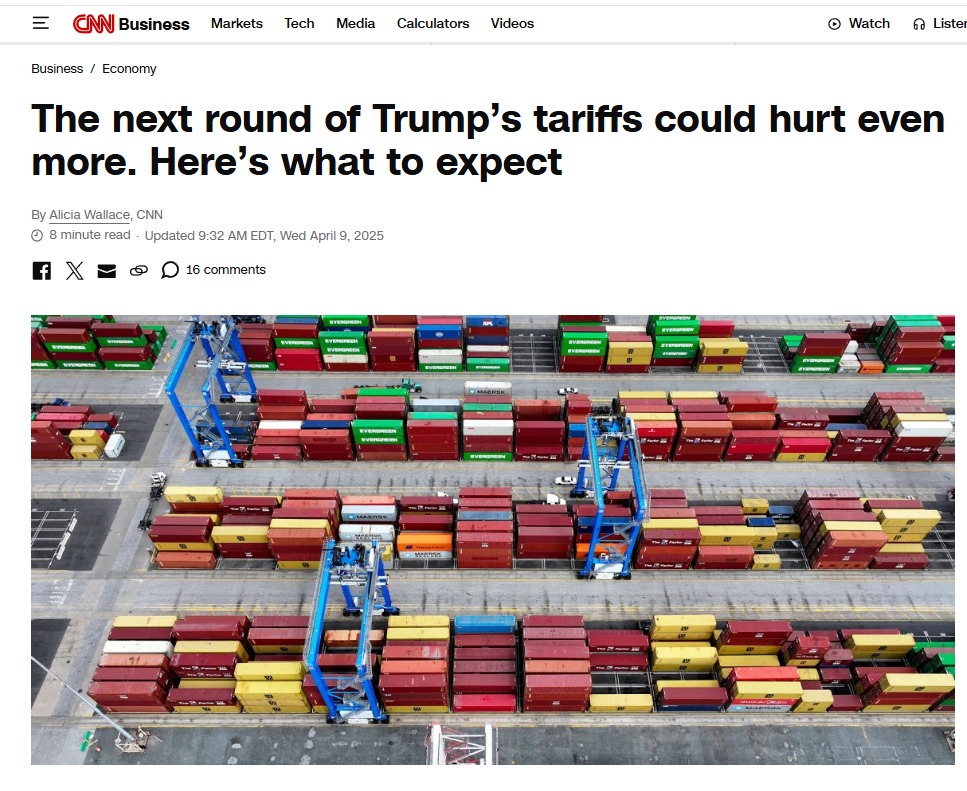
Democratic Senator Ron Wyden said he will force a vote on repealing tariffs in a test of GOP political support for Trump’s trade war. There are the renegade Republicans who joined the Democrats, demonstrating that they believe the 1932 Democrats’ propaganda to win the 1932 election was utterly false. The rollout of Trump’s tariff strategy has sparked wide-ranging reactions from investors, manufacturers, small businesses, and consumers.
Congress enacted the Reciprocal Trade Agreements Act (RTAA) of 1934 which was a significant U.S. trade policy enacted during the Great Depression under President Franklin D. Roosevelt’s New Deal. The RTAA empowered the president to negotiate bilateral tariff-reduction agreements without requiring Congressional approval for each deal. This marked a shift from Congress’s traditional control over tariffs (e.g., the protectionist Smoot-Hawley Tariff Act of 1930). The Tariff reductions could be up to 50% of the existing rates.
Roosevelt, then, like Trump, engaged in Reciprocity Agreements that were based on mutual concessions, where the U.S. and partner countries agreed to lower tariffs on each other’s goods, boosting trade in theory, but it had little impact because consumers were not buying, staring at the uncertainty of the future. Most-Favored-Nation (MFN) Clause also took place with tariff reductions negotiated with one country being extended to all other trading partners with MFN status, preventing discrimination and broadening the impact of bilateral deals.
The Democrats had made such a big deal out of the tariffs, remaining dead silent on the Sovereign Debt Defaults, and that is what led to the propaganda we were taught in school that tariffs are bad and free trade is good. Aimed to reverse the trade-collapsing effects that they blamed on the Smoot-Hawley Act, which had exacerbated the Depression by sparking global tariff wars, they ignored the sovereign debt defaults that drove the dollar to record highs that made foreign imports even cheaper.
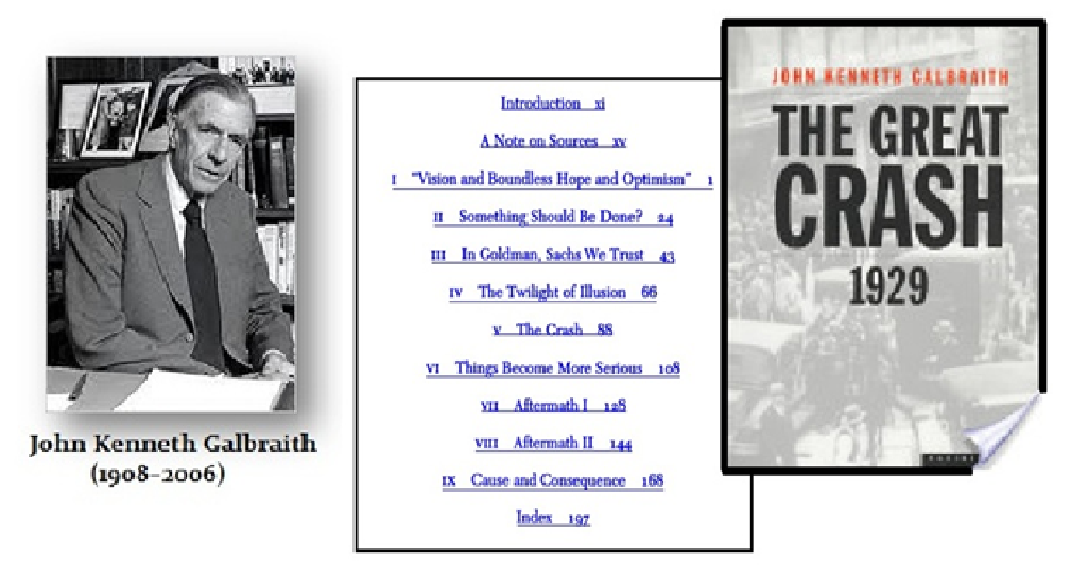
John Kenneth Galbraith, in his seminal work The Great Crash 1929, did not attribute the stock market collapse of 1929 to tariffs. That was not practical since they came in June 1930 after the CRASH. Instead, Galbraith emphasized factors such as speculative excess, margin buying, fraudulent corporate structures, and weak banking practices as the primary causes of the crash. His analysis was focused on the immediate financial mechanisms and psychological factors driving the bubble and its burst. While he acknowledged broader economic vulnerabilities, he did not highlight tariffs as a direct cause of the crash itself.
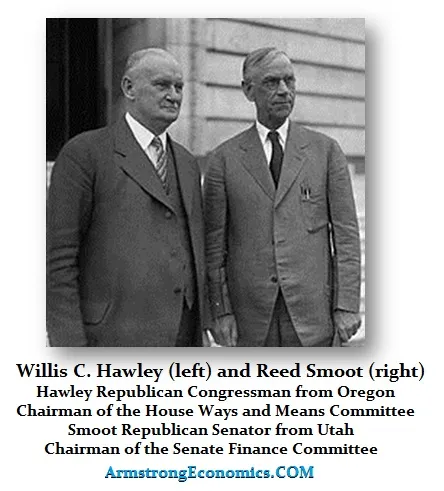
However, tariffs, particularly the Smoot-Hawley Tariff Act of 1930, are often cited as exacerbating the Great Depression that followed the crash, thanks to the Democrats who use it simply because the sponsors were both Republican. Since Smoot-Hawley was enacted after the crash, Galbraith did not blame it for the market collapse but might have recognized its role in worsening global trade and economic relations during the 1930s.
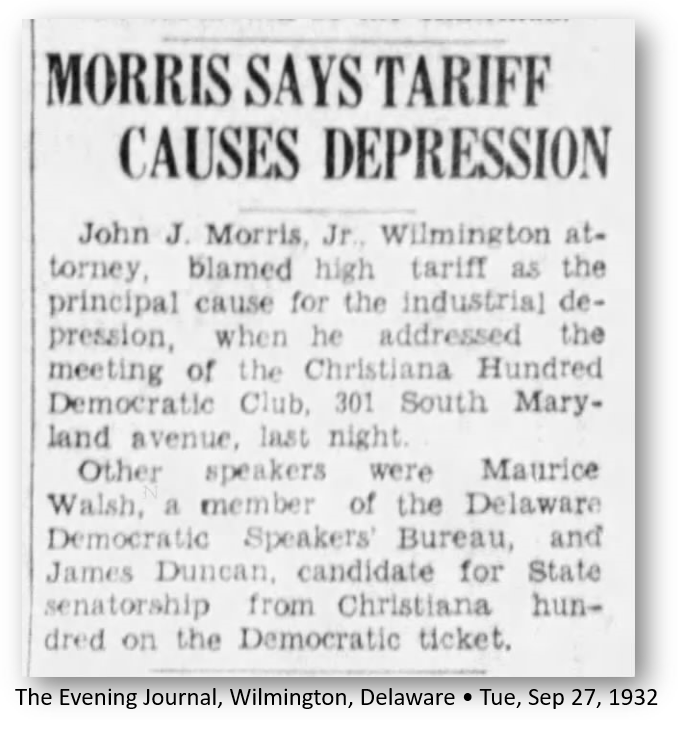
The assertion that the Smoot-Hawley Tariff caused the Great Depression was used during the 1932 election by the Democrats. However, it is not widely attributed to a single individual among reputable economists or historians today. Most scholars view the tariff as a contributing factor that exacerbated the global economic downturn rather than its primary cause, since it was not enacted until the following year. However, several figures have prominently criticized its role:
Economist Milton Friedman: While Friedman emphasized monetary policy failures by the Federal Reserve as the primary cause of the Depression, he and co-author Anna Schwartz noted in A Monetary History of the United States (1963) that Smoot-Hawley worsened international trade tensions.
Political Figures: Opponents of Herbert Hoover, such as Franklin D. Roosevelt, criticized the tariff during the 1932 election, though they focused more on its role in deepening the crisis rather than claiming that they originated it.
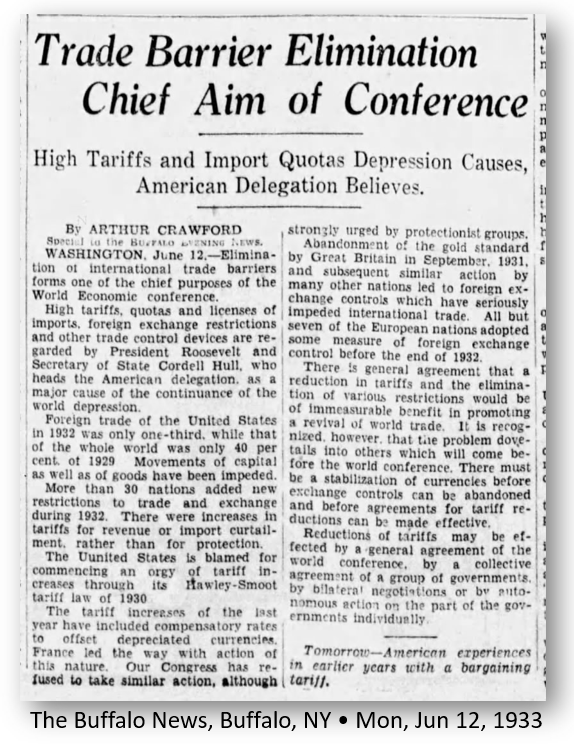
Cordell Hull: As Secretary of State under FDR, Hull vehemently opposed protectionism and worked to reverse the Smoot-Hawley Act through reciprocal trade agreements, blaming it for damaging global commerce. As Secretary of State, he championed the RTAA as part of his vision for liberalized trade and international cooperation. However, the RTAA required periodic Congressional renewal (extended 11 times by 1945).
Economic Historians: Scholars like Barry Eichengreen and Charles Kindleberger discuss Smoot-Hawley in the context of 1930s protectionism and its role in stifling international cooperation, but they do not single-handedly credit it with causing the Depression.
The claim that the Smoot-Hawley Act “caused” the Great Depression is oversimplified and more commonly found in political rhetoric or popular discourse of the Democrats, who used it as a campaign argument to blame Republicans when it was a response to the high tariffs first imposed by Europe. Academic consensus recognizes it as one of many factors (alongside stock market collapse, banking crises, and monetary policy) that deepened and prolonged the crisis. No major economist or historian is definitively cited as claiming it was the sole cause.
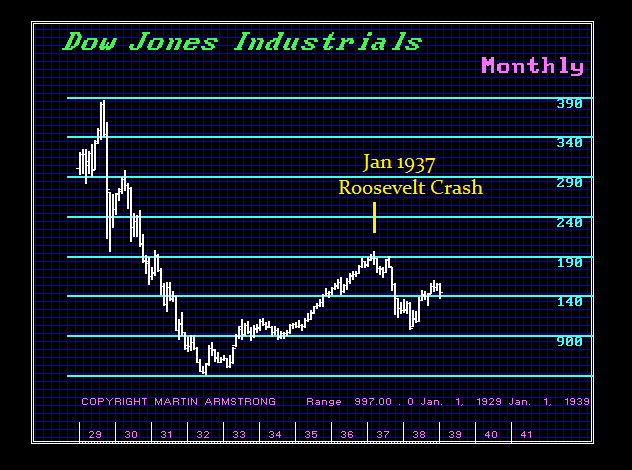
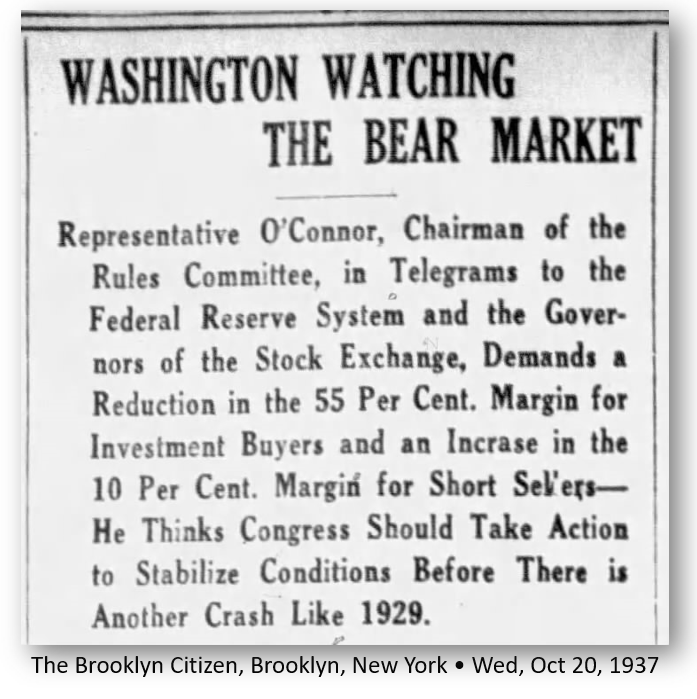
When the economy turned down in 1937, there was widespread panic. People feared that this would be 1929 all over again. They called for raising margins and even curtailing short-selling, as always.
The tariff reforms did not prevent the Crash of 1937. Tariffs were NOT the cause of the collapse of 9,000 banks. We are being subjected to another media attempted coup to undermine Trump and hopefully embarrass the Republicans to vote Democrat against him. They will do whatever they can to destroy Trump.
Posted originally on Apr 10, 2025 by Martin Armstrong
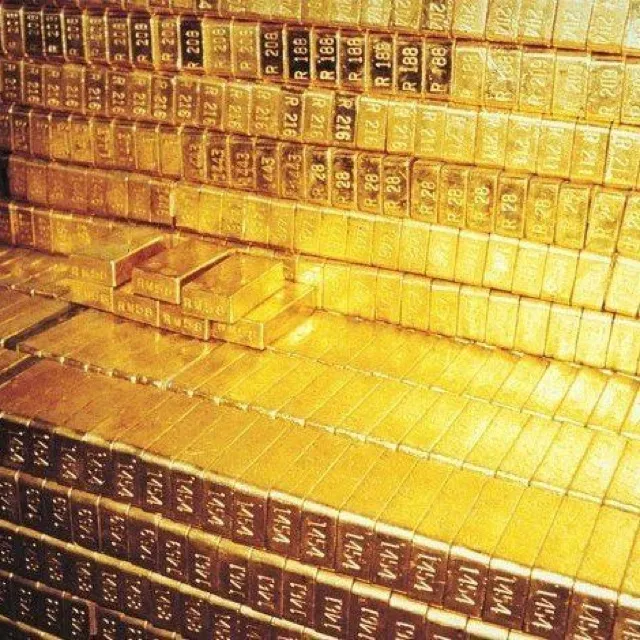
There has been ongoing speculation about America’s holdings of foreign gold reserves. Elon Musk’s request to audit Fort Knox pushed the issue into the headlines once more. Now, the new incoming German government is discussing pulling their gold reserves from the New York Fed due to a lack of transparency and the public is asking—where is the gold?
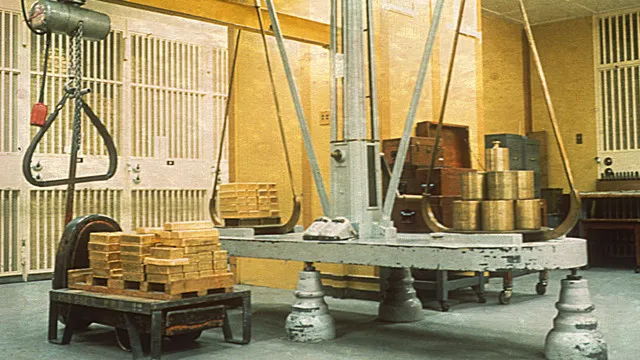
I personally toured the New York Fed many years ago, and while there is gold there, I cannot verify the quantity or quality; no one has ever accomplished such a feat. The last full audit of US gold reserves occurred in 1953 under President Eisenhower. Auditors from the US Treasury and Mint verified domestic and limited foreign-held gold at the New York Fed and Fort Knox. Third-party auditors were not permitted, but there were US Congressional observers. Treasury Secretary George M. Humphrey and Mint Director William H. Brett were in charge of overseeing this audit.
Now, the government declared the audit to be a “full” inspection. However, only 3 of the 22 compartments at Fort Knox were examined, accounting for only 13.6% of gold holdings. Around 88,000 bars (34.4M oz) were meticulously counted, and auditors weighed around 9,000 bars (130 tons). Only 26 gold bars, selected at random, were drilled to confirm purity. Auditors confirmed that US gold certificates matched physical holdings at the New York Fed, but due to limited sampling and a lack of transparency, suspicions rose. “We have no reason to believe other melts would differ [from assay results],” the joint commission stated.
The gold examined was mainly domestic. Germany’s holdings, for example, were not part of the audit. Public confidence in the US government was on the decline at this period amid Cold War secrecy. Around the same time of the audit, the CIA admitted it to Operation Ajax—a covert operation to overthrow Iranian Prime Minister Mohammad Mossadegh and install Shah Mohammad Reza Pahlavi. This was the first time that the US government openly admitted to orchestrating a coup and installing a leader in a foreign nation. How could the public and/or foreign nations trust the US under these conditions?
(Sources: Treasury 1953 Report, Sound Money Defense League, FRASER).
The GAO/Treasury conducted the next audit in 1974, reviewing 21% of gold holdings at Fort Knox. This occurred in the post-Bretton Woods period after Nixon abandoned the gold standard. Again, third-party auditors were not permitted to attend, and this time, auditors did not weigh bars. Some called the September 1974 examination a “show audit” and a publicity stunt as only 1 of the 13 vaults was examined. The “real” audit occurred the following month by a joint GAO-Treasury committee, but as mentioned, only 91,404 bars of 367,500 were examined. Random samples were tested for purity, but there was no assaying or weighing.
Continuing audits were ongoing, and the US government pledged to inspect 10% of its gold holdings annually from 1975 to 1983. As of 1985, the government stated it had audited 89% of its gold holdings, but only through seal verifications and limited sampling. Again, only the US government had access to these vaults.
The matter was ultimately laid to rest until 2012, when US politicians like Ron Paul and foreign governments demanded another audit. Germany was threatening to relocate their US holdings at the time due to a lack of transparency, and had been increasingly calling for an audit in the decades leading up to 2012. To appease doubters, the Treasury OIG conducted another limited audit.
The 2012-2013 NY Fed Audit scope included 34,201 US-owned gold bars (418 tons). Less than 1% (367 bars) were tested for purity. Auditors did not weigh the gold, nor did they conduct a full inventory. All compartments were to remain sealed unless they had reason to suspect tampering. Again, no independent assayers were admitted. Worse, foreign holdings were not inspected. Germany’s gold, for example, was not reviewed but they maintained trust in the US government despite some backlash.
Fast-forward to 2025: DOGE is uncovering government waste and mismanagement and has set its sights on Fort Knox. The US Treasury declared any audit a breach of national security. A true audit of Fort Knox, not including the NY Fed, would take 18-24 months and require 44,000 hours. Foreign governments now have a seemingly plausible reason to point their finger at the US and call “FOUL PLAY!”
Here’s the thing–no nation completely audits its gold holdings. The UAE, for example, implemented mandatory annual audits but only examined 10-20% of its holdings. There is limited transparency as their audits are classified, but they do permit third-party audits and follow London Bullion Market Association (LBMA) standards. Switzerland also follows LBMA standards and conducts regular audits, but auditors only check seals as there is no physical count. Switzerland is far more transparent about its auditing process, but again, they are only looking at a small percentage of overall holdings and not weighing or physically assessing the gold. Any nation could point the finger at another and question the validity of its stockpile.
As for US gold holdings, there have not been any official sales. If anything is missing, then that means it was stolen. However, the media is honing in on the US without understanding that no foreign nation conducts a full audit of their gold holdings. It all comes down to trust in the government, not only the current administration but every administration that has come to pass.
Posted originally on Apr 9, 2025 by Martin Armstrong
COMMENT: The media including the financial media really going crazy with this Trump Tariff thing – as if the market wasn’t due for a pull back.
DS
REPLY: We had forecast that we would see a correction by April last year. I answered plenty of questions on various podcasts about whether this would be a big crash and the end of the bull market. I consistently warned that such a scenario was absurd, for that implied the classic flight to quality being government debt. Facing a global sovereign debt crisis, I warned that it was just not realistic. The press has latched onto this normal correction and is deliberately trying to crash the market with constant claims that tariffs will destroy the world economy.
This is the very same political scheme they used in 1932 to blame tariffs on Hoover and the Republicans to win the 1932 election. It was a total lie and a fabrication of history. We are witnessing the attempted coup of Trump by deliberately trying to force the stock market down in a desperate attempt to turn the Republicans against Trump and stop his entire agenda of ending the Democrats’ feeding trough for corruption. I was stunned by the conversation I had yesterday and a deliberate media attempted coup.
Tariffs do not cause a DEPRESSION, no matter how much the media is selling that story now, just as the Democrats did in 1932 to get FDR elected. They also failed to protect any country from the effects of the worldwide depression at the time.
Between 1925 and 1929, there were 33 general revisions or substantial tariff changes, nearly all of which raised tariffs. These included 26 European nations and 17 republics of Latin America. In 1927 and 1928, Australia, Canada, and New Zealand increased and expanded the scope of their tariffs. In Asia, China, Persia, and Siam also raised tariffs during the period. This was all before the 1929 Crash, which the history books omitted along with the 1931 Sovereign Defaults.
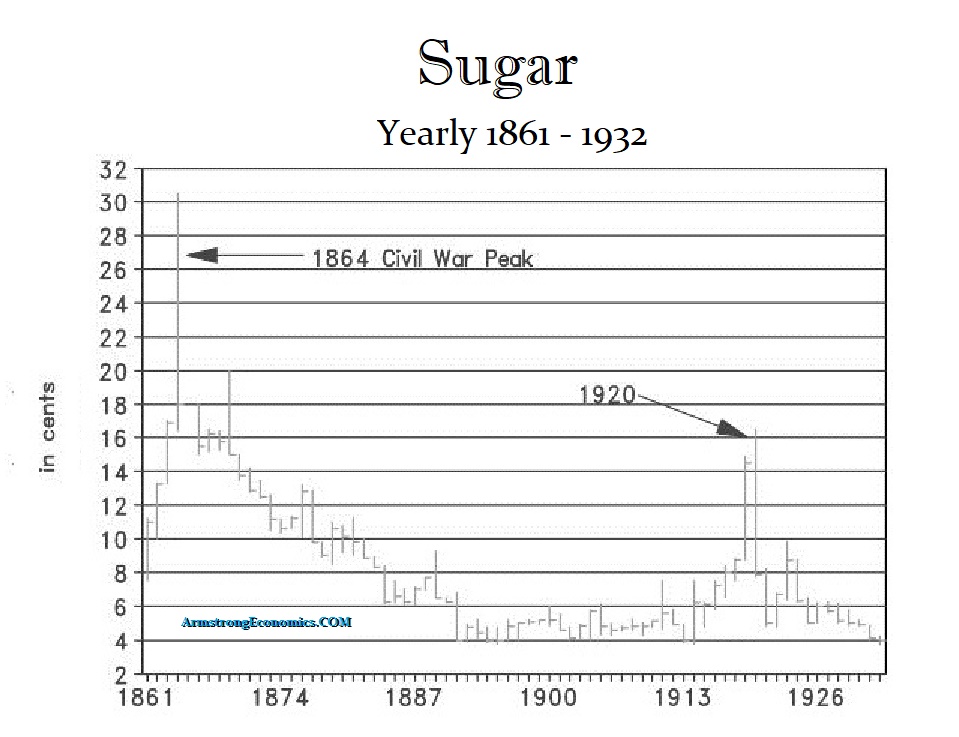
The Smoot-Hawley Tariff of 1930 was in response to the protectionism before 1929. During World War I, obviously, capital moved to the USA, as was the case for production, and also to Latin America. It was World War I that ended the sugar production that used to take place in Europe. It migrated to Java, Cuba, and other South American countries. You can see the huge spike in sugar during 1919/1920. After the war, the Europeans tried to bring back their economic dominance to recover their former glory. To try to achieve that, this was the start of the high tariffs that were really imposed against new competitors. That was the real essence of the trade war. Their high tariffs succeeded and brought sugar production back to Europe. The output during 1927-1928 was actually far greater than before the war in 1914.
The Europeans did the same with Cotton and wheat. This had the effect of creating overproduction, for which Europe lost export markets. This was the protectionist agenda that is rarely, if ever, explained beyond blaming the Smoot-Hawley Act.
There was a Tariff Reduction Bill of 1932, but this did not pass Congress. Here’s the breakdown:
Context: After the Smoot-Hawley Tariff Act (1930) raised tariffs to record levels, worsening the Great Depression, efforts were made to reverse this protectionist policy. By 1932, Democrats, who generally favored lower tariffs, controlled the House but not the Senate (which remained Republican until March 1933).
Legislative Efforts: Democratic lawmakers proposed tariff reduction bills in 1932, but they faced significant opposition. The Republican-controlled Senate and President Herbert Hoover, a protectionist, opposed lowering tariffs during an economic crisis.
Outcome: No major tariff reduction legislation was passed by both chambers of Congress in 1932. The pivotal shift came later with the Reciprocal Trade Agreements Act (1934) under President Franklin D. Roosevelt, which empowered the executive to negotiate tariff reductions.
In summary, despite the post-Smoot-Hawley backlash, the political landscape in 1932 prevented tariff reduction bills from passing Congress, as the Democrats were using this as an excuse to vote for FDR. The focus on austerity and revenue-raising measures (e.g., the Revenue Act of 1932) further sidelined such efforts.
The entire Tariff Issue of the 1930s was indeed just political. The Democrats used it to beat the Republicans over the head and pretended that the Tariffs caused the Great Depression. Today, we have the media, which hates Trump as they all tried so hard to defeat him, now they are deliberately blaming tariffs all over again for a normal correction that many kept call for a major crash before tariffs.
Posted originally on Apr 8, 2025 by Martin Armstrong
Some believe that Donald Trump is deliberately attempting to cause a sharp downturn in equities to force a flight into treasuries. If so, the Federal Reserve would have more of a reason to slash interest rates—Trump’s longstanding desire. Trump has stated that the markets are undergoing an “operation” of sorts, but I would not underestimate his long-term plan here.
Trump openly states that he wants companies to move manufacturing to the US to avoid tariffs. This will also promote domestic trade as companies will seek to avoid levies. US farmers will be incentivized to sell domestically, which could lower the price of groceries much to the pleasure of the American public.
The idea that a decline in the stock market could actually cause a flight into treasuries sounds counterintuitive on the surface, but when you understand how capital flows and confidence operate globally, it makes perfect sense. Capital moves globally and always seeks the safest place to park. Unexperienced and retail traders tend to panic at larger downturns and sell off.
Everything comes down to CONFIDENCE. A downturn in equities could cause a kneejerk reaction into treasuries because people still trust that the government will make good on their payments. Big institutional money began fleeing the public sector for the private sector years ago. What we have seen since the implementation of Trump’s tariffs is a new demand for treasuries.
The 10-year treasury yield dropped from 4.25% in late March 2025 to 4.01% by April 1, while the two-year fell to 3.68%. Billions have fled into the bond market since these tariffs were announced. JPMorgan, for example, said that there is now a 60% risk of a recession and is shifting toward the bond market.
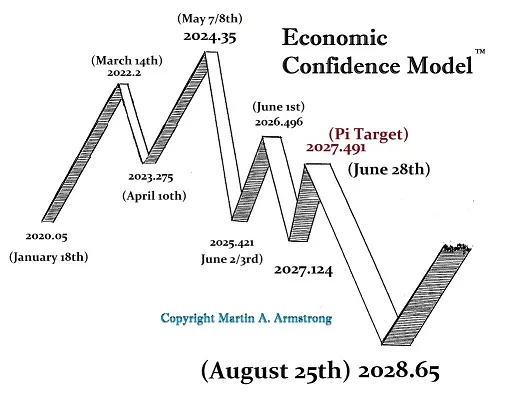
Lowering treasury rates will make homes more affordable by decreasing mortgage rates. Individual nations were fleeing US treasuries, creating a massive risk for an eventual default. Suddenly, at least temporarily, the stock market no longer seems like a safe place to park money. The Trump Administration first showed the world that it was cutting spending and attempting to reduce the deficit. A downturn in rallies DOES NOT guarantee a rally in the bond market, but we are witnessing a short-term flow into treasuries. However, the computer has warned that 2028 will mark a major turning point in confidence where any remaining confidence in government vanishes. For now, we may enjoy a temporary decline in treasury yields due to these tariffs.
COMMENT: My hats off to you if your call for today’s low holds for a few weeks and/or for the year.
I would have thought a retracement to the 62-fibo would have been more likely.
Thank you. SH
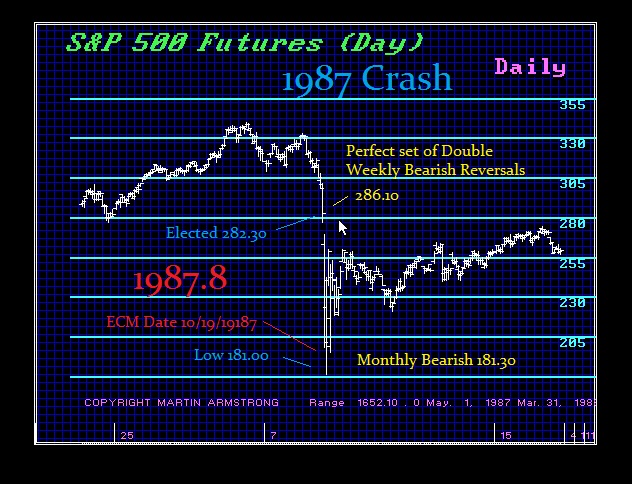
REPLY: As I said on the private blog, back in 1987, I could not find any technical support between the two Weekly Bearish Reversals at 286 in the S&P 500 and the Monthly at 181. That was not the case here, and we did not have an isolated high like in 1987. Here we elected two Weekly Bearish the week of March 24th. The setup was different.
I have created this site to help people have fun in the kitchen. I write about enjoying life both in and out of my kitchen. Life is short! Make the most of it and enjoy!
This is a library of News Events not reported by the Main Stream Media documenting & connecting the dots on How the Obama Marxist Liberal agenda is destroying America