Trump’s comments on Baltimore naturally led to the press saying he wrongly insulted Baltimore. What is interesting is that the Daily Mailfrom London did its own investigation and found that Trump was correct. On top of that, some $16 billion in federal money that was given to the city cannot be accounted for. That is completely understandable because the pockets of politicians have big holes in them, and surely the money stuffed in their pockets fell out and was probably blown away into the sea.
The Daily Mail found that indeed Baltimore “is home to some of the most dangerous housing projects in the country, where homicide is an epidemic; drugs are on every corner and rats root around in the mounds of trash strewn in side alleys.”
So why will the American press report that Trump is wrong? Could it be just politics?
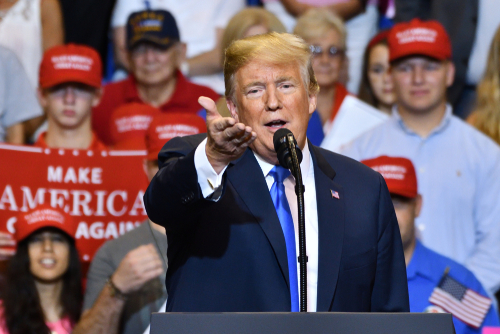
President Trump tours a new cardboard manufacturing plant in Ohio with plant owner Anthony Pratt and Australian Prime Minister Scott Morrison. During the tour President Trump stopped to make remarks to the traveling press pool:
President Donald Trump meets-up with Australian Prime Minister Scott Morrison to deliver remarks at the Grand Opening of a Pratt Industries Plant in Wapakoneta Ohio. Anticipated start time is between 5:00pm ET and 6:00pm ET.
Chopper pressers are the best pressers. As President Trump departs the White House traveling to Houston, Texas, the President stops to answer questions from the assembled press pool. [Video and Transcript Below]
.
[Transcript] THE PRESIDENT: Good morning. We have a busy day planned. We’re leaving now for Ellington Air Force Base in Texas. We’re going to spend some time on the floods. We’re going to be briefed on the flood. We’re going to make a big investment so we can try and help Texas with this terrible flooding that they’ve been having. So we’ll be talking to a lot of people and meeting a lot of people. That’s going to be at Ellington Air Force Base.
Then we’re going to Houston. Some of you are coming with me, I guess. And we’ll be going to Houston, and we’ll be at a very nice, big stadium packed full of people with Prime Minister Modi of India. He asked if I’d go with him, and I’ve accepted. And we’re going to have a good time with Prime Minister Modi. We have — I hear it’s a tremendous crowd. So that will be in Houston.
And then after that, I’m going to Ohio. Pratt Industries is opening a $1 billion plant. And I told Mr. Pratt, who is a great — Anthony — I told him if he does something really spectacular, I’ll go and cut the ribbon. And he did; he invested a billion dollars in Ohio. So that’s Pratt Industries. They’re great people. It’s a great company, headed by a very great businessman from Australia. So they’re bringing a billion dollars into Ohio, and I said I’d go and cut the ribbon, and here it is. We’re ready to cut a ribbon. It’s a great plant. So we look forward to that.
Then we’re coming home and then we have a lot of work at the United Nations during the next week.
Q Mr. President, is a meeting at the U.N. with Iran completely off the table?
THE PRESIDENT: Nothing is ever off the table completely, but I have no intention of meeting with Iran. And that doesn’t mean it doesn’t happen. I’m a very flexible person. But we have no intention — it’s not set up. We’re meeting with a lot of leaders. We have about 15 meetings set up, but Iran is not one of them.
Q (Inaudible.)
THE PRESIDENT: We had a great conversation. The conversation I had was largely congratulatory. It was largely corruption — all of the corruption taking place. It was largely the fact that we don’t want our people, like Vice President Biden and his son, creating to the corruption already in the Ukraine.
And Ukraine — Ukraine has got a lot of problems. He — the new President is saying that he’s going to be able to rid the country of corruption. And I said that would be a great thing.
We had a great conversation. We had a conversation on many things. In fact, I believe Ukraine put out a statement yesterday saying that we covered many different topics. It was a warm and friendly conversation. We backed — I backed Ukraine from the beginning.
But I’m very upset that other countries aren’t doing the same. Germany should be spending much more. France, all of the European Union should be spending money. Why are we spending money and they’re not? Or least they’re spending very little by comparison.
So I’m not happy about that.
Q Will you let Rudy Giuliani talk to Congress about what he asked Ukraine to do?
THE PRESIDENT: Oh, I would have no problem with it. Rudy is a very straight shooter. And Rudy wants to see the same thing as a lot of other people with respect to your Ukraine. Ukraine has had a tremendous corruption problem. Somehow they were involved in a lot of different things that took place in our country, and hopefully it can be straightened out.
And I will say, the new President — we had a very good talk. The new President got elected based on the fact that he would end corruption. That was probably his number-one thing.
Q Mr. President, do you think somebody was spying one you on that call with Ukraine?
THE PRESIDENT: Well, this whistleblower — or whoever it was — because it sounds like it’s not a whistleblower. You can’t have that happen to a President of the United States.
The conversation, by the way, was absolutely perfect. It was a beautiful, warm, nice conversation, and it was put out last night, also, by Ukraine.
But you can’t have people doing this. And you can’t have people doing false alarms like this.
And, you know, when the President speaks to the head of another country, he has to be able to speak to those people. And those people don’t want to know that that they’re being recorded or that you have a stenographer working. You don’t want to have to hear that. You can’t do that to a President and you can’t do that to other countries.
But with all of that being said, we had a very great conversation — very straight, very honest conversation. I hope they can put it out.
Q Is there a recording, sir, of that call?
THE PRESIDENT: Well, I don’t say anything, but whenever I speak to a foreign leader, I assume there are many people on the line. I don’t assume I’m talking to the leader. Any time I’m on the phone with a foreign leader, many, many people are on the line. Sometimes they’re taping calls. Sometimes they’re doing a stenographer.
But I also assume many people are on the line from the other side. So if I’m speaking to a country, they also have people on the line. So who would say a thing like what you’re saying?
Now, I will say this: I said absolutely nothing wrong. It was perfect.
Q Mr. President, you acknowledged that (inaudible) —
THE PRESIDENT: Listen to me. Listen.
Q — talked about the Bidens in your earlier answer.
THE PRESIDENT: Listen to me.
Q You acknowledged that you —
THE PRESIDENT: Listen to me.
Q — talked about the Bidens. Is that correct, sir?
THE PRESIDENT: Listen to me. I assume many people are on the line. I know that before I make the call. And that’s what you have — intelligence agencies, everybody listening. That call was a great call. It was a perfect call. A perfect call.
What wasn’t perfect is the horrible thing that Joe Biden said. And now he made it a lie when he said he never spoke to his son. I mean, give me a break, he’s already said he spoke to his son. And now he said, yesterday, very firmly. Who wouldn’t speak to your son? Of course, you spoke to your son. So, he made the mistake of saying he never spoke to his son. He spoke to his son.
But more importantly, what he said about the billions of dollars that he wouldn’t give them unless they fired the prosecutor. And then he bragged about how they fired the prosecutor and they got the money.
Q (Inaudible.) Was that a snub (inaudible)?
THE PRESIDENT: No, it’s not a snub at all. I’m very busy. I’m going on the floods today. The floods are very important to me. And climate change — everything is very important.
But today I’m going to Texas on the floods. Then I’m going to Houston on the big rally. It’s a rally for Prime Minister Modi, and he asked me to do it — of India — and I look forward to doing it.
Q (Inaudible) Joe and Hunter Biden (inaudible) because of their involvement in Ukraine?
THE PRESIDENT: Well, not only in Ukraine; take a look at China. They took a tremendous amount of money out of China. Now, if they ever took over a China negotiation, he would sell us out. Look at all the money he made in China.
The son, he knew nothing. The son is a stiff. He knew nothing, and he’s making hundreds of thousands and millions of dollars. And he did the same thing in Ukraine. He knows nothing.
This is a very dishonest thing that Joe Biden did. And then he said he never spoke to this son. Does anybody believe that one? But then he also said, long before, that that he did speak to his son. So he lied, again.
But what he said is that he wouldn’t give I think it was billions of dollars to Ukraine unless they fired the prosecutor who was looking at his son and his son’s company — the company that his son worked with. And that’s a very dishonest thing. And I’m not looking to hurt Biden.
I’m not even looing to hold him to it, to be honest. But he said a very bad thing. He said a very foolish thing.
Now, me, on the other hand, my conversation with the President — the new President of Ukraine was perfect. They put out a statement last night. They said the same thing. It was a warm, friendly conversation. There was no quid pro quo. There was nothing. It was a perfect conversation.
Q (Inaudible.)
THE PRESIDENT: Go ahead.
Q How do you explain the military aid, sir? How do you explain delaying military aid (inaudible)?
THE PRESIDENT: Because I want Germany and I want France and I want the European Union to put up money. And I didn’t delay anything. We paid the military aid, to the best of my knowledge.
Q (Inaudible.)
THE PRESIDENT: Listen to me. I gave so much more to Ukraine than Obama did. Go back and check your record.
Q (Inaudible.)
THE PRESIDENT: And you know what you should do? Also ask —
Q (Inaudible.)
Q Mr. President, can you tell us why anybody should be allowed to buy a gun without a background check?
THE PRESIDENT: We’re looking at it right now. We’re studying it very hard. It’s an issue that, frankly, Congress is wasting all their time on nonsense. We’re studying it very hard. If Congress would ever get back to work, we could work something. But Congress is doing all of this nonsense, this garbage that they’re doing. And I’ll tell you what — they don’t have any time. The Democrats in Congress are doing nothing. I’ll tell you what: They’re going to lose the election. You know why? Because they’re not doing anything.
Q (Inaudible.)
THE PRESIDENT: Well, we’re working very hard with some Democrats. The problem I have is that Jerry Nadler and all these people — they keep wasting time in Congress over nothing. They’re studying nothing. The Mueller report was perfect. Corey Lewandowski was magnificent. Everybody is perfect. They’re wasting time. They couldn’t accept the Mueller report. They couldn’t accept that defeat. They can’t now accept the fact that we have the best economy we’ve ever had, and we may be hitting another all-time high in the stock market.
Q (Inaudible.)
THE PRESIDENT: We’re looking at a lot of different things. They problem we find is the Democrats have very little time to talk because they’re wasting their time. You take a look at what they’re doing. It’s a total waste of time, and they know it. They know it.
Q (Inaudible.)
THE PRESIDENT: Say it.
Q (Inaudible.)
THE PRESIDENT: Well, we’re working with Joe Manchin, the senator, and we’re working with Pat Toomey. And we have a lot of people working on this. And we’ll be seeing, I’d say, over a period of time.
The problem that I have is the Democrats in the House especially, they’re totally unavailable to talk because they have hearings all day over something that’s already been won by us. They made up a story. It was a false story. It was a hoax. And, frankly, we have to get to the bottom of how it started. But they’re wasting all of their time on a hoax.
Q You said Jay Powell was a “bonehead” with “no guts.” But then you said his job is safe. Why?
THE PRESIDENT: Well, he’s got a job. And I could do things if I wanted. But I don’t want to do that. We’re so strong, despite Jay Powell. But Jay Powell is not helping us. Other countries have lower interest rates. We’re the primest of them all. But he has the rate —
Look, it’s very simple. He lifted the rates far too quickly, and he lowered them far too slowly. And it’s a shame. And it’s a shame.
Q Are there other boneheads in your administration whose jobs are safe?
THE PRESIDENT: Not too many. Not too many boneheads. We have a great — I’ll tell you what, we really now have a great administration. But what we have is a great Cabinet. Our Cabinet has done a great job.
Q (Inaudible.)
THE PRESIDENT: Go ahead.
Q Is the White House blocking the Director of National Intelligence from sending the whistleblower complaint to Congress?
THE PRESIDENT: No, he is a great gentleman — Joe. He’s doing a fantastic job. And I know one thing: He’s only going to do what’s right. But he is doing a fantastic job. And he’s only going to do what’s right. But just so you understand, the conversation I had with the President of Ukraine was absolutely perfect. And people better find out who these people are that are trying to subvert our country, because here we go again. These are bad people.
But the conversation I had with the President of Ukraine was absolutely a 10. It was perfect.
Now, what you have to do is look at the corruption on the Democrat side. Take a look at how the whole witch hunt started. Now they want to try and start another witch hunt. But unfortunately this one is reverting now to Joe Biden, because he’s done some very bad things.
And I’m not even looking to hurt him, to be honest. He needs all the help he can get. I’m not looking to hurt him. I’m not looking to hurt his family. But the corruption and what he said is a terrible thing.
Today President Trump will be traveling to NRG Stadium in Houston, Texas, to join Indian Prime Minister Narendra Modi at a celebratory event. India is a key geopolitical ally in President Trump’s Indo-Pacific strategy. [Economics, Trade and Security]
Update: Video Added
President Trump will deliver remarks at “Howdy Modi: Shared Dreams, Bright Futures” at approximately 12:00pm ET / 11:00am CT. (Livestream Links Below)
Prime Minister Scott Morrison and U.S. President Donald Trump will meet up again on Sunday in Ohio as both leaders continue to emphasize the relationship. Today, PM Morrison laid a wreath at the tomb of the unknown soldier, and then delivered remarks to diplomats during a celebration at the official residence of the Australian Ambassador.
Prime Minister Morrison shares his, and his wife Jennifer’s, experience yesterday with President Trump and First Lady Melania. The official state dinner was apparently an overwhelming hit with the Australian leadership…. Good Stuff:
Last week U.S. economic data included the Labor Department’s report on initial filings for unemployment benefits, at historically low levels. Also last week, the Commerce Department reported the U.S. housing market (new homes and permits) was the strongest since 2007. Then came the Philadelphia Fed’s index of manufacturing business activity in September, more than doubling estimates as factories continue to expand. And if that wasn’t too much winning, the Commerce Department then announced August retail sales growth was double expectations. Main Street USA is very strong.
None of the economic data supports the almost month-long ‘recession narrative’ pushed by financial pundits and media narrative engineers; and next week the second estimate of Q2 GDP growth will be released. Attempting to retain the smallest remaining whiff of credibility, the Bloomberg economists now announce they’re cancelling the recession.
(Bloomberg) — The U.S. economy is outperforming expectations by the most this year, offering a fresh rebuttal to last month’s resurgent recession fears fueled by the trade war and a manufacturing slump.
The Bloomberg Economic Surprise Index has reached an 11-month high after four indicators released Thursday, including existing home sales and jobless claims, each surpassed expectations.
The gauge continued to advance after swinging to positive from negative on Tuesday for the first time this year. The data also pushed a similar measure produced by Citigroup Inc. to the highest level since April 2018.
“It says things are getting better,” said Jim Paulsen, chief investment strategist at Leuthold Group in Minneapolis “There’s a definitive change in the growth profile and there’s an acceleration in growth. It’s interesting how pessimistic the attitudes still are among investors, yet when you look at surprise indexes, you would think people would feel better about growth. There’s a disconnect.” (read more)
Yes, there is indeed a “disconnect”. We’ve been talking about it on these pages for almost ten years. When you focus on the America-First economic agenda, Main Street thrives. However, the outcomes for Wall Street are no longer attached to the success of Main Street USA.
And when you apply MAGAnomic policy, well, the Era of De-Globalization is here.
There is nothing that China and the EU can do to stop the de-globalization process; and efforts to stimulate their economy, more quantitative easing (pumping money) while the global supply chains are being shifted, are futile.
The more a nations’ economy is dependent on exports, the more exposure they have to the inherent downsides of de-globalization. U.S. companies that are invested in these nations will lose their investment over time; some rapidly. This will keep the stock market volatile, yet the Main Street USA economy is thriving.
Allianz Group chief economic advisor, Mohamed El-Erian, accurately describes what is happening in an era where deglobalization is taking place. The U.S. economy is strong; however, the multinationals on Wall Street -invested overseas- are exposed. Thus there’s a disconnect and accompanying market volatility.
A highlight video of the state visit by Prime Minister Scott Morrison and Mrs. Jennifer Morrison. Following video, the delayed transcript of the joint press conference.
.
[Transcript of Joint Press Conference] PRESIDENT TRUMP: Well, thank you very much. Please. We had a spectacular morning and it’s an honor being with the Prime Minister and Mrs. Morrison. Thank you very much. Australia is a fantastic country and a brilliant ally.
We just spent a lot of time together with our representatives, and they get along very well and we’re doing a lot of deals. And we talked military. We talked trade. We talked about everything you can talk about. And we came to the same conclusion, I think, in every case.
But I just want to say it’s an honor having both of you here. Thank you very much. You have a truly great country and I don’t think we’ve ever had a better relationship than we have right now.
And tonight we’re going to have something very special in the Rose Garden. And based on all of that money we spend on all of that weather-predicting equipment, they’re saying, “No chance of rain.” (Laughter.) Let’s see if that’s right. If it is, we’ll run right back into this room. (Laughter.)
But we’re going to have a fantastic evening. And, First Lady, thank you very much. You worked very hard on this. So it’s not going to rain. It’s going to be a beautiful evening. And great job. Really great job, honey.
Thank you. Please, Scott. (Applause.)
PRIME MINISTER MORRISON: Thank you, Mr. President and Mrs. Trump. We thank you also very much for the incredibly warm and generous welcome that Jenny and I and our delegation have had here in Washington, in this great home of the American presidency and indeed your home.
One of many things that the President and I share in common is a passion for jobs. And the job performance here in the United States, the jobs that are being created in Australia, the jobs that change people’s lives — you know, when people get a job, they got choices. And Australia and the United States, we’re committed to creating jobs. And whether it’s in trade or it’s whether — in looking at the future and where those jobs are going to come from, we want our people to have those economic opportunities.
I commend the President on the great work he’s done in creating jobs here in the United States. And we’re doing the same thing in Australia. And if you want to keep creating jobs, then this partnership is a big part of that. And that’s why we’re pleased to come together here. We share objectives in so many areas. We share common values. We share beliefs. We’ve shared a wonderful century together. And now we’re going to have another great century together of mateship.
So thank you, Mr. President. And thank you for the opportunity for the discussions we’ve had today. We are very much looking forward to the State Dinner this evening. And Mrs. Trump, you’re doing something special there tonight. We don’t know if it’s the first ever, but, as the President said, “perhaps the first ever.” And that’s just another great innovation, which is part of this wonderful visit. So thank you very much.
PRESIDENT TRUMP: Well, thank you very much, Scott. It’s a great honor.
Go ahead. Please.
Q Mr. President, you’ve been negotiating with the Chinese and there seems to be a possibility, in terms of a China trade deal, that they might actually offer some agricultural purchases. Is that going to be enough for you sir —
PRESIDENT TRUMP: No.
Q — in order to get a deal done? What do you need to see at this point to get that deal past the finish line?
PRESIDENT TRUMP: We’re looking for a complete deal. I’m not looking for a partial deal. China has been starting to buy our agricultural product. If you noticed over the last week — and actually, some very big purchases.
But that’s not what I’m looking for; we’re looking for the big deal. We’ve taken it to this level. We’re taking in billions and billions of dollars of tariffs. China has devalued their currency and they’re putting out a lot of money into their curren- — into their — into their economy. And they have a very bad economy right now and I don’t want them to have a bad economy. But it’s the worst in, they say, 57 years. Two weeks ago, it was the worst in 22 years. Now it’s 57 years, and it’s only going to get worse. Their supply chain is being broken up very badly.
And companies are leaving because they can’t pay the 25 — soon to go to 30 — percent tariff. And we have 30 percent very shortly on $250 billion. We have another tariff at a slightly smaller number, as you know, on other — on about 300 billion dollars’ worth of goods and products.
So they would like to do something. As you know, we’re talking a little bit this week, talking a lot next week. And then top people are going to be speaking the week following. But I’m not looking for a partial deal; I’m looking for a complete deal.
Q Do you feel you need that deal before the election, sir?
PRESIDENT TRUMP: No. I don’t think I need it before the election. I think people know that we’re doing a great job. I’ve rebuilt the military. We’ve — Scott and I were talking about that. We spent one and half trillion dollars. When I came in, our million was depleted. Frankly, we didn’t have ammunition, okay? But our military was in very bad shape. We’ve rebuilt the military. We’ve got one of the strongest economies.
Mike Pence, actually, got some — who is right here. Our great Vice President. He was talking yesterday and he called me. He says, “Boy, these numbers — these consumer numbers are incredible.” The retail numbers that came out two days ago, that really weren’t reported, were really — I mean, just incredible numbers. You know that very well. That’s your world. And some other numbers.
We’re doing very well. Our economy is very strong. And China is being affected very badly. We’re not — we’re not being affected. In fact, we’re taking in many billions of dollars. And China is eating that. You know, China is eating the tariffs because of the devaluation. Now that doesn’t happen with all countries. China is China, and they know what they’re doing as well as anybody.
My relationship with President Xi is a very amazing one — very good one. But we have, right now, a little spat. But I think we’re doing very well.
Our country is doing well. You look at so many different things. Look at all of the regulation cutting that allows us to do what we did. Look at what happened three days ago — where you have an attack like that and it takes out a big chunk of oil, and the prices go up $4, $5, and now it’s heading down rapidly. That tells you — that would have happened years ago, it would have gone up $50. It would’ve doubled. And this was a blip.
So it’s been really amazing what we’ve been able to do. I think the voters understand that. I don’t think it has any impact on the election.
Now, if something happened, I think that would probably be a positive for the election, but that’s okay. I do think signing USMCA on a bipartisan basis with Nancy Pelosi and Chuck Schumer and everybody else — very bipartisan — I think that’s very important for our country. And I would certainly be willing to say that’s a bipartisan deal.
But I think that’s very important for our manufacturers, for our farmers. Even for unions, they want that deal done. And so hopefully that’s going to be put up to a vote very soon. There’ll be very little cajoling of the Democrats because most Democrats want it too.
But the USMCA is ready to be voted on. It’s finished. Mexico has taken their final votes. Canada is willing to do that any time we want them too. They’re all set to go. And we need that for all of the — we need that for our country. It’s a great deal. It’s a great deal.
Thank you.
Q And for the Prime Minister: Sir, your economy is to some degree caught in the cross-currents between the United States and China. What did you say to the President about what your ideal outcome is here for a China trade agreement between the United States and China?
PRIME MINISTER MORRISON: Well, thank you. Look, obviously, we’re keen to see the United States and China be able to come to an agreement. But what is always necessary is that deals have got to be fair. Deals have got to be good deals. Deals have got to be sustainable deals.
And I think one of things we’ve seen, Australia has benefited greatly from the economic growth of China. We have a comprehensive strategic partnership with China and a free trade agreement with China. And they have grown and they have become, you know, a substantive economy in the world. And once you sort of get into that level, then you need to be able to be playing to the same rules as those other developed nations.
And I think this is, you know, the new generation of deals I think we’ll see China do, which the President has been working on, and he’s been working on it for some time. And we wish him well in that process.
There are some real serious issues that have to be addressed in that deal. Things like intellectual property. That’s a big issue, and it needs to be addressed. So we look forward to them achieving it, and that providing, I think, the broader certainty and stability to the global economy, which all nations will benefit from.
PRESIDENT TRUMP: And we could do, Scott, a very big deal with China and it could go very quickly, as you know. But it wouldn’t be the appropriate deal. We have to do it right. And that’s a very complicated deal, with intellectual property protection. We have to do that and other things. I could leave lots out and have a deal very quickly, but we want to do it right.
Please.
PRIME MINISTER MORRISON: Yeah, sure. Andrew.
PRESIDENT TRUMP: I assume Andrew is a nice person? (Laughter.) That’s why you chose him?
Q (Inaudible) you, Mr. President, the best. (Laughter.) Thank you very much for hosting us. Also on China and tariffs: What do you say to Australian businesses and to Australian people who say that your trade war with President Xi threatens their prosperity?
And to the Prime Minister, a linked question: Do you think that Australians are going to be collateral damage in President Trump’s tariff war with China?
PRESIDENT TRUMP: Well, first of all, you know, I look at numbers. I love numbers. And the numbers of Australia are doing incredibly well. You’re doing unbelievably well.
When we have a deal with China — or not — but when we have a deal with China — because they want to make it perhaps more than I want to make it. Because I actually love all the billions of dollars that’s pouring into our Treasury. Billions and billions of dollars. We’ve never seen that before from China. It’s always been the other way.
But when — and I’m taking care of our farmers out of that. We’re helping our farmers. Our farmers were targeted, and they were targeted for $16 billion. And I made that up to them. We paid them the $16 billion and had tens of billions of dollars left over.
So, I will say, though, that Australia is doing very well. If we do end up doing a deal, Australia will do even better. And we were discussing that. But Australia will be one of the big beneficiaries of a deal.
And, in the meantime, as you know, I did tariff relief, with respect to a certain product in particular coming out of Australia. And that’s something that we wouldn’t do for anybody else. This has been a truly great ally and we work very well together.
But your numbers are absolutely fantastic. Your economy is strong like ours. And I think we’re two real examples of two countries doing extremely well. Some countries aren’t doing so well. Europe is not doing well. Asia is not doing — large parts of Asia are not doing well. China is not doing well.
Please.
PRIME MINISTER MORRISON: Thanks. Mr. President, Australia was in its 29th year of consecutive economic growth, which is an extraordinary national achievement. And we will continue to grow as our most recent national accounts demonstrated.
Australia is also very used to dealing with a complex and changing world. And that’s why we’ve diversified our trade base and have been doing that for many years. I mean, six years ago, when our government came to office, 27 percent of our trade was covered by agreements around the world. That figure is now 70 percent, and we’re going to take that to 90 percent. And that’s important. And that’s opening up opportunities.
So, there are ebbs and flows that go in the global economy, and Australia has built up a resilience through the broad-based nature in which we’re taking our economy to the world.
I mean, Australia has never got rich selling things to itself. And we’ve always had an outward looking perspective when it comes to engaging our economic opportunities. And a big part of what we’ve been discussing here is some new opportunities, whether it’s in the (inaudible), the critical minerals, the frontier technologies, space. You know, this is where jobs are going to be in the future, as well. And so we will deal with those ebbs and flows as they come.
But the President is right: The arrangement they will come to — and I’m confident they will — with China will be one that will set, you know, a new bar in terms of how China’s economy then deals with a lot of these complicated issues in the future with developed economies like Australia. So we look on with interest. And I think, ultimately, when we arrive at that point, it’s going to put global trade on a stronger footing.
PRESIDENT TRUMP: And Australia has really been so focused on the economy. They do minerals. They have incredible wealth in minerals and coal and other things.
And they are really at the leading edge of coal technology. It’s clean coal. We call it “clean coal,” but it’s also great for the workers. And things that would happen to — because it was very dangerous years ago, and very bad for a lot of people. And you’ve rectified that 100 percent. It’s incredible. I looked at your statistics the other day and coal miners are very, very safe in Australia.
It’s incredible what you’ve done. In fact, we’re looking at what you’ve done. But so —
PRIME MINISTER MORRISON: We can do a deal on that.
PRESIDENT TRUMP: So I want to — I want to congrat- — we’ll do a deal. We’ll make a deal.
Yeah. Go ahead. Please.
Q Thank you. In the midst of these escalating tensions with Iran, you’ve now named a new National Security Advisor, Robert O’Brien.
PRESIDENT TRUMP: Yes.
Q What is he recommending to you in terms of dealing with the latest strikes on Saudi Arabia and the response?
And then secondly, you announced new sanctions on Iran. Secretary Mnuchin said that this affects the last available funds for that regime. Have we now exhausted sanctions in regards to Iran?
PRESIDENT TRUMP: Well, these are the strongest sanctions ever put on a country. We are at a level of sanction that is far greater than ever before with respect to Iran. Today, we did Central Bank, as you know. And we’ll see. We’ll see.
They’re having a lot of problems, not only with us; they’re having problems within their own country. And I think they have a lot of self-made problems.
We are, by far, the strongest military in the world. Going into Iran would be a very easy decision. As I said before, it’d be very easy. The easiest thing. Most people thought I would go in within two seconds, but plenty of time. Plenty of time.
In the meantime, they have a lot of problems within Iran. Iran could be a great country, could be a rich country. But they are choosing to go a different way. There’ll be a point at which they’ll be very sorry for that choice. But I think I’m showing great restraint. A lot of people respect it; some people don’t. Some people say, “Oh, you should go in immediately.” And other people are so thrilled at what I’m doing. And I don’t do it for anybody; I do it for what’s good for the United States, what’s good for our allies. And it’s working out really, very well.
As far as Robert is concerned, he’s — Robert, maybe you could stand up? Robert O’Brien is done a fantastic job for us with hostage negotiations. I think we can say that there has never been anybody that has done better than you and I as a combination. We’ve brought many people home, and we brought them home quickly. Speed is a very important thing, I find, with hostages. It’s — it’s really something.
I had dinner the other night with the Warmbier family, an incredible family — the whole family and some of Otto’s friends, in addition to the family. We had 25 people over on Saturday night. And we did that dinner in Otto — really, in Otto’s honor. And it was a beautiful thing. It was a beautiful thing.
The First Lady and I, it was very — you know, it was very touching and really very beautiful. We talked about Otto. And I will tell you that people should have moved faster. And Robert and I were talking about that. Should have moved faster. He was there for a long time.
You got to move fast. With hostages, you have to move fast. All of a sudden, it gets very hard for the other side to do anything. And sometimes, it’s just too late. In the case of Otto, it was very late. We got him home, but he was in horrible, horrible condition. What happened to him was actually incredible and just horrible.
But you have to move fast. Robert and I have been really successful. And the reason I know him so well — I actually work hard on hostages, I think he would say. I think most Presidents wouldn’t do that, but I do. These a great — I guess, in almost all cases — American lives. And we help other people, also. We’ve also helped other countries with their hostage situation, where we have some strength that they don’t.
But these are great people. And we get them home. We got them home from North Korea, as you know. And we got them home from a lot of different locations. Egypt — we got them home. We got them home from many different locations. Turkey. President Erdoğan was very good. And we got a hostage home. Our great pastor, who everyone in this room knows and loves.
But we’ve had tremendous success. And what’s surprised me, I didn’t know too many people knew Robert. And when it came time to pick somebody for the position — it’s a very critical time — I had so many people — I shouldn’t say this in front of Robert, he’ll be embarrassed, but I had so many people that called me and they recommended Robert O’Brien. So I think he’s going to do a great job.
And he was here — I can tell you this — he started about 12 minutes after he was chosen. He sat in with us. And he’s very much involved now on what we’re doing.
Q One quick follow-up on that, in regards to Iran. If sanctions don’t work and they continue their malign activity, is there any other measures outside of a military option that can be taken (inaudible)?
THE PRESIDENT: Well, I don’t want to talk about that, but I will say I think the sanctions work. And the military would work, but that’s a very severe form of winning. But we win. Nobody can beat us, militarily. Nobody can even come close. What we’ve done for our military in the last three years is incredible. All made in the USA, by the way. And it’s really incredible.
Our nuclear was getting very tired. They hadn’t spent the money on it. And now we have it have it in, as we would say, “tippy-top shape.” Tippy-top. It’s — we have new and we have renovated and it’s — it’s incredible. And we all should pray that we never have to use it. We should never have to use it. And our military itself is in phenomenal shape.
And we have a great gentleman, as you know, going to be taking over Joint Chiefs of Staff. Joe Dunford has been fantastic. He’s a great, great man and a friend of mine. But General Milley is going to be taking over. And it’s going to be — we’re going to have a little bit of a celebration, both for Joe and for Mark — for everybody.
And, you know — as you know, our Secretary of Defense has just come in, Mark Esper. And he’s been here for a short period of time, but he’s got tremendous energy. He’s got it. He knows — he’s knows it. That’s what he’s been doing for a long period of time — from the day he graduated, or maybe I should say from the day he started at West Point, where he was a top, top scholar, et cetera.
So, we have a — we have incredible people. And Steve Mnuchin is here. We did the sanctions today and I think they’re probably, Steve, the strongest that have ever been put on a country. We will certainly never do that to Australia, I promise you. (Laughter.)
PRIME MINISTER MORRISON: Pleased to hear it.
Q Then one for the Prime Minister, if I may. Mr. Prime Minister, you have been very tough of Huawei, even under pressure. You’ve been very consistent with the ban even though you’ve said you have a good working relationship with China and they’re important for your economy.
Do you plan to continue to support the United States in the tough stance on China? And can you give any more specifics about what you’ve told the President you would do to help in his measures to reach a fair trade deal?
PRIME MINISTER MORRISON: Well, I — first of all, I mean, we have the most perfect of relationships with the United States, and it goes back a century and more, as the President was reminding us on the lawn this morning. We have a comprehensive strategic partnership with China. This is the part of the world in which we live. And managing that relationship is important to Australia’s national interest.
One thing I can always assure you, and I think the President can say the same: We will always, both of us, act in the national interest of our countries. We will always put our country’s interests first. And that means engaging countries in our own region, not just economically, but at people-people level as well.
We have a lot of operations we do together right across the world, militarily, and we’ll continue to do those. But the focus, I think, at the end of the day, has to be what’s best for our people. And that means a stable, secure region and the presence of the United States in the Indo-Pacific, where they have been for a very long time, is a stabilizing force in the region. And what does that mean? It means that countries can trade with each other, economies can develop, people come out of poverty.
The United States has had a positive presence in our region, and that’s why we always work together because we share objectives. It isn’t a matter of the United States saying to us, “We need you to do this,” or Australia saying to the United States, “We need you to do this.” It’s about us having shared objectives and looking through the world through a similar lens. And so that just naturally brings us together to focus on the things that promote prosperity.
As I started out in my remarks today, we love jobs — the President and I. We love jobs. And we like the jobs here and we like jobs everywhere. And when people have jobs, well, they tend to focus a bit more on the things that are going on in their lives every day and making sure they can live peacefully with each other. And I don’t —
PRESIDENT TRUMP: And one of the things — important, I think — is during our meeting, we discussed, I said, “What percentage of our — of your military do you buy from us?” And it’s — the answer was, “We work it together” —
PRIME MINISTER MORRISON: Yeah.
PRESIDENT TRUMP: — “or it’s about 100 percent.”
PRIME MINISTER MORRISON: Yes.
PRESIDENT TRUMP: It’s close to 100 percent. And we make the best equipment. He understands that.
But it’s a real relationship. They buy 100 percent of their military — and it’s a massive purchase. And it’s gotten bigger. I guess, you said the biggest purchase since World War Two.
PRIME MINISTER MORRISON: The Second War. Yeah, we’ll be at 2 percent of GDP next year. And that comes up from what was the lowest level of defense spending, as a share of the economy, since probably the Second World War. So that’s a $200 billion investment. And a lot of that — that’s being built in Australia, but it’s being built in partnership with the United States and other allies. So it’ an important part of what we’re doing.
But I think David Crowe, from Australia, was next.
Q Thank you very much. David Crowe from the Sydney Morning Herald and The Age. Further on the questions on Iran: Mr. President, you’ve praised the Australian commitment today to deal with Iran in the Persian Gulf. And in your talks today, with Mr. Morrison, did you discuss further military action in order to keep the pressure on Iran? What might those military actions be and what could Australia contribute to that?
PRESIDENT TRUMP: So we didn’t —
Q And Mr. Morrison —
PRESIDENT TRUMP: Yeah.
Q — on that same issue —
PRESIDENT TRUMP: Hold it one second. You’ll get a second crack. You’ll get a — you’ll get a shot at your Prime Minister. (Laughter.) I’m sure you’re looking forward to it.
We didn’t discuss too much Iran. We discussed more trade, more China. We discussed Afghanistan, where Australia is helping us. And we’re slowing reducing in Afghanistan, as people know. We’ve been very effective in Afghanistan. And if we wanted to do a certain method of war, we would win that very quickly. But many, many — really, tens of millions of people would be killed. And we think it’s unnecessary.
But they’ve been — Australia has been a great help to us in Afghanistan. But we’re reducing in Afghanistan. We’re reducing in Syria, where we had — you know, we’ve taken over 100 percent of the caliphate. We have 100 percent. When I came in, it was smaller, but it was a mess. It was all over. And now it’s — it’s in a position.
And I won’t repeat what I said before, with the prisoners, but we have thousands of ISIS fighters from our work in capturing 100 percent of the caliphate. And we’re asking the countries from where they came — whether it’s Germany, or France, or other countries — to take those people back, put them on trial, do what they have to do with them.
But the United States will not keep thousands and thousands of people for the next possibly 50 years of whatever it may be. It’s going to be up to those countries. We did them a big favor. We went in. We took them down. The ISIS fighters, in the end, weren’t very good fighters against the United States. But we have thousands of them and we want them to be taken over by Germany, France, and all of those countries from where they came. Okay.
Q Thank you. And Mr. Morrison, on the same issue of Iran: Are you open to further military action against Iran or is the Australian commitment solely contained to a freedom of navigation (inaudible)?
PRIME MINISTER MORRISON: Well, as the President said, I mean, there are no further activities planned or requested for assistance from Australia. So the question, to that extent, is moot.
And I want to commend the President, who is demonstrating, as he said in the earlier press conference in the Oval Office, you know, restraint. There are other measures that he and the Secretary have announced today, and they are pursuing those — those channels. So the calibrated, I think, very measured response that the United States is taking has been a matter for them.
And obviously, at any time, when issues are raised with us, as an ally, we consider them on their merits at the time and in Australia’s national interest. So I think that’s — that’s where that’s heading.
PRESIDENT TRUMP: Well, thank you very much. And, Jennifer, thank you very much. Your First Lady, thank you. And I hope you’re going to be able to see tonight — to the media — because really it’s going to be a beautiful evening in honor of Australia and the Morrisons. Thank you very much.
PRIME MINISTER MORRISON: Thank you.
PRESIDENT TRUMP: Thank you. Thank you. (Applause.)
QUESTION: Hi Marty,
Been reading your blog for six years now and the clarity you have brought regarding cycles and predictability of human behavior is remarkable. My question is regarding the 2020 election. You have said economics drives politics and not the other way around. With the anticipated significant decline in the US economy in 2020, wouldn’t this normally make it more likely incumbents, including Mr. Trump will lose their seats based upon a declining economy? Or would the current voter trend of distrusting career politicians trump (no pun intended) the typical cycle of bad economic times ousting incumbents?
DJZ
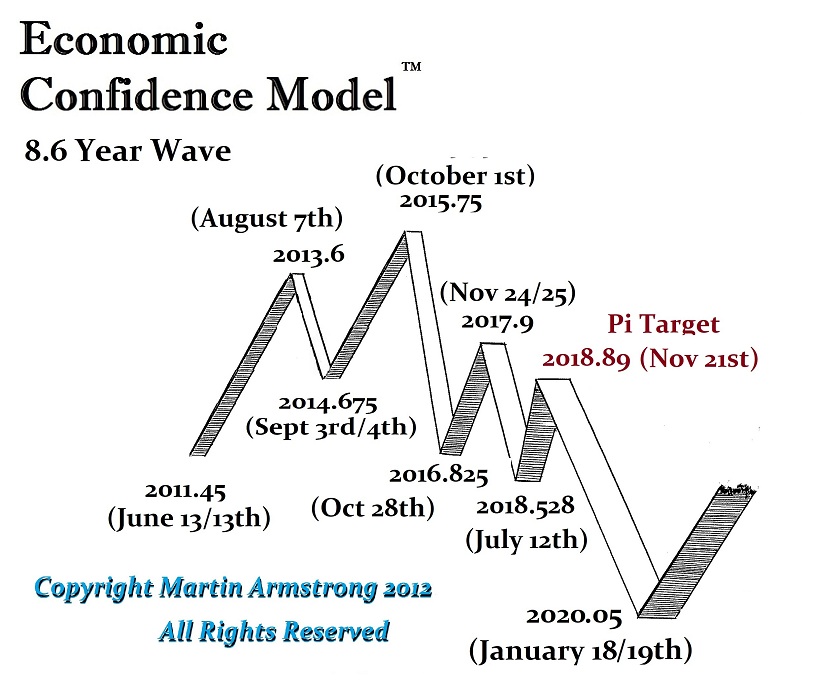
ANSWER: Normally, a decline in the economy will often lead to a political change. In this case, our models DO NOT support the view that the US economy will be heading straight down into the elections of 2020. We see this as turning early in 2020.
However, this next wave will be a cost-push inflationary wave and we still see the economic decline in Europe and Asia continuing. There is dissent behind the curtain at the European Central Bank. There are those who have adopted our warnings and are voicing them in meetings that continually result in bond buying and negative interest rates. These policies are destructive to the economy and have failed to “stimulate” anything other than fiscal mismanagement among the political fiscal side of things.
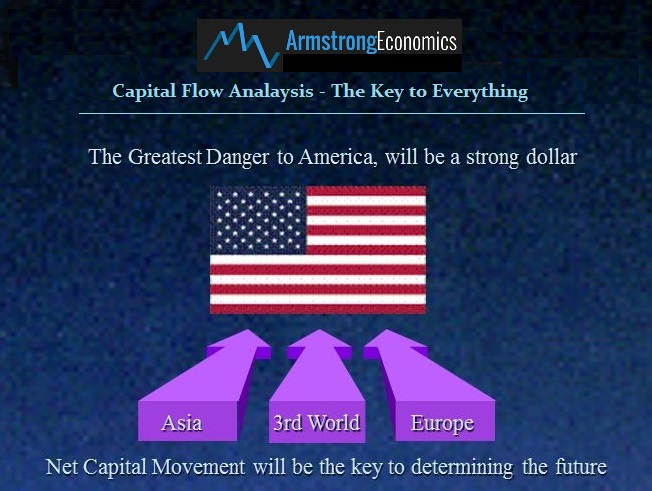
There will be a steep economic decline for Europe in 2020, which will be its 13th year down from the 2007 high. There will be a continued flight of capital into the USA that will support the dollar and the underlying economy.
Turning to the political problem of career politicians v Trump, the Democrats seem to lack any candidate of substance. Elizabeth Warren’s advisors are the European team and they support Thomas Piketty who is a modern-day Marxist.
Even looking at AOC, she won, NOT because of her crazy ideas, but because, like Trump, she was not a career politician. Scherie Murray explains why she is challenging Rep. Alexandria Ocasio-Cortez (D-N.Y.). Our model on the 2020 election for the 14th district of New York shows this has had a run of 14 Democratic victories in a row since 1992 when the Democrat Carolyn Maloney first won. That means we could lose our most entertaining member of Congress this time around.
I have created this site to help people have fun in the kitchen. I write about enjoying life both in and out of my kitchen. Life is short! Make the most of it and enjoy!
This is a library of News Events not reported by the Main Stream Media documenting & connecting the dots on How the Obama Marxist Liberal agenda is destroying America



 Centinel2012