Tonight the White House Rose Garden was transformed into an incredible dinner under the stars. Guests were seated under the warm glow of decorative lights as President Trump, First Lady Melania, Prime Minister Morrison and Mrs. Morrison celebrated the special bond between the United States and Australia. The weather was perfect and the temperature was a very comfortable 70°.
Tables were arranged in circles and in rectangles, covered in a pale yellow tablecloth and adorned with with elaborate white and yellow floral arrangements. The President and First Lady, together with the Morrisons’, walked through the colonnade as “Hail to the Chief” played and guests applauded. The two couples made their way along the colonnade to just outside the Oval Office, flanked by the two countries’ flags, then walked through the assembled tables and greeted guests along the way.
President Trump and Prime Minister Morrison then began their remarks and toasts. Included in his remarks, President Trump recited a stanza from a poem of great significance to the Australian people that has specific personal meaning to Prime Minister Morrison. The prime minister was visibly touched by the unanticipated attention to detail and personal meaning.
The Prime Minister then delivered reciprocal remarks (before his toast) that were pitch perfect for the occasion. Thanking First Lady Melania for presenting an incredible evening, Mr. Morrison highlighted the unique and rebellious national spirit that binds both countries, and perhaps even both leaders. At the conclusion of their toasts President Trump invited a “very special person” to lead the group in a blessing; Rev. Franklin Graham.
After the prayer the leaders returned to the head table to join their guests for dinner. [Video Below]
Guest List:
President Donald Trump and first lady Melania Trump
The Prime Minister of Australia and Mrs. Jennifer Morrison
Mr. David Abney and Mrs. Sherry Abney
Ms. Frances Adamson, Secretary of the Department of Foreign Affairs and Trade, Australia
Ms. Adrienne Arsht and The Honorable C. Boyden Gray
The Honorable Alex Azar, Secretary of Health and Human Services and Mrs. Jennifer Azar
The Honorable William Barr, Attorney General and Mrs. Christine Barr
Ms. Maria Bartiromo and Mr. Jonathan Steinberg
Mr. Adam Beren and Mrs. Ellen Beren
The Honorable Roy Blunt, United States Senator from Missouri and Mrs. Abigail Blunt
Mr. David Bohigian and Mrs. Catherine Bohigian
Mr. Donald Bollinger and Mrs. Joy Bollinger
Mr. T. Ulrich Brechbühl and Mrs. Michelle Brechbühl
The Honorable Gavin Buckley, Mayor of Annapolis and Mrs. Julie Buckley
The Honorable Sean Cairncross and Ms. Emily Skor
General Angus Campbell AO DSC, Chief of the Defense Force, Australia
Mr. Andrew Carswell, Press Secretary, Office of the Prime Minister of Australia
Mr. Daniel Cathy and Mrs. Rhonda Cathy
Ms. Michelle Chan, National Security Advisor and Senior Advisor (International), Office of the Prime Minister of Australia
The Honorable Pasquale Cipollone and Mrs. Rebecca Cipollone
Air Vice Marshal Alan Clements CSC, Head of Australian Defense Staff, Embassy of Australia and Mrs. Helene Clements
The Honorable Kellyanne Conway
Her Excellency Katrina Cooper, Deputy Chief of Mission, Embassy of Australia and Mr. Keith Tuckwell
Mr. Nicholas Creevey, Senior Media Advisor, Office of the Prime Minister of Australia
The Honorable Arthur Culvahouse, American Ambassador to Australia and Ms. Melanie Aitken
The Honorable Leonard Curry, Mayor of Jacksonville and Mrs. Molly Curry
The Honorable Ronald DeSantis, Governor of Florida and Mrs. Casey DeSantis
The Honorable Betsy DeVos, Secretary of Education and Mr. Richard DeVos
Mr. Louis Dobbs and Mrs. Debi Dobbs
The Honorable Emma Doyle and Mr. Brett Doyle
The Honorable Mark Esper, Secretary of Defense and Mrs. Leah Esper
Mr. Yaron Finkelstein, Principal Private Secretary, Office of the Prime Minister of Australia
Mr. Andrew Forrest AO and Mrs. Nicola Forrest AO
Mr. Saul Fox and Ms. Hannah Strobel
Mr. Philip Gaetjens, Secretary of the Department of the Prime Minister and Cabinet
Ms. Sonia Gentile, Director of Program, Office of the Prime Minister of Australia
The Honorable Rudolph Giuliani and Dr. Maria Ryan
Mr. James Gorman
The Reverend Franklin Graham and Mrs. Jane Graham
The Honorable Stephanie Grisham and The Honorable Max Miller
Mr. Jack Hampton, Assistant Advisor, Office of the Prime Minister of Australia
Mr. Justin Hayhurst, First Assistant Secretary, International Division, Department of the Prime Minister and Cabinet, Australia
The Honorable Katherine Henderson and Ms. Mary Screws
Ms. Diane Hendricks and Mr. Keith Rozolis
His Excellency Joseph Hockey, Ambassador of Australia to the United States and Ms. Melissa Babbage
Dr. Elizabeth Jens and Mr. Ross Allen
Ms. Tham Kannalikham
Mr. Howard Kessler and Mrs. Michele Kessler
The Honorable Henry Kissinger and Mrs. Nancy Kissinger
The Honorable Keith Krach and Mrs. Metta Krach
The Honorable Lawrence Kudlow and Mrs. Judith Kudlow
Dr. John Kunkel, Chief of Staff, Office of the Prime Minister of Australia
The Honorable Robert Lighthizer, United States Trade Representative and Ms. Claire Lighthizer
Mr. Andrew Liveris and Mr. Anthony Liveris
Mr. Nikolai Louw, Executive Officer, Office of the Prime Minister of Australia
The Honorable Viola Lyles, Mayor of Charlotte and Mr. Jeffrey Young
The Honorable Derek Lyons and Ms. Elizabeth Horning
The Honorable David Malpass and Mrs. Adele Malpass
The Honorable Joseph Manchin, United States Senator from West Virginia and Mrs. Gayle Manchin
The Honorable Kevin McCarthy, United States Representative from California and Ms. Meghan McCarthy
The Honorable Bonnie McElveen-Hunter and Mr. Bynum Hunter
Mrs. Gail McGovern and Mr. Donald McGovern
The Honorable Mark Meadows, United States Representative from North
Carolina and Mrs. Debbie Meadows
The Honorable Stephen Miller and Ms. Katie Waldman
General Mark Milley, United States Army
The Honorable Steven Mnuchin, Secretary of the Treasury and Ms. Louise Linton
The Honorable Mick Mulvaney
Mr. Lachlan Murdoch and Mrs. Sarah Murdoch
Mr. Gregory Norman and Mrs. Kirsten Norman
Mr. Roger Norman and Mrs. Elise Norman
Mrs. Sandra Oudkirk and Mr. Scott Oudkirk
The Honorable Robert O’Brien and Mrs. Louisa O’Brein
The Vice President of the United States and Mrs. Karen Pence
Mr. Isaac Perlmutter and Mrs. Laura Perlmutter
The Honorable Michael Pompeo, Secretary of State and Mrs. Susan Pompeo
The Honorable Matthew Pottinger and Mrs. Yen Pottinger
Mr. Anthony Pratt and Ms. Claudine Revere
The Honorable Lindsay Reynolds
Mrs. Georgina Rinehart
The Honorable James Risch, United States Senator from Idaho and Mrs. Vicki Risch
Mr. Paul Ritchie, Senior Communications Advisor, Office of the Prime Minister of Australia
The Honorable John F.W. Rogers and Ms. Deborah Lehr
The Honorable Wilbur Ross, Secretary of Commerce and Mrs. Hilary Ross
Mr. Phillip Ruffin and Mrs. Oleksandra Ruffin
The Honorable Daniel Scavino
The Honorable Marc Short and Mrs. Kristen Short
Dr. Michelle Simmons AO and Dr. Thomas Barlow
Mr. David Solomon and Ms. Jan Wilson
The Honorable David Stilwell and Mrs. Jan Stilwell
Mr. Kerry Stokes AC and Mrs. Christine Simpson Stokes
Mr. Curtis Stone and Mrs. Lindsay Stone
The Honorable John Sullivan, Deputy Secretary of State and Ms. Graciela Rodriguez
Justice Clarence Thomas of the Supreme Court of the United States and Mrs. Virginia Thomas
Mr. Andrew Thomas AO
Mr. Robert Thomson and Ms. Ping Wang
Ms. Elizabeth Uihlein and Mr. Jacob Peters
The Honorable Daniel Walsh and Mrs. Deborah Walsh
Mrs. Kathy Warden and Mr. Eric Warden
Mr. Nicholas Warner AO PSM, Director-General of National Intelligence
Ms. Shemara Wikramanayake and Mr. Michael Silverton
President Trump and First Lady Melania welcome Prime Minister Morrison and his wife Jennifer Morrison to a White House reception prior to the state dinner in the White House Rose Garden. Reception start time 7:00pm
This is interesting. CNN’s Martin Savage traveled to the democrat stronghold in Minnesota to talk about the 2020 election. Much to the angst of the production unit they discover thousands of Minnesota voters have switched to support President Trump.
“Thousands of people switching and changing their politics?” ….Yes, why yes they are.
The two key issues highlighted in the interviews surround President Trump’s economic policies: “he’s the party for jobs”; and President Trump’s immigration policies: “Ilhan Omar is not popular here.” WATCH:
TheLastRefuge@TheLastRefuge2
Oh Dear, the story: thousands of Minnesotans drop Democrats and switch to Trump…. The president’s “economic and Immigration policy are more with the working class”… “democrats have gone too far left”. #MAGAhttps://twitter.com/jaketapper/status/1175116343684796417 …
Jake Tapper
✔@jaketapper
CNN’s Martin Savidge speaks with voters in a Democratic stronghold in Minnesota as local attitudes about politics begin to shift. https://www.cnn.com/videos/politics/2019/09/19/minnesota-voters-2020-trump-savidge-dnt-ebof-vpx.cnn …
For the past several weeks China has been hoping to divide the trade dispute into two tracks thereby separating trade issues related to U.S. national security. Beijing wants, heck needs, the simple agricultural trade because they are food dependent and need that uninterrupted. However, they are strongly opposed to a comprehensive trade reset.
Beijing wants to wait-out President Trump on the more substantive issues surrounding: intellectual property rights; forced transfer of IP and manufacturing secrets; non tariff barriers including limited access to China’s controlled markets; and state run company subsidies that lead to market dumping and saturation.
Along with avoiding legal compliance issues, China wants to carve-out the complex stuff from a simple trade agreement.
However, when asked today about the possibility of carving out a partial deal President Trump emphatically said: “NO”. During a press conference with Australian Prime Minister Scott Morrison, President Trump said:
“We’re looking for a complete deal, I’m not looking for a partial deal. China has been starting to buy our agricultural product; if you noticed over the last week, and actually some very big purchases. But that’s not what I’m looking for, we’re looking for the big deal.
We’ve taken it to this level; we’re taking in billions and billions of dollars in tariffs; China has devalued their currency and they’re putting out a lot of money into their economy, and they have a very bad economy right now. And I don’t want them to have a bad economy, but it’s the worst in, they say, 57 years.
Two weeks ago it was the worst in twenty-two years, now it’s the worst in fifty-seven years and it’s only going to get worse. Their supply chain is being broken up very badly, and companies are leaving because they can’t pay the 25% -soon to be 30%- tariff. And we have 30% very shortly on $250 billion; we have another smaller number -as you know- on another $300 billion worth of products.
They would like to do something. As you know we’re talking a little bit this week, talking a lot next week, and then top people are going to be speaking the week following. But I’m not looking for a partial deal, I’m looking for a complete deal.”
.
In response to hearing the bad news, the deputy pandas’ cancelled a planned trip to farm country, packed up and the delegation went home early…. Sad Panda.
WASHINGTON – Chinese trade negotiators had a sudden change of plans Friday, canceling a visit to meet U.S. farmers after they wrapped up trade talks in Washington this week.
The Chinese delegation has changed its travel schedule and is headed back to China earlier than planned, according to Nicole Rolf, the Montana Farm Bureau Federation’s director of national affairs. There was no explanation as to why they were cutting their trip short, Rolf said.
Nebraska department of agriculture also said the Chinese officials called off a visit to farms in Nebraska.
U.S. Secretary of Agriculture Sonny Perdue confirmed just Thursday the meetings were in the works as a way for China to build goodwill with American farmers.
The Chinese delegation, led by Vice Minister for Agriculture and Rural Affairs Han Jun, had planned follow-on visits to Bozeman, Montana, and Omaha, Nebraska, CNBC previously reported. (read more)
Earlier today President Trump and First Lady Melania welcomed Australian Prime Minister Scott Morrison and Mrs. Jenny Morrison to the White House. Prior to delegation meetings the President and Prime Minister held a press availability in the oval office.
As part of the breaking news discussion, President Trump and Treasury Secretary Steven Mnuchin announced new sanctions on Iran. [Video and FULL Transcript Below]
.
[Transcript] PRESIDENT TRUMP: Thank you very much everybody. It’s a great honor to have the Prime Minister of Australia. And congratulations and thank you very much, Mrs. Morrison. Thank you very much for being here. We appreciate it. This was a lovely ceremony. I hope you liked it.
PRIME MINISTER MORRISON: Absolutely.
MRS. MORRISON: We absolutely loved it.
PRESIDENT TRUMP: It was in honor of you and Australia.
MRS. MORRISON: Thank you.
PRESIDENT TRUMP: Okay? Thank you very much.
So we have a lot of things to talk about. We’re talking trade. We’re talking military. We’ve been great allies for a long time. There’s no better partnership.
And we’ve developed, on a personal basis, a tremendous friendship, and that helps. That helps a lot. But we’ll be meeting after this and having some very serious discussions about many things.
I do want to, if I may intercede for just a second: We have just sanctioned the Iranian National Bank. That is their central banking system. And it’s going to be at the highest level of sanctions. So that just took place, and a couple of other things.
We have our Secretary of Treasury here, Steve Mnuchin. If you want to say just a word, Steve, before we begin.
SECRETARY MNUCHIN: Mr. President, as you instructed me, we are continuing the maximum pressure campaign. This is the last remaining source of funds. So both the Central Bank of Iran, as well as the National Development Fund, which is their sovereign wealth fund, will be cut off from our banking system. So this will mean no more funds going to the IRGC or to fund terror. And this is on top of our oil sanctions and our financial institution sanctions.
Thank you, Mr. President.
Q How big are sanctions, Mr. Secretary and Mr. President?
SECRETARY MNUCHIN: This is very big. We’ve now cut off all source of funds to Iran.
Q It goes all the way up to the very top?
SECRETARY MNUCHIN: That does.
Q Does that mean to the President of Iran?
PRESIDENT TRUMP: Right to the top.
Q The Supreme Leader?
PRESIDENT TRUMP: Right to the top. Okay?
Q The Supreme Leader?
PRESIDENT TRUMP: Yes. Right to the top. Thank you very much, Steve. Appreciate it.
SECRETARY MNUCHIN: Thank you, Mr. President.
PRESIDENT TRUMP: So we’re dealing with many nations. We’re dealing with some of the neighbors to Saudi Arabia. And of course, we’re dealing with Saudi Arabia. Saudi Arabia is very much involved, from the standpoint of what we’re doing and what they’re doing. And we’re working together with others.
We’re also working on the cost of this whole endeavor. And Saudi Arabia has been very generous. We want to see if it works out. And if it works out, that’s great. And if it doesn’t work out, that’s great. In the end, it always works out. That’s the way it is: It always works out.
So you’ll be seeing certain things happening, but a very major factor is what we did. These are the highest sanctions ever imposed on a country. We’ve never done it to this level. And it’s too bad what’s happening with Iran. It’s going to hell, doing poorly. They are practically broke. They are broke. And they could — they could solve the problem very easily. All they have to do is stop with the terror.
They have been the number-one — as you know, Scott, very well — number-one country worldwide of terror, between sponsoring it and doing it themselves. And we can’t have it. They have a tremendous potential. They have an incredible potential. I can — I think I can speak on behalf on Australia, too, in the sense that we’d like to see them do very well.
We were discussing it before — the Prime Minister and myself. We want to see them do well. But it looks to me like, with what’s happening, maybe they want to keep going at it. And when they go at it with us, there’s no way they win — no way they win in any way or in any capacity.
So we wanted to let you know about that. And that’s the way it is. And thank you all very much. We’re going to spend a lot of time with Australia today. Today is our — our — a very special day for the United States because we’re honoring a great ally and a great friend.
Thank you. Thank you.
PRIME MINISTER MORRISON: Thank you, Mr. President.
PRESIDENT TRUMP: Thank you very much. Scott, would you like to say something?
PRIME MINISTER MORRISON: It’s a tremendous honor for Australians for Jenny and I to be here with the President and Mrs. Trump. It’s a very gracious invitation. But it’s an invitation that recognizes not just, you know, the great relationship that the President and I have been able to forge so early, but this goes back a long way — this relationship.
As the President often says, we’ve been in a lot of battles. And those battles, of course, is what’s happened in the field of conflicts, but we’re battling continuously for a prosperous and a free world.
PRESIDENT TRUMP: And we’ve never lost.
PRIME MINISTER MORRISON: Well, we’ve been doing great. And we’re going to keep doing great because —
PRESIDENT TRUMP: Keep it that way. (Laughs.)
PRIME MINISTER MORRISON: — we have to keep this — this partnership together. And it’s a partnership where we both carry our own weight. As I said outside, we look to America, but we don’t leave it to America.
Q Prime Minister, the President said he spoke for Australia on Iran. Does he?
PRIME MINISTER MORRISON: Well, he was saying that we both would like to see a prosperous Iran. We’d like to see the people of Iran — we want to see the people right across the world to be able to benefit from prosperous economies doing well. That’s what we want. This is why Australia and the United States have always worked so closely together is because that’s what we want for our own people; that’s what we want for everyone.
Q Are our two countries heading to another conflict together?
PRESIDENT TRUMP: And we’ve been speaking this subject — the two of us. We — I think we have very similar views on the subject.
Steve?
Q Mr. President, do you want to address this whistleblower story, sir?
Q Will you be asking — will you be asking —
PRESIDENT TRUMP: Wait a moment, please.
Q Do you want to address this whistleblower story?
PRESIDENT TRUMP: What story?
Q The whistleblower, whether it was (inaudible)?
PRESIDENT TRUMP: It’s a ridiculous story. It’s a partisan whistleblower. Shouldn’t even have information. I’ve had conversations with many leaders. They’re always appropriate. I think Scott can tell you that. Always appropriate. At the highest level, always appropriate. And anything I do, I fight for this country. I fight so strongly for this country. It’s just another political hack job.
Q Mr. President, on that point, did you discuss Joe Biden, his son, or his family with the leader of Ukraine?
PRESIDENT TRUMP: It doesn’t matter what I discuss. But I will say this: Somebody ought to look into Joe Biden’s statement, because it was disgraceful, where he talked about billions of dollars that he’s not giving to a certain country unless a certain prosecutor is taken off the case.
So, somebody ought to look into that. And you wouldn’t, because he’s a Democrat. And the Fake News doesn’t look into things like that. It’s a disgrace.
But I had a great conversation with numerous people. I don’t even know exactly who you’re talking about, but I had a great conversation with numerous people — numerous leaders. And I always look for the conversation that’s going to help the United States the most. That’s very important.
Q Mr. President, do you know the identity of the whistleblower? Do you know the identity of the whistleblower?
PRESIDENT TRUMP: I don’t know the identity of the whistleblower. I just hear it’s a partisan person, meaning it comes out from another party. But I don’t have any idea. But I can say it was a totally appropriate conversation. It was actually a beautiful conversation.
REPORT THIS AD
And this is no different than — you know, the press has had a very bad week with Justice Kavanaugh and all of those ridiculous charges and all of the mistakes made at the New York Times and other places. You’ve had a very bad week. And this will be better than all of them. This is another one. So keep — so keep — so keep playing it up, because you’re going to look really bad when it falls. You know, I guess I’m about — I guess I’m about 22 and 0, and I’ll keep it that way.
Q Did you mention Joe Biden during the conversation though, Mr. President?
PRESIDENT TRUMP: I don’t want to talk about any conversation, other than to say — other than to say: great conversation, totally appropriate conversation, couldn’t have been better. And keep asking questions and build it up as big as possible so you can have a bigger downfall.
Q Mr. President, will you be asking Australia to do more when it comes to China?
PRESIDENT TRUMP: Say it. What?
Q Will you be asking Australia to do more when it comes to China?
PRESIDENT TRUMP: Well, we’re talking about China all the time. And Scott has very strong opinions on China. And I think I’d let him, maybe, express those opinions. Maybe you do it right now. You’re not going to get a better audience than this. (Laughter.)
PRIME MINISTER MORRISON: We — we have a comprehensive strategic partnership with China. We work well with China. But, as we’ve spoken many times, we need to ensure that as countries develop and realize their potential, well, they come onto a whole new level. And that means there can’t be special rules around that.
And we have a great relationship with China. China’s growth has been great for Australia. But we need to make sure that we all compete on the same playing field.
And this is something that United States and Australia have been very consistent on, that we need to move into this new world where economies are changing, China is a big economy — not as big as the United States, but it’s a big economy. And that means we’ve all got to get on the same page with how the rules work. And that’s what we’re working to achieve.
PRESIDENT TRUMP: I will say this: We’re making a lot of progress with China. They’re having a very bad year. Worst year in 57 years. The tariffs are coming into us. We’re taking in billions and billions of dollars of tariffs. They’re devaluing their currency, which means the tariffs are not costing us probably anything, but certainly not very much. They’re also adding a lot of money into their economy. They’re pouring money into their economy.
But we’re taking in many billions of dollars. At some point in the not-too-distant future, it will be over $100 billion. We’ve never taken in 100 cents from China. It was always the other way around.
With that, they’ve lost over 3 million jobs. Their supply chain is crashing. And they have a lot of problems. And I can tell you, they want to make a deal. That I can tell you. They want to make a deal.
So, we’ll see what happens. We’ll see what happens.
Q Are you prepared for military action against Iran, Mr. President?
PRESIDENT TRUMP: Always prepared. There’s never been a country more prepared.
Q Are you planning for it?
PRESIDENT TRUMP: There’s never been a country more prepared. Look, I spent —
Q Is that going to happen?
PRESIDENT TRUMP: I spent one and half trillion dollars. And we’re spending another $738 billion now. But I’ve spent one and a half trillion dollars rebuilding our military. We have the finest ships, the finest planes, the finest everything.
And actually, Scott and Australia, they’ve purchased a lot of great stuff from the United States, some of the best military equipment that you have. We have the greatest missiles in the world, rockets in the world, jetfighters in the world, planes in the world, ships. And we have, under construction, a number of the most powerful submarines ever built. And they’re getting very close to completion.
We have the largest ship in the world right now — the President Gerald Ford, the aircraft carrier. It’s the largest ship ever built. And just flew over it yesterday, actually. It’s massive and beautiful.
We have the greatest — and I have to say this, when I got here, Scott, it was a different world. It was a different world. We were very depleted. And I actually saw one of the related networks today saying how strongly and good and how well we’ve done with ISIS. I defeated the caliphate.
Now, when I came, the caliphate was all over the place. I defeated the caliphate — ISIS. And now, we have thousands of prisoners of war — ISIS fighters that are prisoners of war. And we’re asking the countries from which they came, Scott — from Europe — we’re asking them to take back these prisoners of war. And they can try them, do what they want.
So far, they’ve refused. And at some point, I’m going to have to say, “I’m sorry, but you either take them back, or we’re going to let them go at your border.” But they came out from Germany, they came out from France. We captured them. We did everyone a big favor. We’ve taken over the caliphate 100 percent.
If you remember, I was thinking about getting out when it was at 96, 97 percent. But they were all over the place. And we did it. We did it in record time. It was a total caliphate victory. And now, I want the countries to take back the captured ISIS fighters. And if they don’t take them back, we’re going to probably going to put them at the border and then they’ll have to capture them again.
Because the United States is not going to have thousands and thousands of people that we have captured stationed at Guantanamo Bay, held captive at Guantanamo Bay, for the next 50 years, and us spending billions and billions of dollars. We’ve done Europe a tremendous favor — they mostly come out of Europe. And we’ve done them a tremendous favor. And the United States is not going to pay the cost of thousands and thousands of ISIS fighter prisoners in Guantanamo Bay or someplace else. We won’t do it.
So, they have to make their decision. Otherwise, we’re releasing them at the border.
Go ahead. Next?
Q Will you be (inaudible) your national security team on Iran today? What do you expect to hear from them?
PRESIDENT TRUMP: Yeah. I have a great new person. You know Robert O’Brien. A lot of people wanted Robert very badly. He was — I — look, I had 10, 12 people that I thought were fantastic for the job.
PRIME MINISTER MORRISON: He’s a good friend of Australia, too — Robert.
PRESIDENT TRUMP: He’s a great friend of Australia. Scott was telling me he was very happy with the choice.
Robert is going to be outstanding. He just picked a deputy who was in the administration. You all know him. You know who the deputy is. I guess they have to announce that separately, but he’s fantastic. And, essentially, he’s already on the job.
But, you know, he did a tremendous job as hostage negotiator. We are — we have a tremendous record. Nobody comes close to our record with hostages.
Q But are you going to be discussing the options for Iran today with your team?
PRESIDENT TRUMP: Sure. Sure. But also with Secretary of Defense, Secretary of State. We’re discussing with everybody. And, you know, the early move today was the Central Bank of Iran. Okay?
Q Mr. President, is the U.S. moving toward a military conflict? And would you support that, Mr. Prime Minister — a military strike?
PRESIDENT TRUMP: It’s always possible.
Q Would you expect Australia to join in any military action?
PRESIDENT TRUMP: We haven’t discussed that. We’ll be discussing that later. But we haven’t discussed that yet.
Q Sir, would you consider 50 percent tariffs or even 100 percent tariffs on China, as someone suggested?
PRESIDENT TRUMP: I’m not going to get into that. Right now, China is paying 30 percent on $250 billion. That starts in another couple of weeks.
As you know, President Xi called, through his top people. And they have a 70th anniversary — a very important day for them. And it happens to be October 1st, which is the exact date of the increase in the tariff. And they asked us, out of respect, would I delay the tariff a little bit. I said, “How about if I move it forward?” Let me move it forward a little bit because they didn’t want it to fall on the same day. It’s exactly October 1st. So I said, “Let me move up a couple of weeks.” They said, “No. No. No. Could you…”
So, out of respect for President Xi, who I do have great respect for, I moved it back two weeks. But right now, it’s 25 percent. It goes up to 30 percent on October 15th.
Q Mr. President, on the whistleblower, have you read the complaint? Have you read the complaint of the —
PRESIDENT TRUMP: No, I haven’t. It’s — it’s —
Q Who in your White House has?
PRESIDENT TRUMP: I just tell you, it is — everybody has read it and they laugh at it. And it’s another —
Q But you haven’t read it?
PRESIDENT TRUMP: It’s another media disaster. The media has lost so much credibility in this country. Our media has become the laughingstock of the world.
When you look at what they did to Justice Kavanaugh and so many other things last week, I think this is one of the worst weeks in the history of the fake news media. You have been wrong on so many things and this one will be — I wouldn’t say it will top the list, because I think you can’t do worse than some of the stories you missed over the last week or two, but the media of our country is laughed at all over the world now. You’re a joke.
Okay, what else?
Q Mr. President, (inaudible) clarify: When you talk about the conversation that you —
PRESIDENT TRUMP: Which conservation?
Q Well, we’re trying to figure out what conversation you’re —
PRESIDENT TRUMP: Well, figure it out. You’re supposed to be the media. Figure it out.
Q July 25th? Was it July 25th?
PRESIDENT TRUMP: It was — which conversation?
Q Was it July 25th, with the President of Ukraine?
PRESIDENT TRUMP: I really don’t know. I don’t know.
Q We think it was — we think it was with one of the leaders —
PRIME MINISTER MORRISON: He’s got one (inaudible) about space.
Q Mr. Trump, can you talk about the exciting new space program to the moon, sir? And what does that mean for both countries?
PRESIDENT TRUMP: So we’re doing a great program. We have — Vice President Pence is very much involved. And we have a tremendous space program. If you look at our facilities, they were virtually closed up. There was crabgrass growing on the runways and now they’re vital.
And, you know, we’re doing — we’re doing — we’re going to Mars. We’re stopping at the moon. The moon is actually a launching pad. That’s why we’re stopping at the moon. I said, “Hey, we’ve done the moon. That’s not so exciting.” They said, “No, sir. It’s a launching pad for Mars.” So we’ll be doing the Moon. But we’ll really be doing Mars. And we’ll be — we’re making tremendous progress.
In addition, rich people like to send up rocket ships. So between Bezos and Elon Musk and others, we’re leasing them our launch facilities, which you can’t get. There are no launch facilities like this. This is big stuff. So we’re — in Texas and Florida, we’re leasing them our facilities so they can send up whatever they want to send up. It’s okay with us. And they’ve actually done very well. They’ve said they’ve had great success.
But rich people in this country — I don’t know about your country — but they like building rocket ships and sending them up, and it’s okay with us. (Laughter.)
Q Will an Australian astronaut be onboard?
PRESIDENT TRUMP: Say it.
Q Will an Australian astronaut be onboard?
PRESIDENT TRUMP: Well, I’ll let it — I think Scott and I would rather take a pass. Though I don’t know, would you like to be on there? (Laughter.) I think — I think — I’m not sure, but I know him pretty well. I think he and I will take a pass. But there are a lot people that want to go up. And I have great respect for the astronauts. That’s it. That’s an incredible (inaudible).
Q (Inaudible) critical minerals from Australia and how important is that industry?
PRESIDENT TRUMP: Say it again.
Q Do you want to buy more critical minerals from Australia? And how important is that industry?
PRESIDENT TRUMP: Yeah. Well, Australia’s mineral industry is massive. It’s far, far bigger than that. I mean, very few — very few countries have anything approaching what Australia has in terms of mineral wealth. And you’ve really taken advantage of it. And you’ve done it in a very environmentally-sensitive way. I know that’s very important to you.
PRIME MINISTER MORRISON: That’s true.
PRESIDENT TRUMP: It’s very important to Scott. We talk about it a lot. Because that business can get out of control a little bit, from the standpoint of environment. And you have really approached it in an environmentally-sensitive way.
Coal, as an example: You’re the leader of safety in coal digging. And we’ve actually studied it because we’re doing a lot of coal. And you have very — literally, you almost have no — you know, you used to have a thing: black lung disease. And in Australia, you almost don’t have it anymore. You’ve got all of the dust down. And, you know, they’re very — they become wet mines, basically. But it’s great.
PRIME MINISTER MORRISON: Well, it’s a very technologically-advanced industry in Australia.
PRESIDENT TRUMP: Incredible.
PRIME MINISTER MORRISON: All of that resources industry are — from the robotics that’s involved in the production and all the way through.
But that, critical metals, space — these are the things we’re going to be talking about because Australia has a wonderful partnership with the United States, not just militarily and not just strategically, but also economically. And that’s going to be a big part of this conversation we have today.
PRESIDENT TRUMP: And environmentally, I have to say —
Q (Crosstalk.)
PRESIDENT TRUMP: And environmentally, the things that they have done, environmentally, with digging. Digging is a — you know, when you talk minerals, it’s about digging. And what you’ve been able to do with environ- — with the environment, having to do with taking minerals out of the ground, including — and, you know, I would say even especially — because you’re leading on coal.
I will tell you: I sent a whole crew over, because you’re record is so good in terms of illnesses from digging. Better than anybody in the world. So we’re going to catch you on that, okay?
Q Have you invited the President to Australia? And have you introduced him to the term “bubble” (inaudible)?
PRIME MINISTER MORRISON: (Laughs.) We’ll talk about that over dinner tonight. I’m sure he has another term for it here in Washington, I understand.
But, no, we have talked about whether if, his schedule and Mrs. Trump’s permits, will they take in the President’s Cup later in the year, which is going to be a great time. There’s a tremendous tournament.
PRESIDENT TRUMP: That’s great.
PRIME MINISTER MORRISON: The President knows a lot more about golf than I do, and he certainly swings a club way better than I do. But he’s got a busy year coming up next year. He’s going to do great there. But if he has the opportunity, if Mrs. Trump has the opportunity, it’s going to be a great spectacle down in Australia this year.
Q Mr. President, are you planning to go? Are you planning to go?
PRESIDENT TRUMP: Interestingly, the PGA Tour invited me to go. And I would love to do it. We’ll have to see what the schedule is, but I would love to do it. It’s a very exciting tournament. Nothing more exciting. And having at — in Australia, where you have so many great golfers —
Greg Norman is a friend of mine —
Q Yeah. (Inaudible.)
PRESIDENT TRUMP: — and a great friend of yours, I know. And I think he’s going to be here tonight.
PRIME MINISTER MORRISON: Yeah, he is. Yes.
PRESIDENT TRUMP: The First Lady has done an incredible job tonight. We’re going to have it, for either the first time or certainly one of the few times, in the Rose Garden. And it’s going to be — I watched, yesterday, the rehearsal, and she was out there. And it’s going to be incredible. Tonight’s going to be a beautiful night.
And the only thing that can dampen it would be rain and we’re not expecting any rain. But if it rains, we head over to the State Room and we’ll be just fine. But we really expecting — I hope you’re going to be able to see it tonight for a little while. Probably you will. We’ll sort of make sure that you do. It’s beautiful.
Q On the U.N., how critical is it that you build a coalition to address Iran — Iran’s latest provocations? And does that start today with the Prime Minister?
PRESIDENT TRUMP: Well, I always like a coalition. And sometimes you find that people have made a lot of money that you’d want in the coalition. They’ve made a lot money with Iran, which is — you know, when President Obama made that deal, not only was it a bad deal, but the United States didn’t partake, in a business sense.
And other countries — Germany, France, Russia, many other countries — made a lot of money with Iran. And we didn’t make money with Iran, which — that was just one of the many bad parts about the deal. Everyone else is making money and we’re not.
So, we’ll see what happens. Look, the United States is in a class by itself. We have the most powerful military in the world, by far. There’s nobody close. As you know, we’ve spent tremendous and hopefully — and we pray to God we never have to use it, but we’ve totally renovated and bought new nuclear. And the rest of our military is all brand new.
The nuclear now is at a level that’s it’s never been before. And I can only tell you because I know — I know the problems of nuclear. I know the damages that — I know what happens. And I want to tell you: We all hope, and Scott hopes — we all pray that we never have to use nuclear. But there’s nobody that has anywhere close to what we have.
Q What is your message at UNGA next week?
PRESIDENT TRUMP: Well, UNGA is going to be very exciting, and we look forward to it. We’ll be there. You’ll be there?
PRIME MINISTER MORRISON: Yeah, I’ll be later in the week. Yeah.
PRESIDENT TRUMP: And, for you, it’s a much longer trip.
PRIME MINISTER MORRISON: It is a bit, yeah.
PRESIDENT TRUMP: But we look forward to it. We have a big message for UNGA. We have a big message. And I very much — I haven’t been back to New York in a long time.
I see that our part-time mayor will be now going back to New York, so he’d be able to work a little bit harder. But he dropped out of the presidential race a little while ago. Too bad. He had tremendous potential. (Laughter.) He only had one real asset. You know what it was? Height. Other than that, he had nothing going.
Okay. What else?
Q Prime Minister, given that President Trump has indicated that you will be discussing military action in Iran this afternoon, what is Australia’s attitude?
PRIME MINISTER MORRISON: Well, as I think the United States has taken a very measured and calibrated approach to date. And the thing about our partnership is, we always listen to whatever requests are made, and Australia always considers them in our national interests, and we have good conversations about these things.
But the thing is, both of us, we never get ahead of ourselves on these things. We just — you know, you take this one step at a time. And we keep talking to each other. That’s what we’ve always done, wherever we’ve worked together. And we’re going to keep doing that. We’ve got such an open line of communication. I appreciate the fact the President and I talk about these things even when we’re not together. And we’re going to keep doing that. And we’ll just take these things one step at a time.
PRESIDENT TRUMP: The easiest thing for me to do — and maybe it’s even a natural instinct, maybe I have to hold myself back. I remember during the debates, and when I was running against Hillary and the Democrats and the media — I view them all the same; I view that partnership very much the same.
But when I was running, everybody said, “Oh, he’s going to get into war. He’s going to get into war. He’s going to blow everybody up. He’s going to get into war.” Well, the easiest thing I can do — in fact, I could do it while you’re here –would say, “Go ahead, fellas. Go do it.” And that would be a very bad day for Iran. That’s the easiest thing I could do. It’s so easy.
And for all of those that say, “Oh, they should do it. It shows weakness. It shows…” Actually, in my opinion, it shows strength. Because the easiest thing I could do, “Okay, go ahead. Knock out 15 different major things in Iran.” I could do that and — all set to go. It’s all set to go. But I’m not looking to do that if I can.
And I think I’ve changed a lot of minds. People are very surprised that — and many people are extremely happy. Many people are thrilled. And many people are saying, “Oh, I wish you’d hit the hell the out of them.” Well, let’s see what happens. But it will take place in one minute; I could do it right here in front of you and that would be it. And then you’d have a nice, big story to report.
And I think it shows far more strength to do it the way we’re doing it. And again, whether it’s next week or two weeks or three weeks doesn’t make any difference. Whether it’s now or in three weeks doesn’t make any difference. But I think the strong person’s approach and the thing that does show strength would be showing a little bit of restraint. Much easier to do it the other way. It’s much easier.
And Iran knows if they misbehave, they’re on borrowed time. They’re not doing well. I’d like to see them do great. I’d love to see them do great, but they’re not doing well. They’re doing very poorly. They’re doing far worse than they’ve ever done before. They’re having riots in their streets. They’re having a lot of problems in Iran right now. They could solve it very quickly.
But the easiest thing for me to do is say, “Okay, let’s go. Let’s just do it.” Very easy for me to do. But it is interesting, because when I was campaigning, everybody here thought that I was going to be like — it would be one day. But what I have done is I’ve defeated ISIS, I’ve rebuilt our military to a level that it’s never been before, spent a lot of money. The budgets are not so hard to fix for me, but when you’re spending one and a half trillion [dollars], so far. Now, another $738 million — billion — on the military. But think of it: one and a half trillion dollars. And we have the greatest in the world.
But I think restraint is a good thing. I think it’s a good thing.
Q Mr. President, how do you plan to bring peace in Afghanistan — peace in Afghanistan — now that the process collapsed?
PRESIDENT TRUMP: Yeah, well, we were thinking about having a meeting. I didn’t like the idea that they couldn’t produce a ceasefire. I wasn’t in favor of that. I said, “No. If they can’t produce a ceasefire, then why are we bothering?” And they thought that it was a sign of strength to kill 12 people, wound others — badly wound some others. And one of those 12 people was a young man — young soldier from Puerto Rico, from our country. And when I heard that, I said, “I don’t want to deal with them anymore.”
We have hit — in Afghanistan, we have hit the Taliban harder than they’ve ever been hit in the entire 19 years of war. They’ve been hit harder. It’s come back to me through absolutely impeccable sources that they are saying, “Wow. We made a mistake with this guy. We made a big…” They made a mistake.
I was totally willing to have a meeting. I’ll meet with anybody. I think meetings are good. I think meetings are good. There’s no such thing as, “Oh gee, we shouldn’t.” I really believe meetings are good. Worst that happens, it doesn’t work out. That’s okay. Even then, you get to know your opposition. Don’t forget, I’m looking at them like they’re looking at me. You get to know your opposition. You can see if they’re real. Sometimes you develop a relationship, like we do, but sometimes you develop — and many times you won’t. But you get to know your opposition.
I think the best thing that’s happened to this country is the fact that, at least for three years, the fact that I have a very good relationship with Kim Jong Un. I think that’s a positive. His country has tremendous potential. He knows that. But our country has been playing around for 50 years and getting nothing. And we have a relationship. There’s never been a relationship with them.
We’ll see what happens. It might work out. It might not work out. I’m not saying it will, but in the meantime, he hasn’t been testing any nuclear. You’ve had no nuclear tests since — since — for a long time. And he has been doing some short-range missiles, but so does every other country — do short short-range missiles. Every country is doing them. They’re pretty standard fare.
But, no, I will tell you that we’ve never had a country so strong. We’re just a couple of points away from a new stock market all-time high. And I think we’ve done it over 112 times. There’s a certain number — whatever it may be. I don’t want to be specific, because if I give you the wrong number, we’ll have breaking news. It will be one every newspaper that I said — I said “112” and it was actually 111. And it will be breaking news. They’ll give me Pinocchio.
Q Mr. President —
PRESIDENT TRUMP: But let me just say — let me just say, the country has never been in this position. We have the strongest military we’ve ever had. And now we’ve rebuilt it. After this $738 billion, we really have a built — we have rebuilt military. It’s a great thing. And some of our friends are doing the same thing.
I can tell you, Australia’s military is unbelievable. I saw the order that they put in for some of our most sophisticated equipment and I said, “That’s really great what you’re doing.” They’ve really upped it. And I want to congratulate you. I mean, you have really done a job on your military.
PRIME MINISTER MORRISON: We have. Up to 2 percent of GDP next year.
PRESIDENT TRUMP: Right.
PRIME MINISTER MORRISON: So we’re in the middle of a $200 billion upgrade.
PRESIDENT TRUMP: Right.
PRIME MINISTER MORRISON: Biggest increase in our defense, as a share of GDP, since the Second World War.
PRESIDENT TRUMP: Yeah.
Q Mr. President, you praised WikiLeaks continuously during the election campaign. Is it right that the United States is prosecuting its Australian founder, Julian Assange?
PRESIDENT TRUMP: Well, you know, that’s a question I haven’t heard in a long time. I’ll leave that for you to determine.
Q Mr. President, could I get some clarity from you on your thinking on China? Is it just a trade issue for you or do you see China as a strategic threat to the United States?
PRESIDENT TRUMP: Well, obviously, China is a threat to the world in a sense, because they’re building a military faster than anybody. And, frankly, they’re using U.S. money. Presidents before me have allowed China to take out $500 billion a year, and it’s really more than that. They’ve allowed China to steal our intellectual property and property rights. And I’m not doing that.
And we actually were very close to having a deal. You know, we were very close. We had intellectual property; all of the tough things were negotiated. And then, at the last moment, Scott —
PRIME MINISTER MORRISON: Yeah.
PRESIDENT TRUMP: — they said, “We cannot agree to this.” I said, “That’s all right, we’re charging you 25 percent tariffs and then it’s going up.” And it’ll continue to go up. And, frankly, we’re making so many hundreds of — the numbers that we’re taking into our Treasury —
And you see it, because sometimes you’ll see — look at the good reports. Look at the great reports that came out two days ago on retailing, on consumers, on numbers that nobody believes. Well, I think a lot of it — we’re taking in hundreds of millions, potentially, over a short period of time. Hundreds of billions of dollars’ worth of money is coming in from China that never came in before.
So China wants to make a deal. I think we want to make a deal. We’ll see what happens. But I view China in many different ways, but right now I’m thinking about trade.
But, you know, trade equals military. Because if we allow China to take $500 billion out of the hide of the United States — that money goes into military and other things.
Q Mr. President, your reaction to Justin Trudeau. Can he survive this controversy?
PRESIDENT TRUMP: Well, I was hoping I wouldn’t be asked that question. It had to be you that asks it. You’ve — you had to ask me that question, right? Justin.
I’m surprised. And I was more surprised when I saw the number of times. And, you know, I’ve always had a good relationship with Justin. I just don’t know what to tell you. It’s — I was surprised by it, actually.
Q Mr. President, the last Australian Prime Minister to receive an official State Visit was described by the then President as “a man of steel.” How do you describe our Prime Minister?
PRESIDENT TRUMP: I would say a “man of titanium.” (Laughter.) You know, titanium is much tougher than steel. (Laughter.) He’s a man of titanium. Believe me, I have to deal with this guy. He’s not easy. (Laughter.) You might think he’s a nice guy, okay? He’s a man of real, real strength, and a great guy. And his wife is lovely. And I want to thank you. I want to thank Melania for the work.
PRIME MINISTER MORRISON: Yeah, thank you.
PRESIDENT TRUMP: And I hope you’re going to be able to see it, because Melania has — she’s worked very hard for Australia.
PRIME MINISTER MORRISON: She has. She has.
MRS. MORRISON: I know. It’s been beautiful.
PRESIDENT TRUMP: And you’ve done a fantas- — it’s so beautiful. And it will be so different. And we look up to the skies and we’re just going to hope that it’s not going rain. And if it is —
MRS. MORRISON: It’s not going to rain.
PRESIDENT TRUMP: — that’s okay, too, because that will work out also. It always works out.
Thank you all very much. Thank you.
Q Should Congress see the complaint and the transcript of your call to clear any confusion?
PRESIDENT TRUMP: There is nothing. It’s nothing.
Q Should Congress see it?
PRESIDENT TRUMP: There’s nothing.
Q Mr. Morrison, what do you think of your first time in the White House?
PRESIDENT TRUMP: What?
Q What does Mr. Morrison think of his first time in the White House and you hosting him?
PRIME MINISTER MORRISON: It’s a great honor to be here.
PRESIDENT TRUMP: A little different.
PRIME MINISTER MORRISON: Tremendous honor to be here.
PRESIDENT TRUMP: Say it.
Q Did you want to — you were finishing the question.
PRESIDENT TRUMP: Thank you very much everybody. Thank you. Thank you everybody.
Earlier today in the oval office President Trump was questioned about the intelligence “whistleblower” story. The President warned media they are setting themselves up for another fake news embarrassment:
.
[Transcript Below]
[Transcript on “Whistleblower”]
Q Mr. President, do you want to address this whistleblower story, sir?
Q Will you be asking — will you be asking —
PRESIDENT TRUMP: Wait a moment, please.
Q Do you want to address this whistleblower story?
PRESIDENT TRUMP: What story?
Q The whistleblower, whether it was (inaudible)?
PRESIDENT TRUMP: It’s a ridiculous story. It’s a partisan whistleblower. Shouldn’t even have information. I’ve had conversations with many leaders. They’re always appropriate. I think Scott can tell you that. Always appropriate. At the highest level, always appropriate. And anything I do, I fight for this country. I fight so strongly for this country. It’s just another political hack job.
Q Mr. President, on that point, did you discuss Joe Biden, his son, or his family with the leader of Ukraine?
PRESIDENT TRUMP: It doesn’t matter what I discuss. But I will say this: Somebody ought to look into Joe Biden’s statement, because it was disgraceful, where he talked about billions of dollars that he’s not giving to a certain country unless a certain prosecutor is taken off the case.
So, somebody ought to look into that. And you wouldn’t, because he’s a Democrat. And the Fake News doesn’t look into things like that. It’s a disgrace.
But I had a great conversation with numerous people. I don’t even know exactly who you’re talking about, but I had a great conversation with numerous people — numerous leaders. And I always look for the conversation that’s going to help the United States the most. That’s very important.
Q Mr. President, do you know the identity of the whistleblower? Do you know the identity of the whistleblower?
PRESIDENT TRUMP: I don’t know the identity of the whistleblower. I just hear it’s a partisan person, meaning it comes out from another party. But I don’t have any idea. But I can say it was a totally appropriate conversation. It was actually a beautiful conversation.
And this is no different than — you know, the press has had a very bad week with Justice Kavanaugh and all of those ridiculous charges and all of the mistakes made at the New York Times and other places. You’ve had a very bad week. And this will be better than all of them. This is another one. So keep — so keep — so keep playing it up, because you’re going to look really bad when it falls. You know, I guess I’m about — I guess I’m about 22 and 0, and I’ll keep it that way.
Q Did you mention Joe Biden during the conversation though, Mr. President?
PRESIDENT TRUMP: I don’t want to talk about any conversation, other than to say — other than to say: great conversation, totally appropriate conversation, couldn’t have been better. And keep asking questions and build it up as big as possible so you can have a bigger downfall.
[…] Q Mr. President, on the whistleblower, have you read the complaint? Have you read the complaint of the —
PRESIDENT TRUMP: No, I haven’t. It’s — it’s —
Q Who in your White House has?
PRESIDENT TRUMP: I just tell you, it is — everybody has read it and they laugh at it. And it’s another —
Q But you haven’t read it?
PRESIDENT TRUMP: It’s another media disaster. The media has lost so much credibility in this country. Our media has become the laughingstock of the world.
When you look at what they did to Justice Kavanaugh and so many other things last week, I think this is one of the worst weeks in the history of the fake news media. You have been wrong on so many things and this one will be — I wouldn’t say it will top the list, because I think you can’t do worse than some of the stories you missed over the last week or two, but the media of our country is laughed at all over the world now. You’re a joke.
Okay, what else?
Q Mr. President, (inaudible) clarify: When you talk about the conversation that you —
PRESIDENT TRUMP: Which conservation?
Q Well, we’re trying to figure out what conversation you’re —
PRESIDENT TRUMP: Well, figure it out. You’re supposed to be the media. Figure it out.
Q July 25th? Was it July 25th?
PRESIDENT TRUMP: It was — which conversation?
Q Was it July 25th, with the President of Ukraine?
PRESIDENT TRUMP: I really don’t know. I don’t know.
[…] Q Should Congress see the complaint and the transcript of your call to clear any confusion?
PRESIDENT TRUMP: There is nothing. It’s nothing.
Q Should Congress see it?
PRESIDENT TRUMP: There’s nothing.
TrumpSoldier@DaveNYviii
President Trump on Whistle Blower – Keep Building it Up
It’s a ridiculous story..another political hack job that’s all it is…keep playing it up because you are gonna look really bad when it falls. Keep building it up as big as possible so you can have a bigger downfall.”
President Trump – Fake News Media is the Laughing Stock of the World
“The media of our country is laughed at all over the world now. You’re a joke.”#FakeNewsMedia
President Donald Trump and Australian Prime Minister Scott Morrison will be holding a joint press conference from the East Room at approximately Noon ET.
President Donald Trump and First Lady Melania Trump participate in the arrival ceremony for a state visit by Australian Prime Minister Scott Morrison and Lady Jenny Morrison. [Video and Transcript Below]
.
[Transcript] PRESIDENT TRUMP: Thank you. Prime Minister Morrison, Mrs. Morrison, members of the Australian delegation, and distinguished guests: Today we celebrate the long, cherished, and unwavering friendship between the United States and Australia.
The First Lady and I are honored to welcome you and Jennifer to the White House, and we look forward to hosting you for a State Dinner tonight in the Rose Garden. It will be quite something.
The unbreakable bond between America and Australia is rooted in eternal ties of history, culture, and tradition. Last year, our nations commemorated “100 Years of Mateship” since our gallant service members fought together in World War One. Today, we vow to carry on the righteous legacy of our exceptional alliance.
The close relationship between our two countries dates back to the earliest days of the American Republic. In 1792, during George Washington’s first term, the American ship “Philadelphia” became the first foreign trading vessel to enter an Australian port. In the coming decades, American prospectors, whalers, and merchants traveled to Australia for opportunity and adventure. They found in your people a kindred spirit. Americans and Aussies are loyal, bold, independent, and very, very resilient.
With incredible optimism and grit, our forefathers built homes and nations in lands of endless beauty and possibility. Together, we share common customs, common values, common dreams, and common heroes.
In the First World War, our bond was sealed in blood at the Battle of Hamel in France. In the words of Australian General John Monash, the events that took place there “live forever in the annals of our respective nations.”
General Monash led the operation, and began the offensive on the 4th of July, 1918, to honor the Americans under his command. On that Independence Day, the mighty Aussie and American forces charged uphill to push the enemy from the high ground and retake the strategically vital towns. In just 93 minutes, they liberated the village and helped turn the tide on the Western Front. It went very, very quickly.
As General Monash later wrote, the Americans “were ever after received by the Australians as blood brothers.” Since that day, Australians and Americans have fought together, side-by-side, in every major conflict.
In World War Two, the Aussies held the line against Rommel for eight harrowing months — Tobruk. They sacrificed [with]* our sailors during the Battle of Coral Sea. And 75 years ago, Aussie pilots patrolled the skies above Normandy on D-Day as we battled together to defeat the Nazis and rescue civilization.
The United States and Australia formalized our security alliance in 1951. Decades later, on September 10th, 2001, right here at the White House, our nations celebrated the 50th anniversary of that treaty. The next morning, September 11th, America was attacked and Australia invoked the treaty’s mutual defense commitment for the first time ever. In the weeks that followed, as our beloved sons and daughters deployed to defend our freedom, we took comfort in knowing that they would have Australian warriors right by their side.
Today, on National Prisoner of War/Missing in Action Recognition Day, we pledge to forever honor our service members captured or still missing from battle throughout our history. We work and pray for the day when all of our heroes return home.
On behalf of every American, I extend my profound thanks to the people of Australia for sacrificing with us in our shared fights against the menace of fascism, communism, and radical Islamic terrorism.
In the past century, the friendship between our nations has not only withstood the tests of time and war here on Earth, but also led our nations into the stars.
This year, the United States commemorated the 50th anniversary of the Apollo 11 moon landing. Today, we give thanks to the nation of Australia for its vital contributions to the extraordinary achievement. On July 20, 1969, when Neil Armstrong planted our great American flag on the face of the moon, the ground station broadcasting this iconic image to the world was Australian.
Together, our people have laid down their lives to protect our civilization from tyranny. We have pioneered some of the most remarkable advances in human history. And every shared endeavor, we have shown the world what it truly means to be friends, mates, and allies.
As we begin the next century of our truly extraordinary partnership, I know that America and Australia will remain forever united in defense of our liberty, our sovereignty, and our most treasured values.
Thank you. God bless you. God bless Australia. And God bless the United States of America. Thank you very much. (Applause.)
PRIME MINISTER MORRISON: Well, as I just said to the President, “Thanks, mate.” (Laughter.)
Mr. President, Mrs. Trump, honored guests, distinguished guests, friends one and all, here in this land of liberty: Thank you, Mr. President and Mrs. Trump, for the honor you have bestowed on my country here today with this extraordinary welcome. Jenny and I bring with us and our delegation the amity, the thanks, and respect of 25 million Australians for this great country of these United States of America.
Fifty years ago, another Australian Prime Minister visited the White House. And he said, “There are too many bonds between our two countries for any Australian Prime Minister to feel that he is stranger.” So once again, as another Prime Minister returns as a friend to celebrate with you, Mr. President, one of our oldest and dearest friendships, it is wonderful to be here.
Australians and Americans understand each other like few other peoples. And it is true that you and I have established a very early understanding, for which I am grateful. No two peoples in the world make better friends easier than ours. Your respect for Australia, Mr. President, your personal encouragement, and the example afforded by your passion for what makes America great makes ours a very easy connection.
For a century, as you have recounted, we have done what true friends do: stick by each other. Ronald Reagan spoke of the “truths and traditions” that define the United States. Australians share these truths and traditions. We see the world through the same lens. From the cornfields of Hamel, to the jungles of Southeast Asia and the Pacific, to the dust of Tarin Kowt, and now, even the waters of the Straits of Hormuz, Australians and Americans continue to stand together.
I’m reminded of a story of a young American soldier in the First World War calling out to Australian soldiers for help to attend to the wounded. And an Australian soldiers replied in the notorious, blunt language of soldiers, which I will censor here. (Laughter.) But he said, “Sure, Yank, I’ll go. We’re in this thing together.” (Laughter.)
Mr. President — (laughter) — Australia may often — look, he’s a New Yorker. (Laughter.) Mr. President, Australia may often look to the United States, but we have never been a country that been prepared to leave it to the United States. We don’t. That’s not our way. We pull our weight.
Like you, our lives, our fortunes, and our sacred honor are found in our willingness to stand for what we believe. We believe, as Teddy Roosevelt declared, that national strength is found in the ability of citizens to live out their lives with “self-restraint, self-mastery, common sense, the power of accepting individual responsibility,” and the ability to act “in conjunction with others” and with “courage and resolution.”
We believe in the capacity of enterprise and free markets to create wealth and to lift all, and for free and fair trade to bring nations closer together. We believe that governments derive their power from the consent of the governed and that the ballot box and democracy is the surest foundation for peace and security. And we believe in the rule of law and freedom of association.
These beliefs spurred this country to build a mighty canal; to stand up to fascism and militarism; to rebuild the modern world after winning a great peace; inspired the fascination, wonder, and joy of the world’s children through a little mouse who could whistle a tune; who took humanity to the moon — and, indeed, we’re going back again; tore down a wall that separated liberty from oppression; and imagined, engineered, and built a digital world that has connected humanity in a way that we now can’t imagine living without. America reminds the world that it can be done. How great is America?
The world is a better place because of this country living out its moral purpose — a world not just more secure, but more prosperous as well. The new economies of the world lifting hundreds of millions from poverty do so because they first saw the United States define a century and do that first, and then invited and supported them to follow.
Mr. President, I know that the leaders of more powerful nations will indeed visit this home known throughout the world and will be welcomed as friends. But you won’t find a more sure and steadfast friend — a better mate — than Australia.
It is a coincidence of history that on the very day Pearl Harbor was attacked, Australia gifted a 99-year lease to the United States to build its embassy on our capital. And 60 years later, as the President has remarked, on September 11, another Australian Prime Minister, John Howard, was here in Washington at our embassy and he invoked our treaty with you and pledged our country to stand with you against the architects of terror as we do to this day.
When President Reagan welcomed another Australian Prime Minister on this lawn, he reminded us, “Liberty is not an inevitable state, and there is no law which guarantees that once achieved it will survive.”
So we pledge ourselves here at this dawn of a second century of mateship between our nations to renew and modernize our alliance for a new century, to continue to be vigilant and strong, and to build the economic strength that our world needs that contributes to the peace and prosperity of all.
Whatever lies ahead in this century, I know that Australian and the United States will go on to meet it with the same courage, the same daring, the same unbreakable bond that has defined the first century of mateship.
Mr. President and Mrs. Trump, thank you again for welcoming Jen and me here — and here as true friends. May God bless you. May God bless the good peoples of the Commonwealth of Australia and these United States of America. (Applause.)
Today the President and First Lady will welcome Australian Prime Minister Scott Morrison and Lady Jenny Morrison for an official state visit to the United States.
Aussie, Aussie, Aussie – Oi, Oi, Oi
After a day of formal and semi-formal activity, the Morrisons’ will be guests of honor at a White House state dinner in the Rose Garden. Schedule:
♦ 9:00am ET THE PRESIDENT and THE FIRST LADY participate in the arrival ceremony of the Prime Minister Scott Morrison and Mrs. Jenny Morrison of Australia – South Lawn
♦ 9:30am ET THE PRESIDENT and THE FIRST LADY participate in the official guest book signing and leader gift exchange – Blue Room
♦ 9:40am ET THE PRESIDENT and THE FIRST LADY participate in a receiving line with the official Australian Delegation – Cross Hall
♦ 10:00am ET THE PRESIDENT participates in a bilateral meeting with Prime Minister Scott Morrison of Australia – Oval Office
♦ 10:30am ET THE PRESIDENT participates in an expanded bilateral meeting with Prime Minister Scott Morrison of Australia – Cabinet Room
♦ 11:45am ET THE PRESIDENT participates in a joint press availability with Prime Minister Scott Morrison of Australia – East Room
♦ 7:00pm ET THE PRESIDENT and THE FIRST LADY participate in the arrival of the Prime Minister Scott Morrison and Lady Jenny Morrison of Australia – North Portico
♦ 7:05pm ET THE PRESIDENT and THE FIRST LADY participate in couples reception with the Prime Minister of Australia and Mrs. Morrison – Yellow Oval Room
♦ 7:35pm ET THE PRESIDENT and THE FIRST LADY participate in a receiving line – Blue Room
♦ 8:20pm ET THE PRESIDENT and THE FIRST LADY host a state dinner with the Prime Minister of Australia and Mrs. Morrison – Rose Garden
First Lady Melania has chosen to deck the Rose Garden with green and gold, with yellow garden roses, wattle and golden champagne grapes decorating the tables.
Approximately 100 guests will enjoy a menu of sunchoke ravioli, Dover sole with fennel mousseline, and Lady Apple tart was chosen to “pay homage to Australia’s special blend of culinary adaptations from its various cultures, not unlike the diverse food traditions of the United States”, a spokesperson for Mrs Trump said.
♦ 9:40pm ET THE PRESIDENT and THE FIRST LADY participate in entertainment with the Prime Minister of Australia and Mrs. Morrison – Rose Garden
[Media Preview]
.
~ Very Exciting ~
[White House Background] – Just going to briefly give you a flavor of what we’re going to be doing tomorrow, schedule-wise, for the state visit, and then walk a little bit into the relationship and some of the policy objectives and outcomes from — from the visit.
So we’re going to start tomorrow morning with a 9:00 a.m. South Lawn arrival ceremony. That’ll take us for about 30 minutes. Then we’re going to go into a guestbook signing and gift exchange, before a two-on-two — President and First Lady, and Prime Minister and Mrs. Morrison — meeting in the Oval Office. Then we’re going to have a series of bilateral meetings between the President, the Prime Minister, and their staffs. That’s going to take us up to the middle of the day, where we’re going to have a joint press conference in the East Room — starts at 11:45 a.m., to run for about 30 minutes or so.
That’ll take us to the State Department luncheon to be hosted by Vice President Pence and Secretary Pompeo, starting at 1:00 p.m.
Then we’re going to — skipping down later in the day we have the state dinner at 8:15 p.m. and entertainment going until later in the evening in the Rose Garden. So, that’s a little bit of the program for tomorrow and what we expect to see on the agenda.
Looking at the relationship, the U.S. partnership and alliance with Australia is one of our strongest and most enduring relationships anywhere in the world. You can measure that by the military, the shared military engagement, going back to the First World War. U.S. and Australian troops have served side by side, going back to the Battle of Hamel in 1918. And all the way through World War Two, Korea, Vietnam, the first Gulf War, Iraq, Afghanistan, the Defeat ISIS campaign, and throughout numerous other counterterrorism and other engagements around the world.
It’s incredibly robust in the intelligent sharing arena. They’re a member of Five Eyes, and we have — we have just an extraordinarily dynamic and deep partnership with them across so many areas.
The purpose of this visit is going to be highlighting the breadth and the depth of that relationship. So, the President — in addition to what I walked you through for Friday, the President of course is also going to be traveling later on with the Prime Minister to Ohio, where we’re going to be highlighting the economic side of the relationship.
And what’s really extraordinary about that is, of course, from a trading standpoint, we have both a surplus in goods and a surplus in services with Australia. And the foreign direct investment that we’re going to be highlighting in Wapakoneta, Ohio, is a really impressive example of what this administration’s policies and Australia’s commitment to the alliance have been able to produce in the industrial Midwest.
Looking at what we’re — what we’re trying to highlight in this visit in terms of specific policies, the President’s vision for a free and open Indo-Pacific, as is highlighted in the National Security Strategy and other strategy documents, Australians are an absolutely essential partner in that free and open Indo-Pacific vision. They coordinate with us. We have numerous mechanisms for cooperation already to really capture the full breadth of the challenges and the opportunities in the region. And we are in constant contact with them. And this — this visit is designed to highlight some of — some of that cooperation.
I’ll just give you a flavor of some of the things we’re going to — that’ll likely be coming out of this that are worth highlighting. Australia has been a tremendous partner for us as it relates to Iran’s nuclear program and towards some of the challenges we face with Iran. They’ve recently announced there are going to be joint patrols with the United States in the Strait of Hormuz to keep — to ensure freedom of navigation and the Strait.
In North Korea, they’ve been a key partner in our efforts in North Korea. They’ve been absolutely steadfast as it relates to broader issues of preserving a free and open Indo-Pacific and coordinating with us on that. So we want to highlight the security and then the regional architecture side of the relationship.
We also, from an economic-partnership standpoint, we’re going to be talking about space cooperation. This is an area where the Australians have been cooperating with us for over 60 years in space. And we’re going to have some announcements on an MOU between NASA and the Australian Space Agency on returning to the moon by 2024, and to explore new areas of mutual interest in things like automation and robotics. It’s going to be very exciting.
On rare earth elements and critical minerals, which is an area of shared interest and concern for both countries, we’re going to be rolling out a plan to improve security and supply of rare earth in a way that is mutually beneficial to both countries and strengthens our — both security — our physical security and our economic security.
In the science and technology space, we’re going to be unveiling some mechanisms to increase our S&T cooperation, particularly in the area of frontier technologies and identifying future research projects where both countries are going to be able to collaborate across the spectrum of different projects and disciplines.
And finally, on the environmental side, we’re going to be rolling out some program to work on recycling and waste management, especially in oceans plastic, which is an area of concern to both the United States and Australia.
So, I think you can see, this is going to be — the depth and breadth of the things we’re talking about during this visit is really a reflection of the depth and breadth of the relationship as a whole.
And so I think, you know, this comes — last year, we celebrated 100 years of Mateship between the United States and Australia. And this is, you know, the first state visit that we’ve had since Prime Minister Howard came to the United States shortly after 9/11. And in those 18 years, the Australians have really been shoulder-to-shoulder with us all over the world in so many different areas. And this is really a perfect time to highlight the alliance and the contribution.
So, I can take any questions.
Q Hi, this is Andrew Feinberg with Breakfast Media. Thanks for doing this call. Given the news last night and today, is the President planning on taking any steps to assure the Prime Minister that the U.S. can be trusted by Australia and the rest of our Five Eyes alliance allies?
And also, does the President still want the Attorney General to, quote, “look at” Australia and their diplomats’ role in starting the Russia investigation?
SENIOR ADMINISTRATION OFFICIAL: Look, the Five Eyes partnership is one of the strongest in the world. And what the United States and Australia cooperate on every day is the mutual safety and security of Australians and Americans. And so that relationship is steadfast and has been really one of the pinnacles of global security over the last 60 years. So that’s — that relationship is done unshakeable.
Q Hi. This is Kyle Mazza for UNF News. Thank you for doing this call. I wanted to go back to a topic that you pointed out on the environment. Can you say specifically what the Prime Minister and the President will discuss on recycling plastics at our mutual interest to Australia and the United States? Thank you.
SENIOR ADMINISTRATION OFFICIAL: Sure. I’ll give you just a little more flavor on that. Bottom line: We’ve been — both countries have been looking, over the last several years, at ways to reduce oceans plastic and the pollution that comes from that and the damage it does to marine wildlife, to sustainable fishing, and to the ecosystem in general.
Both countries — obviously, we have significant Exclusive Economic Zones, significant coastlines, so have a very — both of us have an interest in collaborating and cooperating on that challenge.
So I think the President and the Prime Minister and their staffs are going to have an opportunity to look at some proposals that have been put on the table by both sides, how we can just have more cooperation both on the scientific side, as well as on the environmental protection side.
So we’re going to be discussing that in different forums throughout the visit. Thanks.
Q Christina Anderson, (inaudible) News. So, I’m interested in some details about the MOU on the space cooperation. And also whether there will be any formal cooperation discussed on the military side, in terms of space defense. And so those are the main questions. Thank you. Thank you for the call.
SENIOR ADMINISTRATION OFFICIAL: Sure. Sure. On the space side, I just would highlight that, you know, for years, the Australian Space Agency and NASA have had — it’s been an incredibly cooperative relationship going back to the Apollo program into the moon landing. And what we’re trying to do in this visit is to expand that longstanding cooperation into the next frontiers — the Moon and Mars. And I think what you’ll see is we’re going to have some proposals on the table that will further integrate Australia and the United States into conquering those new frontiers.
Q Hello, my name is Stephanie from Intelligent Luxury. My question is, how can U.S. companies increase tourism to Australia and conduct business with Australia’s government and businesses?
SENIOR ADMINISTRATION OFFICIAL: So you know, the U.S.-Australia relationship on the economic side is extraordinarily diverse and robust. And what we have — as I mentioned earlier, from a trade standpoint, we have a great surplus in both services and goods.
The President’s trip to Ohio is going to be — with the Prime Minister — is going to be highlighting the foreign direct investment side in the United States. And American companies are already significant investors in Australia. We have every expectation that it’s going to continue and to grow. And it’s really — I think one of the highlights of this whole state visit is going to be just the close economic cooperation between us and how we expect that to only continue.
SENIOR ADMINISTRATION OFFICIAL: And we’ll take one more question, please.
SENIOR ADMINISTRATION OFFICIAL: Hi, this is Alex Alper with Reuters. I was wondering if you could give a bit more detail on the plan to boost sharing on (inaudible) — I’m sorry — on rare earth. Is it going to entail a facility to process rare earth metals? Can you give any other detail? And will it be an EO or some other type of document? Thank you.
SENIOR ADMINISTRATION OFFICIAL: Yeah, so I think the key takeaway from that is, kind of, what our joint objectives are. We share a concern about making sure that our supply of rare earth and critical minerals are secure. That’s something that both countries have a very, very pronounced interest in.
We also have a concern about — we also have — I think both countries share an interest in making sure that global supply of rare earth is stable and secure. So, looking at different ways in which we can pool our expertise and our resources to make sure that there’s a stable and secure global market that’s not easily disrupted by shocks and outside influences.
So, that’s where we are with the rare earths and I think that’s going to be an important outcome from the visit. Thanks. [Briefing Concludes]
President Donald Trump and First Lady Melania – April, 2018
Federal Judge Morrison England from the U.S. District Court in Sacramento, California, has blocked the implementation of a California law intended to force President Trump to release his tax returns in order to qualify for the federal election ballot.
The judge agreed with the argument the U.S. constitution and federal law outlines the qualifications for office. The California law is suspended pending appeal.
California – A federal judge on Thursday temporarily suspended a California law aimed at forcing President Donald Trump to release tax returns ahead of the state’s March 3, 2020 primary.
Trump’s lawyers argued in court Thursday in the U.S. District Court in Sacramento that the law was unconstitutional because the federal government has jurisdiction over requirements for candidates running for president.
State attorneys are expected to appeal the decision from Judge Morrison England. Gov. Gavin Newsom signed the law in July. “We are encouraged that the federal court has tentatively concluded that a preliminary injunction should be granted,” said a statement from Jay Sekulow, an attorney representing the Trump campaign. “We look forward to the court’s written order. It remains our position that the law is unconstitutional because states are not permitted to add additional requirements for candidates for president, and that the law violated citizens’ 1st Amendment right of association.” (read more)
I have created this site to help people have fun in the kitchen. I write about enjoying life both in and out of my kitchen. Life is short! Make the most of it and enjoy!
This is a library of News Events not reported by the Main Stream Media documenting & connecting the dots on How the Obama Marxist Liberal agenda is destroying America

 Tonight the White House Rose Garden was transformed into an incredible dinner under the stars. Guests were seated under the warm glow of decorative lights as President Trump, First Lady Melania, Prime Minister Morrison and Mrs. Morrison celebrated the special bond between the United States and Australia. The weather was perfect and the temperature was a very comfortable 70°.


 The president’s “economic and Immigration policy are more with the working class”… “democrats have gone too far left”.


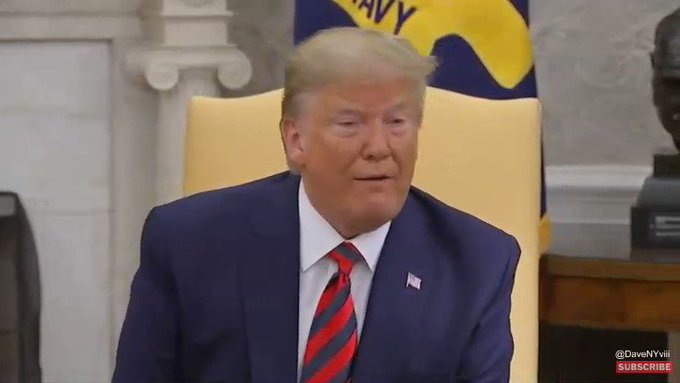


 Centinel2012