Pillsbury Warns Beijing – Things Could Get Worse: “tariffs could go to 50 percent or 100 percent”…


Michael Pillsbury traveled to Hong Kong recently to help explain the goals and objectives of President Trump’s U.S-China trade position.  During an interview, Mr. Pillsbury warns Beijing interests not to interpret the current U.S. position as aggressive, because the dragon has yet to see the severe side to Trump’s position.

During an interview with the South China Morning Post, Pillsbury points out there are a great many more ways that President Trump is prepared to respond if the combative trade position from China remains hostile to any concessions.  This first option was their best option.  However, should they choose further trade conflict, President Trump will happily oblige.

CTH research on Trump’s outlook, vis-a-vis China, has led us to believe there is no upper limit to the economic weapons President Trump is willing to deploy; and considering that Pillsbury can be relied upon to deliver honest, accurate and deliberate remarks about the White House position, these warnings from a close advisor to the President should be weighted accordingly.

(South China Morning Post) – The United States is set to ramp up the pressure on China if a trade deal is not agreed soon, a key White House adviser said, adding that Washington has so far imposed only “low level tariffs” on the Asian giant.

Described by US President Donald Trump as “the leading authority on China”, Michael Pillsbury said in an interview in Hong Kong on Thursday that Trump had been “remarkably restrained in the pressure he has brought to bear on China in the trade field”.

“Does the president have options to escalate the trade war? Yes, the tariffs can be raised higher. These are low level tariffs that could go to 50 per cent or 100 per cent,” he said, adding that Trump’s critics were wrong to assume the president was “just bluffing” when he threatened an all-out trade war.

“There are other options involving the financial markets, Wall Street, you know, the president has a whole range of options,” he said.

[…] “I believe President Trump uses social media, especially on China, to convey his thinking. So I reject the idea that I or anyone else is some kind of adviser to him on China,” he said.

“His focus is revealed frequently in the tweets that I think everybody should take very seriously as presidential statements.” (read more)

President Trump has been brutally consistent for more than three decades on his intent and purpose with the Chinese.

President Trump is the first U.S. President to understand how the red dragon hides behind the panda mask.

There is no doubt in my mind that President Trump has a very well thought out long-term strategy regarding China. President Trump takes strategic messaging toward the people of china very importantly.

President Trump has, very publicly, complimented the friendship he feels toward President Xi Jinping; and praises Chairman Xi for his character, strength and purposeful leadership.

Historic Chinese geopolitical policy, vis-a-vis their totalitarian control over political sentiment (action) and diplomacy through silence, is evident in the strategic use of the space between carefully chosen words, not just the words themselves.

Each time China takes aggressive action (red dragon) China projects a panda face through silence and non-response to opinion of that action;…. and the action continues. The red dragon has a tendency to say one necessary thing publicly, while manipulating another necessary thing privately.  The Art of War.

President Trump is the first U.S. President to understand how the red dragon hides behind the panda mask.

It is specifically because he understands that Panda is a mask that President Trump messages warmth toward the Chinese people, and pours vociferous praise upon Xi Jinping, while simultaneously confronting the geopolitical doctrine of the Xi regime.

In essence Trump is mirroring the behavior of China while confronting their economic duplicity.

Additionally, while carrying out the objectives of the confrontation, Secretary Mnuchin, Secretary Ross, Ambassador Lighthizer and adviser Navarro are well aware of Beijing’s panda mask; POTUS Trump will never let them forget about it.

President Trump will not back down from his position; the U.S. holds all of the leverage and the issue must be addressed.  President Trump has waiting three decades for this moment.  This President and his team are entirely prepared for this.

We are finally confronting the geopolitical Red Dragon, China!

Some call it ‘Globalism vs Nationalism’, at other times it is best described as “Wall Street -vs- Main Street”; however, the overarching bigger picture is a battle over economics and the financial power structures that oppose President Trump.

CTH has often said ‘everything is about the economics’, because it is. Ask the ‘why’ question five times to any issue and you will find the root issue is money.  Power, greed and control, it is all about the money and the economics.

Opposition to President Trump’s singularly unique and transformational reset of the U.S. economic system boils down to a battle against the ‘Big Club’.

The process of U.S. Agriculture multinationals charging the U.S. consumer more for a product, that under normal national market conditions would cost less, is a process called exfiltration of wealth.

It is never discussed.

To control the market price some contracted product may even be secured and shipped with the intent to allow it to sit idle (or rot). It’s all about controlling the price and maximizing the profit equation. To gain the same $1 profit a widget multinational might have to sell 20 widgets in El-Salvador (.25¢ each), or two widgets in the U.S. ($2.50/each).

Think of the process like the historic reference of OPEC (Oil Producing Economic Countries). Only in the modern era massive multinational corporations are playing the role of OPEC and it’s not oil being controlled, it’s almost everything, including food.

Yes, President Trump, the man and his policy team, is an existential threat to the elitist hierarchy of things well beyond the borders of the DC Swamp. In the era of explaining the complex it’s a planetary economic reset almost too massive and consequential to encapsulate in words.

There are massive international corporate and financial interests who are inherently at risk from President Trump’s “America-First” economic and trade platform. Believe it or not, President Trump is up against an entire world economic establishment.

President Trump has single-handily, and purposefully, stalled the global economy and is forcing massive amounts of wealth back into the United States. In essence Titan Trump is engaged in a process of: (a) repatriating wealth (trade policy); (b) blocking exfiltration (main street policy); (c) creating new and modern economic alliances based on reciprocity; and (d) dismantling the post WWII Marshall plan for global trade and one-way tariffs.

Every minute element within this process, no matter how seemingly small, has President Trump’s full attention. He has assignments to many, but he relies upon none.

They say he’s one man. They say they have him outnumbered. Yet somehow, as unreal as it seems, he’s the one who appears to have them surrounded.

And they are beginning to realize he will win!

USMCA Update – Kudlow Discusses Pelosi Playing Politics With Trade Ratification…


Fox News host Maria Bartiromo had Kevin McCarthy and Larry Kudlow on Fox Business to discuss the status of ratification for the USMCA agreement.   After McCarthy outlines the politics of Nancy Pelosi intentionally holding back the ratification vote, and states if the agreement is not passed prior to Thanksgiving it will not be done, Larry Kudlow follows up with a more optimistic outlook.

.

Keep in mind, Speaker Pelosi doesn’t know that close trade followers are aware of her dealwith Justin Trudeau to hold back on ratification in an blatantly political effort. Here’s Kevin McCarthy’s full interview.

.

The bottom line is that Nancy Pelosi is waiting and hoping to see the outcome of the Canadian election on October 21st. If Justin Trudeau loses the election in Canada there will be massive pressure on Pelosi.

As we previously pointed out, the October 21st election in Canada will be an influence.

Justin Trudeau made an agreement with Pelosi to stop the Canadian Parliament from considering ratification. If Trudeau loses the election October 21st, his replacement will likely move more quickly to ratify the USMCA, this will be a defeat for Pelosi.  However, if Trudeau wins, he will help keep the pressure off Pelosi by simultaneously stalling ratification in Canada.

This dynamic has yet to play out.

The U.S. multinationals on Wall Street do not want the USMCA to pass because they don’t want President Trump to have leverage that allows him to continue the fight against China and the EU. It is a simple dynamic, USMCA ratification makes the Wall Street prior investments in China worth less.

In all of these efforts U.S. multinational corporations, big companies on Wall St, are heavily opposed to President Trump because they have invested in those overseas operations. Those companies facilitated the loss of U.S. manufacturing jobs.

There is also now a clear alignment between those Wall Street multinationals, and democrats like Nancy Pelosi. Wall Street’s ability to pay Pelosi and political leadership to protect their multinational interests; in combination with corporate promises of funding to Pelosi’s party; has created the unholy alliance of united interests.

That’s why Nancy Pelosi instructed Justin Trudeau to stall the Canadian ratification of the USMCA. That’s the motive behind why Pelosi is working to stall, perhaps even eliminate, the USMCA ratification in the House.

It is a political strategy and calculation for Speaker Nancy Pelosi, and Minority Leader Chuck Schumer to attempt to sink the U.S. Main Street economy. Weakening Trump’s China confrontation; blocking the USMCA; and impeding a trade agreement between the U.S. and U.K. are part of that calculation.

The aligned interests of Wall Street, media pundits and Democrats are all contingent upon harming the U.S. economy. That is how severely ideological modern democrats are.

The democrats are willing to destroy Main Street in order to retain power.

There are trillions at stake.

A Builder Tours The Wall – President Trump Tours New Border Wall Construction in San Diego Sector…


Promises made – Promises Kept…

President Donald Trump delivers remarks to the media today while touring border wall construction in Otay Mesa, California.   As a builder himself, the president outlined some of the more particular details of the construction project including the difference between compressive strength and tensile strength of 5,000/lb concrete.  There is apparently some additional aspects to the wall that are kept secret (they’re wired for sound).

The President was briefed on the project by Douglas Harrison (Acting San Diego Sector Chief Patrol Agent, United States Customs & Border Protection); Kathleen Scudder (San Diego Sector Deputy Chief Patrol Agent, United States Customs & Border Protection); Scott Garrett (San Diego Sector Division Chief, United States Customs & Border Protection); James O’Loughlin (Border Wall Program Lead, Emergency Action Programs, Department of Defense), and various local officials.

[Video Below, Transcript Will Follow]

President Trump Delivers Impromptu Remarks From LAX Introducing NatSec Advisor Robert O’Brien…


Chopper pressers are the best pressers; even when they are from the tarmac at LAX in California.  Moments ago President Donald Trump talked to the press pool with his newly named national security adviser, Robert O’Brien.  [Video below Transcript ADDED]

.

[Transcript] – THE PRESIDENT: Thank you very much. We’re with Robert O’Brien, who, as you know, is the new National Security Advisor. He’s worked with me for quite a while now on hostages, and we’ve had a tremendous track record with respect to hostages. Robert can tell you about it.

But we brought a lot of people back home and we haven’t spent any money. So, that’s good, because you can’t do the money thing. If you do the money thing, all of a sudden it will double and triple and quadruple. You’ll say, “What’s going on?”

So, Robert has been fantastic. We know each other well. And maybe, Robert, say a few words. Please.

AMBASSADOR O’BRIEN: Great. Thank you. Look, it’s a privilege to serve with the President and to — and we look forward to another year and a half of peace through strength. We’ve had tremendous foreign policy successes under President Trump’s leadership. I expect those to continue.

We’ve got a number of challenges, but there’s a great team in place with Secretary Pompeo and Secretary Esper, Secretary Mnuchin, and others. And I look forward to working with them and working with the President to keep America safe and continue to rebuild our military and really get us back to a peace-through-strength posture that will keep the American people safe from the many challenges around the world today.

Q Mr. O’Brien, what advice do you have for the President about the situation in Saudi Arabia and any possible military strike on Iran?

AMBASSADOR O’BRIEN: Yeah, so we’re looking at those issues now and getting briefed up. And I think Secretary Pompeo is in Saudi Arabia now or is just coming home. And any advice that I give the President will be something I give him confidentially. But we’re monitoring that situation closely.

Q And, Mr. President, any update on your thinking?

THE PRESIDENT: Yeah, I have nothing to report yet. We’ll probably be speaking to you tomorrow, maybe the next day. But nothing to report. But it hasn’t changed very much. I think my thinking pretty much remains the same. And we haven’t learned much that we didn’t know. But there is — there is a certain — a guarantee factor. We’re really at a point now where we know very much what happened.

Yes.

Q Lindsey Graham said sanctions aren’t enough. Will you do more on Iran?

THE PRESIDENT: We’ll see what happens. We’ll see. You’ll watch.

Peter.

Q Mr. President, should Rouhani come to New York next week?

THE PRESIDENT: Excuse me?

Q Should President Rouhani come to New York next week for (inaudible)?

THE PRESIDENT: I really don’t know. I really don’t know. That’s up to him. I mean, I’m — it’s not up to me. It’s up to him. We’ll see what happens.

Q (Inaudible) visas from Iranians to come?

THE PRESIDENT: Well, we’re going to see what happens. I would let them come. If it was up to me, I would let them come.

I’ve always felt the United Nations is very important. I think it’s got tremendous potential. I don’t think it’s ever lived up to the potential it has, but I would certainly not want to keep people out if they want to come. So, that would be up to them.

Q (Inaudible) Senator Graham, who said that the failure to strike Iran this summer was a sign of — taken by Iran as a sign of weakness?

THE PRESIDENT: No, I actually think it’s a sign of strength. We have the strongest military in the world now. And I think it’s a great sign of strength. It’s very easy to attack.

But if you ask Lindsey, ask him: How did going into the Middle East — how did that work out? And how did going in Iraq work out?

So, we have a disagreement on that. And, you know, there’s plenty of time to do some dastardly things. It’s very easy to start. And we’ll see what happens. We’ll see what happens.

I think we have a lot of good capital. If we have to do something, we’ll do it without hesitation.

Q Mr. President, do you agree with the Secretary — Mr. Pompeo — that the attacks in Saudi were an “act of war”? And if so, what’s the response on the U.S. end?

THE PRESIDENT: He just came out with a statement. He spoke to me a little while ago. And we’ll have an announcement. Okay?

Q What does Mr. O’Brien bring to the table that you were looking for that maybe you didn’t get through Mr. Bolton?

THE PRESIDENT: It’s very interesting. Mr. O’Brien is highly respected. He was highly respected by so many people that I didn’t even know really knew him. He did a tremendous job on hostage negotiation — really tremendous, like unparalleled. We’ve had tremendous success in that regard. Brought home many people. And through hostage negotiation, I got to know him very well myself. But also, a lot of people that I respect rated him as their absolute, number-one choice.

So, you know, I think we have a very good chemistry together, and I think we’re going to have a great relationship. He is a very talented man.

Q Mr. President, would you raise more sanctions on Iran today?

THE PRESIDENT: I did.

Q Would you announce more sanctions on Iran? What will they include?

THE PRESIDENT: We’ll be adding some very significant sanctions onto Iran.

Q And what will they include, sir?

THE PRESIDENT: We’ll be announcing it over the next 48 hours.

Q And you said that there will be a further announcement on Iran. Are you looking at a military strike?

THE PRESIDENT: We’ll see what happens.

Q What are the options, Mr. President, that you’re considering? You just said that there were some very bad things you’re thinking about.

THE PRESIDENT: Well, there are many options, as you know, Phil. There are many options. And there’s the ultimate option, and there are options that are a lot less than that. And we’ll see. We’re in a very powerful position. Right now, we’re in a very, very powerful position.

Q When you say “the ultimate option,” are you talking about a nuclear strike?

THE PRESIDENT: No, I’m saying “the ultimate option,” meaning go in — war. No, I’m not talking about — I’m not talking about that ultimate option. No.

Q Okay.

THE PRESIDENT: Right?

Q How do you see the role of National Security Advisor changing with Mr. O’Brien?

THE PRESIDENT: I think it’s a very important role. It’s really a role that, if the President respects the person that’s the advisor, I think it really plays a very, very important role.

Okay? Thank you. Peter, thank you.

Q You’re heading to the border today?

THE PRESIDENT: We’re going to the border later. Are you all with me?

Q Yes.

THE PRESIDENT: We’re going to show you a lot of wall. We’re building a lot of wall. We won the big case and a couple of other cases, as you know. We’re building a lot of wall.

So, we’ll be talking. We’ll be talking to you later on. Okay?

Q Have you spoken to Netanyahu?

THE PRESIDENT: I have not. Those results are coming in, and it’s very close. Do you have any updates? Any updates? Because you people usually should know before the President, right?

Q Are you suspicious at all about the results?

THE PRESIDENT: No, I’m not. No, I’m not. Everybody knew it was going to be very close, and we’ll see what happens. And, look, our relationship is with Israel. We’ll see what happens.

Thank you. Thank you everybody.

END 10:41 A.M. PDT

Advertisements

Best “Recession” Ever – U.S. Housing Starts Eclipse 12-year High…


Housing starts (and permits) have been a long-term key performance indicator for the economic stability and strength of Main Street USA for generations. Across all key metrics, the economics of middle-class America is defined by confidence in housing. A strong housing market reflects worker/purchaser confidence in their economic position.

The U.S. Commerce Department reports today that U.S. housing starts and permits has reached a 12-year-high. [data here] This is a key point because it cuts to the heart of the difference between a thriving Main Street economy and the disconnect surrounding issues with Wall Street (multinational) financial markets.

WASHINGTON (Reuters) – U.S. homebuilding surged to more than a 12-year high in August as both single- and multi-family housing construction accelerated, suggesting that lower mortgage rates were finally providing a boost to the struggling housing market.

The report from the Commerce Department on Wednesday also showed permits for future home construction rose to levels last seen in 2007. Housing and manufacturing have been the weak spots in the economy, which is now in its 11th year of expansion, the longest in history.

The jump in home-building activity last month added to strong retail sales data in suggesting the economy continues to grow moderately and is probably not flirting with a recession as has been flagged by financial markets. (read more)

Housing lags behind other jumps in retail sales because housing is the biggest financial commitment made by U.S. workers.  A new home purchase, first purchase or upgrade, is the biggest decision for most American workers and families.   Since President Trump took office wages and worker benefits have increased substantially; more than a million people have now moved into the middle-class.

Again, for emphasis, there are two distinct economic metrics that are disconnected and intentionally conflated by Wall Street pundits, financial media and political opportunists therein who speak through the prism of economics.   The Main Street economy is thriving; the Wall Street financial economy -heavily influenced by multinational investment- is not thriving.

The two economic engines (Wall St. -vs- Main St.) were decoupled by corporate political influence, over U.S. economic policy, 30-years ago.  Wall Street is a paper financial market influenced by U.S. multinational interests.  Main Street is a blue-collar market influenced by the internal strength of the U.S. consumer, workers, wages and internal U.S. dynamics.

President Trump’s MAGAnomic policy is structured to the benefit of Main Street.  Real investment by domestic companies providing American jobs taking place inside the U.S.  The results of focusing on America First, generates more domestic jobs, a larger demand for U.S. workers, pressure on higher wages & subsequent increased consumer spending.   Homes and home purchases are an outcome of that internal economic strength.

The global market can, and likely will, retract.  The gains or losses of investment markets are not necessarily attached to Main Street outcomes. Wall Street overseas investments have less value when economic policy directs majority benefit to Main Street.  However, isolated from the external investment issue, the U.S. Main Street economy can simultaneously thrive due to growth internally within the domestic U.S. economy.

Sec. Wilbur Ross

@SecretaryRoss

Fantastic housing numbers! Both starts and permits rose to a 12-year high in August. The housing market needs low rates to keep growing. https://www.census.gov/construction/nrc/pdf/startssa.pdf 

225 people are talking about this

President Trump Selects Robert O’Brien as National Security Advisor…


Robert C O’Brien (pictured left) is currently the State Department’s special presidential envoy for hostage affairs.  A founding partner of the Los Angeles-based law firm Larson O’Brien.

NYT – Mr. O’Brien served with Mr. Bolton when he was President George W. Bush’s ambassador to the United Nations and has advised Republican candidates like Mitt Romney, Scott Walker and Ted Cruz. In both the Bush and Obama administrations, Mr. O’Brien worked on an initiative to train lawyers and judges in Afghanistan.  (link)

People describe O’Brien as similar to his friend John Bolton without the virulent twitchy trigger finger. In his capacity as special envoy for hostage affairs, O’Brien wrote a letter to Swedish prosecutors urging them to release A$AP Rocky.  According to CBS O’Brien’s work “on Rocky’s case endeared him to Jared Kushner, the president’s son-in-law and one of his top advisers.”

CBS’s Margaret Brennan gives a good outline here:

Stand With Corey….


Corey Lewandowski is exploring a run for U.S. Senate in New Hampshire:

Stand With Corey – Link

Corey R. Lewandowski

@CLewandowski_

17.2K people are talking about this

Corey R. Lewandowski

@CLewandowski_

Thank you @realDonaldTrump. No collusion no obstruction — the American people know it, and lll continue to remind them. . https://twitter.com/realdonaldtrump/status/1174025953468530688 

Donald J. Trump

@realDonaldTrump

pic.twitter.com/wrEmfGFRHm https://twitter.com/realdonaldtrump/status/1174017425068576769 

Embedded video

15.3K people are talking about this


USMCA Update – Rep. Riggleman Says “Likely” Passage – Rep. Barr says Only if before Oct 21st – Senator Ernst Says “Not Likely”…


This is a topic we have previously discussed.  The current status is unfortunately what CTH previously predicted….  The consequences here are very serious.

Representative Denver Riggleman (R-Va.), a member of the House Financial Services Committee, claims a significant number of House Democrats are ready to vote to approve the USMCA trade deal.  However, Nancy Pelosi is holding back the vote.

.

Everyone agrees that passage of the USMCA would provide leverage for the U.S. position in both China and EU trade negotiations.  Representative Andy Barr says despite a likely 300+ vote of support, he believes Pelosi is stalling to block that exact leverage.

Maria Bartiromo

@MariaBartiromo

.

As we previously pointed out, the October 21st election in Canada will be an influence.

Justin Trudeau made an agreement with Pelosi to stop the Canadian Parliament from considering ratification. If Trudeau loses the election, his replacement will likely move more quickly to ratify the USMCA, this will be a defeat for Pelosi.  However, if Trudeau wins, he will help keep the pressure off Pelosi by simultaneously stalling ratification in Canada.

This dynamic has yet to play out.

Senator Jodi Ernst, a member of GOPe leadership, appears to be sending the message that USMCA will not pass until after the 2020 presidential election. Ernst is a Decepticon in AG clothing; but generally, the outlook of McConnell, Cornyn, Thune and Ernst are more accurate.

The U.S. multinationals on Wall Street do not want the USMCA to pass because they don’t want President Trump to have leverage that allows him to continue the fight against China and the EU. It is a simple dynamic, USMCA ratification makes the Wall Street prior investments in China worth less.

Here’s Ernst.

.

The UniParty Message on USMCA:

The strategy to deal with each of the three primary negative trade elements (China, NAFTA, and the EU) is clear within President Trump’s trade reset.

  • Bilateral deals with ASEAN partner nations and simultaneous crushing tariffs on China deals with one problem.  China’s removal of U.S. wealth and jobs is halted.
  • The construct of the USMCA, and country of origin for source material and strict enforcement mechanisms, deals with the second problem: NAFTA’s fatal flaw.
  • An reciprocal and barrier removing agreement between the U.S. and U.K; which can open a tariff free trade highway between North America and Europe; creates the leverage for Trump (benefit for Johnson) that begins to deal with the EU problem.

In the big picture President Donald Trump has purposefully stalled the process of supply chain globalization and cheap labor evaluation.  Trump is resetting global manufacturing supply chains, with U.S. incentives for relocation.   This is bringing wealth and jobs back into the United States (and North America).

In essence Titan Trump is engaged in a process of: (a) repatriating wealth (trade policy); (b) blocking exfiltration of wealth (main street policy); (c) creating new and modern economic alliances based on reciprocity (bilateral deals); and (d) dismantling the post WWII Marshall plan of global trade and one-way tariffs (de-globalization).

In all of these efforts U.S. multinational corporations, big companies on Wall St, are heavily opposed to President Trump because they have invested in those overseas operations.  Those companies facilitated the loss of U.S. manufacturing jobs.

There is also now a clear alignment between those Wall Street multinationals, and democrats like Nancy Pelosi.   Wall Street’s ability to pay Pelosi and political leadership to protect their multinational interests; in combination with corporate promises of funding to Pelosi’s party; has created the unholy alliance of united interests.

That’s why Nancy Pelosi instructed Justin Trudeau to stall the Canadian ratification of the USMCA.  That’s the motive behind why Pelosi is working to stall, perhaps even eliminate, the USMCA ratification in the House.  This is also why Pelosi reacted so quickly to the framework of a deal between President Trump and British Prime Minister Boris Johnson.

It is a political strategy and calculation for Speaker Nancy Pelosi, and Minority Leader Chuck Schumer to attempt to sink the U.S. Main Street economy.  Weakening Trump’s China confrontation; blocking the USMCA; and impeding a trade agreement between the U.S. and U.K. are part of that calculation.

This is why we are seeing Wall Street, and the media pundits therein, openly cheering for an economic recession for exactly the same purpose.

The aligned interests of Wall Street, media pundits and Democrats are all contingent upon harming the U.S. economy.  That is how severely ideological modern democrats are.

The democrats are willing to destroy Main Street in order to retain power.

There are trillions at stake.

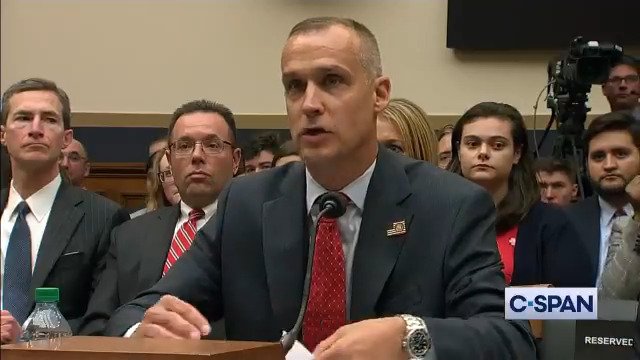
Nadler’s Lawfare Crew – Corey Lewandowski House Testimony – 1:00pm ET Livestream…


Following a subpoena for testimony, today the House Judiciary Committee, Chaired by Jerry Nadler, is scheduled to hold another made-for-media event with former Trump campaign manager Corey Lewandowski.  However, this hearing will be slightly different.

Following the spring and summer failures by the Judiciary and Intelligence committees, Nancy Pelosi, Adam Schiff and Jerry Nadler changed the rules.  Instead of questions from congressional representatives, Corey Lewandowski will face questions from a group of lawyers contracted by Pelosi and Nadler.  The corrupt group of former DOJ and FBI staff lawyers -known colloquially as the “Lawfare Alliance”- has provided the lawyers.

The new Lawfare Committee 2.0 fiasco is scheduled to commence at 1:00pm ET.

Judiciary Livestream Link – Fox News Livestream – PBS Livestream Link

.

.

.

Iran Hits Saudi Arabia: Will Trump Hit Back?


143K subscribers