Secretary of State Mike Pompeo appears on Fox News with Maria Bartiromo to discuss the cyber threat from China and ongoing trade negotiations, along with concerns over Iran’s threat to stability in the Middle East, ‘ISIS bride’ Hoda Muthana, the decision to pull troops out of Syria and nuclear talks with North Korea.
.
.
Secretary Pompeo also appeared on NBC morning to discuss similar issues.
Asia expert Gordon Chang discusses the U.S.-China trade negotiations with Lou Dobbs and why President Trump should consider raising tariffs on Chinese imports on March 1st.
Massive pressure is being applied by Chinese purchased interests including Wall Street, the multinational corporate lobbying groups; the U.S. Chamber of Commerce and all of the global financial elite, to oppose President Trump’s confrontation with Beijing.
Q How confident are you that it will be finished by March 1? Or are you considering extending that deadline?
THE PRESIDENT: Well, they are very complex talks. They’re going very well. We’re asking for everything that anybody has ever even suggested. These are not just, you know, “let’s sell corn or let’s do this.” It’s going to be selling corn but a lot of it — a lot more than anyone thought possible. And I think the talks are going very well — with China, you’re referring to?
THE PRESIDENT: And the talks are going very well.
Our group just came back and now they’re coming here. I can’t tell you exactly about timing, but the date is not a magical date. A lot of things can happen.
The real question will be: Will we raise the tariffs? Because they automatically kick in to 25 percent as of — on $200 billion worth of goods that they send. So I know that China would like not for that to happen. So I think they’re trying to move fast so that doesn’t happen. But it’s — we’ll see what happens.
I can only say that the talks with China on trade have gone very, very well. In the meantime, our economy is very strong. We’re doing well.
I don’t know if you noticed, but deficits seem to be coming down. And last month it was reported, and everybody was surprised, but I wasn’t surprised. We’re taking in a lot of money coming into our Treasury from tariffs and various things, including the steel dumping. And our steel companies are doing really well. Aluminum companies also. So we’re very happy about that.
I think that it’s — they’ll be coming very shortly. They’re going to have very detailed discussions on subjects that have never really been even discussed by people that sat in this chair and they should have been. Very important subjects. And I think we’re doing very well. Okay?
Earlier this afternoon President Donald Trump met with Austria’s Chancellor Sebastian Kurz [Video and Transcript below] Additionally, the president answered questions from the White House media on current events and issues including the section 232 auto-tariffs, the upcoming visit to the DPRK, AG Bill Barr and Andrew McCabe.
.
[Transcript] – Oval Office 1:52 P.M. EST – PRESIDENT TRUMP: Hello, everyone. Thank you very much. And it’s great to be with the Chancellor of Austria. We have a tremendous relationship, long term, with Austria. And we’re going to be discussing numerous things — immigration — today. But we’re also discussing trade. We have a very big trade presence and a very good relationship on trade. We do a lot of business with each other.
And, Chancellor, it’s very nice to have you. Thank you very much. Thank you. Please.
CHANCELLOR KURZ: Thank you, Mr. President, for receiving us here in the U.S., in the White House. It’s a pleasure for my delegation and for me to be here.
Austria, as you probably know, is — compared to the U.S. — a very small country, but we are a beautiful country.
PRESIDENT TRUMP: That’s true.
CHANCELLOR KURZ: We are a, economically, quite strong country. You would probably say a “great country.” We are in the heart of the European Union, an active member state of the European Union. It’s a small country. We need international cooperation, and therefore I hope that we can discuss now our bilateral relations, but also the relations between the European Union and the United States of America. Of course, trade and how we can gain economic growth for the U.S., but also for Europe. And probably international issues like Middle East, Korea —
PRESIDENT TRUMP: Right.
CHANCELLOR KURZ: — and probably also Russia. Thank you for receiving us.
PRESIDENT TRUMP: Thank you very much. I appreciate it.
Q Mr. President, are you going to impose auto tariffs on the Europeans?
PRESIDENT TRUMP: Well, it’s something we certainly think about. We’re trying to make a deal. They’re very tough to make a deal with — the EU. They’ve been very difficult over a period of time — over many, many years. And so it’s something we think about, and we’re negotiating with them. If we don’t make the deal, we’ll do the tariffs.
Q The new report hasn’t changed your mind about it at all? There’s a new report from the Commerce Department.
PRESIDENT TRUMP: The new report is not that kind of a report. It’s just really a study that’s underway. We’ve studied it very carefully. We’ve seen the results. But the bottom-line result is whether or not we can make a deal with the EU that’s fair. We lose about $151 billion trading with the EU. That’s a lot of money. And this has been going on for many years. They wouldn’t meet with the Obama administration, and they’re meeting with us. So we’ll see what happens. We’ll see what happens.
Q Mr. President, should the Mueller report be released when you’re abroad next week?
PRESIDENT TRUMP: That’ll be totally up to the new Attorney General. He’s a tremendous man, a tremendous person, who really respects this country and respects the Justice Department. So that’ll be totally up to him, the new Attorney — the new Attorney General, yes.
Q Should it be public? Should the report become public, do you think?
PRESIDENT TRUMP: I guess, from what I understand, that will be totally up to the Attorney General. Okay?
Q Mr. President, on your push to decriminalize homosexuality, are you doing that? And why?
PRESIDENT TRUMP: Say it?
Q Your push to decriminalize homosexuality around the world.
PRESIDENT TRUMP: I don’t know which report you’re talking about. We have many reports.
Anybody else?
Q What do you expect the Austrian Chancellor to do in European policy?
PRESIDENT TRUMP: Well, we’re just going to have a great meeting. We have a great relationship and our countries have a great relationship.
And he’s a very young leader, I have to tell you. You are a young guy. That’s pretty good.
CHANCELLOR KURZ: But the problem with the age is getting better from day to day.
PRESIDENT TRUMP: That’s right. Someday you won’t be saying it.
But we have a very good relationship and we have a great trade relationship, and that’s pretty much what we’re going to be talking about today.
Q Are you considering replacing Dan Coats as your Director of National Intelligence?
PRESIDENT TRUMP: I haven’t even thought about it.
Q Mr. President, you spoke to the Prime Minister of Japan today.
PRESIDENT TRUMP: I did.
Q How hard is it going to be to get North Korea to completely, verifiably denuclearize, which I think you —
PRESIDENT TRUMP: Well, I spoke with — this morning, with Prime Minister Abe. I had a long conversation with him. We talked about the trip next week to Vietnam, which will be, I think, very successful. I think the first trip to Singapore was extremely successful.
We’ll be meeting with Chairman Kim for two days, and I think we’ll accomplish a lot. We started off with a very good meeting, and I think we’ll continue that along. I don’t think this will be the last meeting by any chance, but I do think that the relationship is very strong.
When we started, as you know, there were a lot of problems. There was the missiles going all over. There were hostages that were being held. There were remains that we wanted to get back. There were many, many things. Now there’s no nuclear testing, no missiles going up. And we have a good relationship — a very good relationship, I’d say.
So I spoke with Prime Minister Abe of Japan about that, and we compared notes. And I think we are very much on the same wave length. It was a good meeting. A good conversation.
Q They seem very reluctant — the North Koreans — to denuclearize. Do you think you’ll be able to make any —
PRESIDENT TRUMP: No, I don’t think they’re reluctant. I think they want to do something. But I — you know, you’ve been talking about this for 80 years. They’ve been talking about this for many, many years, and no administration has done anything. They’ve gotten taken to the cleaners. And I think we have a really meaningful relationship. We’ll see what happens.
The sanctions are on in full. As you know, I haven’t taken sanctions off. I’d love to be able to, but in order to do that, we have to do something that’s meaningful on the other side.
But Chairman Kim and I have a very good relationship. I wouldn’t be surprised to see something work out. I really believe that, as an economic power, because of its location in between. I mean, if you look on a map and you see Russia, China, and right in the middle of everything is South Korea, but North Korea right smack in the middle. So you have Russia, China, and then South Korea. And this is right in the middle. Tremendous potential for economic wellbeing, long term. And I think he understands that very well. I think he might understand that better than anybody.
So they have a great, great potential as a country, and I think that’s what they’re looking to do. We’ll see. But we’ve made a lot of progress. We’ve made a tremendous amount. That doesn’t mean this is going to be the last meeting, because I don’t believe it will. But we have subjects to discuss which will be very fruitful, I believe.
Q Do you have a comment on Andrew McCabe briefing McConnell and Paul Ryan and Devin Nunes, telling them about the investigation into you?
PRESIDENT TRUMP: Well, I think Andrew McCabe has made a fool out of himself over the last couple of days, and he really looks to me like sort of a poor man’s J. Edgar Hoover. He’s a — I think he’s a disaster. And what he was trying to do was terrible and he was caught. I’m very proud to say we caught him.
So we’ll see what happens. But he is a disgraced man. He was terminated, not by me; he was terminated by others. The IG report was a disaster — a disaster, from his standpoint. Anybody reading the IG report would say, “How could a man like this be involved with the FBI?” And the FBI has some of the greatest people — some of the finest people you’ll ever meet. But this man is a complete disaster.
Thank you all very much.
Q Are you going to Japan, Mr. President? Are you going to Japan in May?
On the surface it would appear the Mueller probe has reached its final stages. Deputy AG Rod Rosenstein was scheduled to exit the DOJ simultaneous to his partner, Robert Mueller, concluding his special counsel investigation.
[Via The White House] February 19, 2019 – President Donald J. Trump Announces Intent to Nominate Individual to a Key Administration Post.
Today, President Donald J. Trump announced his intent to nominate the following individual to a key position in his Administration:
Jeffrey A. Rosen of Virginia, to be the Deputy Attorney General at the Department of Justice.
Mr. Rosen currently serves as Deputy Secretary of the U.S. Department of Transportation. Previously, Mr. Rosen was a senior partner at Kirkland & Ellis LLP. During his nearly 30 years at that firm, he held positions of Associate, Partner, Co-Head of the Washington, D.C., office, and member of Kirkland’s Global Executive Management Committee.
Mr. Rosen served as General Counsel and Senior Policy Advisor for the White House Office of Management and Budget and as General Counsel at the U.S. Department of Transportation. Additionally, he served as an adjunct professor at Georgetown University Law Center and Chair of the American Bar Association’s Section of Administrative Law and Regulatory Practice.
Mr. Rosen earned his B.A. in economics with Highest Distinction from Northwestern University and his J.D., magna cum laude, from Harvard Law School. (WH Link)
Jeffrey Rosen is the hand-picked deputy of Attorney General William Barr:
Earlier today President Trump signed Space Force Policy Directive #4 and held a brief presser in the Oval Office. [Video and Transcript Below] During questions, President Trump answered a variety of questions on: McCabe, China, N-Korea and Bernie Sanders.
.
[Transcript] 2:11 P.M. EST – THE PRESIDENT: Okay, thank you very much. I had a great conversation this morning with President Moon of South Korea. And we obviously discussed the upcoming trip next week, where we’re going Hanoi, in Vietnam. And I look forward to be with Chairman Kim, and I think a lot of things will come out of it.
We had a tremendous first summit. That was really breaking the ice, but a lot of things came from that, including good relationships. And we’re looking forward to having a very good meeting. And President Moon and I discussed, I think, probably every aspect of the meeting; it was a good conversation. I’ll be speaking tomorrow with Prime Minister Abe of Japan, and we’ll be having a similar conversation. So I think next week is going to be very exciting.
It’s going to be the second summit. I think a lot can come from it — at least, I hope so — the denuclearization, ultimately. I’m in no particular rush. The sanctions are on, the relationships are very strong, and a lot of good things have happened.
We’ve gotten our hostages back. The remains are coming back. Vice President Pence was in Hawaii when the first large number, actually, had come. And now, certain have been identified. Their families members have found out exactly what’s going on, and they’ve had ceremonies that are absolutely beautiful. That was an incredible event.
In fact, when we were campaigning, so many people would say — even though it was many years ago, they would say, “Is it possible to get the remains back from North Korea?” So we’ve done that. And as you know, there’s been no testing of rockets, missiles, or nuclear.
So we’re in no rush. A lot of the media would like to say, “Oh, what’s going on? Speed, speed, speed.” No rush whatsoever. We are going to have our meeting; we’ll see what happens. And I think, ultimately, we’re going to be very, very successful.
When I became President, the relationship with North Korea was a very dangerous one for the world, and I think now it’s far less dangerous. And there’s a lot of sanity, a lot of really sane thinking.
So he looks forward to it; I look forward to it. And the talk with President Moon, and tomorrow with Prime Minister Abe, I think will be very helpful.
Today, I’m thrilled to sign a new order taking the next step to create the United States Space Force. So important, when you look at defense, when you look at all of the other aspects of where the world will be someday. I mean, this is the beginning. This is a very important process.
First, I want to recognize our wonderful Vice President, Mike Pence, who serves as the Chairman of the National Space Council. Thank you, Mike. Great job. I know you feel the same way I do.
I also want to thank Acting Secretary of Defense Patrick Shanahan, who is with us; Secretary of the Air Force Heather Wilson; Vice Chairman of the Joint Chiefs of Staff, General Paul Selva; and the Executive Secretary of the Space Council, Dr. Scott Pace for being here today.
They’ve all worked very hard on the Space Force. They all believe in it very strongly, as I do. It’s the future. It’s where we’re going. I suspect, whether we like it or not, that’s where we’re going. It’s space. That’s the next step, and we have to be prepared.
Our adversaries and — whether we get along with them or not, they’re up in space. And they’re doing it, and we’re doing it. And that’s going to be a very big part of where the defense of our nation — and you could say “offense” — but let’s just be nice about it and let’s say the defense of our nation is going to be.
America must be fully equipped to defend our vital interests. Our adversaries are training forces and developing technology to undermine our security in space, and they’re working very hard at that.
That’s why my administration has recognized space as a warfighting domain and made the creation of the Space Force a national security priority. I think we’ll have great support from Congress, because they do support something when we’re talking about such importance. And a lot of the generals, a lot of the people involved have been speaking to Congress. And we have some very interesting dialogue going on.
We’re investing in new space capabilities to project military power and safeguard our nation’s interests, especially when it comes to safety and defense.
This directive calls on the Secretary of Defense to develop a legislative proposal that will establish the structure and authority of the Space Force as the sixth branch of the United States Armed Forces. That would mean a high-ranking — the highest-ranking person there would go on to the Joint Chiefs of Staff. So it’s a very, very important deal.
The Space Force will organize, equip, and train the next generation of warriors to deter aggression and defend the nation, our allies, and American interests against hostile actions in the form of space and taking place in space.
So we have a lot of things on the books. We have a lot of new defensive weapons and offensive weapons designed specifically for this, and now we’re going to start taking advantage of. This is something they could have done sooner but they decided to wait. And here I am, and we’re going to do it. And I’m very proud that, during my administration, we’re doing so much in space. We need it.
We’ve already taken historic action to create the United States Space Command, as you know, within the Department of Defense to oversee the nation’s military space operations.
Now, in the face of these threats all around the world, American leadership in space is more important than it ever has been. Before, it used to be something that we’d aspire to, we’d talk about, but we wouldn’t do anything. Now we have to do something because that’s where it’s at.
With today’s action, we will ensure that our people are secure, our interests are protected, and our power continues to be unmatched. There will be nobody that can come close to matching us. It won’t be close.
What we have on the books are things that you wouldn’t even believe. You wouldn’t even believe. It’s going to mean the safety of our nation for many, many decades and many, many generations, and that’s what I’m here for. I guess when you get right down to it, more importantly than anything else, that’s why I’m here.
So I just want to thank everybody. The Space Force is a very important part of my administration and it’s a very important part of this nation. And it’s an honor to be with you all. And I’ll sign and we will then maybe take a few questions and ask a few. You may want to say something. In fact, Mike, why don’t you start off? You’ve been — you and I have been working on this very hard. Why don’t you say a few words? Please.
THE VICE PRESIDENT: We have. Thank you, Mr. President. From the first days of this administration, President Trump has made national security a priority. We’ve secured historic investments in our national defense.
But from very early on, the President also said that America needed to be as dominant in space as we are on the Earth. And now, with this fourth Space Policy Directive, America is leading in space once again.
But in this respect, the President is calling on the Department of Defense to fashion what we have literally been working on for months, consulting with members of Congress and military experts. It will be a legislative proposal that will establish the United States Space Force as the sixth branch of our armed forces.
It will build on the President’s leadership of a United States Space Command, a joint combatant command that we’ve already organized at the President’s direction. But this is now the foundation of ensuring that even as we are dominant in space today, now we’ll begin to bring all of our resources together under U.S. Space Command, which will operate under the Department of the Air Force. And in so doing, we’ll ensure that we bring the best resources and the best minds together to protect the American people and advance our interests.
And, Mr. President, all the members of the National Space Council and the agencies that are a part of it are gathered behind you today —
THE PRESIDENT: That’s right.
THE VICE PRESIDENT: — and we thank you for your leadership and your support in this effort.
THE PRESIDENT: Some great talent, I will say that. Would you like to say something? You’ve helped us so much. Please, Paul.
GENERAL SELVA: Sir, you’ve been incredibly supportive in bringing space to the fore as not only a domain of potential warfare, but also recognizing it as a place where a large amount of our economic power comes from. And so our job to protect our national security includes protecting our economy as well. And so, as your Vice Chairman, the Joint Chiefs endorse all this effort to make sure that we get the right emphasis on defending our interests and our assets in space.
THE PRESIDENT: Thank you very much, Paul. Patrick? How about you?
ACTING SECRETARY SHANAHAN: Yes, sir.
THE PRESIDENT: Mr. Secretary.
ACTING SECRETARY SHANAHAN: This is a historic moment. The dawn of a new service. I’d like to thank you for your leadership and, most importantly, the resources so that we can do our job.
Mr. Vice President, thank you for pushing us. We’ve come quite a distance in a very short period of time.
And then to my counterparts here, thank you for all the remarkable teamwork. We will deliver the capability better, sooner, faster so we can sustain our margin of dominance.
Thank you.
THE PRESIDENT: Thank you very much.
Maybe John Bolton — you’ve been very much involved and I know how you feel about it.
AMBASSADOR BOLTON: Well, this is a visionary project, Mr. President — your leadership, the Vice President, and really everybody on the Space Council. This is not something for the next year or two, or even the next six years. This is on into the century. A place where, as President Kennedy once said, “I believe space is a new ocean and the United States must sail upon it.” And you’re taking the steps to make sure that, from the national security perspective, the United States will be dominant on that new ocean.
THE PRESIDENT: And we will be. Okay, thank you.
Anybody have anything to say? Huh? Would anybody like to say? Fine? No? Good. We’re all (inaudible). (Laughter.) Right? We’ve said enough. Let’s sign. Let’s sign. It’s very exciting.
(The directive is signed.)
So how about we give this one to Paul? Mike, do you want to do that? Okay. Come on, Paul. That’s a big deal. (Applause.)
It’s very important. Thank you very much. Thank you very much, everybody. Thank you.
Q Mr. President, there’s another round of trade talks starting this week here in Washington.
THE PRESIDENT: That’s right.
Q How confident are you that it will be finished by March 1? Or are you considering extending that deadline?
THE PRESIDENT: Well, they are very complex talks. They’re going very well. We’re asking for everything that anybody has ever even suggested. These are not just, you know, “let’s sell corn or let’s do this.” It’s going to be selling corn but a lot of it — a lot more than anyone thought possible. And I think the talks are going very well — with China, you’re referring to?
Q Yes.
THE PRESIDENT: And the talks are going very well.
Our group just came back and now they’re coming here. I can’t tell you exactly about timing, but the date is not a magical date. A lot of things can happen.
The real question will be: Will we raise the tariffs? Because they automatically kick in to 25 percent as of — on $200 billion worth of goods that they send. So I know that China would like not for that to happen. So I think they’re trying to move fast so that doesn’t happen. But it’s — we’ll see what happens.
I can only say that the talks with China on trade have gone very, very well. In the meantime, our economy is very strong. We’re doing well.
I don’t know if you noticed, but deficits seem to be coming down. And last month it was reported, and everybody was surprised, but I wasn’t surprised. We’re taking in a lot of money coming into our Treasury from tariffs and various things, including the steel dumping. And our steel companies are doing really well. Aluminum companies also. So we’re very happy about that.
I think that it’s — they’ll be coming very shortly. They’re going to have very detailed discussions on subjects that have never really been even discussed by people that sat in this chair and they should have been. Very important subjects. And I think we’re doing very well. Okay?
Q (Inaudible) terrorists from Pakistan have been — struck, inside India, 40 security persons last week. How do you see this issue? What’s the message to Pakistan?
THE PRESIDENT: I’ve seen it. I’ve watched. I’ve gotten a lot of reports on it. We’ll have a comment at the appropriate time. It would be wonderful if they got along. It seems like that was a horrible situation. But we’re getting reports. We’ll have a statement to put out. Okay? Thank you very much.
Q Mr. President, did you ask Acting Attorney General Matthew Whitaker to change the leadership of the investigation into your former personal attorney, Michael Cohen?
THE PRESIDENT: No. Not at all. I don’t know who gave you that. Just more fake news. A lot of — there’s a lot of fake —
Q (Inaudible) story in the New York Times.
THE PRESIDENT: — there’s a lot of fake news out there. No, I didn’t.
Q What is the current status of your relationship with Mr. Whitaker?
THE PRESIDENT: Very good. I have a lot of respect for Mr. Whitaker. I think he’s done a great job. He’s a very, very straight shooter. I watched him during the hearing — some of it. I thought he was exceptional. He’s a very fine man and he should be given a lot of thanks by our nation.
Okay. Thank you very much.
Q Mr. President, what’s your reaction to the lawsuits yesterday filed by the states against your executive order?
THE PRESIDENT: Well, I think I called it exactly, right? Including the fact that they would put them in through the Ninth Circuit. That’s where they put them in. And I think we’ll do very well.
We have absolute right to do that. I have an absolute right to call a national security. We need strong borders. We have to stop drugs and crime and criminals and human trafficking. And we have to stop all of those things that a strong wall will stop. I could call it a barrier, but I think I don’t have to do that so much anymore. We’ll call it whatever we want.
But the point is that we have to have a stoppage. Billions and billions of dollars of illicit things are pouring through our border. And, you know, we talk about points of entry, and one of the things that we do have is a lot of money now from points of entry, because everything was given. The money was given — so much that you almost don’t know what to do with it — by Congress. But when it came to the wall, they wanted to hold back because it was politics. That’s all it is.
In fact, I hear the Democrats want to take down all walls along the southern border. And if they do that, you’re going to have a very different country. But they’re not going to do that. They wouldn’t. First of all, they won’t do it because they know it’s wrong. They know walls are necessary, maybe more than we do. But they’re playing a political game. And their new game is, “Let’s take down all walls.” I saw where Beto wanted to take down walls. I said — they asked me, “What do you think?” I said, “Well, I think that’s probably the end of his political career.”
We’re doing very well on the wall. We’re building a lot of wall right now. You know that. In the valley, we’re doing tremendous work in a very important area. We have a lot more under negotiation right now. We’re working with the Army Corps of Engineers. They’re fantastic. And a lot of great things are happening.
I think, in the end, we’re going to be very successful with the lawsuit. So it was filed — it was filed in the Ninth Circuit. And I actually think we might do very well, even in the Ninth Circuit, because it’s an open and closed case.
I was put here for security — whether it’s Space Force, which we’re doing today, or whether it’s borders. Because if our nation doesn’t have borders, we don’t have too much of a nation, especially when drugs and all of the things that — you know better than anybody what’s happening at the border. It’s a bad situation. So I think we’re going to do very well with the lawsuit.
Okay?
Q Just one more on Vietnam. You said — you referred earlier to your meetings in Vietnam. What do you want to achieve during that summit?
THE PRESIDENT: Well, I’d just like to see, ultimately, denuclearization of North Korea. I think we will see that ultimately. I have no pressing time schedule. And I think a lot of people would like to see it go very quickly from the other side.
I really believe that North Korea can be a tremendous economic power when this is solved. Their location between Russia, China, and South Korea is unbelievable. I think that North Korea and Chairman Kim have some very positive things in mind, and we’ll soon find out. But I’m in no rush. There’s no testing. As long as there’s not testing, I’m in no rush. If there’s testing, that’s another deal. But there has been no testing.
If you look at the end of the Obama administration, it was a disaster what was going on. You don’t have that right now; it’s a much different feeling. I think people have — there’s always danger, but I think people have a much different feeling.
So I hope that very positive things are going to happen. I think that it will be a very exciting couple of days.
Thank you all very much.
Q Your reaction to Bernie Sanders running for President?
THE PRESIDENT: Oh, Bernie Sanders is running. Yeah, that’s right. Personally, I think he missed his time. But I like Bernie because he’s — he is one person that, you know, on trade, he sort of would agree on trade. I’m being very tough on trade. He was tough on trade. The problem is he doesn’t know what to do about it. We’re doing something very spectacular on trade.
But I wish Bernie well. It will be interesting to see how he does. I think what happened to Bernie maybe was not so nice. I think he was taken advantage of. He ran great four years ago, and he was not treated with respect by Clinton. And that was too bad. I thought what happened to Bernie Sanders four years ago was quite sad as it pertains to our country. So we’ll see how he does.
You’ve got a lot of people running, but only one person is going to win. I hope you know who that person is.
The content of the investigative finding is unknown. The Commerce Department has privately delivered the 232 report directly to the White House. However, with the possibility of the report empowering President Trump to implement 20 to 25% import auto tariffs industry executives are proactively going bananas.
An important aspect here is that the USMCA (U.S., Mexico and Canada) agreement exempts the trilateral North American pact from any auto tariff fear. If the vehicle consists of 75% North American (USMCA) content, there’s no tariff.
At the 30,000 ft level, the USMCA deal positioned the U.S. and Mexico to retain their current multinational investments; and through a series of sector-by-sector standards on origination the deal simultaneously closed the fatal NAFTA loophole.
The USMCA agreement makes an economic manufacturing partnership between the U.S, Mexico and Canada; and for assembly products third parties will have to produce parts and origination material within the U.S. and Mexico.
U.S.T.R. Lighthizer put some details forward: ♦The NAFTA Loophole closure is explained in Summary Form HERE; with emphasis on the Auto-Sector. The key is a 75% part origination level for auto-assembly; and a 40-45% level for parts with a minimum $16/hr wage rate. The source-origination rate (75%) is even higher than all previously forecast USMCA negotiation predictions.
Example of downstream consequences/benefits: German auto-maker BMW recently built a $2 billion assembly plant in Mexico (almost complete). Most of their core parts were coming from the EU (steel/aluminum casting components) and/or Asia (electronics). Now the assembly plant will have to source 75% of the auto-parts from the U.S. and Mexico, with 45% of those parts from facilities paying $16/hr.
As a direct result of the USMCA agreement BMW made an announcement in November they were exploring additional parts manufacturing facilities within the U.S. for their engines and transmissions. BMW needs to modify their supply chain and build auto parts in the U.S. and Mexico:
LOS ANGELES (Reuters) – BMW (BMWG.DE) is considering a second U.S. manufacturing plant that could produce engines and transmissions, Chief Executive Harald Krueger said on Tuesday, shortly after a report that U.S. President Donald Trump would impose tariffs on imported cars from next week
Additionally, with the KORUS (Korean-U.S.) bilateral trade deal now cemented there would be no impact to South Korean auto imports (Kia etc) from a 232 decision. However, any EU, China or Japanese automaker who is not currently inside U.S.M.C.A operations could be subject to an application of a countervailing duty.
Specifically because of the scale of the industry, German Chancellor Angela Merkel is the most at risk from a lack of an overall U.S-EU trade deal. This potential 232 auto tariff is a big stick to get the EU to the bargaining table.
WASHINGTON (Reuters) – The U.S. Commerce Department sent a report on Sunday to U.S. President Donald Trump that could unleash steep tariffs on imported cars and auto parts, provoking a sharp backlash from the industry even before it is unveiled, the agency confirmed.
Late on Sunday, a department spokeswoman said it would not disclose any details of the “Section 232” national security report submitted to Trump by Commerce Secretary Wilbur Ross. The disclosure of the submission came less than two hours before the end of a 270-day deadline.
Trump has 90 days to decide whether to act upon the recommendations, which auto industry officials expect to include at least some tariffs on fully assembled vehicles or on technologies and components related to electric, automated, connected and shared vehicles. (read more)
Don’t forget there’s already an existing 25% tariff on imported trucks and SUV’s, that’s why most foreign automakers opened truck and SUV auto-plants in the U.S. over the past two decades. BMW builds their SUV’s in South Carolina. Volkswagen builds SUV’s in Tennessee. Mercedes now builds their SUV’s in Alabama, and Toyota builds in Princeton Indiana as well as Canada. Volvo has also moved all their SUV building to South Carolina.
It is doubtful President Trump will actually pull-the-trigger on tariffs for cars; however, as said, his ability to do it is a massive stick to get both the EU and Japan to commit to a renegotiated bilateral trade agreement.
Today President Trump is delivering a speech in Florida to Miami’s Venezuelan community. The speech is being delivered at Florida International University in Miami and the anticipated start time is approximately 4:25pm EST.
The Supreme Court has agreed to hear the Trump administration’s plan to determine who is and who is not a U.S. citizen during the 2020 Census. The justices agreed Friday to squeeze the controversial case on to their April calendar, because the decennial Census questionnaire is scheduled for printing this summer. A federal district judge in New York struck down the plan last month, ruling that Commerce Secretary Wilbur Ross exceeded his authority when he announced the inclusion of the citizenship question. The district judge’s order is very strange and it appears to be really off the charts. He wrote:
“The evidence at trial, including from the government’s own witness, exposed how adding a citizenship question would wreck the once-in-a-decade count of the nation’s population.”
“The inevitable result would have been – and the administration’s clear intent was – to strip federal resources and political representation from those needing it most.”
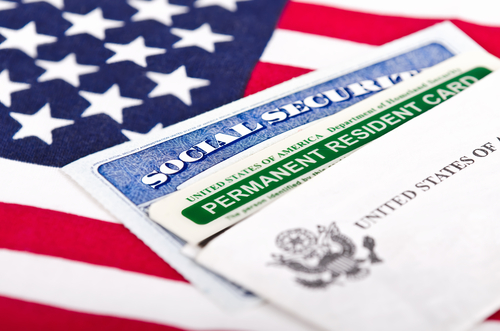
What is very strange here is that the Constitution does not state that non-citizens have any rights whatsoever to vote. The press has really clouded this issue and made it seem that Trump is some sort of racist because of this issue. However, as it currently stands, even a legal immigrant with a Green Card has the right to vote if over 18, but they can only vote in local and state elections that don’t require you to be a U.S. citizen. Unfortunately, green card holders are already prohibited from voting in federal elections – but they do pay taxes to work here in the USA. I lived in London and even had a British drivers license. I paid taxes there but never had the right to vote.
The right to vote is RESTRICTED to citizens. Even someone legally present in the USA cannot vote in federal elections. The seats in Congress are allocated according to the census which is to be taken in 2020. Let us say that California has 50% composed of immigrants both legal with green cards as well as illegal. They are fighting this matter because they get resources from the Federal Government and they have seats in Congress based upon the census. So if 50% were non-citizens, then California should have 50% less seats in Congress.
If I were on the Supreme Court I would have to vote in favor of the Trump Administration for it is inconsistent to allow seats in Congress to be allocated for people who are not citizens and cannot legally vote. The entire argument seems to be about simply not deporting people. I have no problem with a someone who came here as a child and was raised in the USA staying in the USA. They should be instructed to (1) become a citizens or (2) then leave. Citizens pay taxes federally BECAUSEthey have a Social Security number. They also vote. Why should people who cannot vote somehow be represented in Congress? It just does not seem to be consistent with the Constitution.
House member Mark Meadows appears on Fox News to discuss the ramifications of President Trump using a national emergency declaration to secure the southern border:
After declaring a national emergency, President @realDonaldTrump is briefed by U.S. Army Chief of Engineers, Commanding General Ltg. Todd T. Semonite on the status to date of the border wall – and all future construction, to begin along the southern border…
Every element of global economic trade is controlled and exploited by massive institutions, multinational banks and multinational corporations. Institutions like the World Trade Organization (WTO), World Bank and International Monetary Fund (IMF), control trillions of dollars in economic activity. Underneath that economic activity there are people who hold the reigns of power over the outcomes. These individuals and groups are the stakeholders in direct opposition to principles of America-First national economics.
The modern financial constructs of these entities have been established over the course of the past three decades. When you understand how they manipulate the economic system of individual nations you begin to understand why they are so fundamentally opposed to President Trump.
In the Western World, separate from communist control perspectives (ie. China), “Global markets” are a modern myth; nothing more than a talking point meant to keep people satiated with sound bites they might find familiar; but the truth is ‘global markets‘ have been destroyed over the past three decades by multinational corporations who control the products formerly contained within global markets.
The same is true for “Commodities Markets“. The multinational trade and economic system, run by corporations and multinational banks, now controls the product outputs of independent nations. The free market economic system has been usurped by entities who create what is best described as ‘controlled markets’.
U.S. President Trump smartly understands what has taken place; additionally, Trump uses economic leverage as part of a broader national security policy. To understand who opposes President Trump, specifically because of the economic leverage he creates, it becomes important to understand the objectives of the global and financial elite who run and operate the institutions. The Big Club.
Understanding how trillions of trade dollars influence geopolitical policy we begin to understand the three-decade global financial construct they seek to protect.
That is, global financial exploitation of national markets.
FOUR BASIC ELEMENTS:
♦Multinational corporations purchase controlling interests in various national outputs (harvests an raw materials), and ancillary industries, of developed industrial western nations. {example}
♦The Multinational Corporations making the purchases are underwritten by massive global financial institutions, multinational banks. (*note* in China it is the communist government underwriting the purchase)
♦The Multinational Banks and the Multinational Corporations then utilize lobbying interests to manipulate the internal political policy of the targeted nation state(s).
♦With control over the targeted national industry or interest, the multinationals then leverage export of the national asset (exfiltration) through trade agreements structured to the benefit of lesser developed nation states – where they have previously established a proactive financial footprint.
Against the backdrop of President Trump confronting China; and against the backdrop of NAFTA renegotiated; and against the necessary need to support the key U.S. steel industry; revisiting the economic influences within the modern import/export dynamic will help conceptualize the issues at the heart of the matter.
There are a myriad of interests within each trade sector that make specific explanation very challenging; however, here’s the basic outline.
For three decades economic “globalism” has advanced, quickly. Everyone accepts this statement, yet few actually stop to ask who and what are behind this – and why?
Influential people with vested financial interests in the process have sold a narrative that global manufacturing, global sourcing, and global production was the inherent way of the future. The same voices claimed the American economy was consigned to become a “service-driven economy.”
What was always missed in these discussions is that advocates selling this global-economy message have a vested financial and ideological interest in convincing the information consumer it is all just a natural outcome of economic progress.
It’s not.
It’s not natural at all. It is a process that is entirely controlled, promoted and utilized by large conglomerates, lobbyists, purchased politicians and massive financial corporations.
Again, I’ll try to retain the larger altitude perspective without falling into the traps of the esoteric weeds. I freely admit this is tough to explain and I may not be successful.
Bulletpoint #1:♦ Multinational corporations purchase controlling interests in various national elements of developed industrial western nations.
This is perhaps the most challenging to understand. In essence, thanks specifically to the way the World Trade Organization (WTO) was established in 1995, national companies expanded their influence into multiple nations, across a myriad of industries and economic sectors (energy, agriculture, raw earth minerals, etc.). This is the basic underpinning of national companies becoming multinational corporations.
Think of these multinational corporations as global entities now powerful enough to reach into multiple nations -simultaneously- and purchase controlling interests in a single economic commodity.
A historic reference point might be the original multinational enterprise, energy via oil production. (Exxon, Mobil, BP, etc.)
However, in the modern global world, it’s not just oil; the resource and product procurement extends to virtually every possible commodity and industry. From the very visible (wheat/corn) to the obscure (small minerals, and even flowers).
Bulletpoint #2 ♦ The Multinational Corporations making the purchases are underwritten by massive global financial institutions, multinational banks.
During the past several decades national companies merged. The largest lemon producer company in Brazil, merges with the largest lemon company in Mexico, merges with the largest lemon company in Argentina, merges with the largest lemon company in the U.S., etc. etc. National companies, formerly of one nation, become “continental” companies with control over an entire continent of nations.
…. or it could be over several continents or even the entire world market of Lemon/Widget production. These are now multinational corporations. They hold interests in specific segments (this example lemons) across a broad variety of individual nations.
National laws on Monopoly building are not the same in all nations. Most are not as structured as the U.S.A or other more developed nations (with more laws). During the acquisition phase, when encountering a highly developed nation with monopoly laws, the process of an umbrella corporation might be needed to purchase the targeted interests within a specific nation. The example of Monsanto applies here.
Bulletpoint #3 ♦The Multinational Banks and the Multinational Corporations then utilize lobbying interests to manipulate the internal political policy of the targeted nation state(s).
In underdeveloped countries the process of buying a political outcome is called bribery. Within the United States we call it lobbying. The process is exactly the same.
With control of the majority of actual lemons the multinational corporation now holds a different set of financial values than a local farmer or national market. This is why commodities exchanges are essentially dead. In the aggregate the mercantile exchange is no longer a free or supply-based market; it is now a controlled market exploited by mega-sized multinational corporations.
Instead of the traditional ‘supply/demand’ equation determining prices, the corporations look to see what nations can afford what prices. The supply of the controlled product is then distributed to the country according to their ability to afford the price. This is essentially the bastardized and politicized function of the World Trade Organization (WTO). This is also how the corporations controlling WTO policy maximize profits.
Back to the lemons. A corporation might hold the rights to the majority of the lemon production in Brazil, Argentina and California/Florida. The price the U.S. consumer pays for the lemons is directed by the amount of inventory (distribution) the controlling corporation allows in the U.S.
If the U.S. lemon harvest is abundant, the controlling interests will export the product to keep the U.S. consumer spending at peak or optimal price. A U.S. customer might pay $2 for a lemon, a Mexican customer might pay .50¢, and a Canadian $1.25.
The bottom line issue is the national supply (in this example ‘harvest/yield’) is not driving the national price because the supply is now controlled by massive multinational corporations.
The mistake people often make is calling this a “global commodity” process. In the modern era this “global commodity” phrase is particularly nonsense.
A true global commodity is a process of individual nations harvesting/creating a similar product and bringing that product to a global market. Individual nations each independently engaged in creating a similar product.
Under modern globalism this process no longer takes place. It’s a complete fraud. Massive multinational corporations control the majority of production inside each nation and therefore control the global product market and price. It is a controlled system.
EXAMPLE: Part of the lobbying in the food industry is to advocate for the expansion of U.S. taxpayer benefits to underwrite the costs of the domestic food products they control. By lobbying DC these multinational corporations get congress and policy-makers to expand the basis of who can use EBT and SNAP benefits (state reimbursement rates).
Expanding the federal subsidy for food purchases is part of the corporate profit dynamic.
With increased taxpayer subsidies, the food price controllers can charge more domestically and export more of the product internationally. Taxes, via subsidies, go into their profit margins. The corporations then use a portion of those enhanced profits in contributions to the politicians. It’s a circle of money.
In highly developed nations this multinational corporate process requires the corporation to purchase the domestic political process (as above) with individual nations allowing the exploitation in varying degrees. As such, the corporate lobbyists pay hundreds of millions to politicians for changes in policies and regulations; one sector, one product, or one industry at a time. These are specialized lobbyists.
EXAMPLE: The Committee on Foreign Investment in the United States (CFIUS)
CFIUS is an inter-agency committee authorized to review transactions that could result in control of a U.S. business by a foreign person (“covered transactions”), in order to determine the effect of such transactions on the national security of the United States.
CFIUS operates pursuant to section 721 of the Defense Production Act of 1950, as amended by the Foreign Investment and National Security Act of 2007 (FINSA) (section 721) and as implemented by Executive Order 11858, as amended, and regulations at 31 C.F.R. Part 800.
The CFIUS process has been the subject of significant reforms over the past several years. These include numerous improvements in internal CFIUS procedures, enactment of FINSA in July 2007, amendment of Executive Order 11858 in January 2008, revision of the CFIUS regulations in November 2008, and publication of guidance on CFIUS’s national security considerations in December 2008 (more)
Bulletpoint #4 ♦ With control over the targeted national industry or interest, the multinationals then leverage export of the national asset (exfiltration) through trade agreements structured to the benefit of lesser developed nation states – where they have previously established a proactive financial footprint.
The process of charging the U.S. consumer more for a product, that under normal national market conditions would cost less, is a process called exfiltration of wealth. This is the basic premise, the cornerstone, behind the catch-phrase ‘globalism’.
It is never discussed.
To control the market price some contracted product may even be secured and shipped with the intent to allow it to sit idle (or rot). It’s all about controlling the price and maximizing the profit equation. To gain the same $1 profit a widget multinational might have to sell 20 widgets in El-Salvador (.25¢ each), or two widgets in the U.S. ($2.50/each).
Think of the process like the historic reference of OPEC (Organization of Petroleum Exporting Countries). Only in the modern era massive corporations are playing the role of OPEC and it’s not oil being controlled, thanks to the WTO it’s almost everything.
Again, this is highlighted in the example of taxpayers subsidizing the food sector (EBT, SNAP etc.), the multinational corporations can charge domestic U.S. consumers more. Ex. more beef is exported, red meat prices remain high at the grocery store, but subsidized U.S. consumers can better afford the high prices.
Of course, if you are not receiving food payment assistance (middle-class) you can’t eat the steaks because you can’t afford them. (Not accidentally, it’s the same scheme in the ObamaCare healthcare system)
Agriculturally, multinational corporate Monsanto says: ‘all your harvests are belong to us‘. Contract with us, or you lose because we can control the market price of your end product. Downside is that once you sign that contract, you agree to terms that are entirely created by the financial interests of the larger corporation; not your farm.
The multinational agriculture lobby is massive. We willingly feed the world as part of the system; but you as a grocery customer pay more per unit at the grocery store because domestic supply no longer determines domestic price.
Within the agriculture community the (feed-the-world) production export factor also drives the need for labor. Labor is a cost. The multinational corps have a vested interest in low labor costs. Ergo, open border policies. (ie. willingly purchased republicans not supporting border wall etc.).
This corrupt economic manipulation/exploitation applies over multiple sectors, and even in the sub-sector of an industry like steel. China/India purchases the raw material, coking coal, then sells the finished good (rolled steel) back to the global market at a discount. Or it could be rubber, or concrete, or plastic, or frozen chicken parts etc.
The ‘America First’ Trump-Trade Doctrine upsets the entire construct of this multinational export/control dynamic. Team Trump focus exclusively on bilateral trade deals, with specific trade agreements targeted toward individual nations (not national corporations).
‘America-First’ is also specific policy at a granular product level looking out for the national interests of the United States, U.S. workers, U.S. companies and U.S. consumers.
Under President Trump’s Trade positions, balanced and fair trade with strong regulatory control over national assets, exfiltration of U.S. national wealth is essentially stopped.
This puts many current multinational corporations, globalists who previously took a stake-hold in the U.S. economy with intention to export the wealth, in a position of holding contracted interest of an asset they can no longer exploit.
Perhaps now we understand better how massive multi-billion multinational corporations and institutions are aligned against President Trump.
Donald J. Trump
✔@realDonaldTrump
Countries that have treated us unfairly on trade for years are all coming to Washington to negotiate. This should have taken place many years ago but, as the saying goes, better late than never!
Tariffs are the greatest! Either a country which has treated the United States unfairly on Trade negotiates a fair deal, or it gets hit with Tariffs. It’s as simple as that – and everybody’s talking! Remember, we are the “piggy bank” that’s being robbed. All will be Great!
I have created this site to help people have fun in the kitchen. I write about enjoying life both in and out of my kitchen. Life is short! Make the most of it and enjoy!
This is a library of News Events not reported by the Main Stream Media documenting & connecting the dots on How the Obama Marxist Liberal agenda is destroying America




 Centinel2012