Syria and Israel Mend Ties


Posted originally on Jan 7, 2026 by Martin Armstrong |  

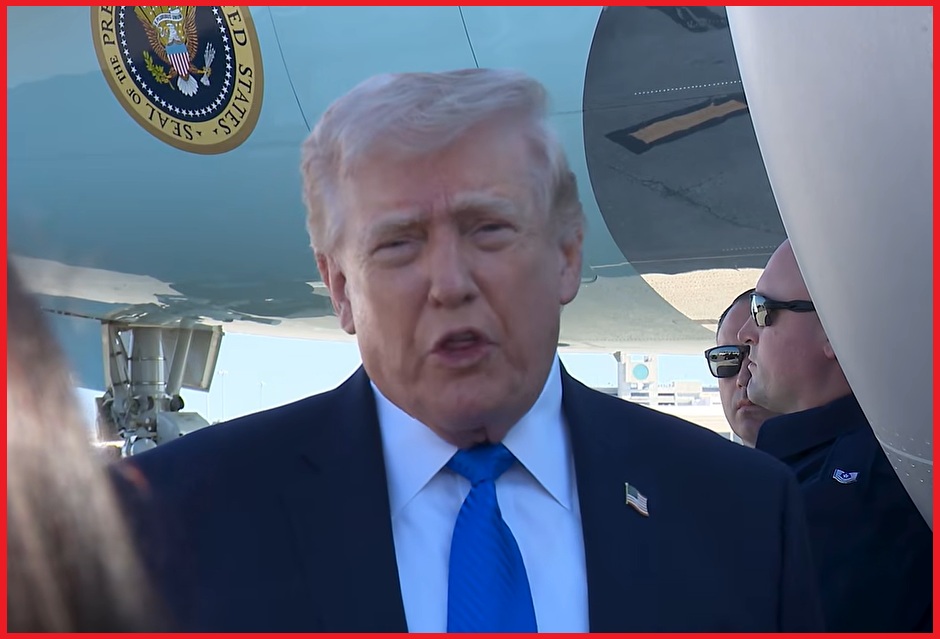
Syria.US_.Trump_

Syria has agreed to create an intelligence network with the United States and Israel. Syrian President Ahmed al-Sharaa, a former Sunni jihadist and known terrorist, became a CIA asset after he was captured while fighting for Al Qaeda in Iraq. I explained on numerous occasions that he was compromised and installed into his position by the CIA; Syria’s new alignment with Israel should not come as a shock.

Steve Witkoff, Jared Kushner, and Tom Barrack represented the US envoy for Syria during the Israel-Syria meeting in Paris this week. Washington reported that the meeting went as intended, with Israel and Syria agreeing to a  “fusion mechanism” by which they will share intelligence, diplomatic engagement, military de-escalation, and commercial issues.

For decades, Syria and Israel have technically been at war. That hostility has been useful politically for both sides. It justified military budgets, internal repression, and foreign alliances. This development reiterates what the computer has warned: the Middle East is fragmenting into blocs, and the old Cold War alignments are collapsing.

Middle East Map 2

Reports have emerged that Iranian officials are seeking to assassinate al-Sharaa. Al-Assad’s former military intelligence chief, Major General Kamal Hassan, is building a militia among Syria’s Alawite minority community, according to a December 2025 Reuters report. The ousted dictator’s billionaire cousin, Rami Makhlouf, has been financing Hassan’s efforts. Feared special forces commander Suhail al-Hassan, known as “The Tiger,” has been recruiting thousands of men to oppose al-Assad and retake control.

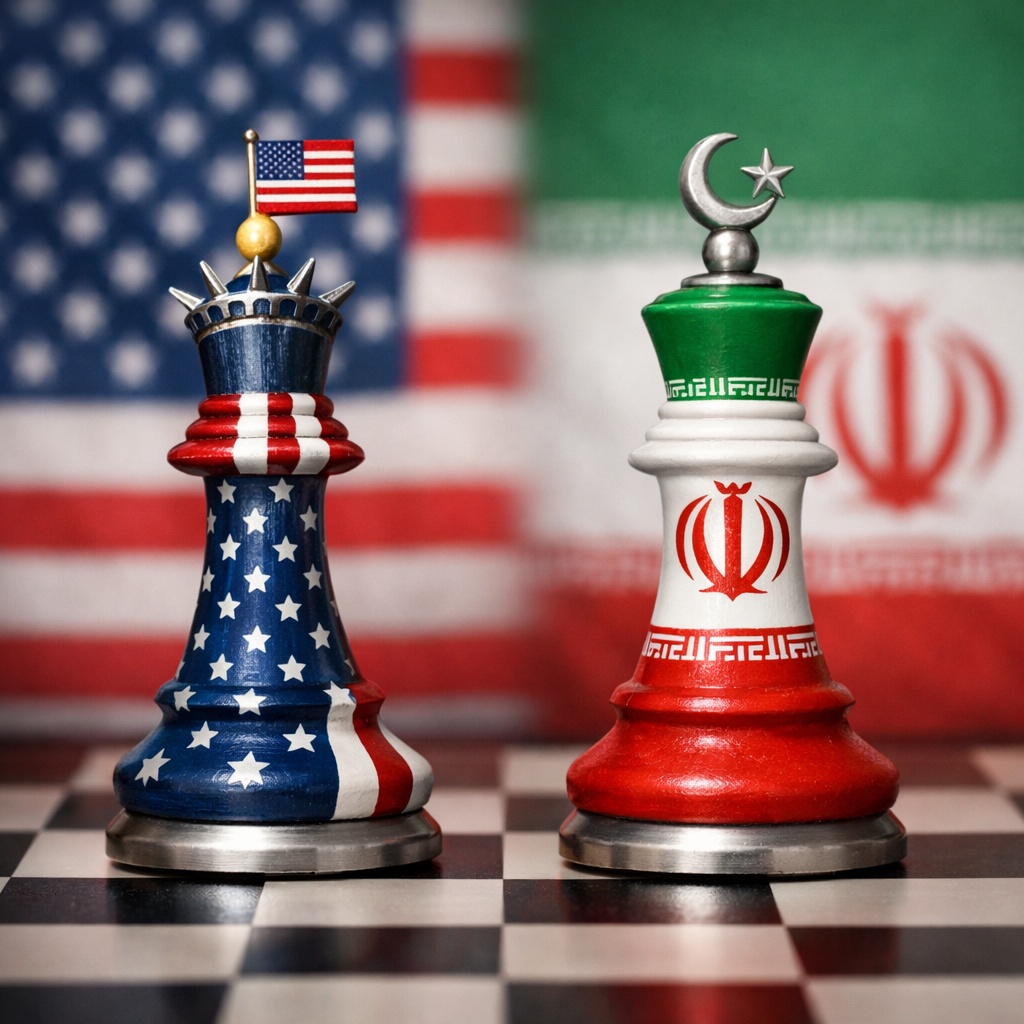
Syria is no longer beholden to Iran as its new financiers are from the West. Russia is no longer policing the region and the US has a stronghold over Syria. This alignment is temporary and a precursor to a larger regional conflict on the horizon.

Monday Should Be Really Interesting – And Other Random Stuff


My grandpa, and later my father, used to say something at particular moments that generally annoyed me but turned out to be entirely accurate, much to my youthful angst… “Well, hang around a one-legged group long enough, and you’re eventually going to end up limping.”

Yup, I learned to hate that lesson because the truth of it was always annoying.

This is perhaps the first time in memory when I look forward to Donald J Trump getting out of the Mar-a-Lago bubble and back to Washington DC.  Good grief, just typing that I can’t believe I’m saying it.  Here’s why:

Having followed and written about the optimal solution approach within the Trump Doctrine, a process that assigns responsibility to regional actors, then exits while providing support but not direct involvement [the delegation metric of high-support/low-direction], perhaps that is unfolding again in the background.  However, it seems like Trump is accepting the annoying Iran monkey problem on our behalf. [REF: How to Make The Monkey Jump]

To be clear in my personal position, charity begins at home.  (1) I don’t want conflict with Iran, nor do I really care about their internal political struggles; most of my day-to-day contacts feel the same. (2) At the same time, yes, I can imagine a scenario where Venezuela represents a threat to our continental objectives and national security, but would prefer to see them isolated from the outside.  Embargo them, stuff them inside an economic confinement zone (if needed), tell them why, then let the internal mess work itself out; most of my day-to-day contacts seem to feel the same.

Granting President Trump the long view of support; I mean, we don’t know what he is aware of; I sure hope all of this Iran stuff has a direct connection to American strategic interests.

Simultaneously, I can certainly see where deconflicting the USA, vis-a-vis Ukraine (literally London and the EU) from friction with Russia, has a strategic interest and factual bearing on the dollar-based trade system.  Attention on the Ukraine vs Russia stuff does have direct, albeit complicated outcomes attached to the economic standing of the average American.  Iran less so.

Pictured Center: a one-legged man.

Pictured Center: a one-legged man.

Looking at it from a geopolitically logical approach…. President Trump and Marco Rubio need Syria to remain stable.

Secretary Rubio has explained this aspect very well when he summarized the reason for President Trump lifting the sanctions against Syria.  I get that part.  But is this “locked and loaded” simply a brush back pitch against Iran to stop them from disrupting Trump’s Gaza objective.  Maybe so, it does make sense; thus, we extend the benefit of doubt.

If Syria destabilizes the tenuous Israel/Gaza stuff gets more complicated.  Iran can destabilize Syria. Therefore, putting pressure on the Iranian regime while simultaneously telling Israel to cool it over their Turkish opposition to the Gaza assist again does make sense.

Benjamin Netanyahu dislikes Recep Erdogan immensely and doesn’t trust him an inch.  I get that part also, but Turkey is a weird place held together by Erdogan’s very specific brand of Muslim Brotherhood patriotism.

In very direct ways keeping Syria stable helps Turkey and by extension the EU.

If Syria erupts, the refugee exodus heads north, and cunning Erdogan – a tenuous NATO member  seemingly never giving up on his Ottoman Empire rebuild – will play his “I can only absorb so much” card, thereby opening the gates for more authentic Islam travel further north into Europe.

[Our solid contacts in Istanbul have confirmed around 5 million Syrians have repatriated since President Ahmed al-Sharaa started his agenda to stabilize the region. The busy former al-Qaeda guy, 43-years-old, is also a bridge between Trump and Putin. So, there’s that.]

Keeping Syria stable also permits Trump’s Arab state coalition to deal with Gaza/Hamas in a constructive way. Trump told Netanyahu this publicly during the recent visit, essentially rebuking Israel’s justification for more IDF military action in Gaza.  Again, President Trump is dancing through the minefield here with the long game to get us the f**k out of it, while Netanyahu is hugging Trump to pull the USA deeper into it.

If you understand the Iranian tentacles that still remain in Syria (see recent ISIS attacks), confronting Iran makes Israel very happy; however, it’s not Netanyahu’s happiness that stands behind Trump’s motive for the confrontation.  Ultimately, the motive is Syria’s stability, Turkish Gaza support and the Arab money/engagement needed for the Mideast mess.

If our suspicions are correct, we should see Team Trump leaning toward Recep Erdogan, toward the Arab coalition and toward Syria at the same time he is managing Iran, managing Israel and managing a U.S. congress.

If the Ayatollahs are busy tamping down street protests, they are less likely to be poking Syria.

All of that is giving President Trump the maximum benefit of the doubt combined with the application of common sense.

♦ Meanwhile inside Russia, you might not hear about it from western media, but Ukraine and NATO are striking non-military targets, civilian areas, throughout Russia currently focusing heavy drone fire at Kazan, Russia’s third largest city.

STATE DEPT: “There have been drone attacks and explosions near the border with Ukraine, and in Moscow, Kazan, St. Petersburg, and other large cities.

Russian citizens are now very familiar with the sound of air raid sirens as increased drone attacks from Ukraine are extending into Russia.  This noticeable increase in activity is happening in combination with U.S/Ukraine strategic discussions on an EU created ceasefire agreement.

The Rubio state department has now updated the Russia advisory summary warning all Americans of the danger in traveling throughout Russia.

The update is also timed with the increased drone attacks into Russia’s main population centers and is likely due to concern that Americans would be street targets for angered Russian nationalists.

If President Trump walks away from the EU/Ukraine peace agreement construct, Russian Federation President Vladimir Putin will likely increase retaliatory attacks against Ukraine by significant levels.   One of my good contacts shared, “if Trump walks away, Kiev will now be leveled.”

Apparently, despite the incoming fire increasing, Putin is holding back his response to give Trump room to operate, while still carefully managing the Kremlin politics and striking into Ukraine to appease those in Russian government who want the full weight of the Russian military to come down hard on Zelenskyy.

…”If Trump walks away, Kiev will now be leveled.” 

More Dividing – Mark Levin Explodes on Young Conservative Voices


Posted originally on CTH on December 30, 2025 | Sundance

A few context points on this: #1) Mark Levin has a direct and personal line to Israeli Prime Minister Benjamin Netanyahu. Levin can and does talk to ‘Bibi’ all the time. #2) If Levin was confident in the position of President Trump toward Israel, this would not be needed.  #3) This same level of toxicity is also being directed toward Trump’s vice-president, JD Vance.

This is the current state of mind of Mark Levin:

Toward Megyn Kelly (3.6 million followers]

[SOURCE]

Toward Jack Posobiec (3.2 million followers):

[SOURCE]

What’s going on?

It is exactly what I said was happening – SEE HERE.

The use of Alinsky tactics is a left-wing approach.

This sudden debate over supporting the policies of Israeli Prime Minister Benjamin Netanyahu did not surface organically in early 2025. It was planned and then stimulated as a wedge issue to divide the MAGA movement and begin a larger process to restore the Big Club control of Republican politics.

♦ You Can’t be ‘MAGA’ If You’re Anti-Israel ~ Benjamin Netanyahu

According to those inside America who are pushing the division: if you do not support the policies of Netanyahu, you are an antisemite, a hater of Israel.  This wedge issue, when coupled with the three-stage Alinsky tactic to isolate, ridicule and marginalize, can be used effectively to shrink the ‘Big Tent’ and restore the Big Club.

[SOURCE]

The important element is how the toxic outcome -the division- benefits the traditional Republicans, the traditional Republican Party control officers, the traditional party “conservatives”.  Put another way, division – regardless of how it is achieved, returns the party to the people who controlled the illusion of choice.

Instead of the Bush machine, Sea Island group or the Traditional GOP confronting MAGA directly, those same operatives simply use the wedge issue of Israel to say, ‘you’re either with us or against us‘.

We have been watching this unfold all year.

Who benefits? The Big REPUBLICAN Club.

♦ Turning Point USA: This narrative is a little more direct and easier to understand.  A big part of the MAGA win in 2024 was due to the youth movement.  The Big Club needs to manage that crowd if they are going to return to control. TPUSA represents a significant political ground game for any candidate.  With thousands of chapters, Christian values and high energy, Turning Point can be a formidable Get Out the Vote (GOTV) operation.

Injecting the Israel support -vs- antisemite wedge into TPUSA is intended to diminish their influence, internally divide their membership and weaken the capability of the organization to deliver influence in the 2028 election.  Ben Shapiro et al versus Tucker Carlson et al.  Again, we see Alinsky methods deployed by the Big Club.

TPUSA is now the proxy representing JD Vance.  Labeling TPUSA as an antisemitic group supports the objectives of the Big Club and eventually, Ron DeSantis.  [NOTE: This operation will continue]

READ FULL EXPLANATION ~

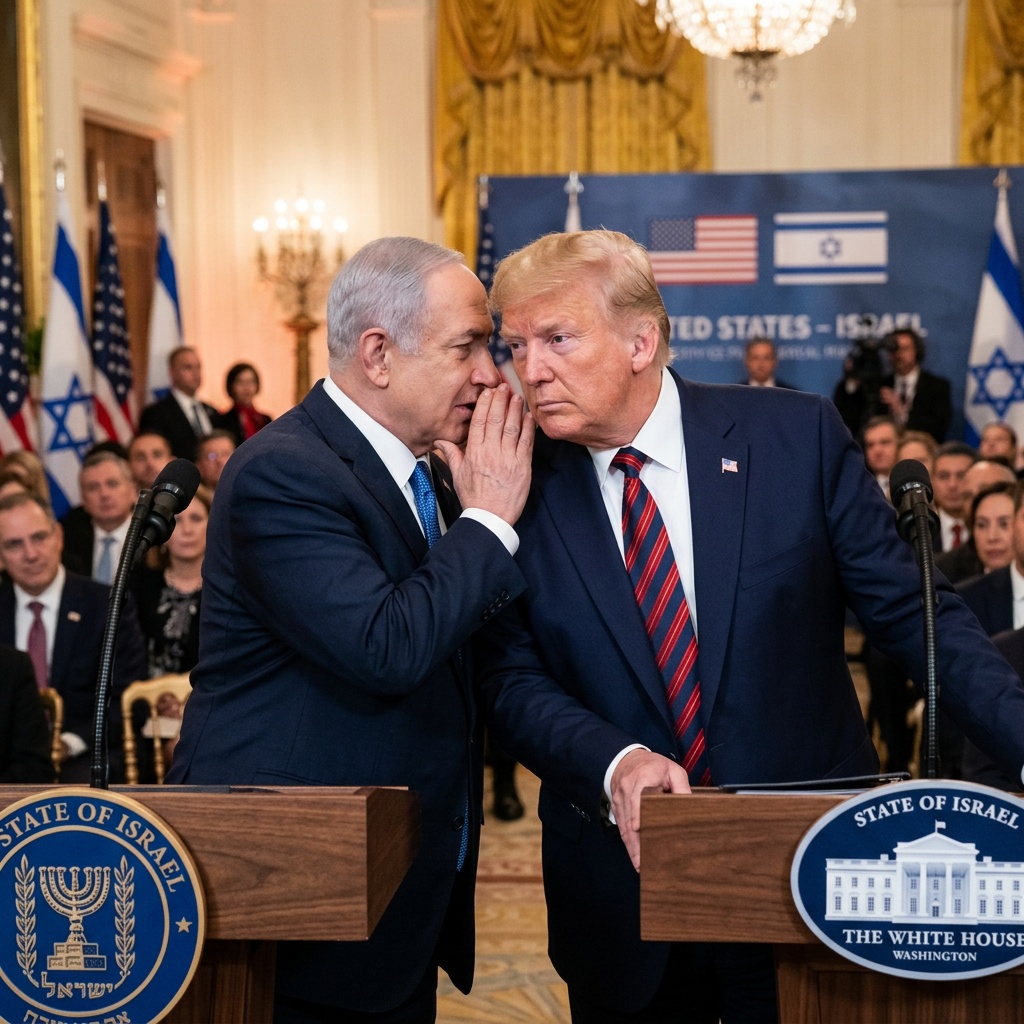
Nervous Netanyahu and President Trump Hold Press Availability: …”If you don’t have Trump”…


Posted originally on CTH on December 29, 2025 | Sundance

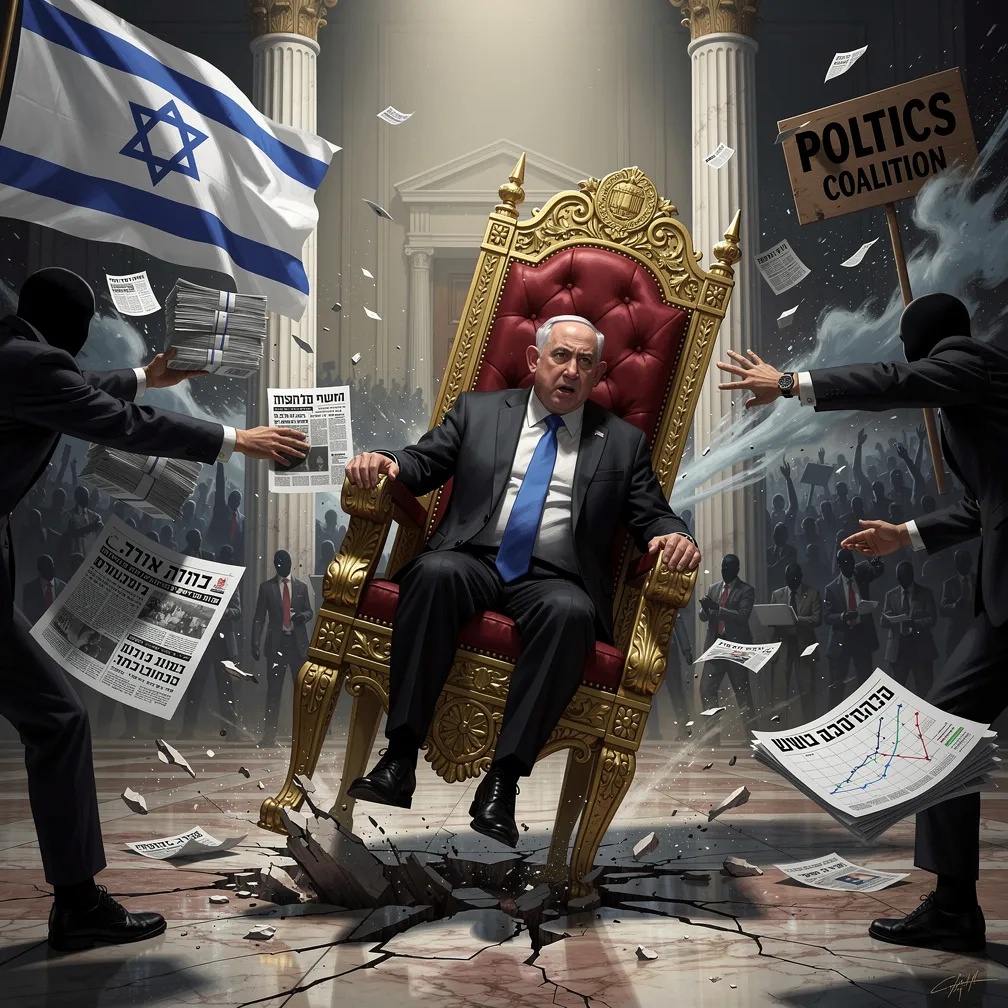
The sense you get from reviewing the interactions is that Israeli Prime Minister Benjamin Netanyahu is nervous in his need to maintain very close support from U.S. President Donald Trump.  When we review the interaction, we see Netanyahu’s praise of President Trump through a prism of tenuous dependency.

Netanyahu needs to retain a close and favorable position of influence; yet there is something in the engagement that seems to indicate an unease, a nervousness visible within the Prime Minister of Israel.

The moment at 10:48 is important, “Someone said in the room: if you don’t have Trump“… and the U.S. President strategically decided to let that thought trail off without finishing.  However, in context it was very clear what would have come next if Trump didn’t restrain himself.  “Someone said in the room: if you don’t have Trump”… you don’t have Netanyahu, was likely the end of that thought, and Trump isn’t wrong.  Benjamin Netanyahu’s body language, facial expressions and overall demeanor imply agreement.

Bibi knows the unspoken words are accurate, so does everyone who supports Bibi – especially those pro-Israel voices inside the USA.  Also, within that geopolitical dynamic, you will find President Trump’s leverage and an understanding of the behavior for those who support Netanyahu’s government.  WATCH:

The non-pretending review of Netanyahu’s purpose for the visit, is to get additional support from President Trump for more military action against Iran.  President Trump knows the intents and motives behind the shaped information from Netanyahu, the Israeli government and U.S. donors and voices.

President Trump emphasized strongly how the Arab coalition supports the elimination of Hamas as a terrorist threat, not just the United States.  This emphasis on retaining the original peace agreement continues to pull the narrative away from the U.S. having to give support to ongoing Israel military action in Gaza.   “If Hamas doesn’t disarm voluntarily” the Arab countries will disarm them President Trump suggested.

Benjamin Netanyahu is not going to be able to pull the Trump administration into military engagement in Iran.  That part is clear from the tone and presentation of Netanyahu as well as the space between the words of Trump.

Cutting Through the Fog and Conflict Within Current U.S. Republican Politics


Posted originally on CTH on December 28, 2025 | Sundance

Prior to the 2012 Republican presidential primary, many conservative Americans -including myself- were confused by the consistent illusion of choice offered in republican presidential candidates. The Republican party’s successful installation of Mitt Romney was the final straw.

Going into the 2016 Republican presidential primary, we became more attune to how the illusion of choice is created. By closely following the Republican party’s assemblies, tracking the participants, researching the networks and looking at how the Republican party professionals modified their election rules at a state level, revealed the closed system used to create the illusion of choice.

The GOP winter meeting in Washington DC, December of 2014, outlined the playbook. The sequencing of state elections, the distribution of delegates (proportional or winner-take-all) and various internal mechanisms all play a part. This led to our first breakthrough – we began to understand the “splitter strategy”.

A small group of internal party officers in combination with powerful established politicians and major donors could coordinate a party objective to support the “acceptable candidate.”

The outcome of the GOP 2014 winter meeting was a pathway for Jeb Bush in 2016. The outcome of the DNC construct was a pathway for Hillary Clinton. Regardless of which wing of the UniParty system won the election, the actionable outcome in policy would be the same; the institutions of DC maintained, and network affluence apportioned according to the victor.

In this form of party democracy voting is an outcome of the illusion of choice. The real decisions were/are not being made by voters. The party system determines the candidate. DNC or RNC the policy outcome is a few degrees different, but the direction is the same.

In 2016 the left-wing of the Uniparty would diminish any challenger to Hillary, Bernie Sanders would be controlled. The right-wing of the Uniparty would diminish any challenger to Jeb, divide the voting base and use party rules to clear his path.

The opaque nature of this party control system became clearer when the last GOP candidate entered the race. In the clearest exhibition of controlled politics in modern history, Donald Trump was the wildcard.

Mainstream “conservative” voices, what a later vernacular would describe as “influencers,” began exposing their ideological special interest in this political control system through opposition to Trump, the popular people’s choice candidate.

You know the history thereafter. However, the problem for the GOP wing in 2016 was not Donald Trump per se’, their biggest problem was that American ‘conservatives‘ had discovered their playbook. The illusion of choice was now becoming very well understood by a subset of voters later named MAGA voters, the original “silent majority” was silent no more.

This review is simply context; however, it is important context if we are to understand exactly where we are in late 2025 going into the midterm election in 2026. [Star Wars (2016), the Empire Strikes Back (2020), the Return of the Jedi (2024)]

The fourth chapter of this conflict is now upon us. It is a battlefield that has been unfolding all year.

When you understand the larger objectives behind what is happening, you can clearly see -even predict- each of the moves.

Joint Statement from U.S Negotiators, Arab Partners, Turkey and Gaza Officials on Next Steps in Peace Plan


Posted originally on CTH on December 21, 2025 | Sundance

President Trump Special Emissary Steve Witkoff relays this official statement following meetings with U.S. Negotiators, Arab state partners, Turkey and Gaza officials about the next phase in the Israel-Gaza peace plan.

STEVE WITKOFF – “We, the representatives of the United States of America, the Arab Republic of Egypt, the State of Qatar, and the Republic of Türkiye, met yesterday in Miami to review the implementation of the first phase of the Gaza ceasefire and to advance preparations for the second phase.

The first phase has yielded progress, including expanded humanitarian assistance, the return of hostage bodies, partial force withdrawals, and a reduction in hostilities.

In our discussions regarding phase two, we emphasized enabling a governing body in Gaza under a unified Gazan authority to protect civilians and maintain public order.

We also discussed regional integration measures, including trade facilitation, infrastructure development, and cooperation on energy, water, and other shared resources, as essential to Gaza’s recovery, regional stability, and long-term prosperity.

In this context, we expressed our support for the near-term establishment and operationalization of the Board of Peace as a transitional administration for the civilian, security, and reconstruction tracks of the reconstruction. We reviewed next steps in the phased implementation of the Comprehensive Peace Plan for Gaza, underscoring the importance of sequencing, coordination, and effective monitoring in partnership with local Gazan institutions and international partners.

We reaffirm our full commitment to the entirety of the President’s 20-point peace plan and call on all parties to uphold their obligations, exercise restraint, and cooperate with monitoring arrangements. Further consultations will continue in the coming weeks to advance the implementation of phase two. (source)

It always seems odd to write Turkey, Egypt and Qatar working collaboratively when you consider the history of their rather oppositional relationship regarding the Muslim Brotherhood.  However, this collaboration highlights the nature of a very historic assembly for peace that President Trump was able to put together.

Secretary Rubio recently spoke about the current Gaza status:

QUESTION: Thank you. Returning to Gaza, what is the U.S. understanding of what Hamas is willing to concede on disarmament? Reports suggest that Hamas might hand over its heavy weapons but retain its smaller arms. Is the U.S. prepared to accept partial disarmament as sufficient in phase two?

SECRETARY RUBIO: Yeah, I’m not going to get into the details of those types of negotiations. Let me just couch it to you this way: Everyone wants peace. No one wants a return to a war. If Hamas is every in a position in the future that they can threaten or attack Israel, you’re not going to have peace, okay? You’re not going to convince anyone to invest money in Gaza if they believe another war is going to happen in two to three years. So, I would just ask everyone to focus on what are the kind of weaponries and capabilities that Hamas would need in order to threaten or attack Israel as a baseline for what disarmament needs to look like. Because you’re not going to have peace. If two years from now Hamas is launching rockets or killing Israelis or carrying out, God forbid, another 7th of October type terrorist attack and so forth, you’re not going to have peace. So, who is going to invest in a peace, who is going to invest in rebuilding a place, that’s going to get destroyed again in a future war? So that’s why disarmament is so critical.

Now, what that entails, we’re going to leave that to the technical teams to work on. It would have to be something obviously that they’re willing to agree to that our partners can push them and pressure them to agree to. It also has to be something that Israel agrees to. In order for that to work, both sides have to agree on it, and we need the space to do it. But that’s the way to think about it, okay? You cannot have a Hamas that can threaten Israel in the future. If they can, you won’t have peace. So that’s the goal.

QUESTION: Thank you, Mr. Secretary. You said a few moments ago that everyone wants peace for Gaza, and yet by any metric the Israelis are flouting the ceasefire that President Trump negotiated by killing an average of two children a day, not allowing the agreed-upon humanitarian aid into Gaza. How long can this continue? How long can the Israelis be allowed to show such disrespect to President Trump?

SECRETARY RUBIO: Well, look, that’s your characterization of it about the term “disrespect.” What I would say is this. This – we – this was – first of all, it was a miracle that it happened in the first place. We all understand how difficult it was for that to come to the conclusion that it did, where the actual – the bombing and everything else, the scale and scope of what we saw ended, all the hostages were released, and we have relative peace right now for the most part, despite the things you’re pointing to. That was very difficult.

But this is not easy. Peace is a verb. It’s not – it’s an action. It’s not a sentiment. Every single day will bring challenges. Every single day. We also have had instances, for example, over the last couple weeks where Hamas elements emerged from a tunnel, attached an explosive device to the side of a vehicle, and injured and almost killed Israeli soldiers. We still have this threat. We still have and see every single day Hamas openly taking steps to strengthen themselves with – inside of those places in Gaza that they still control. We saw early on the atrocities they were committing in the streets against people as they were trying to show people how strong they were.

So, I don’t think I’m standing here to tell you this is going to be easy. This is an hour-by-hour, day-by-day challenge. It’s one of the reasons why we have stood up this center there in – operating in Israel in partnership as well with another cell that exists in a regional country. It’s why every single day there are leading – there are meetings among both intelligence, diplomatic, and military officials of multiple countries that helped bring about this deal to manage this. And that’s why it is so critical, it is so critical and so key, that we move to complete this first phase, that we move to put in place the Board of Peace, get everybody to agree to be a part of it, move to put in place this Palestinian technocratic organization so that they can begin to provide some governance structure, and move to put in place the stabilization force.

That’s the goal here. But it’s not going to be easy. Every day will bring new challenges to that, and we recognize those challenges are coming from all sides.

QUESTION: Very quick follow-up. Who’s going to be – want to be a part of a stabilization force if Israel is effectively using Gaza as a free fire zone?

SECRETARY RUBIO: Well, these are the things we – that’s – these are the things that we’re working through right now. Again, that’s why it didn’t happen yesterday. That’s why we didn’t – I don’t mean yesterday literally. That means why we’re not there yet. This is the hard work of diplomacy and peacemaking. Peacemaking isn’t just signing a piece of paper. It’s actually complying with it. And compliance oftentimes requires – in many cases, in most cases requires – daily, constant follow-up and nurturing.

So that is why we are in such a hurry – and I say as a priority – to get to this point where we have the stabilization force in place overseen by the Board of Peace and ultimately a Palestinian technocratic entity that can increase in its capability to provide governance. The stronger they are, the weaker Hamas will be in terms of threatening Israel, and I think the more security Israel should feel and less need for some of these things to happen.

But no one is claiming this is going to be easy. We have to work on this every single day. We have people in this building and deployed abroad – this is all they do 24 hours a day, day after day, elements of the State Department, the Department of War, and all other agencies, and including Jared and Steve and even myself who talk or do something about – there isn’t a day in the last since we – this was signed two months ago – that haven’t had to do something with regards to making progress on the phases of the ceasefire.

[SOURCE]

Brown University Shooting Suspect Released from Custody


Posted originally on CTH on December 15, 2025 | Sundance

Previously, overnight Saturday/Sunday police arrested a man named Benjamin Erickson (24) as the suspect {link} in the Brown University attack that left two people killed and nine injured.   At the time of the detainment Providence’s police chief, Col. Oscar Perez, told media, “Police are confident the man in custody is the suspected gunman.” {link] He added he wanted to ensure that all legal requirements are met before charges are brought.

According to media reports, “the man had a unique characteristic on his firearm, the officials said, and that firearm was found when he was taken into custody.” {link}

“We’re going to work with the attorney general’s office to make sure that we have the right legal requirements for the charges,” Perez said. “And this is, it’s just complex. There’s a lot of evidence, there’s a lot of witnesses, and so we have to make sure that we have it all tight. And to make sure we have a good case.” Perez said police cannot hold the person of interest beyond tomorrow (Sunday) if charges are not filed. He said he is hoping an arraignment will take place “sooner rather than later.” {link w/ video}

Shortly before midnight local authorities announced they were releasing the “person of interest”, aka Benjamin Jackson, but told the community not to worry as there is no alternative threat to the community. WATCH:

RHODE ISLAND – PROVIDENCE: A person of interest detained after a Brown University shooting that killed two students and injured nine will be released after an investigation took law enforcement authorities in a “different direction,” officials said Sunday night.

The disclosure, made at a hastily convened late night news conference, represents a stunning turn of events in an investigation into killings that rattled the Ivy League campus and came more than 12 hours after officials had announced that they had taken a person into custody in connection with the attack.

[…] The gunman opened fire inside a classroom in the engineering building, firing more than 40 rounds from a 9 mm handgun, a law enforcement official told AP. Two handguns were recovered when the person of interest was taken into custody and authorities also found two loaded 30-round magazines, the official said. One of the firearms was equipped with a laser sight that projects a dot to aid in targeting, said the official, who was not authorized to discuss the investigation publicly and spoke to AP on the condition of anonymity.

One student of the nine wounded students had been released from the hospital, said Paxson. Seven others were in critical but stable condition, and one was in critical condition. (READ MORE)

Occam’s Razor.  The suspect, Benjamin Jackson, could only be held for 24 hours without charges.  [Detained overnight Sat, clock ticks to overnight Sun] The attorney general would have needed to file charges on Sunday evening to avoid detainment issue.  The AG office doesn’t work full staff on Sunday, and the police detainment was too fast for them.  RESULT: Benjamin Jackson is released.

This is Providence, Rhode Island. One of the most Moonbat communities in a sea of Moonbat politics. DEI, not competency, is their operational language.  It’s just how the far-left rolls in combination with a police arrest of an individual who holds the same ideological alignment as the local officials in charge.

Ultimately, as suspected and rumored within the discussion of this story, the shooter (leftist) and the victims (conservatives) are on opposite sides of the political dynamic.  A college republican group on this campus would be a very small segment of the overall student/faculty population.

“The shooting happened during a final exam review session in a Principles of Economics class, according to the class’s professor, Rachel Friedberg. She did not immediately respond to a message seeking more information.” (Source)

As the mayor said, there is no “risk” to the larger Providence community in releasing the suspect, because the motives of the shooting indicate only a very narrow segment of the Providence population would be targeted.

12 People Killed in Australia – Terrorist Attack Targets Jews Celebrating Hanukkah at Bondi Beach


Posted originally on CTH on December 14, 2025 | Sundance

Two gunmen armed with long rifles and handguns opened fire at a crowd of people celebrating the beginning of Hanukkah at Bondi Beach, Australia.  12 people were killed with approximately a dozen more wounded.  The attack went on for well over ten minutes as the terrorist shot randomly into the crowd from a park bridge near the beach.

(NEW YORK TIMES) – At least 11 people were killed by gunmen who targeted a Jewish holiday celebration at Bondi Beach in Sydney on Sunday, in what the authorities called a terrorist attack. One of the shooters was also killed, the police said.

Police Commissioner Mal Lanyon of the New South Wales Police Force said on Sunday evening that officers had found what they believed to be several improvised explosive devices in a nearby vehicle linked to the suspect who was killed. Bomb disposal units were at the scene, he said. (MORE)

The shooting went on for ten minutes as police were extremely slow to respond.  Incredible footage has surfaced of a random civilian running to tackle one of the gunmen and wrestle his rifle away.  Alternate video shows the two men for over 10 minutes shooting from the area into the crowd.

Heroic Action:

Tucker Carlson Interviews Qatar’s Prime Minister Al Thani


Posted originally on CTH on December 7, 2025 | Sundance

Tucker Carlson is attending a conference in Doha along with a series of U.S. and EU political pundits and people within the geopolitical world including Donald Trump Jr.  This conference has people like Mark Levin and Laura Loomer going bananas as the Qatar vs Israel influence operation reaches new political levels of antagonism.

In the interview below Tucker Carlson is interviewing Qatar’s Prime Minister and Foreign Minister Sheikh Mohammed bin Abdulrahman Al Thani on the Israel–Gaza war, U.S. foreign policy toward Israel, Qatar’s long and ongoing role in mediation with Hamas, and the surge of propaganda targeting Doha.

The discussion includes how various administrations have asked Qatar for assistance, and the issue of Israel attacking Qatar amid the active peace talks. Tucker Carlson also tackles the issue of U.S. voices calling him a propagandist for Qatar head on.  WATCH:

.

As previously noted, Donald Trump Jr also attended the Doha, Qatar, conference.  His remarks are below.

The Qatar vs Israel influence battle, seems to be -essentially- the JD Vance vs Ron DeSantis pre-battle and influence operation.  I’ll keep watching it unfold, because the transparency of the objectives is interesting.

.

Secretary of State Marco Rubio Discusses Immigration Vetting, Venezuela Situation and Ukraine-Russia Conflict


Posted originally on CTH on December 3, 2025 | Sundance

Secretary of State and National Security Advisor Marco Rubio appears on Fox News for an extensive interview about current events. Within the interview Secretary Rubio discusses the current status of immigration vetting and the pause therein.

Additionally, Rubio outlines the current state of the U.S. operation in/around Venezuela and the ongoing negotiations with Ukraine and Russia to end the conflict in Eastern Europe. WATCH:

.