Posted originally on CTH on February 19, 2026 | Sundance
President Trump travels to Rome Georgia today to deliver remarks on the economy from Coosa Steel Corporation. The anticipated start time is 4:00pm ET. Livestream Links Below.
.
.

President Trump travels to Rome Georgia today to deliver remarks on the economy from Coosa Steel Corporation. The anticipated start time is 4:00pm ET. Livestream Links Below.
.
.
The pundits, economists and financial media are shocked, perplexed, befuddled and flummoxed. The Bureau of Labor and Statistics has released the January inflation data [SEE HERE] and the results are much better than they expected.
Overall inflation is 2.4% year-over-year, and there are zero indications that tariffs are having any impact on consumer prices [See Apparel].
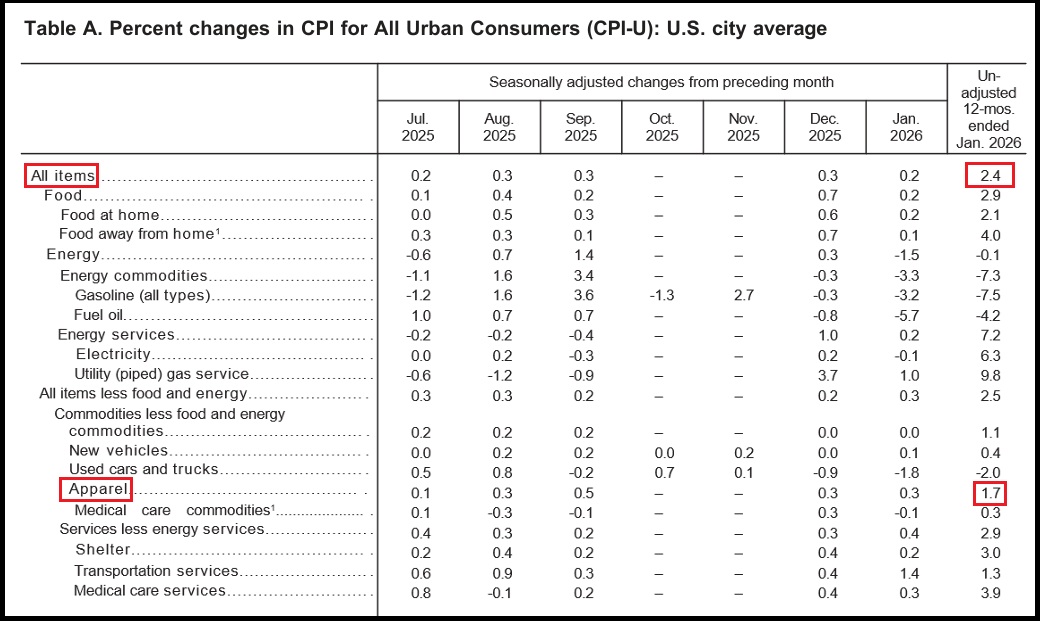
CORE inflation, which removes food and energy, comes in at 2.5% year-over-year, the lowest number since March 2021. This is like reliving 2018 all over again, when the pundits proclaimed with absolute certainty that Trump’s tariff approach was going to cause inflation; it never happened.
VIA ABC – Inflation cooled in January, dropping price increases to their lowest level in nine months, new data from the Bureau of Labor Statistics showed. The lower-than-expected reading defied fears of a tariff-induced hike in overall costs.
Prices rose 2.4% in January compared to a year earlier, according to the Consumer Price Index.
The data arrived days after fresh hiring figures showed stronger-than-expected job growth in January, even though an updated estimate released at the same time indicated a near-paralysis of the labor market last year. (read more)
While it is likely prices will never reset to the 2021 levels, at least right now we have wages growing faster than inflation, which essentially nulls the inflationary impact within the economy.
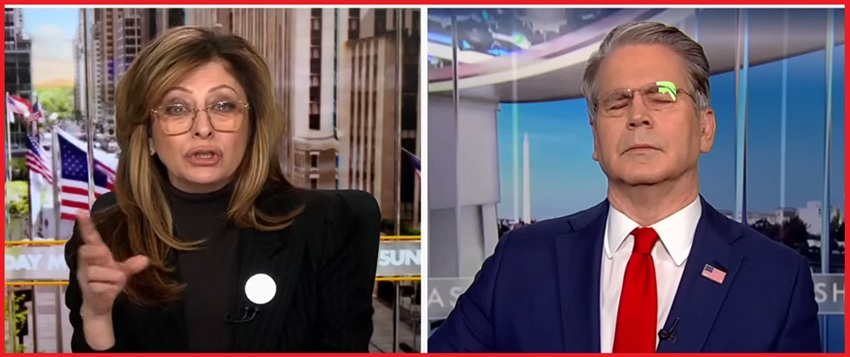
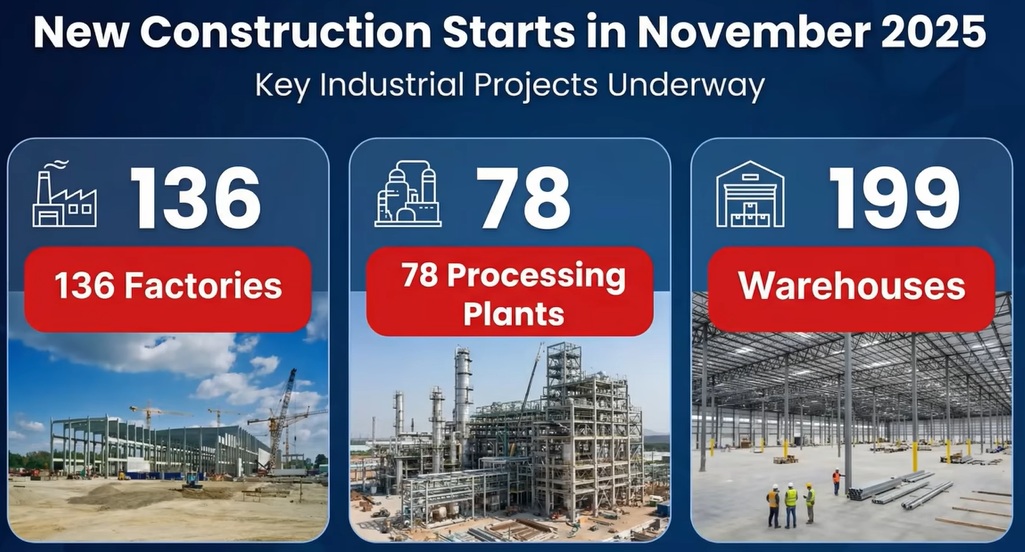
Treasury Secretary Scott Bessent appears on Fox News to discuss the current state of the U.S. economy as contrast against current growth plans and economic policy. As noted by Bessent, the future of the Main Street economy generally lags behind the forecast of the Wall Street economy. All of the domestic investment is currently building out the capacities of the underlying economy to expand.
Additionally, Bessent notes the importance of the cumulative effect of strategic energy policy, the assembly of a critical mineral reserve and the mounting growth in the industrial manufacturing center. MAGAnomics is creating expanded domestic growth by reshoring many of the industrial jobs due to tariff policy. Overall, the interview gives a big picture perspective on the short- and long-term economic program. WATCH:
.
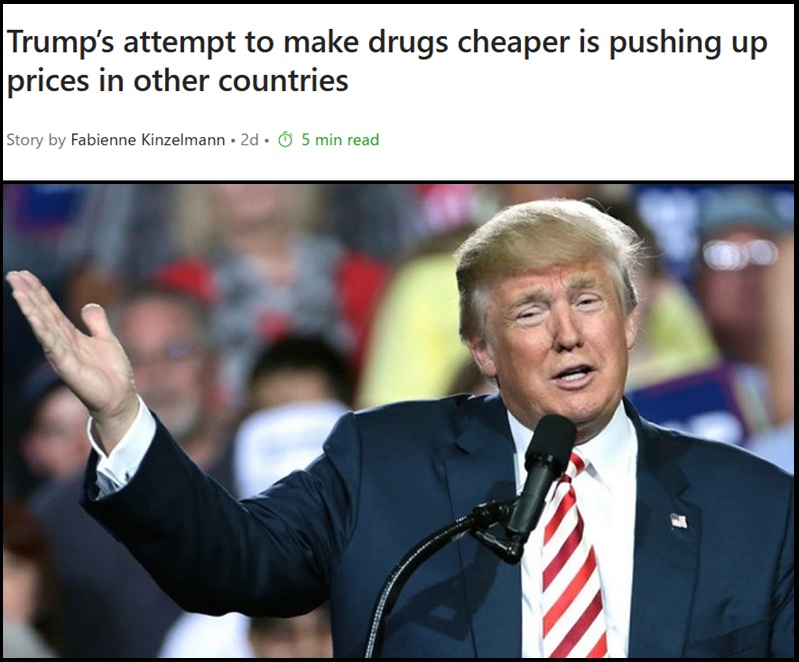
If President Trump will no longer permit Americans to pay the research production costs for pharmaceutical companies through high prices, essentially subsiding pharmaceutical costs for the world, then Rx companies will have to increase their prices throughout Europe. This is making the Europeans very unhappy.
(Bloomberg Businessweek) — For the past few years, Swiss oncologist Christoph Renner has treated blood cancer patients with Lunsumio, a new drug that helps the immune system recognize and destroy malignant cells. Then, last summer, Renner got an email from Roche Holding AG, Lunsumio’s manufacturer, informing him the treatment would no longer be available in Switzerland because health insurers there wouldn’t pay for the infusions. “You see what’s possible,” says Renner, a professor at the University of Basel, “and then you’re told you can’t use it.”
The move was a response to rules President Donald Trump introduced that force drugmakers to reduce their prices in the US to the lowest level paid in other developed countries. In Switzerland, new medications typically cost far less than in the US, so in theory Americans should benefit from the change. The problem is, instead of bringing prices down in the US, pharmaceutical companies are raising them elsewhere.
Yet Switzerland has shown little political willingness to pay more—threatening both the availability of medications in the country and its role as a global leader in developing therapies. Drug prices are the primary driver of the increasing cost of mandatory health coverage, and the topic generates heated debate during the annual reappraisal of insurance rates. “The Swiss cannot and must not pay for price reductions in the USA with their health insurance premiums,” says Elisabeth Baume-Schneider, Switzerland’s home affairs minister.
[…] Drug companies say they need to charge high prices on new medications because so much of their work doesn’t pay off. They spend billions of euros on research, but relatively few formulas turn out to be effective. Even fewer provide the massive profits needed to fund further research—and pay off shareholders. Moreover, companies typically need to make that money early on, because after about two decades on the market, drugs lose patent protection, which drives prices down as generics producers start selling copycats.
Manufacturers argue that American patients bear most of these innovation costs and that it’s only fair for other countries to pay more—especially Switzerland, given its prosperity. A more equitable approach, they say, would be to set prices globally and adjust them country by country based on gross domestic product and purchasing power. (read more)
First President Trump starts making Europe pay for their own defenses and NATO commitments; then he has the audacity to tell them the U.S. will not accept European censorship or free speech rules. President Trump follows by hitting them with the end to the Marshal plan of one-way tariffs, seriously weakening the amount of revenue within the EU, forcing budget cuts. Then, as if Trump wasn’t bad enough, he makes it even worse by dispatching expensive Green New Deal energy agreements such as the Paris treaty, and using cheap abundant energy in the U.S. while Europe tries to operate on expensive windmills and solar panels covered in snow.
Now, in addition to forcing them to spend money on their military, now Trump expects the EU to just accept the end to their healthcare subsidies and higher prescription medications. The absolute nerve of this man.

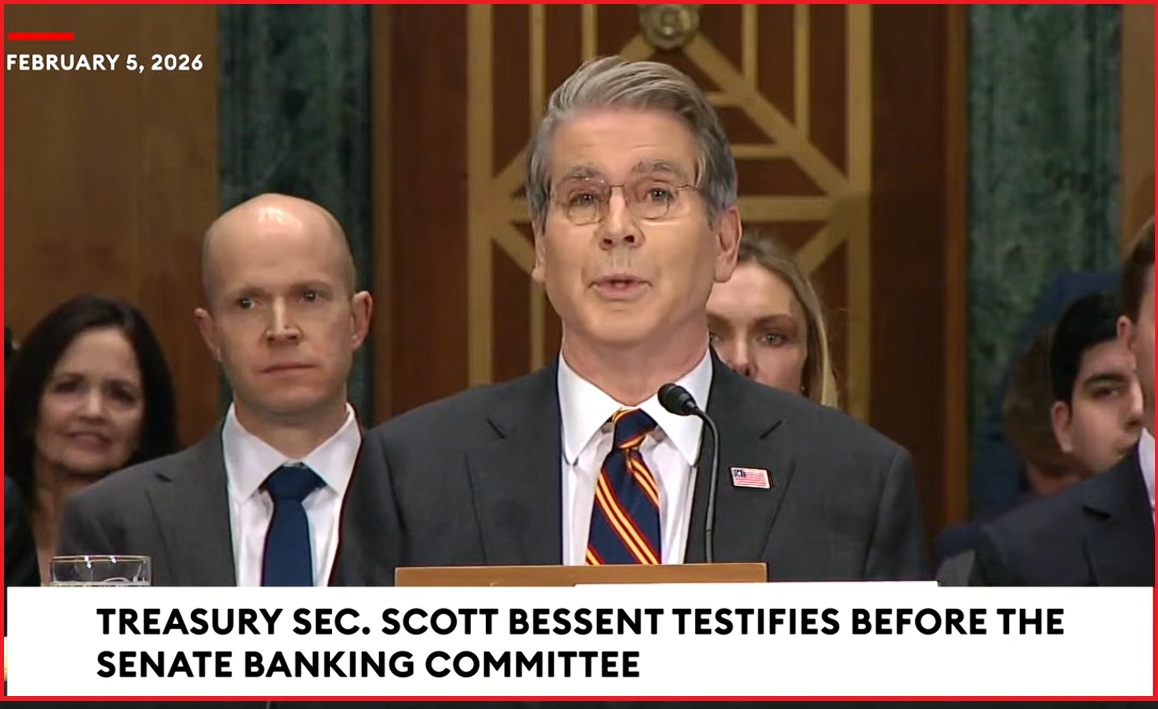
Secretary of Treasury Scott Bessent appeared on Capitol Hill today to give testimony to the Senate Banking Committee. The leftists were well prepared with narrative scripts to advance their opposition agenda. Bessent was unfazed.
In this highlight, Senator Elizabeth ‘Liawatha” Warren complains to Secretary Bessent about the price of things she tripled and quadrupled. Bessent responded by pointing out the Trump administration is reversing the catastrophic damage from the Biden-Warren economy. “I’m-a-git-me-a-beer” was not pleased at the retort. WATCH:
Thankfully, the grocery prices that Biden-Warren exploded, are finally starting to come down thanks to the economic policies of President Trump. Warren’s “affordability” narrative collapses each month the real wages of the American worker rise faster than the trailing inflationary impact of prior policy.
As noted by several economic indicators, inflation on the stuff that matters is in retreat. We are now entering the phase of lower gasoline prices, lower transportation costs, lower overall energy costs and stable domestic market prices. Additionally, exfiltrating illegal alien workers, both underground and above ground, is starting to put upward pressure on American wages and lower overall housing costs.
White House Manufacturing Policy Advisor, Peter Navarro, has written an op-ed warning about a new bill under construction in congress [BILL HERE] that seeks to stop President Trump from blocking the ‘de minimis loophole’ on imported goods.
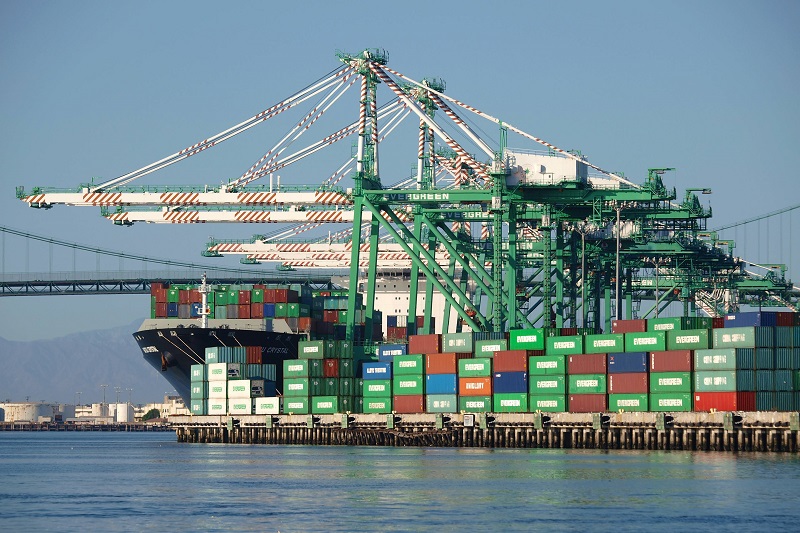
Previously, various shippers and transport companies like UPS and Fed-X had lobbied congress to retain a loophole on customs and duties allowing items valued less than $800 to enter the USA without tariffs. They were joined by ecommerce outlets like Amazon, Alibaba, Temu and Shein to keep cheap foreign goods flowing into the U.S. without passing through customs declarations.
President Trump stopped the de minimis loophole on China and Hong Kong and then globally.
As noted by Navarro, “the threshold for the exemption hit a staggering $800 per package — by far the highest in the world. Europe’s is closer to $150. Japan’s is under $70. China’s general threshold is in the single digits. The U.S. wasn’t “aligned with global norms.” We were the outlier, and a very expensive one.”
Now, Navarro is warning that congress is seeking to subvert the Trump position on imports and go back to allowing cheap foreign goods flood the U.S. market at a level that creates chaos in customs enforcement and facilitates the flow of illegal drugs and narcotics back through the system.
(The Hill) – […] Their bill is simultaneously a poster child for big money politics and a breathtaking insult to the public’s intelligence. It assumes voters won’t read past the title, won’t remember why de minimis was killed in the first place, and won’t connect the dots between lobbying disclosures, campaign checks, and a legislative resurrection of a loophole that nearly destroyed U.S. trade enforcement.
[…] So when Congress suddenly produces a bill that effectively recreates de minimis under a new name, nobody should pretend it came out of nowhere. This is what sustained pressure looks like.
Which brings us to the bill itself. The deception starts with the title. To call this the “Secure Revenue Clearance Channel Act” is like calling a casino a “retirement plan.”
The title promises security and revenue, but the text does the opposite. It creates a $600 express-lane carveout that lets express carriers move low-value shipments through a special channel using only manifest data. Instead of paying the tariffs required by law, importers can elect a substitute fee imposed in lieu of normal duties — including tariffs Congress enacted to protect national security.
That’s not enforcement. That’s Deep Swamp chicanery designed to look technical, sound boring, and slide through committee before anyone notices the damage.
Americans are noticing. So, stop it. (more)

President Donald J Trump has announced his selection to take over as Federal Reserve Board Chairman, Kevin Warsh. To give perspective toward the overall viewpoint of Warsh, THIS INTERVIEW from April 2024 gives some insight.
Warsh has been highly critical of the FED monetary policy overall and directly links inflation and depressed wages to the poor decision-making of the Federal Reserve overall. More background on Kevin Warsh is HERE.
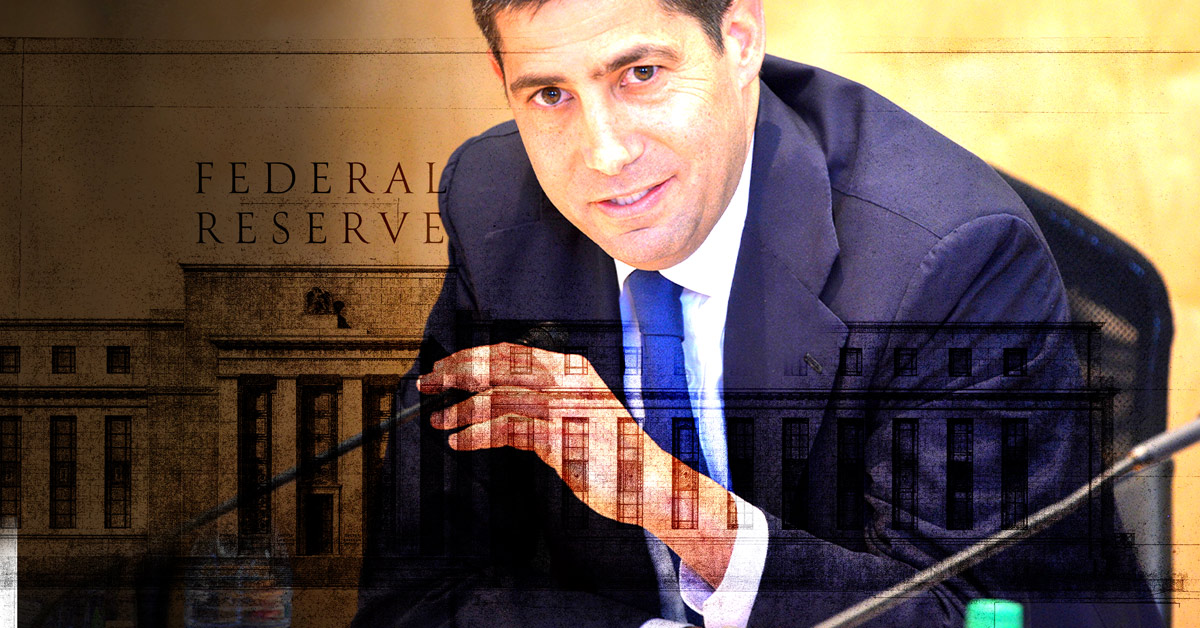
(Via Truth Social) – “I am pleased to announce that I am nominating Kevin Warsh to be the CHAIRMAN OF THE BOARD OF GOVERNORS OF THE FEDERAL RESERVE SYSTEM. Kevin currently serves as the Shepard Family Distinguished Visiting Fellow in Economics at the Hoover Institution, and Lecturer at the Stanford Graduate School of Business. He is a Partner of Stanley Druckenmiller at Duquesne Family Office LLC. Kevin received his A.B. from Stanford University, and J.D. from Harvard Law School. He has conducted extensive research in the field of Economics and Finance.
Kevin issued an Independent Report to the Bank of England proposing reforms in the conduct of Monetary Policy in the United Kingdom. Parliament adopted the Report’s recommendations. Kevin Warsh became the youngest Fed Governor, ever, at 35, and served as a Member of the Board of Governors of the Federal Reserve System from 2006 until 2011, as the Federal Reserve’s Representative to the Group of Twenty (G-20), and as the Board’s Emissary to the Emerging and Advanced Economies in Asia.
In addition, he was Administrative Governor, managing and overseeing the Board’s operations, personnel, and financial performance. Prior to his appointment to the Board, from 2002 until 2006, Kevin served as Special Assistant to the President for Economic Policy, and Executive Secretary of the White House National Economic Council.
Previously, Kevin was a member of the Mergers & Acquisitions Department at Morgan Stanley & Co., in New York, serving as Vice President and Executive Director. I have known Kevin for a long period of time, and have no doubt that he will go down as one of the GREAT Fed Chairmen, maybe the best. On top of everything else, he is “central casting,” and he will never let you down. Congratulations Kevin! PRESIDENT DONALD J. TRUMP“
Here we go. If you’ve been under the Treehouse branches for more than a few months, it is now officially time to pull up a rock take a front row seat and enjoy the show. Don’t draw attention to yourself; however, please do bring your favorite beverage, relax and watch what no one else will admit is happening. The 2026 operation to exit the USMCA is officially underway.
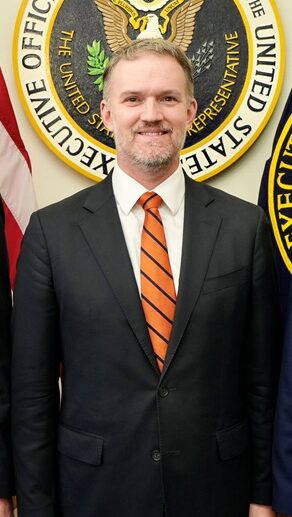
While the Snow Mexicans are gnashing their teeth talking about feelings and various shiny things, United States Trade Representative Jamieson Greer is meeting today with Mexican Secretary of Economy Marcelo Ebrard to strategize the best approach for a U.S-Mexican bilateral free trade agreement.
Please remember, in order to fully appreciate the moment, we must allow all negotiation pretenses to remain in place, giving the illusion of something that will no longer be present when the end goal is reached.
Jan 28 (Reuters) – U.S. Trade Representative Jamieson Greer and Mexican Secretary of Economy Marcelo Ebrard agreed during a meeting on Wednesday to begin formal discussions on possible reforms to the United States-Mexico-Canada trade agreement, Greer’s office said.
Possible reforms include stronger rules of origin for key industrial goods, more collaboration on critical minerals, increasing efforts to defend workers and producers, and efforts to combat dumping of manufactured goods, the USTR’s office said in a statement. (LINK)
As we noted at the end of last year, splitting the USMCA into two bilateral trade deals, one for Mexico and one for Canada, will be one of the most interesting and long-term economically significant moves in U.S. trade history. It is going to be a lot of fun to watch these negotiations, and the pre-positioning gives us a preview of what is to come.
Mexico is doing everything almost perfectly in preparation for their bilateral deal. Canada is doing exactly the opposite and positioning themselves for the worst possible outcome of a deal with the USA. The disparity in approaches is so different, even now it is remarkable to watch.
President Trump is establishing an entirely new economic, trade and finance system. The era of the Marshal Plan is over; it has been factually deconstructed in the past 12 months.
Canadians and Europeans are desperately trying to offset the ramifications, hold on to their economic benefits and find a new mechanism to afford the domestic indulgences now eliminated by President Trump.
Needing alternatives for their economies, the EU and Canada are looking to India and China respectively as a financial offset. Meanwhile, so far, Mexico is playing it smarter….
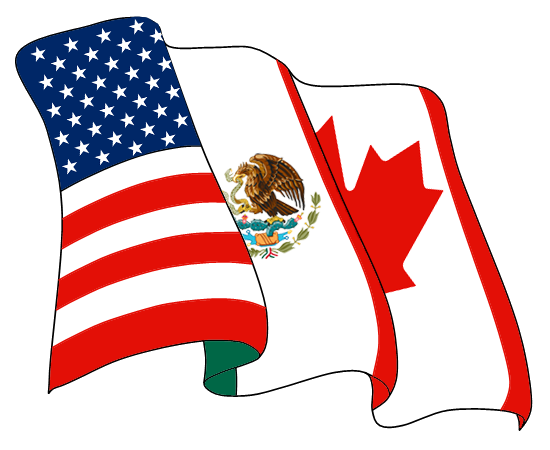
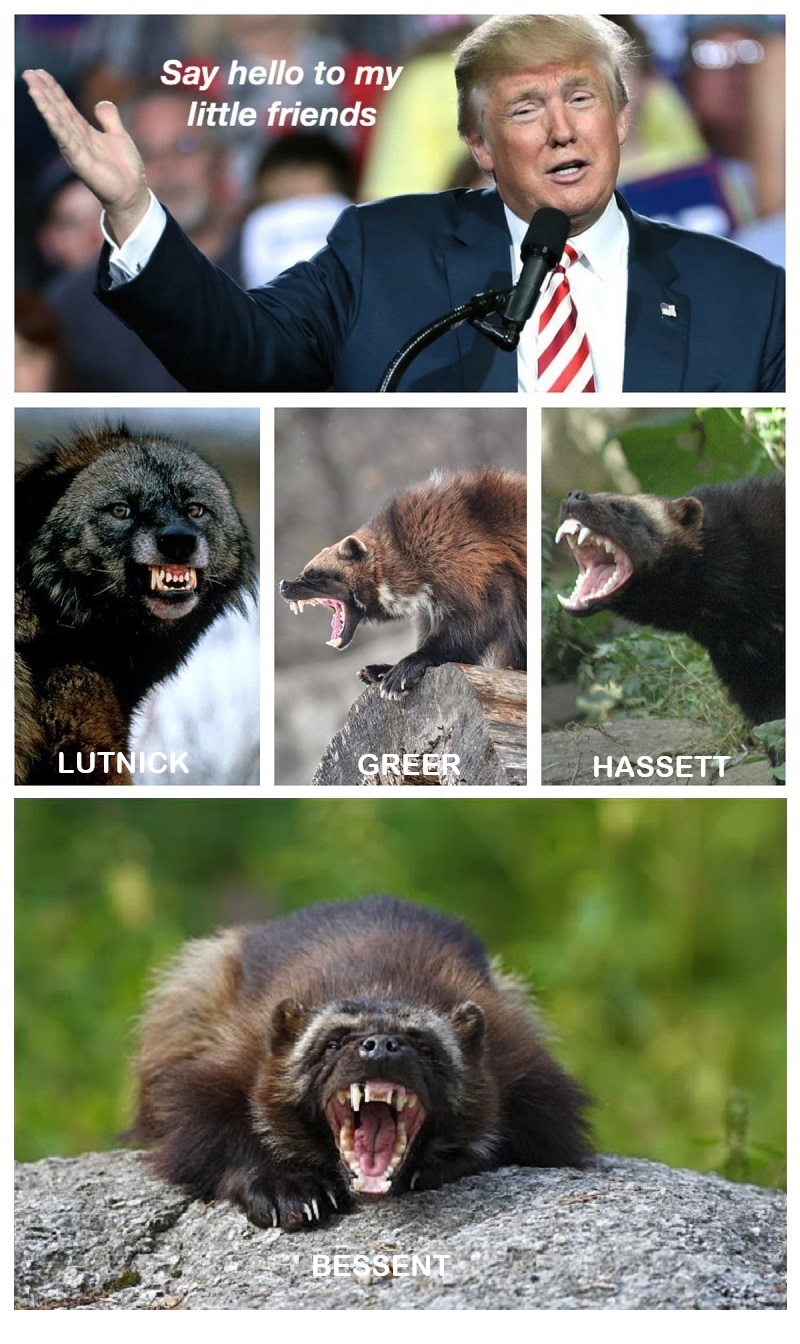

People might be interested in the recent stories of Canadian Premier Doug Ford and his reversal of position on Chinese EV production. Ontario Premier Ford now welcomes Chinese EVs into Canada.
Or people might be interested in the recent story of the EU announcing a historic trade deal with India. The European Union is now looking to find new markets to replace the U.S., while simultaneously agreeing to establish a new immigration/recruitment process to accept massive numbers of Indian migrants.
Yes, Canada reverses their position on trade with China, that’s odd. And somehow the EU immediately forgets their demands for India to stop buying Russian oil or face EU sanctions, another oddity. This is like watching someone you don’t like, get engaged to your smelly, fat ex-girlfriend. [Matthew 15:14]
Canada and the EU take trade and economic positions seemingly against U.S. interests. Simultaneously Mexico modifies all their trade positions to come into alignment with the USA. Yesterday, Mexican President Claudia Sheinbaum announced Mexico will no longer ship oil to Cuba.
What’s going on?
Well, to really understand what is happening you need to look at President Trump’s responses to all of the individual issues outlined above and take a much bigger picture view. President Trump is the master of the ‘self-fulfilling prophecy.’
♦ CANADA – When President Trump was asked about Prime Minister Mark Carney creating a new trade agreement with China, President Trump responded that he didn’t care – it was irrelevant to him. Yet, simultaneously inside the USMCA President Trump has the power to veto any trade agreement between Mexico or Canada and a non-member nation.
So, why didn’t President Trump care? Easy, because in President Trump’s mind there’s not going to be a USMCA; so, he really doesn’t care if Canada runs to violate it. In real terms, Canada doing bilateral deals with other countries, especially deals potentially detrimental to the USA, only strengthens his position on dissolving the USMCA.
If Canada violates the terms and spirit of the USMCA, it makes dispatch of the unliked trade agreement even easier. Canada is helping President Trump remove the congressional justification they could use to block him. If Canada is violating the USMCA (CUSMA), Congress is kneecapped from interference.
Provoking Canada into a trade position, that puts them at a disadvantage trying to stop the dissolution of the CUSMA, stops Congress from opposing the fracture, and then opens the door to a bilateral trade agreement, is creating a self-fulfilling prophecy that is entirely controlled by President Donald Trump.

[I pointed this out on the ‘Russian Sanctions’ map four years ago for a reason.]
♦ EUROPE – In the last few months, the EU has been pressuring President Trump to join them in putting sanctions against India for purchasing Russian oil. Suddenly, all those Russian energy issues are dropped, and the EU signs a trade agreement with India. Again, just like with Canada, President Trump doesn’t care; he’s working on a much bigger objective.
Both Canada and Europe are independently, out of necessity, taking action that takes apart the trade and economic system they created. At the core of the old trade system both Canada and Europe were exploiting the USA, exfiltrating wealth and skimming the independent entrepreneurial innovation that originates from within the U.S. economic system.
That necessary exploitation happened because the USA is innovative (freedom-based capitalism), while the CA/EU system is built on government control mechanisms. The CA/EU energy policy is just one impactful example of their pontificating inability to be insightful when it comes to consequences. The EU and Canada are now stuck looking for markets that will do the dirty jobs, provide them with core components, while simultaneously looking for markets for their finished products.
On the other side of the approach is President Trump, working to expand U.S. industrial dirty job capacity, create our own core components, then create finished goods entirely on our own. A complete revitalization of the U.S. industrial and manufacturing base. Our U.S. GDP is currently expected to grow north of 5%. This is not happening by accident.
Additionally, EU Commission President Ursula von der Leyen is not bragging about importing Indian IT workers in a vacuum. If the EU cannot skim off the IT capabilities of America, they have to find another Braintrust to tap. Just like the innovative dependencies of China, the EU is intellectually frigid; compliance is ingrained in their academia. Within the USA, we still have foundational disposition of ‘screw you‘ in our DNA.
Look at the advancements of Artificial Intelligence, or AI. All of the growth in that tech sector is being led by America. President Trump is taking every approach to ensure we remain the world’s dominant power in AI development. As much as Elon Musk’s quirks and quasi-friendly politics annoys me personally, strategically, on the technology side, it’s good to see him chumming around with President Trump; at least that’s what I tell myself.
♦ MEXICO – This is where it gets really, super interesting. You might remember that China was set to invest between $5 billion and $10 billion (total) in Mexico for EV auto manufacturing. In December of 2023, three Chinese auto manufacturers, MG, BYD, and Chery, announced they were going to spend billions building new EV manufacturing plants. Each Chinese manufacturer was initially going to spend between $1.5 to $2.0 billion. By March 2024, the reasoning was evident – Biden was supporting it.
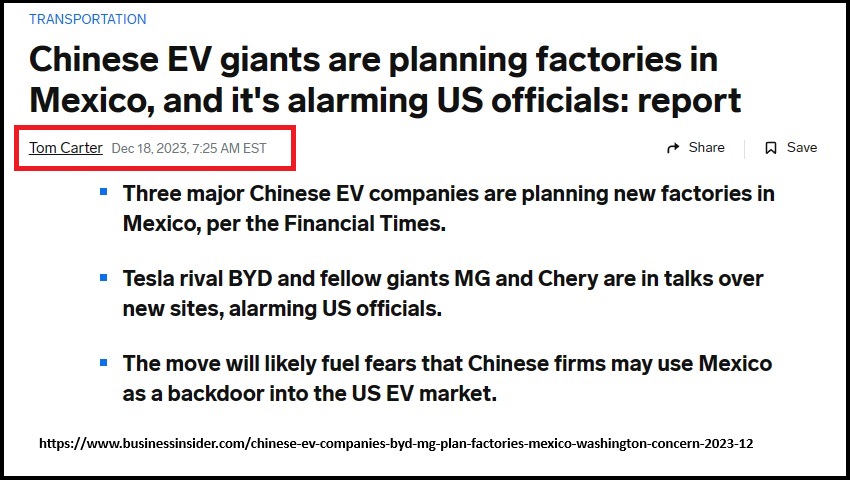
When President Trump won the November 2024 election, all of those Chinese investments and plans inside Mexico were cancelled.
As we noted at the end of last year, splitting the USMCA into two bilateral trade deals, one for Mexico and one for Canada, will be one of the most interesting and long-term economically significant moves in U.S. trade history. It is going to be a lot of fun to watch these negotiations, and the pre-positioning gives us a preview of what is to come. Mexico is doing everything almost perfectly in preparation for their bilateral deal, including their stopping of oil shipments to Cuba.
This alignment follows the Mexican government passing a sweeping set of tariffs against Chinese imports. The Mexican government, led by Sheinbaum, made moves throughout 2025 to stay in alignment with a favorable U.S. trade agreement. Meanwhile, the Canadian government, led by Mark Carney, has been more antagonistic and positioning Canada to lose badly.
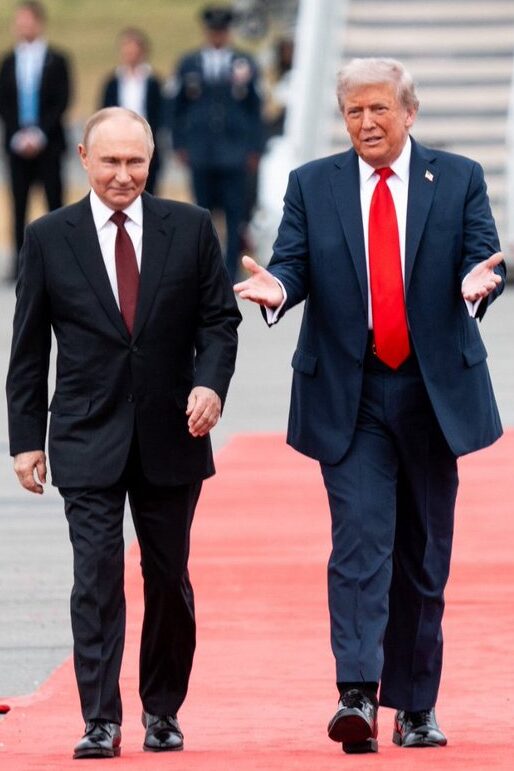
♦ SUMMARY: Some people have construed the bilateral trade preference of President Trump to be the elimination of globalism in favor of nationalism in trade agreements. While the outcome of Trump’s approach indeed aligns with that theme, it is not specifically the objective of President Trump to eliminate global trade, but rather to focus on specific interests in trade that benefit the unique nature of each party involved.
Canada can embrace China, and Europe can embrace India; in the bigger picture it really doesn’t matter. These relationships only create dependencies which are the natural outcome of globalism. From President Trump’s position, what really matters is what happens within our borders and how the United States economy is positioned. This is President Trump’s singular focus.
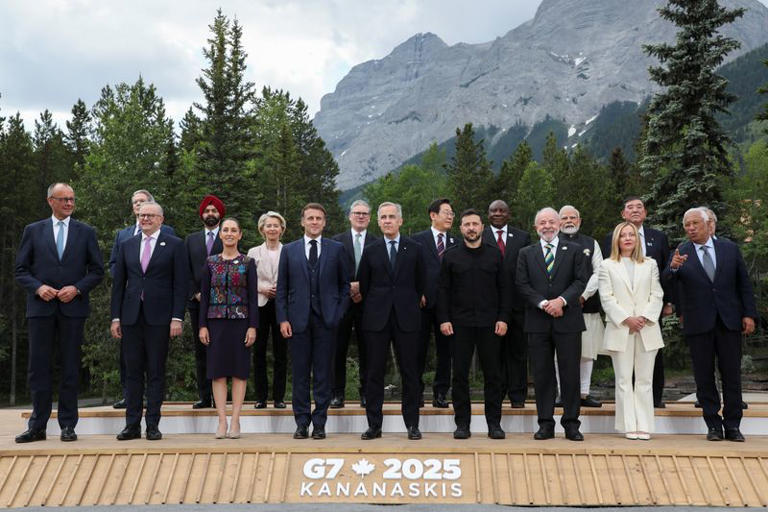
Do you remember President Trump leaving the 2025 G7 meeting in Canada early? The final day invitation list brought Australia, Mexico, Ukraine, South Korea, South Africa, India, the United Nations and the World Bank into the G7. President Donald Trump smartly exited the G7 assembly a day early, he departed before that crowd of interests arrived. The world leaders came because the process to keep USA wealth inside the USA is against their interests. That’s why they came, and that’s why President Trump left.
Globalism, in its economic construct, is a series of dependencies. However, the opposite is also true. If nations are not dependent, they are sovereign – able to exist without the need for support from other nations and systems. If nations are sovereign, then globalism is no longer needed. If each nation of the world is operating according to its individual best interests, the position of Donald Trump, then what happens to the governing elite who set up the system of interdependencies?
Canadian Ambassador to the U.S., Kirsten Hillman, appears on CBS Face The Nation to discuss ongoing political and trade relations between Canada and the United States – Video and Transcript below.
During one segment of the interview, Ambassador Hillman is asked about the dissolution of the USMCA (CUSMA) trade agreement, and immediately Hillman falls back upon the same Justin Trudeau position of the government. The U.S. politicians will not allow President Trump to dissolve the USMCA.
“I think that we have to believe that our political leaders are going to be listening to the people in the constituencies for whom that instrument was drawn up, and they’re saying, this is vital to us, do no harm.”
Canada is counting on American political opposition to defend the economic interests of Canada. This is exactly the same position that former Canadian Prime Minister Justin Trudeau espoused in 2017 and 2018.
[Transcript] – So a lot is going on in the relationship between our two countries. We are so deeply integrated here on trade, you buy more from the U.S. than any other country. We have the world’s longest land border. We have shared defense interests through NATO, shared air defense with NORAD. Are we like in the middle of a divorce? Like, how do you describe the relationship?
AMB HILLMAN I- I- we’re not in the middle of a divorce, but we are in the middle of a change. There’s no question about it. I think that we are finding ourselves, quite frankly, in- in a situation where some of the foundations that have governed our relationship for a long time, that you know, integrated supply chains are good, that working together on strategic issues is- are important, that looking out for each other in important ways is- is a number one priority. I think in some quarters, Canadians feel that those foundations are being tested. We will adapt. We will make it through, I have no doubt about that, but it’s yeah, it’s a complicated time.

MARGARET BRENNAN
Well, you know, Canada had agreed to join this Board of Peace that President Trump announced out at Davos, and then overnight Thursday, the president disinvited Canada. Is this kind of public snub interfering in the relationship, and- and what does that indicate to you about what this Board of Peace is that Canada had said it did want to be a part of?
AMB HILLMAN
So we had expressed an interest in the Board of Peace a number of weeks ago, and essentially, a Board of Peace that is seeking to find peace, in particular, in Gaza and stability, is something that Canada was very much supportive of. The- the parameters of that Board of Peace had just really started to come out and- and our government was considering it, but hadn’t- hadn’t really made a decision. But I think that- that honestly, I think that the most important thing to say here, from the perspective of Canada, is that we have always and will always be promoting peace and stability and human rights around the world. We’ll do it with our allies in various fora, at NATO, at the U.N. bilaterally with like minded countries. So we’re not going to change that and- and we will give it our all in- in any fora that- that is available to us.
MARGARET BRENNAN
It- It’s kind of now described as an alternative to the United Nations. Is that something you’re comfortable with?
AMB HILLMAN
Well, we are deep supporters of the United Nations. We feel that it’s, you know, it’s not perfect, no large institution is, but having a place where the whole world can get together and express their views on issues that are important to the globe is vital. And as I say, NATO is vital, and we work with our EU counterparts and EU-Canada, you know, security discussions and in- in various other configurations. So probably all of these different fora are- are essential. The Board of Peace has yet to be fully, I think, understood, and we’ll see- we’ll- we’ll see where that goes, but the outcomes are what matter to Canada.
MARGARET BRENNAN
So your prime minister gave a national address on Thursday, and I understand he denounced authoritarianism and exclusion. He did not mention President Trump by name, but he did rebuke the claim that Trump made at Davos, that Canada lives because of the United States. You’re talking about what people receive at home, everyone has local politics, so when something like that is said, do you fear that this is starting not just a spat, but this is like a generational split between our two countries, like, how are people receiving this at home?
AMB HILLMAN
Look, I think Canadians- Canadians know that Canada lives because of Canadians, because what Canadians do for Canada, and right now, that’s where we’re trying to focus our attention. By doing what- you know, focusing our attention on what we can control as a nation for ourselves and our own economy and our own security and our own relationships around the world. The United States is always going to be a vital partner. Geography, as you said in your opener, 5,500 miles of border, deep ties, millions of Canadians and Americans that work together every day, that- that you know, do research and study and have families across the border so that- that is there, and that is something that I actually think brings strength to the relationship at times where, you know, in other- at other levels, and maybe at the political level, it- it’s more complicated.
MARGARET BRENNAN
It’s very complicated. I mean, it- it’s almost unthinkable that a phrase like authoritarianism and exclusion that that could be thought to be referring to the leader of the president of the United States?
AMB HILLMAN
Well, I think that there are concerns globally for- by our government, that we have institutions and norms, rules that have governed our countries, yours, mine, and all like minded countries for generations that are really being tested, really being tested. And- and I think what matters is how we react in the face of these tests, and for us, for our country, for our prime minister, you know, there are important implications for our country. And he’s- he’s trying to articulate a vision. And I think he is articulating a very strong vision for how we must adapt. And again, it’s- it’s about being pragmatic and principled, and that’s- that’s what we’re going to continue to be.
MARGARET BRENNAN
You have had a long career here in the United States, deeply involved with trade in particular. You helped to negotiate that free trade deal known as USMCA during the first Trump administration. President Trump was asked about it, January 13. He said, I really don’t care in terms of renewing it, there’s no real advantage. We don’t need Canada products here. Is that free trade deal doomed?
AMB HILLMAN
No, it is not doomed. That is my view. All three countries, Canada, the U.S. and Mexico did broad consultations, national consultations, with their business communities in particular, on what- how that agreement works for them. And really without exception, the American comments back were sure we’d like to maybe update this or change this a little bit, but job number one is to do no harm to this agreement, which is the economic foundation of our continental partnership and leads to very important U.S. competitiveness, and Canadian and Mexican competitiveness vis-a-vis other parts of this world. So I think there’s- I think that we have to believe that our political leaders are going to be listening to the people in the constituencies for whom that instrument was drawn up, and they’re saying, this is vital to us, do no harm.
MARGARET BRENNAN
So do you think there’s a bilateral trade deal here? Is that what the Trump administration is going for, rather than the three way deal or–
AMB HILLMAN
I- you know, I think- I- I- we hear- we hear that sometimes, we hear different things. It is important to remember that even within that agreement, there are a lot of bilateral elements, but there is- there are advantages to doing things trilaterally. There’s a lot of supply chain movement that happens between our three countries. And if you, if you break it into two, you could have different rules and disconnects there that are inefficient for business. So we’re driven- look, Canada will be driven by what the best thing to do is, as I say, for the companies and constituencies that are relying on that agreement to create jobs.
MARGARET BRENNAN
Because you heard the commerce secretary say at Davos, you know, globalism isn’t working. I mean, these free trade deals are part of that globalism. And it was just a week ago, your prime minister was in Beijing, and he described Canada’s relationship with China as more predictable than its relationship with the United States. He really meant more predictable than the Trump administration’s United States.
AMB HILLMAN
Look, there’s no question that the last number of months have been unpredictable for us in our relationship with the United States. You know, we have a trade agreement that had us virtually tariff free between our two countries, and now we have very serious tariffs on steel, aluminum, autos, lumber, and that’s causing a lot of challenges within our country. There are people that are losing their jobs. There are industries that are being reoriented, and it’s very difficult. So that is seen as, yes, unpredictable.
MARGARET BRENNAN: But fortress North America had been an idea. I mean, the treasury secretary talked about it, that the United States, Mexico, Canada, we could stand up together, you know, have shared values, and stand up to China. That seems dead, if Canada is really describing a new alliance here with Beijing.
AMB HILLMAN: Well, I think- I think we have to put this in perspective. The- the agreement that we did with China a few weeks ago was a very focused and surgical agreement that was largely, or almost exclusively, designed to de-escalate some tariff escalation that had happened over the past year and a bit. So over the past year and a bit, China had put very punitive tariffs on Canadian agricultural products and fish and seafood, shutting Canadians out from one of their primary markets, if not for some of them, their primary market. And so we went to Beijing to re-establish market access for our farmers and our fishers. It’s exactly what the U.S. administration did in October when they re-established market access for U.S. soy farmers, and in exchange, rolled back some tariffs and fees. So this is a very pragmatic, very focused approach. I think it’s important to put it in context.
MARGARET BRENNAN: But even Ontario’s premier said this is letting Chinese “spy cars” into your country. I think he means electric vehicles that will be cheaply made in China. Are you worried about becoming too beholden to China and its cheap manufacturing?
AMB HILLMAN: No, we’re not, because, we- the- the auto side of this agreement was again to take us back to 2023, we had the importation of vehicles made in China. Many of those were Teslas, as a matter of fact, and we’ve gone back and stuck to the level of 2023 for those imports. So this isn’t a revolutionary new thing. This is really just trying to roll back or de-escalate what had been escalated over the past year and a bit.
MARGARET BRENNAN
Well, the treasury secretary is saying that Albertans are going to have a referendum on succeeding from Canada. He seems to be urging that. What do you make of this–
AMB HILLMAN: Well–
MARGARET BRENNAN: –and comments like that?
AMB HILLMAN: I think it’s important to let Albertans and Canadians manage their own very delicate domestic, you know, politics themselves. I think that that’s probably wise counsel. Having grown up in Alberta, you know, it’s a- it’s a- it’s a province that has lots of strong views about the way in which it interacts with the rest of the country, as do other parts of our nation. And those are important debates to be had, but they’re debates for our country to have within its own citizenry.
MARGARET BRENNAN: It seems to be stirring the pot there a bit, but I want to ask you what your prime minister said at Davos. He got a standing ovation for this speech. He described a ruptured global order, the end of a nice story, and the beginning of a new brutal reality, which he described as a predatory one. Take a listen.
MARK CARNEY, PRIME MINISTER OF CANADA: Stop invoking rules-based international order as though it still functions as advertised. Call it what it is: a system of intensifying great power rivalry, where the most powerful pursue their interests using economic integration as coercion.
[SOUNDS ON TAPE ENDS]
MARGARET BRENNAN: He said, if you’re not at the table, then you’re on the menu. What does this new world order look like?
AMB HILLMAN
Well, that’s a good question. I mean, I think he laid out in his- his discussion, his speech, his- his view of what is happening in our world. And it’s- it’s a world in which rules that governed every player in the globe, every country were maybe not perfectly abided by, as he said, maybe not always exactly exercised as one would hope, but still were sufficient to form the basis of the prosperity, the stability, the predictability that we all used to maximize peace and stability and- and maximize economic reality. So we’re moving away our economic benefits, and we’re moving away from that, and we have to- countries like ours, have to figure out what that means for us. I think that what it does mean for us is that we can’t walk away from our principles. We can’t walk away from our belief in rules that are to be abided by by everyone if they commit to them. But at the same time, we have to be pragmatic and we have to look inward to control what we can within our own economies to be as resilient as we possibly can within our own economies, and part of that means engaging pragmatically with a broad array of countries around the world, in trade agreements, in investment relationships and in partnerships.
MARGARET BRENNAN: Sounds like Canada is picking off our friends.
AMB HILLMAN: You know, I- no, I think Canada is trying to make sure that it is the most resilient it can be for our own benefit.
MARGARET BRENNAN: I’m being told that President Trump posted on social media just a few moments ago that Canada is against the Golden Dome over Greenland and has voted against it to choose to be closer to China. That’s how it was described to me. Yet President Trump had previously talked about Canada participating in this Golden Dome project, which isn’t yet built, but it’s supposed to be missile- layered missile defense, as I understand it. Do you know what he’s talking about, that Canada has rejected being involved?
AMB HILLMAN: No, I’m afraid I don’t, but what I can say about the Golden Dome is this, Canada is- is investing over $80 billion over the next five years in our defens-, in our defense systems, and a big part of that is Arctic defense. And a big part of our Arctic defense investments are something called over-the-horizon radar, which is a system that allows us to see the threats that are coming into the Arctic before they arrive. So that is part- and when we have talked to the president about protecting our hemisphere, we have talked about ways in which our different capabilities can work together so that we have eyes on the region and we cooperate in a way that protects both of our countries.
MARGARET BRENNAN: So the president has described that as Canada wanting to plug in to the system. As you understand it, that’s the better description, your own system that would coordinate?
AMB HILLMAN: Right. Much as we do across all sorts of defense systems, where we’re interoperable. We- we work together. We make our investments that make sense for Canada and defending our territory and defending our sovereignty, but we work with the Americans and- and other allies to maximize the benefits of those.
MARGARET BRENNAN: So in- in short, you do think there needs to be more focus on Arctic defense, but you’re on board to help do that?
AMB HILLMAN: We’re deeply committed to Arctic defense. Absolutely.
MARGARET BRENNAN: I need to ask you about NATO, because you’re also a partner at NATO. The only time that NATO’s Article 5 was ever invoked, and you know this, was after the 9/11 attacks on this country. That collective defense clause, an attack on one is an attack on all, meant that Europe and Canada, they sent troops right alongside American troops on the battlefield in Afghanistan. Here’s what President Trump said.
[SOUND ON TAPE BEGINS]
PRESIDENT DONALD TRUMP: We’ve never needed them. We have never really asked anything of them. You know, they’ll say they sent some troops to Afghanistan, or this or that. And they did. They stayed a little back, little off the front lines.
[SOUNDS ON TAPE ENDS]
MARGARET BRENNAN
He was speaking about all NATO troops. But we did check and about 40,000 Canadians deployed to Afghanistan between 2001 and 2014. 158 were killed, 635 wounded in action. What is a remark like that do to people at home?
AMB HILLMAN: You know, I think what’s most important is that we know what our Canadians have done, and I know that your American armed forces are deeply respectful and deeply appreciative of having stood side by side with Canadians in those very, very treacherous and difficult fights. We know that to be true. They know that to be true, and that’s what matters.
MARGARET BRENNAN: Ambassador, thank you for your time as it wraps up here in Washington.
AMB HILLMAN: Thank you for having me.
MARGARET BRENNAN: Great to have you. We’ll be back in a moment.
I have created this site to help people have fun in the kitchen. I write about enjoying life both in and out of my kitchen. Life is short! Make the most of it and enjoy!
De Oppresso Liber
A group of Americans united by our commitment to Freedom, Constitutional Governance, and Civic Duty.
Share the truth at whatever cost.
De Oppresso Liber
Uncensored updates on world events, economics, the environment and medicine
De Oppresso Liber
This is a library of News Events not reported by the Main Stream Media documenting & connecting the dots on How the Obama Marxist Liberal agenda is destroying America
Australia's Front Line | Since 2011
See what War is like and how it affects our Warriors
Nwo News, End Time, Deep State, World News, No Fake News
De Oppresso Liber
Politics | Talk | Opinion - Contact Info: stellasplace@wowway.com
Exposition and Encouragement
The Physician Wellness Movement and Illegitimate Authority: The Need for Revolt and Reconstruction
Real Estate Lending
 Centinel2012