Today’s Moral Crisis: Genuine versus Decadent Liberalism


Post by Prof. Paul Eidelberg

We all know that moral decay is permeating what is now called “post-Christian” Europe. Our best informed commentators know that this decay has been propagated for many decades by European universities steeped in the doctrine of moral relativism, which denies the existence of any moral norms or standards for judging what is good or bad, right or wrong. This moral relativism is now rampant in the United States, where anti-American academics are corrupting our youth and are creating a moral vacuum diametrically opposed to genuine American liberalism.

Genuine or classical liberalism made America the greatest nation on earth. This liberalism is rooted in America’s foundational document, the Declaration of Independence, the document that derives morality not from the changing wills and interests of minorities and majorities but from the eternal “Laws of Nature and of Nature’s God.”

That was normative liberalism, not normless or post-modern liberalism.  Normative liberalism differs profoundly from the normless or pseudo liberalism that has long been brainwashing Americans, including Americans who have become our opinion makers and decision makers. Normless liberalism is devoid of rational and ethical constraints. Indeed, this pseudo-liberalism is a mental disorder. It the enormous increase of Americans suffering from anxiety, alienation, and related mental maladies, as discussed in my essay “The Malaise of Modern Psychology” (Journal of Psychology, Vol. 126, No. 2, March 1992), and more recently in An American Political Scientist in Israel (2010).

I call this normless liberalism “Demophrenia,” because it is most prevalent in decayed liberal democracies, including Israel, which displays a high incidence of political schizophrenia. The negative symptoms of this schizophrenia is prominent among Israeli Prime Ministers, indicated as follows:

(1) Escapism [note that their policy of “territory or peace” is in fact a refusal to take Islam’s bellicose ideology seriously;

(2) Apathy [note their milquetoast attitude toward Arab butchery;

(3) Depersonalization [note their avoidance personal accountability];

(4)  Stereotypic Behavior [note their fixation on the failed and fatal policy of “land for peace”];

(5) Lack of self-esteem [note how these PMs grovel before world opinion];

(6) Irrational emphasis on the efficacy of reason or persuasion against an Islamic ideology rooted in the primacy of force and coercion.

Having already enlarged on the mental disorder of liberalism-cum-demophrenia, let me reiterate some remarks in my book, American Exceptionalism (Israel-America Renaissance Institute 2012). What I am about to say should be pondered by Israeli leaders who, like their American counterparts, need to revive their ancient faith in the Bible of Israel, whose moral standards constitute the foundation of American greatness, nay, of American Exceptionalism.

Americans need to be reminded that liberal education in colonial America, which was profoundly influenced by the Bible of Israel, extolled human greatness and condemned human wickedness. It seems to have been forgotten that when ethical and intellectual monotheism reigned in America, freedom was not living as you like, and religion was not a mental straitjacket, which is why Alexis Tocqueville was struck by America’s harmonious combination of political and religious freedom.

This happy state of affairs produced liberal gentlemen who could be friends despite their differences. They could be friends because what gentlemen have in common is more significant than their differences. And what was more significant to eighteenth-century Americans than the ethical and intellectual monotheism of the Bible of Israel?

It was this monotheism that nurtured the civility manifested in the debates of the Constitutional Convention. We see such civility in the Declaration of Independence, which speaks of “a decent respect to the opinions of mankind.” Evident here is the language of gentlemen and of classical liberalism.

The religious tolerance exemplified by America’s monotheistic society did not extend tolerance to intolerance – certainly not one that threatens public order or the laws of the Constitution [like Islam’s Sharia].

Nor did America’s religious tolerance preclude criticism of any religion or pseudo-religious creed. Jefferson spoke of “false religions.” Far more significant, ponder the case of People v. Ruggles (8 Johns, R. 290 N.Y. 1811), in which New York’s Chief Justice Chancellor James Kent, the great commentator on American law, delivered the opinion of the Court:

The offence charged is that the defendant did wickedly, maliciously, and blasphemously utter, in the presence and hearing of divers good and Christian people, these … scandalous, malicious, wicked and blasphemous words, to wit, “Jesus Christ was a bastard, and his mother must be a whore;” and the single question is, whether this be a public offence by the law of the land.…Such words, uttered with such a disposition, were an offence at common law. [Cases cited, wherein] the court were careful to say, that they did not intend to include disputes between learned men upon particular controverter points….

Such offences have always been considered independent of any religious establishment or the rights of the church. They are treated as affecting the essential interests of civil society… We stand equally in need, now as formerly, of all the moral discipline, and of those principles of virtue, which help to bind society together. The people of this state, in common with the people of this country, profess the general doctrines of Christianity, as the rule of their faith and practice; and to scandalize the author of these doctrines is not only, in a religious point of view, extremely impious, but, even in respect to the obligations due to society, is a gross violation of decency and good order….

The free, equal, and undisturbed, enjoyment of religious opinion, whatever it may be, and free and decent discussions on any religious subject, is granted and secured; but to revile, with malicious and blasphemous contempt, the religion professed by almost the whole community, is an abuse of that right. Nor are we bound, by any expressions in the Constitution, as some have strangely supposed, either not to punish at all, or to punish indiscriminately the like attacks upon the religion of Mahomet or of the grand Lama; and for this plain reason, that the case assumes that we are a Christian people, and the morality of the country is deeply engrafted upon Christianity, and not upon the doctrines or worship of those impostors.… (emphasis added).

Though the constitution has discarded religious establishments, it does not forbid judicial cognizance of those offences against religion and morality which have no reference to any such establishment, or to any particular form of government, but are punishable because they strike at the root of moral obligation, and weaken the security of the social ties.

A unanimous court agreed with Chancellor Kent’s ruling. Moreover, Kent’s position was later affirmed by the United States Supreme Court in the case of Vidal v. Girard’s Executors, 43 U.S. 2 How. 127 (1844). Justice Joseph Story, esteemed as a “father of American Jurisprudence” and appointed to the Supreme Court by James Madison, delivered the court’s unanimous opinion. He said, in part: “Christianity … is not to be maliciously and openly reviled and blasphemed against, to the annoyance of believers or the injury of the public.” Nor is this all. Justice Story’s position on the First Amendment virtually extols Christianity. In his celebrated Commentary on Constitution of the United States (1840), he writes:

We are not to attribute this prohibition of a national religious establishment [in the First Amendment] to an indifference to religion in general, and especially to Christianity (which none could hold in more reverence than the framers of the Constitution)…. Probably, at the time of the adoption of the Constitution, and of the [first] Amendment to it now under consideration, the general, if not the universal, sentiment in America was, that Christianity ought to receive encouragement from the State so far as was not incompatible with the private rights of conscience and the freedom of religious worship. Any attempt to level all religions, and to make it a matter of state policy to hold all in utter indifference, would have created universal disapprobation, if not universal indignation.

To substantiate the arguments of Chancellor Kent and Justice Story, let us mention Fisher Ames (1758-1808), a Harvard graduate. Mr. Ames, who was elected president of Harvard in 1804 but declined the position because of ill-health, is regarded as one of America’s “forgotten founding fathers.” Ames was an outspoken supporter of the Bible’s central role in all of education.

As a first-session congressman he said, “Should not the Bible regain the place it once held as a schoolbook? Its morals are pure, its examples are captivating and noble.”  It was Fisher Ames who suggested the wording of the First Amendment, which was adopted by the House of Representatives: “Congress shall make no law establishing religion, or to prevent the free exercise thereof, or to infringe the rights of conscience.” In its final form the first amendment to the United States Constitution reads, “Congress shall make no law respecting an establishment of religion, or prohibiting the free exercise thereof; or abridging the freedom of speech, or of the press; or the right of the people peaceably to assemble, and to petition the government for a redress of grievances.”

Before proceeding, consider only the religious clause of the First Amendment: “Congress shall make no law respecting an establishment of religion, or prohibiting the free exercise thereof.” We see here that Congress – hence the national government – is prohibited from establishing a national religion. It is not prohibited from enacting laws affecting religion, so long as those laws do not prevent the “free exercise thereof.”

To the contrary, it is the constitutional duty of Congress to protect the free exercise of religion. Nothing in the First Amendment refers to “separation of church and state.” Neither the word “separation” nor the word “church” nor the word “state” appears in the First Amendment. The Founding Fathers, including Jefferson, fully understood that the purpose of the First Amendment was to protect rather than prevent public religious expression, as is clearly evident in the 200-year chronology of religious affirmations enumerated [and elsewhere documented].

That chronology makes nonsense of the “separation of church and state” dogma intoned by secularists. It was one of many instances of judicial despotism to prohibit a student from reading his Bible during his free time or even to open the Bible in school. (Gerki v. Platzer, 1989). As outrageous, it is now unconstitutional for a classroom library to contain books that deal with Christianity, or for a teacher to be seen with a personal copy of the Bible at school. (Roberts v. Madigan 1990).

In Jefferson’s famous letter to the Danbury Baptists of January 1, 1802, in which he thanked them for their “kind prayers” upon his election to the presidency, assured them that the free exercise of their religion was an inalienable right, there was a “wall of separation between church and state” that would prevent the (new) government from interfering with or hindering the free exercise of their religious activities. It was not until the mid-twentieth century that Jefferson’s “wall of separation” phrase was tendentiously extracted from his letter – by no means a dictum of any court – to strike down as unconstitutional any public act or endorsement of any written or spoken word, or even silent meditation, that could be construed to have religious—but especially Christian—significance­!

What is more, the term “religion” has been so debased that it includes not only atheism and satanic cults, but any personal belief or lifestyle. This makes a mockery of the words and deeds of the statesmen who exalted Christianity since the days of George Washington and who traced the blessings of America to that religion.

Unless this degradation is arrested, America will become, like Europe, a post-Christian country. What is more, the resulting spiritual vacuum will be filled by nihilism and the totalitarianism of Islam propagated by a thousand mosques across the land. This would be the deadly consequences of replacing normative or classical liberalism with normless or contemporary relativism—the reigning mental disorder of our time.

Why Liberal Democracy is Boring as well as Decadent


Post by Paul Eidelberg

To understand why democracy today is decadent and deadly, one can hardly do better than consult Alexis de Tocqueville.

His classic, Democracy in America, is more relevant today than when it was written in the 1830s. My colleague, Professor Will Morrisey of Hillsdale College, elaborated on this subject in relation to American foreign policy.

Here I will focus on one of Tocqueville’s most important insights, rendered all the relevant today because of the nihilism and atheism propagated by American universities.

In Tocqueville’s time, American universities were church-affiliated, and seriously so.  The intellectual class, if not entirely religious, was noticeably shaped by religion; even men like Jefferson retained many of the sturdier qualities that religion fosters: discipline, perseverance, wholehearted dedication to a cause.  From Puritanism on, Americans had found in their religions means of both spiritual and temporal satisfaction.  By “giving men a general habit of conducting themselves with a view to eternity, religions reveal “the great secret of success” in this world; they teach men not to “turn from day to day to chase some novel object or desire,” but to “have settled designs which they are never weary of pursuing.  The social stability provided by the belief in eternity served as ballast for a ship that otherwise would have swayed uncontrollably in the unpredictable gusts of democratic opinion.

For “no sooner do [men] despair of living forever, than they are disposed to act as if they were to exist for a single day.” He elaborates:

In skeptical ages it is always to be feared…that men may perpetually give way to their daily casual desires, and that, wholly renouncing whatever cannot be acquired without protracted effort, they may establish nothing great, permanent, and calm….In these countries in which, unhappily, irreligion and democracy coexist, philosophers and those in power ought to be always striving to place the objects of human actions for beyond men’s immediate range.

As religious faith declined among the intellectuals in the latter half of the nineteenth century and was replaced by faith in science and social progress, institutional Christianity metamorphosed.  It did not disappear but became secularized, materialist, with a worldly compassion and a worldly paradise replacing caritas and Heaven.  In the domain of foreign policy, the apolitical character of Christianity – “resist not evil,” “turn the other cheek,” “love thine enemy” – has reinforced the liberal democratic tendency toward pacifism and appeasement evident in the Vietnam anti-war movement: “make love, not war.” Today, “make love, not war” animates President Obama’s “outreach” policy: Islamic dictatorships have taken the place of the Soviet Union.

The decadence underlying this liberalism was being prepared long before Vietnam. The most influential has been university-bred doctrine of moral relativism. Tocqueville anticipated this sort of thing. In his time, American universities were church-affiliated, and seriously so.  The intellectual class, if not entirely religious, was noticeably shaped by religion; even men like Jefferson retained many of the sturdier qualities that religion fosters: discipline, perseverance, wholehearted dedication to a cause.  From Puritanism on, Americans had found in their religions means of both spiritual and temporal satisfaction.  By “giving men a general habit of conducting themselves with a view to eternity, religions reveal “the great secret of success” in this world; they teach men not to “turn from day to day to chase some novel object or desire,” but to “have settled designs which they are never weary of pursuing.” The social stability provided by the belief in eternity served as ballast for a ship that otherwise would have swayed uncontrollably in the unpredictable gusts of democratic opinion.

For “no sooner do [men] despair of living forever, than they are disposed to act as if they were to exist for a single day.”

In skeptical ages it is always to be feared…that men may perpetually give way to their daily casual desires, and that, wholly renouncing whatever cannot be acquired without protracted effort, they may establish nothing great, permanent, and calm….In these countries in which, unhappily, irreligion and democracy coexist, philosophers and those in power ought to be always striving to place the objects of human actions for beyond men’s immediate range.

As religious faith declined among the intellectuals in the latter half of the nineteenth century and was replaced by faith in science and social progress, institutional Christianity metamorphosed.  It did not disappear but became secularized, materialist, with a worldly compassion and a worldly paradise replacing caritas and Heaven.  In the domain of foreign policy, the apolitical character of Christianity – “resist not evil,” “turn the other cheek,” “love thine enemy” – has reinforced the liberal democratic tendency toward pacifism and appeasement evident in the Vietnam anti-war movement: “make love, not war.” Today, “make love, not war” animates President Obama’s “outreach” policy: Islamic dictatorships have taken the place of the Soviet Union.

The decadence underlying this liberalism was being prepared long before Vietnam. The most important of the intellectual preparations for this decadence was the university-bred doctrine of moral relativism, to which we now turn.

Tocqueville comes very close to anticipating the phenomenon of moral relativism.  This may be seen by recalling his description of the “philosophical method” of Americans.  He notes that, under conditions of equality, not only does each individual seek the reason of things in himself alone, but equality tends to invade the intellect such that the individual becomes the “source of truth.” Relativism reflects egalitarianism, for it consists in believing that there are no objective standards for determining whether the way of life of one individual, group, or nation is superior to that of another.  To admire a Socrates or a Yasser Arafat, to condemn PLO terrorists or to call them “freedom fighters”; to prefer liberal America to the Mullocracy of Iran—all these so-called value-judgments are deemed “subjective.”  Relativism thus regards all moral principles (which it also calls “values” as opposed to “facts”) as theoretically equal.

Moral relativism appears in writings of eminent political scientists. Consider Zbigniew Brzezinski and Huntington’s influential book, Political Power: USA/USSR:

 We are students of politics; we write this book in that capacity.  And here we are concerned not with vices and virtues but with strengths and weakness.  Moral judgments have been passed often enough and with predictable results—on both sides of the Irion Curtain.

Such talk obscures the fact that vices and virtues are strength and weakness, depended upon and routinely exploited by every politician every, person, who ever lived.

It also reflects the moral relativism of numerous contemporary intellectuals, “left” and “right,” who imagine an “end of ideology” in what Brzezinski later calls the “technetronic era.”  According to his teaching, we must abandon our prejudices about individual, group, or national superiority and enter a period of universal toleration and—no surprise—egalitarianism. Welcome to Barack Obama.

It needs to be borne in mind that political scientists tainted by relativism influence statesmen and a nation’s foreign policy.  It may appear paradoxical that Brzezinski, a moral relativist, was the National Security Adviser of President Jimmy Carter, a born-again Christian.  However, the above mentioned Christian precepts, “resist not evil,” “turn the other cheek,” and “love thine enemy,” readily lend themselves to the non-judgmental tendency of moral relativism.

Huntington, who also served on the National Security Council, provides a more revealing case study of the influence of democracy on the intellect of Americans.  In his 2004 book, Who Are We? in which Huntington provides a comprehensive historical analysis of “The Challenges to America’s National Identity,” the doctrine and corrosive influence of moral relativism is conspicuous by its absence!

The Loss of National Identity

Insofar as many Americans ask, “Who Are We?” they betray a loss of national identity so evident in President Barack Obama, a self-professed multicultural moral relativist.

Tocqueville anticipated this development.  So long as a strong religious or even secular faith inspires a people, democracy thrives; when the faith declines to the level it reaches in Barack Obama, discipline and spiritedness are going to be difficult to arouse.  The keepers of a lukewarm faith cannot appeal to positive belief alone, whether it be the aristocratic faith in his leader, the religious man’s faith in his God, or the democrat’s faith in his country; they must, rather, urge us on by means of the dispiriting lure of moral relativism.  We are to pursue, with good will toward friends and adversaries alike, a morally neutral or non-ideological foreign policy, a policy which, by definition, can only be motivated by material interests.

As Tocqueville would have understood, in America, appeals to “even-handedness,” a euphemism for moral equivalence or relativism, almost always serve the speaker’s desire for comfortable self-preservation. This banality underlies the Middle East foreign policy of the Obama administration vis-à-vis Israel and the Palestinian Authority.

Moreover, just as the U.S. refrained from launching a “first strike” against the USSR, so it will not launch an attack against Iran’s far less formidable nuclear development facilities.  However, just as the U.S. would have wiped out the Soviet Union in retaliation for having been attacked by that communist tyranny, so the U.S. will have no choice but to take that course of action if attacked again by Communism’s religious counterpart, Islam.  The aim of the latter was recently stated on Palestinian TV:

We [Muslims] have ruled the world before, and by Allah, the day will come when we will rule the entire world again.  The day will come when we will rule America…except for the Jews.  The Jews will not enjoy a life of tranquility under out rule, because they are treacherous by nature, as they have been throughout history.  The day will come when everything will be relieved of the Jews.

If attacked by weapons of mass destruction (WMD), the present writer would like to believe that the U.S. will not repeat the mistake the Bush administration made after 9/11, by waiting three weeks to attack the Taliban (a delay that allowed al-Qaeda to “disappear”).  The retaliation – or so one may speculate – will be quick, geographically indiscriminate, and awesome.

Tocqueville would not have been surprised by the mistakes the U.S. made before 9/11 and which led to the indiscriminate slaughter of 3,000 innocents.  He saw that, given the democratic love of physical gratification, “There are two things that a democratic people will always find very difficult, to begin a war and to end it.”

Consider only the years of the Clinton presidency.  Muslim terrorists truck-bombed the World Trade Center in 1993, killing six people and wounding over a thousand. In 1995 the FBI foiled an Islamic plot to blow up landmarks in the New York City area, including the Lincoln and Holland Tunnels and the George Washington Bridge.  In 1996, terrorists attacked the Khobar Towers in Saudi Arabia, killing 19 U.S military personnel and wounding hundreds.  In 1998, al Qaeda operatives bombed the U.S. Embassies in Kenya and Tanzania, in nearly simultaneous attacks, killing 12 Americans, more than 200 Kenyans and Tanzanians, and wounding over 4,000.  On October 12, 2000, terrorists conducted a suicide attack against the U.S.S. Cole, an American naval warship stationed in the port of Aden, Yemen, killing 17 sailors and wounding 39 more. Apart from firing a few multi-million dollar cruise missiles on worthless targets, it was business as usual in the world’s number one superpower – a democracy in which considerations of national honor (to say nothing of justice) had long ago succumbed to the all-too-human desire for commodious living. Is it any wonder that liberal democracy is boring as well as decadent?

Nevertheless, perhaps the idea of “dismantling” Islam, as I proposed in a recent article, may be of some interest to future historians.


Jeb Bush Wants You To Leave The Republican Party….


Those in power or those that control those in power will do everything possible to maintain the power legal or not!

Just a bunch of things to consider


Post by Paul Eidelberg

Sorry, I do not have the source for this data, but I would not be surprised by its verification. .

 U.S. Statistical Map:

 Make sure you read to the bottom  …  Quite an eye opener!

California

New Mexico

Mississippi

Alabama

Illinois

Kentucky

Ohio

New York

Maine

South Carolina

 These 11 States now have   More People on Welfare than they do Employed!    Last month, the Senate Budget Committee reports that in fiscal year 2012, between food stamps, housing support, child care, Medicaid and other benefits, the average U.S. Household below the poverty line received $168.00 a day in government support. What’s the problem with that much support? Well, the median household income in America is just over $50,000,which averages out to $137.13 a day.

 To put it another way, being on welfare now pays the equivalent of $30.00

an hour for a 40-hour week, while the average job pays $20.00 an hour.                  

 Furthermore:

 There are actually two messages here. The first is very interesting, but the second is absolutely astounding – and explains a lot. A recent “Investor’s Business Daily” article provided very interesting statistics from a survey by the United Nations International Health Organization.

 Percentage of men and women who survived a cancer five years after diagnosis:

U.S.   65%
England 46%
Canada 42%

 Percentage of patients diagnosed with diabetes who received treatment within six months:

U.S.   93%
England 15%
Canada 43%

Percentage of seniors needing hip replacement who received it within six months:          

U.S.   90%
England 15%
Canada 43%

Percentage referred to a medical specialist who see one within one month:          

U.S.   77%
England 40%
Canada 43%

Number of MRI scanners (a prime diagnostic tool) per million people:

U.S.   71
England 14
Canada 18

Percentage of seniors (65+), with low income, who say they are in “excellent health”:          

U.S.   12%
England 2%
Canada 6%

And now..for the last statistic:

National Health Insurance?          

U.S.          NO   (close)

England YES
Canada YES          

Check the last set of statistics!!

The percentage of each past president’s cabinet… Who had worked in the private business sector…prior to their appointment to the cabinet. You know what the private business sector is; a real-life business…not a government job.

Here are the percentages.          

T. Roosevelt………….. 38%

Taft………………………..40%
Wilson ………………….. 52%
Harding…………………..49%
Coolidge………………….48%
Hoover……………………  42%
F. Roosevelt……………..50%
Truman……………………50%
Eisenhower………………57%
Kennedy………………….30%
Johnson…………………..47%
Nixon………………………53%
Ford………………………..42%
Carter……………………..32%
Reagan……………………56%
GH Bush………………….51%
Clinton ……………………39%
GW Bush…………………55%
Obama……… 8%

This helps explain the incompetence of this administration: ONLY 8% of them…have ever worked in private business!

                            That’s right!               

Only Eight Percent—the least, by far,

of the last 19 presidents!               

And these people are trying to tell our big corporations…how to run their business? How can the president of a major nation and society…the one with the most successful economic system in world history, stand and talk about business…when he’s never worked for one? Or about jobs…when he has never really had one? And, when it’s the same for 92% of his senior staff and closest advisers?

They’ve spent most of their time in academia, government, and/or non-profit jobs.  Or … As “community organizers.”

Pass this on, because we’ll NEVER see these facts…in the main stream media.

It Is Always About the Money


Red Light Traffic Cameras & Money

NJ-Cameras

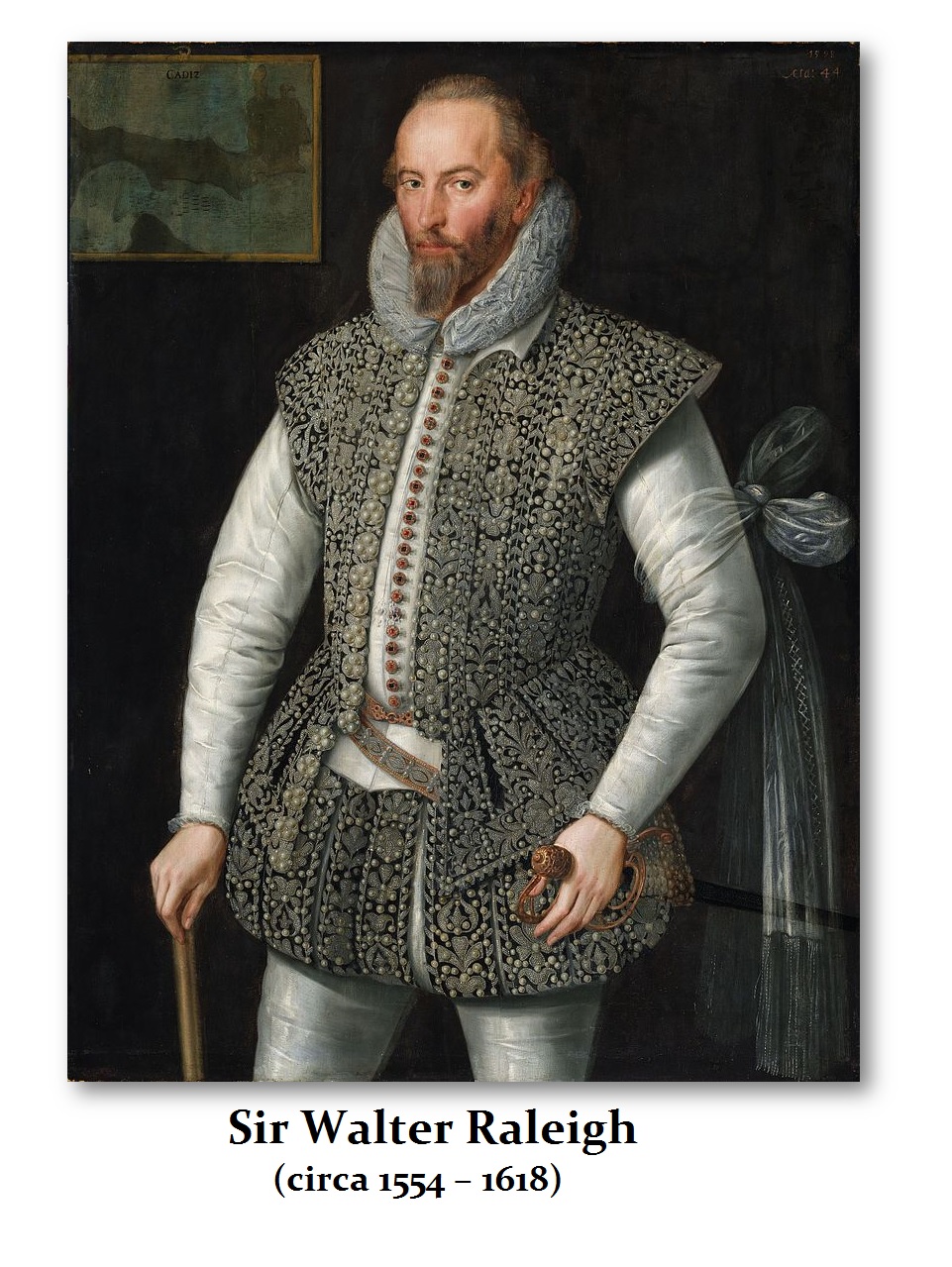
The huge difference between the USA and Europe happens to center on the criminal trial of Sir Walter Raleigh. After the death of Queen Elizabeth March 23, 1603. Raleigh was arrested and imprisoned in the Tower of London within months on the 19th of July. Raleigh was tried in the Great Hall of Winchester Castle for treason, on November 17th, 1603 for his alleged involvement in the Main Plot against King James.

Raleigh Sir WalterYou were not entitled to a lawyer and you had to conduct your own defense. The evidence used against Raleigh was the signed and sworn confession of his friend Henry Brooke under threat of death by the King. Raleigh requested that Cobham should appear in court to allow Raleigh to confront his accuser; “[Let] my accuser come face to face, and be deposed. Were the case but for a small copyhold, you would have witnesses or good proof to lead the jury to a verdict; and I am here for my life!”

Raleigh was denied his right to confrontation and was summarily convicted. King James spared his life, yet he remained imprisoned in the Tower until 1616 where he wrote his famous first volume of The Historie of the World published 1614.

Because of this famous trial of Sir Walter Raleigh, the American Revolution included within the Sixth Amendment  expressly state: “in all criminal prosecutions, the accused shall enjoy the right…to be confronted with the witnesses against him.” Unlike Europe, in American you cannot get a speeding ticket from a camera because you must have the right to confront your accuser.

After a 5 year pilot program which began in 2009 and operated in about two dozen New Jersey municipalities, came to an end on  in December 2014, cities were crying they wanted the money. Towns big and small have raked in millions of dollars in fines since the program began. Some busy intersections have produced more than 20,000 citations in a single year. But all they could do is fine you, no points on your license. WHY? Because you do not have the right of confrontation so it would be unconstitutional thanks to Sir Walter Raleigh. The red light cameras have caused more accidents when people abruptly stop on yellow lights unexpectedly. They have done nothing for safety, only raised money for broke municipalities. You can even tune into cameras to see traffic.

This is 100% true as any accountant will tell you when you have negative CASH you are done!


Yellen Tells Congress Negative Interest Rates Are Possible

yellen-Janet

Reuters has reported that Yellen told a House of Representatives committee when testifying before Congress: “Potentially anything – including negative interest rates – would be on the table. But we would have to study carefully how they would work here in the U.S. context.”

Yellen may have been placating Congress for negative rates would wipe out the elderly entirely. They have failed to work in Europe in the slightest.

Swiss 1000-CHF

Negative interest rates are not working in Europe. Even in Switzerland, hoarding of cash is becoming a national pass-time. This entire idea demonstrates that those who would be king, do not understand even how the economy functions.

Paine-Common Sense

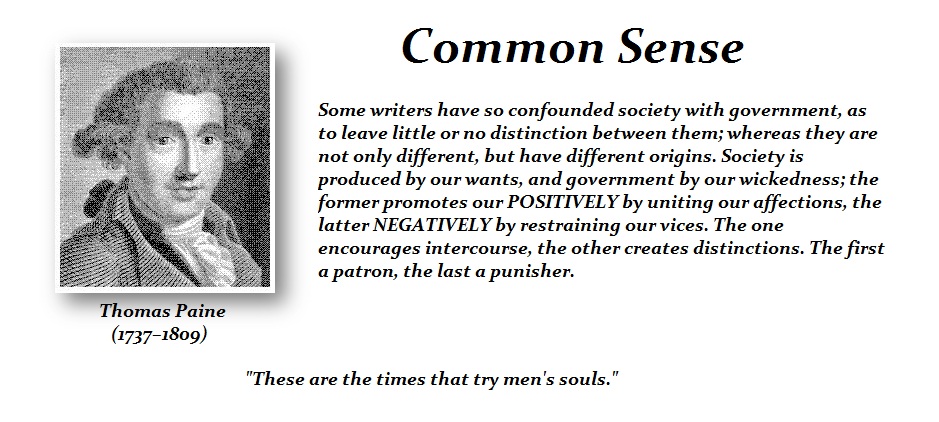
We are back to Thomas Paine’s Common Sense that inspired the American Revolution. He explained that government was evil because it operates from a NEGATIVE perspective to always PUNISH the people. This is the only way those in government ever perceive their power – it is always to demand and punish, never to work with society to comprehend what the problem might be.

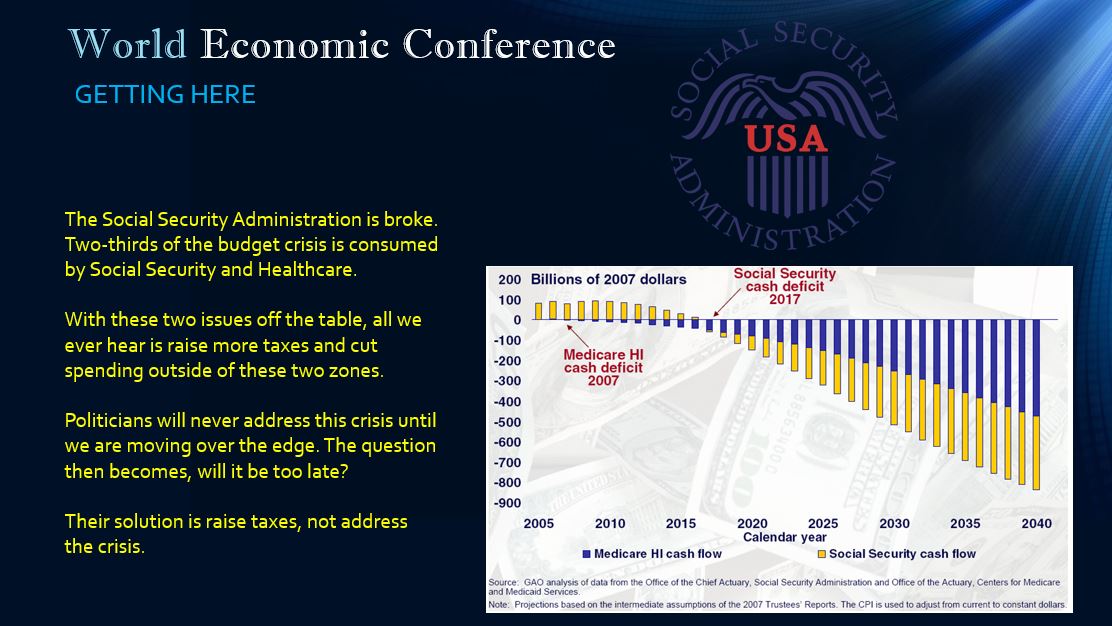
Budget Crisis 2917

Taxes are too high and the standard of living has declined. Those in power will ONLY raise taxes because they are incapable of reform. The year 2017 will cross the Rubicon. The inflation they are desperately trying to create will arrive, but not in the form they desire.TH

Democrat’s lose the ‘flyover’ but consolidate control of DC


From Rachel Stoltzfoos, The Daily Caller

The damage the Obama presidency has done to Democrats in Congress and state legislatures has been widely reported on over the last 7 years, but, until Wednesday, no one had summed it up in just 140 characters (or less).

Republican operative Rory Cooper tied a bow on Democrats’ fall from grace with a Tweet that simply tallied up the losses.

“Under President Obama, Democrats have lost 900+ state legislature seats, 12 governors, 69 House seats, 13 Senate seats,” Cooper tweeted. “That’s some legacy.”

Hillary Clinton Announces Odd New Platform – No Criminal Records for Prior Presidents…


Most Democrat candidates are attorneys and most attorneys are criminals so that makes sense … lol

What is the cost of illegal immigration!


Re-posted from God Father Politics

Over the past couple of weeks, I’ve shared how much illegals cost taxpayers in OhioMaryland and North Carolina. The combined cost to taxpayers in those three states amounts to over $4.8 billion a year. Those were followed up with a report on how much illegals were costing Texas taxpayers a year, a state with a greater number of illegals. Based upon figures from 2013, Texas taxpayers were shelling out over $12 billion a year to cover the unwanted costs of illegals.

So what about the nation’s capital for illegals – California?

The Federation for American Immigration Reform (FAIR) states that as of 2014 there were around 3 million illegals living in California. Ironically, legal immigrants only total up to 2,403,070 as of 2012. The total population of California, as of 2012, was placed at 38,041,430 with illegals comprising nearly 8% of the total state population.

The estimated annual cost to California taxpayers as of 2014 adds up to $25.3 billion. That’s more than the total operating budgets for some states. This breaks down to approximately $2,370 for every household headed by a US citizen.

According to FAIR:

“Nearly half of those expenditures ($12.3 billion) result from the costs of K-12 education for the children of illegal aliens — both those illegally in the country and those born in the United States. Another major outlay ($2.1 billion) results from the need to provide supplemental English language instruction to Limited English Proficient students, many of whom are children of illegal aliens. Together, these educational costs are 57.1 percent of total expenditures.”

“Other fiscal outlays result from the costs of medical care ($4.0 billion), public assistance services ($800 million), administration of justice functions ($4.4 billion), and general governmental services ($1.6 billion).”

The 2015-16 fiscal year budget for the entire state of California is $167.6 billion. The cost for illegals comprises nearly 15% of the total state budget while only comprising nearly 8% of the population.

Adding the annual cost of California’s illegals to the costs of Ohio, Maryland, North Carolina and Texas, we get a total of $42.1 billion per YEAR that taxpayers are being forced to pay thanks to Obama’s failure to enforce federal immigration laws. Perhaps the best solution would be to bill him and his fellow cronies for the cost incurred by illegals. I wonder if they would be so welcoming if they had to personally pay the bill?


Two States consider leaving the Union!


Vermont Separatist Movement

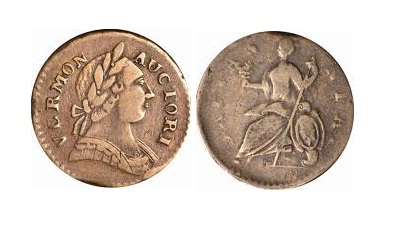
Vermont1785

The Vermont Republic was, in fact, a separate government that existed from 1777 to 1791. We are now starting to hear rumblings of a separatist movement beginning in Vermont that is right on schedule, according to the 224-Year Cycle of Political Change. Vermont did issue its own coinage and was not one of the 13 colonies. There was a strong debate, and for this reason, Vermont was always known as the “reluctant republic” since some favored a political union with the United States and others wanted to remain independent. In 1791, Vermont joined the United States and became the 14th state, which was the first addition to the original 13 colonies. The rise in separatist movements is once again brewing.

Hawaii Separatist Movement – Its Own Country by 2031?

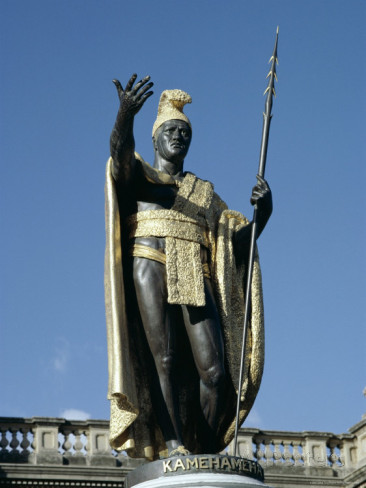
Hawaii king-kamehameha

The upcoming election in Hawaii has revealed the rise of a separatist movement that argues that Hawaii is an independent country that has been occupied. Indeed, Hawaii is one of four U.S. states that were actually independent nations before they became states. The others are Vermont, where there is also a separatist movement, along with Texas, and then California, which joined just before the Gold Rush of 1849 in 1846.

Hawaii-1890

NA-Hawaii-Provisional-Government-Stamp-Image

The actual royal Kingdom of Hawaii was sovereign from 1810 until 1893 when resident American and European capitalists and landholders staged a coup d’etat and overthrew the royalty. Hawaii was thereafter still independent between 1894 and August 12, 1898, when it officially became a “territory” of the United States. Hawaii became a state on August 21, 1959. Ironically, our cyclical models warn that Hawaii may return to a separate sovereign nation in 2031 or about when the ECM peaks in this major wave in 2032.