President Trump Welcomes President Klaus Iohannis of Romania – With Press Conference (Video and Transcript)…


Earlier today President Donald Trump welcomed President Klaus Iohannis of Romania to the White House.  During the Oval Office media availability by both leaders President Trump took multiple questions from U.S. media. [Video and Transcript Below]

.

[Transcript] – PRESIDENT TRUMP: Well, thank you very much, everybody. It’s an honor to be with the President of Romania, who’s highly respected and done a great job. And I hear there’s a little political season going on in Romania, but I would imagine you’re going to do very well because you’re very talented, you love the people.

And we’ve had a great relationship with Romania. The United States and Romania have gotten along better than ever before. So, I want to thank you for that.

And we have a big trade business going on, to be honest with you. We have — we do a lot of trade with Romania, and they’re very talented people. We buy, they buy. And you have a lot of Romanian people in the United States, very importantly. And they’re tremendous people. They work very hard. Very, very successful.

How many do you have in the United States? Do you know? Has anyone figured that out?

PRESIDENT IOHANNIS: We have quite a lot of Romanians in the States, yeah.

PRESIDENT TRUMP: I think I know most of them, actually.

PRESIDENT IOHANNIS: (Laughs.) Very good people.

PRESIDENT TRUMP: Yeah, they are. They’re a great people.

PRESIDENT IOHANNIS: Maybe quarter of a million or so.

PRESIDENT TRUMP: Yeah. It’s a lot. It’s a very large population. But they — and they love Romania, too, I will tell you that. They never forgot Romania. They’re very much inclined that way, and that’s a good thing.

Well, I want to thank you, Mr. President, for being here. It’s a great honor. Thank you very much.

PRESIDENT IOHANNIS: Thank you so much, Mr. President. Great pleasure to be here.

PRESIDENT TRUMP: Would you like to say something?

PRESIDENT IOHANNIS: Yeah, I would, just on the line that it’s great to be back here with you, Mr. President. And now we have the opportunity to talk about our very good strategic partnership. And under your strong leadership, we progressed and we will continue doing so. This is very important for us, and I think we are on the right path, and I thank you for that.

PRESIDENT TRUMP: I think we are on the right path. A lot of interesting things happening also in your country, but we appreciate the trade. And we’re going to have a big meeting in a little while after this. We’re going to have a private meeting, and we’re going to have a meeting in the Cabinet Room with a lot of your officials.

PRESIDENT IOHANNIS: Yeah.

PRESIDENT TRUMP: And we look forward to that.

Yes, any questions? John?

Q Mr. President, what sort of contingency steps or plans is the White House thinking about to stave off any kind of economic slowdown? We’ve heard that there’s been some talk of a payroll tax cut kicked around, some other tax cuts. You’ve been talking about a cut in the Fed rate, quantitative easing. What are you looking at?

PRESIDENT TRUMP: Well, I’d like to see a cut in the Fed rate because that should’ve happened a long time ago. I think they’re being very tardy in not doing in and not having done it sooner. They raised too quickly. And, you know, I’ve been quite vocal on that.

They also did quantitative tightening, which was ridiculous. And so — and despite that, you know, if you look — I guess you could call it “normalized” — but if you look, our economy is doing fantastically. And if you take a look at the previous administration, they weren’t paying interest. They had no interest rates. They had loosening, not tightening. And, frankly, it’s a big difference.

And our economy is incredible. Our jobs — you look at the jobs market. But you have to be proactive, and so we really need a Fed cut rate, because if you look at what’s going on with the Europe — European Union, as an example, they’re cutting. You take a look at Germany and what they’re doing, and what they’re paying — I mean, they’re actually doing something inverse. They’ve never seen — nobody has ever seen it before. And we have to at least keep up to an extent.

So, right now, we’re paying a very much higher rate of interest, and we didn’t follow the world. And generally speaking, that’s okay. But you can’t have that much of a disparity. So we’re looking for a rate cut.

We could be really greatly helped if the Fed would do its job and do a substantial rate cut also. They were doing quantitative tightening; very bad to do. They should do easing — actual easing. No tightening. Or at a minimum, they should be doing nothing about that. But they have to do a rate cut.

The other thing is, you know, we’re looking at various tax reductions. But I’m looking at that all the time anyway — tax reductions. That’s one of the reasons we’re in such a strong economic position.

We’re, right now, the number one country anywhere in the world, by far, as an economy. Europe has got a lot of problems, and Asia has got a lot of problems.

If you look at China, China has had the worst year they’ve had in 27 years. And they want to make a deal with us, but I can tell you I’m not ready to make a deal. Unless they’re going to make the right kind of a deal, I’m not ready to make a deal. So I don’t know, but I will say this: Something will happen. It may be soon; it may be a little bit later. But China very much wants to make a deal.

Q What kind of tax cuts would you look at? We’ve heard again a potential cut in the payroll tax, indexing capital gains. What would you accept?

PRESIDENT TRUMP: Well, you know, we’ve been talking about indexing for a long time. And many people like indexing, and it can be done very simply. It can be done directly by me. And so we’ve been looking at that. As you probably have heard, I can do it directly.

So we’re talking about indexing. And we’re always looking at the capital gains tax, payroll tax. We’re looking at — I would love to do something on capital gains. We’re talking about that. That’s a big deal; it goes through Congress.

Payroll tax is something that we think about and a lot of people would like to see that, and that very much affects the working — the workers of our country. And we have a lot of workers. Right now, by the way, we have more people working today than we’ve ever had before in the history of our country. We have almost 160 million people working today.

I think the word “recession” is a word that’s inappropriate because it’s just a word that the — certain people — I’m going to be kind — certain people, and the media, are trying to build up because they’d love to see a recession. We’re very far from a recession.

In fact, if the Fed would do its job, I think it would have a tremendous spurt of growth. A tremendous spurt. The Fed is psychologically very important. Less so, actually, but very psychologically important.

And if the Fed would do its job, which it’s really done very poorly over the last year and a half, you would see a burst of growth like you’ve never seen before. And that would be lowering interest rates and maybe putting some — if you look at what China is doing, if you look at what Germany is doing, if you look at what so many countries are doing — putting some money in, because we want to compete with these other countries. So I think that we actually are set for a tremendous surge of growth, if the Fed would do its job. That’s a big “if,” frankly.

But they should — the Fed should — the Fed should be cutting. And I would say they should say, at a minimum, 100 basis points over a period of time, not at one time. But over a period of time.

Q Mr. President, can the country afford tax cuts when we’re already running trillion-dollar deficits?

PRESIDENT TRUMP: Well, I’m not talking about — I’m not talking about doing anything at this moment. But indexing is something that a lot of people have liked for a long time. And it’s something that would be very easy to do. And a lot of people have been talking about indexing for many years, and it’s something that I am certainly thinking about.

I can say that a majority of the people in the White House, at the level that does this kind of thing, they like indexing. So it is something I’m thinking about.

Payroll taxes — I’ve been thinking about payroll taxes for a long time. Whether or not we do it now or not is — it’s not being done because of recession, because we are — legitimately, if we had a cut in interest rates by the Fed — if they would do their job properly, and if they would do a meaningful cut, because they raise too fast, you would see growth like you’ve not seen ever in this country.

Now, if you go from the election — that great November 8th day — if you go from November 9th to present, you’re talking about almost a 60 percent increase in the stock market. You’re talking about unemployment numbers that are the lowest in history, in many categories, and, overall, almost the lowest ever, in the history of our country. I think it was 1969. And we are set to surpass that number. I mean, our country is doing very well.

When I spoke to the President, we were just walking in and he said, “Congratulations on the great success of your economy and your country.” And I appreciated that. But our country is doing very well.

Q Mr. President, would you agree strengthening American military forces in Romania?

PRESIDENT TRUMP: Well, it’s one of the things we’ll be talking about today, I assume. You might be bringing that up. But it’s something we’ll talk about.

Q Mr. President, next year, you host the G7. Would you like to have Vladimir Putin back in the G7 and make it the G8 again?

PRESIDENT TRUMP: So it was the G8 for a long time, and now it’s the G7. And a lot of the time, we talk about — we talk about Russia. We’re talking about Russia because I’ve gone to numerous G7 meetings. And I guess President Obama, because Putin outsmarted him — President Obama thought it wasn’t a good thing to have Russia in, so he wanted Russia out.

But I think it’s much more appropriate to have Russia in. It should be the G8, because a lot of the things we talk about have to do with Russia. So I could certainly see it being the G8 again. And if somebody would make that motion, I would certainly be disposed to think about it very favorably.

But, as you know, for most of the time, it was the G8. It included Russia. And President Obama didn’t want Russia in because he got outsmarted. Well, that’s not the way it really should work.

Q Mr. President, two years ago, you said that including Romania in the Visa Waiver Program is a subject that should be discussed.

PRESIDENT TRUMP: Yeah.

Q In this meeting, will you discuss this issue?

PRESIDENT TRUMP: We’ve spent a lot of time on it. We’ve spent a lot of time discussing it already. Our countries have been discussing it, and we’re going to — we’re taking it up today in a very important meeting right after this one.

Do you like the idea? It sounds like you like the idea, right? The waiver — do you like the idea? Okay. No, it’s something we’re thinking about.

Q Mr. President, on Venezuela, is the White House in contact with the Maduro regime —

PRESIDENT TRUMP: Yes.

Q — with his number two, Cabello?

PRESIDENT TRUMP: Well, we’re — we are in touch. We’re talking to various representatives of Venezuela. We’re helping Venezuela as much as we can. We’re staying out of it, but we are helping it, and it needs a lot of help.

It’s an incredible tribute to something bad happening, and the something bad is socialism. And it’s amazing because, 15 years ago, it was one of the wealthiest countries. Now it’s one of the poorest countries. It has oil reserves; it has a lot of things going, but it’s a very sad thing what’s happened. They don’t have water. They don’t have food.

And we are helping a lot. We are talking to the representatives at different levels of Venezuela. Yes.

Q To Cabello?

PRESIDENT TRUMP: I don’t want to say who, but we are talking at a very high level.

Q What’s the status of the trade deal that you want to seal with Boris Johnson at the G7?

PRESIDENT TRUMP: So, I spoke with Boris Johnson. I think he’s going to be a great Prime Minister. I think he’s going to do a fantastic job. I’ve known him. A lot of people know that we have a very good relationship. I think he’ll be far superior. I think he’ll do something that will be a very — I think he’s going to be very important for the UK. I think he’s going to be very important.

Dealing with the European Union — I hate to say this to you, but dealing with the European Union is very difficult. They drive a hard bargain. They’re represented by Jean-Claude, who is a friend of mine, but he’s a tough man. He’s a very, very tough man, and he’s a great negotiator. And we have all the cards in this country because all we’d have to do is tax their cars and they would give us anything they wanted because they send millions of Mercedes over. They send millions of BMWs over.

But we’re talking to the European Union and we’re going to see if we can work something out. But I will say this: Dealing with the UK, they have not treated the UK very well. That’s a very tough bargain they’re driving, the European Union. That’s a very tough bargain. And I think that UK has the right man in charge right now — the right person in charge, in the form of Boris.

Q And if I can turn to Afghanistan: What is your current thinking on pulling out the United States troops?
PRESIDENT TRUMP: Well, we’re talking to the government of Afghanistan, we’re talking to the Taliban, and we’re talking to others. And we’re looking at different things.

We’ve been there for 18 years. It’s ridiculous. We have taken it down a notch. We’re at about 13,000 people right now — 13,000 Americans. NATO has some troops there too, by the way. And we’re having good discussions. We’ll see what happens. We’ll see what happens.

Look, it’s 18 years. We’re like — we’re not really fighting; we’re a — almost more of a police force over there. It’s been so many years. But we’re like a police force. And we’re not supposed to be a police force.

And as I’ve said, and I’ll say it any number of times — and this is not using nuclear — we could win that war in a week if we wanted to fight it. But I’m not looking to kill 10 million people. I’m not looking to kill 10 million Afghans, because that’s what would have to happen, and I’m not looking to do that.

But it’s a war that has been going on for almost 19 years now, and, frankly, it’s ridiculous. But, with that being said, it’s a dangerous place, and we have to always keep an eye on it.

Q It sounds like you’d like to pull completely out, if you could.

PRESIDENT TRUMP: I’d like to look at various alternatives. One of the alternatives is going on right now. We’re talking about a plan — I don’t know whether or not the plan is going to be acceptable to me. And maybe it’s not going to be acceptable to them. But we are talking. We have good talks going, and we’ll see what happens. This is more than other Presidents have done.

But we have brought it down. We are bringing some of our troops back. But we have to have a presence. Yes.

Q Mr. President, could you clarify your position on enhanced background checks? After El Paso and Dayton, you seemed to be fully in support —

PRESIDENT TRUMP: Right.

Q — of enhanced measures. When you were leaving Bedminster, you seemed to suggest that we already do have strong background laws, which a lot of people read as you dialing back (inaudible).

PRESIDENT TRUMP: Well, we do have. I mean, I’m not doing that to be cute. We have very, very strong background checks right now. But we have, sort of, missing areas and areas that don’t complete the whole circle. And we’re looking at different things.

And I have to tell you that it is a mental problem. And I’ve said it a hundred times: It’s not the gun that pulls the trigger; it’s the person that pulls the trigger. These are sick people, and it is also that kind of a problem.

And we’re looking at mental institutions, which we used to have. Like, as an example, where I come from in New York, they closed up almost all of their mental institutions — or many of them — and those people just went onto the streets. And they did it for budgetary reasons. Well, New York is not unique; they’ve done that in many places.

Q Would you support either of the House bills that were passed earlier this year?

PRESIDENT TRUMP: Well, I’m not going to get into that. But we are in very meaningful discussions with the Democrats. And I think the Republicans are very unified. We are very strong on our Second Amendment. The Democrats are not strong at all on the Second Amendment. I would say they’re weak on the Second Amendment, and we have to be careful of that.

The Democrats would, I believe — I think they’d give up the Second Amendment. And the people that — a lot of the people that put me where I am are strong believers in the Second Amendment — and I am, also. And we have to be very careful about that. You know, they call it the “slippery slope,” and all of the sudden, everything gets taken away. We’re not going to let that happen.

Q President Iohannis —

PRESIDENT TRUMP: Yeah, go ahead, please.

Q For Mr. President Iohannis, will you discuss the issue of the fight against corruption in Romania with President Trump? Will you discuss this issue?

PRESIDENT TRUMP: Please, go ahead.

PRESIDENT IOHANNIS: Well, I hope so, because we have good results. And I want to share those with President Trump.

PRESIDENT TRUMP: And what is your question?

Q I was asking about the fight against corruption in Romania.

PRESIDENT TRUMP: So nice to have a question about Romania.

Q So I ask — I ask you, will you discuss this issue, the fight against corruption, with your Romanian counterpart?

PRESIDENT TRUMP: Sure, I will. Sure.

Q Last time you praised President —

PRESIDENT TRUMP: Sure, I will. Of course, I will.

Q Last time you praised —

PRESIDENT TRUMP: But I think that this is a man that can solve the corruption problem in Romania. And he’s made big strides, from what I hear. I haven’t been there recently. But he’s made very big strides. And I think he’s the man that can solve the corruption problem.

There are a number of really terrific countries like Romania, but they have a tremendous corruption problem. And I’ve heard you’ve made tremendous progress.

PRESIDENT IOHANNIS: We did, sir.

Q Mr. President, what’s the status of your foreign aid cut package? Do you still support cutting (inaudible)?

PRESIDENT TRUMP: Well, we’re looking at it. And we’re looking at it in different ways. And we’re talking to Republicans and Democrats about it. And certain things we can save and certain things — it probably could be, you know, a pennywise. Maybe it’s a pennywise. We’ll see. But we are looking at it.

And we have some things that are on the table very much. And we’ll let you know over the next, probably, sooner than a week.

Q Mr. President, your administration has been taking steps to make it easier to discriminate against LGBT people in the workforce. Are you okay with those actions?

PRESIDENT TRUMP: Well, you know, I just got an award and an endorsement yesterday from a — the exact group, a group. They gave — you saw that. They gave me the endorsement yesterday. And I was very honored to — is it Log Cabin? The Log Cabin group. And I was very honored to receive it.

No, I’ve done very well with that community. Some of my biggest supporters are of that community. And I think they — and I talk to them a lot about it. I think I’ve done really very well with that community.

As you know, Peter Thiel and so many others, they’re — they’re with me all the way. And they like the job I’m doing. And I just got a big endorsement from the Log Cabin group.

Yeah.

Q Mr. President, you keep insisting that your trade war with China — the trade war with China is not affecting the U.S. economy. But a lot of economists disagree with that. And they worry that if China goes into a recession, they’ll pull us down with it.

PRESIDENT TRUMP: Well — well, okay. Let me — let me tell you something. Number one, we’re doing very well as an economy. But somebody had to take China on. You know, I read and I see so much and I read so much, and I’ll see these economists saying, “Oh, give up. Give up on China. Give up.”

China has been ripping this country off for 25 years — for longer than that. And it’s about time, whether it’s good for our country or bad for our country short term. Long term, it’s imperative that somebody does this because our country cannot continue to pay China $500 billion a year because stupid people are running it.

So I don’t mind this question. Whether it’s good or bad, short term, is irrelevant. We have to solve the problem with China because they’re taking out $500 billion a year-plus. And that doesn’t include intellectual property theft and other things. And also, national security.

So, I am doing this whether it’s good or bad for your — your statement about, “Oh, will we fall into a recession for two months?” Okay? The fact is, somebody had to take China on. My life would be a lot easier if I didn’t take China on. But I like doing it because I have to do it. And we’re getting great results.

China has had the worst year they’ve had in 27 years. And a lot of people are saying the worst year they’ve had in 54 years. Okay? And frankly, I don’t want that to happen, but it does put us in a good negotiating position, doesn’t it? And China wants to make a deal, and that’s good. But they have to make a deal that’s fair to us. It can’t be a deal that’s not fair to us.

And you should be happy that I’m fighting this and I’m fighting this battle, because somebody had to do it. We couldn’t let this go — I don’t even think it’s sustainable to let go on what was happening. They were stealing all of our intellectual property ideas. The theft was incredible. They call it “intellectual property theft.” And they value it at $300 billion a year. Who knows how they value it? I know how to value dollars; I don’t know how to value intellectual property theft. But they have experts that say it’s at least $300 billion a year, where they steal it.

Somebody had to do something with China. Obama should have done it. Bush should have done it. Clinton should have done it. They all should have done it. Nobody did it; I’m doing it.

So what do you say? “Oh, my trade deals are causing them.” My trade deals aren’t causing a problem. This is something that had to be done. The only difference is I’m doing it. I could be sitting here right now with a stock market that would be up 10,000 points higher if I didn’t want to do it. But I think we have no choice but to do it. And a lot of people that really know, people that love our country, they’re saying, “Thank you very much for taking it on.” And we’re winning because they’re having the worst year they’ve had in decades. And it’s only going to get worse.

China has lost 2 million jobs in the last month and a half because they’re moving — the people, the companies are moving to non-tariffed countries. They’ve lost over 2 million jobs in a very short period of time. They’re going to lose a lot more jobs. And if I didn’t help certain companies — there are American companies like Apple — for a very short period of time, I may help them, only until they do what they have to do, which is probably move from China. Because this would be a very short term. If I didn’t help them, they would — I mean, they would be — they would have a big problem.

Here’s the thing: Somebody had to take on what China was doing to the United States economically. We’re winning big. I took it on. And it should have been done by previous Presidents, but I took it on. And I’m happy to do it because it had to be done. And the smart people say, “Thank you very much.” And the dumb people have no idea. And then you have the political people, and they go with the wind.

But they all know — even Senator Schumer said, “Wow, Trump is doing a great job with China.” I couldn’t believe that. But Schumer thinks I’m doing the right thing. And he’s doing the right thing by saying it because he knows that China was a big economic threat. And they were taking all of that money that they were making from us, and they were building planes and ships and lots of other things. And we can’t let that happen.

Q Mr. President, on China, there is a new study out of Australia that suggests with the current Chinese military posture in the South China Sea, Indo-Pacific region, it could wipe out most U.S. bases within a number of hours. Is that something that keeps you up at night?

PRESIDENT TRUMP: Well, nothing keeps me up at night. I’ll tell you, we could wipe out anything we — we have the most powerful in the world. And when I came in two and a half years ago, we were in a very bad position. Now we’re in a very strong position. We got $700 billion and $716 billion and then $738 billion. We have the strongest military in the world right now. And we’re getting very close to finishing that whole rebuilding. We’ve rebuilt the military.

Right now, there’s nobody that’s even close to us, militarily. Not even close.

Q So it doesn’t concern you at all that the Chinese military —

PRESIDENT TRUMP: No, because they’d pay a price that they wouldn’t want to pay.

Q Is John Sullivan your choice for U.S. ambassador (inaudible)?

PRESIDENT TRUMP: He’s somebody that’s being put up and respected very much. To Russia?

Q Yes, sir.

PRESIDENT TRUMP: Yeah. Very respected.

Q So, he’s your pick? Or you’re still —

PRESIDENT TRUMP: Well, I know that Mike Pompeo likes him very much. And he’s very respected. He could very well be. Yeah.

Q Okay. Thanks.

Q What about Huawei, Mr. President? Do you think partners, like Romania here, should look into the business of Huawei in order to make a good decision whether —

PRESIDENT TRUMP: They’re doing that. Romania is doing that.

Q Mr. President, Afghanistan again. The Taliban are talking to the U.S. but they’re not talking to the Afghan government. If the U.S. were to draw down and the Taliban went on the offensive, would the U.S. come and rescue, say, the Afghan government?

PRESIDENT TRUMP: Well, the Taliban does not respect the government, the Afghan government. They have no respect for the Afghan government. And I understand that and I know that. And they haven’t been exactly getting along for a long period of time.

But we’ve been a peacekeeper there, in a way, for 19 years. And at a certain point, you have to say, “That’s long enough.” I go to Walter Reed and I see young men that step on a bomb and they lose their legs, they lose their arms, and in some case, they lose both and their face on top of it. And they’re living. And again, we could win that, but I don’t want to do what we would have to do to win it. And I think most people agree with me on that.

Q Would you commit to protecting the Afghan government, should they?

PRESIDENT TRUMP: Right now, what we’re doing is we’re negotiating with the government and we’re negotiating with the Taliban, and we’ll see what happens from it, what’s coming from it.

I will say this: The Taliban would like to stop fighting us. They would like to stop fighting us. They’ve lost a lot. But we’ll see what happens.

And, remember, it’s a tough place. The Soviet Union became Russia because of Afghanistan. That’s what happened. Very simple. They became Russia because of Afghanistan. Somebody would say, “Oh, well, would Russia go in?” I said, “If they want, let them. I think they tried that before, however. Didn’t work out too well.”

Q Can the Taliban be trusted? Or could we be right back to where to we were pre-9/11?

PRESIDENT TRUMP: Nobody can be trusted. Nobody can be trusted.

Q Are you worried that we couldn’t be back to where we were pre-9/11?

PRESIDENT TRUMP: In my world — in this world, I think nobody can be trusted.

Q But could we be back to where we were pre-9/11 with the Taliban in complete and total control of Afghanistan?

PRESIDENT TRUMP: Well, that’s what we have to watch. And we’ll always have intelligence, and we’ll always have somebody there.

But you can say that about a lot of places, Jon. You know, doesn’t have to be that sector. But that does seem to be the Harvard University of terrorism. Okay? It seems to be. And we’ll always have somebody there.

And if the Taliban were — were really right in what they’re saying, they would stop that from happening. Because they could stop that from happening very easily.

Okay? So, we’ll see.

Q The crisis between India and Pakistan —

PRESIDENT TRUMP: It’s a big deal.

Q — and I know you’ve had some number of discussions — is that solvable?

PRESIDENT TRUMP: Well, they’ve been having this — these talks for hundreds of years, even under different names. But this is — but it’s Kashmir. And Kashmir is a very complicated place. You have the Hindus and you have the Muslims, and I wouldn’t say they get along so great. And that’s what you have right now.

And you have millions of people that want to be ruled by others, and maybe on both sides. And you have two countries that haven’t gotten along well for a long time. And, frankly, it’s a very explosive situation.

I spoke to Prime Minister Khan. I spoke with, yesterday, also, Prime Minster Modi. They’re both friends of mine. They’re great people. They’re great people. And they love their countries. And they’re in a very tough situation.

Kashmir is a very tough situation. And, you know, we’re talking about — this has been going on for decades and decades. Shooting. I don’t mean shooting like shooting a rifle, I mean like major shooting of howitzers, of — you know, of heavy arms. And it’s been going on for a long period of time.

But I get along really well with both of them. As you know, Prime Minister Khan was here just recently. And I was with — I’m going to be with Prime Minister Modi. I’ll be with him over the weekend in France.

So, you know, I think we’re helping the situation. But there’s tremendous problems between those two countries, as you know. And I will do the best I can to mediate or do something. Great relationship with both of them, but they are not exactly friends at this moment. Complicated situation. A lot has to do with religion. Religion is a complicated subject.

Q On Israel, Congresswoman Ilhan Omar, yesterday, said that the United States should rethink its policy of aid toward Israel after she and Congresswomen Tlaib were denied entry. Congresswomen Tlaib was later allowed to come in, but she decided not to. Should there be any change in U.S. aid to Israel?

PRESIDENT TRUMP: No. And you should see the horrible things that Tlaib has said about Israel, and “AOC plus three.” That’s what I call it. “AOC” — just take “AOC plus three.” And you should see the things that the four of them have said about Israel over the last couple of years.

I mean, Omar is a disaster for Jewish people. I can’t imagine, if she has any Jewish people in her district, that they could possibly vote for her. But what Omar has said, what Tlaib has said.

And then, yesterday, I noticed for the first time, Tlaib with the tears. All of a sudden, she starts with tears. Tears. And I don’t buy it. I don’t buy it. I don’t buy it for a second because I’ve seen her in a very vicious mood at campaign rallies — my campaign rallies — before she was a congresswoman. I said, “Who is that?” And I saw a woman that was violent and vicious and out of control.

And all of a sudden, I see this person who’s crying because she can’t see her grandmother. She can see her grandmother. They have her permission to see her grandmother, but she grandstanded and she didn’t want to do it.

So, that’s a decision of Israel. That’s not — a lot of people are saying that was my decision. That’s a decision of — of Israel. They can let them in if they want, but I don’t think they want to. When you read the things that they’ve said about Israel — how bad. And if you look at their itinerary before they found out — you take a look at their itinerary, that was all going to be a propaganda tour against Israel.

So, I don’t blame Israel for doing what they did. I have nothing to do with it. But I don’t blame them for doing what they did. I think it would’ve been very bad to let them in, including the four — I’m talking about all four — but these two that wanted to get in: Omar and Tlaib.

And I think it would be a very bad thing for Israel, but Israel has to do what they want to do. But I would not cut off aid to Israel. And I can’t even believe that we’re having this conversation.

Five years ago, the concept of even talking about this — even three years ago — of cutting off aid to Israel because of two people that hate Israel and hate Jewish people — I can’t believe we’re even having this conversation. Where has the Democratic Party gone? Where have they gone where they’re defending these two people over the State of Israel?

And I think any Jewish people that vote for a Democrat, I think it shows either a total lack of knowledge or great disloyalty.

All right? Thank you very much everybody.

END 2:46 P.M. EDT

Facebook Bans “Women for Trump” Ads, Because They Target “Gender”…


Facebook has banned any ads from the Women For Trump movement because they target support from “Women” for Trump.

Facebook has removed President Trump’s pro-women re-election advertisements, according to reports from tech site Gizmodo, as well as the left-wing Popular Information blog that reported a “violation” of Facebook’s terms and conditions.

Facebook policy states advertisers may not have “direct or indirect assertions or implications” about race, ethnicity, gender and sexual identity, religion, or financial standing. So the Women For Trump advert was banned… for referring to women.  (read more)

The Restoration Alliance…


Link to Graphic with Explanation HERE

When we see that justice is measured, not by due process, but by compulsion (Mike Flynn); when we see that in order to invoke our sixth amendment right to due process, we need to obtain permission from men who rebuke the constitution (FISA Court); when we see that justice is determined by those who leverage, not in law, but in politics (James Comey); when we see that men get power over individual liberty by graft and by scheme (Robert Mueller), and our representatives don’t protect us against them, but protect them against us (SSCI); when we see corruption holding influence and individual liberty so easily dispatched and nullified (Eric Holder); we may well know that our freedom too is soon to perish…

Borrowing from Mike Vanderboegh 

This is no small thing, to restore a republic after it has fallen into corruption. I have studied history for years and I cannot recall it ever happening. It may be that our task is impossible.

Yet, if we do not try then how will we know it can’t be done? And if we do not try, it most certainly won’t be done. The Founders’ Republic, and the larger war for western civilization, will be lost.

But I tell you this: We will not go gently into that bloody collectivist good night. Indeed, we will make with our defiance such a sound as ALL history from that day forward will be forced to note, even if they despise us in the writing of it.

And when we are gone, the scattered, free survivors hiding in the ruins of our once-great republic will sing of our deeds in forbidden songs, tending the flickering flame of individual liberty until it bursts forth again, as it must, generations later.

We will live forever, like the Spartans at Thermopylae, in sacred memory….

Advertisements

Secretary of State Mike Pompeo Discusses China, Hong Kong, Huawei and Iran…


Secretary of State Mike Pompeo sits down for a wide-ranging interview with Martha MacCallum to discuss ongoing multi-layered issues between the U.S. and China.

President Trump and PM Boris Johnson Discuss Brexit and Trade Deal…


According to the White House:

President Donald J. Trump spoke by telephone with Prime Minister Boris Johnson of the United Kingdom earlier today to discuss a wide range of trade and economic issues. Prime Minister Johnson also provided the President with an update on Brexit. The President expressed great enthusiasm for his upcoming meeting with the Prime Minister at the G7 Summit in Biarritz, France. (link)

The G7 is being held August 24th – 26th.  The word of a tentative post-Brexit U.S-U.K trade agreement was first released last week. The potential construct has the assembly of mutual benefit and follows a plan previously recommended by President Trump to Prime Minister Theresa May.

Aides to Trump and Johnson are laying the groundwork for an announcement on the issue when they meet on the sidelines of the G-7 summit in France. Such a statement could outline a road map for negotiations and how the two countries envision their future trade ties, the official said.

The timing of it — during the G-7 and at their first meeting — would be intended to demonstrate a united front between the U.S. and the U.K as Trump and Johnson gather with European leaders, including German Chancellor Angela Merkel and French President Emmanuel Macron.

CTH could see the outline of what President Trump had in mind back in 2017.  If my suspicions are accurate, it’s a stunning maneuver but also difficult to explain.   Think of it like a U.K. version of the NAFTA fatal flaw where Britain is positioned like Mexico/Canada, and the U.S. is positioned like China. There would be massive, beyond stunning, economic up-side for Britain.

What Trump and Johnson could construct is a bilateral trade deal between the U.S. and the U.K that has genuine reciprocity and negligible trade barriers.  Like a trade freeway between the U.K and the U.S, but only between the U.K. and U.S.

With the EU no longer able to influence trade agreements involving the U.K. European companies, and countries (Poland, Hungary etc.) could get tariff-free access to the U.S. market by operating out of Britain, or using transnational shipping through Britain.

Simultaneously, the U.S. could ship tariff free into the EU (to a receiving EU corporation, or EU subsidiary of a U.S. corporation) by exporting to Britain.  The UK would be the hub for massive economic activity between North America and Europe.

If France (the EU) is charging Canada a high duty for imported Canadian cheese; Canada, through the USMCA pact could ship to a holding company in Britain who would then transfer product (duty free) to the receiving French company who is operating in the U.K, and distributing in France.  [A French company in the U.K. would receive in the U.K without the French (EU) duty.]

Eventually all corporations in the EU, who wanted to do business with North America, would start operations in the U.K….. OR, the EU would have to drop it’s one-way tariff policy (ie. the Marshall plan is ended).  Think about the leverage this creates.

Of course this process would completely change the trade dynamic in Europe; and completely change the trade dynamic between Europe and North America.  So how would Trump and Johnson start?  Answer: Establish an interim tripwire to measure success. Hence you get this phrase:

 “[…] Such a deal could last for something like six months, the official told reporters.”…

Of course an interim deal… because the EU bloc will respond to it… so a reevaluation at six months, prior to any massive investment outlays, is exactly what a CEO would create.

Donald Trump isn’t a politician, he’s working through a plan for what he views (we agree) is bigger than any ideological aspects.  “Economic Security is National Security.”

After the G7, President Trump and First Lady Melania are scheduled to travel to Poland as the special guests of Polish President Andrzej Duda and his wife Agata Kornhauser-Duda.

Lots of supporters in nearby Denmark are trying to get President Trump to visit while he is in the area…

[Copenhagen, Denmark Link]

BNL NEWS@BreakingNLive

WATCH: Major Trump sign in central Copenhagen, Denmark ahead of President Trump’s possible visit in September:

Embedded video

1,009 people are talking about this

Donald J. Trump

@realDonaldTrump

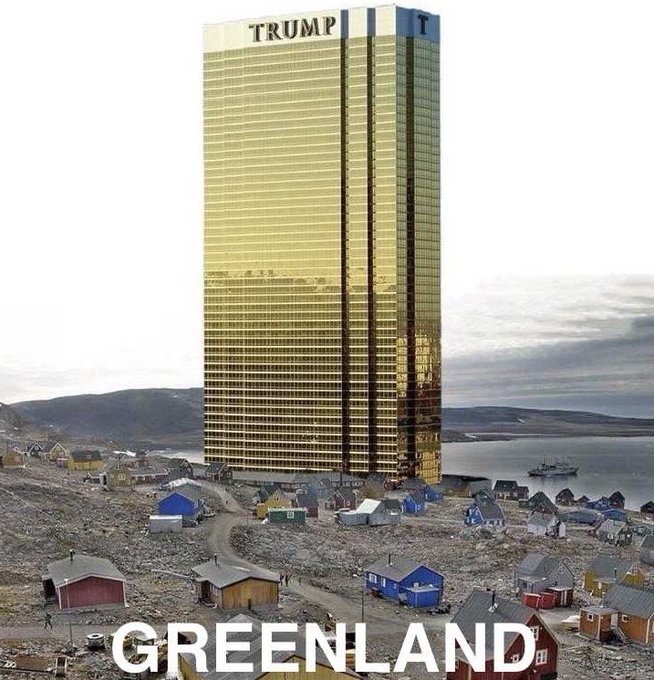
I promise not to do this to Greenland!

View image on Twitter
81.6K people are talking about this


Multinational Business Roundtable Now Claims “Social Responsibility” More Important than Profit….


CTH suspected this was going to happen. This was predictable if you have followed the fracture between Main Street (Trump) and Wall Street (multinationals).  Remember, there are trillions at stake.  This news today is part of the battle.

Here’s the cut through the BS motive behind the multinational association of Business Roundtable CEO’s (these are all pure Wall St.) suddenly saying “social responsibility should be put above profit“…

NEW YORK (Reuters) – Top CEOs say companies should put social responsibility above profit.  Corporate America is responsible for providing economic benefits to all, not just its investors, the Business Roundtable group said on Monday.

The group’s “statement of corporate purpose” was signed by the heads of more than 180 U.S. companies, including the CEOs of Amazon.com Inc (AMZN.O), American Airlines (AAL.O), the largest airline in the world; and JPMorgan Chase & Co (JPM.N), the biggest American bank.

Although largely symbolic, the group’s statement goes against a roughly 30-year-old viewpoint that corporations exist to serve shareholders. (read more)

This is self-serving and highly manipulative decepticon double-speak.   They haven’t changed their view on ‘stewardship’, not one bit.  They are stewards for self, and by extension they were ultimately stewards for their shareholders.   However, their allegiance was/is always to the bottom line; the “international” bottom line.

The multinational corporations that make up the Business Roundtable are the same multinationals who exported jobs, destroyed manufacturing industry in the U.S., and created the rust belt.  These are the Wall Street multinationals who benefited the most from purchased political policy over the past 30 years.

What they are doing now, ties directly into what Nancy Pelosi is doing.

The Democrats and big multinational business interests are now in alignment.  Their common adversary is President Trump.   Pelosi, Schumer et al, have spent years blaming corporate greed for all the ills within society; while simultaneously taking billions from their trough.  It was always a con; it is part of the UniParty aspect of DC.

Now Pelosi and Schumer need to use their commonality with the Big Club to attack their common adversary: President Donald Trump and his Main Street America-First agenda.

The forecast long-term interests of the Multinational Roundtable means they need to align with the social proclamations of Pelosi’s Democrats.

They will do this fake metamorphosis by shifting from “shareholder” stewardship (those who own stocks), to “stakeholder” stewardship (those who purchase their products and demand a seat at the table to influence corporate ideology).

That’s the motive for the change in position.

According to their strategy, as soon as President Trump is removed everyone goes back to their former activity.  Business as usual for UniParty, and business as usual for the Big Club.

If these U.S. corporations were concerned about “social responsibility” they would pack-up their overseas operations, invest in the United States economy, and join with President Trump in trying to maximize the benefits to Main Street.  But that ain’t their plan….

Their plan is to retain their overseas investments and fight against U.S. policy that undermines their multinational business models.  Ergo they need to re-brand, put on the mask of social justice, and find alignment with Democrats toward the united objective.

That’s what they are doing, and it is brutally transparent if you understand the fight.

Cue an Example:

Peter Schiff@PeterSchiff

This is going to be an inflationary recession. There’s no way out and it’s political disaster for Trump because the recession is going to start before he finishes this term, which means he won’t have a second term. https://schiffgold.com/videos/peter-schiff-theres-no-way-out-and-its-political-disaster-for-trump/ 

Peter Schiff: There’s No Way Out and It’s Political Disaster for Trump

Peter Schiff appeared on Fox Business After the Bell last week after the yield curve inverted and the Dow dove 800 points. Peter said the looming economic disaster for the US will turn into a polit…

schiffgold.com

Peter Schiff is the CEO of  “Euro-Pacific Capital” an investment group that puts their investment portfolio where?…  Europe and China.   The entire purpose of their existence is to funnel and manage investment funds in Europe and Asia.

Do you think Peter Schiff and his Euro-Pacific investment firm might be uniquely exposed to capital losses while the economy of Europe and China shrinks?

President Trump’s economic plans and trade activity is 180° in opposition to Peter Schiff’s entire portfolio.  If Trump is successful, if the USA wins, Schiff goes out of business.

Nuf said.

This is the battle we’ve been waiting for.  This is the USA -vs- the Multinationals who almost destroyed Main Street and the U.S. middle-class.   President Trump is the only candidate who would have waged this fight…

There are trillions at stake.

.

…”complicated business folks, complicated business”…

U.K. PM Boris Johnson Planning Brexit Face-to-Face With Macron and Merkel…


Operation Fear” is the globalist, multicultural, left-wing operation aimed at trying to stop Brexit by any means necessary.   The promoters of Operation Fear include almost all EU and British media along with U.S. political EU allies such as Nancy Pelosi, the Big Club Republicans, Wall Street multinationals and the U.S. Chamber of Commerce.

We are moments away from watching all of the U.S. Democrat presidential candidates deliver their narrative enhancement aimed at supporting the collectivist argument.  No  threat is as significant to their ideological interests as deglobalization, nationalism and the sovereign respect for self-determination.  [See: U.S. Rivkin Project roadmap]

Against the October 31st Brexit deadline, Operation Fear is about to go into fully weaponized narrative distribution.  Predictably the deployment will likely be the largest psychological war carried out in the modern era.

Understanding how Operation Fear is carried out in Sept/Oct will prepare U.S. voters for a similar deployment in the 2020 presidential race.  As a consequence what is about to happen in Great Britain is well worth paying close attention to.

LONDON (Reuters) – British Prime Minister Boris Johnson will deliver his message on Brexit to French President Emmanuel Macron and German Chancellor Angela Merkel during visits this week, a government spokeswoman said on Monday.

“Ahead of the G7 the prime minister believes it is important to speak to the leaders of France and Germany to deliver the message that he has been setting out through the phonecalls he’s had with leaders and face to face,” the spokeswoman said.

“It is likely they will discuss other issues: foreign policy issues, security issues and so on, but clearly Brexit will form a key part of both bilateral meetings.”

Johnson’s spokeswoman repeated that there can be no formal negotiation with the European Union until the backstop, designed to avoid a hard border on the island of Ireland, has been dropped.  (link)

PREDICTIONS:

♦U.S. Speaker Nancy Pelosi has already planted her flag of Brexit opposition around the Ireland -vs- Northern Ireland border.  It’s a disingenuous position; transparently a ridiculous excuse; but that allows her to give the appearance of not interfering while the actual her objective is ABSOLUTELY to interfere.

♦The corporate leftist social media will also engage.   Twitter, Facebook, Instagram and similar media sites will begin pushing down (or eliminating) pro-Brexit content, and pushing up the anti-British pro-EU positions across all engagement.  The objective will be to give the impression that Brexit is not supported.

For the historic reader, you will find strong parallels to the Soviet propaganda campaign around Polish independence and the Solidarity Movement.  In this era the Social Media groups will play the role of the soviet propagandists, and British citizens will metaphorically be the Poles.

♦Hopefully Nigel Farage and/or the Brexit party have proactive rallies planned where the Brits can assemble and publicly show the scale of their support. [*Hint*Hint*] Openly visible public support is the easiest way to refute the media propaganda narrative. [See Trump rallies circa 2016 throughout]  It is harder for the psy-op engineers to refute what is openly visible to the eye and ear.

♦ Mainstream media activity around Brexit in September/October is where we are likely to see the approach deployed in the U.S. for the 2020 election.  They’ll likely be developing strategies and testing out which social engineering approaches work best.  Cue a current audio/visual example to highlight the approach:

(Daily Beast) Donald Trump’s Twitter habit has caused no shortage of controversy during his presidency. Now, Democrats are hoping to turn it into a liability for his re-election.

One of the party’s top think tanks has been privately encouraging lawmakers and candidates to attack the president for failing to deliver on the promises he made because he’s too consumed by social media.

It is, undoubtedly, the first case of a campaign tactic geared towards turning a president’s online behavior into a liability; though rarely has a president’s reliance on—and use of—a media bullhorn been such a defining personality trait. Those pushing it have offered new polling data to bolster the idea that the argument will move voters. (read more)

I digress…

♦Internet Service Providers throughout Europe, but especially in the U.K., will play a significant role in Sept/Oct deployment of the leftist plan behind “Operation Fear”.

Anticipate widespread manipulation of internet travel based on the ISP provider network and subscription.  The networks will block content that is adverse to Operation Fear, and in some cases will direct -or redirect- the internet user to content far away from the intended destination.

♦Search engines like Google will have operators and engineers working 24/7 to specifically maintain and deploy algorithms intended to impede any search query that would be flagged as pro-Brexit.   Malware code will be inserted by the engineers at strategic times to disrupt website content adverse to their agenda.  The Brexit party content will be targeted for disruption, and elements within central government agencies will open doors for assistance therein.

It will be worthwhile to watch how all of the EU operations are carried out; and pay particular attention to the reports of the type of manipulation that we will see.  Being able to map all of the ideological efforts will allow us to formulate plans and strategies to avoid similar deployment when it takes place next year in the U.S.

CTH has a significant amount of U.K visitors.  I can assure you that we will do everything in our power to assist our British friends as Operation Fear places them under siege in the next 60 days.

Wolverines!

.


Secretary Ross Adds 46 Subsidiaries to Huawei “Entity List” – Grants 90-Day Window for U.S. Companies to Withdraw…


Commerce Secretary Wilbur Ross appears with Maria Bartiromo to discuss the security concerns around Chinese company Huawei and technology products designed to extract intelligence and data.  [Details of Commerce Announcement Follow Video]

Secretary Ross explains the Commerce Department decision to add 46 new Huawei subsidiaries to the restricted entity list requiring U.S. companies to apply for temporary licenses for Huawei purchases.  Due to the potential security ramifications the Commerce Dept. is giving U.S. companies 90-days (under Temporary General Licenses) to find alternate suppliers before all commercial engagement is halted.

WASHINGTON – Today, the Bureau of Industry and Security (BIS) of the U.S. Department of Commerce identified 46 additional Huawei Technologies Co., Ltd. affiliates that require inclusion on the Entity List, as part of a routine review of all Entity Listings.

Since May, the Department has added over one hundred persons or organizations to the Entity List in connection to Huawei. The new restrictions on these affiliates are effective today, August 19th.

BIS has also announced that it will extend the Temporary General License (TGL) authorizing specific, limited engagements in transactions involving the export, reexport, and transfer of items – under the Export Administration Regulations (EAR) – to Huawei and its non-U.S. affiliates which are subject to the Entity List.

The continuation of the TGL is intended to afford consumers across America the necessary time to transition away from Huawei equipment, given the persistent national security and foreign policy threat. This license will be effective on August 19, 2019 and last an additional 90 days.

“As we continue to urge consumers to transition away from Huawei’s products, we recognize that more time is necessary to prevent any disruption,” said Secretary of Commerce Wilbur Ross. “Simultaneously, we are constantly working at the Department to ensure that any exports to Huawei and its affiliates do not violate the terms of the Entity Listing or Temporary General License.”

Outside of the scope of the TGL, any exports, reexports, or in-country transfers of items subject to the EAR will continue to require a license granted after a review by BIS under a presumption of denial.

Huawei was added to the Entity List after the Department concluded that the company is engaged in activities that are contrary to U.S. national security or foreign policy interests, including alleged violations of the International Emergency Economic Powers Act (IEEPA), conspiracy to violate IEEPA by providing prohibited financial services to Iran, and obstruction of justice in connection with the investigation of those alleged violations of U.S. sanctions, among other illicit activities.

The Bureau of Industry and Security’s mission is to advance U.S. national security and foreign policy objectives by ensuring an effective export control and treaty compliance system and promoting continued U.S. strategic technology leadership.

BIS is committed to preventing U.S.-origin items from supporting Weapons of Mass Destruction (WMD) projects, terrorism, or destabilizing military modernization programs. (link)

President Trump Impromptu Presser Departing New Jersey – Video and Transcript…


Earlier today President Trump, Melania Trump and Barron Trump arrived in Morristown, NJ, airport en route back to Washington DC.  Prior to boarding Air-Force-One the President delivered brief remarks and answered media questions for 36 minutes.

[Note: longer version of video provided to see young 13-year-old (very tall) Barron Trump as he arrives with Mom and Dad.  (Full Video (begin 6:45) and Transcript below)]

.

[Transcript] – THE PRESIDENT: So, we had a lot of meetings yesterday on Afghanistan, on the economy — which is doing very well. We have the strongest economy, by far, in the world. The tariffs have cost nothing, in my opinion, or certainly very little. We have import prices from, and through, July — all the way through July. And they’re down 1.8 percent so that the import prices have actually gone down.

China is eating the tariffs because of monetary manipulation. And also, they’re pouring a lot of money into their country because they don’t want to lose jobs. They’re losing, as you probably know, because you reported it, but they lost over 2 million jobs in a short period of time. And they want to make a deal; we’ll see what happens. But they definitely want to make a deal.

I’d like to see Hong Kong worked out in a very humanitarian fashion. I hope President Xi can do it. He sure has the ability, I can tell you that, from personal knowledge. He certainly has the ability to do it if he wants to. So, I’d like to see that worked out in a humanitarian fashion. I think it would be very good for the trade deal that we’re talking about.

And other than that, if you have any questions?

Q What’s the status of your deliberations on the Afghanistan — the troop withdrawal and where things stand?

THE PRESIDENT: Well, we’re looking at Afghanistan. We’re talking to Afghanistan, both the government and also talking to the Taliban, having very good discussions. We’ll see what happens. We’ve really got it down to, probably, 13,000 people. And we’ll be bringing it down a little bit more, and then we’ll decide whether or not we’ll be staying longer or not. We’re having very good discussions with the Taliban. We’re having very good discussions with the Afghan government.

Q What’s the argument for staying?

THE PRESIDENT: I think just that we’ve been there for 19 years. We’re like a police force. And that’s about it, frankly.

I think it’s very important that we continue intelligence there, in all cases, because it is somewhat of a nest for hitting us. If you look at what happened with the World Trade, it essentially came out of Afghanistan. Most of the people, I think, they may not have come from Afghanistan originally, but that’s where they were taught. So there’s a big argument to be made. And I buy that argument.

You know, it’s very tough when somebody says, “Well, this is a big breeding ground.” And it is a breeding ground. And we have things under control very well with a small force. We can probably make it a little bit smaller, and then we’ll decide. It’ll depend on the Taliban. It’ll depend on the Afghan government. But there is a case to be made. And the case also is that we’re going to be leaving very significant intelligence behind for just the reasons I stated.

Q Have you spoken to President Xi, sir?

THE PRESIDENT: I can’t comment on that. Can’t do it, Maggie.

Q Can you comment at all on where things stand in terms of the China negotiations? You said there was progress.

THE PRESIDENT: Well, I think President Xi obviously has this in mind because he probably would’ve acted faster. So I think he has at least something in mind, having to do with trade, because it’s something he could do fairly easily. It could be, unfortunately, very ruthless. So I do think it plays on his mind, and I do think he — he’s thinking about what I’ve had to say. It would have an impact on trade; there’s no question about it.

Q Is there any U.S. land holding that you would be willing to do in exchange —

THE PRESIDENT: Little louder, Maggie.

Q In order to get your interest in Greenland, which has been widely reported, is there anything —

THE PRESIDENT: Well, Greenland, I don’t know — it got released somehow. It’s just something we talked about. Denmark essentially owns it. We’re very good allies with Denmark. We protect Denmark like we protect large portions of the world. So the concept came up and I said, “Certainly, I’d be. Strategically, it’s interesting, and we’d be interested.” But we’ll talk to them a little bit. It’s not number one on the burner, I can tell you that.

Q Would you ever make an exchange with them of any kind for U.S. territories?

THE PRESIDENT: Well, a lot of things can be done. I mean, essentially, it’s a large real estate deal. A lot of things can be done. It’s hurting Denmark very badly because they’re losing almost $700 million a year carrying it. So they carry it at a great loss. And, strategically, for the United States, it would be nice. And we’re a big ally of Denmark, and we help Denmark and we protect Denmark, and we will.

In fact, I’m supposed to stop. I’m thinking about going there. I’m not necessarily definitely going there, but I may be going. We’re going to Poland and then we may be going to Denmark — not for this reason at all. But we’re looking at it. It’s not number one on the burner.

Q Mr. President, sir, back to Afghanistan. Two questions on that. First of all, have you seen the reports about the suicide bomber at a wedding? There were more than 60 people killed. And so, why then could you trust the Taliban to keep Afghanistan safe from terrorists when you have a suicide bomber killing so many people there?

THE PRESIDENT: Well, I’m not trusting anybody. Look, I’m not trusting anybody. It’s a horrible situation that’s going on in Afghanistan. It has been for many years. Russia tried to do something. And at the time they did it, they were the Soviet Union, and now they’re Russia. They spent all their wealth on trying to do something in that land. There have been many, many great nations in that land. It’s a difficult territory.

There are a lot of very good people there, I will say, but they’re also good fighters. We have it very much under control as far as what we’re doing. But the rest is — you know, a lot of bad things happen in Kabul. A lot of bad things are happening in Afghanistan, and some very positive things.

But we would — look, we’re there for one reason: We don’t want that to be a laboratory. Okay? It can’t be a laboratory for terror. And we’ve stopped that, and we have a very, very good view. I mean, some things are going to be announced over the next couple of weeks as to what happened, who’s been taken out. A lot of people have been taken out that were very bad — both ISIS and al Qaeda.

Q And Senator Lindsey Graham said that for you to withdraw the U.S. troops from Afghanistan and entrust the Taliban would be the biggest mistake since Obama’s Iran nuclear deal.

THE PRESIDENT: Well, I guess that means Lindsey is a very tough man, isn’t he? Huh?

Okay. What else?

Q On Huawei — is the administration going to allow U.S. businesses to continue selling to Huawei? Is there going to be an extension of the license tomorrow?

THE PRESIDENT: No. That was reported. And, actually, it’s the opposite. Huawei. Huawei is a company we may not do business with at all. And it was sort of reported, I think the opposite, today — I was surprised — that we are open to doing business. We’re actually open not to doing business with them. So I don’t know who gave the report.

Now, they have little sections of Huawei, like furniture and other things that we could do. But when you cut out sections, it gets very complicated: what’s being sold, what’s coming in.

So, at this moment, it looks much more like we’re not going to do business. I don’t want to do business at all, because it is a national security threat. And I really believe that the media has covered it a little bit differently than that. So we’re looking, really, not to do business with Huawei. And we’re actually talking about not doing any business, because, again, the rest of it is not national security, but it’s very difficult to determine what’s coming in and what’s not coming in. It’s still Huawei. So we’ll be making a decision over that in the not-too-distant future. But it’s a little bit the opposite of what seemed to be reported this morning.

Q How were your meetings at Bedminster, sir? How was your meeting with Tim Cook? Did you meet with other folks? Who did you golf with?

THE PRESIDENT: I had a very good meeting with Tim Cook. I have a lot of respect for Tim Cook. And Tim was talking to me about tariffs.

And, you know, one of the things — and he made a good case — is that Samsung is their number-one competitor, and Samsung is not paying tariffs because they’re based in South Korea. And it’s tough for Apple to pay tariffs if they’re competing with a very good company that’s not. I said, “How good a competitor?” He said they are a very good competitor. So, Samsung is not paying tariffs because they’re based in a different location, mostly South Korea, but they’re based in South Korea. And I thought he made a very compelling argument, so I’m thinking about it.

Q And, sir, there’s reporting on CNN that Larry Kudlow may be leaving at some point soon. Do you have confidence in him?

THE PRESIDENT: Well, I hope not. I love Larry Kudlow. I think he’s done a fantastic job. He has been going through health problems, as you know. But I watched him this morning; he was terrific. I think Larry is a fantastic guy. But I haven’t heard that at all.

Q And are you doing any planning, or are you going to be directing your administration to plan for the possibility of a recession?

THE PRESIDENT: I don’t see a recession. I mean, the world is in a recession right now. And — although, that’s too big a statement. But if you look at China, China is doing very, very poorly. They’ve had — I just saw a report — they’ve had the worst year they’ve had in 27 years because of what I’ve done. And they want to come to the negotiating table. You know, they’re having companies lose — I mean, they’re leaving. The companies are leaving. And they’re laying off millions of people because they don’t want to pay 25 percent. And that’s why they want to come to the table. I don’t think there’s another reason other than President Xi, I’m sure, likes me very much. But they’re losing millions and millions of jobs in China. And we’re not paying for the tariffs; China is paying for the tariffs, for the one-hundredth time.

And I understand tariffs work very well. Other countries it may be that if I do things with other countries. But in the case of China, China is eating the tariffs, at least so far.

Q But a lot of economists say that you should be preparing for a recession; that no President is immune from a recession, and that it’s malpractice for the government not to be doing something to get ready for that scenario.

THE PRESIDENT: Yeah. Phil, honestly, I’m prepared for everything. I don’t think we’re having a recession. We’re doing tremendously well. Our consumers are rich. I gave a tremendous tax cut, and they’re loaded up with money. They’re buying. I saw the Wal-Mart numbers; they were through the roof, just two days ago. That’s better than any poll. That’s better than any economist.

And most economists actually say, Phil, that we’re not going to have a recession. Most of them are saying we’re not going to have a recession.

But the rest of the world is not doing well like we’re doing. The rest of the world, if you look at Germany, if you look at European Union; frankly, look at the UK — I mean, look at a lot of countries — they’re not doing well. China is doing poorly. Parts of Asia are doing poorly.

We are doing better than any country, or even area, anywhere in the world. We’re doing great. And our consumer is really, really strong, and it looks like they’re going to be for a long time.

Also, when you go in and analyze the curve, the curve always means that about two years later maybe you’ll go in. That’s a long time — two years. But I don’t think so. Interest rates are low. I think I could be helped out by the Fed, but the Fed doesn’t like helping me too much. But, you know, frankly, we have money that’s pouring into our country because they want the security of the United States.

We have billions and billions of dollars daily that’s pouring in — we’ve never had anything like this — because they want to come into the United States. That’s a great thing. That means we can loan that money out.

Mortgage rates are at an all-time low. Borrowing costs are at an all-time low. It’s probably a great time. I told Secretary Mnuchin that this is a great time to refinance our bonds, or some of our bonds.

You know, it’s — I mean, the money is pouring into the U.S. like never before and like no other country has ever experienced, including China money. I mean, China money — everybody — they’re all coming into the U.S. So we’ve never had anything like it. I think our economy is very, very good.

Q But if it were to slow down, could you win reelection?

THE PRESIDENT: Well, I’d be prepared for it. We can do — sure, we can do a lot of things. But if it slowed down, it would be because I have to take on China and some other countries.

Look, you have other countries that are just as bad as China, the way they treat us. You take a look at what’s happening with the European Union; they have barriers, they have tariffs. Take a look at other — I’m not going to mention all the countries because you’ll be surprised. But we’re treated very badly — a lot of them by our allies. We’re treated very badly.

When all of that normalizes, we’ve got a rocket ship. Our country is going to be stronger, by far, than ever before. I mean, if I wanted to make a bad deal and settle on China, the market would go up but it wouldn’t be the right thing to do. I’m just not ready to make a deal yet. China would like to make a deal. I’m not ready.

Q Do you have an updated on the Iranian oil tanker in Gibraltar that has (inaudible)?

THE PRESIDENT: No, no update, other than Iran would like to talk also. I have to say “also.” China wants to talk, but Iran would like to talk. They just don’t know quite how to get there.

Look, they’re very proud people, but their economy is crashing. It’s crashing. Inflation is through the roof. They’re doing really badly. They’re not selling oil. Even — I mean, we put the sanctions on. The oil is selling much less — I mean, much less — than we thought. It’s like a trickle. And they very much want to make a deal. They just don’t know how to call because they’re proud people, and I understand that. But I have a feeling that maybe things with Iran could work out, and maybe not.

If you notice, they haven’t taken any of our boats. They haven’t taken our ships. They’ve taken ships, but they haven’t taken our ships, and they better not.

But I will say this: I really think that Iran wants to get there. They have a great potential. I say this about North Korea. North Korea has tremendous potential. Also, Iran has tremendous potential, and we can do something very fast, but they don’t quite know how to begin because they’re proud people. They’re very proud people. But their country is crashing. Their economy is a disaster. They’ve got to do something, so let’s see what happens.

Q What about gun control, Mr. President? Where does that stand?

THE PRESIDENT: So, Congress is working on that. They have bipartisan committees working on background checks and various other things. And we’ll see. I don’t want people to forget that this is a mental health problem. I don’t want them to forget that, because it is. It’s a mental health problem. And as I say — and I said the other night in New Hampshire; we had an incredible evening — I said: It’s the people that pull the trigger. It’s not the gun that pulls the trigger.

So we have a very, very big mental health problem, and Congress is working on various things, and I’ll be looking at it. We’re very much involved. We’re very much involved in looking at what they’re studying.

Q Mr. President, the Dayton shooter had a 100-round-capacity magazine. Would you support banning high-capacity magazines?

THE PRESIDENT: Well, we’re going to look at a whole list of things, and I’ll make a determination then. But I will say, Congress is now, as you know, meeting in a bipartisan way. We’ll see what happens. A lot of things are happening on the gun level. A lot of things are happening.

But you have to remember, also, it’s a big mental — I was talking about mental institutions. They closed so many — like 92 percent — of the mental institutions around this country over the years, for budgetary reasons. These are people that have to be in institutions for help. I’m not talking about as a form of a prison. I’m saying for help. And I think it’s something we have to really look at — the whole concept for mental institutions.

I remember, growing up, we had mental institutions. Then they were closed — in New York, I’m talking about. They were — many of them were closed. A lot of them were closed. And all of those people were put out on the streets. And I said — even as a young guy, I said, “How does that work? That’s not a good thing.” And it’s not a good thing. So I think the concept of mental institution has to be looked at.

Unrelated to that, I believe that the concept also of voter identification has to be looked at, because you can’t have great security for the voter. People that vote, you can’t have that national security unless you’re going to have voter identification. It’s something people have to look at very strongly.

Q Sir, what does that have to do with guns?

Q Can you say who you golfed with, sir, and who else you met with at Bedminster? I know you did a lot of work.

THE PRESIDENT: Yeah, I did. We had a lot of meetings, and the golf was the least of it. I played two days. The golf was the least of it. I don’t care about — look, I like golf; it’s fine. It’s so unimportant to me. Usually, I’ll play with senators, I’ll play with people where it can help. Golf is not important from that standpoint other than it’s a little form of exercise, and that’s not so bad.

Q Sir, on Taiwan, any answer on — or response, rather, on the sale of F-16s to Taiwan?

THE PRESIDENT: Yeah, yeah. Yeah, there is. I mean, I’ve approved the deal. The deal is approved. Got to be approved by the Senate, but I’ve approved the deal. It’s $8 billion. It’s a lot of money. That’s a lot of jobs. And we know they’re going to use these F-16s responsibly. But we approved the deal. A lot of money. And it’s a great aircraft. And we really believe — or we perhaps wouldn’t have done it — they’re going to use it very responsibly. But it’s tremendous numbers of jobs. It’s $8 billion.

Q And, Mr. President, you brought up voter ID laws in the context of the gun control debate.

THE PRESIDENT: No, no, just — I said, “unrelated.” I wanted to bring that out while I’m here with you. I think voter ID laws are — if you look, voter identification. So when people show up to vote — because, if you look, Judicial Watch made a settlement with California, I guess, or Los Angeles, where they found over a million names that was very problematic — a problem.

And you just take a look at that settlement; that’s a lot of names. You had people that were well over 100 years old that were voting, but we know they’re not around any longer.

So, you have a lot of voter fraud. The way you stop it, the easiest way, is voter identification. We have to go and think about that. I hope Republicans and Democrats can vote, sit down, and work something out on voter ID.

Q But your commission on voter fraud didn’t find any actual fraud. It disbanded.

THE PRESIDENT: Well, let the commission — the commission was having a tremendous problem, legally, getting papers from various states like California. They were absolutely hard-lining. They didn’t want to give this commission — it was just a quick commission, headed up by Vice President Pence, to look at voter fraud.

The problem the commission had is we had to have a vast amount of lawyers, which I didn’t want to bother with, because California and other states were giving up no information whatsoever. And the reason they weren’t giving up information is because they were guilty. They were guilty of it. And they know they’re guilty of it. Many, many people voted that shouldn’t have been voting. Some people voted many times. What I’m saying is we need voter identification. We need voter ID.

Q I know it’s not a top priority for you with Greenland, but when you go to Denmark, is this something you’re going to want to talk to them about?

THE PRESIDENT: Maybe. Maybe. I don’t think Denmark has been absolutely set in stone yet, going there. But if I did, I’d certainly talk about it. But not — not top in the list.

Q How much is it worth? How much do you think it’s worth?

THE PRESIDENT: We haven’t gotten there yet. First, we have to find out whether or not they have any interest.

Look, they’re losing almost $700 million carrying it. That’s a lot of money for Denmark. They’re losing a tremendous amount of money. So we’ll see what happens.

Q And I’ve got this — this Fox News poll the other day — I don’t know what to make of polls at this point, but it showed you underwater.

THE PRESIDENT: Well, Fox has always given me — I’ll tell you, Fox is a lot different than it used to be, I can tell you that. Juan Williams. Then they have the wonderful woman that gave Hillary Clinton the questions. That was a terrible thing. And all of a sudden, she’s working for Fox. What’s she doing working for Fox? Fox has changed. And my worst polls have always been from Fox. There’s something going on at Fox, I’ll tell you right now. And I’m not happy with it.

Q (Inaudible.) What do you think the change is at Fox?

THE PRESIDENT: I don’t know what’s happening with Fox, but when they have, like, a Juan Williams, who has never said a positive thing, and yet, when I show up at the Fox building, he’s out there, “Oh, sir, can I have a picture with you? Could I have a picture?” And he was 100 percent nice. I mean, you’ve never asked me for a picture.

Q I have not. Should the Murdochs, sir, change the management at Fox? Or should they bring in new —

THE PRESIDENT: No. No. They have to run it the way they want to run it. But Fox is different. There’s no question about it. And I think they’re making a big mistake, because Fox was treated very badly by the Democrats — very, very badly — having to do with the debates and other things. And I think Fox is making a big mistake. Because, you know, I’m the one that calls the shots on that — on the really big debates. I guess we’re probably planning on three of them.

Q You might not debate, sir?

THE PRESIDENT: Well, I’m very — I’m not happy with Fox. I’m certainly happy — I think Sean Hannity, and Lou Dobbs, and I think Tucker Carlson and Laura and Jesse Watters, and Jeanine. We have a lot of great people. Even Greg Gutfeld; he wasn’t good to me two years ago. Now he sees all I’ve done, and he said, “Would you rather have a great President or a nice guy?” I don’t know, I think I’m a nice guy. But nobody has done in two and a half years what I’ve done. And I say that a lot. And very few people can challenge it.

The first two and a half years, nobody has done what I’ve done in terms of tax cuts, regulation cuts, the military, the vets, the Choice, so many different things. Nobody has done that.

Yeah.

Q Can you clarify what you meant when you said that you don’t want to do business with Huawei? Are you not going to extend this license for 90 days to temporarily allow —

THE PRESIDENT: Well, I’m talking to my people, but ultimately, we don’t want to do business with Huawei for national security reasons.

Q But not even a temporary extension that —

THE PRESIDENT: We’ll see what happens. I’m making a decision tomorrow. It could be temporary — could be — and maybe not. But we’re going to make a decision tomorrow.

Q So the — what I was asking about, the Fox poll, that they had you underwater against your main Democratic (inaudible).

THE PRESIDENT: I don’t believe it.

Q Okay.

THE PRESIDENT: I don’t believe it. Every place I go, we have lines outside. Then we have even phony stuff with that. You guys were in New Hampshire. Maggie was there. You saw, that room was packed. And they had thousand — Maggie — there were thousands of people outside. And then, I see some phony website some wise guys put up. That place was packed.

Q Where do you see that? Where did you see that?

THE PRESIDENT: And the New York Times actually saw that, and actually, there was a massive flag behind — and even the seats behind the flag where you had no view —

Q But there were pictures of empty seats that were on Twitter.

THE PRESIDENT: Because those people came down to be on the floor.

Q Who showed you those pictures? Where did you see those?

THE PRESIDENT: But all of the people — any empty seat, you had the people come down to be on the floor because they were so far away. Plus, you had a big flag.

Look, we had, I think they said, 17,000 people outside that couldn’t get in. The fire marshals close it at a certain level. The arena announced — I don’t know the people at the arena — that I broke Elton John’s record. And then, I have fake news. The fact is that people tend, during a speech that I make, they love to come down to the floor if they’re sitting in the high areas. And they’re not allowed, for fire reasons, to have any more people.

So, that was an amazing evening, and you saw the enthusiasm. But we had a lot of people sitting behind that massive American flag that couldn’t see, so they moved over and they moved down, and they came down to the floor as the speech started.

But Maggie Haberman was very fair. And she was there and she saw the beginning of that speech. Every seat was packed. But then they tend to come down. They do it all the time.

Q But Mitt Romney did his last rally there the night before the election and it was packed.

Q It was.

Q He ended up losing the election, but — so it’s —

THE PRESIDENT: Oh, I don’t know. Phil. Phil, what can I tell you? Do I think I’m going to win? Yes. Do I think I have more enthusiasm now than I had before this — you know, the 2016 election? Yes. I think we’re — I think you people do too. And some of you have reported it.

I think there is more enthusiasm for President Trump than there was even for Mr. Trump. Because what I said that I was going to do, I did. The tax cut, the regulation cuts — the biggest in history. In two and a half years, more than — and that’s one of the reasons our jobs are so good, because of the regulation cuts.

Q So, why can’t you tell us whether you talked to President Xi?

THE PRESIDENT: I just don’t want to comment on that

Q Is there a call set up for next week?

THE PRESIDENT: Well, I can speak to him any time. But he understands how I feel. I just can’t comment as to whether or not I spoke to him. But I will tell you this: We’re having very, very substantive talks with China, and with others, but with China.

Q Did you watch any of the coverage of the Hong Kong protest? Huge numbers of people.

THE PRESIDENT: I can’t believe it. You know, I tell you, I’ve never seen 2 million people. When you talk about crowd size, Maggie, those are serious crowds — the Hong Kong crowds. I mean, when they said 2 million people on the streets, that really looked like 2 million people on the streets.

Q What changed your mind, sir? Because the other day you were saying that it was, sort of, China’s problem and Hong Kong’s problem to figure this out. And why have you moved?

THE PRESIDENT: No, I think it would be very hard to deal if they do violence. I mean, if it’s another Tiananmen Square, it’s — I think it’s a very hard thing to do if there’s violence.

And, you know, that — I’m President, but that’s a little beyond me because I think there’d be — you know, I think there’d be tremendous political sentiment not to do something.

So I hope — because I think we’re going to end up doing a very good deal. And I think China, by the way, needs a deal much more than we do. But I really do believe that if this weren’t part of the deal, possibly something would have happened already a long time ago.

Q Do you support the principles of the protestors — the pro-democracy movement?

Q That’s — that’s what I’m asking.

Q Do you think democracy matters?

THE PRESIDENT: Well, I’ll tell you what I do support: I support liberty. I support democracy. I understand what’s going on very well over there. I’d love to see it worked out in a humane fashion. And I think they have a great chance of doing it.

Look, I put out — and I told you that I really believe — I have a confidence in the — in the talents of President Xi. I think if he met with the protestors, within a very short period of time, they would work something out that’s good for everybody. I really believe that.

He’s a very talented man. I mean, aside from everything, he’s a very talented man. He’s very smart, very talented. And I know him well, probably as well as anybody, And I believe if he sat down with them — now, you know, he’s not — that’s not his deal, sitting down with people. You know, he doesn’t do that. But I think, maybe, the world changes. I really believe if President Xi sat down with representatives of the protestors — and they do have representatives; pretty good representatives, pretty strong representatives. I’ve been watching and seeing them. If he sat down, I think he’d work something out. And I think it would be good for everybody. But it does put pressure on the trade deal. If they do something negative, it puts pressure.

Now, that deal I can sign by myself. It’s structured so I don’t have to go to Congress. But I respect Congress. I respect the views of Congress. And I respect, most importantly, the views of the people of our country. And I think it would be much harder for me to sign a deal if he did something violent in Hong Kong.

Q But do you support cutting $4 billion in foreign aid?

THE PRESIDENT: Are you talking about the —

Q Rescission.

THE PRESIDENT: — rescission? Yeah. I support many of those things. We’ll negotiate it out. But, you know, I’ve cut back a lot on countries. You know, we give billions of dollars to countries that don’t even like us. And I’ve been cutting that a lot.

We give billions and billions of dollars to countries that don’t like us — don’t like us even a little bit. And I’ve been cutting that. And we just put a package of about 4 billion additional dollars in. And, in some cases — you know, in some cases, I could see it both ways. In some cases, these are countries that we should not be giving to.

Q How do you see that cutting aid to them is helping the United States, though? Does it make us safer? Does it make us wealthier?

THE PRESIDENT: I don’t think so. No, I don’t think so. And if I thought it would, I’d probably do it. But, you know, I cut back $1.3 billion a year to Pakistan. And when I cut it back, I have a better relationship with — as you know, the President came in, and we have a great relationship. Prime Minister came in. We have a great relationship with Pakistan now. He — we had a really good meeting.

So, what happened: I cut back $1.3 billion. We have a better relationship now. I also cut it back on the Palestinians because they speak very badly about our country. So I cut it back on the Palestinians. We were paying $500 billion a year, and now we’re paying nothing. But I think we’re going to get further because I could see opening that up again. I think we’re going to do much better the way I’m doing it. You know, we’re trying to negotiate a peace deal. Everybody said that’s the deal that’s totally impossible. They talk about a deal between the Palestinians and the Israelis as the toughest deal you could possibly do, no matter what deal you’re talking about.

And I stopped payment on $500 million a year, but I think they’re going to make a deal. And I think one of the reasons they’d want to make a deal is because of that. Okay?

Q Are you going to wait until after the Israeli elections to put out your Middle East Peace plan?

THE PRESIDENT: I probably will wait, but we may put out pieces of it. We have some very talented people — as you know, our great ambassador and others. We have some very talented people.

But that’s probably the toughest deal of all — peace between the Israelis and the Palestinians — because they’ve been decades of hate. And it’s tough to make a deal when there’s that much hate.

But I think I’ve helped it very much by saying, “Look, until there’s a deal, we’re not going to pay you anymore.” And other people should have done that long before me. So these are things, when you talk about rescission — and that’s not part of rescission, by the way — but we have a lot of things like that in the rescission.

Phil?

Q Sir, you’re going — you’re heading back to Washington after a week off. Do you have any thoughts on the Cabinet? Is the Cabinet solid and going to stay in place, or is somebody going to change?

THE PRESIDENT: I think we have a great Cabinet. Yeah, there will always be people changed, because, you know, after — you’re going to be three years now. It’s a long time. They’re under a lot of pressure. And — but I think we have a great Cabinet. I really do. I think our Cabinet is terrific. Some of them will leave for a period of time; they may come back. I mean, the relationship I have is very good with the Cabinet and with others.

But, you know, it’s almost three years now, if you can believe it. Right? And at a certain point of time, people do tend to leave.

Q Are you still considering withdrawing from NAFTA if Nancy Pelosi doesn’t bring up the USMCA on the House floor?

THE PRESIDENT: Well, I haven’t said whether or not I would, but I would say NAFTA is one of the worst deals ever made in the history of trade deals.

If you look at NAFTA, and you take a look at what it’s done to our country, thousands of factories closed, millions of jobs. It’s been a one-way street. And the USMCA is a great deal. The unions love it. The farmers love it. Everybody wants it. But it’s up to Nancy Pelosi. If she wants to put it for a vote, she’s going to get overwhelming bipartisan support. And I view that as a bipartisan deal. I would imagine she’d put it up.

There’s an easy thing to do. It will be totally bipartisan, which is good for the Democrats and the Republicans. And everybody wants it. I mean, the unions like it. The unions hated NAFTA, but they love the USMCA. The farmers, above all, love it, especially the American farmers. Our farmers love it more than the other two sides. They love it. So, a lot of good things going.

But we have to see; they have to put it up for a vote. You know, it’s political season, if you haven’t noticed. So they have to put it up for a vote.

Q You talked about some people coming back into the administration. Could Nikki Haley come back into the administration in any role?

THE PRESIDENT: Yeah, at some point, maybe, if she wanted to. Yeah.

Q Have you been talking to her about that?

THE PRESIDENT: I really haven’t. I’ve been talking to a lot of people.

Q (Inaudible) change on the ticket, would you, Mr. President? This continues to get asked about.

THE PRESIDENT: No, I’m very happy with Mike Pence.

Q You are?

THE PRESIDENT: I think Mike Pence has been an outstanding VP. I think that he’s been incredible in terms of the love that a lot of people — especially if you look at the Evangelicals and so many others, they really have a great respect for our Vice President. And so do I. And so do, I think, most people.

No, I wouldn’t — I wouldn’t be thinking about that. A lot of people — a lot of people, you know, amazingly, they bring different names up. And they brought a lot of different names up.

Q What are the names?

THE PRESIDENT: And that’s — and that’s, by the way — (laughs) — at some point, I’ll let you know — but that’s, by the way, standard. You know, that’s standard. Everybody thought that President Obama was going to change Biden. They all thought that in the, you know, second term, he was going to change it. Everybody thought it. And he didn’t do that.

But, no, I’m very happy with Mike Pence.

Q Thank you, sir.

THE PRESIDENT: Thank you all. Thank you.

Q Could just be a little clearer on the gun — your gun position? I don’t —

THE PRESIDENT: Which one?

Q Your position on background checks and guns. What would you support exactly?

THE PRESIDENT: So, Congress is looking at it very strongly. Bipartisan. I put in certain parameters, which you somewhat know about. I’m also very, very concerned with the Second Amendment, more so than most Presidents would be. People don’t realize we have very strong background checks right now.

If you go in to buy a gun, you have to sign up. There are a lot of background checks that have been approved over the years. So I’ll have to see what it is.

But Congress is meeting. Bipartisan. A lot of people want to see something happen. But just remember this: Big mental problem, and we do have a lot of background checks right now.

Q But you’re not willing to support universal background checks right now?

THE PRESIDENT: I’m not saying anything. I’m saying Congress is going to be reporting back to me with ideas. And they’ll come in from Democrats and Republicans. And I’ll look at it very strongly. But just remember, we already have a lot of background checks. Okay? Thank you.

Q Have you spoken to Wayne LaPierre again, sir?

THE PRESIDENT: Say it?

Q Have you spoken to Wayne LaPierre this week at all during your trip?

THE PRESIDENT: I have. Well, I spoke to him a week ago. And, look, I’ve had a great relationship with the NRA, and I will always have a great relationship. I’ve been very good for the NRA.

If you just look — I mean, we have now two Supreme Court justices — great ones. And who would have thought that was going to happen in, you know, long prior to three years?

So, we have two. And equally importantly, we will have, within another 90 days, 179 federal judges. And I say, “Thank you very much, President Obama.” Because he was unable to get them filled. I don’t know what happened to him, but he was unable. So, President Obama did not do his job. And I inherited 138 empty positions. And, honestly, from his standpoint, and the standpoint of where he’s coming from, that shouldn’t have happened.

And we did do one other thing. I saw last night where some people were talking about criminal justice reform — very liberal Democrats. I’m the one that got it done. And I saw that, and I said, “You know, isn’t it a shame? You do something…” — and I’ve had very conservative people wanting it and very liberal people wanting it.

But if you take a look at — if you take a look at that reform package, without Donald Trump, it doesn’t happen. And you know what? I don’t need the credit. I get enough credit. But they never even mention my name. And these were people that were begging me to do it — calling me, begging me like you’ve never seen. And now that criminal justice reform is done — beautiful package, wonderful — they don’t even mention my name. So stupid. So stupid.

Thank you. Thank you.

END TRANSCRIPT 5:09 P.M. EDT

Arrival at White House – South Lawn:

About That “Dinner” With Tim Cook – Completed FoxConn China Factory May Sit Idle…


Last Friday President Trump had dinner with Tim Cook, aka “Tim Apple.”

The dinner came on the heels of USTR Lighthizer announcing a postponement of “next step” 10 percent tariffs against Chinese manufactured products…  Interestingly, the one of the product groups within the delay is personal computers…. Interestingly, Tim Apple was going to launch production assembly of the Macintosh personal computer in China.

Now, consider this:

CHINA – When ground was broken in March 2017 for a new US$9 billion factory owned by a subsidiary of Foxconn Group, the event was witnessed by then Guangdong party secretary Hu Chunhua and Terry Gou Tai-ming, the Taiwanese billionaire who created Foxconn, the world’s largest assembler of Apple’s iPhones and tablets.

Now, after two years of construction in the Guangzhou suburb, the plant’s main structure is completed, and on a recent visit trucks were seen going in and out of a gated compound.

Workers at the site said production lines were being shipped in and installed so the factory could start producing liquefied crystal displays with 8K resolution, which makes screens clearer.  This enthusiasm has given way to unease amid rumours that the factory is for sale.

The local authority in Zengcheng said it had not received any information about a potential sale and that the factory was still on schedule. The original plan called for it to begin operations next month.

One source with direct knowledge of the project’s progress said that everyone involved was now “a bit embarrassed” about the uncertain future. “It wouldn’t be an easy sale, everyone knows,” the source said.

[…] Peng Peng, vice-president of a Guangdong-based non-governmental think tank, said the Chinese factory would turn from a blessing into a curse if Gou were to sell and no buyer could be found.

“If the project is abandoned, the impact on the local economy will be enormous,” he said.

In addition to direct economic losses, the Guangdong government’s plan of creating “clusters of related supply chains” would vanish.   (read more)

That Friday night dinner between President Trump and Apple CEO Tim Cook takes on a greater depth of context and makes a lot more sense:

…If you plant your tree in another man’s orchard, don’t be surprised when you have to pay for your own Apples….