Posted originally on CTH on April 4, 2026 | Sundance
You would have to read dozens of energy industry reports to get the information provided here in this exceptionally well-done news segment.
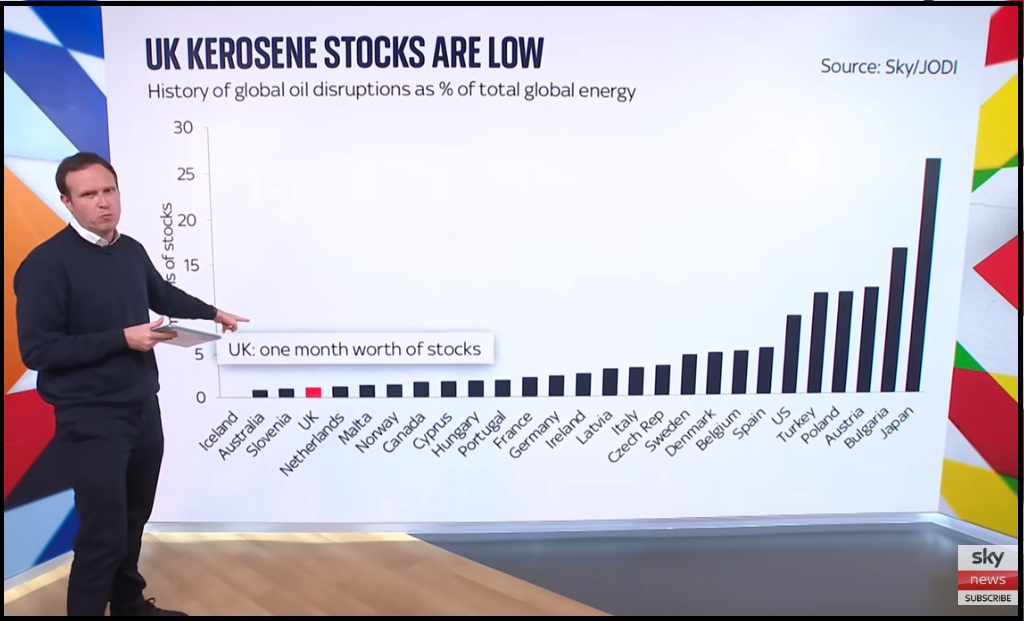
Sky News economics and data editor Ed Conway presents a fantastic look at how the issue with the Strait of Hormuz has impacted the global distribution of energy, oil, LNG and Kerosene (jet fuel), with particular emphasis on the vulnerabilities of the “modern industrialized western nations.”
Conway never points the finger to the “net zero” carbon goals of Europe, the U.K and Australia. However, he shows the outcome of their dependence on production and refining by other non-participating nations. The timelines clearly show, as the Green Energy policies were pushed the vulnerability inherent within any supply shock begins to get worse. This is a very well-presented data-driven analysis that is worth watching.
The last two-minutes also shred the claims by EU and British leadership, and highlights how Europe and the U.K are now dependent on the United States to meet their energy needs. WATCH:
Posted originally on CTH on April 3, 2026 | Sundance
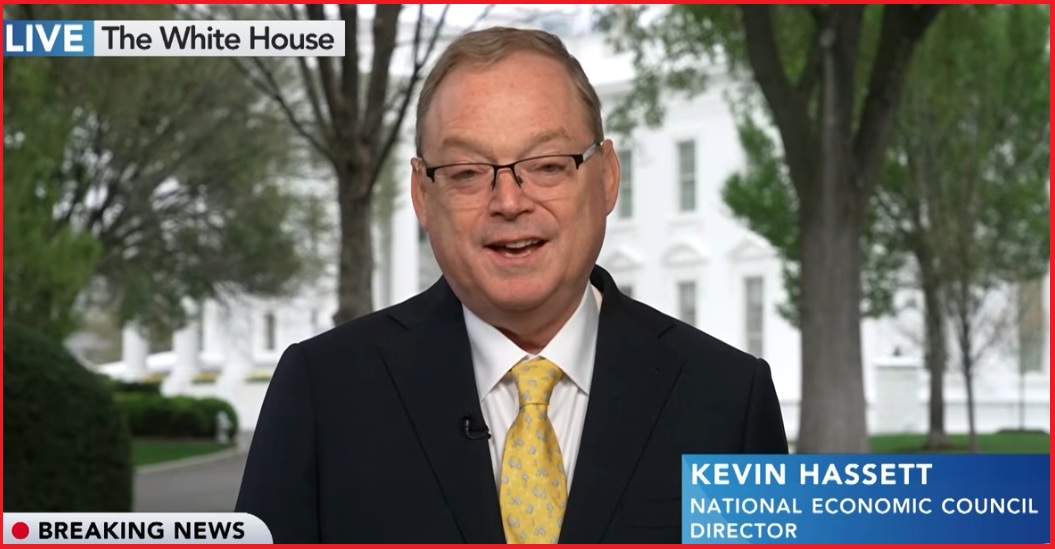
National Economic Council Director Kevin Hassett appears on Bloomberg News to discuss the US March jobs report and oil market supply disruptions related to the military action in Iran against the impact of oil prices on the US economy.
Director Hassett notes the continued goal of the Trump MAGAnomic plan is to build momentum, keep driving domestic investment and the short-term impact from Iran should mitigate quickly. WATCH:
Posted originally on CTH on April 1, 2026 | Sundance
They stopped their oil and gas exploration. They chose to chase ‘net zero’ academic pontifications. They closed their refining operations. They took apart their coal-fired electricity plants. They disassembled their nuclear power capabilities. Then, the absolute cherry on the proverbial cake, they voted to stop purchasing oil and gas from Russia.
The EU is now in the Find Out stage of their FAFO positioning.
Gasoline prices have skyrocketed. The last shipments of jet fuel have arrived. Major airline carriers are cancelling flights due to lack of fuel. Faster than the EU can organize meetings to discuss their position, EU destined LNG shipments have diverted to southeast Asia and India as the ASEAN nations bid higher purchase prices for the vessels literally on the water.
Folks, it’s quite an article written by EU Politico as they outline how each of the leaders from the nation states are now discussing how vulnerable they are to the changed oil/gas environment with the mid east conflict ongoing. The entire energy sector in Europe is now in crisis mode with leaders predicting it will get much worse within days, not weeks.
EU Politico – “Germany’s Friedrich Merz warns the economic fallout from the war in Iran is on track to rival that of the Covid pandemic or the Russian invasion of Ukraine.
[…] With the war in Iran threatening to choke off energy flows for the foreseeable future, Europe is facing a supply shock that promises to cripple manufacturing, ground airlines, hike up the price of food, spike borrowing costs and send inflation spiraling back to crisis levels.
As the last tankers carrying fossil fuels from the Persian Gulf pull into European ports, the scale of what is about to hit seems to be dawning on the continent’s leaders.
“I’m living with the reality of this war and its consequences 24 hours a day,” Italian Defense Minister Guido Crosetto told the La Repubblica newspaper. “I’m forced to know things that don’t let me sleep.” The conflict could last “years,” Christine Lagarde, the president of the European Central Bank, warned in an interview with the Economist last week. The long-term effects, she added, are “probably beyond what we can imagine at the moment.”
[…] “Markets are now grappling with a scenario long discussed in theory but rarely thought of as a legitimate possibility — the effective shutdown of the world’s most critical energy chokepoint,” said Ana Maria Jaller-Makarewicz, lead energy analyst for the Europe team at the Institute for Energy Economics and Financial Analysis.
One immediate worry is that Asian countries, which before the war relied on the Gulf for some 80 percent of their gas and oil, are beginning to bid up the price of those products as they fight over dwindling supplies. That has diverted merchants with more flexible contracts toward Asia to exploit the higher profit margins, turning them away from Europe.
According to Charles Costerousse, a senior energy analyst at maritime consultancy Kpler, 11 U.S.- and Nigerian-flagged LNG tankers have been redirected from Europe to further east in the past few days. Within the next few days, the last tanker bearing Qatari LNG will arrive in Europe, he said.
[…] For now, as the final Gulf tankers finish unloading their cargo this week, the clock officially starts ticking for Europe’s policymakers. The continent has weeks, not months, to brace for an impact that could reshape its economy for a generation. (read more)
The one element missing from the lengthy diatribe of EU leader quotes is any self-reflection; any admission their EU vulnerability was entirely driven by their own policies. No, that part of the equation is missing entirely.
Everything in their mindset is a discussion of external events happening to them. There is no reconsideration of their prior stupidity, and/or a responsive effort to reposition their vulnerability.
The EU is in a state of cognitive paralysis, and things are about to get much, much worse.
Posted originally on CTH on April 1, 2026 | Sundance
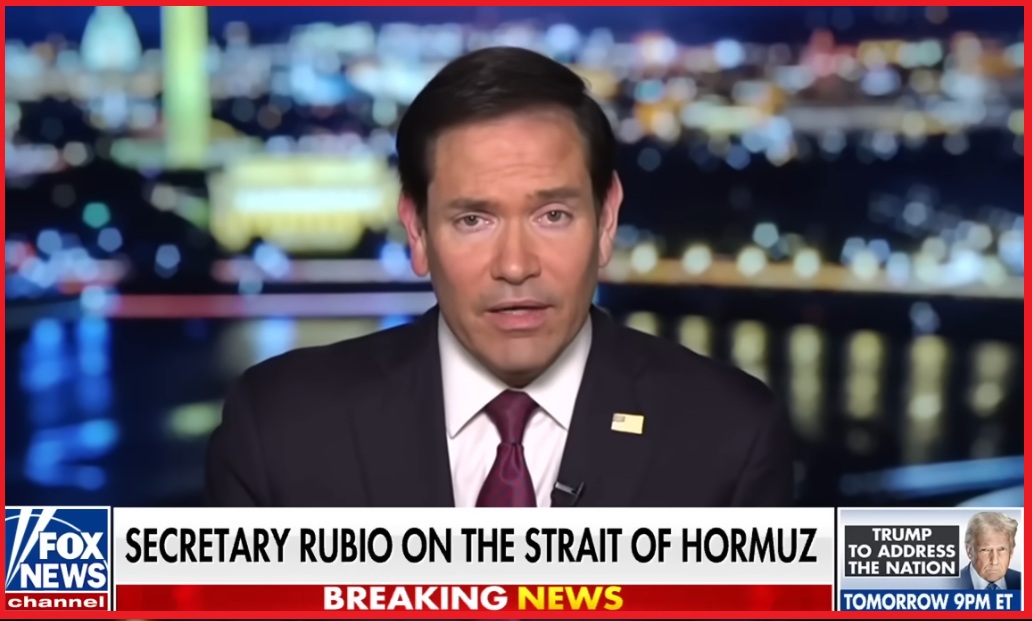
Secretary of State Marco Rubio appears on Fox News to discuss the various goals and objectives of the U.S. military operation against Iran. As part of the interview Secretary Rubio was asked about the strategic conflicts and hypocrisies now flowing from NATO member states.
The U.S. supports our NATO posture in Europe in part because it provides us with strategic military bases and operations that are considered vital to our national interests. However, as outlined in the Iran conflict, when we need to use those strategic bases the NATO member states withdraw previous permissions. France has blocked us from flying over their airspace, Spain and Italy have said the U.S. cannot use our military bases on their soil for operations. The U.K has refused to protect and/or escort their own energy assets.
The NATO membership is now a one-way street where they demand our military protection, but Europe blocks us from using our own military assets for our independent operations.
Europe, while hiding behind the NATO protection skirt of the U.S, is simultaneously telling the U.S. what we can and cannot do with our own military. Secretary Rubio and President Trump are now confronting this very visible one-way benefit head on. WATCH (prompted).
Posted originally on CTH on April 1, 2026 | Sundance
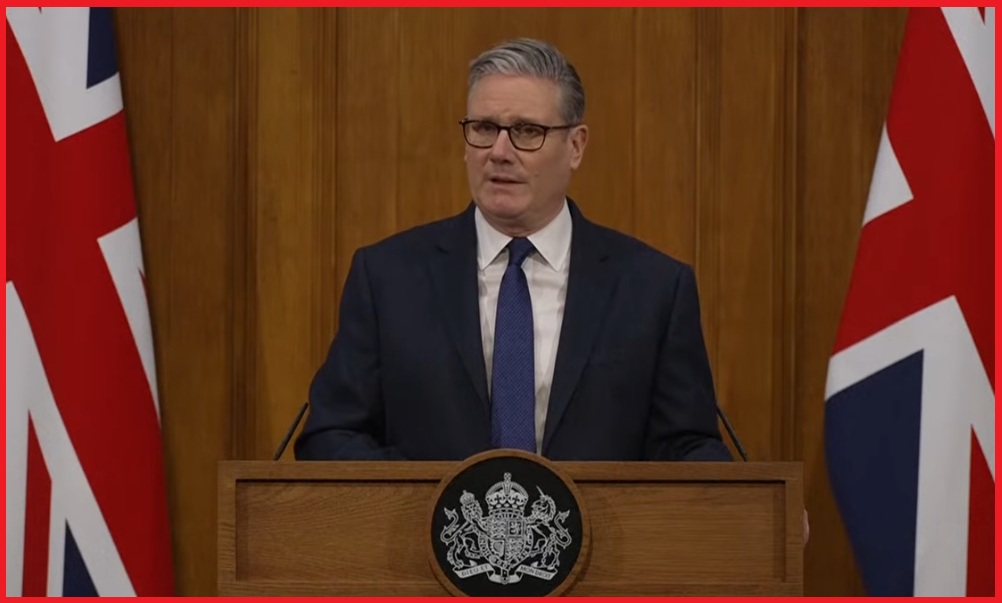
Against the backdrop of the Iran conflict, crisis in the Middle East and the disruption of energy supplies due to the closure of the Strait of Hormuz, U.K Prime Minister Keir Starmer held an urgent meeting with British business leaders, finance and bankers as well as U.K insurance leaders. At the conclusion of that meeting, he informed media of a national address.
During the national address to the people of Great Britain, Prime Minister Starmer emphasized that events in the Middle East have forever changed the landscape of U.K. economic and geopolitical policy. Signaling an inflection point crossed, the British prime minister announced that urgent actions were being taken to mitigate a national crisis.
Additionally, accepting the U.S. position toward NATO, and the U.K appears to be permanently shifted, Starmer said the British relationship with Europe now becomes critical to their vital national security interests. Against the backdrop of an end to the “special relationship” with America, the Brexit independence from the European Union is now a threat.
The United Kingdom must find a way to reunite with the European Union, because if it remains alone, without key support and protection from the USA, the British Empire is at risk of collapse. WATCH:
.
President Trump is also scheduled to deliver a national address at 9:00pm Wednesday. Secretary of State Marco Rubio gave an interview with Fox News last night specifically centered around a changed U.S.-NATO relationship (that interview coming next).
Posted originally on CTH on March 31, 2026 | Sundance
President Trump sent a message to the U.K and European leaders who are facing a fuel shortage, “come get your own oil.”
(Via Truth Social) – “All of those countries that can’t get jet fuel because of the Strait of Hormuz, like the United Kingdom, which refused to get involved in the decapitation of Iran, I have a suggestion for you: Number 1, buy from the U.S., we have plenty, and Number 2, build up some delayed courage, go to the Strait, and just TAKE IT. You’ll have to start learning how to fight for yourself, the U.S.A. won’t be there to help you anymore, just like you weren’t there for us. Iran has been, essentially, decimated. The hard part is done. Go get your own oil!” ~ President DJT
(FOR FRANCE) – “The Country of France wouldn’t let planes headed to Israel, loaded up with military supplies, fly over French territory. France has been VERY UNHELPFUL with respect to the “Butcher of Iran,” who has been successfully eliminated! The U.S.A. will REMEMBER!!!” ~ President DJT
(For Great Britain) – “Melania and I are pleased to announce that Their Majesties, the King and Queen of the United Kingdom, will visit the United States for a Historic State Visit from April 27-30th, which will include a beautiful Banquet Dinner at the White House on the evening of April 28th. This momentous occasion will be even more special this year, as we commemorate the 250th Anniversary of our Great Country. I look forward to spending time with the King, whom I greatly respect. It will be TERRIFIC!“
Posted originally on CTH on March 30, 2026 | Sundance
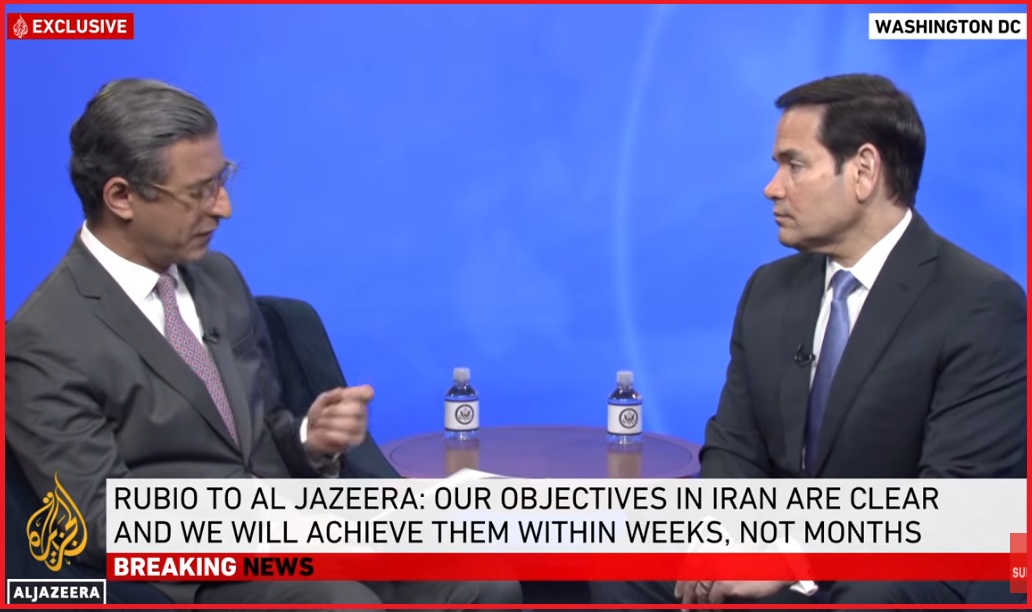
Al Jazeera is essentially the state run media outlet of Qatar. Secretary of State Rubio sat down for a lengthy interview with Al Jazeera that will be shared throughout the Arab world.
“In an exclusive Al Jazeera interview, US Secretary of State Marco Rubio stated that President Trump always prefers diplomacy, with messages and indirect talks ongoing between the US and figures inside Iran. Rubio demanded that Iran abandon all nuclear weapons ambitions, end its missile and drone programmes, and stop sponsoring terrorism across the region. He rejected Iran’s conditions for ending the war — including sovereignty over the Strait of Hormuz and financial compensation — calling the strait demand illegal and a dangerous global precedent. Rubio declared that the strait “will be open one way or another” after US military objectives are achieved, whether through Iranian compliance or an international coalition.”
“He outlined those objectives as the destruction of Iran’s air force (achieved), navy (largely achieved), missile launchers, and weapons factories — all to be completed in weeks, not months. Rubio expressed disappointment with NATO allies like Spain for denying basing rights and airspace, warning that the US would re-examine its NATO commitment. He confirmed the US would welcome regime change in Iran but insisted it was not the official objective of the current military operation. The interview also covered post-Maduro stabilisation in Venezuela and called for serious economic and political reforms in Cuba.”
Posted originally on CTH on March 25, 2026 | Sundance
The rebranded Lyndon LaRouche PAC has another good outline on the new strategic alliances assembled by President Trump as the ongoing conflict with Iran continues.
Susan Kokinda reviews how the United Kingdom and Europe have been sidelined as President Trump directly negotiates with key stakeholders in the middle east and Asia. Kokinda correctly notes the messaging from Russia indicates a strategic awareness that old systems are fracturing and the potential for new strategic alliances is rising.
“Susan Kokinda argues President Trump has opened a new diplomatic space to de-escalate the Iran conflict by working through a regional roster—Saudi Arabia, Egypt, Turkey, Pakistan, Gulf States, and back channels into Iran—while the U.K., EU, and NATO are absent and increasingly irrelevant. Citing reporting that ministers met in Riyadh and that Egypt, Turkey, and Oman carried messages, she says this “Board of Peace” architecture is isolating Iran and weakening its proxies, pointing to Lebanon’s move against Hezbollah, the Palestinian Authority’s condemnation of Iran, and Hamas considering disarmament. Kokinda links Europe’s exclusion to self-inflicted energy weakness from Green and anti-Russia policies, noting rushed LNG moves and a delayed Russian oil ban vote. She concludes Ukraine’s outlook darkens as Europe and Britain lack leverage, highlighting Zelenskyy’s scramble for support in London and Washington.” WATCH:
Posted originally on CTH on March 23, 2026 | Sundance
This is one of those small stories that carries the potential for significant domestic economic gains.
As many are aware, the U.S. imports a lot of softwood lumber from Canada. Combined with the energy products the lumber sector represents the top two U.S. imports from Canada. With Venezuela now potentially positioned to replace the former, USDA Rural Development now stimulates domestic lumber development potentially positioned to replace the latter.
Taken as a whole, these two approaches significantly weaken the Canadian leverage that could be deployed in a Free Trade Agreement negotiation. Assuming, of course, the USMCA is dissolved in favor of two bilateral FTAs.
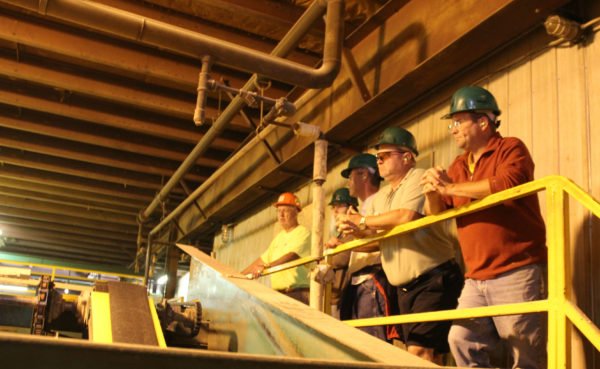
USDA Press Release – At the Advanced Bioeconomy Leadership Conference today, U.S. Department of Agriculture Administrator for the Rural Business and Cooperative Service J.R. Claeys announced the U.S. Department of Agriculture is guaranteeing $115.2 million across eight states through the Timber Production Expansion Guaranteed Loan Program (TPEP) to ensure sawmills and other wood processing facilities have the necessary funding to establish, reopen, expand, or improve their operations.
Today’s announcement includes recipients in the states of California, Idaho, Kansas, Louisiana, Maine, Oklahoma, Virginia, and Wisconsin.
These investments represent a commitment by the Trump Administration to expand American timber production by 25%, reduce wildfire risk, and save American lives and communities by strengthening domestic wood processing capacity.
“We cannot allow wildfires to devastate and destroy our rural communities,” said Administrator Claeys. “That’s why the USDA is taking bold action to stop the destruction of our forestlands by investing in sawmills and wood processing facilities that support sustainable timber harvesting. These actions strengthen local businesses, support rural prosperity, and create jobs for hardworking Americans.” (source)
This is not to say that expanded U.S. sawmill production would completely eliminate Canadian softwood lumber imports. However, it does create inventory and a stronger domestic supply chain that would diminish any applied leverage that Canadian trade negotiators would seek to deploy.
Without pipelines flowing East or West, Canada is stuck pumping their heavy oil south for processing. Nothing about that is likely to change in the next few years, even if Canada abandoned their climate change policy (highly unlikely).
Then comes the cross-border auto manufacturing industry, and the realization that -sans USMCA- both U.S. and Japanese automakers are likely to stick with the manufacturing center where their greatest customer base exists, the USA.
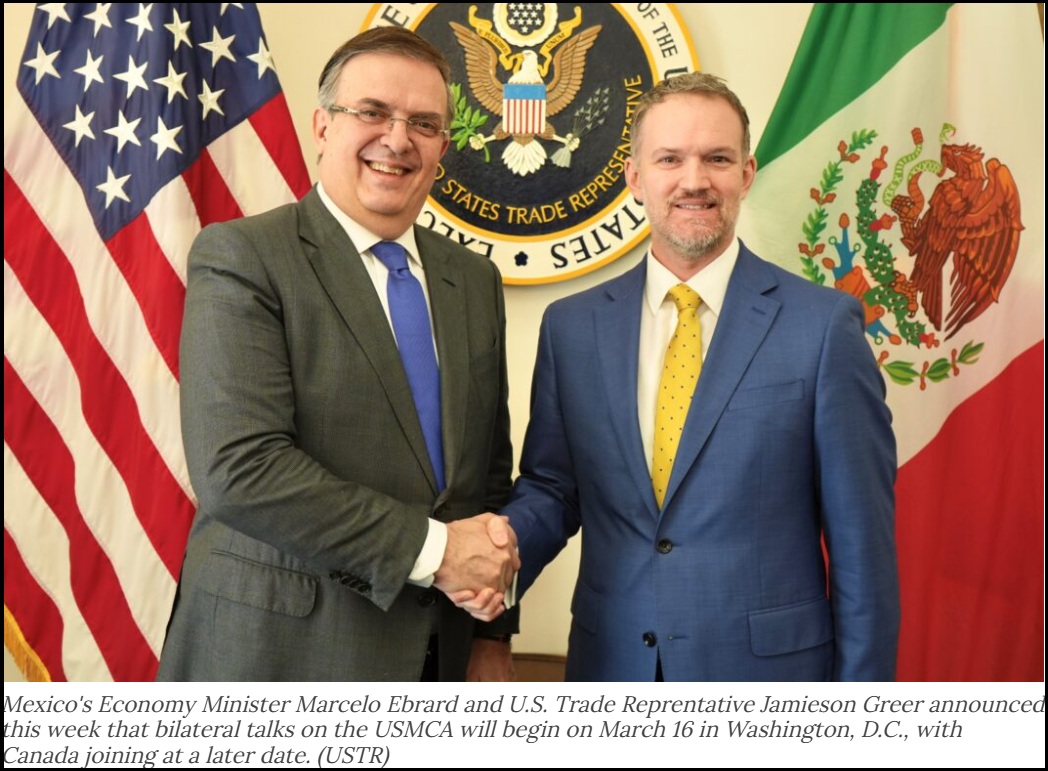
Now overlay softwood lumber, and you can see the top three economic dependencies of the U.S and Canada are slowly being uncoupled, simultaneous with the trilateral USMCA provisions being reviewed starting with the U.S. and Mexico having direct conversations.
Posted originally on CTH on March 23, 2026 | Sundance
The noise can seem overwhelming at times. There are those who say the U.S-Israeli joint military operation against Iran is a catastrophic miscalculation. There are those who say the operation is strategically succeeding. Many interests even appear to be cheering for the military operation to fail; others want the operation to escalate.
It is difficult to find pragmatic facts about the events without shaped information to promote specific narratives. However, accepting there is a psychological component to the information flow, it seems like the best option to listen to the experts who are conducting the operation.
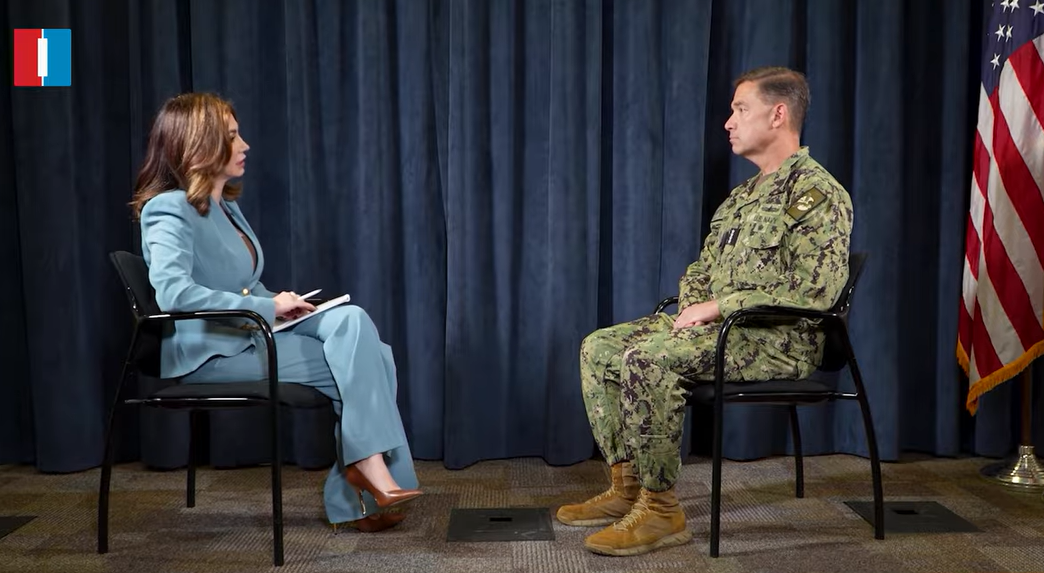
Giving his first interview since Operation Epic Fury began, CENTCOM Commander Bradley Cooper outlines the current status of the conflict and the elements he notes are of most importance. According to Adm. Cooper, Iran is “operating in a sign of desperation… In the last couple of weeks, they’ve attacked civilian targets very deliberately, more than 300 times.”
“The Strait of Hormuz is physically open to transit,” he said. “The reason ships are not transiting right now is because the Islamic Republic is shooting at them with drones and missiles.” WATCH:
“I’d like everyone to note is I’ve watched this over the last week, this extraordinary contrast between the comfort and protection that you’re seeing with the senior generals in the Islamic Republic, at least those that are still alive, who are up in deep bunkers and facilities in and around Tehran. And contrast that with the soldiers who are down on the ground who are unprotected. The generals are protected. The soldiers are not protected.”
“They’re launching missiles and drones from populated areas and you need to stay inside for right now,” he said. “There will be a clear signal at some point, as the President has indicated, for you to be able to come out.”
I have created this site to help people have fun in the kitchen. I write about enjoying life both in and out of my kitchen. Life is short! Make the most of it and enjoy!
This is a library of News Events not reported by the Main Stream Media documenting & connecting the dots on How the Obama Marxist Liberal agenda is destroying America