On the Original Mode of Electing a president


Post By Prof. Paul Eidelberg

Having elsewhere reconstructed the 1787 debates at the Philadelphia Constitutional Convention on the Presidential Electoral System, I shall here proceed to analyze the system by itself, and with a view to elucidating its underlying purposes as well as its philosophical implications for the character of the American Presidency. My point of departure is Hamilton‘s commentary in Federalist 68.

“It was desirable,” wrote Hamilton, “that the sense of the people should operate in the choice of the person to whom so important a trust [as the Presidency] was to be confided.”

Hamilton’s discussion begins on democratic grounds. The sense of the people is to operate in the choice of a President. Hamilton continues: “This end will be answered by committing the right of making it, not to any pre-established body, but to men chosen by the people for the special purpose, and at the particular conjuncture.

Therefore, the right of choosing a President is not to reside in the people, but with men chosen by the people for this particular purpose. The Constitution is established by the people and the people divest themselves of the power to choose the Chief Executive!” But this is not all. For as Hamilton well knew, the Constitution does not even grant the people a right to choose Electors! Article II, Section 1, provides that “each State shall appoint [the Electors] in such Manner as the Legislature thereof may direct …” The manner of appointing Electors is absolutely under the control of the state legislatures, at whose discretion the people may exercise the privilege which is now accorded them. That privilege may be withheld. The legislatures have the constitutional power of themselves choosing Electors as indeed was the practice of most of the states during the early presidential elections.

But even if the state legislatures were to accord to the people, as some did, the privilege of choosing Electors, for example, by a general ticket or by electoral districts, the nomination of Electors would not be made by the people. The people would still be at least twice removed from the election of the President. However much the sense of the people may be operative in the choice of the President, the immediate choice is to be made, as Hamilton pointed out, “by men most capable of analyzing the qualities adapted to the station.” Who would these men be? Again employing democratic language, Hamilton professed to believe they would “be selected by their fellow-citizens from the general mass.” However, as Hamilton must have known, and as the early elections bore out, the Electors of the President would generally be drawn from the more distinguished and influential members the community. [The roster of the early elections reads like a “Who’s Who” in State Governments!] It was precisely such men whom Hamilton had in mind when he said that the persons selected “will be most likely to possess the information and discernment requisite to such complicated investigations” as the choosing of a President.

The President was to be chosen by men who possess information and discernment, and they were to act, said Hamilton, “under circumstances favorable to deliberation.” The circumstances favorable to deliberation are these: First, each college of Electors should consist of a small number of persons. Hence they would be relatively free from faction. Second, the Electors in each state would assemble in the state in which they were chosen and would vote on the same day. “This detached and divided situation,” said Hamilton, “will expose them much less to heats and ferments, which might be communicated from them to the people, than if they were all to be convened at one time, in one place.”

Furthermore, because the electoral colleges were not to assemble in a general convention, the Electors would be less subject to “cabal, intrigue, and corruption.” In other words, the electoral college of one state would not be in communication with the electoral college of another; no college would know how the others were voting; there would be no “negotiations,” no “deals,” no prostitution of votes. Third, each college of Electors was to deliberate in secrecy. They would not only be insulated from each other, but from the public at large.

Fourth, no Senator or Representative, or any person holding office under the federal government, could be appointed an Elector. Removed from the influence of congressmen, and insulated from the general public, the Electors could ballot for the person of their own choice. They would not be automatons registering the will of congressional parties or of popular majorities. They would not be pledged to some presidential candidate, or as Hamilton remarked, they would be “free from any sinister bias.” In short, Hamilton, and the Founders generally, anticipated and sought to avoid all the evils of tumultuous party conventions! They clearly understood that the independence and integrity of the Presidency would depend very much on the independence and integrity of his Electors.

Although the electoral colleges were intended to have absolute control over the nomination of persons for the Presidency, we have seen that the final choice from among those nominated might, under certain contingen­cies, devolve upon the House of Representatives. Thus, either the Electors might fail to give a majority of their votes to a single candidate, or they might bestow equal electoral majorities on two, and possibly even three, candidates. However, neither of these contingencies was likely to occur often; the first, for obvious reasons, the second, if only because the Electors would frequently favor an incumbent President. This being so, the House of Representatives would usually be spared the task of electing the President of the United States.

Now the point I wish to elicit from the preceding paragraph is this: In deliberating upon possible candidates for the Presidency, the Electors would almost certainly nominate persons of national reputation. In this respect, Electors would not differ from the delegates at today’s national party conventions. But unlike these delegates, the Electors would choose presidential candidates without thought that the candidates chosen would have to engage in a popular election. This has profound implications for the intended character of the Presidency, indeed, for the government as whole.

The first implication is this. Because a President, under the constitutional or de jure electoral system, would not have to engage in a popular election, presidential candidates would be chosen more on the basis of ability and less on the basis of popularity. Second, because a President would not campaign for his election, he could enter upon his office virtually unencumbered by “political debts.” Since relatively few men will have contributed to his election, relatively few men could claim his favor. As a consequence, executive patronage would conform more to the principle of merit, less to the principle of spoils. This being so, the election of a new President would not result in a wholesale change of public office-holders. The administration of government would be more stable, and the very tone of political life more elevated.

Third, because a President would not have to campaign for his election, he would assume the duties of his office unencumbered by party platforms. Unburdened by such commitments, he could then promote public policies truer to his own principles and with the energy of his own convictions….

A fourth implication of the intended electoral system is that its operation, considered by itself, would contribute little to the political education of the public. Since there would be no campaign for the Presidency, candidates for that office would not engage in public debate or discussion of national issues. However, that such debate or discussion, except perhaps in few instances, has really served to elevate the public mind, or that it has not been attended with effects more harmful than good, is questionable. Certainly the Founders regarded the prospect with skepticism, to say the least. If the people, as Hamilton intimated in Federalist 68, are incapable of analyzing the qualities required of a President, they are surely incapable of analyzing the complex issues confronting a nation. Hence, a system which makes the choice of a President dependent upon public debate or discussion of national issues would be regarded by Hamilton as an absurdity.

No doubt this will sound strange to modern ears. Perhaps it will be explained away by referring to Hamilton‘s aristocratic “bias.” But it was George Mason, a man of supposedly democratic inclinations, who said: “… it would be as unnatural to refer the choice of a proper character for Chief Magistrate to the people, as it would to refer a trial of colors to a blind man.”[i] This is not to suggest that the Founders were unmindful of the need to educate the people. They simply felt that an election, upon whose outcome hangs the personal ambitions and material interests of so many individuals and groups, is a most dangerous means of providing public education. For the Presidency is so replete with the power to dispense goods and favors that, were an election for this office predicated upon public debate and discussion of national issues, not reason so much as passion, not candor so much as deception, not statesmanship so much as demagoguery, would too often prevail over the public mind. Far from educating the people, such elections would lead to their corruption.

Now let me sum up the principal intentions under-lying the constitutional mode of electing the President of the United States. We have seen that the President was never intended to appeal to the suffrages of the people. The people might or might not choose his Electors. But however chosen, the Electors were to nominate for the Presidency the person whom they themselves deemed best qualified for the office. Deliberating in secrecy, the electoral colleges were to insulate the future President from the democratic and oligarchic influences to which he would be exposed were he nominated by the likes of present-day national party conventions. Indeed, let it be said here and now; “It was the design of the Constitution, though it is not expressed, that the President should not know the characters of those to whom he is indebted for his election.”[ii]

Clearly this electoral system was intended to favor neither the interests of the many nor the interests of the few. It held another promise. It held the promise of insuring wisdom in the choice of a President. It held the promise of securing the President’s independence and integrity. It held the promise, so far as institutions can, of compensating for the frailties of human nature, those frailties which so often emerge when men actively seek or campaign for public office.

The President, I repeat, was not to appeal to the suffrages of the people or of any electoral body whatsoever. The dignity and powers of his office were to be conferred upon him by a select body of men unknown, as it were, to himself. He was to assume office without any obligation on his part other than to uphold and defend the Constitution. This is not simply an idealized picture. It is simply the ideal which guided the architects of the Presidency.

This ideal may be deemed monarchic in principle. And it is precisely this principle which, by its effect upon the choice of a President, was to guard the Republic against the extremes of oligarchy on the one hand, and of democracy on the other.
On Nominating a President of the United States


Post By Prof. Paul Eidelberg

Since America is suffering from collective amnesia or from generations of educators lacking a due sense of national pride and purpose, allow me to say a few words about the original and now obsolete method of nominating a President of the United States.  The following is only an extract from my book on the Constitution…..

  1. The method of nominating the President was the most protracted issue of the debates of the American Constitutional Convention. A dozen methods were considered until James Madison put the issue to rest by pointing out that the nomination of the President should not depend on any fixed or permanent institution of government, for the President would then be dependent on that institution, especially if he sought reelection. Such dependency would lead to political intrigue and undermine the President’s integrity.
  1. For these and other reasons, the Founders designed the Electoral College system. Although this system never worked effectively after 1800, its underlying principles actually reveal the highest caliber of statesmanship. Under this system, a President would enter office without knowing who were his electors, since they would meet in their respective state capitals and ballot secretly for two candidates, at least one not from their own state. Given the lack of communications in those days, a President would enter office without the “political debts” that have long encumbered presidents since the ascendancy of nationally organized political parties, presidential primaries, massive fund-raising, and the omnipresent media. Therefore, it behooves us to design a method of election that fosters, rather than undermines, the independence and integrity of a President. We need to design a method conducive to the formulation of wise national policies, policies that will enhance the people’s sense of national dignity and national purpose…..

Latest Iowa Poll – Trump On Top, Ted Cruz Gains Third Place, Bobby Jindal and Mike Huckabee Beat Jeb Bush…


This is the way I like it Trump Carson Cruz — Who cares about any of the rest!

New Hampshire Poll – Donald Trump Remains Leader, Establishment GOPe Counting On Rubio…


I hope y’all keep them post cards going

Chaut-akbar


Post By Tabitha Korol

The summer season of Chautauqua is long over, and the “scholarly” vacationers have returned to their winter existence. For staff and speakers, it is a respite, a tactical Hudna – the time to assess their position and decide on their new plan of action, the speakers, and the indoctrination for next summer, because Islam’s stealth war against the infidel must continue. Its raison d’etre is to mindbend the captive audience, and ultimately to gain acceptance for Sharia – the Qur’anic legal system that dictates every facet of the adherent’s life – as the law of the land.

Surely, we might expect more Islamic representatives and topics next year. Their language will obscure the true nature of the themes and Islam’s history, and present a glossed version of the “Religion of Peace,” as veiled as their women and as masked as the armed jihadists. It may subtly, if not overtly, disparage the State of Israel.

Such was the case of Israeli-born Anat Hoffman, who was invited to speak at the Hall of Philosophy (perhaps more aptly named Hall of Propaganda), as reported in The Chautauquan Daily of August 29, 2015.  Her calls for a more peaceful, inclusive Holy City used three key words: “Holy City” is the non-Jewish name for Yerushalayim (Jerusalem), and “inclusive” is the code word for de-Judaizing the city. It was clear that Hoffman had an agenda to defame not only Jerusalem, the capital, but also Judaism and Israel, the only country in all the world that was dedicated to the Jewish people.

She repeatedly claimed that Israel had no Constitution, when in fact it is embodied in written texts that reflect Israel’s political system, social content, and expanding constitutional tradition – the operative constitution to determine basic operations and governance. Israel relies on Torah and Jewish law (halakha), which is also the basis for America’s Judeo-Christian laws and Constitution. Perhaps Hoffman seeks (but does not clarify) a codified Constitution, but like the Parliament of the United Kingdom and the Parliament of New Zealand, Israel’s Knesset is a Sovereign Parliament that fulfills that function.

With every tribute that Hoffman could muster, including the beauty and nuances of Israel’s language, Hebrew, and the state’s technical innovations, she provided a grievance, her primary one being a gripe against the religious prohibition against women’s praying with men at the Western Wall, a separation that is also maintained in an orthodox synagogue. The rule is grounded in the orthodox view of the divinely-authored Hebrew Scripture, but Hoffman sells her disdain of the orthodox community and, by extension, Israel and Judaism, thereby earning herself the strongest applause.

Hoffman spoke of the violence of zealots, without identifying them or their motivation, thereby again ridiculing Israel to an audience that has been fed pro-Islamic and -Palestinian views throughout the many summers. She never explained that the zealots are Jews who fought against eviction from their homes in Gush Katif in order to appease the Palestinians for a peace pact that the Arabs would never honor. They are the 8,600 Jews who were completely uprooted – lost their homes, schools, neighborhood, community, and livelihoods – among them, the successful, flourishing greenhouses that shipped superior-quality produce worldwide – the same greenhouses that were maliciously destroyed by Palestinians immediately upon transfer of ownership. Zealots are also those who must defend their families and homes against armed Palestinians who use deadly stones, firebombs, and knives to kill innocents indiscriminately – from the very young to the aged. Hoffman never addressed the infamous Itamar attack, the butchering of five members of the Fogel family, and others killed mercilessly by their deadly neighbors.

Clearly, Anat Hoffman tried to summarily dismiss the Iran deal, deceptively telling her listeners that Israelis “are not very concerned,” except that they are quite concerned because the deal will enable Iran to fulfill its threat of annihilating Israel. Following that blatant invention, she suggested that her audience never allude to the deal should Prime Minister Netanyahu ever visit Chautauqua.  Might that be because he would truthfully clarify the peril to both Israel and America?

Rather, she urged Chautauquans to invite Ayman Odeh, a communist who “swept her off her feet,” who vociferously complains of inequality while holding a position as leader of the Knesset’s United Arab Party. She did not expose this man as the violent agitator who threatened the elected government with armed insurrection and who threatened the Aramean population (Arab Moslems) with death for wanting to join the Israel Defense Force (IDF) because of their love for Israel. Odeh’s vitriol and aggression have resulted in violence, which is destroying tourism, commerce and jobs in Nazareth.  In a recent interview, Nazareth’s Mayor Ali Salam accused Odeh of “ruining” the city and the peaceful coexistence had between Jews and Muslims.  Hoffman withheld Odeh’s true activities, the incitement, the violence, the bloodshed. Taqiyyah (Holy Deception for the advancement of Islam) is the essential component of Chautauqua’s programs.

Other guest speakers were Seyed Hossein Mousavian and Imad Kiyaei who came to advise Chautauquans of the benefits of the Joint Comprehensive Plan of Action, aka the Iran Deal, between the US, China, Russia, the European Union and Iran, assuring the gullible that it will stabilize the region and create a pathway to peace.

Chautauquan guest speaker The Reverend James Walters is the chaplain of The London School of Economy and overseer of its faith center.  A “hotbed of Muslims and Lefty Jew haters,” the school hosted a joint Palestine Society and Feminist Society event that portrayed Israelis as rapists, the Islamic tactic of projecting its own evils on its enemy; and the women applauded those who killed Israelis.  Walters concealed the radicalization activities in the UK and in Europe by his friend, Qari Asim, the Makkah Mosque imam in Leeds, home to the mastermind and bombers of the London Underground train in 7/7/05.  He denied any knowledge or connection to the violence that killed 52 and injured more than 700.  And, while British authorities refuse to study, understand, or connect ISIS with Islam, British jihadis have declared that their black flag will fly over Buckingham Palace. I might also wonder how long before “incomparable” Institution’s speakers proclaim the same over the Hall at ”Chaut-akbar.”


Marco Rubio’s Donor-Class Agenda – Open Border Globalists….


It’s very simple I do not trust Rubio!

November 1st Campaign Updates – Campaigns Meet 6:30pm Tonight Discussing Debates…


It would be nice if the ones at the bottom would play nice as they have little chance and are being used to make the ones toward the top look bad. That hasn’t really work in the poling but it may have an effect later on for the party in general. Although it does seem the RNC/GOPe would rather lose to Hillary then nominate Trump Carson of Cruz.

Iraqi Ayatollah: ‘Abducting Women’ and ‘Destroying Churches’ Is ‘Real Islam’


Source: Iraqi Ayatollah: ‘Abducting Women’ and ‘Destroying Churches’ Is ‘Real Islam’

In the Muslim community, jihad is a religious duty because of the universalism of the Muslim mission and the obligation to convert everybody to Islam either by persuasion or by force. The other religious groups did not have a universal mission, and the jihad was not a religious duty for them, save only for purposes of defense. But Islam is under obligation to gain power over other nations.

Muslim invasion of Europe: Unlimited


Looks like our southern boarder with Mexico or what Obama has planned for us next year.

ivarfjeld's avatar

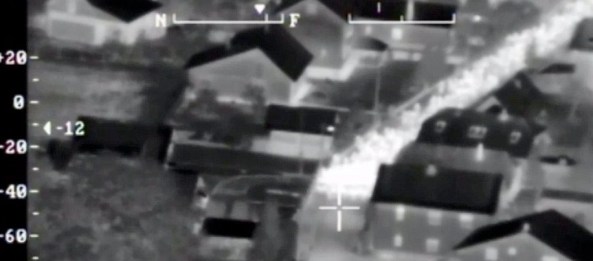
Incredible night vision photos taken from the air have shown the thousands of migrants streaming across the Solvenian border from Croatia.

The new pictures, taken by a Slovenian police helicopter, show the constant stream of people through the country under a cover of darkness , a day ahead of a European summit on the migrant crisis.

The Muslims invading Europe is guided by the police on the Balkans. The Muslims invading Europe is guided by the police and army on the Balkans.

The thermal imaging pictures show how some of the migrants even decide to continue their journey west under the cover of darkness.

Some 58,000 migrants and refugees heading to Germany and Austria have arrived in Slovenia over the last week, shifting their route to the west after Hungary sealed its borders.

Pressure has been building as asylum-seekers travelling through the Balkans have pressed on instead through Croatia and Slovenia toward Austria, Germany and other Western European nations.

Thermal images taken…

View original post 311 more words

A Female Physician in Munich, Germany sends a message to the world . . . . . .


Yesterday, at the hospital we had a meeting about how the situation here and at the other Munich hospitals is unsustainable. Clinics cannot handle emergencies, so they are starting to send everything to the hospitals.

Many Muslims are refusing treatment by female staff and, we, women, are refusing to go among those animals, especially from Africa. Relations between the staff and migrants are going from bad to worse. Since last weekend, migrants going to the hospitals must be accompanied by police with K-9 units.

Many migrants have AIDS, syphilis, open TB and many exotic diseases that we, in Europe, do not know how to treat them. If they receive a prescription in the pharmacy, they learn they have to pay cash. This leads to unbelievable outbursts, especially when it is about drugs for the children. They abandon the children with pharmacy staff with the words: “So, cure them here yourselves!” So the police are not just guarding the clinics and hospitals, but also large pharmacies.

Truly we said openly: Where are all those who had welcomed in front of TV cameras, with signs at train stations?! Yes, for now, the border has been closed, but a million of them are already here and we will definitely not be able to get rid of them.

Until now, the number of unemployed in Germany was 2.2 million. Now it will be at least 3.5 million. Most of these people are completely unemployable. A bare minimum of them have any education. What is more, their women usually do not work at all. I estimate that one in ten is pregnant. Hundreds of thousands of them have brought along infants and little kids under six, many emaciated and neglected. If this continues and German re-opens its borders, I’m going home to the Czech Republic. Nobody can keep me here in this situation, not even double the salary than at home. I went to Germany, not to Africa or the Middle East.

Even the professor who heads our department told us how sad it makes him to see the cleaning woman, who for 800 Euros cleans every day for years, and then meets young men in the hallways who just wait with their hand outstretched, want everything for free, and when they don’t get it they throw a fit.

I really don’t need this! But I’m afraid that if I return, that at some point it will be the same in the Czech Republic. If the Germans, with their nature cannot handle this, there in Czechia it would be total chaos. Nobody who has not come in contact with them has no idea what kind of animals they are, especially the ones from Africa, and how Muslims act superior to our staff, regarding their religious accommodation.

For now, the local hospital staff has not come down with the diseases they brought here, but, with so many hundreds of patients every day – this is just a question of time.

In a hospital near the Rhine, migrants attacked the staff with knives after they had handed over an 8-month-old on the brink of death, which they had dragged across half of Europe for three months. The child died in two days, despite having received top care at one of the best pediatric clinics in Germany. The physician had to undergo surgery and two nurses are laid up in the ICU. Nobody has been punished.

The local press is forbidden to write about it, so we know about it through email. What would have happened to a German if he had stabbed a doctor and nurses with a knife? Or if he had flung his own syphilis-infected urine into a nurse’s face and so threatened her with infection? At a minimum he’d go straight to jail and later to court. With these people – so far, nothing has happened.

And so I ask, where are all those greeters and receivers from the train stations? Sitting pretty at home, enjoying their non-profits and looking forward to more trains and their next batch of cash from acting like greeters at the stations. If it were up to me I would round up all these greeters and bring them here first to our hospital’s emergency ward, as attendants. Then, into one building with the migrants so they can look after them there themselves, without armed police, without police dogs who today are in every hospital here in Bavaria, and without medical help.


Dr. Barbara Sziraki
BarbSziraki@gmail.com


—

Dr. Barbara Sziraki
BarbSziraki@gmail.com